Um grande silêncio reina sobre a terra.


"Acredita até ao fim, mesmo que todos os homens se desviem e fiques sendo o único fiel; traz a tua oferta mesmo assim e louva a Deus na tua solidão."

Um grande silêncio reina sobre a terra.
"Acredita até ao fim, mesmo que todos os homens se desviem e fiques sendo o único fiel; traz a tua oferta mesmo assim e louva a Deus na tua solidão."
E volto à leitura de "The World of Work to 2030" para encontrar uma série de textos que parecem tirados deste blogue. Textos acerca de como competir em Mongo:
"You just won't see it coming
Buyers, whether businesses or consumers, will become even more swamped by choice than they are today. This means you will have to fight harder to rise above the noise of the competition. [Moi ici: Uma paisagem cada vez mais enrugada, cada vez mais picos]
...
Focus and Size
The forces playing out mean that companies everywhere will face continual, relentless, competitive threats. This poses an obvious question: How to respond?
To succeed in the future, companies will be forced to think consciously about what they are and how they do it. With competition becoming incessant and global, companies will need to decide what they do, what market they will focus on and where they will specialize. Most importantly, at the same time, they will consciously decide what they are not, which markets they are not focusing on and where they will not specialize.
This merely echoes what Harvard Business School professor Michael Porter said when defining strategy: 'the essence of strategy, is choosing what not to do.'
...
Just say 'no'
The challenge in business (and to a similar extent in our personal lives) is that we seek to do too much ourselves. When a customer calls us asking for help, or wanting a different product or a different service, we dislike saying no. The same thing happens in our personal lives where we seek to do everything - all the tasks that life presents us with, from gardening to decorating - and to be expert in them all. No business can be expert in everything. It is exceptionally easy to say 'yes' to a customer. But as we progress further away from what we are good at, from what we are known for and from where our expertise lies, the thinner the ice on which we are skating and the greater the risk in something going wrong.
...
To be successful, companies will not be able to be all things to all customers. They can't spread themselves too thin being, in effect, wide and shallow. If they do, competition will swarm around them, nibbling away and they will suffer the death of a thousand cuts. Rather, to succeed and protect themselves, businesses will define their purpose more narrowly, more specifically, and will then seek to achieve depth, seeking dominance of that narrow space. Going forward, successful businesses will no longer be generalists: average will no longer be enough, depth and specialism will be critical.
...
Being a generalist is not sustainable. Focus and depth of specialism, combined with scale in that specialism, is needed in order to be successful."
Como não recuar a 2006 e a "Deixar de ser uma Arca de Noé".
Como não reflectir nesta incoerência recente e sinto que algo não bate certo.
Como não ligar ao ainda fresco Os últimos moicanos.
Há mais de 15 anos li o meu primeiro livro de Adrian Slywotzky, "Value Migration". Gostei tanto que nos anos seguintes li mais seis.
Era capaz de jurar a pés juntos que foi num desses livros que li um caso sobre um fabricante de televisores a preto e branco que em vez de fechar, ou de avançar para os televisores a cores, se focou em tirar o melhor partido possível dessa tecnologia "obsoleta", e fazer prolongar o tempo de vida. Já procurei e voltei a procurar e não consigo encontrar esse caso.
Penso muitas vezes nesse caso quando penso no futuro das empresas dos sectores tradicionais, num mundo em que os custos sobem e os preços não conseguem acompanhar. Algo ilustrado pelo já clássico triângulo dos "Flying Geese".
Segunda-feira passada voltei a recordar isto quando dei de caras com este artigo "When firms may benefit from sticking with an old technology".
O artigo sugere que as empresas podem alcançar um aumento de desempenho mantendo a tecnologia antiga em mercados com descontinuidades tecnológicas, aqui é mais incapacidade de subir margens, pelas seguintes razões:
Julgo que com as empresas dos sectores tradicionais falamos sobretudo de trabalhar a heterogeneidade de preferência do cliente e nichos sustentáveis. Isto implica repensar a missão e a identidade da empresa, como compete e, por isso, como deve operar.
Completamente alinhado com a parte III, nomeadamente:
"Podem querer o que quiserem, mas a opção que tomarem tem custos."
Desta vez é Ricardo Reis no caderno de Economia do semanário Expresso do passado Sábado:
"É verdade que os portugueses não querem alguns dos empregos que os imigrantes têm em Portugal. Mas, não os querem, em parte, porque eles têm más condições. Em muitas ocupações, incluindo na agricultura, há máquinas e robôs que podiam fazer o trabalho mais árduo, deixando os humanos para as tarefas mais agradáveis. Sem imigrantes, ficava mais caro, e seríamos menos competitivos no caso das exportações, mas produziríamos à mesma. Os imigrantes permitem produzir mais barato, mas teríamos estufas e abacates na mesma sem eles. [Moi ici: Sem imigrantes, em vez de prolongar produções pouco produtivas, as empresas para sobreviverem teriam de evoluir para produções de maior valor acrescentado. A velha lição do canadiano. Assim, seguem-se estratégias cancerosas assentes em competitividade empobrecedora]"
Não esquecer a má, ainda do Capítulo 10 do livro “Cracked It! How to solve big problems and sell solutions like top strategy consultants:”
"people can better understand and remember a set of ideas if they can mentally organize these ideas around a coherent pattern or logical structure.
...
To understand other people's thoughts and be convinced of what they are telling us, we must "see" how their ideas are connected in a recognizable structure. The tighter the connections and the simpler the structure-the stronger the coherence-the more convincing the story.
For business recommendations, [Barbara] Minto argues that the most efficient communication structure is a top -down pyramid that starts with communicating the core message-the "governing thought" —head-on, and then turns to a "key line" of arguments that support it, while also announcing the plan of the report. The core message must jump off the page immediately and pave the way for the later points that collectively justify or detail it. If you adopt this pyramidal communication strategy, the audience will see the big picture first and realize that all the ideas fit in a simple and visible pattern. This will free their minds and make them receptive to the core message and the overall content.
...

Pave the Way for a DialogueStating the governing thought and the main points of your presentation from the get-go is critical to selling your solution effectively. Having a relevant core message isn't enough. It must also be concise and set a clear direction. Because you begin with it, you can't prepare your audience for it, so you can be sure it will trigger questions. You might think it's safer and more logical to keep the core message for the end, as a conclusive punchline that closes your narrative. We strongly disagree. While you save a punchline for the end of a speech to wrap it up, you state a governing thought from the get-go to pave the way for a dialogue in which you will answer the audience's questions. A governing thought sets direction, like a keynote in music or a compass in navigation. Use your core message as a governing thought that drives a conversation with the problem owner, instead of using it as a punchline that puts an end to this conversation....
Using the pyramid principle to develop an elevator pitch means you must formulate your core message concisely and be able to answer in a few words the first questions that come to the mind of the problem owner. Broadly speaking, these questions typically belong to two categories: "why" and "how" questions. You'll be asked a "why" question if the problem owner remains unconvinced about your solution. You'll be asked a "how" question if she's convinced but wants to know more about how to implement the recommendation. The key line that supports the governing thought must contain the answers to these "why" and "how" questions."
Ainda esta semana tive a experiência de perder 55 minutos numa apresentação e só nos últimos 5 minutos aparecer a mensagem essencial.
Mais umas notas retiradas do livro “Cracked It! How to solve big problems and sell solutions like top strategy consultants,” agora do Capítulo V.
"Fourth, hypothesis-driven thinking can lead you to communicate the solution before solving the problem. Part of the appeal of a hypothesis pyramid is that its logic is the same as the structure of a story that sells the candidate solution. But this confusion creates risks. Would you want to see the same thinking in the White House's situation room as in its press room? In the situation room, the focus is (or should be) on finding the best solution to deal with a crisis. In the press room, the press secretary sells the solution to the press corps and the world. Identifying candidate solutions based only on what can be sold to an audience is dangerous. [...] [Moi ici: O que fazem os políticos actuais?]
Finally, hypothesis-driven problem structuring can lead to the solution confirmation pitfall. A hypothesis that looks sensible can lead problem solvers to be more inclined to search for and be receptive to information that confirms it rather than information that disconfirms their belief in its soundness. Even the most experienced problem solvers can fall into this trap—the more experienced and successful they are, the greater the repertoire of cases in their mental libraries, the more likely they are to trust their instincts, increasing the risk of confirmation bias." [Moi ici: Não é impunemente que se adquire experiência]
"Don't Tell the Story of the Search, Tell the Story of the Solution
...
A major flaw in the memo is that this message is not readily apparent. It’s buried near the end. We had to wait until the second-to-last paragraph to know the punch line. Aspiring journalists are told: “don’t bury the lede.” The lede (or “lead”) is the most important part of the story being told, which should be concisely stated up front.
...
The underlying flaw is typical: the writer is reporting his problem-solving process instead of explaining the recommendation and its rationale to the problem owner. The memo reads like an issue tree, not a recommendation for action. The writer starts by stating the problem, then covers the way he structured it, the analyses he performed and their results, without explaining how any of it supports the core message.
...
This mistake is pervasive. Because we've spent so much time engaged in the problem-solving process, it becomes the de facto structure we use to articulate our solution. We may also be keen to demonstrate to the problem owner the hard work we've done and explain the difficult steps we went through to arrive at the solution we are presenting. It's tempting to tell the story of the search instead of telling the story of the solution.
This is, however, an ineffective approach to selling a solution. Decision-makers aren't like readers of crime novels, who enjoy identifying with the detective and his erratic thought process, and revel in waiting to find out whodunit. They don't want you to bury your core message in adventurous twists and turns. They aren't interested in hearing about the clever and challenging analyses you performed if this doesn't help sell your solution. They just want to hear your recommendation and be able to determine whether they agree with it and the reasoning behind it. They need a clear and compelling story that persuades them to buy what you're pitching."
Trechos retirados do Capítulo 10 do livro “Cracked It! How to solve big problems and sell solutions like top strategy consultants.”
Parte IV, Parte III, Parte II e Parte I.
E foram preciso quase quatro anos para se instalar alguma racionalidade económica, "Efacec vai abandonar áreas de negócio não rentáveis e pondera despedimento coletivo", entretanto torraram-se mais uns milhões em impostos.
Pobre vida de saxão...
Na semana passada estava numa reunião atolado numa discussão sobre um indicador de desempenho para um processo. Abstraí-me da reunião por uns momentos, copiei o texto da finalidade do processo e perguntei ao ChatGPT que indicadores me sugeria. Ofereceu-me doze indicadores. Escolhi três e apresentei-os aos participantes na reunião.
A discussão voltou a engrenar e dois dos três indicadores foram revistos e aprovados.
Entretanto, ontem de manhã cedo encontrei este tweet:
According to new @mitsmr research, organizations that use AI to improve existing KPIs or create new ones realize more business benefits than organizations that adjust their KPIs without AI.
— Brian Solis (@briansolis) March 18, 2024
The research identified three ways to enhance strategic metrics with AI:
1) Improve… pic.twitter.com/L7ToP88jJ9
Eis as minhas notas de The Future of Strategic Measurement: Enhancing KPIs With Al:
"Executives who recognize the power and potential of Al-enabled KPIs acknowledge that their current KPI design and review practices are anachronistic. More and more companies are rising to this challenge by embedding governance processes and functions to oversee KPI development. KPI governance mechanisms that maintain
...
A common corporate objective is to improve KPIs over time. Our research shows that using Al is one of the most effective ways to enhance KPIs.
...
Six out of 10 survey respondents agree that improving their KPIs (in terms of what gets measured and how it gets measured), not just improving performance, is critical for effective decision-making. Every executive we interviewed explicitly declared that improving KPIs with Al is an enterprise interest, and it is an immediate priority for several.
...
We see three ways that Al-enriched KPIs improve on legacy metrics that simply track performance. Smart KPIs better describe ongoing and past performance, more effectively anticipate future performance, and make more useful recommendations to promote outcomes. These three types of smart KPIs (descriptive, predictive, and prescriptive) map to a well-known distinction between descriptive, predictive, and prescriptive analytics.
...
Identifying strategic and operational KPIs is a common function of human leadership teams. Yet our research confirms that Al - not only humans - can propose and even design new and novel KPIs to guide executive decisionmaking. We heard story after story of leaders turning to algorithms to source key performance metrics that are not only strategically and operationally valuable but, in some cases, derived from data patterns too complicated for humans to discern."
Este é mais um postal que me faz perder clientes, porque distingo o Carlos consultor do Carlos cidadão.
Ontem no seu programa matinal, "A Cor do Dinheiro", Camilo Lourenço disse que o sector têxtil é um sector de excelência.

"Por que é que continuamos tão dependentes de fundos europeus?Neste caso, pelo que estamos a perceber, toda uma operação [Moi ici: Promoção internacional das empresas] que devia ser suportada por uma indústria, a indústria têxtil e de lanifícios do Norte, toda essa operação era paga em 50%, talvez mais, por fundos europeus."
Volta e meia aparecem estes cromos nas redes sociais:
Por falar em patrões, sim, Portugal é - de longe - um dos países da Europa com os patrões (gerentes) e gestores menos qualificados da Europa. Já que se fala tanto em aumentar competitividade, produção e "crescer", convinha olhar para esta realidade💡
— o Ferreira (@guilhaweb) March 18, 2024
1/2 pic.twitter.com/lC5KK8BuhI
Como se a culpa fosse de quem aparece e dá a cara.
Acerca da produtividade escrevo aqui muitas vezes sobre os mastins dos Baskerville. Esses é que nos deveriam interrogar, os que estão ausentes. Recordo Empresários e escolaridade ou signaling.
Li no ECO "Parar de crescer é começar a morrer":
"Se uma empresa não cresce, definha e morre.
...
crescer é mais do que um objetivo, é um desígnio essencial.
...
A internacionalização só contribui a sério para o fortalecimento, a valorização e a preservação a longo prazo do capital acionista se as empresas tiverem escala. Dos que não se lancem a sério, com coragem, em processos de crescimento ambiciosos não vai rezar a História, nem sequer no mercado doméstico."
Sabem qual o meu problema com este artigo? Crescer à custa da escala (volume).
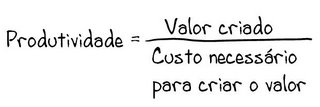
As empresas podem crescer à custa da escala (volume), à custa do denominador da equação da produtividade a produzir mais do mesmo, ou podem crescer à custa da subida na escala de valor, à custa do numerador da equação da produtividade a produzir coisas diferentes, coisas com maior valor acrescentado.
O racional é o mesmo do agricultor que só consegue aumentar a produção trabalhando mais e mais terra, é a via cancerosa.
Entretanto, já depois de escrever o que está para trás. Deparo com este tweet:

A última vez que pensei no assunto foi no mês passado quando descobri quem é o novo líder máximo da Cruz Vermelha Portuguesa. A minha mente começou logo a imaginar quais os seus critérios de decisão, qual a sua experiência de decisão, o que é que automaticamente lhe aparece na cabeça quando tem de tomar uma decisão.
Como escrevi em Não é impunemente ...
"Não é impunemente que se vivem e se acumulam experiências de gestão.
Por que volto agora ao tema? Por causa de um dos casos de estudo apresentado no Capítulo II do livro “Cracked It! How to solve big problems and sell solutions like top strategy consultants.” Um caso, já aqui referido várias vezes no blogue, de Ron Johnson à frente da J.C. Penney:
"Johnson began his tenure as CEO on November 1, 2011, and quickly pursued dramatic changes.
...
By April 2013 Johnson was out as CEO, only 18 months after he started.
...
There are clear signs that Johnson fell into the solution confirmation trap. Both his merchandising strategy— branded products sold at undiscounted prices in cool-looking stores— and the way he promoted it, with Steve Jobs style keynote speeches, seem lifted from the Apple playbook. And once his mind was set on making this Apple-style strategy work for J.C. Penney, Johnson paid no attention to signs it was failing. Those who questioned the strategy or advised him to slow down its execution were dismissed, because, Johnson assured, "skepticism takes the oxygen out of innovation."
...
This is puzzling. Johnson was an experienced, highly successful retail executive, described by some press reports as "an industry icon" who "turns anything he touches to gold."
...
When we tackle a complex and multifaceted problem that we superficially understand, it can seem intractably broad. In these cases, it's tempting to frame the problem narrowly to make it look like one we've worked on before. We can then reason by (superficial) analogy to quickly identify a solution instead of investing in thoroughly understanding the problem."
Num outro nível também o tema por um outro prisma, quando as revistas de gestão,ou os jornais entrevistam CEOs de empresas grandes é um perigo os decisores das empresas mais pequenas pensarem que podem copiar o que lêem.
Recordar o que tenho escrito aqui ao longo dos anos sobre a Zara e as tiradas de preocupação com o ambiente:
Principais medidas da proposta aprovada:
"Consider ’work’. Work remains a dominating and defining part of our lives. We spend one third of our time doing it; increasingly more time than we spend with our loved ones.
…
Work is, and has always tended to be, one of the most defining aspects of our lives. ... Work is where we obtain purpose and meaning; where we meet friends, socialize and have community (and in an increasingly secular society it is one of the few remaining places where we can get sense of community); it is where we get motivated and engaged; where we can create and solve.
On the flip side, work can also drive us to utter exasperation and frustration; where we feel our efforts are a waste of time; where we feel unvalued, unloved and taken for granted; where we feel stressed.
...
- According to Forbes, new data shows that for almost 70 per cent of people, their manager has more impact on their mental health than their therapist or their doctor - and it's equal to the impact of their partner.
- The Macleod Report found that '54 per cent of the actively disengaged say that work stress caused them to behave poorly with friends or family members in the previous three months, against 17 per cent of the engaged. More alarmingly, 54 per cent of the actively disengaged say their work lives are having a negative effect on their physical health, versus 12 per cent of the engaged.
- The Stress Institute in Stockholm found that 'employees who had managers who were incompetent, inconsiderate, secretive, or uncommunicative were 60 per cent more likely to suffer a heart attack or other cardiac condition?
…It is easy to see that the word pension may become an anachronism to most people under the age of 40. Indeed, from that data it is no surprise that 24 per cent of Millennials - that cohort born between 1981 and 1996 and (in 2023) aged between 27 and 42 - think they will never retire (this statistic was pre-pandemic before the recent bout of inflation further tarnished any retirement plans)....In the UK, the retirement age is due to rise from 67 to 68, and recent reports have indicated that the government may bring this date forward by eight years."
Em 2010 escrevi este postal The Knowledge Funnel (parte I) onde usei esta imagem de Roger Martin:

"The world is full of mysteries, which is what makes life interesting. In addition to being interesting, tackling a mystery and developing a great heuristic for dealing with the knowledge in question can be extremely remunerative....Codifying one’s own heuristic is an enormous challenge....Beyond the enormity of the challenge, there is the problem of what economists call ‘moral hazard.’ People in possession of a heuristic have strong disincentives to shift it from specific knowledge exclusively in their heads to general knowledge, even though doing so would be good for humanity. If they cause it to become general knowledge, the supply of people in possession of the heuristic would grow and the value to its creator would fall....If a heuristic becomes evenly distributed general knowledge, it is more readily advanced to an algorithm so that even a machine could do it....LLM/AI has the power of pushing knowledge more quickly through the knowledge funnel by de-partitioning heuristics, making them more ubiquitous faster, which I believe will hasten their further advancement to algorithms — which is good for the world....As a manager/professional, you need to work on creating a uniquely valuable heuristic. If you simply run an algorithm, you are probably out of a job already. If you haven’t done the thinking work to formalize the heuristics that you employ in your own work, good luck, it is only a matter of time until you will be replaced. And if you have aimed for a heuristic of average quality, you are directly in LLM/AI’s kill-zone.To have a great career in the modern economy, the only path is to have an above average heuristic for creating value in the specific domain of your job. LLM/AI won’t find your heuristic because that is not what it is looking for if your heuristic is out on the right tail of the distribution. Creating an above average heuristic is a high bar — but will increasingly be reality in the LLM/AI economy."
Entretanto, ontem li:
Em África, todas as manhãs, uma gazela acorda. Sabe que tem de correr mais depressa que o leão, ser mais veloz ou será morta.Todas as manhãs, um leão acorda. Sabe que tem de correr mais depressa que a gazela mais lenta, ou morrerá de fome. Não interessa se és um leão ou uma gazela. Quando o sol se levantar será bom que corras.
The Wall Street journal article indicated the Kansas subcontractor, that builds the fuselage made a practice of firing and transferring quality personnel who found too many defects.https://t.co/gxcvlqKMZF
— Gary Heintz (@garyandglendah1) March 12, 2024
Verdade seja dita que a afirmação do tweet não se encontra no texto do artigo "Boeing Response in Alaska Airlines 737 MAX Probe Is Blasted by Feds" no entanto, transpira uma cultura que impressiona:
"The airplane maker hadn't provided the names of 25 employees the NTSB believes may have information about work on a door plug that later flew off a plane during a Jan. 5 flight,
...
Boeing also hasn't provided investigators with documents about factory work related to the door plug's removal and reinstallation in mid-September, she said, adding that certain documents might not exist.
...
Homendy said Boeing has told the NTSB that it hasn't been able to find relevant documents in some cases. She said the safety board has been told Boeing has a process for removing, opening and reinstalling door plugs, but that the company hasn't yet provided the written procedures."
Mais informação em "Boeing discloses names of 737 MAX employees after NTSB chair faults cooperation" e em "US FAA hits Boeing 737 MAX production for quality control issues"
Entretanto o subcontratado Spirit AeroSystems tem muitas certificações.
Sintomas de apodrecimento de modelos que degeneram sob a pressão da doença anglo-saxónica em empresas too big to fail.
Já escrevi sobre a radioclubização, sobre o hollowing e o eficientismo.
#Mexico has overtaken China as the U.S.'s main goods supplier 🇲🇽🤝🇺🇸
— OECtoday (@OECtoday) March 7, 2024
Global Trade’s "Great War" between the #US and #China is an economic conflict on a scale that hasn't been seen in the modern era.
Mexico's "China Plus One" strategy aimed at reducing the risks of being drawn… pic.twitter.com/sAj1JLAG4V
Também me mandaram um e-mail com este artigo "Mexico Surpasses China as America’s Top Trade Partner". Tudo alinhado com "Peter Zeihan, March 5, 2024":
(9' 41'') - it's the perfect partner by any number of measures. If there was one country on this planet that we wanted to have as a trading partner, Mexico is the one we want, and so last year Mexico retook its position as our number one trading partner...
Por um lado, "Montenegro acredita que país é capaz de voltar a crescer a "3, 4 ou 5%"":
""Nós conseguimos crescer a 3, 4, 5 por cento, conseguimos. Já conseguimos noutros períodos da nossa história, porque é que a minha geração, a vossa geração hão de estar renitentes quanto à sua capacidade?", questionou, dizendo que o país até tem mais instrumentos tecnológicos, mais financiamento externo e mais qualificações. Por essas razões, Montenegro disse acreditar muito na capacidade dos empresários e de Portugal."
por outro lado, "Peter Zeihan, March 5, 2024" diz-nos:
"in the next few years, the Koreans will lead us into whatever's next as that bulge that's currently capital and skills rich and paying taxes ages into Mass retirement, and it all goes away, and so a few years from now, the Koreans will have to figure out a new economic and political and social model that is not based on consumption or on production or on investment what will that look at what will that look like I have no idea because no country in human history has ever crossed that Rubicon and the Koreans definitely will not be alone all right let's start bottom left with the Germans are in the same situation as Korea for very similar reasons this is their last decade as an industrial power if you want a beamer get it now you should probably get 10 years apart because you're going to need those I'd love for that to be a joke."
BTW aos 10' 59'':
"and then there's the Chinese who is already one of the five fastest collapsing workforces in human history and this data from June of last year is wrong they updated the data in July check out the bottom of it they are now reporting officially a larger drop in the birth rate in the last five years in China than what happened to the Jews of Europe during the Holocaust that's an official data unofficially the Chinese Academy of Sciences which is kind of their wise men group that interprets government statistics says that this is wrong that they've overcounted their population by more than a 100 million people"
Quinta-feira passada ao principio da tarde, no final de uma reunião, recordava Tom Peters com o seu "Too big to care":
""The mean" is the average. Another word for "mediocre."When an organization gets big enough, by definition, it's the average.When you have enough customers, they represent the population as a whole.If you find yourself seeking to serve the largest possible number of people, you've signed up to be average. Without a doubt, you're raising the bar compared to the ones who came before, but scale has its costs.If you ship enough products to enough people, average is inevitable."
Há dias li no WSJ este longo artigo, "Rich Countries Are Becoming Addicted to Cheap Labor".
Entretanto, ontem li "The Cheap Labor Addiction?". Interessante, quer o texto do artigo, quer a troca de comentários. Julgo que se trata do tema que tenho abordado aqui no blogue acerca dos "Flying Geese" e também do tema desta semana sobre o papel dos empresários e da produtividade do país.
Por exemplo, acerca deste trecho no jornal:
"In Canada, economists say the government has cast aside a carefully managed immigration system that gave priority to highly skilled workers, and ramped up significantly the intake of foreign students and other low-skilled temporary workers. By flooding the market with cheap labor, Ottawa may be propping up uncompetitive businesses and ultimately damaging productivity (1), according to a December report co-written by former Canadian central-bank governor David Dodge."
Leio:
"Notice the strange use of the word "uncompetitive." If those businesses are able to do well and maybe even thrive, how are they uncompetitive? (2) In fact, they are quite competitive.
And how would hiring more workers reduce productivity? (3) Are the employers stupid? Do they want to pay people who not only don't produce but also reduce production?
Of course not. It's clear what Dodge means. He means that hiring low-skilled workers could easily reduce average productivity.
Indeed, the very next paragraph of the news story makes my point:
Economic output per capita is lower than it was in 2018 following years of record immigration (4), notes Mikal Skuterud, an economist at Waterloo University in Ontario. Canada has been bringing in so many low-skilled workers that it lowers the country's productivity overall (5), he says.
Skuterud is pointing to average productivity even though he blows it at the end by equating that to the "country's productivity overall.""
(1) e (2) - Já abordamos este tema aqui, misturar e fundir produtividade e competitividade dá asneira. Daí esta imagem que uso há anos:

(3) - Produtividade de empresas versus produtividade agregada de um país. Recordo Salário mínimo, produtividade, motivação/malandragem e desemprego (parte II)
(4) e (5) - Recordo Falta a parte dolorosa da transição
Podem querer o que quiserem, mas a opção que tomarem tem custos.
"Framing your problem means articulating what your problem is. To help you do so, a frame provides with three main parts: (1) a substance part; (2) an engagement part (with information on the stakeholders involved); and (3) a logistics part. Let's get started on the first part.
Borrowing from archetypical narratives in storytelling, you can capture the substance of the problem by summarising it in a single overarching question, the quest, that you contextualise with a clearly defined protagonist (the hero), a goal that the hero wants to achieve (the treasure), and an obstacle between the two (the dragon).
...
Yet, like it or not, how a problem is framed matters (see below).? People tend to underappreciate what they don't know, and poor framing partly explains why a large proportion of strategic decisions fail. First, if you frame poorly, you risk addressing a symptom, or a perceived problem, rather than the underlying disease.
...
Second, poor framing also creates problems when you ask your stakeholders to support your conclusions. If you haven't considered their perspectives in your framing, expect struggles when 'selling' them on the merits of your approach.
An effective frame is also critical because you know more than your stakeholders. Working on your problem for days, weeks or months, you will easily presume that they know more than they do. We often see this perception gap, called the curse of knowledge, between project teams and their stakeholders."
Trechos retirados de "Solvable - A simple solution to complex problems" de Arnaud Chevallier e Albrecht Enders"
"In the late 1990s and early 2000s, the U.S. and the global economy experienced a "China shock," a boom in imports of cheap Chinese made goods that helped keep inflation low but at the cost of local manufacturing jobs. [Moi ici: Lembram-se dos experts a dizerem que por cá era por causa do euro? Recordo, O choque chinês num país de moeda forte (parte VI), It's not the euro, stupid! (parte IV) e Acerca da desvalorização interna] A sequel might be in the making as Beijing doubles down on exports to revive the country's growth. Its factories are churning out more cars, machinery and consumer electronics than its domestic economy can absorb. Propped up by cheap, state-directed loans, Chinese companies are glutting foreign markets with products they can't sell at home.
Some economists see this China shock pushing inflation down even more than the first. China's economy is now slowing, whereas, in the previous era, it was booming. As a result, the disinflationary effect of cheap Chinese-manufactured goods won't be offset by Chinese demand for iron ore, coal and other commodities.
...
There are some countervailing forces. The U.S., Europe and Japan don't want a rerun of the early 2000s, when cheap Chinese goods put many of their factories out of business. So they have extended billions of dollars in support to industries deemed strategic, and imposed or threatened to impose tariffs on Chinese imports. Aging populations and persistent labor shortages in the developed world could further offset some disinflationary pressure China exerts this time. "It won't be the same China shock," said David Autor, a professor of economics at the Massachusetts Institute of Technology and one of the authors of a 2016 paper that described the original China shock.
Even so, "the concerns are more fundamental" now, Autor said, because China is competing with advanced economies in cars, computer chips and complex machinery-higher-value industries that are viewed as more central to technological leadership.
...
In 2016, Autor and other economists estimated that the U.S. lost more than two million jobs between 1999 and 2011 as a result of Chinese imports, as makers of furniture, toys and clothes buckled under the competition and workers in hollowed-out communities struggled to find new roles. A sequel of sorts appears to be under way."
A ser verdade, o impacte será sentido sobretudo pelos fabricantes de produtos como máquinas e automóveis.
Trechos retirados do WSJ de 4 de Março passado em "New China Export Boom Cuts Two Ways".
Disclaimer: Eu vou votar Iniciativa Liberal, como um mal menor.
Este artigo no DN, "IL avisa empresários: "Vão ter mesmo de aumentar os salários" dos trabalhadores", que li ontem, ilustra porque também é um mal. Aliás, eu tento ouvir o menos possível a campanha da Iniciativa Liberal para não ser tentado a mudar de ideias.
Há aqui um paralelismo com o que costumo dizer aos agricultores e disse uma vez sobre os pescadores:
"O papel dos pescadores não é alimentarem o mundo, não são a Santa Casa da Misericórdia ponto. O papel dos pescadores é ganharem a sua vida ponto."
"Estou farto de escrever aqui no blogue que a função do agricultor não é alimentar a sociedade, a função do agricultor é ganhar dinheiro através da prática da agricultura. A sociedade não quer saber dos agricultores, quer produtos agrícolas baratos nem que venham da Ucrânia. Por isso, o agricultor não deve ser trouxa e deve trabalhar para quem valoriza o fruto da sua actividade. Adiante." (Aqui)
Rui Rocha disse:
"O presidente da IL disse esta segunda-feira diretamente aos empresários que "vão ter mesmo de aumentar os salários dos trabalhadores" porque, caso contrário, não será possível contrariar a saída sistemática de pessoas qualificadas do país."
O que ele disse sobre "a saída sistemática de pessoas qualificadas do país" é mentira? Não!
Não faz sentido é pedir a empresários que resolvam um problema da comunidade, quando eles não só não têm capital para o fazer como essa não é a sua função.

Isto só ilustra que Rui Rocha ignora os mastins dos Baskerville, o que é pena. Está como Alexandre Relvas, também acha que o salto da produtividade irlandesa foi feito por empresários irlandeses. Tem muito para aprender.
Já agora, em que é que isto difere do discurso de Mortágua sobre o tema?
"Há sempre uma desculpa para os salários baixos, o contrato precário, os horários impossíveis. Há sempre o "agora não pode ser", que a economia não aguenta melhores salários, que a produtividade não aumenta, que Portugal é um país pobre", disse, advertindo que "Portugal é um país pobre porque paga salários pobres"."
Acaso Rui Rocha acha que as empresas podem pagar melhores salários mas não querem? E que basta exortar os empresários para isso acontecer?
Rui Rocha não relaciona aumento de salários com aumento da produtividade... isto é demasiado grave.
Rui Rocha é outro que não pode dizer "a Festa de Natal do jardim-escola foi uma valente porcaria!"
Qual a resposta de um liberal a tudo isto? Não matem empresas deliberadamente, mas deixem as empresas morrer!
E se quiserem mesmo que a produtividade e os salários aumentem a sério, promovam a receita irlandesa e o mercado fará o papel que não cabe aos políticos, o de escolher vencedores.

"A multinacional do calçado, Ecco'Let, sediada em São João de Ver, Santa Maria da Feira, prepara o despedimento de cerca de 10% dos seus trabalhadores. A informação foi avançada, na manhã de ontem, aos funcionários."
Recordar:
Leite, tomate e ... turismo.
No caso do leite e do tomate percebo o que acontece e percebo o efeito pernicioso da intervenção governamental.
No passado dia 1 de Março no JdN li "Geopolítica, juros e salários preocupam indústria" um artigo baseado numa conversa com o presidente da Associação Industrial Portuguesa (AIP).
A certa altura leio:
"O abrandamento da procura externa, os conflitos na Ucrânia e no Médio Oriente, a concorrência asiática, as taxas de juro, [Moi ici: Factores conjunturais] os custos salariais e a produtividade são os principais desafios que a indústria enfrenta para este ano. [Moi ici: Enfrenta para este ano?! Come on, não se iludam, são factores estruturais] O leque de preocupações é elencado pelo presidente da Associação Industrial Portuguesa (AIP), que em declarações ao Negócios começa por descrever o "estado da arte" e a evolução do setor secundário nacional. "A base industrial do país tem enfraquecido. O peso da indústria transformadora no produto interno bruto não ultrapassa 14%, e 25% no valor acrescentado bruto. [Moi ici: Releiam este número. A indústria é responsável por 25% no valor acrescentado bruto. Será verdade? E isso é bom ou mau? E isso é relevante para o tema da produtividade e do crescimento ou não? Que dados podemos consultar? Podemos comparar com outros países? Dados do Banco Mundial no gráfico abaixo] O número de empresas industriais (68.501) no número total das sociedades comerciais é de 9,2%.A diferença da produtividade industrial também é alarmante: é cerca de um terço da francesa e pouco mais de metade da espanhola", ", alerta.
É uma evolução que, na opinião de José Eduardo Carvalho, "explica, em parte, o anémico crescimento em que temos vivido". "Um país com uma forte base industrial reforça a competitividade externa e o grau de internacionalização da economia, produz mais conhecimento e inovação e aumenta a competitividade salarial", defende."


Alguém diz ao filho com 5 anos?
- A actuação do vosso ano na Festa de Natal do jardim-escola foi uma valente porcaria!
Claro que não... por isso, o presidente da Associação Industrial Portuguesa prefere atirar culpas para cima do governo de turno. O governo de turno tem culpa por causa dos mastins que não ladram, não tem culpa do desempenho das empresas existentes. O presidente da Associação Industrial Portuguesa não pode fazer o mesmo que eu aqui no blogue. Ele tem de lutar pelo aumento da produtividade do que existe, mas isso não quer dizer que o que existe possa subir a sua produtividade para níveis próximos da média europeia. Se ele abrisse a boca para falar dos mastins dos Baskerville, tinha uma rebelião em casa. Isto enquanto não for percebido, é uma conversa de surdos.
Há tanta coisa a aparecer nos jornais por estes dias e relevante para o mundo empresarial.
A sensação é de que à boleia de algum wokismo institucional está-se a condenar as PMEs a terem de responder como os agricultores, talvez daqui a 2 anos quando começarem a perceber as multas e as inspecções a sucederem-se.
Já ouviram falar da CSRD?
Não? Façam como eu, perguntem ao ChatGPT:
"The Corporate Sustainability Reporting Directive (CSRD) is a significant legislative development in the European Union that came into force on January 5, 2023. It modernizes and strengthens the rules regarding the social and environmental information companies must report. The CSRD expands the scope of companies that must comply with these reporting requirements to include a broader set of large companies and listed SMEs (small and medium-sized enterprises).
The directive mandates that companies disclose various information related to environmental, social, and governance (ESG) aspects. These include environmental disclosures like climate change mitigation and adaptation, pollution, and biodiversity; social and human rights disclosures such as gender equality and working conditions; and governance disclosures that cover the management of sustainability matters and risk management.
One notable aspect of the CSRD is its emphasis on aligning business models and strategies to limit global warming to 1.5 °C, in line with the Paris Agreement. Companies must also disclose their due diligence processes in sustainability matters, including actions to prevent or mitigate adverse impacts on their operations or value chain.
The CSRD also introduces assurance obligations, requiring companies to obtain third-party assurance over their disclosures. Initially, this will be "limited" assurance, but by 2028, it is planned to adopt standards for more comprehensive assurance.
The CSRD will be implemented in phases, starting with companies already subject to the EU’s Non-Financial Reporting Directive (NFRD) for fiscal years beginning January 1, 2024. Other large companies, listed SMEs, and non-EU companies falling within the CSRD’s scope will follow in subsequent years.
The detailed disclosure requirements are being developed as European Sustainability Reporting Standards (ESRS) by the European Financial Reporting Advisory Group (EFRAG) and will be adopted by the European Commission."
Esta semana perguntei a uma pessoa do mundo da Contabilidade se já tinha olhado para Sustainability regulation outlook 2024
Já agora, no FT de ontem li "Green audits are coming for a firm near you":
"Green activists never used to attack accountants. No wonder: bean counters' work seems dull compared with oil drillers or flamboyant bankers.
But last week the IFRS, a doughty global accounting standards body, experienced a "first": protesters stormed its New York meeting as Brian Moynihan, chief executive of Bank of America, was opining on green audit rules. Yes, really.
And while that particular drama was shortlived, it highlights a wider fight now hanging over corporate boards. For even as right-wing politicians, such as former US president Donald Trump, decry "woke" activists, some regulators are tightening green reporting rules."And the EU is now introducing a new Corporate Sustainability Reporting Directive that is arguably even tougher. This demands disclosure about emissions from companies' core operations and energy suppliers (so-called scope 1 and scope 2 emissions) and wider supply chain (so-called scope 3 reports).
Since few companies provide such details now, the new directive "will significantly expand the scope of ESG disclosure required of us", as Goldman Sachs noted this month, echoing a widely held sentiment."
Entretanto no passado dia 23 de Fevereiro foi introduzida uma emenda nas ISO 9001 e ISO 14001 que torna difícil às PMEs fugirem disto, mesmo não estando na bolsa.
Num discurso, "Opening remarks by Commissioner McGuinness at the European Parliament plenary debate on the Corporate Sustainability Reporting Directive" li:
"The final text of the Directive provides a good basis for alignment with the proposed Corporate Sustainability Due Diligence Directive, which is currently in trilogues.
The text also addresses the particular situation of SMES.
And there are provisions to prevent SMEs in supply chains from being unduly burdened by "trickledown" information requests from larger companies."
Pois, basta pesquisar no semanário Expresso as vezes que li que os bancos serão pressionados a só emprestarem às empresas que reportam segundo a CSRD.
Os últimos trechos que retiro de "The Discipline of Political Savvy" do livro "The Six Disciplines of Strategic Thinking" de Michael D. Watkins.
Ao ler estas linhas lembrei-me logo do exemplo da Jofebar sobre a qual escrevi aqui em:
"To achieve your objectives, you need to identify potential winning coalitions
...
Think too about potential blocking coalitions those who collectively have the power to say no and how you can avoid having opposition coalesce.
...
Recognize also that relationships and alliances are not the same thing. This is not to say that relationships aren't valuable; they certainly are. However, they are not the sole basis for building alliances because understanding people's agendas and your alignment with them - or lack thereof - is also essential.
...
Defining your influence objectives
The first step in developing your influence is seeking clarity about why you need the support of others.
...
Understanding the key decision-makers
Armed with a clear understanding of what you're trying to accomplish, you can now focus on whose support is essential and how you will secure it. Start by identifying the alliances you need to build to achieve your objectives. To what extent do you need to gain the support of others over whom you don't have authority?
You may need to explore whether there are exchanges or "deals" you can strike that might help to win people over. Figure 15 summarizes common "currencies" for exchange in organizations, including providing resource or inspiration, confirming higher status, giving personal support and even simply expressing appreciation.
On top of identifying potential exchanges, you need to assess situational pressures, which means understanding the forces that are guiding the key decision-makers because of the context in which they operate. Think in terms of driving and restraining forces. Driving forces push people in the direction you want them to go, and restraining forces are situational reasons they would say no....You will also need to focus on how the people you want to influence perceive their alternatives or choices. What are the options from which they believe they can choose?"
O que pode ser feito para minimizar o foco de alguns empreiteiros no preço?
Parcerias Estratégicas: Desenvolver parcerias com arquitectos e designers para criar projectos de referência que mostrem o impacte positivo dos produtos Jofebar.
Comunicação Eficaz: Utilizar estudos de caso e testemunhos para destacar os benefícios dos produtos e como eles resolvem problemas específicos do sector.
Formação e Educação: Proporcionar formações ou workshops sobre as vantagens técnicas e estéticas dos produtos, aumentando o conhecimento técnico dos empreiteiros.
Serviço Pós-Venda: Garantir um excelente serviço pós-venda para construir confiança e fidelidade dos clientes, mostrando que o investimento vale a pena.
Já agora, a figura acima, assim como a linguagem destas duas partes, ilustram bem porque prefiro esta abordagem na ISO 9001:

"While sustained profitable growth is a nearly universal goal, it is an elusive one for many companies.
...
And the majority of firms in the top quartile were unable to sustain superior growth performance for more than a few years. ... In our analysis, we found that only about 15% of the companies in the top growth quartile in 1985 were able to sustain their top-quartile performance for at least 30 years.
Over the past two decades, I have tried to understand why some companies are more effective at sustaining growth and what senior leaders can do to navigate the organizational challenges it poses.
...
In my research, I've found that most companies think of growth potential in terms of "demand side" factors: external trends, market share, and other metrics such as total addressable market. These are important, of course, but they are only half the story. Supply-side constraints matter just as much: High demand potential does not translate into profitable growth unless an organization has or can develop the capabilities needed to meet that demand. So a strategic perspective on growth means analyzing the company's sustainable growth rate (considering all resources, not just money) and then thinking through the trade-offs inherent in faster or slower growth. For instance, there may be excellent strategic reasons to grow more quickly (for example, a market where first-mover advantages or network effects are present), but that faster growth must be weighed against the potential harm it creates.
...
The basic question that companies must address is: In which markets do our capabilities and other unique resources (such as brand, customer relationships, reputation, and so on) provide us with a competitive advantage? A scale-focused strategy will tend to revolve around deep, market-specific capabilities.
Successful scope strategies, in contrast, require the development of broader, general-purpose capabilities and resources that can be leveraged across market segments and lines of business. In some industries, brand equity is the basis for scope expansion."
Trechos retirados de "How Fast Should Your Company Really Grow?"
ONE COLD, HARD truth laid bare by the pandemic is how vulnerable a business can become when strategic foresight and operational flexibility are low on the list of priorities for boards and leadership teams.
...
strategy needs to change as the world does. Over the past 30 years we've lived through a remarkable era of macrostability, characterized by largely peaceful geopolitics, generally falling interest rates, expanding credit markets, and moderate inflation. During that time, five new trends in the business landscape emerged: globalization, capital superabundance, the declining cost of distance, labor superabundance, and, underlying all those, technology-led innovation. Winning companies adapted their organizations to the trends, embracing such mantras as "Move fast" and "Adapt or die" to create enormous amounts of value.
We've now entered a new era in which new rules apply. It's a time of post-globalization, capital rationalization, spatial dispersion, shrinking workforces, and dependence on automation. Meanwhile, technology-led innovation is only accelerating and compounding. In this environment, the intuitions that leaders have developed over the past few decades will cease to be useful-and the shape of opportunity and risk will be entirely different.
If leaders want to continue creating value in the era of volatility, they must still focus on adaptability. But they'll also need to revive strategies that boost investment in two other capabilities that have fallen out of favor in recent years: resilience and prediction. Ultimately, every company will need a strategy that allocates time, resources, and energy to all three capabilities."
Trechos retirados de "How to Succeed in an Era of Volatility"
%2006.21.jpeg)