sábado, abril 26, 2014

O excesso de procura afasta clientes? (parte II)

Neste postal acerca do Evangelho do Valor faço referência a um dos gráficos da minha vida:

Em "The Power of Pricing" encontro:
"For most companies, managing pricing is the most effective, lowest-risk lever for driving top-line growth and enhancing profitability. Multiple studies have shown that a 1 percent increase in pricing can have a much greater impact on the bottom line than bringing variable costs down by 1 percent or by increasing sales by 1 percent. That said, however, recent Nielsen research across categories has shown wide discrepancies in how successful companies are in their abilities to realize pricing power, making it clear that when it comes to this capability, there are winners and losers both across and within categories. It also highlights an opportunity for those that have not optimized their approach to pricing.
...
Overcome the commodity perspective. One of the biggest barriers to achieving pricing power is believing that you’re stuck in a commodity category or that you only have a commodity offer. ...  Bottled water is a great example: if companies can differentiate water, they can differentiate anything.
.
Price to benefit distinct consumer clusters rather than to the entire market. No two customers—and no two customer needs—are exactly alike. Each customer has a different level of interest in your category, is seeking a different set of benefits and has a certain level of price sensitivity.
...
Once you understand the consumer segments in the market, examine the value equation for each. The value equation is simply the total benefits gained from the offer divided by the price paid to get them, expressed as “value = benefits/price.”
...
Ultimately, pricing power is the tangible outcome of an effective strategy—one that differentiates businesses from their competitors and creates something that makes paying more for worth consumers’ while. In contrast, undifferentiated commodities will lack pricing power because they simply accept the level of pricing the market will bear."
Por fim, encontro este interessante postal de Rags Srinivasan "What does slowing iPad sales really mean in 10 pictures", depois de o ler comparem com "O excesso de procura afasta clientes?"
.
BTW, malta da tríade que só sabe baixar o preço quando a procura baixa, convém olhar com cuidado para o texto de Rags.

"the energy being devoted by governments ..."

Quase que posso dizer:
.
- Leram aqui primeiro! Sim, foi neste blogue que primeiro leram sobre as dificuldades que os governos iriam levantar, em conluio com os incumbentes, para barrar a expansão da economia da partilha e do aluguer, para barrar a progressão de Mongo. Recordar "A reacção a Mongo"
.
Agora na The Economist em "The sharing economy - Remove the roadblocks":
"IT IS not hard to find evidence of the success of the “sharing economy”, in which people rent beds, cars and other underused assets directly from each other, co-ordinated via the internet.
...
But perhaps the most flattering—and least welcome—indicator of the sharing economy’s rise is the energy being devoted by governments, courts and competitors to thwarting it.
...
The newcomers’ opponents, whether competitors, officials or worried citizens, complain that the likes of Airbnb and Lyft dodge the rules and taxes that apply to conventional businesses. Regulations exist to keep hotel rooms and kitchens clean and fire alarms in working order, to stop residential areas being pocked with unlicensed hotels, and to see that cabbies are insured, checked for criminality and tested on their knowledge of the streets. Cowboys such as Airbnb, Lyft and Uber, their critics claim, are a danger to an unsuspecting public.
...
The truth is that most of the rules that the sharing economy is breaking have little to do with protecting the public. The opposition to Lyft and Uber is coming not from customers but from taxi companies, which understand that GPS makes detailed knowledge of the streets redundant and fear cheaper competition."

Acerca do Made in Spain

Vale a pena reflectir sobre "Made in Spain - A pressing issue"
"the country clearly has some way to go in raising the prestige of the “Made in Spain” label."
E nós por cá, o que é que as nossas marcas, em tantos sectores, ainda precisam de fazer?
"Olive oil accounts for a mere 0.8% of Spain’s exports. Yet it is an extra-sensitive matter. The country is the world’s largest producer of the oil, but one-third of its exports are sent in bulk to Italy where it is bottled and sold, often for a significant markup, under Italian labels.
...
It is a similar story for wine. Spain has overtaken France and Italy to become the world’s largest producer, but sells almost half of its exports in bulk to markets like France, some of which is retailed under French labels. French- and Italian-labelled wines typically fetch higher prices than Spanish-labelled ones, though the gap is narrowing."

Cuidado com o Big Data

Como se pode ver no histórico deste blogue, desconfio muito do poder do "big data", por isso, recomendo vivamente a leitura de "Big Data: Are we making a big mistake?":
"while big data promise much to scientists, entrepreneurs and governments, they are doomed to disappoint us if we ignore some very familiar statistical lessons.
“There are a lot of small data problems that occur in big data,” says Spiegelhalter. “They don’t disappear because you’ve got lots of the stuff. They get worse.”"

sexta-feira, abril 25, 2014

sem skin-in-the-game é sempre fácil mandar bitaites

Volta e meia aparecem uns indivíduos, ou políticos, ou analistas económicos, ou professores de Economia (enfim, os membros da tríade), que defendem que o país tem de investir na tecnologia de ponta, tem de abandonar os sectores tradicionais para abraçar sectores mais sexy. Quando os oiço ou leio lembro-me sempre dos macacos que não voam (aqui, ou aqui e ainda aqui, ver o marcador hausmann).
.
Lembrei-me desses membros da tríade, durante a caminhada da manhã, ao ler em "Unstoppable: Finding Hidden Assets to Renew the Core and Fuel Profitable Growth" de Chris Zook:
"The odds of success, based on our analysis and other studies of business transformation, are shown in figure 1-3. What is striking is the large gap between an organic approach using hidden assets, where such a path can be found, and the alternative paths of defending the status quo as the world around you changes, diversifying rapidly to a hot new market, or attempting a big-bang move. The approaches using hidden assets worked to improve returns and drive new growth about one-third of the time, whereas the other approaches had success rates that hovered closer to one in ten."
"...
.
The least attractive courses - the ones that the statistical record shows destroy most value - are the bold moves of desperation: leaping to a hot market, piling all your chips on a risky new technology, or going for a big-bang move with your remaining resources. The record of success here is not much better than a oure lottery."
É sempre fácil, para quem lida com o dinheiro dos outros, sem skin-in-the-game, mandar bitaites

Os "experts" mandam bitaites

Os "experts" mandam bitaites:

Bom para esfregar na cara

"Segundo o banco central, as exportações de bens e serviços cresceram 6,1% em 2013, uma aceleração face aos 3,2% de 2012, e um valor substancialmente acima da procura externa dirigida à economia portuguesa que, no ano passado, cresceu apenas 1,3%. O Banco de Portugal calcula que entre 2011 e 2013 o País tenha registado um ganho de quota de mercado de exportações de cerca de 10%.
.
Este desempenho foi essencial para o excedente comercial registado no ano passado: “Em 2013, a balança corrente e de capital registou um excedente de 2,6% do PIB e o primeiro excedente da balança de bens e serviços em cerca de 70 anos”, lê-se numa nota que acompanha o Boletim Económico de Primavera, divulgado quarta-feira, dia 23 de Abril, onde se acrescenta que a evolução “traduz, por um lado, um crescimento expressivo das exportações e, por outro, um crescimento moderado das importações, após anos de queda continuada”."
Bom para esfregar na cara do Luís "atirem dinheiro para cima dos problemas" Delgado.
.
Trecho retirado de "Banco de Portugal elogia primeiro excedente comercial em 70 anos"

O jogo de sedução pode ir para muito mais longe

Esta interessante reflexão de Seth Godin "Is digital the end of luxury brands?" deixa-me a fazer a ponte para o livro de Itamar Simonson e Emanuel Rosen, "Absolute Value":
"Consumers used to make decisions relative to other things—a brand name, their previous experience with a company, an inflated list price, a brand’s advertising message compared to competing brands’ messages, or the other products a marketer chose to display on a catalog page or on the shelf. Conventional wisdom still holds that people’s choices can be greatly influenced by the context or the framing of an offer.
.
But for the first time this is starting to change and we’re moving toward an age of nearly perfect information. Review sites, shopping apps on smartphones, an extended network of acquaintances available through social media, and unprecedented access to experts and other sources, all mean that many consumers today operate in a radically different, socially intensive information environment. In a world where consumers enjoy complete access to informed experts and various information services, where they can instantly read the opinions of previous users, it’s much easier for consumers to predict their likely experience with a product or a service—it’s easier to know the absolute value of things. When we talk about “absolute value” we refer to the experienced quality of a product. For example, the experience at a restaurant, the pleasure (or boredom) one might experience reading a book, the closeness of the shave, the actual comfort of headphones, or the usage value you get from using your camera. So “absolute value” doesn’t only refer to the technical specifications and reliability of a camera, but to what it is like to own and actually use it. In short: The new information environment around us allows consumers to predict much more accurately the experienced quality (or absolute value) of products and services they consider getting."
Ainda tenho de ler o livro mas à partida vou de pé atrás. Julgo que as marcas colhem o que semeiam... e, na linha do que Niraj Dawar escreveu recentemente em "Tilt", e se escreve neste blogue há muitos anos, o jogo de sedução pode ir para muito mais longe do que simplesmente o produto em si.
.
ADENDA: E o mercado de massas, tem futuro?

quinta-feira, abril 24, 2014

Para reflexão

A propósito de "Sonae investe na expansão da Solinca para liderar sector", vários temas para reflexão:

  • "O objectivo desta estratégia é tirar a liderança do sector ao Holmes Place." [Moi ici: Já sabem o que penso das estratégias baseadas na conquista de quota de mercado... adiante]
  • "Para acompanhar o aumento de sócios (em 2013, o número de sócios activos aumentou 38%), ... O volume de negócios cresceu 8% numa base comparável, ao atingir 11,2 milhões." 
  • [Moi ici: Uma movimentação interessante a que se segue] "Segundo Bernardo Novo, "a Solinca não quer ser só um ‘player' de ginásios, quer ser uma marca de actividade física e de lazer". E para isso, criou uma nova divisão vocacionada para organizar eventos ‘outdoor'. Até ao Verão, vão ser promovidas 18 provas no País, entre maratonas, caminhadas, provas lúdicas, algumas abertas à participação das famílias. "Vamos ser a primeira operadora a entrar neste segmento, que vai activar a marca e ajudar a comunicar e a disseminá-la de uma forma diferente, já que estaremos próximos de um novo público", diz. Estas provas têm potencial para captar entre 70 a 80 mil pessoas." [Moi ici: O conceito de ecossistema da procura, tão caro a este blogue]

Steve Blank acerca do eficientismo

"You’re witnessing creative destruction and disruptive innovation at work. It's the paradox of progress in a capitalist economy.
...
the world you lead will be much different from the one your professors knew or your predecessors managed.
...
ndustries that we all grew up with, industries that enjoyed decades of market dominance--like newspapers, bookstores, video rentals, personal computers--are being swept away.
...
where established companies might see risks or threats, startups see opportunity.
...
Yet in the face of all this change, traditional firms continue to embrace a management ethos that values efficiency over innovation. [Moi ici: Este é um dos meus temas de eleição, dizer mal do eficientismo] Companies horde cash and squeeze the most revenue and margin from the money they use. Instead of measuring success in dollars of profit, firms focus on measuring capital efficiency.
...
Cheered on by finance professors, Wall Street analysts, investors and hedge funds, companies have learned how to make metrics like Internal Rate of Return look great by
1. outsourcing everything,
2. getting assets off their balance sheet, and
3. only investing in things that pay off fast.
.
As Harvard professor Clayton Christensen noted, these efficiency metrics provided wise guidance for times when capital was scarce and raising money was hard. But they have also stacked the deck against investment in long-term innovation.
...
In fact, I predict that over the next few decades, we will see two classes of public companies. The first will be commodity businesses that are valued for their ability to execute their current business model. Their lifetime as a market leader will be measured in years. The second class will be firms with a demonstrated ability to continually innovate and reinvent their business models. The companies that can show "startup-like" growth rates of 50 percent plus per year will get stratospheric market valuations.
...
Think about this.  When it comes to innovation, public companies have two strikes against them.  First the markets favor capital efficiency over R&D.  And secondly, their sole purpose is to focus resources on the execution of their business model. [Moi ici: De um lado uma multidão de Davids, do outro alguns poucos Golias]
.
As a consequence, companies are optimized for execution over innovation. And to keep executing large organizations hire employees with a range of skills and competencies. To manage these employees companies create metrics to control, measure and reward execution.
...
These Key Performance Indicators and processes are what make a company efficient, but they are also the root cause of its inability to be agile and innovative. Every time another execution process is added, corporate innovation dies a little more.

Trecho retirado de "Steve Blank on the Next 50 Years of Business Innovation"

O excesso de procura afasta clientes?

Há dias no Facebook, a propósito de "É um restaurante com tanto sucesso que já ninguém o frequenta" comentaram:
"Mas os preços não podem, não devem, subir só porque as pessoas querem os produtos! Aumentar a qualidade, o valor dos produtos para justificar o aumentos dos preços também tem um efeito malicioso: vai afastar, pelo preço, pessoas que deixam de ter acesso aos mesmos. Ou não será?"
E quantos clientes deixam de ter acesso ao serviço porque o excesso de procura deteriora as condições da oferta desse serviço?
.
Vamos admitir que uma empresa tem uma oferta que disponibiliza aos potenciais clientes por 10€ a unidade. Vamos admitir que a oferta é atraente e, por isso, tem muita procura.
.
O que é que vai acontecer à empresa se mantiver a sua oferta a 10€ para sempre?
.
Mais tarde ou mais cedo, vai aparecer um concorrente a oferecer uma oferta equivalente ou parecida a um preço ligeiramente mais baixo. Mais tarde ou mais cedo, aparece sempre um concorrente capaz de produzir e vender mais barato. Todos os clientes vão, em teoria, optar por esta oferta alternativa. Ficar parado no tempo não é solução.
.
O que é que vai acontecer à empresa se decidir aumentar pura e simplesmente o preço sem, em contrapartida, melhorar a proposta de valor? O mais provável é perder clientes que não vão tolerar essa decisão.
.
O que se propõe é concentrar a atenção nos clientes underserved e melhorar a proposta de valor para eles, tendo como contrapartida um preço superior. E, para os clientes overserved desenvolver uma outra oferta, se a empresa quiser e puder separar as ofertas.

O tempo é a variável mais preciosa

No Twitter costumo tratar a ministra Assunção Cristas como a "Incumbente". Os incumbentes, como aqui se recorda, estão sempre mais preocupados em defender o passado do que em agarrar o futuro. Interessante, pois, encontrar isto:
"A ministra garantiu ainda que "Portugal tem mantido, e manteve sempre, uma posição firme contra o fim das quotas leiteiras" na Europa, previsto para 2015, afirmando a necessidade de se manter "a pressão" em "respostas que possam ser acionadas de forma até preventiva em situações de crise na área do leite"."
Pena que não esteja a mobilizar o sector para conjugar isto:
""há bem pouco tempo foi possível abrir o mercado chinês" aos laticínios portugueses." 
Com isto "Será que os produtores nacionais de leite estão a aproveitar?"

quarta-feira, abril 23, 2014

Mais heróis...

Há dias pensei neles, a propósito desta reflexão "Acerca dos fabulosos programas de inovação". Verifico aqui, "Indasa 14 milhões para disputar EUA e mercados emergentes", que estão bem e recomendam-se:
""Estamos com um aumento de vendas de 18% em relação ao ano passado e as perspetivas de crescimento são boas. O próprio mercado nacional está a crescer", comentou Benjamim Santos.
.
Apesar de importar "praticamente todas" as matérias primas, a Indasa exporta 76% da produção, sendo a Europa a principal cliente, com 51%, seguida dos EUA, com 17,89%, onde tem de lutar com o "gigante" 3M, mas é nos mercados emergentes que vai focar a atenção, com a Índia, Médio Oriente e sobretudo o Brasil em mira, apesar de ser "o mercado mais complicado" para o grupo, que enfrenta a concorrência de fabricantes locais, mas também aí da 3M.
.
Nessa competição, a Indasa aposta "no topo da qualidade com preços altos", já que tem alguns produtos de melhor qualidade do que a concorrente norte-americana."
Outros muito preocupados [ironia] com a austeridade do Estado.

Heróis

É um gosto encontrar esta velha conhecida sempre cheia de força e dinamismo:
"O Presidente da República classificou o fabricante de acessórios para bicicletas e motos Polisport, que exporta para marcas como a KTM e BMW, como um dos "heróis" que demonstraram dinâmica económica face à "fraqueza da procura interna""
 O Presidente é que podia estar mais bem informado e perceber que o mercado da Polisport nunca foi o mercado interno, há muitos anos que a empresa fez o by-pass ao país.

Trecho retirado de "Cavaco Silva: Exportadores são "heróis" face à "fraqueza da procura interna""
.
Recordar o papel do balanced scorecard.

"They’ll work hard to ... protect the past from the future."

"you should care about business innovation and disruption because they’re a primary way that progress happens and that people become better off over time.
.
Incumbents, of course, don’t want to be disrupted. And they’ll throw up all manner of barriers and smoke screens to try to prevent it from happening. They’ll enlist politicians, regulators, PR agencies, and everyone else they can think of to help with their campaigns to maintain the status quo.
...
They’ll work hard to, as my friend Tim O’Reilly puts it, protect the past from the future. We should work hard to oppose this trend, and to protect the future from the past. A first step in this work is to be skeptical of claims from incumbents that when they protect themselves from upstart disruptors they’re also helping us out. Most of time, they’re not."

Trecho retirado de "Don’t Let Incumbents Hold Back the Future"

Estratégia pura e dura em vez de preço

Em "Universidades privadas perderam um quarto dos alunos em três anos" leio:
"A crise chegou em força ao ensino superior privado nos últimos três anos lectivos. Desde 2010/11, período que coincide com a intervenção da troika no país, as universidades privadas perderam mais de vinte mil alunos, o que representa um quarto do total da sua população estudantil."
Por que é que esta explicação parece-me redutora e pouco "científica"?
.
Recuemos a Fevereiro de 2007 e a "Formular uma estratégia, é a actividade mais sexy da gestão (1)", ou Setembro de 2006 e a "A necessidade de uma estratégia e de um "sense of urgency"". Engraçado, os jornalistas tinham já ´descoberto a causa do problema em 2006:
"Vem isto a propósito da notícia de capa da Semanário Económico da passada semana "Universidades privadas perdem 3000 alunos por ano" de onde retiro as seguintes afirmações: "Universidades culpam a demografia e a “concorrência desleal” do Estado."
Agora, se calhar os mesmos jornalistas, já que a casa é a mesma, têm outra explicação, a troika. E o papel da publicidade aos cursos de Relvas e Sócrates não dá uma ajuda a denegrir a sua imagem? Adiante...
.
O que é que aqui escrevemos em Julho de 2006 em "Que estratégia para uma universidade privada?"?
"A bola está do lado das universidades privadas e a resposta só pode ser uma: ser diferente. Apostar em cursos que não existem na universidade pública ou apostar em cursos semelhantes no papel mas que se distinguem, ou pela qualidade do ensino, ou pela taxa de empregabilidade dos seus cursos. Não vale a pena apostar na estratégia do preço, aí não têm hipóteses, pelo menos sem cheque-ensino."
O que leio ainda no DE de hoje acerca do tema?
O pior caminho possível, o mesmo que os jornais seguiram face à internet: "Universidades privadas com cursos a saldo para atrair alunos".
.
Estamos a ver para onde isto as vai levar... combater a demografia e Bolonha com cursos a saldo. Tentar competir com a oferta do ensino superior fornecido pelo Estado no preço... hão-de ter uma sorte.
.
Aconselho outro rumo, para o mesmo público: apostar na diferença dos cursos e na empregabilidade dos seus alunos. E os novos públicos, no mundo actual, porque é que a universidade não há-de procurar introduzir-se na formação pós "certificação"? Sim, eu sei, é difícil mentalmente trabalhar para alunos que pagam do seu bolso e são muito mais exigentes, e não vão para encher o CV mas para aprender genuinamente algo... pois, e qual a relação que as universidades têm com o mundo real?
.
Estratégia pura e dura em vez de preço
.
BTW, o que eu me ri ao recordar os crentes no modelo do século XX, na escala, no tamanho como forma de enfrentar o desafio do futuro.

terça-feira, abril 22, 2014

"talvez este país ainda precise mesmo de falir"

"O que é estar preparado para chefiar o Governo num tempo de crise quando se tem de suceder a uma longa série de chefes de Governo (supostamente bem preparados) que conduziram a sociedade por trajectórias que a fizeram cair no abismo da impossibilidade, numa crise extrema em que o passado não liga com o futuro e o presente é o precipício da queda? Os que estavam preparados (e ainda hoje não compreendem o que aconteceu) terão sido melhores do que o actual, talvez impreparado, mas que tem a vantagem de reconhecer que a sociedade mergulhou numa impossibilidade e que sabe, por ciência ou por instinto, que o futuro não pode ser a continuidade do passado?
...
há imparidades na democracia quando o anunciado na propaganda eleitoral não corresponde ao que é realizado na economia e na sociedade. Os sucessivos candidatos eleitos, supostamente bem preparados e como tal legitimados pelos eleitores, anunciaram o que não sabiam produzir. Prometeram o paraíso, conduziram para as trevas do abismo."
Ouvido esta tarde na rádio:
""Após esta reunião, o PS ficou com uma certeza: O programa de assistência financeira até pode acabar formalmente amanhã, mas a política de austeridade vai continuar." 
Só após esta reunião? Precisaram desta reunião?
.
Prefiro os impreparados a estes super-preparados prontos a caminhar, novamente, para as trevas do abismo.
.
.
.
.
Pensando bem... talvez este país ainda precise mesmo de falir para que muita gente aprende de onde vem o dinheiro e de quanto ele custa a ganhar.
.
Trecho inicial retirado de "As imparidades na política"
.
Trecho final retirado de "PS com a "certeza" de que a austeridade vai continuar em Portugal"

Ética como mais um truque vs a service-dominat logic

O trecho que se segue, foi retirado do artigo de ontem no JdN, "O vendedor português é mais alemão do que sul-europeu"
"A crise mudou a forma como se vende?Temos de ser franco-atiradores selectivos. Até há cinco anos tínhamos um canhão com grande calibre e uma parede com muitos clientes. Qualquer tonto disparava e conseguia alguma venda porque havia muita procura, boas margens e as pessoas pagavam. De repente começaram a não pagar, há menos financiamento, menos orçamento das empresas, mais penúria financeira nas famílias. Trocou-se o canhão por um fuzil de franco-atirador com três balas: 'agora prepara-te e dispara'. Passámos para uma especialização maior porque a empresa não quer qualquer cliente. Há mais trabalho no escritório para que na rua seja mais efectivo. Com sistemas de controlo, aplicações móveis, controlo de presença aos vendedores, análises de risco do cliente para saber quem devo ou não visitar. E o vendedor, cada vez mais consultor e menos agressivo, deve gerir bem o tempo, saber quem atacar e não disparar à queima-roupa."
Quem segue este blogue sabe que convido as empresas a:

  • não quererem servir todo o tipo de clientes;
  • a seleccionarem os seus clientes-alvo;
  • a adoptarem a postura do consultor de comprar em detrimento da postura do vendedor.
No entanto, não é isso que quero salientar neste trecho...
.
O que sublinho é a linguagem utilizada... a mudança da empresa não assenta numa mudança de mentalidade, assenta sim numa táctica. Um pouco o que encontro hoje em "Daniel Bessa: A ética pode ser um factor de competitividade":
"A experiência de Daniel Bessa diz-lhe que as empresas têm vindo a adoptar, de forma crescente, procedimentos éticos. Uma das razões é o facto de ter retorno, pois pode ser um factor de competitividade"
É o mesmo erro... não se deve adoptar uma abordagem ética porque gera retorno e pode ser um factor de competitividade. Deve adoptar-se uma abordagem ética porque sim, está antes de considerações de vantagem competitiva.
.
No último livro de Vargo e Lusch "Service-Dominant Logic: Premises, Perspectives, Possibilities" encontro um texto que expõe muito melhor a situação:
"Foundational premise 8: a service-centered view is inherently customer oriented and relational .
A logical derivation from axiom 2, that the customer is always a cocreator of value, is the eighth foundational premise: a service-centered view is inherently customer oriented and relational. The concepts of customer orientation and relationship marketing have become mainstream topics in the patched up G-D marketing management model. However, they became mainstream concepts not because the traditional G-D logic model is inherently customer and relationally focused but rather because it treats the customer as exogenous to the enterprise's value-creation efforts; therefore, the enterprise must be instructed to be customer oriented. Likewise, G-D logic is focused on transactional exchange and thus enterprises have to be encouraged to take a "relational," long-term, customer perspective. This long-term perspective has been facilitated by the development of various customer relationship management (CRM) software and is often used to estimate customer lifetime value (CLV). [Moi ici: Os tais estudos prévios referidos no primeiro texto] Importantly and unfortunately, the CRM and CLV approach to customer and relationship management continues the G-D logic approach by treating the beneficiary actor as an operand resource. The CRM and CLV technologies move the enterprise away from singular transactions to multiple transactions over time, in order to profit from the lifetime value of a customer. Importantly, the result is a "patch" to the shortfalls and limitations of G-D logic, rather than an inherently relational and customer (re)orientation.
...
An S-D logic perspective on relationship is grounded in value cocreation by actors instead of the G-D logic, output-producing orientation, in which value is assumed to be added and embedded in the production (and distribution/marketing) of the output. Value is seen as emerging and unfolding overtime, rather than as a discrete, production-consumption event. This unfolding, cocreational (directly or through goods) nature of value is relational in the sense that the activities of exchange actors as well as those of other actors interactively and interdependently combine, over time, to cocreate value. From the S-D logic perspective, relationship is not optional. Cocreation of value and service exchange implies a complex web of value-creating relationships."

Ética como mais um truque, como algo que agora faz sentido porque... não!

"Resources are not, they become"

Uma nota interessante retirada da leitura de  "Service-Dominat Logic: Premises, Perspectives, Possibilities" de Robert Lusch e Stephen Vargo.
"to adopt the view of not what resources are, but rather what they become. This is the essential nature of resources, and so we define them as anything, tangible or intangible, internal or external, operand or operant, that the actor can draw on for increased viability.
...
"Resources are not, they become." [Moi ici: Pensei logo nos licenciados desempregados deste país] This is a simple but profound statement and central to understanding the nature of the service-centered view. At the foundation of its meaning is recognizing that some actors' skills and knowledge determine "resourceness." Resourceness reflects the quality and realization of potential resources, through the process of human appraisal and action, which then transforms potential resources into realized resources."

"É um restaurante com tanto sucesso que já ninguém o frequenta"

O André Cruz chamou-me a atenção para este artigo "Despite increased profits, Netflix says it will raise prices to improve speed and selection".
.
Fiz logo a ponte para uma conversa recente, uma empresa estava com excesso de procura e a minha resposta instintiva foi: "aumente os preços!"
"despite its improved profits, Netflix plans to raise prices. "Our current view is to do a $1 or $2 increase, depending on the country, later this quarter for new members only. Existing members would stay at current pricing (e.g., $7.99 in the US) for a generous time period. These changes will enable us to acquire more content and deliver an even better streaming experience.""
E, como crente no Evangelho do Valor, só posso imaginar o impacte positivo desta decisão.
.
O excesso da procura não só revela que os clientes experienciam mais valor do que a empresa pensa, como pode prejudicar a própria experiência. Recordo aquela frase americana:
"É um restaurante com tanto sucesso que já ninguém o frequenta"

Há desafios que não podem ser atingidos sem o ataque aos problemas crónicos

Finding deficiencies and getting rid of them is not a way of improving the performance of the system. An improvement program must be directed at what you want, not at what you don’t want. And, determining what you do want requires redesigning the system, not for the future, but for right now, and asking yourself what would you do right now if you could do whatever you wanted to. If you don’t know what you would do if you could do what you wanted to do how could you ever know what you would do under constraints?”
.
                                               Russell L. Ackoff
A frase é interessante mas não sei se estarei totalmente de acordo com ela.
.
Estou envolvido num projecto em que o objectivo de aumentar as margens tem de passar por passar a fazer coisas, desenvolver relações com outros actores do ecossistema, que a empresa só agora começa a equacionar.
.
Estou envolvido num outro projecto em que o objectivo também passa por aumentar as margens, nesse caso, a empresa tem de passar a fazer coisas novas mas tem também de reduzir a frequência com que dois problemas crónicos ocorrem.
.
Há desafios que não podem ser atingidos sem o ataque aos problemas crónicos que tolhem o desempenho de uma empresa.

segunda-feira, abril 21, 2014

"sabe-se o que se pretende com tão retorcido raciocínio"

"A procura provém do rendimento que resulta da produção.  Os preços baixos estimulam a procura e trazem mais consumo e mais consumidores.
.
Não se conhece evidência empírica que faça suspeitar da inversão deste processo.
.
Mas sabe-se o que se pretende com tão retorcido raciocínio: a retoma da expansão artificial da procura por via da aceleração da expansão da massa monetária e do crédito."
Uma boa análise de Avelino de Jesus em "Por onde irá o BCE?"

"where value emerges for customers and is perceived by them"

"Nowhere is the idea that enterprises make and deliver value more evident than in the concept of "value added." Value added has been a ter used to describe the process of firms transforming matter to change its form, and its time, place, and possession. Predictably, these transformations require effort and thus costs, and these costs  became labeled "value added" and often identified as a source of "utility." However, offerings (tangible or intangible) are not embedded with value (valu-in-exchange) or utility but rather value occurs when the offering is used.
.
Accountants might believe that an unsold good has value but this is economic value; value creation from an actor-centric and service-dominant vantage point is only possible when market and other offerings are used - that is, when they contribute to the well-being of some actor in the context of his or her life.
.
With G - D logic, the value is embedded during production and distribution/marketing without the involvement of the actor who will become the beneficiary of the enterprise's offering. Early scholars in the area of services marketing succinctly identified the problem with G - D logic. For example, Gumesson argued: "if the consumer is the focal point of marketing, value creation is only possible when a good or service is consumed. An unsold good has no value, and a service provider without customers cannot produce anything." Similarly, Groonroos stated:
.
Value for customers is created throughout the relationship  by the customer, partly in interactions between the customer and the supplier or service provider. The focus is not on products but on the customers' value-creating processes where value emerges for customers and is perceived by them ... the focus of marketing is value creation rather than value distribution, and facilitation and support of value-creating processes rather than simply distributing ready-made value to customers."
Trecho retirado de "Service-Dominat Logic: Premises, Perspectives, Possibilities" de Robert Lusch e Stephen Vargo.

"you get the behavior you reward"

Em conversa, durante almoço familiar, ouvi várias estórias, contadas em primeira mão, sobre a abordagem dos vendedores dos ginásios e, como a mesma é contraproducente criando desconfiança junto dos potenciais clientes.
.
Imaginei logo que por trás destas abordagens estarão bónus ou comissões por vendas obtidas. A diferença entre os consultores de compra e os vendedores é impressionante. O consultor de compra primeiro pensa no cliente, o vendedor primeiro pensa em si.
.
Interessante, pois, este artigo "Bonuses Should Be Tied to Customer Value, Not Sales Targets":
"we realized that “how” we do our job is just as important as what we do. Ultimately every leader knows that you get the behavior you reward. At GSK, we’ve decided that bonus incentives for our sales professionals should be tied to the value we bring in ensuring that patients are appropriately treated with our medicines.
.
This patient focus is a core value for us, along with transparency, respect, and integrity. So instead of specific prescriptions sold, we began to reward our representatives for their patient focus, understanding of their customer, problem solving, and level of scientific knowledge as measured by tests and other assessments.
...
Renewing focus on our values by reshaping employee incentives is helping us do more to help doctors help their patients. We are not the only industry that needs to better meet society’s expectations.  Every one of us in the corporate world must look at our business through the eyes of our customers and nimbly respond to their changing expectations."

Qual é o seu negócio?

"Understanding what business you are in and why that matters to customers is what enables you to differentiate your brand. That understanding helps you to narrow the focus of your business strategy. If your purpose is to delight customers with the best customer service on the planet, for example, then your strategy will revolve around hiring, training, and retaining the best staff. Understanding the business you are in is the first step toward making your product or service something that the market values beyond its utility. Good businesses become great brands when their truth intersects with the truth of what it is their customers really want.
...
"What business are you in? [Moi ici: E o seu negócio não é o que faz, o seu negócio é o que ajuda os clientes a atingir] Are you selling coffee or lifestyle? Renting rooms online or giving people the opportunity to connect and experience a city in new ways? Or…? What do your customers want from you? Would they like a product or support? Gym membership or improved health and wellness? How do your customers want to feel? Connected, informed, reassured, special, excited, happy, fulfilled, and on and on. Have you asked them? What can you do to get them there? Do your team members make an effort to remember regular customers’ names and orders? Starbucks has a whole website, called mystarbucksidea.com, dedicated to getting customer feedback and suggestions. Does your website have a blog with comments where customers can share their views? Are you using social media to really listen to your customers?"
Trechos retirados de "The fortune cookie principle : the 20 keys to a great brand story and why your business needs one" de  Bernadette Jiwa

O poder do hábito

"Quick show of hands: how many of you are currently wear a FitBit, FuelBand or another “Wearable” device? Keep your hand up if you’ve been wearing for more than a month.
.
I suspect there aren’t a lot of hands in the air. Why? Last year, all of my friends were wearing Nike+ FuelBands. Now I can only think of two friends who I see consistently wear them.
...
Three Weeks. That’s about how long somebody keeps a wearable on their wrist or their face before they forget to put it back on.
...
These devices really do have the capability to improve our lives, yet until they can find a way to transform from wearable into habit, there will be trouble for the entire wearable device market. [Moi ici: Leio isto e questiono-me. O que é que as empresas vendem, tecnologia ou resultados na vida de quem as compra? Desconfio que se venda mais a tecnologia e se concentrem menos nos resultados que cada um pode conseguir]
...
I absolutely believe that consumers want these devices. I absolutely believe that consumers can embrace devices.
...
If wearable makers like Nike and Google really believes these devices are the future (I do), the, they need to focus on turning these devices into habits first. Until that happens, wearables will remain in the niche."
Como não recordar "The Power of Habit: Why We Do What We Do in Life and Business" de Charles Duhigg e o Cue-Routine-Reward.


Trechos retirados de "The Three Weeks Problem: The Real Challenge for Wearables"

domingo, abril 20, 2014

"simply working hard won't do the trick"

"It is all about priority.
.
Unfortunately, most companies lack a unified and integrated approach for addressing market opportunities. Very few have a rigorous set of tools and processes in place that enable them to recognize, prioritize, and set appropriate strategies in a way that maximizes shareholder value. Worse yet, different silos throughout the organization often have different processes in place. It is amazing how many companies—and how many people—I see working effectively in the market space in which they've been operating—without realizing that all of their work is fruitless. No matter how many hours they put in or how well they compete, they're doing it in vain if they are competing in the wrong space—in the part of the market that has low margins or where someone else can squeeze their margins through the ownership of what we will call “strategic control points.” ... If your competitor has a better formulated and executed strategy, simply working hard won't do the trick."
Trecho retirado de "Compete smarter, not harder: a process for developing the right priorities through strategic thinking" de William Putsis.

Quando é que os clientes toleram um aumento de preço?

"No product deserves higher price tag just because of its quality or because the marketer believes so.  Customers decide whether or the higher price tag is worth it.
.
Even if Motorola [o nome da sua empresa] believe there is higher value to the customer and customers agree with that value proposition,  the reference price set by Apple [nome da referência no mercado em que actua, ou que os seus clientes-alvo usam como líder de um cut-off criteria] brings down the price they can charge."
E ainda:
"Raising prices is not a prerogative. Those who thought otherwise and said their products deserved the price tag saw their business run to ground.
.
It is not permission from your CFO or shareholders. It is permission from the customers you chose to serve. It is important to see the narrow definition here – “customers you chose to serve”. First the word customers clearly indicates they pay you for your product. Second it is your choice of who to serve since you cannot and should not go after every one with a need and willing to pay for filling that need. [Moi ici: Recordar aquela frase da minha autoria, "O cliente tem sempre a última palavra, mas o fornecedor tem a primeira"]
.
The permission is intrinsic. It is in the form of additional value you deliver to your customers above and beyond the price they pay. More precisely it is the perceived value of customers."
BTW, este era o racional que me faltava em 1992 quando li o artigo "Managing Price, Gaining Profit" de Michael V. Marn e Robert L. Rosiello na revista Harvard Business Review, quando é que os clientes toleram um aumento de preço.
.
Trecho inicial retirado de "Xoom: Pricing is Wrong, Costing is Wrong or Playing for the Niche"
.
Segundo trecho retirado de "Permission to raise prices"

Confusões acerca da eficiência e da produtividade

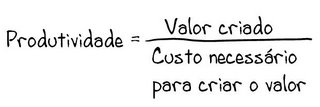
Ainda relacionado com "efficiency without effectiveness is inherently inefficient" este texto "Should Your Business Be Less Productive?".
.
A ideia-base é defendida há muitos anos neste blogue. Contudo, julgo que o autor continua a usar a medida da produtividade para comparar outputs diferentes. E mais, ler este texto com as ideias da service-dominant logic muito frescas... é como ser exímio numa linguagem e perceber que o autor anda a arranhar as primeiras palavras dessa mesma linguagem:
"Many contemporary businesses are on a quest for productivity gains. They seek to maintain quality and quantity of output at ever-decreasing cost, yielding higher profitability. As advanced economies move more into the service sector, that means many managers devote a lot of attention to designing automated processes that reduce the need for people [Moi ici: O mais recente exemplo que encontrei é o das lojas Grab & Go, interacção mínima] — typically their most expensive resource.
...
in service businesses, productivity gains are not always easy to make without sacrificing perceptions of quality. [Moi ici: Acho que o autor fala da produtividade como sendo uma unidade de medida de coisas, de quantidade de coisas por unidade de tempo. Eu gosto de a ver como dinheiro por unidade de tempo, daí as duas visões opostas - produzir cada vez mais unidades e ganhar cada vez menos com cada uma, ou produzir cada vez menos unidades e ganhar cada vez mais com cada uma, como no calçado português ou nestes textos de Christensen e Peppers] For service businesses, quality perceptions tend to correlate with investments in labor. The truth is that things are different in service, and unlike on the assembly line, increased productivity may not always lead to increased profitability. [Moi ici: Esta frase só faz sentido se a produtividade for uma medida da velocidade de produção de coisas equivalentes... muito redutor]
...
in a service business, productivity must be treated as a strategic decision variable, not as a reliable path to greater profitability. ... productivity improvements often have counterproductive results in a service business.
...
Executives typically think about productivity as something to be maximized; if capitalism were a religion, the virtues of pursuing productivity would be a key tenet. After all, at a macroeconomic level, more productivity always means more profit and ultimately more wealth. If employees do more work than before, how can that be bad? But at a micro level, we believed that the dynamics could be different.
...
Our research suggests that instead of seeing productivity as an outcome to be maximized, it is better for service companies to view productivity as a strategic decision variable that depends on the business and the technology in question. A company needs to choose the right level of productivity, neither too high nor too low, to maximize its profitability. [Moi ici: Até que enfim, que faz a ligação...]
.
Based on our model, the key to making decisions about productivity is considering two factors: (1) the state of the technology and (2) the relative importance of customer satisfaction. In particular, we believe the importance of customer satisfaction is too often underestimated. When customer satisfaction is more important than efficiency, a service company’s optimal productivity level should probably be comparatively lower.
...
When should customer satisfaction be given more weight than efficiency? When margins are higher.[Moi ici: Será que o autor acha que eficiência e produtividade são a mesma coisa?]
...
So if wages are higher, productivity should be higher. [Moi ici: Hmmm quer isto dizer, seguindo a lógica do autor que se os salários são mais altos se tem de ser mais eficiente? Não faz sentido!!! A não ser que comparemos outputs semelhantes. Um restaurante de luxo pode pagar mais que um McDonalds, apesar de servir menos refeições, cada uma tem um valor muito superior. Não faz sentido comparar a produtividade em unidades quando estamos a falar de outputs diferentes]
...
In the manufacturing-dominated economy of 50 years ago, mass production and mass marketing were the name of the game. Quality meant standardization — manufacturing every part the same. [Moi ici: 100% de acordo, recordar a cristalização] Sales were often one-off transactions.
.
Things have changed dramatically since then. Today every developed economy is predominantly service; for example, the service sector accounts for about 80% of the U.S. economy.
...
The bottom line from both industry and academia is that the shift toward a service economy has transformed the way businesses should be managed. The traditional manufacturing-based, goods-oriented view of the business world no longer works — particularly with respect to how we think about productivity. [Moi ici: Por isso, o autor ganharia em estudar a service-dominant logic]
...
The implication is that whether your company is in service or manufacturing, these days, the chances are good that your company is at least partly a service company. If that’s the case, you should reexamine the assumptions about productivity that are embedded in management training and reward systems. In many ways, companies create incentives for managers to increase productivity, even at the expense of revenues and profits. If a manager thinks that he or she will make more money from increasing short-term productivity than from building long-term profits, the company may suffer."

sábado, abril 19, 2014

Acerca do poder da autenticidade

Outro tema que referimos com alguma frequência aqui no blogue é o da autenticidade (basta consultar o respectivo marcador):
"Studies show consumers prefer a product that they believe has the aura of authenticity."
Em "It's Proven: The Science Behind Why People Value Authentic Products" pode ler-se:
 "due to a belief in contagion, products from a company's original manufacturing location are seen as containing the essence of the brand. In turn, this belief in transferred essence leads consumers to view products from the original factory as more authentic and valuable than identical products made elsewhere."

Mais exemplos de "é meter código nisso!"

Na sequência de "Outra vez: É meter código nisso!" dois exemplos no calçado:

"Innovation is about being different in a way customers love"

Uma excelente reflexão sobre o que é, sobre o que pode ser a inovação em "INNOVATION IS ABOUT BEING DIFFERENT"

Outra vez politicamente incorrecto (parte II)

Parte I.
.
Recordei logo esta figura:
Ao ler "Lisboa é a região com maior taxa de desemprego do país"

e, sete meses depois de Agosto de 2013

Evolução do número de desempregados inscritos nos Centros de Emprego entre Janeiro de 2011 e Março de 2014:
A evolução homóloga do desemprego e a evolução mensal do desemprego entre Janeiro de 2011 e Março de 2014:
A figura que se segue tira uma fotografia da evolução homóloga do desemprego em Março de 2014 e, mostra onde está a ser criado emprego líquido (barras negativas):

Em Janeiro de 2013 havia 1 barra negativa, 18 em Outubro, 19 em Novembro, 21 em Dezembro e 24 em Janeiro e Fevereiro de 2014, agora em Março, 25 barras negativas.

sexta-feira, abril 18, 2014

"Treat different people differently. Anything else is a compromise"

Em sintonia com "efficiency without effectiveness is inherently inefficient" este delicioso trecho de hoje de Seth Godin:
"It's easy to lump people together into categories, easier still to say, "I know how you feel." But we don't, we can't, and given the choice, people will choose to be the people they wish to be.
.
Mass markets were a shorthand forced on marketers who had too little time or information or leverage to treat different people differently. They are the result of the mass merchant, the mass media and mass production. But humans aren't a homogeneous mass, we are individuals, as individual as we dare to be.
.
Marketing and governance and teaching and coaching and writing are built on a foundation of 'everyone', but in fact, we'd rather be someone.
.
Treat different people differently. Anything else is a compromise."
Daí Mongo, daí o Estranhistão, daí o terreno adequado à concorrência imperfeita, daí a vantagem de David e das PMEs.

Trecho retirado de "All the same"

Muito mais do que crio-preservação

A propósito de "Later, Baby: Will Freezing Your Eggs Free Your Career?".
.
O que me pôs a cabeça a pensar foi imaginar as empresas de crio-preservação a fazerem o marketing da crio-preservação, concentrando-se nas especificações e na técnica, ao mesmo tempo que passariam ao lado de toda a temática que pode passar pela cabeça de uma mulher, do que é valor para ela, do universo em que a crio-preservação se integra e, que é muito mais importante e valioso que a crio-preservação como técnica.
.
A crio-preservação é um recurso integrado por estas mulheres para melhor gerirem a sua vida, o serviço que se oferece não é a crio-preservação, é a sensação e a experiência de não estar dependente do relógio biológico.

Ou seja, se decidirem aumentar o salário mínimo...

Vou usar esta imagem:
Retirada de "Value hides" para recordar aquela frase que interiorizei em 2008 e nunca mais me largou:
"Existe mais variabilidade (no lucro, ou na produtividade) dentro de um sector económico, do que entre sectores económicos"
Como é que está o sector do calçado português? Muito bem!
.
Como é que estão algumas empresas do sector do calçado português?  "Campeão Português insolvente"
.
É fácil olhar para tabelas e médias (recordar "Uma das primeiras lições que aprendi no mundo do trabalho")
.
E esta disparidade não se deve, como alguns simplistas ignorantes apregoam, a ilegalidades ou má gestão no sentido de ruinosa. Direi, é a vida!
.
Nem sempre as decisões que os gestores tomam são as melhores, muitas vezes as decisões tomadas num certo contexto são boas e quando esse contexto muda, elas deviam mudar e não mudam.
.
Por isso, da próxima vez que pensarem que na Lesboa dos gabinetes, nos biombos e carpetes, conhecem a realidade ... pensem duas vezes. E quando pensarem em bitolas comuns para todos, assumam-no até ao fim. Ou seja, se decidirem aumentar o salário mínimo, não vão a correr a pedir ao mesmo governo que subsidie o emprego porque ... as Campeão Português deste país estão mal.

"efficiency without effectiveness is inherently inefficient"

Ontem, ao final da tarde fui fazer uma caminhada de 8km por meio dos futuros campos de milho. Agora, os lavradores andam a roçar as ervas e a colocar a bosta em montes no extremo dos campos.
Assim, enquanto caminhava e ia ouvindo, ao longe, o motor dos tractores e o canto do cuco, ia lendo o último livro de Vargo e Lusch, "Service-Dominant Logic: Prenises, Perspectives, Possibilities". Ao ler as linhas que se seguem... não pude deixar de sorrir, não pude deixar de recordar tanta incompreensão, tanto fanatismo pelo eficientismo... como é que o que se segue é tão difícil de entender e de quebrar o modelo mental dominante?
"goods could be produced "separate" from the consumer and thus standardized and controlled for greater manufacturing efficiency. Their ability to be standardized (homogenized) also contributed to production efficiency through economies of scale. Anything that deviated from these ideal characteristics decreased production efficiency and was regarded as a problem to be overcome. Not surprisingly, organizations in the "services" business tried to make their offerings more tangible and homogeneous and to produce as many of them as possible to create superior efficiency.
...
S-D logic shifts the focus from the production of outputs to the cocreation of benefits with and for the customer - that is, from efficiency to effectiveness. [Moi ici: Recordar o que aqui temos escrito, desde o tempo em que havia dinossauros, sobre o tema nos marcadores eficiência, eficácia e eficientismo] When viewed from the perspective of customer value creation, the supposedly negative qualities of services become the realities, if not the ideals or benefits, to be sought. Value is itself intangible and often a function of intangible aspects of the value proposition (e.g., brand, meaning, comfort-in-use). It is idiosyncratic and always involves some degree of customer interaction, within a dynamic context, and thus is inseparable, heterogeneous, and perishable. None of this shift in perspective should suggest that efficiency is not important. A hallmark of S-D logic is service-for-service exchange, rather than the creation and distribution of value, and the actor-to-actor (A2A) perspective argues that the value-creation process must work for the firm as well, often from the acquisition of surplus service (e.g., money) to efficient operations. But efficiency without effectiveness is inherently inefficient: Without effectiveness, there is no basis for service-for-service exchange, and, as such, the efficiency issue is meaningless. The "service" in S-D logic buttresses and emphasizes benefit and, thus, the superordinate nature of effectiveness with a constraint of relative efficiency ."

Acerca da escassez

A propósito de:
"A globalização do nosso tempo é alimentada pela alteração dos graus de mobilidade dos factores de produção, com vantagem para o capital e para o trabalho especializado, com desvantagem para o trabalho pouco diferenciado, para a terra e para a propriedade."
Fiz logo a ligação para:
"Conclui-se também que nem sempre mais habilitações significam mais vencimento. Por exemplo a diferença entre um contabilista ou revisor oficial de contas com, pelo menos três anos de experiência e habilitações mínimas de Mestrado, e um canalizador, com o quarto ano do primeiro ciclo e um mês de experiência profissional, são 100 euros, a favor do canalizador.
.
De acordo com esta oferta de trabalho para Valongo, o canalizador poderá ter trabalho durante seis meses a ganhar 800 euros. Já o contabilista para a zona de Cascais, a oferta de trabalho publicitada no portal do instituto de Emprego apenas oferece 700 euros."
A escassez continua a ser fundamental.
.
Como tantas vezes escrevo aqui no blogue, qual o ideal da escola?
.
Que todos saiam segundo um padrão traduzível numa avaliação numa escala qualquer.
.
Assim, há saída, são uma commodity.
.
Primeiro trecho retirado de "A mobilidade dos factores"
.
Segundo trecho retirado de "Ofertas de trabalho sobem 72% mas maioria para ganhar o salário mínimo"

quinta-feira, abril 17, 2014

Mais boas notícias

"a Companhia das Lezírias teve um lucro de 668 mil euros, mais 6% que no ano precedente. O resultado operacional subiu 13,2%. Sem a Coudelaria, o EBITDA ter-se-ia situado nos 2,16 milhões de euros.
...
As vendas totalizaram 4,8 milhões de euros, mais 21% que em 2012, atribuindo a empresa este crescimento à venda de vinhos e azeite (mais 36% para 1,12 milhões de euros), aos produtos florestais (mais 39% para 864 mil euros) e ao milho (mais 65% para 542 mil euros)."
Preocupados com a austeridade do Estado... pois!

Trechos retirados de "Companhia das Lezírias aumenta lucros"

Austeridade expansionista

"Economia portuguesa terá crescido 2,2% no primeiro trimestre"
.
"Universidade Católica revê crescimento em alta para 1,4% em 2014"

O Valor é co-criado e contextual

"value is not only a function of the resources the firm exchanges with another actor but also a function of how this actor integrates other resources with this resource offering. The best that a firm can do is to provide a value proposition, followed by the application of its resources, through service, in a manner that makes integration of the offering possible, if the proposition is accepted.
...
Value-in-context suggests that value is not only always cocreated; it is contingent on the integration of other resources and actors and thus is contextually specific.
...
value creation needs to be viewed in the context of social systems in which value is created and evaluated, idiosyncratically.
...
the strategic advantage of a firm can be recast from a logic that focuses on making better products to increase market share in existing markets to one of redefining existing markets for strategic advantage or defining and thus creating new markets."
Quem ainda pensa que o negócio são as coisas que fabrica ou os espaços que disponibiliza... está tão longe do futuro.


Trechos retirados de "Service_Dominant Logic: Premises, Perspectives, Possibilities" de Robert Lusch e Stephen Vargo.

Acerca da agricultura com futuro

"Quatro em cada dez frutas, legumes e flores produzidos em território nacional são exportados,
...
O presidente da Portugal Fresh, Manuel Évora, sublinhou que o sector exporta 38% da produção e factura cerca de 2,6 mil milhões de euros,
...
Segundo a Portugal Fresh, as exportações de frutas e legumes cresceram 26% nos últimos três anos."
Trechos retirados de "Portugal exporta quase 40% da produção de frutas e legumes"

Subir preços

Recomendo a leitura de "Is It Time To Rethink Your Prices? Yes, If You Want To Build A Sustainable Business":
"Your prices. Nothing has a bigger impact on your business’ sales, health, and bottom line. Set your prices too high, and your products or services won’t sell. However, according to analyst firm McKinsey, lowball prices are a far more common problem for businesses. In fact, they’ve found that upwards of 80% to 90% of all poorly chosen prices are too low.
...
Are Your Prices Too Low?.
Someone once told me, “If you set your prices once, they’re probably wrong.”
...
In addition, if your initial business strategy was to undercut the competition based on pricing alone, your prices are too low. Unless you are a multinational corporation selling commodity products, then cost cannot be the only weapon you have to attract new clients. It’s time to pick a new strategy and raise your prices.
.
Get Confident: Know Your Value.
What’s at the root of low prices? For the new business owner, it typically boils down to a lack of confidence. You charge the least amount on the market for fear that clients won’t pay more.
...
How to Raise Your Prices...
1. Sell based on value, not just price.
...
Work on differentiating your services by illustrating the unique value you bring to the table. By competing on performance instead of purely price, you can frame the customer’s decision in terms of your company’s strengths.
.
2. Create tiered packages. If you’re worried about what kind of resistance you might face by raising your prices, you can ease into the waters by creating tiered packages that appeal to a broad range of customers.
...
3. Just do it. Sometimes the best way to determine if customers are willing to pay more is to simply raise your prices and see their reaction.
...
Most important, keep your communication brief and don’t apologize for the pricing change.
.
4. Don’t worry about a lost sale or two. If no one has complained about your prices, it’s time to raise them.
...
Don’t worry if you lose a sale or two. By raising your prices, you end up working with the kind of clients who understand the value of investing in higher-priced, higher-value solutions. In short, your pricing strategy can help you attract the right kind of customers to build a sustainable business for the long haul."

quarta-feira, abril 16, 2014

Politicamente incorrecto

"Grandes empresas [grandes] defendem subida imediata do salário mínimo para mais de 500 euros"
.
"Pires de Lima: É importante que salário mínimo possa aumentar" onde se pode ler:
"Pires de Lima deu o seu exemplo passado como gestor que não precisou de esperar pelo Estado para subir remunerações."
Pena não ter referido o seu exemplo como "cortador" de postos de trabalho...
.
"Católica estima crescimento de 2% e subida do desemprego em 2015"

Recordar:

Já imagino racionais do tipo:
"se uma PME aumentar o seu salário mínimo para o valor do SMN do Luxemburgo, então não irá à falência"
Recordar qual é a primeira lei,  quando uma empresa grande pretende livrar-se de concorrentes sem os comprar?
.
Aumentar as barreiras legais e regulamentares!

Portanto...

A propósito de "Maior fábrica de cigarros de França encerra e deixa 327 pessoas sem emprego", na Segunda-feira passada à noite escrevi no Twitter:
"qd os alemães fizerem o mesmo com a indústria do automóvel para as massas jornaldenegocios.pt/empresas/indus… será 1 grande sinal"
Terça-feira encontrei isto "Empresa Imperial Tobacco fecha fábricas em Nantes e Nottingham" e, logo pela manhã, no Twitter favoritei:
"Rita Gunther McGrath @rgmcgrath
#futurefeed millennials: no cars, no malls, no Costco, no soda what a different landscape"
Portanto...
.
E as transições serão pagas pelos governos dos países que vão receber de mãos abertas estas indústrias em fim de ciclo de vida para as massas.

Curiosidade do dia

"Más de 10.000 trabajadores han paralizado la producción de una de las mayores fábricas del mundo de calzado deportivo, ubicada en China. Los obreros de la planta, situada en la región de Guangdong, llevan en huelga desde el 5 de abril por una disputa con la empresa por el impago de parte de los salarios."
Trecho retirado de "Huelga masiva en China en la mayor fábrica del mundo de zapatillas deportivas"

No caminho certo


Diferenciar, criar marcas, criar distinção

Cutoff criteria

Ontem, numa empresa, a propósito de um exercício de benchmarking do produto (de louvar, mas ainda muito concentrado no produto) fiz o esquema acima por causa do conceito que estava em causa.
.
Um potencial cliente precisa de um serviço prestado por um produto que pretende adquirir. Como é que ele faz a escolha?
.
Procura informação sobre todas as ofertas existentes no mercado?
.
O mais provável é ter um critério principal (cut-off criteria). Por exemplo, na semana passada alguém me dizia que só comprava carros alemães, dessa forma, a oferta potencial passou de várias dezenas de marcas para, se calhar, menos de meia-dúzia.
.
Assim, não faz sentido, para uma empresa que se situa no universo central da figura estar a comparar-se com empresas que pertencem a outros universos. Recordar "Acerca da diferenciação e do posicionamento".
.
Agora, faz todo o sentido, dentro do seu espaço competitivo, equacionar a posição da sua oferta  face a outras. Não só em termos de atributos e especificações do produto mas também em termos de desenvolvimento da interacção e da relação.
.
Ainda se pode defender que esta abordagem parte do principio que os mercados são realidades, são instituições, exteriores à empresa, que a empresa não pode alterar... e por que não?
.
A propósito desta última questão ando a ler "Market-driven versus driving markets" de Bernard Jaworski, Ajay K. Kohli e Arvind Sahay.
.
Voltando à figura, que cut-off criteria podem os seus potenciais clientes usar? E os seus influenciadores e prescritores, que critérios usam?

Outra dedicatória

Desta vez uma dedicatória para aqueles que considero já de meus amigos virtuais, os duendes da Velo Culture.
.
Como não os recordar ao ler este artigo sobre Mongo "Custom bikes and operations strategy":
"The article goes on to note that while small, those custom builders are responsible for a lot of the innovation in the industry. Because their work is premised on doing something unique, they are inclined to take more chances than a larger firm. So what does it take for these small guys to be successful?
.
An obvious consideration is price.
...
Consequently, a small maker does not need to be pumping out tens of thousands of units annually to make money.
...
success depends on convincing the buyer that you have superior operating capability — that you can turn out a product that has both unique design features as well as higher build quality than a high-end product from a high-volume product."

terça-feira, abril 15, 2014

E é isto

""No dia 25 de Maio cada português e cada portuguesa tem na sua mão e numa caneta a possibilidade de concretizar o seu desejo."
 .
António José Seguro, discurso de encerramento da oitava conferência "Novo Rumo para Portugal - um Novo Rumo para a Europa", Lisboa, 15 de Março de 2014."
Trecho retirado de "A democracia de Aladino" cuja leitura recomendo.
.
É por estas e por outras que tenho de voltar a pôr as colchas à janela para saudar a 4ª vinda do FMI

Desenvolver a relação, fugir do granel

"Como pode o vinho português continuar a crescer na Alemanha?Tem de envolver-se e trabalhar o perfil da diferença. O vinho é um negócio muito pessoal.[Moi ici: Não é um negócio para granel]
...
Quem são os principais concorrentes dos vinhos portugueses neste mercado?Portugal tem um nicho na Alemanha e concorre com todos. Mas desde que tenham um estilo muito individual, os vinhos portugueses não têm, estatisticamente, concorrentes diretos. [Moi ici: Parece Mongo, com a diferenciação acirrada, há lugar para todos]
...
O que é preciso para convencer os grandes compradores e sommeliers a colocarem os vinhos nas cartas dos grandes restaurantes?Convidando-os e ensinando-os sobre o que está a acontecer e mostrar-lhes as experiências da verdadeira cozinha portuguesa acompanhada pelos melhores vinhos. Muitos não sabem nada sobre a vossa cultura e vinhos. Se Portugal quer estar nas melhores listas de vinhos, tem de fazer acreditar quem decide nos vinhos portugueses." [Moi ici: Desenvolver a interacção, densificar a relação, alimentar as histórias e "mitos"]
Trechos retirados de "Hendrik Thoma: Vinho português "tem de envolver-se e trabalhar o perfil da diferença""

Para reflexão

"And so we find trusted brands and individuals rarely on the top of the attention list. And those that pay the price to grab some momentary attention almost always do it at the cost of trust."
Trecho retirado de "Trust and attention, the endless dance"

Curiosidade do dia

Esta manhã, antes de entrar numa empresa numa das zonas industriais de S. João da Madeira, já tinha desligado o telemóvel, tive de voltar atrás... religar o telemóvel e esperar para poder tirar esta foto:
Um Anas platyrhynchos (pato-real) selvagem a apreciar o trânsito.

Histórias que densificam relações

Este trecho está muito bom e capta a essência da coisa:
"I’m not sure how or when the adidas Predator brand of football boots became part of Adam’s story, but these were the boots he rationalised were ‘the best’ and only they in turn would make him be ‘his best’. He never, ever wore any other football boots. These weren’t just boots though, they were months of hopes and dreams about goals that might be scored, or games that could be won with a single accurate cross, wrapped up in red leather with three sliver stripes down the side." 
Este é o poder da história, da cultura, do mito que associamos a uma oferta e que densificam a relação, a interacção.
.
Um pouco como neste caso "Uma maneira original de fazer azeite":
"Para o Ângelo, um alimento não é uma parafuso. Tem uma história que merece ser contada como se de uma notícia se tratasse, com título, texto de entrada, parágrafo de resumo, desenvolvimento e desfecho."
Trecho inicial retirado de "The Purpose Of Brand Storytelling"

Um exemplo

"é uma empresa cuja grande vantagem competitiva é exactamente "dar conforto e segurança aos clientes". [Moi ici: Recordar Dawar, reduzir custos e riscos para o cliente]
.
é uma empresa industrial, com vários clientes, e cuja diferenciação face aos concorrentes é exactamente a flexibilidade.
.
ao contrário da maior parte dos concorrentes que produzem muito mais (o principal factura quase 2,5x mais), eles produzem séries mais pequenas, vão entregando ao ritmo que o cliente quer, o que permite margens melhores (o tal concorrente, apesar de facturar 2,5x mais, tem um cash-flow mais pequeno).
ainda têm alguns aspectos a melhorar, mas não duvido que os clientes sintam conforto com eles, exactamente por esse tema.
.
os preços de venda variam em função da rapidez exigida (uma encomenda para 1 semana será mais cara que uma encomenda para 1 mês).
segundo o próprio, não são os mais caros, mas gabam-se de não serem os mais baratos."

Comentário do Bruno Fonseca em "Acompanhar o dinamismo do sector"

Com dedicatória...


Para os que acham que a solução é o Estado cobrar ainda mais impostos e mais taxas e mais regulamentos e mais...

segunda-feira, abril 14, 2014

Outro exemplo do país da espiral recessiva

Um exemplo interessante porque relativo ao mercado interno:
"Com base nos resultados do Barómetro 2013, realizado para a Associação de Ginásios de Portugal (Agap), José Castro analisou a situação e salientou que "o número de clientes foi uma surpresa positiva e, apesar da crise, mais de metade dos ginásios aumentaram o número de clientes", revelando um crescimento de 24% na comparação com 2012 e chegando aos 138.485.
.
"Cerca de mil pessoas por dia voltam ou inscrevem-se", o que "é um número muito interessante para nós e que é a prova de que os portugueses já sabem que ir ao ginásio faz bem à saúde", defendeu José Castro, em declarações à agência Lusa."
Trecho retirado de "Inscrições nos ginásios aumentam 24% em 2013, apesar da crise"

Outro exemplo de by-pass

Outro exemplo de quem não anda preocupado com a austeridade do Estado:
"A Barcadouro teve uma subida de 48% nas receitas de 2013"
Trecho retirado da capa do Caderno de Economia do semanário Expresso do passado fim de semana.

Eu não faria nada de diferente

"PSA corta no número de modelos e aposta no sector “premium” para regressar aos lucros"

Julgo que posso dizer que, como consultor, não faria nada de diferente.
"O grupo PSA vai baixar o número de modelos e apostar no sector “premium” para regressar aos lucros em 2018.
...
O número de modelos disponível vai passar de 45 para 26 até 2022. Já a gama “DS”, destinada ao sector “premium” vai ser separada da “marca-mãe”, Citroën.
...
O responsável pelo grupo PSA salientou também que “a cultura do lucro é algo que temos de colocar à frente de tudo o resto”. [Moi ici: Vai ser uma guerra bonita com os todo-poderosos sindicatos franceses]  Nos últimos dois anos e meio a marca registou perdas de 7,5 mil milhões de euros. [Moi ici: Por que será que a economia francesa se arrasta?]
Primeiro, estancar a hemorragia, cortar até chegar a um ponto de sustentabilidade. Aí é fundamental acabar com a grande dispersão de modelos.
.
Segundo, separar a gama premium da outra. O marketing, a comunicação, a organização da produção tem de ser específica para cada sector.
.
Terceiro, acabar com a paranóia da fixação na quota de mercado e seguir a máxima:
Volume is vanity
Profit is sanity 
 
 Permito-me recordar Steve Jobs:
"By September 1997, Apple was two months from bankruptcy. Steve Jobs, who had cofounded the company in 1976, agreed to return to serve on a reconstructed board of directors and to be interim CEO.
...
What he did was both obvious and, at the same time, unexpected. He shrunk Apple to a scale and scope suitable to the reality of its being a niche producer in the highly competitive personal computer business. He cut Apple back to a core that could survive.
...
Jobs cut all of the desktop models—there were fifteen—back to one. He cut all portable and handheld models back to one laptop. He completely cut out all the printers and other peripherals. He cut development engineers. He cut software development. He cut distributors and cut out five of the company’s six national retailers. He cut out virtually all manufacturing, moving it offshore to Taiwan. With a simpler product line manufactured in Asia, he cut inventory by more than 80 percent. A new Web store sold Apple’s products directly to consumers, cutting out distributors and dealers.
...
The power of Jobs’s strategy came from directly tackling the fundamental problem with a focused and coordinated set of actions. He did not announce ambitious revenue or profit goals; he did not indulge in messianic visions of the future. And he did not just cut in a blind ax-wielding frenzy—he redesigned the whole business logic around a simplified product line sold through a limited set of outlets."
Trecho retirado de "Good Strategy/Bad Strategy - The Difference and Why it Matters" de Richard Rumelt.