"Over the last few years, a quiet but steady shift has been taking place among Chinese luxury shoppers. Big logos are no longer a priority, and in their place, niche high-end labels and boutique products have been reshaping the retail landscape and are now becoming the new signifiers of luxury consumption.
.
This swing has been propelled by changes within the market itself, which has become younger and increasingly more sophisticated.
...
they’re also looking for authenticity, originality, and a sense of personality. Niche brands often capture all that.”
...
“The smaller you are the easier it is to have a one-to-one conversation,” she said. “As a niche brand, you have to be better than the larger brands at placing the consumer first. [Moi ici: Trabalhar para a miudagem versus trabalhar com o Miguel ou Maria] The more consumer-centric the better. The other very important attribute of being niche is the team you build and how their passion translates into a more special experience for the consumer. [And then there is] the power of the consumers themselves. They have become our most important ambassadors. From the day they discover us, they learn and engage until they become part of who we are.”
...
“Many of the major brands have started looking similar, and innovation has slowed,” she explained, “while smaller labels are offering something novel and exciting to the market. They have a story to share and are captivating customers with that story or journey. Shoppers want more, and niche brands are able to connect on an intimate level with them.” [Moi ici: Este sublinhado final faz-me lembrar este postal ""-Tu não és meu irmão de sangue!""]
Mostrar mensagens com a etiqueta tríade. Mostrar todas as mensagens
segunda-feira, abril 01, 2019
"Warns of Margin Threat as Niche Brands Disrupt Industry" (parte II)
Há um mês a parte I.
Agora, outro texto sobre os nichos e sobre o seu poder em "Niche is the New Black in China’s Luxury Landscape":
sábado, março 02, 2019
Como aumentar a facturação quando não se pode aumentar a produção por falta de pessoas?
Como relacionar "Falta de mão de obra desespera empresas" e esta série "O que aí vem! (parte II)" e parte I, com "O que são os custos de oportunidade" e estes canários na mina (""Warns of Margin Threat as Niche Brands Disrupt Industry""; ""profecia fácil do "hollowing", ou "radioclubização", de como uma marca forte e genuína se transforma numa carcaça, num aristocrata arruinado, fruto de deixarem os muggles à solta""; ""Giants invariably descend into suckiness" (parte XIII)" e "Será o efeito de Mongo?"
E ainda aquele sublinhado de "Acerca da Micam"?
Cada vez mais sinais de que a ascensão dos nichos, o avanço de Mongo, começa a fazer mossa no modelo paradigmático do século XX, o trabalhar para o interior da caixa da normalidade onde estava a maioria dos clientes: o Normalistão:
Em Mongo, também chamado de Estranhistão, a maioria das pessoas não quer ser tratada como plancton, e há que trabalhar para todo o espectro de clientes/nichos porque há cada vez mais gente fora da caixa da normalidade:
A demografia por um lado, e a fiscalidade e o assalto das gerações mais velhas ao bolso das mais novas por outro (ainda esta semana li "Cerca de 90 mil portugueses emigraram em 2017" - lembram-se disto ser motivo de rasgar de vestes no tempo da troika) vão criar um desafio para as empresas: como aumentar a facturação quando não se pode aumentar a produção por falta de pessoas?
Ou subir na escala de valor, ou mudar de ramo, ou deslocalizar para África.
Continua.
E ainda aquele sublinhado de "Acerca da Micam"?
Cada vez mais sinais de que a ascensão dos nichos, o avanço de Mongo, começa a fazer mossa no modelo paradigmático do século XX, o trabalhar para o interior da caixa da normalidade onde estava a maioria dos clientes: o Normalistão:
Em Mongo, também chamado de Estranhistão, a maioria das pessoas não quer ser tratada como plancton, e há que trabalhar para todo o espectro de clientes/nichos porque há cada vez mais gente fora da caixa da normalidade:
A demografia por um lado, e a fiscalidade e o assalto das gerações mais velhas ao bolso das mais novas por outro (ainda esta semana li "Cerca de 90 mil portugueses emigraram em 2017" - lembram-se disto ser motivo de rasgar de vestes no tempo da troika) vão criar um desafio para as empresas: como aumentar a facturação quando não se pode aumentar a produção por falta de pessoas?
Ou subir na escala de valor, ou mudar de ramo, ou deslocalizar para África.
Continua.
Marcadores:
aumentar preços,
estranhistão,
hollowing,
mongo,
muggles,
plankton,
radio clube,
subir na escala de valor,
tríade,
tribos
sexta-feira, março 01, 2019
"Warns of Margin Threat as Niche Brands Disrupt Industry"
Isto é um bálsamo para o autor deste blogue porque vem suportar as suas ideias à revelia do mainstream e da tríade. Recordar "profecia fácil do "hollowing", ou "radioclubização", de como uma marca forte e genuína se transforma numa carcaça, num aristocrata arruinado, fruto de deixarem os muggles à solta"
Trechos retirados de "Nivea Maker Warns of Margin Threat as Niche Brands Disrupt Industry"
"Shares in Beiersdorf dropped more than 10 percent on Wednesday after the maker of Nivea skin cream warned that its operating margin would fall in 2019 as it invests to compete with niche brands that are disrupting the sector.Basta recordar os artigos relacionados com os marcadores até em baixo. Como não relacionar aquele "expect more personalised products and services" com a metáfora do plankton... a vida está difícil para a suckiness dos gigantes: "Mongo, micro-marcas, plancton, suckiness e emprego"
.
Beiersdorf was the latest consumer goods company to reset profit expectations for 2019 after German rival Henkel and Colgate-Palmolive last month, and following Kraft Heinz's write-down last week.
...
the future of mass-market labels was being challenged by the rise of small, disruptive brands as consumers increasingly expect more personalised products and services."
Trechos retirados de "Nivea Maker Warns of Margin Threat as Niche Brands Disrupt Industry"
terça-feira, fevereiro 26, 2019
"profecia fácil do "hollowing", ou "radioclubização", de como uma marca forte e genuína se transforma numa carcaça, num aristocrata arruinado, fruto de deixarem os muggles à solta"
No postal anterior abordámos o tema da quebra da procura do fast-fashion e uma certa aposta na qualidade.
Encontro, "The Lesson Of The Kraft Heinz Nosedive: Radical Cost-Cutting Is Out, Brands Are Back":
Recordar também os marcadores hollowing, radio clube, muggles, eficientismo e tríade. Por exemplo, acerca das marcas ocas:
"People are moving away from poorly made, inexpensive fashion items.Recordar, "Para reflexão pelos empresários do calçado e do têxtil":
...
Payless was the shoe equivalent of fast fashion. The brand was not known for the quality or durability of its product, but competed largely on price."
"Dá que pensar no potencial impacte numa série de modelos de negócio baseados no fast-fashion... ou no low-cost."Entretanto perante este descalabro:
Encontro, "The Lesson Of The Kraft Heinz Nosedive: Radical Cost-Cutting Is Out, Brands Are Back":
"Marketing budgets became a key target for the frugality drive of companies ever since the last recession. [Moi ici: Como é a memória... faz-me recordar qualquer coisa que li em 2007 sobre as marcas do FMCG... cá está, Kumar] Last year, budgets had decreased from 12.1% of average revenues in to 11.3% the previous year, according to consulting firm Gartner.O que escrevi sobre a ideia de Simonson: o fim das marcas:
.
Predictably, with a focus on cost-cutting rather than growth, the financial health of corporate America is deteriorating. According to an analysis of the 2017 Fortune 500, 53% of corporates had experienced an after-tax profit decline, while only 47% saw profit growth. Marketing, once the driving force of America’s consumer society, has been in retreat for over a decade
...
The 3G Capital approach to business is ruthless and revolves around cost-cutting. Every employee must justify his existence every single day. Promotions are quick and merit-based, and underperformers get fired with the same alacrity. Budgets are zero based and evaluated unsparingly every year, or even sometimes with more frequency. Expenses are eliminated if they’re no longer judged worth incurring.[Moi ici: Oranges, como classificaria Laloux. A receita da tríade, e a paranoia do eficientismo]
.
In less than two years after merging Kraft with Heinz, its workforce was cut by 20% and overhead by 40%. Critics have long contended that 3G Capital’s cost-cutting went too far and came at the expense of growth. They turned out to be right. The problem with this philosophy is that you can’t cost-cut your way to growth.
...
Not surprisingly, what followed is sales declined for six quarters in a row. The wheels came off last Friday morning when Kraft Heinz stock dropped 30% at the open and the company lost $16 billion of its market value. The essential problem facing Kraft Heinz is that it stopped investing in its brands at a time when consumer tastes and behaviors are shifting, and the competitive environment is intensifying. [Moi ici: Seria interessante relacionar a #G Capital e as ideias Itamar Simonson]
.
It is time for companies to refocus on growth by investing in marketing, distribution and continued innovation, not adhere to a strategy of frugality alone.
...
Brands are more important than ever, as the world has come online and there are many new markets and a growing middle class in places like India, China, Brazil, Russia, South Africa, Nigeria, Indonesia, Turkey or Mexico. These consumers buy brands, not commoditized products. They buy premium brands. And branding is essential to differentiate itself in a world of parity and, in order to create brand preference.
.
Remember, brands do better in tough times compared to unbranded products and brands outlive product cycles."
- Plataformas, Mongo, emprego e confiança nas marcas (Fevereiro de 2016)
- Leu aqui há vários anos... (Julho de 2014)
- O jogo de sedução pode ir para muito mais longe (Abril de 2014)
- O papel da marca em Mongo (Fevereiro de 2014)
Recordar também os marcadores hollowing, radio clube, muggles, eficientismo e tríade. Por exemplo, acerca das marcas ocas:
- Marcas que viraram carcaças (bonitas por fora mas ocas) (Setembro de 2016)
domingo, novembro 25, 2018
Uma tolice!
“Microeconomics is based on a demonstrably false assertion: “The rational agent is assumed to take account of available information, probabilities of events, and potential costs and benefits in determining preferences, and to act consistently in choosing the self-determined best choice of action,” says Wikipedia.Aqueles a que me habituei a chamar de tríade, ou de Muggles, acreditam piamente num mundo económico baseado na racionalidade. Uma tolice!
Of course not.
Perhaps if we average up a large enough group of people, it’s possible that in some ways, on average, we might see glimmers of this behavior. But it’s not something I’d want you to bet on.
In fact, the bet you’d be better off making is: “When in doubt, assume that people will act according to their current irrational urges, ignoring information that runs counter to their beliefs, trading long-term for short-term benefits and most of all, being influenced by the culture they identify with.”You can make two mistakes here:
Assume that the people you’re seeking to serve are well-informed, rational, independent, long-term choice makers.
Assume that everyone is like you, knows what you know, wants what you want.
I’m not rational and neither are you.”
Trecho retirado de “This Is Marketing” de Seth Godin
domingo, outubro 28, 2018
Cuidado com o poder que damos aos da nossa cor
No último postal, "A abominação da eficiência - o anti-Mongo (parte I)", no texto que cito, o autor fala das organizações "Orange":
"This is the worldview of the scientific and industrial revolutions. At this stage, the world is no longer seen as a fixed universe governed by immutable rules of right and wrong. Instead, it is seen as a complex clockwork, whose inner workings and natural laws can be investigated and understood.Claro que a visão "Orange" representou um salto face às visões anteriores e trouxe-nos coisas muito importantes e úteis. No entanto, trouxe-nos Magnitogorsk, trouxe-nos Metropolis, trouxe-nos a paranoia pela eficiência e crença absoluta na razão. Pessoalmente, posso dizer que o momento em que a semente que minou a minha devoção cega pelo mundo "Orange" foi posta na minha cabeça foi aquando do choque de ver num filme de entretenimento (Indiana Jones), que um coração humano retirado de um corpo e segurado por um sacerdote de Khali, continuava a pulsar.
...
This worldview dominates management thinking today; it is the (often unconscious) perspective that permeates what is taught in business schools across the world.
.
Achievement-Orange thinks of organizations as machines. The engineering jargon we use to talk about organizations reveals how deeply (albeit often unconsciously) we hold this metaphor. We talk about units and layers, inputs and outputs, efficiency and effectiveness, pulling the lever and moving the needle, information flows and bottlenecks, re-engineering and downsizing. Leaders and consultants design organizations; humans are resources that must be carefully aligned on the chart, rather like cogs in a machine; changes must be planned and mapped out in blueprints, then carefully implemented according to plan. If some of the machinery functions below the expected rhythm, it’s probably time to inject some oil to grease the wheel with a “soft” intervention, like a team-building exercise. The metaphor of the machine reveals how much Orange organizations can brim with energy and motion, but also how lifeless and soulless they can come to feel."
Ao longo destes anos tenho chamado muitos nomes a esta gente que se governa exclusivamente pela razão, quase sempre macro-economistas que querem explicar o mundo com fórmulas matemáticas, tríade, encalhados, jogadores amadores de bilhar, muggles ... Um desses encalhados, José Reis mereceu este postal em Janeiro de 2011, "Retrato de um encalhado". Os encalhados, como vêem o mundo como uma máquina, planeiam tudo e estão impreparados para as consequências, para as respostas do mundo, porque o mundo não é uma máquina, porque o mundo não é explicável pela física newtoniana. O mundo é um ser vivo, e o que funciona hoje, falha amanhã ponto.
Os políticos socialistas, chamem-se eles Paulo Portas, ou Jerónimo & Martins, acham que o mundo é uma máquina sobre a qual se podem lançar leis e regras impunemente. O que me mete mais medo em qualquer político é a falta de medo pelas consequências, é a ideia de que se sabe tudo e se estudou tudo. Lembram-se dos tipos do leite? O exemplo do leite devia ser bombardeado a toda gente neste país, "Karma is a bitch!!! Ou os jogadores de bilhar amador no poder!" Organizações de produtores de leite, muito preocupadas com as importações de leite, defenderam e pressionaram para que fossem criadas leis que deram cabo da capacidade exportadora do sector. Estavam tão preocupados com as importações de leite que quiseram que os portugueses tivesse a origem do leite na embalagem, para saber que estavam a comprar leite francês ou alemão. Trouxas, esqueceram-se que Portugal exportava muito mais leite do que aquele que importava. Os espanhóis, grandes consumidores de leite português sem o saberem, começaram a preferir leite espanhol, ainda que mais caro (suponho), porque agora podem ver a origem na embalagem. Imaginem, façam o paralelismo para o à vontade com que se legisla sobre tudo e um par de botas sem pensar nas consequências, sem pensar nas "unintended consequences".
Conseguem recuar no tempo e recordar o espírito do tempo acerca da competitividade portuguesa? Lembram-se do que diziam os os membros da tríade (académicos, paineleiros, jornalistas) sobre a competitividade portuguesa? Lembram-se dos apelos à saída do euro, dos apelos ao proteccionismo? Não se lembram? Recordem estes 25 cromos! E lembram-se sobre o que aqui escrevíamos no tempo de Sócrates a 2 de Janeiro de 2011 sobre as PME e a competitividade da economia portuguesa? Acham-me um socratista?
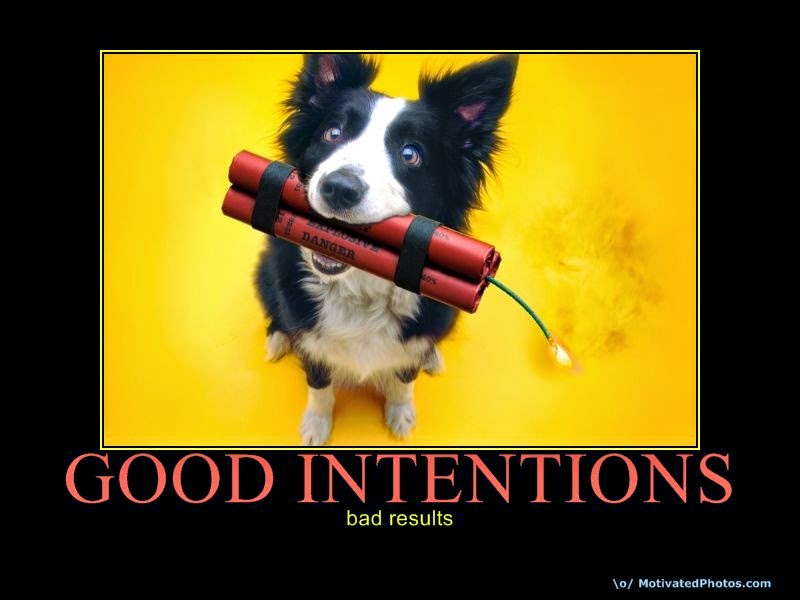
Todos devíamos ter mais cuidado com a quantidade de poder que deixamos os políticos terem sobre a nossa vida pessoal e comunitária. Mesmos os mais bem intencionados atiram-nos barras de dinamite com a mecha acesa.
Os da nossa cor estão no poder e, por isso, concordamos que mais poder lhes seja atribuído. Quando os da cor dos outros chegam ao poder ficamos com medo do poder que eles agora têm, e vice versa.
Trechos retirados de Laloux, Frederic. "Reinventing Organizations: An Illustrated Invitation to Join the Conversation on Next-Stage Organizations"
terça-feira, maio 29, 2018
Cuidado com o que propõe às PME
Recordar o que escrevo há anos e anos sobre a diferença entre as PME da micro-economia e as empresas grandes:
Entretanto, em "Product Innovation Processes in Small Firms: Combining Entrepreneurial Effectuation and Managerial Causation" encontro:
"Prior research poses a puzzle about small firms’ innovation processes. On the one hand, an extensive body of research on new product development (NPD) has identified benefits of a formalized process, with well-planned activities and decision points: a formal product innovation process is considered part of NPD best practice. On the other hand, case study evidence suggests that small firms seldom use such formalized process structures.
...
most product innovation management research has focused solely on large firms, or has failed to distinguish between large and small firms
...
this study shows that the effectual approach suits small firm characteristics, even though it differs from mainstream best practices that are based largely on research in larger firms. This suggests that product innovation research should explicitly differentiate on firm size, rather than prescribing large firm best practices to small firms.
...
Small firms are not miniature versions of large firms, and their characteristics constitute particular strengths and limitations for product innovation. A key strength of small firms is flexibility: they usually lack bureaucracy, are often managed by an owner/director who is able to take key decisions quickly, enjoy efficient and informal internal communication patterns, and develop strong relationships with customers. These characteristics enable rapid responses to technical and market changes, often resulting in differentiated products for niche markets.
.
On the downside, small firms have limited resources for product innovation projects. Lack of financial resources to cover the costs of innovation was identified as a key barrier in several studies. These constraints exacerbate the risks of innovation for small firms, which cannot sustain many failures. Besides limited financial and other material resources, small firms may lack the skills portfolios of their large company counterparts, especially the organizational and marketing capabilities to exploit new products. Further, a small firm’s position in its industry may constrain prospects to create and exploit innovations because of lack of name recognition, brand credibility, and track record; restricted influence on industry standards; limited network relations with other business and governmental organizations; and inability to defend trademarks or other proprietary resources.
.
Furthermore, small firms typically pursue few innovation projects at any one time—maybe just one, or even none at times. Consequently, their experience in product innovation is often limited. With no need to manage a portfolio of innovation projects at the same time and thus no pressure to select among projects to allocate resources, small firms have neither opportunity nor incentive to routinize innovation or formalize NPD stage-gates or selection procedures, as big firms do.
...
For example, early market screening and market research, identified as key activities in structured large firm NPD processes, are consistently lacking or poorly executed in small firms.
.
These empirical findings undermine the assumption that NPD in small firms should mimic larger firm NPD and adopt large firms’ best practices."
sábado, abril 07, 2018
Mateus XI:25
"Naquele tempo, respondendo Jesus, disse: Graças te dou, ó Pai, Senhor do céu e da terra, que ocultaste estas coisas aos sábios e entendidos, e as revelaste aos pequeninos."
Pois:
"History teaches that innovation does not come about by central planning. If it did, Silicon Valley would be nearer to Moscow than to San Francisco. Working on thousands of projects has taught us a simple but critical element that every team or company should come to expect: the unexpected.
Chance offers insights you didn’t anticipate. It’s a well-accepted truth that inventions and discoveries often result from random accidents or experiments that went awry."
É isto que falta à tríade.
Trecho retirado de "The Art of Innovation" de Tom Kelley
quarta-feira, abril 04, 2018
Anónimo engenheiro da província, mas à frente
Ontem a meio da tarde fui ao Twitter e não resisti a escrever:
E volto ao postal "Mas claro, eu só sou um anónimo engenheiro da província" de Maio de 2013 sobre os Encontros da Junqueira.
Pensem bem no significado, no alcance e no impacte deste fenómeno: em Maio de 2013 elite que pensa em e a Economia em Portugal continuava embrenhada no século XX, continuava a acreditar na validade das hipóteses que venciam aquando da rodagem do filme Metrópolis por Fritz Lang.
Agora, leiam "The End of Scale":
não há rasgo em lado nenhum, sempre os mesmos zombies: louçã, félix, ângelos correias...— Carlos P da Cruz (@ccz1) April 3, 2018
uma classe política em circuito fechado há demasiado tempo, gente pré-windows, pré-apple, pré-DOS https://t.co/YU8rXomjyf
Esta operação em circuito fechado, gera respostas absurdas para desafios novos. Como não recordar Napoleão:
"Napoleon said: To understand someone, you have to understand what the world looked like when they were twenty."Como não recordar Zapatero.
E volto ao postal "Mas claro, eu só sou um anónimo engenheiro da província" de Maio de 2013 sobre os Encontros da Junqueira.
Pensem bem no significado, no alcance e no impacte deste fenómeno: em Maio de 2013 elite que pensa em e a Economia em Portugal continuava embrenhada no século XX, continuava a acreditar na validade das hipóteses que venciam aquando da rodagem do filme Metrópolis por Fritz Lang.
Agora, leiam "The End of Scale":
"For more than a century, economies of scale made the corporation an ideal engine of business. But now, a flurry of important new technologies, accelerated by artificial intelligence (AI), is turning economies of scale inside out. Business in the century ahead will be driven by economies of unscale, in which the traditional competitive advantages of size are turned on their head.Pensem mais uma vez na quantidade de enormidades que oposição e situação deitam cá para fora quando ciclo eleitoral após ciclo eleitoral são comandadas por gente sem skin-in-the game. Não resisto a citar Nassim Taleb:
...
Investments in scale used to make a lot of sense. Around the beginning of the 20th century, the world was treated to a technological surge unlike any in history. That was when inventors and entrepreneurs developed cars, airplanes, radio, and television, and built out the electric grid and telephone system.
...
Scale conferred an enormous competitive advantage. It not only lowered fixed costs — it also created a forbidding barrier to entry for competitors. Organizations of all kinds spent the 20th century seeking scale. That’s how we ended up with giant corporations, and universities with 50,000 students, and multinational health care providers.
...
This is the basis of economics of unscale. The winning companies in today’s tech surge are companies that profitably give each customer exactly what he or she wants, not companies that give everyone the same thing.
...
Thus, scaled companies find themselves beleaguered by unscaled competitors.
...
This is a clear indication of what big corporations are facing in an era that favors economies of unscale over economies of scale. Small, unscaled companies can challenge big companies with products or services more perfectly targeted to niche markets — products that can win against mass-appeal offerings. When unscaled competitors lure away enough customers, economies of scale begin to work against the incumbents. The cost of scale rises as fewer and fewer units move through expensive, large-scale factories and distribution systems — a cost burden not borne by unscaled companies.
...
Remember, the corporation hasn’t been around forever. [Moi ici: Como bem sublinhou Seth Godin] It was an invention of the Industrial Age and it was created in response to a unique set of conditions. It makes sense that a new set of conditions needs a new structure. Maybe it will look like something that doesn’t yet exist. But surely some kind of unscaled corporation will emerge in the near future."
"Son expertos de pega. Un fontanero sabe de fontanería. Un charcutero sabe de jamón serrano. Pero se ha demostrado que los economistas no saben de economía. Ninguno vio venir la crisis, con honrosas excepciones, y fuimos marginados durante años. Pero lo peor de todo: no han aprendido nada de los últimos 10 años.
Dice Taleb que el negocio de la restauración funciona porque son los clientes, y no otros restauradores, quienes deciden qué locales prosperan y cuáles cierran. Lo mismo ocurre con los médicos, que dependen de su buena reputación entre los pacientes. «Y de no matarlos, claro», bromea.
.
En cambio, otros sectores, como la Universidad o la burocracia, están «envenenados» porque sus profesionales se evalúan entre ellos mismos, con nula transparencia."
terça-feira, março 06, 2018
Fábricas de criação de encalhados da tríade
Enquanto conduzia na A41 a caminho de Felgueiras ouvi "Want to Kill Your Economy? Have MBA Programs Churn out Takers Not Makers." e ainda me ri duas ou três vezes:
"In fact, getting an MBA has never been a more popular career path. The number of MBAs graduating from America’s business schools has skyrocketed since the 1980s. But over that time, the health of American business has decreased by many metrics: corporate R&D spending, new business creation, productivity, and the level of public trust in business in general.Pois:
.
There are many reasons for this, but one key factor is that the basic training that future business leaders in this country receive is dictated not by the needs of Main Street but by those of Wall Street. With very few exceptions, MBA education today is basically an education in finance, not business—a major distinction.
...
most top MBA programs in the United States still teach standard “markets know best” efficiency theory and preach that share price is the best representation of a firm’s underlying value, glossing over the fact that the markets tend to brutalize firms for long-term investment and reward them for short-term paybacks to investors.
...
Business schools by and large teach an extremely limited notion of “value,” and of who corporate stakeholders are.
...
“anyone can teach you how to read a P&L [profit-and-loss statement] or value a derivative; those kinds of things have become commoditized.” The bigger challenge is to teach America’s future business leaders how to be curious, humane, and moral; how to think outside the box about problems like funding the research for a new blockbuster drug. And how to be strong enough to stand up to Wall Street when it demands the opposite.
...
“The techniques, if you read the Harvard Business School cases, they are all about finding efficiencies, cost optimization, reducing your [product] assortment, buying out competitors, improving logistics, getting rid of too many warehouses, or putting in more warehouses. [Moi ici: CV de encalhado da tríade que anda de braço dado com a mentalidade gringa] It’s all words, and then there’s a sea of numbers, and you read it all and analyze your way through this batch of charts and numbers, and then you figure out the silver bullet: the problem is X. And you’re then considered brilliant.”
...
Many of America’s iconic business leaders believe an MBA degree makes you less equipped to run a business well for the long term, particularly in high-growth, innovation-driven industries like pharmaceuticals or technology, which depend on leaders who are willing to invest in the future.
.
MBAs are everywhere, yet the industries where you find fewer of them tend to be the most successful.
...
The bottom line, though, is that far from empowering business, MBA education has fostered the sort of short-term, balance-sheet-oriented thinking that is threatening the economic competitiveness of the country as a whole."
The problem with the United States economy is mainly an economy that don't manufacture interesting things anymore, just commodities, perhaps a little bit above cocoa from Liberia but very similar https://t.co/sgSH4T4n0D— Carlos P da Cruz (@ccz1) March 4, 2018
segunda-feira, janeiro 22, 2018
Tríade, Taylor, Mongo e a Al Qaeda
Em "Team of Teams: The Power of Small Groups in a Fragmented World" de Stanley McChrystal e Chris Fussell encontro um paralelismo que faço há muitos anos e que traduzo em linguagem colorida como em "os encalhados da tríade".
O mundo que formatou a tríade (políticos, académicos e comentadores) foi o mundo de Metropolis, o mundo de Magnitogorsk, o mundo da eficiência, um mundo criado pelo taylorismo:
"Taylor created a clockwork factory, systematically eliminating variation, studying all labor until he understood it inside and out, honing it to peak efficiency, and ensuring that those precise procedures were followed at scale. Because he could study and predict, he could control. He dubbed his doctrine "scientific management."Este é o molde que ao chocar com Mongo deixa de funcionar. Assim como o percebi algures entre 2006 - 2008, McChrystal começou a intui-lo em 2004 ao chocar com a Al Qaeda do Iraque. (Ao longe intuí o mesmo ao aconselhar às PMEs que seguissem o exemplo da Al Qaeda: 2010, 2009, 2008, 2007 e 2006)
.
Taylor became the world's first management guru. At a paper mill in Wisconsin, he was told that the art of pulping and drying could not be reduced to a science. He instituted his system and material costs dropped from $75 to $35 per ton, while labor costs dropped from $30 a ton to $8. At a ball bearing factory, he experimented with everything from lighting levels to rest break durations, and oversaw an increase in quantity and quality of production while reducing the number of employees from 120 to 35; at a pig iron plant, he raised worker output from 12.5 to 47 tons of steel per day, and decreased the number of workers from 600 to 140.
...
Taylor’s ideas spread from company to company, from industry to industry, and from blue collars to white (there was one best way to insert paper into a typewriter, to sit at a desk, to clip pages together). They seeped into the halls of government. His philosophy of replacing the intuition of the person doing the job with reductionist efficiencies designed by a separate group of people marked a new means of organizing human endeavors. It was the behavioral soul mate for the technical advances of industrial engineering.
.
Taylor’s success represented the legitimization of “management” as a discipline. Previously, managerial roles were rewards for years of service in the form of higher pay and less strenuous labor. The manager’s main function was to keep things in working order and maintain morale. Under Taylor’s formulation, managers were both research scientists and architects of efficiency.
.
This drew a hard-and-fast line between thought and action: managers did the thinking and planning, while workers executed. No longer were laborers expected to understand how or why things worked—in fact, managers saw teaching them that or paying a premium for their expertise as a form of waste.
...
Military planners had relied on many of Taylor’s strategies—the segregation of planning and execution, standardization, and an emphasis on efficiency— for centuries before Taylor was born. But Taylor’s ideas inspired many military leaders to find fresh ways to create a more efficient fighting force.
...
“by the late 1920s, it could seem that all of modern society had come under the sway of a single commanding idea: that waste was wrong and efficiency the highest good, and that eliminating one and achieving the other was best left to the experts.”"
"This new world required a fundamental rewriting of the rules of the game. In order to win, we would have to set aside many of the lessons that millennia of military procedure and a century of optimized efficiencies had taught us.
...
In 2004, as we planned clockwork raids designed to make the most of every drop of fuel, we were manning a managerial Maginot Line: our extraordinarily efficient procedures and plans were well crafted and necessary, but not sufficient.
...
Over the past century, the kind of organizational measures that ensure the success
of combat parachute assaults have proliferated throughout the military, industry, and business. In today’s environment, however, these solutions are the equivalent of the provincial apprenticeship models that Taylor stumbled upon in 1874. In Iraq, the inexplicable, networked success of our underresourced enemy indicated that they had cracked this nut before we had. Managerially, AQI was flanking us."
quinta-feira, dezembro 28, 2017
De onde vêm as grandes estratégias
A doença que identifiquei e associei ao que designo por tríade e as suas manobras lanchesterianas:
Excelente texto de "Where Do Great Strategies Really Come From?" de Adam Brandenburger, publicado em 2017 por Strategy Science 2(4):220-225
"the reality of strategy courses can be rather mechanical, involving the filling in of frameworks and boxes, the itemizing of various factors said to bring about success or failure, and other somewhat formulaic activities. Case studies of interesting organizations enliven and enrich the learning experience. But is something missing? Is it, in fact, an unfortunate reality that courses on business strategy largely fail to address what is probably the most exciting question: “Where do great strategies really come from?”Aqui no blogue apreciamos a importância da idiossincrasia na formulação de uma estratégia:
"The missing ingredient in what we have talked about so far is this: strategy making is a creative act. That is the hypothesis of this essay. People sense this at an intuitive level. When we first start hearing about and reading stories and cases about business successes (or failures), it is the clever novelty of various people’s thinking and actions in the business world that makes for the most exciting and enticing examples. It is this “aha” feature of the successful move or series of moves that draws many (all?) of us to the area of business strategy.Como não recordar:
...
successful strategy and performance come from looking beyond what is cognitively close to the status quo (therefore, easier to think about) to what is further out (therefore, harder to think about). Superior cognition leads to superior strategy making. Interestingly, Schumpeter is quoted on this point: “Passively ‘drawing consequences’ is not the only possible economic behaviour. You can also try and change the given circumstances. If you do that, you do something not yet contained in our representation of Reality”
...
Changing the circumstances, or changing the game, or some other similar phrase—these are the cognitively more challenging, but also more rewarding, moves.
But to say that strategy making is a creative act is to take an additional step. This is because creativity is usually thought of as a “whole-brain” activity. The headline version of this point is to say that creativity is a right- brain activity, as distinct from logic and analysis, which are left-brain activities.
...
Returning to the role of constraints and limitations, this is, just like the role of combination, much discussed in the creativity world. The arts are full of examples of famous creators who turned obstacles or setbacks not into limits on their lives but into moments that led to great accomplishment. Creators may deliberately choose to impose constraints on themselves—as when someone consciously adopts the rules of a particular form of poetry or music.
...
It is not surprising to find that constraints can stimu- late clever thought and action in the business world, too.
...
business strategy is not an exact subject, capable of being reduced to one correct viewpoint. There are multiple viewpoints and many of them very likely offer some degree of insight. If strategy as creativity has some currency in the world of practice today, this is some support for making the creativity of strategy making a theme in thinking about and teaching business strategy.
So, a course on business strategy ends. It has done a good job addressing the question of where great strategies really come from. It has not provided a definitive answer, because a definitive answer would be suspect. But, perhaps, a good answer is that great strategies come, in good part, from great creativity."
"There's always a choice, say the Sisters, but there's always a twist..."
Excelente texto de "Where Do Great Strategies Really Come From?" de Adam Brandenburger, publicado em 2017 por Strategy Science 2(4):220-225
quinta-feira, novembro 02, 2017
o vector tempo não é irrelevante (parte III)
Parte II.
Ontem à noite comecei a ler "On Value and Value Creation in Service: A Management Perspective" de Christian Grönroos e publicado muito recentemente por Jornal of Creating Value. É sempre um gosto ler este pensador.
O Abstract soou a algo de familiar:
Ainda ontem num webinar a que assisti, vi esta imagem:
Quando o mundo muda, o conhecimento que funcionava transforma-se numa armadilha, só resta a acção. O novo conhecimento só virá depois da reflexão sobre as acções que resultaram.
Ontem à noite comecei a ler "On Value and Value Creation in Service: A Management Perspective" de Christian Grönroos e publicado muito recentemente por Jornal of Creating Value. É sempre um gosto ler este pensador.
O Abstract soou a algo de familiar:
"To develop a managerially relevant understanding of value and value creation, these phenomena must be analysed on a micro level. Seen from above, they lack a microfoundation. In the present article, value and value creation are discussed from a micro position, based on a service logic (SL) analysis of the service perspective on business and marketing."E continuou:
"Viewing from above, or taking a macro-perspective, ... it can be observed that a whole host of actors, such as firms in various stages in the supply chain and end users, contribute to the value that emerges for the end user and other actors in the process. ... However, although a macro- analysis reveals phenomena which are not visible from below, ... at the same time, micro-level phenomena can only be observed from below and remain disguised for an analysis on a system- of-actors level. [Moi ici: Como não recordar os encalhados da tríade, qual Sarumans incapazes de abandonarem o alto das suas torres, incapazes de apanharem o que um anónimo engenheiro da província observa todos os dias há anos] The many different ways in which the actors contribute to value cannot be observed from above and, therefore, are not analysed in detail. ... ‘value co-creation is difficult to observe empirically’, and in order to theoretically develop the service perspective further, researchers must pay more attention to the micro-foundations that underpin SDL’s macro- constructs. ... ‘[M]acro scholars too often work with firm-level constructs which often unclear microfoundations, and proceed as if there are direct causal relations between macro variables (e.g. arguments that capabilities cause performance), where, in fact, the real causal relations involve lower level actions and interactions’.A micro-economia sabe coisas que a macro-economia ou ainda não sabe ou nunca chegará a saber. E, escrevo que "ainda não sabe" porque, quando o mundo muda, os encalhados continuam a tentar explicar o mundo com base nas sebentas em que aprenderam. Os "ignorantes", como não sabem, por tentativa e erro, o nosso querido fuçar, descobrem ao nível micro as opções que funcionam no novo mundo.
...
What takes place on an actor level, in contrast to a level of systems of actors, is invisible to macro- analysis. ... the need to avoid the ‘black- boxization of concepts’ . In macro-analysis, the roles and goals of the actors cannot be observed, and even the nature of value as value-in-use is difficult to capture ... To be able to draw conclusions about this, interactions must be observable and the nature of interactions clearly understood.
...
First, analysing the service perspective from below reveals that the nature of value-in-use is partly different from what is postulated in a macro-analysis. Indeed, value-in-use is determined in an idiosyncratic and phenomenological manner by customers, as suggested by SDL, but how value emerges or is created is not observable in a macro-analysis."
Ainda ontem num webinar a que assisti, vi esta imagem:
Quando o mundo muda, o conhecimento que funcionava transforma-se numa armadilha, só resta a acção. O novo conhecimento só virá depois da reflexão sobre as acções que resultaram.
sexta-feira, setembro 29, 2017
"And the critical competence moves from production competence to relationship competence"
"Customers were - and basically still are - described in economic theory as an abstract congregation called 'the market'. They were the recipients at the end of a chain which moved raw materials, which gradually had 'value' added to them, until they reached the buyers.Num breve resumo a mensagem do capítulo 1, "Evolution of Strategic Paradigms" de "Reframing Business - When the Map Changes the Landscape" de Richard Normann.
...
Thus was born the idea of product differentiation and market segmentation, which was a first step towards a new paradigm. But it was an adjustment within the old paradigm, in which the product remained in focus, in which the critical competence was production, and in which the customer was seen as the receiver at the end of a 'value chain'.
...
The movement from craft to industrialism
...
Much later - in the 1960s and 1970s - the same principles [industrialism] were applied to services. Levitt (1972) vividly described the benefits of the industrialization of services ... but when these principles were applied to certain types of services the results were sometimes absurd.
...
Companies found that customers were no longer captive; they had to be seduced. Relationships had to be based on loyalty not on captivity.
...
The customer became much more than a 'receiver'
...
Business did not come from the assets of the company, but was generated by the customer relationship. The customer relationship, not the factory, represented the decisive business potential. The key flow was not from the factory outbound, but from the customer inbound. Skillful utilization of the customer relationship was the key.
...
Instead of seeing the business as a flow of materials to which value is continually added and ending with the customer, we now see business starting from the customer and flowing to the company. The perspective changes from inside-out to outside-in. The market as a sink is replaced by the customer as a source.
...
Companies now are seen as having customer bases in which customers are individuals (institutions or persons) and representing sources of business; they are no longer anonymous markets and receivers/sinks. And the critical competence moves from production competence to relationship competence."
Quando oiço/leio a tríade, acredito que ainda se encontra no primeiro parágrafo deste resumo. E chegando ao último parágrafo e a "the critical competence moves from production competence to relationship competence" penso logo naqueles que se concentram pura e simplesmente na automatização e esquecem o poder da autenticidade da interacção e da co-criação.
terça-feira, setembro 12, 2017
Prisioneiros da era industrial
Aqui uso as metáforas de Magnitogrado ou Metrópolis para ilustrar o paradigma de produção no século XX.
Já aqui escrevi que o século XX começou em Outubro de 1913, quando arrancou a linha de montagem da Ford. Foi com um sorriso irónico, a pensar nos encalhados da tríade que continuam prisioneiros do modelo mental do século XX, que li em "Strategy for a Networked World" de Ramirez & Mannervik:
"The so-called "end user" in this industrial era representation of how value is created and destroyed thus equalled that which in value chain terms was called the "final" customer. For producers, value was "realised" in the transaction, which simultaneously joined and separated them from customers. In this context, value was equated to the price that the customer paidMete impressão como tanta gente na academia continua prisioneira deste modelo.
...
Consistent with this understanding of value, Hirschhorn (1984) specified that in industrial manufacturing, value creation was characterised by:
- economics of scale;
- large, physically and temporally concentrated production facilities;
- long production runs;
- mass markets;
- task specialisation; and
- standardisation."
"Although much of manufacturing is still of this pattern, large parts of the economy and even important parts of industry have been increasingly moving away from it."Recordar os exemplos do calçado, do têxtil e do mobiliário portugueses, que ilustram como à revelia dos seis pontos acima as empresas deram a volta ao rolo compressor chinês.
domingo, setembro 03, 2017
Comprem um cão! (parte II)
Parte I.
- Como é que isto pode ser possível? Como é que não se pode sobreviver a vender sapatos de 20 euros e a solução passa por ter sucesso conseguindo vender sapatos a 230 euros?
Techos retirados de "Management Is Much More Than a Science"
"Underlying the practice and study of business is the belief that management is a science and that business decisions must be driven by rigorous analysis of data. The explosion of big data has reinforced this idea.E sublinho em particular:
...
But is it true that management is a science? And is it right to equate intellectual rigor with data analysis? If the answers to those questions are no and no...
Most situations involve some elements you can change and some you cannot. The critical skill is spotting the difference. You need to ask, Is the situation dominated by possibility (that is, things we can alter for the better) or by necessity (elements we cannot change)?
...
Executives need to deconstruct every decision-making situation into cannot and can parts and then test their logic. If the initial hypothesis is that an element can’t be changed, the executive needs to ask what laws of nature suggest this. If the rationale for cannot is compelling, then the best approach is to apply a methodology that will optimize the status quo. In that case let science be the master and use its tool kits of data and analytics to drive choices.
.
Data is not logic. Many lucrative business moves come from bucking the evidence.
.
In a similar way, executives need to test the logic behind classifying elements as cans. What suggests that behaviors or outcomes can be different from what they have been? If the supporting rationale is strong enough, let design and imagination be the master and use analytics in their service.
...
the division between can and cannot is more fluid than most people think. Innovators will push that boundary more than most, challenging the cannot."
"We think this is particularly true when it comes to decisions about business strategy and innovation. You can’t chart a course for the future or bring about change merely by analyzing history. We would suggest, for instance, that the behavior of customers will never be transformed by a product whose design is based on an analysis of their past behavior.E volto aqueles a quem chamo de tríade, prisioneiros de barreiras mentais e incapazes de perguntar:
.
Yet transforming customer habits and experiences is what great business innovations do"
- Como é que isto pode ser possível? Como é que não se pode sobreviver a vender sapatos de 20 euros e a solução passa por ter sucesso conseguindo vender sapatos a 230 euros?
Techos retirados de "Management Is Much More Than a Science"
quinta-feira, agosto 03, 2017
O anónimo da província estava certo!
Mais um texto em linha com o que aqui defendemos há anos com base na nossa experiência empírica. Enquanto os membros da tríade (académicos fechados nas suas torres de marfim, comentadores económicos e políticos) continuam a falar de competitividade com base no século XX e, por isso, estão prisioneiros do eficientismo e das manigâncias com a cotação da moeda, há um outro mundo:
Continua.
Trechos retirados de "Missing link in competitive manufacturing research and practice: Customer-responsive concurrent production" publicado por Journal of Operations Management 49-51 (2017) 83-87
"The manufacturing arm of operations management (OM) has limited itself to a narrow vision of what this key organizational function is supposed to be and do. OM scholars have quibbled about efficiency in factory and supply-chain operations, while giving little attention to tying production forward to end customers. Our view is that this single-minded focus on efficiency has effectively knocked OM research, theory, topics, methods, measures, and practitioner guidance off kilter.Agora metam neste cenário os fanáticos da automatização que só pensam no eficientismo e se esquecem de Mongo: rapidez, flexibilidade e variedade crescente para servir tribos cada vez mais exigentes.
On the industry side, a narrow view of OM mirrors the single- minded focus that we observe in academia. Manufacturers proudly display factories that have been cleared of targeted wastes and are marvels of short flow times, low work-in-process in- ventories, and high capacity utilization. They may also point to similar achievements with key suppliers. A closer look, however, often reveals a supply chain with extended lead times [Moi ici: Aposto que, como eu, não sabia que o Toyota Production System, essa maravilha de organização e eficiência (sem ironia) congela a previsão de produção com 8 semanas de antecedência] and swollen finished-goods inventories that dwarf the low in-plant inventories. The overall supply chain often loses the ability to compete on anything except cost. The resulting vulnerability to low-cost competition leads to offshoring.
Inability to synchronize with downstream demand increases production cost through supply-demand mismatches, delays in addressing quality issues - even mass product recalls, and customer defections. These negative outcomes are commonplace even in factories held up as bastions of “best practices”.
...
A major deterrent to CP [Moi ici: Concurrent production] adoption is the tendency both in companies and among the OM academic community to focus on localized efficiency to the neglect of responsiveness in fulfilling customer needs. Manufacturing people have limited interaction with final users, so the cost of valuing efficiency above responsiveness goes unnoticed. In consequence, manufacturing-improvement efforts tend to be limited to pursuit of within-factory efficiencies: short internal flows, smoothed sched- ules, and high capacity utilization.
...
manufacturers in their quest for operational efficiency prefer factory operatives to be always busy making products. CP, on the other hand, welcomes the situation in which both equipment and its operators are idle for lack of current demand.
...
Another managerial mindset that hinders CP implementation is the assumption that it is better to reduce changeover times on a single piece of equipment than to duplicate that equipment. Along similar lines, we have seen manufacturers replacing multiple units with a single large, flexible piece of equipment. ... done for the sake of “... improved efficiency and productivity”. This way of thinking culminates in “monument” machines: high-speed, multi-functional equipment that gives the impression of being extremely efficient. ... that engineers “... typically think at the process level,” seeking efficiencies “... by combining operations with[in] a single piece of equipment.” This “can cause a disconnect with general management who want to increase sales, make gains in market share, or find new sources of revenue by adding product lines.”"
Continua.
Trechos retirados de "Missing link in competitive manufacturing research and practice: Customer-responsive concurrent production" publicado por Journal of Operations Management 49-51 (2017) 83-87
sábado, julho 29, 2017
Apesar da tríade
Uma fotografia de uma evolução notável:
Uma evolução que temos relatado aqui em primeira mão.
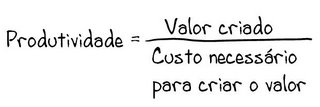
Salários a aumentar, competitividade a aumentar e produtividade a aumentar, tudo em simultâneo, como previ naquele postal de Maio de 2011 escrito num café em Valpaços.
Uma evolução que temos relatado aqui em primeira mão.
"a fase que se seguiu, entre 2012 e 2015, coincidiu com o início da recuperação dos salários reais e com o crescimento da competitividade e da produtividade na generalidade dos setores. Este novo círculo virtuoso foi impulsionado principalmente pelo lado da procura da economia, uma vez que a faturação das sociedades teve o seu maior crescimento entre 2012 e 2015. O volume de negócios cresceu 12,1% nas indústrias transformadoras, 11,8% nos outros serviços e 9,5% no comércio."O texto refere "recuperação de salários reais" eu escreveria aumento dos salários reais já que estamos a falar de empresas privadas e empresas transformadoras.
Salários a aumentar, competitividade a aumentar e produtividade a aumentar, tudo em simultâneo, como previ naquele postal de Maio de 2011 escrito num café em Valpaços.
sexta-feira, julho 28, 2017
One more time, it is not about cost!
"In 1969, manufacturing strategy pioneer Wickham Skinner wrote about the missing link between an organization's strategy and its operations. In this provocative Forum essay, Richard Schon- berger and Karen Brown argue that this gap is still very much a reality in that both academics and practitioners tend to subscribe to an overly narrow view of operations. [Moi ici: Aquilo a que este anónimo da província chama de mentalidade da tríade, demasiada concentração na eficiência] In a nutshell, there is still too much focus on efficiency.Antes de me sentar a citar este texto dei uma caminhada de 5km por ruas secundárias de Mafamude que não visitava desde 1973. A certa altura olho para uma série de "lojas": uma de imobiliário, uma híbrida entre a mercearia e a chinesa, uma como ginásio de educação, outra de ... e veio-me à mente o pensamento de que reconheceremos Mongo quando começarem a aparecer nos espaços de loja: unidades de fabricação com 2 ou 3 trabalhadores e tecnologia.
...
an excessive focus on costs effectively transforms cost into the default competitive priority. A case in point: why do we speak and write about “low-cost environments”? Why is one particular performance dimension privileged like this in our conversations about the geography of manufacturing? Has anyone ever written about “high-responsiveness environments”? Why not?
The task of the operations function is often taken as a given and unchanging. But, in uncertain environments, both task and its boundary conditions change over time e static and dynamic efficiency are very different things. Like Skinner wrote on multiple occasions throughout his career, we must not conceive of operations as a perfunctory task e an immediate candidate for outsourcing and offshoring. Rather, it often belongs to the organizational and strategic core of the firm, and as such must remain strategically relevant over time. If the objective is to remain in sync with changing markets, outsourcing and offshoring may well be the worst decision imaginable."
Trechos retirados de "One more time, it is not about cost!"
sexta-feira, junho 16, 2017
Sandy vs MacGyver ou Espirais recessivas e outras patranhas
"It is often underappreciated just how quickly a country’s fortunes can change. In 2004, Germany was considered the sick man of Europe. Five years later, after some judicious reforms to its labor market, it was Europe’s economic powerhouse. Four years ago, Spain was widely dismissed as an economic basket case, one step away from national bankruptcy and euro exit. Yet since mid-2013, it has been growing at around 3% a year and created two million jobs.Basta recordar o economista Cavaco Silva, então presidente da república a prever a tal "espiral recessiva". Este anónimo da província, ao mesmo tempo escrevia:
.
That points to a second aspect to economic turnarounds: They are rarely obvious at the time, even to the economists, policy makers and pundits paid to spot these things. Famously, 364 distinguished economists—among them Mervyn King, who later became governor of the Bank of England—wrote to the Times in 1981 to warn that Prime Minister Margaret Thatcher’s policies were doomed to fail. Yet history shows that Britain’s recovery began at almost exactly that moment, and five years later its economy was booming."(1)
- Estimulogia e a espiral recessiva (Janeiro de 2013)
Ao longo dos anos escrevi aqui no blogue tantas e tantas vezes previsões ao arrepio das previsões dos economistas, dos académicos e comentadores, e quase sempre acertei: acerca do desemprego; acerca das exportações; acerca das estratégias; acerca do euro; acerca de ...
Entretanto encontro estes trechos:
"E]conomics and business are not the same subject, and mastery of one does not ensure comprehension, let alone mastery of the other. A successful business leader is no more likely to be an expert on economics than on military strategy:. As we have seen, companies do not appear very often in international trade theories, with one or two exceptions?' However, if anyone is to gain a clear perspective on what is happening in the real world, that has got to change.
...
William Milberg and Deborah Winkler comment that 'there are considerable limits to the economists' own models. In particular, the economists' views on offshoring are closely tied to an outmoded theory of comparative advantage'.. The main problem is that the economic models don't capture the broader institutional context, including company strategy or the actions of governments to regulate products and trade. We have to look at what companies are doing — they are the main actors in our drama — rather than being led by either the claims of countries or the outputs of models."
Economistas pensam em modelos...
Há meses CEO disse a propósito de um procedimento para validação de investimentos na sua empresa:
- Se perguntar ao meu pai porque optou há 8 anos por investir uma pipa de massa numa máquina fora da caixa, quando o mercado estava em crise, e que agora dá-nos o pão nosso de cada dia, ele diria que "teve um feeling".
Economistas pensam em modelos, como a Sandy, empresários pensam como MacGyver:
"Well, I say we trust our instincts—go with our gut. You can't program that. That's our edge."
(1) - Trecho retirado de "Now Britain, Not France, Risks Being ‘Sick Man’ of Europe"
(2) - Trechos retirados de "From Global to Local" de Finbarr Livesey
Subscrever:
Mensagens (Atom)