quinta-feira, fevereiro 02, 2017

O passado não é tão imutável como parece

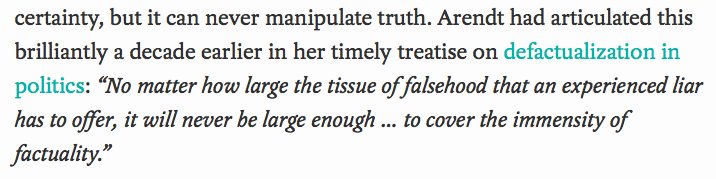
Descobri a conta de Kevin Dulle no Twitter (@IdeaFreak) onde encontrei esta imagem:
E como um seixo atirado a um lago, o que ficou a ondular na minha mente foi aquele:

Talvez seja impossível mudar o passado e o que nos aconteceu.

No entanto, é sempre possível mudar a nossa interpretação sobre o que nos aconteceu. É sempre possível rever os acontecimentos e reinterpretá-los à luz do que entretanto aprendemos e vivemos.

Estou a lembrar-me, por exemplo, do funcionário que caiu no desemprego com o encerramento da fábrica que o empregava e que se viu obrigado a alargar a sua zona de conforto, sendo hoje empresário numa PME de sucesso. Estou a lembrar-me também da novata que caiu no desemprego para proteger o lugar dos mais antigos e que se transformou em empresária de sucesso.


"para fugir à erosão da competitividade"

Talvez a sua empresa possa precisar de um destes conselhos sobre alternativas estratégicas a seguir para fugir à erosão da competitividade:
" six specific strategies for breaking away and staying ahead of the pack, and I believe every business owner should implement at least one of these on a quarterly basis:
...
1. Target customers poorly served by current offerings.
The new strategy here is to focus on unmet new customer needs, rather than enhancing the offering you have -- product, price, promotion, and place (4Ps).
.
Competitors generally attack you on the 4Ps, so you need to find new territory like a cat, rather than rely only on dogfight survival.
.
2. Focus on different performance attributes.
Another strategy is to find new performance attributes that relate to unmet consumer needs, and lead your message with these. This is called breakout positioning, rather than mimicking competitors.
...
3. Substantially change the what, where, and how.
This strategy is called breakaway positioning, since it is intended to redefine how consumers see the product, by borrowing features drawn from an entirely different product category.
...
4. Use disruptive technologies to alter the value chain.
This powerful strategy is often called the Blue Ocean strategy, meant to conjure up the image of uncharted open waters rather than bloody red oceans with sharks fighting.
...
5. Expand the market to new domains.
New domains would include attracting business customers as well as individuals, taking your online business into retail, and diving into verticals.
.
This strategy opens up new growth opportunities without the dogfight of taking territory away from existing competitors. It also forces you into new innovative thinking.
.
6. Plan to disrupt your own business regularly.
Before the inevitable dogfights have diminished your growth and profitability, and sapped your resources, rally the business with a new "big bang" disruptive initiative, like Apple's highly successful iPad disrupted their own personal computer offerings."
Trechos retirados de "There's a Holy Grail of Long-Term Growth. Here's How to Achieve It"

Os nossos campeões escondidos

Quase todos os dias somos surpreendidos por estórias de empresas anónimas portuguesas que dominam o seu métier. Ontem mais dois casos:
No caso da TSF sublinho:
"A empresa faz o que o cliente quer, não produz grandes séries e não tem produto próprio.
...
“Somos uma metalúrgica de precisão, fazemos as peças técnicas para as máquinas e equipamentos e, nalguns casos, até montamos as máquinas aqui. Depois a componente informática é acrescentada pelo fabricante”"[Moi ici: As empresas não são entidades matemáticas, as empresas são organismos vivos e plenos de idiossincrasias. Sem pôr em causa as decisões da empresa, ouso lamentar que não se concentre na vertente "é meter código nisso", aí é que vai estar o valor acrescentado e o potencial de crescimento. Estranho sim que a seguir fale em Indústria 4.0]

Mongo e a customização dos carros (parte II)

Parte I.

Este surto de automatização "Businesses Ordered More Robots Last Year Than Ever Before" tem duas leituras:
  • Por um lado, o atraso americano a entrar nesta onda;
  • Por outro, um sintoma da continuação da paixão americana pelo preço, (Ver "Para recordar..."), quando alemães e japoneses já estão noutra fase.
"North American businesses ordered 35,000 robots in 2016, a 10% increase from 2015, according to a report on Tuesday by trade organization Robotic Industries Association."

quarta-feira, fevereiro 01, 2017

Curiosidade do dia

"Os que querem resistir à transformação escondendo-se nas trincheiras das conquistas irreversíveis e dos proteccionismos desistem da História. A evolução das tecnologias e das economias implica que é na escala das redes empresariais globais que se decide a competitividade e o potencial de crescimento económico. Os que procuram na miragem do passado a água cristalina que lhes tire a sede ficam com a boca cheia de areia seca quando acaba a ilusão."
Trecho que faz uma boa ligação com o capítulo 15 "System hacking: a great idea with a bad reputation" de "The Great Fragmentation : why the future of business is small" de Steve Sammartino.
"Just as we had industrial culture, we’re now entering a phase of digital hacker culture. The tools we live with, around and inside of, such as the smartphone, computers, digital networks, the internet knowledge bank — the internet operating system, if you will — all open us up to a world of hacking systems, a world in which we can embark upon redesigning how things are done to suit ourselves. The tools that everyone has access to are the same ones being used to hack old, outdated industrial systems. They create new possibilities where if the industry itself does not reconfigure to suit the new world, it will be done for them.
...
An industry is a system that has been designed by the players of that industry. If there’s weakness in the system, the system will be hacked. The design, by definition, has to be for the maximisation of profits. It’s always been about benefiting the players within it. All systems change over time. Their structure is modified and the architecture renewed. We’re currently going through a radical
redesign of the industry system. It’s during these times that getting hacked has its highest probability. And we can add to that fact that others from outside the industry are most likely to be the ones doing the hacking.
Trecho inicial retirado de "A areia no fim da miragem"

Para reflexão

Muito sumo para alimentar uma reflexão em "Think Amazon Has The Lowest Price? This Leather Bag Is 49% Less At Burberry":
"Looking for the best deals on that hot “it” purse or that tony musk fragrance? Then you might want to skip Amazon.
.
It turns out department and specialty stores are cheaper than the online giant on a range of full-priced items, according to a study conducted by the International Council of Shopping Centers.
.
A comparison between the same 547 (nonsale) apparel, accessory and beauty products at 124 department and specialty stores across the country, such as Bloomingdale’s, Macy’s and Sephora, revealed that on an item-to-item basis, department and specialty stores were up to 30% cheaper than the online juggernaut."
Acho particularmente interessante a parte final:
"“I strongly believe that people buy from Amazon mostly because of non-price reasons — the ease of shopping via the website, the selection, the reliability of shipping, the speed of shipping, and the peace of mind that returning is very easy,”" 

"Because for them, your approach is a bad idea"


Para montar o cenário recordo:

É importante fazer escolhas e quanto mais dolorosas melhor.

Assim, faz sentido considerar este conselho:
"Competition is a fact of life in startup land. A differentiated position in the market is vital. Good competitive positioning communicates to the world the set of assumptions one has to believe to envision your success.
...
Too often do we find competition framed in the context of better/faster/cheaper.  ... It fits a limited number of businesses that sell a commodity product.
...
My advice is to ignore better/faster/cheaper, and instead focus on a differentiator that your competitor would agree with. This is a subtle, but powerful move. If you get it right, your competition will actually reinforce your positioning. Why? Because for them, your approach is a bad idea. [Moi ici: E vice-versa] They love telling customers why you’re not really focused on the same thing they do. By trivializing what you do, they’re inadvertently spreading your gospel."
Trechos retirados de "How to stand out from your competition"

Acerca do futuro da impressão 3D (parte II)

Parte I.
"we exemplarily constructed four extreme scenarios by selecting the two projections which showed the lowest level of consensus among the experts (both have an interquartile range of 4.0): the impact of additive manufacturing on firm's business models (Projection 8) and on consumer distribution channels (Projection 12). We built two development continuums, spanning between the trajectories expressed by these two projections. Fig. 6 illustrates the scenario axes and resulting scenarios. The qualitative expert comments helped us characterize the resulting scenarios in more detail.
The horizontal axis derives from Projection 8: For those experts who agree on it, additive manufacturing can be regarded as just another production technology requiring novel knowledge and skills, but mainly improving the operational excellence of a company. While some operations may change drastically, the operating model of the company will remain the same. For those rejecting this projection, however, established business models will be disrupted by additive manufacturing, demanding incumbents to make radical changes.
...
The vertical axis builds on Projection 12, which covers one of the most frequently debated implications of additive manufacturing. The experts believing in this projection foresee a strong change in consumer behavior: Instead of acquiring physical products, consumers will utilize online databases to download product designs for self-printing, either purchasing the file (similar to downloading a music file in an online music store) or using a sharing model with open-source designs. Experts rejecting this projection, however, expect that also in 2030, products produced via additive manufacturing will be purchased as physical objects via established online or offline channels.
...
Combining these two axes, we derive four possible scenarios. The extreme Scenario 1 combines the exploitation model with a new distribution model. Here, a company uses the efficiency of selling online files instead of exporting products to test new foreign markets, but also to cover niches of demand in established regions. Once a market is established, however, the products will be sold via a conventional business model (moving to Scenario 3). Scenario 2 combines the two extreme positions of an exploration strategy with a distribution model via online file-sharing. In this model, the business model of the company shifts fundamentally. A former manufacturer becomes a pure “designer” (providing the digital print files only). The core job of the company here is to guarantee the “3D printability” of the files. For its revenue model, it has to utilize new forms of intellectual property protection to allow for value capture.[Moi ici: E qual a vantagem de ser empresa?]
.
Scenario 3 is the most conservative setup where additive manufacturing is mainly used to support an established business. The case of spare parts, as discussed before, can be placed here. Another option is to utilize additive manufacturing for the manufacture of niche products which are not economically feasible with conventional manufacturing models. Finally, Scenario 4 builds on the idea of mass customization, i.e. providing an individual product for every consumer, but with mass production efficiency. The business model of the company, hence, shifts drastically. Instead of forecasting product demand and producing it on stock, all operational activities are purely reactive, staring with the individual demand of each single customer."
Pessoalmente sinto-me atraído por um modelo que se assemelhe aos alfaiates e modistas do passado. "Qualquer pessoa" podia fazer um vestido/fato em casa. No entanto, as pessoas recorriam a um alfaiate/modista onde tinham oportunidade de conjugar (co-criar) o seu gosto, as suas dimensões, com a expertise d@ técnic@.


Um exemplo de polarização de mercados

Um exemplo daquilo a que se chama a polarização do mercado. Clientes underserved e overserved em desenvolvimento simultâneo num mesmo mercado:
"A growing segment of the U.S. population is making a significant sacrifice for physical fitness, and not just in sore muscles and pre-dawn wake-ups. More and more people are paying hundreds of dollars a month, or thousands a year, for personal workouts, special classes, and ever more luxurious gyms.
...
By contrast, the average American spends a minuscule amount on getting in shape. Almost one-fifth of Americans are health club members, and the average U.S. club dues are $54 a month, or 1.2 percent of median household income, according to the latest data from the International Health, Racquet & Sportsclub Association, or Ihrsa, the fitness industry trade group.
...
While midmarket clubs barely gained members, the number of budget club members grew 69 percent in 2015 alone, Ihrsa estimated last year. Much of this growth is driven by franchising, a trend that has brought outside money to the fitness industry."
Empresas com futuro escolhem o seu segmento e não tentam ser tudo para todos.

Trechos retirados de "Why You’re Paying So Much to Exercise"

terça-feira, janeiro 31, 2017

Curiosidade do dia

Interessante este decoupling revelador. Por um lado, "Confiança dos consumidores no nível mais elevado desde 2000". Por outro lado:

Acerca das "electronic cottage industries"

Ao ler "These Fashion Startups Offer The Prestige Of "Made In Italy" Without Inflated Prices" pensei seriamente numa pergunta que fiz a um empresário do calçado acerca de um ano.

- E se os seus trabalhadores mais exímios começassem a trabalhar em casa por conta própria fazendo sapatos topo de gama?

A pergunta foi rapidamente chutada para canto:

- Não têm as máquinas, não têm os contactos.

OK. Agora leiam o artigo. Não me custa nada pensar num contacto destes a chegar e a propor uma cooperativa de operários, a financiar a compra de máquinas não industriais, a financiar a compra da matéria-prima.

A fábrica deste texto produzirá 300/400 pares por dia mas um operário artesão destes se fizer por mês 40 a 50 pares por mês talvez ganhe mais do que como operário.

Esta tendência insere-se naquilo a que designo por Mongo (Estranhistão), um voltar aos sistemas dinâmicos pré-revolução industrial agora que a internet matou a geografia e a tecnologia permite séries muito pequenas de forma relativamente económica.

Como não recuar ao princípio dos anos 80 do século XX e a Alvin Toffler e às suas "electronic cottage industries".

Uma novela sobre Mongo (parte XVIII)

 Parte Iparte IIparte IIIparte IVparte Vparte VIparte VIIparte VIIIparte IXparte Xparte XIparte XIIparte XIIIparte XIVparte XVparte XVI, e XVII.

Os trechos que se seguem permitem enquadrar a importância da competição feroz pelos assistentes virtuais "We put Siri, Alexa, Google Assistant, and Cortana through a marathon of tests to see who's winning the virtual assistant race — here's what we found":
"Our connected technology needs to split into smaller fragments to provide a more independent function, just as our industrial gadgets did. The fragmented nature of the web of things will enable technology to get on with its job of augmentation without needing our attention. It will be a welcome relief and will make technology more human than it currently is. Maybe our ears will become the killer app (for humans), instead of our hands and eyes, as in the movie Her. In this movie the interactions are largely verbal and without many screens. Screens are only present when needed via a head-up display or holographic image. The screens themselves as a form of hardware are no longer. For the web of things to flip to a service rather than a burden it needs to be more like the movie Her and less like the movie Minority Report. It needs to be the bellwether for screen redundancy. The next stage for the ‘thingternet’ is for it to become invisible. It has to be more like electricity, water and gas are in our homes, in business and in modern civilised geographies in general. Companies that enable and promote this shift will be the biggest beneficiaries of the third phase of the web. It’s early days and the prize is big."

Acerca do futuro da impressão 3D (parte I)

Uma lista de tendências para 2030 prevista por experts acerca da impressão 3D:

Quanto às mais prováveis:
"The scenario cluster for the most probable future contains those projections  evaluated by the expert panel with the highest probability of occurrence in 2030 and a sufficient amount of certainty between the expert evaluations. For a narrow version of the most probable scenario we took those projections (5, 14, 16, and 17) showing both a high degree of certainty among experts' evaluations (three projectionswith interquartile range larger than 2.0, and onewith 2.5) and having a sufficient probability of occurrence (larger than 55%). If looking at a broader scenario, Projections 9 and 12 can also be included, which show a relatively high estimated probability of occurrence, but their estimations are fraught with uncertainty (interquartile range of 3.0 and 4.0, respectively)."
Continua.

Trechos retirados de "Predicting the future of additive manufacturing: A Delphi study on economic and societal implications of 3D printing for 2030"

Alterar a oferta (parte V)

Parte IV, parte III e parte II.

Por um lado este texto acerca do retalho em Espanha "Consumo: como as lojas de moda sofreram com a crise". Por outro lado, este sobre o retalho nos Estados Unidos "The Nation's Biggest Retailers Face An Inconvenient Truth: An Imperiled Profit Model".

Se calhar isto não é por causa de nada de conjuntural mas sim por algo de estrutural: o desmoronar de um modelo de negócio.

Clientes a mudar, ofertas a mudarem, canais a mudarem, ... cadeia de fabrico a mudar.

segunda-feira, janeiro 30, 2017

Curiosidade do dia

Recordar esta outra Curiosidade do dia e depois ler "Valor da exportação de medicamentos duplicou esta década".

E meter na cabeça que os macacos não voam ponto.

macacos trepam às árvores.

Sintomas (parte II)

Este texto "Hays: "Empresas devem preparar-se para cenário de escassez de profissionais"" relaciono-o com esta tendência "Sintomas".

Ao qual se pode acrescentar:
Até este fenómeno, no outro lado do mundo, "Mão-de-obra estrangeira no Japão supera um milhão de pessoas pela primeira vez em 2016" está relacionado.

Se puderem procurem o comentário de Nicolau Santos no noticiário das 13h de hoje na Antena 1. Ainda que seja um apoiante encarniçado da situação, a sua cegueira de lisboeta fechado numa torre de marfim, impede-o de ver a transformação que está a ocorrer em Portugal a nível do emprego.


Porque nascem os hábitos

Para um apreciador da filosofia de comando e alinhamento por trás da blitzkrieg o texto levanta dúvidas. Dúvidas que depois diminuem quando o autor entra com variáveis como motivação e a complexidade (ou será obliquidade?) do objectivo.

E recordo os tempos mágicos dos anos 90 em que estudava o que a NASA tinha feito a nível de implementação da ISO 9001 nos seus centros. Ainda hoje me lembro, figurativamente, que eles não davam a comida na boca, eles mastigavam a comida na boca e só depois é que a davam. Queriam correr o menor risco possível de que algo fosse mal interpretado.

Para reflexão, recomendo a leitura de "When to Set Rigid Goals, and When to Be Flexible".

Num outro registo (?) algo em sintonia com a leitura de Charles Duhigg "The Power of Habit":
"While there’s no doubt that a flexible approach encouraged more people to adopt the goal, that same flexibility actually hindered the goal’s completion. But why?
.
The answer, it seems, has to do with the limits of people’s decision-making ability. According to a variety of sources, we are required to make as many as 35,000 decisions a day. So in the context of an already information-overloaded, decision-fatigued workforce, one thing people will likely appreciate is the need to make fewer, not more, decisions. And that’s exactly what a rigid approach to goal pursuit offers. By setting a predetermined sequence for the achievement of a goal, the number of unnecessary “decision points” that arise when people pursue a plan is reduced or perhaps eliminated completely. As a result, a goal both becomes more likely to be achieved and potentially feels easier in the process." [Moi ici: Não se fiquem por este trecho só ou levam uma parte incompleta, truncada da reflexão. O trecho é só sobre o porque nascem os hábitos, para reduzir a quantidade de decisões conscientes que temos de fazer]

Alterar a oferta (parte IV)

Parte III.

Ás vezes tenho a sorte de encontrar um texto, ou um livro, que num parágrafo, não precisa de ser mais, nos dá um safanão e põe-nos a ver a realidade de uma outra perspectiva. Dessa perspectiva tudo parece mais simples e intuitivo.

No Sábado, ao dar uma caminhada a meio da tarde, encontrei este texto "Retailers, You're Not The Brand Anymore: The Shopper Is" e considero-o do melhor que li sobre a evolução do retalho. A mudança de perspectiva que nos propõe simplifica muito a interpretação da realidade:
"The young sales associate I was chatting with also liked the fun, funky design. But what she didn’t like was the designer’s name plastered on the item. The logo made the phone about the designer, instead of her.
.
These days, the shoppers themselves, are the brands. And it’s a sign of the times.
...
This endless aisle of options is unprecedented. And as a result, cookie-cutter retailing [Moi ici: Interessante o uso desta expressão à luz da parte II] in the era of self-expression just doesn’t cut it anymore. At the same time, there is an innate human desire to be seen, to be picked out in a crowd, to be recognized and rewarded for our idiosyncratic tastes, wants and needs.
...
It turns out personalization drives a return on investment: A survey by Infosys found that 74% of retailers that curate personalized offers for their shoppers saw an increase in sales; 61% tracked an increase in profit, and over half saw a rise in customer loyalty. When you reflect back to people who they are, and make them feel seen, powerful connections might be made."


Vinhos e concorrência imperfeita

O amigo Armando mandou-me um link muito interessante, "Dirk Niepoort: “As pessoas acham que eu sou maluco”". Uns trechos que são a cara da mensagem deste blogue é:
"Mas as pessoas andam tão vidradas no vinho do Porto que andam à pancada entre elas a baixar preços e estão-se a auto-destruir. A gente não tem de pensar no setor do vinho do Porto, mas sim no Douro. O setor do vinho do Porto vive do Douro e vice-versa. Mas o Douro tem um futuro fantástico se nós levarmos o vinho do Porto um pouco mais a sério, deixarmos de fazer tanta quantidade, ou seja, reduzir a produção de vinho do Porto aumentando o vinho de mesa — é bom para o setor, para o Douro. A solução para o vinho do Porto é muito fácil e passa por “snobizar” o vinho do Porto, mostrar ao mundo que é o melhor vinho doce do mundo. Não é um vinho para todos os dias, é um vinho especial. Em relação ao vinho de mesa, temos de fazer algumas marcas grandes e não vendê-las baratas — mas o vinho também não pode ser muito caro. Marcas fortes, vinhos de garagem, ou seja, pequenas quantidades — duas, três ou cinco mil garrafas — para mostrar ao mundo que conseguimos fazer vinhos tão bem como Bordéus ou Califórnia, e respeitar a região valorizando-a com o turismo. Fazer um turismo de qualidade e não barato, mas para isso é preciso entreter as pessoas. Isto é um ciclo global que acho que só pode correr bem porque o Douro é especial.
...
temos de levar o vinho do Porto mais a sério, temos de fazê-lo melhor, temos de vendê-lo mais caro e não podemos entrar em guerras de preço no supermercado porque, um dia destes, vai haver uma banalização e a partir daí morre tudo.
...
Portugal, lá para 1900, tinha nome e tinha qualidade. A culpa é nossa. Os franceses souberam vender o peixe deles. Fazem 300 mil garrafas de Château Lafite, mas fazem com mais cuidado as 300 mil do que quase todo o português que faz cinco mil garrafas. Há uma atitude de excelência, há um cuidado… Eles souberam ter muitos cuidados para preservar uma imagem e criaram uma imagem tão boa que conseguem vender os vinhos muito caros. As pessoas têm tendência para culpabilizar os outros, mas a culpa é só nossa. Nós fechámos-nos, fizemos desgraças durante muito tempo e agora estamos a pagar as favas — agora temos de fazer melhor do que eles e durante mais tempo para poder limpar a nossa imagem negativa. Acho que Portugal está num bom caminho. Portugal tem neste momento a faca e o queijo na mão para mudar tudo e mais alguma coisa. Agora vamos perguntar se nós “portuguesinhos” vamos fazer isso ou vamos aproveitar a moda para vender outra vez gato por lebre.
...
[Moi ici: O trecho que se segue parece cópia deste blogue] E há mais uma coisa: somos um país que ficou muito fechado, que ficou parado no tempo. Na Europa fizeram tudo muito bem, cresceram, mas com todo esse processo destruíram quase tudo. Nós temos um tesouro nacional que quase nenhum outro país tem — nós temos uma quantidade enorme de castas que já não existem, temos vinhas velhas que já não existem lá fora. O que temos de fazer é o contrário do que a maior parte dos intelectuais diz: não temos de ir copiar as pessoas lá fora, temos de acreditar em nós e, com a prata da casa, fazer uma coisa individual, com personalidade. [Moi ici: Começar do concreto em vez do abstracto, o truque que os teóricos da tríade desconhecem] Depois, é preciso fazer um esforço grande para mostrá-lo. Sendo diferente ao princípio custa, mas a partir do momento em que entrar numa moda, é fantástico porque aí já não somos comparáveis. Então, sim, podemos aumentar os preços.
...
[Moi ici: Agora sem brincadeiras. O que se segue foi copiado deste blogue ;-)))Nos últimos 30 anos a conversa era sempre à volta de termos de produzir mais e ser mais competitivos, de termos de plantar cabernet sauvignon, chardonnay… termos de nos adaptar aos outros. O problema é que os outros vão sempre fazer mais barato e melhor do que nós. Nós podemos fazer muito melhor do que eles porque temos coisas que eles já não têm. Temos de ir pela individualidade. [Moi ici: Caramba Armando! Este trecho é divinal. É isto mesmo que escrevo há milhares de anos acerca da agricultura e da indústria. Nunca seremos competitivos a pensar como Saul... só damos o salto quando nos ajoelhamos perante o ribeiro de Elah e escolhemos cinco seixos redondos para a nossa funda, ou seja, apostamos em fazer diferente. Isto é a concorrência imperfeita que apregoamos e defendemos!!!]
Outubro de 2011 e Novembro de 2012 - o teste do tempo a demonstrar que o anónimo da província estava certo!
Setembro de 2015 - o teste do tempo.
Março de 2014 - o exemplo dos Pigarros
E para chorarem, recordem de Agosto de 2011 o país dos incumbentes

domingo, janeiro 29, 2017

Curiosidade do dia


A propósito de uma pesquisa fui parar a este texto com uns anos "Desemprego dispara em Alfândega da Fé com o fim das grande obras no concelho".

Um exemplo típico do "assar sardinhas com o lume de fósforos"

Recomendo os comentários no final do artigo

Acerca da paciência estratégica

Há muito que refiro a falta de paciência estratégica dos gringos.
.
Ontem, li um exemplo de quem a teve e soube utilizar não confiando na força bruta.
"What is your favorite mass customized product?When I was in business school in 1994, I did a lot of research on the Motorola Bandit project and it remains my favorite mass customized product and one of the formative role models that I look to for Cimpress. The product no longer exists, and this example is going to make me sound kind of old, but the Bandit pager that Motorola produced at its Boynton Beach, Florida factory was one of the most forward looking implementations of mass customization of all time.
.
Back in the mid-1980s, the pager market was becoming extremely competitive, and Motorola was one of the last standing American companies in the face of Japanese competition. Motorola responded not by shipping all of the assembly to Asia but, instead, by rethinking every aspect of the value chain. [Moi ici: A abordagem que fez das PME portuguesas máquinas super competitivas] They started with design for manufacturing, and flexibility, allowing for tens of millions of variations in a lot size of just one unit. They used what was, at that time, cutting edge information technology systems to allow field sales teams to configure and enter orders from portable PCs. It was computer integrated manufacturing, focused on mass customization, at its best."
Flexibilidade e customização são muito úteis mas não chegam num produto tecnológico, é preciso evoluir.

Trecho retirado de "Leading Mass Customization and Personalization - 24 expert interviews: How to profit from service and product customization in e-commerce and beyond"

Estratégia em todo lado - não é winner-take-all (parte IV)

"People took growth, which was the old metric of success on web, and applied it to these mobile products and assumed that meant these products were working.
...
With pretty minimal exploitation, it’s now possible to brute force your way to numbers that offer the mirage of a long-term engaged audience.
...
The accelerated rate of growth does not come with the same benefits that the older, harder to achieve, web growth came with. We see it as companies with millions of users are shut down over and over.
...
As we move forward and growth and network start to become ubiquitous, products will need to provide clear value-add to creators and consumers. Because the growth strategy was enabled by an ad-based monetization strategy products will need to make sure to have clear alternative monetization strategies as well.
...
But, just as people learned the importance network played in the last consumer tech evolution, I believe people will over time learn to appreciate that long term value is what the next networks will be built on."
Por isso, cuidado com a corrida desenfreada para ser o maior.

"You can't assume that value magically or organically emerges"

"The third prerequisite is the ability to meet your promises in the field and on the manufacturing line. If you don't deliver on your promises, then you will find it difficult to extract value. Companies have a tendency to offer price discounts to cover up shortcomings on the product or service side. This practice is flawed for two reasons: First, it masks and perpetuates the product and services deficits. Second, it diminishes perceived value. Fix your issues first, then build your foundation. Fixing the issues is not only a mechanical or manufacturing challenge. It is also a cultural one. A culture of execution to high standards prevents you from backsliding or accepting lower quality in the future. You have to make sure you deliver on your promises; otherwise, you may not get a second chance, no matter how good you may be objectively. Customers won't trust you.
...
VBP has to be an explicit corporate priority. If value is just another buzzword you're entertaining, don't do it. It will fail. A company's strategic charter usually offers clues to how committed that organization is to value. When I read these charters, I often see talk about operational excellence, innovation, ethics, and sustainability. But where is the word "value"? Where is the phrase that I rarely if ever see: "differentiation value?" You can't assume that value magically or organically emerges through all of your other actions as a company. You have to identify it explicitly, and you have to measure it.
...
teams quickly forget that value is subjective. It is relative, segment-specific, and future-oriented. For these reasons, value is always a moving target, rather than a fixed one you can home in on. The challenges of tracking that moving target are many,"

Alterar a oferta (parte III)

Na parte II sublinhámos:
"This era was dominated by three imperatives: that stores must look the same, that in-store service must be the same, and that bigger was better.
...
The disadvantage, of course, is that everything looks and feels the same, wherever you are, whatever the brand.
.
The approach is rapidly losing its pertinence: customers are moving on. The new middle classes, who were invited to share in these brands, now want to be surprised. They demand a newness and diversity that cannot be satisfied by uniform stores."
Depois, encontrei este documentário a um monumento ao século XX em "The Monotony Of Globalism: 32 Cities, 32 Identical Hotel Rooms":
"the founder of the monster hotel chain, Conrad Hilton, that claimed "Each of our hotels is a little America." Eager to test that assertion, Eberhard booked a standard Hilton room in every city he visited, staying for only one night in each.
...
Otherwise, it's the same sterile environment repeated with every turn of the page.
...
With the rise of companies like Airbnb and the reach of social media, a universal style has seeped its way into cities worldwide—and it's a type of uniformity that extends beyond hotel walls.[Moi ici: ???] Preceding all of this was Hilton, repeating its design all over the world as it sprang up in city after city in the '60s, paving the way for this level of sameness and our ready acceptance of it."
Desenhado para funcionários em viagem em pleno Normalistão. O futuro não passará por aqui, certamente. Pelo menos para a maioria fora da caixa.

sábado, janeiro 28, 2017

Curiosidade do dia


Recuar a 2013 e a 2007 antes de ler "Governo vai ter incubadora para Indústria 4.0".


Ilusões


Alterar a oferta (parte II)

Nem de propósito, já depois de publicar "Alterar a oferta" que termino assim:
"O autor fala da mesma oferta através de canais diferentes. Julgo que o essencial é alterar a oferta da loja física e fazê-la uma pequena parte, um complemento, de algo bem maior, a experiência de pertencer a uma comunidade."
Li "The End of Cookie-Cutter Luxury Stores". OK é sobre o luxo, mas talvez o retalho do luxo represente ou possa representar uma espécie de ponta de lança, ou vanguarda do que o retalho deve fazer:
"Imagine a Hermès flagship store in the French countryside where consumers could experience a real riding stable complete with horses. Could this be the future of luxury retail?
...
We have just lived through an era of rapid global expansion during which luxury brands extended their retail networks to the four corners of the world. This era was dominated by three imperatives: that stores must look the same, that in-store service must be the same, and that bigger was better.
.
This has led to ever-larger flagship stores, cookie-cutter store designs and environments, ‘selling ceremony’ manuals and centrally-controlled buying and merchandising. For the brands, the advantage has been guaranteed quality standards. The disadvantage, of course, is that everything looks and feels the same, wherever you are, whatever the brand.
.
The approach is rapidly losing its pertinence: customers are moving on. The new middle classes, who were invited to share in these brands, now want to be surprised. They demand a newness and diversity that cannot be satisfied by uniform stores. The problem is compounded by the increasingly fragmented nature of the consumer base. Most mega-brands serve local and travelling consumers, indigenous and overseas clients, high-end and aspirational shoppers. A single standardised format simply does not work for all of these constituencies."
A loja tem de passar a ser muito mais do que um local para expor a oferta, para isso há a internet. A loja tem de passar a ser uma plataforma que faça as pessoas virem à loja fazer a única coisa em que é preciso um espaço físico: para interagir com outros. Para partilhar, para celebrar, para aprender, para co-criar, para ...

Em tempos de mudança ...


Recordar "Quem somos?" e perceber que em tempos de mudança forte, em tempos de corte, é o nosso apego à familiaridade do que somos que nos impede, ou cria a fricção que dificulta a abertura para o novo que teremos de construir para ser.

É o que diferencia muitas vezes os pré-adolescentes dos adultos em situações de desastre e faz deles uns sobreviventes.

Recordar Laurence Gonzales:

Contrastar com os Pigarros sempre com direitos adquiridos e protegidos pelo Estado e com os que têm a palavra apoio e subsídio na mente.

Ontem de manhã, no noticiário das 08h00, a Antena 1 apresentou uma peça sobre o desemprego. O texto lido era mais ou menos este o qual era complementado com uma entrevista ao presidente da câmara de Tabuaço, município com uma taxa de desemprego superior a 20%. Com quase 53 anos e muito tarimbado nestas andanças, quase que me escandalizei com as palavras do referido presidente da câmara. Segundo ele, o desemprego em Tabuaço era elevado porque o governo central ainda não tinha feito nada pelo Interior. Tanto locus de controlo no exterior ... até dói.

Neste caso, o que proponho é um voltar às origens. Por que é que Tabuaço dura há tantos anos? No tempo em que cada terra tinha de viver por si, de que é que Tabuaço vivia? Como é que Tabuaço pode construir uma economia com gente com skin-in-the-game privilegiando o que já fez Tabuaço "grande", sustentável, no passado?

Talvez seja tempo de deixar de esperar ajudas de Lisboa e de querer copiar o Porto e Lisboa.

Da Wikipedia retiro:
"As raízes da vila de Tabuaço remontam a tempos mais velhos do que a própria nacionalidade portuguesa. Durante a Pré-História, vários foram os povos que aqui se instalaram e desenvolveram a sua acção, visível quer em ruínas de abrigos e castros, quer em vestígios de instrumentos de trabalho, como peças de cerâmica ou primitivos lagares e lagaretas de azeite e vinho."
Come on! Querem-me dizer que uma terra que atraiu gente tão cedo não é capaz de ter pernas para andar? 

Começar pelo fim

Eis um conselho mágico que procuro seguir há muitos anos:
"Stephen Covey wrote one of my all-time favorite books, The Seven Habits of Highly Effective People. In this book, one of Covey’s seven habits was to Begin with the End in Mind. To do this, you think of the future result you want and work backwards from there. Sound and solid advice now, as it was when Covey wrote it.
...
The key to successfully achieving a positive outcome is to first define what a successful outcome is and work backwards from there. In most situations, there are many choices of action, some that will lead to an unfavorable outcome. By defining the outcome first, you match the actions to that outcome, and you massively improve your chances of success."
Recordar:


Trechos retirados de "Match Your Actions to Your Outcomes"

sexta-feira, janeiro 27, 2017

Curiosidade do dia

"A fórmula de alianças oscilantes proposta ... era uma fórmula instável ... e que não podia ser coerente (o que é oscilante não pode ter uma linha de orientação estratégica) porque depende das oportunidades e conflitualidades conjunturais.
...
Quatro décadas depois, não se aprendeu nada e não se esqueceu nada, repetem-se os mesmos erros como se fossem propostas novas. Não são propostas novas, a estratégia de charneira é uma fórmula de dupla negação, nem direita nem esquerda, que pretende fazer do partido que se coloca na fronteira entre a direita e a esquerda o partido do poder indispensável. Mas é o mesmo erro, porque o partido do poder indispensável não pode governar, não quer ser de direita e não consegue ser de esquerda: o partido do poder indispensável condena a economia e a sociedade à dívida para ocultar a estagnação.
.
Para quê estar no poder se não se exerce o poder?"
Trecho retirado de "Ocupar o poder sem exercer o poder"

Alterar a oferta

Ou estou muito enganado ou "How Retailers Should Think About Online Versus In-Store Pricing" passa ao lado do essencial.
"One of the biggest questions faced by brick-and-mortar retailers today is whether prices should be the same online and in stores. Gaining clarity on this issue is critical for traditional retailers to successfully compete in both environments.
...
It’s clear that an increasing number of customers don’t value the experience of shopping in physical stores. [Moi ici: Há que mudar de experiência e repensá-la. Recordar "You Are What You Charge For"].
Brick-and-mortar retailers have a strategy problem. To avoid going the way of milkmen, they have to continue to: ramp up web operations; create new reasons — and value — for consumers to patronize stores; and limit physical locations to areas with populations dense enough to support stores. [Moi ici: Errado!!! A internet ajuda a tornar a geografia irrelevante]...
Retailers should view their online and in-store channels as unique services, much like gas stations offering self-service and full-service options. Relatively higher prices can capture the premium that some customers place on purchasing in-store. Web prices can be lower to compete against aggressive e-tailers.
...
Smartphones make it easy for customers to find lower online prices while they are in a physical store; this reality may make retail executives hesitant to set different online and in-store prices. The worry is that consumers will be put off by knowing that prices differ based on channel or experience. But this hasn’t been the case with airlines (prices differ if booked online versus over the phone), gas stations (self versus full serve), and retail (regular versus outlet stores).
.
In those industries, customers accept the price differences and choose what’s best for them. To succeed in the modern world of retail, executives need to embrace web and in-store as unique operations that cater to customers with different needs and price sensitivities."
O autor fala da mesma oferta através de canais diferentes. Julgo que o essencial é alterar a oferta da loja física e fazê-la uma pequena parte, um complemento, de algo bem maior, a experiência de pertencer a uma comunidade.

Para reflectir acerca da incerteza

"uncertainty seems to be breaking out all over the place. Given the political earthquakes we’ve witnessed in the U.K. and the U.S., “you need to prepare yourself for several years of uncertainty,”
...
It makes sense that uncertainty is the watchword of the day. Significant changes are afoot in the structures governing our economy
...
But here’s the thing: Business has always been uncertain, even when it seemed predictable. The television financial pundit Jim Cramer likes to say that there’s always a bull market somewhere. The corollary is that there is always a bear market somewhere else. Industries are forever being born, and business models, worldviews, and understandings are continually under assault. It’s just that some of the companies facing sudden uncertainty today ... have become accustomed to relative stability in this current economic expansion, which dates to 2009.
...
It’s a natural human tendency to want certainty, and to have a bias toward it. Imagine how difficult it would be to wake up each morning not being entirely sure that the enterprise is on the right path, or that your assumptions about how the world works are correct.
...
But even when things seem certain — especially when they seem certain — they may not be. Events continually upset the conventional wisdom. Reading history, it’s often astonishing, in hindsight, how countries, companies, and people carried on as if everything were normal, certain in their path, until the moment they were swamped by a tidal wave whose formation was easily detectable ... lots of people would prefer to ignore prospective changes than to start preparing for them.
...
One of the best ways to prepare for uncertainty is to accept that things are inherently less certain than we may have thought."
Trechos retirados de "Executives of an Uncertain Age"

Mongo e o efeito IKEA

Relaciono a crescente importância da interacção, da relação, da co-criação com o advento de Mongo. Por isso, sublinho:
"a common human occurrence. For example, in what researchers have termed the Ikea effect, people who have built items themselves come to see “their amateurish creations as similar in value to experts’ creations.” As suits our  current focus on the effects of acting together, it is worth inquiring into an additional pair of possibilities. Would people who had a hand in creating something hand in hand with another come to feel a special affinity not only for their creation but also for their cocreator?What’s more, might this exceptional affinity stem from a feeling of unity with the other that’s detectible in the characteristic consequences of elevated liking and self-sacrificial support for the partner?
...
If co-creation causes at least a temporary merging of identities, then what applies to one partner also applies to the other, distributional logic notwithstanding."
Trechos retirados de "Pre-Suasion: A Revolutionary Way to Influence and Persuade"

A propósito dos Bruce Jenner

Ainda ontem referi como as PME se sentem atraídas pelo modelo Bruce Jenner.
.
Assim, foi interessante apanhar estes trechos em "Competing Against Luck":
"When a company makes big investments in developing relationships with customers, natural incentives arise to find ways to sell more products to existing customers. The marginal cost of selling more products to existing customers is very small—and the profit is oh so alluring. We call this “surface growth.” Companies see products all around them made by other companies and decide to copy or acquire them. But in doing so, companies often end up trying to create many products for many customers—and lose focus on the job that brought them success in the first place. Worse, trying to do many jobs for many customers can confuse customers so they hire the wrong products for the wrong jobs and end up firing them in frustration instead. This makes companies vulnerable to disrupters who focus on a single job—and do it well.[Moi ici: Os salami slicers]"

quinta-feira, janeiro 26, 2017

Curiosidade do dia

Texto dedicado aos Cortes deste país.
"As ilusões criadas em Portugal no ano de 2016 estão a desaparecer, porque a realidade se impõe e porque o mundo se tornou ainda mais perigoso. Podemos escolher aquilo em que acreditar durante algum tempo, mas nunca todo o tempo. Há um momento em que a realidade se impõe. Num país como Portugal, essa realidade, em que muitos não quiseram nem querem acreditar, começa já a impor-se sob a forma de uma taxa de juro mais alta.
...
Todas estas taxas de juro em alta são alertas, cada vez mais vermelhos, a avisarem-nos que há cada vez menos investidores disponíveis para financiar o Estado português.
...
Os erros de análise que foram cometidos, quando se disse que o défice não iria ser cumprido em 2016, são de calendário e não de conteúdo. Ou seja, a política económica que está a ser seguida é insustentável, coloca Portugal no caminho do precipício, o que não se sabe é quando estaremos à beira de cair."
Trechos retirados de "Os alertas vermelhos da subida dos juros"


Em busca de um mundo melhor

Foi com um evento organizado pelo então recém-eleito presidente da república Mário Soares que comecei a descobrir o universo da mensagem de Karl Popper. E este livro "Em busca de um mundo melhor" é um livro que gosto de oferecer:
"All things living are in search of a better world. [Moi ici: As empresas também são seres vivos] Men, animals, plants, even unicellular organisms are constantly active. They are trying to improve their situation, or at least to avoid its deterioration… Every organism is constantly preoccupied with the task of solving problems. These problems arise from its own assessments of its condition and of its environment; conditions which the organism seeks to improve… We can see that life — even at the level of the unicellular organism — brings something completely new into the world, something that did not previously exist: problems and active attempts to solve them; assessments, values; trial and error.
...
It is not the search for certainty. To err is human. All human knowledge is fallible and therefore uncertain. It follows that we must distinguish sharply between truth and certainty. That to err is human means not only that we must constantly struggle against error, but also that, even when we have taken the greatest care, we cannot be completely certain that we have not made a mistake… To combat the mistake, the error, means therefore to search for objective truth and to do everything possible to discover and eliminate falsehoods. This is the task of scientific activity. Hence we can say: our aim as scientists is objective truth; more truth, more interesting truth, more intelligible truth. We cannot reasonably aim at certainty.
...
Since we can never know anything for sure, it is simply not worth searching for certainty; but it is well worth searching for truth; and we do this chiefly by searching for mistakes, so that we can correct them."
Depois, com Pedro Arroja descobri um outro pensador que complementa bem Popper e é muito mais simpático para um libertário, Paul Feyerabend.

Trechos retirados de "In Search of a Better World: Karl Popper on Truth vs. Certainty and the Dangers of Relativism"

Acerca dos bancos e Mongo

"They lost the most important asset Ask anyone on the street what they think of banks and how they behave with our money and their two most important requirements of trust and respect are rarely on the list. Add to that the technological possibilities emerging for peer-to-peer finance and we have a looming great finance disruption. No industry is immune to a revolution, not even banks.
...
Like many industries the once ‘physical’ side of what banks had to produce is less and almost totally irrelevant. The security of a bank is not a function of how secure its vaults are. The vaults are now all virtual, as is the impending business model. In short, banks are in the data and trust business. Now that data has been democratised, it’s only rational to assume that new players will emerge and do what banks do. With the tools of banking now being cheap, more peer-to-peer finance will emerge within the business of traditional banking.
.
As with many industries, the supply chain is being shortened. People are choosing to deal direct. Why? Because we can.
...
Like much of the change we’ve already seen in many industries, it won’t be about a new player coming in to knock over the incumbents by doing what they do. It will happen, and is happening, in much the same way as what we’ve seen in retail, media and other industries: fragment by fragment."[Moi ici: Outra vez o lago de nenúfares]
Recordar:


Trechos retirados de "The Great Fragmentation : why the future of business is small" de Steve Sammartino

"In B2B, customer value is a number, not a verbal expression"

A maioria das PME resiste a segmentar os seus clientes. Qual Bruce Jenner, com um histórico de generalista, não querem dizer não a ninguém, querem servir todos em simultâneo. Por isso, este sublinhado:
"You also need to define your segments and know them well. This means needs-based segments, not ones based on superficial factors such as geography or company size (small, medium, large). Only then can you begin to define and extract your true differentiation in your market, by segment. What you deliver in terms of value will differ from segment to segment, which means you can't make blanket assumptions about the benefits you provide customers in each segment. Their problems their solutions are all different, even if the differences are subtle. So the reality is and that you start building general customer propositions and introduce your teams to them. This first step often helps people realize the need to move away from one-size-fits-all processes to needs-based segmentation.
...
In B2B, customer value is a number, not a verbal expression.
...
continue with a discussion around how to share that value pool, because both parties need to derive some benefit from the relationship. It is unfair for the customer to claim all of the value, leaving you as the supplier with no material benefit. There is a name for the art and science of striking that balance.
That name is "pricing." It is also the end game!
But you will notice that in the previous three paragraphs, plus the statements, the word "pricing" never appears. There is a good reason for that. You need to lay the specific foundation before you can start with setting prices. That foundation is the central element to successful VBP. It depends highly on that third C, customer value. This foundation is the missing piece in most companies. It requires investments of time, money, and in many cases political and social capital. These are the foundational pillars of VBP. One does not become intimate with customers overnight."

Palavras sensatas

Palavras sensatas de alguém que me habituei a respeitar:
"The other paradigm views policies as solutions to specific problems. Because each society [Moi ici: Substituir por empresa] has a unique set of characteristics, constraints and goals, policies are necessarily idiosyncratic: the path is made by walking. This does not mean that one should disregard what can be learned from others; but imitation without adaptation is a recipe for ineffectiveness, if not worse. It can easily imply importing solutions to non-existent problems, while letting real problems fester.
...
took the risk of imagining some key strategic, export-oriented investments, and then focused on creating the conditions to make them happen.
...
Authentic leadership requires a commitment to real goals. But, to achieve them, there are no prêt-à-porter solutions. Tailoring policies to specific problems, without disregarding the lessons from the past or from elsewhere, involves risks, and any responsible leader will necessarily feel the anxiety this creates."
Trechos retirados "Authentic Leadership"

BTW, Nuno podemos aprender algo com o Panamá?

quarta-feira, janeiro 25, 2017

Curiosidade do dia

Zé Reis é uma personagem já catalogada neste blogue há muitos anos como um lídimo representante da tríade. Por isso, isto não surpreende "José Reis: Declínio da economia portuguesa deve-se à arquitectura institucional da UEM".

Sempre que oiço as diatribes dos Zé Reis deste país, ele próprio juntou uns quantos num livro:
"A obra conta com o contributo de 35 especialistas, entre os quais Ana Gomes, José Cunha Rodrigues, Francisco Louçã, Guilherme d'Oliveira Martins, João Ferreira do Amaral, João Semedo, Marco Capitão Ferreira e Rui Tavares."
Lembro-me das palavras de Jesus em Mateus 11, 25:
"Por aquele tempo, exclamou Jesus: Graças te dou, ó Pai, Senhor do céu e da terra, porque ocultaste estas coisas aos sábios e instruídos e as revelaste aos pequeninos."
Os pequeninos aqui são os empresários que calam estes gurus, recordar "Aprenda a duvidar dos media (parte XII)".

A economia transaccionável prospera apesar do jugo imposto pelos Zés Reis deste país

Uma novela sobre Mongo (parte XVII)

 Parte Iparte IIparte IIIparte IVparte Vparte VIparte VIIparte VIIIparte IXparte Xparte XIparte XIIparte XIIIparte XIVparte XV e parte XVI.

"Business doesn’t sell to aggregates, it sells to individuals. [Moi ici: Gosto tanto disto! Martelo tanto as empresas acerca disto!] It always has. But the mass era helped marketers forget this. Advertising in the future (for those who still have to buy attention) is to start selling again to individuals who’ve already provided some form of permission to the marketer. The move is away from buying media in demographic chunks to buying the attention of individuals because we sell to individuals.[Moi ici: Como não recordar o sucesso, que foi um insucesso, dos vídeos do Old Spice man. Sucesso a nível de visualizações não é o propósito último, esse é o de vender]
...
What happens then is that we do business one on one; that is, at a personal level. Smart marketers pre-empt and solve problems for their connected audience and do immediate and direct e-commerce. They don’t sell mind-spam 30 seconds at a time hoping it may hit a ‘target’ and someone may buy what’s on offer.
...
The number of media channels is exploding into über niches. Even people are now media companies.
...
Large mass audiences will become more rare and more expensive."
Mongo e o "we are all weird", e o nós não queremos ser plancton.


Trecho inicial retirado de "The Great Fragmentation : why the future of business is small" de Steve Sammartino

Ideias acerca da perda de poder da estatística

Algumas ideias a propósito de "How statistics lost their power – and why we should fear what comes next".

Cada vez mais os resultados estatísticos não são resultados naturais mas resultados "engenheirados". Por exemplo, quando os governos inflacionam os gastos no so-called "investimento público" para conseguirem melhores resultados a nível de PIB e emprego. Que melhor exemplo do que alterar a geografia da Região de Lisboa e Vale do Tejo para manipular estatísticas perante Bruxelas?

Cada vez mais afastamos-nos do Normalistão a caminho do Estranhistão, ou seja, a média é cada vez mais menos representativa de populações cada vez mais heterogéneas (recordar a explosão de tribos em curso). E as pessoas não se revêem nessas médias e desconfiam.

A sociedade é cada vez mais fluida e dinâmica enquanto que a estatística é muito mais conservadora e lenta na sua actualização da interpretação da realidade. Por exemplo, cada vez mais pessoas trabalham por conta própria em regime de auto-emprego e as definições estatísticas continuam a não classificar essas pessoas como estando empregadas.

O poder da focalização

Estratégias de trajectória. Testar, apalpar o terreno, reflectir e agir:

"A AMF Shoes é uma empresa criada para um nicho de mercado: calçado de segurança para a indústria.
...
começamos por fazer calçado de moda em regime de outsourcing e foi essa a nossa principal competência até 2002″. Nessa altura, “percebi que o mercado de segurança era interessante e entre 2002 e 2005 fizemos as duas áreas”.
...
Em 2005 e, sentindo necessidade de organizar a empresa financeiramente, Albano Miguel Fernandes convida um amigo para vir trabalhar com ele. O economista tinha mais sensibilidade para os números. As coisas corriam bem mas era evidente que, financeiramente, o mais interessante era o calçado de segurança. Alocados todos os recursos para a nova área, a empresa sentiu necessidade de tornar o projeto mais robusto: é assim que abre o capital a Domingos Almeida, o amigo e economista contratado meses antes."
Começa-se a ganhar a vida a fazer pão com manteiga. Com a experiência acumulada começam-se a fazer experiências para ganhar algum fiambre para acompanhar a manteiga. Então, alguém olha para os números, recordar Ricardo e que Portugal também era mais competitivo que os ingleses a produzir têxteis, e percebe que faz todo o sentido é produzir pão com fiambre.

Trechos retirados de "De Tabuadelo para o mundo dos sapatos de trabalho"

Schwerpunkt

"the reality is that strategy succeeds or fails based on how well leaders at every level of an organization integrate strategic thinking into day-to-day operations. This is less about complexity and more about practical focus.
...
Being a strategic leader is about asking the right questions and driving the right dialog with your team. In doing so, you raise the team’s collective ability to be strategic. The more competent you become in asking these questions, the better positioned you are to drive progress for your team and your organization."
A ilusão da comunicação é terrível. E a força da focalização na execução de uma estratégia é tremenda.

A minha bitola é o schwerpunkt da blitzkrieg.

Trechos retirados de "Being a Strategic Leader Is About Asking the Right Questions"

terça-feira, janeiro 24, 2017

Curiosidade do dia

"Escreveu recentemente sobre a imprensa. Porque acha que esta se declara em crise?
.
O consumidor da classe média portuguesa não está disposto a pagar por conteúdo. Se se faz copy/paste de tudo o que é notícia, é óbvio que quem escreve a notícia não é valorizado. Esse é um dos problemas para o jornalismo em Portugal estar assim e eu não sei se tem uma solução fácil."
Pessoalmente acredito que não está disposto a pagar pela maioria dos conteúdos actuais. Pessoalmente, por exemplo, apesar de não ser um fanático de futebol, não tinha problema nenhum em pagar por ler textos mais extensos de um António Tadeia. Agora não me peçam para pagar por artigos escritos por quem sabe menos do que eu sobre os assuntos que escreve e serve de megafone mediático dos seus interlocutores sem questionar a sério.

Lembro-me sempre daquela entrevista de José Alberto Carvalho a Sócrates onde ele pergunta, acerca de uma assinatura num projecto de construção civil: "Esta é a sua assinatura?"
Quando quem pensa tinha outra pergunta mais interessante em mente e que não foi colocada: "Este projecto é da sua autoria?"

Trecho retirado de "Nuno Garoupa. "Era interessante ver quantos jornalistas e políticos tinham hipotecas no BES com spread zero""

Acerca de alguns mitos do VBP

"VBP is not about having and maintaining the highest price. It is about pricing relative to the value you create for customers.

So VBP does not mean switching to kamikaze pricing behaviors such as raising prices overnight.

VBP is also not the same as premium pricing. I recommend that you avoid the word "premium" because it reinforces the perception that your prices are higher by default rather than higher because you consistently deliver superior value relative to your competition.
...
VBP is not the same as total cost of ownership (TCO). You only need to look at the “C” to understand why. Offering a customer a lower TCO is purely a cost calculation, but you may deliver value in many ways beyond mere cost savings. Your products may help your customers grow their business, and that difference in revenue and profit for them has a value as well.
...
The truth is that every single business has a differentiated offering and is  therefore a potential candidate for VBP. If you don't believe me, think about this: if customers keep buying from you, you must be doing something valuable. Go find it and localize it. Your source of differentiation may even be your price. No matter what it is, you have to find it and quantify it versus competition. Thinking you are good is not good enough. You also have to prove it, and that means you should not aim for huge differentials without clear proof that you can deliver on them consistently and reliably."