sexta-feira, agosto 05, 2011
Citações
“A waiting line is an inventory of customers waiting to be served. A waiting line contributes no ‘value-added’, only ‘value-reduced’.”
…
“We smile. It’s contagious. Remember: we create happiness and memories” (Disney’s ‘Ten Standards of Excellence’)”
…
“In more complex B2B deals, it is not a single person selling to a single person. Both the customer and the supplier are many-headed, meaning that one network meets another.”
.
Trechos recortados da leitura de "Total Relationship Marketing" de Evert Gummesson
Qual a rentabilidade dos seus investimentos?
"Maló corta salários, atrasa pagamentos e acumula cheques pré-datados" Não conheço o caso em particular para me pronunciar, no entanto, gostaria de recordar que o preço do dinheiro mudou e muito... muito mesmo.
.
Passámos de dinheiro quase dado que podia ser aplicado em investimentos com rentabilidades marginais e passamos para um mundo onde o dinheiro é cada vez mais caro. E tem de ser aplicado em projectos com rentabilidades superiores, muito superiores... ou salvo e transferido para investimentos alternativos "Espanha: falências aumentam 20% no segundo semestre" e "Transferência em curso".
.
O nosso esquema do Verão de 2008 está cada vez mais actual
.
Passámos de dinheiro quase dado que podia ser aplicado em investimentos com rentabilidades marginais e passamos para um mundo onde o dinheiro é cada vez mais caro. E tem de ser aplicado em projectos com rentabilidades superiores, muito superiores... ou salvo e transferido para investimentos alternativos "Espanha: falências aumentam 20% no segundo semestre" e "Transferência em curso".
.
O nosso esquema do Verão de 2008 está cada vez mais actual
E já agora, para os empresários que se queixam, e às vezes com razão, de concorrentes capazes de fazerem preços mais competitivos por causa de uns amigalhaços que lhes dão davam condições especiais nos bancos, esta é a altura para aproveitar as vantagens de uma estrutura financeira mais sã, menos carregada de dívidas, menos juros.
Work to raise the prices!
.
Já sabem qual é o tipo de empresas que eu recomendo às PMEs portuguesas... work to raise the prices!
.
Imagem retirada daqui.
.
Volume is Vanity, Profit is Sanity! Dois terços do lucro com apenas 28% da quota de mercado "The iPhone Actually Has No Competition Where It Matters Most"
Já sabem qual é o tipo de empresas que eu recomendo às PMEs portuguesas... work to raise the prices!
.
Imagem retirada daqui.
.
Volume is Vanity, Profit is Sanity! Dois terços do lucro com apenas 28% da quota de mercado "The iPhone Actually Has No Competition Where It Matters Most"
quinta-feira, agosto 04, 2011
Para lá da competição
Nestes dias em que estou a trabalhar com uma empresa que produz para aquele que pode vir a ser o seu principal concorrente. Em que a realidade é cinzenta e cheia de nuances...
.
Nestes dias em que leio Brandenburger e Nalebuff e estudo a co-opetition é interessante ler este artigo "Learning Not to Compete".
.
Aliás, eu nunca me preocupo demasiado com a concorrência das empresas com que trabalho, recordo sempre Hollland e os Complex Adaptive Systems:
.
.
Nestes dias em que leio Brandenburger e Nalebuff e estudo a co-opetition é interessante ler este artigo "Learning Not to Compete".
.
Aliás, eu nunca me preocupo demasiado com a concorrência das empresas com que trabalho, recordo sempre Hollland e os Complex Adaptive Systems:
.
"• There is no universal competitor or optimum
• There is great diversity, as in a tropical forest, with many niches occupied by different kinds of agents
• Innovation is a regular feature – equilibrium is rare and temporary
• Anticipations change the course of the system."
• Innovation is a regular feature – equilibrium is rare and temporary
• Anticipations change the course of the system."
.
À atenção dos cargo-cult followers
"Doubling R&D spending leads to just a 22.5% increase in new-product announcements, according to research led by Marco Corsino of the University of Bologna in Italy. The study, of 95 companies in semiconductor and related industries, also shows diminishing returns from bigness: Doubling a company's size triggers just a 31.3% increase in innovations."
.
Trecho retirado daqui.
.
Trecho retirado daqui.
Reconhecer os próprios erros para poder crescer
A grande diferença entre os políticos e os privados:
.
"Lately, several CEOs of troubled businesses have come to me for help, and they've reminded me of an important lesson: You've got to take responsibility for the messes you get your company into. Problems will keep resurfacing until you recognize how your actions helped create them in the first place. That may seem obvious, but most people have a hard time seeing the role they played. It's always easier to point the finger at other people or circumstances or bad luck or forces beyond your control than to admit that you're to blame."
.
O que faz lembrar o postal da bosta "Abençoado cheiro a bosta"... claro que existem excepções no privado, os que acham que a culpa é dos chineses e que tem de haver proteccionismo e subsídios.
.
Trecho retirado de "Growing up as a CEO".
.
BTW, por exemplo, já alguma vez ouviram um mea-culpa de Cravinho por causa das SCUTs?
.
"Lately, several CEOs of troubled businesses have come to me for help, and they've reminded me of an important lesson: You've got to take responsibility for the messes you get your company into. Problems will keep resurfacing until you recognize how your actions helped create them in the first place. That may seem obvious, but most people have a hard time seeing the role they played. It's always easier to point the finger at other people or circumstances or bad luck or forces beyond your control than to admit that you're to blame."
.
O que faz lembrar o postal da bosta "Abençoado cheiro a bosta"... claro que existem excepções no privado, os que acham que a culpa é dos chineses e que tem de haver proteccionismo e subsídios.
.
Trecho retirado de "Growing up as a CEO".
.
BTW, por exemplo, já alguma vez ouviram um mea-culpa de Cravinho por causa das SCUTs?
quarta-feira, agosto 03, 2011
I rest my case!!!!!!!!!!!!!!!!!!
Uso esta figura já há uns anos para exemplificar o arranque de um caso de desenvolvimento de um mapa da estratégia, durante as acções de formação. A figura descreve os principais actores e a motivação para entrarem na peça e o enredo que as vai ligar (engraçado escrever actores, peça e enredo... quando penso cada vez mais na experiência e Gilmore e Pine “The Experience Economy: Work Is Theater & Every Business a Stage”):
."he works « with a lot of motorsport athletes to try to build awareness for Specialized in other non bike related magazines and at events like Moto GP etc« . I wouldn’t have thought about this aspect spontaneously, but it’s interesting to notice indeed. I had other events in mind like stage races, interviews or trade shows."
"But being a product manager not only requires creating and launching products targetting specific consumer groups. "
"The manager also has to ensure a valuable service to every single customer in particular by selecting points of sale."
"That’s what the French distributor of the Swiss brand BMC (Bicycle Manifacturing Company) explains to B2BIKE : « we seek retailers that focus on high-end products, that have strong technical competence and a valuable sales surface that can present several products. Financial strength of the retailer is also essential."
"BMC bring commercial and technical support (a dedicated catalog, POP, wingflags, stickers etc.)« . This support is very important for the retailer, whose success depends on the attractivity of the store and on the ability to respond to customer’s needs."
"« Some days it means I get paid to sit at my computer and talk on the phone about production issues and model details, some days it’s sitting through extensive meetings, some days it’s meeting with dealers, other days it’s research travel to check out market segments or specific events« . And being a product manager seems to be a 24/7 job, because what stands out is that they are always on the look-out for ideas : « I take tons of pictures when I’m out and about to articulate ideas to my colleagues«"
Trechos retirados de "Being Product Manager in the bicycle industry"
.
Tenho de actualizar a imagem para incluir um factor com importância crescente e que não é referido no texto... desenvolver uma presença na internet. Não para empurrar mais publicidade mas para criar mais oportunidades de desenvolver uma relação entre actores da cadeia da procura e a marca, para apostar na co-criação, na co-produção, para conversar sobre o futuro.
.
É impressionante a quantidade de informação que um cliente tem sobre a experiência de uso e que ninguém parece conseguir captar bem, como neste excelente exemplo da Polisport.
m
Todos os dias...
Todos os dias aprendemos novas facetas do que é um Estado-socialista.
.
Agora até os próprios são pagos para defenderem os seus interesses...
.
"O responsável adianta que “estamos a falar de verbas, que apesar de terem algum volume, são muito pequenas para cada um dos parceiros socais: de cerca de 80 mil euros por ano, mas se dividir isso por dois ou três técnicos, que têm de trabalhar em permanência na concertação, não dá um grande vencimento. Essa verba não pode ser reduzida, há outras mais importantes no Orçamento de Estado onde se pode cortar”."
.
Trecho retirado de "Estado paga 500 mil euros a patrões e sindicatos por reuniões de concertação social"
.
Agora até os próprios são pagos para defenderem os seus interesses...
.
"O responsável adianta que “estamos a falar de verbas, que apesar de terem algum volume, são muito pequenas para cada um dos parceiros socais: de cerca de 80 mil euros por ano, mas se dividir isso por dois ou três técnicos, que têm de trabalhar em permanência na concertação, não dá um grande vencimento. Essa verba não pode ser reduzida, há outras mais importantes no Orçamento de Estado onde se pode cortar”."
.
Trecho retirado de "Estado paga 500 mil euros a patrões e sindicatos por reuniões de concertação social"
"As long as we stay true to our mission, the company has and will grow"
Em Novembro do ano passado escrevi este postal "Modelo de negócio alternativo ao IEFP". Foi dele que me lembrei quando comecei a ler "ROCS Staffing Founders Reveal How to Master a Niche Market".
.
No entanto, o artigo é muito mais interessante pelo que exemplifica sobre a importância:
.
No entanto, o artigo é muito mais interessante pelo que exemplifica sobre a importância:
- dos nichos;
- do contacto com os clientes (e ainda ontem li autêntica poesia de Gronroos sobre este tópico);
- e, sobretudo, da concentração numa razão de ser.
"How do you compete with other recruiters on these campuses?
T.M.: We don't. Our goal is to not turn into one of these huge staffing companies that swoop in with a lot of promises of huge salaries, post fake jobs, and never actually deal face-to-face with both sides of the business. We meet students and employers in person. This is especially important when you are dealing with less-experienced candidate pool. We want both the employer and the job-seeker to match up perfectly. And, you know, sometimes we have to say "no.""
A "Grande Contracção"!
Também gostei do termo recalibração.
.
"Why is everyone still referring to the recent financial crisis as the “Great Recession”? The term, after all, is predicated on a dangerous misdiagnosis of the problems that confront the United States and other countries, leading to bad forecasts and bad policy.
The phrase “Great Recession” creates the impression that the economy is following the contours of a typical recession, only more severe – something like a really bad cold. That is why, throughout this downturn, forecasters and analysts who have tried to make analogies to past post-war U.S. recessions have gotten it so wrong.
Moreover, too many policymakers have relied on the belief that, at the end of the day, this is just a deep recession that can be subdued by a generous helping of conventional policy tools, whether fiscal policy or massive bailouts.
But the real problem is that the global economy is badly overleveraged, and there is no quick escape without a scheme to transfer wealth from creditors to debtors, either through defaults, financial repression, or inflation.
A more accurate, if less reassuring, term for the ongoing crisis is the “Second Great Contraction.”
...
The contraction applies not only to output and employment, as in a normal recession, but to debt and credit, and the deleveraging that typically takes many years to complete.
...
Many commentators have argued that fiscal stimulus has largely failed not because it was misguided, but because it was not large enough to fight a “Great Recession.” But, in a “Great Contraction,” problem number one is too much debt. If governments that retain strong credit ratings are to spend scarce resources effectively, the most effective approach is to catalyze debt workouts and reductions." (Moi ici: Tanta asneira feita, tanta asneira. Há trechos do livro de César das Neves "As 10 Questões da Crise" que relatam factualmente decisões dos governos portugueses nos últimos anos. Se fizessem parte do guião de um filme não seriam aceites por serem demasiado inverossímeis dada a quantidade e sucessão de asneiras)
.
Trechos retirados de "The Second Great Contraction"
.
"Why is everyone still referring to the recent financial crisis as the “Great Recession”? The term, after all, is predicated on a dangerous misdiagnosis of the problems that confront the United States and other countries, leading to bad forecasts and bad policy.
The phrase “Great Recession” creates the impression that the economy is following the contours of a typical recession, only more severe – something like a really bad cold. That is why, throughout this downturn, forecasters and analysts who have tried to make analogies to past post-war U.S. recessions have gotten it so wrong.
Moreover, too many policymakers have relied on the belief that, at the end of the day, this is just a deep recession that can be subdued by a generous helping of conventional policy tools, whether fiscal policy or massive bailouts.
But the real problem is that the global economy is badly overleveraged, and there is no quick escape without a scheme to transfer wealth from creditors to debtors, either through defaults, financial repression, or inflation.
A more accurate, if less reassuring, term for the ongoing crisis is the “Second Great Contraction.”
...
The contraction applies not only to output and employment, as in a normal recession, but to debt and credit, and the deleveraging that typically takes many years to complete.
...
Many commentators have argued that fiscal stimulus has largely failed not because it was misguided, but because it was not large enough to fight a “Great Recession.” But, in a “Great Contraction,” problem number one is too much debt. If governments that retain strong credit ratings are to spend scarce resources effectively, the most effective approach is to catalyze debt workouts and reductions." (Moi ici: Tanta asneira feita, tanta asneira. Há trechos do livro de César das Neves "As 10 Questões da Crise" que relatam factualmente decisões dos governos portugueses nos últimos anos. Se fizessem parte do guião de um filme não seriam aceites por serem demasiado inverossímeis dada a quantidade e sucessão de asneiras)
.
Trechos retirados de "The Second Great Contraction"
terça-feira, agosto 02, 2011
Lo there do I see my father
Lo, there do I see my Father..
Lo, there do I see my Mother
And my Sisters and my Brothers..
Lo, there do I see the line
Of my people back to the beginning..
They do bid me to take my place among them..
In the Halls of Valhalla,
Where the Brave may live forever.
Cartão de visita
Facilitador de reflexões estratégicas, para que as empresas identifiquem os seus clientes-alvo e se concentrem neles.
.
Promotor da concorrência imperfeita e dos monopólios informais.
.
Num cenário de concorrência perfeita o preço é rei, o fornecedor com o preço mais baixo ganha. Pois bem, a PME típica não pode ter sucesso e prosperar competindo pelo preço mais baixo. Normalmente o preço mais baixo é uma vantagem competitiva que resulta da aposta na escala, no volume, nos salários baixos, em países com poucos constrangimentos legais.
.
No entanto, por instinto, por tradição, a maior parte das PMEs só conhece o preço como variável a manipular para ganhar encomendas. Só que o preço mais baixo, no curto médio-prazo, neste mundo globalizado, leva as PMEs à morte por anorexia.
.
A solução que proponho é apostar na destruição do cenário da concorrência perfeita!!!
.
Como? Através da diferenciação, através dos nichos, através do desenvolvimento de um modelo de negócio dedicado a servir os clientes-alvo com as experiências que eles procuram e valorizam.
.
Assim que uma empresa consegue diferenciar-se e perturbar o fenómeno da concorrência perfeita encontra o ponto de apoio para iterar e voltar a explorar o tema até que cria o seu monopólio.
.
Não um monopólio legal protegido pelo Estado ou por patentes, ou por mafiosos, mas um monopólio informal instalado na mente dos clientes.
.
Esta semana alguém na rádio, referindo-se à história da tipografia que fazia os trabalhos para o BPA e que faliu, quando o BPA foi engolido pelo BCP, dizia:
.
"Os empresários das PMEs têm o direito a existir!"
.
Treta!!!
.
O direito a existir?! Que direito?
.
A graça de existir conquista-se diariamente seduzindo e satisfazendo os clientes, tudo o resta é treta!
.
Promotor da concorrência imperfeita e dos monopólios informais.
.
Num cenário de concorrência perfeita o preço é rei, o fornecedor com o preço mais baixo ganha. Pois bem, a PME típica não pode ter sucesso e prosperar competindo pelo preço mais baixo. Normalmente o preço mais baixo é uma vantagem competitiva que resulta da aposta na escala, no volume, nos salários baixos, em países com poucos constrangimentos legais.
.
No entanto, por instinto, por tradição, a maior parte das PMEs só conhece o preço como variável a manipular para ganhar encomendas. Só que o preço mais baixo, no curto médio-prazo, neste mundo globalizado, leva as PMEs à morte por anorexia.
.
A solução que proponho é apostar na destruição do cenário da concorrência perfeita!!!
.
Como? Através da diferenciação, através dos nichos, através do desenvolvimento de um modelo de negócio dedicado a servir os clientes-alvo com as experiências que eles procuram e valorizam.
.
Assim que uma empresa consegue diferenciar-se e perturbar o fenómeno da concorrência perfeita encontra o ponto de apoio para iterar e voltar a explorar o tema até que cria o seu monopólio.
.
Não um monopólio legal protegido pelo Estado ou por patentes, ou por mafiosos, mas um monopólio informal instalado na mente dos clientes.
.
Esta semana alguém na rádio, referindo-se à história da tipografia que fazia os trabalhos para o BPA e que faliu, quando o BPA foi engolido pelo BCP, dizia:
.
"Os empresários das PMEs têm o direito a existir!"
.
Treta!!!
.
O direito a existir?! Que direito?
.
A graça de existir conquista-se diariamente seduzindo e satisfazendo os clientes, tudo o resta é treta!
Hoje, em 216 a.c.
"Naquele 2 de Agosto de 216 a.C., os exércitos encontraram-se ao lado do rio Aufidus, perto da cidade de Canas. O romano, confiando na sua superioridade numérica, (Moi ici: O erro de quem acredita que o dinheiro ou a escala resolvem tudo) avançou sobre as linhas inimigas, ignorando as manobras tácticas cartaginesas. Agiu apenas com a força da infantaria, ao tentar derrubar, sem inteligência ou imaginação, (Moi ici: A incapacidade de calçar os sapatos do outro e ver o mundo pelo seu prisma é terrível) um adversário muito mais esperto e ágil. (Moi ici: A vantagem dos pequenos, o exemplo da Al Qaeda e do Hamas, flexibilidade e agilidade)
Na sua pior derrota até então, as tropas romanas foram massacradas. Segundo o historiador romano Tito Lívio, 50 mil soldados tombaram no campo de batalha, 19 mil foram feitos prisioneiros e 15 mil conseguiram fugir. O cônsul Lucius Aemilius Paulus e os ex-cônsules Marcus Atilius e Gnalus Servilius renderam-se e morreram, enquanto Caius Terentius Varro fugiu para Roma.
O destaque desta campanha vai para a genialidade de Aníbal que transformou a batalha de Canas numa obra-prima das tácticas de guerra. Obrigou o adversário a lutar simultaneamente em várias frentes e usou inteligentemente a sua cavalaria. A partir daí, a visão apenas frontal de um conflito armado caiu gradualmente em desuso (Moi ici: Quase como pensar na clássica relação de cliente-fornecedor e compará-la na visão de um mercado como uma configuração, como uma rede, como uma cadeia da procura... ) e a tropa montada ganhou mais importância."
.
Basta recordar "Para quem se queixa da China... (parte III)" e pesquisar Canas neste blogue para perceber a importância desta batalha no meu imaginário, na minha visão do mundo.
"
Trecho retirado daqui.
Na sua pior derrota até então, as tropas romanas foram massacradas. Segundo o historiador romano Tito Lívio, 50 mil soldados tombaram no campo de batalha, 19 mil foram feitos prisioneiros e 15 mil conseguiram fugir. O cônsul Lucius Aemilius Paulus e os ex-cônsules Marcus Atilius e Gnalus Servilius renderam-se e morreram, enquanto Caius Terentius Varro fugiu para Roma.
O destaque desta campanha vai para a genialidade de Aníbal que transformou a batalha de Canas numa obra-prima das tácticas de guerra. Obrigou o adversário a lutar simultaneamente em várias frentes e usou inteligentemente a sua cavalaria. A partir daí, a visão apenas frontal de um conflito armado caiu gradualmente em desuso (Moi ici: Quase como pensar na clássica relação de cliente-fornecedor e compará-la na visão de um mercado como uma configuração, como uma rede, como uma cadeia da procura... ) e a tropa montada ganhou mais importância."
.
Basta recordar "Para quem se queixa da China... (parte III)" e pesquisar Canas neste blogue para perceber a importância desta batalha no meu imaginário, na minha visão do mundo.
"
Trecho retirado daqui.
Como chegamos a Mongo
Em poucas palavras Evert Gummesson no livro "Total Relationship Marketing" descreve o caminho que nos leva a Mongo:
.
"1.Everything was customized in the crafts society, both goods and services. The technical quality of the products was usually high; they were expensive but lasted a long time, sometimes a lifetime. There was no shortage of people to provide a household services but it was hard to find good ones. Every customer was a segment of one - it was one-to-one - and marketing was thus individual and personalized.
.
2.Mass manufacturing in the industrial society lowered prices but offered the same product to everyone with ensuing misfit between the product and individual needs. All individuals belonged to the same segment and were exposed to heavy advertising, that is, impersonal mass marketing of standardized goods.
.
3.Crude segmentation through the mass marketing of mass manufactured products by means of socio-demographic variables such as age, sex and income, and sometimes previous buyer behaviour, allowed a limited number of products variants.
.
4.Refined segmentation and more subtly defined niches of lifestyles and previous buying behaviour catering for specific, individual needs.
.
5.Customized mass production of both goods and services unites large-scale advantages with individual needs. We are not back to square one of the crafts society, but we have recovered one-to-one treatment.
...
The circle is closed. The stages take us "forward to basics", to the individually and community customized offering. We have broadned the scope of options through new production, distribution and promotion techniques. These stages are not mutually exclusive, rather co-existing supplements. We will still need craftspeople, and soda drinks will be produced in mass quantities and be partly mass marketed. But the dominance of the industrial mass manufacturing and mass marketing society is broken." (Moi ici: Isto faz-me recordar um termo que está em linha com a explosão da procura e da oferta ... a polarização dos mercados)
.
"1.Everything was customized in the crafts society, both goods and services. The technical quality of the products was usually high; they were expensive but lasted a long time, sometimes a lifetime. There was no shortage of people to provide a household services but it was hard to find good ones. Every customer was a segment of one - it was one-to-one - and marketing was thus individual and personalized.
.
2.Mass manufacturing in the industrial society lowered prices but offered the same product to everyone with ensuing misfit between the product and individual needs. All individuals belonged to the same segment and were exposed to heavy advertising, that is, impersonal mass marketing of standardized goods.
.
3.Crude segmentation through the mass marketing of mass manufactured products by means of socio-demographic variables such as age, sex and income, and sometimes previous buyer behaviour, allowed a limited number of products variants.
.
4.Refined segmentation and more subtly defined niches of lifestyles and previous buying behaviour catering for specific, individual needs.
.
5.Customized mass production of both goods and services unites large-scale advantages with individual needs. We are not back to square one of the crafts society, but we have recovered one-to-one treatment.
...
The circle is closed. The stages take us "forward to basics", to the individually and community customized offering. We have broadned the scope of options through new production, distribution and promotion techniques. These stages are not mutually exclusive, rather co-existing supplements. We will still need craftspeople, and soda drinks will be produced in mass quantities and be partly mass marketed. But the dominance of the industrial mass manufacturing and mass marketing society is broken." (Moi ici: Isto faz-me recordar um termo que está em linha com a explosão da procura e da oferta ... a polarização dos mercados)
Muito poder nas mãos de uma única vontade é sempre perigoso, sobretudo quando atrelada a boas intenções
Para quem acredita no Grande Planeador, no Grande Geometra, na capacidade de um qualquer Marquês de Pombal:
.
"Japan’s tsunami supply chain comeback"
.
Por isso, gostei da cena final do último Harry Potter quando este destrói a Vara de Sabugueiro ... muito poder nas mãos de uma única pessoa é sempre perigoso, sobretudo quando essa pessoa tem boas intenções.
.
Sim, já muitas aldeias foram destruídas para serem salvas...
.
"Japan’s tsunami supply chain comeback"
.
Por isso, gostei da cena final do último Harry Potter quando este destrói a Vara de Sabugueiro ... muito poder nas mãos de uma única pessoa é sempre perigoso, sobretudo quando essa pessoa tem boas intenções.
.
Sim, já muitas aldeias foram destruídas para serem salvas...
segunda-feira, agosto 01, 2011
Oportunidade para as PMEs portuguesas que não evoluíram para lá do preço... e não só
"China Yuan Hits Fresh Record High Late On PBOC's Guide"
.
"The yuan has risen 6.1% against the U.S. unit since June 2010, when China effectively ended its currency's two-year-long peg to the dollar and vowed to make the yuan more flexible"
.
"The yuan has risen 6.1% against the U.S. unit since June 2010, when China effectively ended its currency's two-year-long peg to the dollar and vowed to make the yuan more flexible"
Sugestão de cálculo do ganho por cliente
Acerca do cálculo do lucro gerado pela relação com cada cliente:
.
"The calculation of customer profitability amounts to an extensive activity-based costing (ABC) exercise. The first step in ABC is the identication of cost pools – i.e., distinctive sets of activities performed within the organisation (for example, procurement, manufacturing, customer service). For all cost pools, cost drivers are identified: units in which the resource consumption of the cost pool can be expressed (for example, number of purchase orders, number of units produced, number of service calls). Costs are then allocated to cost objects (such as products) based on the extent to which these objects consume cost driver units. ABC as a cost accounting method has revolutionised the way in which costs are allocated to products. Once it became accepted that not every product requires the same type and same level of activities, it was a small step to see that customers, too, differ in their consumption of resources.
...
The first step in the Cost Profitability Analysis (CPA) process therefore deals with the identication of the "active" customers in the customer database, in order to assure that costs are allocated to active customers only.
...
The next step is the design of the customer protability model. In this step, the firm's operations have to be analysed to see what activities are performed, and what drives the costs of these activities. For example, the cost driver of sales activities can be the number of sales visits; the driver of order processing activities can be the number of orders. Ultimately, all relevant costs should be assigned to activities, and for each activity, appropriate cost drivers need to be identied. The actual calculation of customer profitability is done by supplying the model with data. The total cost for a cost pool divided by the total number of cost driver units consumed within a given time period, results in the cost per cost driver unit. Customer relationship costs (for instance, sales costs, service costs, logistics costs) are calculated on the basis of cost driver units consumed by each customer relationship. Customer relationship costs are then subtracted from the individual customer's sales revenues in order to arrive at a customer profitability figure.
...
Customer specific relationship costs make the difference between profit and loss for two customers with identical sales At the aggregate level, CPA figures provide insights into the distribution and the concentration of profits within the total customer base."
.
Trechos retirados de Erik M. van Raaij, (2005) "The strategic value of customer profitability analysis", Marketing Intelligence & Planning, Vol. 23 Iss: 4, pp.372 - 381
.
"The calculation of customer profitability amounts to an extensive activity-based costing (ABC) exercise. The first step in ABC is the identication of cost pools – i.e., distinctive sets of activities performed within the organisation (for example, procurement, manufacturing, customer service). For all cost pools, cost drivers are identified: units in which the resource consumption of the cost pool can be expressed (for example, number of purchase orders, number of units produced, number of service calls). Costs are then allocated to cost objects (such as products) based on the extent to which these objects consume cost driver units. ABC as a cost accounting method has revolutionised the way in which costs are allocated to products. Once it became accepted that not every product requires the same type and same level of activities, it was a small step to see that customers, too, differ in their consumption of resources.
...
The first step in the Cost Profitability Analysis (CPA) process therefore deals with the identication of the "active" customers in the customer database, in order to assure that costs are allocated to active customers only.
...
The next step is the design of the customer protability model. In this step, the firm's operations have to be analysed to see what activities are performed, and what drives the costs of these activities. For example, the cost driver of sales activities can be the number of sales visits; the driver of order processing activities can be the number of orders. Ultimately, all relevant costs should be assigned to activities, and for each activity, appropriate cost drivers need to be identied. The actual calculation of customer profitability is done by supplying the model with data. The total cost for a cost pool divided by the total number of cost driver units consumed within a given time period, results in the cost per cost driver unit. Customer relationship costs (for instance, sales costs, service costs, logistics costs) are calculated on the basis of cost driver units consumed by each customer relationship. Customer relationship costs are then subtracted from the individual customer's sales revenues in order to arrive at a customer profitability figure.
...
Customer specific relationship costs make the difference between profit and loss for two customers with identical sales At the aggregate level, CPA figures provide insights into the distribution and the concentration of profits within the total customer base."
.
Trechos retirados de Erik M. van Raaij, (2005) "The strategic value of customer profitability analysis", Marketing Intelligence & Planning, Vol. 23 Iss: 4, pp.372 - 381
Value Networks de Verna Allee
Quando inicio um projecto de facilitação de uma reflexão estratégica gosto de começar por identificar os actores que podem entrar no jogo da empresa, como ilustro aqui e aqui.
.
Como uso num slide simplificador há anos, num caso utilizado na formação:
(As setas azuis identificam o fluxo do produto, os tangíveis. As setas a preto identificam o fluxo de intangíveis)
.
Por outro lado, quando modelo o funcionamento de uma organização com base na abordagem por processos uso este tipo de diagramas:
Assim, senti-me em casa ao encontrar estes esquemas:
no livro "Value Networks" de Verna Allee.
.
Fico a pensar... se os esquemas são uma ferramenta que a autora usa para fazer aquilo a que chama Value Network Analysis... e se o valor é algo que emerge durante uma experiência de uso, não fará sentido colocar, sobre a representação de cada actor na rede, uma nuvem com as experiências procuradas e valorizadas?
.
A figura retrata o fluxo de tangíveis e intangíveis entre actores numa rede. Por que é que aceitam fazer parte desta configuração e não de outra? O que é que cada um ganha? IMHO falta esse ponto.
.
Como uso num slide simplificador há anos, num caso utilizado na formação:
(As setas azuis identificam o fluxo do produto, os tangíveis. As setas a preto identificam o fluxo de intangíveis)
.
Por outro lado, quando modelo o funcionamento de uma organização com base na abordagem por processos uso este tipo de diagramas:
Assim, senti-me em casa ao encontrar estes esquemas:
no livro "Value Networks" de Verna Allee.
.
Fico a pensar... se os esquemas são uma ferramenta que a autora usa para fazer aquilo a que chama Value Network Analysis... e se o valor é algo que emerge durante uma experiência de uso, não fará sentido colocar, sobre a representação de cada actor na rede, uma nuvem com as experiências procuradas e valorizadas?
.
A figura retrata o fluxo de tangíveis e intangíveis entre actores numa rede. Por que é que aceitam fazer parte desta configuração e não de outra? O que é que cada um ganha? IMHO falta esse ponto.
On the marketness of markets
Penso que "On the marketness of markets" de Kaj Storbacka e Suvi Nenonen é o último artigo publicado por esta dupla, haverá mais um ou dois já anunciados mas por publicar ainda.
.
Alguns recortes de mais um suculento artigo:
.
"A firm can radically improve value co-creation by promoting the development of market practices that increase the marketness of the firm‟s market configuration.
...
markets are always in the making, they are perpetually shaped by market practices. ... the implication of viewing markets as socially constructed is that markets in the objective sense do not exist; i.e. there is no objectively given market. Markets are what actors make them to be. There are no given structures „out there‟ in which actors compete for positions. Markets are not – they become. (Moi ici: Ou se fica a tremer com receio de se perder o que se tem... ou se sonha em ir mais além. Nenhuma empresa está condenada... há sempre uma alternativa que precisa de ser co-construída... que precisa de efectuação (effectuation))
...
markets are always in the making. Even the most stable markets can re-invent themselves through technological disruption (photography and associated services due to digitalization), or innovative value propositions (Starbucks and the coffee experience). Many firms apply deliberate market-driving strategies, with the aim to disrupt existing patterns and offer new value propositions.
...
Market configurations are - depending on how they have evolved – „more or less markets‟ in terms of their maturity, stability of norms, how established the product definitions are, the acceptance of price formation mechanisms etc. In a high marketness situation the market configuration is established and acknowledged, the market practices reinforce each other, and resource integration is effective.
...
in a state of low marketness, the exchange practices require a long time and various iteration rounds before market actors can agree upon the unit of exchange, their value propositions and market boundaries ... normalizing practices in low marketness market configurations are characterized with competing viewpoints and lack of commonly accepted norms and rules. Finally, representational practices in low marketness situations concentrate on making the market actors and the unit of exchange visible through symbolic representations.
...
we argue that if you want to understand a market, the best thing to do is try to change it. The networked, dynamic, and inter-subjective nature of markets is probably best visible through the processes aimed at changing them.
...
As market actors participate in market practices, they can also influence and change the market practices according to their subjective objectives. However, as markets usually encompass multiple and often conflicting efforts to shape them by various market actors, the actions of a single market actor seldom have a complete, Austinian performativity towards the market practices. Instead, the extent to which a market actor can influence a market practice is, for instance, dependent on the actor‟s performative power or clout ... the performative power of any market actor is dependent on the actor‟s network position, the relative strength of the actor‟s business model, and the actor‟s ability to author compelling meanings related to the market.
.
... we propose that focal actors should adopt different market design roles depending on their clout and the market configuration‟s marketness. In high marketness situations the focal firm aims to promote its own relevance by „market shaping‟; by re-defining its network to improve its position against other actors, and moulding its business model to influence market practices so that the market changes in a way that enables increased value creation for all market actors.
.
Low marketness situations relate to „market making‟ or market creation, where the focal actor is involved simultaneously in developing market practices and promoting its subjective market view by proving to market actors that the market configuration entails opportunities for value co-creation. When the marketness aspect is integrated with the focal actor‟s clout, five types of market design roles emerge: market maker, market activist, market consolidator, market shaper, and market specialist. There market design roles are illustrated in Figure"
Market maker is a market design role available for those focal actors with high clout seeking to influence a low marketness market. The main objective of the market maker is to establish the new emerging market and the actor‟s position within that market. In order to do this, successful market makers involve other market actors in collective sense-making and mental model co-creation. Market makers usually start discussions and trials with a few trusted customers early on – even before they have pilot products or marketing materials to show. They seek to initiate iterative offering development process together with the pilot customers and in so doing they are willing to re-define the product and the target market based on the customer response. Additionally, market makers also seek to utilize their strong clout to fasten the market creation process. In particular, they look for ways to utilize their existing business ecosystems of suppliers, channel partners and providers of complementary products and services also within the new, emerging market.
The market activist is faced with the same challenge as the market maker: they both need to co-create mental models in order to support the evolution of a low marketness market. However, the market activist cannot leverage the same strong clout as the market maker. Thus, market activists should adopt for even more cooperative market design role: they should pay special attention to creating educated competition and enthusiastic lead customers.
...
After a market reaches a state of high marketness, the opportunities for market design are not over. Quite the contrary, there are several examples in which incumbent players have succeeded in transforming a high marketness market by adopting a market shaper role. For example, many B2B firms have expressed their keen interest in moving forward in the value chain, transferring themselves from equipment or raw material providers into solution providers – and thus changing the entire market in which they operate. The market design efforts of market shapers are supported by their strong clout. However, strong clout in itself is not enough: successful market shapers are usually highly skilled in mental model communication, creating compelling market shaping stories that communicate effectively how their new market vision improves the value creation for all parties involved.
.
(Moi ici: Segue-se aquele que é o papel mais adequado a uma PME portuguesa interessada em competir num mundo global cheio de tubarões. Não, não é o campeonato do preço mais baixo como devem imaginar, apesar de ser o única que a academia e os políticos conhecem) Also focal actors with low clout can design high marketness markets by adopting a market specialist role. Like market shapers, market specialists engage in mental model communication, but with different approach: they understand that communicating mental models that are contradictory with stronger firms‟ mental models is unlikely to be successful. Therefore the market specialists seek to leverage the positions of the dominant players: they aim at becoming either complementary (leveraging the main players‟ strengths) or truly alternative providers (leveraging the main players‟ weaknesses) in the existing market set-up."
.
Alguns recortes de mais um suculento artigo:
.
"A firm can radically improve value co-creation by promoting the development of market practices that increase the marketness of the firm‟s market configuration.
...
markets are always in the making, they are perpetually shaped by market practices. ... the implication of viewing markets as socially constructed is that markets in the objective sense do not exist; i.e. there is no objectively given market. Markets are what actors make them to be. There are no given structures „out there‟ in which actors compete for positions. Markets are not – they become. (Moi ici: Ou se fica a tremer com receio de se perder o que se tem... ou se sonha em ir mais além. Nenhuma empresa está condenada... há sempre uma alternativa que precisa de ser co-construída... que precisa de efectuação (effectuation))
...
markets are always in the making. Even the most stable markets can re-invent themselves through technological disruption (photography and associated services due to digitalization), or innovative value propositions (Starbucks and the coffee experience). Many firms apply deliberate market-driving strategies, with the aim to disrupt existing patterns and offer new value propositions.
...
Market configurations are - depending on how they have evolved – „more or less markets‟ in terms of their maturity, stability of norms, how established the product definitions are, the acceptance of price formation mechanisms etc. In a high marketness situation the market configuration is established and acknowledged, the market practices reinforce each other, and resource integration is effective.
...
in a state of low marketness, the exchange practices require a long time and various iteration rounds before market actors can agree upon the unit of exchange, their value propositions and market boundaries ... normalizing practices in low marketness market configurations are characterized with competing viewpoints and lack of commonly accepted norms and rules. Finally, representational practices in low marketness situations concentrate on making the market actors and the unit of exchange visible through symbolic representations.
...
we argue that if you want to understand a market, the best thing to do is try to change it. The networked, dynamic, and inter-subjective nature of markets is probably best visible through the processes aimed at changing them.
...
As market actors participate in market practices, they can also influence and change the market practices according to their subjective objectives. However, as markets usually encompass multiple and often conflicting efforts to shape them by various market actors, the actions of a single market actor seldom have a complete, Austinian performativity towards the market practices. Instead, the extent to which a market actor can influence a market practice is, for instance, dependent on the actor‟s performative power or clout ... the performative power of any market actor is dependent on the actor‟s network position, the relative strength of the actor‟s business model, and the actor‟s ability to author compelling meanings related to the market.
.
... we propose that focal actors should adopt different market design roles depending on their clout and the market configuration‟s marketness. In high marketness situations the focal firm aims to promote its own relevance by „market shaping‟; by re-defining its network to improve its position against other actors, and moulding its business model to influence market practices so that the market changes in a way that enables increased value creation for all market actors.
.
Low marketness situations relate to „market making‟ or market creation, where the focal actor is involved simultaneously in developing market practices and promoting its subjective market view by proving to market actors that the market configuration entails opportunities for value co-creation. When the marketness aspect is integrated with the focal actor‟s clout, five types of market design roles emerge: market maker, market activist, market consolidator, market shaper, and market specialist. There market design roles are illustrated in Figure"
Market maker is a market design role available for those focal actors with high clout seeking to influence a low marketness market. The main objective of the market maker is to establish the new emerging market and the actor‟s position within that market. In order to do this, successful market makers involve other market actors in collective sense-making and mental model co-creation. Market makers usually start discussions and trials with a few trusted customers early on – even before they have pilot products or marketing materials to show. They seek to initiate iterative offering development process together with the pilot customers and in so doing they are willing to re-define the product and the target market based on the customer response. Additionally, market makers also seek to utilize their strong clout to fasten the market creation process. In particular, they look for ways to utilize their existing business ecosystems of suppliers, channel partners and providers of complementary products and services also within the new, emerging market.
The market activist is faced with the same challenge as the market maker: they both need to co-create mental models in order to support the evolution of a low marketness market. However, the market activist cannot leverage the same strong clout as the market maker. Thus, market activists should adopt for even more cooperative market design role: they should pay special attention to creating educated competition and enthusiastic lead customers.
...
After a market reaches a state of high marketness, the opportunities for market design are not over. Quite the contrary, there are several examples in which incumbent players have succeeded in transforming a high marketness market by adopting a market shaper role. For example, many B2B firms have expressed their keen interest in moving forward in the value chain, transferring themselves from equipment or raw material providers into solution providers – and thus changing the entire market in which they operate. The market design efforts of market shapers are supported by their strong clout. However, strong clout in itself is not enough: successful market shapers are usually highly skilled in mental model communication, creating compelling market shaping stories that communicate effectively how their new market vision improves the value creation for all parties involved.
.
(Moi ici: Segue-se aquele que é o papel mais adequado a uma PME portuguesa interessada em competir num mundo global cheio de tubarões. Não, não é o campeonato do preço mais baixo como devem imaginar, apesar de ser o única que a academia e os políticos conhecem) Also focal actors with low clout can design high marketness markets by adopting a market specialist role. Like market shapers, market specialists engage in mental model communication, but with different approach: they understand that communicating mental models that are contradictory with stronger firms‟ mental models is unlikely to be successful. Therefore the market specialists seek to leverage the positions of the dominant players: they aim at becoming either complementary (leveraging the main players‟ strengths) or truly alternative providers (leveraging the main players‟ weaknesses) in the existing market set-up."
domingo, julho 31, 2011
Volto à batota
Na sequência dos temas abordados na série "Uma apologia da batota" (por exemplo a parte III).
.
"Service mapping: Understanding today, envisioning tomorrow, and planning a path"
.
"Service mapping: Understanding today, envisioning tomorrow, and planning a path"
Mapping a service
Um mapa que descreve a situação actual, e um mapa que descreva a situação futura desejada, permite visualizar e concretizar as lacunas e as mudanças a implementar.
Acerca da tarefa de mudar a cultura de uma organização
Excelente artigo de Steve Denning "How do you change an organizational Culture?"
.
Quando as pessoas se queixam de que este novo governo, não conta, não diz onde vai cortar...
.
"In general, the most fruitful success strategy is to begin with leadership tools, including a vision or story of the future, cement the change in place with management tools, such as role definitions, measurement and control systems, and use the pure power tools of coercion and punishments as a last resort, when all else fails."
.
Quando as pessoas se queixam de que este novo governo, não conta, não diz onde vai cortar...
.
"In general, the most fruitful success strategy is to begin with leadership tools, including a vision or story of the future, cement the change in place with management tools, such as role definitions, measurement and control systems, and use the pure power tools of coercion and punishments as a last resort, when all else fails."
- "Do come with a clear vision of where you want the organization to go and promulgate that vision rapidly and forcefully with leadership storytelling. (Moi ici: Moisés começou por descrever a Terra Prometida onde corria leite e mel. Não começou por descrever os sacrifícios por que iriam passar...)
- Do identify the core stakeholders of the new vision and drive the organization to be continuously and systematically responsive to those stakeholders. (Moi ici: A emigração é um sinal ... )
- Do define the role of managers as enablers of self-organizing teams and draw on the full capabilities of the talented staff.
- Do quickly develop and put in place new systems and processes that support and reinforce this vision of the future, drawing on the practices of dynamic linking. (Moi ici: Não é mais do mesmo... saque aos saxões)
- Do introduce and consistently reinforce the values of radical transparency and continuous improvement.
- Do communicate horizontally in conversations and stories, not through top-down commands.
- Don’t start by reorganizing. First clarify the vision and put in place the management roles and systems that will reinforce the vision.
- Don’t parachute in a new team of top managers. Work with the existing managers and draw on people who share your vision."
sábado, julho 30, 2011
Por falar em co-criação
A foto, de péssima qualidade, foi tirada, via telemóvel, da revista Casas&Ideias publicada esta semana no semanário Sol.
.
A foto mostra uma rua very-in da cidade de Lisboa, onde várias montras de uma loja são usadas como bancos para descansar.
.
Sintoma de que faltam bancos naquela rua para peões?
.
Ninguém quer propor à Câmara Municipal a colocação de bancos em contrapartida pela publicidade neles exibida?
.
A foto mostra uma rua very-in da cidade de Lisboa, onde várias montras de uma loja são usadas como bancos para descansar.
.
Sintoma de que faltam bancos naquela rua para peões?
.
Ninguém quer propor à Câmara Municipal a colocação de bancos em contrapartida pela publicidade neles exibida?
A magia existe
Através deste excelente postal do José Baldaia "I am sure that there is a future" tive conhecimento desta citação de Roger Martin:
.
“If you can’t imagine it, you will never create it.” The future is about imagination, not measurement. To imagine a future, one has to look beyond the measurable variables, beyond what can be proven with past data.” – Roger Martin
.
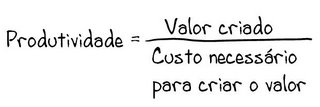
E eu, um tipo com um blogue chamado "Balanced Scorecard", acho a frase de Roger Martin super deliciosa e carregada de significado... bem na linha de "Value it's a feelling not a calculation", bem na linha de concentrar a atenção no numerador, na originação de valor na eficácia, no sonho, em vez de no eficientismo limitado do denominador tão característico dos pobres muggles que não sabem que a magia existe.
.
Recordar a flexibilidade talibã
.
“If you can’t imagine it, you will never create it.” The future is about imagination, not measurement. To imagine a future, one has to look beyond the measurable variables, beyond what can be proven with past data.” – Roger Martin
.
E eu, um tipo com um blogue chamado "Balanced Scorecard", acho a frase de Roger Martin super deliciosa e carregada de significado... bem na linha de "Value it's a feelling not a calculation", bem na linha de concentrar a atenção no numerador, na originação de valor na eficácia, no sonho, em vez de no eficientismo limitado do denominador tão característico dos pobres muggles que não sabem que a magia existe.
.
Recordar a flexibilidade talibã
Low-cost - comparações
"British Airways v the low cost airlines: how they compare"
.
E já agora "Vueling regista 19.5 milhões de prejuízo no primeiro semestre"
.
Não é para quem quer... é para quem pode.
.
E já agora "Vueling regista 19.5 milhões de prejuízo no primeiro semestre"
.
Não é para quem quer... é para quem pode.
Co-criação... basta imaginar as possibilidades
Um mundo de oportunidades!
E para uma PME...
.
E para quem acha que inovação e promoção têm de custar milhões...
E para uma PME...
.
E para quem acha que inovação e promoção têm de custar milhões...
sexta-feira, julho 29, 2011
Na terra de cucos, patos-bravos e outros socialistas
Embora use demasiados clichés, embora continue com a linguagem do denominador, recomenda-se a leitura de:
.
"Part 1: Seeking a Path out of the Crisis in Portugal"
"Part 2: A Country that Produces Too Little and Consumes Too Much"
""Der Spiegel": "Poupar não basta para Portugal sair da crise""
.
E quando lerem:
.
"Today Portugal is a country with an oversized bureaucracy. Of its labor force of 5 million, some 750,000 work in the public sector, and they are well paid. According to the Organization for Economic Cooperation and Development (OECD), salaries for Portuguese civil servants are "far above" incomes for comparable work in the private sector.
.
Nevertheless, many government agencies are inefficient and ineffective. The processing of tax returns is often delayed, government offices are chronically late in paying invoices and the permitting process can be a waiting game. For example, it takes an average of 287 days to complete all the formalities required to build a warehouse in Portugal. The OECD average is 157 days."
.
Lembrem-se do cuco e do imposto que este ano é extraordinário e que para o ano é ordinário. E, já agora disto "Governo aprova corte de 10% nos gastos do Estado"
.
"Part 1: Seeking a Path out of the Crisis in Portugal"
"Part 2: A Country that Produces Too Little and Consumes Too Much"
""Der Spiegel": "Poupar não basta para Portugal sair da crise""
.
E quando lerem:
.
"Today Portugal is a country with an oversized bureaucracy. Of its labor force of 5 million, some 750,000 work in the public sector, and they are well paid. According to the Organization for Economic Cooperation and Development (OECD), salaries for Portuguese civil servants are "far above" incomes for comparable work in the private sector.
.
Nevertheless, many government agencies are inefficient and ineffective. The processing of tax returns is often delayed, government offices are chronically late in paying invoices and the permitting process can be a waiting game. For example, it takes an average of 287 days to complete all the formalities required to build a warehouse in Portugal. The OECD average is 157 days."
.
Lembrem-se do cuco e do imposto que este ano é extraordinário e que para o ano é ordinário. E, já agora disto "Governo aprova corte de 10% nos gastos do Estado"
Azeite...
Ontem, ao almoço, os meus filhos discutiam quantos PCs tem a HP de vender para conseguir ganhar o mesmo que a Apple com a venda de um Mac.
.
Por isso, cuidado com a bolha azeiteira.
.
"Azeite Gallo investe cinco milhões na fábrica de Abrantes e em renovação de imagem"
"Azeite Gallo quer ser o terceiro mais vendido do mundo"
.
Tudo aponta para o aumento da eficiência na produção e para o aumento do shelf-life que também permite reduzir custos na compra e na logística de entrega.
.
Acham que estes produtores são concorrentes? (aqui e aqui) Acham que estão preocupados?
.
Por isso, cuidado com a bolha azeiteira.
.
"Azeite Gallo investe cinco milhões na fábrica de Abrantes e em renovação de imagem"
"Azeite Gallo quer ser o terceiro mais vendido do mundo"
.
Tudo aponta para o aumento da eficiência na produção e para o aumento do shelf-life que também permite reduzir custos na compra e na logística de entrega.
.
Acham que estes produtores são concorrentes? (aqui e aqui) Acham que estão preocupados?
Co-criação
Nos últimos tempos tenho lido muito sobre a co-criação (definições relevantes aqui). Por exemplo:
.
"The Future of Business is not Created, It’s Co-Created
Customer influence is growing and when they’re not focusing attention on one another, they’re focusing activity toward the things that move them. As we know, brands and organizations are the recipients of sentiment, both good and bad. It’s what we do with the feedback and insights that define the brand in the future. In addition to brand, competitive advantages will lean toward businesses that embrace customer engagement to shape and steer experiences and innovate future products, services and uses.
In a separate study, eMarketer learned that customers do indeed want deeper engagement with the brands and products they care about. At the same time, companies that embraced a culture and philosophy of co-creation are realizing that open collaboration is instrumental in keeping a competitive edge.
Companies also tend to restrict their co-creation activities to discrete moments in the product life cycle. But the greatest benefits can be realized when collaboration centers on building value that enhances a product’s daily use.
The study found that companies benefit from customer insights which in turn delivers customers benefit through product satisfaction. This in turn increases sales while saving customers time and increasing their productivity. Of course, co-creation promotes loyalty and builds pride and a sense of recognition, which equally lowers customer service costs while building a strong community of customers and advocates." (Trecho retirado de "Social Media Engagement Must Enable Business Success")
.
Interessante este exemplo "How Amazon Might Just Have Saved Barnes & Noble":
.
"And Amazon’s primary competitor, Barnes and Noble, was drowning. B&N’s Nook came late to the party and was little more than an expensive Kindle on the other bookseller’s platform.
Then, something interesting happened. Two things, really. First, the Nook was hacked to make it a moderately functioning tablet computer. More importantly, B&N embraced this change and soon launched an OS that not only allowed this hack to continue but pushed hard into this space. Second, it launched a better product: a touch-screen color Nook.
Have you played with a Nook next to a Kindle? The Nook is just better.
It’s got a touch screen. Do you own a mobile phone today? If you do, it’s probably a touch screen device. Our frame of reference has shifted to touch screens on handheld devices, hasn’t it? It’s color, like most of our handheld devices are. It makes more sense. The Kindle, which cheaper by $100, is still a very attractive product that, because of the comparison with the Nook, is something we can live with – but it’s not the one we want. The first time I picked a Kindle up, I kept poking the screen expecting it to do something."
.
.
.
Por isso, se eu pudesse... era aqui que eu ia.
.
"The Future of Business is not Created, It’s Co-Created
Customer influence is growing and when they’re not focusing attention on one another, they’re focusing activity toward the things that move them. As we know, brands and organizations are the recipients of sentiment, both good and bad. It’s what we do with the feedback and insights that define the brand in the future. In addition to brand, competitive advantages will lean toward businesses that embrace customer engagement to shape and steer experiences and innovate future products, services and uses.
In a separate study, eMarketer learned that customers do indeed want deeper engagement with the brands and products they care about. At the same time, companies that embraced a culture and philosophy of co-creation are realizing that open collaboration is instrumental in keeping a competitive edge.
Companies also tend to restrict their co-creation activities to discrete moments in the product life cycle. But the greatest benefits can be realized when collaboration centers on building value that enhances a product’s daily use.
The study found that companies benefit from customer insights which in turn delivers customers benefit through product satisfaction. This in turn increases sales while saving customers time and increasing their productivity. Of course, co-creation promotes loyalty and builds pride and a sense of recognition, which equally lowers customer service costs while building a strong community of customers and advocates." (Trecho retirado de "Social Media Engagement Must Enable Business Success")
.
Interessante este exemplo "How Amazon Might Just Have Saved Barnes & Noble":
.
"And Amazon’s primary competitor, Barnes and Noble, was drowning. B&N’s Nook came late to the party and was little more than an expensive Kindle on the other bookseller’s platform.
Then, something interesting happened. Two things, really. First, the Nook was hacked to make it a moderately functioning tablet computer. More importantly, B&N embraced this change and soon launched an OS that not only allowed this hack to continue but pushed hard into this space. Second, it launched a better product: a touch-screen color Nook.
Have you played with a Nook next to a Kindle? The Nook is just better.
It’s got a touch screen. Do you own a mobile phone today? If you do, it’s probably a touch screen device. Our frame of reference has shifted to touch screens on handheld devices, hasn’t it? It’s color, like most of our handheld devices are. It makes more sense. The Kindle, which cheaper by $100, is still a very attractive product that, because of the comparison with the Nook, is something we can live with – but it’s not the one we want. The first time I picked a Kindle up, I kept poking the screen expecting it to do something."
.
.
.
Por isso, se eu pudesse... era aqui que eu ia.
A transferência em curso
Primeiro, recordar "Uma variação homóloga de 52,6% é obra".
.
Depois, enquadrar:
.
"Porto e Lisboa, com, respectivamente, 23,9% e 19,7%, são responsáveis por quase metade das insolvências. Seguem-se Braga e Aveiro, mas que viram o número de insolvências diminuir no distrito. Braga passou a ser responsável por 13,6% dos casos, em vez dos 16,7% de há um ano, e Aveiro por 8,8% em vez dos 9,3%. Uma diminuição que se prende com o menor número de empresas em dificuldades no sector do têxtil e vestuário, bem como do calçado.
O comércio, com 28,6%, é o principal afectado, seguindo-se a construção com 18,8%. Em contrapartida, o têxtil , vestuário, couro e calçado viu o seu peso cair de 12,4% para 8,6%. Já a indústria das madeiras não tem grande peso nas insolvências, apenas 2,4%, mas é a que regista a taxa mais elevada de créditos vencidos: 13,4%."
.
Trecho retirado de "Insolvências cresceram 10,7% no primeiro semestre de 2011"
.
Ah! E não esquecer "E enquanto no sector privado se registou uma hemorragia de empregos, no sector público não foram despedidos quaisquer trabalhadores" (Retirado daqui)
.
"Mais de 500 acções de insolvência registadas por mês no primeiro semestre"
"Número de insolvências aumenta 10,7% no semestre"
"Metade das falências no Norte" (Este artigo ressalta que se a morte das hipóteses (uma empresa é uma hipótese, é uma experiência) cresceu 10,7% no primeiro semestre, no mesmo período, a criação de novas experiências, de novas hipóteses, de novas empresas, cresceu cerca de 17,9%)
"Em seis meses já foram registadas mais de três mil insolvências"
"Mais de 3 mil empresas em insolvência no primeiro semestre"
.
Depois, enquadrar:
.
"Porto e Lisboa, com, respectivamente, 23,9% e 19,7%, são responsáveis por quase metade das insolvências. Seguem-se Braga e Aveiro, mas que viram o número de insolvências diminuir no distrito. Braga passou a ser responsável por 13,6% dos casos, em vez dos 16,7% de há um ano, e Aveiro por 8,8% em vez dos 9,3%. Uma diminuição que se prende com o menor número de empresas em dificuldades no sector do têxtil e vestuário, bem como do calçado.
O comércio, com 28,6%, é o principal afectado, seguindo-se a construção com 18,8%. Em contrapartida, o têxtil , vestuário, couro e calçado viu o seu peso cair de 12,4% para 8,6%. Já a indústria das madeiras não tem grande peso nas insolvências, apenas 2,4%, mas é a que regista a taxa mais elevada de créditos vencidos: 13,4%."
.
Trecho retirado de "Insolvências cresceram 10,7% no primeiro semestre de 2011"
.
Ah! E não esquecer "E enquanto no sector privado se registou uma hemorragia de empregos, no sector público não foram despedidos quaisquer trabalhadores" (Retirado daqui)
.
"Mais de 500 acções de insolvência registadas por mês no primeiro semestre"
"Número de insolvências aumenta 10,7% no semestre"
"Metade das falências no Norte" (Este artigo ressalta que se a morte das hipóteses (uma empresa é uma hipótese, é uma experiência) cresceu 10,7% no primeiro semestre, no mesmo período, a criação de novas experiências, de novas hipóteses, de novas empresas, cresceu cerca de 17,9%)
"Em seis meses já foram registadas mais de três mil insolvências"
"Mais de 3 mil empresas em insolvência no primeiro semestre"
Faltou
A propósito deste texto "Crescimento sustentado" julgo que faltou ao autor, Luís Augusto Lobão Mendes, referir a fonte... "The Momentum Effect" de JC Larreche
.
.
quinta-feira, julho 28, 2011
Ah! E se fosse um sinal?
Ontem à noite tive de assistir a uma reunião da direcção da secção de andebol do pequeno mas honrado clube onde a minha filha joga.
.
Claro, como eu suspeitava, o tema passou por redução de custos e subida de quotas.
.
A reunião foi super-interessante e no final fiquei com uma sensação agradável que não consegui justificar.
.
Esta manhã, a caminho de Coimbra, ao reflectir sobre o que vi e ouvi, percebi o que é que tinha achado estranho e me tinha agradado tanto.
.
.
.
Locus de controlo no interior.
.
Desde o presidente da Associação Desportiva Arsenal de Canelas até aos dirigentes da secção de andebol, todo o discurso foi de locus de controlo no interior... nem uma vez se falou em pedir apoios, ajudas, subsídios. E até citaram números... sim quanto se gasta em gasóleo, gasóleo de aquecimento, electricidade, água, sandes para as atletas no final dos jogos...
.
Nem por um minuto o discurso do coitadinho, da vítima que suspira por um salvador no exterior passou por aquela reunião...
.
Ah! Se fosse um sinal, se fosse um sintoma de uma generalização em curso...
.
Claro, como eu suspeitava, o tema passou por redução de custos e subida de quotas.
.
A reunião foi super-interessante e no final fiquei com uma sensação agradável que não consegui justificar.
.
Esta manhã, a caminho de Coimbra, ao reflectir sobre o que vi e ouvi, percebi o que é que tinha achado estranho e me tinha agradado tanto.
.
.
.
Locus de controlo no interior.
.
Desde o presidente da Associação Desportiva Arsenal de Canelas até aos dirigentes da secção de andebol, todo o discurso foi de locus de controlo no interior... nem uma vez se falou em pedir apoios, ajudas, subsídios. E até citaram números... sim quanto se gasta em gasóleo, gasóleo de aquecimento, electricidade, água, sandes para as atletas no final dos jogos...
.
Nem por um minuto o discurso do coitadinho, da vítima que suspira por um salvador no exterior passou por aquela reunião...
.
Ah! Se fosse um sinal, se fosse um sintoma de uma generalização em curso...
As curvas de Stobachoff
Neste postal "Segmentação retrospectiva dos clientes" referi um artigo de Storbacka "Segmentation Based on Customer Profitability – Retrospective Analysis of Retail Bank Customer Bases" onde é mencionado o Stobachoff Index.
.
Uma pesquisa na net permitiu-me encontrar uma interessante referência em "The strategic value of customer profitability analysis" de Erik M Van Raaij publicado por Marketing Intelligence Planning (2005) Volume: 23, Issue: 4, Publisher: Emerald Group Publishing Limited, Pages: 372-381 (obrigado ao Baidu) e outra no livro de Robert C. Blattberg, Byung-Do Kim e Scott A. Neslin "Database Marketing - Analyzing and Managing Customers" do qual retirei o extracto que se segue para memória futura na minha base de dados:
.
"Van Raaij et al. (2003) report the first experience of a business-to-business company with incorporating customer value analysis into their marketing planning. The company, which we will call “DBM,” was a multinational firm in the market for professional cleaning products. It sold directly to end-users such as in-flight caterers and professional cleaning services, as well as through distributors. It divided its market into sectors such as healthcare, lodging, or dairy. Sales and profits had been leveling off after years of growth and DBM was worried about new competitors. Further non-product costs (e.g., costs to service customers) had been increasing. The company desired to assign these costs to individual customers and calculate customer profit.
DBM undertook a six-stage process to calculate profit at the customer level and then develop strategies based on the results:
1. Select active customers
2. Design the customer profitability calculation model
3. Calculate customer profit
4. Interpret the results
5. Develop strategies
6. Establish an infrastructure for future applications."
...
"The company used the customer profit curve to plot what they called a “Stobachoff” curve. This is simply the equivalent of a cumulative lift curve. It orders the customers according to profitability, and then plots the cumulative profit accounted for by these customers as one progresses from the highest to lowest profit.
shows that in this example, 75% of the customers are profitable (the curve increases up to about that point) while 25% are unprofitable. Given that the top 75% of customers accounts for 120% of the profits, the remaining 25% really drag profits down.
In this case there are a lot of profitable customers but they are subsidizing a relatively small number (at least a minority) of unprofitable customers. Note that by adding fixed costs through overhead, the firm may be distorting the true profitability of the remaining 25% of the customers. Some of these may be incrementally profitable." (Moi ici: E qual será o perfil na sua empresa? Basta recordar Byrnes para ficar com os cabelos em pé. E a minha experiência a trabalhar com PMEs, pouco ou nada habituadas ao conceito de clientes-alvo também não ajuda a melhorar o retrato)
"In the low dependence, low subsidizing cell, all customers are profitable and roughly equally so. In the low dependence, high subsidization cell, most customers are profitable but there are a few unprofitable customers who drag down total profits. In the high dependence, low subsidizing cell, there are only a few profitable customers and the rest of customers are unprofitable but not highly so. In perhaps the most dangerous case is the high dependence, high subsidization cell. In this case, there are a few highly profitable customers,
and many highly unprofitable customers. This is dangerous because if those few highly profitable customers should defect, the company would suddenly be losing a lot of money."
.
Uma pesquisa na net permitiu-me encontrar uma interessante referência em "The strategic value of customer profitability analysis" de Erik M Van Raaij publicado por Marketing Intelligence Planning (2005) Volume: 23, Issue: 4, Publisher: Emerald Group Publishing Limited, Pages: 372-381 (obrigado ao Baidu) e outra no livro de Robert C. Blattberg, Byung-Do Kim e Scott A. Neslin "Database Marketing - Analyzing and Managing Customers" do qual retirei o extracto que se segue para memória futura na minha base de dados:
.
"Van Raaij et al. (2003) report the first experience of a business-to-business company with incorporating customer value analysis into their marketing planning. The company, which we will call “DBM,” was a multinational firm in the market for professional cleaning products. It sold directly to end-users such as in-flight caterers and professional cleaning services, as well as through distributors. It divided its market into sectors such as healthcare, lodging, or dairy. Sales and profits had been leveling off after years of growth and DBM was worried about new competitors. Further non-product costs (e.g., costs to service customers) had been increasing. The company desired to assign these costs to individual customers and calculate customer profit.
DBM undertook a six-stage process to calculate profit at the customer level and then develop strategies based on the results:
1. Select active customers
2. Design the customer profitability calculation model
3. Calculate customer profit
4. Interpret the results
5. Develop strategies
6. Establish an infrastructure for future applications."
...
"The company used the customer profit curve to plot what they called a “Stobachoff” curve. This is simply the equivalent of a cumulative lift curve. It orders the customers according to profitability, and then plots the cumulative profit accounted for by these customers as one progresses from the highest to lowest profit.
shows that in this example, 75% of the customers are profitable (the curve increases up to about that point) while 25% are unprofitable. Given that the top 75% of customers accounts for 120% of the profits, the remaining 25% really drag profits down.
In this case there are a lot of profitable customers but they are subsidizing a relatively small number (at least a minority) of unprofitable customers. Note that by adding fixed costs through overhead, the firm may be distorting the true profitability of the remaining 25% of the customers. Some of these may be incrementally profitable." (Moi ici: E qual será o perfil na sua empresa? Basta recordar Byrnes para ficar com os cabelos em pé. E a minha experiência a trabalhar com PMEs, pouco ou nada habituadas ao conceito de clientes-alvo também não ajuda a melhorar o retrato)
"In the low dependence, low subsidizing cell, all customers are profitable and roughly equally so. In the low dependence, high subsidization cell, most customers are profitable but there are a few unprofitable customers who drag down total profits. In the high dependence, low subsidizing cell, there are only a few profitable customers and the rest of customers are unprofitable but not highly so. In perhaps the most dangerous case is the high dependence, high subsidization cell. In this case, there are a few highly profitable customers,
and many highly unprofitable customers. This is dangerous because if those few highly profitable customers should defect, the company would suddenly be losing a lot of money."
As coisas vão aquecer mesmo... excepto para os panglossianos da treta.
Pessoas de algumas empresas exportadoras com quem tenho falado transmitem-me alguma preocupação face aos próximos meses... dizem-me que o primeiro semestre de 2011 foi melhor do que o homólogo de 2010. No entanto, pressentem nas encomendas um segundo semestre de 2011 mais pessimista.
.
Em linha com "Recession Warning in Europe’s Periphery" (o 1º gráfico esclarece tudo...):
.
"“The Eurozone recovery lost almost all of its momentum in July, recording the weakest growth since August 2009 when the recovery first began. Excluding the financial crisis, the July survey was the most downbeat since the Iraq war in 2003, and consistent with a flat trend in quarterly gross domestic product."
.
E tendo em conta isto:
.
"As Ken Rogoff and Carmen Reinhart noted in their book This Time It’s Different, “Overt domestic default tends to occur only in times of severe macroeconomic distress.” The most likely window for a Greek (or other Euro-nation) default will be at a point when France and Germany are experiencing economic downturns sufficient to douse the political will to bail out their neighbours at a cost to their own citizens”. (Moi ici: Atenção à França)
.
As coisas vão aquecer mesmo... excepto para os panglossianos da treta.
.
Em linha com "Recession Warning in Europe’s Periphery" (o 1º gráfico esclarece tudo...):
.
"“The Eurozone recovery lost almost all of its momentum in July, recording the weakest growth since August 2009 when the recovery first began. Excluding the financial crisis, the July survey was the most downbeat since the Iraq war in 2003, and consistent with a flat trend in quarterly gross domestic product."
.
E tendo em conta isto:
.
"As Ken Rogoff and Carmen Reinhart noted in their book This Time It’s Different, “Overt domestic default tends to occur only in times of severe macroeconomic distress.” The most likely window for a Greek (or other Euro-nation) default will be at a point when France and Germany are experiencing economic downturns sufficient to douse the political will to bail out their neighbours at a cost to their own citizens”. (Moi ici: Atenção à França)
.
As coisas vão aquecer mesmo... excepto para os panglossianos da treta.
Austrian Economics e comentários à luz de Service-Dominant Logic
"Menger insists throughout his work that value is essentially subjective, and that therefore economics must be in the main a subjective science. Goods have no inherent value in themselves. They are valued because they help to satisfy some human want or need."
.
Não, não é um texto sobre service-dominant logic.
...
"in a given community the exchange value of a given increment of each good will be determined by the relation between its total available quantity and the intensity of the human need or want that it fills."
...
"Thus while the classical Ricardian doctrine held that the "normal" value of consumption goods was determined by their "cost of production," the Austrian doctrine holds that the "cost of production" itself is ultimately determined by the value of consumption goods.
.
These two doctrines can be partly reconciled in the statement that though what a good has cost to produce cannot directly determine its value, what it will cost to produce determines how much of it will continue to be made. It is the limit that cost of production puts upon the total quantity of a good produced that determines its marginal value and therefore its market price."
...
Agora algo que a service-dominant logic já ultrapassou com a subordinação da troca à experiência durante o uso.
.
"To return to Menger: His Principles of Economics next presents a "theory of exchange." In this he points out that men do not buy from or sell to or exchange with each other merely because of a "propensity of men to truck and barter," as implied by Adam Smith, but because each man seeks to maximize his satisfactions (Moi ici: maximize or satisfice?) by exchanging what he values less for what he values more. In this way the satisfaction of all is increased. Exchange is thus an integral part of the whole process of production. (Moi ici: E para lá da troca, não esquecer a experiência do valor durante o uso ) What is being produced is value. (Moi ici: Aqui também há contribuições importantes da service-dominant logic como ilustra esta figura sobre produção versus co-criação de valor) Menger's whole theory of price, to repeat, is developed on the basis of "the subjective character of value.""
...
E, para terminar uma referência à treta da macroeconomia neo-clássica:
.
"Now "general equilibrium" is defined by these economists (when it ever is) in highly abstract and obscure phrases; but for laymen it might be defined as a condition in which all the tens of thousands or millions of commodities and services are being turned out in the exact quantities and proportions in which they are relatively wanted by producers or consumers, so that there are no "shortages" or "surpluses." All prices reflect costs, and there is no more profit in making one commodity than any other. (In fact, there is no "pure" profit at all.) These economists admit that at any moment this condition does not exist, but they contend that there is a constant long-run tendency toward equilibrium, because when there is an unusual profit in turning out some one product, producers will turn out more of it, and when there is a loss in turning out some other product, producers will make less of it, or transfer to making something else.
.
The concept itself is extremely nebulous. Neoclassical economists seem obsessed today with setting up complicated algebraic equations stipulating the conditions of equilibrium or functional relations under "perfect competition" and the like, but it is difficult to specify precisely what their x's and y's stand for. They cannot refer to physical quantities, because you cannot add apples to horses, or a ton of gold watches to a ton of sand. One might add or compare quantities times prices, but what would be the meaning of the total, or any of the parts that make it up? The price, even of one commodity, differs from hour to hour, place to place, and transaction to transaction. The value of the currency itself fluctuates and constantly changes its exchange ratio with commodities. If we simply add or compare "values," then we must recognize that values are purely subjective. They are impossible to measure or to total because they differ with each individual.
If we pass over these fundamental difficulties, where do we arrive? Even if we assume that there may be a persistent long-run tendency toward general equilibrium, we must admit that there is also a persistent short-run and long-run tendency toward the persistence of disequilibrium.
This is not only because there is a tendency of entrepreneurs, in increasing or reducing production in response to market and profit signals, to overshoot the mark, but because individual entrepreneurs, so far from making merely automatic responses, are constantly gaining new knowledge, alert to new opportunities, changing methods and reducing production costs, improving products, innovating — turning out entirely new products or inventions. And consumers too are constantly learning, changing tastes, and demanding new products to meet new wants. So Austrian economists seldom speak of market equilibrium, but of the market process."
.
Trechos retirados de "Understanding "Austrian" Economics"
.
BTW "For Love of Laissez-Faire"
.
Não, não é um texto sobre service-dominant logic.
...
"in a given community the exchange value of a given increment of each good will be determined by the relation between its total available quantity and the intensity of the human need or want that it fills."
...
"Thus while the classical Ricardian doctrine held that the "normal" value of consumption goods was determined by their "cost of production," the Austrian doctrine holds that the "cost of production" itself is ultimately determined by the value of consumption goods.
.
These two doctrines can be partly reconciled in the statement that though what a good has cost to produce cannot directly determine its value, what it will cost to produce determines how much of it will continue to be made. It is the limit that cost of production puts upon the total quantity of a good produced that determines its marginal value and therefore its market price."
...
Agora algo que a service-dominant logic já ultrapassou com a subordinação da troca à experiência durante o uso.
.
"To return to Menger: His Principles of Economics next presents a "theory of exchange." In this he points out that men do not buy from or sell to or exchange with each other merely because of a "propensity of men to truck and barter," as implied by Adam Smith, but because each man seeks to maximize his satisfactions (Moi ici: maximize or satisfice?) by exchanging what he values less for what he values more. In this way the satisfaction of all is increased. Exchange is thus an integral part of the whole process of production. (Moi ici: E para lá da troca, não esquecer a experiência do valor durante o uso ) What is being produced is value. (Moi ici: Aqui também há contribuições importantes da service-dominant logic como ilustra esta figura sobre produção versus co-criação de valor) Menger's whole theory of price, to repeat, is developed on the basis of "the subjective character of value.""
...
E, para terminar uma referência à treta da macroeconomia neo-clássica:
.
"Now "general equilibrium" is defined by these economists (when it ever is) in highly abstract and obscure phrases; but for laymen it might be defined as a condition in which all the tens of thousands or millions of commodities and services are being turned out in the exact quantities and proportions in which they are relatively wanted by producers or consumers, so that there are no "shortages" or "surpluses." All prices reflect costs, and there is no more profit in making one commodity than any other. (In fact, there is no "pure" profit at all.) These economists admit that at any moment this condition does not exist, but they contend that there is a constant long-run tendency toward equilibrium, because when there is an unusual profit in turning out some one product, producers will turn out more of it, and when there is a loss in turning out some other product, producers will make less of it, or transfer to making something else.
.
The concept itself is extremely nebulous. Neoclassical economists seem obsessed today with setting up complicated algebraic equations stipulating the conditions of equilibrium or functional relations under "perfect competition" and the like, but it is difficult to specify precisely what their x's and y's stand for. They cannot refer to physical quantities, because you cannot add apples to horses, or a ton of gold watches to a ton of sand. One might add or compare quantities times prices, but what would be the meaning of the total, or any of the parts that make it up? The price, even of one commodity, differs from hour to hour, place to place, and transaction to transaction. The value of the currency itself fluctuates and constantly changes its exchange ratio with commodities. If we simply add or compare "values," then we must recognize that values are purely subjective. They are impossible to measure or to total because they differ with each individual.
If we pass over these fundamental difficulties, where do we arrive? Even if we assume that there may be a persistent long-run tendency toward general equilibrium, we must admit that there is also a persistent short-run and long-run tendency toward the persistence of disequilibrium.
This is not only because there is a tendency of entrepreneurs, in increasing or reducing production in response to market and profit signals, to overshoot the mark, but because individual entrepreneurs, so far from making merely automatic responses, are constantly gaining new knowledge, alert to new opportunities, changing methods and reducing production costs, improving products, innovating — turning out entirely new products or inventions. And consumers too are constantly learning, changing tastes, and demanding new products to meet new wants. So Austrian economists seldom speak of market equilibrium, but of the market process."
.
Trechos retirados de "Understanding "Austrian" Economics"
.
BTW "For Love of Laissez-Faire"
A orgia alavancou isto
"Construtoras nacionais sobem no ranking das maiores na Europa"
.
3 empresas entre o top 50 europeu ... fará sentido?
.
Agora o que me deixou água na boca foi este sublinhado:
.
"Nas vinte maiores empresas europeias – nas quais se contam grupos franceses, alemães, espanholas, britânicos, suecos, um holandês, um austríaco e um finlandês – cerca de metade o total das vendas já é conseguido em contexto internacional.
...
Há ainda entre este grupo das 20 maiores nove empresas em que metade do seu volume de negócios já é conseguido com base em actividade fora do sector da construção."
.
Não sei porquê, sem ironia, lembrei-me logo the Al "Chainsaw" Dunlap...
.
3 empresas entre o top 50 europeu ... fará sentido?
.
Agora o que me deixou água na boca foi este sublinhado:
.
"Nas vinte maiores empresas europeias – nas quais se contam grupos franceses, alemães, espanholas, britânicos, suecos, um holandês, um austríaco e um finlandês – cerca de metade o total das vendas já é conseguido em contexto internacional.
...
Há ainda entre este grupo das 20 maiores nove empresas em que metade do seu volume de negócios já é conseguido com base em actividade fora do sector da construção."
.
Não sei porquê, sem ironia, lembrei-me logo the Al "Chainsaw" Dunlap...
quarta-feira, julho 27, 2011
Relíquia
Ao final da manhã, ao regressar de S João da Madeira, perto de casa tenho de ultrapassar um ...
... carro de bois.
Nunca esquecer a missão
A propósito de ""Benchmarking" em cuidados de saúde primários" algumas questões:
.
Um cidadão está "condenado" a frequentar uma USF ou pode escolher?
.
Se um cidadão não pode escolher...
.
Balanced scorecard tem a palavra balanceado, a palavra equilibrado por algum motivo.
.
Com uma aposta exclusiva na eficiência os "condenados" que se danem. Podem-me responder:
.
"Também vamos medir a satisfação dos utentes"
.
Mas se os utentes não podem mudar... não lhes adianta nada.
.
Num balanced scorecard para organizações públicas sem fins lucrativos, na base está o cumprimento do orçamento, está a eficiência. No topo, está a missão da organização!
.
Uma organização eficiente que não cumpre a sua missão está a cavar a sua sepultura. Basta chegar ao poder um Raul Castro que é logo cortada... e não terá ninguém na rua a lutar por ela.
.
Um cidadão está "condenado" a frequentar uma USF ou pode escolher?
.
Se um cidadão não pode escolher...
.
Balanced scorecard tem a palavra balanceado, a palavra equilibrado por algum motivo.
.
Com uma aposta exclusiva na eficiência os "condenados" que se danem. Podem-me responder:
.
"Também vamos medir a satisfação dos utentes"
.
Mas se os utentes não podem mudar... não lhes adianta nada.
.
Num balanced scorecard para organizações públicas sem fins lucrativos, na base está o cumprimento do orçamento, está a eficiência. No topo, está a missão da organização!
.
Uma organização eficiente que não cumpre a sua missão está a cavar a sua sepultura. Basta chegar ao poder um Raul Castro que é logo cortada... e não terá ninguém na rua a lutar por ela.
Segmentação retrospectiva dos clientes
Ontem, durante mais uma viagem de comboio, tive oportunidade de ler "Segmentation based on customer profitability - retrospective analysis of retail bank customer bases" Journal of Marketing Management, (1997) 13(5), 479-492 de Kaj Storbacka.
.
O artigo apresenta várias formas de segmentar clientes actuais com base numa análise retrospectiva.
.
"it is increasingly difficult to build marketing activities on the notion of a market. The "markets" are fragmenting rapidly and we are moving towards a time when the only relevant segment is the individual customer. (Moi ici: Olhar olhos nos olhos gente de carne e osso em vez de enganadores fantasmas estatísticos) Taking a genuinely customer oriented view on marketing changes many of the fundamental marketing assumptions and thus marketing in itself changes."
...
"The proportion of profitable customers obviously varies among providers. Cooper and Kaplan (I991) suggest that, in certain industrial markets, 20% of the customer relationships stand for 225% of the total customer base profitability." (Moi ici: E na sua empresa? Qual a % de clientes que têm dado prejuízo e nunca darão lucro?)
.
O artigo começa com um exemplo de segmentação retrospectiva com base no critério mais simples: o volume de vendas:
.
"It is also interesting to note that the customers with RV between 50.000 and 250.000 represent about 20% of the customer base and stand for approximately 90% of total customer base profitability. Hence, these groups can be argued to be the most important ones. This does not, however, indicate that the customers in these groups as individuals are the most important ones. An average customer, in the highest Relationship Volume group, contributes more than 25 times the profitability of an average customer in the group 25.000-49.999, more than eight times the profitability of an average customer in the group 50.000-99.999, about five times the profitability of an average customer in the group 100.000-249.999, and about threefold the profitability of an average customer in the group 250.000-499.999. The average profitability of customers in the small volume groups that are unprofitable is just a few hundred negative. As almost 50% of all customers, are in these groups, and as it is not possible to increase volume-based revenue (without increasing volume) it could indicate that just a small increase in the average fee-based revenue could have a major impact on the total profitability of the customer base.
. As a conclusion, we note that even the simplest way of segmenting customer bases provides powerful insights in the configuration of customer relationships and creates a foundation for strategic development of products and pricing mechanisms."
.
Outros indicadores usados no artigo para segmentar clientes:
.
O artigo apresenta várias formas de segmentar clientes actuais com base numa análise retrospectiva.
.
"it is increasingly difficult to build marketing activities on the notion of a market. The "markets" are fragmenting rapidly and we are moving towards a time when the only relevant segment is the individual customer. (Moi ici: Olhar olhos nos olhos gente de carne e osso em vez de enganadores fantasmas estatísticos) Taking a genuinely customer oriented view on marketing changes many of the fundamental marketing assumptions and thus marketing in itself changes."
...
"The proportion of profitable customers obviously varies among providers. Cooper and Kaplan (I991) suggest that, in certain industrial markets, 20% of the customer relationships stand for 225% of the total customer base profitability." (Moi ici: E na sua empresa? Qual a % de clientes que têm dado prejuízo e nunca darão lucro?)
.
O artigo começa com um exemplo de segmentação retrospectiva com base no critério mais simples: o volume de vendas:
.
"It is also interesting to note that the customers with RV between 50.000 and 250.000 represent about 20% of the customer base and stand for approximately 90% of total customer base profitability. Hence, these groups can be argued to be the most important ones. This does not, however, indicate that the customers in these groups as individuals are the most important ones. An average customer, in the highest Relationship Volume group, contributes more than 25 times the profitability of an average customer in the group 25.000-49.999, more than eight times the profitability of an average customer in the group 50.000-99.999, about five times the profitability of an average customer in the group 100.000-249.999, and about threefold the profitability of an average customer in the group 250.000-499.999. The average profitability of customers in the small volume groups that are unprofitable is just a few hundred negative. As almost 50% of all customers, are in these groups, and as it is not possible to increase volume-based revenue (without increasing volume) it could indicate that just a small increase in the average fee-based revenue could have a major impact on the total profitability of the customer base.
.
Outros indicadores usados no artigo para segmentar clientes:
- profitability based segmentation
- segmentation based on relatioship volume and customer relatioship profitability
E voltamos sempre ao nosso alicerce: quem são os clientes-alvo? Quem são os clientes que merecem todo o investimento? E quem são os que nos colocam numa relação ganhar-perder? Não esquecer os números de Jonathan Byrnes
terça-feira, julho 26, 2011
Again, repit with me: Value is a feeling, not a calculation
Uma vez mais Greg Satell nails it com "4 Things to Know About Brand Value":
.
"brands are conceptual. They allow us to dream, to think of things other than logistics and pricing and firing people. Reflecting on brands help us escape from the drudgery of work." (Moi ici: As marcas fogem à matematização... mas não as marcas ôcas, porque se tornaram ôcas, porque se radioclubeportuguisaram, e já só são um nome, uma carcaça exterior. Sim as marcas que continuam a queimar as pestasnas a arranjar formas de surpreender os potenciais clientes)
.
"1. A Brand is a Promise
.
From an evolutionary perspective, emotions helped us remember what was important. When we saw a rustle in the bushes and our best friend got eaten by a lion, it was important to be able to remember the incident without repetition (a luxury man eating lions are unlikely to grant).
That’s why as much as we would like to think otherwise, decision making tends to be driven by emotions rather than rationality. Great brands are built through emotional associations."
.
E como é que isso acontece na sua empresa? É deixado ao acaso ou é desenhado?
.
"brands are conceptual. They allow us to dream, to think of things other than logistics and pricing and firing people. Reflecting on brands help us escape from the drudgery of work." (Moi ici: As marcas fogem à matematização... mas não as marcas ôcas, porque se tornaram ôcas, porque se radioclubeportuguisaram, e já só são um nome, uma carcaça exterior. Sim as marcas que continuam a queimar as pestasnas a arranjar formas de surpreender os potenciais clientes)
.
"1. A Brand is a Promise
Usually when people think about brands they think about logos and marketing slogans, but a brand is much more than that. ... brand value is the value of promises made and kept." (Moi ici: Actualmente ando com outra ideia na cabeça. E quando compramos um artigo que saiu melhor do que a encomenda? E quando compramos um artigo e, com o começo do uso, o valor que lhe atribuímos continua a crescer? O potencial de valor que o fabricante podia capturar ainda mais... e, como já escrevi aqui no blogue e comentava com um empresário esta semana, é tão comum os empresários portugueses subestimarem-se... não apostam na comunicação, no marketing e, depois, são como Figos que morrem a jogar no Pastilhas para sempre... ou pior, jogam no Pastilhas e outros é que capturam o valor)
...
"2. Brands Have Tangible Value
There is a reason that companies spend billions of dollars every year to make promises and go to such great lengths to keep them: Money. Cold hard cash. Moolah and lots of it!"
...
"4. Emotions Build Brands
While brands are financial entities, they are built through emotions. As I wrote in an earlier post, emotions are like a little yellow highlighter in our brains. They’re powerful because they bypass the rational center in our forebrains and go straight to embedding themselves in our brain’s synaptic pathways..
From an evolutionary perspective, emotions helped us remember what was important. When we saw a rustle in the bushes and our best friend got eaten by a lion, it was important to be able to remember the incident without repetition (a luxury man eating lions are unlikely to grant).
That’s why as much as we would like to think otherwise, decision making tends to be driven by emotions rather than rationality. Great brands are built through emotional associations."
.
E como é que isso acontece na sua empresa? É deixado ao acaso ou é desenhado?
Não é armadilhar, é criar harmonia, é construir uma sinfonia...
Ao identificar os intervenientes num potencial mercado que queremos criar, temos de pensar na proposta de valor para os clientes directos, os distribuidores na figura...
também temos de pensar numa proposta de valor para os compradores (clientes dos clientes), numa proposta de valor para os utilizadores e outra, ainda, para os influenciadores.
.
Ou seja, temos de criar um alinhamento, uma sinfonia de propostas de valor que crie um mercado em que todos tenham algo a ganhar. A esse conjunto de propostas de valor podemos chamar de... proposta de mercado para criar uma nova configuração do mercado.
.
Pois é essa a proposta de Storbacka e Nenonen em "Scripting markets: From value propositions to market propositions" publicado por Industrial Marketing Management Volume 40, Issue 2, February 2011, Pages 255-266. Um excelente artigo:
.
"markets are socially constructed, subjective realities that can be altered by different actors in the market.
...
economic action is embedded in networks of social relationships and that markets are socially constructed
...
This paper builds on the foundational propositions of the S-D logic and takes as its starting point the following assumptions: (1) markets consist of networks of market actors, (2) markets are social constructions co-created by market actors, and (3) markets are resource integrators aiming at the co-creation of value.
...
organizations “produce” the environments to which they respond, through their actions and selective attention, Brooks (1995) claim that “enacted markets” are outcomes of prior transactions between actors. Thus, the market is defined by the already established relationships and this “structure” form mental barriers against other perceptions of the market. (Moi ici: Esta a maior barreira que se pode enfrentar. A barreira criada pelo nosso próprio cérebro.)
...
Market practices are defined as the interactions between market actors within a market configuration
...
markets cannot be seen as given constructions where actors compete for positions. The focal actor can, hence, make subjective market definitions and attempt to influence other to share this definition (create a “shared social construction”), i.e. the actor engages in market making.
...
Scripting markets – making market propositions
Market scripting can be defined as the conscious activities conducted by a market actor in order to alter the current market configuration in its favour. Central to market scripting is the subjective motive of the focal actor to align the mental models and business models of other market actors so that they reinforce the mental and business models of the scripting actor, and increase marketness. (Moi ici: Aqui entra a capacidade de calçar os sapatos do outro... algo de muito pouco português. É preciso ir para além do momento da troca entre cliente e fornecedor e visualizar a vida do cliente, e visualizar as experiências que se podem influenciar nessa vida... é preciso pensar em Brandenburger e Nalebuff e nas relações ganhar-ganhar que se podem criar. Como criar um mercado em que todos os actores estão em sintonia com a nossa empresa?)
...
The concept of market scripting asks for an enlargement of the idea proposed by Vargo and Lusch (2004), re-phrased as “the enterprise cannot deliver value, but only offer value propositions” in Vargo and Lusch (2008). As value is increasingly co-created in networks, in market practices participated by several actors, the argument could be that “the firm offers market propositions”, signifying that successful firms need to offer their view on how the market should be configured and engage actors in collective sensemaking activities aimed at creating a shared market view. (Moi ici: Isto é poesia... pura poesia)
...
We define market propositions as resource integration promises: the scripting actor promises to enhance value creation for participating actors by creating a market configuration that makes increased density of resources and capabilities, and value co-creation possible.
...
A key objective of configurations is to create harmony, consonance, or fit between configurative elements. Elements of a configuration interact if the value of one element depends on the presence of the other element; reinforce each other if the value of each element is increased by the presence of the other element; and are independent if the value of an element is independent of the presence of another element.
...
Several different market configurations may be effective, as long as the elements reinforce each other in order to achieve a high degree of configurational fit, achieved when the resource and capability density maximizes the network’s aggregated value creation.
...
markets develop and change by influencing market configurations
...
firms are increasingly engaged in complex market configurations where the alignment of market views becomes central for success. Firms, hence, need to offer market propositions: offer their view on how the market should be configured and engage actors in activities aimed at creating a shared market view. Market propositions are in essence resource integration promises: the focal actor promises to enhance value creation for participating actors by creating a market configuration that makes increased density of resources and capabilities, and value co-creation possible. (Moi ici: Isto é jogar o jogo num novo nível... and I love this game)
.
We labelled the practice of making market propositions market scripting, and defined it as the scripting actor’s activities aimed a altering an extant market configuration: to align the mental models and business models of other market actors so that they reinforce the mental and business models of the scripting actor, and increase marketness. Market scripting mechanisms are based on the performativity of all the configurative elements."
.
É mesmo isto!!!
.
Claro que nem todos os clientes, ou intervenientes a jusante poderão fazer parte do jogo, só os que estiverem preparados para alinhar porque vão ganhar.
também temos de pensar numa proposta de valor para os compradores (clientes dos clientes), numa proposta de valor para os utilizadores e outra, ainda, para os influenciadores.
.
Ou seja, temos de criar um alinhamento, uma sinfonia de propostas de valor que crie um mercado em que todos tenham algo a ganhar. A esse conjunto de propostas de valor podemos chamar de... proposta de mercado para criar uma nova configuração do mercado.
.
Pois é essa a proposta de Storbacka e Nenonen em "Scripting markets: From value propositions to market propositions" publicado por Industrial Marketing Management Volume 40, Issue 2, February 2011, Pages 255-266. Um excelente artigo:
.
"markets are socially constructed, subjective realities that can be altered by different actors in the market.
...
economic action is embedded in networks of social relationships and that markets are socially constructed
...
This paper builds on the foundational propositions of the S-D logic and takes as its starting point the following assumptions: (1) markets consist of networks of market actors, (2) markets are social constructions co-created by market actors, and (3) markets are resource integrators aiming at the co-creation of value.
...
organizations “produce” the environments to which they respond, through their actions and selective attention, Brooks (1995) claim that “enacted markets” are outcomes of prior transactions between actors. Thus, the market is defined by the already established relationships and this “structure” form mental barriers against other perceptions of the market. (Moi ici: Esta a maior barreira que se pode enfrentar. A barreira criada pelo nosso próprio cérebro.)
...
Market practices are defined as the interactions between market actors within a market configuration
...
markets cannot be seen as given constructions where actors compete for positions. The focal actor can, hence, make subjective market definitions and attempt to influence other to share this definition (create a “shared social construction”), i.e. the actor engages in market making.
...
Scripting markets – making market propositions
Market scripting can be defined as the conscious activities conducted by a market actor in order to alter the current market configuration in its favour. Central to market scripting is the subjective motive of the focal actor to align the mental models and business models of other market actors so that they reinforce the mental and business models of the scripting actor, and increase marketness. (Moi ici: Aqui entra a capacidade de calçar os sapatos do outro... algo de muito pouco português. É preciso ir para além do momento da troca entre cliente e fornecedor e visualizar a vida do cliente, e visualizar as experiências que se podem influenciar nessa vida... é preciso pensar em Brandenburger e Nalebuff e nas relações ganhar-ganhar que se podem criar. Como criar um mercado em que todos os actores estão em sintonia com a nossa empresa?)
...
The concept of market scripting asks for an enlargement of the idea proposed by Vargo and Lusch (2004), re-phrased as “the enterprise cannot deliver value, but only offer value propositions” in Vargo and Lusch (2008). As value is increasingly co-created in networks, in market practices participated by several actors, the argument could be that “the firm offers market propositions”, signifying that successful firms need to offer their view on how the market should be configured and engage actors in collective sensemaking activities aimed at creating a shared market view. (Moi ici: Isto é poesia... pura poesia)
...
We define market propositions as resource integration promises: the scripting actor promises to enhance value creation for participating actors by creating a market configuration that makes increased density of resources and capabilities, and value co-creation possible.
...
A key objective of configurations is to create harmony, consonance, or fit between configurative elements. Elements of a configuration interact if the value of one element depends on the presence of the other element; reinforce each other if the value of each element is increased by the presence of the other element; and are independent if the value of an element is independent of the presence of another element.
...
Several different market configurations may be effective, as long as the elements reinforce each other in order to achieve a high degree of configurational fit, achieved when the resource and capability density maximizes the network’s aggregated value creation.
...
markets develop and change by influencing market configurations
...
firms are increasingly engaged in complex market configurations where the alignment of market views becomes central for success. Firms, hence, need to offer market propositions: offer their view on how the market should be configured and engage actors in activities aimed at creating a shared market view. Market propositions are in essence resource integration promises: the focal actor promises to enhance value creation for participating actors by creating a market configuration that makes increased density of resources and capabilities, and value co-creation possible. (Moi ici: Isto é jogar o jogo num novo nível... and I love this game)
.
We labelled the practice of making market propositions market scripting, and defined it as the scripting actor’s activities aimed a altering an extant market configuration: to align the mental models and business models of other market actors so that they reinforce the mental and business models of the scripting actor, and increase marketness. Market scripting mechanisms are based on the performativity of all the configurative elements."
.
É mesmo isto!!!
.
Claro que nem todos os clientes, ou intervenientes a jusante poderão fazer parte do jogo, só os que estiverem preparados para alinhar porque vão ganhar.
Inovação e Mongo de braço dado
Ontem falei ao telefone com alguém que vai achar este artigo uma alma gémea do projecto de projecto que a move neste momento:
.
"Quirky: The Solution to the Innovator's Dilemma"
.
"Quirky: The Solution to the Innovator's Dilemma"
Subscrever:
Comentários (Atom)