Um furo na agenda permitiu a ida à biblioteca da Católica na Asprela onde tive acesso a "Extending the service-dominant logic: from customer centricity to balanced centricity" de Ever Gummesson, publicado pelo J. of the Acad. Mark. Sci. (2008) 36:15–17
.
São duas páginas e meia a abordar um tema que me fascina: e quando não basta lidar com o cliente? E quando o cliente impede a nossa chegada ao consumidor? E quando há alguém mais poderoso do que o cliente na cadeia da procura? (recordar os frangos Purdue)
.
A Centromarca em vez de atacar os clientes dos seus associados devia estudar este tema... balanced centricity. Por mim, já encomendei o último livro de Gummesson, há aqui qualquer coisa que vale a pena explorar e investigar.
.
"It claims that the marketing concept and customer-centricity are too limited as a foundation for marketing and have not—and cannot—but partially be implemented in practice. It urges marketing scholars and educators to accept the complexity of marketing and develop and teach a network-based stakeholder approach — balanced centricity — epitomized by the concept of many-to-many marketing."
.
Popper tinha razão ao criticar Espinosa, de que vale a liberdade de pensamento se não há com quem conversar, discutir e aprender ... em tempo escrevi este postal e depois este sobre o ciclo da vida no cliente, a experiência do uso. Sou um fanático defensor da abordagem por processos, transformar os vectores de um mapa da estratégia num conjunto de acções, de actividades concretas realizadas por pessoas concretas ancoradas num conjunto chamado processo... mas quando se pensa a sério e por algum tempo no assunto, conclui-se que apesar de estarmos a fazer a parte da empresa que quer servir... não estamos a ser profissionais no que diz respeito ao conhecimento do ciclo de vida na mente e na experiência do cliente.
.
"Marketing needs rejuvenation. The half a century old marketing concept advocates that satisfaction of customer needs and wants is the bedrock of business, and that market-orientation is superior to product-orientation. This may have had an impact, but my thesis is that customer-orientation has been applied half-heartedly and that it is supplier ego-centric rather than customer-centric.
...
(Moi ici: Acerca da value chain de Porter) The chain is supplier-centric. It virtually stops when the customer has bought something. It is based on goods and manufacturing. Value-added is equalized with the cost incurred by the supplier. It could mean that the less a firm exerts cost control, the more it adds value— value thus represent low productivity. It sounds like an oxymoron. The chain represents a sequential process and the operations of the supplier are distinct from consumption.
.
But a product has usually no value in itself. If unsold, the supplier does not recover its cost; if unused, the customer’s money is wasted. Within the SD-logic value is co-created; the supplier contribution is a value proposition that can be of service to customers and the customer contribution is value actualization. If it is a durable product like a car, the customer may use it for several years. But “use it” evokes the wrong vibrations. The customer rather interacts with the car and service is created in that process.
...
This leads me to question the realism of the marketing concept and customer-centricity, both saying that customer satisfaction is the goal of a firm. How can we discard supplier-centricity? Suppliers do create the value propositions without which there will be no value actualization on the customer side. These days shareholder value seems to be the prime driver of companies, and this can be just as one-sided as can complete customer orientation. It may even be that technology is the prime driver.
...
By separating suppliers and customers we deprive them of context and interdependency; co-creation of service is a necessity. We therefore have to move away from one-party centricity — either supplier-centric or customer-centric — to two-party centricity which simultaneously zooms in on both suppliers and customers.
...
Service is not created just by the supplier and the customer. (Moi ici: O tal ecossistema) It is created in a network of activities involving a host of stakeholders. For example, there are contributions from intermediaries, employees, the media, neighbors, and society in general through such infrastructural networks as roads, electricity grids and broadband connections. More advanced stakeholder thinking is required.
It means that marketing as an academic discipline cannot just settle for simplistic consumer surveys and statistics or the teaching of cause and effect models with two or a few variables.
...
My feeling is that the interests of multiple parties need to be secured. Thus the concept of balanced centricity — all stakeholders have the right to satisfaction of needs and wants.
But is balanced centricity a realistic objective or is it yet another professorial whim? (Moi ici: Não creio que seja um "professorial whim", no entanto, não acredito que seja pragmaticamente útil nas circunstâncias em que o cliente seja o mais poderoso na cadeia da procura, no ecossistema da procura. Quando uma cadeia da procura tem vários intervenientes) I do not have the answer but I am convinced that if we keep fragmenting marketing and other business functions and duck complexity, context and dynamics, we will not move ahead.
sábado, julho 02, 2011

Não estou a sonhar: Mongo vai ser assim!!!
"The Economics of Co-Creation. Can What Happened To Microbrewery Happens To The Auto Industry?"
.
Relações amorosas com o produto. Estes tipos não têm um emprego... têm um estilo de vida.
.
Relações amorosas com os clientes.
.
Relação de proximidade, nicho, flexibilidade, atenção, individualização...
.
"There is more than to the flexible and customizable micro-factory, the concept here is when you give people tools, a strong community network with shared passion, some inspiration, small incentive you are in game. In fact, he is reinventing the customer co-creation experience for automotive. There are more than needs to be done in order to reinvent the economics of the industry. I think every business should look at Loco Motots and see what is relevant for their industries."
.
Claro, isto é para países onde consumir não é pecado...
.
Relações amorosas com o produto. Estes tipos não têm um emprego... têm um estilo de vida.
.
Relações amorosas com os clientes.
.
Relação de proximidade, nicho, flexibilidade, atenção, individualização...
.
"There is more than to the flexible and customizable micro-factory, the concept here is when you give people tools, a strong community network with shared passion, some inspiration, small incentive you are in game. In fact, he is reinventing the customer co-creation experience for automotive. There are more than needs to be done in order to reinvent the economics of the industry. I think every business should look at Loco Motots and see what is relevant for their industries."
.
Claro, isto é para países onde consumir não é pecado...
Lembram-se?
Foi só há cerca de 7 meses
.
"Sindicato acusa hospital de São João de gastar um milhão de euros em fardas novas":
.
"Os mais de 4800 funcionários do Hospital de São João, no Porto, vão passar a vestir Nuno Gama. O estilista desenhou novas fardas - túnica e calças - para o pessoal de todas as áreas funcionais desta unidade. A administração do maior hospital do Norte do país confirmou ontem o "segredo", depois de este ter sido revelado, num tom extremamente crítico, pelo Sindicato Independente dos Médicos (SIM), que fala numa despesa que pode ultrapassar o milhão de euros."
.
.
.
.
BTW, não percebo como é que quem gasta 1 milhão em fardas novas, depois anda a pedir contribuições para uma nova ala pediátrica...não faz sentido.
.
"Sindicato acusa hospital de São João de gastar um milhão de euros em fardas novas":
.
"Os mais de 4800 funcionários do Hospital de São João, no Porto, vão passar a vestir Nuno Gama. O estilista desenhou novas fardas - túnica e calças - para o pessoal de todas as áreas funcionais desta unidade. A administração do maior hospital do Norte do país confirmou ontem o "segredo", depois de este ter sido revelado, num tom extremamente crítico, pelo Sindicato Independente dos Médicos (SIM), que fala numa despesa que pode ultrapassar o milhão de euros."
.
.
.
.
BTW, não percebo como é que quem gasta 1 milhão em fardas novas, depois anda a pedir contribuições para uma nova ala pediátrica...não faz sentido.
sexta-feira, julho 01, 2011
Vai começar o maior espectáculo Europeu
Será o ano de Cadell Evans?

Quantas vitórias terá este ano o tipo da ilha de Man?

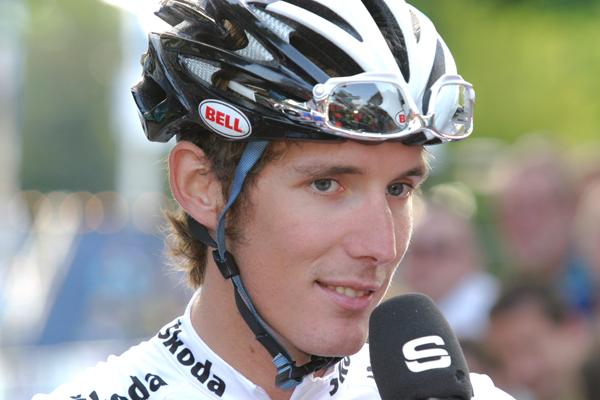
Será a 2ª vitória para Andy?

E Cancellara nos time-trials?

E o martelo? Vai terminar com a camisola verde?

E Contador? Vai continuar a comer carne estragada?
.
Demain... Le Tour de France

Quantas vitórias terá este ano o tipo da ilha de Man?

Será a 2ª vitória para Andy?
E Cancellara nos time-trials?

E o martelo? Vai terminar com a camisola verde?

E Contador? Vai continuar a comer carne estragada?
.
Demain... Le Tour de France
Breakaway brands (parte IV)
Não vender café, vender prevenção da saúde "Mystery Ingredient in Coffee Boosts Protection Against Alzheimer's Disease, Study Finds"
Uma oportunidade para as "boutiques" de consultoria (parte II)
"God never said that finance and strategy are fundamentally different functions, yet the business schools decided to teach strategy and teach finance. This gets implemented in companies where strategy is the responsibility of this group, and finance this group. And a lot of the things that make sense financially make no sense strategically."
...
"One of the biggest inhibitors is how a business or a group defines itself. Get the business team in a room and just talk to them. Who are you? What makes you successful? Why do you have a right to win in your marketplace? Just get down to the basics of how they define themselves. When it comes out, it's clear what their limiter is."
.
Trechos retirados de "The Innovator's solution"
Continua.
...
"One of the biggest inhibitors is how a business or a group defines itself. Get the business team in a room and just talk to them. Who are you? What makes you successful? Why do you have a right to win in your marketplace? Just get down to the basics of how they define themselves. When it comes out, it's clear what their limiter is."
.
Trechos retirados de "The Innovator's solution"
Continua.
A Brigada do Reumático do regime
Via um comentário do Anti-comuna no Basfémias, tive conhecimento desta reacção do presidente da AEP:
.
"O presidente da Associação Empresarial de Portugal (AEP) aplaudiu hoje o imposto especial, equivalente a metade do subsídio de Natal, considerando-o "absolutamente necessário" e realçando que "o consumo na época de Natal é um verdadeiro disparate".
.
Quantas empresas portuguesas, sócias da AEP, irão falir sem o disparatado consumo de Natal?
.
Quantos portugueses irão para o desemprego por causa do fim do disparatado consumo de Natal?
.
Mais valia que continuasse entretido com o Irão.
.
E é um socialista-catequista destes que é o líder dos empresários a Norte... num país a sério, os sócios da AEP que fabricam para esse disparatado período de consumo que é o Natal deviam pedir a demissão desse senhor.
.
.
.
Isto é tão absurdo... só pode mesmo esperar-se o colapso.
.
"O presidente da Associação Empresarial de Portugal (AEP) aplaudiu hoje o imposto especial, equivalente a metade do subsídio de Natal, considerando-o "absolutamente necessário" e realçando que "o consumo na época de Natal é um verdadeiro disparate".
.
Quantas empresas portuguesas, sócias da AEP, irão falir sem o disparatado consumo de Natal?
.
Quantos portugueses irão para o desemprego por causa do fim do disparatado consumo de Natal?
.
Mais valia que continuasse entretido com o Irão.
.
E é um socialista-catequista destes que é o líder dos empresários a Norte... num país a sério, os sócios da AEP que fabricam para esse disparatado período de consumo que é o Natal deviam pedir a demissão desse senhor.
.
.
.
Isto é tão absurdo... só pode mesmo esperar-se o colapso.
Acerca do enfoque no aumento da produtividade via redução dos custos
"More than 30 years ago, Abernathy (1978) suggested that a firm’s focus on productivity gains inhibited its flexibility and ability to innovate. Abernathy observed that in the automobile industry, a firm’s economic decline was directly related to its efficiency and productivity efforts. He suggested that a firm’s ability to compete over time was rooted not only in increasing efficiency, but also in its ability to be simultaneously innovative"
.
E depois o mau sou eu quando chamo a atenção para os perigos de olhar para dentro e apostar nos Kaizens e Leans porque o tempo é o nosso recurso mais escasso.
.
Trecho retirado de "Perspectives on the productivity dilemma" de Paul S. Adler, Mary Benner, David James Brunner, John Paul MacDuffie, Emi Osono, Bradley R. Staats, Hirotaka Takeuchi, Michael L. Tushman e Sidney G. Winter, publicado pelo Journal of Operations Management 27 (2009) 99–113
.
E depois o mau sou eu quando chamo a atenção para os perigos de olhar para dentro e apostar nos Kaizens e Leans porque o tempo é o nosso recurso mais escasso.
.
Trecho retirado de "Perspectives on the productivity dilemma" de Paul S. Adler, Mary Benner, David James Brunner, John Paul MacDuffie, Emi Osono, Bradley R. Staats, Hirotaka Takeuchi, Michael L. Tushman e Sidney G. Winter, publicado pelo Journal of Operations Management 27 (2009) 99–113
Arquitectar a co-criação de valor a nível do ecossistema da procura
Ontem, durante a viagem de comboio Porto-Estarreja tive oportunidade de ler mais um artigo co-assinado por Lusch e que vai ao encontro de reflexões que por aqui se fazem:
.
Primeiro um retorno ao homem que mudou a minha vida:
.
"He envisioned marketing as the whole business seen from the customer’s point of view and argued that the fundamental purpose of the business was to create a satisfied customer, with profit as a reward, not the goal itself.
...
Drucker attempted to focus the firm on how the customer, not the firm, views and values the firm’s offerings: ‘‘What the business thinks it produces is not of first importance . . . . What the customer thinks he is buying, what he considers ‘value,’ is decisive—it determines what a business is, what it produces and whether it will prosper’’
...
During this era, advertising began to move away from a focus on product attributes and features and toward customer benefits.
...
Although it is relatively easy to copy or replicate competitors’ functional benefits, it becomes more difficult to copy or replicate the nonfunctional or symbolic benefits a brand offers.
...
Recently Frow and Payne (Forthcoming) extend the value proposition concept to stakeholders and marketing systems or what have also been referred to as value networks or service ecosystems (Lusch, Vargo, and Tanniru 2010) (Moi ici: Já aqui usamos o termo ecossistema há algum tempo... e aquela extensão da proposta de valor para os stakeholders... talvez vá atrás destas "Dores de crescimento"(?). Tenho de arranjar os dois artigos!).
...
The firm must be understood as a complex network mechanism linking customer value and the value of the firm for all of its stakeholders.
...
Firms are evolving from largely self contained hierarchical bureaucracies into complex networks of relationships with resource providers of all kinds. Firms seek to focus more clearly on their own distinctive competencies as sources of competitive advantage while relying more heavily for adaptive, collaborative advantage with strategic partners to provide their distinctive competencies as components of the tangible and/or intangible product offering.
...
Marketing is emerging as performing a broader role in the management of the enterprise in guiding all business processes that are involved in the cocreation of value with customers.
...
Understanding customers and how the enterprise fits into their value-creating processes and communicating that understanding to the other resource-providing stakeholders becomes the primary role of marketing.
.
In the recent past, evidence suggests that marketing in many firms has been relegated to managing communications and branding activities. (Moi ici: Ehehe Aranha, cá estão eles)
...
To be truly customer centric, the firm has to think not about optimizing the firm and its activities but how to support customers in their resource integration and value cocreation activities. (Moi ici: A seta 1 é muito mais importante que a seta 2...Talvez a mensagem mais constante neste blogue. A única que explica o paradoxo de Kaldor, que permite fugir da armadilha de Pasinetti, que permite evitar o jogo do gato e do rato entre a produtividade e os salários, que permite ser próspero com uma moeda forte. Longa vida a Marn e Rosiello que me abriram os olhos há muito tempo.) Stated alternatively, the organization should be an effective and efficient service support system for helping all stakeholders, beginning with the customer, become effective and efficient in value cocreation.
The key concepts in the value cocreation concept of strategy and organization are core competencies and dynamic capabilities used to cocreate value and the relationships with all stakeholders that help to accomplish this. Value is created when a customer interacts with the resources and capabilities provided by a relationship with their firm/supplier and other providers of resources. Thus, the value can only be cocreated by sellers and customers together. A ‘‘good’’ relationship is one that creates value for both parties and leaves each wanting to continue the relationship in some form. ‘‘Good’’ customers are loyal; ‘‘good’’ suppliers are trusted and reliable and have strong ‘‘brands’’ or reputations.
...
Value Propositions Communicate Intention Throughout the Network (Moi ici: Grande subtítulo... uma proposta de valor é uma forma de comunicar uma intenção)
Intention and capability to offer value of a particular kind in a particular way is communicated to potential buyers and resource-provider partners with a value proposition, an invitation to participate in the process of cocreating value that is superior to competitor offerings
...
Also the firm’s value proposition must have appeal for all stakeholders who must see the potential value for themselves in value propositions being realized and their role in value cocreation with customers. It is a marketing responsibility to assure that the firm’s value proposition is communicated to, and understood by, the entire network of resource-providing stakeholders.
.
Customers as a Strategic Choice
The ability to actually provide the promised value depends upon carefully choosing appropriate potential customers, (Moi ici: Quantas empresas escolhem cuidadosamente os seus clientes-alvo? Como a corte que o macho faz à fêmea no mundo biológico... quem escolhe e quem é que é escolhido? Por que já estou a ouvir comentários do tipo: Então o fornecedor é que escolhe o cliente? Também! É a minha resposta. Tem de ser uma relação ganhar-ganhar) those with needs and preferences that are understood to be a good match for the resources and capabilities of the firm and its stakeholders. Strategy formulation is essentially a process of matching the networked firm’s competencies and capabilities with customer needs and preferences, identifying latent customer demand that is relatively underserved by competitors’ value propositions. ‘‘Bad’’ potential customers are those who will not value the firm’s resources and capabilities and will therefore be unwilling to provide reciprocal resources or service in their interactions with the marketer enterprise.
.
Value Definition is Dynamic and Learning is Critical
It is a fundamental premise of the value cocreation concept of marketing strategy and organization that the customer’s definition of value changes continuously. Marketing must be a learning process for both the supplier network organization and the customer."
4 páginas e meia cheias de sumo!!!
Trechos retirados de "A Stakeholder-Unifying, Cocreation Philosophy for Marketing" de Robert Lusch e Frederick E. Webster Jr, publicado no Journal of Macromarketing 31(2) 129-134.
.
Primeiro um retorno ao homem que mudou a minha vida:
.
"He envisioned marketing as the whole business seen from the customer’s point of view and argued that the fundamental purpose of the business was to create a satisfied customer, with profit as a reward, not the goal itself.
...
Drucker attempted to focus the firm on how the customer, not the firm, views and values the firm’s offerings: ‘‘What the business thinks it produces is not of first importance . . . . What the customer thinks he is buying, what he considers ‘value,’ is decisive—it determines what a business is, what it produces and whether it will prosper’’
...
During this era, advertising began to move away from a focus on product attributes and features and toward customer benefits.
...
Although it is relatively easy to copy or replicate competitors’ functional benefits, it becomes more difficult to copy or replicate the nonfunctional or symbolic benefits a brand offers.
...
Recently Frow and Payne (Forthcoming) extend the value proposition concept to stakeholders and marketing systems or what have also been referred to as value networks or service ecosystems (Lusch, Vargo, and Tanniru 2010) (Moi ici: Já aqui usamos o termo ecossistema há algum tempo... e aquela extensão da proposta de valor para os stakeholders... talvez vá atrás destas "Dores de crescimento"(?). Tenho de arranjar os dois artigos!).
...
The firm must be understood as a complex network mechanism linking customer value and the value of the firm for all of its stakeholders.
...
Firms are evolving from largely self contained hierarchical bureaucracies into complex networks of relationships with resource providers of all kinds. Firms seek to focus more clearly on their own distinctive competencies as sources of competitive advantage while relying more heavily for adaptive, collaborative advantage with strategic partners to provide their distinctive competencies as components of the tangible and/or intangible product offering.
...
Marketing is emerging as performing a broader role in the management of the enterprise in guiding all business processes that are involved in the cocreation of value with customers.
...
Understanding customers and how the enterprise fits into their value-creating processes and communicating that understanding to the other resource-providing stakeholders becomes the primary role of marketing.
.
In the recent past, evidence suggests that marketing in many firms has been relegated to managing communications and branding activities. (Moi ici: Ehehe Aranha, cá estão eles)
...
To be truly customer centric, the firm has to think not about optimizing the firm and its activities but how to support customers in their resource integration and value cocreation activities. (Moi ici: A seta 1 é muito mais importante que a seta 2...Talvez a mensagem mais constante neste blogue. A única que explica o paradoxo de Kaldor, que permite fugir da armadilha de Pasinetti, que permite evitar o jogo do gato e do rato entre a produtividade e os salários, que permite ser próspero com uma moeda forte. Longa vida a Marn e Rosiello que me abriram os olhos há muito tempo.) Stated alternatively, the organization should be an effective and efficient service support system for helping all stakeholders, beginning with the customer, become effective and efficient in value cocreation.
The key concepts in the value cocreation concept of strategy and organization are core competencies and dynamic capabilities used to cocreate value and the relationships with all stakeholders that help to accomplish this. Value is created when a customer interacts with the resources and capabilities provided by a relationship with their firm/supplier and other providers of resources. Thus, the value can only be cocreated by sellers and customers together. A ‘‘good’’ relationship is one that creates value for both parties and leaves each wanting to continue the relationship in some form. ‘‘Good’’ customers are loyal; ‘‘good’’ suppliers are trusted and reliable and have strong ‘‘brands’’ or reputations.
...
Value Propositions Communicate Intention Throughout the Network (Moi ici: Grande subtítulo... uma proposta de valor é uma forma de comunicar uma intenção)
Intention and capability to offer value of a particular kind in a particular way is communicated to potential buyers and resource-provider partners with a value proposition, an invitation to participate in the process of cocreating value that is superior to competitor offerings
...
Also the firm’s value proposition must have appeal for all stakeholders who must see the potential value for themselves in value propositions being realized and their role in value cocreation with customers. It is a marketing responsibility to assure that the firm’s value proposition is communicated to, and understood by, the entire network of resource-providing stakeholders.
.
Customers as a Strategic Choice
The ability to actually provide the promised value depends upon carefully choosing appropriate potential customers, (Moi ici: Quantas empresas escolhem cuidadosamente os seus clientes-alvo? Como a corte que o macho faz à fêmea no mundo biológico... quem escolhe e quem é que é escolhido? Por que já estou a ouvir comentários do tipo: Então o fornecedor é que escolhe o cliente? Também! É a minha resposta. Tem de ser uma relação ganhar-ganhar) those with needs and preferences that are understood to be a good match for the resources and capabilities of the firm and its stakeholders. Strategy formulation is essentially a process of matching the networked firm’s competencies and capabilities with customer needs and preferences, identifying latent customer demand that is relatively underserved by competitors’ value propositions. ‘‘Bad’’ potential customers are those who will not value the firm’s resources and capabilities and will therefore be unwilling to provide reciprocal resources or service in their interactions with the marketer enterprise.
.
Value Definition is Dynamic and Learning is Critical
It is a fundamental premise of the value cocreation concept of marketing strategy and organization that the customer’s definition of value changes continuously. Marketing must be a learning process for both the supplier network organization and the customer."
4 páginas e meia cheias de sumo!!!
Trechos retirados de "A Stakeholder-Unifying, Cocreation Philosophy for Marketing" de Robert Lusch e Frederick E. Webster Jr, publicado no Journal of Macromarketing 31(2) 129-134.
O caminho menos percorrido
"El sector de la moda se caracteriza por unos ciclos de producción de la ropa (Moi ici: O autor fala da roupa, mas moda é mais do que roupa, é calçado, é marroquinaria, é ... portanto, há aqui uma oportunidade de negócio para marcas por criar) de más de un año. Desde que se empieza a pensar cuál será la tendencia de moda la próxima temporada, se hacen estudios de mercado, diseño de ropa, fabricación y distribución, hasta que finalmente alguien compra un vestido pasa más de un año. Con tanto tiempo por medio las empresas no tienen tiempo de reaccionar. Si no has acertado con lo que va a querer el público la próxima temporada, te comes lo que has producido y si no has fabricado lo suficiente de lo que tiene éxito, pierdes oportunidades de venta (para mis antiguos alumnos de los masters del IESE, típico problema de la fractila crítica)
...
¿Cuál es la clave del éxito de Zara? pues lo mismo que Mercadona: haber ideado un método para hacer lo contrario que se hace en su sector. Zara tiene más de 5000 tiendas repartidas por todo el mundo. Tiene un sistema de información que le permite saber cada día qué se vende en cada tienda, y tiene cientos de talleres pequeños distribuidos por Galicia, Portugal y el resto del mundo, dispuestos a recibir órdenes en cada momento sobre lo que tienen que confeccionar. De cada producto hace tiradas muy pequeñas. Si de algo se vende poco -y lo saben casi instantáneamente- paran su fabricación y distribución. Si de algo se vende mucho, aumentan su fabricación. De modo que fabrican prácticamente solo lo que saben que se va a vender. (Moi ici, como escreveu David Birnbaum "Speed to market" "Avoid Markdowns")
.
Potente sistema de información y rápida capacidad de reacción. Lo primero para saber qué es lo que el público quiere y lo segundo para tenerlo preparado a tiempo. Una vez más, como en el caso de Mercadona o Southwest Airlines, el éxito está en hacer las cosas de modo distinto a cómo se hacen en tu sector, y… hacerlas bien. Por cierto, un pequeño detalle, ni Zara ni Mercadona se gastan un euro en publicidad."
.
Trecho retirado de "¿Y Zara, cómo lo hace?"
...
¿Cuál es la clave del éxito de Zara? pues lo mismo que Mercadona: haber ideado un método para hacer lo contrario que se hace en su sector. Zara tiene más de 5000 tiendas repartidas por todo el mundo. Tiene un sistema de información que le permite saber cada día qué se vende en cada tienda, y tiene cientos de talleres pequeños distribuidos por Galicia, Portugal y el resto del mundo, dispuestos a recibir órdenes en cada momento sobre lo que tienen que confeccionar. De cada producto hace tiradas muy pequeñas. Si de algo se vende poco -y lo saben casi instantáneamente- paran su fabricación y distribución. Si de algo se vende mucho, aumentan su fabricación. De modo que fabrican prácticamente solo lo que saben que se va a vender. (Moi ici, como escreveu David Birnbaum "Speed to market" "Avoid Markdowns")
.
Potente sistema de información y rápida capacidad de reacción. Lo primero para saber qué es lo que el público quiere y lo segundo para tenerlo preparado a tiempo. Una vez más, como en el caso de Mercadona o Southwest Airlines, el éxito está en hacer las cosas de modo distinto a cómo se hacen en tu sector, y… hacerlas bien. Por cierto, un pequeño detalle, ni Zara ni Mercadona se gastan un euro en publicidad."
.
Trecho retirado de "¿Y Zara, cómo lo hace?"
Diagnóstico
Depois de ler este artigo "Corn Farmers and Geeks- Adopting Technology Hasn’t Changed in Years" um decisor de uma empresa devia questionar-se:
.
- Qual o tipo de clientes com quem trabalhamos?
.
- Será que o novo produto inovador que colocámos no mercado não está a ter o sucesso esperado porque o estamos a apresentar aos conservadores?
.
- Quem são e onde estão os visionários dispostos a arriscar na experimentação de um novo produto inovador?
.
- Será que temos os comerciais adequados a falar com visionários, ou estamos a tentar que argumentos de venda que servem para os conservadores também sirvam para os visionários?
.
- Qual o tipo de clientes com quem trabalhamos?
.
- Será que o novo produto inovador que colocámos no mercado não está a ter o sucesso esperado porque o estamos a apresentar aos conservadores?
.
- Quem são e onde estão os visionários dispostos a arriscar na experimentação de um novo produto inovador?
.
- Será que temos os comerciais adequados a falar com visionários, ou estamos a tentar que argumentos de venda que servem para os conservadores também sirvam para os visionários?
Segmentação de experiências
"If a firm has to design for value, it has to design for the segment of customers they want to target, (Moi ici: A escolha dos clientes-alvo é fundamental) and you would need to know what is the value upheld by the target segment. The cardinal rule of marketing 'you can't sell to everyone' still hold true today.(Moi ici: Mais importante do que nunca)
.
Segmentation in Marketing is as old as segments exists. In the old days - everyone stayed in their boxes (or so we are led to believe). If you stayed in a certain location, it said something about you, which class of society you are, which brand of cereal, juice or clothing you'd buy. Segments neatly fell into nice demographics, income and social classes. And by inference, marketers knew what each segment would value from a good or service and the firm could design and deliver accordingly.
.
Of course that is no longer true... today, it's really hard to box people up. This then leads to how hard it is to cut the market up into segments for firms to target. How should markets be segmented? Marketing has leaned towards behavioral segmentation (Moi ici; Desconfio que "behavioral" se aplica quando se olha de fora para o cliente-alvo, é o comportamento que se observa. Mas quando se olha do cliente-alvo para fora talvez fizesse sentido chamar "experience segmentation", é a experiência que se busca e valoriza), which is close to value segmentation but the focus is still on purchase segmentation vs consumption segmentation."
.
Trecho retirado de "Segmentation by Value"
.
Segmentation in Marketing is as old as segments exists. In the old days - everyone stayed in their boxes (or so we are led to believe). If you stayed in a certain location, it said something about you, which class of society you are, which brand of cereal, juice or clothing you'd buy. Segments neatly fell into nice demographics, income and social classes. And by inference, marketers knew what each segment would value from a good or service and the firm could design and deliver accordingly.
.
Of course that is no longer true... today, it's really hard to box people up. This then leads to how hard it is to cut the market up into segments for firms to target. How should markets be segmented? Marketing has leaned towards behavioral segmentation (Moi ici; Desconfio que "behavioral" se aplica quando se olha de fora para o cliente-alvo, é o comportamento que se observa. Mas quando se olha do cliente-alvo para fora talvez fizesse sentido chamar "experience segmentation", é a experiência que se busca e valoriza), which is close to value segmentation but the focus is still on purchase segmentation vs consumption segmentation."
.
Trecho retirado de "Segmentation by Value"
A explosão do espaço de ofertas
Irene Ng no seu livro "The Pricing and Revenue Management of Services - A strategic approach" retrata bem o que é Mongo e a explosão de oportunidades de procura e oferta que se colocam cada vez mais:
.
"Many service industries are starting to change traditional lifestyles, creating value that is elusive to capture. There are now more ways than ever to sell and deliver services. From the selling perspective, supermarkets can now sell insurance and broadband services and the mobile phone can now be a channel to sell news, music and books. From the delivery perspective, technology is now able to bring healthcare and education to the home, and banking to the beach via your laptop.
.
With the proliferation of sales and delivery channels, service entrepreneurs and innovators are able to discover ways and means to uncover latent need for convenience and time, and meet them in innovative ways. Markets are now being divided into finer segments, leading to the term micro-segmentation, where it is now possible to price for each of these micro-segments. Adding to the complexity is the proliferation of brands worldwide. Brands create unique perceptions, appeal to segments through their identity, (Moi ici: Recordar este texto sobre a perda da identidade: "In their race for growth and their continued efforts to cut costs, many leaders forget the true enabler of profitability, value creation, and competitive advantage: a company's distinctive corporate identity." ) personality and meaning. Capturing that intangible brand value in the price of a service is a monumental task.
.
Furthermore, the impact of globalisation is increasingly being felt the world over. While more markets are accessible thereby increasing potential demand, there is also greater pressure on firms to provide the same services at lower costs since companies abroad can now offer the same services as the firm down the road. Accountants in India are able to assist Americans in completing their tax return without leaving their country and X-rays taken in Britian could be analysed by radiologists in Russia. The landscape of the service economy is changing fast, posing a challenge to economists, regulators and marketers."
.
"Many service industries are starting to change traditional lifestyles, creating value that is elusive to capture. There are now more ways than ever to sell and deliver services. From the selling perspective, supermarkets can now sell insurance and broadband services and the mobile phone can now be a channel to sell news, music and books. From the delivery perspective, technology is now able to bring healthcare and education to the home, and banking to the beach via your laptop.
.
With the proliferation of sales and delivery channels, service entrepreneurs and innovators are able to discover ways and means to uncover latent need for convenience and time, and meet them in innovative ways. Markets are now being divided into finer segments, leading to the term micro-segmentation, where it is now possible to price for each of these micro-segments. Adding to the complexity is the proliferation of brands worldwide. Brands create unique perceptions, appeal to segments through their identity, (Moi ici: Recordar este texto sobre a perda da identidade: "In their race for growth and their continued efforts to cut costs, many leaders forget the true enabler of profitability, value creation, and competitive advantage: a company's distinctive corporate identity." ) personality and meaning. Capturing that intangible brand value in the price of a service is a monumental task.
.
Furthermore, the impact of globalisation is increasingly being felt the world over. While more markets are accessible thereby increasing potential demand, there is also greater pressure on firms to provide the same services at lower costs since companies abroad can now offer the same services as the firm down the road. Accountants in India are able to assist Americans in completing their tax return without leaving their country and X-rays taken in Britian could be analysed by radiologists in Russia. The landscape of the service economy is changing fast, posing a challenge to economists, regulators and marketers."
quinta-feira, junho 30, 2011
A primeira noite dos Abrantes-laranjas!
O espírito de José Sócrates vive.
.
Desconfio que José Sócrates é um Time Lord, tal como o Dr. Who.
.
A 5 de Junho sofreu uma regeneração e assumiu a entidade PPC, mas é o velho JS.
.
Entretanto os abrantes têm fizeram a sua regeneração.
.
Desconfio que José Sócrates é um Time Lord, tal como o Dr. Who.
.
A 5 de Junho sofreu uma regeneração e assumiu a entidade PPC, mas é o velho JS.
.
Entretanto os abrantes têm fizeram a sua regeneração.
O Grande Planeador

.
Essas pessoas defendem que o Estado é que deve indicar em que sectores é que as empresas devem investir.
.
Essas pessoas defendem que o Estado é que deve indicar em que sectores é que as empresas devem apostar para terem futuro.
.
O mesmo Estado que não é capaz de prever o número de alunos que uma escola vai ter daí a 2/3 anos...
.
"Escola inaugurada em 2009 vai fechar "por falta de alunos"":
.
"A escola do 1º ciclo de Minhotães, em Barcelos, inaugurada em Setembro de 2009, após um investimento de um milhão de euros, vai fechar no próximo ano lectivo "por falta de alunos", segundo fonte municipal."

Uma oportunidade para as "boutiques" de consultoria (parte I)
"Since the idea of a "business strategy" — a long-term plan for growth and profitability — was first developed in the early 1960s, companies around the world have used this tool to pick a competitive position and make their way closer to it.
.
But many business leaders seem to be losing their confidence in strategy, or at least in their own company's approach to it. This is evident in our ongoing Booz & Company survey, which asks executives from around the world to comment on the results of their strategic initiatives. With more than 2,350 responses so far, the findings suggest a high degree of disillusionment:
...
"Almost two-thirds of the executives who have responded so far say their biggest frustration is "having too many conflicting priorities." An even greater majority — 82% — say that their growth initiatives lead to waste at least some of the time."
...
"In their race for growth and their continued efforts to cut costs, many leaders forget the true enabler of profitability, value creation, and competitive advantage: a company's distinctive corporate identity."
.
Continua. Há aqui muita matéria a merecer reflexão.
.
Trechos retirados de "Making Your Strategy More Relevant" de Paul Leinwand e Cesare Mainardi.
.
But many business leaders seem to be losing their confidence in strategy, or at least in their own company's approach to it. This is evident in our ongoing Booz & Company survey, which asks executives from around the world to comment on the results of their strategic initiatives. With more than 2,350 responses so far, the findings suggest a high degree of disillusionment:
- Most of the respondents (53%) don't feel their company's strategy will lead to success.
- Two thirds (67%) say their company's capabilities do not fully support the company's strategy and the way it creates value in the market.
- Only one in five (21%) executives think their company has a "right to win" in all the markets it competes in.
...
"Almost two-thirds of the executives who have responded so far say their biggest frustration is "having too many conflicting priorities." An even greater majority — 82% — say that their growth initiatives lead to waste at least some of the time."
...
"In their race for growth and their continued efforts to cut costs, many leaders forget the true enabler of profitability, value creation, and competitive advantage: a company's distinctive corporate identity."
.
Continua. Há aqui muita matéria a merecer reflexão.
.
Trechos retirados de "Making Your Strategy More Relevant" de Paul Leinwand e Cesare Mainardi.
Falácias populistas *
"I don't have my finger on the pulse of corruption in China, but I think most people on the ground would say that as China was emerging from communism it was a very regulated society and therefore it was very corrupt.
But as they have deregulated the economy, there just aren't as many opportunities for people to be corrupt. China has become a more efficiently lubricated capitalist economy."
...
"Well, shutting borders will help a few wealthy people preserve their wealth. But there's no evidence that I know that shows shutting down borders helps your economy grow. Look at what happened with India during the first three decades after their independence, where they essentially wanted to keep imports out so that they could develop their internal industries. None of those industries became engines for economic growth. They were all inefficient and served India very poorly. It wasn't until things opened up that the local economies prospered. History is pretty strong on that question."
.
As ideias de "desvalorização fiscal", saída do euro para "desvalorizar moeda" não resultam, nem na Índia, nem no Reino Unido como recorda o Anti-comuna.
.
Trechos retirados de "Clayton Christensen: 'China's Growth Will Force an Innovation Competition with the West'"
* Classification made by Anti-comuna in the hyperlinked text.
But as they have deregulated the economy, there just aren't as many opportunities for people to be corrupt. China has become a more efficiently lubricated capitalist economy."
...
"Well, shutting borders will help a few wealthy people preserve their wealth. But there's no evidence that I know that shows shutting down borders helps your economy grow. Look at what happened with India during the first three decades after their independence, where they essentially wanted to keep imports out so that they could develop their internal industries. None of those industries became engines for economic growth. They were all inefficient and served India very poorly. It wasn't until things opened up that the local economies prospered. History is pretty strong on that question."
.
As ideias de "desvalorização fiscal", saída do euro para "desvalorizar moeda" não resultam, nem na Índia, nem no Reino Unido como recorda o Anti-comuna.
.
Trechos retirados de "Clayton Christensen: 'China's Growth Will Force an Innovation Competition with the West'"
* Classification made by Anti-comuna in the hyperlinked text.
quarta-feira, junho 29, 2011
O oposto de insatisfação não é satisfação
A propósito de "APQ: Qualidade é a única forma de dar a volta à crise" não esquecer o capítulo V de "Differentiate or Die: Survival in Our Era of Killer Competition" de Jack Trout e Steve Rivkin:
.
"Quality and Customer Orientation Are Rarely Differentiating Ideas"
.
Arrisco dizer que 90% das pessoas ligadas à qualidade estão na garantia e no controlo da qualidade... recordo os anos 80 e o célebre livro que virou slogan "Quality is Free".
.
A qualidade é grátis quando se reduzem desperdícios, quando se produz bem à primeira... mas isso não aumenta o "perceived value in use"... o oposto de insatisfação não é satisfação.
.
Um cliente não fica satisfeito porque uma marca que tinha defeitos deixou de os ter...
.
O aumento desta qualidade pode reduzir marginalmente os custos... mas duvido que seja suficiente para o campeonato que temos pela frente.
.
BTW, alguma confusão:
.
""Sabemos que não podemos competir pelo preço (Moi ici: Concordo inteiramente, logo...) nos mercados em que nos estamos e queremos situar. Logo, temos que competir com abordagens que sejam ou de melhoria das condições daquilo que fazemos, daí as abordagens 'Lean', que são totalmente tendentes à redução dos custos de produção e aos ganhos de competitividade pela redução de custos (Moi ici: Deve ter dado um salto muito grande e não consegui acompanhar... como não podemos competir pelo preço vamos reduzir os custos? Mas então podemos competir ou não?) mas, também, e muito, pela inovação, pela criatividade, pela criação de condições de inovação permanente!" (Moi ici: O que é que a APQ faz neste campo?) considerou."
.
BTW, o que já escrevi neste blogue sobre a busca de empresas excelentes prefiro a remoção das restrições. (R.I.P. Goldratt)
.
"Quality and Customer Orientation Are Rarely Differentiating Ideas"
.
Arrisco dizer que 90% das pessoas ligadas à qualidade estão na garantia e no controlo da qualidade... recordo os anos 80 e o célebre livro que virou slogan "Quality is Free".
.
A qualidade é grátis quando se reduzem desperdícios, quando se produz bem à primeira... mas isso não aumenta o "perceived value in use"... o oposto de insatisfação não é satisfação.
.
Um cliente não fica satisfeito porque uma marca que tinha defeitos deixou de os ter...
.
O aumento desta qualidade pode reduzir marginalmente os custos... mas duvido que seja suficiente para o campeonato que temos pela frente.
.
BTW, alguma confusão:
.
""Sabemos que não podemos competir pelo preço (Moi ici: Concordo inteiramente, logo...) nos mercados em que nos estamos e queremos situar. Logo, temos que competir com abordagens que sejam ou de melhoria das condições daquilo que fazemos, daí as abordagens 'Lean', que são totalmente tendentes à redução dos custos de produção e aos ganhos de competitividade pela redução de custos (Moi ici: Deve ter dado um salto muito grande e não consegui acompanhar... como não podemos competir pelo preço vamos reduzir os custos? Mas então podemos competir ou não?) mas, também, e muito, pela inovação, pela criatividade, pela criação de condições de inovação permanente!" (Moi ici: O que é que a APQ faz neste campo?) considerou."
.
BTW, o que já escrevi neste blogue sobre a busca de empresas excelentes prefiro a remoção das restrições. (R.I.P. Goldratt)
O nosso retrato, o retrato de uma economia socialista (parte III)
Continuado da parte II.
.
Em tempos descobri que éramos conhecidos como a "Portuguese trap".
.
Pois bem, depois de ter descoberto o paradoxo de Kaldor, agora descubro "a armadilha de Pasinetti" e parece-me tão familiar:
.
"According to Pasinetti an economic system at constant composition with a fixed number of sectors would run into a bottleneck due to the imbalance between continuously growing efficiency and saturating demand.
.
This imbalance would allow all demanded output to be produced with a declining proportion of labour and of the other productive resources. Such a bottleneck, which from now on we will call Pasinetti's trap, could be avoided by means of innovations which gave rise to new sectors and would compensate for the growing inability of incumbent sectors to generate employment. Pasinetti's reasoning can be translated into the following two hypotheses about the relationship of efficiency and variety: (Saviotti, 1996, 2007):
Irrespective of whether one agrees with Pasinetti, the imbalance between continuously growing efficiency (Moi ici: Apostando no lean, olhando para dentro, reduzindo custos, despedindo pessoal, sendo mais eficiente, desperdiçando cada vez menos) and saturating demand (Moi ici: Sem apresentar novidades, sem rasgo, sem diferenciação, com a erosão progressiva do producer surplus por causa da erosão progressiva do "perceived value in use") represents a different meaning of creative destruction. If not compensated by the emergence of new sectors (Moi ici: Isto implica liberdade económica, isto implica redução da protecção do Estado aos incumbentes, isto implica que o Estado não faz escolhas sobre o que é que merece ver a luz do dia ou não) this imbalance would bring the economic system to a halt. (Moi ici: De onde virá a nossa década perdida? Caímos na armadilha de Pasinetti com uma agravante, a protecção do Estado não resultou por causa da queda do Muro de Berlim que acelerou o vector de destruição 3 de Saviotti "3) Growing competition from emerging countries which acquire the capability to make the same goods and services as in highly developed countries bur at lower cost") In this case growing productive efficiency would entail a destruction which could be compensated by the creative emergence of new sectors."
.
Como escrevi há dias, Sócrates queria seguir o exemplo da Finlândia na inovação mas não percebeu que o novo só surge quando se permite a destruição dos incumbentes instalados..
.
Em tempos descobri que éramos conhecidos como a "Portuguese trap".
.
Pois bem, depois de ter descoberto o paradoxo de Kaldor, agora descubro "a armadilha de Pasinetti" e parece-me tão familiar:
.
"According to Pasinetti an economic system at constant composition with a fixed number of sectors would run into a bottleneck due to the imbalance between continuously growing efficiency and saturating demand.
.
This imbalance would allow all demanded output to be produced with a declining proportion of labour and of the other productive resources. Such a bottleneck, which from now on we will call Pasinetti's trap, could be avoided by means of innovations which gave rise to new sectors and would compensate for the growing inability of incumbent sectors to generate employment. Pasinetti's reasoning can be translated into the following two hypotheses about the relationship of efficiency and variety: (Saviotti, 1996, 2007):
- Hypothesis 1: The growth in variety is a necessary requirement for long-term economic development.
- Hypothesis 2: Variety growth, leading to the development of new sectors, and efficiency growth in pre-existing sectors, are complementary and not independent aspects of economic development.
Irrespective of whether one agrees with Pasinetti, the imbalance between continuously growing efficiency (Moi ici: Apostando no lean, olhando para dentro, reduzindo custos, despedindo pessoal, sendo mais eficiente, desperdiçando cada vez menos) and saturating demand (Moi ici: Sem apresentar novidades, sem rasgo, sem diferenciação, com a erosão progressiva do producer surplus por causa da erosão progressiva do "perceived value in use") represents a different meaning of creative destruction. If not compensated by the emergence of new sectors (Moi ici: Isto implica liberdade económica, isto implica redução da protecção do Estado aos incumbentes, isto implica que o Estado não faz escolhas sobre o que é que merece ver a luz do dia ou não) this imbalance would bring the economic system to a halt. (Moi ici: De onde virá a nossa década perdida? Caímos na armadilha de Pasinetti com uma agravante, a protecção do Estado não resultou por causa da queda do Muro de Berlim que acelerou o vector de destruição 3 de Saviotti "3) Growing competition from emerging countries which acquire the capability to make the same goods and services as in highly developed countries bur at lower cost") In this case growing productive efficiency would entail a destruction which could be compensated by the creative emergence of new sectors."
.
Como escrevi há dias, Sócrates queria seguir o exemplo da Finlândia na inovação mas não percebeu que o novo só surge quando se permite a destruição dos incumbentes instalados..
Uma ideia que merecia consideração
Via @dvasconcelos tive conhecimento deste programa no Reino Unido "See Inside Manufacturing" para que mais gente perceba quais as oportunidades de emprego no sector automóvel.
.
O sector têxtil, sem apoios do governo, podia copiar e adaptar para a sua realidade esta ideia, para combater a publicidade negativa que têm vindo a disseminar nos últimos anos.
.
O sector têxtil, sem apoios do governo, podia copiar e adaptar para a sua realidade esta ideia, para combater a publicidade negativa que têm vindo a disseminar nos últimos anos.
O colapso é o último método de simplificação
Novo governo, novo PEC, o saque fiscal aumenta uma vez mais... talvez o colapso seja mesmo a salvação de quem trabalha. Recordo Clay Shirky:
.
"In 1988, Joseph Tainter wrote a chilling book called The Collapse of Complex Societies. Tainter looked at several societies that gradually arrived at a level of remarkable sophistication then suddenly collapsed: the Romans, the Lowlands Maya, the inhabitants of Chaco canyon. Every one of those groups had rich traditions, complex social structures, advanced technology, but despite their sophistication, they collapsed, impoverishing and scattering their citizens and leaving little but future archeological sites as evidence of previous greatness. Tainter asked himself whether there was some explanation common to these sudden dissolutions.
The answer he arrived at was that they hadn’t collapsed despite their cultural sophistication, they’d collapsed because of it. Subject to violent compression, Tainter’s story goes like this: a group of people, through a combination of social organization and environmental luck, finds itself with a surplus of resources. Managing this surplus makes society more complex—agriculture rewards mathematical skill, granaries require new forms of construction, and so on.
Early on, the marginal value of this complexity is positive—each additional bit of complexity more than pays for itself in improved output (Moi ici: Juro que ainda ontem à tarde me lembrei disto ao passar numa rua quasi só para peões, ao lado do hotel Dighton em Oliveira de Azeméis, e que nos meus tempos de infância era parte da Estrada Nacional nº 1, a estrada mais importante do país) — but over time, the law of diminishing returns reduces the marginal value, until it disappears completely. At this point, any additional complexity is pure cost. (Moi ici: IP4 versus A qualquer coisa, ou A1+A29+A32 todas paralelas)
Tainter’s thesis is that when society’s elite members add one layer of bureaucracy or demand one tribute too many, they end up extracting all the value from their environment it is possible to extract and then some.
The ‘and them some’ is what causes the trouble. Complex societies collapse because, when some stress comes, those societies have become too inflexible to respond. In retrospect, this can seem mystifying. Why didn’t these societies just re-tool in less complex ways? The answer Tainter gives is the simplest one: When societies fail to respond to reduced circumstances through orderly downsizing, it isn’t because they don’t want to, it’s because they can’t.
In such systems, there is no way to make things a little bit simpler – the whole edifice becomes a huge, interlocking system not readily amenable to change.(Moi ici: Percebo melhor a loucura grega... e a nossa) Tainter doesn’t regard the sudden decoherence of these societies as either a tragedy or a mistake—”[U]nder a situation of declining marginal returns collapse may be the most appropriate response”, to use his pitiless phrase. Furthermore, even when moderate adjustments could be made, they tend to be resisted, because any simplification discomfits elites. (Moi ici: Os incumbentes. Tanto podem ser uma empresa do regime, como os instalados na carreira da Função Pública)
When the value of complexity turns negative, a society plagued by an inability to react remains as complex as ever, right up to the moment where it becomes suddenly and dramatically simpler, which is to say right up to the moment of collapse. Collapse is simply the last remaining method of simplification." (Moi ici: Há uma poesia nisto...)
.
ADENDA: Ontem à noite, 23h25, enquanto ouvia na SIC-N Helena Garrido a justificar a razoabilidade de criar um país com dois regimes, um para os incumbentes demográficos, e outro para os jovens, para salvar os dreitos adquiridos, escrevi no twitter: "Helena Garrido a dar argumentos que favorecem o sentimento positivo com a ideia da bancarrota do Estado português" é a derradeira alternativa de simplificação"
.
"In 1988, Joseph Tainter wrote a chilling book called The Collapse of Complex Societies. Tainter looked at several societies that gradually arrived at a level of remarkable sophistication then suddenly collapsed: the Romans, the Lowlands Maya, the inhabitants of Chaco canyon. Every one of those groups had rich traditions, complex social structures, advanced technology, but despite their sophistication, they collapsed, impoverishing and scattering their citizens and leaving little but future archeological sites as evidence of previous greatness. Tainter asked himself whether there was some explanation common to these sudden dissolutions.
The answer he arrived at was that they hadn’t collapsed despite their cultural sophistication, they’d collapsed because of it. Subject to violent compression, Tainter’s story goes like this: a group of people, through a combination of social organization and environmental luck, finds itself with a surplus of resources. Managing this surplus makes society more complex—agriculture rewards mathematical skill, granaries require new forms of construction, and so on.
Early on, the marginal value of this complexity is positive—each additional bit of complexity more than pays for itself in improved output (Moi ici: Juro que ainda ontem à tarde me lembrei disto ao passar numa rua quasi só para peões, ao lado do hotel Dighton em Oliveira de Azeméis, e que nos meus tempos de infância era parte da Estrada Nacional nº 1, a estrada mais importante do país) — but over time, the law of diminishing returns reduces the marginal value, until it disappears completely. At this point, any additional complexity is pure cost. (Moi ici: IP4 versus A qualquer coisa, ou A1+A29+A32 todas paralelas)
Tainter’s thesis is that when society’s elite members add one layer of bureaucracy or demand one tribute too many, they end up extracting all the value from their environment it is possible to extract and then some.
The ‘and them some’ is what causes the trouble. Complex societies collapse because, when some stress comes, those societies have become too inflexible to respond. In retrospect, this can seem mystifying. Why didn’t these societies just re-tool in less complex ways? The answer Tainter gives is the simplest one: When societies fail to respond to reduced circumstances through orderly downsizing, it isn’t because they don’t want to, it’s because they can’t.
In such systems, there is no way to make things a little bit simpler – the whole edifice becomes a huge, interlocking system not readily amenable to change.(Moi ici: Percebo melhor a loucura grega... e a nossa) Tainter doesn’t regard the sudden decoherence of these societies as either a tragedy or a mistake—”[U]nder a situation of declining marginal returns collapse may be the most appropriate response”, to use his pitiless phrase. Furthermore, even when moderate adjustments could be made, they tend to be resisted, because any simplification discomfits elites. (Moi ici: Os incumbentes. Tanto podem ser uma empresa do regime, como os instalados na carreira da Função Pública)
When the value of complexity turns negative, a society plagued by an inability to react remains as complex as ever, right up to the moment where it becomes suddenly and dramatically simpler, which is to say right up to the moment of collapse. Collapse is simply the last remaining method of simplification." (Moi ici: Há uma poesia nisto...)
.
ADENDA: Ontem à noite, 23h25, enquanto ouvia na SIC-N Helena Garrido a justificar a razoabilidade de criar um país com dois regimes, um para os incumbentes demográficos, e outro para os jovens, para salvar os dreitos adquiridos, escrevi no twitter: "Helena Garrido a dar argumentos que favorecem o sentimento positivo com a ideia da bancarrota do Estado português" é a derradeira alternativa de simplificação"
O nosso retrato, o retrato de uma economia socialista (parte II)
Consideremos o artigo “Towards an integrated perspective of strategy - The value-process framework” de Albrecht Enders, Andreas Konig, Harald Hungenberg e Thomas Engelbertz, publicado por Journal of Strategy and Management, Vol. 2 No. 1, 2009.
.
Disclaimer 1: Um artigo posterior a 2008, que aborde a temática "valor para os clientes", e que na lista de bibliografia não mencione Lusch, Vargo, ou Gronroos, ou Gummesson, é de desconfiar.
.
Disclaimer 2: É preciso dar um desconto à linguagem utilizada, pré-SDL, por exemplo: “In order to operate profitably, a company must create customer value that exceeds the costs of providing this value”. A SDL ensina-nos que o valor não é criado pelas empresas. O valor emerge quando o cliente faz uso do produto ou serviço e vive uma experiência pessoal e subjectiva. O que é preocupante pois o artigo é de 2009.
.
Disclaimer 3: O artigo refere muito as ideias de Porter, ideias que facilmente descambam numa sobre-concentração nos “cost-drivers”, de acordo com a minha experiência.
.
Apesar de tudo isto o artigo tem utilidade. Ajuda a visualizar as forças que Saviotti e Pyka relataram.
.
A figura:

Ilustra a realidade de que o valor percebido pelo cliente durante o uso (“a price that a customer is prepared to pay for the product if there is only a single source of supply” e notar “perceived use value depends entirely on the individual customer’s subjective perception. Each customer will perceive the use value of a given product differently depending on factors such as gender, age, or cultural background”) tem de ser superior aos custos em que o fornecedor incorre, sem isso não há “criação de valor”, prefiro a frase de JC Larreche “originação de valor”.
.
A figura inclui duas setas: as empresas devem maximizar o valor percebido (e voltando a Saviotti, estamos a falar da trajectoria “(iii) the increasing quality and differentiation of incumbent sectors”), e minimizar os custos incorridos (a trajectória “(i) increasing productive efficiency”)
.
A figura:

Chama a atenção para a parcela do valor criado, ou originado, que é capturada pelo fornecedor sob a forma monetária como contrapartida.
.
“Even when a company creates substantial value for its customers, we do not know yet whether this value will also translate into profits. Porter emphasizes this point when he states that “satisfying buyer needs may be a prerequisite for industry profitability, but in itself it is not sufficient” (Porter, 1991). Instead, in order to succeed, a firm must not only be able to create superior value over a sustained period of time, but it must also be able to capture the value created in form of economic profits. … the value captured, or producer surplus, is the difference between the price charged for the good and the incurred costs. In contrast, the consumer surplus is the difference between perceived use value and price as shown in Figure
…
companies usually operate in a competitive environment where the consumer surplus provided by the competing players determines the final choice of customers.”
.
Num universo competitivo temos:

Seta 1: Com a passagem do tempo, o que era novidade, o que era diferente deixa de o ser. Assim, por saturação da procura, ou por aparecimento de alternativas mais interessantes, o “perceived use value” tem tendência a baixar se não for contrariado. Naturalmente, há uma erosão que contraria as aspirações das empresas.
.
Seta 2: Com a passagem do tempo, as empresas têm obrigação de aumentar a eficiência da sua produção/prestação. Assim, os custos têm tendência a baixar. No entanto, em ambientes de inflação diferenciada, ou de câmbios manipulados, ou perante concorrentes low-cost, a redução interna de custos pode ser insuficiente. (Voltando a Saviotti “3) Growing competition from emerging countries which acquire the capability to make the same goods and services as in highly developed countries but at lower cost”)
.
Seta 3: “Furthermore, in order to limit the size of the competitive discount, the consumer surplus, i.e. the “value for money” a company offers, needs to be unique (lever 3). This uniqueness can be achieved, for instance, through exceptional quality (Moi ici: Estamos a falar de atributos), a strong brand image or fast time to market. Only uniqueness leads to a reduction in the number of competitors, which, in turn, also limits the maximum consumer surplus offered elsewhere. Furthermore, to sustain the achieved competitive advantage into the future, it is also important that this surplus offered to the customers be imperfectly imitable or substitutable”
.
Em condições competitivas, é fácil ver o “Red Queen effect” em acção. Se uma empresa ficar parada, fazendo o que sempre fez:
• O “perceived value in use” baixa;
• Alguns concorrentes vão baixar os custos numa dimensão tal, que permitirá baixarem o seu preço, aumentando o “consumer surplus” sem pôr em causa o seu “producer surplus”. Ou seja, tornando a sua oferta mais interessante.
.
O que faz uma empresa que não evolui?
Uma empresa que não desenvolve novos artigos vê:
• O “perceived value in use” a baixar
.
Uma empresa que não aumenta a sua eficiência o suficiente para compensar o esforço de concorrentes de outros países:
• Os custos ou sobem, por causa do aumento dos factores de produção e da carga fiscal, ou não acompanham a pedalada de concorrentes low-cost
.
O producer surplus vai baixar cada vez mais…
.
Como é que esta empresa vai competir?
.
.
.
Voltamos a Saviotti “The results of our calculations show that the rate of growth of employment would be faster in the scenario without quality change than in the high quality change, but that such an outcome would be obtained at the price of persistently low wages, competencies and human capital.”
.
Os salários têm de ser baixos por causa da guerra do jogo do gato e do rato, porque as empresas não investem no aumento do “Perceived value in use” através do “(iii) the increasing quality and differentiation of incumbent sectors”. Mas apesar dos salários serem baixos, como o "producer surplus" é baixo, quase todo ele é consumido por esses salários (Recordar a primeira figura deste postal).
.
E quando "persistently low wages, competencies and human capital" não é suficiente, como é que as empresas reagem?
.
Numa sociedade economicamente livre essas empresas fecham e os recursos são naturalmente transferidos para outras tentativas mais bem sucedidas de servir o mercado.
.
Numa sociedade socialista como a nossa... temos uma década perdida. Temos o Estado, sob a capa de um eufemisticamente chamado "investimento" a suportar empresas, para compensar a saturação da procura e a fraca competitividade e, temos uma transição dos recursos da economia de bens transaccionáveis para a economia protegida das rendas asseguradas ou protegidas pelo Estado. (Por exemplo, ontem fiquei a saber que DGCI vai actuar como cobrador de portagens das ex-SCUT).
.
Recordar este postal do meu tempo pré-SDL.
.
Disclaimer 1: Um artigo posterior a 2008, que aborde a temática "valor para os clientes", e que na lista de bibliografia não mencione Lusch, Vargo, ou Gronroos, ou Gummesson, é de desconfiar.
.
Disclaimer 2: É preciso dar um desconto à linguagem utilizada, pré-SDL, por exemplo: “In order to operate profitably, a company must create customer value that exceeds the costs of providing this value”. A SDL ensina-nos que o valor não é criado pelas empresas. O valor emerge quando o cliente faz uso do produto ou serviço e vive uma experiência pessoal e subjectiva. O que é preocupante pois o artigo é de 2009.
.
Disclaimer 3: O artigo refere muito as ideias de Porter, ideias que facilmente descambam numa sobre-concentração nos “cost-drivers”, de acordo com a minha experiência.
.
Apesar de tudo isto o artigo tem utilidade. Ajuda a visualizar as forças que Saviotti e Pyka relataram.
.
A figura:

Ilustra a realidade de que o valor percebido pelo cliente durante o uso (“a price that a customer is prepared to pay for the product if there is only a single source of supply” e notar “perceived use value depends entirely on the individual customer’s subjective perception. Each customer will perceive the use value of a given product differently depending on factors such as gender, age, or cultural background”) tem de ser superior aos custos em que o fornecedor incorre, sem isso não há “criação de valor”, prefiro a frase de JC Larreche “originação de valor”.
.
A figura inclui duas setas: as empresas devem maximizar o valor percebido (e voltando a Saviotti, estamos a falar da trajectoria “(iii) the increasing quality and differentiation of incumbent sectors”), e minimizar os custos incorridos (a trajectória “(i) increasing productive efficiency”)
.
A figura:

Chama a atenção para a parcela do valor criado, ou originado, que é capturada pelo fornecedor sob a forma monetária como contrapartida.
.
“Even when a company creates substantial value for its customers, we do not know yet whether this value will also translate into profits. Porter emphasizes this point when he states that “satisfying buyer needs may be a prerequisite for industry profitability, but in itself it is not sufficient” (Porter, 1991). Instead, in order to succeed, a firm must not only be able to create superior value over a sustained period of time, but it must also be able to capture the value created in form of economic profits. … the value captured, or producer surplus, is the difference between the price charged for the good and the incurred costs. In contrast, the consumer surplus is the difference between perceived use value and price as shown in Figure
…
companies usually operate in a competitive environment where the consumer surplus provided by the competing players determines the final choice of customers.”
.
Num universo competitivo temos:

Seta 1: Com a passagem do tempo, o que era novidade, o que era diferente deixa de o ser. Assim, por saturação da procura, ou por aparecimento de alternativas mais interessantes, o “perceived use value” tem tendência a baixar se não for contrariado. Naturalmente, há uma erosão que contraria as aspirações das empresas.
.
Seta 2: Com a passagem do tempo, as empresas têm obrigação de aumentar a eficiência da sua produção/prestação. Assim, os custos têm tendência a baixar. No entanto, em ambientes de inflação diferenciada, ou de câmbios manipulados, ou perante concorrentes low-cost, a redução interna de custos pode ser insuficiente. (Voltando a Saviotti “3) Growing competition from emerging countries which acquire the capability to make the same goods and services as in highly developed countries but at lower cost”)
.
Seta 3: “Furthermore, in order to limit the size of the competitive discount, the consumer surplus, i.e. the “value for money” a company offers, needs to be unique (lever 3). This uniqueness can be achieved, for instance, through exceptional quality (Moi ici: Estamos a falar de atributos), a strong brand image or fast time to market. Only uniqueness leads to a reduction in the number of competitors, which, in turn, also limits the maximum consumer surplus offered elsewhere. Furthermore, to sustain the achieved competitive advantage into the future, it is also important that this surplus offered to the customers be imperfectly imitable or substitutable”
.
Em condições competitivas, é fácil ver o “Red Queen effect” em acção. Se uma empresa ficar parada, fazendo o que sempre fez:
• O “perceived value in use” baixa;
• Alguns concorrentes vão baixar os custos numa dimensão tal, que permitirá baixarem o seu preço, aumentando o “consumer surplus” sem pôr em causa o seu “producer surplus”. Ou seja, tornando a sua oferta mais interessante.
.
O que faz uma empresa que não evolui?
Uma empresa que não desenvolve novos artigos vê:
• O “perceived value in use” a baixar
.
Uma empresa que não aumenta a sua eficiência o suficiente para compensar o esforço de concorrentes de outros países:
• Os custos ou sobem, por causa do aumento dos factores de produção e da carga fiscal, ou não acompanham a pedalada de concorrentes low-cost
.
O producer surplus vai baixar cada vez mais…
.
Como é que esta empresa vai competir?
.
.
.
Voltamos a Saviotti “The results of our calculations show that the rate of growth of employment would be faster in the scenario without quality change than in the high quality change, but that such an outcome would be obtained at the price of persistently low wages, competencies and human capital.”
.
Os salários têm de ser baixos por causa da guerra do jogo do gato e do rato, porque as empresas não investem no aumento do “Perceived value in use” através do “(iii) the increasing quality and differentiation of incumbent sectors”. Mas apesar dos salários serem baixos, como o "producer surplus" é baixo, quase todo ele é consumido por esses salários (Recordar a primeira figura deste postal).
.
E quando "persistently low wages, competencies and human capital" não é suficiente, como é que as empresas reagem?
.
Numa sociedade economicamente livre essas empresas fecham e os recursos são naturalmente transferidos para outras tentativas mais bem sucedidas de servir o mercado.
.
Numa sociedade socialista como a nossa... temos uma década perdida. Temos o Estado, sob a capa de um eufemisticamente chamado "investimento" a suportar empresas, para compensar a saturação da procura e a fraca competitividade e, temos uma transição dos recursos da economia de bens transaccionáveis para a economia protegida das rendas asseguradas ou protegidas pelo Estado. (Por exemplo, ontem fiquei a saber que DGCI vai actuar como cobrador de portagens das ex-SCUT).
.
Recordar este postal do meu tempo pré-SDL.
Mongo is everywhere I look
Eric Beinhocker no seu livro "The Origin of Wealth" escreve:
.
"Retailers have a measure, known as stock keeping units, or SKUs, that is used to count the number of types of products sold by their stores. For example, five types of blue jeans would be five SKUs. If one inventoried all the types of products and services in the Yanomamô economy, that is, the different models of stone axes, the number of types of food, and so on, one would find that the total number of SKUs in the Yanomamô economy can probably be measured in the several hundreds, and at the most in the thousands. The number of SKUs in the New Yorker's economy is not precisely known, but using a variety of data sources, I very roughly estimate that it is on the order of 10^10 (in other words, tens of billions). To put this enormous number in perspective, estimates of the total number of species on earth range from 10^6 to 10^8.
Thus, the most dramatic difference between the New Yorker and Yanomamô economies is not their "wealth" measured in dollars, a mere 400-fold difference, but rather the hundred-million-fold, or eight orders of magnitude difference in the complexity and diversity of the New Yorkers' economy versus the Yanomamô economy"
.
Comparar este texto, com este outro publicado ontem na revista The Economist "Two thousand years in one chart":
.
"over 28% of all the history made since the birth of Christ was made in the 20th century. Measured in years lived, the present century, which is only ten years old, is already "longer" than the whole of the 17th century. This century has made an even bigger contribution to economic history. Over 23% of all the goods and services made since 1AD were produced from 2001 to 2010"
.
Comparar com as ideias de Hausmann e a explosão do espaço de produtos.
.
Tudo a contribuir para a ideia de Mongo!!!
.
"Retailers have a measure, known as stock keeping units, or SKUs, that is used to count the number of types of products sold by their stores. For example, five types of blue jeans would be five SKUs. If one inventoried all the types of products and services in the Yanomamô economy, that is, the different models of stone axes, the number of types of food, and so on, one would find that the total number of SKUs in the Yanomamô economy can probably be measured in the several hundreds, and at the most in the thousands. The number of SKUs in the New Yorker's economy is not precisely known, but using a variety of data sources, I very roughly estimate that it is on the order of 10^10 (in other words, tens of billions). To put this enormous number in perspective, estimates of the total number of species on earth range from 10^6 to 10^8.
Thus, the most dramatic difference between the New Yorker and Yanomamô economies is not their "wealth" measured in dollars, a mere 400-fold difference, but rather the hundred-million-fold, or eight orders of magnitude difference in the complexity and diversity of the New Yorkers' economy versus the Yanomamô economy"
.
Comparar este texto, com este outro publicado ontem na revista The Economist "Two thousand years in one chart":
.
"over 28% of all the history made since the birth of Christ was made in the 20th century. Measured in years lived, the present century, which is only ten years old, is already "longer" than the whole of the 17th century. This century has made an even bigger contribution to economic history. Over 23% of all the goods and services made since 1AD were produced from 2001 to 2010"
.
Comparar com as ideias de Hausmann e a explosão do espaço de produtos.
.
Tudo a contribuir para a ideia de Mongo!!!
terça-feira, junho 28, 2011
Dúvidas demográficas
Em 1971, a percentagem de jovens com menos de 15 anos na população portuguesa era superior a 30% (perfil demográfico islâmico).
.
Em 2009, essa percentagem estava nos 15%.
.
Haverá massa humana para demonstrações e agitação ao estilo do pós-25 de Abril?
.
Números do Pordata
.
Em 2009, essa percentagem estava nos 15%.
.
Haverá massa humana para demonstrações e agitação ao estilo do pós-25 de Abril?
.
Números do Pordata
Oh! Nunca verei esse dia
"RTP reestruturada em 2012, privatizada «em tempo oportuno»"
.
E Deus, que é eterno, dobrou-se, escondeu a cara nas mãos colocadas em forma de concha e disse soluçando:
.
-Oh! Nunca verei esse dia!
.
E Deus, que é eterno, dobrou-se, escondeu a cara nas mãos colocadas em forma de concha e disse soluçando:
.
-Oh! Nunca verei esse dia!
Defining moments
O ROA é muito importante...
- "Ministra da Agricultura define como prioridade a redução das multas pagas a Bruxelas"
- "Assunção Cristas vai bater-se por mais apoios para produtores afectados por E. coli"
Se calhar estou a precipitar-me... quanto mais tempo perder com estes assuntos, menos tempo vai ter para ajudar a agricultura
O paradoxo que nos atrofia
Deste artigo "Nine paradoxes of problem solving" de Alex Lowy, publicado na revista "Strategy & Leadership" (Vol. 39 no 3 2011, pp. 25-31) saliento este paradoxo, tão aplicável ao nosso país, sempre cheio de ministros que sabem o que é melhor para nós e que estão sempre dispostos a ajudar-nos:
.
"Paradox #6 – the helper’s paradox – where help only makes things worse
.
In theory, we understand that people and organizations are better off when they solve their own problems, and that we should respect boundaries. But sometimes it’s simply too hard to leave things alone when we see, or believe we see, a need. Unfortunately, the result is often the opposite of what we had hoped for, and the problem either gets worse or more complicated as a result of the tension created. (Moi ici: Como no caso da ajuda que se dá à jovem borboleta que luta desesperadamente para sair do casulo)
.
As a general rule, problems are solved best by whoever owns the problem. (Moi ici: E como as pessoas são todas diferentes, e como muitos problemas são wicked messes... há milhares de alternativas de qualquer coisa a que se possa chamar de solução, pelo menos temporária. O que nos leva a Mongo e à explosão de Hausmann, e à diversidade de hammel e valikangas, o melhor seguro para o futuro de uma comunidade) The helper’s paradox occurs when you can see, or believe you see, both the problem and solution affecting another person, and choose to impose these insights on them. (Moi ici: Em suma, um ministro, ou pior ainda ... uma FCF)
.
We’re all susceptible to this impulse. It usually comes from caring and a genuine desire to help, but too frequently it is coupled with the much less healthy need to control and protect. (Moi ici: Claro que numa sociedade socialista, muitas vezes os primeiros a pedir ajuda são os próprios empresários... como escreveria #arroja "Habituados a ouvir a explicação do padre na igreja, não estão habituados a pensar por si próprios" E têm medo da dor que acompanha a liberdade de quem decide e arca com as consequências... têm medo, sem o saberem, de Kierkegaard ou de Sartre)
The next time you find yourself in this situation, begin by asking for permission to share your advice. If the answer is affirmative, proceed; if negative, respect the request and back off.
.
Once given, let it go. Even if you’re right – and there is always a slim chance you aren’t – repetition only makes it harder for the recipient to accept and act on the suggestion."
.
"Paradox #6 – the helper’s paradox – where help only makes things worse
.
In theory, we understand that people and organizations are better off when they solve their own problems, and that we should respect boundaries. But sometimes it’s simply too hard to leave things alone when we see, or believe we see, a need. Unfortunately, the result is often the opposite of what we had hoped for, and the problem either gets worse or more complicated as a result of the tension created. (Moi ici: Como no caso da ajuda que se dá à jovem borboleta que luta desesperadamente para sair do casulo)
.
As a general rule, problems are solved best by whoever owns the problem. (Moi ici: E como as pessoas são todas diferentes, e como muitos problemas são wicked messes... há milhares de alternativas de qualquer coisa a que se possa chamar de solução, pelo menos temporária. O que nos leva a Mongo e à explosão de Hausmann, e à diversidade de hammel e valikangas, o melhor seguro para o futuro de uma comunidade) The helper’s paradox occurs when you can see, or believe you see, both the problem and solution affecting another person, and choose to impose these insights on them. (Moi ici: Em suma, um ministro, ou pior ainda ... uma FCF)
.
We’re all susceptible to this impulse. It usually comes from caring and a genuine desire to help, but too frequently it is coupled with the much less healthy need to control and protect. (Moi ici: Claro que numa sociedade socialista, muitas vezes os primeiros a pedir ajuda são os próprios empresários... como escreveria #arroja "Habituados a ouvir a explicação do padre na igreja, não estão habituados a pensar por si próprios" E têm medo da dor que acompanha a liberdade de quem decide e arca com as consequências... têm medo, sem o saberem, de Kierkegaard ou de Sartre)
The next time you find yourself in this situation, begin by asking for permission to share your advice. If the answer is affirmative, proceed; if negative, respect the request and back off.
.
Once given, let it go. Even if you’re right – and there is always a slim chance you aren’t – repetition only makes it harder for the recipient to accept and act on the suggestion."
O nosso retrato, o retrato de uma economia socialista
Um excelente artigo. Quando acabo de ler um artigo e olho para a lista de referências bibliográficas que fui sublinhando ao longo da sua leitura... reforço, ou não, a opinião com que fiquei do conteúdo.
.
"Variety, Product Quality and Creative Destruction" de Pier-Paolo Saviotti e Andreas Pyka, apresentado em Abril deste ano é um artigo que vale a pena ler e sobre o qual vale a pena reflectir.
.
"We maintain that the meaning of creative destruction depends on the interaction of three trajectories, constituted by the growth of productive efficiency, (Moi ici: A trajectória que assenta na redução dos custos, na redução dos desperdícios, no denominador da equação da produtividade) the emergence of completely new sectors (Moi ici: A inovação disruptiva que não cabe dentro dos sectores tradicionais) and the growing output quality and differentiation of incumbent sectors.(Moi ici: Cuidado com o termo qualidade. Qualidade pode ser menos defeitos e qualidade pode ser mais atributos. O termo qualidade usa-se indistintamente. Aqui, mais qualidade é mais atributos)"
.
"We analyze the problem by means of our TEVECON model of economic development in which demand and innovation co-evolve to create the disposable income required for consumers to be able to purchase new goods and services. (Moi ici: O nosso modelo económico... o modelo mental dos nossos políticos está podre, estamos a regressar ao tempo pré-Henry Ford. Quem trabalha não tem direito a consumir. Consumir é pecado! Trabalha-se para exportar para que outros consumam. Como os políticos e académicos só associam aumento da produtividade a aumento de eficiência... ficam limitados) Thus, we generate and compare a number of possible development paths. In particular, we focus on two paths, one without output quality change (Moi ici: Uma via só dependente do aumento da eficiência, da redução dos custos) and another one with a pronounced degree of output quality change. (Moi ici: Uma via com aposta no numerador, na eficácia, na subida na escala de valor potencial) The results of our calculations show that the rate of growth of employment would be faster in the scenario without quality change than in the high quality change, (Moi ici: Quando o emprego é a prioridade a consequência vem a seguir) but that such an outcome would be obtained at the price of persistently low wages, competencies and human capital. We interpret these results as well as the concept of creative destruction in the context of a mechanism of economic development in which demand, innovation, competencies, education levels, wages and product prices co-evolve."
...
"Creative destruction is perhaps the best known concept in Schumpeter's work. Intuitively the concept encompasses the processes of creation and of destruction. Creation is introduced by innovations which provide consumers with increased welfare, producers with profits and that contribute to economic growth. Yet such process of creation is inevitably accompanied by the destruction of a part of the existing order. However, beyond the above general representation on which most scholars could probably agree, to provide a more accurate interpretation of creative destruction is problematic. We can identify different meanings of the concept:
In this paper we will not discuss meanings 3) and 4) but we will focus on the impact of the balance between the emergence of new sectors and the increasing product quality and differentiation within incumbent sectors."
...
Conclusões:
.
"In this paper we discussed the concept of creative destruction in the light of a model of economic development based on innovation driven structural change. We showed that such a concept cannot have the simplistic interpretation of the substitution of the old by the new, but that a deeper interpretation of the concept requires us to take into account the joint effect of the three trajectories of (i) increasing productive efficiency, (ii) the emergence of completely new sectors; (iii) the increasing quality and differentiation of incumbent sectors. The long run development path of capitalist countries could not have occurred by means of just one of these trajectories alone. An economic system with a fixed number of sectors with homogeneous products in presence of growing productive efficiency would have collapsed if the bottleneck caused by the possibility to produce all demanded output with a falling proportion of the labour force had not been compensated by the emergence of completely new sectors and by the higher quality and differentiation of incumbent sectors. Yet these two compensating trajectories could have been created only by the surplus generated by the growing productive efficiency of incumbent sectors. (Moi ici: Claro que se o grosso do surplus gerado na economia portuguesa for para o Estado-cuco... estão a ver o filme)
.
In this paper we showed the effect of different possible combinations of the three trajectories by focusing on two extreme cases, one without quality change and one with a pronounced degree of quality change. The results of our calculations show that the no quality change scenario could have produced a higher rate of growth of employment than the high quality scenario, but only at the cost of having persistently low wages, competencies and human capital in all sectors. (Moi ici: Num cenário de manutenção da qualidade-atributos, o aumento da eficiência seria a única via de melhoria. Nesse cenário, o aumento da produtividade só seria conseguido à custa do denominador... isto merece um postal... estou a ver o filme dos milhões a que o Estado português, ao longo de décadas, chamou investimento, mas nunca passou de estímulos a um mercado com procura saturada porque a oferta não se diferenciou o suficiente) We interpret these two scenarios as extreme cases defining a region of parameter space within which patterns of economic development similar to the observed ones could have occurred.
.
Our results in this paperare compatible with mechanism of economic development in which increasing product quality and prices, higher competencies ad education levels, higher wages and income levels co-evolve to produce the pattern of capitalist economic development observed during the XXth century. (Moi ici: E que julgo ter sido abandonado ao apostar tudo na exportação, porque a velocidade de destruição promovida pelo factor 3 foi muito superior à velocidade de criação, por outro lado, políticos e académicos não percebem a criação de valor potencial, só conhecem preço e custo. Assim, tudo se conjugou para salvar o mais possível o status-quo, através da eficiência. É verdade que em alguns países esta aposta na exportação pode ter começado por uma simples imposição demográfica... ou por uma consequência natural de considerar a definição dos clientes-alvo uma variável e não um dado do problema)
In this context the concept of creative destruction does not systematically entail the substitution of old sectors by new ones but needs to include the effect of the emergence of new sectors and the increasing quality and differentiation of incumbent sectors. Both these two trajectories reduce the potentially destructive effect of growing productive efficiency and provide renewed avenues for creation. Thus, there is more creation than destruction, although various forms of destruction persist."
.
O artigo é mesmo bom, tenho de voltar a ele.
.
"Variety, Product Quality and Creative Destruction" de Pier-Paolo Saviotti e Andreas Pyka, apresentado em Abril deste ano é um artigo que vale a pena ler e sobre o qual vale a pena reflectir.
.
"We maintain that the meaning of creative destruction depends on the interaction of three trajectories, constituted by the growth of productive efficiency, (Moi ici: A trajectória que assenta na redução dos custos, na redução dos desperdícios, no denominador da equação da produtividade) the emergence of completely new sectors (Moi ici: A inovação disruptiva que não cabe dentro dos sectores tradicionais) and the growing output quality and differentiation of incumbent sectors.(Moi ici: Cuidado com o termo qualidade. Qualidade pode ser menos defeitos e qualidade pode ser mais atributos. O termo qualidade usa-se indistintamente. Aqui, mais qualidade é mais atributos)"
.
"We analyze the problem by means of our TEVECON model of economic development in which demand and innovation co-evolve to create the disposable income required for consumers to be able to purchase new goods and services. (Moi ici: O nosso modelo económico... o modelo mental dos nossos políticos está podre, estamos a regressar ao tempo pré-Henry Ford. Quem trabalha não tem direito a consumir. Consumir é pecado! Trabalha-se para exportar para que outros consumam. Como os políticos e académicos só associam aumento da produtividade a aumento de eficiência... ficam limitados) Thus, we generate and compare a number of possible development paths. In particular, we focus on two paths, one without output quality change (Moi ici: Uma via só dependente do aumento da eficiência, da redução dos custos) and another one with a pronounced degree of output quality change. (Moi ici: Uma via com aposta no numerador, na eficácia, na subida na escala de valor potencial) The results of our calculations show that the rate of growth of employment would be faster in the scenario without quality change than in the high quality change, (Moi ici: Quando o emprego é a prioridade a consequência vem a seguir) but that such an outcome would be obtained at the price of persistently low wages, competencies and human capital. We interpret these results as well as the concept of creative destruction in the context of a mechanism of economic development in which demand, innovation, competencies, education levels, wages and product prices co-evolve."
...
"Creative destruction is perhaps the best known concept in Schumpeter's work. Intuitively the concept encompasses the processes of creation and of destruction. Creation is introduced by innovations which provide consumers with increased welfare, producers with profits and that contribute to economic growth. Yet such process of creation is inevitably accompanied by the destruction of a part of the existing order. However, beyond the above general representation on which most scholars could probably agree, to provide a more accurate interpretation of creative destruction is problematic. We can identify different meanings of the concept:
- 1) Substitution of pre-existing goods/services/technologies with newer and higher quality ones
- 2) Gradual maturation of incumbent sectors by (a) falling labour intensity of mature sectors, (b) falling rate of growth of demand for mature sectors, (c) gradually increasing competencies/skills and wages as a consequence of the rising product quality within mature sectors
- 3) Growing competition from emerging countries which acquire the capability to make the same goods and services as in highly developed countries bur at lower cost
- 4) The changing income distribution amongst different social groups and countries depending on their ability to create and exploit innovations. Thus, following the industrial revolution some countries remained behind and became underdeveloped by not being able to access and to exploit emerging technologies. Also, in the present wave of globalization social groups based in developed countries and linked to mature technologies in which a growing competition is coming from emerging countries tend to experience a fall in their income per capita relative to that of other social groups linked to competencies and professions where a temporary monopoly of developed countries still prevails.
In this paper we will not discuss meanings 3) and 4) but we will focus on the impact of the balance between the emergence of new sectors and the increasing product quality and differentiation within incumbent sectors."
...
Conclusões:
.
"In this paper we discussed the concept of creative destruction in the light of a model of economic development based on innovation driven structural change. We showed that such a concept cannot have the simplistic interpretation of the substitution of the old by the new, but that a deeper interpretation of the concept requires us to take into account the joint effect of the three trajectories of (i) increasing productive efficiency, (ii) the emergence of completely new sectors; (iii) the increasing quality and differentiation of incumbent sectors. The long run development path of capitalist countries could not have occurred by means of just one of these trajectories alone. An economic system with a fixed number of sectors with homogeneous products in presence of growing productive efficiency would have collapsed if the bottleneck caused by the possibility to produce all demanded output with a falling proportion of the labour force had not been compensated by the emergence of completely new sectors and by the higher quality and differentiation of incumbent sectors. Yet these two compensating trajectories could have been created only by the surplus generated by the growing productive efficiency of incumbent sectors. (Moi ici: Claro que se o grosso do surplus gerado na economia portuguesa for para o Estado-cuco... estão a ver o filme)
.
In this paper we showed the effect of different possible combinations of the three trajectories by focusing on two extreme cases, one without quality change and one with a pronounced degree of quality change. The results of our calculations show that the no quality change scenario could have produced a higher rate of growth of employment than the high quality scenario, but only at the cost of having persistently low wages, competencies and human capital in all sectors. (Moi ici: Num cenário de manutenção da qualidade-atributos, o aumento da eficiência seria a única via de melhoria. Nesse cenário, o aumento da produtividade só seria conseguido à custa do denominador... isto merece um postal... estou a ver o filme dos milhões a que o Estado português, ao longo de décadas, chamou investimento, mas nunca passou de estímulos a um mercado com procura saturada porque a oferta não se diferenciou o suficiente) We interpret these two scenarios as extreme cases defining a region of parameter space within which patterns of economic development similar to the observed ones could have occurred.
.
Our results in this paperare compatible with mechanism of economic development in which increasing product quality and prices, higher competencies ad education levels, higher wages and income levels co-evolve to produce the pattern of capitalist economic development observed during the XXth century. (Moi ici: E que julgo ter sido abandonado ao apostar tudo na exportação, porque a velocidade de destruição promovida pelo factor 3 foi muito superior à velocidade de criação, por outro lado, políticos e académicos não percebem a criação de valor potencial, só conhecem preço e custo. Assim, tudo se conjugou para salvar o mais possível o status-quo, através da eficiência. É verdade que em alguns países esta aposta na exportação pode ter começado por uma simples imposição demográfica... ou por uma consequência natural de considerar a definição dos clientes-alvo uma variável e não um dado do problema)
In this context the concept of creative destruction does not systematically entail the substitution of old sectors by new ones but needs to include the effect of the emergence of new sectors and the increasing quality and differentiation of incumbent sectors. Both these two trajectories reduce the potentially destructive effect of growing productive efficiency and provide renewed avenues for creation. Thus, there is more creation than destruction, although various forms of destruction persist."
.
O artigo é mesmo bom, tenho de voltar a ele.
Se não se faz a diferença...
Imaginem uma empresa, uma loja, uma escola, uma unidade de saúde, uma farmácia, um café, ...
.
Imaginem que na Internet, na porta da entrada, afixavam este aviso:
.
Quantos clientes e utentes ficariam preocupados?
.
Quantos manifestariam a sua indignação?
.
.
.
Qual é a marca que uma organização está a deixar na mente dos seus clientes? Faz a diferença ou é só mais uma?
.
.
Aproximam-se tempos em que esta busca interna sobre o porque se existe será mais importante do que nunca.
.
Se não se faz a diferença é-se mais um, é-se massa, é-se indiferença, é-se amorfo, é-se dispensável.
.
Imaginem que na Internet, na porta da entrada, afixavam este aviso:
.
Esta organização, com muita pena dos seus membros, vai ter de fechar no próximo mês!
.Quantos clientes e utentes ficariam preocupados?
.
Quantos manifestariam a sua indignação?
.
.
.
Qual é a marca que uma organização está a deixar na mente dos seus clientes? Faz a diferença ou é só mais uma?
.
.
Aproximam-se tempos em que esta busca interna sobre o porque se existe será mais importante do que nunca.
.
Se não se faz a diferença é-se mais um, é-se massa, é-se indiferença, é-se amorfo, é-se dispensável.
Valor: a palavra-chave
Por um lado, as empresas são constituídas por pessoas, pessoas diferentes, com histórias e experiências diferentes, daí que empresas no mesmo sector de actividade sigam percursos completamente diferentes.
.
Por outro lado, os clientes das empresas, quer sejam consumidores, quer sejam outras empresas, são pessoas... que cocktail!
.
O artigo "Business Strategy Perspectives and Economic Theory: A Proposed Integration" de Steven Paulson publicado pelo Academy of Strategic Management Journal em Janeiro de 2009, aborda um tema que me fascina: o que é valor para os decisores?
.
"individual's personal position relative to a good or service will determine the value of that good or service to the person in addition to the individual's position relative to the general market for the good or service.
...
rational choice theory is inadequate as a basis for describing and explaining reality
...
expected utility theory does not explain the manner in which framing can change the decision of the individual, nor does it explain why individuals exhibit risk-seeking behavior in some instances and risk-averse behavior in others
...
Prospect theory was formulated ... as an alternative method of explaining choices made by individuals under conditions of risk. It was designed, in essence, as a substitute for expected utility theory [because the] expected utility theory model did not fully describe the manner in which individuals make decisions in risky situations and that therefore, there were instances in which a decision-maker's choice could not be predicted. For example, they point out that expected utility theory does not explain the manner in which framing can change the decision of the individual, nor does it explain why individuals exhibit risk-seeking behavior in some instances and risk-averse behavior in others.
...
Prospect theorists, ... assume that people differentially evaluate gains and losses and not expected outcomes or goal states. They demonstrate, for example, that people value "probable" outcomes differently than they do "certain" outcomes; when outcomes are more probable people will exhibit more risky behavior than when outcomes are less risky. That is, the domain of the utility function for expected utility theory is final states rather than gains or losses per se! And prospect theory correctly locates the utility function in gain/loss assessment."
.
O valor é um tema... é o tema de eleição para mim.
.
As empresas têm de passar a concentrar-se cada vez mais neste tema: o que é valor?
.
Quem são os agentes na cadeia de procura de uma empresa? Quem manda nessa cadeia? Quem tem mais voz?
.
O que é valor para esse agente?
.
Como seduzir os outros agentes a "ajudarem" a empresa a conquistar o "dono" da cadeia de procura? Ou seja, o que é valor para os outros agentes?
.
E como os agentes são todos diferentes, que grupos mais ou menos homogéneos de agentes podemos identificar?
.
Por outro lado, os clientes das empresas, quer sejam consumidores, quer sejam outras empresas, são pessoas... que cocktail!
.
O artigo "Business Strategy Perspectives and Economic Theory: A Proposed Integration" de Steven Paulson publicado pelo Academy of Strategic Management Journal em Janeiro de 2009, aborda um tema que me fascina: o que é valor para os decisores?
.
"individual's personal position relative to a good or service will determine the value of that good or service to the person in addition to the individual's position relative to the general market for the good or service.
...
rational choice theory is inadequate as a basis for describing and explaining reality
...
expected utility theory does not explain the manner in which framing can change the decision of the individual, nor does it explain why individuals exhibit risk-seeking behavior in some instances and risk-averse behavior in others
...
Prospect theory was formulated ... as an alternative method of explaining choices made by individuals under conditions of risk. It was designed, in essence, as a substitute for expected utility theory [because the] expected utility theory model did not fully describe the manner in which individuals make decisions in risky situations and that therefore, there were instances in which a decision-maker's choice could not be predicted. For example, they point out that expected utility theory does not explain the manner in which framing can change the decision of the individual, nor does it explain why individuals exhibit risk-seeking behavior in some instances and risk-averse behavior in others.
...
Prospect theorists, ... assume that people differentially evaluate gains and losses and not expected outcomes or goal states. They demonstrate, for example, that people value "probable" outcomes differently than they do "certain" outcomes; when outcomes are more probable people will exhibit more risky behavior than when outcomes are less risky. That is, the domain of the utility function for expected utility theory is final states rather than gains or losses per se! And prospect theory correctly locates the utility function in gain/loss assessment."
.
O valor é um tema... é o tema de eleição para mim.
.
As empresas têm de passar a concentrar-se cada vez mais neste tema: o que é valor?
.
Quem são os agentes na cadeia de procura de uma empresa? Quem manda nessa cadeia? Quem tem mais voz?
.
O que é valor para esse agente?
.
Como seduzir os outros agentes a "ajudarem" a empresa a conquistar o "dono" da cadeia de procura? Ou seja, o que é valor para os outros agentes?
.
E como os agentes são todos diferentes, que grupos mais ou menos homogéneos de agentes podemos identificar?
segunda-feira, junho 27, 2011
Aumento da complexidade económica = Mongo!
Interessante a conjugação de "The building blocks of economic complexity" de César A. Hidalgo e Ricardo Hausmann, onde se pode ler:
.
"the results presented here suggest that changes in a country’s productive structure can be understood as a combination of 2 processes, (i) that by which countries find new products as yet unexplored combinations of the capabilities they already have, and (ii) the process by which countries accumulate new capabilities and combine them with other previously available capabilities to develop yet more products.
.
A possible explanation for the connection between economic complexity and growth is that countries that are below the income expected from their capability endowment have yet to develop all of the products that are feasible with their existing capabilities. We can expect such countries to be able to grow more quickly, relative to those countries that can only grow by accumulating new capabilities.
.
This perspective also suggests that the incentive to accumulate capabilities would depend, among other things, on the expected demand that new capabilities would face, and this would depend on how new capabilities can complement existing ones to create new products."
.
Com este texto de Idris Mootee "White Space Mapping – Seeing the Future Beyond the Core":
.
"As markets mature, competition intensifies (Moi ici: Inicialmente aumento da eficiência); new technologies are invented (Moi ici: Novas capacidades surgem) and new consumer behaviors constantly emerge. Organizations need to actively look for new sources of differentiation; white space mapping is becoming an important strategic exercise for organizational learning and strategic planning. For a company to remain relevant over the long term, it must respond to these shifting conditions intelligently and white space mapping needs to be part of its strategic planning efforts."
.
"the results presented here suggest that changes in a country’s productive structure can be understood as a combination of 2 processes, (i) that by which countries find new products as yet unexplored combinations of the capabilities they already have, and (ii) the process by which countries accumulate new capabilities and combine them with other previously available capabilities to develop yet more products.
.
A possible explanation for the connection between economic complexity and growth is that countries that are below the income expected from their capability endowment have yet to develop all of the products that are feasible with their existing capabilities. We can expect such countries to be able to grow more quickly, relative to those countries that can only grow by accumulating new capabilities.
.
This perspective also suggests that the incentive to accumulate capabilities would depend, among other things, on the expected demand that new capabilities would face, and this would depend on how new capabilities can complement existing ones to create new products."
.
Com este texto de Idris Mootee "White Space Mapping – Seeing the Future Beyond the Core":
.
"As markets mature, competition intensifies (Moi ici: Inicialmente aumento da eficiência); new technologies are invented (Moi ici: Novas capacidades surgem) and new consumer behaviors constantly emerge. Organizations need to actively look for new sources of differentiation; white space mapping is becoming an important strategic exercise for organizational learning and strategic planning. For a company to remain relevant over the long term, it must respond to these shifting conditions intelligently and white space mapping needs to be part of its strategic planning efforts."
Interessante mas datado e virado para dentro
"Implementing value strategy through the value chain" de David Walters e Geoff Lancaster, publicado em 2000 pela revista Management Decision.
.
Um artigo interessante, cheio de imagens interessantes mas claramente datado.
.
A sensação que fica é... demasiado interno, demasiado interior, demasiado concentrado no interior das organizações... sim, o marxianismo ainda cá está, o valor é criado pelas empresas.
.
Por exemplo:
.
"A value proposition is a statement of how value is to be delivered to customers. It is important both internally and externally. Internally, it identifies the value drivers it is attempting to offer a target customer group and the activities involved in producing the value, together with the cost drivers involved in the value-producing activities. Externally it is the means by which the firm positions itself in the minds of customers. Webster (1994) suggests: ``The value proposition should be the firm's single most important organising principle''."
.
Uma proposta de valor é a promessa da experiência que o cliente viverá, se seguir as nossas indicações e sugestões.
.
Um artigo interessante, cheio de imagens interessantes mas claramente datado.
.
A sensação que fica é... demasiado interno, demasiado interior, demasiado concentrado no interior das organizações... sim, o marxianismo ainda cá está, o valor é criado pelas empresas.
.
Por exemplo:
.
"A value proposition is a statement of how value is to be delivered to customers. It is important both internally and externally. Internally, it identifies the value drivers it is attempting to offer a target customer group and the activities involved in producing the value, together with the cost drivers involved in the value-producing activities. Externally it is the means by which the firm positions itself in the minds of customers. Webster (1994) suggests: ``The value proposition should be the firm's single most important organising principle''."
.
Uma proposta de valor é a promessa da experiência que o cliente viverá, se seguir as nossas indicações e sugestões.
Para PMEs tem de ser uma abordagem híbrida?
Do início do livro de George Day e Christine Moorman "Strategy from the Outside In: Profiting from Customer Value" retiro:
.
"The first thing that distinguishes these value- and profit-creating companies is that they drive strategy from the perspective of the market—in other words, from the outside in. This may sound trivial, but it is shockingly uncommon. For all the talk about “putting the customer first” and “relentlessly delivering value to customers,” most management teams fail to do this. Put most simply, outside in means standing in the customer’s shoes and viewing everything the company does through the customer’s eyes.
.
Far more common than outside-in thinking is inside-out thinking and inside-out strategy. Inside-out companies narrowly frame their strategic thinking by asking, “What can the market do for us?” rather than, “What can we do for the market?” The consequences of inside-out versus outside-in thinking can be seen in the way many business-to-business firms approach customer solutions. The inside-out view is that “solutions are bundles of products and services that help us sell more.” The outside-in view is that “the purpose of a solution is to help our customers find value and make money—to our mutual benefit.” Some differences in the two ways of framing strategic issues are shown in: "
 É claro que sou um adepto da abordagem "outside-in", é claro que as minhas intervenções de facilitação nas empresas começam de fora para dentro. Quem são os clientes-alvo? Qual o conjunto de experiências que procuram e valorizam?
.
Mas trabalho com PMEs...
.
As PMEs não nadam em dinheiro nem em recursos...
.
Se olhar para a fotografia tenho de admitir que, de acordo com a terminologia dos autores, uso uma abordagem híbrida.
.
Começamos por olhar para fora, para o mercado para identificar os diferentes grupos homogéneos de clientes ou potenciais clientes, e escolher os grupos mais interessantes em termos de rentabilidade e de sustentabilidade da relação.
.
No entanto, não é só uma questão de querer... é também uma questão de poder. Como os recursos são escassos, há que conjugar a primeira questão com a dura realidade, quem é que podemos servir com vantagem tendo em conta a história, o cadastro, as capacidades que adquiridas e experimentadas?
.
Para uma empresa com capital suficiente, é possível subordinar completamente a segunda questão à resposta à primeira. Adquirem-se os recursos necessários para servir os clientes-alvo e ponto.
.
"The first thing that distinguishes these value- and profit-creating companies is that they drive strategy from the perspective of the market—in other words, from the outside in. This may sound trivial, but it is shockingly uncommon. For all the talk about “putting the customer first” and “relentlessly delivering value to customers,” most management teams fail to do this. Put most simply, outside in means standing in the customer’s shoes and viewing everything the company does through the customer’s eyes.
.
Far more common than outside-in thinking is inside-out thinking and inside-out strategy. Inside-out companies narrowly frame their strategic thinking by asking, “What can the market do for us?” rather than, “What can we do for the market?” The consequences of inside-out versus outside-in thinking can be seen in the way many business-to-business firms approach customer solutions. The inside-out view is that “solutions are bundles of products and services that help us sell more.” The outside-in view is that “the purpose of a solution is to help our customers find value and make money—to our mutual benefit.” Some differences in the two ways of framing strategic issues are shown in: "

.
Mas trabalho com PMEs...
.
As PMEs não nadam em dinheiro nem em recursos...
.
Se olhar para a fotografia tenho de admitir que, de acordo com a terminologia dos autores, uso uma abordagem híbrida.
.
Começamos por olhar para fora, para o mercado para identificar os diferentes grupos homogéneos de clientes ou potenciais clientes, e escolher os grupos mais interessantes em termos de rentabilidade e de sustentabilidade da relação.
.
No entanto, não é só uma questão de querer... é também uma questão de poder. Como os recursos são escassos, há que conjugar a primeira questão com a dura realidade, quem é que podemos servir com vantagem tendo em conta a história, o cadastro, as capacidades que adquiridas e experimentadas?
.
Para uma empresa com capital suficiente, é possível subordinar completamente a segunda questão à resposta à primeira. Adquirem-se os recursos necessários para servir os clientes-alvo e ponto.
Cuidado com a pedofilia
Cuidado com a pedofilia empresarial.
.
Qual é a dimensão típica de uma PME?
.
Segundo o Pordata (valores de 2009):
.
Qual é a dimensão típica de uma PME?
.
Segundo o Pordata (valores de 2009):
- 95,6% das empresas tinham menos de 10 trabalhadores, representando 43,3 do emprego;
- 0,08% das empresas tinha 250 ou mais trabalhadores (valor que em 1990 rondava os quase 0,3%), representando 21,3 do emprego;
As empresas portuguesas não podem competir em negócios de escala, a menos que tenha uma vantagem difícil de copiar que possam usar em seu proveito.
.
Qual é o negócio da Autoeuropa?
.
Automóveis para a família. Um segmento de venda em massa. Logo, o truque para trabalhar como fornecedor da Autoeuropa é preço. Para ter preço, é preciso ter escala.
.
O que o director-geral da Autoeuropa diz das empresas portuguesas é verdade:
.
"Referiu recentemente que os fornecedores portugueses não estão preparados para competir na indústria automóvel. O que falta?
De uma maneira geral falta dimensão. Parte das empresas são de pequena dimensão o que limita logo à partida o alcance das condições mais favoráveis para serem fornecedores da Volkswagen. Uma empresa de pequena dimensão, como grande parte das nossas empresas são, tem logo à partida uma desvantagem pelo facto de comprarem a matéria-prima mais cara (Moi ici: Por exemplo, no caso dos plásticos, o preço da matéria-prima pode representar cerca de 55% do custo total). É uma questão de escala. Nós temos ofertas em que as pessoas dizem: "isto não paga sequer o preço da matéria-prima".
.
Só que depois começa a delirar:
.
"Para ganharem volume, para ganharem escala e sobretudo para potenciar uma organização das empresas em estrutura vertical. Se olharmos para o modelo japonês, (Moi ici: Aconselha-se a leitura de "Ricardo Hausmann on “Product Space” and Development", não creio que seja razoável esperar que uma PME dê saltos desses em poucos anos, ainda para mais estando longe dos centros de desenvolvimento dos novos modelos de automóveis) por exemplo, eles começam a fazer o projecto, constroem a ferramenta, entregam a peça e entregam o sub-conjunto, o que lhes permite acrescentar valor em toda a cadeia e não só no produto final. Isso, grande parte das nossas empresas não tem. Por exemplo, o grupo Simoldes, que talvez seja um exemplo pela positiva, integra várias valências dentro do grupo, o que lhes permite fazer essa verticalização do processo. (Moi ici: Simoldes?! LOL... mas o preço que conseguem da Autoeuropa é tão espremido que depois têm de produzir em micro-PMEs sem a Autoeuropa saber)"
.
Quando as grandes multinacionais se queixam que as PMEs não têm nível para as servir penso logo na metáfora da pedofilia empresarial.
.
Por que é que uma PME-tipo há-de trabalhar com uma multinacional só interessada no preço se tem mais hipóteses de ser bem tratada e ganhar mais dinheiro trabalhando com outras propostas de valor para outro tipo de clientes?
.
As multinacionais do ramo automóvel não são flor que se cheire, contratos leoninos com cláusulas que impõem respeito e medo.
.
O meu conselho genérico para as PMEs é sempre o mesmo: "Fuja dessa gente. Não se iluda com as quantidades... quantos cêntimos é que vai ganhar por peça? Qual o risco que vai correr? Compensa?"
.
As multinacionais que trabalham com o preço mais baixo devem ser servidas por empresas grandes tipo: Faurecia; Kirchhoff; Olho Tech; ELCOM; AMP; ... )
.
Normalmente é o fornecedor que se queixa que o cliente não o escolhe... agora o contrário... é um pouco absurdo.
.
Claro, os pequenos não querem ser comidos!!!
.
Trechos retirados de ""Fornecedores têm que ser mais agressivos na inovação""
.
"Referiu recentemente que os fornecedores portugueses não estão preparados para competir na indústria automóvel. O que falta?
De uma maneira geral falta dimensão. Parte das empresas são de pequena dimensão o que limita logo à partida o alcance das condições mais favoráveis para serem fornecedores da Volkswagen. Uma empresa de pequena dimensão, como grande parte das nossas empresas são, tem logo à partida uma desvantagem pelo facto de comprarem a matéria-prima mais cara (Moi ici: Por exemplo, no caso dos plásticos, o preço da matéria-prima pode representar cerca de 55% do custo total). É uma questão de escala. Nós temos ofertas em que as pessoas dizem: "isto não paga sequer o preço da matéria-prima".
.
Só que depois começa a delirar:
.
"Para ganharem volume, para ganharem escala e sobretudo para potenciar uma organização das empresas em estrutura vertical. Se olharmos para o modelo japonês, (Moi ici: Aconselha-se a leitura de "Ricardo Hausmann on “Product Space” and Development", não creio que seja razoável esperar que uma PME dê saltos desses em poucos anos, ainda para mais estando longe dos centros de desenvolvimento dos novos modelos de automóveis) por exemplo, eles começam a fazer o projecto, constroem a ferramenta, entregam a peça e entregam o sub-conjunto, o que lhes permite acrescentar valor em toda a cadeia e não só no produto final. Isso, grande parte das nossas empresas não tem. Por exemplo, o grupo Simoldes, que talvez seja um exemplo pela positiva, integra várias valências dentro do grupo, o que lhes permite fazer essa verticalização do processo. (Moi ici: Simoldes?! LOL... mas o preço que conseguem da Autoeuropa é tão espremido que depois têm de produzir em micro-PMEs sem a Autoeuropa saber)"
.
Quando as grandes multinacionais se queixam que as PMEs não têm nível para as servir penso logo na metáfora da pedofilia empresarial.
.
Por que é que uma PME-tipo há-de trabalhar com uma multinacional só interessada no preço se tem mais hipóteses de ser bem tratada e ganhar mais dinheiro trabalhando com outras propostas de valor para outro tipo de clientes?
.
As multinacionais do ramo automóvel não são flor que se cheire, contratos leoninos com cláusulas que impõem respeito e medo.
.
O meu conselho genérico para as PMEs é sempre o mesmo: "Fuja dessa gente. Não se iluda com as quantidades... quantos cêntimos é que vai ganhar por peça? Qual o risco que vai correr? Compensa?"
.
As multinacionais que trabalham com o preço mais baixo devem ser servidas por empresas grandes tipo: Faurecia; Kirchhoff; Olho Tech; ELCOM; AMP; ... )
.
Normalmente é o fornecedor que se queixa que o cliente não o escolhe... agora o contrário... é um pouco absurdo.
.
Claro, os pequenos não querem ser comidos!!!
.
Trechos retirados de ""Fornecedores têm que ser mais agressivos na inovação""
domingo, junho 26, 2011
weird
Por causa da minha de consultor, formador e auditor, durante a semana compro o JdN em várias localidades, a diferentes horas.
.
Assim, na mesma localidade, tanto posso comprar o jornal numa estação de serviço, num quiosque, ou numa estação de caminho de ferro.
.
Como muda a hora, mesmo que comprasse no mesmo sítio apanhava gente de turnos diferentes.
.
Assim, quando chego a uma banca para comprar o JdN sou um desconhecido do vendedor.
.
Na passada sexta-feira, na estação de Campanhã no Porto, aproximei-me dos jornais em exposição e procurei o JdN... ui já esgotou? Mas hoje é feriado no Porto!!!
.
E pergunto: "Tem o JdN?"
.
Resposta: "Não"
.
Contrariado, resolvo comprar o jornal económico do regime, o DE.
.
Enquanto tiro o dinheiro para pagar, o vendedor dobra o jornal e no interior coloca o JdN, dizendo:
.
"Hoje é oferta!"
.
.
.
.
.
.
Já é a segunda vez que esta cena me aconteceu, a outra foi numa estação de serviço na A41?
.
.
.
.
.
Será que o JdN já se apercebeu que ao colocar o jornal gratuito nas bancas... está a fomentar a venda de jornais da concorrência?
.
Assim, na mesma localidade, tanto posso comprar o jornal numa estação de serviço, num quiosque, ou numa estação de caminho de ferro.
.
Como muda a hora, mesmo que comprasse no mesmo sítio apanhava gente de turnos diferentes.
.
Assim, quando chego a uma banca para comprar o JdN sou um desconhecido do vendedor.
.
Na passada sexta-feira, na estação de Campanhã no Porto, aproximei-me dos jornais em exposição e procurei o JdN... ui já esgotou? Mas hoje é feriado no Porto!!!
.
E pergunto: "Tem o JdN?"
.
Resposta: "Não"
.
Contrariado, resolvo comprar o jornal económico do regime, o DE.
.
Enquanto tiro o dinheiro para pagar, o vendedor dobra o jornal e no interior coloca o JdN, dizendo:
.
"Hoje é oferta!"
.
.
.
.
.
.
Já é a segunda vez que esta cena me aconteceu, a outra foi numa estação de serviço na A41?
.
.
.
.
.
Será que o JdN já se apercebeu que ao colocar o jornal gratuito nas bancas... está a fomentar a venda de jornais da concorrência?
Sinal de tolerância
O que se diria se símbolos do Islão estivessem expostos no Vaticano?
.
Esta manhã, no centro comercial colado ao Estádio do Dragão, numa loja, vi exposto na montra, para venda, um mealheiro com as cores e o símbolo do SLB...
.
Esta manhã, no centro comercial colado ao Estádio do Dragão, numa loja, vi exposto na montra, para venda, um mealheiro com as cores e o símbolo do SLB...
Reflexão do fim do dia
Não sou um expert na matéria, mas a leitura de hoje do Evangelho de S. Mateus (Mt 10, 37-42), nas igrejas católica e anglicana, pelo menos, marca o inicio do cristianismo como entidade separada do judaísmo.
.
Até por volta do ano 70, os seguidores de Jesus eram uma facção do judaísmo. Por essa altura, a hierarquia judaica traçou uma linha na areia e proibiu que os seguidores das ideias de Jesus entrassem na sinagoga e que fossem considerados judeus. Por isso, é que o Evangelho de S. Mateus põe na boca de Jesus palavras de rotura, eram um apelo para os que tinham dúvidas e não queriam o corte com a hierarquia de Jerusalém... nem com o resto da família que iria ficar do outro lado...
.
Se calhar, no passado, neste dia, organizar-se-iam uns "progrons" para animar a populaça.
.
Até por volta do ano 70, os seguidores de Jesus eram uma facção do judaísmo. Por essa altura, a hierarquia judaica traçou uma linha na areia e proibiu que os seguidores das ideias de Jesus entrassem na sinagoga e que fossem considerados judeus. Por isso, é que o Evangelho de S. Mateus põe na boca de Jesus palavras de rotura, eram um apelo para os que tinham dúvidas e não queriam o corte com a hierarquia de Jerusalém... nem com o resto da família que iria ficar do outro lado...
.
Se calhar, no passado, neste dia, organizar-se-iam uns "progrons" para animar a populaça.
O cerco aperta-se
"George Soros. Crise só deve ser estancada com saída dos mais fracos do euro"
.
"Economist Charles Gave: The Euro Will Not Exist In One Year!"
.
Contudo, como já aqui escrevi em... 2009, acredito que o mais certo é ser a Alemanha e o resto da Liga Hanseática a fazê-lo.
.
"Economist Charles Gave: The Euro Will Not Exist In One Year!"
.
Contudo, como já aqui escrevi em... 2009, acredito que o mais certo é ser a Alemanha e o resto da Liga Hanseática a fazê-lo.
Mas... ele está a falar sobre o advento de Mongo!!!
.
"Why getting complicated increases the wealth of nations"
.
"It’s not obvious that what you learn from doing what you’re currently doing doesn’t necessarily prepare you to do a bunch of other things." (Trecho retirado de "Ricardo Hausmann on “Product Space” and Development") (Moi ici: Mais areia para a minha camioneta, para a minha narrativa)
Mudanças estruturais em vez de correr mais depressa
Outro excelente artigo com a participação de Jesus Felipe e Utsav Kumar, neste caso também com a colaboração de Arnelyn Abdon, "Development and accumulation of new capabilities: The Index of Opportunities".
.
Quando são precisos saltos dramáticos na competitividade, na produtividade, na rentabilidade, num mundo de abundância de oferta... só o 4º quadrante nos pode ajudar:

Por que é que não vejo mais gente a defender as ideias deste artigo?
.
"Development is about structural transformation. This can be defined as the process by which countries change what they produce and how they do it. It involves a shift in the output and employment structures away move from low-productivity and low-wage activities into high-productivity and high-wage activities; (Moi ici: Ao arrepio de tudo o que o mainstream defende nos media e de acordo com a narrativa que defendemos neste blogue) and the upgrading and diversification of the production and export baskets. This process generates sustained growth and enables countries to increase their income per capita.
...
The implication is that a sustainable growth trajectory must involve the introduction of new goods and not merely involve continual learning on a fixed set of goods. (Moi ici: Melhorias incrementais não serão suficientes para o salto que precisamos dar) A country’s ability to foray into new products depends on whether the set of existing capabilities necessary to produce these products can be easily redeployed for the production and export of new products."
.
Reparem como a narrativa de organizações como o Forum para a Competitividade vai contra estes trechos... triste mas é verdade. O cavalo de batalha do Forum para a Competitividade para aumentar a nossa competitividade passa por... reduzir salários... ou seja, por facilitar a vida às empresas no curto-prazo, em vez de as desafiar a darem o salto.
.
Quando são precisos saltos dramáticos na competitividade, na produtividade, na rentabilidade, num mundo de abundância de oferta... só o 4º quadrante nos pode ajudar:

Por que é que não vejo mais gente a defender as ideias deste artigo?
.
"Development is about structural transformation. This can be defined as the process by which countries change what they produce and how they do it. It involves a shift in the output and employment structures away move from low-productivity and low-wage activities into high-productivity and high-wage activities; (Moi ici: Ao arrepio de tudo o que o mainstream defende nos media e de acordo com a narrativa que defendemos neste blogue) and the upgrading and diversification of the production and export baskets. This process generates sustained growth and enables countries to increase their income per capita.
...
The implication is that a sustainable growth trajectory must involve the introduction of new goods and not merely involve continual learning on a fixed set of goods. (Moi ici: Melhorias incrementais não serão suficientes para o salto que precisamos dar) A country’s ability to foray into new products depends on whether the set of existing capabilities necessary to produce these products can be easily redeployed for the production and export of new products."
.
Reparem como a narrativa de organizações como o Forum para a Competitividade vai contra estes trechos... triste mas é verdade. O cavalo de batalha do Forum para a Competitividade para aumentar a nossa competitividade passa por... reduzir salários... ou seja, por facilitar a vida às empresas no curto-prazo, em vez de as desafiar a darem o salto.
Subscrever:
Mensagens (Atom)
%2006.21.jpeg)