Uma entrevista muito interessante "Game on An interview with Microsoft's head of gaming ecosystem".
Por agora abordo um dos temas com base nesta foto:
Uma entrevista muito interessante "Game on An interview with Microsoft's head of gaming ecosystem".
Por agora abordo um dos temas com base nesta foto:
""The truth about culture is that the only way you can change it is by changing the way individuals work with one another. If you can change that, then you will find the culture has changed."To change the way people work together, Martin argues, leaders must model the behaviors they want to see. "Literally the only way that I've seen culture change in the 42 years since I graduated from business school is when a leader sets out to demonstrate a different kind of behavior and makes that behavior work. Other people take their cues from that behavior, and, slowly but surely, the culture changes," he says. "Kremlin-watching does not happen only in Moscowit's an incredibly powerful force. People watch the leadership and do what the leadership does."A notable aspect of this approach is that it does not require a major initiative or investment. Instead, the culture change depends on micro-interventions: small adjustments to the to the structure, dynamics, or framing of interpersonal interactions, applied consistently over time."
“No matter if you are involved in a broad price increase campaign or selling a price increase to a targeted account, your mission is to get the highest prices you can, AND retain your customer and orders.”
"Argue you out of it.Negotiate it down.Refuse to pay it.Stop ordering.Leave you for a competitor."
Acho bem que as pessoas nas empresas leiam livros deste tipo para aprenderem a "vender" melhor os aumentos de preços. No entanto, estes não são os aumentos de preços sobre os quais costumo escrever aqui no blogue. Enquanto este livro é sobre aumentar preços sem perder clientes, o desafio do país é aumentar os preços, mas trabalhando para outro tipo de clientes-alvo.
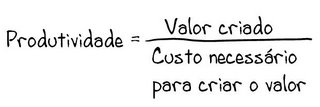
Quando comparamos a produtividade média do país com a da UE vêmos um fosso que não se ultrapassa com aumentos mixirucas dos preços. No entanto, aumentos de relevo só se conseguem quando se oferece em contrapartida muito mais valor potencial. Quantas empresas conseguem dar esse salto de mais valor potencial? Poucas, muitas poucas.
Já escrevi aqui várias vezes sobre a Flying Geese Theory:
Sony was founded in 1946. Its first product was an electric rice cooker.
— Jon Erlichman (@JonErlichman) August 28, 2022
Here are some early products from 11 other well known companies. 🧵👇 pic.twitter.com/BPlDQNEtTe
No fundo, é quando as empresas incumbentes deixam de poder competir com os recém-chegados não concorrentes, como referem Maliranta e Taleb. O que acontece em culturas como a portuguesa? Os incumbentes pedem aos governos de turno apoios que atrasam a transição necessária para a sociedade subir na escala de valor.
Isto é tão, mas tão verdade:
"If you belong to an organisation that still considers existing documented procedures as quality management processes not only have you not captured the spirit of the new approach but you should be picked up by your customers and other assessment organisations as not meeting the requirements of clause 4.4.1. The fact that more nonconformities haven’t been raised against organisations says a lot about the state of third-party certification and its economic need to survive. Perhaps conformity assessment bodies (CAB) are retaining paying customers who don’t actually deserve to hold the certification."
Recordo:
3) The source of the American "liberal arts" degree is the English upper classes imitation of the Ancient Meds who despised work & workers.
— Nassim Nicholas Taleb (@nntaleb) August 29, 2022
As Jules Veyne said: "[in the Ancient World] you are free [liber] if your name don't come w/a profession".https://t.co/Yo8zxvtT4b
"However, in the world of business, the future has the capricious habit of being different than the past, often in fully unpredictable ways. As a business, you want to create that future — not let someone else do it to you. WWHTBT [Moi ici: What Would Have To Be True] helps you ask what we have to make happen to make the things true that would need to be true to create the future."
Imagem e trecho retirado de "What Would Have to be True?"
"it is standard in the literature to assume that more accurate percepts are fitter percepts and that, therefore, natural selection drives perception to increasing veridicality-i.e., to correspond increasingly to the "true" state of the objective world. This assumption informs the prevalent view that human percepts are, for the most part, veridical.Our main message in this paper has been that, contrary to this prevalent view, attempting to estimate the "true" state of the objective world corresponding to a given sensory input confers no evolutionary benefit whatsoever. Specifically: If one assumes that perception involves inference to states of the objective world, then the FBT Theorem shows that a strategy that simply seeks to maximize expected-fitness payoff, with no attempt to estimate the "true" world state, does consistently better (in the precise sense articulated in the statement of the FBT Theorem). In an evolutionary competition, this "Fitness-only" strategy would drive the "Truth" strategy to extinction....In our view, the very idea of attempting to estimate the "true" state of the world is wrong-headed."
Trechos retirados de "Fitness Beats Truth in the Evolution of Perception"
Não há maneira desta aberração sair da minha cabeça este Verão, "Norte da Europa vive à custa da agricultura intensiva portuguesa". Um produto típico do ecossistema coordenado pelos Desventuras e Zés Reis da academiade Coimbra.
Este texto gera-me tanta estupefacção, tantas questões. Vamos à primeira:
"Reframe Your Situation
Most people are loss-averse. Multiple studies demonstrate that the way you frame things affects how you make decisions. The research shows, for instance, that if one treatment for a new disease is described as 95% effective and another as 5% ineffective, people prefer the former even though the two are statistically identical. Every innovation, every change, every transformation—personal or professional—comes with potential upsides and downsides. And though most of us instinctively focus on the latter, it’s possible to shift that mindset and decrease our fear.
One of our favorite ways of doing this is the “infinite game” approach, developed by New York University professor James Carse. His advice is to stop seeing the rules, boundaries, and purpose of the “game” you’re playing—the job you’re after, the project you’ve been assigned, the career path you’re on—as fixed. That puts you in a win-or-lose mentality in which uncertainty heightens your anxiety. In contrast, infinite players recognize uncertainty as an essential part of the game—one that adds an element of surprise and possibility and enables them to challenge their roles and the game’s parameters.
...
Chouinard [Moi ici: Fundador da Patagonia] has learned to face uncertainty with courage—and in fact to be energized by it—because he views his role as improving the game, not just playing it. “Managers of a business that want to be around for the next 100 years had better love change,” he advises in his book. “When there [is] no crisis, the wise leader…will invent one.”"
Depois de ler isto, recordar o que é mais comum em Portugal: resistir, chorar, chamar o papá estado, em vez de abraçar a mudança:
Trechos retirados de "How to Overcome Your Fear of the Unknown"
"Muitas vezes tomamos decisões e clarificamos e somos claros sobre o que decidimos, mas quase sempre esquecemos de enunciar, de tornar claro e transparente aquilo a que renunciamos, e quais são os pressupostos e implicações das nossas decisões.Por exemplo, vejo muitas empresas entusiasmadas com a aplicação das metodologias lean desenvolvidas na Toyota, mas poucas sabem que o Toyota Production System parte do pressuposto que o planeamento da produção está congelado 8 semanas para a frente?"
Na Wikipedia, sobre entimema pode ler-se:
"The first type of enthymeme is a truncated syllogism, or a syllogism with an unstated premise.
Here is an example of an enthymeme derived from a syllogism through truncation (shortening) of the syllogism:
"Socrates is mortal because he's human."
The complete formal syllogism would be the classic:
All humans are mortal. (major premise – unstated)
Socrates is human. (minor premise – stated)
Therefore, Socrates is mortal. (conclusion – stated)
While syllogisms lay out all of their premises and conclusion explicitly, these kinds of enthymemes keep at least one of the premises or the conclusion unstated."
"Segments aren’t homogeneous. It isn’t as simple as ‘these are our customers’ and ‘those are yours.’ Instead, there are many shades. Your choices make your offering perfect for someone — portrayed as the black dot in both sides of the illustration above. The circle on the left is a view of the segment from above with the two axes connoting segmentation variables, and the right is a view from the side with the vertical axis connoting value in excess of the best competitive alternative — I think of it as an upside-down bowl sitting on a counter top. For the dot customer, its desires match perfectly with your offering. Because of that perfect match, that customer is at the very center of the circle on the left and at the very peak of the curve on the right.Radiating out from that perfect customer are customers who value your offering ever less — they are farther from the center of the circle on the left and are farther down the upside-down bowl on the left. If a customer is located at the very edge of the circle on the left, it is indifferent between your offer and that of a competitor (or competitors). And they will be at the lip of the bowl on the right — for them, there is no value advantage of your offer over that of competition. Think about it in terms of heat. Customers in the center are intensely hot about your offer and as you radiate from the cetnter, they get ever cooler about your offer until they are completely indifferent. So, your market is defined by the size of the customer population within the circumference of your circle/to the lip of your bowl.The bigger the circle/bowl, the more valuable your strategy. [Moi ici: É aqui que a palavra entimema começa a fazer-se sentir]...The more successful and valuable offerings have a shallow and lengthy drop-off from the perfect customer. The less valuable — even though highly valuable to the customers within their tiny circle — have a steep drop-off.The steepness of the drop-off is what makes the difference between successful and unsuccessful entrepreneurs. Many unsuccessful entrepreneurs design an offering that is extremely valuable to the perfect customer — typically themselves — but the drop-off is so steep that their idea collapses, not because it didn’t create value, but because the steepness of the drop-off makes it impossible to make the economics work. Successful entrepreneurs design their offering in a way that appeals to a much broader audience. [Moi ici: Quem são os clientes-alvo para o Roger Martin? PMEs? Não! As empresas com que Roger Martin trabalha são empresas grandes, empresas que precisam de volume e que não podem ser muito focadas num determinado tipo de cliente. Para uma PME a situação é completamente oposta]The implication is that you need to design for your perfect customer but equally think carefully about the decline curve. If you obsess about the perfect customer and not about the shape of the value decline curve, you will be out of business." [Moi ici: Para PMEs o que interessa é a capacidade de gerar paixão assimétrica, a capacidade de falar para uma tribo de sangue. Sem isso, boa sorte a tentar subir na escala de valor e a conseguir aumentar preços para poder competir por recursos]
Há muito que uso aqui a metáfora do Dick Dastardly para retratar as empresas que se focam mais nos concorrentes do que nos clientes. Por exemplo:
"Competitor orientationWhat is so wrong with all of this, you might wonder? Why not focus on competitors and what they do, and augment it by evolving your own offering? I’m often asked this question by marketers I train and who are shocked at the lack of competitor assessments that I recommend as part of brand diagnosis.I like looking at competitors through customer’s eyes, but I’m less interested in the insights that can be derived from directly studying competitors. In fact, it turns out there are very good reasons not to focus too heavily on competitors, what they do and how they do it.There is a long and rewarding literature on the power of market orientation and keeping the customer in your cross hairs at all times. And there is an equally persuasive literature on the perils of competitor orientation – of switching our gaze from our customers to our competitors and how they do things. And that danger multiplies significantly if these insights turn to action and we start to replicate our competitors’ moves in our own approach....As strategy guru Roger Martin observes, we are set for “a financial bloodbath”. That’s the scenario he predicts when multiple companies go to the same market, with the same strategy, at the same time. And he is right.We’ve beaten up differentiation for too long in marketing. Sure, there is no unique offering out there. And no one will ever own any attribute or association. But playing the game your way, to your strengths, on your terms remains one of the hallmarks of successful business strategy."
Ontem por volta das 12h15 na CNN Portugal ouvi estes números acerca do turismo em São Miguel, Açores:
Eu: Imaginem a pressão sobre a ilha decorrente de aumentos sucessivos do número de turistas.
Tótó: Mas os açorianos têm direito a ganhar com a beleza natural da ilha.
Eu: Sim, mas se aumentarem os preços, se criarem escassez, conseguem ganhar mais enquanto se estraga menos e, ao mesmo tempo, valorizam mais a experiência do turista.
Tótó: Mas se aumentarmos os preços os turistas deixam de vir.
Eu: Se aumentarem os preços, com menos turistas, mais do que compensam o que hoje ganham em volume, e gastam menos recursos, precisam de menos mão de obra.
Tótó: Mas temos de democratizar o turismo nos Açores?
Eu: Querem fazer dos Açores um local tão popular, tão popular que ninguém lá vai?
Recordo os postais acerca dos pescadores que aprenderam o que fazer com a sardinha - Uma evolução interessante
Recordar Volume é vaidade, lucro é sanidade.
BTW, reflectir sobre "Cláudio Martins: há clientes estrangeiros que “não compram vinhos portugueses porque são superbaratos”"
Comparar o conteúdo deste artigo, "Two years in the making, these jeans are the antidote to fast fashion", por exemplo:
"Fashion brands grow by selling you clothes that will go out of style. Asket sells you pieces that will last at least five years, so you don’t need to come back for more.
...
“Fashion design is about planned obsolescence,” says Bringéus. “You’re creating something with a due date. When it’s on the shelf, your designers are already working on what’s coming out in two years. And you’re telling your customers what you bought yesterday is no longer socially acceptable to wear next year.”"
Com estes postais Are you prepared to walk the talk? ou Curiosidade do dia chamei a atenção para a incongruência do fast fashion querer tocar a tecla da sustentabilidade.
Como querem conciliar as duas coisas?
Recordo, de Dezembro passado, O presente envenenado.
Agora, tendo em conta esta notícia, "Sedes propõe conjunto de reformas "com sacrifícios" para fazer economia crescer em média 3,5%":
"O caminho da Sedes, liderada por Álvaro Beleza (que integra a comissão política do PS), faz-se com “choque fiscal”, reduzindo a pressão fiscal sobre as empresas e as famílias, mas também com “uma redução do peso das despesas públicas correntes não primárias sobre o PIB”. Tem, para isso, de se concretizar a reforma do Estado e tem de se reduzir os “custos dos inputs cruciais e generalizados para as empresas”, nomeadamente os da energia, dos transportes e da logística. Reforma regulatória e redução da burocracia são outras medidas recomendadas, tal como a melhor seleção dos projetos a serem apoiados pelo setor bancário."
Altero um dos esquemas do postal de Dezembro:
Acrescento uma legenda:Como é que as empresas vão aumentar a sua competitividade?Mais um factor a juntar ao que tem acontecido:
China's major manufacturing hub Sichuan province has ordered all factories to shut down for 6 days to ease a power shortage. Sichuan is key for semiconductor/solar panel industries & China's lithium mining hub. Will hit Foxconn, Intel, Apple, Tesla-supplier factories & more @cnn pic.twitter.com/jDTnGdvOwl
— Selina Wang (@selinawangtv) August 16, 2022
Power restrictions have been imposed Chongqing and the provinces of Zhejiang and Jiangsu, raising concerns over the effect on global supply chains and the Chinese economy.https://t.co/H4Ch3W0iH0
— Nikkei Asia (@NikkeiAsia) August 17, 2022
banhista gordo ... não esquecer https://t.co/jY1jq3Q0nM
— Carlos P da Cruz 🇺🇦🚜🇳🇱🇬🇪 (@ccz1) August 17, 2022
A propósito de banhista gordo, recordo: As banheiras pequenas enchem depressa
A frequência dos postais pode baixar nos próximos dias dada a época que vivemos.
"Marca que representa sete raças autóctones bovinas existentes em Portugal está a inovar oferta e explora novos mercados. [Moi ici: Marca e raças autóctones aponta para diferenciação, qualidade, e baixas quantidades]Os produtores de sete raças autóctones de bovinos identificadas em Portugal encontraram um novo canal para fazer chegar as suas produções diretamente ao consumidor, através da loja online Carnes da Montanha. Vão lutar para que o produto chegue às cantinas públicas e assim estimule a preservação de um efetivo que é "muito mais do que carne", como descreve Idalino Leão, administrador da empresa. [Moi ici: Produtores de raças autóctones querem escoar a carne através de um canal que não valoriza a qualidade, mas a conformidade. Querem escoar a carne como se fosse uma commodity. Não percebem que o negócio das cantinas públicas é o negócio do preço/custo mais baixo?]..."Orgulhoso por poder exibir as nove medalhas de ouro atribuídas a produtos da Carnes da Montanha no último Concurso Nacional de Carnes Tradicionais Portuguesas, que se realizou em junho, em Santarém," [Moi ici: Qual o valor destas medalhas? Ou as medalhas não prestam, ou as Carnes da Montanha não sabem como as utilizar. As medalhas se valerem algo devem ser usadas para reforçar a proposta de valor para mercados que valorizam a diferenciação]..."o objetivo é convencer os municípios a usarem estes produtos sempre que nas ementas das cantinas públicas (hospitais, escolas, universidades) esteja previsto o consumo de carne de vaca" [Moi ici: Acham que estas entidades nadam em dinheiro? Compram ao preço mais baixo e, por isso, têm de ser fornecidas por produtores com raças muito eficientes]...Segundo o administrador, em Portugal, 60% dos clientes estão em Cascais, Oeiras e Ericeira, 20% no Algarve os restantes no resto do país." [Moi ici: Como não recordar a artesã de Bragança e os outros, têm de mudar de mercado, mas não é para baixo, é para cima. Pena que o administrador seja "também o presidente da Agros e da Confagri", formatado no negócio do preço baixo, não tem nem experiência nem tempo para apostar numa estratégia de preço alto]
Um interessante artigo no WSJ, "Shops Ordered Lots of Bikes in 2020. Peddling Them Is an Uphill Climb."
"ElliptiGo Inc. Chief Executive Bryan Pate didn't have enough of his outdoor elliptical bikes to sell when demand surged in 2020. Today he has a San Diego warehouse packed with too many bicycles that not enough people want.
"We were like a surfer who did not catch the wave," said Mr. Pate, whose bikes start at roughly $1,500. "It's an all-hands-on-deck battle to break even for the next 18 months."
Many retailers that had too little to offer during the early stages of the pandemic now have too much of everything-from bikes and furniture to clothing and barbecue grills. They amassed the extra inventory because they expected sustained demand and supply-chain problems. What they didn't expect is that customers would shift their spending to concerts, restaurants and travel, or that rising inflation would eat away at household budgets."
Material para ajudar os compradores a meterem na cabeça que a incerteza nas previsões será cada vez maior. Por isso, há que aproximar a produção do consumo.
Este trecho:
"At Bicycle Habitat in New York City, lines formed down the block for whatever was available on a given day in the early stages of the pandemic, said owner Charlie McCorkell. Now he has roughly 2,000 bikes in stock, more than double what he would prefer; sales for 2022 are expected to be lower than 2019; and some customers are willing to walk out the door over a bike's color.
"We have a hundred black ones and no red ones," Mr. McCorkell said. "And they only want the red ones.""
Meu Deus... este trecho fez-me recuar na memória mais de 16 anos!!!
"But suppose you want the size nine “Wonder Wings” in gray? The chances are only 80% (an industry average) that they will be in stock; and there is a good possibility (because of the longer order window) that they will never be in stock again. Not to worry, though. There are millions of size nine Wonder Wings in pink available and many more on the way because the order flow, once turned on, cannot be turned off and the replenishment cycle is so long. As a result, the shoe industry fails to get one customer in five the product he or she actually wants, while it remainders 40% of total production (pink Wonder Wing, for example) through secondary channels at much lower revenues.”"
Segue-se outro exemplo da incerteza nas previsões e das consequências das longas cadeias de fornecimento:
"Skyrocketing demand in the first few months of the pandemic convinced Mr. Pate to increase the number of bikes he ordered from manufacturers in Asia by a third. Facing warnings that lead times were getting longer for components that manufacturers needed to assemble the company’s bikes, he placed similarly high orders for 2021 and 2022 in mid 2020, much earlier than he normally would. He even had to buy a small number of components for delivery in 2023 and 2024.
“The decisions were made a long time ago under very different circumstances,” Mr. Pate said. “And the world is not the way it was back then.”"
Recordo que em Janeiro deste ano tive um cliente que me pediu apoio para implementação de um sistema de gestão ambiental, por pressão do maior cliente. 2021 foi o melhor ano de sempre para esse maior cliente na área das duas rodas. O projecto nunca chegou a arrancar porque o tal cliente cortou drasticamente as encomendas para 2022.
"Luís Miguel Ribeiro lembra que Portugal tem o grande desafio da (baixa) produtividade para ultrapassar, destacando que esse fator está proporcionalmente ligado à dimensão das empresas. "Se não for através de processos de cooperação, ou eventualmente de aquisição ou fusão, num caso ou noutro, é muito difícil às microempresas implementarem processos que levem a mais inovação, que possam melhorar a produtividade e o valor acrescentado produzido. O ganho de escala é, e será cada vez mais, um fator decisivo na competitividade das nossas empresas, e, por isso é que este trabalho de mudança de cultura e de mentalidades, e de alerta para os desafios, é cada vez mais visto pelos empresários de forma aberta e disponível, porque percebem que é este o caminho que temos de fazer", frisa o responsável."
“One of the reasons that I hated price increases and believed that I was betraying my customers is that I didn’t understand basic business fundamentals. I didn’t understand that price increase campaigns are far more effective at generating profit and free cash flow than increasing top-line revenue through sales volume increases or acquiring new customers.Nothing else in the business-to-business sales arsenal protects the health of your company like price increases. They protect the enterprise during inflationary periods, produce capital for investment in growth, help improve quality and service delivery, boost stock prices, and protect jobs.The payoff for price increases is massive. They can drop through as much as 400 percent more profit as increases in sales volume. For example, a 1 percent increase in sales volume, will produce 3.3 percent in profit. However, a 1 percent increase in price, when sales volume remains stable, delivers an 11.1 percent increase in operating profit."[Moi ici: A minha velha descoberta sobre quem era afinal o burro]
Quem segue este blogue sabe o quanto acredito que as PMEs em Portugal têm de mudar para fazer face a um mundo mais exigente a nível de custos e a nível de proposta de valor. Ainda ontem usava a metáfora da joalharia como exemplo a seguir para quem quer estar no mercado no longo prazo.
A PME portuguesa-tipo pratica margens baixas e, por isso, não liberta margem suficiente para ter trabalhadores indirectos que pensem no que se deve fazer, para além de pensar se se está a fazer bem o que já se faz. Mesmo quando tem objectivos concretos a atingir, relevantes para o negócio, pode nem perceber no que tem de investir internamente em recursos humanos para os executar. Daí o meu "o consultor sozinho que consiga a melhoria".
Também há líderes de PMEs que percebem que têm de mudar e procuram exemplos. Que exemplos é que estão disponíveis? As entrevistas e as reportagens sobre as empresas grandes.
Já por mais de uma vez escrevi aqui neste espaço que aquilo que funciona para as empresas grandes muitas vezes não funciona para as empresas pequenas e médias. Recordo Cuidado com as generalizações de 2012, por exemplo. Por isso, cuidado com aqueles que acham que as PMEs são uma versão pequena das empresas grandes. Não, são espécies distintas, com propostas de valor diferentes para diferentes clientes-alvo.
Escrevo tudo isto por causa de um momento de cinismo que vivi ontem ao ler este artigo no Dinheiro Vivo, "PME vão ter um guia de boas práticas de governança":
"A Associação Business Roundtable Portugal (BRP) está a desenvolver, em parceria com o Instituto Português de Corporate Governance (IPCG), um guia de boas práticas em matéria de governança destinado às pequenas e médias empresas nacionais. O documento, que será apresentado publicamente em meados de setembro, tem por objetivo promover junto deste universo, que representa 99,9% do tecido empresarial nacional, as melhores práticas em termos de governo societário, tendo em vista "potenciar o desempenho e a criação de valor"."
E quem participa na redacção do dito guia?
O artigo refere BPI, Sonae, Sogrape, EDP ... tudo PMEs de sucesso que podem ilustrar com o seu exemplo como visualizar a mudança que se quer. Tudo para dar resultados no terreno ...
Uma versão tuga de uma quermesse para ajudar as crianças na Somália.
"Your company needs you to sell more at higher prices. Your family needs you to work less while bringing home bigger paychecks. Your community needs you to work less so you can participate more. And, you want more time and money for your hobbies. Imagine, if you could win more deals, faster, at higher prices, then all these things could happen.
It's possible! It's possible because you likely have a HUGE gap in your selling toolkit. Ninety-nine percent of businesspeople I speak with don't really understand value. This problem is almost universal. Yet salespeople, more than anybody else, benefit by deeply understanding buyer perceived value.
...
Every purchase happens exactly the same way. The buyer looks at the price of a product and compares it to the value they expect to receive. If the prospect doesn't purchase, it's for one of two reasons: the price was too high, or they didn't perceive enough value. You can probably lower your price enough to get them to purchase, but that's not why you're in business, or in sales. The key is helping the buyer perceive more value."
Este tema é importante para se chegar ao quadrante de ouro:
E quem está no negócio tem de trabalhar para o fazer. E vejo pouco, muito pouco trabalho sistemático para o fazer. De entre as poucas empresas que trabalham sistematicamente para aumentar preços a maioria aposta em torneios de braço-de-ferro.Trechos retirados de "Selling Value: How to Win More Deals at Higher Prices" de Mark Stiving.
"Pricing experts like me evangelize the importance of value-based pricing. It's the most profitable pricing strategy out there. Yet, when asked the question, "What is value?" even pricing experts don't agree. Face it. Value is an ambiguous word, but ambiguous doesn't mean unimportant.
Value is possibly the single most important, yet misunderstood, concept in business. To make a purchase, your buyers must believe they will receive significantly more value than they pay. Your entire business is based on trading value for money, but what is value?
It's not surprising that most companies can't clearly explain how much value their customers get from their products. Even most salespeople, who are the closest to the customers, can't explain how buyers perceive value when making purchase decisions.
...
Experts buy features. Everyone else buys benefits. Very few people are experts.
Forrester tells us, “Sixty-two percent of vendor salespeople are knowledgeable about their company and its products, but only 22% understand the buyers’ business issues, and where they can help.” This means you probably know your products, but you aren’t selling value."
Trechos retirados de "Selling Value: How to Win More Deals at Higher Prices" de Mark Stiving.
Organização interna superior à média permitindo entrega na data combinada.
Produto com qualidade de acabamento.
Produto com design superior.
Aumento da procura por causa da alteração de contexto que vivemos.
Aumento das vendas em mais de um terço face ao período homólogo.
A surpresa ...
Preço médio cerca de 30% abaixo da média do sector.
Uma das minhas preocupações reside na importância de subir na escala de valor. No entanto, o cenário descrito acima é anterior a esse desígnio.
Leituras.
Recessão a encavalitar-se na ressaca do pós lockdowns?
Aquele "Heroics to continue "hitting goals"" é tão verdadeiro!!!
Fez-me recuar ao último almoço com o meu parceiro das conversas oxigenadoras: os quadros heróicos que lutam contra o contexto para conseguir entregar, e os operacionais que ganham pouco e só fazem o que lhes mandam, e que desligam quando acaba o dia de trabalho. Só quem o conhece é que sabe a interpretação que ele dá a este cenário, muito diferente da do mainstream.
Pessoalmente costumo sofrer, no meu contacto com as PMEs, com aquele "No time allocated / available to reduce debt". No time allocated to improve, "we are too busy". Queremos melhorar, mas não temos tempo para melhorar, o consultor sozinho que consiga a melhoria.
Picking winners, uma prática tão portuguesa ... recuo a 2007 e a:
"... faltou sempre o dinheiro que o "Portugal profundo" preferiu gastar na "ajuda" a "empresas em situação económica difícil"...
"The political zeitgeist has been moving back toward industrial policy, seemingly coincident with rising populism since the 1990s—despite abundant evidence that central planning is poisonous to innovation. Whether it's encouragement via subsidies or constraint via regulation, using the government to guide the economy is akin to thinking that just a little bit of cyanide won't hurt.
To armchair economists, industrial policy seems like a solution for the country's economic woes: "Infuse money into Industry A, add trade protections for Industry B, protect workers in Industry C from automation, and the economy will soar! New technology will arrive sooner, domestic firms will outcompete foreigners, and steady employment will ensure a chicken in every pot." That indeed was the thinking behind Depression-era policies which extended that crisis by seven years.
Economies are not deterministic like physics or chemistry. You can't pull a lever to achieve a particular effect. A better analog is biological or ecological systems, where there are second- and third-order effects to any given stimulus.
...
That thinking has been missing in Congress this past month. I don't know what microchip subsidies or a mistitled inflation-fighting bill will ultimately do, but neither do our elected officials.
Compounding the problem is that people, not some agnostic supercomputer, determine which industries and companies are considered worthy of a boost. Humans are subject to influence and pressure, turning industrial policy into a contest of who can secure the most government favoritism—a political game of Hungry Hungry Hippos.
Policies protecting companies from competitive pressure, like subsidies or tariffs, allow them to take their eye off the ball. This "X-inefficiency" means they're less efficient and pay less attention to customers' desires.
...
X-inefficiency leads to "dynamic inefficiency"—the lack of motivation to adapt to changing market conditions. The result is reduced innovation, slowed economic development, and increased vulnerability to socioeconomic shocks.
Lastly, industrial policy motivates "unproductive entrepreneurship." Some of the best and brightest minds inevitably withdraw from productive activities premised on voluntary exchange, and instead use their skills to find autocratic mechanisms to extract political payoffs—the entrepreneurial version of the dark side. Their skill grows with experience, meaning the effect increases the longer this continues."
Trechos retirados de "Industrial Policy Stifles Progress"
"Mas, afinal, o que explica níveis de produtividade tão baixos? Em primeiro lugar, diria que o inadequado investimento nos recursos humanos para os tornar capazes de pensarem permanentemente na melhoria contínua dos processos de trabalho, tema absolutamente fundamental para aumentar a eficiência e produtividade das nossas pessoas e organizações. Não só é insuficiente a aposta na formação, através de técnicas de upskilling e reskilling, mas também a falta de estratégias de benefícios indexados à produtividade (colaboradores felizes estão tendencialmente mais alinhados com os objetivos gerais da empresa)....Por outro lado, a produtividade pode ser melhorada, em boa parte, pela capacidade de atrair novas gerações com novas qualificações e competências, e nesse aspeto temos ainda um longo caminho a percorrer, já que o crescente número de jovens qualificados não se reflete em absorção por parte das empresas e, não com pouca frequência, assistimos à alocação destes ativos a sectores onde são menos necessários ou, ainda mais preocupante, em funções que ficam aquém das suas qualificações.Não restam dúvidas de que a produtividade é sinónimo de empresas mais saudáveis e mais competitivas, mas também é certo que este é um problema estrutural: compete a cada empresa, individualmente, desenvolver estratégias para o alterar. mas são também necessárias políticas comuns que nos permitam, enquanto país, acelerar a nossa competitividade internacional. Afinal, temos as ferramentas necessárias, falta-nos apenas colocar mãos à obra."
Estes trechos foram retirados de "Produtividade procura-se" publicado no caderno de Economia do semanário Expresso do passado dia 5 de Agosto. Num trecho que não citei acima, o autor recorda o estudo da Fundação José Neves onde se conclui que a produtividade portuguesa é apenas 66% da produtividade média da União Europeia. Pensem nisto, imaginem este desafio: o que se precisa é de um salto para passar de 66 para 100%. Como o fazer?
Os meus dois primeiros sublinhados ilustram o que está na cabeça da maioria das pessoas, mais formação, mais qualificação "et voilá". Nope, mais formação e mais qualificação podem-nos ajudar a passar de 66 para 68 ou 69, não mais do que isso. Melhorar a produtividade à custa da eficiência tem um limite muito concreto, o limite da margem que se consegue extrair de um produto ou serviço, e esse limite é ditado pelo preço. Se um par de sapatos se vende, à saída da fábrica, por 38€ há um limite ao valor gerado pela quantidade e esse preço (BTW, se a quantidade aumentar muito, das duas uma, o preço baixa por pressão dos clientes, ou a produção é deslocalizada para outras paragens).
O terceiro sublinhado é importante. Importante, porque raras vezes o vejo escrito e proclamado "compete a cada empresa, individualmente, desenvolver estratégias para o alterar". Nesta cultura socialista em que nos movemos as empresas pertencem ao povo e ao seu braço armado, o poder político que já nos faliu 3,5 vezes e nem gerir hospitais sabe. É uma grande verdade, mas é mesmo! Por isso, o meu grito permanente: DEIXEM AS EMPRESAS MORRER!!!
Há muitos anos, talvez Agosto de 2007 ou 2008, podia procurar aqui no blogue, mas não o vou fazer, li um livro que me transmitiu uma ideia: A economia é a continuação da biologia por outros meios. Se não deixamos as empresas morrerem. Empresas lideradas por humanos, entidades que não buscam a maximização, mas que são "satisficers" a produtividade vai-se manter mais ou menos a este nível ou baixar em relação a outros se os outros correrem mais depressa. Se as empresas não morrem, não há selecção natural a funcionar ...
O quarto sublinhado é tinto de alguma ironia, há uma política comum, enquanto país, capaz de acelerar a nossa produtividade (BTW, reparem como o autor usa indistintamente as palavras produtividade e competitividade. Quem segue este blogue sabe que podem ser duas coisas comuns, mas que são quase sempre duas coisas distintas). Essa política comum é: DEIXEM AS EMPRESAS MORRER!!!
Quando às segundas, quartas e sextas, lemos nos jornais e vemos nas televisões pedidos para importação de mão-de-obra barata do Bangladesh ou de Cabo Verde, estamos ver pedido de políticas comuns capazes de manterem as empresas sem a necessidade de aumentarem a sua produtividade. Depois, não se admirem se hás terças, quintas e sábados, aparecem os artigos como o aqui citado a flagelar o país por falta de produtividade.
Pela milésima vez vou citar Maliranta e a experiência finlandesa:
""It is widely believed that restructuring has boosted productivity by displacing low-skilled workers and creating jobs for the high skilled."Mas, e como isto é profundo:"In essence, creative destruction means that low productivity plants are displaced by high productivity plants." Por favor voltar a trás e reler esta última afirmação."
"most successful innovations speak directly to the progress consumers want to make, even when people can't tell you that themselves.
...
What products and services did they purchase to make the progress they were seeking in the past? How did they make those decisions? What were their moments of struggle? What got them past their concerns?
...
Go deep. Interview people for an hour each, and get into as many of the "whys" behind their stories and answers as you can. The true social and emotional value people seek is not in what they choose to do (or not do), but in why they do it.
...
Customers can't always tell you what they want, but they can most certainly tell you what they are hoping to accomplish."
Trechos retirados de "The Key to Successful Innovation? Progress Over Product"
"Imagine you’re driving along the highway and you see an electric sign that reads, “79 traffic deaths this year.” Would this make you less likely to crash your car shortly after seeing the sign? Perhaps you think it would have no effect?
Neither are true. According to a recent peer-reviewed study that just came out in Science, you would be more likely to crash, not less. Talk about unintended consequences.
The study examined seven years of data from 880 electric highway signs that showed the number of deaths so far this year for one week each month as part of a safety campaign. The researchers found that the number of crashes increased by 1.52 percent within three miles of the signs on these safety campaign weeks, compared to the other weeks of the month when the signs didn’t show fatality information.
That’s about the same effect as raising the speed limit by four miles or decreasing the number of highway troopers by 10 percent. The scientists calculated that the social costs of such fatality messages amount to $377 million per year, with 2,600 additional crashes and 16 deaths.
The cause? Distracted driving. These “in-your-face” messages, the study finds, grab your attention and undermine your driving for the same reason you shouldn’t text and drive.
Supporting their hypothesis, the scientists discovered that the increase in crashes is higher when the reported deaths are higher. Thus, later in the year as the number of reported deaths on the sign goes up, so does the percentage of crashes. And it’s not the weather: The effect of showing the fatality messages decreased by 11 percent between January and February, as the displayed number of deaths was reset for the year. The scientists also uncovered that the increase in crashes is largest in more complex road segments that require more focus from the driver."
Ou então:
"Consider another safety campaign, the National Youth Anti-Drug Media Campaign between 1998 and 2004, which the U.S. Congress funded to the tune of $1 billion. Using professional advertising and public relations firms, the campaign created comprehensive marketing efforts that targeted youths aged 9 to 18 with anti-drug messaging, focusing on marijuana. The messages were spread by television, radio, websites, magazines, movie theaters, and other venues, as well as through partnerships with civic, professional, and community groups. The intention was for youths to see two to three ads per week.
A 2008 National Institutes of Health-funded study found that, indeed, youths did get exposure to two to three ads per week. However, on the whole, more exposure to advertising from the campaign led youths to be more likely to use marijuana, not less.
Why? The authors found evidence that youths who saw the ads got the impression that their peers used marijuana widely. As a result, the youths became more likely to use marijuana themselves. Indeed, the study found that those youths who saw more ads had a stronger belief that other youths used marijuana, and this belief made starting to use marijuana more likely. Talk about a boomerang effect."
Trechos retirados de "The Danger of Armchair Psychology"
Recentemente escrevi este postal, "The essence of an EMS" (part I), acerca da abordagem dos sistemas de gestão ambiental como um portfolio de projectos de melhoria.
Entretanto, tenho mais um exemplo resultante da minha actividade profissional com empresas industriais. Fruto do tempo que vivemos, uma empresa escolheu como um dos seus objectivos ambientais a redução do consumo unitário de energia. Um dos grandes consumos unitários de energia está relacionado com o funcionamento de compressores para produção de ar comprimido. A empresa aproveitou um Sábado e fez um levantamento exaustivo das fugas de ar comprimido nas suas instalações.
Foram identificadas 40 fugas!
Neste documento do Centro Tecnológico do Calçado, "Boas Práticas de Eficiência Energética" pode ler-se:
"O ar comprimido representa uma fatia de cerca de 13 % do consumo total de energia elétrica nas empresas da fileira do calçado. A otimização deste sistema contribuirá não só para a redução de custos com o consumo energético, como também aumentará a sua fiabilidade e a do equipamento que dele depende.
...
Nota: Numa empresa que trabalhe 8 horas, 5 dias por semana e que apresente 10 pontos de fuga, o custo anual das mesmas poderá corresponder a valores superiores a 1500€."
O documento já tem uns anos, e nas actuais circunstâncias aqueles 1500€ estarão já obsoletos. Estamos a falar de algo que pode representar um gasto invisível muito superior a 6000€ por ano.
Por que não aprendemos a desenvolver sistemas de gestão ambiental focados em desafios que representam valor para as empresas?
Esta é a essência de um sistema de gestão ambiental (EMS). Melhorar o desempenho, em vez de se limitar a cumprir tarefas num calendário. Dúvidas sobre a ISO 14001? Talvez eu possa ajudar. Schedule a call.
"This week, the $350 bn company [Moi ici: Walmart] issued its second profit warning in just over two months, telling investors that surging inflation, particularly in the prices of food and fuel, was affecting its customers' ability to afford other goods.
...
Consumers are not only worrying that they have less money to spend after filling their fridges and cars, retailers say: more of their discretionary spending is going on experiences they missed out on earlier in the coronavirus pandemic, such as travel and eating out, rather than on clothes, furniture or appliances.
Unpredictable demand, particularly among the most cash-strapped consumers, is only part of the challenge, however. Several companies, fearing a repeat of the supply chain delays that burnt them last holiday season, have been stocking up early this year.
Mattel, the maker of Barbie dolls and Hot Wheels cars, reported last week that its inventories were up 43 per cent year on year, for example, while rival Hasbro also had unusually high inventory levels as it stocked up for toymakers' peak season.
'Importers don't trust supply chains anymore," explained Zvi Schreiber, chief executive of logistics booking service Freightos. 'Retailers are not taking any risk. If they can afford the inventory, they're stocking up ready now for the on » shopping season."
...
But the current combination of historically high inflation and historically low unemployment is one that even retailers of Walmart's vintage have no playbook for, said Stephanie Cegielski, vice-president of research for the shopping centre group ICSC.
"The struggle for everybody right now," she said, is that "we've never seen anything like this."
Mais material para pôr em causa as longas cadeias de fornecimento dos últimos 20 anos, são incompatíveis com elevados níveis de incerteza. Mais material para afectar a tal balança de forças.
Trechos retirados de "'We've never seen anything like this': US retailers compete to clear stock"
I dare say that civilization is impossible, in the long term, without religions. Religion is a fantastic tool, and I am a religious guy, to promote cooperation and forgiveness instead of tilt-for-tat and escalation into conflict everywhere
— Carlos P da Cruz 🇺🇦🚜🇳🇱🇬🇪 (@ccz1) June 21, 2021
As leituras da missa de hoje na ICAR são sobre a base das civilizações. Cortar, pelo menos entre os nossos, a espiral do "tit for tat". Sem perdão não há civilização.
— Carlos P da Cruz 🇺🇦🚜🇳🇱🇬🇪 (@ccz1) February 20, 2022
Perdoar não significa, não intervenção da justiça.
Julgo ser este um papel de todas as religiões
Há muito que penso que o papel das religiões é quebrar o tit for tat que faz escalar qualquer confito e impede a civilização.
Por isso, sorri ao ouvir:
"Is there an overarching aesthetics that are projecting you and the world into the future?
Which I think is the basic idea of religion, that you understand the interactions that we have with each other as some kind of civilization-level agent that is projecting itself into the future."
Trecho retirado de Joscha Bach: Nature of Reality, Dreams, and Consciousness | Lex Fridman Podcast #212
"... basically put us into the post-modernist mode, and I don't mean in the philosophical sense but in a societal sense. The difference between a post-modern society and the modern society is that the modernist society has to deal with the ground truth and the postmodernist society has to deal with appearances.
Politics becomes a performance and the performance is done for an audience, and the organized audience is the media and the media evaluates itself via other media right so you have an audience of critics that evaluate themselves"
Trecho retirado de Joscha Bach: Nature of Reality, Dreams, and Consciousness | Lex Fridman Podcast #212
Banda sonora para este tempo -
Isto a propósito deste artigo no Caderno de Economia do semanário Expresso de ontem, "Têxtil volta a ter empresas em lay-off":
""Na indústria têxtil há cada vez mais clientes a atrasarem ou a suspenderem encomendas e já temos algumas empresas em lay-off ou a jogar com a antecipação de férias", diz ao Expresso Mário Jorge Machado, presidente da ATP Associação Têxtil e Vestuário de Portugal, preocupado com a evolução de um sector que pede o regresso de mais apoios, [Moi ici: Sempre a mesma doença portuguesa] num regime equivalente ao que foi adotado no pico da pandemia de covid. "Temos os consumidores assustados com a guerra, a inflação, a questão energética, a subida das taxas de juro. O retalho começa a retrair-se e a indústria sente também esse impacto", explica o empresário e dirigente associativo para defender "um quadro mais flexível, que facilite a reação rápida das empresas às flutuações da economia".
É verdade que os números da exportação continuam a ser positivos: até maio, as vendas ao exterior tiveram um crescimento homólogo de 19%, para os €2,6 mil milhões (mais 17% face a 2019), mas a evolução relativa ao volume tem vindo a abrandar mês após mês, acumulando agora um saldo positivo de 6%, e "a faturação é sempre reflexo de decisões de encomendas entregues alguns meses antes" sublinha, para garantir que o momento atual "é de arrefecimento".
A tendência é transversal a todos os segmentos da indústria têxtil, mas nesta fase as empress mais afetadas são as de acabamentos, tinturarias, tecelagem, tricotagem e algumas confeções, precisa. Do lado dos clientes, o abrandamento é especialmente sentido na Europa, com destaque para a Alemanha, e nos EUA."
Outras leituras:
"Leading a project is about causing the death of a million ‘ands’....You can’t build a luxury car that’s also inexpensive, AND drives well off-road, AND is very fast AND super safe. You can’t create an event that’s intimate, open to all comers, proven, resilient for any weather, held outdoors and unique.We focus on the frustration of losing an ‘and’ when we get nervous about the decisions we’re asked to make, when we are hesitant about commitment. And we obsess over the constraints we’ve already accepted because it slows us down and amplifies our fears.Instead of focusing on what we’re building, we focus on the paths that are no longer open.If we’re going to create anything at all, if we’re going to ship the work, the positive path is to look for the constraints and grab them. They’re the point. No constraints, no project. When we see them as stepping stones on the way to the work we hope to do, they’re not a problem, they’re a sign that we’re onto something.Managing a project is the craft of picking this ‘or’ that. ‘And’ isn’t often welcome because ‘and’ is a trap."
Trechos retirados de "Paths not taken"
Há dias em E Zeihan chega a Mongo! citei:
"4. Supply chains will be much shorter.
...
5. Production will become colocated with consumption.
...
6. The new systems will put premiums on simplicity and security just as the old system put premiums on cost and efficiency."
Agora leio, por um lado os sintomas do impacte da incerteza no retorno dos inventários, "Why Fashion’s Inventory Problem Is Back (And How to Solve It)" e, por outro lado, o aumento do risco da aposta no custo mais baixo, "Navigating Retail’s New Era of Risk":
"On closer inspection it’s clear that today’s global supply chains are the product of centuries of growth but little meaningful evolution when it comes to risk management.
...
The High Risk of Low Cost
Although separated by almost 200 years of history, the cotton famine of the 1860's and the supply chain crises of today share the same root cause: a myopic and often perilous focus on lowest landed unit cost. Procuring vast quantities of cheap goods has driven and continues to drive most of today's top brands because most see price as the cornerstone of competitiveness. However, as supply chain expert John Thorbeck often says, we operate in an era where business leaders must once and for all appreciate that the singular pursuit of low cost comes with an extraordinary number of risks that make businesses far less competitive, the first being the risk to financial capital.
...
It is also logical to assume that risks to global supply chains will become more frequent and profound as we become increasingly interconnected as a global community.
...
If reducing unit cost was the competitive advantage of the past, eliminating risk is the competitive advantage of the future."
Interessante, como regresso sempre a Maio de 2020 e a El coronavirus actúa como acelerador de cambios que ya estaban en marcha. Pois, em 2008... Para reflectir
Outras leituras:
"It is widely believed that restructuring has boosted productivity by displacing low-skilled workers and creating jobs for the high skilled."Mas, e como isto é profundo:"In essence, creative destruction means that low productivity plants are displaced by high productivity plants." Por favor voltar a trás e reler esta última afirmação.
.
"Lovaglia’s Law: The more important the outcome of a decision, the more people will resist using evidence to make it."
"If an organisation is too stable it can ossify, but if it is too unstable it can disintegrate. Successful organisations work between these two conditions or states, in what Stacey called ‘the chaos zone’."
"If the customer doesn't care about the price, then the retailer shouldn't care about the cost,"
“It's not enough that we do our best; sometimes we have to do what's required”.
"Das Leben, das uns gegeben ist, ist uns nicht als etwas Fertiges gegeben, sondern wir müssen es uns gestalten, und zwar jeder sein eigenes."
"Eine Regierung, die nichts wert ist, kostet am meisten."
"Forget trying to persuade them; light their pants on fire."
"O futuro é o que importa. O futuro é a base do significado, é de onde vem o projecto que alguém tem para si próprio"
"The single biggest problem in communication is the illusion that it has taken place."
“It is not the strongest of the species that survives, nor the most intelligent; it is the one that is most adaptable to change.”
"o Marketing só existe a partir do pensamento estratégico, caso contrário "não resulta""
"It is difficult to get a man to understand something, when his salary depends upon his not understanding it"
"Perder diversidade é como arrancar páginas de um livro. Quantas páginas poderemos arrancar até deixar de compreender o enredo?"
The great enemy of the truth is very often not the lie – deliberate, contrived and dishonest – but the myth, persistent, persuasive, and unrealistic. Belief in myths allows the comfort of opinion without the discomfort of thought."
"By strategy, I mean a cohesive response to a challenge. A real strategy is neither a document nor a forecast but rather an overall approach based on a diagnosis of a challenge. The most important element of a strategy is a coherent viewpoint about the forces at work, not a plan."
"Un desastre està punt de succeir a Espanya. El malentès de la gravetat de la crisi costarà car als inversors, ja que tindrà profundes conseqüències per a tot el sistema bancari europeu", afirma.
Entre d'altres coses, Mauldin diu que "els inversors estan fumant crack si creuen que els bancs espanyols són entre els més forts d'Europa, ja que estan amagant les seves pèrdues".
“… there are no “sunset” industries condemned to disappear in high wage economies, although there are certainly sunset and condemned strategies, among them building a business on the advantages to be gained by cheap labor”
"o vencedor da vida, o optimista que vive em incesto com o próprio ego, é o traço mais frágil do líder"
"We shall not grow wiser before we learn that much
that we have done was very foolish."
You may not be able to change the world but can at least get some entertainment & make a living out of the epistemic arrogance of the human race.
"I wanted you to see what real courage is, instead of getting the idea that courage is a man with a gun in his hand. It's when you know you're licked before you begin but you begin anyway and you see it through no matter what. You rarely win, but sometimes you do."
“Trust your guts. But not too much!”
"Customers will try 'low-cost providers,' because the majors have not given them any clear reason not to." "
"Natal é quando as Crianças pedem e os Pais pagam. Défices é quando os Pais pedem e as Crianças pagam."
"A imprevidência dos povos é infinita, a dos governos é legal"
"What a man sees depends both upon what he looks at and also upon what his previous visual-conceptual experience has taught him to see"
“The leaders first task is to be the trumpet that sounds a clear sound”
"lamented the lack of any systematic data on the scale of unfunded IOUs that care-free politicians have handed out like confetti."
"Let them call me rebel and welcome, I feel no concern from it; but I should suffer the misery of devils, were I to make a whore of my soul..."
O problema não é o consumo. O problema é o consumo assente em endividamento."
"There are designations, like "economist", "prostitute", or "consultant" for which additional characterization doesn't add information."
When it becomes more difficult to suffer than change, you will change"
"Hope is not a strategy and a crisis is a terrible thing to waste"
The more you can see of the present, the more you can see of the future"
Yes, You can change the future, but only changing the present"
"Entrepreneurship is 'Having aspirations greater than your resources'"
“The single biggest reason companies fail is they overinvest in what is, as opposed to what might be."
"The first principle is that you must not fool yourself - and you are the easiest person to fool. So you have to be very careful about that"
"A estabilidade é uma ilusão"
"When we create the conditions of possibility, the universe becomes our co-conspirator"
Thinking about doing is not doing. Talking about doing is not doing. Doing is doing."
"'God has created me to do him some definite service. He has committed some work to me which he has not committed to another'.
...
"Each of us has a mission, each of us is called to change the world, to work for a culture of life, a culture forged by love and respect for the dignity of each human person.
"As our Lord tells us in the Gospel we have just heard, our light must shine in the sight of all, so that, seeing our good works, they may give praise to our heavenly Father."
"The future is not there waiting for us. We create it by the power of imagination."
"confusing testosterone with strategy is a bad idea"
"Much consulting involves the application of models to a system, as opposed to getting involved in the system as a positive change agent""
"O Portugal que pára sem orçamento é precisamente aquele que vive dele e que há todo o interesse em parar."
"credibilidade da política financeira e dos seus executores está ao nível da credibilidade de uma barraca das farturas"
"The role of the manager is thought to be reduction of uncertainty rather than the capacity to live creatively in it"
"today an entrepreneur is closer to artists than managers"
"A business without a path to profit isn’t a business, it’s a hobby"
"If no one’s upset by what you’re saying, you’re probably not pushing hard enough. (And you’re probably boring, too.)"
"Storytelling isn’t just how we construct our identities, stories are our identities"
"'He who has a why to live can bear almost any how' "
"They can because they think they can"
"Se há coisa que não suporto é misturar catequese com negócios, é a incapacidade para calçar os sapatos do outro e só pensar na nossa posição de coitadinhos, pobres vítimas indefesas dos maus e que por isso precisamos do Estado todo poderoso para nos proteger e, nem percebem na volta, os juros que o Estado cobra por esse serviço mafioso de protecção que, ainda por cima não resolve nada."
"Empathy is like a universal solvent. Any problem immersed in empathy becomes soluble."
"In victory, do not brag; in defeat, do not weep"
"Value it's a feeling not a calculation"
"An economist is someone who has had a human being described to him, but has never actually seen one."
"Don't finish first--it's not about running a rat race. Start with a better ending in mind."
"If you sit in on a poker game and don’t see a sucker, get up. You’re the sucker.”
"The 'value added' for most any company, tiny or enormous, comes from the Quality of Experience provided."
"Crediting government with the success of entrepreneurs is like crediting the guy who built Bill Gates’ garage with the success of Microsoft."
"I have found that assuming social scientists understand the difference between correlation and causality is not generally a good one."
"Promising never to raise taxes, without reaching a deal on spending, really means a high and rising commitment to future taxes."
"Some things are so foolish that only an intellectual could believe them, for no ordinary man could be such a fool"
"os bancos não financiam a economia, a poupança sim"
"I do not know the key to success, but the key to failure is trying to please everybody"
"Never be afraid to try, remember... Amateurs built the ark. Professionals built the Titanic."
"terms such as 'experiment' and 'observation' cover complex processes containing many strands. 'Facts' come from negotiations between different parties and the final product - the published report - is influenced by physical events, dataprocessors, compromises, exhaustion, lack of money, national pride and so on."
"'science in the making' is 'the consequence of [a] settlement' of 'controversies'."
"If the state wishes to spend more, it can do so only by borrowing your savings or taxing you more. And it's no good thinking someone else will pay, that someone else is you."
"All failures of strategy are rooted in the assumption that outcomes are predictable."
"Doing things like your bigger competitors is how to get killed in the wars out there"
“Uma moeda boa e forte é como a saúde. Só lhe damos verdadeiramente valor quando não a temos.”
"Life’s tough. It’s tougher if you’re stupid"
"O homem de bem exige tudo de si próprio; o homem medíocre espera tudo dos outros"
"Change is a threat when done to me, but an opportunity when done by me."
"As elites foram deixando de falar das exportações à medida que se foi percebendo que o país consegue exportar sem elas"
"Your toughest competition is the little voice inside your head telling you to stop"
"Pain is just weakness leaving your body"
"Built to last" is bad economics. Built to do something great" is the better idea. Think: "Creative destruction."
"the world is an uncertain place no matter how many Greek letter equations you affix to a problem."
"You never change things by fighting existing reality. To change s.th., build a new model making the existing model obsolete"
“No, no, you're not thinking; you're just being logical.”
"Success is not a destination. It's the trail you leave behind you."
"Winners make a habit of manufacturing their own positive expectations in advance of the event."
“You’ve got to start with the customer experience and work back toward the technology – not the other way around”
"Strategy as the "smallest set of - intended or actual - choices and decisions sufficient to guide all other choices and decisions sufficient to guide all other choices and decisions."
"When something is commoditized, an adjacent market becomes valuable"
"nature evolves away from constraints, not toward goals"
"There aren't any textbooks on what to stop doing!"
"With great power comes great irresponsibility "
"Weird things happen when you take price out of the equation for consumers"
"‘It’s so damn complex. If you ever think you have the solution to this, you’re wrong and you’re dangerous.’"
"Saruman believes it is only great power that can hold evil in check, but that is not what I have found. I found it is the small everyday deeds of ordinary folk that keep the darkness at bay. Small acts of kindness and love."
"Increasing stuff that doesn't add value dilutes existing value."
"O federalismo não é a alternativa à troika, é a troika para sempre."
"Never underestimate the difficulty of changing false beliefs by facts"
"Stressors are information"
“If you hear a “prominent” economist using the word ‘equilibrium,’ or ‘normal distribution,’ do not argue with him; just ignore him, or try to put a rat down his shirt.”
"The advantage of experiences over things for most of us is that we can make them seem unique, which = scarce, which = value"
"Pedras no caminho?
Guardo todas, um dia vou construir um castelo"
"Without risk, faith is an impossibility."
"Não posso com quem vive a achar que os outros lhe devem sempre alguma coisa."
"In a world of increasing automation, our ability to perform tasks is not nearly as important as our ability to dream. The questions we need to ask are not ones of action, but ones of meaning"
"Me arrancam tudo a força e depois me chamam de contribuinte."
"Letting people vote for expensive programs that “somebody else” will finance is a good recipe for getting people to vote irresponsibly"
"what's fairness gotta do with pricing based in value?"
"The epic battle of our generation is between the status quo of mass and the never-ceasing tide of weird."
“Price is emotional”
"There will always be a reason why you can't pursue it, until competitors create a reason why you must."
"The most important thing to study is opening theory"
"The greater the contrast, the greater the potential"
“Customers don't care about your solution, they care about their problems.”
"Todos querem conhecer a verdade, mas o que desejam é que lhes contem uma mentira em que não sejam protagonistas."
"Execution efficiency strangles innovation in the crib, but not with malice, by default.”
"Our obsession with scalability is getting in the way of unleashing the potential of the 21st century."
"The system is optimized to mitigate risk, not create value"
"Champions are made when no one is looking"
"Don't bargain on value. Half as expensive is often twice as cheap."
"Customers care about outcomes, not effort, technology, or originality."
"
"You don't have to pick between 1) playing the game and 2) not playing the game. You can *change* the game."
""The first principle is that you must not fool yourself and you are the easiest person to fool." "