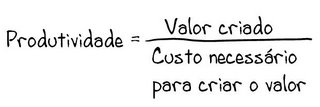
.
Em Aldeia da Mota, Carvalhais, São Pedro do Sul, Viseu, Portugal.


BTW, que pena não ter fotografado o arruinado Solar dos Malafaia em Santa Cruz da Trapa, ainda tão bonito e imponente.

"As exportações do setor das conservas de pescado em Portugal atingiram, em 2013, as 53 mil toneladas, ao nível do máximo histórico de 1923, segundo um estudo feito pelo antigo Subdiretor-Geral das Pescas António Duarte de Almeida.
...
O estudo revela que "o setor conserveiro exporta tradicionalmente cerca de 70% da sua produção, representando mais de um quarto das exportações nacionais de produtos da pesca".
...
a produção aumentou e a exportação de conservas de sardinha registou um aumento de 39% em volume e de 62% em valor nos últimos quatro anos, tendo havido ainda uma maior diversificação para a utilização de cavala, a par da sarda e do atum.
...
as poucas fábricas de conservas em funcionamento, após terem sobrevivido aos apertos e dificuldades dos anos e períodos mais difíceis por que passou este sector produtivo, estão agora a produzir bastante mais do que o dobro das que existiam há quatro anos e tanto como as quatro centenas existentes em 1923", considera o antigo responsável pelas Pescas."
"From simple causal loops, participant discussion builds more complex system maps, portraying (in this case) three distinct dynamic systems creating different potential outcomes for the global business environment over the next ten or so years."


"1. Price based upon your value, not your cost.Trechos retirados de "Everything You Need to Know About Value-Based Pricing"
...
The costs do not determine the price, [Moi ici: À atenção dos ministros da saúde que acham que os medicamentos devem ter um preço baseado na transparência dos custos] let alone the value. It is precisely the opposite; that is, the price determines the costs that can be profitably invested in to make a product desirable for the customer, at an acceptable profit for the seller.”
.
In other words, the price is dictated by what the consumer is willing to pay. Period. And the costs to provide that good or service dictate how much or even whether the supplier provides them.
...
2. All services are not created equal
.
At its core, value pricing asserts that price is a subjective, not objective, measure of value. Your price should reflect what your customer is willing to pay – or said differently, the benefit they perceive. But, do all customers perceive value the same way?
.
Depending on your industry, the answer is probably “no.”
...
3. Don’t underprice yourself.
...
Your price is a signal of your value. The lower your price, the lower your perceived value.
.
4. Provide your customers with options…
...
5. …but don’t provide too many options.
.
If a business provides its customers with too many options, they run the risk of paralyzing the customer with indecision."


“there are two types of warfare, asymmetric and stupid.”Como é que a sua empresa cria assimetria a seu favor?
"It’s a cliché to say that the world is more uncertain than ever before, but few realize just how much uncertainty has increased over the past 50 years. To illustrate this, consider that patent applications in the U.S. have increased by 6x (from 100k to 600k annually) and, worldwide, start-ups have increased from 10 million to almost 100 million per year. That means new technologies and new competitors are hitting the market at an unprecedented rate. Although uncertainty is accelerating, it isn’t affecting all industries the same way. That’s because there are two primary types of uncertainty — demand uncertainty (will customers buy your product?) and technological uncertainty (can we make a desirable solution?) — and how much uncertainty your industry faces depends on the interaction of the two."

"what could ultimately be more important than price and product as it relates to the ultimate purchase decision by a consumer: customer service.
...
It cannot be overstated just how vital and paramount customer service is to the overall customer experience. How can it be given the customer-centric world we now live in?"

"Companies fail to identify future opportunities because they do not have fresh business models
...
Products and companies do not differentiate winners from losers; it is the right business models that do.
...
Business model innovation is more profitable and more sustainable than product innovation and is badly needed in Europe today.
...
Global competition requires a more holistic approach to business development that typically reflects business model thinking.
...
overcoming the dominant logic of their industry remains the biggest barrier for experienced managers. Some innovators do it accidentally, some intuitively, but rather seldom as a systematic leadership task.
...
The biggest challenge is learning how to unlearn. This is a challenge that should be taken up by business schools."
"As exportações da indústria têxtil portuguesa cresceram 10% nos primeiros 7 meses do ano, face ao mesmo período de 2013, para atingirem os 2,819 milhões de euros."Trecho retirado de "Exportações têxteis mantêm crescimento"
"An experience can consist of a product, for example a theatre play. An experience can also be a supplement to the product, such as a dinner at a certain restaurant, or the experience can be the whole package, making the experience not just a product, but a mental process, a state of mind, for instance an evening out combining dining and seeing a play. The main point here is that experiences are always more than just the product. The core of the product might be an experience, like a theatre play, but it is always more than this: it includes where it takes place, the décor, whether the seats are good or not and so forth. One can also gain an experience via technology, such as the web net or watching television. The experience can also be a supplement to a good or a service. It is not the product, but the supplements of it which provide the consumer with the experience. It is not the shoes, but the fact that these shoes are fashionable and show who you are, which is the experience.E que histórias sobre a sua oferta costuma divulgar? E que histórias sobre a sua oferta ganham ressonância no mercado?
.
This is an experience you cannot get from just any pair of shoes. It is the design, the marketing, the usage and symbolic value of the shoes that makes them an experience. The shoes acquire a story or a theme and it is the story or the theme, rather than the product, which the consumers buy and cherish in the experience economy. The story or the theme is constructed to sell whatever the product might be, whether tangible or intangible: shoes, vacations, music, films, food, museum visits or events."
"As exportações portuguesas de mobiliário e colchoaria aumentaram 12% até julho, em termos homólogos, para 820 milhões de euros, evidenciando que “o setor é cada vez mais uma certeza nos planos de negócio das empresas”, divulgou esta quinta-feira a APIMA."
"Fragmentation will occur at different rates and to varying degrees across the economy. Much of the fragmentation is likely to occur in product design and commercialization activities.Um exemplo interessante pode ser encontrado aqui "A Big Mac, Coke and side order of decline":
...
As fragmented players focus on product innovation and commercialization, what will happen to the established companies of today, and how will they capitalize on their advantages of scale or scope?"
"Have many big consumer brands peaked? I ask this question because I believe a number of the world’s biggest products appear to be in structural decline....Sugary, carbonated beverages are seen by the younger generation as unhealthy. Once such trends become established they are difficult to reverse....younger customers are visiting McDonald’s less, and going instead to rival fast-casual chains. Diners want fresher, healthier food and a more bespoke offering. And what happens in America is likely to be followed in other territories....It may be that the health issues challenging Coca-Cola and McDonald’s are specific to those market leaders. But I suspect other factors are at play too. Customers younger than 30 are more promiscuous in their brand choices and have less product loyalty. The digital revolution has brought almost total price transparency, diminishing the ability of brands to charge more. Retailers are embracing own-label to defend their margins....
In both alcoholic and soft drinks, for example, almost all the growth is coming from smaller, independent producers."

"72% of all new products don’t meet their revenue targets. And a quarter of companies, according to the same survey, confess that not one of their new offerings met its profitability goals.Trechos retirados de "The Silent Killer of New Products: Lazy Pricing"
...
what’s causing this high failure rate
...
[when a product fails] it’s not a technology problem or a pure R&D problem — it is really around marketing, customer segments, and of course pricing.
...
Your survey also details how hard some companies are finding it to raise prices. For instance, you found that only a third of all planned price increases actually get implemented, and for every 5% price increase attempted, only about 1.9% is achieved. Why are companies having such a hard time raising prices?
...
One of the odder findings in your survey is that 58% of companies say they are currently in a price war – but 89% of those blame their competitors, not themselves, for starting it. Why does pricing feel so out of executives’ hands?
.
[Moi ici: ROA - Return of attention. O tempo que se investe numa coisa não pode ser usado para outra] For many years, CEOs and executives have focused on improving the bottom line through cost cutting, finding efficiencies in operations and the supply chain. Companies have gotten better and better at that. Pricing is also a highly impactful driver of revenue, but companies probably spent the least amount of time on it. Often it’s the most misunderstood driver in a corporate boardroom. It’s not something that gets a lot of attention in business school, relatively speaking. However, it is also one of the easiest things to change and companies tend to be more reactionary [than strategic] about it."
"Through the 1970s, Gucci ... stood with Hermès and Chanel in a high-cost, high-willingness-to-pay position, its brand resonating with elegance, wealth, and success."Em 1984 a Gucci já não passava de uma pálida sombra do que fora como força de marca. Porquê?
"the Gucci name proliferated like some kind of illness-inducing bacteria. Unbridled licensing plastered the name, along with the red-and-green logo, on sneakers, packs of playing cards, whiskey—in fact, on a total of 22,000 different products."Ontem o JdN trazia esta história "“Chairman” da Ferrari abandona cargo depois de desacordos com CEO da Fiat". Contudo, a BloombergBusinessWeek conta melhor a história em "Ferrari's Old Guard Fights Back Against Fiat's Marchionne":
"Marchionne wants to the put the Ferrari brand to work as he pushes to expand Fiat Chrysler’s lineup of high-end cars. Di Montezemelo, who has run Ferrari for 23 years and began his career as an assistant to founder Enzo Ferrari, wants to maintain the company as an autonomous unit within Fiat and safeguard its exclusivity by limiting sales to about 7,000 cars a year.Já adivinho a bastardização da marca Ferrari, dentro de uns anos pode estar ao nível da Audi ou da BMW.
...
Marchionne, who wants to develop new markets for Ferrari, said earlier this year that he could envision boosting annual sales to 10,000. That number is minuscule compared to the 4.4 million cars sold by Fiat Chrysler last year. But the profit margins are enormous: Ferrari accounted for 12 percent of Fiat’s operating profit. And with sticker prices ranging from about $200,000 to more than $400,000, Ferrari wants buyers to feel they are members of an exclusive club—owners of “a desirable object par excellence,” as di Montezemelo has put it. His fear is that Fiat Chrysler will over-expose the brand."

"So what is it about productive people that separates them from the bumbling, distracted masses? A lot of it has to do with self-awareness and recognition of one’s own behavior.Quando é que a empresa tem níveis de desempenho superiores? Com que gente? Com que produtos? Com que encomendas? Com que clientes?
.
As we know, recognizing your productivity patterns is one key step toward becoming more efficient. We may not be able to add hours to the day, but we can make the hours we do have count more by taking better advantage of when we’re at peak productive performance."
"Organic food delivery startup Good Eggs wants to change the way people eat, making it easier for customers to buy organic foods produced by independent farmers and vendors nearby.
...
It offers up a marketplace to enable customers to buy from nearby farms and vendors, but then handles all the logistics associated with packaging up their orders and handling delivery.
...
For vendors, the platform provides a way for farms to find new customers, creating new demand for their goods. Rather than going through the hassle of packing up a truck and taking it to a farmer’s market, where a vendor never knows what they will sell, Good Eggs tells them exactly what customers want."
"Fosbury’s breakthrough took his sport to a new level. He did it not by working harder or developing bigger muscles than his competitors, but by recognizing that a convention of his sport was not a rule.Quantas regras, que só existem na nossa cabeça, nos impedem de ir mais além, nos impedem de abordar o desafio do mercado de uma forma diferente e, mais vantajosa para a nossa organização?
.
The same pattern is present in breakthrough innovations in business. Dramatic progress in both macro and micro environments happens when players break rules that aren’t actually rules – in other words, when they rethink assumptions. [Moi ici: Aquele momento especial em que o rato consegue tirar o labirinto que está dentro de si]
...
“In most real life situations the pieces are not given, we just assume they are there. We assume certain perceptions, certain concepts and certain boundaries.
...
We who’ve gotten far by playing by the rules or even writing our own as entrepreneurs have an easy time carving our assumptions about our businesses into stone. We become increasingly entrenched in “this is what matters” and “that’s the way it’s done” the longer we invest.
...
Fosbury recognized that there was no rule in his sport other than “clear the bar” and “jump off of one foot.” He could run from any angle, jump from either foot, twist and flail and land however he wanted. But his peers assumed that the direct approach was the “right” approach, and therefore only made incremental improvement."

"Under Armour prosigue con su ascenso en el podio del negocio de la moda deportiva. La compañía estadounidense ha arrebatado a Adidas el segundo puesto del ránking de marcas de moda deportiva en Estados Unidos por volumen de negocio."Trecho retirado de "Under Armour le ‘roba’ a Adidas la plata del negocio de la moda deportiva en EEUU"
"O secretário de Estado das Infraestruturas, Sérgio Monteiro, afirmou hoje que as perturbações que afetaram a TAP em junho e julho estão sanadas, considerando que a companhia aprendeu com os erros deste verão, que não se podem repetir.Aprender com os erros, isso é sempre bom.
.
"Pareceu-nos uma boa atitude: aprender com os erros que podem existir do ponto de vista do planeamento operacional e fazer tudo para que no próximo ano exista uma resposta diferente da que existiu este ano", considerou Sérgio Monteiro, no final de uma reunião com o presidente da companhia, Fernando Pinto."

"Large corporations with small boards (around nine to 10 directors) outperformed their peers on shareholder return by 8.5 percentage points, while firms with large boards (13 to 14) underperformed peers by 10.85 percentage points,"Trecho retirado de "Maybe Your First Layoffs Should Be Board Members"

"S-D logic moves the orientation of marketing from a ‘market to’ philosophy where customers are promoted to, targeted, and captured, to a ‘market with’ philosophy where the customer and supply chain partners are collaborators in the entire marketing process.Fica esta tabela final com informação relevante:
...
S-D logic also recognizes that customers as well as suppliers are resource integrators, consistent with the concept of cocreation of value. S-D logic not only brings the customer into the process of co-creation of value, but organization's partners throughout the value network as well. Consequently, S-D logic recognizes that each entity should collaborate with other entities and integrate resources with them.
...
If we want to completely carry out the program of S-D logic and translate it into B2B offering strategies, we must re-establish the balance to the customer's advantage: co-creation is carried out, in a many-to-many approach, between a supplier and his network in interaction with a customer and his network. From an S-D logic viewpoint, it's not only therefore about making an offering to the customer but also to some of the actors in his network thereby co-creating value with them and for them.
...
The cocreation of value with the customer network actors has been particularly identified as being the missing link in current B2B offering strategy approaches in terms of solutions."

"The erosion of barriers to forming and pursuing a business venture will lead to increasing fragmentation in certain parts of the economy.
...
As barriers fall, many small yet viable players will emerge, with increasing influence on the economy
...
This proliferation of individual and small business ventures addressing highly differentiated industry and consumer needs will drive significant fragmentation in certain parts of the business landscape. Fragmentation (within a domain) is defined by the following characteristics:
• Each player within the domain has a small, addressable market and is focused on a specific niche
• Collectively, players address a diverse spectrum of customer and market needs
• Both players and niches are proliferating within the domain
• No single player has enough market share to influence the direction of the domain
long term
• A relatively modest level of investment is sufficient to enter and sustain position
• “Diseconomies of scale” are in play—it is more challenging for large players to stay in business
...
Fragmentation is likely to be most pronounced in the design, development, and
production of new products and services for specific markets.
...
As consumer demand for uniqueness or other specialized attributes causes product
fragmentation, another type of fragmentation will occur in the retail space, as retailers cater to specific consumer preferences with a targeted set of niche products.
...
They will increasingly offer targeted experiences to niche customer segments
...
the number of small investors could grow with the emergence of a different type of angel investor—one who, now that it is easier for individual investors to connect with individual makers, artists, or entrepreneurs, values his or her connection to a specific product or mission more than tenfold returns.
...
Fragmentation will be a permanent feature of the business landscape
...
Today’s consumers expect offerings that exactly fit their needs and lifestyle requirements. The good news is that digital technologies allow niche products to reach consumers. The bad news is that, given the fragmentation of the consumer base, it is harder to get an offering adopted by the mass market, earn market share, and generate large returns. Indeed, the whole idea of the “mass market” may become less relevant as niche market proliferate. Revenue opportunities may be limited to capturing a relevant niche segment instead of an entire market.
...
Increased competition and disruption are shortening product life cycles, reducing the total return for each product.
...
a decrease in consumer loyalty. Consumers are increasingly willing to switch between brands to find products that best address their needs.
...
Niche players that scale will have difficulty retaining creative talent, given the
increasing ability of talent to pursue other ventures.
...
As an organization scales, it often becomes focused on efficiency, tightly scripting processes and governance models and thus limiting workers’ autonomy and creativity.
...
fragmentation will be a sustained and even desirable outcome in the new business landscape."
"Redução do IRS compensa inflaçãoA proposta dos autores é que, quando se começarem a fazer sentir os efeitos da inflação, que normalmente acontece poucos meses depois, "deve haver uma compensação através do IRS"..
.
"Especialmente nos escalões mais baixos de modo a compensar essa perda de salário real", defende Ferreira do Amaral."
"“What I do worry about every year is the future of the factory,” [Moi ici: Diz o director de uma fábrica na Indonésia] he tells her. “I worry that someone somewhere else, somewhere cheaper, will start to make furniture, and that will be that for us.”Dá a necessidade de sair fora deste filme e optar por outra estratégia
.
It never ends."
"have eliminated many of the benefits of working for a large organization and undermined the financial and emotional security of many workers. ...Workers no longer have the historical safety nets they once did, such as life-long employment and pension plans....No one - not even top talent - is safe.Without the benefits of stability and security once associated with employment by a large, established company, many individuals will find themselves pursuing alternative career paths, not always by choice."No entanto, esta pressão sobre as empresas e os indivíduos, e "Eroding barriers: Lowered barriers to entry, commercialization, and learning" (terceiro capítulo) cria oportunidades novas.
"The somewhat surprising effect has been to tap into workers’ latent desire for autonomy. In the past, workers sacrificed autonomy for the security and compensation associated with working for a large enterprise.
...
Many are driven by a desire for autonomy, flexibility, or alignment with personal values. Talented, high-performing workers are taking their increased negotiating power to pursue independent ventures or to work at companies where work is more tailored to individual priorities, values, and interests.
...
In parallel, individuals are also beginning to move away from seeking status and meaning through consumption ... many are seeking status and meaning through the ability to create or participate.
...
The good news is that the same technological and political forces causing increased pressures and challenging traditional structures and practices have also created the tools and opportunities for participation, commercialization, and learning.
...
Times have changed. Today the barriers between the inventor and the market are diminishing, and individuals can own the full lifecycle of their products. Individuals are also finding that as barriers erode they have the ability to participate in numerous communities, unlimited by geography, where they can build knowledge, develop skills, and find collaborators.
...
The means of production are becoming more accessible to individuals and smaller companies.
...
Tools and physical infrastructure are becoming increasingly accessible. Liberalization in certain areas of public policy is reducing some of the regulatory barriers that have hindered the creation of new businesses.
...
it is becoming easier for individuals to independently experiment with and prototype ideas, leading to breakthroughs in physical product design and even medicine. As technology continues to become better and cheaper, more individuals will be able to create small but sustainable economic entities. Even for technologies that have not become affordable, the emerging “sharing economy” is helping to make them accessible.
...
The confluence of cheap and accessible technology, shareable tools and infrastructure, and supportive public policy has made it more attractive for individuals to leave large organizations and create their own fragmented businesses.
...
With the path to market entry more accessible, technology has again been instrumental to lowering barriers to commercialization, largely through online platforms that connect individuals and organizations to the resources they seek."
"an ecosystem reflects much more than a network, and it differs fundamentally from a market.
...
the focus of innovative organizations is likely to shift in the near future from organization-centricity to one that is ecosystem-centric. An ecosystem can be thought of as a complex web of interdependent enterprises and relationships that creates and allocates business value.
Ecosystems comprise entities that operate out of orchestrated, mutual shared-interestA set of individuals or organizations who formally or informally operate together to produce something of greater value for the mutual benefit of the ecosystem as a whole...In a business context, an ecosystem is a complex web of interdependent enterprises and relationships aimed at creating and allocating business value. There is something mutual and multiplicative about business ecosystems — the whole is greater than the sum of the individual parts....Ecosystems comprise entities that operate out of mutual self-interest. They are made of sets of individuals who formally or informally operate together to produce something of greater value for the mutual benefit of the organization and the ecosystem as a whole. Ecosystems exist because participants can deliver more value within the ecosystem acting together.Mutuality reflects an enhanced level of coordination with formally or informally shared ideals, standards, or goals....Orchestration [Moi ici: Curioso usarem este termo, o mesmo que escolhi há uma série de anos, para designar o trabalho de quem desenha, ou toma consciência do ecossistema e começa a multiplicar o seu efeito fazendo batota] refers to the coordination, arrangement and management of complex environments. In the context of an ecosystem, orchestration refers to the formal or informal coordination of interactions or collaborations among participants within the ecosystem. Orchestration may be informal, through cultural mores and imperatives, or it may be formal through explicit rules or the presence of an actual orchestrator — an explicit entity that facilitates orchestration processes....By their nature and sustained existence, ecosystems can produce more value as a whole than the sum of the individual participants acting independently....To create value, organizations need to identify opportunities, develop competencies and leverage synergies. In identifying opportunities, organizations must understand how value is created in the ecosystem. They will need to identify and exploit pockets of potential value creation. And they must maintain flexibility in the role they adopt within the ecosystem, as well as the type of interactions they have with other ecosystem participants....Orchestration reflects the extent of an organization’s influence over others within an ecosystem, the formality of ecosystem interactions and the degree of enforceability and compliance."
"Last Tuesday, Fujifilm announced the release of the X30, the latest in a line of high-end digital cameras, ... The Japanese company enjoyed a boost in its stock during the week, though the new camera might not have been the reason for the jump. The product release immediately followed another announcement, this one by the Japanese government, regarding an anti-influenza drug developed by Toyama Chemical, an obscure pharmaceutical company that Fujifilm had quietly acquired five years ago. Japan said that Fujifilm was offering up the drug, Favipiravir, as a potential stopgap in the fight against an outbreak of Ebola that has, according to the World Health Organization, killed nineteen hundred people in West Africa, and that Médecins Sans Frontières just called for a global military and civilian response to stop."A Fujifilm no sector farmacêutico, porquê?
"The reason a company known for developing film began developing pharmaceuticals is simple: that’s where the money is. Unlike its former rival Kodak, which filed for chapter-eleven bankruptcy in 2012, Fujifilm was nimble in reshaping its business to suit the age of the digital camera, allowing it to weather a decade, the aughts, in which its film business went from producing two-thirds of the company’s profits to virtually none of them."E a minha mente começa logo a derivar para os que se queixam da falta de procura como a razão de todos os males económicos do mundo.

"“Temos uma fábrica antiga, disfuncional, com máquinas velhas, num mercado megacompetitivo dominado por multinacionais, como a Caran d’Ache, a Staedtler, ou a Faber-Castell, cujo produto final é mais barato do que o preço que nós pagamos por madeira."
"Se à fábrica, que “devia ter sido arrasada”, e às máquinas antigas “de suposta baixa produtividade e que afinal são altamente versáteis”, se juntarem residências de artistas em zonas do complexo fabril e o “conhecimento que existe aqui há um século”, de trabalhadores com décadas de experiência — “como se faz um lápis ou uma mina? Quais as matérias-primas e os comportamentos dessas matérias?”, diz Vieira — “se cruzarmos esses conhecimentos com tudo aquilo que é conhecimento artístico e turismo industrial”, a Viarco percebeu que podia criar produtos que ainda não existiam, fazer diferente das multinacionais, e, assim, acrescentar valor."O trecho que se segue é tão familiar... quase diria que foi retirado deste blogue, a incapacidade dos crentes na folha de Excel, verdadeiros Muggles, Muggles mesmo, de vislumbrar a magia do valor dos intangíveis:
"“Isto é um delírio”, diz José Vieira. “Quando falamos com doutores que querem números e vivem números e vomitam números, isto [a Viarco] faz-lhes muita confusão: do ponto de vista de negócio faz sentido, do ponto de vista das regras do mercado não faz sentido nenhum. Isto ‘tem de’ ser altamente produtivo: mas se isto for altamente produtivo, deixa de ser altamente versátil. Se pensar apenas numa lógica da rentabilidade, há muitos projectos que vão morrer à nascença. A pergunta é sempre: quantos vão vender? Eles estão habituados a fazer contas: isto vai custar tanto a produzir. Nós fazemos as contas ao contrário: desenvolvemos uma ideia, produzimos um protótipo, pegamos no produto e chamamos os artistas para o experimentar. Acham que vale a pena? Quando pagavam por isto? Depois do IVA, do preço do retalhista, do distribuidor que vai querer 40 ou 50%, quanto fica para a empresa?[Moi ici: O trecho que se segue é simplesmente delicioso] E as margens passam de ser aquela coisa manhosa, pequenita, de corta-unhas, para coisas muito mais interessantes: porque é aí que entra o lápis como ferramenta, entra o design, entra a relação do artista com o produto e entram as questões emotivas. São coisas que não podemos contabilizar — quanto custa produzir isto com esta margem de lucro — porque são coisas que não podemos meter numa folha de Excel.”Trechos retirados de "O segredo de um negócio de família é ser cem por cento profissional"
"In 1999, when Chávez took office, PDVSA had 51,000 employees and produced 63 barrels of crude a day per employee. Fifteen years later, PDVSA had 140,000 employees, and produced 20 barrels of crude a day per employee, according to an Aug. 14 report by the France Press news agency."
"Don’t draw up your task list in the morning – do it the evening before, when you will have a more distant perspective.Trechos retirados de "Here today, gone tomorrow"
...
Hyperbolic discounting poses some obvious and well-understood problems for those of us going on a diet or saving for a pension.
...
One possibility is to schedule tasks ahead of time in the calendar. The big presentation, the Japanese revision, the washing-up, all of it gets a diary slot. There’s promise in this approach. It still requires willpower but putting long-term priorities firmly in the calendar helps deal with the hyperbolic discounting problem."
"Experience offerings arrange for particular items and activities to be
displayed and unfolded at given times and in a given order. The content needs to be staged and structured to have direction and to make the most of the time and the activities that take place. Events should not unfold at random, but rather in a structured manner as to optimize the experience. Experiential value – although it can occasionally be created by random, or by the subject’s purely internal efforts, should in a commercial context rather be a well thought out endeavor: A deliberate effort by an organization to optimize stimuli – objects, activities, facilities – to provide an experience for a consumer. Someone needs to have thought through and asked, “what is a good way to do this?” What makes this content and activity fun and interesting? It involves the “what content to present?” and “how to present it?” questions. The principles of dramaturgy may be used to structure stimuli, content and activities to optimize the coming about of a worthwhile experience.
A dramatic structure can be used to intensify and enrich an experience offering. It can give direction and order to events taking place, by constructing them into a meaningful sequence.
It can be used as a way of giving a good introduction – to build in suspense and dramatic turns into an activity as it plays out, to give characters and roles to play for employees and guests, to arrange for conflict, challenges to overcome and clear goals to reach. Done skillfully this can very well build a strong frame and backbone for the offering, developing a suitable rhythm and escalation to increase the offering’s overall value."
"I believe we are seeing a shift away from traditional scalable efficiency as the predominant rationale for business. [Moi ici: É bom encontrar boa companhia quando a viagem é longa e tem muita gente que nos tenta demover] Technological advances have, in many cases, reduced the need for scale, and they are driving rapid and accelerating change; only organizations that are constantly learning will be able to keep up. Yet, the scalable efficiency model as it has traditionally been pursued - granular demand forecasting, rigid processes, and standardization to ensure predictability and minimize variances - is not only increasingly difficult; it is fundamentally incompatible with learning. Learning requires experimentation, and organizations that learn how to experiment faster will have an advantage."
"Entre 2004 e 2012, Portugal perdeu 43% do emprego industrial no setor da joalharia. Em contrapartida, a produção de relojoaria aumentou o emprego em 176% e o volume de negócios em 233%."Fui à procura da fonte. Encontrei-a neste estudo "Joalharia, Ourivesaria e Relojoaria no Contexto Nacional e Internacional".
"as atividades ligadas à fabricação de relojoaria afirmam-se claramente como emergentes, registando um crescimento absolutamente extraordinário em anos recentes. Com efeito, entre 2004 e 2012, o volume de negócios na indústria de produção de relógios e suas partes observou um crescimento de 233%, ao passo que o VAB trilhou um aumento de 324% e o emprego de 176%Em 2008, 20% da produção de joalharia era exportada. Hoje, essa percentagem chega aos 60%.
.
Esta interessante dinâmica na fabricação de relojoaria em Portugal decorre, em grande medida, de investimento direto estrangeiro feito em Portugal por multinacionais de origem suíça, francesa e alemã especializadas na produção de relógios ou suas partes, do aumento do nível de atividade de empresas existentes
a produzir peças em subcontratação e a trabalhar em processos de assemblagem de caixas de relógio e, ainda, de fenómenos recentes de empreendedorismo."
"Entre 2004 e 2012, Portugal perdeu 43% do emprego industrial no setor da joalharia. Em contrapartida, a produção derelojoariajoalharia aumentou o emprego em 176% e o volume de negócios em 233%."
"A taxa de suicídio em Portugal baixou 7% entre 2000 e 2012, encontrando-se atualmente dentro da média europeia, segundo um relatório da Organização Mundial da Saúde divulgado esta quinta-feira.Recordar "A felicidade é sempre uma medida relativa"
...
Aliás, em Portugal, a morte por suicídio em pessoas em idade ativa, até aos 64 anos, não cresceu nem acompanhou o ritmo da subida do desemprego, lembra Ricardo Gusmão.
.
O investigador do Instituto de Saúde Pública da Universidade do Porto admite que a crise não teve o impacto esperado no aumento do suicídio nos anos subsequentes, colocando a hipótese de em Portugal e Espanha haver um suporte social informal que "protege" as pessoas dos efeitos da crise."
"Eu prefiro crescer a estagnar e prefiro crescer a estar em recessão"Eu, não sou tão taxativo. Por exemplo, prefiro recessão a défice. Por exemplo, prefiro a brutal honestidade da recessão, que obriga os actores a repensarem-se, a um crescimento empolado, artificial e sustentado em torrefacção de riqueza impostada aos contribuintes, actuais ou futuros.
"Economists fail to get w/ GDP growth that anything that grows without an "S" curve (slowing down phase) blows up."
"This doesn’t really support the claims we’ve been hearing for almost two decades now that the U.S. is becoming a nation of free agents, freelancers, or supertemps. It doesn’t entirely contradict them either, though."

"Don’t be afraid to cut ties with customers or clients who repeatedly make unrealistic demands or who consistently cause stress or friction. Rather than continually sacrificing your time, dignity and emotional health, focus your efforts on actively pursuing new customers or clients who respect your time and boundaries.Trecho retirado de "No, The Customer Is Not Always Right"
...
Look at the bigger picture when dealing with consistently unreasonable customers or clients. Look at what’s really important, and ask yourself if repeatedly attempting to please an unpleaseable customer is really the best business decision."
"I came to Japan in February, for the first time in a number of years, to visit a country I enjoy but also to find out about those “lost years”—ten, and now twenty.Trecho retirado de "The Lost Years? Or Finding Japan?"
.
What lost? Why lost? Where Are These Lost Years? If, as a returning visitor to Japan, you expect to see some evident manifestation of these lost years, you may be surprised. During two weeks in Tokyo, Kamakura, Kyoto, and the Oki Islands, what I saw was a clean, stable, wealthy country. The cars are recent, the stores are lovely, the restaurants remain wonderful, the people are as pleasant and accommodating as ever. Most strikingly, coming from what North America has become, everything works in Japan - everything I encountered just works marvellously well. No evident lost years here."
""Detetámos que o que está a acontecer na economia portuguesa é um fenómeno de deflação, que se sente essencialmente ao nível dos produtos alimentares e que tem levado a uma estabilização do crescimento do volume de vendas e negócios" das empresas, disse a responsável em declarações à agência Lusa a propósito da apresentação do barómetro de vendas da APED relativo ao primeiro semestre."Depois:
"A economia portuguesa dá mostras de sinais positivos depois de vários anos em crise. De acordo com o barómetro de vendas realizado pela Associação Portuguesa de Empresas de Distribuição, nos primeiros seis meses do ano os consumidores lusos estiveram mais ativos.
.
Neste âmbito, verificou-se um aumento nas vendas de 0,4%, face ao mesmo período do ano anterior, sendo que, em termos de valores estes cresceram dos 8,438 mil milhões registados em 2013, para os 8,475 mil milhões de euros, em 2014.
...
"É a confirmação de que o consumo cresceu em Portugal. Ainda que ligeiro, é importante evidenciar este consumo."

""Estamos muito cá em baixo na cadeia de fornecimento. Queremos chegar às marcas, ter um diálogo muito próximo com elas, e, portanto, temos que arranjar forma de lhes mostrar algo verdadeiramente inovador."Aposta no "é meter código nisso":
"De introduzir um conteúdo tecnológico, por exemplo, através da integração de sistemas electrónicos flexíveis nos materiais "."Eventual problema:
"A indústria automóvel representa 85% da facturação ... A estratégia passa também por crescer noutras áreas. Aliás, a Ert começou pelo calçado quando foi criada, em 1992, por João Brandão. "Estamos a apostar em áreas distintas. Trabalhamos com os têxteis-lar, produtos de utilidade doméstica, confecção, vestuário, calçado, arquitectura, desporto e puericultura. Estas áreas representam cerca de 15% do negócio, mas temos novos projectos."Estratégia não é só o que é que vamos fazer.
"In the popular resort town of Cannes, Fromagerie Céneri is one of only two cheesemongers left. The owner, Hervé Céneri, stocks 98% raw milk cheese. “Here in Cannes, I have spotted a trend back towards proper cheese. I believe there is a growing recognition that our heritage is in grave danger and people are now coming back. Our great tradition, despite a concerted attempt to destroy it, is still out there. When people like Sébastien Paire, with his 100 sheep in the hills above Nice, continue to make fabulous cheese, there is always hope.”"A tecnologia, desde que os Quintas-feiras, objectivamente ao serviço dos lobbyes, não interfiram, pode salvar a tradição. Ver "How the Internet Saved Handmade Goods":
"Some old technologies, after being rendered obsolete by better and cheaper alternatives (indeed even after whole industries based on them have been decimated), manage to “re-emerge” to the point that they sustain healthy businesses.
...
Consider the re-emergence of artisanal goods. No doubt you are aware of the explosion of the market – some call it a movement – in handcrafted products.
...
Who are these makers if not the revivers of dying or, in some cases, long extinct technologies? Yet it’s thanks to new digital tools such as Etsy, an Internet marketplace selling hand-made goods from around the world; and Kickstarter, the “crowdfunding” site that mediates donation-based funding for a range of products and services, that these artisans can now find and serve their tiny, global markets of customers. These are segments that would have been impossible for individual artisans to organize in a cost-effective way before the rise of the Internet and electronic communication tools that cut out expensive middlemen and asset-heavy enterprises.
...
The point is not that most consumers will ever care enough to choose soap that is made with goat’s milk, or lard, or without any animal product. On the contrary, the point is that it isn’t necessary for most consumers to do so. With handmade soap selling for $4-6 a bar, while mass-produced soap retails for about $1, sellers can do fine with small, loyal customer bases."
"Strategic conversations are not just a typical meeting with a fancy name, they are intentionally designed for exploration and discovery of new possibilities, not just updates on existing projects.
...
Below are a few examples to draw on for designing strategic conversations for your team.
.
1. Act like your competition.
...
2. Make a clear distinction between the present state and future options.
.
When it comes to our long-term benefit, we’re often better served to take a deep breath and force ourselves to separate the here and now from a longer view of success. Where do we want to be three years from now? Even one year from now? Can everyone on the team describe a concrete picture of what success looks like? And do we have the understanding of what it might take to get from here to there?
.
3. Turn the meeting into a game or simulation.
.
War-gaming, role-playing, and scavenger hunts can also effectively amp up the heat when you need to make some big choices."
"Tão português este Guido Mantega link1 … a culpa é dos outros, por isso é q link2"Entretanto, neste relatório "The Shifting Economics of Global Manufacturing" da BCG, encontro isto:
"In some cases, the shifts in relative costs are startling. Who would have thought a decade ago that Brazil would now be one of the highest-cost countries for manufacturing - or that Mexico could be cheaper than China?"

"Os vinhos do Tejo atingiram nos primeiros seis meses do ano o número recorde de 189 medalhas em concursos nacionais e internacionais, contra as 142 de 2013, no mesmo período."
"Portugal está a exportar menos vinho mas de maior qualidade e mais caro. As exportado caíram 13% entre janeiro a abril, totalizando 289,5 milhões de litros, mas o valor das vendas ao exterior cresceu 1%, ascendendo a 722,7 milhões de euros, segundo dados Eurostat, que apontam para um aumento de 16% no preço médio do litro (2,50 euros)."
"As exportações de vinho verde cresceram 14,2% no primeiro semestre de 2014 face a igual período de 2013, disse esta terça feira à agência Lusa o presidente da Comissão de Viticultura da Região dos Vinhos Verdes (CVRVV).
...
Dados oficiais indicam que os alemães compraram 6,9 milhões de euros de vinho verde, quase mais 40 por cento do que no mesmo período de 2013.
...
O presidente da CVRVV realçou ainda que “as exportações estão a aumentar, mantendo-se os preços, o que é saudável”. “Mas precisamos de dar um novo passo, que é a valorização do produto”, acrescentou."
%2006.21.jpeg)