quinta-feira, março 27, 2014

"Não há aqui nada estranho?" (parte II)

Parte I.
.
Outra coincidência estranhamente deliciosa. Ontem, no JdN, encontrei o artigo "As promoções são uma droga e Portugal é líder no vício".
"O "retalho está a começar a ser um negócio muito, muito estratégico [Moi ici: Isto dá pano para mangas. Ainda voltaremos a esta afirmação]. E ou se tem a estratégia certa ou não".
...
"Em vez de fazer isso", de termos uma estratégia conhecedora da vontade dos consumidores, disse, "o que estamos a fazer? Estamos viciados".
...
"Somos corno o Lance Armstronge estamos a usar e abusar das drogas. E como é que se chama a droga nesta indústria? A droga chama-se promoções". ..."e sim, vocês [referindo-se aos retalhistas portugueses] são líderes no vício. Evoluíram para um nível de 17% para 29% [de pressão das promoções para as vendas] e gradualmente o nível de pressão das promoções está a aumentar". Recomendação final: o vício das drogas "era perigoso para Lance Armstrong - é assim tão perigoso para vós". Jean-Jacques Vandenheede, que há 36 anos estuda o mercado da distribuição para a Nielsen, explicou melhor a sua ideia "sabem quando entram nessa rua [da sustentação do negócio e da concorrência pelas promoções], nenhum de vós tem uma estratégia de saída, nenhum de vós sabe como é que vamos parar esta loucura", que reside na "pressão curta em vez de adoptar uma estratégia, sobre o que quer e necessita o consumidor".
...
"Somos muito bons em criar turbulência, mas a turbulência não cria inovação. Não há negócio na turbulência" - não é assim que os retalhistas vão conseguir ganhar consumidores, defendeu o analista. A única forma para ganhar a confiança dos clientes, é ser "comprometido, perseverante e paciente" no que se está a fazer. E esqueça a concorrência: "os seus concorrentes não vão fazer compras na sua loja, não trazem negócio ao seu negócio". [Moi ici: Outra tecla deste blogue, as empresas que se perdem porque em vez de viver a sua vida passam o tempo a gastar recursos a vigiar e copiar os concorrentes... deixam de ter vida própria] Lição final: "para criar uma história de amor [Moi ici: Outra tecla e terminologia tão cara a este blogue, contrapor a criação de relações amorosas em vez de romarias ao bezerro de ouro do excel] com os consumidores" há que "remover as frustrações e pontos de dor [dos consumidores]" e ser "único, diferente e melhor" que os restantes."
O Dinheiro Vivo em "Promoções nos supermercados são como usar drogas, diz especialista" complementa a mensagem:
""E há muitos retalhistas a dizerem que precisam de baixar preços, de fazer promoções, para que as pessoas não vão às lojas de discount. Podem fazer tudo isto, mas nada mudará. O impacto é zero. É um desperdício de tempo."
...
Em todos os países, disse, é possível "encontrar grandes retalhistas, retalhistas de tamanho médio e pequenas lojas que estão muito bem, e outras com as mesmas características que estão em grandes sarilhos." O que muda é a ligação ao consumidor. "O marketing está de volta", concluiu."


quarta-feira, março 26, 2014

Curiosidade do dia

Há cada coisa que me surpreende... hoje no DE, "Uma execução suportada pelos contribuintes".
.
Há algum país economicamente saudável em que a execução não seja suportada pelos contribuintes?
.
E acham os impostos elevados? Esperem pelo próximo governo, influenciado pelos jarretas.

Fitness landscapes (parte I)

"Evolutionary biologists originally developed fitness landscapes to help them understand evolution - in particular, how a species increases its fitness. Along the way, the framework has spawned useful ideas for corporate strategists. What does a fitness landscape look like? Envision a large grid, with each point representing a different strategy that a species (or a company) can pursue. Further imagine that the height of each point depicts fitness. Peaks represent high fitness, and valleys represent low fitness. From a company’s perspective, fitness equals value-creation potential. Each company operates in a landscape full of high-return peaks and value-destructive valleys. The topology of the landscape depends on the industry characteristics.[Moi ici: E está sujeita a variações maiores ou menores de forma repentina e não esperada, por vezes]
.
As Darwin noted, improving fitness is not about strength or smarts but rather about becoming more and more suited to your environment - in a word, adaptability. Better fitness requires generating options and “choosing” the “best” ones. In nature, recombination and mutation generate species diversity, and natural selection assures that the most suitable options survive. For companies, adaptability is about formulating and executing value-creating strategies with a goal of generating the highest possible long-term returns.
.
Since a fitness landscape can have lots of peaks and valleys, even if a species reaches a peak (a local optimum), it may not be at the highest peak (global optimum). To get to a higher altitude, a species may have to reduce its fitness in the near term to improve its fitness in the long term. [Moi ici: Stressors are information. Isto é o que mete medo aos políticos...]
...
Fitness landscapes are a rich way to think about businesses. For any individual company, you have to answer two questions. First, what does the fitness landscape look like from the company’s perspective? Of course, not only are a company’s decisions influenced by its fitness landscape, but the decisions themselves help define the landscape. Second, is the company pursuing the right strategies to improve its fitness (i.e., economic value) over time given its landscape?
.
It’s important to note, though, that you can’t focus solely on the evolution of one company or industry because of the central role of coevolution. Actions trigger reactions. Sometimes companies cooperate with one another, sometimes they conflict. Nothing happens in a void—companies are always jockeying to improve their position. Further, the more dynamic the fitness landscape, the greater the necessary rate of adaptation."

Continua

Trechos retirados de "More than you know : finding financial wisdom in unconventional places" de
Michael J. Mauboussin.

"the false assumption that more sales equals more profits"

É sempre bom encontrar um texto de Byrnes:
"Strategic account management in the most forward-thinking companies is undergoing a transformation that is increasing sales effectiveness and company profitability by 33% or more.
.
The most effective strategic account managers are shifting their focus from maximizing sales and gross margins, to going directly after major net profit increases in key accounts – without the false assumption that more sales equals more profits. In fact, nowhere is this false assumption a bigger mistake than in major account management.
...
What can a strategic account manager do?
Sell profits, not revenues
The most important factor in strategic account management is the vast difference between selling revenues and selling net profits. Most selling systems simply assume that these are equivalent, but nothing could be further from the truth. [Moi ici: Isto é sacrilégio para tanta gente]
...
Good accounts, bad accounts.
The key to sorting your good accounts from your bad accounts – and your good products from your bad products – is profit mapping.
...
If, as with nearly all companies, 15% of your accounts are providing 150% of your profits, your most important objective is to secure and grow these Island of Profit accounts. Yet if they are providing only 30% of your revenues, in most companies they will be getting only 30%, or less, of your “love.”
...
These high-profit key customers are your most important asset. In fact, they probably are not even getting as much attention as your large accounts that are unprofitable, because your big, low-profit customers are always pushing and complaining.
.
As a strategic account manager, you have three very important “profit levers” to turbocharge the profitability of your Islands of Profit strategic accounts: (1) profiling and account selection; (2) pricing and product portfolio; and (3) supply chain integration.
Profiling and account selection...
In most situations, the Islands of Profit customers have remarkably similar profiles, needs and views – and these are very different from the overall customer base, and even from the other major accounts. By aligning your company’s products, services, and positioning with your most profitable customer segment, you can directly drive strong profitable growth from the start.
...
Pricing and product portfolio.
Once you have identified your Islands of Profit customers, you can look at your own business’s best practice in pricing and constructing a product portfolio for these customers.
Here, you can do a comparative analysis of what you are selling to the different market segments of your most profitable customers. Every sales rep is different, and every customer interaction is different. Yet very clear best practices emerge, and nearly always raise a revealing “aha moment.”
...
Supply chain integration.
For strategic accounts, supply chain integration is a prime sales and profitability weapon. I have explained this in my writings (for example, see Profit from Customer Operating Partnerships).
.
Supply chain integration gives you three critical benefits.
.
First, you reduce your key customer’s cost of operations, often by 40% or more. These savings stem from reduced inventories, duplication of services, and other factors.
.
Second, your own sales grow, often by 35% or more in your highest-penetrated accounts. This very fast, massive sales growth is driven by the huge customer cost savings, and by the operating level relationships that develop between your grass-roots operations staff working in the customer, and the customer’s counterpart operations managers.
.
Third, your own cost of operations drops, often by 30% or more. These savings occur because you now can control and stabilize your key customers’ order patterns, enabling you to reduce inventory, shipment frequency, and expedited movements. Importantly, this major saving enables you to keep your prices stable, and still strongly grow your profits.
...
Yet, if you can’t identify your Islands of Profit customers, you should rightly fear simply responding positively to any large customer request for supply chain integration – especially since your Coral Reef customers (large and unprofitable) are most often the ones that are most aggressive in pushing for these advanced services with no intention of adequately paying for them.[Moi ici: A famosa pedofilia empresarial]
.
And if you devote your precious resources to supply chain integration with your Coral Reef customers, you are not only buying a cannon – you are walking into quicksand."

Trechos retirados de "How to Turbocharge Your Strategic Account Management"

"Não há aqui nada estranho?"

Há coincidências que me deixam ... com uma sensação estranha.
.
Fui convidado para fazer uma apresentação para um grupo de empresas líderes no seu sector e que operam no mercado interno.
.
A crise levou a perda de clientes e a grandes cortes nos preços praticados.
.
Hoje, desenhei uma primeira versão do esqueleto da apresentação. A certa altura pergunto:
 "A crise rouba clientes? E, por isso, é preciso baixar preços, para minimizar a hemorragia?"
Então, avanço com o sucesso das Bimby no mercado português.
.
Então, avanço com o sucesso dos smartphones no mercado português.
.
Então, avanço com o sucesso das capsulas de café no mercado português.
.
E vou perguntar:
"Não há aqui nada estranho?"
Entretanto, descubro este delicioso texto "Price Wars: Market Saturation or Innovation Implosion?" que vai ao encontro da minha narrativa, sem tirar nem pôr.
"Typically price wars begin because the companies in an industry are experiencing slowing revenue growth.  The question is ‘Why are those growth rates slowing?’
.
The presumption is that the market is saturated, but is that really the case?  Or is it that these companies have ‘hit the wall’ in innovation?  More importantly, does it alter the approach you’d use in solving the problem?"
E não podia estar mais de acordo:
"I trust that I’ve demonstrated that the answer to a ‘market saturation’ problem isn’t lowering prices, it’s rekindling innovation.  If your sales growth is slowing, it’s time to rekindle the innovation fires." 

Não faz sentido torrar dinheiro dos contribuintes futuros a estimular a economia

"Most macroeconomists work with what they call "equilibrium models" - the idea is that a modern market economy is fundamentally stable. That is not to say nothing ever changes but it grows in a steady way.
.
To generate an economic crisis or a sudden boom some sort of external shock has to occur - whether that be a rise in oil prices, a war or the invention of the internet.
.
Minsky disagreed. He thought that the system itself could generate shocks through its own internal dynamics. He believed that during periods of economic stability, banks, firms and other economic agents become complacent. [Moi ici: Recordar "Uma preocupação genuína"]
.
They assume that the good times will keep on going and begin to take ever greater risks in pursuit of profit. So the seeds of the next crisis are sown in the good time.[Moi ici: A metáfora da exuberância... Recordar "Mais uma vítima da exuberância no tempo das vacas gordas" ou "A biologia é um manancial de lições sobre a economia"]"
Por isso é que, quando rebenta a crise, não faz sentido torrar dinheiro dos contribuintes futuros a estimular a economia, ela não consegue suportar a estrutura produtiva que ergueu no tempo das vacas gordas. Se não há dinheiro do Estado metido na criação da bolha, a bolha rebenta e a recuperação natural virá mais rapidamente do que se pensa. Se há dinheiro do Estado... fica tudo minado.

Trecho retirado de "Did Hyman Minsky find the secret behind financial crashes?"

Não é impunemente que se diz mal (parte II)

Mal vi este título "Metade dos alunos do 3.º ciclo já pensam em emigrar" fiz logo a ligação com "Não é impunemente que se diz mal".
.
Sujeitos a uma torrente diária de pessimismo nos media, e a servirem de psicólogos dos professores, que aproveitam o tempo de aulas para se queixarem da vida, dos cortes e da dupla Crato-Gaspar-Albuquerque, actividades indutoras da produção de cortisol, é natural que um jovem sem amarras, queira sair daqui o mais depressa possível.
.
Como optimista vejo logo um ponto positivo, a disponibilidade mental para sair da casa dos pais ASAP, a sêde da independência financeira.

terça-feira, março 25, 2014

Por que não usar influenciadores?

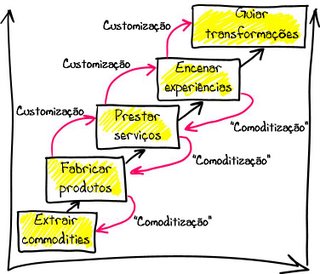
Neste postal de Novembro passado "Ver o filme dos últimos anos..." publiquei esta figura deliciosa:


Entretanto, estou a começar a ler o livro onde está publicada, "Tilt - Shifting Your Strategy From Products to Customers" de Niraj Dawar.
.
Lembrei-me desta foto por causa desta notícia "Associação Faltam meios para tornar arroz do Mondego competitivo":
"defendeu hoje a necessidade de os orizicultores do vale do Mondego criarem uma central de secagem e de armazenamento de arroz comum para serem mais competitivos.
...
"A elevada quantidade de variedades de arroz carolino" contribuiu igualmente para a dificuldade de afirmação do produto, alertou, durante a conferência, Mário Coelho, defendendo que "grande parte da sustentabilidade" do setor no Mondego passa pela seleção e aposta numa muito reduzida gama de variedades.
.
"A escolha e aposta numa variedade não é fácil" e chegar a um entendimento sobre a variedade de carolino que garante mais qualidade e rentabilidade e convencer os produtores dessa necessidade "é trabalho para anos", advertiu.
.
No vale do Mondego "temos variedades interessantíssimas de [arroz] carolino para o mercado interno e para exportação", desde que "consigamos promovê-lo" e produzi-lo em condições capazes de competir, sublinhou Mário Coelho."
 Toda a concentração está a montante da interacção com o cliente... já por mais de uma vez dei comigo a pensar:
Por que não contratam o Jamie Oliver et al? Meia dúzia de influenciadores em programas de televisão, a fazer receitas com arroz carolino onde ele faz sentido, poderiam ter mais peso do que esta concentração a montante e não na mente dos consumidores

"E isso assusta-me"

Sabem o que por aqui se tem escrito ao longo dos anos sobre Mongo, sobre um futuro de PMEs, e mesmo artesãos modernos, para servir um mundo cada vez mais povoado por tribos e com cada vez menos gente dentro da caixa, o tal estranhistão.
.
Por isso, sorrio ao ler isto:
"o caminho da economia passe a estar no futuro menos ligado a capital estrangeiro e grandes empresas."
Está escrito nas estrelas.
""Eu acho que o ciclo que vamos ter não vai ter essas grandes empresas, criadas por investidores estrangeiros e que mudaram acentuadamente perfil da economia". "Eu gostava que tivesse", assumiu, mas tal dificilmente vai acontecer, defendeu. "De futuro, "não vai haver grandes empresas. Receio que não se possa ir por aí", disse. "E isso assusta-me", reconheceu." [Moi ici: Mongo mete medo aos incumbentes, aos formatados no século XX]
E ainda:
"O caminho da economia portuguesa "será feito por muitas e pequenas e médias empresas". Porque para a economia do País crescer 3% ao ano, contextualizou o economista e líder da COTEC "eu preciso de três indústrias de calçado por ano de crescimento"." 
BTW, recomenda-se a Daniel Bessa a leitura do artigo mencionado em "O offshoring mudou o mundo"
.
BTW1, estas empresas grandes que são muito boas para o PIB e acarinhadas pelos políticos com benesses fiscais, são muito pouco criadoras de emprego.


Trechos retirados de "Daniel Bessa: Para crescer 3% Portugal precisa de mais três indústrias do calçado por ano"

"The severely underserved segment of customers"

Se calhar, agora que os modelos low-cost estão tão em voga, talvez faça sentido pensar nos modelos de negócio destinados aos clientes underserved:
"The profit share strategy, by contrast, addresses a highly underserved population that’s willing to pay much, much more to get a job done significantly better than is currently possible. Here’s how it works:
.
It starts by identifying the focal segment of highly underserved customers. These customers, who may comprise as little as 10 percent of the market, are highly underserved because the products available today fail to consider their unique situation. While executing the same job (task) as others, these customers are different: they face complexities that others do not; they face unique obstacles; they are forced to push the envelope; failure is not an option; they seek perfection. Consequently, they struggle more than others to execute their job-to-be-done and will pay a lot more for a solution that delivers.
.
A company enters this market by offering these underserved customers a product that will help them get their job done significantly (20 to 30 percent) better than any existing alternative. Because its solution is so much better and the need is so great, the company is able to price its new product two to five times higher than the products it is competing against. While this pricing strategy alienates most of the market, the severely underserved segment of customers is willing to pay."

Trecho retirado de "The Profit Share Strategy – Part 1"

Acompanhar o dinamismo do sector

Outra sugestão de leitura do André Cruz, "O sucesso passa pela compra e não pela venda", na revista "Portugal Inovador" deste mês.
.
O título atrai, fico logo a pensar na diferença entre vendedor e consultor de compra, embora o sentido seja outro.
.
No entanto, vários outros trechos são interessantes porque se encaixam na narrativa que seguimos para perceber o que se está a passar no têxtil nacional. Por exemplo:
""Antigamente, a região de Barcelos era, maioritariamente, conhecida pelo fabrico de malhas de algodão, recorrendo a acessórios de baixo custo. Atualmente, este setor está a exportar peças de grande qualidade, exigindo acessórios equiparáveis, corrobora José Durães.
...
"Gostaríamos de ter um crescente número de parceiros nacionais, mas, infelizmente, a sua capacidade de resposta é diminuta", declara José Durães. [Moi ici: Queixa comum no calçado e na metalomecânica]
...
Hoje o cliente compra em menor quantidade, mas uma maior variedade de artigos. [Moi ici: Pequenas séries, rapidez, flexibilidade, variedade... não é novidade para este blogue] Trabalhando mais, oferecendo uma maior diversidade de produtos, tudo isto assente numa gestão extremamente rigorosa, hoje o grande segredo do nosso sucesso passa pelo poder de negociação na compra e não pela venda", afirma a empresária."
Por fim, um pormenor delicioso que me fez logo lembrar a Zappos:
"Com uma grande capacidade de resposta a Edite Sousa. Lda opta por não agrupar encomendas com vista à rentabilização dos custos, garantindo uma capacidade de resposta em 24h."
Em "Não existem boas-práticas!!!"
"The most efficient way to run a warehouse is to let the orders pile up, so that when a worker walks around picking up orders, the picking density is higher and the worker has less distance to walk. But we're not trying to maximize picking efficiency.
We're trying to maximize the customer experience, which in e-commerce involves getting orders out to customers as quickly as possible."


Parem as rotativas!!! Parem as rotativas!!! Elas chegaram!!!

Hoje tenho o dia dedicado a escrever relatórios, preparar uma apresentação e desenhar o esqueleto de outra. Então, antes de começar, resolvi seguir as indicações de Medina e começar por oxigenar o cérebro fazendo 10 km (logo à noite faço outros 10).
.
Aí por volta do sétimo quilómetro... olho para o lado, para um futuro campo de milho, agora coberto do amarelo de inúmeras flores silvestres e, vejo-as a voar em esquadrilha provocando razia na mosquitada... as minhas primeiras Delichon urbicum (andorinhas dos beirais) do ano:


Um povo de comerciantes

Muitas vezes usamos, a começar por mim, a figura de Oliveira de Figueira
com uma conotação negativa.
.
Por que é que Hergé terá criado o português Oliveira de Figueira, o comerciante que aparece nos sítios mais exóticos a fazer negócio?
.
Recordo a nota pessoal de Martin Page no seu livro "A Primeira Aldeia global":
"Foi a primeira vez que, pelo menos conscientemente, me tinha cruzado com portugueses [Moi ici: Que em pleno Congo em revolta o tinham acabado de salvar] - um primeiro encontro, não apenas com a sua extraordinária disponibilidade para ajudar um estrangeiro em apuros, mas também com o seu misto de fanfarronice, honra, ingenuidade e sangue-frio" 
Um povo que é comerciante há mais de 500 anos não precisa de seguir o caminho da inovação germânica ou da escala americana, para conseguir fazer negócio. Basta ouvir, basta estar disponível para ouvir, interagir, calçar os sapatos do cliente e fazer algo à medida.
.
Não pude deixar de pensar nisto ao ler, por sugestão do André Cruz, "Indinor cria rede de agentes na China":
"A unidade química de Famalicão fornece no exterior a indústria de curtumes e calçado e não receia enfrentar os fabricantes locais, que vendem aplicativos semelhantes a metade do preço. A vantagem reside na "confiança que inspira a origem europeia e no rendimento do produto", diz Rui Faria, presidente da empresa. A base de Famalicão tem sempre os seus técnicos a viajar para dar formação aos clientes e adaptar a aplicação dos produtos às especificidades regionais. Por exemplo, há zonas da índia em que a pele é ainda posta a secar ao sol. Um dos segredos "é fornecer soluções à medida", beneficiando da flexibilidade das suas linhas de produção. Por isso, a sua ação não dispensa a consultoria técnica e os seus especialistas "envolvem-se frequentemente na definição das condições de operação e no desenvolvimento de novos processos para o tratamento do couro ou tecidos"

segunda-feira, março 24, 2014

Curiosidade do dia

Ainda a propósito de "e, seis meses depois de Agosto de 2013" e desta notícia:

Na semana passada estive em 4 empresas de 4 sectores distintos, as 4 criaram postos de trabalho em 2014.
.
Hoje, alguém que opera no sector não-transaccionável e não-alimentar falava-me de uma ligeira retoma na procura.

Subida na escala de valor

"The competitive landscape for European machinery manufacturers - makers of traditional machinery (such as engines and turbines) as well as optical products and electronics - is changing rapidly. Chinese challengers are increasing their presence in developed markets and growing their businesses throughout the value chain. Once dismissed as low-end upstarts, Chinese machinery makers have built up their capabilities and now compete head-to-head with multinational companies on their home turf as well as in emerging markets.
...
To avoid being overrun by aggressive challengers from China, European machinery manufacturers need to understand the new competitive landscape and develop an effective response to the emerging threats.
...
Chinese challengers will continue to use these strengths to build momentum. In this new competitive landscape, European companies can expect to see their traditional advantages diminish in areas such as advanced technology, brand strength, quality and reliability, and familiarity with customers. [Moi ici: Este último trecho é que não passa no teste... as empresas que não continuam a investir na tecnologia e a complementar isso com o aumento do peso da interacção, da familiaridade com os clientes... não irão longe. O futuro tem de passar pela co-criação, se não passa pela co-criação, a experiência é menorizada, se é menorizada, a commoditização está instalada e a China ganha]"


Trechos retirados de "Gauging the Chinese Threat to European Machinery Makers"

Quantas cenas?

""Sempre estimulei o crescimento económico", contrapôs à ideia "perigosa" da austeridade "que conduz ao descontrolo da dívida". "Por que é que um Governo que se concentra apenas na austeridade tem estes resultados?", atacou, descrevendo que a dívida e o défice continuaram a aumentar."
Quantas "cenas" conseguem detectar neste trecho?
.
É uma delícia!!!
.
Primeiro a cena do Homo Estimulus, como se o crescimento económico assente em "assar sardinhas com o lume de fósforos", torrando dinheiro dos contribuintes futuros, fosse algo a colocar em qualquer CV.
.
Depois, a austeridade conduzir ao descontrolo da dívida... que descaramento.
.
Depois, a dívida e o défice continuarem a aumentar... não me digam que os 76 mil milhões não estavam no MoU. Ou será que segue a Ana Sá Lopes School of Economics e quer que a dívida baixe ao mesmo tempo que quer que o défice suba?
.
Trecho retirado de "Sócrates irrita-se: "Não vinha preparado para isto""

Modelos mentais obsoletos continuam expostos nas melhores (?) prateleiras

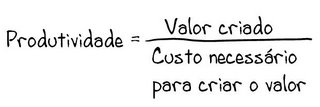
A propósito de "Should Your Business Be Less Productive?", onde se pode ler:
"In service businesses, increased productivity does not always translate into higher profits."
Ui, isto vai contra tudo!
.
Então não devemos aumentar a produtividade de um serviço? Claro que devemos, o autor é mais um encalhado no mundo da tríade. Reparem neste trecho:
"Many contemporary businesses are on a quest for productivity gains. They seek to maintain quality and quantity of output at ever-decreasing cost, yielding higher profitability. As advanced economies move more into the service sector, that means many managers devote a lot of attention to designing automated processes that reduce the need for people — typically their most expensive resource." 
Qual é o erro-base desta análise?
.
.
.
A manutenção do output!
.
Se o output é o mesmo, se não se pode aumentar o preço de algo que se mantém constante ao longo do tempo, para aumentar o lucro temos de aumentar o ritmo da produção, temos de reduzir custos, temos de aumentar a eficiência. Essa é a única forma de aumentar a produtividade, quando se depende desse modelo mental. Acabo de passar por uma loja "Grab & Go" em Soares dos Reis-Gaia, esse é o destino, a commoditização total.
.
Qual é a alternativa?

Quem presta serviços, para fugir à commoditização, tem de saltar para as experiências. Tem de oferecer uma oferta diferente com mais valor acrescentado potencial.
.
A falha do modelo mental do autor do artigo é desmontado aqui.
.
Um artigo destes na revista do MIT só ilustra como estes modelos mentais estão impregnados nas escolas... professores que continuam a moldar e enformar alunos no modelo económico do século XX.

Lidar com o crescimento de uma plataforma

A revista Harvard Business Review deste mês de Abril traz um interessante artigo, de Hanna Halaburda e Felix Oberholzer-Gee, intitulado "The Limits of Scale".
.
Membro-me de na BSC Euro Summit 2004, Kaplan e Norton falarem de 4 estratégias genéricas:
  • o preço ou custo mais baixo;
  • serviço à medida;
  • inovação ou moda; e
  • lock-in
Acho que nunca escrevi sobre esta última estratégia genérica, lock-in, Um exemplo clássico é o da língua inglesa, quanto mais gente fala inglês como língua de negócios; mais atraente fica a língua inglesa como língua de negócios, e assim por diante.
.
Neste artigo, os autores dão pistas interessantes sobre como fazer face a um padrão estabelecido e, assim, poder "roubar" clientes.
.
Quem monta um negócio baseado numa plataforma assente no lock-in, quer crescer muito rapidamente na fase inicial, para diminuir as possibilidades de aparecimento de outra plataforma concorrente. Em alguns desses negócios a coisa não corre bem:
"In rapidly scaling, the company neglected to take into account differences among its customers. [Moi ici: É tão interessante que seja este o culpado, a heterogeneidade do mercado] In the following pages we'll explore how both incumbents and new entrants can take advantage of customer differences to challenge seemingly secure competitors and fuel growth in markets with network effects.
...
Our analysis reveals that customer groups can differ in two important ways:
Mutual attraction. Even in markets with net-work effects, not all customers benefit from the presence of every other customer.
...
Asymmetric attraction. In any network, some customers are more equal than others.
...
Indiscriminate growth often undermines the very network effects you're trying to achieve. That's why developing a finer understanding of customer differences can lead to better strategic decisions, for both new entrants and incumbents.
...
THE STRENGTH of network effects can be as varied as the human beings who make up the network. A strategy that fails to take into account this variation - ignoring differences in mutual and asymmetric attrac-tion among customers - is likely to fail. It is the rare and lucky firm that prospers simply by being first and getting big fast. In nearly any market with network effects, customers will find the presence of too many of the "wrong" sort of people a distinct turnoff. Welcome to the networked economy - perhaps not so different from the old economy after all."

domingo, março 23, 2014

Um número interessante

"The strength of exports is puzzling, given that Portugal has clawed back only some of the competitiveness it lost in the first decade of the euro. One reason may be that the economy is benefiting belatedly from pain in the early 2000s, when Asian competition hurt former mainstays of the industrial economy like textiles. Adjusting to such a shock takes time as new ventures provide fresh sources of growth. An encouraging sign is that firms set up after 2000 contributed a quarter of exports in 2012, according to the Bank of Portugal."
Trecho retirado de "Final call"
.
BTW, este artigo "Could Portugal be the next Germany?" está cheio de treta ao querer justificar o desempenho da economia com base nos CUT... pois, é ver o caso do calçado, do têxtil, do mobiliário, é mesmo por causa dos custos do trabalho
"But with labour costs now dropping, Schulz thinks Portugal will be competing increasingly with eastern European countries, with labour costs approaching those of the Czech Republic: “The crisis has widened the difference with core Europe again and narrowed it with the east.”"

"the Internet on crystal meth" e Mongo (parte VIII)

É meter código nisso.
.
"Innovation: Floor Tiles That Can Monitor the Health of the Elderly"
.
Vamos aplicar o teste:
.
Quem são os clientes-alvo?
"hospitals and physical therapists"
.
Que problema estão a resolver?
"evaluates a walker’s health based on footstep patterns. The tile system’s cloud-based analytics can provide health updates via smartphone and assist caretakers for the elderly"
.
É melhor do que a opção analógica?
Aumenta a produtividade dos profissionais de saúde. E, no caso de aplicação em casa, melhora o acompanhamento dos idosos sozinhos... faz-me lembrar a balança e a sanita com código da Caremore.

5 recomendações pós-crise

"In any kind of economic, political, or corporate crisis, it's doubly difficult to resist the urge to fight fires. But the reality is that managing for the short-term never breeds greatness. And doing so has left a lot of companies in a tough spot. They survived the crisis, but they don't have the headroom or resources to fuel long-term growth.
...
Stay true to who you are and resist the urge to chase others
The things that make companies truly great are slow to develop; they can't be built overnight. If they could, they wouldn't be worth very much, because anyone could copy them. The most capable companies know who they are and understand the job they are uniquely qualified to do in the market. They clearly define how they add value to their customers and use their identity to drive growth over the long-term.
...
Don't wait for customers to tell you what they want—influence them
Instead of chasing growth by responding rapidly to what consumers say they want or need, change the game. Proactively create demand by getting out in front, shaping the wants and redefining the needs of your customers.
...
Trade benchmarking and best practices for capabilities
If every company focuses on benchmarking and functional excellence (doing the same things better and better), they'll all end up in the same place—fighting for an ever-smaller share of the same market. Instead, spend your efforts building the handful of distinctive capabilities that your company does better than anyone else.
...
Stop restructuring and put your culture to work
There were a raft of reorganizations during the downturn. All too often, a reorg is really a backdoor attempt to solve a culture problem and reengineer success. Unfortunately, it rarely works because corporate culture is notoriously sticky. Culture always wins when you try to restructure it away or execute strategies that run against it. Instead of fighting your culture, leverage what's great about it and the unique way you get work done and create value for your customers.[Moi ici: A lição de Lincoln]
...
Invest no matter what—but funnel money where it matters most
Companies make three classic mistakes in their investments. They relentlessly take out costs across the board to improve profitability. They dilute their investment dollars by making bets on dozens of new projects, hoping that one will win. Or they stop investing completely when times get tough. None of these work. The approach that really pays off is to surgically and strategically cut costs. And then redirect money to invest more in the core capabilities that drive your profits. This allows you to cut costs and grow stronger at the same time."

Trechos retirados de "Booz & Company CEO: You survived the financial crisis. Now what?"

A propósito do "é meter código nisso"

A propósito da série e do desafio de "meter código nisso"

"Who is my growth customer?.
As basic as it sounds, the first step in understanding customer needs is identifying your real customer. Although attracting early adopters is essential for early success and encouraging virality, growth customers - the people who are likely to buy the next generation of products - are crucial for building a sustainable business.
...
What problem am I actually solving?.
With the growth customer identified, the next step is to develop a strong understanding of the problem to solve, especially through exploratory research with potential users. Traditionally, designers have promoted ethnographic approaches with extreme users, while Lean Startup practitioners advocate for just “getting out of the building.” In either case, the general logic is the same: go talk to some real people. Understanding which problem is especially important in IoT: as advances are made in computing power, battery life, and network infrastructure over time, the problem a company is focused on solving provides a North Star for evolving the product roadmap and the overarching business, too.
...
How is this better than analog?.
Through sensors and the cloud, connected devices allow companies to build experiences that have a richer interaction and more meaningful connection with the customer, his or her devices, and the environment around them. But that direct relationship requires the voluntary exchange of personal data and some loss of anonymity – and the benefit of that exchange in value must be clear to users."
Trechos retirados de "Do People Really Want Smarter Toothbrushes?"

sábado, março 22, 2014

Guião para um político da oposição

"Porque sou o cavaleiro andante
Que mora no teu livro de aventuras
Podes vir chorar no meu peito
As mágoas e as desventuras
...
Porque sou o que chega e conta
Mentiras que te fazem feliz
E tu vibras com histórias
De viagens que eu nunca fiz"

Trechos retirados de "Cavaleiro andante" de Rui Veloso.

É mais fácil dizer que a culpa é dos alemães

"a team from the Organisation of Economic Cooperation and Development identified last year, as part of an 11-month investigation commissioned by the Greek government. In its report the OECD made 329 recommendations for rules that should be changed to open up competition and give a much-needed boost to the economy.
.
Quantifying the cost of these restrictions is a difficult task, but in 66 cases, the international experts did figure out a way to do so. Eliminating them would lead to a positive effect on the Greek economy of 5.2 billion euros, or just over $7 billion, they calculated.
...
In many European nations, a similar patchwork of rules limit competition, protect existing monopolies or otherwise restrict businesses for sometimes archaic reasons. [Moi ici: Realmente, aquela lista de constrangimentos absurdos... parece-me ter reconhecido alguns que se praticam por cá]
...
Even by European standards, Greece stands out as having especially tangled regulation and glaring inefficiencies.
...
But changing that state of affairs is controversial. Many argue that tradition is more than just a question of economics, but a way of life. ... On March 10, the Panhellenic Pharmacists’ Union began a two-day strike to protest the plan to allow supermarkets to sell aspirin and some other drugs, holding up placards in central Athens reading “health is a human right.” Among their arguments: consumers may unwittingly overdose if drugs become easier to purchase.

A Grécia era a Terra Prometida das corporações, sindicatos, estadinho e crony capitalismo

Trechos retirados de "Why regulation — on yogurt and more — is blocking Greece’s recovery"

Forças anti-Mongo

Se na América que, apesar de ser cada vez mais socialista, ainda é a América, existem estas forças anti-Mongo "The Fight Over Tesla Shows How Little Value Dealerships Add", como será na Europa e em Portugal, onde tudo se faz de forma mais camuflada.

Um nicho, um target, um produto

"Da empresa têxtil tradicional ficou-lhe apenas o nome herdado de 1974, quando António Ferreira abriu a fábrica e lhe deu o nome das duas filhas: Sónia e Carla. Hoje, a fábrica de Vila Nova de Famalicão nem parece uma empresa têxtil tal é a tecnologia envolvida. Especializada no nicho de vestuário sem costuras (que tem o nome técnico de 'seamless') tem nos desportistas o seu target.
.
"Tudo começou em 2010 'quando a tecnologia do têxtil sem costuras vocacionada para roupa interior [Moi ici: Reconversão de uma economia é isto multiplicado por muitas decisões individuais. Em vez de continuar a torrar dinheiro num modelo de negócio que ficou obsoleto, mudar de produto, de proposta de valor, de clientes-alvo, de marketing, de orientação estratégica] foi comprada conjuntamente com o nome à antiga Malhas Sonicarla. Iniciou-se de imediato a reconversão tecnológica para a actual vocação, a produção de têxteis de elevada tecnicidade", conta Pedro Silva."
A Sonicarla só vende para atletas de alta competição?
Julgo que não. Se calhar os atletas de alta competição nem compram os artigos da Sonicarla.
Os atletas da alta competição são influenciadores dos utilizadores que compram Sonicarla.
Recordar o recente:
""But if I aim at one type of customer, won't I miss some of the people who would make really good customers?" The answer to that is, "Yes, but."
.
It's almost a paradox, but if you do a good job of target marketing – aiming at the center of the target – you're likely to attract more good customers, not less."
Durante quase dois anos fazia diariamente a viagem do Porto para Guimarães numa camioneta da empresa onde trabalhava. Lembro-me de parar em Joane, onde entrava e saia gente, consoante a direcção da viagem. Do outro lado da estrada ficava Mogege onde se situava a Sonicarla. Recordo que era uma fábrica com alguma dimensão, até chegou a estar registada no EMAS, o que dá muito mais trabalho do que ser certificado ISO 14001. Por isso, este trecho:
"Desde então, a pequena fábrica que dava emprego a apenas duas pessoas passou para os actuais 131 trabalhadores." 
Desperta-me a curiosidade, o que terá acontecido para, em 2010, estarem reduzidos a duas pessoas?
.
Entretanto, enquanto os media falavam de crise, de recessão, de austeridade, de ser impossível viver assim... enfim, o choradinho do costume:
"O volume de negócios aumentou 46,6% de 2012 para 2013, tendo passado de 2,8 milhões de euros para 4,1 milhões."
Por fim, como podia não sublinhar isto:
"O projecto desenvolveu-se sem qualquer apoio estatal, comunitário ou bancário, apenas apoiado com os cash-flows gerados." 

Trechos retirados de "O orgulho de vestir atletas famosos de alta competição"

e, seis meses depois de Agosto de 2013


Evolução do número de desempregados inscritos nos Centros de Emprego entre Janeiro de 2011 e Fevereiro de 2014:

A evolução homóloga do desemprego e a evolução mensal do desemprego entre Janeiro de 2011 e Fevereiro de 2014:

A figura que se segue tira uma fotografia da evolução homóloga do desemprego em Fevereiro de 2014 e, mostra onde está a ser criado emprego líquido (barras negativas):

Em Janeiro de 2013 havia 1 barra negativa, 18 em Outubro, 19 em Novembro, 21 em Dezembro e 24 em Janeiro e Fevereiro de 2014. As ofertas de emprego no IEFP em 2014 aumentaram mais de 72% (58% na comparação homóloga do mês passado) o mês passado em comparação com o mês de Fevereiro de 2013.
.
Situação e oposição são duas equipas que se defrontam constantemente, a economia sustentável deste país é como o árbitro, faz o seu próprio jogo, está noutro campeonato.
.
Interessante... só se fala dos Açores por causa das benesses concedidas aos funcionários do Estado. No entretanto, o desemprego por lá continua a subir.

sexta-feira, março 21, 2014

Diferenciação em função do preço

Eu já sabia isto, há anos que trabalho, falo e escrevo sobre isto. Contudo, creio que este discurso que se segue é tão claro, que acaba por remover algum nevoeiro:

"differentiation can be seen by customers as a distance, as a lack of closeness to substitutes.
...
A more quantifiable way is to see it as the reciprocal of price sensitivity
...
The more differentiated an offering is, the less its sales will depend on customers’ price comparisons.
A highly differentiated offering may appeal to a comparatively narrow group of customers, but those customers will see no close substitute, and will not choose a substitute because it has a slightly or moderately lower price. The price difference would have to be commensurately high to affect their choice.
Price sensitivity measures how sensitive the sales volume of an offering is to marginal changes in price differentials between that offering and its substitutes. It therefore indirectly measures the price consciousness of the customers.
In a limiting case, the degree of differentiation is zero or infinite. Where it is zero, the offerings are homogeneous and the slightest price difference would shift customer choices. Where it is infinite, ... the offerings are not substitutes at all and no price difference would shift choices.
The phenomenon of the discounter illustrates the usefulness of treating differentiation as the reciprocal of price competition."

Trechos retirados de "Creating Value Successful business strategies" de Shiv S. Mathur e Alfred Kenyon.

Apostar nas experiências

"ReD trained a group of adidas design staff in basic techniques, and sent each of them to spend 24 hours with a customer: to have breakfast, run and do yoga with them, and find out what made them exercise. In a related project, an anthropology doctoral student working for ReD mailed dozens of customers a disposable camera, asking them to photograph something that made them work out. Of 30 women who responded, 25 sent a picture of a little black dress, says Mr Carnes. The company had assumed that most customers were training to be good at specific sports; in fact for many, fitness itself was their “sport”."
Em vez de apostar em atributos:
"A mobile phone, he said, may have 72 functions, but that is 50 more than most people wanted, or used." 
Apostar nas experiências, apostar no que a oferta faz na vida das pessoas.

Trecho retirado de "The adidas method"

Comunicar um aumento de preço

"Whatever your reason--and we’re sure it’s a damn good one--you have to raise your prices. Just don’t share the whole truth with your customers.
...
1. Tell them what they stand to gain.“Explain the reasons that [the increase will] benefit the customer: added content, additional service, or support,”
...
2. Show your worth.Along similar lines, pricing-strategy expert Rafi Mohammed writes in an HBR Blog Network post: “Make it a point to reinforce that even with the price increase, your product or service is still a great deal.
...
3. Play favorites.In an Inc. column, sales consultant Tom Searcy suggests that it’s important to let your biggest clients and customers know about the increase early to soften the blow. “It’s a mistake to let them get the news through an email or a salesperson,” Searcy writes. “A price increase, even if understandable, is still going to be seen as bad news--so it should be communicated executive to executive, not couriered by frontline people.”
.
4. Be flexible.“No one likes being cornered with a ‘take it or leave it’ ultimatum,” Mohammed writes. “A price increase is more palatable if there is an option to save money. Even if you don’t expect anyone to take the cheaper option, offer it anyway. Consumers appreciate choices.” Mohammed goes on to suggest that offering “silver” or “gold” product packages with increased offerings to the customer may work better than offering an across-the-board price hike."
Agora começar com a história dos custos, para justificar um aumento de preço ... not good

Preparar o depois de amanhã

Há tempos numa rádio, para animar o nacional-pessimismo, uma jornalista transmitia entrevistas, no pequeno comércio de Penamacor, onde os comerciantes faziam o seu choradinho e, queixavam-se das migrações dos novos e do envelhecimento dos seus clientes para justificar o pouco negócio que tinham. Pena que a senhora não tenha entrevistado os franchisados do Minipreço que abriu há pouco mais de um ano, ou não tenha analisado o impacte do Intermarché de Idanha...
.
Lembrei-me disto ao recordar as montras que apreciei na terça-feira em São João da Madeira, na rua que era o antigo coração da cidade, quando era Estrada Nacional nº 1. As montras tinham ficado congeladas no tempo e ainda apresentavam os mesmos modelos e cores que teriam feito furor em 1970... as peúgas Lassie, os lenços Poker, as camisas... Na altura perguntei em voz alta:
- Quem é que compra aqui?
O Aranha respondeu logo:
- As avós compram aqui as prendas de Natal, ou de aniversário...
Entretanto, ontem ao final da tarde, o Aranha mandou-me o link deste artigo "The Strategic Mistake Almost Everybody Makes" e, depois de ler, julgo que está tudo ligado.
"Every business and business model has a finite life. Products come and go. Customer preferences change. As Rita Gunther McGrath notes, competitive advantage is increasingly a transient notion. The companies that last over long periods of time do so by creating new products, services, and business models to replace yesterday’s powerhouses.
...
Companies need to make sure they balance investment in strengthening today’s business with investment in creating tomorrow’s."
E a sua PME que opera no B2B, está a preparar o depois de amanhã?

quinta-feira, março 20, 2014

Curiosidade do dia

O @jcaetanodias esteve muito feliz com o título:

  A Internacional Jarreta!!!


Interessante esta postura "“Devia ser constitucionalizado um limite à pressão fiscal”" sem uma palavra sobre a constitucionalização de limites à despesa.

Acerca da estratégia (parte II)

Parte I.

"ESCAPING THE TRAPS...
Rule 1: Keep the strategy statement simple. Focus your energy on the key choices that influence revenue decision makers-that is, customers. They will decide to spend their money with your company if your value proposition is superior to your competitors’. Two choices determine success: the where-to-play decision (which specific customers to target) and the how-to-win decision (how to create a compelling value proposition for those customers).
...
Rule 2: Recognise that strategy is not about perfection. As noted, managers unconsciously feel that strategy should achieve the accuracy and predictive power of cost planning – in other words, it should be nearly perfect. But given that strategy is primarily about revenue rather than cost, perfection is an impossible standard. At its very best, therefore, strategy shortens the odds of a company’s bets. Managers must internalise that fact if they are not to be intimidated by the strategy-making process.
...
For that to happen, boards and regulators need to reinforce rather than undermine the notion that strategy involves a bet....
Rule 3: Make the logic explicit. [Moi ici: Mapa da estratégia faz soar a campainha?] The only sure way to improve the hit rate of your strategic choices is to test the logic of your thinking: For your choices to make sense, what do you need to believe about customers, about the evolution of your industry, about competition, about your capabilities?"


Trechos retirados de "The big lie of strategic planning"

não é o que fazem, é o resultado

Ultimamente tenho visto tantas referências ao tema:

"But your customers don’t want to know what you do. They want to know how you’re going to enable them to do what they want to do."
Bem na linha da service-dominant logic, o que um fornecedor oferece é um recurso para que o cliente o integre na sua vida, para experienciar algo procurado e valorizado.


Trecho retirado de "We Need To Stop Telling Customers What We Do"

Os trunfos a funcionar

A propósito de "Ecco reforça produção na Feira e vai contratar mais 300 trabalhadores", recordar "Em vez de domesticar o consumidor, para que não tenha ideias parvas..."
.
Os trunfos a funcionar: proximidade; flexibilidade; rapidez; "made in Portugal"; pessoas competentes

As dimensões da diferenciação (parte I)

É possível distinguir duas dimensões ao longo das quais uma oferta pode ser diferenciada. Podem ter haver com a dimensão do produto ou com a dimensão do suporte. Os atributos que os clientes vêem como a forma como o fornecedor os ajuda a escolher, obter e usar uma oferta, constituem a diferenciação pelo suporte. Todos os outros atributos que os clientes vêem como diferenciadores podem ser tratados como diferenciação pelo produto.
"even the most common, even the most ‘commoditized’ offerings like paperclips can be differentiated in the support dimension, and command a price premium in a smaller, less competitive private market."
Nem sempre os empresários estão a despertos para a dimensão do suporte...
.
A diferenciação é uma questão de grau. Em cada uma destas duas dimensões, suporte e produto, podemos seleccionar um grau maior ou menor de diferenciação. O que nos dá quatro situações-base de estratégias competitivas:

Trechos baseados em "Creating Value Successful business strategies" de Shiv S. Mathur e Alfred Kenyon.

E a sua empresa, também tenta impingir peixe podre?

A imagem metafórica que Seth Godin usa neste texto "The rotten fish problem" é tão comum...
.
Por que é que um empresário não se livra do peixe pouco fresco ou mesmo podre?
.
Já o escrevi aqui várias vezes. Por exemplo, por vergonha! Livrar-se do peixe pouco fresco significa prestar menos serviços ou vender menos serviços, significa reduzir a dimensão da empresa, para que esta se concentre nas actividades lucrativas e não na quota de mercado que faz perder retorno, recordar a curva de Stobachoff.
.
Há dias almoçava com alguém que só quando a sua empresa ficou com menos de um terço da dimensão que tinha em 2010, pressionado pelas circunstâncias, é que começou a livrar-se de serviços que prestava e com os quais perdia dinheiro.
.
Desde 2010 que fazia orelhas moucas aos avisos dos seus colaboradores e, só perante uma situação de "burning platform" é que cedeu.

quarta-feira, março 19, 2014

Curiosidade do dia

Já vejo o filme do próximo governo PS:
"Apesar de ter discordado [do Governo PSD/CDS-PP], o tempo passou e houve uma decisão que agora não deve ser alterada", disse José Sócrates, António José Seguro, [colocar aqui nome de peão do Coiso] voltando a invocar a importância de Portugal ter "estabilidade no seu sistema fiscal".

Os anti-Muhammad Saeed al-Sahhaf

Eheheh "Carlos Silva: Situação de Portugal não tem melhoras"
.
Entretanto:
"Em Portugal, o indicador de clima económico prolongou em fevereiro o perfil ascendente observado desde o início de 2013, fixando o valor mais elevado desde novembro de 2010. O indicador de atividade económica voltou a aumentar em janeiro. A informação proveniente dos Indicadores de Curto Prazo (ICP) revelou, em janeiro, uma diminuição homóloga menos intensa da atividade económica nos serviços e na construção e obras públicas e um ligeiro aumento da produção na indústria. O indicador quantitativo do consumo privado aumentou de forma ténue em janeiro, refletindo a aceleração da componente de consumo duradouro."
Os anti-Muhammad Saeed al-Sahhaf não percebem que o exagero na propaganda é contra-producente?

"Giant opportunities encourage bad strategy"

Gosto tanto do trecho que segue.
"GIANT OPPORTUNITIES ENCOURAGE BAD STRATEGY Companies in many industries prefer a small slice of a huge market to a large slice of a small one. The thinking is, of course, that the former promises unlimited growth potential. And there’s a certain amount of truth to that. But all too often, the size of the opportunity encourages sloppy strategy making. Why choose where to play or how to win when there’s a huge market to conquer? Anybody is a potential customer, so just go out and sell stuff.
.
But when anyone could be a customer, it is impossible to figure out whom to target and what those people actually want. The results tend to be an offering that is not captivating to anybody and a sales force that doesn’t know where to spend its time. This is when crisp strategy making and clear thinking about opportunities are most important.
.
When you’re facing a huge growth opportunity, it is smarter to think sequentially: Determine what piece of the overall market to tackle first and target it precisely and relentlessly. Once you’ve achieved a dominant position in that segment, expand from there into the next, and so on."
Lembrar os que querem estratégias europeias.
Lembrar os que querem estratégias nacionais.
Lembrar os que querem estratégias sectoriais.
.
Lamentar isto:
"Companies in many industries prefer a small slice of a huge market to a large slice of a small one."
Lamentar as vezes em que não tive habilidade suficiente para conseguir passar esta mensagem.

Como em Mongo small é mesmo beautiful

Mais um artigo com pistas que apontam para Mongo.
.
Primeiro, o sucesso da Chobani face à Big Food, ou como um emigrante turco, a partir de uma fábrica fechada por um dos Golias do sector, conquistou as prateleiras frequentadas pelos apreciadores de iogurte.
.
Depois, alguns pormenores:
"End your obsession with ingredient cost. Big Food [Moi ici: Golias] favors products with big gross margins — in part so that they have more to spend on needed marketing and promotion. One of the reasons that Big Food didn’t like Greek yogurt early on is because it costs more to make and contains less water than regular yogurt.
...
Great products can command premiums, and become popular with very little marketing spend.
...
Put the product ahead of the brand. Brand management has hijacked the most important part about food: the product. Food companies constantly narrow their focus on how to convey what the product means rather than what the product is. ... Branded food companies should invest more in innovation and less on brand marketing.
...
Learn the art of “small ball.” Giant companies like P&G and Unilever tend not to be interested in product launches unless they offer hundreds of millions in potential revenue."
Estes exemplos deviam ser mais divulgados para mostrar como no mundo de hoje, como em Mongo, small é mesmo, pode mesmo, ser beautiful.

Trechos retirados de "Why the Greek Yogurt Craze Should be a Wake-Up Call to Big Food"

Acerca da estratégia (parte I)

"All executives know that strategy is important. But almost all also find it scary, because it forces them to confront a future they can only guess at. Worse, actually choosing a strategy entails making decisions that explicitly cut off possibilities and options. An executive may well fear that getting those decisions wrong will wreck his or her career.
.
The natural reaction is to make the challenge less daunting by turning it into a problem that can be solved with tried and tested tools.
...
COMFORT TRAP 1: STRATEGIC PLANNINGVirtually every time the word “strategy” is used, it is paired with some form of the word “plan,” as in the process of “strategic planning” or the resulting “strategic plan.” The subtle slide from strategy to planning occurs because planning is a thoroughly doable and comfortable exercise.
...
COMFORT TRAP 2: COST-BASED THINKINGThe focus on planning leads seamlessly to cost-based thinking. Costs lend themselves wonderfully to planning, because by and large they are under the control of the company. For the vast majority of costs, the company plays the role of customer.
...
COMFORT TRAP 3: SELF-REFERENTIAL STRATEGY FRAMEWORKSThis trap is perhaps the most insidious, because it can snare even managers who, having successfully avoided the planning and cost traps, are trying to build a real strategy. In identifying and articulating a strategy, most executives adopt one of a number of standard frameworks. Unfortunately, two of the most popular ones can lead the unwary user to design a strategy entirely around what the company can control."
Continua.

Trechos retirados de "The big lie of strategic planning"

Acerca do alinhamento e da execução das actividades com a estratégia

A sua empresa tem uma estratégia?
.
A sua empresa consegue executar a sua estratégia?
"Most organizational leaders struggle to align day-to-day activities with strategy, even though they know it’s important to do. Almost 80% of the more than 1,200 senior executives recently surveyed by PricewaterhouseCoopers believe that their organizations have the right strategic intent — but only 54% think they’re executing that strategy well."

Trecho retirado de "Gauge Which Activities Aren’t in Sync with Your Strategy"

terça-feira, março 18, 2014

Custo, preço e valor, qual a relação?

"Amazon.com said it will raise the annual price of its Prime shipping and streaming-video service by $20 to $99, the first increase in its nine-year history.
.
The Seattle retailer said the 25% increase was needed to offset rising delivery and content-acquisition costs."
No twitter, Stephan Liozu escreveu:
"They blame cost increases over 9 years. Never mention value. Typical!"
Preço não tem nada a ver com custo. Por que é que as empresas não aprendem?
Preço tem tudo a ver com valor.


Trecho retirado de "Amazon Raises Prime Subscription Price To $99 A Year"

Assim, a falta de dinheiro não é assim tão problemática

Esta manhã, entre duas reuniões, na auto-estrada deserta, sim, mais uma de Sócrates, ouvi o começo da Antena Aberta na Antena 1, onde André "dupla precaução Macedo disse:
"É muito difícil crescer porque não há dinheiro para investir"
E a frase começou a ecoar na minha mente... de repente, conjugou-se com o que tinha acabado de dizer na empresa de onde tinha saído.
"O facto de não terem dinheiro para fazerem tudo o que querem com a vossa nova marca não é mau de todo. Não têm dinheiro, têm de começar de pequenino, têm hipótese de fazer experiências, em vez de torrar duma vez o dinheiro todo num feeling qualquer que tenham e que pode estar completamente errado." 
Pensando bem, o crescimento das empresas portuguesas, quer para o mercado interno, quer via exportação, é para mercados conhecidos? É com produtos e propostas de valor semelhantes ao habitual? É para clientes-alvo conhecidos?
.
Ou é tudo, ou quase tudo, experimentação?
.
Acredito que é experimentação.
.
Assim, a falta de dinheiro não é assim tão problemática, pelo menos para já, enquanto não se acerta no mercado, nos clientes-alvo, na proposta de valor, no modelo de negócio.

Acerca da segmentação (parte II)

É sempre bom recordar estes números:
"Indeed, intra-industry differences are sometimes far more dramatic than those among sectors. Take the software and services industry. Its median ROIC from 1963 to 2004 was 18 percent, but the spread between the top and bottom quartile of companies averaged 31 percent. In fact, the industry’s performance was so uneven as to render this metric meaningless. These wide variations suggest that the industry comprises many distinct subgroups [Moi ici: Como não recordar logo "Acerca da Segmentação"] that have very different structures and are subject to very different competitive forces. To form reasonable expectations, it is often necessary to dig down to more refined subindustry groupings. By contrast, the utility industry’s median ROIC is only 7 percent, but the spread from the best to the worst companies is a slim 2 percent."
Imagem e trechos retirados de "A long-term look at ROIC"

Um excelente exemplo na agricultura

Mão amiga encaminhou-me para um texto delicioso no DN de ontem, "A lavoura como se fosse uma alfaiataria".
.
Um título desses tresanda a Mongo!!!
.
Depois, abaixo da foto do empresário José Carlos Mendes leio algo tão caro a este blogue:
“Não há nada melhor do que ser eu próprio a contactar com os meus clientes directos e a ouvir deles, sem filtros, o que acham e produzir à medida de cada um”
E pensar nos crentes no Big Data, e pensar nos que pensam primeiro em produzir e depois tentam impingir o que produziram ao mercado.
"Primeiro passo: José Carlos comprou um terreno de um hectare e meio, perto de Marco de Canaveses, e começou a estudar como produzir diferente.

[Investiu] 230 mil euros. Só que aplicados de forma inovadora porque foi canalizado para “agricultura tecnológica”. E do que se trata? De “baby legumes”, ou os ainda mais pequenos micro-legumes.

Investigaram durante meses qual a melhor forma de produzir estes legumes tão apreciados pelos grandes chefes para receitas gourmet.

A quem vender? [Moi ici: Quem são os clientes-alvo?] Esta é uma pequena empresa.

“para quem quer fazer receitas gourmet e depois não encontra os ingredientes que vê na televisão.”

foi o empresário "faz-tudo" José Carlos Mendes quem meteu os pés ao caminho à procura dos clientes. E sabia exatamente quem era o seu mercado-alvo:  os mais famosos chefes do País, desde Rui Paula a Vítor Sobral, passando por muitas das melhores cadeias de hotéis instaladas no Porto, até ao melhor da Europa na votação online do site 50 melhores restaurantes da Europa (The European 50 Best Restaurants), o Casa da Calçada, de Amarante, liderado pelo chefe Vítor Matos. "E as nossas cenourinhas foram servidas à princesa do Mónaco, numa das caves de vinho do Porto."

Quem disse que a agricultura não pode ser inteligente e de alto valor acrescentado?"

Continua.

O pensamento da tríade

Há anos que escrevo sobre a tríade e o seu modelo mental, por isso, gostei de ler:
"having reviewed and worked with hundreds of strategy plans for some of the world's largest corporations and public and third-sector institutions, we have learned that something is missing. It's striking how similar to one another the strategies look these days. The structure, language, key analysis, evidence, arguments, recommendations - even the typeface of the graphs - are almost identical, whether it is a beverage company, a producer of building materials, a sportswear manufacturer, or a retail chain. It almost seems as if what the company produces doesn't matter as long as it is in markets where the compound annual growth rate is above average, the capital expenditure is decent, the cost structure is on par with the competitors, the capabilities of the organization are leveraged the right way, and the value proposition is clearly defined.
...
Most of these strategies, created with a linear mode of problem solving, aim at getting the maximum growth and profit out of the business through rational and logical analysis. [Moi ici: Recordo aquela expressão sobre o optimismo não documentado] The ideal is to turn strategy work into a rigorous discipline with the use of deductive logic, a well-structured hypothesis, and a thorough collection of evidence and data. Such problem solving has dominated most research and teaching in business schools over the last decades and has formed the guiding principles of many global management consultancies. Slowly but steadily, this mind-set has gained dominance in business culture over the last thirty years. Today it is the unspoken default tool for solving all problems. This linear mind-set borrows its ideals from the hard sciences like physics and math: learn from past examples to create a hypothesis you can test with numbers. As it uses inductive reasoning for its foundation, it is enormously successful at analyzing information extrapolated from a known set of data from the past. Default thinking helps us create efficiencies, optimize resources, balance product portfolios, increase productivity, invest in markets with the shortest and biggest payback, cut operational complexity, and generally get more bang for the buck. In short, it works extraordinarily well when the business challenge demands an increase in the productivity of a system. But what happens when the challenge involves people's behavior? When it comes to cultural shifts, the use of a hypothesis based on past examples will give us a false sense of confidence, sending us astray into unknown waters with the wrong map."

Trechos retirados de "The Moment of Clarity" de Christian Madsbjerg e Mikkel Rasmussen

Normandagem

Com os normandos-socialistas da situação temos "Famílias perderam desde 2011 mil milhões em deduções fiscais".
.
Com os normandos-socialistas da oposição teremos "'Se querem evitar segundo resgate, aumentem impostos a toda a gente'"

segunda-feira, março 17, 2014

Cuidado, dupla precaução

Os burocratas de Bruxelas começam a afiar as garras para parasitar a economia da partilha e do aluguer.
.
"The Sharing Economy - Accessibility Based Business Models for Peer-to-Peer Markets"


E por exemplo:
"Fixura’s peer-to-peer lending market provides individuals, which might otherwise not be able to acquire a loan from a bank, with the opportunity of acquiring money against self-set conditions. This money can potentially be used for investments or consumption, possibly generating new jobs.
Moreover, it provides individuals with spare money an alternative to stock shares, obligations or a savings account. This increases investor’s options to spread risk. Moreover, it allows investors to precisely set their own lending conditions or hand-pick borrowers they like to support.
.
The peer-to-eer lending market will form a parallel economy to that of the conventional banking industry. Eventually the banking system has to also adapt to the changing needs of its customers, by coming up with advanced online platforms themselves."

A importância da identificação e concentração nos clientes-alvo

Impressionante, encontrar isto:
""Remember," he said, "you have to aim for the bull's-eye if you want to hit the target. If you just aim for the target, you will be more likely to miss it."
.
That's as true for marketing as it is for pistol shooting. You need to aim for the center of the target if you want to hit the target consistently. That sounds logical, but it's not an insight that comes naturally to business leaders.
.
I've encountered several companies that seemed to think that it was best not to aim at all. A plumbing company might describe its customers as "anyone who needs plumbing services." A toy store could say its customers are "people who buy toys," while a toy manufacturer would describe its clients as "companies that sell toys."
Depois de ter escrito isto:
"Em vez de se apresentar como, por exemplo, fabricante de máquinas, porque não se apresentar como aquele que oferece/presta os serviços específicos e diferenciadores que as máquinas executam na vida dos clientes?"
O que se segue é o sentimento que vem algum tempo depois do exercício de concentração da mira nos clientes-alvo:
"When we ask companies who've gone through this strategic planning process what was most helpful to them, the most common answer is "getting very clear on who our target customer is." It's a huge "Aha!" moment for them." 
Qual é o argumento inicial de quem duvida do poder do foco no cliente?
""But if I aim at one type of customer, won't I miss some of the people who would make really good customers?" The answer to that is, "Yes, but."
.
It's almost a paradox, but if you do a good job of target marketing – aiming at the center of the target – you're likely to attract more good customers, not less."
A consequência mais comum do foco é:
"Let me clear up a few points. Your target market is the center of your marketing bull's-eye. They're the people or companies you have in mind when you create and develop your product or service and when you create your marketing communications.
.
They may not even be the customers that you sell the most to. But by tailoring your offerings and your marketing to that bull's-eye group, you will also attract many other customers who sit in the outer rings of the target. "Delight the few to attract the many."
.
If someone who's not in your target market begs to buy your product and offers you money, of course you'll sell to them. You just won't spend precious time, money, and effort trying to attract them." [Moi ici: Costumo dizer em inglês, misturado com o português "By all means, claro que não mandamos ninguém embora. Não violamos é a estratégia por causa deles"]
Por fim, Godin:
"Seth Godin says that "a product for everybody is a product for nobody."  
Como começar a identificar os clientes-alvo?
"We'll start by examining your best customers today.
  • Begin by listing your most profitable customers. Describe them. What do they have in common?
  • Who are your most influential customers? They're the ones who are most likely to convince or persuade other customers to buy from you. Describe them and identify the commonalities.
  • What type of customer has the most potential for growth in the future? Why?
There are some customers who are on all three lists. They're probably the ones who sit at the center of your bull's-eye. Others are on two lists. Think of them as the next ring out from the center. And then there are the customers who are on only one list. They're in the second ring out from the center."
Trechos retirados de "How to identify your ideal target customer" que incluiu muitas outras questões interessantes para clarificar quem são os clientes-alvo

Acerca da segmentação

Recordar "Acerca da diferenciação e do posicionamento" e a figura:


"therefore better than the industry or the strategic or any other similar group. The private market is a powerful tool for the strategist. The first step is to construct a picture of tomorrow’s offerings in the chosen part of the galaxy on the lines of Figure 4.4. The strategist will take great care to exclude from the list of competitors those members of the ‘industry’ that will not be significant substitutes for the offering being planned. More important, the strategist will include all those substitutes that may in fact compete, but do not count as part of the industry. They may well be a majority."
Talvez esta abordagem permita reduzir o tempo que demora a introduzir o tema da segmentação. Por vezes, é difícil fazer com que os gestores/empresários mergulhem mais profundamente e deixem de ver o seu negócio como, por exemplo, venda de produtos. E, passem para o outro lado... O que é que os clientes fazem com o produto? E todo o mercado usa o produto da mesma maneira? E todos os clientes procuram as mesmas coisas? Em vez de se apresentar como, por exemplo, fabricante de máquinas, porque não se apresentar como aquele que oferece/presta os serviços específicos e diferenciadores que as máquinas executam na vida dos clientes?
.
Depois, talvez seja mais fácil entrar com:

Para perceber onde podemos ter melhores margens e onde teremos guerra de preços.
.
Trechos retirados de "Creating Value Successful business strategies" de Shiv S. Mathur e Alfred Kenyon.