sábado, janeiro 15, 2022

Empresários e escolaridade ou signaling

Ontem de manhã cedo, enquanto tomava o meu chá preto das 6 da manhã, apanhei este tweet:

Uma regra a nunca esquecer nestas circunstâncias, quando uma população tem uma distribuição muito assimétrica, nunca focar a atenção em quem está presente, mas em quem não está presente, aquilo a que chamo a Regra do Mastim dos Baskerville:

"Não adianta chamar brutos aos patrões portugueses, esses dão o seu melhor. Quem achar que sabe fazer melhor que avance e lhes coma o negócio. Aqui o tema é como o cão dos Baskerville, não é quem está, é quem não está que é relevante."

 No final de 2007 desenhei aqui no blogue este gráfico:

A ideia surgiu-me depois de ter trabalhado com um empresário:

"Quando penso em decisões rápidas recuo sempre a um mês de Setembro em Felgueiras... empresário sem curso superior, agarrou-me por um braço, meteu-me no carro e levou-me a um subcontratado que tinha arranjado durante as férias, para pôr em prática o que tínhamos discutido no último dia de Julho antes de férias. Pensei nos licenciados que engonham e engonham, quando basta fazer uma experiência."[Moi ici: Este empresário é hoje dono de uma das maiores empresas do seu sector. Na altura tinha uma barracão e talvez 20 funcionários]

Ainda ontem, por volta das 6h50 comecei a minha caminhada matinal. E comecei com a leitura de um dos melhores postais de Steve Blank, de abril de 2018, "Steve Blank Why Entrepreneurs Start Companies Rather Than Join Them". O postal é baseado neste artigo "Information Frictions and Entrepreneurship" publicado pelo Strategic Management Journal.

"By the way, as you read the conclusions keep in mind the authors are not talking just about high-tech entrepreneurs. They are talking about everyone who chooses to be self-employed – from a corner food vendor without a high school diploma to a high-tech founder with a PhD in Computer Science from Stanford.

...

The most provocative conclusion in the paper is that asymmetric information about ability leads existing companies to employ only “lemons,” relatively unproductive workers. The talented and more productive choose entrepreneurship. (Asymmetric Information is when one party has more or better information than the other.) In this case the entrepreneurs know something potential employers don’t – that nowhere on their resume does it show resiliency, curiosity, agility, resourcefulness, pattern recognition, tenacity and having a passion for products. 

This implication, that entrepreneurs are, in fact, “cherries” contrasts with a large body of literature in social science, which says that the entrepreneurs are the “lemons”— those who cannot find, cannot hold, or cannot stand “real jobs.”"

E ainda:

"The Economic Environment. So, how much of signaling (hiring only by resume qualifications) is influenced by the economic environment? One could assume that in a period of low unemployment, it will be easier to get a traditional job, which would lead to fewer startups and explain why great companies are often founded during a downturn. Those who can’t get a traditional job start their own venture."

BTW, há cerca de 28 anos iniciei a minha vida de empreendedor, depois de 8 anos a trabalhar por conta de outrem na indústria. Olhando para trás, mudei de vida para fazer aquilo que gostava. Como empregado, fui bem tratado, ganhava acima da média, tinha menos preocupações com leis e fiscalidade, tinha mais tempo para a família.

sexta-feira, janeiro 14, 2022

"customer service is getting worse"

"Yes, customer service is getting worse. Companies treat customer service as a cost and as Zeynep Ton has explained over and over, the outcome is predictable.

...

In fact, there is industry-speak for this it's called 'containment." It represents "the percentage of users who engage with an automated system and end their interaction without transferring to a voice or live chat agent. The goal is to prevent you from ever contacting a person, and companies have gotten very smart about this.

...

All of this gets at a growing  problem that I don’t think corporate types factor into their customer service equation.  It’s easy to figure out that a typical service encounter costs $5.  What is a lot harder to measure is the upside of providing excellent service (not to mention the upside of not turning up in slightly snarky articles penned by business school professors)."

Em linha com o meu aviso em Every visit customers have to make ...


Trechos retirados de "The better your automated customer service options, the worse your customer service experience

quinta-feira, janeiro 13, 2022

Customers, value and revenue

"What is the problem? Why is commerce still so wasteful? In our mind, the issue is not that customer focus is somehow flawed or broken. To the contrary, the issue is that most organizations fail to take the promise of customer focus to its logical conclusion. That is, the typical company today may well obsess over customers when it comes to designing offerings and positioning them in the market. In fact, we struggle to find a business that doesn't praise its customers, and boast of the attention paid to them, on its corporate website. But then the same company pays hardly any attention to customers when it decides how to earn revenue from them. This lapse shrinks the opportunity in the market.

...

John Wanamaker invented the price tag in 1861.

...

Price tags quickly became the norm because they greatly facilitated the ongoing push for customer focus in production, distribution, and communication.

...

Accordingly, organizations gradually shifted their pricing decisions away from customers and what they value, which was the focus of haggling, to the one piece of information they could trust and readily collect: information on the cost of making an offering and bringing it to market.

In essence, prices became a mere bystander in a company's efforts to build closer ties with customers. Rather than considering how the process of generating revenue could assist in this endeavor, the company concerned itself with how to cover its costs and minimize any interference. The price tag went along for the ride, treated as a tactical afterthought, but this in turn cemented the idea that a company's only logical move is to earn revenue from selling the "stuff" it makes."

Trechos retirados de "The ends game : how smart companies stop selling products and start delivering value" de Marco Bertini e Oded Koenigsberg.   

quarta-feira, janeiro 12, 2022

"aligns the way it earns revenue with the way customers derive value"

"There are three critical checkpoints, if you will. First, customers have to access the solutions that firms bring to market. Clearly, customers cannot derive value if they are blocked, financially or physically, from reaching the products and services that are intended to address their needs and wants. Second, conditional on access, customers have to consume these products and services. Again, customers cannot derive value unless they actually experience or make use of the solution offered by a firm. Third, conditional on access and consumption, the product or service has to perform as customers expect-that is, it has to solve the need or want satisfactorily.

We claim that an exchange is inefficient [Moi ici: Julgo que a palavra ineficácia aqui ficava bem melhor] when customers experience friction at any one or more of these checkpoints."

"Clearly, the more an organization aligns the way it earns revenue with the way customers derive value - that is, the more responsibility for the three checkpoints of access, consumption, and performance it takes on-the "leaner" (as in more efficient, less wasteful) the exchange between the two becomes. ... market potential converts into actual market value as the organization brings its revenue model increasingly into line with the "ends" sought by customers."

Na sequência de Outcomes em vez do que se produz

Trechos retirados de "The ends game : how smart companies stop selling products and start delivering value" de Marco Bertini e Oded Koenigsberg.  


terça-feira, janeiro 11, 2022

Outcomes em vez do que se produz

Interessante ouvir os debates políticos sobre o SNS e quem providencia os serviços de saúde, e depois ler:

"Would you rather pay for health care or better health? Would you rather pay for school or education? Groceries or nutrition? A car or transportation? A theater act or entertainment?

Paying by the pill, semester, food item, vehicle, show, and so on is a poor reflection of the value that individual and business customers actually derive from their purchases. Nonetheless, the idea that a company could be compensated for the quality of the outcomes it delivers, rather than the products and services it brings to market, would have been dismissed until recently as utopian academic theory. Reality called for a compromise, one that most organizations have practiced pragmatically for decades: make a living by selling the "means" to customers, and promise that the "ends" they desire will follow."

Na senda de " But they matter only as means to the ends that people seek" 

Trecho retirado de "The ends game : how smart companies stop selling products and start delivering value" de Marco Bertini e Oded Koenigsberg. 

"The Great Resignation"


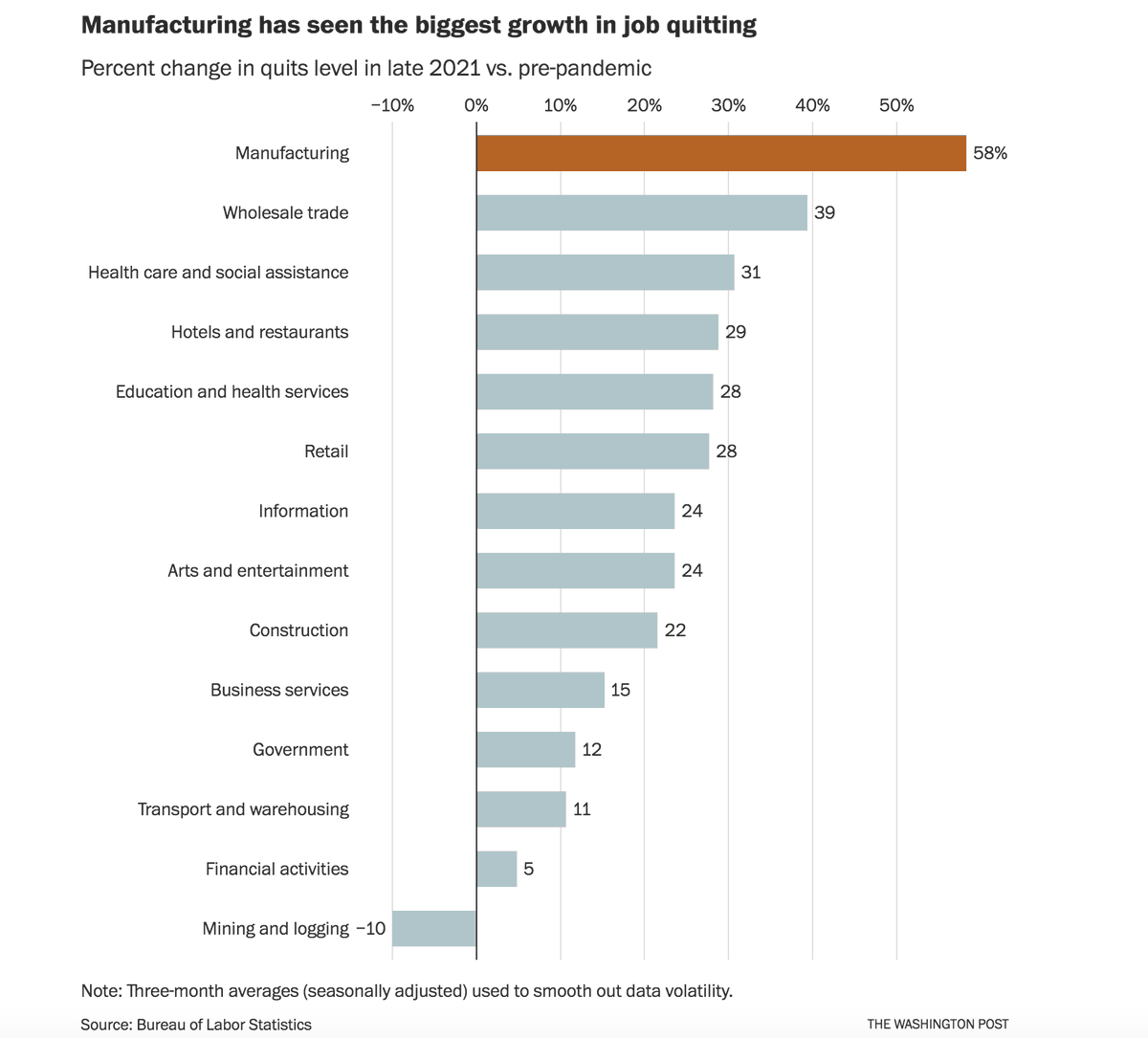
"The Great Resignation that has seen more than 43 million Americans leave their jobs in the past year shows no sign of slowing. Job quitting hit a record in November.

Restaurants and hotels have had the highest resignation rate, and that’s hardly surprising. The pandemic has caused millions of workers to reassess their lives and walk away from low-paying jobs. Many are getting hired quickly elsewhere for more money and better hours. Health-care workers are also quitting at record rates, as doctors, nurses and aides face burnout after their harrowing experience these past two years.

But another part of the resignation story has received far less attention. Manufacturing has weathered the biggest surge in workers quitting — a nearly 60 percent jump compared with pre-pandemic. No other industry has seen an increase like that."

Trecho retirado de "Why manufacturing workers are voluntarily leaving jobs at rates never seen before


segunda-feira, janeiro 10, 2022

Era bom que se aproveitasse esta boleia ...

Recordo Emprego, preços e desglobalização

"A variante Ómicron pode tornar a China vítima do seu sucesso, à medida que a política de “zero covid” prolonga o isolamento do país, quando o resto do mundo vislumbra uma fase endémica para a doença, apontam analistas.

“Em 2022, a China vai enfrentar a altamente transmissível [variante] Ómicron, com vacinas aparentemente menos eficazes e muito menos pessoas protegidas por anticorpos criados por infeções anteriores”, observou a consultora de riscos políticos norte-americana Eurasia Group, num relatório.

As medidas de bloqueio para conter os surtos deverão ser ainda mais frequentes e duras, envolvendo dezenas de milhões de pessoas, lê-se no mesmo documento.

“Esta crise vai continuar até que a China possa lançar vacinas de RNA mensageiro desenvolvidas internamente e reforços para os seus 1,4 mil milhões de habitantes, o que ainda deve demorar pelo menos um ano”, acrescentou.

A política de zero casos implicou a suspensão das viagens de negócios e turismo ou intercâmbios académicos com o exterior.

Quem chega ao país tem que realizar uma quarentena cujo período varia entre duas e quatro semanas, dependendo da província de destino. As autoridades exigem ainda a apresentação do certificado negativo dos testes serológicos tipo IgG e IgM e o teste de ácido nucleico PCR antes do embarque."

Depois, queixem-se e chamem-me nomes por achar que anda muito optimismo mal justificado no ar. 

Era bom que se aproveitasse esta boleia para preparar a próxima etapa, antes que a maré mude outra vez.

Trecho retirado de "Ómicron deve deixar China mais isolada com insistência na política de zero casos"

domingo, janeiro 09, 2022

"Inflation and the ‘Experience Economy’"


"Inflation tends to be understood as higher prices resulting either from increased costs—global supply-chain issues and hard-to-find workers—or from increased demand, such as pent-up purchases, as well as easy monetary policy from the Federal Reserve and blowout spending from Congress. But there’s another significant factor at play: Price increases also arise from growth in the perceived value of economic offerings.
...
Consumer values have shifted greatly over the years, most notably from goods and services to experiences. As I first argued on these pages in 1997 with my business partner, Jim Gilmore, experiences are a distinct economic offering, as different from services as services are from goods.
Fundamentally, experiences offer time well spent. People value the time they spend in experiences, resulting in a memory (and, so often these days, a trail of social media posts).
...
Unfortunately, the government still classifies experiences as services. The latter, however, merely provides time well saved. The disparity in value is too profound between, say, going to a dry cleaner and a concert, between having your oil changed and changing your physique at a gym, between home delivery of goods and the spending the day with your family at a theme park.
...
That’s why Walt Disney World outpaced measured inflation by so great a rate—because consumers value its experience more than the average market-basket good and are willing to pay much more for it relative to other offerings. This same effect is true for the myriad experiences that make up today’s “Experience Economy.”
Consumers also value their time more highly than they used to. They want goods and services to be commodities—bought at the lowest possible price and greatest possible convenience—so they can spend their hard-earned money and their harder-earned time on experiences they value more highly."

sábado, janeiro 08, 2022

Puro sumo!!!

Para pessoas e para empresas. Puro sumo!!!

Acerca do i) recordo, para começar, "Managing the Unexpected - Sustained Performance in a Complex World" de Karl Weick e Kathleen Sutcliffe: 

"Preoccupation with failure, the first high-reliability organization (HRO) principle, captures the need for continuous attention to anomalies that could be symptoms of larger problems in a system."

Acerca do iii) recordo Youngme Moon e a mensagem de "Different" em "There’s nine times more to gain by elevating positive customers than by eliminating negative ones"

Acerca do iv) recordo David versus Golias em Lidar com os Golias!


sexta-feira, janeiro 07, 2022

Agricultura, como se aumenta a rentabilidade?

A propósito de "Trabalhadores precisa-se. Nos olivais, o chão está "solado de azeitona" porque não há ninguém para a apanhar" fiz este esquema:
Primeiro começamos com Erik Reinert acerca da rentabilidade da agricultura em "How Rich Countries Got Rich . . . and Why Poor Countries Stay Poor":
"Generally increasing returns goes with imperfect competition; indeed, the falling unit cost is one cause of the market power under imperfect competition. Diminishing returns - the inability to extend production (beyond a certain point) at falling cost - combined with the difficulty of product differentiation (wheat is wheat, while car brands are very different) are key elements in creating perfect competition in the production of raw material commodities. The exports of the rich contain the `good' effects - increasing returns and imperfect competition - whereas traditional exports of poor countries contain the opposite, the `bad' effects"
A baixa rentabilidade só permite pagar salários baixos, o que a par da demografia leva à falta de trabalhadores. O recurso a imigrantes é uma consequência natural desta "race to the bottom".

Como sair deste ciclo vicioso?

Aumentando a rentabilidade!

Como se aumenta a rentabilidade? Apostando na concorrência imperfeita. Duas possibilidades:
"Cooperativa Agrícola dos Olivicultores de Sousel quer continuar com olival tradicional para manter a qualidade do azeite" [Moi ici: Recordar, por exemplo, a minha relação com o azeite de produção intensiva]

quinta-feira, janeiro 06, 2022

Suspeito de demasiado optimismo

No Jornal de Notícias de segunda-feira encontrei o artigo, "Têxtil-lar no Vale do Ave sem mãos para as encomendas".

Achei interessante os sublinhados que se seguem. Suspeito de demasiado optimismo:
"Na altura em que as empresas asiáticas encerraram, em virtude da covid-19, o comércio de produtos têxteis não parou. As pessoas deixaram de comprar vestuário, com os confinamentos e o teletrabalho, mas passaram a dar mais importância ao conforto e à decoração do lar. As marcas que antes mandavam fazer na Ásia foram obrigadas a procurar soluções em outras geografias.
...
Segundo Mário Jorge Machado, presidente da Associação Têxtil e Vestuário de Portugal, os custos de contexto, a energia e os impostos determinaram o fim da competição pelo preço. [Moi ici: Gostava de acreditar nesta conclusão, acho demasiado cedo para chegar a ela. Sim, o artigo é sobre o têxtil-lar]
...
Para este investigador, o têxtil português sobreviveu porque se reinventou, passou de uma indústria que vendia pelo preço baixo para uma que vende valor acrescentado e que tem marca própria. [Moi ici: Gostava de acreditar nesta conclusão, acho demasiado cedo para chegar a ela. Sim, o artigo é sobre o têxtil-lar]
...
A China continua na competição pelo preço, mas, segundo o investigador, "este já não é o campeonato das nossas empresas. "Depois dos transportes e da refinação, a indústria a têxtil é o maior poluente do planeta", aponta João Gomes. Isto apresenta-se como uma oportunidade para a indústria portuguesa, "porque já está a traçar o caminho de uma produção mais sustentável e com maior valor acrescentado e isso é reconhecido pelos clientes". [Moi ici: Se é um factor relevante, porque é que foi preciso a covid-19? Ainda não percebeu que o factor crítico não é a produção menos poluente, mas também a redução da produção. Recordar a Inditex]

Numa coluna encontro o título: "Quando a China fechou, o têxtil aproveitou a oportunidade" onde se pode ler:

"Clientes que fogem da Ásia atraídos por processos eficientes e pela inovação" [Moi ici: Fogem da Ásia por causa da covid-19 ou por causa da inovação?]

As encomendas no sentido da subida na escala de valor têm de ter preço unitário mais elevado e serem de menores quantidades.

quarta-feira, janeiro 05, 2022

O leilão de bondades


Como ouvi ontem Sérgio Sousa Pinto dizer, a política em Portugal é um leilão de bondades.

"Programa do PS abre a porta às "semanas de quatro dias" e a salário mínimo de 900 euros"

Lembrei-me logo do velho (Julho de 2007) “Nós não estudámos até ao fim todas as consequências das medidas que sugerimos”.

Estão a imaginar um Estado exaurido e depauperado a ter que lidar com semanas de quatro dias em todos os serviços que trabalham por turnos? Estão, por exemplo, a imaginar o impacte desta medida (semanas de quatro dias) no Serviço Nacional de Saúde?

Conseguem imaginar o governo a avançar com essa medida e a assegurar ao presidente da república que não trará custos adicionais para o Estado. E o presidente a aceitar tais garantias. Pois ... Aquilo que qualquer gestor de pessoas numa empresa que trabalha 24 horas por dia e 7 dias por semana sabe.

Ainda acerca do leilão de bondades, e um espelho para a minha ingenuidade em 2012, Agora é que vão começar as decisões políticas.

Quais as consequências de um leilão de bondades?

Interessante como a chamada comunicação social não pensa nas consequências do que se apregoa e engole tudo passivamente.

"The future doesn’t happen to us; it happens because of us"


Ao longo dos anos procuro aplicar esta técnica de começar pelo fim:

Por isso, "How to build a breakthrough" fixou a minha atenção:

"The future doesn’t happen to us; it happens because of us

The future is not like the weather. It doesn’t just happen. People make the future. It’s not a destiny or hope; it’s a decision.
...
Breakthrough builders are visitors from the future, telling us what’s coming.
They seem crazy in the present but they are right about the future.
Legendary builders, therefore, must stand in the future and pull the present from the current reality to the future of their design. [Moi ici: Por isso é que em 2008 já usava a corda ninja. Para, colocado no futuro, puxar pelo presente] People living in the present usually dislike breakthrough ideas when they first hear about them. They have no context for what will be radically different in the future. So an important additional job of the builder is to persuade early like-minded people to join a new movement.
That means that most of your friends, advisors, and even investors are useless at helping you identify a breakthrough.
Getting out of the present and standing in the future is the first key to finding a breakthrough."

Mas o artigo tem mais que se lhe diga. 

Continua 

terça-feira, janeiro 04, 2022

Tácticas de subida na escala de valor (parte I)

No meu arsenal para desenhar tácticas de subida na escala de valor uma das abordagens possíveis passa pela mudança de cliente-alvo, ou seja pela mudança do resultado desejado pela procura.

Na coluna das citações aqui no blogue pode ler-se:

"When something is commoditized, an adjacent market becomes valuable"

Qual é esse mercado adjacente? Quem são os clientes-alvo nesse mercado adjacente?

Recordo o clássico exemplo da artesã de Bragança (texto de 2012):

"uma artesã dizia que não havia mercado para as suas colchas de linho... talvez haja, se calhar, deixou foi de frequentar estes espaços.

Talvez precisasse de frequentar outras feiras, noutros países, talvez precisasse de divulgar os seus produtos na internet, talvez precisasse de aproveitar os meses de Verão para expor os seus produtos nas lotadas quintas de turismo rural que se multiplicam desde a Beira-Alta até Trás-os-Montes."

Os clientes não compram um produto, os clientes compram o resultado do serviço que o produto presta na sua vida. O produto pode ser o mesmo, mas os resultados procurados e valorizados são diferentes.  

Agora reparo, é o tema da autenticidade. Quando não se pode mudar de produto, sob pena de destruir a autenticidade de um produto, muda-se de mercado!!! 

Também o tema das conservas Comur que apareceu na imprensa em Dezembro passado. 

Uma variante desta aboradgem é o exemplo da Viarco. Aqui mantiveram os produtos, criaram alguns novos, mas mudaram de clientes-alvo: Mandamentos para os gestores das unidades com futuro

No caso da sua empresa faz sentido esta abordagem?

segunda-feira, janeiro 03, 2022

"Lives of quiet desperation" (parte II)

Na parte I, a 2 de Julho de 2020, escrevi:

"Ontem passei o dia todo fechado numa empresa. Saí já depois das 19h e enquanto conduzia dei comigo a ouvir um programa na Rádio Renascença onde os comentadores do regime alinhavam com o governo e diziam amém a duas nacionalizações. Nem uma voz contra, nem uma voz a desdizer a narrativa oficial sobre a EFACEC ou sobre a TAP.

Mais dinheiro impostado aos contribuintes torrado em delírios da corte lisboeta. Mais pedras no saco às costas das empresas que têm de fazer corridas com empresas de outros países com governos menos atreitos a orgias socialistas.

Isto nunca vai ter fim, este país nem com 5 troikas vai mudar. Ingenuidade pensar que a UE nos ia proteger...

A 1 de Setembro de 2007 no Expresso, Daniel Bessa escreveu:

"... faltou sempre o dinheiro que o "Portugal profundo" preferiu gastar na "ajuda" a "empresas em situação económica difícil"..."

Hoje, 3 de janeiro de 2022, leio "Governo prepara plano B alternativo à venda da Efacec". Empresas tão boas que ninguém está interessadas nelas.

O que é que isto revela acerca dos comentadores do regime?

Não seguir receitas

"One sort of job requires people to follow a recipe.

Another, better sort of job requires people to understand the recipe.

If you understand it, that means you can change it. You have resilience and insight and the leverage to make it better."

Sempre tive horror a seguir receitas. Seguir receitas é mais fácil, mas não tem em conta a especificidade do outro e, também, não tem em conta a evolução pessoal.


Trecho retirado de "Recipes"


domingo, janeiro 02, 2022

“I don’t think organizations do enough self-reflection and self-awareness"

"Setting goals requires self-understanding,
...
You need to know who you are today to get where you want to go tomorrow,” he says. “I don’t think people do enough self-reflection and self-awareness. They go through life and let life happen to them versus stepping back, looking at where they’re at today, and defining who they want to become.”"

Trechos bem alinhados com as preocupações manifestadas aqui no blogue acerca das folhas na corrente. Empresas que vão ao sabor dos acontecimentos: "you need to spend time doing things that feel ridiculously unproductive" e "Quando o quotidiano assume o comando".

Trechos retirados de "How the pandemic changed priorities and goal setting for 2022"

sexta-feira, dezembro 31, 2021

Depender do coração

Ontem, no LinkedIn, encontrei esta mensagem:

E sorri.

Da Revolução Industrial até Mongo em 3 fases!!!


 Como não relacionar com o tema da arte (depende do coração)!!!

quinta-feira, dezembro 30, 2021

"you need to spend time doing things that feel ridiculously unproductive"

Excelente mensagem, para pessoas e empresas, em "You Need to Practice Being Your Future Self".

"You see, the reason Sanjay is stuck — and the reason many of us feel that way — is that we focus on what’s present for us at any particular moment.

On the other hand, what most of us want most is to move forward. And, by definition, paying attention to the present keeps us where we are. So, sure, I can help Sanjay be a better “present” Sanjay. But I will have a much greater impact if I help him become a successful “future” Sanjay.

It’s a familiar story: You’re busy all day, working non-stop, multitasking [Moi ici: Recordar "Quando o quotidiano assume o comando"] in a misguided attempt to knock a few extra things off your to-do list, and as the day comes to a close, you still haven’t gotten your most important work done.

Being busy is not the same as being productive. It’s the difference between running on a treadmill and running to a destination. They’re both running, but being busy is running in place.

If you want to be productive, the first question you need to ask yourself is: Who do I want to be? Another question is: Where do I want to go? Chances are that the answers to these questions represent growth in some direction. And while you can’t spend all your time pursuing those objectives, you definitely won’t get there if you don’t spend any of your time pursuing them.

...

[Moi ici: E o sublinhado final ... pensando nas estruturas super-magras, com decisores sempre ocupados com os problemas do presente e as consequências dos problemas de ontem. Pensando nos futuros decisores que em vez de pensarem no futuro, conduzem empilhadores, não porque seja uma emergência, mas porque não vêem nada mais produtivo para fazeremYou need to spend time on the future even when there are more important things to do in the present and even when there is no immediately apparent return to your efforts. In other words — and this is the hard part — if you want to be productive, you need to spend time doing things that feel ridiculously unproductive."

Como não recordar aquele

"Não fazemos arte depois de nos tornarmos artistas. Tornamos-nos artistas ao fazer arte incessantemente."

quarta-feira, dezembro 29, 2021

"leadership teams lacked the conviction to take action"

Há dias em "Se correr o bicho pega Se ficar o bicho come." escrevi:

"Muitos sectores transaccionáveis vivem tempos de euforia, estão a exportar o que podem, e se não exportam mais é porque não têm matérias-primas ou capacidade produtiva livre. Ou seja, tudo parece correr bem. Bom para as empresas. 

...

Não seria agora a melhor altura para agarrar o problema, o desafio da produtividade?"

 Entretanto, li, "Persuade Your Company to Change Before It’s Too Late": 

"There’s a paradox facing leaders seeking to transform their organizations as they see their markets begin to change. On one hand, they need convincing data to make the case that transformation is necessary—to show that their companies are about to find themselves on “burning platforms.” On the other hand, by the time public data about disruptive trends and market shifts is convincing, the window of opportunity has shrunk, if not disappeared. And when companies actually are on burning platforms, their leaders confront a harsh reality: Burning platforms inhibit change by increasing rigidity at the very moment when flexibility is crucial. The lesson: Avoid ever ending up on a burning platform. But that requires leaders to act before compelling data is widely available.

...

Business leaders face a problem that’s familiar to investors and political leaders: In periods of uncertainty, the availability of information and the freedom to act are inversely correlated—or, in simpler terms, as data increases, your ability to act decreases.

...

The more data that's widely available in a market, the lower the freedom to act on it becomes, because others see the same opportunities and risks and respond to them. The information threshold is not the same at every company. An entrepreneur like Ellen, who doesn't have much business to lose or many stakeholders she has to get buy-in from, can act with less information. But an executive of a more risk-averse established company, like Chris, needs more information to persuade himself and his stakeholders that bold moves are necessary.

...

A recent cross-industry survey of more than 300 global leaders conducted by Innosight found that 72% felt that they needed to transform their core offering or business model. The most pressing obstacle to success cited by this group was allocating enough resources to change efforts—an indication that their leadership teams lacked the conviction to take action."

Se as "global leaders" têm equipas de gestão com falta de convicção para agir, o que será de esperar das "empresas super-magras" conduzidas pelo quotidiano?


terça-feira, dezembro 28, 2021

"esta obsessão dos cêntimos"

No livro, "Strategy Pathfinder" encontrei esta imagem:
Ainda acrescentaria algumas entidades a este ecossistema. Por exemplo, os influenciadores, ou os prescritores.

Voltei a recordar-me desta imagem ao ler, "Fábricas cortam intermediários para chegar ao consumidor", um tema já tratado recentemente em "É preciso trabalhar na originação de valor.". Uma evolução positiva, mas que me deixa com algumas reticências. Sorrio porque esta gente está a seguir um conselho antigo deste blogue, "Outra forma de David bater Golias". 

No entanto, o tema que queria sublinhar neste postal é outro:
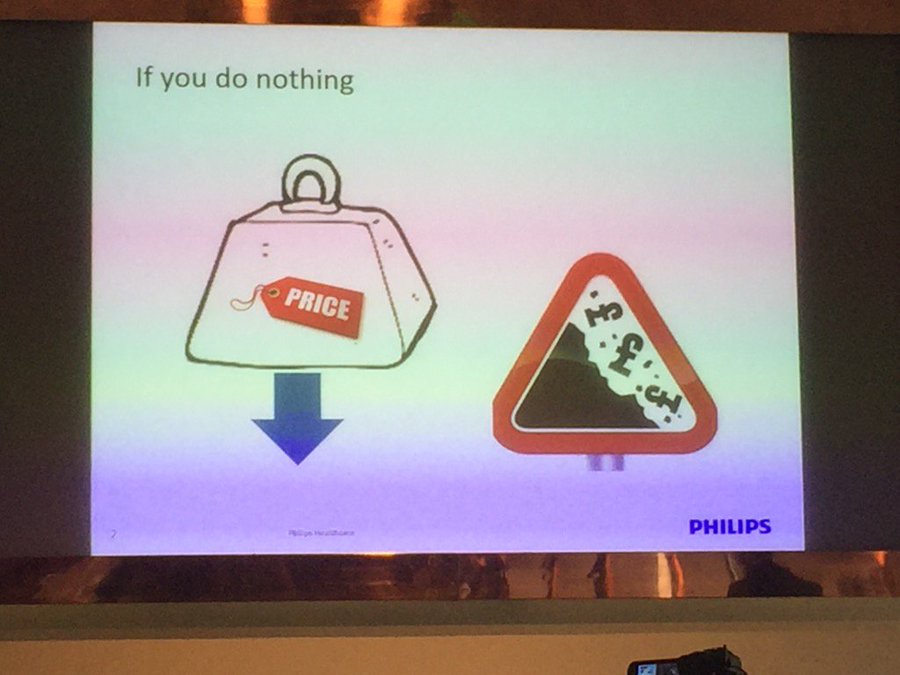
"“Como conseguimos mais do que vender produtos, vender conceitos, estatuto. Qualquer coisa mais que nos preencha, além do produto. E não tenhamos medo de falar do preço. Em Portugal há sempre um bicho papão quando chegamos a esse momento. Se andamos com esta obsessão dos cêntimos, não vamos sair do mesmo lugar. Portugal vive aprisionado no preço”, desabafa."

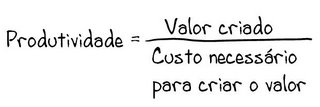
Sim, a concentração no denominador, na eficiência, no custo, em vez da concentração no numerador, no valor:

Enquanto esta revolução mental não for feita por uma massa crítica ...

BTW, não esquecer o conselho dos velhos estóicos, nunca apostar mais do que se pode perder sem arruinar o empreendimento, "Tail risks can screw you up".

segunda-feira, dezembro 27, 2021

Guiar transformações

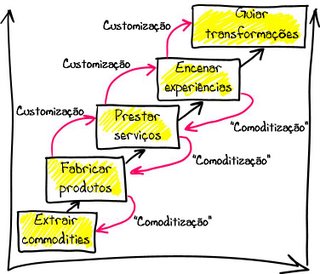
 Ainda de "The “New You” Business" um trecho final sobre a subida na escala de valor à custa das transformações:

"Competing on transformations makes a company responsible for working with customers to define the transformation each one seeks, identify the barriers to success, and orchestrate all the goods, services, and experiences needed to support them during their journeys. Such business models will be much harder to imitate than those that offer only goods, services, or experiences. And they promise to generate handsome rewards—not only profits but also the knowledge that the company has truly made a profound difference in its customers’ lives."

domingo, dezembro 26, 2021

" But they matter only as means to the ends that people seek"

O nosso clássico, trabalhar os inputs, em vez dos outputs. Primeiro começamos com:

Think “input before output”

Em vez de ficarmos pelo que produzimos, encaramos como é que o cliente vai tratar o output como um input na sua vida. Para depois fazermos mais uma evolução, perceber que outcome o cliente pretende atingir ao usar o output como um input nos seus processos. Para chegar a:

Think “outcome before output”

Agora encontro um texto sobre o tema em "The “New You” Business": 

"The end goal of people who go to fitness centers isn’t access to the equipment or trainers; it is to get in shape. The overriding reason people go to their doctor or check into a hospital is not to obtain drug prescriptions, a medical examination, or therapeutic procedures; it is to get well. And students’ primary motive for going to college is not to buy a lot of books, have their papers and exams graded by professors, or even have the classroom and all-around college experience; it is to gain skills or expertise and pursue a career.

But all too often fitness centers, medical providers, colleges, and organizations in many other industries seek to distinguish themselves only on the quality, convenience, and experience of what they sell. It’s not that those things aren’t important. But they matter only as means to the ends that people seek. Too many organizations lose sight of this truth. Even when they do promote what they sell in relation to customers’ aspirations, they rarely design solutions that allow people to realize them.

...

Enterprises should recognize the economic opportunity offered by the transformation business, in which they partner with consumers to improve some fundamental aspect of their lives—to achieve a “new you.”

...

The goods, services, and even experiences a company offers matter only in how they help customers achieve their desired results. Each customer’s definition of success must therefore be the North Star that guides what a company does if it wants to compete on transformations."

sexta-feira, dezembro 24, 2021

"It may even be that action comes first"

Há anos li um artigo, que não consigo localizar, que estabelecia uma forte relação sobre origem do pensamento consciente com os sinais que uma amiba tem de emitir para se deslocar numa certa direcção em busca de comida. 

Há anos que adoptei não o PDCA, o ciclo de Deming, mas a versão que aprendi com Shoji Shiba:

Não começamos com o planeamento (P), começamos com a acção (D à esquerda), e da análise dos resultados da acção calibramos a acção seguinte.

Há dias apanhei isto, em  "Being You: A New Science of Consciousness" de Anil Seth:
"It’s tempting to think of our interaction with the world in the following way. First, we perceive the world as it is. Then we decide what to do. Then we do it. Sense, think, act. This may be how things seem, but once again how things seem is a poor guide to how they actually are. It’s time to bring action into the picture.

Action is inseparable from perception. Perception and action are so tightly coupled that they determine and define each other. Every action alters perception by changing the incoming sensory data, and every perception is the way it is in order to help guide action. There is simply no point to perception in the absence of action. We perceive the world around us in order to act effectively within it, to achieve our goals and – in the long run – to promote our prospects of survival. We don’t perceive the world as it is, we perceive it as it is useful for us to do so.

It may even be that action comes first. Instead of picturing the brain as reaching perceptual best guesses in order to then guide behaviour, we can think of brains as fundamentally in the business of generating actions, and continually calibrating these actions using sensory signals, so as to best achieve the organism’s goals. This view casts the brain as an intrinsically dynamic, active system, continually probing its environment and examining the consequences."
Algo que se encaixa bem no clássico "fuçar" deste blogue ou ainda de Tom Peters: "Fuçar, uma espécie de humildade"


quinta-feira, dezembro 23, 2021

"the brain is continually generating predictions about sensory signals"

"Let’s return to our imagined brain, quiet and dark inside its skull, trying to figure out what’s out there in the world. We can now recognise this challenge as an ideal opportunity to invoke Bayesian inference. When the brain is making best guesses about the causes of its noisy and ambiguous sensory signals, it is following the principles of the Reverend Thomas Bayes.
...
the idea that perception happens through a continual process of prediction error minimisation. According to this idea, the brain is continually generating predictions about sensory signals and comparing these predictions with the sensory signals that arrive at the eyes and the ears – and the nose, and the skin, and so on. The differences between predicted and actual sensory signals give rise to prediction errors. While perceptual predictions flow predominantly in a top-down (inside-to-outside) direction, prediction errors flow in a bottom-up (outside-to-inside) direction. These prediction error signals are used by the brain to update its predictions, ready for the next round of sensory inputs. What we perceive is given by the content of all the top-down predictions together, once sensory prediction errors have been minimised – or ‘explained away’ – as far as possible.
...
And it is prediction error minimisation that provides the connection between controlled hallucinations and Bayesian inference. It takes a Bayesian claim about what the brain should do and turns it into a proposal about what it actually does do. By minimising prediction errors everywhere and all the time, it turns out that the brain is actually implementing Bayes’ rule. More precisely, it is approximating Bayes’ rule. It is this connection that licenses the idea that perceptual content is a top-down controlled hallucination, rather than a bottom-up ‘readout’ of sensory data."

Trechos retirados de "Being You: A New Science of Consciousness" de Anil Seth.

quarta-feira, dezembro 22, 2021

Ainda acerca do feedback

Há dias escrevi "Acerca do feedback". Ontem, encontrei um texto que vai na mesma linha, "Science Says Smelling Cinnamon Can Make You Much More Creative and Innovative (But Not for the Reason You Might Think)":

"Sometimes a compliment can be like a self-fulfilling prophecy. Praise an employee for deftly handling a customer dispute -- even though it's the first time that employee has managed to handle a difficult conversation well -- and he or she will start to expect to handle similar situations well in the future.

...

Yep. When we believe there are reasons we will be more creative -- which also lowers our natural tendency to downgrade and therefore inhibit our level of creativity -- then we're much more likely to be creative.

Cinnamon is irrelevant. Expectation is everything. Belief is everything.

In yourself, and in other people.

Want your employees to be more creative? Use your own "cinnamon." Find ways to help them feel more creative. Use praise and recognition and validation to help them expect to be more creative.

But don't stop there. If you want to build a high performing team, praise achievement. Offer constructive feedback after missteps or failures."


terça-feira, dezembro 21, 2021

Alea jacta est

Ando a ouvir no carro um livro muito, muito interessante, "Being You: A New Science of Consciousness" de Anil Seth:

"we explore the idea that the brain is a ‘prediction machine’, and that what we see, hear, and feel is nothing more than the brain’s ‘best guess’ of the causes of its sensory inputs.

...

First, the brain is constantly making predictions about the causes of its sensory signals, predictions which cascade in a top-down direction through the brain’s perceptual hierarchies. If you happen to be looking at a coffee cup, your visual cortex will be formulating predictions about the causes of the sensory signals that originate from this coffee cup."

Eu gosto de fazer previsões. Acho interessante analisar o contexto e fazer previsões e, depois, esperar pela sua concretização ou não. Às vezes acerto, como no caso da Raporal ou dos colégios. Às vezes demoro mais tempo a acertar, mas sei que vou acertar. Às vezes falho, porque entretanto alguém alterou parâmetros do contexto, como acerca da inflação em 2008. Às vezes falho, ou porque esqueci algum tópico relevante do contexto ou porque processei mal a informação.

O interessante de fazer previsões é o traçar uma linha na areia e uma janela temporal.


Depois, expor-se ao que não se controla e fazer a avaliação da situação futura: ficou-se de que lado da linha na areia?

Escrevo toda esta introdução para apresentar mais outra previsão. Li ontem no FT este texto, "Why the world’s ‘CEO factories’ need retooling", e o meu detector de asneira começou logo a soar:
"Another chief executive rolled off the Unilever production line last week, when Leena Nair was appointed to run luxury goods company Chanel.

Nair, who has worked at Unilever for nearly 30 years, is a product of the group’s leadership development programme. Indeed, as the consumer goods company’s chief human resources officer, she runs the system that builds its future leaders, and the leaders of other companies, including, in recent years, Unilever alumni such as Sir Dave Lewis, who ran Tesco, the UK retailer, until 2020.

Recordo a metáfora dos dinosssauros azuis e dos dinossauros pretos:


Não é impunemente que se trabalham 30 anos num dionossauro azul, para ir depois aplicar essa experiência num dinossauro preto. Não vai funcionar. Ao longo de 30 anos adquirem-se consciente e inconscientemente hábitos, regras de decisão, visões do que é OK ou não OK que não funcionam num outro mundo.

Alea jacta est.

segunda-feira, dezembro 20, 2021

Não querer ser tudo para todos

Uma mensagem clássica deste blogue: a focalização. Escolher os clientes-alvo e não tentar ser tudo para todos:

"This study empirically examines the impact of firms' pursuing multiple generic strategies, namely, Porter's low-cost and focus strategies. We conceptualize pursuing cost efficiency advantage as a low-cost strategy and restraining rivalry through horizontal differentiation as a focus strategy. Although we corroborate earlier strategy research that each of these strategies alone may have a positive impact on firm profitability, we highlight that mechanisms driving the interaction of these two strategies are, in fact, nonadditive in nature, consistent with recent analytical work. Using the context of the scheduled U.S. passenger airline industry over two decades, we empirically show that combining a low-cost strategy with a focus strategy is, indeed, detrimental to firm profitability, which has important implications for scholarship and practice.

Firms have effectively used low-cost or focus strategies to improve their performance. Our study demonstrates that although firms pursuing either strategy individually can benefit, pursuing these two generic strategies of low-cost and focus simultaneously actually hurts firms' profitability. In essence, we show that when firms pursuing a low-cost strategy already possess a cost efficiency advantage over their rivals for the full customer base, firms have nothing to gain by simultaneously limiting rivalry - through focusing on a smaller customer segment-and thus giving away revenue to rivals. Our insights regarding the combination of different generic strategies caution managers to not be misled by the performance gains of either low-cost and focus strategies individually, but to realize that these two in tandem actually may harm profitability."

Trechos retirados de "Competing both ways: How combining Porter's low-cost and focus strategies hurts firm performance" publicado pela revista Strategic Management Journal em Março último.

domingo, dezembro 19, 2021

A ordem dos factores não é irrelevante

"Baixar impostos? “Primeiro, é preciso fazer crescer a economia”"

Disse David Justino, segundo o jornal Expresso de ontem.

Boa sorte! A ordem dos factores não é irrelevante.


sábado, dezembro 18, 2021

"Se correr o bicho pega Se ficar o bicho come."


Na passada quinta-feira tive mais uma conversa oxigenadora. O tema foi o capítulo 8 de "Managing the Unexpected - Sustained Performance in a Complex World" de Karl E. Weick e Kathleen M. Sutcliffe.  Um capítulo sobre a cultura das organizações, e da sua contribuição para a fiabilidade organizacional.

Os autores usam a Toyota como exemplo de como uma cultura de sucesso gera o insucesso.

Recordámos o primeiro princípio das organizações resilientes, a preocupação com a falha, por causa da atenção aos indícios. Um indício investigado é muitas vezes um prejuízo evitado e algumas vezes uma catástrofe evitada. O desafio é, como estar atento aos indícios?

Por um lado, as empresas com as suas estruturas super magras vivem a resolver os problemas de hoje e as consequências dos problemas de ontem, imaginem dizer-lhes que têm de estar atentas aos indícios. Mandam-nos dar uma volta.

Muitos sectores transaccionáveis vivem tempos de euforia, estão a exportar o que podem, e se não exportam mais é porque não têm matérias-primas ou capacidade produtiva livre. Ou seja, tudo parece correr bem. Bom para as empresas. Desejo-lhes o melhor. Se é esta a situação então porquê preocuparem-se?

Helena Garrido lembrou-nos recentemente destes números:

"O salário mínimo terá tido em 2022 um aumento de 39,6% em relação a 2015, passando de 505 para 705 euros. A produção portuguesa deverá crescer, no mesmo período, 12,4%, levando em conta os dados e previsões da Comissão Europeia."

Não seria agora a melhor altura para agarrar o problema, o desafio da produtividade?

Existe um suposto Forum para a Competitividade que tem um presidente que é useiro e vezeiro neste tipo de afirmações:

"Como é que possível sermos tão mal governados que temos pessoas mais qualificadas e a produtividade não sobe? 

A produtividade sempre foi o nosso calcanhar de Aquiles... [Moi ici: Comenta o entrevistador]

E por que não sobe? Dizíamos que era por falta de qualificação das pessoas, agora as pessoas são mais qualificadas e a produtividade continua a não crescer.

É culpa de quem? [Moi ici: Pergunta o entrevistador]

É culpa do sistema todo. Quem gere as empresas vai fazendo o que pode dentro do sistema que existe. É cada vez mais difícil fazer qualquer coisa por questões ligadas à burocracia, justiça, fiscalidade, alterações constantes de regras e de legislação de trabalho. Há cada vez mais mais regras para cumprir."

Tem o locus de controlo no exterior, o que é terrível num presidente qualquer. A produtividade das empresas que existem não sobe por causa do que é exterior às empresas ... sem palavras.

E volto à pergunta: Não seria agora a melhor altura para agarrar o problema, o desafio da produtividade?

Contudo, sucesso é, muitas vezes, sinal de descanso. Por isso, o sucesso de hoje cria as condições do falhanço de amanhã. Lembrei-me então de 1970 e dos anúncios na televisão às canetas BIC. “BIC cristal para uma escrita normal, BIC laranja para uma escrita fina”. Na altura, usava na escola uma caneta de tinta permanente e ao ver as canetas BIC exclamava UAU. Hoje, fanático por canetas e marcadores não tenho nenhuma caneta BIC. O que hoje é UAU, amanhã é boring.

E não conhecer o gráfico de Kano é deixar que a corrente nos leve para onde ela quiser e não para onde queremos ir. 

Agora veio-me à cabeça aquela frase de uma canção "Se correr o bicho pega Se ficar o bicho come." Ou são os concorrentes que vão comer mercado, ou é o governo a comer margem. Ficar parado é a morte do artista,  o empobrecimento geral a que estamos habituados. Ficar parado à espera do Deus Ex Machina que salva os coitadinhos não me parece a melhor alternativa. Há que arregaçar as mangas e fazer pela vida.

sexta-feira, dezembro 17, 2021

Contrariar a entropia

 A diferença entre a fase "wonder" e a fase "war":


A entropia leva-nos inexoravelmente da esquerda para a direita da figura, da fase wonder para a fase war. A função da gestão, para subir a produtividade, é a de trabalhar para, qual Sísifo, empurrar a pedra do vale  para a montanha, da fase war para a fase wonder.


quinta-feira, dezembro 16, 2021

Acerca do feedback

Um artigo de 2019, "The Feedback Fallacy" que só ontem descobri. Vale a pena ler, porque põe em causa aquilo em que acreditamos. No mínimo põe-nos a pensar:

"Feedback is about telling people what we think of their performance and how they should do it better—whether they’re giving an effective presentation, leading a team, or creating a strategy. And on that, the research is clear: Telling people what we think of their performance doesn’t help them thrive and excel, and telling people how we think they should improve actually hinders learning.
...
Learning is less a function of adding something that isn’t there than it is of recognizing, reinforcing, and refining what already is. There are two reasons for this.

The first is that, neurologically, we grow more in our areas of greater ability (our strengths are our development areas). The brain continues to develop throughout life, but each person’s does so differently.
...
Second, getting attention to our strengths from others catalyzes learning, whereas attention to our weaknesses smothers it
...
In the brains of the students asked about what they needed to correct, the sympathetic nervous system lit up. This is the “fight or flight” system, which mutes the other parts of the brain and allows us to focus only on the information most necessary to survive. Your brain responds to critical feedback as a threat and narrows its activity. The strong negative emotion produced by criticism “inhibits access to existing neural circuits and invokes cognitive, emotional, and perceptual impairment,”
...
In the students who focused on their dreams and how they might achieve them, the sympathetic nervous system was not activated. What lit up instead was the parasympathetic nervous system, sometimes referred to as the “rest and digest” system.
...
What findings such as these show us is, first, that learning happens when we see how we might do something better by adding some new nuance or expansion to our own understanding. Learning rests on our grasp of what we’re doing well, not on what we’re doing poorly, and certainly not on someone else’s sense of what we’re doing poorly. And second, that we learn most when someone else pays attention to what’s working within us and asks us to cultivate it intelligently
...
Since excellence is idiosyncratic and cannot be learned by studying failure, we can never help another person succeed by holding her performance up against a prefabricated model of excellence, giving her feedback on where she misses the model, and telling her to plug the gaps. That approach will only ever get her to adequate performance."

quarta-feira, dezembro 15, 2021

O desafio

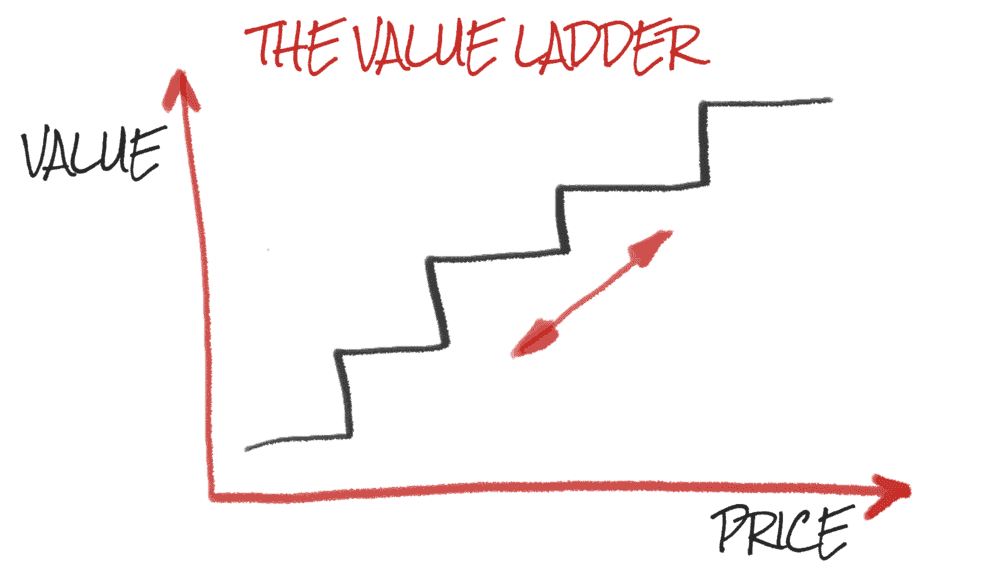
Nem de propósito, em linha com os postais sobre o imperativo do aumento da produtividade via subida na escala de valor.

"Os salários estão destinados a aumentarem. Em parte, respondendo aos desequilíbrios descritos antes. Em parte, em consequência do aumento do custo de vida. Em Portugal, será um desafio adicional para a generalidade das empresas. Apesar de os gastos com pessoal das empresas do sector não financeiro não chegarem a 15% dos proveitos totais, a verdade é que os resultados líquidos não chegam sequer a 4% dos mesmos proveitos totais. Ou seja, face ao custo de vida, o nível salarial é baixo. Mas face à rentabilidade das empresas a margem de ajustamento dos salários é igualmente baixa. Não é por acaso que 25% dos trabalhadores por conta de outrem em Portugal auferem o salário mínimo, sendo que entre os jovens a proporção aumenta para 40%. Em geral, não dá para muito mais, o que é dramático. E não é porque os patrões estejam a lucrar de forma exorbitante; a rentabilidade sobre capitais próprios entre 2015 e 2019 não foi além de 8%. O problema está antes no valor acrescentado bruto das empresas, que é baixo e que precisa de aumentar para aguentar salários estruturalmente mais elevados.

...

Quer as empresas quer os trabalhadores vão ter de se fazer à vida. As empresas porque os salários vão aumentar e o valor acrescentado bruto terá de acompanhar. Os trabalhadores porque vão ter de investir em novas competências para acompanharem os empregos de amanhã. Volto, pois, ao início deste artigo: para onde foram os trabalhadores? A resposta é que eles continuam por aí, mas muitos estão a equacionar o futuro e, entretanto, como está tudo mais caro, também querem salários mais altos."

Trechos retirados de "Para onde foram os trabalhadores?

terça-feira, dezembro 14, 2021

É preciso trabalhar na originação de valor.

O @walternatez mandou-me o link para este artigo "Como meia dúzia de cêntimos mudaram a história da Comur".

Um artigo sobre o tema da subida na escala de valor.

"O primeiro passo foi criar uma estratégia diferenciadora e apresentá-la à grande distribuição, mas esbarrou na barreira do preço. A solução passou pela eliminação de intermediários."

Lembrou-me o velho exemplo da Frank Perdue Chicken Farms, e a importância da paciência estratégica. Se a distribuição não está alinhada com a orientação estratégica talvez tenha de se fazer o by-pass à distribuição.

"Não percebendo muito do setor tivemos muita ingenuidade e isso foi meio caminho andado para criar diferenciação face aquilo que já existia."

Lembrou-me a velha estória do suíço que veio para cá produzir azeite

"achámos também, por outro lado, que as conservas tinham um posicionamento económico muito baixo com muito pouco valor percecionado. Reinava a ideia de que a conserva é um produto de cêntimos."

Lembrou-me o comentário que fiz ao posicionamento das conservas da Comur em "Conservas e pricing" e em "Preço e JTBD são contextuais".

"O primeiro passo foi tentar criar algo de diferente e apresentá-lo à grande distribuição e esbarrámos na mesma barreira que quase todo o agroalimentar português esbarra e que é a grande dificuldade: preço, preço, preço. [Moi ici: Lembrou-me logo o exemplo da Raporal em "A prova do tempo... tudo por causa de um Pingo Doce"] A grande distribuição não estava para acompanhar aquilo que era a nossa intenção de valorizar e posicionar adequadamente e procuramos alternativas. Quase sempre a inovação surge da necessidade. A necessidade é o maior motor para rasgar o convencionado e como não conseguimos através de nenhum distribuidor contar a nossa história, fomos obrigados a ir por outras vias."

Fazer o by-pass à distribuição permite que uma maior fatia do valor actual seja capturada pela empresa, uma vez que elimina o intermediário. E lembrou-me um velho esquema de Larreché:

Fazer o by-pass à distribuição aumenta a captura de valor. No entanto, é preciso trabalhar na originação de valor.

"O caminho para toda a economia portuguesa e não apenas para setor do pescado ou das conservas só pode assentar na criação de valor acrescentado."

Repito, é preciso trabalhar na originação de valor.

segunda-feira, dezembro 13, 2021

Empreendedorismo e a Escola Austríaca

"1. Consumer sovereignty

Not only is the customer king, but all production aims to ultimately satisfy consumers in some sense by providing them with value. This value is entirely up to the consumer. Entrepreneurs can only provide the means, typically a good or a service, that help consumers become better off. Sometimes this requires educating the customer so that they understand the value of the product. And, typically, the value lies in their complete experience, not just what you sell.

2. Value determines price and costs are a choice

With value being in the eyes (and experience) of the consumer, the price they are asked to pay must be (much) lower. The entrepreneur’s job is to figure out at what price their product is attractive, and then choose a cost structure that allows for profit. In other words, the price is a guess based on what value consumers see in the product. 

...

3. Entrepreneurship is about creating tomorrow

...

“the ultimate source from which entrepreneurial profit and loss are derived is the uncertainty of the future constellation of demand and supply.'' What that means is individual entrepreneurs choose costs in the present to produce a product that must be sold in the near or distant future, whatever the market situation might be. That’s the uncertainty borne by the entrepreneur.

...

4. Seek to be a good monopolist

In standard economics models, competition is about offering the same or nearly the same goods competing on price. This is a terrible strategy for entrepreneurs, whose superpower is to facilitate value. ...

What benefits consumers most is entrepreneurs who aim to be good monopolists."


Trecho retirado de "Why Every Entrepreneur Should Study the Austrian School of Economics"

A caminho de Mongo

"Welcome to the factory of the future: It's smaller, more nimble, and run by highly skilled Americans. Just as important, networks of these facilities could crop up across the United States, bringing manufacturing closer to your consumers and lessening your reliance on a crippled global supply chain."

Esta descrição de Mongo parece retirada deste blogue.

Trecho retirado de "The Factory of the Future Is Here--and It's Run by Americans (and Small Robots)"

domingo, dezembro 12, 2021

"the hard work of getting better clients"


Um sinal para mudar de vida?

Ontem folheei novamente "The practice: shipping creative work" de Seth Godin e fixei-me neste trecho tão aplicável a PMEs que precisam de mudar de vida para subir na escala de valor e aumentar a produtividade:

"There are more than one hundred thousand licensed architects in the United States. Most of them signed up for the steady work of industrialized production. They were trained to build reliable, consistent, and efficient buildings.

Some, though, chose to see a different pattern for their work. They became architects to invent, to create, and to challenge the status quo. They are committed to building structures that invoke awe or wonder. If you’ve been in a building created by one of these architects, you’re likely to remember it.

What’s missing in this gap between good and great is the simple truth that you can’t be a great architect unless you have great clients.

And at the same time, great clients rarely seek out architects who desire to be only good.

When the client wants a cheap, easy building, the architect’s desire to do great work is rarely achieved. And when the client wants something important, she knows that hiring a merely good architect is a mistake.

It’s tempting to blame the clients. But the commitment to be a great architect also requires the professionalism to do the hard work of getting better clients."

Há que recordar qual a inovação de que estamos a falar para fazer esta subida na escala de valor em "O cínico". A inovação que faz crescer o valor daquilo que os clientes estão dispostos a pagar não nasce de um esforço para inovar em abstracto. Esta inovação resulta de resolver um problema na vida dos clientes e, nem todos têm os mesmos problemas. Há que procurar quem tem problemas cuja resolução mereça o valor que queremos ver no que fazemos. E é inevitável, subir na escala de valor implica trabalhar para um mercado mais pequeno, implica ter uma unidade produtiva mais pequena.

Alguns textos que encaixam aqui:

Quem, estando relativamente bem, opta por encolher empresas? Talvez uma plant-within-plant?