quarta-feira, junho 29, 2016

O trabalho dos gestores

No relatório do FMI, "From Crisis to Convergence Charting a Course for Portugal", pode ler-se algo que escrevemos aqui há muito tempo:
"A worker’s productivity depends not only on the worker’s own skills or human capital but also on the skills or human capital of coworkers and managers.
...
there may be complementarities between lower-skilled workers and managers; that is, the productivity of a lower-skilled worker may be higher when paired with effective managers."
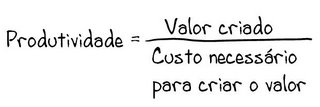
A produtividade pode aumentar mexendo no numerador e/ou no denominador:
O trabalhador tem uma pequena contribuição via denominador, os gestores contribuem quer via numerador (potencial enorme para influenciar a produtividade sem ser pela guerra do gato e do rato), quer via denominador.
.
Quando leio:
"Se às matérias têxteis juntarmos o calçado (9% do total em 2015), os móveis (6,2%), os produtos de cortiça (4,1%) e mesmo as bebidas, líquidos alcoólicos e vinagres (3,1%), temos um conjunto de produtos ditos tradicionais que em 2015 motivaram 41,8% das exportações das empresas com sede na Região Norte."
Trecho retirado de "Relatório Trimestral Norte Conjuntura" relativo ao 1º trimestre de 2016.

Fico a pensar no muito que os nossos gestores ainda têm de fazer sobretudo a nível dos intangíveis, trabalhando as complementaridades, trabalhando as histórias, mais do que os factos.

Criação de riqueza (parte II)

Ontem, o @highalpha via Twitter chamou-me a atenção para a página 34 deste documento do FMI "From Crisis to Convergence Charting a Course for Portugal":
"The increase in Portugal’s DVA exports during 2010–13 and competitiveness gains achieved in this period are likely to be much smaller than indicated by the growth in gross exports. The empirical relationship established in the previous section suggests an increase of 2 to 3 percent of GDP in Portugal’s DVA exports between 2010 and 2013. This implies that the 10 percent of GDP growth in gross exports was to a large extent due to increase in imports of intermediate inputs."
Dizia ele:
"Seria interessante ter isto diferenciado por sectores, será que os combustíveis e eventualmente até Autoeuropa tb não distorcem bastante este tipo de análises do valor acrescentado?"
E realmente, neste documento, "O Conteúdo Importado da Procura 
Gloal em Portugal", do Banco de Portugal, encontra-se isto:
"Relativamente às exportações, a componente de bens regista um conteúdo importado substancialmente superior à dos serviços (cerca de 50 e 20 por cento em 2008, respetivamente). Refira-se que as exportações de bens, desde a adesão de Portugal à Comunidade Europeia em 1986, têm registado uma trajetória de aumento em termos de conteúdo importado, em linha com o registado em termos internacionais. Naturalmente, quanto maior for o conteúdo importado menor será o impacto positivo de um aumento das exportações na economia nacional.
As exportações de bens que incorporam um maior conteúdo importado referem-se aos combustíveis e ao material de transporte (Gráfico 7)."
Mais uma justificação para classificar as exportações do primeiro quadrimestre de 2016 como positivas.
.
BTW, sublinhar:
"A especialização produtiva da Região Norte reflete-se, em grande medida, na estrutura das exportações por grupos de produtos. As matérias têxteis continuam a ser a principal exportação desta região, representando 19,4% do total exportado pelas empresas do Norte em 2015. Dentro do têxtil, destaca-se sobretudo o vestuário, que representa um oitavo do valor total das exportações. Se às matérias têxteis juntarmos o calçado (9% do total em 2015), os móveis (6,2%), os produtos de cortiça (4,1%) e mesmo as bebidas, líquidos alcoólicos e vinagres (3,1%), temos um conjunto de produtos ditos tradicionais que em 2015 motivaram 41,8% das exportações das empresas com sede na Região Norte."
Trecho retirado de "Relatório Trimestral Norte Conjuntura" relativo ao 1º trimestre de 2016.
.
BTW, ainda mais importante este tipo de investimentos "Criação de riqueza"

terça-feira, junho 28, 2016

Curiosidade do dia

Pela primeira vez em desacordo com Joaquim Aguiar:
"Se não houver União Europeia, com os seus recursos e regras de regulação comuns, cada nação europeia terá de ser capaz de viver com o que a sua economia produz, não podendo recorrer aos tormentos do défice e da dívida. Se isso acontecer, todos os que reclamam o direito da livre escolha pelo eleitorado nacional vão verificar que a soberania sem escala é o inferno da estagnação e da miséria."
Singapura ou o Mónaco, por exemplo, não precisam da escala. Aliás, ainda hoje no Twitter me recordaram este texto "The Rebirth of the City-State".
.
Interessante este ponto:
"Besides the uneasy truces capitalism offers, what other factors might push cities across the globe to start functioning in a more self­-reliant way? One answer is simple: a coming change in the price, availability, and source of energy.
...
For the next few hundred years it’s improbable that we’ll see the death of the nation-state altogether, but the power of cities both large and small is in the ascendant, and they will almost certainly move closer to self-governance."
Claro que soberania sem escala implica não poder estar no mundo tentando ser mais igual aos outros. Isso provoca o mesmo efeito que vemos em Portugal com a desertificação do interior. Quando o interior tenta copiar o litoral as pessoas preferem o original.
.
Esta ideia das cidade-estado casa perfeitamente com a ideia de Mongo, do Estranhistão.

Trecho inicial retirado de "O choque da realidade"

"The story about your business is more important than the facts about your business"

"The story about your business is more important than the facts about your business. Sound outrageous? Maybe, but the brain research proves it’s true. People relate to and remember stories— even people who make a living analyzing facts.
...
A POV [point of vue] tells a story with a beginning, middle, and end. It tells the world why this category and the company creating it are different. Different sticks. Different forces a choice between what was and what can be. A POV built around better is about comparing your offering to the thing customers already know. Better reinforces the power of the category king you’re trying to beat (who by definition is not you). If customers think two companies are tied in the better wars, they just choose the category king—or the lowest price if there’s no clear king. A great POV takes you outside the better wars and sets you in a different space all your own."
Recordar "Para reflexão"

Mais uma acerca do Brexit

Ontem à tarde o Hélder Ferreira escrevia no Twitter:


O que está feito está feito! Agora, na senda da mensagem de Covey:
"Não é o que acontece que conta, é o que nós decidimos fazer com o que nos acontece."
Acho que faz sentido recordar esta mensagem: como transformar uma crise numa oportunidade?
Mãos à obra!
.
Locus de controlo no interior e mindset positivo, o resto é treta de criança.

Criação de riqueza

Esta notícia "Grupo turco investe cinco milhões de euros em Vila Velha de Rodão" é uma outra forma de manifestação deste fenómeno "O ponto de partida altera muita coisa". Pena ter de ser gente de fora a reconhecer as potencialidades de uma região.
.
Esperemos que o spillover contamine mais mentes, crie know-how e um cluster com potencial.
.
BTW, "Amêndoa, a nova aposta para o Alentejo".
.
Sintomas da falta de um cluster a ter de ser criado bottom-up:
"Apesar de todas as vantagens, o diretor-geral da Consulai salienta que há desvantagens, ou melhor constrangimentos que “podem ser agrupados em três grupos: técnicos, comerciais e financeiros”. Segundo Pedro Santos, os técnicos são principalmente “falta de conhecimento técnico sobre a cultura (variedades, práticas culturais, etc.), falta de plantas para as intenções existentes, falta de pessoal técnico qualificado (com exceção de alguns espanhóis)”, já em termos comerciais, o responsável refere “poucos canais de escoamento existentes (mais dramático para as variedades de casca mole), falta de alternativas de transformação, falta de estruturas de agregação (apesar de estar a ser criada a tal OP)” e do lado financeiro, Pedro Santos alerta que “a cultura implica um investimento inicial importante e um longo período até entrar em plena produção (o que obriga a uma necessidade de fundo de maneio elevada)”."
Recordar:

"Experiences cannot be mass-produced"

Por isto é que Mongo é gigantes-unfriendly:
"not all experiences are created equal. the Anthropology of Experience tells us that we create our identities through performances where we tell stories about ourselves to each other. if brands want to stage powerful experiences that resonate, these experiences must allow for the creation of meaning on a personal level. Experiences cannot be mass-produced; they must allow for the expression and projection of personal identity. not unlike the difference between watching a baseball game and playing one, brand experiences that allow us to project our beliefs, values, desires, abilities, and motivations to ourselves and each other will have the most power and resonance."
Trecho retirado de "How to Win in the Experience Economy"

segunda-feira, junho 27, 2016

Curiosidade do dia

E se fosse Paulo Macedo a promover esta medida?
.
O que diriam os bastonários?
.
Quanta indignação no parlamento e sobretudo nos jornais, quantas críticas, quanto ...
"Se há um hospital que tem um aparelho de raio x que não está a ser usado e há outro na região onde essa máquina está em falta, porque não cedê-lo? Para identificar estas necessidades e facilitar a partilha de equipamentos, bem como a transferência de médicos, enfermeiros e outros funcionários, o Ministério da Saúde criou agora o Grupo de Acompanhamento de Hospitais (GAH) que integram o Serviço Nacional de Saúde (SNS). O que se pretende é que apoie e acompanhe o desempenho das unidades e rentabilizar ao máximo os recursos."
Recordar:


Trecho retirado de "Governo quer pôr hospitais a trocar equipamento e pessoal"

Anónimos a trabalhar em grande

"O setor exportador da Região Norte foi capaz de reagir rapidamente à diminuição de actividade sentida em 2009 como consequência da crise internacional. Logo em 2010, as empresas do Norte voltaram a exportar mercadorias num valor relativamente próximo do de 2008 e em 2011 voltaram a ter um crescimento muito acentuado. Entre 2011 e 2015, as exportações do Norte cresceram à taxa média anual de 4,8%. Assim, em 2015 o valor das exportações da Região Norte foi superior ao valor de 2008 em cerca de 33%.[Moi ici: Aprecio a seriedade desta comparação, os "espertinhos" usariam 2009 como referência]
...
O contributo das empresas da Região Norte para o total das exportações portuguesas aumentou em 2014 e em 2015, atingindo 38,8%. A orientação exportadora da Região Norte reforçou-se nos últimos anos, passando de 24,1% em 2009 para 36,2% em 2015, superando os registos anteriores à crise internacional de 2008/2009.
...
constata-se que, desde 2008, as exportações da Região Norte têm evidenciado uma competitividade crescente, logrando alcançar pequenos ganhos de quota em alguns dos principais mercados de exportação."

BTW, no 1º trimestre de 2016:
"A exportação de mercadorias por parte das empresas com sede na Região do Norte abrandou no 1º trimestre de 2016 mas manteve uma tendência positiva, enquanto o total das exportações portuguesas de bens sofreu uma inversão de tendência, observando uma variação homóloga negativa.
.
A informação preliminar disponível indica que as exportações de bens por parte das empresas do Norte registaram, no 1º trimestre de 2016, um crescimento nominal de 4,4%."
Trechos retirados de "Relatório Trimestral Norte Conjuntura" relativo ao 1º trimestre de 2016.

Querer uma coisa e recompensar outra

"Official goals are "purposely vague and general and do not indicate . .. the host of decisions that must be made among alternative ways of achieving official goals and the priority of multiple goals . They usually may be relied on to offend absolutely no one, and in this sense can be considered high acceptance, low quality goals. An example might be "All Americans are entitled to health care." Operative goals are higher in quality but lower in acceptance, since they specify where the money will come from, and what alternative goals will be ignored. The American citizenry supposedly wants its candidates for public office to set forth operative goals, making their proposed programs clear, and specifying sources and uses of funds. However, since operative goals are lower in acceptance, and since aspirants to public office need acceptance (from at least 50.1 percent of the people), most politicians prefer to speak only of official goals, at least until after the election. They of course would agree to speak at the operative level if "punished" for not doing so. The electorate could do this by refusing to support candidates who do not speak at the operative level. Instead, however, the American voter typically punishes (withholds support from) candidates who frankly discuss where the money will come from, rewards politicians who speak only of official goals, but hopes that candidates (despite the reward system) will discuss the issues operatively."
Trecho retirado de "On the folly of rewarding A, while hoping for B" de Steven Kerr, publicado por Academy of Management Executive, 1995 Vol. 9 No. 1

A metáfora


A propósito de "Como mudar pneus em menos de 2 segundos".
.
Há muitos anos que uso esta metáfora para "assustar" os empresários que querem apostar num estratégia baseada no custo mais baixo.
.
Até que ponto estão dispostos a iniciar uma viagem sem retorno para acordarem todos os dias a pensar em como tornarem as suas operações num brinco de eficiência, reduzindo o MUDA em todo o lado?
.
Chegar ao nível de perfeição do filme é o resultado de muita formação, treino e melhoria, ao longo de muitos anos.
.
BTW, a eficiência não chega, é preciso escala e não aparecer alguém com custos ainda mais baixos.

Alterações na ISO 9001, para reflexão (parte II)

Recordar a parte I e "how are you doing".
"Consider, for instance, asking patients exiting the hospital if they have a better understanding and/or knowledge of how to prevent future health problems or if they believe they will be able to integrate their learning from a hospital stay into their daily lives to enhance their wellness. These questions are in stark contrast to those commonly asked in patient satisfaction surveys, dealing with perceptions of room cleanliness, courteous staff, tasty food, and even whether nurses, physicians, and other providers listened and were attentive to patients’ needs. An approach that begins to capture this distinction is the Coleman care transitions program. Patients being discharged from an inpatient facility cocreate a plan for their postdischarge care. A readiness assessment tool is used to assess value alignment between provider and patient."
Tantas oportunidades de melhoria, tantas oportunidades para fazer a diferença.
.
Trecho retirado de "Evolving to a new service-dominant logic for health care"

domingo, junho 26, 2016

Curiosidade do dia

"O fiscalista holandês Ben Terra considera que a redução do IVA na restauração "não faz qualquer sentido" e que "é estúpida economicamente", admitindo que é uma medida tomada apenas para ganhar votos."
Come on, recordar "A sua empresa quer aprender?"

Trecho retirado de "Reduzir IVA na restauração "é estúpido economicamente""

O ponto de partida altera muita coisa

Sublinhar:
"companies bought into the false premise that they exist to maximize shareholder value — which said “keep the stock price high.” As a consequence, corporations used metrics like return on net assets (RONA), return on capital deployed, and internal rate of return (IRR) to measure efficiency. These metrics make it difficult for a company that wants to invest in long-term innovation. It’s a lot easier to get these numbers to look great by outsourcing everything, getting assets off the balance sheet and only investing in things that pay off fast. To do that, companies jettisoned internal R&D labs, outsourced manufacturing and cut long-term investment. These resulting business models made them look incredibly profitable."
Trecho retirado de "Intel Disrupted: Why large companies find it difficult to innovate, and what they can do about it".
.
Recordar o fenómeno da histerese: "Um pouco de histerese". O ângulo de abordagem, o ponto de partida altera muita coisa.
.
Recordar a obliquidade: "Acerca do conceito da obliquidade".
.
Conjugar com "Customer Service, or serving customers":
"I do know that there are two kinds of companies: those that believe in Customer Service and those that believe in serving customers (sc)
...
Serving customers is not some sort of technique, not a program. It’s a way of life, a philosophy of doing business. Treating customers well because that makes you more $$$ is not sc; it’s CS. In contrast, sc is making more money because you treat your customers well. There’s a difference, namely what comes first in your head. Sure you charge properly for what you give, knowing that if your customers are satisfied, they will come back."
As empresas não existem para satisfazer os accionistas. As empresas, porque satisfazem os clientes, satisfazem os accionistas. Nesta apresentação também mostrei esta mensagem:


Mongo é uma espécie de final Cretáceo para os gigantes

"In the 21st century it’s harder for large corporations to create disruptive breakthroughs. Disruptive innovations are coming from startups
...
Startups have realized that large companies are vulnerable because of the very things that have made them large and profitable: by focusing on maximizing shareholder return, they’ve jettisoned their ability to do disruptive innovation at speed and scale. In contrast, startups operate with speed and urgency, making decisions with incomplete information. They’re better than large companies at identifying customer needs/problems and finding product/market fit by pivoting rapidly. Their size lets them adopt flatter and more agile organizational structures while providing incentives that reward risk-taking and collaboration.
.
Startups are unencumbered by the status quo. They re-envision how an industry can operate and grow, and they focus on better value propositions. On the low-end, they undercut cost structures, resulting in customer migration. At the high-end they create products and services that never existed before.
.
As we’ve seen, corporations are very good at maintaining, defending and refining existing business models, and they’re pretty good at extending existing models by identifying adjacencies. But corporations are weak, and have become weaker, in identifying new disruption opportunities."
Trechos retirados de "Intel Disrupted: Why large companies find it difficult to innovate, and what they can do about it"

Amadores a jogar bilhar


Há muitos anos que uso a metáfora dos jogadores amadores de bilhar. Um jogador amador de bilhar concentra-se tanto na próxima jogada, que se esquece de a fazer preparando a outra que se seguirá. Na senda do célebre “Nós não estudámos até ao fim todas as consequências das medidas que sugerimos”.
.
Se fosse há 15 anos diria que é uma doença tipicamente portuguesa, a fazer-me lembrar a C. no parque de campismo da praia da Barra nos anos 70 do século passado. O pai comprava dois Cornetos, uma para a C. e um para o P., a C. comia rapidamente o seu e depois chorava para o pai:
- O Corneto do P. era maior do que o meu porque eu já acabei o meu e ele não!
.
Hoje, sei que é uma doença humana generalizada. Demasiadas pessoas em todo o mundo actuam como jogadores amadores de bilhar, querem sol na eira e chuva no nabal. Querem produção farta e preços altos. Querem não pagar a dívida e poder continuar a ter crédito.
.
Por isso, no day-after do Brexit brinquei no Twitter (não liguem ao lapso do m em vez de n):


Brinquei com a hipótese dos agricultores franceses, que recebem milhões da Política Agrícola Comum, votarem pela saída da União Europeia sem perceber que isso implica perder esses fundos.
.
Agora, com mais um interessante texto de Moisés Naim, "Brexit y el Stalingrado italiano" percebo que os eleitores da Cornualha estão na situação em que imaginei os franceses.
.
Agora recordo-me de outro tweet mais antigo:


Recordar:

Recordar:


O tempo é tudo

"There is no design that will generate all desired behaviors. Firms need to constantly monitor their current position relative to their corporate theory and the array of behaviors, goals, and investments it reveals. The need for change is frequently and ideally not a symptom of failure, but rather a symptom of success. It is the success of the old design that invites the new - that elevates the benefit of a new approach that invites a new set of complementary investments or accelerates a new set of complementary behaviors."
O que leva naturalmente a:
"Organizational design is a problem of dynamic optimization. The design question is not as simple as, What is the best organization design for my corporate theory? Rather, the critical question is, What is the appropriate organization design now? Different designs solve different problems; they invite different behaviors and investments. The leader’s task is to identify the problem that most needs solving today and design for it, recognizing that tomorrow’s problem and the design it needs will be different than today’s."
Assim:
"Timing is everything. Timing is the most important tool an organizational architect possesses. Like the sailor attempting to sail into the wind, your challenge is to not only put together the necessary change initiatives that will generate real velocity in the direction you select, but to impose them at the correct time. Bad timing dooms what may otherwise be great design."
Trechos retirados de "Beyond competitive advantage : how to solve the puzzle of sustaining growth while creating value" de Todd Zenger.

sábado, junho 25, 2016

Curiosidade do dia

Ainda acerca do Brexit.


No dia anterior tinha favoritado esta troca de tweets:


A que acrescento este artigo, há dias podia ler-se "Seniores. O novo pote de ouro das marcas?"

Maio de 68 simbolizou a entrada dos jovens no poder, como o grupo demográfico onde estava a moda estatística. O Brexit pode ser uma chamada de atenção para muitas marcas que continuam a replicar movimentos habituais sem se questionarem. Quanto é que estão a investir para trabalhar o segmento dos seniores? Pouco sexy? É onde está a moda estatística, o poder de compra com casa paga e filhos fora dela.

Vislumbrei isto em 2003, neste filme

Feito por e para esta moda estatística.

Desafios do pricing

Por cá, chama-se a ASAE e fazem-se umas sessões de catequese contra os especuladores.
.
Por lá, aprende-se que é uma mensagem do mercado a dizer que quem fez os preços deixou dinheiro em cima da mesa:
"What’s clear is that recent prices — starting at $549 for premium seats and $139 for regular seats — are significantly lower than what the public is willing to pay. The result? A paradise for scalpers. The New York Times estimates scalpers earn up to $60 million annually from reselling Hamilton tickets. Estimates of the average resale price hover around $1,000 per ticket.
...
To capitalize on this strong demand, Hamilton’s producers raised ticket prices for newly scheduled 2017 performances. Now the top ticket price is $849 (for 200 premium tickets) and the remaining 1,075 regular seats range from $179–$199.
...
A ho-hum, across-the-board price boost is a baby step in the right direction.
...
Fixed prices also prevent Hamilton from adapting to nuances in demand. Demand is likely stronger for Saturday evening performances, compared to Wednesday matinees, and this should be reflected in price. Similarly, demand is probably higher during the pleasant fall weather, relative to the dregs of summer. Fixed prices don’t adjust to these shifts in value.
...
So what should Hamilton have done? Take a cue from other sellers of perishable products with fixed capacities — industries such as airlines, hotels, and car rentals — and employ dynamic pricing."
Trechos retirados de "Hamilton’s $849 Tickets Are Priced Too Low"

O papel da marca em Mongo (parte II)

Bingo!
.
""Brands matter more than ever" - worldwide CEO John Seifert opens up on his vision for Ogilvy & Mather":
""There are a lot of people saying brands don't matter much in this world of perfect information, where I can find out almost anything about a product or a service or a company through the transparency of the Internet or what employees think of the brand or this notion of brand choice and brand positioning and brand equity or point of view as not being important. We couldn't disagree more.
.
"We believe that brands are more important than ever because in this world where you have more of everything...you need a brand to help you stand apart from all that fragmentation and chaos in the modern marketing world. Brands are not just about saying things in advertising, they are about what the brands do and how do you engage with audiences in a way where the value and service of a brand can really be felt in a very personal way.""
Em sintonia perfeita com:

Acerca do Brexit

"Hoje é verdadeiramente o primeiro dia do resto da vida não da Grã-Bretanha, mas da União Europeia. Daqui para a frente, como diz a canção brasileira, tudo vai ser diferente. E tudo vai ser pior."
Perdoem-me a linguagem: Bullshit!!!
.
Há muitos anos... talvez em 1997, estava eu ao princípio da noite sentado num banco no centro comercial Amoreiras, à espera da minha colega Dores para ir jantar, a ler "The Seven Habits of Highly Effective People" de Stephen Covey. Então, li um trecho que nunca mais esqueci:
"Não é o que acontece que conta, é o que nós decidimos fazer com o que nos acontece."
Ou como citei em 2008:
"Highly proactive people recognize that responsibility. They do not blame circumstances, conditions, or conditioning for their behavior. Their behavior is a product of their own conscious choice, based on values, rather than a product of their conditions, based on feeling.
.
Because we are, by nature, proactive, if our lives are a function of conditioning and conditions, it is because we have, by conscious decision or by default, chosen to empower those things to control us.
.
In making such a choice, we become reactive."
...
"It's not what happens to us, but our response to what happens to us that hurt us." 
Assim, por favor, esqueçam mais uma vez a conversa do senhor Nicolau Santos e pensem em como fazer do que encontram uma oportunidade e não uma ameaça. O senhor Nicolau Santos é um dos que parte já derrotado.
"Life handed him a lemon,
As Life sometimes will do.
His friends looked on in pity,
Assuming he was through.
They came upon him later,
Reclining in the shade
In calm contentment, drinking
A glass of lemonade."
Trecho inicial retirado de "União Europeia: o primeiro dia do resto da sua vida"

As exportações e os fragilistas (parte II)

Parte I.
.
Recordar a nossa opinião, expressa na parte I:
"A verdade é que Portugal mesmo agora não está a perder quota de mercado, está a ganhá-la em países muito exigentes em qualidade-preço-performance. Mesmo em Angola não é linear que esteja a perder quota de mercado."
Em sintonia perfeita com:
"Na verdade, neste mês de abril de 2016, as vendas para os países da UE cresceram 8,4% face ao mês homólogo do ano anterior.
...
Nesse âmbito, no que concerne especificamente às vendas para países da UE, face ao período homólogo do ano anterior, houve um crescimento de 5,1%, tendo passado de 3.667.353.322€ para 3.854.169.450€. Relativamente às exportações para fora da UE, tal como acima se avançou, houve uma queda de 29,4%, com um decréscimo de 1.352.177.524€ para 954.000.220€. Em termos globais, a queda foi de 4,2%, tendo decrescido de 5.019.530.856€ para 4.808.169.670€." 
Trechos retirados de "Exportações do setor metalúrgico e metalomecânico para os países da União Europeia mantêm trajetória ascendente"

sexta-feira, junho 24, 2016

Curiosidade do dia

Lembram-se das indignações sobre "País tem "cofres cheios", diz Maria Luís Albuquerque".
.
"Juros de Portugal disparam na maior subida desde o “irrevogável”"
.
"Centeno diz que cofres estão cheios para enfrentar Brexit"
.
Recordar:


O karma é tramado

ADENDA
Sobre esta cena dos cofres cheios, voltaremos a falar antes do Orçamento de 2017

Código na agricultura (parte II)

Parte I.

Qual é a lógica? (parte III)

Parte I e parte II.

"If you want to position yourself as a higher end brand or if you have slimmer margins, you may want to consider sticking to customer loyalty type offers rather than weekly sales. This helps increase the perceived value of your product and increase your average order value.
.
One of the biggest problems with discounting is cutting into your bottom line.
...
However, it’s important to consider if price is your only competitive advantage. The thing to keep in mind is that offering discounts is a form of selling on price. When you offer a discount, you are taking the focus from the value you provide and placing it squarely on your price.
...
To maintain higher prices, you have to instead be adept at selling value. Discounts erode your ability to do that. Any reduction in prices can damage your price integrity. Later, getting the same customer to stop thinking about price and re-focus on value might be difficult."

Trechos retirados de "Should You Offer Discounts or Coupons?"

Porque falta a paciência estratégica

Há muitos anos que aqui no blogue escrevo sobre os gringos e a sua tradicional falta de paciência estratégica.
Agora, em "Beyond competitive advantage : how to solve the puzzle of sustaining growth while creating value" de Todd Zenger, encontro uma interessante justificação para isso:
"the primary path to value creation results from the creative, theory-building capacities of managers—those hired to see things investors often cannot.
...
the CEO’s task is to make strategic choices that will maximize the firm’s long-run profitability, even if capital markets fail to see this value in the short run. After all, the CEO is hired to be smarter than investors. The challenge is convincing investors this is true—a task made all the more challenging because frequently it simply isn’t; sometimes managers’ theories are bad, aimed at building empires and not value.
...
The quality of a corporate theory is massively difficult to assess—the product is a mere cognitive vision of a path to sustained value creation. A more difficult-to-evaluate product is hard to imagine; the true value is unknown even to the manager and is revealed only as “experiments” or strategic actions are pursued over a period of years. Accordingly, managers can all too easily disguise poor-quality theories as high-quality ones.
...
managers are paid to know more than capital markets about the quality and future value of their theories, but they are often incapable of persuasively articulating that inherent future value. As a consequence, high-quality theories paradoxically may be discounted in capital markets, especially when they are difficult to evaluate.
The big problem with such discounting is that managers rely on capital markets for resources to pursue their corporate theories. Perceptions of low quality elevate financing costs. Moreover, managers’ compensation and continued employment typically depend on their capacity to generate market value in the present. Thus, this lemons problem leads to a strategic dilemma of massive significance. Managers may be tempted to pander to the beliefs and preferences of the capital markets rather than pursue the corporate theories that would maximize value for the firm.
...
my experience suggests that managers generally do face a real dilemma as they craft and then sell their corporate theories to capital markets. They can choose simple, familiar strategies that are easy for capital markets to decipher or they can choose complex, unfamiliar, or unique ones based on theories that are difficult toevaluate. In the latter case, valuation is costly, prone to error, and likely leads to a discount in the market.
...
four types of corporate theories that differ along two dimensions: quality and ease of evaluation. Type I theories—theories that are of high quality and easily evaluated—are clearly the preferred choice. However, such theories are unlikely to exist in great abundance since, as discussed, good theories are unique—and unique seldom means easy to evaluate. Type IV theories—theories that are of low quality and relatively opaque—are clearly to be avoided. The majority of options, however, are likely to be type II—theories that are lower in quality and therefore long-term value, but are easily evaluated and therefore may maximize investors’ current value— or type III—theories of high quality that maximize long-term value but are difficult to evaluate and are therefore discounted in the present. The correct choice is by no means obvious.
...
...
In capital markets, there are securities analysts who specialize in assessing the merits of each firm’s theory. Their task is to assemble information, monitor performance, and evaluate the quality and likely future performance of the theories that managers propose, as these provide information to investors through earnings forecasts and buy and sell recommendations.
...
Analysts, like all individuals, seek to allocate their effort in ways that generate the best return on their time invested. Covering more firms expands order flow and reduces the costs spent per firm in analysis. But to economize on the effort expended per firm, and thereby cover more, analysts prefer firms that are easy to analyze— in other words, those pursuing theories that are familiar and simple.
...
firms tend to reshape themselves through divestitures and spinoffs to essentially “match” the “categories” covered by analysts.
...
We examined the impact of a strategy’s uniqueness on the level of coverage and the premium or discount that it received in capital markets. We assumed that the most valuable corporate theories are built around uniqueness: either unique foresight about the value of a strategic bundle of assets, or the possession of unique assets that preclude others from enjoying similar value as they pursue complementary assets.
...
The bottom line is that this uniqueness paradox is pervasive even in the market for publicly traded firms. Choosing unique theories, which may maximize long-term value, will likely receive a discount in the present."
Assim, é natural que os incentivos para estratégias intuitivas, as baseadas no preço/custo, sejam a opção de base.
"Competir e ter sucesso no negócio do preço mais baixo não tem segredos, é a estratégia mais fácil e intuitiva de implementar."(fonte)
Agora, recordar o título, "Por que as grandes estratégias têm de ser fora da caixa"

A inovação não é a resposta para tudo

Escrevi este postal na madrugada de ontem. Depois, ao final da tarde, desafiaram-me para um projecto sobre: quando a inovação morre na praia.
"Too frequently, companies decide what they’re going to do before determining why they’re going to do it. That’s challenging, because developing innovations that have a lasting impact requires going beyond doing one single thing. Improving innovation is a system-level issue, requiring a coherent and consistent set of organizational interventions. [Moi ici: Recordar o problema dos que inovam produtos sem mudar de modelo de negócio - "Um conselho, um desafio" e "Uma aposta manca (parte I)"] To begin to determine what set of interventions makes the most sense for your company, first you need to step back and answer a fundamental question: What problem does innovation need to solve? The answer to this question matters substantially because it determines in which part of the organization a company needs to intervene, what resources leaders need to be ready to commit to, and how long it will take before any impact is felt.
...
Finally, innovation is not a one-size-fits-all proposition. Leaders need to make the strategic choice: whether to isolate new growth efforts, infuse everyday innovation into daily routines or truly institutionalize innovation. Taking the time to determine which choice is appropriate for you will focus your attention and accelerate the impact of your subsequent innovation efforts."
Trechos retirados de "Innovation Isn’t the Answer to All Your Problems"

O fragilismo


O fragilismo espera sempre o melhor do futuro, não prevê sobressaltos. Acredita que os astros se vão alinhar em nosso favor, não vê necessidade de precaução, just in case.

quinta-feira, junho 23, 2016

Curiosidade do dia

Apesar da dupla Costa-Marcelo tentar convencer-nos da contaminação externa:
"A troika tem criticado as várias reversões efectuadas pelo Governo de António Costa e aproveita este relatório para voltar a lançar alertas sobre os efeitos destas políticas. Desta vez diz mesmo que a maior ameaça ao crescimento da economia portuguesa está nas políticas internas e não em factores externos.
.
"Apesar de também existirem riscos para as perspectivas económicas no ambiente externo, estes são sobretudo internos e relacionados com a adequação das políticas domésticas", refere o comunicado."
Trecho retirado de "Políticas do Governo português são o principal risco para a retoma"

“plans are worthless, but planning is everything”

Um excelente artigo, "Strategic Plans Are Less Important than Strategic Planning", a esta hora estou numa empresa a lançar o pontapé de saída de um conjunto de iniciativas estratégicas, alinhadas com o mapa da estratégia. Os dois últimos slides são:


Chegámos à fase em que a transformação deliberada da empresa vai começar, com o desenvolvimento e implementação das iniciativas estratégicas. Cada iniciativa é como uma aposta num cavalo. Demos o nosso melhor mas podemos ter apostado no cavalo errado. Além disso, à medida que exercitamos a estratégia transforma-nos e começamos a ver oportunidades que antes não existiam ou nos estavam vedadas. Por uma razão e/ou pela outra podemos ser obrigados a mudar ou a ajustar a estratégia e as iniciativas

Recordar o tweet do @miguelppires.
"Think of the plan as a guidance tool. The problem for many managers is that their expectations are all skewed from what can be realistically achieved via a strategic plan. Their image is more of the house-plan type or travel itinerary. They anticipate that by doing the necessary analysis and writing down how their business will succeed the world will be converted from uncertain to certain. In their eyes the strategic plan becomes a device for control rather than one of guidance.
...
Look for disagreements and toward the future. Even though your plan is liable to become immediately irrelevant, you still need to invest in writing it up.
...
wasn’t advocating not having a plan to start with but that the plan itself and the planners needed to be flexible because it generates preparedness.
...
Focus on the organization and key stakeholders, not individual actions. A plan can’t be “strategic” if it’s simply about action by individuals. While action is fundamental to implementation and success, there’s another level above that — the organization level.
...
Assume the plan is a work in progress. A strategic plan is not a set-and-forget instrument. It’s a living and breathing document that guides decision making and helps marshal resources. When managers talk about “giving up on strategic planning” I suggest that they haven’t thought through how to keep their plan fresh. The fact that circumstances are changing rapidly is a very good reason to visit their plan regularly."

Parte V - A via da experiência ou a via do volume?

Parte I, parte II, parte III e parte IV.
"Big box retail stores are losing relevance, while e-commerce and specialty stores grow in appeal. People no longer want — or need — to shop as anonymous customers in large stores with shelves stocked high in aisle after aisle. As a result, big box retail must shift its strategy — from competing on access and selection to staging big experiences and providing big discounts.
.
The shrinking demand for big box retail can be seen in the numerous store and company closures across several categories over the last decade.
...
These large-store format companies are losing share to Amazon and other e-commerce sellers and to specialty retailers. The former are able to offer a wider selection than even the largest brick-and-mortar store can and their digital tools make it easy to navigate an otherwise overwhelming number of choices with ease, speed, and precision.
.
The appeal of the latter is an edited, or even curated, selection of goods targeted to specific customers who self-select into shopping at the store — and these smaller stores often provide superior, personalized service. Not all specialty stores are thriving, but as a whole, the specialty segment of retail is growing while most other sectors have been on the decline.
...
Big boxes can shift from being places to stock and sell goods and become venues to stage immersive, memorable, share-worthy experiences. While specialty stores might create an intimate or personal experience, large stores are conducive to experiential retailing that is communal and physical.
...
An alternate route for big box retailers is to offer big discounts, using well-honed supply chain and analytics capabilities to offer high-demand products at low margins — with the immediacy and interactivity that e-commerce players can’t. Volume and velocity are required to make this model work"
Estas coisas devem dar um nó na cabeça dos académicos sempre à procura da solução correcta. Não há solução correcta! Não é um puzzle! Cada empresa é um caso, cada caso tem de ter a sua própria solução.

"So, dear politicians, please think first before you act"

Sempre que o mundo económico muda, os prejudicados aproximam-se do governo de turno com a mão estendida em busca de um apoio, de um subsídio, de uma protecção. E, quase sempre, o governo de turno resolve atrasar a mudança diminuindo os incentivos à transformação por parte dos coitadinhos dos prejudicados:
"a typical behavior of an industry under attack. Instead of changing their business model they attack somebody else. It is much easier to blame somebody else and play the victim instead of blaming oneself for not being innovative and for holding too long to a dated business model.
...
Times have changed but the business models have not.  So, dear politicians, please think first before you act."
Recordar "Um perfil diferente"

Trechos retirados de "Who says paper is dead? business model innovation in the newspaper industry"

"Growth without profit is perilous"


  1. "Bad customers drive out good customers.
  2. He who liveth by the discount, shall ye also perish by the discount.
  3. All measurements are judgments in disguise.
  4. Ideas are always and everywhere more important than their mere execution.
  5. Prescription before diagnosis is malpractice (First Law of Medicine: Do No Harm).[Moi ici: Ao ler esta primeira lei da medicina lembrei-me logo dos catequistas/fragilistas que não praticam a via negativa]"
...
[Moi ici: Segue-se um trecho em completo alinhamento com a mensagem deste blogue e com o nosso trabalho]1. Growth without profit is perilous..
We start with profitability, rather than revenue, because we are not interested in growth merely for the sake of growth - the ideology of the cancer cell. As many companies around the world have learned - some the hard way, such as the airlines, retailers, and automobile manufacturers - market share is not the open sesame to more profitability. We are interested in finding the right customer, at the right price, consistent with our purpose and values, even if that means frequently turning away customers.
.
Adopting this belief means you need to become much more selective about whom you do business with; even though that marginal business may be “profitable” by conventional accounting standards. Very often the most important costs—and benefits, for that matter - do not ever show up on a profit-and-loss statement. There is such a thing as good and bad profits. Accepting customers who are not a good fit for your firm - either because of their personality or their unwillingness to appreciate your value - has many deleterious effects, such as negatively affecting team member morale, and committing fixed capacity to customers for whom you simply cannot create value. Growth without profit is perilous."
Trechos retirados de "Episode #97 - VeraSage Laws Part II"

quarta-feira, junho 22, 2016

Curiosidade do dia

Tudo dito:
"O que acontece e que tem de ser explicado, ou o que tem de ser antecipado para que não aconteça, ou o que tem de ser corrigido depois de ter acontecido não são produtos da sorte e do azar. Fracassos, falências, crises, são os resultados, naturais e previsíveis das acções dos que decidiram em função dos seus imaginários, dos seus interesses e das suas ilusões, que não tiveram a prudência de acautelar os equilíbrios de viabilidade no presente e de sustentabilidade no futuro.
.
Os que compraram eleitores com promessas e ilusões difundiram a epidemia do imaginário, que prende agora eleitos e eleitores, economia e sociedade, num presente que nem tem futuro, nem quer compreender o que foi o seu passado."
Techo retirado de "A roda dos culpados"

Acerca do mundo das experiências

"Millennials are giving rise to a new concept: the "grocerant."
A grocerant is a grocery store that offers fresh, restaurant-quality prepared foods.
More and more grocery stores are morphing into grocerants and devoting a larger part of their space to prepared foods in a bid to attract more millennials.
Whole Foods' new chain of stores, 365 by Whole Foods Markets, is a perfect example of this trend. Most of the store is devoted to fresh food buffets and a variety of in-store restaurants.
...
In-store dining and take-out of prepared foods from grocers has grown nearly 30% since 2008, and accounted for 2.4 billion food-service visits and $10 billion of consumer spending in 2015, according to the report."
Trechos retirados de "Millennials are abandoning restaurants for an unexpected place"

Agora, comparar com estes outros trechos:
"Debido a la caída de las ventas en los establecimientos de gran superficie, las cadenas de alimentación de Europa se han visto presionadas a entrar, muchas de ellas, en la competencia de precios ‘low cost’, así como a crecer dentro del comercio electrónico.
...
Una de los principales motivos de esta situación es que los compradores europeos de alimentación cada vez evitan más las grandes superficies a favor de las compras online.
...
Pese a que de momento la penetración del comercio electrónico es baja en el canal de alimentación, ya se ha registrado una caída continua de las ventas en los hipermercados."
E uma palavra sobre as experiências?
.
Trechos retirados de "El rediseño del sector retail"

Para reflexão

"we could claim that organizations don't create value for the customers but the way customers uses the product create value.
...
It is the experience of use that it is decisive.
...
When we're drinking wine it is not only the product, the wine that we're drinking, it's also the restaurant setting that we're in, it's also the story, or the origin story of the wine, it's the interaction with the waiter who is telling about the wine, or the somellier and you ask questions and value is created through that interaction.
...
You're talking about complementarities to the bottle of wine ... each and every product should link to something that complements it ... experiences, stories."
Quando no passado dia 13 de Junho passeei pelo Porto, visitei a loja de "A Vida Portuguesa", repleta de turistas. Ao dar de caras com esta caixa de lápis:
Reconheci logo os lápis que eu usava em 1970 na minha primeira classe. Depois, recordei um ou outro desenho da altura que fiz... e senti criar-se uma ligação com a criança que fui. Então, pensei, o que é que esta caixa de lápis diz aos turistas? Nada!
Talvez se pudesse criar uma "complementaridade" começando por enquadrar os lápis e referir que se trata da última fábrica de lápis da Península Ibérica. O mesmo que o somellier conta acerca do vinho.
"One interesting factor in all of this is that networks and the focus in interactions, it is now more expensive to internalize thank link and network. Is that mean that buildind large companies doesn«t make sense anymore?" [Moi ici: Eheheh! Conseguem adivinhar a resposta de Esko Kilpi?]
Empresas grandes são boas a extrair valor, empresas pequenas são boas a criar valor. Extrair trata do denominador. Criação trata do numerador.
.
Evoluir da transacção para a interacção.
.
Perceber que o essencial são relações.


Trechos retirados de "Esko Kilpi and the value of wine and interaction"

Mongo, turismo, economia das experiências e gentrificação no Porto

Mongo, turismo, economia das experiências e gentrificação (a quantidade de empresas tecnológicas, cada uma com dezenas de trabalhadores, situadas na Baixa) no Porto criam as condições para esta experiência: "Centro do Porto terá fábrica de cerveja com investimento de três milhões":
"O projeto, que se quer afirmar como uma “cervejeira regional”, vai criar 50 postos de trabalho ainda este ano e consistirá em juntar no mesmo edifício a fábrica, a cervejaria, uma loja, bar, restaurante e até os escritórios da administração,
...
a Fábrica de Cervejas Portuense vai ter uma marca, “que a seu tempo será apresentada”, ambicionando lançar “mais de 100 tipos de cerveja” no longo prazo."
Como eu gosto destes paradoxos: as cervejeiras grandes numa guerra desenfreada pelo preço mais baixo, e a serem disrompidas, perdendo quota de mercado, por marcas mais pequenas e muito mais caras que apostam na experiência e na diferenciação para servir os underserved.
.
Recordar:

Ponto-chave deste projecto? Referi-o em "Cuidado com o que os economistas aprenderam nos anos 50":
"Recordar a fábrica de Loulé e viram mesmo algo de interessante sair das mini-fábricas? Não basta a capacidade técnica e os euros quando não há paixão."

O dinheiro não é o mais importante (parte II)

Parte I.
.
Já depois de ter escrito e publicado a parte I. Dou de caras com estes tweets:


Tinha de copiar este texto de Nassim Taleb no FB:
"I was at a venue where someone wanted to increase economic growth: "funding" and "investments" were mentioned every 240 characters.
Now some empiricism. Consider that almost all tech companies "in the tails" were not started by "funding". Take companies you are familiar with: Microsoft, Apple, Google, Facebook. These companies started with risk-taking. Funding came in small amounts, way later.
Now let us take the idea to its next logical step. The minute something called a "business plan" is created, the idea is corrupt and the BS start dominating. People start thinking in terms of other people's perception of the business, for "raising cash. Like prostitutes.
We can generalize to economic growth. The problem is that these discussions of "growth" are made by people who have never taken risks.[Moi ici: Vêm-me à memória de rajada, os nomes de Costa, Medina, Centeno e Caldeira que por estes dias andam entretidos a torrar dinheiro a brincar ás startups]
What is needed? 1) determination, 2) sophistication, 3) authenticity, 4) convexity and above all, 5) risk loving."[Moi ici: Na parte I elegi: 1e5paixão, 4experimentação, 2e3diferenciação e interacção]
O outro link, "Why Companies Fail & How To Prevent It" de Osterwalder tem um trecho bem interessante também:
"The reason why I point this out is because access to funding (in startups or established organizations) is often brought up as the key challenge in innovation or company building. However, The FRACTL study shows that money isn’t really the issue. In fact, the findings show that funded ventures (including those that raised $10 million USD or more) are more likely to run out of cash than bootstrapped ones. Why is that so? Because you are more likely to risk building something that nobody wants when you have the money to actually build it. Renowned venture capitalist Vinod Khosla famously argued that “people who raise more money reduce their probability of success”."[Moi ici: Relacionar com "Não será porque ..."]

BTW, recordar esta "Curiosidade do dia":
"Pensava que as startups tinham de tentar seduzir clientes e descobrir modelos de negócio com base em MVP. Afinal não, basta aderir a estas plataformas de apoio..." 

terça-feira, junho 21, 2016

Curiosidade do dia

 Concluímos então que o Banco de Portugal é anti-austeridade e não vê qualquer necessidade de relacionar produtividade e salário:
"Subir Lall, que está em Portugal para conduzir a quarta missão de monitorização do pós- programa, evitou os temas mais polémicos e em relação aos quais está em desacordo com o actual Governo. Contudo, Nuno Alves, sub-director do departamento de estudos do Banco de Portugal, que moderou o debate, surpreendeu o chefe de missão quando lhe perguntou se reconhece que o salário mínimo nacional (SMN) é um instrumento importante para reduzir a desigualdade.
.
"Claro que não podemos deixar que a desigualdade cresça”, reconheceu, mas “o aumento dos rendimentos deve ser feito por via do aumento da procura e não através do aumento do SMN”. “Se estão preocupados com a desigualdade e com a pobreza, têm de se preocupar com os desempregados", defendeu este responsável, cujo organismo que representa defende que o aumento do SMN afecta negativamente a criação de emprego."
Estes directores do Banco de Portugal fazem-me recordar aquela frase: é preciso destruir a aldeia para salvar a aldeia.
.
Estes catequistas são do pior para dar cabo da economia e estragar a vida às pessoas. Recordar a via negativa:
"Recall that the interventionista focuses on positive action - doing. Just like positive definitions, we saw that acts of commission are respected and glorified by our primitive minds and lead to, say, naive government interventions that end in disaster, followed by generalized complaints about naive government interventions, as these, it is now accepted, end in disaster, followed by more naive government interventions. Acts of omission, not doing something, are not considered acts and do not appear to be part of one’s mission. ... I have used all my life a wonderfully simple heuristic: charlatans are recognizable in that they will give you positive advice, and only positive advice, exploiting our gullibility and sucker-proneness for recipes that hit you in a flash as just obvious, then evaporate later as you forget them.
...
in practice it is the negative that’s used by the pros, those selected by evolution: chess grandmasters usually win by not losing; people become rich by not going bust (particularly when others do); religions are mostly about interdicts; the learning of life is about what to avoid. You reduce most of your personal risks of accident thanks to a small number of measures.
...
So the central tenet of the epistemology I advocate is as follows: we know a lot more what is wrong than what is right, or, phrased according to the fragile/robust classification, negative knowledge (what is wrong, what does not work) is more robust to error than positive knowledge (what is right, what works). So knowledge grows by subtraction much more than by addition—given that what we know today might turn out to be wrong but what we know to be wrong cannot turn out to be right, at least not easily." 
Trecho retirado de "Subir Lall defende participação dos desempregados nas políticas laborais"

Um perfil diferente

Nos postais:
Referimos dois exemplos, o dos jornais e o dos centros comerciais, dois casos em que a internet está a arrasar os sectores. É o caso clássico da disrupção em favor dos que se sentem overserved.
.
Por isso, não admira esta previsão sobre os empregos que mais vão desaparecer:
"The report said the top five occupations — in terms of number of people employed in them — facing a high risk of automation are:
  • Retail salesperson.
  • Administrative assistant.
  • Food counter attendant.
  • Cashier.
  • Transport truck driver.
The institute put a 70 per cent or higher probability that "high risk" jobs will be affected by automation over the next 10 to 20 years, and it said workers in the most susceptible jobs typically earn less and have lower education levels than the rest of the Canadian labour force."
Qual a solução que preconizo para as empresas que querem fazer face a este tipo de disrupção? Desistir de reconquistar o grosso dos antigos clientes, perdidos para sempre para o preço baixo, encolher e aprender a trabalhar para os underserved, os que estão dispostos a pagar mais por uma oferta diferente.
.
Assim, de acordo com aquela previsão, vão desaparecer muitos empregos no retalho, empregos para "just warm bodies" mas ao mesmo tempo vão aparecer muitos empregos (embora menos do que os que vão desaparecer) para um tipo de perfil diferente de vendedor ou de funcionário de loja, um ajudante, um conselheiro que ajuda a co-construir experiências de valor acrescentado. Idem no jornalismo.
.
Serão uma versão do que aconteceu aquela fábrica de calçado que não conseguia vender sapatos a 20€ e que hoje prospera a vendê-los a 230€.

Trecho retirado de "42% of Canadian jobs at high risk of being affected by automation, new study suggests"

BTW
"El comercio electrónico prácticamente se ha triplicado en España entre 2009 y 2014,
...
El continente latinoamericano ha cuadruplicado el volumen de ventas online con una Tasa Compuesta de Crecimiento Anual del 34% en el periodo 2009-14,"

O dinheiro não é o mais importante

Primeiro, a paixão:
"Sempre que entrava numa loja da Osklen, Ana Costa tinha vontade de perder a cabeça. A designer, de 28 anos, confessa que queria comprar tudo."
Depois, a experimentação:
"não tinha contactos de fábricas nem de fornecedores e, por isso, decidiu pôr-se no caminho e bater às portas de potenciais parceiros. Contactos feitos e, com um investimento de 28 mil euros (que entretanto já devolveu aos ‘investidores’), Ana desenhou a primeira coleção da +351, uma maneira tímida e cautelosa de se apresentar ao mercado. Mas, sobretudo, uma forma de testar o produto no público-alvo." 
Depois, a aposta na diferenciação:
"Por isso, no segundo ano, foi altura de arriscar: novos materiais, estampagens e os seus desafios favoritos: tingimentos. “Já havia tantas marcas de swimwear, eu não queria fazer mais uma. Queria escolher bem os materiais e os cortes para criar peças que vão durar, que são intemporais. Peças que pudesse usar sempre”, detalha." 
Depois, chegar ao consumidor (loja própria, loja multimarca, e online):
"“Abrir um ponto de venda próprio foi muito importante porque, em lojas multimarca, a marca perde identidade.”
.
O passo seguinte foi começar a procurar lojas multimarca onde vender o produto. Mas Ana percebeu que, mais fácil do que vender online ou noutras lojas, seria ter um espaço próprio, onde pudesse reunir o próprio espaço de criação e o contacto mais direto com os clientes."
Assim, parece fácil. O dinheiro não é o mais importante: paixão e diferenciação são mais importantes.

Trechos retirados de "+351. Nome de código: roupa de surf pensada e feita em Portugal"

Estratégia em todo lado - não é winner-take-all (parte II)

Parte I.
"Economists missed the fact that matchmakers, just like any other businesses, can differentiate themselves."
Este artigo "The On-Demand Economy Hits The Reset Button" é um alerta para aquilo que é único em cada serviço, não basta uma plataforma:
"Venture capitalists who believed that Uber and Lyft’s model was widely applicable poured billions of dollars into this new convenience economy. Collectively, these startups became known as "Uber for X," or the on-demand economy.
...
Biyani realized that he couldn’t rely on independent contractors in the way that allowed Lyft and Uber to grow without ever hiring drivers or buying vehicles. Sprig’s first three staff hires were chefs.
.
In the past several months, the rest of the tech world has come to understand what Biyani discovered almost immediately: The on-demand economy is more complicated than merely applying a clever business model to different service sectors. None of the many startups that adopted Uber’s business model has managed to make it work as magnificently as Uber.
...
Some pundits deem it the "on-demand apocalypse." But what’s going on here is not so much the thinning of an oversaturated market as its maturation. On-demand companies use their networks and mobile technology to achieve a competitive advantage (and their traditional rivals are catching on quickly). But delivering food, it turns out, is not the same as dispatching cars. And providing child care is different from delivering food. This should not be a surprise: One can learn from a successful business model, but copying it verbatim almost never yields a similarly stellar result.
.
The businesses that once were happy to be lumped together in the hot trend are now realizing that, to survive and thrive, they can’t just be tech companies.[Moi ici: Mais um ponto a favor das plataformas cooperativas]
...
Despite the doomsaying, "on demand" is not going away. What is really dying is "on demand" as a category. It’s not unlike what happened with the "Internet economy" of the late 1990s. All those celebrated "Internet startups"? We have a word for them today. We call them businesses."