"When we ask for help, we want both a solution to the problem and confirmation that everything we have done has been perfect.
A colleague of mine, Neale Clapp, mentioned one day that people entering therapy want confirmation, not change. On the surface, it would be ridiculous for a client to bring in a consultant for help, and then tell the consultant that no change was desired and the client did not really want to learn anything. This would not be rational. But that is the point: resistance is an emotional process, not a rational or intellectual one.
...
Not surprisingly, organizations that are in serious trouble tend to be the most difficult clients. They need to change the most and are least able to do it. For low-performing organizations, the tension of failure is so high that they are unable to take one more risk, and so instead they hold on to their unsatisfactory performance. In these extreme cases, there is probably not much consultants can do to surface the resistance to change. We may just have to accept it."
Julgo que já escrevi sobre este tema, Procrastinação e falta do sentido de urgência, sobre empresas que adiam a aplicação de micro-mudanças ao longo do vector tempo, ampliando o gap entre o que são e o que deveriam ser, até que só uma grande mudança a pode ajudar, mas não há experiência sobre como mudar, e há um medo tremendo de falhar ... mudar significa avançar para algo desconhecido, mudar significa medo.
Trechos retirados de "Flawless consulting: a guide to getting your expertise used" de Peter Block.
O artigo intitulado "Working Hard for the Money: The Crunch on Global Economic Profit" destaca a tendência de declínio do lucro em todos os sectores, algo que vai contra a opinião geral, e explora os fatores que contribuem para essa tendência, como o aumento da concorrência e a mudança na dinâmica do sector.
Ou seja, reforça-se cada vez mais a importância de se fazerem escolhas estratégicas, da eficiência operacional e da inovação para sustentar e aumentar o lucro.
À boleia de um projecto que me ocupa parte do tempo entre Maio e Agosto, estou a perceber em primeira mão o que é trabalhar com inteligência artificial ainda que nas suas formas mais básicas. Ainda ontem, uma tarefa que me demoraria 3 a 4 horas foi feita em 30 minutos e com a vantagem da minha intervenção ser crítica e não afectada por ter trabalhado previamente no que estava a ver. Agora é imaginar aplicar isto ao planeamento da produção, à gestão de meios de produção, ao design, ...
BTW, já imagino cursos sobre "Engenharia de escrita de prompts".
Estamos viciados em pedir às instituições que mascarem a realidade (os bancos centrais que descarreguem dinheiro na economia), depois a realidade regressa com a força redobrada e ...
"Wine production on the continent increased 4% last year compared with the previous year, while wine stocks were 2% higher versus a five-year average. The drop in wine demand was the most significant in Portugal, down 34%. Demand also tumbled 22% in Germany, 15% in France, 10% in Spain, and 7% in Italy."
Está quase a fazer dois anos que o primeiro ministro foi descrito assim:
"Ao dr. Costa interessa tanto o que se vai passar daqui a três anos, como a mim o que se vai passar daqui a 300. O dr. Costa quer saber da semana que vem. O que é desesperante é que a direita nem a semana que vem percebe."
Dali só podemos esperar competência(?) no jogo do imediato. Por isso, seria interessante que um bloco central qualquer, para remover reacções epidérmicas, se reunisse para pensar o futuro, e preparar um conjunto de propostas sobre como criar condições para tirar partido da re-industriialização da Europa. Não seria para escolher campeões, não seria para distribuir dinheiro pelos amigos, mas para, na linguagem de Bloomberg como mayor de New York, pôr a mesa.
A revolução está aí:
"A global arms race to reindustrialise is under way, reversing long-established trends in many advanced economies. The forces driving this race - decarbonisation, deglobalisation, remilitarisation - are likely to have lasting implications for the global macroeconomy and may even help it break free from secular stagnation.
...
Underpinning this shift has been a relocation of manufacturing production from west to east and an accompanying reconfiguration of global supply chains. [Moi ici: Recordar "já não precisamos da vossa ajuda"] This was made possible by successive waves of trade liberalisation, culminating in China's accession into the World Trade Organization in 2001. These trends were then amplified by the activist industrial policies pursued by countries such as China and Singapore, policies typically not matched in the west.
...
The past few years, however, have seen a new industrial age beginning to take shape, with global manufacturing undergoing a revival, in particular in the west. This has been underpinned by three distinct global arms races.
...
This new industrial age is also beginning to reverse some of the secular macro trends of the past. Fractured supply chains are raising global prices, causing inflation targets to overshoot and interest rates to rise. Public and private money is flooding into manufacturing projects, irrigating firms dehydrated by the investment drought. Higher investment plans are also helping absorb the global savings glut, with global real interest rates rising by over 1 percentage point so far.
Most arms races leave no one better off. Today's race to reindustrialise is different. It mav be just the impetus the world needs to break free of its economic and environmental torpor."
"Principle 1. Value is created in production and innovation and realized in exchange.
...
Principle 2. Value is appropriated through competitive bargaining and pure bargaining.
...
Principle 3. Firms allow stakeholders to create value by offering a governance form to resolve the pure bargaining over the surplus created by team production and team innovation.
...
The fundamental insight to emerge from juxtaposing these analyses [Moi ici: De Schumpeter and Knight] is that (Ricardian) rent is a cross-sectional/equilibrium concept that explains payments above opportunity costs that derive from heterogeneity of individual resources, while (Schumpeterian) profit is a dynamic/disequilibrium concept that explains payments above opportunity costs that derive from heterogeneity of resource bundles.
...
In Schumpeter's (1934) analysis, profit is possible when the entrepreneur moves the economy away from a prevailing competitive equilibrium by combining resources in a new way. More specifically, entrepreneurship is the act of bringing new combinations to market alternatively referred to as "innovation." If (and only if) the new way of combining resources creates more value than before, this will result in an economic profit: the entrepreneur only needs to pay resource suppliers their opportunity costs and appropriates the residual.
...
There are three important things to note about entrepreneurial profit. First, as our simple example demonstrates, it does not require heterogeneous resources. The reason for the entrepreneurial profit is not that there is something special about any of the resources that are used, but that there is something special about the bundle of resources. Second, note that Schumpeter's analysis only holds under conditions of uncertainty (Knight, 1921). Without uncertainty, why would the entrepreneur be able to appropriate the value created by the bundle of resources that she assembles? The assumption is that the entrepreneur, in organizing resources in a new way, only needs to pay resource suppliers their opportunity costs. However, why would the residual between these opportunity costs and the prices paid for the new product not be subject to ex-ante bargaining between the entrepreneur and resource suppliers? In Knight's view, if the residual was generally anticipated, this is exactly what would happen: the economy would adjust its relative prices and the profit opportunity would disappear. Knight's fundamental insight was that entrepreneurial profit can only result when it is not generally anticipated. This insight also leads into the third point about entrepreneurial profit, which is that it is likely to be a temporary phenomenon. This is the case because once the entrepreneur's innovation proves successful, the previous uncertainty is eliminated. In that sense, we can understand successful innovation as revealing new productive knowledge. Unless there are "isolating mechanisms" that prevent the dissemination of this new productive knowledge, the economic system will adapt: imitation will eliminate the entrepreneurial profit. I
...
Principle 4. Profit is a disequilibrium phenomenon resulting from heterogeneity of resource bundles.
Principle 5. Rent is an equilibrium phenomenon resulting from heterogeneity of individual resources.
...
Principle 6. Economic profit is the result of resource bundles characterized by (1) novelty, (2) unique complementarities, and/or (3) scale advantages.
...
Principle 7. Stakeholder payments are the sum of (1) opportunity costs, (2) rent payments, and (3) the outcome of pure bargaining over economic profit."
Como se cria o desquilibrio? Com a inovação. O que é preciso para criar inovação?
Como se deslinda a incerteza? Só pondo a pele em jogo. Desconfiar de teóricos que sabem onde os outros devem pôr o seu dinheiro.
Acerca da incerteza, li há dias uma frase que era mais ou menos: Depressão é olhar para trás. A ansiedade é olhar para a frente. E depois: "Anxiety is the price you pay for your freedom."
"If we want to explain rather than assume value creation, we need to acknowledge the central role of the firm in the framework. It is the firm that is able to turn resources into products for which the willingness to pay of buyers exceeds the sum of the opportunity costs of resource suppliers. Take this ability out, and no value will be created. However, this ability, too, must necessarily be assumed. Define "productive knowledge" as the ability of the firm to turn resources into products.
...
It may be clear that innovation is the ultimate source of value creation: over time an economic system can only create additional value if firms develop new productive knowledge - or in other words, new ways of increasing buyers' willingness to pay and/or lowering the sum of the opportunity costs of the resources used in creating the products for which buyers are willing to pay."
Sintomas da evolução estratégica da Zara em "Zara's wedding crashers mark its rise as couturier to the rich and famous" publicado no passado Sábado no FT:
"The wedding of Ricardo Gómez-Acebo Botin, a nephew of Banco Santander chair Ana Botin, was a high society affair outside Madrid this month, attracting gushing Elle magazine coverage of guests' flower-topped hats, swishy capes - and the fact some people wore Zara.
So noteworthy was the presence of two "inspiring looks" from the Spanish brand, costing €129 and €36, that it became headline news.
...
Although it still sells basics such as T-shirts, Zara has tried to differentiate itself from Sweden's H&M and escape the tag of disposable "fast fashion" by becoming a designer of stylish partywear.
Last year American singer Selena Gomer wore a €150 electric blue Zara suit to Britney Spears' wedding. Inditex's sales reflect the shift.
...
"But we are always striving to improve quality, style and design, and we want to make room for nonconformnism in our fashion. That's never changed," he told the Financial Times at Inditex headquarters in Arteixo.
Patricia Cifuentes, analyst at Bestinver, said: "They have repositioned themselves slightly upwards to reach the events arena. In the past in Spain you could never wear Zara to a wedding. But now with all the influencers and celebrities wearing Zara you can. Inditex has reinforced the idea that Zara sells fashion."
Sorri em concordância. E pensei na quantidade de pessoas que não o entende. Pior, que está contra ele. Pior ainda, sendo empresários, estão contra ele.
Recordei então um sublinhado num artigo que ando a ler:
"The benchmark in explaining differences in performance is the model of perfect competition, which specifies the conditions under which all firms earn zero economic profit. It follows that generating positive economic profit requires market imperfections. In line with this, RBT points to factor market imperfections as a crucial source of economic profit."
Predictability é sinónimo de concorrência perfeita, ou seja lucros raquíticos e empobrecimento.
Fugir do padrão é arriscar, é inovar e fugir da previsibilidade.
Fugir da previsibilidade é uma forma de criar heterogeneidade e fugir da comoditização, é uma forma de criar valor potencial que pode vir a ser capturado como margem superior.
"If we had to highlight a single cause for the rise in inflation, it must be the over-reliance of central banks on what goes by the name of workhorse macroeconomic models. This is not a prediction failure at its heart. It goes deeper. Modern macroeconomics has lost the ability, if it ever had it, to understand the dynamics of the 21st-century global economy."
Em Mongo os clientes não gostam de ser tratados como plancton.
O meu parceiro das conversas oxigenadoras há muitos anos que pratica esta filosofia:
"Safety is first. It's impossible to grow, to connect, or to lead if we are under threat or feel the ground shifting beneath us.
...
But the real desire is significance. To do something that matters. To be missed if we're gone. The universal desire to achieve dignity and be seen.
Becoming significant means making a change happen: impacting people or the world around us so they're different than if we had never been here. But to create change involves risk, the risk of living in possibility, and of the threat of failure (or success).
...
Tension is not something to avoid. You can't walk outside on a sunny day without casting a shadow, and you cannot create significance without encountering tension."
Say it with me: poor people have had faster wage growth than rich people for the last 5 years. The bottom 25% of workers have had faster wage growth than every other income quartile in America since 2018 and their real wages have grown at the fastest pace since the 1960s pic.twitter.com/uy5NDV5OXZ
A desglobalização em curso e as barreiras à entrada de emigrantes nos Estados Unidos geram este resultado inevitável. Por isso, é que o patronato é tão adepto da imigração.
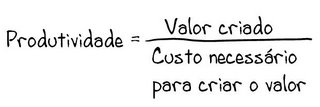
O aumento dos salários na base da pirâmide não só beneficia as pessoas que o recebem, como promove a morte das empresas incapazes de os pagar, podendo contribuir para o aumento real da produtividade agregada do país (nos Estados Unidos ainda não está acontecer porque o numerador não está a crescer mais do que o denominador). Esta morte, como é natural, e não imposta por um governo, liberta recursos para outras empresas quando são precisos e sem que fiquem por aplicar. É, sem tirar nem pôr, ao vivo e a cores, o Flying Geese a funcionar.
"A secretária de Estado da Promoção da Saúde admitiu esta quarta-feira dificuldades em contratar especialistas de obstetrícia e ginecologia para o Serviço Nacional de Saúde (SNS), alegando a concorrência "desigual" do setor privado.
...
Segundo disse a governante, o "problema" na contratação destes especialistas para os hospitais públicos reside na "concorrência com os privados que é desigual"."
"the presence of firm-level heterogeneity implies the presence of various market frictions, like causal ambiguity and asset specificity/uniqueness.
...
These market frictions interact to create the need for cost minimization, or the opportunity for value creation and value capture.
...
We then apply the market-frictions logic to organizational boundary and economic rents questions to show how joining cost minimization, value creation, and value capture can be achieved through considering various market frictions. More generally, we maintain that it is useful to view market frictions as the fundamental building blocks of strategic management, and the analysis of new combinations of market frictions may provide new strategic insights."
As "market frictions" são o que cria as imperfeições de mercado, são o que gera a concorrência imperfeita. Sem imperfeições de mercado não há criação e captura de valor, só há lucros raquíticos e empobrecimento. Faz-me tanta impressão que estas coisas não sejam evidentes para a academia.
"When the world's business and political leaders gathered in 2018 at the annual economic forum in Davos, Switzerland, the mood was jubilant. Growth in every major country was on an upswing. The global economy, declared Christine Lagarde, then the managing director of the International Monetary Fund, "is in a very sweet spot." Five years later, the outlook has decidedly soured.
...
A lot has happened between then and now: A global pandemic hit; war erupted in Europe; tensions between the United States and China boiled. And inflation, thought to be safely stored away with disco album collections, returned with a vengeance. But as the dust has settled, it has suddenly seemed as if almost everything we thought we knew about the world economy was wrong. [Moi ici: Mas quem é que achava que estava tudo bem?]
The economic conventions that policymakers had relied on since the Berlin Wall fell more than 30 years ago - the unfailing superiority of open markets, liberalized trade and maximum efficiency look to be running off the rails. [Moi ici: Este blogue sempre achou errada a crença absoluta na maximização da eficiência, basta recordar os marcadores eficiência, eficientismo e denominador]
...
Globalization, seen in recent decades as unstoppable a force as gravity, is clearly evolving in unpredictable ways. [Moi ici: Outra tema caro a este blogue, há mais de 17 anos que escrevemos aqui sobre as forças a minar a globalização. Recordo O regresso dos clientes, Especulação - um epílogo?] The move away from an integrated world economy is accelerating. And the best way to respond is a subject of fierce debate.
...
As the consulting firm EY concluded in its 2023 Geostrategic Outlook, the trends behind the shift away from ever-increasing globalization "were accelerated by the Covid-19 pandemic - and then they have been supercharged by the war in Ukraine."[Moi ici: Nunca esqueço de Maio de 2020 - El coronavirus actúa como acelerador de cambios que ya estaban en marcha]
...
Associated economic theories about the ineluctable rise of worldwide free market capitalism took on a similar sheen of invincibility and inevitability. Open markets, hands-off government and the relentless pursuit of efficiency would offer the best route to prosperity. [Moi ici: Recordo aquilo a que chamo a doença anglo-saxónica, recordo as críticas que fazemos há anos à automatização - Especulação sobre mais um falhanço da automatização, recordo o que escrevo sobre Kevin O'Leary]
...
The story of the international economy today, said Henry Farrell, a professor at the Johns Hopkins School of Advanced International Studies, is about "how geopolitics is gobbling up hyperglobalization. [Moi ici: O que me impressiona nestas análises é que me parecem demasiado macro. Há mais de uma década que a globalização está a recuar por causa de Mongo, por causa do fim do modelo do século XX, por causa de "We are all weird"]
...
"Ignoring the economic dependencies that had built up over the decades of liberalization had become really perilous," Mr. Sullivan, the U.S. national security adviser, said. Adherence to "oversimplified market efficiency," he added, proved to be a mistake." [Moi ici: O que me impressiona nestas análises é a crença de que a economia é como a física newtoniana, quando a economia é a continuação da biologia"]
Trechos retirados do artigo, "Failures of Globalization Shatter Long-Held Beliefs", publicado no NYT do passado Domingo.
"Congress passed legislation intended to make life better for people allergic to sesame seeds. Instead, it made things worse. The bill, passed with overwhelming bipartisan support and signed into law by President Biden in 2021, requires manufacturers to label sesame on their products starting this year.
In response, some companies began adding sesame to products that hadn't included it in the past-saying it was safer to add sesame and label it, rather than certify they had eliminated all traces of it.
People with sesame allergies say the result is fewer sesame-free food options, as well as new and unexpected risks in foods they used to eat without worry."
Sexta-feira passada ao final do dia, acabei de ver o filme "The Martian" em folhetins de cerca de 20 minutos ao longo de 3 ou 4 dias.
Gostei muito. MUITO MESMO!
Comecei a gostar do filme logo ao final dos primeiros 20 minutos. Experimentei uma sensação positiva indefinida que se manteve e até se reforçou ao longo do filme.
No final do filme percebi o porquê. É uma ode ao locus de controlo interno. Engraçado, no almoço dessa mesma sexta-feira com o meu parceiro das conversas oxigenadoras tinha falado do locus de controlo interno, um tema que acompanha este blogue há anos (2007 - ver também o marcador). Na altura escrevi aqui:
"É arrepiante a situação... quem tem o seu Locus de Controlo no exterior, ao atribuir poder a forças exteriores, para ditar o destino, para mudar as coisas... quase não tem motivação para agir, para melhorar, para actuar... afinal de contas, sente-se, acredita que é uma espécie de Calimero jogado de um lado para o outro pelos deuses! Esta postura degenera em "the discovery that loss of control leads to learned helplessness, a state similar to depression.""
O click no final do filme ocorreu-me quando Mark Watney (o marciano) diz:
"When I was up there, stranded by myself did think was going to die? [Moi ici: Estava sozinho e sem contacto com a Terra] Yes, absolutely.
And that's what you need to know going in because it's going to happen to you. This is space. It does not cooperate. At some point everything is going to go south on you. Everything is going to go south and you’re going to say 'This is it. This is how I end.' Now you can either accept that or you can get to work. [Moi ici: "You", não o papá, não o governo, não o outro, mas eu] That’s all it is. You just begin. You do the math, you solve one problem. Then you solve the next one, and then the next and if you solve enough problems you get to come home."
E o que é a vida? Aqui recordo o Livro do Génesis no capítulo 3:
"17 E ao homem disse: «Já que deste ouvidos à tua mulher e comeste do fruto da árvore, do qual eu te tinha proibido de comer, a terra fica amaldiçoada por tua causa, e será com grande sofrimento que dela hás de tirar alimento, durante toda a tua vida.
18 Só produzirá espinhos e cardos e tu terás de comer a erva que cresce no campo.
19Só à custa de muito suor conseguirás arranjar o necessário para comer, até que um dia te venhas a transformar de novo em terra, pois dela foste formado.
Na verdade, tu és pó e em pó te hás de transformar de novo."
A vida envolve inerentemente lutas que os indivíduos têm de enfrentar e superar obstáculos para encontrar significado e realização. E a responsabilidade de agir é de cada um, não podemos esperar que outros decidam por nós.
E esta mensagem sobre o locus de controlo interno não é só sobre uma pessoa abandonada e isolada num planeta deserto. É quando a tripulação da Hermes a caminho da Terra resolve "amotinar-se" para regressar a Marte e salvar Mark. É quando a tripulação da Hermes tem de tomar uma decisão sobre como agarrar Mark no espaço, começam por desligar o som, retirar Houston da tomada de decisão. A decisão é deles.
Vivo num país em que o locus de controlo mais comum está no exterior. Toda a gente quer ser ajudada, toda a gente sente-se coitadinha. Mais, toda a gente pensa que tem direito a essa ajuda.
Os partidos políticos, da direita socialista à esquerda socialista, até a Iniciativa Liberal vai aderindo ao catecismo (têm de conquistar mais e mais votos), passam a mensagem: Todos têm direito a um queijo diário!!!
Entretanto, ontem a almoçar com o meu parceiro das conversas oxigenadoras fiquei a saber que a filha começou a trabalhar numa empresa francesa ... 38 dias de férias por ano. O namorado dela, numa outra empresa francesa... 48 dias de férias por ano. Entretanto, perguntei à minha filha, numa empresa na Suíça... 32 dias por ano.
Como é que tantos jovens portugueses ainda ficam por cá neste país socialista?
No último livro de Seth Godin, "The Song of Significance: A New Manifesto for Teams" encontrei um texto sobre um tema que me é muito caro:
"49. Focusing on the Extreme User
Every organization has extremists: the employees, customers, or investors who demand more, pay more, use more, talk more, and share more. These extreme users have great needs and offer greater benefits. They are the heavy users, people with disabilities, the sneezers, and the professionals. They're the committed. The Stanford d.school has argued that focusing on these users teaches the organization lessons that will work for all users. This is contrary to the typical industrial organization, which is happy to lose the extremists if it helps them serve the masses more easily. Find the nerds, the motivated, and the overlooked, and figure out what they need to thrive. That exploration will reveal what others have needed as well but didn't care enough to speak up about."
Ontem no JdN em "Alemanha cola-se a Espanha nas vendas de componentes - As exportações de componentes para a indústria automóvel cresceram 26,9% em abril, o 12º mês consecutivo de subida homóloga." sublinhei:
"Após um máximo mensal histórico em março, quando as exportações de componentes automóveis ascenderam a 1.112 milhões de euros, as vendas destes produtos ao exterior cifraram-se em 899 milhões em abril, uma subida homóloga de 26,9%, indicou a Associação de Fabricantes para a Indústria Automóvel (AFIA).
A associação destaca que este foi o 12º mês consceutivo de crescimento em termos homólogos.
...
Em termos de crescimento homólogo, as vendas para Espanha subiram 21% no acumulados dos primeiros quatro meses do ano.
Já o mercado alemão apresenta, para igual período, um aumento no valor das vendas na ordem dos 29,5%, o crescimento mais expressivo entre os cinco principais destinos das exportações do sector."
Recordo o que escrevi aqui há dias:
"Just why should the organization renew itself when there is no crisis?
...
Nothing breeds complacency like success. The point for maximum strategic paranoia is when you are at the top of your game."
Ao ler o artigo de ontem no JdN fiz logo a ligação para um artigo do passado dia 9 de Junho no Eurointelligence de Wolfgang Münchau, "How an industry declines":
"There is a lot of confusion about de-industrialisation. It does not necessarily mean less industry and fewer factories. It means less money - a falling share of industry in an economy's value-added. That has a lot of important consequences, but not necessarily the ones people expect, or discuss.
...
The most important impact of the slowly creeping de-industrialisation is a loss of profits, not necessarily a loss of activity. That translates into relatively lower wages.
...
The diesel scandal was the last hooray of the German car industry.
They will still make cars in Germany in the future. But the industry will be dominated by other plays, it will employ fewer people, it will feed fewer suppliers, and its role in society will diminish."
No final desta leitura recordo que procurei mentalmente fazer um paralelismo com a deslocalização do têxtil alemão para Portugal nos anos 60.
A ser verdade o que escreve Wolfgang Münchau, a AFIA devia agora estar a promover a paranóia estratégica entre os seus membros ("The point for maximum strategic paranoia is when you are at the top of your game"). Quantos iriam ouvir esse apelo?
No livro que acabei de ler na passada segunda-feira, "Lead and disrupt: how to solve the innovator's dilemma" de Charles A O' Reilly III and Michael L. Tushman, os autores contam a estória da empresa Ball Corporation:
"Ball is recognized around the world for its high-quality metal and PET plastic food and beverage containers, and for its leading aerospace technology products and services."
O livro começa o texto sobre a Ball da seguinte forma:
"The story began in 1880 when Frank Ball and his four brothers began making wood-jacketed tin cans to carry kerosene for lanterns. However, soon after their founding, glass jars became an economical alternative to wooden buckets, so the Ball brothers quickly converted their business to produce glass jars, including what would become their most successful offering, the screw-top Ball jar that generations of Americans have used for home canning."
Esta empresa ficou-me na memória pela sua capacidade de evoluir na paisagem económica do seu tempo.
"It is widely believed that restructuring has boosted productivity by displacing low-skilled workers and creating jobs for the high skilled."Mas, e como isto é profundo:"In essence, creative destruction means that low productivity plants are displaced by high productivity plants." Por favor voltar a trás e reler esta última afirmação. . "Lovaglia’s Law: The more important the outcome of a decision, the more people will resist using evidence to make it."
"If an organisation is too stable it can ossify, but if it is too unstable it can disintegrate. Successful organisations work between these two conditions or states, in what Stacey called ‘the chaos zone’."
"If the customer doesn't care about the price, then the retailer shouldn't care about the cost," “It's not enough that we do our best; sometimes we have to do what's required”. "Das Leben, das uns gegeben ist, ist uns nicht als etwas Fertiges gegeben, sondern wir müssen es uns gestalten, und zwar jeder sein eigenes." "Eine Regierung, die nichts wert ist, kostet am meisten." "Forget trying to persuade them; light their pants on fire." "O futuro é o que importa. O futuro é a base do significado, é de onde vem o projecto que alguém tem para si próprio" "The single biggest problem in communication is the illusion that it has taken place."
“It is not the strongest of the species that survives, nor the most intelligent; it is the one that is most adaptable to change.”
"o Marketing só existe a partir do pensamento estratégico, caso contrário "não resulta"" "It is difficult to get a man to understand something, when his salary depends upon his not understanding it" "Perder diversidade é como arrancar páginas de um livro. Quantas páginas poderemos arrancar até deixar de compreender o enredo?" The great enemy of the truth is very often not the lie – deliberate, contrived and dishonest – but the myth, persistent, persuasive, and unrealistic. Belief in myths allows the comfort of opinion without the discomfort of thought."
"By strategy, I mean a cohesive response to a challenge. A real strategy is neither a document nor a forecast but rather an overall approach based on a diagnosis of a challenge. The most important element of a strategy is a coherent viewpoint about the forces at work, not a plan."
"Un desastre està punt de succeir a Espanya. El malentès de la gravetat de la crisi costarà car als inversors, ja que tindrà profundes conseqüències per a tot el sistema bancari europeu", afirma.
Entre d'altres coses, Mauldin diu que "els inversors estan fumant crack si creuen que els bancs espanyols són entre els més forts d'Europa, ja que estan amagant les seves pèrdues".
“… there are no “sunset” industries condemned to disappear in high wage economies, although there are certainly sunset and condemned strategies, among them building a business on the advantages to be gained by cheap labor”
"o vencedor da vida, o optimista que vive em incesto com o próprio ego, é o traço mais frágil do líder"
"We shall not grow wiser before we learn that much that we have done was very foolish." You may not be able to change the world but can at least get some entertainment & make a living out of the epistemic arrogance of the human race.
"I wanted you to see what real courage is, instead of getting the idea that courage is a man with a gun in his hand. It's when you know you're licked before you begin but you begin anyway and you see it through no matter what. You rarely win, but sometimes you do."
“Trust your guts. But not too much!”
"Customers will try 'low-cost providers,' because the majors have not given them any clear reason not to." "
"Natal é quando as Crianças pedem e os Pais pagam. Défices é quando os Pais pedem e as Crianças pagam."
"A imprevidência dos povos é infinita, a dos governos é legal"
"What a man sees depends both upon what he looks at and also upon what his previous visual-conceptual experience has taught him to see"
“The leaders first task is to be the trumpet that sounds a clear sound”
"lamented the lack of any systematic data on the scale of unfunded IOUs that care-free politicians have handed out like confetti."
"Let them call me rebel and welcome, I feel no concern from it; but I should suffer the misery of devils, were I to make a whore of my soul..."
O problema não é o consumo. O problema é o consumo assente em endividamento."
"There are designations, like "economist", "prostitute", or "consultant" for which additional characterization doesn't add information."
When it becomes more difficult to suffer than change, you will change"
"Hope is not a strategy and a crisis is a terrible thing to waste"
The more you can see of the present, the more you can see of the future"
Yes, You can change the future, but only changing the present"
"Entrepreneurship is 'Having aspirations greater than your resources'"
“The single biggest reason companies fail is they overinvest in what is, as opposed to what might be."
"The first principle is that you must not fool yourself - and you are the easiest person to fool. So you have to be very careful about that"
"A estabilidade é uma ilusão"
"When we create the conditions of possibility, the universe becomes our co-conspirator"
Thinking about doing is not doing. Talking about doing is not doing. Doing is doing."
"'God has created me to do him some definite service. He has committed some work to me which he has not committed to another'.
...
"Each of us has a mission, each of us is called to change the world, to work for a culture of life, a culture forged by love and respect for the dignity of each human person.
"As our Lord tells us in the Gospel we have just heard, our light must shine in the sight of all, so that, seeing our good works, they may give praise to our heavenly Father."
"The future is not there waiting for us. We create it by the power of imagination."
"confusing testosterone with strategy is a bad idea"
"Much consulting involves the application of models to a system, as opposed to getting involved in the system as a positive change agent""
"O Portugal que pára sem orçamento é precisamente aquele que vive dele e que há todo o interesse em parar."
"credibilidade da política financeira e dos seus executores está ao nível da credibilidade de uma barraca das farturas"
"The role of the manager is thought to be reduction of uncertainty rather than the capacity to live creatively in it"
"today an entrepreneur is closer to artists than managers"
"A business without a path to profit isn’t a business, it’s a hobby"
"If no one’s upset by what you’re saying, you’re probably not pushing hard enough. (And you’re probably boring, too.)"
"Storytelling isn’t just how we construct our identities, stories are our identities"
"'He who has a why to live can bear almost any how' "
"They can because they think they can"
"Se há coisa que não suporto é misturar catequese com negócios, é a incapacidade para calçar os sapatos do outro e só pensar na nossa posição de coitadinhos, pobres vítimas indefesas dos maus e que por isso precisamos do Estado todo poderoso para nos proteger e, nem percebem na volta, os juros que o Estado cobra por esse serviço mafioso de protecção que, ainda por cima não resolve nada."
"Empathy is like a universal solvent. Any problem immersed in empathy becomes soluble."
"In victory, do not brag; in defeat, do not weep"
"Value it's a feeling not a calculation"
"An economist is someone who has had a human being described to him, but has never actually seen one."
"Don't finish first--it's not about running a rat race. Start with a better ending in mind."
"If you sit in on a poker game and don’t see a sucker, get up. You’re the sucker.”
"The 'value added' for most any company, tiny or enormous, comes from the Quality of Experience provided."
"Crediting government with the success of entrepreneurs is like crediting the guy who built Bill Gates’ garage with the success of Microsoft."
"I have found that assuming social scientists understand the difference between correlation and causality is not generally a good one."
"Promising never to raise taxes, without reaching a deal on spending, really means a high and rising commitment to future taxes."
"Some things are so foolish that only an intellectual could believe them, for no ordinary man could be such a fool"
"os bancos não financiam a economia, a poupança sim"
"I do not know the key to success, but the key to failure is trying to please everybody"
"Never be afraid to try, remember... Amateurs built the ark. Professionals built the Titanic."
"terms such as 'experiment' and 'observation' cover complex processes containing many strands. 'Facts' come from negotiations between different parties and the final product - the published report - is influenced by physical events, dataprocessors, compromises, exhaustion, lack of money, national pride and so on."
"'science in the making' is 'the consequence of [a] settlement' of 'controversies'."
"If the state wishes to spend more, it can do so only by borrowing your savings or taxing you more. And it's no good thinking someone else will pay, that someone else is you."
"All failures of strategy are rooted in the assumption that outcomes are predictable."
"Doing things like your bigger competitors is how to get killed in the wars out there"
“Uma moeda boa e forte é como a saúde. Só lhe damos verdadeiramente valor quando não a temos.”
"Life’s tough. It’s tougher if you’re stupid"
"O homem de bem exige tudo de si próprio; o homem medíocre espera tudo dos outros"
"Change is a threat when done to me, but an opportunity when done by me."
"As elites foram deixando de falar das exportações à medida que se foi percebendo que o país consegue exportar sem elas"
"Your toughest competition is the little voice inside your head telling you to stop"
"Pain is just weakness leaving your body"
"Built to last" is bad economics. Built to do something great" is the better idea. Think: "Creative destruction."
"the world is an uncertain place no matter how many Greek letter equations you affix to a problem."
"You never change things by fighting existing reality. To change s.th., build a new model making the existing model obsolete"
“No, no, you're not thinking; you're just being logical.”
"Success is not a destination. It's the trail you leave behind you."
"Winners make a habit of manufacturing their own positive expectations in advance of the event."
“You’ve got to start with the customer experience and work back toward the technology – not the other way around”
"Strategy as the "smallest set of - intended or actual - choices and decisions sufficient to guide all other choices and decisions sufficient to guide all other choices and decisions."
"When something is commoditized, an adjacent market becomes valuable"
"nature evolves away from constraints, not toward goals"
"There aren't any textbooks on what to stop doing!"
"With great power comes great irresponsibility "
"Weird things happen when you take price out of the equation for consumers"
"‘It’s so damn complex. If you ever think you have the solution to this, you’re wrong and you’re dangerous.’"
"Saruman believes it is only great power that can hold evil in check, but that is not what I have found. I found it is the small everyday deeds of ordinary folk that keep the darkness at bay. Small acts of kindness and love."
"Increasing stuff that doesn't add value dilutes existing value."
"O federalismo não é a alternativa à troika, é a troika para sempre."
"Never underestimate the difficulty of changing false beliefs by facts"
"Stressors are information"
“If you hear a “prominent” economist using the word ‘equilibrium,’ or ‘normal distribution,’ do not argue with him; just ignore him, or try to put a rat down his shirt.”
"The advantage of experiences over things for most of us is that we can make them seem unique, which = scarce, which = value"
"Pedras no caminho?
Guardo todas, um dia vou construir um castelo"
"Without risk, faith is an impossibility."
"Não posso com quem vive a achar que os outros lhe devem sempre alguma coisa."
"In a world of increasing automation, our ability to perform tasks is not nearly as important as our ability to dream. The questions we need to ask are not ones of action, but ones of meaning"
"Me arrancam tudo a força e depois me chamam de contribuinte."
"Letting people vote for expensive programs that “somebody else” will finance is a good recipe for getting people to vote irresponsibly"
"what's fairness gotta do with pricing based in value?"
"The epic battle of our generation is between the status quo of mass and the never-ceasing tide of weird."
“Price is emotional”
"There will always be a reason why you can't pursue it, until competitors create a reason why you must."
"The most important thing to study is opening theory"
"The greater the contrast, the greater the potential"
“Customers don't care about your solution, they care about their problems.”
"Todos querem conhecer a verdade, mas o que desejam é que lhes contem uma mentira em que não sejam protagonistas."
"Execution efficiency strangles innovation in the crib, but not with malice, by default.”
"Our obsession with scalability is getting in the way of unleashing the potential of the 21st century."
"The system is optimized to mitigate risk, not create value"
"Champions are made when no one is looking"
"Don't bargain on value. Half as expensive is often twice as cheap."
"Customers care about outcomes, not effort, technology, or originality."
" I can't believe it. That is why you fail."
"You don't have to pick between 1) playing the game and 2) not playing the game. You can *change* the game."
""The first principle is that you must not fool yourself and you are the easiest person to fool." "
"Debt may have ended up as a problem, but it always starts out as a solution."




%2006.21.jpeg)