A apresentar mensagens correspondentes à consulta Jenner ordenadas por data. Ordenar por relevância Mostrar todas as mensagens

terça-feira, novembro 11, 2025

Foco, foco, foco.

Há anos que aqui no blogue escrevo sobre as empresas que querem continuar a ser decatlonistas como o Bruce Jenner. Por exemplo, em 2015 escrevi A sua empresa tem cada vez menos espaço para ser um Bruce Jenner, e há dias no outro blogue escrevi "How to increase the economic return on certification? (Part XII)" onde voltei a referir que as emperesas decatlonistas não têm qualquer hipótese contra "salami slicers".

Entretanto, ontem Roger Martin publicou "What has Changed the Most for Strategy". Sublinho:

"Pick a WTP in which you aim to create a matching and powerful HTW. 

Invest in that WTP/HTW combination quickly and aggressively.

If your WTP is too broad and/or your investment is slow or tentative, someone else will be able to out-invest you — and customers will figure that out fast.

And when they do, it is a quick downward spiral for you."

Roger Martin descreve aqui o colapso da estratégia “decatlonista” — empresas que tentam cobrir demasiados “Where to Play” (mercados, produtos, clientes) acabam por não investir o suficiente em nenhum deles.

A empresa especialista, ao contrário, concentra investimento e foco, ganha escala e vence. 

"The path to a logical competitive conclusion is shorter. In 1981, mediocre companies could survive as viable entities for decades.

...

They could then but they can’t now.

If you can’t find a Where-to-Play (WTP) in which you can put in place a How-to-Win (HTW), the clock is ticking fast for your demise."

Num mundo de custos fixos elevados e de descoberta instantânea de valor, as empresas generalistas não têm tempo nem margem. O mercado elimina rapidamente quem não tem uma vantagem clara — exactamente o que acontece às empresas “decatlonistas”, boas em tudo e excelentes em nada. 

"If you are investing energy and capital in activities without an intention of winning, you are fooling yourself. I hear it all the time: Roger, we can't exit that mediocre product line/business unit because our overall sales will shrink. [Moi ici: Eu também e sempre me fez impressão] They foolishly assume that their position in that mediocre business is stable. It isn't. It will be crushed — quicker than ever. And it will continue to bleed investment resources away from product lines/businesses that have a chance of an upward spiral.

Figure out a place to stand - and fight to win. Out-invest your competition. If you can't, you are fooling yourself. If you can, double down and take the fight to your competition."

Voltamos às formigas num piquenique

terça-feira, janeiro 14, 2025

"Choose Your Customers and Choose Your Future"

Praticamente desde o início deste blogue que chamamos a atenção para a importância da determinação dos clientes-alvo. Determinação é a palavra porque deve ser uma escolha consciente. Não se pode ser tudo para todos:

"Every project has customers. It might be the patients your non-profit serves, or your donors. It might be the person who walks into the coffee shop to deal with you when you're working as a clerk, or it might be your boss.
As the song says, "You've got to serve somebody." When we choose our customers, we embrace their worldview and the system they are part of. Their budgets become our budgets. Their priorities become ours as well. [Moi ici: Muitas empresas não percebem que têm de escolher os clientes que devem servir, não devem considerar que todo o tipo de clientes deve ser servido]
Customers can be a choice. We can be passive and take what we get, or we can choose to be active and seek out the customers we'd like to work with. [Moi ici: Muitas empresas permanecem passivas, aguardando que os clientes as procurem, sem perceberem que, ao serem activas, podem atrair os clientes mais adequados aos seus objectivos estratégicos. Esta mudança exige um esforço deliberado de comunicação e posicionamento no mercado.] It used to be simple. The customer walked into your shop and gave you money. There was a retail storefront, a way of getting the word out, and the customer, You no longer have to take all orders or simply wait for who's next. Instead, we have a chance to send a message and let potential customers know who we're there for. [Moi ici: Na era digital, as empresas têm ferramentas para definir a sua mensagem e atrair os clientes certos. Não precisam de ser generalistas - recordar Bruce Jenner - nem de aceitar todos os pedidos. Uma mensagem clara e focada nos valores da empresa ajuda a segmentar e a captar clientes alinhados]
Here are some of the choices that customers and clients dictate:
  • The price
  • Support and service
  • Exclusivity
  • Co-creation
  • Durability
  • The status it brings
  • Public persona of the brand
  • Sustainability [Moi ici: Cada tipo de cliente exige adaptações estratégicas. Por exemplo, um cliente que valoriza exclusividade espera um serviço personalizado, enquanto um cliente focado em sustentabilidade quer garantias claras sobre o impacte ambiental. Escolher o cliente certo é alinhar estas exigências com o que a empresa pode oferecer sem comprometer os seus valores ou margens]
...
We often get stuck in a customer loop, dancing ever faster for the customers we have instead of spending time and resources replacing these folks with the customers we'd like to have instead. [Moi ici: Muitas empresas focam-se em satisfazer os clientes que já têm, mesmo quando estes não são os mais lucrativos ou estratégicos, o que impede o crescimento a longo prazo. Rever a carteira de clientes regularmente e investir em novos perfis pode ser mais rentável]
The best way for a freelancer to succeed is to find better customers. Better customers that pay more, demand more, and spread the word as well. Better customers aren't always easy to find, which is why the more common and convenient approach is to take what you can get.
You can choose your customers, and train and reward the ones you'd like to keep. By rewarding some behaviors over others, by keeping some promises but not making others, by having standards, you get the audience you deserve.
...
The customers you pay attention to - and those you fire—change the way you spend your days (if you're not firing customers, you're surrendering your future to whoever walks in the door). [Moi ici: Há clientes que consomem desproporcionalmente tempo e recursos sem trazer o retorno adequado. Aprender a "despedir" clientes pouco rentáveis ou desalinhados é essencial para garantir o foco nos clientes estratégicos e no futuro da empresa. Conhece a curva de Stobachoff da sua empresa?]
You can identify and reward the customers you'd like to spend your days with. You have the freedom and power to do this if you choose.
It's not easy to persuade someone to want what you want.
It's much more productive to find people who already want to go where you'd like to take them."

Trechos retirados de "This is strategy" de Seth Godin.

quarta-feira, abril 17, 2024

"Estratégia para outros, a minha empresa não precisa"

"I frequently get challenged by leaders of companies in highly fragmented industries as to why I am I so obsessed about them winning. They argue that they don't need to think about winning over every other player. They just need to do a good job serving their customers."

Parei a leitura deste artigo, "Strategy in Highly Fragmented Industries" para recordar experiências com este tipo de lideranças:

Por falar em rabo, alguns leitores deste blogue hão-de lembrar-se da estória de um destes líderes dizer:
"Os clientes são como os peidos, uns vão e outros vêm"

Voltemos ao artigo: 

"That was the case because playing in my highly fragmented market taught me how to play at a level of competitiveness that was completely inadequate for the world outside my little market."

Tão verdade que até dói!!! 

Recordo outro tema: Bruce Jenner - A sua empresa tem cada vez menos espaço para ser um Bruce Jenner

Um último recorte:

"But, if those inside the industry aren't making the investments that produce a better way of serving customers, somebody else outside the industry will. And the best targets are fragmented industries in which no single player thinks that it needs to invest to Play-to-Win."

Pois, gente que acha que pensar estratégia é para outros, não para a sua empresa. 


quinta-feira, maio 06, 2021

Estratégias cancerosas não se recomendam

Aqui no blogue costumo escrever sobre as estratégias cancerosas. Por exemplo:

"As humans we bring our own intentions and purposes to what we are doing, whether we are conscious of what these are or not. These purposes, especially in today’s world, are not driving towards a healthy system, that is to say one that has the capacity to sustain humans.
...
One of the biggest misalignments and a driver of an unsustainable system is the goal of continual growth. Many of our systems are aimed towards this goal, and like a cancer’s goal in the body is growth, it is runaway and will eventually cause collapse. To increase market share, means everything will be engulfed. We need to find goals that are more aligned to the living system we are a part of.
...
‘Those who do not have power over the story that dominates their lives - the power to retell it, rethink it, deconstruct it, joke about it, and change it as times change - truly are powerless, because they cannot think new thoughts.’"

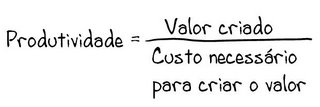
Isto está relacionado com o desafio da produtividade. Como aumentar a produtividade sem ser à custa do aumento da escala? A maioria não conhece a alternativa!

sábado, junho 20, 2020

Beware of the invisible water in the tank

Seth Godin in a recent blog post, “The dominant culture”, wrote:

 “One of the great cartoons involves two goldfish in a tank talking to one another. One responds in surprise, “wait, there’s water?””

This remind me of a growing concern in my analysis of the business world. Too often we analyze information about certain cases, about certain solutions, about certain methodologies and approaches, without being aware of the assumptions on which they are based. Why? Because no one cared about the water in the tank. 


For example, for years and years I have heard comments and stories, I have read wonders about the Toyota Production System.


Is it spectacular? Yes!


However, it was only in 2017 that I read in an article something that nobody ever says, either because they are unaware or because it is the water in the tank ... - Toyota "freezes" production 8 weeks in advance.


How many companies can afford to do this? And how many companies cannot do it, but try in good faith to implement the Toyota Production System in their production?


Recently also, the Wall Street Journal published an interesting article, “The Surprising Way Companies Can Shore Up Their Financial Strength”:

“The Drucker Institute’s statistical model serves as the basis for the Management Top 250, an annual ranking produced in partnership with The Wall Street Journal.

In total, we examined 820 large, publicly traded companies last year through the lens of 34 indicators across five categories: customer satisfaction, employee engagement and development, innovation, social responsibility and financial strength.

To construct our ranking, corporations are compared in each of the five areas, as well as in their overall effectiveness, through standardized scores with a range of 0 to 100 and a mean of 50.

Our model reflects shareholder returns, along with a variety of metrics that capture how effectively a firm has deployed its capital, among other things.

.

For companies in the health-care sector, we found over the course of the seven-year period a significant statistical relationship between financial strength and one other category: employee engagement and development. To be precise, a five-point gain in the latter produced a 0.79-point increase in the former.

.

That may not look like a big deal on its face. But it would have been enough to vault a company from the 50th percentile in financial strength to the 56th in last year’s rankings—up 38 spots on the list.

Meanwhile, it is a whole other story for companies in the industrial sector, which includes the airlines. There, it is social responsibility that should command the most attention. A five-point rise in that category translated into a 0.49-point upturn in financial strength.

For example, a health-care company wanting to lift its customer-satisfaction score can expect to reap an extra 0.49 points in that category for every five-point advance in employee engagement and developmentBut an industrial company hoping to achieve a similar bump in customer satisfaction should shoot for a five-point improvement in another area: innovation.

While reading the article I thought about the water in the tank. Do these recommendations, do these relationships apply equally to all companies in the same economic sector?


I don't think so.


Some days ago, someone made the following comment to me:


“KPIs for production are simple: efficiency, low losses.”


When I heard that the picture of Bruce Jenner came to my mind.


Beware of the invisible water in the tank.

domingo, julho 14, 2019

How does the strategic direction of your organization influence or frame your quality management system? (Part I)

ISO 9001:2015 mentions "strategic direction" in clauses 4.1, 5.1.1b), 5.2.1 a) and 9.3.1.

How does the strategic direction of your organization influence or frame your quality management system?

ISO 9000:2015 defines strategy as "plan to achieve a long-term or overall objective". Also, ISO 9000:2015 defines policy as "intentions and direction of an organization as formally expressed by its top management".

Not very helpful.

If we think on an abstract ladder we will get:
How does the strategic direction of your organization influence or frame your quality management system?

What is an organization?
An organization can be viewed as a set of interrelated processes:
Where C's are customers at different stages of their relationship with an organization as set of interrelated processes (P).

If we choose an economic sector and compare performance among organizations we will see a lot of variability. There is more variability among organization within the same economic sector than between economic sectors:
So, same economic sector, same country, same rules, same people, ... what is different?

Something inside the organizations: strategy.

Let us make a comparison with sports.
When I was a small boy I watched in TV the Olympics at Munich in 1972. I remember this champion, Vasily Alexeyev:
Look into his body, a system prepared to compete and win.

Then came the 80's and there was a champion in athletics, Carl Lewis:
Look into his body, a system prepared to compete and win. A system very different from Vasily's.

Each sport requires a different set of skills, requires a different kind of body. Even in the same sport, like running, 100 m champions are different from 10 000 m champions.

What happens when an athlete wants to be good at everything?
Let us go again to the Olympics and to Montreal 1976.
Bruce Jenner won the gold medal in the decathlon, setting a world record. Bruce was a generalist among generalists and that year he was the best. For example:

  • He run the 100 m in 10.94 seconds
  • He pushed the shot in shot put at 15.35 m
  • He threw the javelin at 68.52 m
When you're a generalist competing with other generalist the competition works at a certain level.

In the same Olympics there were specialists running 100 m, pushing the shot or throwing the javelin and the gold medalists had this performance
  • Hasely Crawford  run the 100 m in 10.06 seconds
  • Udo Bayer pushed the shot in shot put at 21.05 m
  • Miklós Némete threw the javelin at 94.58 m
Bruce Jenner, a champion among generalists wouldn't had a chance against the specialists (Valery Borzov was bronze medal at 100 m with 10.14 seconds)

I believe that in every economic sector we are seeing more and more specialists, salami slicers. Organizations that don't pretend to win, to serve all kinds of customers. They pick one niche, one tribe and they become specialists in serving them, generalists have no chance.

Picking a strategic direction is deciding to be a specialist, is deciding whom and where to serve. It makes no sense speaking about process benchmarking in general. Will an organization compare its processes with another organization that serves different customers from a different segment and with different priorities and expectations?

According to your organization's strategic direction the quality management system can be like Vasily Alexeyev or Carl Lewis or ... 

Part II will be about different kinds of customers.
Part III will be about interested parties and ecosystems.

quarta-feira, março 06, 2019

Como aumentar a facturação quando não se pode aumentar a produção por falta de pessoas? (parte V)

Parte I, parte II, parte III e parte IV.

Comecemos pelo último texto citado:

"Por outro lado, grande parte dos profissionais que dominam este ofício trabalha por conta própria, mostrando pouca disponibilidade para aceitar desafios por conta de outrem que embora estejam hoje mais valorizados monetariamente, continuam a não ser suficientemente aliciantes."
E acrescentemos uma citação do último postal:
"Business model innovation is a powerful force of abrupt market-level change, in some cases more powerful than technology.
...
Likewise, don’t let an excessive focus on your products prevent you from paying attention to your business. Many executives at incumbent businesses, wedded to their business models, react to disruption by blaming their products. As they see it, all the newfangled lemonade stands out there are stealing customers because they have created better-tasting lemonade. Stop blaming your lemonade! The truth is that the upstart’s lemonade tastes the same as yours, or maybe even worse. It’s the new business model that is stealing your customers, not the product. ”
Quem lê este blogue sabe o que é Mongo, a metáfora do Estranhistão. O mundo cauda longa a espalhar-se por todo o lado, em vez das grandes séries do século XX, customização, individualização, interacção, co-criação, proximidade, pequenas quantidades.

Há dias em "Calçado português? Bom no fabrico, desconhecido na marcavoltei a ler a actualização dos números:
"A conclusão nessa altura foi que tanto o calçado masculino como o feminino made in Portugal tinha melhor avaliação (média de 34 e 31,50 euros, respectivamente) do que o italiano (31,50 euros e 29,60 euros) quando a origem do produto não era revelada. Só que, depois de dar a conhecer a origem, o sapato português desvalorizava (-18,2%, para 27,80 euros, no masculino; e -18,4%, para 25,70 euros, no feminino), ao passo que o calçado italiano valorizava ligeiramente (+1,6% no masculino) ou mantinha o preço inalterado (no calçado feminino), ainda assim 13,6% acima do preço do calçado português."
Recordo outra comparação entre o calçado italiano e o português, a dimensão, aqui: "Calçado italiano e português" (empresas bem mais pequenas - também por causa disto).

Stop! reparem no título "Calçado português? Bom no fabrico, desconhecido na marca".

Agora, leiam o artigo "Meet the Italian Makers of Luxury":
"We are long used to applauding designers at the end of a season. But behind them is a plethora of generally unheralded artisans who also power the “Made in Italy” brand, creating everything from knits to sneakers. Now, one nascent company is aiming to place that talent firmly in the spotlight.
...
We decided we wanted to celebrate the unknown,” Mr. Johnston said, “those who are rarely identified but are also behind some of the most beautiful creations made for the luxury market.” He noted that many artisans sign strict confidentiality agreements that keep them out of the public eye. [Moi ici: Conseguem fazer o paralelismo com aquela parte do título "Bom no fabrico, desconhecido na marca"]
...
 "Create ways in which consumers could truly appreciate things made by hand and preserve a crafted  society in the digital age.”
...
All of the sales tags carry the label’s logo and the names of the Italian businesses that made the products, highlighting the craftspeople involved [Moi ici: Recordar "Fugir do anonimato"]. Available online are supplier details like contact and address information alongside photographs and biographies of the artisans who worked on the piece.
...
As a direct-to-consumer brand, Crafted Society’s retail prices do not include the traditional distributor or wholesale markups, nor the usual markup associated with a premium brand name, which usually is 7 to 10 times the manufacturer’s cost price. (Crafted Society said its markup is three times the cost price.
...
The partnerships that Crafted Society has been building, he said, could also tackle a broader crisis weighing on the future of Italian luxury manufacturing: the struggle to find the next generation of artisans.[Moi ici: O mesmo tema do artigo do Caderno de Economia na parte IV desta série]
“Most artisans in factories and workshops now are in their 60s and 70s, and younger people are not so interested in this line of work,” Mr. Mattioli said. “We cannot recruit them by saying the big luxury names we work for because of our contracts. But if we can take pride in what we do and in our community, and can present our craft independently, perhaps we can convince them of the importance of what we do.”
E volto aquela citação com que terminei o postal anterior e iniciei este. Há anos coloquei esta pergunta numa empresa de calçado: 

- Não têm receio que os vossos trabalhadores comecem a trabalhar para marcas a partir de casa?

E pensar no 2º golo? E pensar num modelo de negócio alternativo? Como metaforicamente escreveram num comentário na parte IV: "obrigar as empresas "a saírem da vala""

Quem está focado no 1º golo pensa à la Bruce Jenner, quem pensa no 2º golo pensa em salami slicers. Quem pensa no 2º golo sabe que tem de dizer não a muita coisa.

É tão difícil fazer esta transição... Maliranta e Taleb explicam 


sábado, fevereiro 02, 2019

É nestes momentos de mudança ... (parte VIII)

Parte Iparte IIparte IIIparte IVparte Vparte VI e parte VII.

Ainda voltarei a esta figura.
Ainda há mais sumo para retirar dela e poder voltar a Jenner. Assim o farei aquando da introdução ao balanced scorecard da 3ª geração. Por agora, apresentemos o balanced scorecard da 2ª geração.

Partimos do mapa da estratégia:
E perguntamos: 
- Como podemos medir e acompanhar a evolução do desempenho relativamente a cada um dos objectivos estratégicos incluido no mapa da estratégia?

Por exemplo, relativamente ao objectivo estratégico:
Se trabalharmos bem no(s) processo(s) que contribui(em) para o seu desempenho o que queremos ver? Ou seja, o que significa “Apoiar a instalação”?
  • Controlo dos custos
  • Ausência de problemas em obra
  • Controlo do tempo em obra
  • Taxa de garantias accionadas no 1º ano

Assim, podemos ter como indicadores:
  • Custos reais / custos orçamentados - (para a intervenção em obra);
  • Número de não-conformidades / obra - (não-conformidades levantadas pela equipa da empresa e/ou pela equipa do empreiteiro);
  • Tempo real / tempo orçamentado - (derrapagem durante a intervenção em obra)
  • Nº de garantias accionadas no 1º ano - (sintoma de problemas gerados durante a produção e/ou a instalação)
Desta feita a empresa pode periodicamente olhar para as obras que fez num determinado período de tempo e tentar extrair informação, tentar extrair pistas sobre oportunidades de melhoria. 

Muitas vezes aqui no blogue falo sobre os jogadores amadores de bilhar, gente tão focada na próxima jogada que se esquece de preparar a jogada seguinte, ou das consequências da próxima jogada nas jogadas seguintes, (gente que depois se queixa do karma). Quando uma empresa olha para indicadores e reflecte sobre eles, quando uma empresa olha para a evolução, ganha uma perspectiva preventiva, ou proactiva, que pode permitir abandonar o simples posicionamento reactivo.

Quantas obras fizemos este ano? Quantas obras fizemos nos últimos 3 anos?
Como tem sido a evolução do nosso controlo dos custos? Há alguma obra que se destaque pela positiva e pela negativa? Somos demasiado exigentes e irrealistas com os orçamentos? Ou pelo contrário, cumprimos porque somos demasiado permissivos na fase de orçamentação? Que oportunidades existem de melhorar o processo de instalação em obra a nível de custos? 

Quando se chega aqui evolui-se para outro campeonato. Pode ser útil ler algo sobre cartas de controlo, para evitar a esquizofrenia, tão comum.

Fazendo este exercício para cada objectivo estratégico chegamos a algo como:

Continua.

quarta-feira, janeiro 30, 2019

É nestes momentos de mudança ... (parte V)

Parte Iparte IIparte III e parte IV.

Vamos lá então começar a partir daqui:
Voltemos ao "soul searching", à busca do ADN:
E vamos usar um exemplo que só conheço dos jornais (aqui e aqui). Por isso, vamos efabular. Como não temos relação com a empresa temos liberdade de inventar.

Imaginem uma empresa que trabalha o vidro e o alumínio fabricando caixilhos e janelas. É mais uma empresa entre tantas e tantas na área. Uma área que fornece o sector da construção civil, um sector que em Portugal, entre 2001 e 2014, esteve sempre a cair, mês após mês. Imaginem que algures, naquele período negro da construção civil, a gestão da empresa deliberadamente olhou para si, olhou para o que tinha, olhou para o seu CV ...

- Não podemos continua assim!!! Os clientes estão sempre a apertar com reduções de preço!

Este é o mundo da empresa:
Produz janelas a pedido de empreiteiros pequenos e grandes na sequência de propostas que elabora de acordo com cadernos de encargos. Para ganhar as adjudicações sabe que o cliente basicamente só valoriza uma coisa, o preço. 

Porque a empresa não tem dimensão para ter a vantagem da escala, competir pelo preço sem ter custos competitivos é uma violação da primeira lição da Teoria dos Jogos: "Do not play a strictly dominated strategy". Então, alguém recorda:

- Lembram-se do trabalho que fizemos para o arquitecto X? Não o conhecíamos de lado nenhum, porque ele mora aqui perto passou por cá com uma ideia na cabeça. Ajudámo-lo a desenvolver a ideia. Ele gostou do que viu e deu ordens ao empreiteiro da obra em que estava a trabalhar para nos encomendar as janelas.

- Sim, nesse trabalho o empreiteiro não nos espremeu como é costume, porque tínhamos o arquitecto do nosso lado.

- Até que ponto é que podemos trabalhar com mais arquitectos na elaboração dos cadernos de encargos?

Na prática estão a descobrir que o seu negócio não deve ser janelas e caixilharias, mas serem uma ferramenta, um instrumento ao serviço dos arquitectos. Estão a imaginar um novo mundo para a empresa:
- Quem nos paga, os clientes, os empreiteiros, têm de ser bem servidos, para não levantarem ondas junto dos arquitectos, mas quem manda são os arquitectos.

Tenho de meter aqui um trecho de Richard Normann que explica o que está em curso:
"take stock of what (one has), yet distance (oneself) from it and explore new territory. The crane [Moi ici: um processo conceptual e experimental para desenhar Sistemas de Criação de Valor] must be able to bend minds. I must open up a conceptual space beyond what is known and can be imagined today, and it must then allow (one) to fill that conceptual space with new design. It must start from where (one is) — here and now, take (one) into unchartered territory, yet allow (one) to come back with new insights and start concrete construction work on a reframed business strategy."
- Então, temos de nos concentrar nos arquitectos. Que arquitectos? Todos? Ou algum grupo em particular? Por que é que esses arquitectos hão-de querer trabalhar connosco? Por que é que esses arquitectos hão-de recear trabalhar connosco?

Uma descoberta importante... a descoberta da heterogeneidade da procura. Recordar Hill em 2008 e o "watering down" de anteontem. A verdade é que há muitos arquitectos, a maioria, que se está marimbando para as janelas e caixilharias, mas há um grupo que as valoriza. Há um grupo que sabe que é valorizado, e quer distinguir-se perante os seus clientes, e perante os seus pares, por introduzir arte e desafiar as limitações dos materiais e da engenharia. Acabamos de introduzir mais outra parte interessada:
- Por que é que um Gabinete de Arquitectura há-de escolher os nossos serviços?
Na parte III falámos no exemplo de Bruce Jenner, por causa da necessidade de alinhamento de uma organização com a sua proposta de valor:
E o alinhamento começa pela actividade comercial. Uma actividade comercial que procura fugir do preço como o "order winner" e que se desenvolve em torno da resposta a um conjunto de questões:
  • Onde é que estes arquitectos andam? Que "prateleiras" metafóricas visitam?
  • Quem os pode influenciar?
  • Quem manda neles?
  • De que têm medo?
  • O que os motiva?
  • O que os pode impedir de optar pelas nossas soluções? (Ansiedade e inércia)
  • O que os pode levar a optar pelas nossas soluções? (Dificuldades actuais e magnetismo do sucesso)
As respostas a estas perguntas dão matéria-prima para definir o que fazer sistematicamente para se dar a conhecer a potenciais arquitectos: feiras; comunicação; conteúdos.

As respostas a estas perguntas fazem aparecer a necessidade de trazer para o ecossistema uma nova entidade: parceiros que trazem know-how sobre novas formas de trabalhar os materiais, e de esticar as fronteiras de uso do vidro:
Podem ser fornecedores, podem ser universidades, podem ser entidades que ajudam a empresa a encontrar novas soluções. Gente que tem de ser trabalhada e visitada, gente que tem de ter a porta aberta para ganharem algo também.

O retrato das razões porque um arquitecto-alvo há-de trabalhar com a empresa pode ser actualizado:


Pára tudo!

Quando é que falas do balanced scorecard?

Quando chegar a altura. O balanced scorecard é uma boa ferramenta para executar e monitorizar a execução de uma estratégia, mas primeiro temos de formular a estratégia.

Continua.

segunda-feira, janeiro 28, 2019

É nestes momentos de mudança ... (parte III)

Parte I e parte II.

Por que é que o balanced scorecard entra em alta nestas épocas de mudança acentuada?

Quando a paisagem competitiva muda, uma empresa tem de se adaptar à nova realidade, tem de se transformar.

A adaptação passa por saber responder a algumas questões:

  • O que tem de ser alterado?
  • E tem de ser alterado para que estado?
  • E como fazer essa alteração
Quando começo a trabalhar o conceito de estratégia numa organização costumo dar o exemplo de Bruce Jenner

Competir no espaço competitivo A requer uma especialização diferente da ideal para competir no espaço competitivo B. Portanto, quando a paisagem competitiva muda uma empresa tem de saber interrogar-se sobre como terá de responder a essa mudança.

O destino dessa mudança, arrisco dizer, não é resultado de uma decisão técnica. Ninguém pode chegar a uma organização e decretar: O vosso novo paradigma competitivo deverá ser X!

Qualquer decisão sobre o destino da mudança deve ter em consideração a história, a experiência da organização - o tal espaço de Minkowski: as posições ocupadas anteriormente limitam as possibilidades de posições a ocupar no futuro. Deve ter em consideração as pessoas concretas que a operam e dirigem, a sua idiossincrasia.

Formular uma hipótese, hipótese porque não se têm certezas absolutas, acerca de um novo paradigma competitivo para uma PME, organização cheia de restrições e constrangimentos de ADN e de recursos, requer começar pelo que se tem (vale a pena reflectir sobre as lições de Sarasvathy e da effectuation)
Quem somos?
O que sabemos?
Que experiências temos?
Quem conhecemos?
O que é que pode funcionar como vantagem competitiva na nova paisagem competitiva?

Sim, é a minha epifania de Outubro de 2015, temos de começar pelo concreto e não pelo abstracto.

Assim que respondemos à pergunta sobre o alicerce fundamental: qual é a vantagem competitiva sobre a qual vão desenvolver a actividade na nova paisagem competitiva?

Surge uma nova pergunta: para quem vamos trabalhar? Quem podemos servir com essa vantagem competitiva? E quem nos pode ajudar a fazer esse trabalho?

E é aqui que começa a entrar o balanced scorecard, como ferramenta para organizar um conjunto de objectivos estratégicos como forma de alinhar a execução de uma estratégia.

Estratégia será a nossa forma de sistematizarmos o que temos de fazer bem, ou muito bem, para servir o ecossistema de partes interessadas relevantes na nova paisagem competitiva.

Quem são os clientes-alvo e as outras partes interessadas relevantes? Uma das formas de identificar os clientes-alvo passa por olhar para a lista de clientes-actuais e perceber: Com o mercado a mudar, a quem estamos a vender mais? A quem estamos a vender com melhores margens? 

Conseguimos olhá-los olhos nos olhos? Não são estatísticas são entidades reais. Por que nos preferem?

Os clientes são egoístas, não escolhem uma empresa pelos seus lindos olhos, mas porque acreditam que ela é a melhor solução para os desafios que pretendem vencer e os objectivos que pretendem atingir.
Continua.

quarta-feira, maio 02, 2018

Pragmáticos que sofrem

Em linha com este postal de Abril de 2007, e relacionado com o tema do alinhamento do modelo do negócio porque não basta inovar, o texto de Geoffrey Moore, "Where are you in the Market Development Life Cycle?".
Geoffrey Moore associa a cada estado de desenvolvimento do mercado um determinado mindset do cliente-alvo:
"Each of the four stages in the life cycle is readily detected by a simple litmus-test question: What is the state of mind that is motivating your current cohort of prospects to become customers?
.
Here are the mental states by market development stage:
.
In the Early MarketThis is a market made up of technology enthusiasts and visionaries who are adopting ahead of their peers in order to get a competitive advantage or head off some problem looming on the horizon. Their state of mind can be summarized as We believe what you believe.
...
Crossing the ChasmThe first customer cohorts that emerge on the Mainstream Market side of the chasm are adopting because they are saddled with a painful problem that they cannot solve with their current set of tools. We call these people pragmatists in pain. They do not believe what you believe. Instead their state of mind is We need what you have.
...
No longer do you talk about the technology first. Now it is the customer problem that takes center stage, followed by a domain-specific solution that is communicated in their language, not yours.
.
Working in niche markets with high-value use cases can be exceptionally rewarding as the return on investment for customers is so high they can afford to pay premium prices, and still rave about your products. Such niches, however, represent a small fraction of the total available market, where most prospects may well be looking for productivity improvements of the type you offer, but at a more competitive price.
...
Inside the Tornado.
When not under duress, most pragmatist customers adopt when they see their peers adopting. They don’t want to go too early, but they also don’t want to get left behind. So, they are always checking in to see what others are doing. Their mental state is We want what they have.
...
[Moi ici: Segue-se um conselho que é o meu, confesso que foi o que pensei acerca das minhas PME antes de o lerFor companies who are not the gorilla in the overall category, rather than just picking up whatever scraps are left to others, best strategy is usually to retrench in a niche market where you can be number one—effectively causing at least a small group of peers who will herd around your offerings. [Moi ici: Talvez algo de Hermann Simon e os seus campeões escondidos]
...
On Main Street.
Conservative customers postpone adoption as long as they reasonably can, seeking to get the most out of their existing infrastructure while others assimilate the new stuff. Eventually when the new becomes the market standard, they have to capitulate. At that point their mindset is We need what they have.
.
Note that these customers do not want your product. Instead they see themselves as buying under duress. You want to make this as painless as possible for them, with simple pricing, easy installation, and highly defaulted product options. They really don’t want to be bothered.
.
At the end of the day, conservatives buy whatever the pragmatists bought, but typically at a lower price and with no bells and whistles. They are skeptical even then, but once they have chosen a vendor, they tend to be quite loyal, if for no other reason than to avoid having to go through another cycle of adoption."
Ser generalista como Bruce Jenner não é só para os processos internos que não funciona num mundo de especialistas, também a nível da relação com as partes interessadas.

quinta-feira, fevereiro 08, 2018

"não se pode competir como o Bruce Jenner"

Na passada terça-feira, no arranque de um projecto balanced scorecard, o empresário fazia uma intervenção inicial à sua equipa de gestão onde recordava que, pelo facto de terem rejeitado no passado trabalhar com marcas de preço, para se poderem concentrar nas suas próprias marcas, deram a oportunidade a concorrentes pequenos crescerem e aproveitarem essas oportunidades. Escolhas estratégicas são assim, têm sempre "mas" agarrados e, por isso, é que doem.

Foi desta dinâmica que me recordei assim que li as primeiras linhas de “Não há nenhum drama em deslocalizar produção”:
"Os industriais do sector têxtil admitem que é inviável estar ao mesmo tempo a “vender diferenciação e custo por minuto”, estando a transferir cada vez mais encomendas para países do Leste europeu e do Norte de África."
Como devíamos todos ter aprendido com Skinner, num mundo de especialistas, num mundo de salami slicers, não se pode competir como o Bruce Jenner.

Imaginem o potencial de aprendizagem de subida na escala de valor, com tempo, nesses países do Leste europeu e do Norte de África. Se por cá não se tiver unhas para tocar guitarra... é a vida. Não adianta ficar com medo. É fazer como Jordan Peterson escreve no título do Capítulo I do seu livro mais recente, "Stand up straight with your shoulders back"

Reparem como finalmente a ATP veio ao encontro deste blogue, com 10 anos de atraso, mas veio:
"Hoje Portugal tem uma lógica de especialização e vai ter de se afastar da dependência da mão-de-obra. A aposta tem de ser clara em profissionais altamente qualificados, em mais investimento na terceirização das actividades para ir buscar valor acrescentado, margem e inovação tecnológica. Isso não se faz com a massificação da produção. Não é o futuro; é o presente que é nesse sentido. Já é dificil encontrar exemplos de empresas que tenham grandes contingentes de mão-de-obra. E mesmo esses estão estruturados em empresas mais especializadas e que funcionam numa lógica de grupo.
...
As actividades com mão-de-obra intensiva, mais ligadas à confecção, vão ter de encontrar outras soluções, que não as tradicionais, que passavam por aumentar as suas capacidades produtivas [Moi ici: Recordar o que costumo dizer sobre as estratégias cancerosas de crescimento do rendimento] nesse domínio. E não é possível por várias razões, desde logo por já ser dificil encontrar pessoas para trabalhar.
...
É a evolução natural. A ascensão na cadeia de valor sacrifica um conjunto de coisas. Não podemos estar num patamar superior a vender diferenciação, moda e inovação tecnológica e, simultaneamente, continuarmos a ter empresas que vendem capacidades produtivas e 'custo por minuto'."


quinta-feira, novembro 02, 2017

Estratégia e capacidades


"While strategic plans identify what your organization should do differently, [Moi ici: É isto que fazem as iniciativas estratégias que ajudo a construir, como transformar uma empresa no terreno, alinhada com a estratégia] very few provide a roadmap for how to build the skills, knowledge, and processes needed to carry out and sustain the critical changes. But without building these capabilities, it’s very difficult to achieve the results you want.
...
Capabilities lie at the heart an organization’s ability to achieve results, [Moi ici: Estão na base do mapa da estratégia, as capacidade em que investimos] so it’s hardly a surprise that different results require different capabilities. [Moi ici: Recordar Bruce Jenner e os salami slicers] But strategic plans often get this simple equation wrong, for one of two reasons.
.
First, many strategic planners and senior executives assume that if the strategy is logical, then people will figure out what to do, and don’t build capabilities development into their plans at all.
...
At the other extreme, some planners like to be prescriptive and can spend significant resources mapping out in great detail what everyone should do differently. But a “paint by the numbers” approach to strengthening organizational capabilities rarely works. Developing capabilities requires experimentation, trial and error, and iterative learning to figure out what will work in each organization’s unique culture, functional structure, and environment.
...
To get started with this approach, think about your company’s own strategy, and what capabilities are critical to achieving results. Then identify opportunities for teams to create or strengthen those capabilities while actually executing some aspect of the strategy. Doing this will ensure that capability development is a real and tangible part of your organization’s growth, instead of a hope or an afterthought."
Trechos retirados de "Your Strategy Won’t Work if You Don’t Identify the New Capabilities You Need"

sábado, outubro 07, 2017

Foco e mosaico de actividades (parte II)

Parte I.

"Two archetypes describe companies that aspire to a coherent strategy but struggle to develop one:
.
4. Portfolio-constrained companies offer a diverse group of products and services, which makes it very difficult to agree on company-wide priorities (although they’d like to do so).
.
5. Unfocused companies are pretty good at a lot of things, but not great at anything [Moi ici: Como não recordar Bruce Jenner] — and thus, although they value coherence, they struggle to choose which capabilities to prioritize."
O medo de deixar alguns clientes para a concorrência... ai a curva de Stobachoff


Trechos retirados de "11 Types of Strategic Maturity: Which One Describes Your Company?"

sexta-feira, outubro 06, 2017

Quantos decisores corariam?

1º Considerar a transição para aquilo a que chamamos de Mongo, a evolução para o Estranhistão = um mundo com cada vez mais tribos apaixonadas e menos gente dentro da caixa da normalidade. Cada vez mais gente que não quer ser tratada como mais um, como plankton.

2º Há anos que escrevo aqui e prego, muitas vezes no deserto, acerca das consequências desta evolução para as empresas, um perigo para as empresas grandes, uma exigência crescente para mais empresas mais pequenas para serem focadas num grupo específico de clientes. Pois, salami slicers em vez de Bruce Jenner! E recordar este insight poderoso:
"Customers often think we are different not because we are different, but because we recognize what makes them different"

O trecho que se segue encaixa-se perfeitamente nesta linha de raciocínio:
"Customers are often more heterogeneous than the companies that serve them. Trying to be a one-stop shop and attempting to appeal to a wide spectrum of customers, isn’t necessarily a smart strategy."[Moi ici: Quantos decisores corariam se lessem este trecho e intuissem o que é que ele significa?]
Poucos acreditam num engenheiro da província que faz previsões sobre um futuro a que apelida de Mongo. No entanto, ... muito à frente.
"If you are in an industry where most firms are alike, and the norm is to offer value to a wide spectrum of customers, I predict that at some point – maybe not too far into your future – someone will disrupt your industry by developing a superior value proposition for a very particular customer segment. It’s in those industries where innovation is most feasible and plausible.
...
Focusing your value proposition – whether it is the one for customers or the one for employees – on a specific group of people can empower you to make innovative trade-offs. It can enable you to eliminate traditional trappings that are no longer to everyone’s liking and do a better job across different dimensions.
.
In this way, homogeneity in your industry allows you to stop doing certain things that have become outdated. It frees you up to stop offering services and products that target everyone. This opportunity for innovation is not about emulating the awe-inspiring, hi-tech Silicon Valley firms, instead, it’s about making smarter use of the heterogeneity in your business."
Isto é tão claro, tão inevitável para mim...

Imaginem o impacte que isto terá para as empresas grandes...

Pensem nos hummer da Volvo.

Trechos retirados de "Strategy - stop doing what everyone does"

segunda-feira, setembro 25, 2017

A importância dos indicadores não-financeiros

Para um fã do BSC isto é óbvio:
"Principle 4. Include Nonfinancial Targets
.
Our final recommendation is to incorporate targets that are not directly related to sales and profits in any CEO performance contract. Although the research we base this article on didn’t explicitly measure the effects of nonfinancial targets, it’s clear that many of them are hard to game. To begin with, it often takes a significant amount of time for the results of decisions related to them to become apparent. Investments in employee training, for example, may not translate into employee productivity for a while. Additionally, many nonfinancial metrics, such as brand, reputation, and sustainability rankings, are set by outside agencies and so are hard for managers to manipulate.
...
Creating a compensation package that adheres to the four guiding principles is not easy for a board. Directors need to debate multiple metrics (financial and nonfinancial alike), align them with the company’s strategy and values, [Moi ici: E relacionar com Bruce Jenner e os salami slicers] calibrate them with the risk appetite of the firm, and select an appropriate peer group to use as benchmarks. But this is ultimately what a board is there to do. If it uses executive compensation packages as a way to reinforce the company’s competitive strategy and manage its risks, so much the better. Not only will it be more effective at communicating the strategy and rationale for top management pay with shareholders but it will also ensure that senior managers execute against the right objectives. Remember: Executives will do their best to hit whatever goals are set. So set targets that work for the corporation."
Trechos retirados de "Comp Targets That Work"

sábado, março 18, 2017

Habituem-se!

Isto, "Hoteleiros sobem salários para atrair trabalhadores mais qualificados", é um prenúncio!

As duas tendências, Mongo e o reshoring, associadas à evolução demográfica vão obrigar as empresas a ter de pagar mais e mais no futuro.

Por isso, soa-me cada vez mais estranho que um suposto Forum para a Competitividade continue encalhado no "problema dos salários". O que é preciso é concentrar mais esforços para uma de duas coisas: aumentar a eficiência ou subir na escala de valor.

Recordar Bruce Jenner e as fiambreiras. É preciso pensar estratégia!

sábado, fevereiro 18, 2017

"the annihilation of the mid-market"

O Armando recomendou-me a leitura de "Interview: Jim Graham, former COO of The Gym Group, gives his thoughts on the industry" e não pude deixar de recordar os salami slicers e Bruce Jenner ao ler:
"The establishment of a scaled-up low-cost segment, as well as the after-shock of the 2008 recession, has forced people to think differently. Burning platforms and in-flows of new money always brings about change. Adapt or die, I guess.
.
The major change has been the annihilation of the mid-market. It’s all but complete now, and that has to be a good thing since many of the assets were poor, the product tired and lacking relevance to the mass market it once owned.
.
We’re also seeing material new investment in technology to deliver a digital component to the physical experience. In the long-run this is a good thing for the consumer, but the digital ecosystem is ostensibly chaotic and in the short-term there’s questionable value to the customer from a lot of the early offerings. There are some interesting new niche products in play, but I’m not sure many will scale effectively."
Como não recuar a 2006 e a "Porque não podemos ser uma Arca de Noé! (II)" ou a "Quando se acorda atolado num pântano de indefinição..." e a "The vanishing middle market".

Foram estes textos, conjugados com o livro de Berger e com os primeiros casos de sucesso que acompanhava, de quem procurava alternativas ao modelo que tinha tido tanto sucesso antes da chegada da China à OMC, que me orientaram para a visão optimista que alimento desde então.

Continua.

sexta-feira, janeiro 27, 2017

A propósito dos Bruce Jenner

Ainda ontem referi como as PME se sentem atraídas pelo modelo Bruce Jenner.
.
Assim, foi interessante apanhar estes trechos em "Competing Against Luck":
"When a company makes big investments in developing relationships with customers, natural incentives arise to find ways to sell more products to existing customers. The marginal cost of selling more products to existing customers is very small—and the profit is oh so alluring. We call this “surface growth.” Companies see products all around them made by other companies and decide to copy or acquire them. But in doing so, companies often end up trying to create many products for many customers—and lose focus on the job that brought them success in the first place. Worse, trying to do many jobs for many customers can confuse customers so they hire the wrong products for the wrong jobs and end up firing them in frustration instead. This makes companies vulnerable to disrupters who focus on a single job—and do it well.[Moi ici: Os salami slicers]"

quinta-feira, janeiro 26, 2017

"In B2B, customer value is a number, not a verbal expression"

A maioria das PME resiste a segmentar os seus clientes. Qual Bruce Jenner, com um histórico de generalista, não querem dizer não a ninguém, querem servir todos em simultâneo. Por isso, este sublinhado:
"You also need to define your segments and know them well. This means needs-based segments, not ones based on superficial factors such as geography or company size (small, medium, large). Only then can you begin to define and extract your true differentiation in your market, by segment. What you deliver in terms of value will differ from segment to segment, which means you can't make blanket assumptions about the benefits you provide customers in each segment. Their problems their solutions are all different, even if the differences are subtle. So the reality is and that you start building general customer propositions and introduce your teams to them. This first step often helps people realize the need to move away from one-size-fits-all processes to needs-based segmentation.
...
In B2B, customer value is a number, not a verbal expression.
...
continue with a discussion around how to share that value pool, because both parties need to derive some benefit from the relationship. It is unfair for the customer to claim all of the value, leaving you as the supplier with no material benefit. There is a name for the art and science of striking that balance.
That name is "pricing." It is also the end game!
But you will notice that in the previous three paragraphs, plus the statements, the word "pricing" never appears. There is a good reason for that. You need to lay the specific foundation before you can start with setting prices. That foundation is the central element to successful VBP. It depends highly on that third C, customer value. This foundation is the missing piece in most companies. It requires investments of time, money, and in many cases political and social capital. These are the foundational pillars of VBP. One does not become intimate with customers overnight."