segunda-feira, outubro 29, 2018

A abominação da eficiência - o anti-Mongo (parte II)

Parte II.

Qual a reacção ao eficientismo? O toque humano, a co-criação, a proximidade, a interacção, ...

Voltemos ao livro "Reinventing Organizations: An Illustrated Invitation to Join the Conversation on Next-Stage Organizations" e à continuação do tema da mega-enfermagem:
"Jos had been working as a nurse for ten years and experienced firsthand the changes forced onto his profession. Disgusted, he quit his job and created Buurtzorg. It would operate entirely differently. Quickly, he found that a self-organizing team of ten to twelve nurses with no manager and no team leader was perfect to provide great care—and a great work place.
...
With a whole different perspective on health care Care, at its best, is a small miracle that happens, or not, in the relationship of a patient and a nurse. That miracle never shows up when a mechanical perspective is applied to care. The best care will happen, de Blok is convinced, when nurses are seen as professionals, when they are trusted. Give them freedom, and they will offer truly great care.
Patients and nurses love Buurtzorg so much that nurses have been deserting traditional nursing companies in droves. Every month, Buurtzorg receives hundreds of applications from nurses wanting to jump ship. Buurtzorg now employs more than nine thousand nurses, or two-thirds of all neighborhood nurses in the Netherlands! The nine thousand nurses all work in small teams of ten to twelve nurses, without a leader in the team and with no manager above them. No one times the nurses’ interventions with patients. The whole nine thousand-strong company is managed with a headquarters of just twenty-eight people."
E a cereja no topo do bolo:

Mandando a eficiência às malvas, têm-se melhores resultados com os clientes, com os trabalhadores e com menos custos para o pagador.

Por momentos lembrei-me de reunião com um grupo de empresários, em que quiseram que eu demonstrasse que um euro a mais no preço unitário era melhor que um euro a menos nos custos unitários: a receita para a loucura do eficientismo é o Evangelho do Valor.


domingo, outubro 28, 2018

Cuidado com o poder que damos aos da nossa cor


No último postal, "A abominação da eficiência - o anti-Mongo (parte I)", no texto que cito, o autor fala das organizações "Orange":
"This is the worldview of the scientific and industrial revolutions. At this stage, the world is no longer seen as a fixed universe governed by immutable rules of right and wrong. Instead, it is seen as a complex clockwork, whose inner workings and natural laws can be investigated and understood.
...
This worldview dominates management thinking today; it is the (often unconscious) perspective that permeates what is taught in business schools across the world.
.
Achievement-Orange thinks of organizations as machines. The engineering jargon we use to talk about organizations reveals how deeply (albeit often unconsciously) we hold this metaphor. We talk about units and layers, inputs and outputs, efficiency and effectiveness, pulling the lever and moving the needle, information flows and bottlenecks, re-engineering and downsizing. Leaders and consultants design organizations; humans are resources that must be carefully aligned on the chart, rather like cogs in a machine; changes must be planned and mapped out in blueprints, then carefully implemented according to plan. If some of the machinery functions below the expected rhythm, it’s probably time to inject some oil to grease the wheel with a “soft” intervention, like a team-building exercise. The metaphor of the machine reveals how much Orange organizations can brim with energy and motion, but also how lifeless and soulless they can come to feel."
Claro que a visão "Orange" representou um salto face às visões anteriores e trouxe-nos coisas muito importantes e úteis. No entanto, trouxe-nos Magnitogorsk, trouxe-nos Metropolis, trouxe-nos a paranoia pela eficiência e crença absoluta na razão. Pessoalmente, posso dizer que o momento em que a semente que minou a minha devoção cega pelo mundo "Orange" foi posta na minha cabeça foi aquando do choque de ver num filme de entretenimento (Indiana Jones), que um coração humano retirado de um corpo e segurado por um sacerdote de Khali, continuava a pulsar.

Ao longo destes anos tenho chamado muitos nomes a esta gente que se governa exclusivamente pela razão, quase sempre macro-economistas que querem explicar o mundo com fórmulas matemáticas, tríade, encalhados, jogadores amadores de bilhar, muggles ... Um desses encalhados, José Reis mereceu este postal em Janeiro de 2011, "Retrato de um encalhado". Os encalhados, como vêem o mundo como uma máquina, planeiam tudo e estão impreparados para as consequências, para as respostas do mundo, porque o mundo não é uma máquina, porque o mundo não é explicável pela física newtoniana. O mundo é um ser vivo, e o que funciona hoje, falha amanhã ponto.

Os políticos socialistas, chamem-se eles Paulo Portas, ou Jerónimo & Martins, acham que o mundo é uma máquina sobre a qual se podem lançar leis e regras impunemente. O que me mete mais medo em qualquer político é a falta de medo pelas consequências, é a ideia de que se sabe tudo e se estudou tudo. Lembram-se dos tipos do leite? O exemplo do leite devia ser bombardeado a toda gente neste país, "Karma is a bitch!!! Ou os jogadores de bilhar amador no poder!" Organizações de produtores de leite, muito preocupadas com as importações de leite, defenderam e pressionaram para que fossem criadas leis que deram cabo da capacidade exportadora do sector. Estavam tão preocupados com as importações de leite que quiseram que os portugueses tivesse a origem do leite na embalagem, para saber que estavam a comprar leite francês ou alemão. Trouxas, esqueceram-se que Portugal exportava muito mais leite do que aquele que importava. Os espanhóis, grandes consumidores de leite português sem o saberem, começaram a preferir leite espanhol, ainda que mais caro (suponho), porque agora podem ver a origem na embalagem. Imaginem, façam o paralelismo para o à vontade com que se legisla sobre tudo e um par de botas sem pensar nas consequências, sem pensar nas "unintended consequences".

Conseguem recuar no tempo e recordar o espírito do tempo acerca da competitividade portuguesa? Lembram-se do que diziam os os membros da tríade (académicos, paineleiros, jornalistas) sobre a competitividade portuguesa? Lembram-se dos apelos à saída do euro, dos apelos ao proteccionismo? Não se lembram? Recordem estes 25 cromos! E lembram-se sobre o que aqui escrevíamos no tempo de Sócrates a 2 de Janeiro de 2011 sobre as PME e a competitividade da economia portuguesa? Acham-me um socratista?


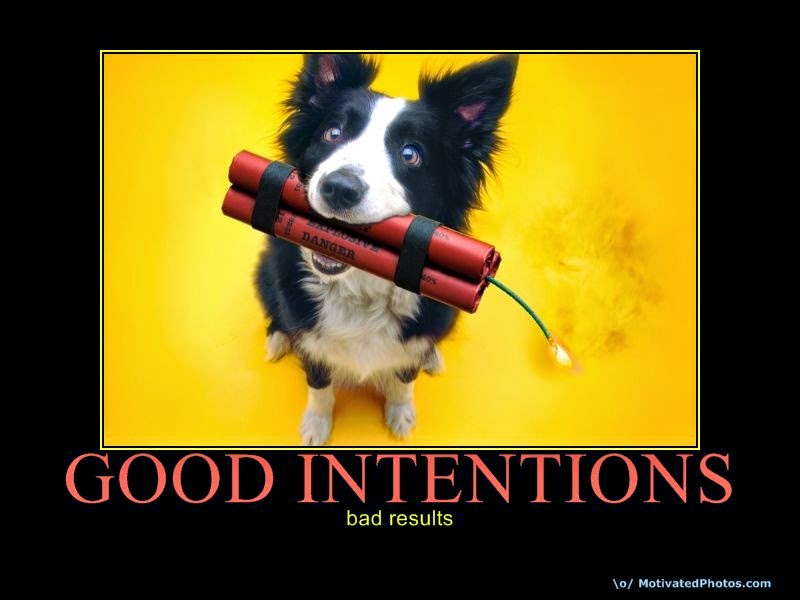
Todos devíamos ter mais cuidado com a quantidade de poder que deixamos os políticos terem sobre a nossa vida pessoal e comunitária. Mesmos os mais bem intencionados atiram-nos barras de dinamite com a mecha acesa.

Os da nossa cor estão no poder e, por isso, concordamos que mais poder lhes seja atribuído. Quando os da cor dos outros chegam ao poder ficamos com medo do poder que eles agora têm, e vice versa.

Trechos retirados de Laloux, Frederic. "Reinventing Organizations: An Illustrated Invitation to Join the Conversation on Next-Stage Organizations"

A abominação da eficiência - o anti-Mongo (parte I)

Há anos que escrevo aqui sobre a abominação da eficiência na esfera do estado: escolas-cidade e hospitais-cidade, por exemplo:
Na última conversa oxigenadora o meu parceiro convenceu-me a comprar "Reinventing Organizations: An Illustrated Invitation to Join the Conversation on Next-Stage Organizations". Ontem, enquanto descia a A4 numa viagem de camioneta tive oportunidade de ler uma estória de que ele me tinha falado:
"Here is the story of neighborhood nursing in the Netherlands and of a pioneering organization called Buurtzorg. Since at least the eighteenth century, every neighborhood in the Netherlands has had one or more nurses that worked outside of hospitals, visiting the sick and the elderly in their homes. During the twentieth century, the social security system increasingly took over the costs of the system.
...
In the 1980s, the Dutch government had an idea that made a lot of sense, seen from an “Orange” [Moi ici: O termo "Orange" é usado pelo autor para designar as empresas do século XX, muito racionais e com uma crença ilimitada na inteligência e análise] scientific/industrial perspective: if all the nurses could be grouped into large organizations, economies of scale would kick in, generating savings for the taxpayer. Nurses were pushed to affiliate with large organizations that started implementing modern (Orange) management practices step by step. Quickly, these organizations decided it was inefficient that the client would always be seen by the same nurse. A different nurse was now dispatched to clients every day, based on availability. Higher flexibility meant less potential downtime for nurses between two clients. Call centers were set up in headquarters, now that clients could no longer call “their” nurse directly. Then, it was decided to have the nurses specialize. More experienced nurses must be paid more, so they were sent to do only the more difficult, technical interventions. All the rest—simpler things like shots and bandages—was now pushed to less expensive nurses, resulting in further cost savings.
...
Managers noticed that some nurses worked much faster than others, so time norms were established. Two and-a-half minutes to change a compression stocking, ten minutes for a shot. Everything was specified down to the minute. With time norms defined, planning departments were set up in headquarters. Every evening, each nurse now receives a sheet of paper with a detailed plan for the next day, prepared by someone in the planning department she most likely will never meet.
...
The care providers started merging in pursuit of further economies of scale. To “manage” the nurses in these big companies, layers of hierarchy were added. A district manager overseeing a few dozen nurses reports to a regional manager, who reports to a national manager. The managers today often have no nursing experience. Their role is simply to monitor and improve the nurses’ performance. They have lots of data they can slice and dice because nurses are asked to peg a small barcode sticker to the front door of all clients, scan that code when they go in to provide care, and scan it again when they leave. With all this data, managers can make continuous improvement; they can tell nurses for which kind of interventions they are slower than their peers. Every one of these changes—specialization, flexibility, economies of scale, continuous improvement—has resulted in efficiency gains, arguably a good thing for the Dutch health care system. [Moi ici: Como não pensar nos agrupamentos que geraram as escolas-cidade e os mega-hospitais-cidade]
...
But there is a dark side to the system Patients hate it For older, sometimes confused clients, having an unknown face come into the intimacy of their home every day is difficult. They have to share their story and their medical condition with a total—and hurried—stranger.
...
Nurses hate it The way they are asked to operate hurts their vocation and integrity. They realize that they often give bad or insufficient care. But the system prevents them from doing what they know is called for."

sexta-feira, outubro 26, 2018

Feike Niús e o têxtil

Guardarei para sempre uma frase de Medina Carreira, "Quando o Manel e a Maria chegam à Bolsa é o momento de que lá está sair".

Nos últimos 10 anos, quando era completamente fora do mainstream, nós aqui no blogue descrevemos e explicámos dezenas, talvez centenas, de casos de sucesso na microeconomia. No calçado, no têxtil e vestuário, no mobiliário, na metalomecânica, ... 

Agora que começo a sentir no ar uma alteração de ciclo, sintoma de uma correcção que está para breve, e que nada tem de anormal. As correcções são como o Inverno, fenómenos naturais que ajudam a evitar fenómenos tipo "run-away reactions".

Agora que começo a sentir no ar essa tal alteração de ciclo começo a apanhar textos no mainstream a explicar com algum detalhe as razões do sucesso e alguns dos motivos que vão cavar a correcção. Recomendo a leitura de "A alta-costura mundial já é "made in Portugal"", alguns exageros típicos, mas um artigo completo:
"Fecharam milhares de empresas e, entre 2005 e 2011, desapareceu 34% do emprego. Sobreviveram as unidades que investiram em tecnologia, recursos humanos qualificados e na internacionalização. [Moi ici: Sobreviveram as unidades que mudaram de modelo de negócio, que mudaram de clientes-alvo, que mudaram de proposta de valor. Isso levou a alterações no resto] Portugal deixou de ser um país "simpático e baratinho" para a manufatura e passou a figurar como especialista em produtos inovadores de alta qualidade [Moi ici: Terminologia que pode levar a interpretações erradas. Por exemplo, os artigos fast-fashion feitos em Portugal são alta qualidade? Come on! Passamos a ser especialistas em pequenas séries, entregas rápidas, flexibilidade. Recordar as imagens das fábricas chinesas e 2007] a preço médio. As exportações têm vindo a aumentar desde 2014, [Moi ici: Grande peta. Feike Niús! Crescem desde 2010, ver gráfico abaixo. Recordo 2010] tendo crescido 3% em valor no ano passado, com um peso de 13,3% do total das vendas ao exterior.
"Se não fossem as máquinas, não conseguíamos produzir o que produzimos hoje, dada a falta de mão-de-obra", ... "Se tivesse mais pessoal, aumentava a produção em 20-25%, era só deixar de recusar trabalho dos clientes que temos", adianta.[Moi ici: Meio a brincar, na passada quarta-feira, ao comentar numa empresa industrial de Oliveira de Azeméis esta notícia  Disse: Estamos quase a começar a ouvir os protestos dos empresários incumbentes contra os apoios dos governos que vão contribuir para que outros se instalem e lhes "roubem" trabalhadores]
"As escolas têm feito um trabalho importante na formação, mas ainda não chega. Vamos ter de criar escolas com maior componente prática e dar atratividade ao setor [Moi ici: E recuo a 2011 e a "Não é impunemente que se diz mal", a mania de estar sempre com um discurso de coitadinho para sacar uns apoios e subsídios tem consequências] que, há uns anos, passou por maus momentos. Hoje já não é assim",
...
"Pedem-nos em seis semanas o que antes demorava seis meses. [Moi ici: Outra previsão fácil - 52 épocas por ano" Imaginam as empresas que trabalham com o je, ou que lêem este blogue desde 2006, a batota que terão feito nos últimos anos, quando a maioria chorava e se aninhava junto dos políticos em busca de proteccionismo?] Portugal consegue matérias-primas em duas semanas e consegue produzir em quatro a cinco semanas", resume César Araújo. "Há 30 anos, Portugal estava isolado num canto da Europa. Hoje, está no centro do Mundo e pode ser um polo logístico de valor acrescentado", acrescenta."

quinta-feira, outubro 25, 2018

"Who wants to live for ever? "

"Who wants to live for ever? For those of us who don’t, a long, healthy life – of 90 years, say – is enough. In the mid-1920s, 90 years happened to be the average lifespan of a leading company. Ninety years for us, 90 years for our companies: a neat mirroring of our own existence in what we made manifest in the world.
.
By the 1950s, the average company lifespan was down to 60 years. Today, it is a mere 17 years. Why are our companies dying young?"
Considerar também "Why Kodak Died and Fujifilm Thrived: A Tale of Two Film Companies" e "Superstar companies also feel the threat of disruption".

Trecho retirado de "Going extinct: why corporate giants die"

Riscos e oportunidades decorrentes de uma estratégia (parte II)

Parte I.
"Besides strategic problems, we distinguish a second type of issue: strategic opportunities. We define a strategic opportunity as a positive development or event that may allow your firm to substantially and structurally raise its overarching performance objective. ... 
Such opportunities also create performance gaps: difference between your firm’s old objective and its new, raised objective (see Fig. 3.1). Opportunities require new strategies for your firm to realize its raised overarching objective. Whereas problems create performance gaps by reducing your firm’s realized performance, opportunities create gaps by raising your firm’s objective. Both types of issues require exploring a performance gap for developing insights into how best to close your firm’s gap.
...
Although you may know that your firm has a problem, you may only imagine you have an opportunity. An opportunity gap is not about a decline of the realized performance but about an increase of the objective, that is potential performance.
...
You cannot measure the opportunity gap right away, like a problem gap. You need to explore the opportunity by starting to investigate its potential sources: Why would there be an opportunity? Potential sources of opportunities are a firm’s strengths and external opportunities. Here you use components of your SWOT analysis. In an opportunity exploration, you may even start with an exploration of your firm’s potential strengths and potential external opportunities.
.
How to use your SWOT to identify opportunities for your firm? You create a two-by-two confrontation map. You map the strengths and weaknesses on one axis against the opportunities and threats on the other. Next you search for matches of internal components (strengths and weaknesses) and external components (opportunities and threats). By pairing internal and external components you create four quadrants in the map. Two quadrants point to opportunities. The other two quadrants point to potential explanations for problem gaps.
  • Matches between strengths and opportunities are high-priority opportunities because they offer the biggest upside potential for the firm.
  • Matches between weaknesses and opportunities are low-priority opportunities because your firm (at present) lacks the potential to seize the opportunities.
  • Matches between weaknesses and threats are high-priority problems because they present the biggest downward risk for your firm.
  • Matches between strengths and threats are low-priority problems because your firm has the potential to counter these threats and thus solve these problems.”

Excerto de: Marc Baaij. “Mapping a Winning Strategy”

quarta-feira, outubro 24, 2018

Riscos e oportunidades decorrentes de uma estratégia (parte I)

Há dias recordei o uso da SWOT dinâmica no postal "SWOT -> TOWS". Agora, encontro um texto que usa a TOWS (SWOT dinâmica) para determinar riscos e oportunidades:
“We define two kinds of strategic issues (problems [Moi ici: Riscos] and opportunities) in terms of a substantial and structural gap between your firm’s overarching performance objective and its realized performance. A firm’s overarching objective is generally profit, but firms can also aim at objectives related to people and the planet. A strategic problem is a negative development or event that substantially and structurally prevents your firm from achieving its overarching objective, if your firm does not adapt its strategy. [Moi ici: Recordar a definição de risco da ISO 9000: risco = efeito da incerteza, sendo efeito = desvio ao esperado]
...
Your firm’s performance gap exists ‘out there.’ It is a fact. You measure that performance gap to identify your firm’s strategic problems. By defining problems in terms of their consequences (that is, the performance gap) instead of causes or symptoms, you create objectivity and clarity. You reduce the chance of subjective problem exploration which can easily turn into political fights and ‘blame games’ of stakeholders. Taking an objective performance gap as the point of departure for problem exploration makes your strategy processes less political.
.
The potential causes of strategic problems are your firm’s weaknesses and/or external threats.
...
You do not start with the causes of present problems but with their consequences: underperformance. For present problems, you begin with measuring the performance gap. But when you need to explain the gap, then you may use the SWOT analysis, in particular, the weaknesses and threats.”
 Considerar, por exemplo, uma empresa com capacidade de produção livre e vendas abaixo do limiar de sustentabilidade.

Empresa olha para o exterior e vê:

  • a procura está a aumentar por causa das preocupações ambientais;
  • a procura está a aumentar por causa da evolução legislativa;
  • a procura está a aumentar por causa da evolução tecnológica que torna os componentes mais baratos e a eficiência muito maior.
Então, porque não aumentamos as vendas e ocupamos a capacidade produtiva? Não é por causa das oportunidades, é por causa dos pontos fracos da empresa:
  • não temos actividade comercial sistemática;
  • não divulgamos a nossa marca;
  • não temos o produto certificado, quando é uma exigência legal.

Os pontos fracos contribuem para que a empresa não aproveite a boleia do mercado e não atinja os resultados esperados para as vendas.

Excerto de: Marc Baaij. “Mapping a Winning Strategy”.

Não é fácil!

Via Rui cheguei a este artigo "Brand websites are losing importance". Para quem acredita na hipótese Mongo isto não parece bater certo com a narrativa.
"The traditional brand website is losing importance among online shoppers in Europe. Only 11 percent of European e-shoppers say they go to a brand’s website first when they are searching for a product. A significant share of online shoppers, 45 percent, turn to Amazon first."
Fez-me lembrar este tweet de há dias:


A esmagadora maioria das interacções foram no sentido criticar o que tinha feito. porque teria conseguido melhor preço via plataforma.

Se o produto não é exclusivo de uma loja, o mais provável é que um cliente opte por comprá-lo num local onde há mais informação, onde há um sentido de maior confiança no acto de pagamento e de maior facilidade de devolução, ... uma reputação, e a ideia de que tem o preço mais baixo.

Sem exclusividade... a loja tem de ser uma experiência positiva.

Ainda há a acrescentar o medo das lojas em alienarem os seus clientes B2B. Tentam através da loja online agradar ao cliente B2C e ao mesmo tempo não perder o cliente B2B. Não é fácil! 


terça-feira, outubro 23, 2018

Mongo, micro-marcas, plancton, suckiness e emprego


Este texto, "How a creative army of micro producers drive Korean street style and influence fashion’s direction", acredito, é uma boa descrição do que iremos viver com mais frequência e naturalidade à medida que Mongo se instalar:
[bo-se] "the term came to mean any low-quality clothing. In the internet age it has a different meaning: highly customisable clothing ordered online, and made possible by an enterprising micro-brand producer/sewing shop that can handle small orders.
...
In outlet malls such as those in the Dongdaemun shopping district of Seoul, shop owners hawk smartly designed, trendy items selected from hundreds of tiny design-and-production shops. These are “brands” only in the sense they want to develop and maintain a reputation among the shop owners who curate their store collections for consumers.
.
The shop owners tend to want the edgiest, trendiest, and highest quality clothing they can get.
...
The micro-brand producers have tiny operations that cannot handle large orders on the scale of a fast-fashion giant such as H&M. So the supply of a typical design is limited and its production run short, allowing producers to switch to making new items in response to the whims of consumers. This means a design is only available for a fraction of a fashion season
...
This system of micro producers making small batches of a design that is only in stores for a matter of weeks gives the clothes a uniqueness and encourages producers to be creative because the industry is so competitive. Anything that looks good and will sell has a chance to shine, however briefly."
Não se chega ao futuro mudando uma variável e mantendo todas as outras constantes. Tudo muda e muda ao mesmo tempo!

Comparem os clientes destas micro-marcas com o plancton dos anos 50, 60, 70, ... e a suckiness dos gigantes.

BTW, agora relacionem tudo isto com o emprego em Mongo.


A evolução subterrânea dos dados

O lastro do passado, que as análises homólogas privilegiam, esconde a análise fina do que se passa agora.

Quem olha para a evolução homóloga celebra, e bem, a evolução longa "Número de desempregados inscritos nos centros de emprego caiu 18% em setembro". No entanto, a evolução mensal ajuda a entender melhor o que se passa nos subterrâneos e só vai chegar à tona mais tarde (recordo o que aqui escrevi a 25 de Abril de 2013, quando todo o mundo olhava para a evolução homóloga em 2013, porque eu olhava para a variação mensal. Falhei por um mês, foi Setembro em vez de Agosto.)

A figura acima, retirada dos dados do IEFP sobre o mês de Setembro de 2018, conjugada com a evolução dos dados subterrâneos das exportações, devem pôr os decisores em estado de alerta... 2020 é capaz de dar problemas (juntar os orçamentos italianos e a deterioração económica que Espanha vai conhecer em 2019).

segunda-feira, outubro 22, 2018

Mongo e o emprego

O que digo aqui sobre Mongo e o emprego?
  • O fim do emprego modelado pelo século XX e elevado à categoria de modelo único e eterno.
  • A ascensão dos artesãos
  • A perda de valor no mercado dos cursos superiores porque já não haverá CV para apresentar, só um portfólio de projectos em que se participou
"A report by Altagamma, the Italian luxury goods association, estimated that some 50,000 people working in the luxury goods industry in Italy are close to retirement and that it will be a struggle to find qualified personnel to fill those jobs.
.
The problem is, recent generations of Italian youth have increasingly shied away from traditional handwork, opting instead for seemingly more contemporary sectors like engineering, and cooking."
Recordar as preocupações com a automação... Mongo é sobre um mercado cada vez mais heterogéneo. Por isso, faz cada vez mais sentido fugir da produção em massa, e apostar na proximidade para fazer batota com a interacção e a co-criação. Assim, os robôs deixam de ser problema, porque tem de existir o criativo que interage com o cliente.

Em Mongo o futuro passará pela arte, pela criatividade, e longe do vómito.

Muito mais do que rapidez e proximidade

A propósito de, "In an age of super-fast fashion, Mexico and Turkey may be the new China", interessante que mais de dez anos depois as consultoras grandes chegaram à carta da proximidade. Recordar este postal de 2008, "Um mundo de oportunidades", acerca da importância da proximidade.

Qual o problema do artigo?

Selecciona uma variável, a proximidade, e mantém todas as outras constantes. Quem diz que a rapidez da concepção à prateleira vai ser a única variável a mudar? E, por exemplo, o tamanho médio das encomendas?

domingo, outubro 21, 2018

Histerese

Na Física aprendi a usar a palavra histerese.
"The Mona Lisa has a huge social media presence. Her picture is everywhere. But she doesn’t tweet. She’s big on social media because she’s an icon, but she’s not an icon because she’s big on social media."
Cuidado com o crescimento não orgânico.

Trecho retirado de "Social media is a symptom, not a tactic"

"how does one build a culture of continuous improvement?"

“You should have a sense that Lean is focused on the concepts of eliminating waste through continuous improvement and that it all begins with the simple question, “What bugs me?” I’ve also discussed how Lean can become a grind when we are focused on just the process, instead of the people. In fact, I believe this is the point where most people give up on Lean, they are 90% process focused and 10% people focused. When in reality, it should be 100% the opposite.
.
I came away from my second trip to Japan with the clear conviction that in order for Lean to work in the long term and to “stick,” I would have to build a Lean culture. Without a doubt, this is the biggest challenge – how does one build a culture of continuous improvement? How do you get people to always look for ways to improve?”
Fui à procura deste livro, recomendado há algum tempo pelo meu parceiro das conversas oxigenadoras, por causa dum projecto num alfaiate de máquinas. O negócio não é eficiência, mas o negócio é rapidez e cumprimento de prazos. Ao deparar com uma oficina, espaço de homens, onde uma caixa que chega é aberta, o conteúdo é retirado e... a caixa vazia ganha raizes no sítio onde a abriram, até pode ser um corredor. Um carro para carregar ferramenta acaba por se tornar num carro para guardar "entulho"

Acredito que é preciso começar por alguma acção, mas sem cultura ...

Excerto de: Paul A. Akers. “2 Second Lean - 3rd Edition”

sábado, outubro 20, 2018

Curiosidade do dia

Em 2007 escrevia:
"Naquele tempo, seguia Jesus uma grande multidão. Jesus voltou-Se e disse-lhes:
.
«Se alguém vem ter comigo, e não Me preferir ao pai, à mãe, à esposa, aos filhos, aos irmãos, às irmãs e até à própria vida, não pode ser meu discípulo. Quem não toma a sua cruz para Me seguir, não pode ser meu discípulo.
.
Quem de vós, desejando construir uma torre, não se senta primeiro a calcular a despesa, para ver se tem com que terminá-la? Não suceda que, depois de assentar os alicerces, se mostre incapaz de a concluir e todos os que olharem comecem a fazer troça, dizendo:
.
‘Esse homem começou a edificar, mas não foi capaz de concluir’.
.
E qual é o rei que parte para a guerra contra outro rei e não se senta primeiro a considerar se é capaz de se opor, com dez mil soldados, àquele que vem contra ele com vinte mil? Aliás, enquanto o outro ainda está longe, manda-lhe uma delegação a pedir as condições de paz."
Agora voltam aromas semelhantes: "Pavilhão desportivo foi inaugurado, mas não há dinheiro para manutenção"

SWOT -> TOWS

Caro João, na sequência da nossa conversa de ontem, listo aqui uma série de postais onde, ao longo dos anos, referi o uso da chamada SWOT dinâmica ou TOWS:

Pelo que vi da vossa análise SWOT, desenhe uma análise TOWS, liste um conjunto de acções hipotéticas e desafie as pessoas a reflectir sobre as que fazem mais sentido por estarem alinhadas com a estratégia.

Testar, brincar, aprender


Recordar este postal, "Para reflexão", e relacionar com "Microsoft is betting on the future of buildings":
"Microsoft just brought an architecture firm to its IoT lab for the first time–here’s what it could mean for the future of buildings.
...
“Imagine that the floor beneath you is modular, a super-smart floor made of iPads–or rather tablets, because iPads are not made by Microsoft,” Radewych describes, half-jokingly correcting himself. Each unit of the scalable, modular network would contain up to 20 different sensors to live-track various elements of our interior environments, such as humidity, temperature, smell, light, sound, and more. It would then feed that information into an office or home’s ecosystem of smart appliances. “This means that a building can become proactive to the needs of its inhabitants, instead of simply reactive,” says Radewych."
BTW, qual não foi o meu espanto na semana passada quando em Bragança dou de caras com duas baterias Tesla, com cerca de 1,70 m de altura, para serem instaladas.

NOTA: fui corrigido, têm 1,90 m de altura.

Imagem usada em "Correlacionar, associar, prever e antecipar"

sexta-feira, outubro 19, 2018

Organizem-se!


Adultos, perante os mesmos factos, chegam a diferentes conclusões!


Organizem-se!

Valor em vez de custo

"1. Think about its value, not its cost.Many people start the process of figuring out how to price their products or services by the costs that go into producing and delivering them. While you need to know your costs, that's not how you should determine your price.
.
Instead, start by calculating the value you create for your clients. How much more revenue do they make? How much more profit? Do you increase sales or lower costs or remove risks? Answer all of these questions and then use this data to calculate your optimal pricing."
Trecho retirado de "Most Companies Get Pricing Their Products and Services All Backwards. Here's How to Get Your Right"

quinta-feira, outubro 18, 2018

E quantos anos temos de atraso em relação a isto?

Julgo que era o ministro dos negócios estrangeiros de Portugal em Março de 74 que costumava dizer:
- Temos 400 anos de atraso relativamente aos relvados ingleses.

E quantos anos temos de atraso em relação a isto?
Ontem comecei o dia a ouvir um sindicalista da função pública a pedir mais aumentos salariais da função pública, e liguei a TV à noite para ouvir o recital de benesses que o orçamento vai dar à custa da impostagem que recai sobre os contribuintes líquidos.


Imagem retirada de "Sindicato pede à Air France para não aumentar salários"

Foco, foco, foco

Um excelente artigo:
"The consumer banking industry is notoriously difficult to enter, not least because most customers rarely switch banks. In some countries, people change spouses more often than they change banks.
.
The banking industry in South Africa was no exception; for decades the industry was dominated by “the Big Four” (Standard, FNB, Nedbank, and Absa). However, in 2000 a new player entered the industry, called Capitec, which started establishing branches rapidly. By 2007 it broke through the barrier of 1 million active customers; 10 years later it had more than 10 million clients and about 800 branches. It has now become the largest bank in the country."
Qual foi o truque?
"“Our strength has always been our focus.” Indeed, Capitec is more focused, in terms of what it does and does not do, than most companies and certainly most banks. It serves individuals only, not companies or trusts. It offers them a single account: Everybody gets a gold card with exactly the same conditions, prices, and services. A customer can do three things with this account: saving, loans, and transactions — and nothing else. The bank serves these customers through a network of highly efficient physical branches. It has always held on to this model and never wavered.
.
Companies, and certainly new entrants looking for growth, often find it difficult to resist jumping onto various new sources of revenue. That’s understandable, because if you are looking for growth, any piece of additional revenue seems welcome. Moreover, in advance, you can never be entirely sure that your original market choices will play out and will generate sufficient income by themselves. Hence, when a new potential stream of revenue presents itself, the company’s management feels it cannot afford to just leave it.
.
The result of this is, however, that a company ends up doing a variety of things that each might make sense on an individual basis but in combination create costly complexity — not adding up to something that is bigger than the sum of the parts."
Trechos retirados de "How Capitec Became South Africa’s Biggest Bank"

quarta-feira, outubro 17, 2018

"e somos nós que não dissecámos até ao fundo"

Na maioria das empresas há sempre muita resistência a alguma organização na área do desenvolvimento de produtos.

Recolhem-se alguns requisitos que o cliente explicitou, adivinham-se os restantes e começa-se a trabalhar, rapidamente, para mostrar que não se está parado. Depois, o cliente refere um pormenor do contexto em que o produto vai ser usado, e começam os "entorses", no limite até se deita fora o que se começou e recomeça-se do quase zero.

Ontem numa empresa ouvia pai e filho:
“- Falta sempre alguma coisa. É o cliente que não diz, e somos nós que não dissecámos até ao fundo”
A ISO 9001 bem recomenda alguma organização na recolha das entradas para o desenvolvimento, mas é mais fácil picar o cartão do que ser exigente connosco próprios. Quanto mais exigente no princípio de um projecto maior a probabilidade de não haver surpresas durante o projecto, de cumprir o prazo e ganhar dinheiro.

O mercado é sempre heterogéneo

"When a company takes a more detailed view of its activities, it shines a spotlight on areas that senior management has never before seen clearly. As aggregation and consolidation give way to precision, it becomes easier to identify previously hidden parts of the organization that are performing strongly—as well as those that are not. This can be an uncomfortable experience for senior executives, as it often has profound implications for the organization’s structure, people, and processes.
...
A more-precise understanding of company performance and market potential will lead to resource reallocation, both within and across businesses. The goal, of course, is to target pockets of higher market momentum, thus increasing the growth rate for the company as a whole."
O mercado é sempre heterogéneo, e em Mongo essa dispersão está a aumentar!
Cuidado com as generalizações.


Trechos retirados de "Is Your Growth Strategy Flying Blind?"

terça-feira, outubro 16, 2018

O que protegerá Portugal dos robôs?

Mensagem e conclusão errada em "O que protege Portugal dos robôs? Os salários".

A ser verdade teríamos aqui uma motivação forte para manter salários baixos.

Recordo as evoluções na Toyota e na Mercedes e postais como:

O que protegerá Portugal dos robôs? Modelos de negócio baseados na minúcia, na interacção, na rapidez, na proximidade, na co-criação, na personalização. Ou seja, Mongo.

Sem estado o que seria de nós?

Teríamos milhares de pequenos e grandes exemplos como este "Grupo no Twitter fez durante o Leslie "o que a Proteção Civil devia fazer"".

A Somália não é uma inevitabilidade sem o papá-estado:


segunda-feira, outubro 15, 2018

Influenciar comportamentos

“Who the groups of similar actors are and how they interact with other groups who have different levels and sources of power.
 The real goals these groups have, be they explicit or implicit.
 Their resources, which are not only physical (such as money, equipment) but mental or moral (such as authority or the expectation of mutual support).
 Their constraints (time limits, other demands, limits to power and authority, including the ability to influence others, and problems they face in achieving their goals).
.
In order to influence the resulting behavior, managers can change the system either directly (by changing the actors, setting new goals, giving more resources, or removing some constraints) or indirectly (by, for example, changing reporting lines, processes, information, training, and so on),
Recordar:


Excerto de: Bungay, Stephen. “The Art of Action: Leadership that Closes the Gaps between Plans, Actions and Results”. iBooks.

Alterar preços

"2. Changing prices uniformly across your product catalog
Different products or categories have different price elasticities and require different pricing strategies. Demand for some products will change when a competitor changes their price, but not always. Pricing is more complex than that; while competitive pricing is an important component, it’s not the only one.
.
Sometimes it doesn’t make sense to match a competitor’s low price and you may even find opportunities to raise prices instead! For example, Amazon does not have the lowest price on everything—they have some loss leader products or categories but make up the margin in other areas."
Trecho retirado de "Six reasons why your retail pricing strategies aren’t working"

domingo, outubro 14, 2018

Proximidade, interacção e co-criação

"As demands for higher value and creativity are the norm today and the complexity of offerings has grown, we have begun to see that the division of labor has reached its point of diminishing returns. What managers have learnt is that the division of labor always implies a scheme of interaction by which the different divided activities are made to work together. The lines between the boxes are starting to matter more than the boxes! Complex value creation is impossible without interaction. This is because any higher-value activity involves complementary, often parallel, contributions from more than one person or one team. In fact, the more complex the offering is and the more specialized the resources needed, the greater the demand for the amount, quality and efficiency of communication, because of the inherent interdependence of the activities."
 "Complex value creation is impossible without interaction" - recordar a importância da proximidade para a interacção por trás da co-criação:

Trecho inicial de "Interactive value creation"

“We should stop trying to make things so mass appealing”

"“If you’re a marketer or a brand representative, or if you’re trying to build a business, you need to understand that we are talking about feelings most of the time,” said Saint John. “And that’s what we in the 21st century modern world need to figure out: how to connect to our consumers through feelings.”
...
In fact, Saint John said that feelings are comparably important to business models and strategies as data and statistics. Instead of relying solely on hard numbers and analyses, she recommended the audience to assess how their customers react to their products and services as these reactions are what would resonate with them and ultimately market the brand.
...
A feelings-driven brand also has to move away from trying to appease everyone and making it more personal. She recommended treating the business as if it were a person with its own feelings, behaviors and reactions.
We should stop trying to make things so mass appealing,” said Saint John. “Make them (the customers) connect to someone in a way that if they were your friend, they would understand.”
Na linha de:


sábado, outubro 13, 2018

"Um outro olhar sobre os números das exportações" (parte II)

Estão a ver a superfície de um rio?

Uma suave ondulação eleva uma molécula de água para cima e para baixo incessantemente. De repente, passa um barco no rio e a ondulação aumenta para depois voltar a uma variação incessante, mas menos brusca.

A economia também é assim, com essas constantes subidas e descidas. Em 2013, porque o so-called "jornalismo" estava contra o governo anterior, ou pior, porque era ignorante e não estudava os números, o desempenho das exportações era menosprezado. Por isso, escrevi na altura "Um outro olhar sobre os números das exportações". Os jornalistas desprezavam o desempenho das exportações porque o atribuíam ao combustível e ao ouro.

Agora porque os so-called "jornalistas" têm um governo da sua cor, ou por ignorância, ou por preguiça, olham para as exportações e tecem loas.

Eu vejo o reverso da medalha daquele postal de 2013. Olhem para os números que sigo aqui há anos:
Comparem com os números do passado:
Comparem Parciais I que representavam mais de 50% do total que eu seguia com os Parciais I do mês de Agosto de 2018 (5%).

As exportações de combustíveis e automóveis estão a esconder uma mudança importante, para quem só olha para o número total, para o agregado e, desconhece o granular.

Outros sintomas "Quase 600 empresas fecharam portas em setembro", "Constituição de empresas em Portugal recua 4% para 2.676 em agosto - Informa D&B"

sexta-feira, outubro 12, 2018

Teoria conspirativa

Estes tweets:
 

Fizeram-me lembrar este trecho de Meses:
"The driving force of the market process is provided neither by the consumers nor by the owners of the means of productions-land, capital goods, and labor-but by the promoting and speculating entrepreneurs . . . Profit-seeking speculation is the driving force of the market as it is the driving force of production."
Uma teoria conspirativa defenderá a tese de que os legisladores estarão ao serviço dos especuladores para criar toda uma variedade de barreiras que geram lucro. Se não houvesse barreiras, o lucro seria muito menor. Os incumbentes esfregarão as mãos com estas alterações legislativas.

There will be surprises!

"At the individual level Austrians have taken sharp exception to the manner in which neoclassical theory has portrayed the individual decision as a mechanical exercise in constrained maximization.
.
Such a portrayal robs human choice of its essentially open-ended character, in which imagination and boldness must inevitably play central roles. For neoclassical theory the only way human choice can be rendered analytically tractable, is for it to be modeled as if it were not made in open-ended fashion, as if there was no scope for qualities such as imagination and boldness. Even though standard neoclassical theory certainly deals extensively with decision making under (Knightian) risk, this is entirely consistent with absence of scope for the qualities of imagination and boldness, because such decision making is seen as being made in the context of known probability functions. In the neoclassical world, decision makers know what they are ignorant about. One is never surprised. For Austrians, however, to abstract from these qualities of imagination, boldness, and surprise is to denature human choice entirely."
Como anónimo engenheiro da província, apaixonado pelo mundo do turnaround, sobrevivência e sucesso das empresas, sempre me espantei com o "basicismo" da abordagem económica do mainstream ao mundo da concorrência. Recordo, por exemplo, "muitas vezes escandalizo-me com a forma como os economistas tratam a economia real" o que me leva logo a um clássico deste país: o Senhor dos Perdões. Recordo, por exemplo. Recordar também um clássico de 2010, "Realidade e teoria".

Trecho retirado de "Entrepreneurial Discovery and the Competitive Market Process: An Austrian Approach" de Israel Kirzner, publicado por Journal of Economic Literature, Vol. XXXV (March 1997), pp. 60-85

quinta-feira, outubro 11, 2018

Riscos e oportunidades (parte II)

Parte I.
How to Discover OpportunitiesYou may not have a clue whether you have an opportunity or not. You do not know what you do not know. Verifying whether your firm has present strategic problems is relatively easy. You only have to look for performance gaps. Uncovering “present strategic opportunities generally requires more work. Your stakeholders may already have ideas about potential opportunities but you may also have to search for potential sources of new opportunities for your firm.
Although you may know that your firm has a problem, you may only imagine you have an opportunity. An opportunity gap is not about a decline of the realized performance but about an increase of the objective, that is potential performance. ... You cannot measure the opportunity gap right away, like a problem gap. You need to explore the opportunity by starting to investigate its potential sources: Why would there be an opportunity? Potential sources of opportunities are a firm’s strengths and external opportunities. Here you use components of your SWOT analysis. In an opportunity exploration, you may even start with an exploration of your firm’s potential strengths and potential external opportunities.
...
How to Use a SWOT to Discover OpportunitiesHow to use your SWOT to identify opportunities for your firm? You create a two-by-two confrontation map. You map the strengths and weaknesses on one axis against the opportunities and threats on the other. Next you search for matches of internal components (strengths and weaknesses) and external components (opportunities and threats). By pairing internal and external components you create four quadrants in the map. [Moi ici: Recordar a análise TOWS] Two quadrants point to opportunities. The other two quadrants point to potential explanations for problem gaps.
Matches between strengths and opportunities are high-priority opportunities because they offer the biggest upside potential for the firm.
Matches between weaknesses and opportunities are low-priority opportunities because your firm (at present) lacks the potential to seize the opportunities.
Matches between weaknesses and threats are high-priority problems because they present the biggest downward risk for your firm.
Matches between strengths and threats are low-priority problems because your firm has the potential to counter these threats and thus solve these problems.”

Excerto de: Marc Baaij. “Mapping a Winning Strategy”.

O futuro do trabalho em Mongo

Como escrevemos aqui há anos e anos sobre Mongo e o futuro do trabalho: "Detlef Gürtler “A revolução digital vai desconstruir a organização social atual”":
"Comecemos pelas más notícias [Moi ici: Más?]: esta revolução digital irá desconstruir a organização social formada na era industrial. A sociedade como a conhecemos tem sido, em grande parte, uma conquista da primeira revolução industrial."

quarta-feira, outubro 10, 2018

Título alternativo

Leio o título "Empregadores portugueses são os menos escolarizados da UE" e vem-me logo à cabeça um título alternativo "Mais escolarizados de Portugal são os menos empreendedores da UE".


Generalidades versus granularidade

Via FB do Hélder F. cheguei a esta tabela "Industries with the fastest growing and most rapidly declining output".

Não pude deixar de recordar o que tinha lido durante a caminhada matinal:
"A company formulating its growth strategy needs to develop insights into trends, future growth rates, and market structures at much greater depth than the aggregate industry level. Insights into sub-industries, segments, categories, and micro-markets are the building blocks of portfolio choices. They are indispensable for companies seeking to make the right decisions about where to compete.
...
...
Granularity level G0
The Earth—or, in our context, the global marketplace—is the highest level of aggregation with the least granularity: the ultimate segment of one. The world economy is growing by roughly 6.2 percent a year in nominal terms.
...
Granularity level G1
If we want to investigate why some companies grow at a rate that is faster or slower than about 6 percent, the first step is to divide up the economy. The Global Industry Classification Standard (GICS) carves it up into 24 broad industry groups ranging from telecommunications services to energy to biotech.
...
Granularity level G2
Frankly, decisions at the G1 level (such as whether to be in telecommunications, energy, or biotech) are not within the ambit of most companies, so we need not dwell on them here. To get to a deeper level of granularity, we can break down the 24 groups into 151 industries by using other readily available GICS statistics. For instance, the “food, beverages, and tobacco” group breaks down into the component industries “food,” “beverages,” and “tobacco.”
...
Granularity level G3
Each industry can then be divided up again both by sub-industry and by market (country or region). Within the food industry, for instance, two examples of sub-industries might include frozen foods or savories, oils, and dressings.
In analyzing companies’ performance we found that it was usually possible to reach the G3 level of granularity by taking the finest level of data that companies report to the markets. Provided we have access to enough information, we can zoom in on individual sub-industries in individual markets: frozen foods in China, say.
...
Granularity level G4
Sometimes it is possible to use proprietary databases and internal company data to dig deeper than the level at which companies normally report. The definition of the G4 level of granularity varies slightly from industry to industry, but, in essence, it’s the level of categories within sub-industries (such as ice cream within frozen foods) or customer segments within a broad product or service category (such as weight-conscious snackers). The G4 level is important: it represents the minimum level of granularity at which companies need to operate when setting growth priorities and making decisions about resource allocation.
...
Granularity level G5
This is a view of the world at the level of individual customers and transactions —the ultimate segment of one, numbering many billions. [Moi ici: Levar ao extremo o B2I (2018 e 2013)]
Trechos retirados de "The Granularity of Growth - How to Identify the Sources of Growth and Drive Enduring Company Performance" the P. Viguerie, S. Smit e M. Baghai 

terça-feira, outubro 09, 2018

Teste

Daqui a um ano, a 9 de Outubro de 2019, revisitaremos este postal para tirar dúvidas:

"there are two very different types of optimism"

"The practical insight is that there are two very different types of optimism. Complacent optimism is the feeling of a child waiting for presents. Conditional optimism is the feeling of a child who is thinking about building a treehouse. “If I get some wood and nails and persuade some other kids to help do the work, we can end up with something really cool.”
.
What the theory of endogenous technological progress supports is conditional optimism, not complacent optimism. Instead of suggesting that we can relax because policy choices don’t matter, it suggests to the contrary that policy choices are even more important than traditional theory suggests."
Faz-me recordar:
"O presidente de uma associação não pode e não deve falar impunemente. Deve ser consequente, deve ser responsável. Não deve mentir mas deve dar esperança. Não esperança cor de rosa, não esperança mágica mas esperança com base nas oportunidades que possam existir." 

Trecho retirado de "Conditional Optimism about Progress and Climate"

Aproveitar tudo para fugir do lado racional

Ontem em conversa com um empresário de Felgueiras, ele falou-me de Nadim Habib, por causa de uma conferência a que assistiu em Coimbra. Tal como eu em 2013, gostou muito e deu por bem empregue o ter levado consigo alguns colaboradores.

Umas mensagens que guardou foi:
  • dantes os clientes ou eram ricos ou eram pobres;
  • agora nunca sabemos se se vão comportar como pobres (e regatear tudo), ou se se vão comportar como ricos (e não discutir o preço).
Eu acredito que muitas vezes os clientes comportam-se como pobres porque quem vende não os consegue convencer do valor que vão experienciar. Certo que algumas vezes esses clientes ainda estão numa fase de desenvolvimento tal, que não lhes permite experienciar o tal valor em toda a sua extensão. Por isso, faz sentido que regateiem o preço.

Recordei-me desta conversa ao ler este artigo "Olive oil gets a modernist makeover":
"Most olive oil looks like it belongs in your grandma’s kitchen. Brightland makes beautiful bottles, full of pure, hand-crafted oil by California farmers."

Há dias citava esta frase que acreditó sintetiza a transição para Mongo:
“In the past, jobs were about muscles, now they’re about brains, but in the future they’ll be about the heart.” 
No mundo do século XX azeite é azeite, deve ser "puro", estar "graduado", e ser entregue numa garrafa económica que permite embalamento rápido e seguro. Tudo pode ser explicado de forma muito racional.

Em Mongo há os que vendem azeite e há os que vendem mais do que azeite. E os que vendem mais do que azeite têm de aproveitar todas as oportunidades para fugirem da classificação racional e entrar no mundo do coração:
"Iyer wanted the bottles to look attractive enough that people would want to display them in their kitchens, rather than hiding them away in the pantry."

segunda-feira, outubro 08, 2018

Riscos e oportunidades

We define two kinds of strategic issues (problems and opportunities) [Moi ici: Riscos e oportunidades na linguagem da ISO 9001] in terms of a substantial and structural gap between your firm’s overarching performance objective and its realized performance. A firm’s overarching objective is generally profit, but firms can also aim at objectives related to people and the planet. A strategic problem is a negative development or event that substantially and structurally prevents your firm from achieving its overarching objective, if your firm does not adapt its strategy. For example, the consumer trend to use less sugar reduces the profit of a bottler of sweet soft drinks. A strategic problem negatively affects your firm’s realized performance and hence creates a so-called performance gap between that performance and your firm’s overarching performance objective...
The potential causes of strategic problems are your firm’s weaknesses and/or external threats. We acknowledge that these causes are components of a strengths, weaknesses, opportunities and threats (SWOT) analysis. Such analysis can support the exploration of your firm’s present problem but not as a start. You do not start with the causes of present problems but with their consequences: underperformance. For present problems, you begin with measuring the performance gap. But when you need to explain the gap, then you may use the SWOT analysis, in particular, the weaknesses and threats.
...
Besides strategic problems, we distinguish a second type of issue: strategic opportunities. We define a strategic opportunity as a positive development or event that may allow your firm to substantially and structurally raise its overarching performance objective. For example, the development of a new drug is an opportunity for a pharmaceutical company. Such opportunities also create performance gaps: difference between your firm’s old objective and its new, raised objective. Opportunities require new strategies for your firm to realize its raised overarching objective. Whereas problems create performance gaps by reducing your firm’s realized performance, opportunities create gaps by raising your firm’s objective. Both types of issues require exploring a performance gap for developing insights into how best to close your firm’s gap.”

Excerto de: Marc Baaij. “Mapping a Winning Strategy”

Transformar organizações

Dedicado a uma empresa bem sucedida que procura focar-se ainda mais nos clientes-alvo.
"Inspire people by presenting a compelling vision for the future. During times of uncertainty, people experiencing change want a clear view of the path ahead. It’s important to share what you know – including what’s changing, when, and how. But for most change initiatives, it is also helpful to start with a narrative or story that clearly articulates the “big picture” – why change is important and how it will positively affect the organization long-term.
...
Keep employees informed by providing regular communications. Change communications is never a one-and-done event; keeping employees informed is something that you will have to do throughout every step of the change process.
...
When thinking about how to communicate, keep the following in mind:
.
Be clear and consistent: All of your communications should tie back to the narrative that you developed, reiterating the case for change and presenting a compelling future vision.
.
You will not have all the answers: Often times, you will not have all the answers employees are looking for, and that breeds anxiety and uncertainty. It’s important to focus on what you know, and be candid about what you don’t. If you do not have an answer, say so. When this occurs, it’s important to let employees know you are committed to communicating openly and transparently, and will follow-up as soon as you know more.
.
Don’t forget to articulate “What’s in it for me?”: One of the most important phrases you may come across in change communications is “what’s in it for me?” If your employees understand what’s in it for them personally, you’re more likely to see individuals commit to and own the change. Failing to articulate “what’s in it for me” will only hinder your efforts.
...
Empower leaders and managers to lead through change. Major changes or transformations often require asking employees to adopt specific behaviors or skillsets in order to be successful. And when senior leaders model the behavior changes, transformations are five times more likely to be successful.
...
Find creative ways to involve employees in the change. When planning for major change events, it is important to solicit feedback and engage people in the process. This helps build ownership in the change, and makes employees more likely to support the change and even champion it."
Trechos retirados de "Don’t Just Tell Employees Organizational Changes Are Coming — Explain Why"

domingo, outubro 07, 2018

"everyone to be acting rationally"

“Traditionally, economists considered everyone to be acting rationally, which led to rigorous-seeming curves that were easy to comprehend but in the real world rarely predicted actual behavior. It turned out that people don’t view their lives as a series of utility curves.”

Excerto de: Chris Bradley. “Strategy Beyond the Hockey Stick”

"in the future they’ll be about the heart

Excelente resumo de uma das mensagens deste blogue:
“In the past, jobs were about muscles, now they’re about brains, but in the future they’ll be about the heart.”
Mongo é isto!

Nas sociedades pré-industriais o sucesso passava pelo músculo. O século XX foi o apogeu da economia baseada no cérebro, na racionalidade, no planeamento a régua e esquadro tão ao gosto de Taylor, ou Sloan.

O século XXI, será o século de Mongo, das tribos, do pessoal, do único, do coração.