A revista strategy+business acaba de publicar mais um interessante artigo "Consumer Packaged Goods: Escaping the Consolidation Mentality" de Steffen Lauster, Elisabeth Hartley e Samrat Sharma.
.
"Holding fast to the two myths that have long dominated strategy in consumer-oriented industries — that bigger companies win, and that one or two players control every product category — can get a firm into trouble. A capabilities-driven strategy can provide a better path to profit."
.
Some strategic concepts, if they’re regarded as sacrosanct, may lead an entire industry in the wrong direction. Something of that sort has happened during the past two decades in the consumer packaged goods (CPG) industry. Two of the most influential strategy ideas are so widely held, so intuitively appealing, and so seemingly pragmatic that they are very hard to give up. Yet they can also be very dangerous to follow.
.
Both of these misleading ideas have to do with consolidation: the premise that, when it comes to business strategy, bigger is better. (Moi ici: Crescer por crescer é uma estupidez, no meu modelo mental. Custa tanto... mudar pessoas, mudar processos, mudar de clientes, muitas vezes para ter menos rentabilidade) Since the 1980s, the conventional wisdom has held that shareholder returns accrue most to companies with huge brands and the scale to compete in emerging markets. Many CPG leaders have assumed that their chances of winning, in every region and every product segment, were enhanced by size. More salespeople, a bigger distribution footprint, a bigger advertising budget — these were the ingredients of success.
.
This perception gave rise to the second misleading idea: Consolidation is inevitable. For years, experts predicted that most consumer packaged goods segments would end up like carbonated beverages, razor blades, and diapers — with just two or three big rivals, a handful of niche players battling over the scraps, and a few private-label brands for value consumers."
.
O que os autores propõem é como lidar com...
.
.
.
Mongo!!!
.
"To be sure, some players, such as Procter & Gamble, use their size and scale to great advantage, particularly in emerging markets or new growth areas. But in reality, the industry is much more diverse and dynamic than the conventional wisdom would suggest. Most CPG categories — including staples such as food, personal care products, and cleaning supplies — are in a constant state of evolution. They move from consolidation to fragmentation, and some can cycle back, time and time again.
In such an environment, there are many ways to prosper, with each successful company finding its own path: some end up large, some small, some global, some regional. But none of the paths taken involve growth for the sake of scale alone. Instead, they require the kind of growth that leads to profitability. This in turn requires coherence. (Moi ici: Sempre o alinhamento, sempre a concentração)
.
Coherence is a company’s ability to concentrate its resources and collective intelligence, and marshal all of them in the service of a well-aligned group of products and services with a focused strategic direction.
...
Because of the consolidation mentality, many executives of CPG companies have overlooked the value of coherence. They have focused on sheer size and scale instead. But size and scale are no longer as critical as they once were — at least not in the mature markets of industrialized nations.
...
Coherence seems to be particularly important in consumer products companies, where there is always a temptation to react opportunistically to changing markets, with brand extensions, new products, or acquisitions.
...
A coherent company — for that matter, a company that is simply more coherent than its competitors — can focus its investments on relatively few capabilities, increasing its mastery of those critical areas. It gains in efficiency; it doesn’t waste time, money, and attention on capabilities in domains where it doesn’t need to outdo its rivals and a modicum of competency is sufficient. A coherent company also makes more prudent portfolio decisions, applying the lens of capabilities as it decides which products or services to acquire and which to divest.
...
if the advantages of size, international penetration, scale, and retailer satisfaction were really so great, one would expect bigger companies to do better than the vast majority of their smaller peers. Instead, they are on par with most smaller companies and far behind a few in the important area of total shareholder returns.
...
In recent years, the CPG industry has undergone a sea change in its structure. Some product categories are consolidating, but many are fragmenting instead: They are splitting the customer base among more, rather than fewer, competitors.
...
(Moi ici: E agora umas recomendações muito interessantes. Mongo, Mongo, Mongo!!!)
.
If you are a small company in a fragmenting category, focus not on expansion into other categories, but on distinguishing your existing products in ways that customers value. Build or develop capabilities related to the features that your customers value most.
...
If you are in a consolidated category, you might be able to take over the market by changing the category’s dominant value proposition to something that you do uniquely well.
...
If you are pursuing organic growth (without M&A), seek “scale at the shelf,” not across categories. In other words, establish multiple brands at diverse price points, each with its own proposition."
.
Eu adoro isto! Tudo o que promova a erosão da ideia que o futuro é dos grandes, é bem vindo!!! Viva a agilidade das PMEs, viva a diferenciação!!!
quinta-feira, junho 09, 2011

Somos o que fazemos...
Quem somos?
.
Para uma empresa, como é que cada um responderia à pergunta: Quem somos?
.
Uma empresa não é um edifício, não é um conjunto de máquinas... será uma vontade? E há uma vontade ou umas vontades?
.
Como é que um colectivo se revê e identifica? E por que é que isso é importante? E como isso funciona como uma regra de decisão, como um facilitador ou um limitador?
.
Interessante artigo "Innovation strategy and identity: A case study from the food industry" de Thomas Hoholm e Fred Hjalmar Stronen, publicado pelo European Journal of Innovation Management em Junho de 2011.
.
"Identity can be used as an explanation for why some actions are deemed to be strategic while others are not, hence enforcing or limiting innovation. We find that identity needs to be considered both as a ‘soft’ and a ‘hard’ concept in the process; providing stability while at the same time being up for re-negotiation. By understanding strategizing and innovating as situated and heterogeneous processes, we identify how identity becomes a stabilizer and an organizer during emergent strategy processes, and reveal tensions between creative recombination and conservative reproduction."
...
"These two examples show how both new product development and taking on an existing product may challenge the existing view on what the members construct as the firm’s identity.
...
New products, whether innovations or established products in other markets, were considered strategic or nonstrategic related to the identities of professions (product developers, chefs, marketers, management), of owners (farmers’ cooperative), of consumers (brand associations) and of industrial production (production facilities). By looking at the product ingredients and their connotations, the product was viewed by the different groups as completely different."
...
"From the insight in these two cases, identity could be conceptualized as both a ‘hard’ and a ‘soft’ concept. Identity is hard, as it represents history and is embedded and stabilized both by material and social relations (physical facilities, technologies, work practices, economic interests, etc). It materializes in various situations, being something the actors really believe in and guiding interpretation and action in various specific everyday situations. But identity is also a soft concept, as identities are continuously fluctuating and under negotiation, thus never fully stable. Identities, as well as the balance between multiple identities, change between situations, between individuals and groups, and between professions. What we can see is how the same persons in these two stories relate to different identities, and thereby draw on various interpretations and negotiations of what the strategy is, depending on each specific context and situation."
...
"Identity in an organization forms the basis of how they regard the appropriateness of potential future actions.
...
Individuals form their sensemaking and their ideas on what is legitimate in various based on their identities."
.
E conjugar este artigo com:
.
Nós não conhecemos a realidade, nós só conhecemos a nossa interpretação da realidade.
.
E ainda, conjugar com "What Business Are You In? Business As Social Constructs" um excelente artigo que chama a atenção para a importância da nossa construção da realidade:
.
"In a company, the business model is defined by a dominant group of people. They have a common understanding of what business they are in and how they create value. However, the business model is not an absolute reality. It’s a social construct of dominant opinion makers, e.g. your top management. This is important to understand.
By taking a different look (Moi ici: Parece fácil... mas para quem está dentro, para quem está embebido numa identidade... é tão difícil) at your business, and thereby challenging your dominant logic, you can identify more and different strategic options for your firm"
.
Para mudar temos de ser capazes de simultaneamente, na mesma mente, trabalhar com o que somos e com o que temos de vir a ser.
.
Para uma empresa, como é que cada um responderia à pergunta: Quem somos?
.
Uma empresa não é um edifício, não é um conjunto de máquinas... será uma vontade? E há uma vontade ou umas vontades?
.
Como é que um colectivo se revê e identifica? E por que é que isso é importante? E como isso funciona como uma regra de decisão, como um facilitador ou um limitador?
.
Interessante artigo "Innovation strategy and identity: A case study from the food industry" de Thomas Hoholm e Fred Hjalmar Stronen, publicado pelo European Journal of Innovation Management em Junho de 2011.
.
"Identity can be used as an explanation for why some actions are deemed to be strategic while others are not, hence enforcing or limiting innovation. We find that identity needs to be considered both as a ‘soft’ and a ‘hard’ concept in the process; providing stability while at the same time being up for re-negotiation. By understanding strategizing and innovating as situated and heterogeneous processes, we identify how identity becomes a stabilizer and an organizer during emergent strategy processes, and reveal tensions between creative recombination and conservative reproduction."
...
"These two examples show how both new product development and taking on an existing product may challenge the existing view on what the members construct as the firm’s identity.
...
New products, whether innovations or established products in other markets, were considered strategic or nonstrategic related to the identities of professions (product developers, chefs, marketers, management), of owners (farmers’ cooperative), of consumers (brand associations) and of industrial production (production facilities). By looking at the product ingredients and their connotations, the product was viewed by the different groups as completely different."
...
"From the insight in these two cases, identity could be conceptualized as both a ‘hard’ and a ‘soft’ concept. Identity is hard, as it represents history and is embedded and stabilized both by material and social relations (physical facilities, technologies, work practices, economic interests, etc). It materializes in various situations, being something the actors really believe in and guiding interpretation and action in various specific everyday situations. But identity is also a soft concept, as identities are continuously fluctuating and under negotiation, thus never fully stable. Identities, as well as the balance between multiple identities, change between situations, between individuals and groups, and between professions. What we can see is how the same persons in these two stories relate to different identities, and thereby draw on various interpretations and negotiations of what the strategy is, depending on each specific context and situation."
...
"Identity in an organization forms the basis of how they regard the appropriateness of potential future actions.
...
Individuals form their sensemaking and their ideas on what is legitimate in various based on their identities."
.
E conjugar este artigo com:
.
Nós não conhecemos a realidade, nós só conhecemos a nossa interpretação da realidade.
.
E ainda, conjugar com "What Business Are You In? Business As Social Constructs" um excelente artigo que chama a atenção para a importância da nossa construção da realidade:
.
"In a company, the business model is defined by a dominant group of people. They have a common understanding of what business they are in and how they create value. However, the business model is not an absolute reality. It’s a social construct of dominant opinion makers, e.g. your top management. This is important to understand.
By taking a different look (Moi ici: Parece fácil... mas para quem está dentro, para quem está embebido numa identidade... é tão difícil) at your business, and thereby challenging your dominant logic, you can identify more and different strategic options for your firm"
.
Para mudar temos de ser capazes de simultaneamente, na mesma mente, trabalhar com o que somos e com o que temos de vir a ser.
E se o nosso sector mudou mesmo e mudou de vez?
Realmente!
.
Quando gente com capacidade, gente inteligente, faz parte de uma empresa incluída num sector em mudança, é tão fácil ficar entretido a rentabilizar a estrutura do passado nos novos tempos, é tão fácil ser incapaz de ver que a mudança é estrutural e mais vale repensar a empresa.
.
Realmente... quem está de fora, com uma mente mais liberta, pode fazer experiências mentais com muito mais facilidade.
.
Focamos-nos no urgente, no que tem de ser feito de imediato e não deixamos tempo, e tempo de qualidade, para parar e pensar no que é realmente importante... como se diz, somos uma espécie optimista por natureza.
.
Quando gente com capacidade, gente inteligente, faz parte de uma empresa incluída num sector em mudança, é tão fácil ficar entretido a rentabilizar a estrutura do passado nos novos tempos, é tão fácil ser incapaz de ver que a mudança é estrutural e mais vale repensar a empresa.
.
Realmente... quem está de fora, com uma mente mais liberta, pode fazer experiências mentais com muito mais facilidade.
.
Focamos-nos no urgente, no que tem de ser feito de imediato e não deixamos tempo, e tempo de qualidade, para parar e pensar no que é realmente importante... como se diz, somos uma espécie optimista por natureza.
quarta-feira, junho 08, 2011
Amor à primeira vista (parte II)
Continuar aqui.
.
"Understanding why some firms and not others adopt strategies ultimately associated with competitive success is of central importance to strategy scholars. In addressing one aspect of this issue, research examining the role of managerial cognition has shown that managerial mental models are a critical determinant of strategic choices." (Moi ici: Partilho desta corrente. O meu contacto com as empresas, com os empresários e com os gestores, reforçou em mim, ao longo dos anos, a crença de que o fundamental para explicar a variabilidade, a distribuição de produtividades das empresas dentro de um sector de actividade, está nos modelos mentais de quem comanda ou gere)
...
"Managerial mental models are simplified knowledge structures or cognitive representations about how the business environment works. There is substantial evidence that mental models influence decision making through managers' efforts to match strategic choices to their understanding of the business environment." (Moi ici: O "perigo" que isto representa num mundo carregado de amadores a jogar bilhar... ou vantagem para quem percebe de relações de causa-efeito... bom para batoteiros!!!)
...
"An alternative possibility is that complexity, uncertainty, and change in business environments overwhelm managers' capacity to take advantage of any richer understanding about the situation. Under such circumstances, competitive advantage would be driven by initial conditions, random environmental shocks, and lucky managerial responses rather than the result of accurate mental models underpinning managerial foresight or strategic insights.
...
We also investigate the impact of partial knowledge - in contrast to accurate mental models of the complete business environment - on performance outcomes. Recent simulation-based research suggests that even partial knowledge of the business environment may dramatically improve performance." (Moi ici: A coisa promete)
.
Trechos retirados de "Mental Models, Decision Rules, and Performance Heterogeneity" de Michael Shayne Gary e Robert E. Wood, publicado no número de Junho de 2011 da revista Strategic Management Journal.
.
Continua.
.
"Understanding why some firms and not others adopt strategies ultimately associated with competitive success is of central importance to strategy scholars. In addressing one aspect of this issue, research examining the role of managerial cognition has shown that managerial mental models are a critical determinant of strategic choices." (Moi ici: Partilho desta corrente. O meu contacto com as empresas, com os empresários e com os gestores, reforçou em mim, ao longo dos anos, a crença de que o fundamental para explicar a variabilidade, a distribuição de produtividades das empresas dentro de um sector de actividade, está nos modelos mentais de quem comanda ou gere)
...
"Managerial mental models are simplified knowledge structures or cognitive representations about how the business environment works. There is substantial evidence that mental models influence decision making through managers' efforts to match strategic choices to their understanding of the business environment." (Moi ici: O "perigo" que isto representa num mundo carregado de amadores a jogar bilhar... ou vantagem para quem percebe de relações de causa-efeito... bom para batoteiros!!!)
...
"An alternative possibility is that complexity, uncertainty, and change in business environments overwhelm managers' capacity to take advantage of any richer understanding about the situation. Under such circumstances, competitive advantage would be driven by initial conditions, random environmental shocks, and lucky managerial responses rather than the result of accurate mental models underpinning managerial foresight or strategic insights.
...
We also investigate the impact of partial knowledge - in contrast to accurate mental models of the complete business environment - on performance outcomes. Recent simulation-based research suggests that even partial knowledge of the business environment may dramatically improve performance." (Moi ici: A coisa promete)
.
Trechos retirados de "Mental Models, Decision Rules, and Performance Heterogeneity" de Michael Shayne Gary e Robert E. Wood, publicado no número de Junho de 2011 da revista Strategic Management Journal.
.
Continua.
Bake a Bigger Pie
“There are two kinds of people and organizations in the world: eaters and bakers. Eaters want a bigger slice of an existing pie; bakers want to make a bigger pie. Eaters think that if they win, you lose, and if you win, they lose. Bakers think that everyone can win with a bigger pie.”
.
Trecho retirado de "Enchantment" de Guy Kawasaki
.
Trecho retirado de "Enchantment" de Guy Kawasaki
Mais um exemplo
Ontem contaram-me o caso desta marca portuguesa Dkode.
.
200 mil pares vendidos com marca própria... estão mesmo a precisar da redução da TSU.
.
Parabéns!
.
200 mil pares vendidos com marca própria... estão mesmo a precisar da redução da TSU.
.
Parabéns!
Acerca dos clientes
"The biggest problem in getting to know our customers is that they don’t know themselves".
.
Já experimentaram... acordam durante a noite para ir à casa de banho. Se olharem para um relógio de ponteiros para ver as horas ficam menos despertados do que se olharem para um relógio digital. Diferentes meios de comunicação, entram por diferentes canais.
.
Consumir não é necessariamente racional... consumir é a perspectiva do fornecedor. Para o cliente, na sua perspectiva, não se consome, vive-se.
.
Já experimentaram... acordam durante a noite para ir à casa de banho. Se olharem para um relógio de ponteiros para ver as horas ficam menos despertados do que se olharem para um relógio digital. Diferentes meios de comunicação, entram por diferentes canais.
.
Consumir não é necessariamente racional... consumir é a perspectiva do fornecedor. Para o cliente, na sua perspectiva, não se consome, vive-se.
Amor à primeira vista
Foi um caso de amor à primeira vista, bastou ler o abstracts.
.
Este artigo "Mental Models, Decision Rules, and Performance Heterogeneity" de Michael Shayne Gary e Robert E. Wood, publicado no número de Junho de 2011 da revista Strategic Management Journal.
.
"This paper focuses on the role of managerial cognition as a source of heterogeneity in firm strategies and performance. We link differences in mental models to differences in decision rules and performance in a management simulation. Our results show more accurate mental models lead to better decision rules and higher performance. We also find that decision makers do not need accurate knowledge of the entire business environment; accurate mental models of the key principles are sufficient to achieve superior performance. A fundamental assumption in much of strategic management is that managers who have a richer understanding about organizational capabilities and the dynamics of industry structure can improve the performance of their firms. Our findings provide empirical evidence supporting this assumption and show that differences in mental models help explain ex ante why managers and firms adopt different strategies and achieve different levels of competitive success."
.
Continua.
.
Este artigo "Mental Models, Decision Rules, and Performance Heterogeneity" de Michael Shayne Gary e Robert E. Wood, publicado no número de Junho de 2011 da revista Strategic Management Journal.
.
"This paper focuses on the role of managerial cognition as a source of heterogeneity in firm strategies and performance. We link differences in mental models to differences in decision rules and performance in a management simulation. Our results show more accurate mental models lead to better decision rules and higher performance. We also find that decision makers do not need accurate knowledge of the entire business environment; accurate mental models of the key principles are sufficient to achieve superior performance. A fundamental assumption in much of strategic management is that managers who have a richer understanding about organizational capabilities and the dynamics of industry structure can improve the performance of their firms. Our findings provide empirical evidence supporting this assumption and show that differences in mental models help explain ex ante why managers and firms adopt different strategies and achieve different levels of competitive success."
.
Continua.
Mais um exemplo
O @andrecruzzz enviou-me estas fotos que contam mais um exemplo de sucesso, desta vez no campo da agricultura

 BTW, repararam que esta história dos pepinos na Alemanha permitiu descobrir que os agricultores portugueses que cultivam legumes estão a perder 5 milhões de euros por semana...
.
Quer dizer que sem este percalço estariam a ganhar 5 milhões de euros por semana... do you get it?


.
Quer dizer que sem este percalço estariam a ganhar 5 milhões de euros por semana... do you get it?
terça-feira, junho 07, 2011
Service-dominant logic (parte V)
Continuado daqui:
.
Um excelente artigo como introdução ao service-dominant logic, "The Service-Dominant Mindset" de Robert Lusch e Stephen Vargo:
.
"“The greatest danger in times of turbulence is not the turbulence; it is to act with yesterday’s logic.” [Peter Drucker]
.
Yesterday’s logic, which continues to linger, focused on separating the producer from the consumer. This was done for maximum production control, efficiency and profit maximization and usually accomplished by standardizing the product and producing it away from the market. In contrast, the emerging service-dominant logic is focused on the interaction of the producer and the consumer and other supply and value network partners as they co-create value through collaborative processes. This new logic is being referred to as service-dominant (S-D)."
.
Uma das mudanças de paradigma é a ênfase no serviço em detrimento do produto puro e duro. Melhor seria dizer, a ênfase na experiência... engraçado como voltamos a Levitt e ao seu artigo de 1960 "A Miopia do Marketing" :
.
"When a firm sees itself primarily as a manufacturer with an implied purpose of selling what it makes, it sees the key to making more money as selling more goods. There is little or no logic in selling fewer goods--why should Volkswagen want to sell fewer cars or Dow to sell fewer chemicals? In contrast, the service-dominant logic suggests that since these goods are actually mechanisms for service provision, the customer is always buying a service flow rather than a tangible thing, and thus the firm should focus on selling a flow of service. (Moi ici: E por que não "The firm should focus on selling a flow of experiences", concentração na vida dos clientes-alvo) This would encourage it to determine the optimal configuration of goods, if any, for a level of service, the optimal organization or network configuration to maintain the service, and the optimal payment mechanism in exchange for providing the service. That is, the organization is encouraged to think about the service system. Tangible resources that are part of our ecosystem can also be viewed in terms of service provision."
.
Outra mudança assenta na transição dos tangíveis para os intangíveis:
.
"In a service-dominant world, it is central to understanding: exchange is fundamentally, primarily about the intangible rather than the tangible.
The shift from the tangible to the intangible also focuses the organization on the solution that the customer is seeking.
...
When the focus becomes the solution and the intangible, what firms learn is that the tangible content cost of their product becomes smaller and smaller and the brand rises in value and importance." (Moi ici: Em linha com esta explicação "Quanto mais competitivas as empresas, menor o peso dos salários nos custos totais... será porque as pessoas ganham menos? Ou será porque além do custo dos tangíveis também se somam mais custos dos intangíveis?". E recordar com algum terror a implicação do gráfico do primeiro postal em que escrevi sobre Rosiello... OMG!!! A implicação para o nosso país da fracção do PIB que é consumida pelos salários ser tão elevada)
.
Outra mudança passa pela crescente simetria de informação:
.
"Service-dominant logic suggests that all exchanges should be symmetric. A focus on symmetric information and treatment implies: (1) one does not mislead customers, employees or partners by not sharing relevant information that could enable them to make better and more informed choices, and (2) all exchange or trading partners are treated equitably."
.
Outra mudança assenta no abandono da propaganda e na concentração na relação, num convite:
.
"Advertising, at least as normally practiced, has tended to be propagandistic. Since its purpose is to sell the advertiser’s products, it typically advocates the views and perspective of that advertiser, the seller, and thus, is one-sided and favorably biased. While this is not necessarily bad, buyers now have access to more and more information, causing them to turn away from communications that appear to be inaccurate, abusive, intrusive or overly one-sided.
Service-dominant logic argues that communication should be characterized by conversation and dialog."
.
As empresas só podem oferecer propostas de valor, porque as empresas não criam valor, as empresas disponibilizam plataformas que facilitam ao cliente que experiencie valor:
.
"This idea that value is something determined by the customer implies that the firm can only make an offer of value creation through the application of its resources to some need of the customer—that is, through service. Thus, the firm can only make a value proposition and then, if it is accepted, value is co-created in concert with the customer."
...
"Service-dominant logic is inherently relational, partly because it implies that parties co-create value."
.
E uma outra forma de olhar para o desempenho financeiro... sempre a usamos aqui:
.
"Profit maximization is not in the vocabulary of service-dominant logic. Service-dominant logic views business and marketing as an on-going stream of social and economic processes in which firms continually generate and test hypotheses. Firms learn from financial outcomes (Moi ici: Como costumo dizer, os resultados financeiros são o teste do ácido) as they attempt to better serve customers and obtain cash flows for the firm. Service-dominant logic embraces market and customer orientation and a learning orientation. Therefore, financial success is not just an end in itself but an important form of marketplace feedback about the fulfillment of value propositions.
Thus, price paid, profits and cash flow are important signals (though not the only signals) to the firm regarding the extent to which it is serving and meeting customer needs."
Service-dominant logic (parte IV)
Continuado daqui.
.
"Moving the locus of value creation (Moi ici: Mais do que value creation, devemos falar de emergência de valor... o valor emerge naturalmente durante a experiência proporcionada ou facilitada pelo bem/serviço. Também se pode falar de "destruição de valor"... quando comprei ontem um quarto de melancia no Pingo Doce, ante-gozava o saborear de uma fatia gelada durante a noite... quando chegou o momento, por detrás da embalagem toda janota e sem data de embalamento, apanhei uma melancia já fora do prazo de validade. Claro que não fiquei satisfeito) from exchange to use, or context, means transforming our understanding of value from one based on units of firm output to one based on processes that integrate resources.
...
Service systems co-create value, effectively depending on the resources of others to survive. This interdependence drives service-for-service exchange and resource integration. We see service-for-service as the basis of economic exchange, and we think this view can reframe the relationship among value-in-exchange, value-in-use and value co-creation.
.
Service systems are connected through the proposition, acceptance, and evaluation of value. Service providers propose value in the market based on their competences and capabilities (skills and knowledge). The value proposition is accepted, rejected, or unnoticed by other service systems in need of resources. The service proposed can be provided directly (e.g., tax preparation service) or indirectly through a good (e.g., tax software). Once the value is proposed and the service made available in the market, it is up to other service systems – potential customers – in need of such resources to decide whether to accept the value proposition.
...
So the goal of exchange is to use the applied knowledge of others (service) as resources to better one’s circumstances
...
value is not created until the beneficiary of the value proposition (in this case, the person who needs his or her taxes prepared) has actually had his or her taxes prepared and has somehow integrated this new resource into his or her life (e.g., felt relieved because of effort saved, mailed the return, received a refund, etc.). That is, the customer’s (service system’s) well-being has somehow been improved.
.
As mentioned, value co-creation is not limited to the activities of any one exchange or a dyad of service systems. It occurs through the integration of existing resources with those available from a variety of service systems that can contribute to system well-being as determined by the system’s environmental context.
...
The resources of the service provider are adapted and integrated with a service system’s existing resources, and value is derived and determined in context – as with the tax and automobile examples above."
.
Trechos retirados de "On value and value co-creation: A service systems and service logic perspective" de Stephen L. Vargo, Paul P. Maglio e Melissa Archpru Akaka, publicado em 2008 pelo European Management Journal.
.
"Moving the locus of value creation (Moi ici: Mais do que value creation, devemos falar de emergência de valor... o valor emerge naturalmente durante a experiência proporcionada ou facilitada pelo bem/serviço. Também se pode falar de "destruição de valor"... quando comprei ontem um quarto de melancia no Pingo Doce, ante-gozava o saborear de uma fatia gelada durante a noite... quando chegou o momento, por detrás da embalagem toda janota e sem data de embalamento, apanhei uma melancia já fora do prazo de validade. Claro que não fiquei satisfeito) from exchange to use, or context, means transforming our understanding of value from one based on units of firm output to one based on processes that integrate resources.
...
Service systems co-create value, effectively depending on the resources of others to survive. This interdependence drives service-for-service exchange and resource integration. We see service-for-service as the basis of economic exchange, and we think this view can reframe the relationship among value-in-exchange, value-in-use and value co-creation.
.
Service systems are connected through the proposition, acceptance, and evaluation of value. Service providers propose value in the market based on their competences and capabilities (skills and knowledge). The value proposition is accepted, rejected, or unnoticed by other service systems in need of resources. The service proposed can be provided directly (e.g., tax preparation service) or indirectly through a good (e.g., tax software). Once the value is proposed and the service made available in the market, it is up to other service systems – potential customers – in need of such resources to decide whether to accept the value proposition.
...
So the goal of exchange is to use the applied knowledge of others (service) as resources to better one’s circumstances
...
value is not created until the beneficiary of the value proposition (in this case, the person who needs his or her taxes prepared) has actually had his or her taxes prepared and has somehow integrated this new resource into his or her life (e.g., felt relieved because of effort saved, mailed the return, received a refund, etc.). That is, the customer’s (service system’s) well-being has somehow been improved.
.
As mentioned, value co-creation is not limited to the activities of any one exchange or a dyad of service systems. It occurs through the integration of existing resources with those available from a variety of service systems that can contribute to system well-being as determined by the system’s environmental context.
...
The resources of the service provider are adapted and integrated with a service system’s existing resources, and value is derived and determined in context – as with the tax and automobile examples above."
.
Trechos retirados de "On value and value co-creation: A service systems and service logic perspective" de Stephen L. Vargo, Paul P. Maglio e Melissa Archpru Akaka, publicado em 2008 pelo European Management Journal.
Reclamação para a Brisa
No sentido Porto-Amarante da A4, ao final do km 26, está um viaduto.
.
Esta noite (?) uma alma apaixonada colocou um lençol branco preso ao gradeamento com a seguinte frase:
.
"És a mulher da minha vida"
.
Pois bem, à hora a que passei um funcionário da Brisa retirava o dito lençol...
.
Porquê?
.
Qual o mal?
.
É proibido proclamar o amor por alguém? Se fosse propaganda política estava tudo bem
.
Esta noite (?) uma alma apaixonada colocou um lençol branco preso ao gradeamento com a seguinte frase:
.
"És a mulher da minha vida"
.
Pois bem, à hora a que passei um funcionário da Brisa retirava o dito lençol...
.
Porquê?
.
Qual o mal?
.
É proibido proclamar o amor por alguém? Se fosse propaganda política estava tudo bem
Evitar o crescer por crescer
Mais um percurso de jogging, mais um capítulo de "The Knack - How Street-Smart Entrepreneurs Learn to Handle Whatever Comes Up" de Norm Brodsky e Bo Burlingham, desta vez o 11º com o título "The Decision to Grow":
.
"My point is that growth is a matter of choice. You don't have to grow at all if you don't want to. (Moi ici: Crescer por crescer pode ser o pior que acontece a uma empresa) You certainly don't have to strive to get as big as possible as fast as possible. If that's what you want, more power to you, but there's no rule of business that says you must. I can think of many situations in which smaller companies actually have a distinct advantage over larger ones. In fact, I've often found that it's easier to compete against a big company than against a well-run small company.
...
We beat the giants on service. We beat them on flexibility. We beat them on location and price. I can count on the fingers of one hand the number of customers (other than national accounts) that we've ever lost to the giants ...
I don't mean any disrespect toward our large competitors.
...
can't offer what we have: a highly focused, tightly knit, family-oriented small business with owners who are on the scene and actively involved. We play that advantage for all it's worth. All prospective customers visit our main warehouse and meet with me personally. I tell them, "Anytime you have a problem, you can just call me."
...
The message is one of accessibility and personal service, and we constantly look for ways to reinforce it."(Moi ici: Uma outra forma de dizer, batota!!)
...
So our size has been an advantage, especially in going after the small to medium accounts, which are the bread and butter of our industry. Our primary competition for them used to come not from the giants but from the other regional specialists, whose owners ran their businesses much as I ran mine. And that entrepreneurial edge is precisely what two of them lost when they were acquired by large companies."
.
Pessoalmente valorizo esta postura, crescer devagar. Associar qualidade de vida dos empresários, a correr detrás para a frente, a crescimento sustentado. Sobretudo, evitar o crescer por crescer.
.
"My point is that growth is a matter of choice. You don't have to grow at all if you don't want to. (Moi ici: Crescer por crescer pode ser o pior que acontece a uma empresa) You certainly don't have to strive to get as big as possible as fast as possible. If that's what you want, more power to you, but there's no rule of business that says you must. I can think of many situations in which smaller companies actually have a distinct advantage over larger ones. In fact, I've often found that it's easier to compete against a big company than against a well-run small company.
...
We beat the giants on service. We beat them on flexibility. We beat them on location and price. I can count on the fingers of one hand the number of customers (other than national accounts) that we've ever lost to the giants ...
I don't mean any disrespect toward our large competitors.
...
can't offer what we have: a highly focused, tightly knit, family-oriented small business with owners who are on the scene and actively involved. We play that advantage for all it's worth. All prospective customers visit our main warehouse and meet with me personally. I tell them, "Anytime you have a problem, you can just call me."
...
The message is one of accessibility and personal service, and we constantly look for ways to reinforce it."(Moi ici: Uma outra forma de dizer, batota!!)
...
So our size has been an advantage, especially in going after the small to medium accounts, which are the bread and butter of our industry. Our primary competition for them used to come not from the giants but from the other regional specialists, whose owners ran their businesses much as I ran mine. And that entrepreneurial edge is precisely what two of them lost when they were acquired by large companies."
.
Pessoalmente valorizo esta postura, crescer devagar. Associar qualidade de vida dos empresários, a correr detrás para a frente, a crescimento sustentado. Sobretudo, evitar o crescer por crescer.
Aumentar o valor potencial - subir na escala
Desconfio sempre dos macro-economistas.
.
Este senhor já defendeu a OTA com unhas e dentes... sim, pois.
.
Mas há algumas mensagens que já começou a perceber:
.
"É difícil de explicar, mas o nosso principal problema não é produzir ao mais baixo custo é produzir a valor unitário mais elevado. Para sermos mais competitivos precisamos de ser mais eficientes, mas o acento tónico da nossa competitividade está mais em produzir mais valor do nosso produto e não produzir a custo mais baixo. (Moi ici: Aleluia!!!) É este problema que está por detrás da economia não crescer e por detrás de um país a viver acima das suas possibilidades. O nível da despesa do Estado e das famílias está acima do que a competitividade do país permite."
...
"Podemos oferecer coisas muito interessantes do ponto de vista do desenvolvimento turístico, o sector que é o maior gerador de riqueza e de emprego a nível mundial. Não nos interessa uma sobre utilização dos recursos nem um modelo turístico predatório. No Algarve precisávamos de ter tido uma estratégia que alargasse a base territorial, mas nós construímos na falésia. Precisamos de fazer turismo na serra, de excelência. Precisamos de diferenciar para cima o tal valor unitário a subir. Precisamos de captar mercados que não sejam as classes médias da Alemanha, da Holanda e do Reino Unido. Isto é: cada vez mais um hotel não é um hotel, tem uma relação com o património, com a cultura, com os saberes regionais. (Moi ici: Há aqui algo de "service-dominant logic" (sdl) e já agora recordar este "canvas")
...
"Na agricultura a coisa pode correr-nos bem se for de grande valor. Quando se faz azeite e vinho como se faz medicamentos, de forma sofisticada, criando riqueza, sabendo que se está a produzir para um mercado de alto valor, vai ter sucesso. Portugal não tem dimensão para ser um grande produtor em quantidade de vinho, mas para ser um excelente produtor de vinhos altamente qualificados."
.
Trechos retirados de "Augusto Mateus: "Onde Portugal é competitivo é na mão-de-obra qualificada""
.
Este senhor já defendeu a OTA com unhas e dentes... sim, pois.
.
Mas há algumas mensagens que já começou a perceber:
.
"É difícil de explicar, mas o nosso principal problema não é produzir ao mais baixo custo é produzir a valor unitário mais elevado. Para sermos mais competitivos precisamos de ser mais eficientes, mas o acento tónico da nossa competitividade está mais em produzir mais valor do nosso produto e não produzir a custo mais baixo. (Moi ici: Aleluia!!!) É este problema que está por detrás da economia não crescer e por detrás de um país a viver acima das suas possibilidades. O nível da despesa do Estado e das famílias está acima do que a competitividade do país permite."
...
"Podemos oferecer coisas muito interessantes do ponto de vista do desenvolvimento turístico, o sector que é o maior gerador de riqueza e de emprego a nível mundial. Não nos interessa uma sobre utilização dos recursos nem um modelo turístico predatório. No Algarve precisávamos de ter tido uma estratégia que alargasse a base territorial, mas nós construímos na falésia. Precisamos de fazer turismo na serra, de excelência. Precisamos de diferenciar para cima o tal valor unitário a subir. Precisamos de captar mercados que não sejam as classes médias da Alemanha, da Holanda e do Reino Unido. Isto é: cada vez mais um hotel não é um hotel, tem uma relação com o património, com a cultura, com os saberes regionais. (Moi ici: Há aqui algo de "service-dominant logic" (sdl) e já agora recordar este "canvas")
...
"Na agricultura a coisa pode correr-nos bem se for de grande valor. Quando se faz azeite e vinho como se faz medicamentos, de forma sofisticada, criando riqueza, sabendo que se está a produzir para um mercado de alto valor, vai ter sucesso. Portugal não tem dimensão para ser um grande produtor em quantidade de vinho, mas para ser um excelente produtor de vinhos altamente qualificados."
.
Trechos retirados de "Augusto Mateus: "Onde Portugal é competitivo é na mão-de-obra qualificada""
Paralelismos
Ás vezes ... sinto com mais intensidade a forma como a nossa experiência anterior, se mantivermos a mente aberta, nos ajuda a fazer paralelismos interessantes.
.
Há cerca de 15 anos, quando a minha vida profissional era muito mais técnica-hard e ligada à engenharia do produto, trabalhei um pouco com uma ferramenta chamada "a casa da qualidade".
.
A casa da qualidade era a ferramenta-chave de uma abordagem chamada QFD - Quality Function Deployment.
.
A casa da qualidade é constituída por estas partes:
 Concretizando com um exemplo:
 Uma série de "casa da qualidade" permitiam fazer o desdobramento desde os requisitos do cliente até ao planeamento da produção e do seu controlo:
 Hoje, interrogo-me, se no meu inconsciente, é esta a base para isto:

.
Há cerca de 15 anos, quando a minha vida profissional era muito mais técnica-hard e ligada à engenharia do produto, trabalhei um pouco com uma ferramenta chamada "a casa da qualidade".
.
A casa da qualidade era a ferramenta-chave de uma abordagem chamada QFD - Quality Function Deployment.
.
A casa da qualidade é constituída por estas partes:


segunda-feira, junho 06, 2011
Valor, sempre o valor, não o preço
Como combater a concorrência do baixo-preço?
.
Não, normalmente não passa pela redução de custos, se o concorrente estiver noutro campeonato, com preços muito mais baixos.
.
"That said, global brands might devote more of their efforts to upgrading their own products, taking a page from the playbook of footwear manufacturers challenged by Chinese counterfeiters in the 1990s. In addition to ramping up their own enforcement efforts to substitute for the work of government investigators, these manufacturers made their high-end items even more expensive, (Moi ici: Estratégia abordada aqui) ) to further distance their products from imitators. They added more top-tier leather, more crocodile hides, more use of imported machinery. Most of these improvements came in the form of upgrades to surface and side materials, which would clearly distinguish authentic shoes from knockoffs. The manufacturers seem to have come to the same conclusion Qian did: For top-of-the-line products, imitation isn't merely flattery—it's also good for business."
.
Claro que quem não tem uma marca... pode começar por a criar, alimentar e fazer crescer, com calma, com carinho, com tranquilidade, com segurança... de trás para a frente.
.
Trecho retirado de "The Highest Form of Flattery"
.
Não, normalmente não passa pela redução de custos, se o concorrente estiver noutro campeonato, com preços muito mais baixos.
.
"That said, global brands might devote more of their efforts to upgrading their own products, taking a page from the playbook of footwear manufacturers challenged by Chinese counterfeiters in the 1990s. In addition to ramping up their own enforcement efforts to substitute for the work of government investigators, these manufacturers made their high-end items even more expensive, (Moi ici: Estratégia abordada aqui) ) to further distance their products from imitators. They added more top-tier leather, more crocodile hides, more use of imported machinery. Most of these improvements came in the form of upgrades to surface and side materials, which would clearly distinguish authentic shoes from knockoffs. The manufacturers seem to have come to the same conclusion Qian did: For top-of-the-line products, imitation isn't merely flattery—it's also good for business."
.
Claro que quem não tem uma marca... pode começar por a criar, alimentar e fazer crescer, com calma, com carinho, com tranquilidade, com segurança... de trás para a frente.
.
Trecho retirado de "The Highest Form of Flattery"
O socialismo vai continuar
Este socialista, com aquela história:
.
"A construção de uma Organização política eficiente, que funcione como um sistema coerente e articulado, optimizando a utilização dos recursos de conhecimento, económicos e sociais nacionais."
.
Fez-me pensar nesta frase "Economia portuguesa deve ser submetida a «choque liberal"
.
Claro que os socialistas, como acham que a realidade se pode gerir completamente, depois ficam prisioneiros desta escalada "Fed Uncertainty Principle":
.
"After all, how can you give such power to a group of fools that have clearly proven they have no idea what they are doing?"
...
"The government/quasi-government body most responsible for creating this mess (the Fed), will attempt a big power grab, purportedly to fix whatever problems it creates. The bigger the mess it creates, the more power it will attempt to grab. Over time this leads to dangerously concentrated power into the hands of those who have already proven they do not know what they are doing."
...
"Don't expect the Fed to learn from past mistakes. Instead, expect the Fed to repeat them with bigger and bigger doses of exactly what created the initial problem."
.
Onde se lê Fed leia-se mentalidade socialista
.
"A construção de uma Organização política eficiente, que funcione como um sistema coerente e articulado, optimizando a utilização dos recursos de conhecimento, económicos e sociais nacionais."
.
Fez-me pensar nesta frase "Economia portuguesa deve ser submetida a «choque liberal"
.
Claro que os socialistas, como acham que a realidade se pode gerir completamente, depois ficam prisioneiros desta escalada "Fed Uncertainty Principle":
.
"After all, how can you give such power to a group of fools that have clearly proven they have no idea what they are doing?"
...
"The government/quasi-government body most responsible for creating this mess (the Fed), will attempt a big power grab, purportedly to fix whatever problems it creates. The bigger the mess it creates, the more power it will attempt to grab. Over time this leads to dangerously concentrated power into the hands of those who have already proven they do not know what they are doing."
...
"Don't expect the Fed to learn from past mistakes. Instead, expect the Fed to repeat them with bigger and bigger doses of exactly what created the initial problem."
.
Onde se lê Fed leia-se mentalidade socialista
Fazer batota!
Há anos que escrevemos isto por aqui, que chamamos a atenção para a vantagem da rapidez, para a vantagem da flexibilidade, para a vantagem da proximidade, para a vantagem da diferenciação:
.
"In designing their value chains, companies typically focus on three things: revenue (price, market size, and ancillary sales), cost structure (direct and indirect costs, economies of scale and scope), and resource velocity (the rate at which value is created from the applied resources, typically captured through lead times, throughput, inventory turns, and asset utilization).
...
Reducing Risks
Often companies that have lowered their business model risk have done so by delaying production commitments, transferring risk to other parties, or improving the quality of their information.
Delaying production commitments.
Speeding up the production process is the most obvious way to do this. It usually means producing in higher-cost locations, which goes against supply chain orthodoxy. But surprisingly often the gains from reducing demand uncertainty outweigh the added costs. This approach lies behind some very remarkable innovations. (Moi ici: Quando os políticos falam da legislação laboral e da necessidade de mais lexibilidade, penso sempre - a nossa maior flexibilidade é a nossa localização)
Consider the famous Spanish clothing retailer Zara. Branded clothing companies have traditionally focused on managing costs by organizing their sourcing, production, and distribution as efficiently as possible. As a result, they may need as long as 12 to 18 months to design, produce, and deliver a new line of clothing. That means they have to make big bets on future consumer preferences and demand. Bearing this risk has consequences for the bottom line through inventory write-downs (if the clothes don’t sell) or for the top line through stock-outs (if people want more than you’ve made).
.
Zara reduced the likelihood of these consequences by designing a hyperfast supply chain that turns a new line around in two to four weeks - making it much easier to keep pace with consumer preferences. Of course, there is a price: The comapny makes most of its products in an expensive location (southern Europe), ships them to stores often (weekly), and uses and expensive mode of transportation (air). But Zara's success demonstrates clearly that a focus on managing demand risks can trump a focus on costs."
.
Trechos retirados de "How to Build Risk into Your Business Model" de Karan Girotra e Serguei Netessine, publicado no número de Maio da HBR.
.
"In designing their value chains, companies typically focus on three things: revenue (price, market size, and ancillary sales), cost structure (direct and indirect costs, economies of scale and scope), and resource velocity (the rate at which value is created from the applied resources, typically captured through lead times, throughput, inventory turns, and asset utilization).
...
Reducing Risks
Often companies that have lowered their business model risk have done so by delaying production commitments, transferring risk to other parties, or improving the quality of their information.
Delaying production commitments.
Speeding up the production process is the most obvious way to do this. It usually means producing in higher-cost locations, which goes against supply chain orthodoxy. But surprisingly often the gains from reducing demand uncertainty outweigh the added costs. This approach lies behind some very remarkable innovations. (Moi ici: Quando os políticos falam da legislação laboral e da necessidade de mais lexibilidade, penso sempre - a nossa maior flexibilidade é a nossa localização)
Consider the famous Spanish clothing retailer Zara. Branded clothing companies have traditionally focused on managing costs by organizing their sourcing, production, and distribution as efficiently as possible. As a result, they may need as long as 12 to 18 months to design, produce, and deliver a new line of clothing. That means they have to make big bets on future consumer preferences and demand. Bearing this risk has consequences for the bottom line through inventory write-downs (if the clothes don’t sell) or for the top line through stock-outs (if people want more than you’ve made).
.
Zara reduced the likelihood of these consequences by designing a hyperfast supply chain that turns a new line around in two to four weeks - making it much easier to keep pace with consumer preferences. Of course, there is a price: The comapny makes most of its products in an expensive location (southern Europe), ships them to stores often (weekly), and uses and expensive mode of transportation (air). But Zara's success demonstrates clearly that a focus on managing demand risks can trump a focus on costs."
.
Trechos retirados de "How to Build Risk into Your Business Model" de Karan Girotra e Serguei Netessine, publicado no número de Maio da HBR.
Service-dominant logic (parte III)
Duas coisas:

1. Em 2006 eu tinha a lata de apresentar estes slides super-coloridos ... uma bomba de calorias visuais, aposto que desviavam as pessoas do essencial da mensagem.
.
2. O slide traduz uma figura do segundo livro de Kaplan e Norton. Hoje, seria incapaz de a utilizar... é demasiado prescritiva, nem era preciso falar com os clientes, nem era preciso tirar-lhes o retrato das experiências que procuram e valorizam... trabalhava num dos extremos do diagrama ternário e pronto. Hoje, a identificação dos clientes-alvo é o alicerce, a caracterização das experiências que buscam e valorizam é o fundamental. É a partir delas que nasce a perspectiva dos processos internos.
E pensar que fiz esta evolução por mim, sem nunca ter conhecido a SD-Logic... o preço do auto-didactismo.

1. Em 2006 eu tinha a lata de apresentar estes slides super-coloridos ... uma bomba de calorias visuais, aposto que desviavam as pessoas do essencial da mensagem.
.
2. O slide traduz uma figura do segundo livro de Kaplan e Norton. Hoje, seria incapaz de a utilizar... é demasiado prescritiva, nem era preciso falar com os clientes, nem era preciso tirar-lhes o retrato das experiências que procuram e valorizam... trabalhava num dos extremos do diagrama ternário e pronto. Hoje, a identificação dos clientes-alvo é o alicerce, a caracterização das experiências que buscam e valorizam é o fundamental. É a partir delas que nasce a perspectiva dos processos internos.
E pensar que fiz esta evolução por mim, sem nunca ter conhecido a SD-Logic... o preço do auto-didactismo.
Um bom sector para estudar
"Crise: Quatro a cinco oficinas fecham por dia"
.
Ainda no Sábado de manhã comentava com a minha mulher a quantidade de trabalho que a oficina do qual sou cliente em Estarreja tem, quase não conseguem ter férias.
.
Ora aí está um bom sector para fazer um estudo capaz de ilustrar a diversidade intra-sectorial.
.
Ainda no Sábado de manhã comentava com a minha mulher a quantidade de trabalho que a oficina do qual sou cliente em Estarreja tem, quase não conseguem ter férias.
.
Ora aí está um bom sector para fazer um estudo capaz de ilustrar a diversidade intra-sectorial.
A técnica não é o principal
Confesso que ando a pensar nisto há cerca de uma semana.
.
Na minha opinião, o meu trabalho com as empresas acaba quando, entre outros, entra o pessoal do marketing.
.
Esse pessoal tem obrigação de conhecer técnicas e meios que me escapam, para criar mensagens que veiculem informações e experiências sobre a proposta de valor das empresas.
.
Só que para transmitir uma proposta de valor há que, primeiro, identificar os clientes-alvo e as experiências que procuram e valorizam.
.
No entanto, cada vez mais, sinto que muito pessoal do marketing faz o seu trabalho sem essa prévia identificação e definição, limita-se a aplicar técnicas de comunicação recorrendo à criatividade.
.
Como se trata de uma opinião pessoal pouco fundamentada tenho ficado com ela só para mim.
.
.
.
.
.
Até que descobri esta opinião:
.
"O fundador do empreendimento Quinta do Lago, André Jordan, considera o programa Allgarve um "desperdício", já que falha em transmitir uma "mensagem coerente" para fidelizar visitantes à região.
...
"É muito disperso, não tem uma mensagem coerente e não se sabe quem é o mercado-alvo do programa", considerou Jordan, frisando que, apesar de o programa "não ser mal intencionado", também "não foi bem pensado". "
.
Pois, parece que mais gente tem a mesma opinião.
.
É fundamental identificar os clientes-alvo!
.
Só a partir daí se identifica a proposta de valor a oferecer.
.
Só a partir daí se identificam as mensagens a transmitir e onde as transmitir.
.
.
Recordo sempre o desespero de um empresário que tinha um departamento de marketing que só girava em torno de um plano de comunicação anual que incluía apenas técnicas a usar, por exemplo, o envio de postais na época de Natal... não, não foi há 20 anos, foi há apenas 3 anos e na Grande Lisboa.
.
Trecho retirado de "Allgarve. "Nem se sabe quem é o mercado-alvo""
.
Na minha opinião, o meu trabalho com as empresas acaba quando, entre outros, entra o pessoal do marketing.
.
Esse pessoal tem obrigação de conhecer técnicas e meios que me escapam, para criar mensagens que veiculem informações e experiências sobre a proposta de valor das empresas.
.
Só que para transmitir uma proposta de valor há que, primeiro, identificar os clientes-alvo e as experiências que procuram e valorizam.
.
No entanto, cada vez mais, sinto que muito pessoal do marketing faz o seu trabalho sem essa prévia identificação e definição, limita-se a aplicar técnicas de comunicação recorrendo à criatividade.
.
Como se trata de uma opinião pessoal pouco fundamentada tenho ficado com ela só para mim.
.
.
.
.
.
Até que descobri esta opinião:
.
"O fundador do empreendimento Quinta do Lago, André Jordan, considera o programa Allgarve um "desperdício", já que falha em transmitir uma "mensagem coerente" para fidelizar visitantes à região.
...
"É muito disperso, não tem uma mensagem coerente e não se sabe quem é o mercado-alvo do programa", considerou Jordan, frisando que, apesar de o programa "não ser mal intencionado", também "não foi bem pensado". "
.
Pois, parece que mais gente tem a mesma opinião.
.
É fundamental identificar os clientes-alvo!
.
Só a partir daí se identifica a proposta de valor a oferecer.
.
Só a partir daí se identificam as mensagens a transmitir e onde as transmitir.
.
.
Recordo sempre o desespero de um empresário que tinha um departamento de marketing que só girava em torno de um plano de comunicação anual que incluía apenas técnicas a usar, por exemplo, o envio de postais na época de Natal... não, não foi há 20 anos, foi há apenas 3 anos e na Grande Lisboa.
.
Trecho retirado de "Allgarve. "Nem se sabe quem é o mercado-alvo""
domingo, junho 05, 2011
Agricultura com futuro
Na passada quarta-feira, durante o programa "Negócios da Semana" (foi uma lufada de ar fresco, ouvir gente diferente, gente que trabalha em empresas e não académicos, políticos e paineleiros profissionais), António Reffoios, Administrador Delegado da Nestlé Portugal comentava que não percebia como podia comprar em Portugal 95% das necessidades da fábrica de Avanca em cereais para crianças, cereais de produção biológica, e tinha de importar os cereais para adultos.
.
.
Aposto que importa os cereais para adultos por causa do preço...
.
A produção de cereais é um negócio de preço, é um negócio de escala, é um negócio de grandes quantidades. Não temos hipóteses!!! Vendem-se "operand resources"
.
A produção de cereais para crianças é um negócio de nicho, não é um negócio em que a quantidade, a escala, seja o factor crítico. Vendem-se "operant resources"
.
.
"Também Libério Alcobio, que produz no modo biológico, aponta o sector como um potencial a explorar. Na área em que apostou a procura é crescente – o que produz não chega para as encomendas -, sobretudo de nichos de mercado no estrangeiro, que procuram produtos de altíssima qualidade." (Moi ici: Aqui a palavra qualidade não está bem aplicada porque pode levar a mal-entendidos, eu diria "que procuram produtos diferentes")
.
«Nós, como país pequeno, com o clima e os solos que temos, só tínhamos que produzir essa qualidade que éramos auto suficientes. Devia haver uma aposta muito grande do Ministério da Agricultura»." (Moi ici: Não acredito em apostas de Ministérios, por mais bem intencionadas que sejam. Mas da última vez que um ministro da Agricultura tentou fazer isso, pouco faltou para ser morto)
.
«Nós, como país pequeno, com o clima e os solos que temos, só tínhamos que produzir essa qualidade que éramos auto suficientes. Devia haver uma aposta muito grande do Ministério da Agricultura»." (Moi ici: Não acredito em apostas de Ministérios, por mais bem intencionadas que sejam. Mas da última vez que um ministro da Agricultura tentou fazer isso, pouco faltou para ser morto)
.
Trecho retirado de "Agricultura pode ser resposta para a crise"
O tempo é a variável mais escassa que temos (parte II)
Continuado daqui.
.
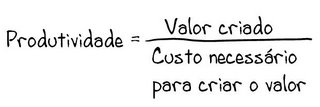
Esta equação:
 Leva rapidamente a pensar, se os trabalhadores trabalharem mais horas, com o mesmo salário, a produtividade vai aumentar.
.
Verdade?
.
Verdade!!!!
.
Se a mossa produtividade é cerca de 40% da produtividade média da OCDE, quantas mais horas teriam de trabalhar?
.
12 horas?
.
E a quem se venderia esse excesso de produção?
.
Nonsense completo. Estudos como este "Estudo indica que europeus do Sul trabalham mais do que os alemães" são a ilustração perfeita de que quem os faz não percebe o que é o valor, de qual a sua importância:
.
"“Os alemães trabalham muito menos [por ano e durante a vida activa] que os europeus do Sul. E também não trabalham de forma tão intensiva”, assegura Patrick Artus, chefe da secção de economia do banco francês Natixis e o redactor deste estudo, que se baseia designadamente nos números da ODCE e Eurostat."
.
São marxianos sem o saberem, acham que mais trabalho é mais valor, logo é mais riqueza... nonsense.
.
Basta olharem para uma variável para perceberem o quanto estão errados. Escolham um sector de actividade, só um, e, depois, olhem para a distribuição de produtividades dentro desse sector... como a explicam?
.
Com a legislação laboral?
.
Com a formação dos trabalhadores?
.
Com a TSU?
.
Com a língua?
.
Com o governo?
.
Esta equação:
.
Verdade?
.
Verdade!!!!
.
Se a mossa produtividade é cerca de 40% da produtividade média da OCDE, quantas mais horas teriam de trabalhar?
.
12 horas?
.
E a quem se venderia esse excesso de produção?
.
Nonsense completo. Estudos como este "Estudo indica que europeus do Sul trabalham mais do que os alemães" são a ilustração perfeita de que quem os faz não percebe o que é o valor, de qual a sua importância:
.
"“Os alemães trabalham muito menos [por ano e durante a vida activa] que os europeus do Sul. E também não trabalham de forma tão intensiva”, assegura Patrick Artus, chefe da secção de economia do banco francês Natixis e o redactor deste estudo, que se baseia designadamente nos números da ODCE e Eurostat."
.
São marxianos sem o saberem, acham que mais trabalho é mais valor, logo é mais riqueza... nonsense.
.
Basta olharem para uma variável para perceberem o quanto estão errados. Escolham um sector de actividade, só um, e, depois, olhem para a distribuição de produtividades dentro desse sector... como a explicam?
.
Com a legislação laboral?
.
Com a formação dos trabalhadores?
.
Com a TSU?
.
Com a língua?
.
Com o governo?
Acerca do papel do Marketing?
Momento 1:
.
"Mrs Cousins raced upstairs to the jewellery box on her dressing table, to inspect a broken silver brooch, set with a heart-shaped garnet and turquoises fashioned as forget-me-nots that had lain neglected at the bottom of her jewellery box, and her mother's before her, for more than 40 years.
...
"I simply couldn't believe that this old, broken brooch that I had never liked, was such an important object," said Mrs Cousins, 67, a retired gate maker from Market Harborough, Leics"
.
Momento 2:
.
"Mrs Cousins added: "Now I know the brooch's history and its value, I love it.""
.
História completa em "Antiques Roadshow discovery shocks owner and expert alike"
.
"Mrs Cousins raced upstairs to the jewellery box on her dressing table, to inspect a broken silver brooch, set with a heart-shaped garnet and turquoises fashioned as forget-me-nots that had lain neglected at the bottom of her jewellery box, and her mother's before her, for more than 40 years.
...
"I simply couldn't believe that this old, broken brooch that I had never liked, was such an important object," said Mrs Cousins, 67, a retired gate maker from Market Harborough, Leics"
.
Momento 2:
.
"Mrs Cousins added: "Now I know the brooch's history and its value, I love it.""
.
História completa em "Antiques Roadshow discovery shocks owner and expert alike"
sábado, junho 04, 2011
O tempo é a variável mais escassa que temos
Ainda hoje escrevi:
.
"Cuidado com o ROA."
.
O que é o ROA?

Um indicador que mencionei aqui.
.
Imaginem uma empresa que fabrica cadeiras de rodas.
.
Imaginem que essa empresa se concentra no fabrico de cadeiras de rodas. O que vende é um produto chamado cadeira de rodas.
.
Imaginem que essa empresa escolheu como clientes-alvo (normalmente as empresas não escolhem os clientes. Normalmente, as empresas acham que os clientes são um dado não uma variável do desafio. ERRADO!!!) empresas que lidam com o Estado e privados em concursos onde são negociadas compras de grande volume.
.
Enquanto essa empresa (e os seus clientes) se concentra em fabricar (e vender) as cadeiras mais baratas do mercado, correndo atrás de concursos e concursos, correndo atrás de materiais na China e subcontratação de tarefas a micro-empresas pelo preço mais baixo, não sobra tempo para parar e fazer contas. Qual é o retorno do capital? O capital está a ser convenientemente remunerado?
.
Problema: Por mais esforço e técnicas japonesas que sejam introduzidas numa empresa que fabrica e vende isto:
 Ela nunca começará a produzir isto:

Esta é a cegueira de quem quer aumentar a produtividade só com base neste denominador e não com base no numerador.
.
Voltando à empresa que fabrica cadeiras de rodas... se ela estivesse nesta lógica perceberia que a cadeira de rodas apenas é uma plataforma, o artifício para iniciar uma relação com um cliente e que o essencial não é produzir uma cadeira de rodas, mas as experiências que o cliente quer, procura, valoriza, sonha... aí o espírito abre-se, a mente flui e não há limites. Se eu estivesse nesse negócio, largava tudo e já hoje metia-me no carro para ir à procura desta gente:
.
"É licenciado em Engenharia Informática no Instituto Politécnico da Guarda, onde trabalha no Projecto MagicKey, desde 2007. Chegou ao palco do TEDx Covilhã de cadeira de rodas, porque uma imagem vale mais que mil palavras e Tiago pretendia mostrar, na prática, aquilo que faz: desenvolve, com toda a equipa do projecto, sistemas que pretendem ajudar a melhorar a qualidade de vida de pessoas com graves limitações físicas ou deficiência. Por exemplo, faz com que seja possível mover uma cadeira de rodas através do olhar. "Com os nossos sistemas [de tecnologia de controlo pelo olhar] uma pessoa que não pode sequer comunicar, consegue controlar a televisão, a cama e até enviar mensagens por telemóvel", explica Tiago.Mas realça que essa é apenas uma das características "fascinantes" do projecto MagicKey, onde assume as funções de programador."
.
E já agora, vejam o comentário das 11:26:
.
"Bem, os negócios do costume, ninguem fala em produzir agricultura, pescas, metalomecánica, estaleiros, enfim, negócios de rabo sentado, o habitual, aprendam com a Alemanha e vejam o que eles exportam.... industria pesada...onde é preciso sujar as mãos com oleo... "
.
Comentário de quem acha que produzir coisas, operand resources, é que é importante. Não concordo, prefiro a produção de operant resources.
.
"Cuidado com o ROA."
.
O que é o ROA?

Um indicador que mencionei aqui.
.
Imaginem uma empresa que fabrica cadeiras de rodas.
.
Imaginem que essa empresa se concentra no fabrico de cadeiras de rodas. O que vende é um produto chamado cadeira de rodas.
.
Imaginem que essa empresa escolheu como clientes-alvo (normalmente as empresas não escolhem os clientes. Normalmente, as empresas acham que os clientes são um dado não uma variável do desafio. ERRADO!!!) empresas que lidam com o Estado e privados em concursos onde são negociadas compras de grande volume.
.
Enquanto essa empresa (e os seus clientes) se concentra em fabricar (e vender) as cadeiras mais baratas do mercado, correndo atrás de concursos e concursos, correndo atrás de materiais na China e subcontratação de tarefas a micro-empresas pelo preço mais baixo, não sobra tempo para parar e fazer contas. Qual é o retorno do capital? O capital está a ser convenientemente remunerado?
.
Problema: Por mais esforço e técnicas japonesas que sejam introduzidas numa empresa que fabrica e vende isto:


Esta é a cegueira de quem quer aumentar a produtividade só com base neste denominador e não com base no numerador.
.
Voltando à empresa que fabrica cadeiras de rodas... se ela estivesse nesta lógica perceberia que a cadeira de rodas apenas é uma plataforma, o artifício para iniciar uma relação com um cliente e que o essencial não é produzir uma cadeira de rodas, mas as experiências que o cliente quer, procura, valoriza, sonha... aí o espírito abre-se, a mente flui e não há limites. Se eu estivesse nesse negócio, largava tudo e já hoje metia-me no carro para ir à procura desta gente:
.
"É licenciado em Engenharia Informática no Instituto Politécnico da Guarda, onde trabalha no Projecto MagicKey, desde 2007. Chegou ao palco do TEDx Covilhã de cadeira de rodas, porque uma imagem vale mais que mil palavras e Tiago pretendia mostrar, na prática, aquilo que faz: desenvolve, com toda a equipa do projecto, sistemas que pretendem ajudar a melhorar a qualidade de vida de pessoas com graves limitações físicas ou deficiência. Por exemplo, faz com que seja possível mover uma cadeira de rodas através do olhar. "Com os nossos sistemas [de tecnologia de controlo pelo olhar] uma pessoa que não pode sequer comunicar, consegue controlar a televisão, a cama e até enviar mensagens por telemóvel", explica Tiago.Mas realça que essa é apenas uma das características "fascinantes" do projecto MagicKey, onde assume as funções de programador."
.
E já agora, vejam o comentário das 11:26:
.
"Bem, os negócios do costume, ninguem fala em produzir agricultura, pescas, metalomecánica, estaleiros, enfim, negócios de rabo sentado, o habitual, aprendam com a Alemanha e vejam o que eles exportam.... industria pesada...onde é preciso sujar as mãos com oleo... "
.
Comentário de quem acha que produzir coisas, operand resources, é que é importante. Não concordo, prefiro a produção de operant resources.
Até que a voz me doa!
No postal imediatamente anterior a este Seth Godin afirma "Ideas that spread, win!"
.
O triste é quando boas ideias demoram a ganhar massa crítica, demoram a espalhar-se, entretanto as ideias obsoletas continuam a ganhar e a influenciar o mundo e a impedir que revolução ocorra.
.
Mais um exemplo do triunfo de ideias para além do seu prazo de validade é dado neste artigo publicado pela McKinsey:
.
"Not all productivity gains are the same. Here's why." de Michael Mandel e Susan Houseman.
.
"Most economists believe that productivity gains are the surest way to raise the standard of living of a country (Moi ici: Qualquer aluno do 1º ano de um curso de Economia é capaz de recitar de forma acéfala uns quantos versículos de autores consagrados que defendem que o aumento da produtividade é imprescindível para a melhoria do nível de vida dos trabalhadores). Yet despite apparent strong productivity growth in recent years, Americans have been hit by a deadly combination of stagnant real wages and a lack of good jobs for mid-income workers" (Moi ici: Olha a novidade!!! Se os economistas, se os políticos e se os académicos só vêm o lado dos custos como a fonte de aumento da produtividade... estavam à espera de quê?
.
Vamos considerar a produtividade como um indicador do valor potencial (valor potencial porque valor só é gerado pela experiência do cliente aquando do uso. Valor também expresso como o preço máximo que um clientes está disposto a pagar por um produto/serviço) gerado pelo trabalho de um trabalhador. Como é pensa o mainstream? Valor potencial gerado por um trabalhador: esquece o output, o que o trabalhador produz, e concentra-se em reduzir o custo de produzir esse output. Querem ver?)
.
"As a result, the apparent strong growth in the productivity or value-added per job in tradable industries actually combines three very different effects:
(Moi ici: A pensar assim "We're all doomed!" A única solução que os autores e o mainstream conhecem para o aumento da produtividade, e recordemos a definição lá de cima:
 que rapidamente descamba para:
 é, focar a mira nos custos, fazer o "lock" e começar a matraquear tudo o que mexa ou não e contribua para os custos. Reduzir trabalhadores, escolher fornecedores mais baratos, "aldrabar" a receita, não pagar ou pagar tarde a, trabalhar mais depressa, ...
.
Nesse afã, nesse frenesim de corte nos custos nunca têm tempo ou disposição para a postura da criança, da mente livre de preconceitos que olha para a equação e, ingenuamente, pergunta:
.
E se dedicássemos um pouco do nosso tempo (cuidado com o ROA) e energia não a reduzir os custos, não a aumentar a eficiência, mas a aumentar o valor potencial? Qual seria o efeito no aumento da produtividade? E qual seria o efeito nas margens do negócio?
.
Eu sei que me repito e me repito neste blogue, eu hesito em escrever e re-escrever estas coisas neste blogue mas... vejo as ideias obsoletas a continuarem a dar cabo da vida de milhões de pessoas e oiço Seth Godin e convenço-me que tenho de continuar até à exaustão a repetir-me até que a ideia triunfe.
.
Como escreve Hermann Simon em "Manage For Profit Not Market Share" acerca das mittelstand "We are not cost-cutters!!!"
.
Assim, só me resta, tentar, também pela exaustão, espalhar mais as ideias.
.
É a minha missionação especial:
.
O triste é quando boas ideias demoram a ganhar massa crítica, demoram a espalhar-se, entretanto as ideias obsoletas continuam a ganhar e a influenciar o mundo e a impedir que revolução ocorra.
.
Mais um exemplo do triunfo de ideias para além do seu prazo de validade é dado neste artigo publicado pela McKinsey:
.
"Not all productivity gains are the same. Here's why." de Michael Mandel e Susan Houseman.
.
"Most economists believe that productivity gains are the surest way to raise the standard of living of a country (Moi ici: Qualquer aluno do 1º ano de um curso de Economia é capaz de recitar de forma acéfala uns quantos versículos de autores consagrados que defendem que o aumento da produtividade é imprescindível para a melhoria do nível de vida dos trabalhadores). Yet despite apparent strong productivity growth in recent years, Americans have been hit by a deadly combination of stagnant real wages and a lack of good jobs for mid-income workers" (Moi ici: Olha a novidade!!! Se os economistas, se os políticos e se os académicos só vêm o lado dos custos como a fonte de aumento da produtividade... estavam à espera de quê?
.
Vamos considerar a produtividade como um indicador do valor potencial (valor potencial porque valor só é gerado pela experiência do cliente aquando do uso. Valor também expresso como o preço máximo que um clientes está disposto a pagar por um produto/serviço) gerado pelo trabalho de um trabalhador. Como é pensa o mainstream? Valor potencial gerado por um trabalhador: esquece o output, o que o trabalhador produz, e concentra-se em reduzir o custo de produzir esse output. Querem ver?)
.
"As a result, the apparent strong growth in the productivity or value-added per job in tradable industries actually combines three very different effects:
- Improvements in domestic production processes
- Gains in global supply chain efficiency
- Productivity gains at foreign suppliers.
(Moi ici: A pensar assim "We're all doomed!" A única solução que os autores e o mainstream conhecem para o aumento da produtividade, e recordemos a definição lá de cima:
.
Nesse afã, nesse frenesim de corte nos custos nunca têm tempo ou disposição para a postura da criança, da mente livre de preconceitos que olha para a equação e, ingenuamente, pergunta:
.
E se dedicássemos um pouco do nosso tempo (cuidado com o ROA) e energia não a reduzir os custos, não a aumentar a eficiência, mas a aumentar o valor potencial? Qual seria o efeito no aumento da produtividade? E qual seria o efeito nas margens do negócio?
.
Eu sei que me repito e me repito neste blogue, eu hesito em escrever e re-escrever estas coisas neste blogue mas... vejo as ideias obsoletas a continuarem a dar cabo da vida de milhões de pessoas e oiço Seth Godin e convenço-me que tenho de continuar até à exaustão a repetir-me até que a ideia triunfe.
.
Como escreve Hermann Simon em "Manage For Profit Not Market Share" acerca das mittelstand "We are not cost-cutters!!!"
.
Assim, só me resta, tentar, também pela exaustão, espalhar mais as ideias.
.
É a minha missionação especial:
Seth Godin: Ideas That Spread, Win
.
E ainda continuam a acreditar que só existe o trilho dos mass-media para criar uma marca?
.
Hello?!
.
E chegar a Mongo?
.
Será que os mass-media são o veículo para os nichos?
.
Hummm. Don't think so!
sexta-feira, junho 03, 2011
Gente que não tirou a cabeça de dentro do polimerizador
O velho Engº Matsumoto avisava os mais antigos na empresa, gente habituada à protecção das fronteiras pré-1986.
.
Pelos vistos há empresas que ainda não o perceberam.
.
"Ryanair envia rosas aos tripulantes da TAP para agradecer convocação da greve"
.
Pelos vistos há empresas que ainda não o perceberam.
.
"Ryanair envia rosas aos tripulantes da TAP para agradecer convocação da greve"
Para os convencidos que têm soluções para tudo.
Top-down sucks!!!
.
Bottom-up rules!!!
.
"No formal method tells us which are the important questions"
.
"The structure of the economy may change faster than we can learn about it"
.
E mais, quando é preciso mudar, algures no caminho vai ter de se ter fé, de se arriscar a perder o pé, para experimentar o novo sem amarras... faz lembrar o episódio de ontem do Espaço 1999, ás vezes é preciso ter fé e desconfiar dos factos.
.
Bottom-up rules!!!
.
"No formal method tells us which are the important questions"
.
"The structure of the economy may change faster than we can learn about it"
.
E mais, quando é preciso mudar, algures no caminho vai ter de se ter fé, de se arriscar a perder o pé, para experimentar o novo sem amarras... faz lembrar o episódio de ontem do Espaço 1999, ás vezes é preciso ter fé e desconfiar dos factos.
Service-dominant logic (parte II)
Continuado daqui.
.
Ontem, durante a viagem de ida e volta ao Porto via CP, devorei este interessante artigo "On value and value co-creation: A service systems and service logic perspective" de Stephen L. Vargo, Paul P. Maglio e Melissa Archpru Akaka, publicado em 2008 pelo European Management Journal.
.
Há aqui material que seguramente vai influenciar a forma como eu percepciono o fenómeno da criação de valor.
.
"The creation of value is the core purpose and central process of economic exchange. Traditional models of value creation focus on the firm’s output and price. We present an alternative perspective, one representing the intersection of two growing streams of thought, service science and service-dominant (S-D) logic. We take the view that (1) service, the application of competences (such as knowledge and skills) by one party for the benefit of another, is the underlying basis of exchange; (Moi ici: Muita gente e muitas empresas precisam de meter este ponto na cabeça, em vez de quererem vender coisas tangíveis, "operand resources", procurem vender "operant resources", intangíveis, conhecimento e habilidade)(2) the proper unit of analysis for service-for-service exchange is the service system, which is a configuration of resources (including people, information, and technology) connected to other systems by value propositions; and (3) service science is the study of service systems and of the cocreation of value within complex configurations of resources. We argue that value is fundamentally derived and determined in use – the integration and application of resources in a specific context – rather than in exchange – embedded in firm output and captured by price. Service systems interact through mutual service exchange relationships, improving the adaptability and survivability of all service systems engaged in exchange, by allowing integration of resources that are mutually beneficial." (Moi ici: Desde Adam Smith que valor é visto como o que é embutido num produto durante a sua produção, conceito usado por Marx, o trabalho do operário é que é a fonte do valor)
...
"The alternative view, service-dominant (S-D) logic, is tied to the value-in-use meaning of value. In S-D logic, the roles of producers and consumers are not distinct, meaning that value is always co-created, jointly and reciprocally, in interactions among providers and beneficiaries through the integration of resources and application of competences.
...
according to S-D logic, the automobile is only an input into the value creation that occurs as a customer uses it (in transportation, self-identity, etc.) and integrates it with other resources." (Moi ici: Ontem, na parte I, dei por mim a escrever, de forma simplificada, um papel do marketing... levar o cliente a valorizar ainda mais o resultado da experiência de uso do produto/serviço)
...
"The S-D logic view of exchange fundamentally challenges the foundation of economics,though in a real sense, it recaptures Smith’s (1776) original notions of applied, specialized knowledge and skills (service) and value-in-use (real value) as primary. As noted, in the G-D logic view, the purpose of economic exchange is to make and distribute things to be sold. A firm’s production process, which may include resources from other firms, embeds value or utility into a good, and the value of the good is represented by the market price or what the consumer is willing to pay. From this perspective, maximum efficiency – and maximum profit – is achieved by standardization and economies of scale. (Moi ici: Assim, posso considerar que o pecado original, o que cega e impede a visualização do que é a criação de valor, e o papel da eficácia e da identificação dos clientes-alvo é a crença de que o valor é embutido no produto/serviço pelo fabricante/prestador)
The S-D logic view is that all exchange is based on service, and that ‘‘when goods are involved, they are tools for the delivery and application of resources’’. That is, goods are service-delivery vehicles. In S-D logic, knowledge and skills are key resources for competitive advantage. The crux of the contrast between service-dominant and goods-dominant logic lies in the basis of exchange. S-D logic focuses on the action of operant resources (those that act upon other resources), such as knowledge and skills, whereas G-D logic focuses on the exchange of operand resources (those that an act or operation is performed on, such as goods). For S-D logic, value results from the beneficial application of operant resources, which are sometimes transmitted through operand resources or goods. Thus, from this view, value is co-created through the combined efforts of firms, employees, customers, stockholders, government agencies, and other entities related to any given exchange, but is always determined by the beneficiary (e.g., customer).
...
The S-D logic notion of value co-creation suggests that ‘‘there is no value until an offering is used – experience and perception are essential to value determination’’"
...
Esta tabela sintetiza as diferenças entre as duas lógicas:


.
Ontem, durante a viagem de ida e volta ao Porto via CP, devorei este interessante artigo "On value and value co-creation: A service systems and service logic perspective" de Stephen L. Vargo, Paul P. Maglio e Melissa Archpru Akaka, publicado em 2008 pelo European Management Journal.
.
Há aqui material que seguramente vai influenciar a forma como eu percepciono o fenómeno da criação de valor.
.
"The creation of value is the core purpose and central process of economic exchange. Traditional models of value creation focus on the firm’s output and price. We present an alternative perspective, one representing the intersection of two growing streams of thought, service science and service-dominant (S-D) logic. We take the view that (1) service, the application of competences (such as knowledge and skills) by one party for the benefit of another, is the underlying basis of exchange; (Moi ici: Muita gente e muitas empresas precisam de meter este ponto na cabeça, em vez de quererem vender coisas tangíveis, "operand resources", procurem vender "operant resources", intangíveis, conhecimento e habilidade)(2) the proper unit of analysis for service-for-service exchange is the service system, which is a configuration of resources (including people, information, and technology) connected to other systems by value propositions; and (3) service science is the study of service systems and of the cocreation of value within complex configurations of resources. We argue that value is fundamentally derived and determined in use – the integration and application of resources in a specific context – rather than in exchange – embedded in firm output and captured by price. Service systems interact through mutual service exchange relationships, improving the adaptability and survivability of all service systems engaged in exchange, by allowing integration of resources that are mutually beneficial." (Moi ici: Desde Adam Smith que valor é visto como o que é embutido num produto durante a sua produção, conceito usado por Marx, o trabalho do operário é que é a fonte do valor)
...
"The alternative view, service-dominant (S-D) logic, is tied to the value-in-use meaning of value. In S-D logic, the roles of producers and consumers are not distinct, meaning that value is always co-created, jointly and reciprocally, in interactions among providers and beneficiaries through the integration of resources and application of competences.
...
according to S-D logic, the automobile is only an input into the value creation that occurs as a customer uses it (in transportation, self-identity, etc.) and integrates it with other resources." (Moi ici: Ontem, na parte I, dei por mim a escrever, de forma simplificada, um papel do marketing... levar o cliente a valorizar ainda mais o resultado da experiência de uso do produto/serviço)
...
"The S-D logic view of exchange fundamentally challenges the foundation of economics,though in a real sense, it recaptures Smith’s (1776) original notions of applied, specialized knowledge and skills (service) and value-in-use (real value) as primary. As noted, in the G-D logic view, the purpose of economic exchange is to make and distribute things to be sold. A firm’s production process, which may include resources from other firms, embeds value or utility into a good, and the value of the good is represented by the market price or what the consumer is willing to pay. From this perspective, maximum efficiency – and maximum profit – is achieved by standardization and economies of scale. (Moi ici: Assim, posso considerar que o pecado original, o que cega e impede a visualização do que é a criação de valor, e o papel da eficácia e da identificação dos clientes-alvo é a crença de que o valor é embutido no produto/serviço pelo fabricante/prestador)
The S-D logic view is that all exchange is based on service, and that ‘‘when goods are involved, they are tools for the delivery and application of resources’’. That is, goods are service-delivery vehicles. In S-D logic, knowledge and skills are key resources for competitive advantage. The crux of the contrast between service-dominant and goods-dominant logic lies in the basis of exchange. S-D logic focuses on the action of operant resources (those that act upon other resources), such as knowledge and skills, whereas G-D logic focuses on the exchange of operand resources (those that an act or operation is performed on, such as goods). For S-D logic, value results from the beneficial application of operant resources, which are sometimes transmitted through operand resources or goods. Thus, from this view, value is co-created through the combined efforts of firms, employees, customers, stockholders, government agencies, and other entities related to any given exchange, but is always determined by the beneficiary (e.g., customer).
...
The S-D logic notion of value co-creation suggests that ‘‘there is no value until an offering is used – experience and perception are essential to value determination’’"
...
Esta tabela sintetiza as diferenças entre as duas lógicas:

A FP1 vai ao encontro do que costumo dizer aos empresários do calçado "façam do sapato o artifício para o início de uma relação."
.
Traduzo a FP4 como: o produto/serviço é a base, é a tela, os operand resources. Quanto mais camadas de operant resources (conhecimento, capacidades, habilidades, truques, experiência) conseguir aplicar sobre a tela, mais complexo e com mais potencial de diferenciação fica o que colocamos no mercado, maior o potencial para amplificar o valor que o cliente vai sentir e atribuir com a experiência do uso.
.
Quanto mais FP4 for verdade mais FP5 é a consequência lógica e inexorável... como no exemplo da BMW.
.
A FP7 é fundamental... e neste model, S-D logic,o faz todo o sentido o que tenho desenvolvido ao longo dos anos... a concentração na identificação dos clientes-alvo, a identificação das experiências que procuram e valorizam e, daí, desenhar a proposta de valor... all makes much sense now, sobretudo a filosofia que une os conceitos.
.
A FP10 está implícita em todas as anteriores mas é bom que esteja assim clara, para que mais gente a interiorize.

Continua.
Qual a dimensão dos seus clientes? Quem são os clientes-alvo?
Comecei a ouvir, durante o jogging, o livro "The Knack" porque tinha como co-author Bo Burlingham, autor que escreve sobre PMEs americanas que se preocupam em fazer a diferença e não estão numa corrida desenfreada para crescerem..
.
E tem sido uma excelente surpresa, capítulo atrás de capítulo, mensagens poderosas em sintonia com a pregação feita neste blogue. Por exemplo, acerca do capítulo VIII, um capítulo particularmente rico:
.
"While I completely agree with the old saying that “nothing happens without a sale,” it does not follow that all sales are equal. Some sales are much better than others — a concept that salespeople often have a hard time dealing with. (Moi ici: Esta verdade é tão desconhecida e tão importante... meu Deus!!!) That’s partly because they have a sales mentality. They’ve been conditioned to think that any sale is a good sale, and the larger the volume, the better. In fact, the size of the sale is a lot less important than the amount of gross profi t you’re going to earn on it. Too many low-margin sales can drive you out of business.
.
By the same token, many entrepreneurs think that they should focus on signing up big customers.
.
In the long run, he’d be much better off with a lot of small customers than with one or two big ones.
Small customers are the backbone of a solid, stable, profitable business — especially a service business.
...
Not that there’s anything wrong with having big customers. Sooner or later, most of us need them to grow. But you should never look down on your small customers or take them for granted. The more you have, the happier you’ll be. Why? I can give you three reasons.
First, you get better gross margins with small customers because they pay more for your services. (Moi ici: E os comerciais conhecem as margens dos artigos que vendem? E as empresas conhecem as margens dos artigos que produzem?) They have no choice. They simply don’t have the negotiating power of large customers. As a result, you can charge small customers the top price.
...
Second, small customers bring stability to a business. If you treat small customers right, they’ll stay with you forever. That’s partly because they’re loyal, and partly because— like most of us—they tend to resist change. It’s also true, however, that they’re much less likely than big customers to be lured away by competitors, if only because most companies don’t seek out small customers.
...
Third, a broad base of small customers makes your business less vulnerable to the loss of any single customer. That’s why—when you apply for a loan—a bank will ask you to list all of your customers that account for more than 10 percent of your sales, as well as the percentage of sales that each one represents. If you do more than 30 of sales with any single customer, you’re in trouble."
.
Continua.
.
E tem sido uma excelente surpresa, capítulo atrás de capítulo, mensagens poderosas em sintonia com a pregação feita neste blogue. Por exemplo, acerca do capítulo VIII, um capítulo particularmente rico:
.
"While I completely agree with the old saying that “nothing happens without a sale,” it does not follow that all sales are equal. Some sales are much better than others — a concept that salespeople often have a hard time dealing with. (Moi ici: Esta verdade é tão desconhecida e tão importante... meu Deus!!!) That’s partly because they have a sales mentality. They’ve been conditioned to think that any sale is a good sale, and the larger the volume, the better. In fact, the size of the sale is a lot less important than the amount of gross profi t you’re going to earn on it. Too many low-margin sales can drive you out of business.
.
By the same token, many entrepreneurs think that they should focus on signing up big customers.
.
In the long run, he’d be much better off with a lot of small customers than with one or two big ones.
Small customers are the backbone of a solid, stable, profitable business — especially a service business.
...
Not that there’s anything wrong with having big customers. Sooner or later, most of us need them to grow. But you should never look down on your small customers or take them for granted. The more you have, the happier you’ll be. Why? I can give you three reasons.
First, you get better gross margins with small customers because they pay more for your services. (Moi ici: E os comerciais conhecem as margens dos artigos que vendem? E as empresas conhecem as margens dos artigos que produzem?) They have no choice. They simply don’t have the negotiating power of large customers. As a result, you can charge small customers the top price.
...
Second, small customers bring stability to a business. If you treat small customers right, they’ll stay with you forever. That’s partly because they’re loyal, and partly because— like most of us—they tend to resist change. It’s also true, however, that they’re much less likely than big customers to be lured away by competitors, if only because most companies don’t seek out small customers.
...
Third, a broad base of small customers makes your business less vulnerable to the loss of any single customer. That’s why—when you apply for a loan—a bank will ask you to list all of your customers that account for more than 10 percent of your sales, as well as the percentage of sales that each one represents. If you do more than 30 of sales with any single customer, you’re in trouble."
.
Continua.
O mundo a mudar outra vez
"Take supply chain decisions. The trend toward significant offshoring will most likely continue (Moi ici: Pessoalmente acredito que já está em retrocesso). But many companies are becoming concerned that widely dispersed, low-cost supply chains make them vulnerable to protectionist governments, rising transportation costs, and quality problems. Some are taking steps to make their supply chains shorter, simpler, and stronger, in effect reducing internal distance within their production networks to better manage their exposure."
.
Tantas oportunidades a serem agarradas no mundo do B2B pelas nossas PMEs, fazendo uso da proximidade e flexibilidade.
Trecho retirado de "The Cosmopolitan Corporation" de Pankaj Ghemawat e publicado no número de Maio da HBR.
.
Tantas oportunidades a serem agarradas no mundo do B2B pelas nossas PMEs, fazendo uso da proximidade e flexibilidade.
Trecho retirado de "The Cosmopolitan Corporation" de Pankaj Ghemawat e publicado no número de Maio da HBR.
Gente de carne e osso
WTH!!!
.
"No país dos talentos escondidos"
.
Faz-me suspeitar de conversa "feel good" we are all nice people and everything will be OK-
.
"O docente e empresário fundador da empreendedora Y-Dreams, António Câmara, a atleta olímpica Aurora Cunha e o velejador solitário e co-fundador da Portugal Ocean Race, Ricardo Diniz, foram o rosto visível de testemunhos de dinâmicas e posicionamentos positivos que contribuem para o sucesso individual e profissional."
.
Se me pedissem nomes tinha todo o gosto em indicar gente do mundo das empresas, gente concreta com resultados concretos, por exemplo:
.
"No país dos talentos escondidos"
.
Faz-me suspeitar de conversa "feel good" we are all nice people and everything will be OK-
.
"O docente e empresário fundador da empreendedora Y-Dreams, António Câmara, a atleta olímpica Aurora Cunha e o velejador solitário e co-fundador da Portugal Ocean Race, Ricardo Diniz, foram o rosto visível de testemunhos de dinâmicas e posicionamentos positivos que contribuem para o sucesso individual e profissional."
.
Se me pedissem nomes tinha todo o gosto em indicar gente do mundo das empresas, gente concreta com resultados concretos, por exemplo:
- o José Armindo;
- o Stephen Morais;
- e muitos outros empresários que tenho conhecido pessoalmente ao longo dos anos e que, sem fanfarra, vão construindo um futuro melhor para a comunidade onde operam.
quinta-feira, junho 02, 2011
Para onde foram os escravos? Para onde foi o dumping social?
A economia é um jogo de vasos comunicantes.
.
"The biggest cause for the price hikes has been the rapid wage inflation in China's factory-heavy coastal region, where labor is in short supply. Worker salaries have almost doubled in the past year, to 2,000 yuan ($308) per month in factories in Guangdong province, the nation's manufacturing hub, according to toymakers attending the fair. "Wages are increasing day by day," says Jimmy Tang, general manager for Chenghai Junfa Toys in Shantou. "If you don't do it, people go somewhere else.""
.
Trecho retirado de "Toys from China Will Cost More".
.
Onde estão os batoteiros deste país? Não deixem fugir a oportunidade...
.
"The biggest cause for the price hikes has been the rapid wage inflation in China's factory-heavy coastal region, where labor is in short supply. Worker salaries have almost doubled in the past year, to 2,000 yuan ($308) per month in factories in Guangdong province, the nation's manufacturing hub, according to toymakers attending the fair. "Wages are increasing day by day," says Jimmy Tang, general manager for Chenghai Junfa Toys in Shantou. "If you don't do it, people go somewhere else.""
.
Trecho retirado de "Toys from China Will Cost More".
.
Onde estão os batoteiros deste país? Não deixem fugir a oportunidade...
A minha árvore da estratégia seria outra
O artigo é interessante "Strategy on One Page" mas tem várias falhas.
.
A figura mostra-as:
 Não concordo com a sequência.
.
Primeira: 1.Root purpose.
Qual a razão de ser da empresa? Acrescento, em que podemos ser bons? Em que podemos fazer a diferença? Onde podemos fazer batota para criar/aproveitar uma vantagem competitiva?
Tanto pode ser a primeira, como a segunda.
.
Segunda: 2.What is your value proposition.
Errado, na minha opinião!!! Não faz sentido falar em proposta de valor sem previamente ter identificado os clientes-alvo. São os clientes que criam valor, o valor não vem embutido no produto ou serviço que compram. O valor é gerado quando eles, os clientes, sentem as consequências, as experiências de terem usado a a plataforma de serviços disponibilizada pelo fornecedor. Os fornecedores não criam valor (afirmação que uso aqui para simplificar mas que não é totalmente verdade. Os fornecedores não criam valor, os fornecedores facilitam os meios para que os clientes criem valor. Contudo, os fornecedores podem fazer ampliar a sensação de valor sentida pelos clientes, e aí há um pouco de co-criação por parte do fornecedor... ou talvez, ampliação do valor sentido pelos clientes)
Assim, não faz sentido pensar numa proposta de valor sem ter previamente identificados os clientes-alvo e o que buscam e valorizam.
Por mim seria a terceira.
.
Terceira: 3.Who are you trying to serve/target?
Esta seria a minha primeira ou segunda. Quem são os clientes-alvo? O que procuram e valorizam? O que é que para eles é valor?
.
Se for a primeira, escolho o alvo e depois monto o negócio em função dele.
Se tiver limitações de capital ou outros recursos, identifico onde posso ser bom, onde posso ter vantage competitiva sustentável e, depois, procuro alvo em função dessa restrição.
.
Quarta: How will you know you are winning?
Isto não tem nada a ver com estratégia, isto é algo que permite medir a execução da estratégia e/ou avaliar a validade das hipóteses subjacentes à estratégia.
.
A minha quarta seria Qual o mosaico de actividades e recursos fundamentais para criar a proposta de valor?
.
A figura mostra-as:

.
Primeira: 1.Root purpose.
Qual a razão de ser da empresa? Acrescento, em que podemos ser bons? Em que podemos fazer a diferença? Onde podemos fazer batota para criar/aproveitar uma vantagem competitiva?
Tanto pode ser a primeira, como a segunda.
.
Segunda: 2.What is your value proposition.
Errado, na minha opinião!!! Não faz sentido falar em proposta de valor sem previamente ter identificado os clientes-alvo. São os clientes que criam valor, o valor não vem embutido no produto ou serviço que compram. O valor é gerado quando eles, os clientes, sentem as consequências, as experiências de terem usado a a plataforma de serviços disponibilizada pelo fornecedor. Os fornecedores não criam valor (afirmação que uso aqui para simplificar mas que não é totalmente verdade. Os fornecedores não criam valor, os fornecedores facilitam os meios para que os clientes criem valor. Contudo, os fornecedores podem fazer ampliar a sensação de valor sentida pelos clientes, e aí há um pouco de co-criação por parte do fornecedor... ou talvez, ampliação do valor sentido pelos clientes)
Assim, não faz sentido pensar numa proposta de valor sem ter previamente identificados os clientes-alvo e o que buscam e valorizam.
Por mim seria a terceira.
.
Terceira: 3.Who are you trying to serve/target?
Esta seria a minha primeira ou segunda. Quem são os clientes-alvo? O que procuram e valorizam? O que é que para eles é valor?
.
Se for a primeira, escolho o alvo e depois monto o negócio em função dele.
Se tiver limitações de capital ou outros recursos, identifico onde posso ser bom, onde posso ter vantage competitiva sustentável e, depois, procuro alvo em função dessa restrição.
.
Quarta: How will you know you are winning?
Isto não tem nada a ver com estratégia, isto é algo que permite medir a execução da estratégia e/ou avaliar a validade das hipóteses subjacentes à estratégia.
.
A minha quarta seria Qual o mosaico de actividades e recursos fundamentais para criar a proposta de valor?
Quer criar um negócio? (parte II)
Quando escrevi este postal "Quer criar um negócio?" a ideia passou-me pela mente, por causa de um workshop que fiz há semanas. A ideia não é nova, já mais do que um empresário produtor de bens de investimento de grande dimensão, sujeitos a um grande investimento de capital inicial, discutiu a ideia comigo.
.
Num cenário de retracção económica, de falta de dinheiro para investir, e se as empresas montarem um modelo de negócio assente não na venda mas no aluguer?
.
Pois bem, a BMW está a testar o serviço "BMW pilots online car rental scheme"
.
.
Tantas oportunidades que se escondem por detrás desta abordagem...
.
Num cenário de retracção económica, de falta de dinheiro para investir, e se as empresas montarem um modelo de negócio assente não na venda mas no aluguer?
.
Pois bem, a BMW está a testar o serviço "BMW pilots online car rental scheme"
.
.
Tantas oportunidades que se escondem por detrás desta abordagem...
Service-dominant logic (parte I)
Há anos que procurava um filão destes.
.
A minha formação de base é engenharia. Praticamente tudo o que desenvolvo com as empresas no campo da estratégia resulta do meu estudo, da minha reflexão e da experiência que vou vivendo com as empresas.
.
Sinto que existe uma grande lacuna entre o que vou construindo como sendo o meu arsenal de ferramentas, de abordagens e de perspectivas da realidade e o que a academia me oferece.
.
A realidade de trabalhar com as empresas é implacável, as experiências têm de resultar, o que não resulta é rapidamente eliminado ou retrabalhado.
.
Assim, há anos que descobri a importância do valor para o sucesso das empresas. Não o valor na concepção marxiana, como sendo algo embutido nos produtos, durante a produção, pelo fornecedor, mas o valor gerado na mente do cliente. Valor como algo de subjectivo e diferente de cliente para cliente.
.
Para reduzir a variabilidade na interpretação do que é valor, o passo seguinte, levou-me a descobrir a importância do conceito de cliente-alvo e daí chegar ao conceito de proposta de valor.
.
Mas a sede de perceber melhor o que é isso de valor, como é que ele é originado, capturado e extraído, nunca se extingue, está sempre presente, é sempre testada assim que trabalhamos com um cliente.
.
Foi com uma grande satisfação que descobri um filão interessante que desconhecia e há muito tempo procurava. Aconselho a leitura de "Evolving to a New Dominant Logic for Marketing" de Stephen L. Vargo & Robert F. Lusch, publicado no Journal of Marketing em Janeiro de 2004.
.
 Segundo os autores, os fornecedores produzem plataformas que os clientes podem usar para criar valor na sua vida. E só os clientes podem criar valor, por isso, os fornecedores apenas podem apresentar propostas de valor. O que os clientes compram é a capacidade de prestação de serviços que criam valor.
.
Alguns recortes do artigo
.
"marketing has moved from a goods-dominant view, in which tangible output and discrete transactions were central, to a service-dominant view, in which intangibility, exchange processes, and relationships are central.” (Moi ici: Fugir dos atributos do produto ou serviço, para nos concentrarmos na experiência que o cliente vai experienciar)
…
“we define services as the application of specialized competences (knowledge and skills) through deeds, processes, and performances for the benefit of another entity or the entity itself.”
…
“define operand resources as resources on which an operation or act is performed to produce an effect, and they compare operand resources with operant resources, which are employed to act on operand resources (and other operant recourses).” (Moi ici: Quanto mais intangibilidade as empresas incorporam na oferta, mais "operant resources" actuam e transforma outros operant resources que por sua vez transformam operand resources)
…
“A goods-centered dominant logic developed in which the operand resources were considered primary.” (Moi ici: Está obsoleta esta lógica dominante. No entanto, a academia, os políticos e os economistas continuam mergulhados nela. Por isso só conhecem a alavanca do preço)
…
“Operant resources are resources that produce effects”
…
““it is never resources themselves that are the ‘inputs’ to the production process, but only the services that the resources can render.”
Operant resources are often invisible and intangible; often they are core competences or organizational processes.”
…
“The service-centered dominant logic perceives operant resources as primary, because they are the producers of effects. This shift in the primacy of resources has implications for how exchange processes, markets, and customers are perceived and approached.”
…
“The service-centered view of marketing implies that marketing is a continuous series of social and economic processes that is largely focused on operant resources with which the firm is constantly striving to make better value propositions than its competitors. In a free enterprise system, the firm primarily knows whether it is making better value propositions from the feedback it receives from the marketplace in terms of firm financial performance.
Because firms can always do better at serving customers and improving financial performance, the service-centered view of marketing perceives marketing as a continuous learning process (directed at improving operant resources). The service-centered view can be stated as follows:
…
“Core competences are not physical assets but intangible processes; they are “bundles of skills and technologies””
…
““the competitive advantage of firms stems from dynamic capabilities rooted in high performance routines operating inside the firm, embedded in the firm’s processes, and conditioned by its history.” Hamel and Prahalad discuss “competition for competence,” or competitive advantage resulting from competence making a “disproportionate contribution to customer-perceived value.””
…
““core competence is communication, involvement, and a deep commitment to working across organizational boundaries.” In addition, they state (Hamel and Prahalad) that core competences are “collective learning in the organization, especially [about] how to coordinate diverse production skills.””
…
“The service-centered view of marketing is customercentric and market driven (Moi ici: Concentrar tudo no serviço aos clientes-alvo). This means more than simply being consumer oriented; it means collaborating with and learning from customers and being adaptive to their individual and dynamic needs. A service-centered dominant logic implies that value is defined by and cocreated with the consumer rather than embedded in output. Haeckel (1999) observes successful firms moving from practicing a “make-and-sell” strategy to a “sense-and-respond” strategy. Day (1999, p. 70) argues for thinking in terms of self-reinforcing “value cycles” rather than linear value chains. In the servicecentered view of marketing, firms are in a process of continual hypothesis generation and testing. Outcomes (e.g., financial) are not something to be maximized but something to learn from as firms try to serve customers better and improve their performance.”"
.
Continua
.
A minha formação de base é engenharia. Praticamente tudo o que desenvolvo com as empresas no campo da estratégia resulta do meu estudo, da minha reflexão e da experiência que vou vivendo com as empresas.
.
Sinto que existe uma grande lacuna entre o que vou construindo como sendo o meu arsenal de ferramentas, de abordagens e de perspectivas da realidade e o que a academia me oferece.
.
A realidade de trabalhar com as empresas é implacável, as experiências têm de resultar, o que não resulta é rapidamente eliminado ou retrabalhado.
.
Assim, há anos que descobri a importância do valor para o sucesso das empresas. Não o valor na concepção marxiana, como sendo algo embutido nos produtos, durante a produção, pelo fornecedor, mas o valor gerado na mente do cliente. Valor como algo de subjectivo e diferente de cliente para cliente.
.
Para reduzir a variabilidade na interpretação do que é valor, o passo seguinte, levou-me a descobrir a importância do conceito de cliente-alvo e daí chegar ao conceito de proposta de valor.
.
Mas a sede de perceber melhor o que é isso de valor, como é que ele é originado, capturado e extraído, nunca se extingue, está sempre presente, é sempre testada assim que trabalhamos com um cliente.
.
Foi com uma grande satisfação que descobri um filão interessante que desconhecia e há muito tempo procurava. Aconselho a leitura de "Evolving to a New Dominant Logic for Marketing" de Stephen L. Vargo & Robert F. Lusch, publicado no Journal of Marketing em Janeiro de 2004.
.

.
Alguns recortes do artigo
.
"marketing has moved from a goods-dominant view, in which tangible output and discrete transactions were central, to a service-dominant view, in which intangibility, exchange processes, and relationships are central.” (Moi ici: Fugir dos atributos do produto ou serviço, para nos concentrarmos na experiência que o cliente vai experienciar)
…
“we define services as the application of specialized competences (knowledge and skills) through deeds, processes, and performances for the benefit of another entity or the entity itself.”
…
“define operand resources as resources on which an operation or act is performed to produce an effect, and they compare operand resources with operant resources, which are employed to act on operand resources (and other operant recourses).” (Moi ici: Quanto mais intangibilidade as empresas incorporam na oferta, mais "operant resources" actuam e transforma outros operant resources que por sua vez transformam operand resources)
…
“A goods-centered dominant logic developed in which the operand resources were considered primary.” (Moi ici: Está obsoleta esta lógica dominante. No entanto, a academia, os políticos e os economistas continuam mergulhados nela. Por isso só conhecem a alavanca do preço)
…
“Operant resources are resources that produce effects”
…
““it is never resources themselves that are the ‘inputs’ to the production process, but only the services that the resources can render.”
Operant resources are often invisible and intangible; often they are core competences or organizational processes.”
…
“The service-centered dominant logic perceives operant resources as primary, because they are the producers of effects. This shift in the primacy of resources has implications for how exchange processes, markets, and customers are perceived and approached.”
…
“The service-centered view of marketing implies that marketing is a continuous series of social and economic processes that is largely focused on operant resources with which the firm is constantly striving to make better value propositions than its competitors. In a free enterprise system, the firm primarily knows whether it is making better value propositions from the feedback it receives from the marketplace in terms of firm financial performance.
Because firms can always do better at serving customers and improving financial performance, the service-centered view of marketing perceives marketing as a continuous learning process (directed at improving operant resources). The service-centered view can be stated as follows:
- 1. Identify or develop core competences, the fundamental knowledge and skills of an economic entity that represent potential competitive advantage.
- 2. Identify other entities (potential customers) that could benefit from these competences. (Moi ici: Quem são os clientes-alvo?)
- 3. Cultivate relationships that involve the customers in developing customized, competitively compelling value propositions to meet specific needs. (Moi ici: Qual o mosaico de actividades e recursos e infraestruturas que vai gerar a proposta de valor para os clientes-alvo?)
- 4. Gauge marketplace feedback by analyzing financial performance from exchange to learn how to improve the firm’s offering to customers and improve firm performance.”
…
“Core competences are not physical assets but intangible processes; they are “bundles of skills and technologies””
…
““the competitive advantage of firms stems from dynamic capabilities rooted in high performance routines operating inside the firm, embedded in the firm’s processes, and conditioned by its history.” Hamel and Prahalad discuss “competition for competence,” or competitive advantage resulting from competence making a “disproportionate contribution to customer-perceived value.””
…
““core competence is communication, involvement, and a deep commitment to working across organizational boundaries.” In addition, they state (Hamel and Prahalad) that core competences are “collective learning in the organization, especially [about] how to coordinate diverse production skills.””
…
“The service-centered view of marketing is customercentric and market driven (Moi ici: Concentrar tudo no serviço aos clientes-alvo). This means more than simply being consumer oriented; it means collaborating with and learning from customers and being adaptive to their individual and dynamic needs. A service-centered dominant logic implies that value is defined by and cocreated with the consumer rather than embedded in output. Haeckel (1999) observes successful firms moving from practicing a “make-and-sell” strategy to a “sense-and-respond” strategy. Day (1999, p. 70) argues for thinking in terms of self-reinforcing “value cycles” rather than linear value chains. In the servicecentered view of marketing, firms are in a process of continual hypothesis generation and testing. Outcomes (e.g., financial) are not something to be maximized but something to learn from as firms try to serve customers better and improve their performance.”"
.
Continua
Subscrever:
Mensagens (Atom)
%2006.21.jpeg)