segunda-feira, junho 17, 2019

Credo na boca

Eficientismo com o credo na boca versus a lição dos nabateus:

É o que vem logo à mente, depois de ler "Investing in slack":
"Systems with slack are more resilient. The few extra minutes of time aren’t wasted, the same way that a bike helmet isn’t wasted if you don’t have a crash today. That buffer will save the day, sooner or later.
...
The mistake happens when we over-index on the easily measured short-term wins and forget to account for the costs of system failure.
.
Competitive environments push profit seekers to reduce slack and to play a short-term game. If your organization hits the wall, the market will survive, because we have other options. But that doesn’t mean you will survive.
.
Slack is actually a bargain."

domingo, junho 16, 2019

Gentrificação

Leio "Ireland’s unequal tech boom" e recordo
 

Nope!


Nope!

Quando vi esta fotografia pensei logo nos muitos empresários que ainda não perceberam o filme em que estão metidos.

Muitas pessoas e organizações são capazes de se alhear em relação às mudanças do contexto e não perceber o seu potencial impacte. Assim, são capazes de adiar a mudança que permitirá fazer face ao que só daí a alguns anos se materializará na parede contra a qual vão bater. Basta recordar o caso das escolas privadas, como ainda esta semana referi.

Há anos que escrevo aqui sobre a evolução demográfica. Por exemplo:
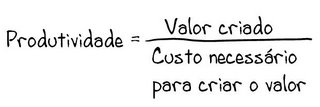
Uma das consequências da agudização da evolução demográfica será o desligamento da evolução salarial da evolução da produtividade. Recordo o que escrevi sobre a crescente irrelevância do SMN:
Sabem o que acontece às empresas que aumentam os salários para lá do aumento da produtividade? Não têm futuro, fecham!

Recordo algumas reflexões:

Assim como muitas empresas têxteis francesas e alemãs se deslocalizaram para Portugal nos anos 60 e 70, porque o aumento de produtividade no sector na França e na Alemanha era incompatível com o aumento dos salários na França e na Alemanha, também por cá começaremos a sentir cada vez mais relatos deste tipo. Empresas com encomendas a terem de fechar porque não conseguem captar trabalhadores, ou não conseguem ganhar o dinheiro suficiente para pagar as dívidas.

Recordar a velhinha citação de Maliranta acerca da Finlândia acrescida da frase de Nassim Taleb:

Depois, algo que aprendi em 2007 com Maliranta e a experiência finlandesa:
"It is widely believed that restructuring has boosted productivity by displacing low-skilled workers and creating jobs for the high skilled."
Mas, e como isto é profundo:
"In essence, creative destruction means that low productivity plants are displaced by high productivity plants."
Por fim, Maliranta confirmado por Nassim Taleb:
"Systems don’t learn because people learn individually – that’s the myth of modernity. Systems learn at the collective level by the mechanism of selection: by eliminating those elements that reduce the fitness of the whole, provided these have skin in the game"
Recordar esta "Especulação perigosa" de Novembro último.

sábado, junho 15, 2019

Evolução mensal das exportações

O tweet do Nuno
 

Deu-me a ideia de fazer isto:

Cores atribuídas em função da percentagem da evolução face ao mesmo mês do ano anterior


Agora tenho de arranjar tempo para carregar 2018 e talvez 2017.

Mongo por todo o lado

Mongo por todo o lado.

Quando era adolescente descobri um shampô mainstream que resolveu os meus problemas. Ainda hoje o uso e o tema não é relevante para mim. No entanto, como somos todos diferentes, quer biologicamente, quer na importância que atribuímos aos temas, há-de haver muita gente que não está satisfeita com o serviço prestado pelos produtos mainstream.

Em Mongo não só a possibilidade de dar resposta a quem não é servido pelo mainstream aumenta, como o seu custo baixa. Em "The Future of Marketing Is Bespoke Everything" encontrei mais um exemplo desta tendência:
"Although there are billions of people in the world, it’s always tempting to believe your existence is unprecedented in some way.
...
A few months ago, Prose, a start-up that offers personalized, custom-blended hair-care products based on customers’ responses to a lengthy survey, wore me down with an alluring marketing tactic: beautiful Instagram ads indulging the idea that what’s going on on my head might be too unique for whatever Sephora has to offer. If I told the company my long list of petty hair complaints, perhaps I’d never again have to stand in front of a wall of indistinguishable products, trying to guess which one might be my holy grail.
...
The personalized shampoo, conditioner, and hair mask came in simple containers that evinced a distinctly Millennial sense of understated luxury. Each had my name on the label. I wasn’t just going to wash my hair, I told myself. I was going to outsmart it.
...
Now, aided by advances in manufacturing and the direct-to-consumer nature of online shopping, personalization has become the hot new thing at much more accessible prices. That’s especially true in the wellness industry, where Prose is one of a slew of new companies offering everything from custom-blended face creams to individualized vitamin cocktails. Together, these brands have attracted millions of shoppers (and millions of dollars in venture-capital funding) by tapping into something powerful: the idea that we’re all fancy and special enough to have something made just for us.
...
 the current crop of companies offering personalization might end up too successful for their own good: “The problem is that when it works, competitors do it.” It’s not hard to imagine a near future in which upstarts and big brands alike will let you have it your way with a custom cocktail of nutrients or a special face serum all your own, as long as you’re willing to tell them everything about yourself."

sexta-feira, junho 14, 2019

Curiosidade do dia

Não percebo como é que estas notícias:

Não são recebidas pelos políticos e jornalistas com um sorriso. Segundo uma certa visão muito cara a estas personagens, os humanos são a fonte de todos os males e os grandes poluidores. Assim, ao diminuir a população, Portugal está a contribuir para reduzir a sua pegada ecológica.

"Such volatility highlights the folly of strategic inertia or, worse, managerial hubris"

Overcoming myopia begins with situating the organisation and its transactional environment within the broader context of society. Such a perspective recognises the deeper causal relationships that enable and drive industry dynamics and outcomes. Understanding what these causal relationships are, how they might change and how they could affect future operating dynamics is the essence of scenario planning.
.
The transactional environment is the arena in which the organisation participates, where the perceived value or benefits it creates are exchanged to satisfy perceived wants and needs. The organisation has an immediate relationship with this environment. The actions of industry stakeholders can have a direct influence on the organisation; and through its policies and actions, the organisation can exert direct influence on industry outcomes. Actors within this environment include customers, employees, distributors, suppliers, regulators, competitors, unions and other relevant participants
The dynamics of the transactional environment are invariably enabled or driven by factors beyond the industry’s boundaries. Within this broader social environment are the deeper, less obvious factors influencing industry dynamics, including demographics, social values, technology, climate, legislation, employment levels and interest rates.
.
Together these factors evolve, interact and combine to provide a shifting and dynamic context for the organisation’s operations. At any given time, a unique mix of factors is interacting to produce a particular operating context. And as changes occur across each of these factors, this mix changes, shaping the attitudes, behaviours, wants and needs of society, and ultimately influencing the benefits customers seek from your business 
This shifting contextual dynamic serves up a series of ongoing strategic fitness tests where the corporate challenge is to remain in alignment with the environment. Such volatility highlights the folly of strategic inertia or, worse, managerial hubris, a point well made by Theodore Levitt in his classic article ‘Marketing Myopia’. ‘In truth, there is no such thing as a growth industry,’ he argued. ‘There are only companies organized and operated to create and capitalize on growth opportunities. Industries that assume themselves to be riding some automatic growth escalator invariably descend into stagnation.’[Moi ici: Lembra-se da malta que espera a boleia da maré?]
.
By instead adopting a contextual outlook, historical trends, and the forecasts based on these trends, are put into perspective. You are able to look at your historical performance, not from the position of absolute outcomes and trends, but from the deeper perspective of underlying drivers and conditions that led to those outcomes. The result is an appreciation for society’s fluency and a broader outlook towards the future.”

Trecho de Steve Tighe retirado de “Rethinking Strategy”

"niche retailers with strong identities" (parte II)

Parte I.

Um exemplo do que quero dizer quando defendo que o futuro das plataformas não é winner-take-all, "Bitchute".

Trabalhar para os extremos é terrível para quem quer triunfar no centrão.

quinta-feira, junho 13, 2019

Vai ser bonita a festa, pá!


Espero que haja uma maioria absoluta na próxima legislatura.

Claro que a actual legislatura, com um baixo défice, nos prepara para anos mais exigentes.

E você, como se está a preparar para os próximos anos?


Cassandras-doentias e opções repentinas e unilaterais

Por vezes, as organizações e o contexto que as rodeia estão em sintonia e as organizações prosperam. No entanto, o mais provável é que essa sintonia não dure para sempre, ou porque a organização muda, ou porque o contexto muda, ou porque ambos mudam.

Muitas organizações, arrisco escrever, a maioria, adiam as mudanças para fazer face à alteração do status quo, esperando que se aguardarem o suficiente os astros vão novamente alinhar-se e tudo voltará à normalidade. Só que quanto mais tempo adiam a mudança, mais a dimensão da mudança cresce.

Também há organizações que apelidam de Cassandras-doentias os que com tempo, com antecedência, avisam o que com grande probabilidade aí virá. Assim, as organizações em vez de se prepararem para  uma mais que provável disrupção, antes apostam todas as fichas na manutenção do status quo, apesar de todos os avisos.

Este artigo, "Colégio da Imaculada Conceição, em Coimbra, fecha portas. Não resistiu à “grave situação financeira”" ilustra um caso em que os sinais da mudança foram ignorados e quando se quis fazer algo já era tarde de mais.
"em 2016, o contrato chegou ao fim. “Tratou-se de uma opção repentina e unilateral tomada, na altura, pelo Ministério da Educação, à qual o CAIC foi alheio e à qual se opôs desde a primeira hora, mas sem sucesso”, refere a instituição.
...
Os jesuítas garantem que foram desenvolvidos “todos os esforços para reconfigurar o Colégio à nova condição de colégio privado”. Por exemplo, “o essencial dos encargos passou a ser assumido pelas famílias” e foram “tomadas medidas no sentido de reduzir os encargos, de envolver doadores e de captar novos alunos”. Além disso, ao longo de um ano letivo (2016/2017), o colégio assegurou o seu funcionamento em regime gratuito para os alunos, mesmo já sem o financiamento do estado “num número muito significativo de turmas”.
...
Mas os esforços não foram suficientes. De acordo com a Companhia de Jesus, a “insustentabilidade financeira” tornou-se numa “evidência incontornável, agravando-se os défice de exploração”."
Recordo:

quarta-feira, junho 12, 2019

"uma inconsciência quase divertida"

"A culpa, desculpem lá, é dos portugueses. Incapazes de estabelecer um nexo de causalidade, ou de ligar as acções aos autores e às consequências, os portugueses passam pela vida em sociedade com uma inconsciência quase divertida. Eu, pelo menos, diverti-me bastante a reparar na quantidade de análises que atribuem a abstenção crescente a um alegado “protesto”. Só se agora o povo protesta nas praias e nos “shoppings”, com a jovialidade típica daqueles para quem qualquer porcaria serve. Incluindo, ou talvez principalmente, a porcaria vigente. Sem escrutínio, sem contraponto, sem punição, a porcaria promete durar e deixar uma factura pesada, a título de lembrança. Mas os portugueses não se lembram de nada."

Trecho retirado de "Os dias nacionais da amnésia"

Motivação

"Design Goals, Not Chores
.
Ample research has documented the importance of goal setting. Studies have shown, for example, that when salespeople have targets, they close more deals, and that when individuals make daily exercise commitments, they’re more likely to increase their fitness levels. Abstract ambitions—such as “doing your best”—are usually much less effective than something concrete, such as bringing in 10 new customers a month or walking 10,000 steps a day. As a first general rule, then, any objectives you set for yourself or agree to should be specific.
...
Find Effective Rewards
.
Some tasks or even stretches of a career are entirely onerous—in which case it can be helpful to create external motivators for yourself over the short- to-medium term, especially if they complement incentives offered by your organization.
...
Sustain Progress
.
When people are working toward a goal, they typically have a burst of motivation early and then slump in the middle, where they are most likely to stall out."

Trechos retirados de "How to Keep Working When You’re Just Not Feeling It"

Mongo é um mundo de tribos

Mongo é um mundo de tribos e de tribos com interesses assimétricos.

Eis um bom exemplo das muitas oportunidades que há por explorar, "Universal Standard wants to end the plus size binary once and for all":
"Last month, clothing brand Universal Standard announced that it would start carrying all of its items in sizes 00 to 40, officially making it the most size-inclusive retailer for women across the world.
...
With US’s 00 to 40 sizing, the founders hope to usher in what they describe as the “new normal,” a sort of paradigm shift for apparel in which, as Veksler put it: “It doesn’t matter if you’re a size two or size 32, you should be able to walk into any store or go to any website and only ask yourself one question, and that is: ‘Do I like this?’ not, ‘Does this come in my size?'”

terça-feira, junho 11, 2019

Home delivery (part II)

Part I.

Recordar "Incumbentes e franjas de mercado"

Ontem encontrei mais um sintoma sobre as consequências do tema: "Milhares de camionistas estrangeiros contratados de urgência"

"niche retailers with strong identities"

Tão interessante, tão em sintonia com a visão de Mongo como um mundo de tribos de interesses assimétricos, tão de acordo com "tu não és do meu sangue", tão de acordo com a ambivalência face a Bieber. Ninguém quer ser tratado como plancton. Trechos retirados de "The global village needs walls":
"Facebook has been a giant experiment in understanding humanity. It has proven that we actually don’t want to be part of a global community — we are instead a species of small groups and tribes. If you’re part of everything, you’re not invested in anything, and that feels bad. “Everyone, no exception, must have a tribe, an alliance with which to jockey for power and territory, to demonize the enemy, to organize rallies, and raise flags,
...
So what does this mean for business? For one, it creates an opening for a smorgasbord of social networks and social businesses.
.
There should be social networks around every conceivable interest,” [Moi ici: Como não recordar o que escrevi, ao arrepio do mainstream, sobre as plataformas universais, não é winner-take-all]
...
The really exciting model is not one company to rule them all, but distributed companies and distributed wealth and revenue, and a social experience built around these supernodes,” said Bianchini, whose company is making a big bet that we’re headed in this direction. Some recent trends seem to bear it out. The number of niche social networks is exploding,
...
Such fracturing of the online world is a headwind even Amazon will eventually have to battle. The bigger Amazon gets, the less it feels like it connects with your personal identity — even with algorithms that figure out what you’re most likely to buy.[Moi ici: Recordar o que escrevo sobre o big data e a miudagem]
.
Just as microbrews stole customers from giant, least-common-denominator brands such as Budweiser, niche retailers with strong identities are likely to be more of a challenge to Amazon than some other centralized behemoth.[Moi ici: O que escrevo neste blogue desde sempre... cuidado com os gurus da Junqueira]"

segunda-feira, junho 10, 2019

Move ... to influential “orchestrators.”

"Much more complex than linear supply chains, business ecosystems are groups of companies and other actors (platform providers, government agencies, independent contractors, co-creating customers, and so on) whose contributions come together to produce value. The idea is that each of these parties could benefit if they took a more holistic view of their collective efforts.
...
From research and practice, we are beginning to see evidence that managers who adjust their approaches to fit an ecosystems world are better able to succeed in it.
...
leaders must move from being high-ranking delegators to influential “orchestrators.” In environments where leaders can’t exercise formal authority, and where collaborative triumphs trump individual achievements, they must become sharper in their ability to build communities and inspire alignment.
...
To succeed in the era of platforms and partnerships, managers will need to change practice on many levels. And with the new practices of ecosystem management must come new management theory, also reoriented around a larger-scale system-level view. Both practitioners and scholars can begin by dispensing with mechanistic, industrial-age models of inputs, processes, and outputs. They will have to take a more dynamic, organic, and evolutionary view of how organizations’ capacities grow and can be cultivated.
...
An economy, and in particular a capitalist economy, thrives not only when it has the right tools but when it has the right rules. Recrafting these for the era of ecosystems must be the priority of a group that is an ecosystem in itself—the scholars, consultants, regulators, and of course managers whose work shapes the enterprise of management."
Trechos retirados de "What Management Needs to Become in an Era of Ecosystems"

"it is the apparently pointless thing that makes the system work"

“When Downton Abbey first appeared in 2010, a British newspaper interviewed a nonagenarian aristocrat to ask her whether it faithfully reproduced her memories of the pre-war British country house. ‘Well there’s one thing it doesn’t tell you,’ she explained. ‘Back then, the servants literally stank.’ And in the early twentieth century, when it was proposed to install baths for the undergraduates in one Cambridge college, an elderly fellow was having none of this: ‘What do the undergraduates need baths for? The term only lasts eight weeks.
.
What had caused this spectacular change in behaviour was complicated, but it was driven as much by unconscious status-seeking as by a conscious effort to improve life expectancy. Soap was sold on its ability to increase your attractiveness more than on its hygienic powers, and while it contained many chemicals that improved hygiene, it is worth remembering that it was also scented to make it attractive – supporting the unconscious promise of the advertising rather than the rational value of the product. The scent was not to make the soap effective, but to make it attractive to consumers.If we are in denial about unconscious motivation, we forget to scent the soap. If we adopt a narrow view of human motivation, we regard any suggestion of scenting the soap as silly. But, like petals on a flower, it is the apparently pointless thing that makes the system work.”

Excerto de: Rory Sutherland. “Alchemy”. Apple Books.

domingo, junho 09, 2019

Curiosidade do dia

"A desilusão é o que aparece no fim das ilusões. E que persistirá nesse estado de vazio de futuro enquanto não for feita a crítica (com confissão e penitência) do passado. A crise da bancarrota e do ajustamento não foi usada para abandonar as ilusões. Em lugar da crítica, escolheu-se reformular as mesmas ilusões com um truque de retórica: os que antes se opunham às políticas do ajustamento são os que adoptam as mesmas políticas (até porque não há outras com o valor da dívida que as ilusões do passado acumularam), trocando o programa dos cortes pelo programa das cativações: os bonés são diferentes, mas a cor é a mesma.
...
vai confirmar-se que é a mudança da realidade efectiva das coisas que configura as sociedades e os partidos, não é a sociedade ou os partidos que comandam a mudança. Quando há uma descontinuidade no presente, ela faz com que o futuro que é projectado em função do passado não se confirme. Nestas condições, a memória engana em vez de orientar, e quem conduzir em função do retrovisor não irá ver a curva que está antes do futuro que vai acontecer."
Trechos retirados de "Tempos de desilusão"

Vou apenas especular (parte II)

Leio "Sonae Indústria vai fechar mais uma fábrica na Alemanha" e recuo mais de quatro anos, até Fevereiro de 2015, e ao texto "Vou apenas especular".

Falta uma dose de alquimia, "Alchemy: Or, the Art and Science of Conceiving Effective Ideas That Logical People Will Hate" segundo Rory Sutherland, ou uma dose de paixão, ou como diria o amigo Paulo Vaz, uma dose de optimismo não documentado. Há demasiados mordomos de Gondor à solta.

Tendências

Na sequência de "Alterações que podem ter implicações ..."
"BoF: What industry shifts are you most optimistic about?
.
DLR: The two biggest changes are sustainability and inclusivity. 10 years ago, [sustainability] was kind of a niche topic, [but] now it’s on everybody’s lips — everyone from Zara to H&M and Arket are using sustainable fibres. Everybody in our industry is getting conscious about our impact on the environment, as well as how popular and sales-driving it can be to become more eco-responsible.
...
BoF: What topics should the fashion industry be debating more vigorously?
.
DLR: In my personal opinion, one of the biggest issues at the moment is overproduction. There's too much product and too many collections. The market is oversaturated. I don't know how this trend could stop but, the industry — both fast fashion and luxury brands — are moving towards the concept of dropping small capsule collections with the aim of selling out. This could be a test for being more limited in production.
...
BoF: What are you doing differently in your role this year?
.
DLR: My roles at Valentino and Loro Piana are the complete opposite of overproduction. We actually want to produce and sell just a bit less than what people are going to buy because in luxury, we are all based on rarity and desirability. We cannot — and do not want to — overproduce. It has to remain a very special and precious style that you will keep for years, if not generations.
.
At Loro Piana, our ultimate focus is quality, durability [and] sourcing the most precious fibres out there. On a professional and personal level, it's already going against this overproduction and overconsumption, as it's a kind of conscious consumption."
Acham que as estruturas produtivas de ontem continuarão a ser as de amanhã?

Trechos retirados de "Loro Piana's Danielle Lesage-Rochette: 'One of the Biggest Issues at the Moment Is Overproduction'"