quinta-feira, setembro 14, 2017

O que é um concorrente em Mongo?

Ainda em "Value Co-production: Intelectual Origins and Implications for Practice and Research" de Rafael Ramirez, publicado por Strategic Management Journal, 20: 49–65 (1999) sublinho:
"A value co-production view emphasizes that economic actors hold different roles in relation not only to different counterparts (one is one’s suppliers’ customer; one’s customers’ supplier), but also in relation to a single counterpart. For example, one economic actor ‘A’ may simultaneously be ( i ) a supplier to another economic actor ‘B’, (ii) as well as a customer of economic actor ‘B’, (iii) as well as a competitor of ‘B’, (iv) as well as a partner with ‘B’ to co- produce value with and for a third economic actor ‘C’, and (v) possibly a competitor with ‘B’s partners, if ‘A’s own alliance with others competes with ‘B’s."
Que relaciono com:
"Aunque las cervecerías artesanales sí compiten una contra la otra en estos distritos cerveceros, sus productos tienden a ser mucho más diferenciados de los de las cervecerías grandes, por lo que la competencia es menos directa.
...
Aproximadamente un 90% de los cerveceros artesanales profesionales empezaron como cerveceros caseros.
.
Según el estudio, el espíritu colaborativo y experimental de estos clubs de cerveceros caseros persisten en los distritos de cervecerías artesanales de hoy día."
Trechos retirados de Las cervecerías artesanales están transformando los vecindarios industriales de EEUU.

Como não recordar os temas:

Uma guerra tão antiga quanto a minha vida de consultor, tentar convencer os empresários a fugir desta paranóia que só leva a erosão do preço. Pensar mais na concorrência, esses malvados inimigos, do que nos clientes.

Por isso, a promoção da concorrência imperfeita e dos monopólios informais. Por isso, a crença de que a mentalidade de empresas como Uber, Facebook, Google e Amazon algures vai falhar. Esta mentalidade quer o monopólio da carteira, da atenção do cliente, o promotor da concorrência imperfeita e dos monopólios informais não acredita que faz tudo sozinho, sabe que há coisas em que decidiu não ser bom e, por isso, em certos contextos, em certos ambientes, em certos momentos da vida de um potencial cliente a sua oferta será adequada, noutros não. 

A explosão de diversidade em curso

Um dia e a quantidade de artigos que se encontram e que têm tudo a ver com a tendência para Mongo, para o Estranhistão, para a explosão de diversidade de tribos, para o triunfo das pequenas séries e da autenticidade sobre a eficiência.

Via "Strategy for a Networked World" de Ramirez & Mannervik cheguei a "Value Co-production: Intelectual Origins and Implications for Practice and Research" de Rafael Ramirez, publicado por Strategic Management Journal, 20: 49–65 (1999) de onde sublinho:
"A value co-production framework does not consider this outline to be entirely inapplicable, but it takes it to be applicable only in specific value creating conditions, inscribed in a wider topology of possible forms of value creation. A co-produced value creation framework is thus of a ‘higher logical type’ than the industrial one, and entails at least the following organizing characteristics:
  1. Scope economics are as important as scale economics, allowing smaller units to compete against big ones — e.g., in steel making.
  1. Short product life cycles and production runs becoming economically viable, enabling ‘micro-marketing’ and ‘tailor-made mass co- production’ to emerge.
  1. Enhanced asset liquidity and reconfigurability are making fixed or sunk costs increasingly risky: activity-based costing, customer- centered analytic accounting, and other battles to eliminate ‘average’ and ‘fixed’ costing per- spectives are signs of this.
  1. Co-production is inviting ‘hollow,’ holo- graphic, ‘virtual,’ ‘keiretsu’-like organizing. In many industries, these designs compete well with integrated industrial firms."

quarta-feira, setembro 13, 2017

Curiosidade do dia


Hoje vi este tweet e respondi que não foi travado, foi simplesmente atrasado até 2050.

Agora que cheguei a casa fui pesquisar a informação e confirma-se. De acordo com o Vienna Institute of Demography, que publicou em 2006 este estudo "New Times, Old Beliefs: Projecting
the Future Size of Religions in Austria" encontrei:
"If current fertility trends remain constant, Islam could represent the majority religion for those below 15 years of age in 2051."


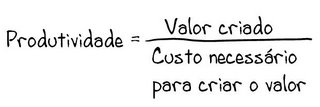
Ainda acerca da produtividade

Ontem em "Será que...?" comentei um artigo de opinião sobre a produtividade e o facto de ela ter sido mais baixa em 2015 do que em 2008.

Outra linha de abordagem ao tema pode passar pelo que procuro formalizar neste postal.

O mundo industrial, o mundo em que os indicadores económicos que usamos actualmente foram forjados, era um mundo muito linear:
Ainda hoje temos um imposto com um nome que cristaliza o pensamento dessa época. IVA = imposto sobre o valor acrescentado. Naquela cadeia acima, cada interveniente acrescentava valor até que ao chegar ao cliente final ele era destruído por consumo.

Acontece que nos dias de hoje, cada vez mais e mais intensamente o valor é co-construído, é contextual, é subjectivo. E as interacções entre os actores deixaram de ser lineares. Por exemplo, quando o antigo "cliente final" vai à internet e avalia o hotel onde esteve ... como é que pode ser visto como o último elo de uma cadeia? Pode ser o influenciador que convence um outro potencial cliente a optar por esse mesmo hotel.

Num mundo em que vez de transacções as interacções são cada vez mais importantes, e interacções cada vez mais variadas e densas:
Talvez os indicadores desenhados para o mundo industrial não sejam capazes de medir a crescente parte de valor gerado nestas interacções que não apareciam no radar industrial.

Talvez a produtividade medida seja mais baixa não porque é mais baixa mas porque os algoritmos de cálculo estão obsoletos.

Ainda ontem, no âmbito de uma auditoria interna ao sistema da qualidade de uma empresa, dizia a um aditado para não se preocupar com os valores crescentes dos custos da não-qualidade que implementaram este ano. Recordei o velho livro de Campanella e da lição que aprendi e que confirmo uma e outra vez: nos primeiros anos de cálculo dos custos da qualidade eles aumentam sempre. Porquê? Por que o desempenho está pior? Não! Porque estamos a aperfeiçoar o algoritmo de cálculo e vão aparecendo item importantes que nos tinham escapado na iteração anterior.


Começar pelo fim, um grande truque

Para um adepto do "começar pelo fim":
"Motivation research has found that we tend to be the most driven and enthusiastic about a project when we begin it and when we’re about to complete it.
...
For relatively simple goals, there was no difference between forward planning and backward planning. If a goal is short-term or requires only a couple of steps, the two are likely no different. But for complex tasks (like planning out how to study for a comprehensive exam), students preparing backward anticipated the necessary steps more clearly and followed the original plan to reach the set goal. They had higher expectations for reaching their goals and felt less pressed for time during progress toward them.
...
Backwards planning may have helped the students forecast success rather than failure. If one starts at the end goal, the assumption is that efforts were successful to get there, while moving from the present to the future doesn’t necessarily assume success, and forces the goal setter to think through obstacles that might prevent it from happening. Research has shown that envisioning the steps necessary to complete a goal reduces anxiety, increases confidence, and lead to more effortful actions. Further, goal setters feel closer to the end goal in terms of time when they envision success rather than failure."
Trechos retirados de "Trying to Get Ahead? Plan in Reverse, Study Suggests"

A essência da estratégia

Estratégia é ter coragem de assumir que há coisas em que se será mau deliberadamente, e que há coisas em que se procurará ser muito bom.

Num mundo que requer cada vez mais concentração e foco, há cada vez menos espaço para bruce jenners medianos.

Quantas empresas são capazes de assumir este risco de se focarem em algo à custa de menosprezarem outras opções?
"“Ikea is so good at so many things. Why is it so bad at delivery?”
...
ultimately, it comes down to focus:
.
Ikea refuses to expose itself to the idiosyncracies of its customers,” [Frances] Frei says. “There is no way they could do their own delivery with that signature Ikea crisp efficiency—there are too many variables. So they make you conform to them.” Ikea makes great stuff cheap—and that is the draw.
.
As the authors put it, this is a case study in how a large retailer can succeed by failing. This is the essence of focus. Ikea focuses on cost and the a big part of it is also educating your customers that delivery is not the preferred option to purchase its products and that customer service is not something you should expect. Since this allows the firm to reduce its cost even further (potentially), it is the “definition” of focus: doing something poorly and using it to do something even better."
Como não recordar o clássico "What is strategy?" de Porter:
“The essence of strategy is choosing what not to do,” 

Trechos retirados de "Ikea: Why is it so bad at delivery?"


terça-feira, setembro 12, 2017

Curiosidade do dia

"Porém, se não vos receberem, sacudi o pó das vossas sandálias assim que sairdes daquela cidade, como testemunho contra aquela gente."
Lucas 9, 5

Será que...?

Quando comento o pensamento da tríade, daqueles que continuam encalhados no século XX, normalmente adopto um registo irónico. Por isso, por exemplo, costumo compará-los a uma espécie de Saruman no alto da sua torre isolado do resto do mundo.

Por exemplo, e peço desculpa por voltar a usar estes exemplos, quando Sérgio Figueiredo em 2005 decretava a morte do calçado português, ou quando André Macedo em 2008 fazia a missa do sétimo dia do têxtil português, ou quando Vítor Bento em 2013 tecia loas às vantagens competitivas do século XX, ou quando Pais Mamede em 2015 explicava o sucesso das exportações portuguesas, eu não podia deixar de ficar incrédulo, eu não podia deixar de me rir porque todos os dias via exemplos reais, exemplos anónimos, de quem estava a dar a volta por cima, com vantagens competitivas completamente ao arrepio do enquadramento do século XX.

Neste texto, "Os trabalhadores sabem mais mas a produtividade baixou. Porquê?", sinto que o autor, que julgo que continua encalhado no século XIX, e isso é oura estória, adopta um registo esquisito...

Acreditar que a produtividade cresce automaticamente só porque os trabalhadores têm mais escolaridade é tão básico... tão errado.

Falar da produtividade e do emprego em 2008 sem falar da insustentabilidade dessa mesma economia, sem referir o BES, sem referir as obras públicas, sem referir as limitações dos algoritmos de cálculo da produtividade, parece-me pouco.

Falar da produtividade acreditando em modelos lineares, sem admitir informação incompleta e sem admitir erros de percepção e decisão dos agentes económicos, parece-e pouco.

O autor termina sugerindo algo que é corriqueiro neste blogue:
"Para encontrar respostas para diagnosticar o que parece ser uma doença estrutural, a primeira coisa que devíamos estudar é tão óbvia que parece mentira ninguém o fazer: temos um problema de produtividade ou temos um problema de produção? Aquilo que cada empresa faz, aquilo em que cada trabalhador labora, as grandes apostas da economia real do país têm condições para gerar, realmente, a riqueza que precisamos de criar? Estou a achar que não..."
Há milhares de anos que neste blogue defendemos que há muito maior potencial de aumentar a produtividade actuando sobre o valor co-criado, sobre o que permite aumentar o preço unitário num mercado competitivo, do que actuando sobre o que permite reduzir os custos unitários.

Fico com a ideia de que o autor acredita que devia haver um Cybersyn que estipulasse o que cada empresa devia produzir, e até que as empresas menos produtivas deveriam ser expropriadas para serem geridas por iluminados cheiros de escolaridade académica.

Gostava que fosse possível criar uma Matrix que simulasse estes mundos socialistas crentes num Grande Geometria, num Grande Planeador, numa economia planificada.

Acredito que o aumento da produtividade é em primeira medida da responsabilidade de quem decide o que produzir para que mercados e a que preços. No entanto, também acredito que é um trabalho a fazer empresa a empresa, e creio que nenhuma empresa deve ser "obrigada" a seguir caminhos que os seus proprietários legítimos não querem seguir ou têm medo de seguir. Qual a alternativa?

Algo que o autor do texto considera blasfémia!

Deixar o mercado funcionar, deixar de proteger as empresas com regras e leis feitas à medida. Quem tiver unhas e for capaz de encontrar um nicho que o sustente tem direito à vida, os outros adeus.

BTW, será que o autor estaria de acordo com o encerramento do jornal onde escreve, um jornal que manifestamente não cria a riqueza capaz de o sustentar? Será que o autor estaria de acordo com eliminar os apoios à produção de leite que protegem os produtores com menor produtividade?


Prisioneiros da era industrial

Aqui uso as metáforas de Magnitogrado ou Metrópolis para ilustrar o paradigma de produção no século XX.

Já aqui escrevi que o século XX começou em Outubro de 1913, quando arrancou a linha de montagem da Ford. Foi com um sorriso irónico, a pensar nos encalhados da tríade que continuam prisioneiros do modelo mental do século XX, que li em "Strategy for a Networked World" de Ramirez & Mannervik:
"The so-called "end user" in this industrial era representation of how value is created and destroyed thus equalled that which in value chain terms was called the "final" customer. For producers, value was "realised" in the transaction, which simultaneously joined and separated them from customers. In this context, value was equated to the price that the customer paid
...
Consistent with this understanding of value, Hirschhorn (1984) specified that in industrial manufacturing, value creation was characterised by:
  1. economics of scale;
  2. large, physically and temporally concentrated production facilities;
  3. long production runs;
  4. mass markets;
  5. task specialisation; and
  6. standardisation."
Mete impressão como tanta gente na academia continua prisioneira deste modelo.
"Although much of manufacturing is still of this pattern, large parts of the economy and even important parts of industry have been increasingly moving away from it." 
Recordar os exemplos do calçado, do têxtil e do mobiliário portugueses, que ilustram como à revelia dos seis pontos acima as empresas deram a volta ao rolo compressor chinês.

"seizing enhanced value creating opportunities" (parte II)

Na Parte I aborda-se um afunilamento mental que prejudica as empresas porque as impede de visualizar oportunidades.
"Every business misses the future and gets disrupted by an outsider. This happens because the incumbents are stuck in their ways, doing the same thing over and over again and never zoom out to take a look at the macro view.
...
“You know who should have invented Airbnb? Marriott Hotels,” says Black, starting a strange metaphor. “But they didn’t, because they’re so far up their own ass in the micro of running hotels that they could never, ever see outside of where they are. So, change instead comes from some eggheads down in Silicon Valley.”
...
“Disruption never comes from within. Every disruption is caused from the outside because everybody on the inside buys into the bullshit.”"


Trechos retirados de "Disruption Never Comes From Within"

segunda-feira, setembro 11, 2017

"seizing enhanced value creating opportunities"

"This increasingly networked ubiquity has given rise to recognition of the apparently inexorable rise of systems, such as so-called "business ecosystems (BE)", in which strategists can design and realize systems of value creation.
...
The notion of industries, just as the notion of value chains, is becoming ever more outdated and hinders strategists from understanding their changing business landscapes and identifying threats and opportunities for realizing value potentials.
.
The construct of "industries" does not allow the strategist to consider uncertainties in the broader contexts that can transform existing playing fields, or that give rise to new ones - such as "nutraceuticals". Focusing strategic attention on industrial sectors, ..., prevents considering or seizing enhanced value creating opportunities.
...
Our research and experience suggests that redesigns of systems that help value to be created, rather than product - and industry - specific competition strategies (and optimization within existing product and technology categories) is called for if something substantial is to be done about opportunities and threats linked to the inefficiencies that we see in business and societies at large today."
Trechos retirados de "Strategy for a Networked World" de Ramirez & Mannervik.

Relacionar com:
"Making good choices is central to business and personal success. Integrative thinking is important because it provides a way out of our natural inclination to lose sight of the bigger picture by taking entrenched positions or to opt for shoddy compromises. Integrative thinking doesn’t choose one solution making a few trade-offs to placate the opposing view. Rather it looks for altogether new creative approaches."
Trecho retirado de "Integrative Thinking Revisited"

Começar pelos visionários

"There’s a lesson in all of this. When your idea is truly new and different, target the few, not the many.
...
The problem, as Steve Blank explains in The Four Steps to the Epiphany, is that most new products target large addressable markets. That may work with an incremental innovation, but for something truly new, you first need to identify “visionary customers” or people who want or need a product so badly that they don’t care if it’s not quite perfect.
...
While focusing on a just a few, visionary customers is not the ultimate goal, it will get your product into the hands of people who will pay you and help you refine it by exposing flaws that you’re not likely to be aware of at first. They will also be a great source of insight about which features you should develop next.
.
That’s exactly what’s happening now with Google Glass. As the technology gets battle tested in real world work environments, the technology itself is being improved. The company is also building out an ecosystem of partners who are designing industry specific applications and building traction in the marketplace."[Moi ici: Interessante este ponto que, li ontem, ajuda a explicar o sucesso do facebook sobre o Myspace]

Recordar Geoffrey Moore

A locomotiva a vapor começou por substituir os animais nas minas, só depois transitou para outros campos.


Trechos retirados de "Build For The Few And Not The Many"

Acerca das exportações YTD - mês 7 (2017)


Olhando para os números do acumulado das exportações nos primeiros 7 meses de 2017 e 2016, e usando a minha habitual bitola, é possível perceber que as exportações das PME continuam a crescer a bom ritmo. O parcial I em Abril representava 46% do total, em Maio subiu para 49%, em Junho atingiu 51% e em Julho chegou aos 53,7%, apesar da subida pornográfica das exportações de combustíveis (+ 41% de crescimento homólogo). Quem segue este blogue sabe o quanto significa apara mim aqueles 53,7%.

Quebras importantes nas exportações de vestuário, cerâmica, floricultura (mais de 50% em cada rubrica).
Células a amarelo na tabela denotam aceleração das exportações de 2017 relativamente ao ritmo de 2016.

BTW, aquele crescimento do calçado ... gostava de o ver escalpelizado por dimensão das empresas.

domingo, setembro 10, 2017

Curiosidade do dia


O que será pior: ter havido furto ou não ter havido furto?

Imaginem que isto acontecia numa empresa privada minimamente organizada.

Imagem retirada daqui.

Diferenças

Diferentes clientes-alvo, diferentes propostas de valor, diferentes vantagens competitivas, diferentes preocupações e constrangimentos.

De um lado, "O empresário que paga acima da média e não quer horas extra". Antes de ler o artigo, só com o título, fiz uma aposta: Tens de ter marca própria e muito valorizada.
"“A beleza salvará o mundo”. Esta citação do escritor russo Fiódor Dostoiévski aparece na primeira página do site da Brunello Cucinelli, um empresário italiano. Embora menos conhecida do que impérios como a Prada e a Gucci, a Brunello Cucinelli é um ícone da alta moda, que fatura 450 milhões de euros e cresce 10% ao ano."
Bingo!

Do outro lado, "Luís Onofre, patrão do calçado: “O absentismo nos homens é quase zero e muito grande nas mulheres”". Cada vez mais o sector de calçado português tira partido da resposta rápida, da flexibilidade, à medida que os compradores encomendam cada vez mais tarde, cada vez em quantidades mais pequenas seguidas de reposições rápidas do que tiver mais sucesso.

BTW, isto vai ser cada vez mais frequente no futuro, "Líder da ANJE: “Há quem queira investir e fazer fábricas e não tem trabalhadores”".

To participate and influence the formation of sense making and meaning

Mais um texto muito bom de Esko Kilpi:
"Management thinking is moving towards an understanding of human action as a process of sense making. What an organization becomes emerges from the sense-making relationships of its members, rather than being determined by the choices of few powerful individuals.
...
Many local interactions generate emergent outcomes that cannot be traced back to any specific management actions. Looking towards the future, we create what happens next, without knowing what will happen next.
...
The key management capability is not being in control but to participate and influence the formation of sense making and meaning. It is about creating a context that enables connectedness, interaction and trust between people.
.
Most people believe that the role of leaders is to choose strategic directions and then persuade others to follow them. A modern view of strategy is about exploration and experiments, a search process of trial and error. The openness to the possible through the search process leads to managers having to live with the paradox of being in control and not in control simultaneously.
...
The fundamental dynamic of evolution is not competitive selection, but interactive cooperation. Management is then about self-influencing cooperation."
Trechos retirados de "The future of management"

"The key source of success is to conceive the VCS and make it work"

Há anos li um extraordinário artigo de Storbacka e Nenonen, "Scripting markets: From value propositions to market propositions", publicado por Industrial Marketing Management Volume 40, Issue 2, February 2011, Pages 255-266.

Alguns postais que escrevi por essa altura foram:

Agora em, "Strategy for a Networked World", de Rafael Ramirez e Ulf Mannervik, encontro tantas referências que me soam a uma outra forma de desenvolver o conceito de "scripting market":
"In today’s networked world, conceptualising value on the central basis of two-way exchanges as one did in the industrial era (with the idea of “value-added” products or services) has become very limiting, in fact too limiting, for capturing the full potential of value creation.[Moi ici: Aqui a fuga às relações diádicas e a importância do ecossistema]
...
render value creation more synchronous, less sequential, and more interactive than ever before.
.
Such innovations help to pack in more options for interaction and thus more interactions, and more actors and more possibilities for further action to co-create many more values per unit of time and space than ever before.[Moi ici: Outro tema caro a este blogue - a importância das interacções]
.
These novel interaction possibilities in turn change what people value and can trust,
...
These possibilities for interacting are now bundled in ever denser packages (“denser” meaning more functions per space and time unit, and thereby also per person or interactor). These possibilities help people and their organisations to co-create value in ways that were unimaginable a few decades ago. [Moi ici: Densificação, um tema que vi referido pela primeira vez num livro de Normann e Ramirez que li em 2008 e reli em 2013)]
...
Value co-created by two or (typically now) more actors, with and for each other, with and for yet other actors, is an invitation not only to rethink organisational structures and managerial arrangements for value creation, but also to rethink value creation itself.
...
thinking of value and values as contingent, always located in a setting — no longer as isolated in things or individual bodies or groups of bodies. Value and values here become dependent on those with whom one connects and in connecting, who co-create value. [Moi ici: Valor é co-criado e não criado por quem produz] They also matter in terms of those this co- creation affects positively as well as negatively.
.
[Moi ici: O trecho que se segue é fundamental] Patterns of interactivity arise or can be designed.[Moi ici: Quando se descobre que as interacções podem ser desenhadas, abre-se um mundo de possibilidades] These patterns connect those we term “actors” as co-creators, and their designed interactions support or may even constitute their roles and identities. In turn, these actors’ roles and identities interact with each other, and in doing so form interconnected patterns; so these roles and identities in turn thus maintain the interactions.
...
[Moi ici: Segue-se o TRUQUE!!!] We consider this configuring of interactions to be the result of a design activity. We use the term VCS for the pattern of interactions intentionally configured by the strategic planning carried out by an organisation.
.
The designed interactions become manifested as (“designed”) offerings: configuring offerings that set the overall design of and integrates a VCS, and supporting offerings between any two actors in such systems.
...
if the key to creating value is to design and co-create offerings that mobilise others (who may have the role in the interaction of customer or supplier or partner or employee or investor, etc.) to co-create value, then the key source of success is to conceive the VCS and make it work. We suggest that this designing of offerings is a key task for strategists and managers engaging in strategy work today."

sábado, setembro 09, 2017

O contexto tem muita força (parte XIV)

 Parte I, parte II, parte IIIparte IVparte Vparte VIparte VIIparte VIIIparte IXparte Xparte XIparte XII e parte XIII.

Encontrei em "Strategy for a Networked World" de Rafael Ramirez e Ulf Mannervik vários esquemas deste tipo:
Como isto nos é familiar!!!

Desenhar o ecossistema em que uma organização está envolvida.


Fácil! Basta pensar em Mongo.

"Estudo da EY mostra valor recorde de projetos de Investimento Direto Estrangeiro em 2016, num total de 59. Mas nunca antes os empregos criados por cada projeto foram tão poucos: 42, em média."
Como interpretar esta redução da média dos empregos criados por projecto?

Fácil! Basta pensar em Mongo. Basta pensar em séries mais pequenas, basta pensar em unidades para abastecer a Europa e não o mundo, basta pensar em preço unitário em vez de custo unitário, basta pensar em eficácia em vez de eficientismo, basta pensar em tribos em vez de massa.

Trecho retirado de "Live. Nunca o investimento estrangeiro criou tão pouco emprego"

Acerca da criação de valor

"Shareholders are no longer the only constituency for whom companies need to create value.
...
Your strategy, which we define as the combination of your offering (the products, services and customer experiences you provide), your business model (the activities you perform and how you perform them), and your revenue model (the combination of revenue streams, pricing mechanisms and payment methods), needs to create value for your customers, your company, and the ecosystem you’re embedded in.
...
In order for your company to stay competitive, your strategy — defined here as the combination of your product and service offerings, business model and revenue model — needs to create benefits for your customers. How? By solving their needs and jobs to be done.
...
Your strategy should also create value for your organization, obviously. These benefits can be threefold.
.
Strategic benefits include competitive advantage through differentiation, a unique position in the market and the creation of superior value for the customer, market share, brand and reputation. Strategic benefits also include the future potential that a certain offering, business model, or revenue model creates for your company.
...
Operational benefits include higher flexibility and speed in terms of reaction to the market, higher degrees of asset utilization, and inventory turnover.
.
Financial benefits include increased performance in terms of growth in revenues, lower cost (and thus higher profits), reduced capital investment, and the transformation of fixed cost into variable cost.
...
Finally, value should also be created for other stakeholders and parties involved in the wider ecosystem. If your organization relies on partners, why should they do business with you if you don’t create any value for them? Ecosystem benefits can have the same form as the value created for your firm and be of strategic, operational and financial nature."
Relacionar com o texto de Ramirez:
 "their customers, suppliers, partners, and other co-creators are seen as members of a "VCS", participating in the co-creation efforts that makes their participation worth their while." 

Trechos retirados de "Is Your Strategy Creating Value?"