terça-feira, junho 30, 2020

"do I really need to sell a brand?"

"do I really need to sell a brand? Isn't that just a distraction--a way to push an inferior product by confusing the buyer with a bunch of piffle paffle? Isn't my product the most important thing?
...
Let's face it, without a story, your product is likely just a commodity. Commodities do not sell themselves. It's the stories, myths, legends, grifts, and shticks that we tell about our products that do the heavy lifting. Nota bene: They don't have to be true. They just have to be interesting.
...
Product attributes are never enough--unless your product attributes are exclusively yours or no one else has owned them yet."

Por cá, basta torrar impostos na TAP e na EFACEC para ficarmos todos bem!

Ontem, depois disto:

Li no FT "Small business: a canary in the American economic coal mine":
"If you’re looking to predict the shape of the economic recovery in the United States – be it V, W, L or even K – don’t look at the markets. Take a look at the small and medium-sized businesses that account for 50 percent of the country’s employment. They are the best economic indicator in America right now. They are also in trouble.
...
By mid-April, revenues from personal service businesses – typically a single entrepreneur working, for example, as a locksmith, hairstylist, or pet sitter – were down 80%. These companies are disproportionately owned by minority entrepreneurs, another reason why the pandemic is increasing inequality. In mid-June, almost half of US small business owners said they did not expect to return to normal operations in the next six months, according to a Credit Suisse survey.
.
These companies – from health clubs to restaurants and retailers – employ about half of the US workforce. These are not “strategic” or “high-growth” companies that policy makers and economists generally seek to encourage. But their pain “is a big problem for the macro economy,” as Deutsche Bank Securities chief economist Torsten Slok told me – not least because they provide far more jobs than the S&P 500 companies, which account for only 10 percent of the US nonfarm total wages.
...
You don’t have to analyze public health statistics or wacky analyst reports to get a sense of the real economy in America. Just go down Main Street. The many small businesses that have closed represent two-thirds of the 20 million jobs lost since the pandemic. Some old hotspots, like New York, reopen with caution. But most small business revenue forecasts are not close to normal.
.
A second wave of illnesses would certainly trigger a new wave of layoffs and insolvencies. According to the New York Fed, only one in five small businesses can survive a loss of income for two months. Many small businesses even reduce their rehiring when they reopen. For the most affected areas, things may never return to normal. The Credit Suisse survey found that 17% of hotels and restaurants believe their revenues will never return to pre-Covid-19 levels.
.
The ripple effects from all of this will be huge. Many small businesses are physical, not virtual. They are not designed for locking. They do not have access to world capital. They are rooted in the communities they serve. 
Their fortunes are not flattered by the liquidity of the central bank. Any investor who really wants to take the economic pulse of America has only to speak to the owner of his local cafe, beauty salon or cinema. They will have a very different reading from that of Wall Street."
Por cá, basta torrar impostos na TAP e na EFACEC para ficarmos todos bem! 

segunda-feira, junho 29, 2020

"Risk is failure of a projected narrative"

A ISO 9001 aborda a abordagem baseada no risco. 
“The Oxford Dictionary defines risk as ‘the possibility that something unpleasant or unwelcome will happen’,
Risk in its ordinary meaning concerns unfavourable events, not beneficial ones.
.
Risk is asymmetric. We do not hear people say ‘there is a risk that I might win the lottery’ because winning the lottery is not something they would describe as a risk. They do not even say ‘there is a risk I might not win the lottery’ because they do not realistically expect to win the lottery. The everyday meaning of risk refers to an adverse event which jeopardises the realistic expectations of the individual household or institutionAnd so the meaning of risk is a product of the plans and expectations of that household or institution. Risk is necessarily particular. It does not mean the same thing to J. P. Morgan as it does to a paraglider or mountain climber, or to a household saving for retirement or the children’s education.
Very often, the risks that concern us are not risks to the status quo, but risks to our plans to change that status quo.
We believe the best way to understand attitudes to risk is through the concept of a reference narrative, a story which is an expression of our realistic expectations. For J. P. Morgan, the overarching reference narrative is one in which the bank continues profitable growth. A large corporation will have many strategies for achieving that overarching objective in particular areas of its business and there will be a reference narrative relating to each business unit. Some of these business unit reference narratives may be very risky, but the corporation may tolerate such risks provided they do not endanger the reference narrative of the organisation as a whole.
And since different people start with different reference narratives, the same risk may be assessed by different people in different ways. Risk may not be the same for those who work in an organisation as it is for the shareholders of that organisation.
Risk is failure of a projected narrative, derived from realistic expectations, to unfold as envisaged. The happy father anticipating his daughter’s wedding has in mind a reference narrative in which events go ahead as planned. He recognises a variety of risks – the prospective bridegroom has cold feet, a torrential downpour drenches the guests. There is an implied measure of risk in such assessment – an outcome can fall short of expectations by a narrow margin or a wide one. The scale of that risk may or may not be quantifiable, before or after the event. But this interpretation is very different to the view that has come to dominate quantitative finance and much of economics and decision theory: that risk can be equated to the volatility of outcomes.”
Trechos retirados de “Radical Uncertainty” de John Kay e Mervyn King 

Ingenuidade

Há cerca de um mês, no postal "Time compression" escrevi:
"A atenção deve ser concentrada no médio longo prazo. Sempre!
Não é a fazer máscaras e viseiras que as empresas vão ter futuro."
Agora descubro que efectivamente, o sector têxtil nacional andou a perder tempo e a desviar-se do fundamental ao dedicar-se à produção de máscaras. As empresas, como os agricultores, têm de perceber que não existe interesse nacional. São usadas como chiclete quando são precisas e depois são deitadas fora. Não culpo quem o faz, quem as deita fora depois de usadas. É a vida! Culpo quem ingenuamente não percebe que é assim.

No JN de hoje "Quebra nas máscaras atrasa recuperação do setor têxtil" 
"O fabrico de máscaras e outros equipamentos de proteção contra a covid-19 foi um balão de oxigénio para o setor têxtil, mas está a acabar. Com o mercado nacional saturado e as exportações impregnadas de burocracias para a certificação, as encomendas caíram a pique e Portugal já está longe do milhão de máscaras diárias que estava a produzir no início de maio."
Enquanto canalizaram energias, tempo, atenção, para esta brincadeira, não as canalizaram para o essencial do negócio, procurar clientes no negócio fundamental. 

A normandagem é como a ferrugem, nunca descansa

Um novo mundo

"El Gobierno ha modulado recientemente la ley general tributaria que regula las relaciones entre la Administración y los contribuyentes para incluir la posibilidad de realizar inspecciones mediante videoconferencia y adaptarse así a la nueva realidad a distancia que marca el Covid-19." 
Trechos retirados do jornal El Economista do passado dia 27 de Junho. 

domingo, junho 28, 2020

Até a Santa Casa da Misericórdia de Lisboa vai ficar bem!!!


Há muitos anos passou na televisão portuguesa a preto e branco uma série inglesa, "Os Desastres de Frank Spencer". Recordo sempre um episódio, ou melhor, o final de um episódio. Nunca mais o vi, mas as imagens finais nunca as esqueci.


Eu devia ter 9 ou 10 anos quando vi esse episódio. Frank era despedido de emprego atrás de emprego, depois de deixar cada empresa em que ingressava no maior caos, provocado pelas suas trapalhadas. Nos minutos finais alguém, um psiquiatra(?), recomenda que Frank emigre para a Austrália, para assumir o emprego de guardador de rebanhos. Julgo que o psiquiatra terá dito "Põe-no a guardar um rebanho com 1 milhão de carneiros, mnesmo que perca alguns milhares ninguém vai notar". A imagem seguinte é a de Frank, sozinho,  montado num cavalo, no meio de uma suposta pradaria australiana, a exclamar:
- Betty (a mulher dele), perdi-os todos!!!

Até a Santa Casa da Misericórdia de Lisboa vai ficar bem!!!

Produtividade e tretas académicas

Ontem escrevi sobre "Como se aumenta a produtividade por hora de trabalho?"

Depois, durante o dia perguntaram-me se tinha algum conselho geral sobre como se aumenta a produtividade. 

Quem pretende aumentar a produtividade num país deve pensar em aumentar a produtividade nas empresas concretas que povoam cada sector de actividade. E quando se olha para um sector de actividade encontra-se uma grande variabilidade de produtividades, uma grande variabilidade de rentabilidades.

Recordo a frase:
Existe mais variabilidade dentro de um sector de actividade do que entre sectores de actividade.

Assim, para cada sector de actividade, sugiro estudar as diferenças entre empresas concretas no topo da produtividade e comparar com as empresas na média do sector.

Entretanto, ao final da tarde de ontem encontrei o suplemento do Jornal Económico, "Relançar a Economia", publicado a 26.06.2020. Aí, no artigo "A reindustrialização nas mãos da economia portuguesa" sublinhei com desânimo alguns trechos proferidos por João Duque:
"João Duque defende que Portugal tem de “procurar setores de elevado valor acrescentado e com valor de marca. E, para isso, é fundamental o associativismo de setor e o estímulo a esse associativismo. Ganhar escala para sermos visíveis, como tão bem fizeram os industriais do calçado, por exemplo." [Moi ici: OMG! Aposto que João Duque nunca estudou o sector do calçado. Recordo a evolução do tamanho das empresas no sector em "Não vai ser nenhum 'lay-off' que as vai preparar para essa transição". Recomendaria a João Duque a leitura da série "Quantas empresas"]
Um outro trecho escandaloso, porque revela a falta de noção, a falta de estudo, a falta de percepção do que é a realidade concreta e não treta de macroeconomia:
"“Para começar, acho que podemos ir à lista de importações e começar a fazer o que importamos. Se conseguimos passar a fazer ventiladores, porque não outras coisas?”"
 Leram isto? Agora, deixem mergulhar bem fundo na vossa consciência o significado de um comentador económico e professor universitário proferir esta afirmação.

Portugal importa calçado? Sim
Portugal exporta calçado? Sim
Faz sentido Portugal produzir internamente o calçado que importa? Nope! quem pagaria os salários desses operários? 

"preço médio de um par de sapatos exportado de Portugal: 26.08 USD
preço médio de um par de sapatos importado para Portugal: 10.76 USD"
"Acaso a indústria portuguesa de mobiliário pode competir, num mercado aberto, com os preços do mobiliário asiático?
 E, no entanto:
"A taxa de cobertura das exportações pelas importações do período em referência é de 235%.""
 Nós produzimos para exportação a preços mais altos e importamos o barato para consumo interno. O futuro da economia portuguesa não é a reduzir importações, mas a exportar mais ainda. Sublinho:
"The Dutch (56%) are more then twice reliant on exports than Greece (21%), Turkey (20%), Portugal (26%) and Italy (24%)"
Assim se percebe a quantidade de treta académica do comentariado que enche o espaço no panorama mediático nacional. 

sábado, junho 27, 2020

Como se aumenta a produtividade por hora de trabalho?

"Portugal é o sétimo país da União Europeia com menor produtividade por hora de trabalho, divulgou este sábado a Pordata, num retrato ao tecido empresarial do país, a propósito do Dia das Micro, Pequenas e Médias Empresas.
...
Em termos de produtividade por hora de trabalho, face à média da UE27 (=100), Portugal é um dos países com menor produtividade (65% da média da UE27)”, revelou a base de dados estatísticos da Fundação Francisco Manuel dos Santos, que analisou dados de 2018."
Uma batalha antiga neste blogue.

Como se aumenta a produtividade por hora de trabalho?

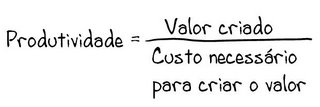
Falo de aumento a sério, não de migalhas. Como se aumenta a produtividade por hora de trabalho?

Aumentando os preços do que se vende.

Não façam, como eu, o papel de burros. Há um truque para subir preços sem perder clientes.

Recordar este postal de 2018 sobre o aumento de salários e o Evangelho do Valor!


Um provinciano muito à frente

No FT, edição americana, de ontem podia ler-se "Coronavirus rips a hole in newspapers’ business models":
"Our thesis is you have to invest in a product to have a chance at the digital media business. [Netflix chief executive] Reed Hastings believes that. What is striking to me is how few people [in news] have tried this. A lot of people are just trying to keep things from falling away.” The New York Times on Tuesday cut 68 jobs, largely in advertising, sparing the newsroom.
.
‘The industry was so flush’
Industry executives admit that the news business responded disastrously to the advent of the internet. Premium content was given away for free, while the publisher’s role between reader and advertiser was left wide open for others to intermediate, or replace.
.
“We were extraordinarily naive, because the industry was so flush,” says Terry Egger, a veteran of the news business who recently retired as publisher of the Philadelphia Inquirer. “In the mid-1990s, there was so much profit . . . the internet was a novelty not taken seriously.
...
The question is how far the subscriber model will stretch and whether it could ever replace the income from advertising. “Subscription revenue is more sustainable, it is recurrent, it has a lot of advantages,” says Kristin Skogen Lund, chief executive of Schibsted, the biggest publisher in Scandinavia, the region with the world’s highest density of news subscriptions. “The problem . . . is that the revenue base is simply not large enough. You would need to charge so much for a subscription to sustain the entire cost of running a media site.”
Recordar "O futuro do jornalismo" (Dezembro de 2017) e "Uma novela sobre Mongo (parte XV)" (Janeiro de 2017)

sexta-feira, junho 26, 2020

O canário na mina


O Jornal de Negócios de ontem, 25 de Junho de 2020, o podcast de ontem de Camilo Lourenço no Facebook e este texto de ontem no ECO, "UTAO arrasa proposta de Leão que remove “pilares” da LEO. É um “retrocesso”" traçam um retrato do buraco onde estamos em queda livre.

Alguns "recortes" dos Jornal de Negócios de ontem:
Repare naqueles 39 mil milhões de euros...
Repare naqueles 22%... quase um quarto dos créditos totais
Depois recorde os números do desemprego... recorde o estado actual e futuro do turismo e do peso que tinha no PIB e no emprego.

Depois, pense no significado disto:
Propósito deste postal para o mundo empresarial: dar um conselho sem ter sido pedido.

Comece a fazer testes de stress à sua empresa ASAP. 
Quando os bancos adiam os seus testes de stress é o canário na mina para que as empresas os comecem a fazer e a preparar o barco para uma tempestade.

‘Come on, this is serious’

"There is no general theory of how best to make decisions. Much of the academic literature on decision-making under uncertainty tries to frame the challenge as a puzzle. All decisions, it is assumed, can be expressed as mathematical problems. And potentially capable of being solved by computers. Your smartphone will tell you what restaurants are nearby, how to get there, and perhaps what you ate last night; but not where and what you want to eat now. The probably apocryphal but nevertheless illuminating story about a decision theorist contemplating whether or not to accept a job offer from a rival university illustrates this well: upon being urged by his colleague to apply tenets of rational decision-making under uncertainty and maximise his expected utility, as his academic papers suggested, he responded with exasperation, ‘Come on, this is serious.’
Humans have evolved to cope with problems which are not amenable to probabilistic reasoning 
...
Our brains are not built like computers but as adaptive mechanisms for making connections and recognising patterns. Good decisions often result from leaps of the imagination. Creativity was the quality exhibited by that unknown Sumerian who invented the wheel, by Einstein, and by Steve Jobs. And, as Knight and Keynes emphasised, creativity is inseparable from uncertainty. By its nature, creativity cannot be formalised, only described after the event, with or without the help of equations."

Trechos retirados de “Radical Uncertainty” de John Kay e Mervyn King

quinta-feira, junho 25, 2020

I see zombies everywhere!

Em Outubro passado escrevi aqui no blogue em, "Produtividade e socialismo (parte III)", sobre as empresas zombies em Portugal, na altura supostamente seriam mais de 20%.

Já em Dezembro de 2018 tinha escrito aqui no blogue sobre o grito: "Deixem as empresas morrer!"

Já em Maio deste ano voltei ao tema com "E a zombificação?"

"Money has never been cheaper. Governments and central banks have acted quickly to make it both plentiful and accessible to support companies through the pandemic downturn. The cure, however, has a sting in its tail. As policymakers begin to unwind job retention schemes and other support measures the concern is that economic recovery will be held back by a proliferation of debt-laden companies shuffling across a corporate twilight zone: a whole generation of zombies.
...
Even before the Covid-19 crisis, a decade of low interest rates helped to fuel a rise in the number of “living dead”: companies unable to cover their debt-servicing costs from profits in the long term. 
...
The pandemic has created new ones. There are also fears of a proliferation of unviable “zombie jobs”, kept on life support through furlough schemes. People working in sectors struggling under strict social-distancing rules, such as hospitality and retail, are especially vulnerable.
...
Allowing zombie companies to limp along, unable to invest or repay their debts, comes at a cost to the wider economy. Research has shown these companies are a drag on productivity growth." 
BTW, desta vez não estou de acordo com Bruno Maçães e vamos deixar a realidade decidir quem tem razão. 

quarta-feira, junho 24, 2020

Os especialistas versus os generalistas

Este postal de Seth Godin, "What’s at the front of the line?" é muito sugestivo:
"A study of behavior at breakfast buffets showed that the first item in the buffet was taken by 75% of the diners (even when the order of the items was reversed) and that two-thirds of all the food taken came from the first three items, regardless of how long the buffet is.
.
This means that optimizing marketers usually put the things they most want to sell first.
.
And that smart consumers benefit from adopting patience as they consider what’s on offer.
.
Of course, this game theory applies to a lot more than food."
Dá que pensar... faz-me lembrar os especialistas versus os generalistas do one-stop-shop.


"what happens to organizations that get stuck"

All too often, this is precisely what happens to organizations that get stuck. They return to the same practices and methods well past their point of effectiveness. Sometimes we’ve had our line in the water in the same place for so long we don’t even notice we haven’t gotten any bites in a really long time. To see problems and their solutions in a different light—to become more radical in our approach—we may have to fish in a totally different body of water, with different crew members and wholly new tools. [Moi ici: Como não recordar Zapatero e o paradoxo dos peritos]
.
We don’t know who discovered water, but we’re certain it wasn’t a fish.”[Moi ici: Como não recordar "Beware of the invisible water in the tank"]
—John Culkin”

Mais um trecho retirado de "Remarkable Retail", desta feita do capítulo 19 "Essential #9: Radical".

terça-feira, junho 23, 2020

"Organizations don’t just prepare for the future. They make it."

Outro trecho retirado da HBR de Julho-Agosto de 2020, "Learning from the future".
"Of course, strategic foresight also enables us to identify opportunities and amplifies our ability to seize them. Organizations don’t just prepare for the future. They make it. Moments of uncertainty hold great entrepreneurial potential. As Wack once wrote in these pages, “It is precisely in these contexts—not in stable times—that the real opportunities lie to gain competitive advantage through strategy.” It takes strength to stand up against the tyranny of the present and invest in imagination. Strategic foresight makes both possible—and offers leaders a chance for legacy. After all, they will be judged not only by what they do today but by how well they chart a course toward tomorrow."
Uma mensagem clássica deste blogue. 

Olha nós todos bem!

Olha todos bem!

E é só o começo!!!

O pagamento do subsídio de férias ainda não fez o seu estrago:

segunda-feira, junho 22, 2020

Não me convence

No semanário Expresso de Sábado passado, num artigo designado "Cuidado com a poupança", li:
"Bem sei que é inevitável a taxa de poupança aumentar quando a incerteza sobre o futuro se agrava. Costuma acontecer sempre. É natural e é humano. É isso que explica que o consumo caia mais do que o rendimento. As pessoas consomem menos porque têm menos dinheiro, em primeiro lugar, mas também por precaução, por não saberem o que aí vem.
...
Poupar é abdicar de consumo presente em troca de consumo futuro: faz todo o sentido se acharmos que aquilo que nos espera é pior do que o que hoje vivemos. Mas o efeito agregado de todas essas decisões individuais não é nada simpático para a economia.
...
Quando a família adia a compra de um carro, até pode ficar com mais dinheiro no banco, mas economia encolhe — e, lá está, a poupança aumenta.
...
mais poupança é menos consumo e isso, já se sabe, só pode dar em menos PIB. Porque a economia são muitas famílias. É a família Silva que decidiu não comprar o carro. Mas é também a família Nunes, em que o pai, que trabalha num stand automóvel, ficou desempregado.
...
Portugal é um país que tem poupado pouco desde que aderiu ao euro? Sem dúvida. É por isso que andámos anos a acumular défices externos. Reconhecer isto não é o mesmo que dizer que poupar é sempre bom. Há alturas em que, mesmo sendo compreensível, não é a opção mais vantajosa da economia. Na hora de poupar, é melhor ter cuidado. Enquanto poupa, pode haver alguém que também está a cortar-lhe o dinheiro que tem na carteira."
Há qualquer coisa neste racional que não me convence. 
Como é que se transforma dívida em capital? 
Como é que se cria um novo normal mais sustentável do que o anterior? Não é a replicar as interacções económicas do passado que nos trouxeram até aqui. Talvez o senhor Nunes tenha mesmo de ir para o desemprego no curto prazo para termos uma economia mais sustentável. 

O futuro pode ser uma causa a actuar no presente

Um artigo à boa moda antiga na revista HBR de Julho-Agosto de 2020, "Learning from the future".
"If companies want to make effective strategy in the face of uncertainty, they need to set up a process of constant exploration—one that allows top managers to build permanent but flexible bridges between their actions in the present and their thinking about the future. What’s necessary, in short, is not just imagination but the institutionalization of imagination. That is the essence of strategic foresight.
...
uncertainty precludes prediction but demands anticipation—and that imaginatively and rigorously exploring plausible futures can facilitate decision-making.
...
Humans tend to conceive of time as linear and unidirectional, as moving from past to present to future, with each time frame discrete. We remember yesterday; we experience today; we anticipate tomorrow. But the best scenario planning embraces a decidedly nonlinear conception of time. That’s what Long View and Evergreen did: They took stock of trends in the present, jumped many years into the future, described plausible worlds created by those drivers, worked backward to develop stories about how those worlds had come to pass, and then worked forward again to develop robust strategies. In this model, time circles around on itself, in a constantly evolving feedback cycle between present and future. In a word, it is a loop.
.
Once participants began to view time as a loop, they understood thinking about the future as an essential component of taking action in the present. [Moi ici: Ao ler isto, como não recordar Ortega Y Gasset e como ele nos mostra que o futuro pode ser uma causa a actuar no presente] The scenarios gave them a structure that strengthened their ability to be strategic, despite tremendous uncertainty." 

domingo, junho 21, 2020

"Customer focus is a choice—and a critically important one"

Mais um trecho retirado de "Remarkable Retail", desta feita do capítulo 16 "Essential #5: Personal". Só que desta vez parece retirado deste blogue:
"A while later, Bessemer Trust, a leading private wealth management firm, ran an ad in the Wall Street Journal with the headline “We may not be right for you.” The copy then explained the bank’s narrow customer focus and highly specialized services.
In the quest for maximizing revenue, many companies are afraid to make a similar leap. But as you design your journey to remarkable, one of the first questions you must answer is: who are we building this strategy for? Customer focus is a choice—and a critically important one. You must push yourself to go beyond the “affluent suburban soccer moms” target customer definition to get real clarity and granularity around which people in particular, under which specific set of conditions, are at the center of your bull’s-eyes. Notice the plural there: you likely have more than one target. You must also be able to articulate how your value proposition meets those customers in a unique, highly relevant, and remarkable way. With that precise definition you can build your strategies for the best-fit customers and be at peace with letting the ones go that aren’t right for you.
Out of either inertia, lack of experience, or fear, retailers, organizations, bloggers, and all sorts of individual artists often chase the largest possible audience. They want the most followers, the most traffic to their website, the largest addressable market, and other goals that have way more to do with quantity instead of quality. In turn they dilute their pitch to become just okay instead of remarkable. If you have a great product, are serving a wonderful social cause, or have an incredible story to be told or an amazing song in your heart, it’s natural to want to reach more customers. If you are investing a lot of resources in pursuit of building a customer base or an audience, you should be mindful of the scale required to achieve viability. Sometimes size does matter.
The flip side of gaining clarity and granularity around who is at the center of your bull’s-eye is also being crystal clear about who your product or service isn’t for. The siren song of growth at all costs may distract you and pull you away from your center. Resist the temptation. Being remarkable is often inherently linked to being, as Scott Galloway reminds us, “special, not big.” As you expand from those special qualities that first commanded certain customers’ attention, enrolled them fully in your mission, and motivated them to spread the word, you risk becoming less remarkable (or even alienating) to what I call “obsessive core customers” because what it takes to reach a wider audience waters down what made you successful in the first place."

Free webinar – How to perform an internal audit remotely (new date)


Webinar session on Thursday, June 25, 2020 is fully booked. So, another session was set-up for Wednesday, June, 24, 2020.

Webinar designed for internal auditors for ISO 9001, ISO 14001, ISO 27001, and other ISO management standards. The webinar explains what changes must be made, and what risks and obstacles must be considered during the preparation, performance, and reporting of a remote internal audit.
  • What can be remotely audited during an internal audit
  • What are the differences between remote and on-site audits
  • Which tools to use
  • What risks can be found and how to overcome them
You can register here.

One of the slides is about the big picture: