quarta-feira, julho 17, 2019

Curiosidade do dia

Ao ouvir este texto "A Rare Look Inside Zara" e o rol de preocupações ambientais da Zara:
"Inditex is announcing a number of new measures intended to highlight its commitment to sustainability. The company is installing a sustainability committee on the board to monitor its efforts and is linking executives’ long-term bonuses to achieving sustainability goals for the first time. At the same time, it's set new environmental targets for the company.
...
Building on work already underway, the fast fashion giant is introducing a slew of new sustainability targets and reiterating existing goals, many of which will be implemented fastest at its flagship brand.
.
By the end of this year, all Zara stores will meet the company’s eco-efficient standards, reducing energy consumption by 20 percent and water consumption by 40 percent. All brands within the Inditex empire will meet this standard by next year.
.
The company is also increasing the amount of clothes it makes under its Join Life label — which indicates a garment has been made in factories that meet Inditex's highest environmental and social standards using materials or processes that are better for the environment."
Ocorreu-me um pensamento. Isto é muito interessante, mas se a Inditex está assim tão preocupada com o ambiente, quando é que muda o seu modelo de negócio baseado na fast-fashion: usar e deitar fora?

Li há dias que:
"According to a British study, the average article of women’s clothing is worn seven times before it’s discarded."

Two-tier labour market

Esta manhã durante uma caminhada matinal tive oportunidade de ler dois artigos de certa forma relacionados. O primeiro foi "Young people struggle in eurozone’s two-tier labour market":
"Although the eurozone has been experiencing an uninterrupted economic expansion for the past six years, youth unemployment is proving persistent.
.
The proportion of workers aged between 15 and 24 who are unemployed is around 16 per cent, double that of the general population. This means about 2.3m under-25s across the continent are unable to find a job.
.
Joblessness is particularly concentrated in the eurozone’s peripheral economies, where the crisis hit hardest. More than 30 per cent of young workers are unemployed in weaker labour markets such as Italy, Spain and Greece."
O segundo foi "Older Employees Breathe New Life Into Europe’s Labor Market":
"When entrepreneur Kim Diaz opened a bar-restaurant in this buzzing Mediterranean city four years ago, he adopted a strict hiring policy: only workers aged 50 and above.
.
The bet has paid off. Older staff are punctual, polite and hardworking, the 51-year-old said, and their professionalism has proven a hit with younger customers.
...
Workers aged 55-74 accounted for 85% of employment growth in the eurozone between 2012 and 2018, according to the Organization for Economic Cooperation and Development, a think tank for mostly rich countries. Around 10 million jobs were created during that period.
.
The trend upends the usual thinking on labor markets. Normally, it is cheaper and more-flexible younger workers that are coveted. But the large and highly educated baby-boomer generation has accumulated skills that are tough to replace, employers and economists say.
.
The shift toward older workers comes as Europe approaches a demographic cliff. Sixteen percent of the working-age population of the region’s currency union, aged 15-64, will be lost by 2050 relative to the region’s total population, according to a paper published in June by the European Central Bank. That is double the share of the U.S. working-age population that will be lost over the period.
...
The influx of older workers means that the eurozone’s labor force is now 2% larger than before the crisis, defying predictions it would shrink.
...
To capitalize on this trend, Caroline Young founded a recruitment agency in Paris in 2005 that places retired workers with industrial companies in France, Germany and Belgium. French companies had been laying people off in their late 50s to cut costs. Now, many companies want them back.
.
“Employers have realized you’re not that old at retirement,” says Ms. Young, who says she has more than 1,000 retirees working every year. Her oldest placement was 80 years old.
.
“Younger people are not very flexible anymore in terms of traveling,” said Steffen Haas, who runs a similar agency in Germany for aging automotive experts. “Our guys are 65-70, they will jump in a plane and fly to Mexico next week.”"

Correntes e tendências

Ontem apanhei este título "William De Vijlder: “O telhado da economia portuguesa está na melhor forma de sempre”" de onde sublinhei o lead:
"O economista-chefe do BNP Paribas diz que os robôs ou a imigração são a solução para a escassez de mão de obra."
Perspectivar o futuro como uma continuação linear do presente costuma dar maus resultados.

Nos últimos tempos tenho apanhado cada vez mais textos sobre tendências que podem vir a afectar a economia do futuro. Quando escrevo sobre Mongo:

  • já escrevi sobre o DIY (faça você mesmo - e as cooperativas de bairro);
  • há dias li sobre o fenómeno crescente da venda em 2ª mão - "Outro factor a alterar a paisagem competitiva"
  • hei-de escrever sobre o DFY (done for you) (o que implica proximidade, customização - o retorno da modista e do alfaiate)
  • no ano passado o Rui Moreira chamou-me a atenção para o crescente número de marcas de calçado que disponibilizam o serviço de reparação de calçado
  • ontem li "The life-changing magic of making do" e julgo que é um sintoma de outra corrente a retornar, a da frugalidade. A do retorno do sapateiro, ou da modista.
Estas correntes e outras hão-de alterar os paradigmas de consumo e, dessa forma, os paradigmas de produção e comercialização, sem falar na impressão 3D.

Estas correntes tanto darão resposta às questões ambientais; como à falta de mão de obra, como à crescente tribalização do gosto em nichos à la Mongo.


terça-feira, julho 16, 2019

Cenários

Esta introdução:
"A maior produtora mundial de cervejas decidiu cancelar a entrada em bolsa da sua unidade da Ásia-Pacífico devido às condições atuais do mercado."
Há dois anos animei uma discussão em que esta abordagem emergiu num cenário.

Um player muito grande, potencial cliente B2B, num determinado sector iria abandonar a prática de produzir na China para todo o mundo e criar unidades produtivas para servir cada um dos continentes.

Esse player, como a AB InBev, compete pelo custo mais baixo.

Azeite, estratégia e valor

"O azeite do olival superintensivo tem qualidade?
Em 31 azeites premiados no mais importante concurso nacional, 27 nasceram das nossas variedades tradicionais e 4 de variedades estrangeiras. Curioso, não?"
Não! Não tem nada de curioso.
Curioso seria os produtores do olival superintensivo andarem no campeonato dos concursos sobre qualidade de azeite.

A produção superintensiva está no campeonato da eficiência, no campeonato do volume, no campeonato do custo mais baixo. Por isso, recorre a variedades de azeitona que maximizem a capacidade produtiva, não necessariamente o sabor ou outros parâmetros valorizados no azeite. O que interessa é maximizar a produção de algo que legalmente seja considerado azeite. E é azeite.

Quem participa em concursos para ganhar está no campeonato do preço mais alto. Por isso, cultiva a diferenciação, por isso cultiva coisas como autenticidade, tradição, experiência, sustentabilidade, humanidade. Um campeonato completamente diferente.

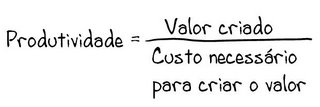
Enquanto o primeiro grupo está na race to the bottom, sempre em busca de umas migalhas de percentagem de mais eficiência, e concentra a sua atenção no denominador, o segundo grupo cultiva o numerador, trabalha para a eficácia.

Os concursos são uma forma de influenciar a percepção dos potenciais compradores acerca da qualidade do azeite através da opinião de painéis de especialistas e connaisseurs (influenciadores).

Qualidade tanto é ausência de defeitos (e mais qualidade é mais barato), como é mais atributos (e mais qualidade é mais caro).
“The reason the alchemists gave up in the Middle Ages was because they were looking at the problem the wrong way – they had set themselves the impossible task of trying to turn lead into gold, but had got it into their heads that the value of something lies solely in what it is. This was a false assumption, because you don’t need to tinker with atomic structure to make lead as valuable as gold – all you need to do is to tinker with human psychology so that it feels as valuable as gold. At which point, who cares that it isn’t actually gold?
If you think that’s impossible, look at the paper money in your wallet or purse; the value is exclusively psychological. Value resides not in the thing itself, but in the minds of those who value it. You can therefore create (or destroy) value it in two ways – either by changing the thing or by changing minds about what it is.”
Recordando os azuis, vermelhos e pretos de Terry Hill:
Produtores de olival superintensivo a participar em concursos fariam o papel dos vermelhos da figura,  organizações sem estratégia, stuck-in-the-middle.


Trecho retirado de "Alchemy: Or, the Art and Science of Conceiving Effective Ideas That Logical People Will Hate" de Rory Sutherland.

segunda-feira, julho 15, 2019

"Passion doesn’t precede mastery, but follows it"

“Cal Newport, the best-selling author of So Good They Can’t Ignore You, argues that passion is the side effect of mastery. To Newport, following your passion is fundamentally flawed as a career strategy because it fails to describe how most successful people ended up with compelling careers and can lead to chronic job-shifting and angst when your reality falls short of your passionate dream for your career. Newport believes that we need to be craftspeople, focused on getting better and better at how we use our skills, in order to be valuable to our company and its customers. The craftsperson mind-set keeps you focused on what you can offer the world; the passion mind-set focuses instead on what the world can offer you.
...
Another study on college students, from psychologist Jeffrey Arnett, found that most postgrads expect the work they do in their career to not be just a job but an adventure. The problem is that most of the subjects felt entitled to meaningful and adventurous work, but no obligation to put in the time and effort to master the skill set required. Just as autonomy is achieved through mastery of skills and ownership of an ability to solve problems, so too is passion. Passion doesn’t precede mastery, but follows it.
The feeling among some employees, team members, or even business owners that they are owed something just for showing up is a difficult pill to swallow. Linda Haines, who ran a human resources department at a large international company, says that many people who were raised to feel like they’re always winners, regardless of their relative efforts, merits, or skills, feel entitled to promotions and advances just because they show up to the office. [Moi ici: Algo tão comum nos dias de hoje. Dizer às crianças que o mais importante é participar. Há um lado positivo e há um lado negativo]
...
Passion isn’t the catalyst that creates success, but more often what develops after success is achieved. Taking action and doing work, as a first step, create momentum, and this momentum happens when you’re caught up in—and enjoying—the process of your work, not its possible outcomes.
The gist is this: you can pursue any passion you want, but you shouldn’t feel entitled to make money off it. Passion in work comes from first crafting a valuable skill set and mastering your work.”

Trechos retirados de "Company of One: Why Staying Small is the Next Big Thing for Business" de Paul Jarvis.

Mongo na medicina

Mongo na medicina:
"Doctors have traditionally approached diseases with a one-size-fits-all model. But advances in genetics and artificial intelligence are making medical treatment far more personal and effective.
...
The past few years have seen huge advances in medicine, heralding a new era in treating disease. We’re getting better at predicting diseases, especially those that run in families, which means that both doctors and patients know which symptoms to watch out for. We’re more effective at tailoring treatments to the individual, resulting in healthier patients and fewer side effects from medication"
Trechos retirados de "How to profit from the age of bespoke medicine"

domingo, julho 14, 2019

How does the strategic direction of your organization influence or frame your quality management system? (Part I)

ISO 9001:2015 mentions "strategic direction" in clauses 4.1, 5.1.1b), 5.2.1 a) and 9.3.1.

How does the strategic direction of your organization influence or frame your quality management system?

ISO 9000:2015 defines strategy as "plan to achieve a long-term or overall objective". Also, ISO 9000:2015 defines policy as "intentions and direction of an organization as formally expressed by its top management".

Not very helpful.

If we think on an abstract ladder we will get:
How does the strategic direction of your organization influence or frame your quality management system?

What is an organization?
An organization can be viewed as a set of interrelated processes:
Where C's are customers at different stages of their relationship with an organization as set of interrelated processes (P).

If we choose an economic sector and compare performance among organizations we will see a lot of variability. There is more variability among organization within the same economic sector than between economic sectors:
So, same economic sector, same country, same rules, same people, ... what is different?

Something inside the organizations: strategy.

Let us make a comparison with sports.
When I was a small boy I watched in TV the Olympics at Munich in 1972. I remember this champion, Vasily Alexeyev:
Look into his body, a system prepared to compete and win.

Then came the 80's and there was a champion in athletics, Carl Lewis:
Look into his body, a system prepared to compete and win. A system very different from Vasily's.

Each sport requires a different set of skills, requires a different kind of body. Even in the same sport, like running, 100 m champions are different from 10 000 m champions.

What happens when an athlete wants to be good at everything?
Let us go again to the Olympics and to Montreal 1976.
Bruce Jenner won the gold medal in the decathlon, setting a world record. Bruce was a generalist among generalists and that year he was the best. For example:

  • He run the 100 m in 10.94 seconds
  • He pushed the shot in shot put at 15.35 m
  • He threw the javelin at 68.52 m
When you're a generalist competing with other generalist the competition works at a certain level.

In the same Olympics there were specialists running 100 m, pushing the shot or throwing the javelin and the gold medalists had this performance
  • Hasely Crawford  run the 100 m in 10.06 seconds
  • Udo Bayer pushed the shot in shot put at 21.05 m
  • Miklós Némete threw the javelin at 94.58 m
Bruce Jenner, a champion among generalists wouldn't had a chance against the specialists (Valery Borzov was bronze medal at 100 m with 10.14 seconds)

I believe that in every economic sector we are seeing more and more specialists, salami slicers. Organizations that don't pretend to win, to serve all kinds of customers. They pick one niche, one tribe and they become specialists in serving them, generalists have no chance.

Picking a strategic direction is deciding to be a specialist, is deciding whom and where to serve. It makes no sense speaking about process benchmarking in general. Will an organization compare its processes with another organization that serves different customers from a different segment and with different priorities and expectations?

According to your organization's strategic direction the quality management system can be like Vasily Alexeyev or Carl Lewis or ... 

Part II will be about different kinds of customers.
Part III will be about interested parties and ecosystems.

Mudar e anichar!

Recuar a 2006:
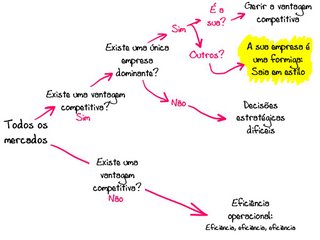
"Se existem empresas no mercado com vantagens competitivas, os autores perguntam: “Quantas?” Uma ou mais?
E se a nossa empresa não goza de uma vantagem competitiva, ao contrário de outras, os autores são extremamente pragmáticos: “A sua empresa é uma formiga: saia quanto antes, saia com estilo
A imagem da formiga está relacionada com o que acontece num piquenique, quando as formigas invadem o espaço dos humanos, são esmagadas!"
Foi deste texto e do seu esquema pragmático que me lembrei ao ler:
"Por que vocês mudaram para ingredientes funcionais?
WVE: Estávamos a trabalhar com café e cacau e eu não gostava da negociação. O mercado tinha mudado de tal forma que ou se faz em larga escala, como a Cargill faz, ou não se faz. Caso contrário, fica-se preso em algum lugar. Precisávamos de fazer outra coisa e eu pensava realmente em algo que precisasse de mais conhecimento, para que a entrada de novatos não fosse fácil. E alimentos funcionais encaixam-se muito bem. Eu estava fazer o trabalho no Japão, vi suplementos em lojas e pensei que isso era algo realmente novo."
 Perceber que a escala domina quando se trabalha com commodities e que se se é uma formiga o melhor é sair enquanto se tem possibilidade.
Procurar uma alternativa com mais valor acrescentado e mais barreiras à entrada: anichar!

Texto retirado de "Como uma empresa de 357 anos se reinventou no século XXI"

sábado, julho 13, 2019

Curiosidade do dia

Isto é Portugal: limpinho, limpinho, limpinho.
"O sistema de aquecimento, ventilação e ar condicionado (AVAC) da Câmara de Guimarães está sem funcionar praticamente desde que foi instalado, em 2010, porque consome muita energia. O equipamento é um dos mais luxuosos do país e o JN conseguiu ter acesso à ata da deliberação da compra, que mostra que o preço final foi de 813 mil e 400 euros, mais IVA, o que dá um total de um milhão de euros.
.
É uma verba gasta pelo erário público que raramente teve utilidade, pois o sistema apenas foi ligado algumas vezes desde que acabou de ser colocado, em 2010."
Portugal é esta fixação na próxima jogada sem pensar nas consequências das decisões que se tomam.

Por isso, quando o pau nos bate nas costas culpamos os alemães, ou o Passos, pelos nossos males.

Por isso, não mudamos de vida e voltamos a repetir como no filme Groundhog Day.

Já agora, contaram-me casos deste tipo com as escolas renovadas pela Parque Escolar: gastos com utilidades antes e depois.

Trecho retirado de "Ar condicionado de luxo da Câmara de Guimarães desligado para poupar"


Mais qualidade para lucrar mais

Os meus amigos da Cascata de Números desafiaram-me para a falar sobre Qualidade.

O meu ângulo de abordagem será o da: mais qualidade para lucrar mais.

sexta-feira, julho 12, 2019

Subir na escala de valor

Acho que muita gente se esquece disto "Why Gross Profit Is More Important Than Revenue":
"I’ve started encouraging the companies I’m involved in to focus on Gross Profit and the growth rate associated with their Gross Profit, rather than Revenue. Try the exercise and see how you compare to the companies you think you should compare to. And think about how much more value you could be creating with the same Revenue number but a higher Gross Margin percentage …"

"Most thinking stops at stage one"


Há anos que uso a metáfora do jogador amador de bilhar que só pensa na próxima jogada sem medir as consequências do que defende nas jogadas seguintes. Sim, karma is a bitch!
"When I was an undergraduate studying economics under Professor Arthur Smithies of Harvard, he asked me in class one day what policy I favored on a particular issue of the times. Since I had strong feelings on that issue, I proceeded to answer him with enthusiasm, explaining what beneficial consequences I expected from the policy I advocated.
"And then what will happen?" he asked.
The question caught me off guard. However, as I thought about it, it became clear that the situation I described would lead to other economic consequences, which I then began to consider and to spell out.
"And what will happen after that?" Professor Smithies asked.
As I analyzed how the further economic reactions to the policy would unfold, I began to realize that these reactions would lead to consequences much less desirable than those at the first stage, and I began to waver somewhat.
"And then what will happen?" Smithies persisted.
By now I was beginning to see that the economic reverberations of the policy I advocated were likely to be pretty disastrous—and, in fact, much worse than the initial situation that it was designed to improve.
Simple as this little exercise may sound, it goes further than most economic discussions about policies on a wide range of issues. Most thinking stops at stage one. In recent years, former economic advisers to presidents of the United States—from both political parties—have commented publicly on how little thinking ahead about economic consequences went into decisions made at the highest level."
Trecho retirado de " Applied Economics - Thinking Beyond Stage One" de Thomas Sowell.

quinta-feira, julho 11, 2019

Exportações YTD

Os resultados das exportações em Maio de 2019 pintam um quadro mais alegre que o de Abril.
Recordo que estes gráficos comparam valores homólogos mensais, são por isso mais voláteis.

Olhando para os items que acompanho há anos:
Nas imagens comparo meses homólogos. Interessante como isto compara bem com os relatos que apanho sobre o calçado. Começo de ano muito difícil, sócio-estado sempre ávido de cobrar, levou ao encerramento de muitas pequenas empresas. Agora, a aproximar-se o pico de produção para Inverno, não há capacidade de produção suficiente.

No quadro seguinte comparo valores acumulados:
Impressionante a ascensão das Aeronaves e da Óptica e o desempenho dos Automóveis.

Já agora relativamente ao mundo da moda, uma melhoria do panorama:


Tail risks can screw you (parte II)

Parte I.

O D. Pedro IV comentou:
"Disclaimer: não conheço o caso em concreto. Mas há um padrão que se tem.vindo a repetir....
.
- "Mas porque é que não têm lojas? Porque é que não vendem on-line? Olhe que o mercado está a mudar muito e não podem ficar de fora."
À resposta:
- "porque somos fabricantes e queremos foco completo e especialização nisso"
As pessoas olham com verdadeira desilusão. Senti isso várias vezes. O mundo está cheio de Ícaros, ou se preferirmos de exemplos do princípio de Peter que nos impele sempre a avançar até que saímos da nossa área de experiência e core business.
Exagerando: a necessidade (quase obrigação) de sair da zona de conforto está overrated!"
Por que usei a foto na parte I?
Demasiada gente fica seduzida com o glamour, com o lado solar, e não sabe, ou desvaloriza o sofrimento, o risco, ou o lado lunar.

O comentário avança duas linhas de pensamento. A primeira é acerca da essência da estratégia, a segunda acerca do nível de risco.

1. A essência da estratégia
A essência da estratégia é ser capaz de dizer não. Recordo sempre a lição de Agosto de 2008:
"the most important orders are the ones to which a company says 'no'"
O que não vamos fazer? Quem não vamos servir?
Sem escolher dizer não a certas coisas, não se pode ser excelente a outras, fica-se stuck-in-the-middle.

No texto "Quando falta mão de obra (parte II)" citei:
"Of course, economies of scale can sometimes be required for success in certain markets and for some products, but often they aren’t required and it is ego, not a strong business strategy, that is forcing growth where growth isn’t necessary."
Entre crescer pelo volume ou crescer pelo preço unitário (ou seja, pelo valor acrescentado) não deveria ser um dilema para uma PME. No entanto, quase sempre a pressão pelo crescimento leva a dizer sim a mais coisas do que deviam ser aprovadas. E uma organização começa a dispersar-se, começa a espalhar os recursos escassos por fatias de pão cada vez maiores.

2. Até onde arriscar?
Em princípio parece não haver uma resposta única a esta pergunta. Cada um arrisca até onde a sua paixão pelo risco o leva. No entanto, em Antifrágil Nassim Taleb dá uma pista infalível. Seguir o exemplo dos estóicos:
"combines an aggressive stance toward upside opportunities with a healthy paranoia about large negative outcomes"
Nunca arriscar a casa. Só arriscar até ao limite em que se tudo for perdido, a vida pode continuar. Ou seja:
"Dans une stratégie qui entraîne la ruine; les bénéfices ne compensent jamais les risques de ruine"
Deixa-me arriscar, tenho aqui uma possibilidade fantástica de ganhar uma boa maquia, só tenho de jogar uma vez na roleta russa...


quarta-feira, julho 10, 2019

Outro factor a alterar a paisagem competitiva

Um tema que tem aparecido recorrentemente na minha lista de leituras nos últimos meses, a explosão da venda de artigos em segunda-mão:

Outro factor a alterar a paisagem competitiva que mexe com o mundo das PME exportadoras.

Tail risks can screw you up


A propósito de "Eureka em PER com dívidas de 22 milhões a 622 credores" como não recordar da parte II:
"Of course, economies of scale can sometimes be required for success in certain markets and for some products, but often they aren’t required and it is ego, not a strong business strategy, that is forcing growth where growth isn’t necessary."
Para contextualizar: "De Vizela para o mundo" e "A atracção das marcas".

Primeiro um disclaimer: as pessoas da Eureka têm o meu respeito porque são gente com skin-in-the-game, são gente que fazem o que cada vez é mais difícil e arriscado, põem o pescoço no cepo e ao fazê-lo criam emprego.

Qual poderá ser o seu erro?
E recordo de "Jouer Sa Peau" de Nassim Taleb:
"On peu aimer le risque tout en nourrissant une aversion profonde pour la ruine.
L' asymétrie central de la vie est la suivante:
Dans une stratégie qui entraîne la ruine; les bénéfices ne compensent jamais les risques de ruine"
A atracção pelo crescimento rápido pode levar ao tail risk de tudo perder.


terça-feira, julho 09, 2019

Um bálsamo para a alma

A propósito do livro:

Fiquei tão, mas tão contente com este comentário:
Ok, é claro que qualquer autor fica satisfeito com um com um comentário positivo, mas receber um comentário que vai directamente ao âmago, ao propósito do livro, à intenção que se tinha quando se começou a escrever é um tremendo bálsamo para a alma.


Quando falta mão de obra (parte II)

Parte I.

“Often, in the pursuit of growth, companies or founders have to battle ... “the Beast.” A company focused on growth often puts into place complicated systems to handle exponential volume and scale, which require more resources (human and financial) to manage, which then require more complex systems to manage the increased resources, and so on and so on. [Moi ici: Recordar a malta da Junqueira]
...
In “killing her own Kraken,” as she put it, she began to radically simplify. Her strategy shifted from “broadcasting light . . . to as many people as possible” to “broadcasting light . . . to the people with eyes to see it.” Not focusing on growth and scale, she believes, was the best way to remove the Beast from her company of one and return her focus to the people who were already paying attention to her work. She likens her decision to stop trying to reach infinitely more people through paid channels to feeding only those people who show up for dinner—the ones who naturally or organically find her work through word of mouth or who are hanging out where her business hangs out. The fact is that she still has hundreds of thousands of ravenous fans showing up for “dinner.
...
Of course, economies of scale can sometimes be required for success in certain markets and for some products, but often they aren’t required and it is ego, not a strong business strategy, that is forcing growth where growth isn’t necessary.
...
When you feel like you have to start out competing with the largest player in the market, you end up chasing your competitor’s growth instead of bettering your own offering. Sometimes finding and working with a single customer, then adding another, and then another, is a very useful and solid way to begin. And sometimes that can even be the end goal—one where your focus is on the relationship and the paid work at hand. Sometimes the best plan is focused on your current customers’ success, not on chasing leads and growth.
...
Instead of scaling production, she focused on raising her prices higher and higher until the demand leveled off to where she could handle orders. She focused on creating an amazing product that was better than the competition—mass-produced snow globes—and was able to charge a huge premium for her work. Because she focused on making the best product, not the most scalable product, she grew her profits quickly without scaling production, which would have also scaled complexity and expenses.
...
When you focus on doing business and serving customers in better and better ways, your company of one can end up profiting more from the same amount of work because you can raise the prices until your demand flattens out to where you can handle it.”
Ainda há dias um empresário contava-me, para meu espanto, que andava a desenvolver um produto low-cost... para juntar à gama de produtos existentes. Mais complexidade, mais incoerências internas,  mais risco, mais vendas para ganhar cada vez menos.

Trecho retirado de "Company of One: Why Staying Small is the Next Big Thing for Business" de Paul Jarvis.

segunda-feira, julho 08, 2019

"where uncertainty avoidance is high"

“A ... cultural dimension that makes a difference when it comes to questions is “uncertainty avoidance,” or the degree to which members of a society feel stressed by ambiguity, unstructured situations, and the prospect of an unknown future. In cultures where uncertainty avoidance is high, people are comfortable with strict behavioral codes, laws, and rules. There is “disapproval of deviant opinions, and a belief [that] ‘there can only be one Truth and we have it.’” Among the observable differences on this dimension, Hofstede points to schools in which teachers can say “I don’t know” versus schools where teachers are “supposed to have all the answers.” Again, it is easy to see how these cultural differences would translate to very different propensities to ask thought-provoking questions.”
Trecho retirado de “Questions Are the Answer” de Hal Gregersen