"As the world becomes more complex and markets less predictable, the willingness to try things and to fail – while once the feared career-ending bogey-man of the executive suite – is now a necessary component of success.
...
We now know that the strategy that wins is the strategy that acknowledges complexity and acts accordingly, deploying an active portfolio of activities which are designed to gain insight quickly and at low cost – like a startup. Even in large businesses that have established business models, the interface between their product offering and the various consumer segments should now be seen as a portfolio of startups – each with the mandate to discover insights into the Truth of the Market as it evolves over time.
.
The true challenge of business is not the building of products- it is in figuring out the contours of the hidden, ever changing the Truth of your marketplace. It is in answering the questions “what can we do today (and tomorrow) to create even more value for our customers? And what new customers have we not yet discovered?” A company – regardless of size- that is vigorously asking these questions will end up acting very much like a startup."
quinta-feira, abril 03, 2014
Os crentes...
E se os crentes no Grande Geometra, no Grande Planeador, no Cybersyn, percebessem a mensagem disto "What Blue Chip Companies Are Finding Out The Hard Way: We Are All Startups"?

If our fixed costs reside in the downstream...
Em "Tilt - Shifting Your Strategy From Products to Customers" de Niraj Dawar, o autor começa por contar o impacte do barbeiro Richard Arkwright, um nome da lista que memorizei no 8º ano de escolaridade sobre os homens que começaram a Revolução Industrial em Inglaterra, ao criar o conceito de produção em escala, apostando nos volumes crescentes e nos custos unitários cada vez mais baixos:
"The money was used to set up wholesale and retail distribution routes to market and to persuade consumers to buy, [Moi ici: Cá está aquele pormenor, o mercado de massas não criou a produção em larga escala de grandes séries ou lotes. Foi o contrário, foi a produção em massa, com os seus produtos a baixo custo que levou os consumidores a fazerem o sacrifício de entrarem na massa] The marketing budget had made its first appearance. Money could be invested in building markets, not just factories. Still, for at least another century or so, the capital employed in building the factories would continue to dwarf the marketing budget, and for another 250 years, the strategic imperatives of the large-scale factory would continue to drive business decisions.Entretanto já no século XXI:
.
Mass production rapidly ran riot through just about every industry. Entrepreneurs, businesspeople, and capitalists who seized this source of competitive advantage would quickly and decisively outperform firms with more traditional forms of competitive advantage. Those who missed it or were too slow to recognize it were either driven out of business or gobbled up by the fast-growing scale-seeking enterprises. Scale became the defining feature of success and the cornerstone of strategy. Scale-driven consolidation continues in many industries today. That is Arkwright's legacy. The primary strategic question that drives Arkwrightian business is, "How much more of this stuff can we sell?" [Moi ici: Isto é tão tríade...] The amortization of the fixed costs of manufacturing, the quest for new markets, and decisions related to competitive strategy all flowed from that one question."
"if the main ongoing fixed costs are advertising, promotion, listing fees, market research, and customer relationship management, and our manufacturing costs are variable, the critical resource that needs to be optimized is no longer the factory; [Moi ici: Consigo ouvir uma série de pessoas a cair da cadeira] it is the customers.No entanto:
...
But customers are very different from factories as a locus for fixed costs. Factories are monolithic: a single entity that is good at producing one thing. Customers, on the other hand, are a collection of individuals, an aggregation of many different needs, preferences, and tastes. If our fixed costs reside in the downstream, then the question that should govern our strategy is no longer "How much of this stuff can we sell?" but rather "What else do our customers need? Our success depends not so much on economies of scale as on economies of scope.""
"Like a phantom limb or a deceased patriarch, the long-dismantled, shuttered, and offshored factories continue to haunt strategic discourse long after they are gone. Companies continue to be obsessed with volume (and volume measures such as market share), with the development and protection of new products (rather than markets and customers), and with the utilization of production capacity rather than the customer base. Managers continuously and misguidedly try to gain competitive advantage in the upstream playing fields that were leveled years ago."
Mais duendes
Os duendes que fazem, e que são descritos, no Ofício são do melhor. Reparem só neste trecho:
.
E os duendes prometem mais revelações sobre estes duendes...
.
Texto retirado de "CHICORAÇÃO (PT1)"
"A lã, ainda suja, é lavada num lavadouro local, e depois volta para as instalações da CHIcoração para ser cardada e penteada. Torna a sair para ser fiada e tingida, e entra já em fio para ser trabalhada nos teares ou nas máquinas de tricot.Claro que esta escala assusta a tríade, a tríade gosta de exércitos gorkianos que obedecem e constroem as Metropolis e as Magnitogorsk que vomitam escala e volume ao preço mais baixo.
.
Uma das coisas que me interessa neste caso é a escala a que se trabalha aqui. Não é artesanal. Não é industrial. Está ali naquele intermédio de que tanto gosto. Usa teares e máquinas de tricot semi-industriais dos anos 60, que oferecem tanto a possibilidade de se ir desenvolvendo peças lentamente, como se trabalhássemos em peças manuais, como permitem uma produção automática que torna o trabalho rentável após o desenvolvimento das peças. Permitem criar peças únicas, edições limitadas, desenvolver produtos novos, experimentar e, quando assim se quiser, partir para uma produção rentável.
.
A outra coisa que acho interessante na Otília é a perfeita noção que ela tem do potencial deste tipo de produção. Talvez porque passa muito tempo sentada ao tear a criar padrões novos, ou a intervir na máquina de tricot, percebe a importância da proximidade com os meios de produção para se produzirem peças que, mais que a materialização de uma ideia abstracta, são também o produto de uma técnica específica. E, apesar disso, tem a perfeita noção de que tem um negócio que tem de ser sustentável.
.
Na minha opinião, grande parte do valor do negócio da CHIcoração está no tipo de linha de produção que nela está a ser construído, ou a recuperado, que sendo tão focada numa produção de pequena/média escala, enquanto mantém o nível de qualidade alto, está muito alinhada com a viragem a nível global que se está a ver na área da manufactura, e que penso que se tornará cada vez mais relevante."
.
E os duendes prometem mais revelações sobre estes duendes...
.
Texto retirado de "CHICORAÇÃO (PT1)"
Para lá das médias, que só enganam
Um exemplo concreto do que aqui defendemos ano após ano:
.
Por fim, recordar que a média é um gerador de fantasmas estatísticos.
- quem são os clientes-alvo?
- o que procuram e valorizam?
- o que oferecer a um cliente-alvo pode não ser o melhor para outro grupo.
"Mobile’s long-term trend is clear: data is rapidly increasing year over year.Vale a pena ler com atenção "Averages lie: Using smart segmentation to find growth", para, depois, equacionar e fazer o paralelismo com o sector económico de cada um. Que tipo de segmentos podemos considerar? Quem podemos servir com vantagem para ambas as partes? O que oferecer?
...
Like Western Europe’s people in general, its mobile users are quite a diverse bunch.
...
the top quartile of Western European mobile users consume a full 75 percent of all mobile data with individual consumption 30 times that of the median and 60 times greater than the 95th percentile. Using averages for marketing purposes and to gain a broader understanding of the customer base can sometimes be misleading. These do not account for the complex underlying usage patterns.
.
Moving beyond averages.
Both usage diversity and polarization necessitate a more nuanced approach to understanding mobile users for successful marketing, product development, service operations, and other key business functions.
...
While Traditionalists [Moi ici: Ver no artigo a caracterização de cada um destes segmentos] represent the largest segment by number, they account for only a small share of the data revenue opportunity. Entertainers and Practicals spend about 50 percent more per month than Traditionalists. Omnivores spend 80 percent more. Since value is distributed unequally, many mobile network operators (MNOs) that fail to adopt a sufficiently granular segmentation driven by data usage will not have optimally priced offerings.
...
Segment-driven products, pricing, and up-sellingGiven the imbalance in data usage and value among smartphone users, MNOs would be well advised to go beyond the traditional “SMS-voicedata” services portfolio and think much more specifically about how to develop offerings that speak directly and powerfully to members in a specific user segment."
.
Por fim, recordar que a média é um gerador de fantasmas estatísticos.
quarta-feira, abril 02, 2014
"Certificações em Mongo"
Em 2012 a escolaridade obrigatória foi estendida até aos 18 anos.
.
Ainda vamos ver o ensino universitário tornado obrigatório, para suportar o ecossistema.
.
Porque o futuro precisa cada vez menos de "certificações", "Badges? We Don’t Need No LinkedIn Badges":
"As job performance data racks up, the proportion of Google employees with college degrees has decreased over time. It’s a development that Rory Sutherland, the Vice Chairman of Ogilvy & Mather UK echoed when he recently wrote that he was unable to find any evidence that “recruits with first-class degrees turn into better employees than those with thirds (if anything the correlation operates in reverse).”Em Mongo, não é preciso entidade certificadora, está tudo escarrapachado na net.
.
In the old world, I would use the social hack of finding out which university your degree came from as a sort of proxy for things I wanted to know about you if I was recruiting. But I no longer need to do that because from the social I can find out if you are smart, a hard worker, a team player, an expert on the endochronic properties of resublimated thiotimoline or whatever. So there’s less premium for your learning, say, biochemistry at Harvard rather than Swindon Polytechnic: as long as you know the biochemistry, my hiring decision will be tied to your social graph, not the hack of institutional badges."
A evidência demográfica
"As sociedades maduras desenvolvidas (na Europa, no Japão, nos Estados Unidos) estão obrigadas a absorver os desequilíbrios que acumularam nos seus diferentes passados quando não podem esperar voltar a ter as altas taxas de crescimento a que se tinham habituado e que embutiram nos dispositivos de financiamento das suas políticas sociais. A evidência demográfica rompe o último véu da ilusão."Gosto de uma frase que li no Twitter "Gente que acreditou em histórias de unicórnios"
Trecho retirado de "A sentença do futuro"
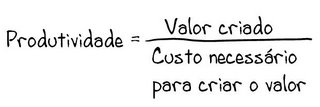
Produtividade e os lineares do supermercado
Via Aranha cheguei a este texto "Sair da crise de valor II" que se alinha muito bem com a mensagem do Evangelho do Valor deste blogue:
"Mas não é por produzir mais em quantidade que se aumenta o PIB. Não é apenas produzindo mais em quantidade que conseguimos dar o salto dos cerca de 40% que hoje pesam as exportações no PIB para os 80% que são comuns no norte da Europa.
.
Sendo a produtividade calculada com base no preço de venda, o seu crescimento está sobretudo dependente do valor que lhe incutirmos: valor que atraia procura e valor que sustente uma subida de preço. [Moi ici: Claro que esta linguagem não se adequa à service-dominant logic que aqui seguimos]
.
Para se perceber essa dinâmica, os lineares de supermercados apresentam-se como uma excelente amostra, [Moi ici: Sempre o meu ratinho de laboratório] onde a disparidade de preços numa mesma categoria chega a ser de o dobro ou mais, comparando o produto mais caro ao mais barato. Temos num extremo a marca de distribuição que atrai a procura praticando o preço mínimo. E temos no outro extremo marcas de origem que, além da funcionalidade, propõem outros benefícios mais intangíveis. Algo extra que o consumidor considera relevante ao ponto de estar disposto a pagar mais caro por ele. Esse extra não podemos simplesmente caracterizar de qualidade, porque se a funcionalidade de um produto é matar a sede, então qualquer água será capaz de o fazer com qualidade. Esse extra remete-nos antes para outras características mais conceptuais como a origem da água, a pureza, o ph, a frescura, a estética, a responsabilidade social da empresa, em suma o seu potencial de simpatia que na hora seduzem o comprador. É esse diferencial que distingue uma marca. Não se limita a assegurar e promover a sua funcionalidade."
Acerca do aumento dos preços
Sabem como o aumento dos preços pode ter um efeito poderoso nas contas das empresas, muito mais alavancado do que o da redução dos custos ou o do aumento do volume (Rosiello rules, Simon rules). Por isso, esta reflexão de Rafi Mohammed "The Art of Raising Prices: Lessons from Amazon Prime" é muito instrutiva.
"Given its success, managers of all companies can learn from the tactics it employed:
...
Float a Scarier Number.
...
Blame Costs.
...
Appeal to Fairness.
...
Hint That There’s More to Come.
...
Don’t Cave to Simple Market Research.
...
While Amazon did a good job of raising prices, let’s call it a B+, there is more it should have done:
...
Remind Customers of the Value It Provides.
...
Resist the One Price Fits All Mindset.
...
Raising prices is an angst-inducing ritual for all companies. The art of raising prices involves a clear yet sensitive dialogue with customers to justify the lift. As Amazon demonstrated, even a 25% price increase can be palatable if pitched correctly."
Pôr a região no mapa
"Principal produtor de mobiliário a nível nacional, o concelho de Paredes registou em 2013 um crescimento de 11% no sector face a 2012, atingindo um valor de faturação recorde de 1,4 mil milhões de euros, 86% impulsionado pela exportação para 138 países."Uma iniciativa interessante para colocar uma região no mapa europeu, marketing e imagem são fundamentais para a subida na escala de valor, as empresas têm de fazer a sua parte. Não basta produzir cadeiras, Manzano é um bom exemplo dessa ilusão!
.
Sem marca própria, sem design, sem diferenciação... a commoditização rules!!!
.
Trecho retirado de "Cadeiras de Paredes vencem prémio europeu"
terça-feira, abril 01, 2014
Curiosidade do dia
Hoje é um bom dia para despertar o Diógenes que há dentro de mim.
.
A Autoeuropa ainda nem conseguiu garantir um novo modelo e os jornais, ingénuos inocentes já escrevem "Investimento da Autoeuropa pode trazer mais do que um novo modelo até 2019". Recomenda-se a João Carlos Malta o estudo do significado de plataforma modular.
.
A Autoeuropa tem actualmente 300 dos seus trabalhadores a laborar em fábricas na Alemanha, transferidos para salvar o seu posto de trabalho e, no entanto, os jornais engolem sem perguntar "Autoeuropa investe 670 milhões de euros e cria 500 postos de trabalho até 2019". Quer isto dizer que vão ser criados 800 postos de trabalho, ou apenas 200?
.
Depois, lembrando-me da capacidade negocial de Paulo Campos com a Mota-Engil, ou de Paulo Portas com os fazedores de submarinos e contrapartidas, imagino o que aí vem...
.
Nada me move contra a Autoeuropa, pelo contrário, sou é contra apoios do Estado.
.
A Autoeuropa ainda nem conseguiu garantir um novo modelo e os jornais, ingénuos inocentes já escrevem "Investimento da Autoeuropa pode trazer mais do que um novo modelo até 2019". Recomenda-se a João Carlos Malta o estudo do significado de plataforma modular.
.
A Autoeuropa tem actualmente 300 dos seus trabalhadores a laborar em fábricas na Alemanha, transferidos para salvar o seu posto de trabalho e, no entanto, os jornais engolem sem perguntar "Autoeuropa investe 670 milhões de euros e cria 500 postos de trabalho até 2019". Quer isto dizer que vão ser criados 800 postos de trabalho, ou apenas 200?
.
Depois, lembrando-me da capacidade negocial de Paulo Campos com a Mota-Engil, ou de Paulo Portas com os fazedores de submarinos e contrapartidas, imagino o que aí vem...
.
Nada me move contra a Autoeuropa, pelo contrário, sou é contra apoios do Estado.
Uma das minhas narrativas preferidas
"A strong version of the canonical big data thesis is that when you have enough information, you can make unbiased predictions that don’t require an underlying understanding of the process or context – the data are sufficient to speak for themselves. This is the so-called “end of theory.”Sobretudo porque no mundo das chamadas ciências sociais, o que é verdade hoje pode passar a ser mentira amanhã e vice-versa, só pela actuação do observado e do observador.
.
Not so fast, Harford responds. The failure of Google Flu Trends, in his view, emphasizes the perils of unmoored empiricism.
.
“A theory-free analysis of mere correlations is inevitably fragile,” Harford writes. “If you have no idea what is behind a correlation, you have no idea what might cause that correlation to break down.”
.
He’s right, of course – but I suspect that outside of a few areas such as physics, our understanding of causation is far more fragile than we appreciate. We overestimate our understanding of causation, and our ability to generalize..
I’d argue this is especially true in medicine, where despite our aspirations to approach health and disease from first principles, our actual understanding is far more limited, and based far more on rationalized empiricism than is often appreciated – there’s much more scientism than science.
...
Fundamentally, my concern is that more often than we appreciate, and especially in healthcare, our faith on theory is misplaced – we turn to various theories as crutches, explanatory models, memory devices, in the case of med students and harried residents.
...
The difference is that we recognize (or should recognize) empirical predictions for what they are, limitations and all. Yet, I suspect we are more likely to let our guard down in instances where predictions are theory-driven, where we instinctively believe we really understand what is going on. In doing so, we are likely to discount data that don’t fit, and unconsciously constrain our thinking according to theory’s dictates."
.
Algo que devia incutir muito mais humildade em quem pretende construir sociedades de homens novos e substituir-se a centenas de gerações de tentativa-e-erro.
.
Feyrabend rules!!!
.
Trechos retirados de "Why Causation Is (Often) Not Causation - The Retro Humility Of Empiricism"
O impacte da estratégia no lucro
Isto é muito bom!!!
.
Dedicado à tríade e ao seu dedo no gatilho do baixar-preço:
.
Dedicado à tríade e ao seu dedo no gatilho do baixar-preço:
"Some managers tend to think that managing for profit consists of tight control of expenditure, and maximizing sales and profit margins. These measures are the weaponry available to improve current, short-term results. They are of little relevance, however, to strategy.Trecho retirado de "Creating Value Successful business strategies" de Shiv S. Mathur e Alfred Kenyon.
.
The impact of competitive strategy on profitability is widely underestimated. There is only limited scope for improving this year’s results for an offering that has a poor competitive position. A poor competitive position inevitably means low operating margins. We can and should tighten our cost controls, redouble our sales effort, and generally strive to produce the best possible short-term results. Yet all this fire-fighting, necessary as it is, can at best bring about marginal improvements. It cannot make an uncompetitive offering competitive. We could and should have attended to its competitive position some years ago, when we made either bad strategic decisions or none.
.
Much more can be done for the profitability of our offering at the time of its design, in the framing of the competitive strategy. A competitive strategy positions an offering in a unique triangular relationship with customers and competitors. The measure of its attraction is its financial value. In this sense, the job of a competitive strategy is to target profitable customers. This positioning of the offering will affect profits much more powerfully than any short-term measures that can be taken after the triangular relationship has become a commitment."
"your business model is your destiny"
Já aqui salientei o facto de ser relativamente comum apanhar a mesma notícia, made in Lusa, sem qualquer alteração em três ou quatro jornais em simultâneo. Por isso, sorrio perante:
"Let me be more blunt than I was in the original article: life is not “more difficult” for traditional newspapers; it’s unsustainable. They don’t have the best content, it’s not personalized, and they really don’t know anything about most of their readers.E acerca da necessidade de repensar o modelo de negócio, como ainda ontem conversava ao almoço com alguém:
.
“But [Insert Newspaper Name Here] has great journalists! They’ve won Pulitzer Prizes! And our democracy needs newspapers!” Unfortunately, advertisers don’t, and newspapers are paying the price for having long ago divorced the cost of their content from the value readers place upon it. To put it another way, it’s not that “the Internet has unbundled advertising from content creation,” it’s that advertisers (rightly) don’t give a damn about journalistic ideals. It is incredibly tiring to hear newspaper defenders talk as if advertising dollars are their god-given right, and that Google and Facebook are somehow stealing from them, when in reality Google and Facebook are winning in the fairest way possible: providing better value for the advertiser’s dollar."
"The reason why I find business models so fascinating is because your business model is your destiny; newspapers made their bed with advertisers, and when advertisers left for a better product, the newspaper was doomed. To change destiny, journalists need to fundamentally rethink their business"Trechos retirados de "NEWSPAPERS ARE DEAD; LONG LIVE JOURNALISM"
Eficientismo
"This focus on efficiency and predictability, however appropriate it may be in a relatively stable business environment, is no longer a virtue. Rapid technological advances and new competition from unexpected quarters make forecasts less accurate—and less valuable. Thus, the world of the Big Shift demands resilience and learning over routine and the status quo. Scalable learning trumps scalable efficiency, and participating effectively in knowledge flows within and across organizational boundaries becomes a critical skill."Trecho retirado de "The burdens of the past"
Síndroma do vencedor?
Um texto esquisito "Local florists fight undercutting by online 'DOGs'"...
.
Por um lado, parece o síndroma do vencedor que assola a mente de quem ganha um concurso de fornecimento e, só depois, nessa altura, percebe que vai perder dinheiro com esse cliente. Por outro parece... ganância? Estupidez?
.
A velha história americana do merceeiro que vendia lápis a um preço abaixo do custo mas que assegurava que ganhava dinheiro porque vendia muita quantidade e isso compensava. Quantas empresas, enganadas ppelo isco da quota de mercado não cometem o mesmo erro?
.
Por um lado, parece o síndroma do vencedor que assola a mente de quem ganha um concurso de fornecimento e, só depois, nessa altura, percebe que vai perder dinheiro com esse cliente. Por outro parece... ganância? Estupidez?
.
A velha história americana do merceeiro que vendia lápis a um preço abaixo do custo mas que assegurava que ganhava dinheiro porque vendia muita quantidade e isso compensava. Quantas empresas, enganadas ppelo isco da quota de mercado não cometem o mesmo erro?
"They take orders online and from toll-free numbers, add the standard 20 percent commission and other fees (that florists claim are too high), and then relay the order to a florist in the recipient's hometown - Penny's, say - to be filled and delivered.Claro que alguns já se procuram destacar:
.
By the time Penny's gets it, the commission and fees have been deducted from the $80 order, which is now worth $50. After Pannepacker deducts his $10 delivery fee, he's left with $40 - half the original order - to make the beautiful flower arrangement the customer chose from the order-gatherer's website.
.
It's a no-win situation: Pannepacker can either fill the full order and lose money, or substitute a cheaper arrangement and risk consumer outrage.
.
"What can you do? We're all kind of stuck," he says."
"They're raising their online profile, urging customers to add flowers to their "buy-local" list, and trying to promote the things they can do that order-gatherers can't, such as creating custom orders and focusing on special occasions and niche markets."
segunda-feira, março 31, 2014
Imaginei em alternativa...
Primeiro o título, "GameStop Will Open More Stores That Don't Sell Games", depois o subtítulo, "GameStop makes its living selling video games, but it’s increasingly interested in selling itself as a place with access to gamers."
.
E comecei logo a pensar numa plataforma para interagir com, e entre, "gamers"... contudo, afinal, parece que só querem vender a terceiros informação sobre os "gamers".
.
Imaginei em alternativa um tipo de Genius Bar para receber "gamers" e, partilhar, ensinar, trocar, co-criar, ...
.
E comecei logo a pensar numa plataforma para interagir com, e entre, "gamers"... contudo, afinal, parece que só querem vender a terceiros informação sobre os "gamers".
.
Imaginei em alternativa um tipo de Genius Bar para receber "gamers" e, partilhar, ensinar, trocar, co-criar, ...
"perceber quem é que iria procurar o espaço"
Mais um exemplo dos serviços de plataforma que permitem a partilha e o aluguer, "MyAuto: Arranje você mesmo"
.
Gostei, particularmente, da caracterização dos clientes-alvo:
.
Gostei, particularmente, da caracterização dos clientes-alvo:
"sabiam que um dos primeiros passos antes de avançar com o negócio era perceber quem é que iria procurar o espaço. “Primeiro temos o apaixonado, que gosta de ser ele próprio a fazer, adora mecânica, quer saber sempre mais e investiga”, explica João. “Depois, temos o cliente que quer poupar e, por último, o profissional, mecânicos que perderam o trabalho ou fecharam a oficina e agora têm à sua disposição este espaço para criar ou manter uma carteira de clientes”"Tantas empresas que estão a laborar e não sabem quem são os seus clientes-alvo...
"Stressors are information"
"Stressors are information"
.
"Pain is information"
.
Uns, perante a informação, clamam pelo auxílio pedo-mafioso do Estado. Outros, seguem o conselho de há vários anos neste blogue:
Trecho retirado de "Número de empresas exportadoras aumentou 20% em dois anos"
.
"Pain is information"
.
Uns, perante a informação, clamam pelo auxílio pedo-mafioso do Estado. Outros, seguem o conselho de há vários anos neste blogue:
- Fazer o by-pass ao Estado; (2007)
- Fazer o by-pass ao país. (2008)
Por isso:
"Dados cedidos ao PÚBLICO pelo Instituto Nacional de Estatística (INE) mostram que, em 2012, existiam no país 19.532 empresas que faziam exportações. Este número compara com as 16.376 registadas dois anos antes. Em termos absolutos, o aumento foi de 3156, suportado, em grande parte, pelos negócios de pequena dimensão. Neste período, o número de microempresas exportadoras cresceu 23,4%, o que significou um acréscimo de 2147 sociedades (que explica 68% da subida global). Nas pequenas e médias empresas (PME), o incremento foi de 14,3% (mais 984 sociedades), e nas grandes foi de 7,5% (mais 25).
.
Esta evolução fez com que o peso das exportadoras no tecido empresarial português aumentasse entre 2010 e 2012, embora tenha chegado ao final deste ano a representar apenas 5,5% do total, quando dois anos antes era de 4,5%. No entanto, conclui-se que estes negócios contrariaram o ciclo negativo a que se assistia nessa altura e que ainda perdura, fruto da conjuntura do país e da consequente retracção da procura interna."
Trecho retirado de "Número de empresas exportadoras aumentou 20% em dois anos"
Repensar o modelo de negócio e apostar em novas áreas
Enquanto os políticos no parlamento brincavam à engenharia económica, recordar daqui a sua capacidade limitada de perceber as consequências das suas decisões no sector têxtil, enquanto os media celebravam o triunfo dos seus investidores do sector não-transaccionável, enquanto Lesboa drenava os recursos do resto do país.
.
Os políticos propõem logo: proteccionismo, subsídios, ...
.
As associações empresariais clamam pelo queijo desaparecido a que têm direito, ...
.
O que se propõe neste blogue?
Trechos retirados de "A empresa têxtil do Vale do Ave que ‘veste’ a polícia alemã"
"Fundada em 1995, a LMA- Leandro Manuel Araújo, SA nasceu estritamente vocacionada para a produção de malhasO que fazer perante um choque na procura desta dimensão?
...
Mas o desvio das grandes encomendas têxteis para a Ásia - uma tendência que está a acabar, com a alteração dos padrões de consumo e a necessidade das empresas em não acumular stocks - fez com que, em 2006, e perante a perda de 40% do seu volume de negócios num só ano"
.
Os políticos propõem logo: proteccionismo, subsídios, ...
.
As associações empresariais clamam pelo queijo desaparecido a que têm direito, ...
.
O que se propõe neste blogue?
"repensasse o seu modelo de negócio e apostasse em novas áreas, como o vestuário de proteção, a indústria automóvel e a publicidade outdoor /decoração, entre outras. Sete anos depois, recuperou as vendas perdidas, ao fechar 2013 com sete milhões de euros de faturação."Mudar de produto, mudar de clientes, mudar de prateleiras:
"“A área de vestuário de proteção está em grande crescimento. Obriga a um investimento muito grande ao nível da investigação e da inovação, porque há uma série de requisitos técnicos que tem de cumprir, designadamente ao nível da proteção física, mas também das características antibactereanas, anti-odor, etc”, explicou ao DN/Dinheiro Vivo o diretor executivo da LMA, Manuel Barros."
Trechos retirados de "A empresa têxtil do Vale do Ave que ‘veste’ a polícia alemã"
A erosão do poder da escala ou, o susto para alguns
Mais um texto que vem ao encontro da narrativa deste blogue, "Bigger is Not Necessarily Better in Our Information-Rich Digital Economy":
"The mass production of standardized products is a defining hallmark of the 20th century industrial economy, bringing high productivity and low costs to a wide variety of products, - from household appliances to cars.Será que a tríade fica assustada com isto?
...
“Chains took advantage of that data deficit.
...
Not surprisingly, things are now changing in our information-rich digital economy. “Information technology is eroding the power of large-scale mass production. We’re instead moving toward a world of massive numbers of small producers offering unique stuff - and of consumers who reject mass-produced stuff. The Internet, software, 3D printing, social networks, cloud computing and other technologies are making this economically feasible - in fact, desirable.”
...
“A series of breakthrough technologies and new business models are destroying the old rule that bigger is better,” he wrote. “By exploiting the vast (but cheap) audience afforded by the Internet, and taking advantage of a host of modular services, small becomes the new big. The global business environment is decomposing into smaller yet more profitable markets, so businesses can no longer rely on scaling up to compete, but must instead embrace a new economies of unscale.”
.
While a few leading edge companies are able to keep up, the vast majority of traditional firms are lagging behind. They are not able to embrace these disruptive technologies and innovations at anywhere the same speeds. These companies are working harder than ever, trying to achieve greater efficiencies and predictability. They keep trying to fit new technologies and practices into outdated business models. They are holding on to strategies that worked well in the relatively stable business environments of the industrial economy, but fall short in our fast changing digital economy, where new products, business models and competitors keep emerging from all corners of the worlds.
Everyone talks about the need to become more flexible and agile, but many companies have trouble doing so. The Deloitte study cites a number of strategy and financial barriers uncovered in their research. But in the end, they suspect that “a more fundamental force may be at work: the historical value accorded to efficiency and controllability by businesses accustomed to a less changeable, less transparent world. . . Simply put, there is a growing mismatch between the old frameworks and practices that many companies use and the structures and capabilities required to be successful in a rapidly changing environment. Legacy corporate practices are holding businesses back from fully participating in new opportunities.”
“These new economies of unscale will be good for job growth, because they open up thousands of new market niches for exploitation,” writes Taneja. “By buying specialized services, in customized form and at modest cost, companies can create unique products, find buyers from across the world, and secure profits."
Subscrever:
Mensagens (Atom)
%2006.21.jpeg)