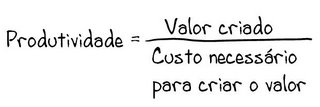
Este texto "Forget Mega-Corporations, Here’s The Mega-Network" é tão bem vindo. Recordar:
- O fim do modelo económico do século XX
- O poder potenciador das redes no Estranhistão
- Um mundo novo de possibilidades
"WSJ: The prototype stage is such a big part of manufacturing. Is there any idea that [3-D printing] would move into the actual manufacturing stage itself?.Daqui "Adding and taking away":
Mr. Jaglom: Well, we're already there, roughly 10% of all our applications are in the manufacturing sector.
.
There's actually a department at Stratasys that wakes up, goes to work every day and comes home at night thinking only of manufacturing and are measured on that."
"machine-tool makers are beginning to recognise 3D printing is going to be important in the factory of the future, not just for making models and prototypes (as is already happening) but also finished goods. The second is that additive manufacturing can complement subtractive manufacturing, as well as compete with it. If it work—and sells—the Lasertec could be the first of many such hybrids.Do "Morgan Stanley Blue Paper: Capital Goods: 3D Printing"
...
Subtractive manufacturing, in which a milling machine cuts shapes from metal blocks, may waste as much as 95% of the original material. By building something additively, even to only approximately the right shape, and then milling it, such wastage, the company reckons, can be reduced to around 5%.
Moreover, the object can be milled every time a new layer is added. This means smooth internal surfaces can be created inside what eventually becomes a solid object—something previously possible only if an item was made by joining together components that had been milled separately. With its ability to add and remove materials that include aluminium, brass, copper, stainless steel and numerous alloys, the hybrid Lasertec can also be used to repair items that are worn, or even broken. A case, perhaps, of old and new technologies coming together to produce more than the sum of their parts."
"we think the 3D printing market can grow from $2bn today to $9bn in 2020, a 20% CAGR, to become a sizeable market in capital goods and appliances. Our bull case sees a 34% CAGR to $21bn in 2020 – bigger than the injection moulding market today and about 25% of the size of the CNC machine industry.
...
3D printing – or additive manufacturing (AM)
...
3D printing – AM systems manufacturers believe it is no longer just a design tool …Perhaps the most controversial question on the industry today is the perceived crossover from prototyping into mainstream manufacturing. In a recent survey, leading independent consultants Wohlers Associates asked 31 manufacturers of professional-grade AM systems and 74 service providers what their parts were being used for. The perhaps surprising result is that the largest category (28%) is for functional parts, whereas prototypes for fit and assembly was 18% and for prototype tooling 11%. The implication here is that 3D printing is no longer just a ‘design tool’ and has already found its niche in mainstream manufacturing."
"Resilience is the best strategy for those realistic enough to admit that they can't predict the future with more accuracy than others.BTW, resiliência não conjuga bem com endividamento para lá do razoável.
...
most competitions aren't winner take all. Most endeavors we participate in offer long-term, generous entrants plenty of rewards. Playing the game is a form of winning the game. In those competitions, we win by being resilient. (Moi ici: Nem de propósito. Ainda esta manhã recordei Beinhocker e a sua citação)
.
Unfortunately, partly due to our fear of losing as well as our mythologizing of the winner-take-all, we often make two mistakes. The first is to overdo our focus on accuracy, on guessing right, on betting it all on the 'right' answer. We underappreciate just how powerful long-term resilience can be.
.
And the second mistake is to be so overwhelmed by all the choices and all the apparent risk that instead of choosing the powerful path of resilience, we choose not to play at all. Denial rarely pays."
"Success Means You Know What Used to Work (Moi ici: Julgo que há uma frase de Hayek neste mesmo sentido)E, para terminar, relacionando com o desempenho das empresas que, perante a derrocada do mercado interno, acordaram, nos últimos anos, para a necessidade de exportarem, este trecho:
...
The way you used to do it won ’ t work much longer. It ’ s not because you ’ re necessarily doing anything wrong, it ’ s just that everything about the way we do business is changing. It ’ s changing now, as you read this. And it ’ s going to keep on changing. (Moi ici: Basta olhar para os jornais para ver essa mudança. Por exemplo, o esboroar do modelo de negócio da Nespresso em "Nespresso brews plans to see off rivals", uma alteração local que muda uma certa paisagem competitiva "London Tube plans grocery services at stations". BTW, acho estranho que só agora é que o Tube se tenha lembrado desta possibilidade. Como dizem os especialistas do retalho "Location, location, location")
...
It ’ s become a challenge to even defi ne what business you ’ re in anymore.
...
New competitors are everywhere for everybody.
...
Past Success Is the EnemyPast success can be, and usually is, the enemy of future success. This is a rule that I live by in my own business. What it means is simply that if you have a track record of past success, and you are
good at what you do, then I would saytwo thingsto you.
...
you have put yourself in a very dangerous position. When companies or individuals become successful, they inevitably experience the pull of an almost irresistible force — complacency. The greatest danger of past success is that you might relax into thinking that you “ know how this business works. ” Every successful company must be on guard against the threat of complacency. You have to create a sense of urgency every day in every thing you do.
...
if you ’ re successful, that means you know what used to work . If you ’ re successful, that means that you can compete and win in markets that no longer exist . They ’ re gone. The game starts over today and it will start over again tomorrow. ”(Moi ici: Não há direitos adquiridos, tudo está sempre em questão)
...
don ’ t make assumptions about what will work tomorrow based on what worked yesterday, especially in the area of processes, procedures, strategies, and operations.
...
Prosperity can be very dangerous for any company. It can lead you to believe that you ’ ve cracked the code, or “ figured this business out, ” or that you “ know how this business works. ”
No. You know how it used to work. To stop and relax for more than a brief moment is one of the most dangerous things you can do in a marketplace that changes constantly."
"Looking back over my own career, it ’ s clear that some of the most significant periods of progress that I experienced were caused by what seemed at the time like crisis, not opportunity.Claro, o truque é este:
I had fallen prey to relaxing because my business was experiencing success and customers were happy, and I could see absolutely no reason to do anything other than what was already working. It was as if someone had installed one of those invisible fences around me, like the ones you would use to train your pet not to wander away from your yard. My invisible fence was made up of the boundaries that complacency had erected in my mind. I thought I was safe because nothing was changing."
"learn to create their own sense of urgency without waiting for a crisis to come down the road and shake them out of complacency.E recordando a artesã:
...´
Far from resisting change, they are running with change to create their own future (Moi ici: Abraçar a mudança, em vez de lhe resistir) rather than leave it to chance and circumstances that are out of their control."
"The product may not change, but the reasons people buy the product will change. Nothing stays the same..A vida das empresas é este eterno ir e vir de estratégias, como as ondas numa praia... como aprendi com Beinhocker:
Success Creates a New Reality
The very act of becoming successful demands that you change."
“We discovered that there is no one best strategy; rather, the evolutionary process creates an ecosystem of strategies – an ecosystem that changes over time in Schumpeterian gales of creative destruction.”
"los operadores de tamaño medio serán los que registren un menor crecimiento, como consecuencia de la fuerte competencia de las marcas de referencia. El estudio constata que las marcas bien definidas y con propuestas aceptadas mantendrán el liderazgo, mientras que continuarán sufriendo aquellas que traten de seguir las tendencias del mass market."
"Mistaking planning for strategy is a common trap. (Moi ici: Algures vai ser preciso fazer um acto de fé e avançar sem o conforto do excel)E recordo o Engº Matsumoto e a sua expressão "É preciso tirar a cabeça de dentro do polimerizador". É preciso olhar para os clientes, olhar para fora da empresa...
...
(Moi ici: O que se segue é tão doentiamente comum) The focus on planning leads seamlessly to cost-based thinking. Costs lend themselves wonderfully to planning, because by and large they are under the control of the company. For the vast majority of costs, the company plays the role of customer. It decides how many employees to hire, how many square feet of real estate to lease, how many machines to procure, how much advertising to air, and so on.
...
Costs are comfortable because they can be planned for with relative precision. This is an important and useful exercise. Many companies are damaged or destroyed when they let their costs get out of control. The trouble is that planning-oriented managers tend to apply familiar, comfortable cost-side approaches to the revenue side as well, treating revenue planning as virtually identical to cost planning and as an equal component of the overall plan and budget.
...
There’s a simple reason why revenue planning doesn’t have the same desired result as cost planning. For costs, the company makes the decisions. But for revenue, customers are in charge.
...
that the predictability of costs is fundamentally different from the predictability of revenue. Planning can’t and won’t make revenue magically appear, and the effort you spend creating revenue plans is a distraction from the strategist’s much harder job: finding ways to acquire and keep customers."
"If your sales representatives are providingthesehigh cost services to all customers without regard for return on sales, (Moi ici: "Return on sales", a base para a construção de uma curva de Stobachoff. Já a fez para a sua empresa?) then you are losing money. To that end, segmentation could benefit by determining which customers value the programs and are willing to pay for your services and which ones believe these programs are less useful. (Moi ici: E a sua segmentação, em que bases é feita? Geografia? Come on!!!)
...
Without a proper understanding of the segmented structure of the market, a pricing decision that is important and facing uncertainty may miss its mark. Understanding what makes your customers different from one another based on what they value is the required ingredient (Moi ici: O que é que eles valorizam e procuram? Qual o verdadeiro jo-to-be-done que está em causa?) for a successful needs-based segmentation that leads to more profitable pricing.
...
When it comes to pricing, segments based on value will be more productive.
...
Start with a good segmentation plan to identify customer value before thinking about setting price (Moi ici: Esta é para nós Paulo!))
...
The goal of segmentation is to identify what matters most to your target segments. One of the first steps is identifying your target segments based on the segment clusters that the database presents.
...
Establishing your segment offerings first before determining your price provides the sales force with the knowledge they need for a flexible and profitable negotiation.
...
Emphasize the importance of adhering to your price fences to avoid adding free extras that increase the cost to serve and dilute the integrity of your price fences.
...
To execute a value-based segmentation plan, tie it to a profitable sales strategy that distinguishes between profitable and unprofitable customers."
"O problema maior da economia portuguesa foi, desde o final dos anos noventa, a sua progressiva perda de competitividade externa no quadro do Euro e a liberalização comercial e financeira promovida à escala continental pela integração europeia e aceite pelas elites nacionais."Como se Portugal com o escudo não perdesse competitividade na mesma, dada a brutal diferença salarial para a China, numa economia adequada à competição pelo preço mais baixo.
"System D is a slang phrase pirated from French-speaking Africa and the Caribbean. The French have a word that they often use to describe particularly effective and motivated people. They call them débrouillards. To say a man (or woman) is a débrouillard(e) is to tell people how resourceful and ingenious he or she is. The former French colonies have sculpted this word to their own social and economic reality. They say that inventive, self-starting, entrepreneurial merchants who are doing business on their own, without registering or being regulated by the bureaucracy and, for the most part, without paying taxes, are part of “l’economie de la débrouillardise.” Or, sweetened for street use, “Systeme D.” This essentially translates as the ingenuity economy, the economy of improvisation and self-reliance, the do-it-yourself, or DIY, economy.Systeme D, uma classificação que veio para ficar neste blogue!
…
It is a product of intelligence, resilience, self-organization, and group solidarity, and it follows a number of well-worn though unwritten rules. It is, in that sense, a system. It used to be that System D was small—a handful of market women selling a handful of shriveled carrots to earn a handful of pennies. It was the economy of desperation. But as trade has expanded and globalized, System D has scaled up too. Today, System D is the economy of aspiration. It is where the jobs are.
…
A 2009 study by Deutsche Bank, the huge German commercial lender, suggested that people in the European countries with the largest portions of their economies that were unlicensed and unregulated—in other words, citizens of the countries with the most robust System D—fared better in the economic meltdown of 2008 than folks living in centrally planned and tightly regulated nations. Studies of countries throughout Latin America have shown that desperate people turned to System D to survive during the most recent financial crisis. This spontaneous system, ruled by the spirit of organized improvisation, will be crucial for the development of cities in the twenty-first century. The twentieth-century norm—the factory worker who nests at the same firm for his or her entire productive life—has become an endangered species. Even in China, where massive factories offer a better financial future than farming, they give no guarantee of job security. So what kind of jobs will predominate? Part-time work, a variety of self-employment schemes, consulting, moonlighting, income patching. By 2020, the OECD projects, two-thirds of the workers of the world will be employed in System D. There’s no multinational, no Daddy Warbucks or Bill Gates, no government that can rival that level of job creation. Given its size, it makes no sense to talk of development, growth, sustainability, or globalization without reckoning with System D.”
"El espacio de fabricación, ahora destruido, era el que se dedicaba a producir los movimientos utilizados en la mayoría de relojes hechos en Suiza y que Swatch no sólo utilizaba para fabricar sus piezas sino también para producir para terceros."Recordar esta disputa "Swatch court decision looms over watch industry" ... quantos dos que há 2 anos protestaram contra a decisão judicial, estarão, agora, agradecidos?
" a Imperial prepara-se para fechar o ano com um doce crescimento de dois dígitos no volume de negócios, que ronda os 25 milhões de euros. Claro que o aumento da exportação deu uma ajuda. Um quarto da faturação é feita fora de portas, numa geografia variadaComo é que se justifica este desempenho? Voltemos ao texto do artigo para obter a resposta da fábrica:
...
Mas o aumento das vendas não se esgota na exportação. Num mercado interno anémico e parado, a Imperial vai cometer a proeza de crescer 10%, o que significa que está a roubar quota à concorrência estrangeira."
"O segredo da fábrica de chocolates Imperial consiste numa ágil combinação entre diferentes ingredientes: inovação, flexibilidade, qualidade e o hábil manejar do marketing na relação emocional forte que as suas marcas têm com o consumidor." (Moi ici; Sublinho só estes dois factores porque os restantes são só para o mercado nacional)Agora vamos à parte... talvez não seja negativa, talvez seja só a pulga atrás da orelha:
"O segredo da fábrica de chocolates Imperial consiste numa ágil combinação entre diferentes ingredientes: inovação, flexibilidade, qualidade"A que acrescento:
"só no último trimestre lançou no mercado 30 novos produtos - o que ajuda a perceber porque é que a Cotec a distinguiu com o Prémio Inovação 2012."Com esta outra informação:
"e a Suíça, onde bate o coração da indústria de chocolate e a maior cadeia alimentar do país acaba de encomendar toda a linha Jubileu."A minha pulga atrás da orelha é esta; de um lado, uma aposta na inovação, do outro, desconfio, uma aposta no volume se calhar com margens mais baixas, incapazes de suportar a aposta na inovação no médio-longo prazo. Ainda na passada segunda-feira tentei comprar uns produtos congelados da Maggi numa loja do Continente e fui informado que deixaram de trabalhar com o Continente. Há marcas que não estão para aturar as "tiranices" da distribuição grande. E, convém recordar:
"Concentration in food retailing in Hungary and in Switzerland surpasses the US’s retail concentration."E perceber a situação na Suiça:
"“Opportunity cost” is a term from economics that refers to what we give up when we make a decision.Trechos retirados de "Decisive" de Chip Heath e Dan Heath.
...
Imagine that you have been saving some extra money on the side to make some purchases, and on your most recent visit to the video store you come across a special sale on a new video. This video is one with your favorite actor or actress, and your favorite type of movie (such as a comedy, drama, thriller, etc.). This particular video that you are considering is one you have been thinking about buying for a long time. It is available for a special sale price of $14.99.
.
What would you do in this situation? Please circle one of the options below.
.
(A) Buy this entertaining video.
(B) Not buy this entertaining video.
.
Given this choice, 75% bought the video and only 25% passed.
...
Later the researchers asked a different group of people the same question, but with a minor modification (printed here in bold):
.
(A) Buy this entertaining video.
(B) Not buy this entertaining video. Keep the $14.99 for other purchases.
.
Surely the part in bold should not have to be stated. It’s obvious and even a little insulting. Do we really need to remind people that they can use their money to buy things other than videos?
.
Nonetheless, when shown that simple, stupid reminder, 45% of the people decided not to buy the video. The reminder almost doubled the chance that people would pass on the purchase!
...
Focusing is great for analyzing alternatives but terrible for spotting them. Think about the visual analogy—when we focus we sacrifice peripheral vision. And there’s no natural corrective for this; life won’t interrupt our focus to draw our attention to all of our options.
...
Our lack of attention to opportunity costs is so common, in fact, that it can be shocking when someone acknowledges them."
"In the first 10 months of this year, the value of the country’s garment exports rose 20 per cent to US$4.61 billion (S$5.85 billion) over the previous year, according to the Commerce Ministry. The rapid growth makes it harder to find enough workers and the increase in global demand has fuelled unhappiness over working conditions."As hipóteses de substituir a China vão esgotar-se rapidamente.
"Duas empresas portuguesas brilharam nos Jogos Olímpicos de Londres com produtos diferenciadores e que são uma referência mundial nos mercados em que operam. A Petratex e a MAR Kayaks vêem o mundo como um mercado único e que está perfeitamente ao seu alcance.Trechos retirados de "Empresas nacionais "ganham" Olimpíadas"
...
A empresa portuguesa é líder mundial na produção de caiaques e canoas e, por isso, não devem tardar as visitas da elite mundial de canoagem à fábrica da empresa, em Vila do Conde. Em anos de Jogos Olímpicos, o crescimento da empresa chega aos 12%; nos outros anos, como é o caso de 2013, alcança os 8%.
...
Os seus caiaques e canoas já ajudaram dezenas de atletas a ganhar competições internacionais: os caiaques da marca Nelo ganharam 20 das 36 medalhas atribuídas nos Jogos Olímpicos de Pequim.
Nos Jogos Olímpicos de Londres, a empresa portuguesa forneceu entre 75% e 80% dos caiaques e canoas usados pelos atletas olímpicos e ganhou 26 das 36 medalhas em competição.
...
Foi graças à necessidade de se destacar face à concorrência que a Petratex deu o salto que faltava para crescer. Nos anos 90, a empresa perdeu 85% dos clientes, que preferiram marcas como a Nike ou a Levi"s. Nessa altura era evidente: ou criavam um produto com o qual se diferenciassem ou a empresa desaparecia. Optaram pela primeira opção: na fábrica de Paços de Ferreira, roubaram as costuras às peças de vestuário e, mais tarde, começaram a produzir fatos de natação usados por campeões. E até Michael Phelps escreveu a agradecer à empresa."
"28 "Qual de vocês, se quiser construir uma torre, primeiro não se assenta e calcula o preço, para ver se tem dinheiro suficiente para completá-la?
29 Pois, se lançar o alicerce e não for capaz de terminá-la, todos os que a virem rirão dele,
30 dizendo: 'Este homem começou a construir e não foi capaz de terminar'."
"It is widely believed that restructuring has boosted productivity by displacing low-skilled workers and creating jobs for the high skilled."Mas, e como isto é profundo:"In essence, creative destruction means that low productivity plants are displaced by high productivity plants." Por favor voltar a trás e reler esta última afirmação.
.
"Lovaglia’s Law: The more important the outcome of a decision, the more people will resist using evidence to make it."
"If an organisation is too stable it can ossify, but if it is too unstable it can disintegrate. Successful organisations work between these two conditions or states, in what Stacey called ‘the chaos zone’."
"If the customer doesn't care about the price, then the retailer shouldn't care about the cost,"
“It's not enough that we do our best; sometimes we have to do what's required”.
"Das Leben, das uns gegeben ist, ist uns nicht als etwas Fertiges gegeben, sondern wir müssen es uns gestalten, und zwar jeder sein eigenes."
"Eine Regierung, die nichts wert ist, kostet am meisten."
"Forget trying to persuade them; light their pants on fire."
"O futuro é o que importa. O futuro é a base do significado, é de onde vem o projecto que alguém tem para si próprio"
"The single biggest problem in communication is the illusion that it has taken place."
“It is not the strongest of the species that survives, nor the most intelligent; it is the one that is most adaptable to change.”
"o Marketing só existe a partir do pensamento estratégico, caso contrário "não resulta""
"It is difficult to get a man to understand something, when his salary depends upon his not understanding it"
"Perder diversidade é como arrancar páginas de um livro. Quantas páginas poderemos arrancar até deixar de compreender o enredo?"
The great enemy of the truth is very often not the lie – deliberate, contrived and dishonest – but the myth, persistent, persuasive, and unrealistic. Belief in myths allows the comfort of opinion without the discomfort of thought."
"By strategy, I mean a cohesive response to a challenge. A real strategy is neither a document nor a forecast but rather an overall approach based on a diagnosis of a challenge. The most important element of a strategy is a coherent viewpoint about the forces at work, not a plan."
"Un desastre està punt de succeir a Espanya. El malentès de la gravetat de la crisi costarà car als inversors, ja que tindrà profundes conseqüències per a tot el sistema bancari europeu", afirma.
Entre d'altres coses, Mauldin diu que "els inversors estan fumant crack si creuen que els bancs espanyols són entre els més forts d'Europa, ja que estan amagant les seves pèrdues".
“… there are no “sunset” industries condemned to disappear in high wage economies, although there are certainly sunset and condemned strategies, among them building a business on the advantages to be gained by cheap labor”
"o vencedor da vida, o optimista que vive em incesto com o próprio ego, é o traço mais frágil do líder"
"We shall not grow wiser before we learn that much
that we have done was very foolish."
You may not be able to change the world but can at least get some entertainment & make a living out of the epistemic arrogance of the human race.
"I wanted you to see what real courage is, instead of getting the idea that courage is a man with a gun in his hand. It's when you know you're licked before you begin but you begin anyway and you see it through no matter what. You rarely win, but sometimes you do."
“Trust your guts. But not too much!”
"Customers will try 'low-cost providers,' because the majors have not given them any clear reason not to." "
"Natal é quando as Crianças pedem e os Pais pagam. Défices é quando os Pais pedem e as Crianças pagam."
"A imprevidência dos povos é infinita, a dos governos é legal"
"What a man sees depends both upon what he looks at and also upon what his previous visual-conceptual experience has taught him to see"
“The leaders first task is to be the trumpet that sounds a clear sound”
"lamented the lack of any systematic data on the scale of unfunded IOUs that care-free politicians have handed out like confetti."
"Let them call me rebel and welcome, I feel no concern from it; but I should suffer the misery of devils, were I to make a whore of my soul..."
O problema não é o consumo. O problema é o consumo assente em endividamento."
"There are designations, like "economist", "prostitute", or "consultant" for which additional characterization doesn't add information."
When it becomes more difficult to suffer than change, you will change"
"Hope is not a strategy and a crisis is a terrible thing to waste"
The more you can see of the present, the more you can see of the future"
Yes, You can change the future, but only changing the present"
"Entrepreneurship is 'Having aspirations greater than your resources'"
“The single biggest reason companies fail is they overinvest in what is, as opposed to what might be."
"The first principle is that you must not fool yourself - and you are the easiest person to fool. So you have to be very careful about that"
"A estabilidade é uma ilusão"
"When we create the conditions of possibility, the universe becomes our co-conspirator"
Thinking about doing is not doing. Talking about doing is not doing. Doing is doing."
"'God has created me to do him some definite service. He has committed some work to me which he has not committed to another'.
...
"Each of us has a mission, each of us is called to change the world, to work for a culture of life, a culture forged by love and respect for the dignity of each human person.
"As our Lord tells us in the Gospel we have just heard, our light must shine in the sight of all, so that, seeing our good works, they may give praise to our heavenly Father."
"The future is not there waiting for us. We create it by the power of imagination."
"confusing testosterone with strategy is a bad idea"
"Much consulting involves the application of models to a system, as opposed to getting involved in the system as a positive change agent""
"O Portugal que pára sem orçamento é precisamente aquele que vive dele e que há todo o interesse em parar."
"credibilidade da política financeira e dos seus executores está ao nível da credibilidade de uma barraca das farturas"
"The role of the manager is thought to be reduction of uncertainty rather than the capacity to live creatively in it"
"today an entrepreneur is closer to artists than managers"
"A business without a path to profit isn’t a business, it’s a hobby"
"If no one’s upset by what you’re saying, you’re probably not pushing hard enough. (And you’re probably boring, too.)"
"Storytelling isn’t just how we construct our identities, stories are our identities"
"'He who has a why to live can bear almost any how' "
"They can because they think they can"
"Se há coisa que não suporto é misturar catequese com negócios, é a incapacidade para calçar os sapatos do outro e só pensar na nossa posição de coitadinhos, pobres vítimas indefesas dos maus e que por isso precisamos do Estado todo poderoso para nos proteger e, nem percebem na volta, os juros que o Estado cobra por esse serviço mafioso de protecção que, ainda por cima não resolve nada."
"Empathy is like a universal solvent. Any problem immersed in empathy becomes soluble."
"In victory, do not brag; in defeat, do not weep"
"Value it's a feeling not a calculation"
"An economist is someone who has had a human being described to him, but has never actually seen one."
"Don't finish first--it's not about running a rat race. Start with a better ending in mind."
"If you sit in on a poker game and don’t see a sucker, get up. You’re the sucker.”
"The 'value added' for most any company, tiny or enormous, comes from the Quality of Experience provided."
"Crediting government with the success of entrepreneurs is like crediting the guy who built Bill Gates’ garage with the success of Microsoft."
"I have found that assuming social scientists understand the difference between correlation and causality is not generally a good one."
"Promising never to raise taxes, without reaching a deal on spending, really means a high and rising commitment to future taxes."
"Some things are so foolish that only an intellectual could believe them, for no ordinary man could be such a fool"
"os bancos não financiam a economia, a poupança sim"
"I do not know the key to success, but the key to failure is trying to please everybody"
"Never be afraid to try, remember... Amateurs built the ark. Professionals built the Titanic."
"terms such as 'experiment' and 'observation' cover complex processes containing many strands. 'Facts' come from negotiations between different parties and the final product - the published report - is influenced by physical events, dataprocessors, compromises, exhaustion, lack of money, national pride and so on."
"'science in the making' is 'the consequence of [a] settlement' of 'controversies'."
"If the state wishes to spend more, it can do so only by borrowing your savings or taxing you more. And it's no good thinking someone else will pay, that someone else is you."
"All failures of strategy are rooted in the assumption that outcomes are predictable."
"Doing things like your bigger competitors is how to get killed in the wars out there"
“Uma moeda boa e forte é como a saúde. Só lhe damos verdadeiramente valor quando não a temos.”
"Life’s tough. It’s tougher if you’re stupid"
"O homem de bem exige tudo de si próprio; o homem medíocre espera tudo dos outros"
"Change is a threat when done to me, but an opportunity when done by me."
"As elites foram deixando de falar das exportações à medida que se foi percebendo que o país consegue exportar sem elas"
"Your toughest competition is the little voice inside your head telling you to stop"
"Pain is just weakness leaving your body"
"Built to last" is bad economics. Built to do something great" is the better idea. Think: "Creative destruction."
"the world is an uncertain place no matter how many Greek letter equations you affix to a problem."
"You never change things by fighting existing reality. To change s.th., build a new model making the existing model obsolete"
“No, no, you're not thinking; you're just being logical.”
"Success is not a destination. It's the trail you leave behind you."
"Winners make a habit of manufacturing their own positive expectations in advance of the event."
“You’ve got to start with the customer experience and work back toward the technology – not the other way around”
"Strategy as the "smallest set of - intended or actual - choices and decisions sufficient to guide all other choices and decisions sufficient to guide all other choices and decisions."
"When something is commoditized, an adjacent market becomes valuable"
"nature evolves away from constraints, not toward goals"
"There aren't any textbooks on what to stop doing!"
"With great power comes great irresponsibility "
"Weird things happen when you take price out of the equation for consumers"
"‘It’s so damn complex. If you ever think you have the solution to this, you’re wrong and you’re dangerous.’"
"Saruman believes it is only great power that can hold evil in check, but that is not what I have found. I found it is the small everyday deeds of ordinary folk that keep the darkness at bay. Small acts of kindness and love."
"Increasing stuff that doesn't add value dilutes existing value."
"O federalismo não é a alternativa à troika, é a troika para sempre."
"Never underestimate the difficulty of changing false beliefs by facts"
"Stressors are information"
“If you hear a “prominent” economist using the word ‘equilibrium,’ or ‘normal distribution,’ do not argue with him; just ignore him, or try to put a rat down his shirt.”
"The advantage of experiences over things for most of us is that we can make them seem unique, which = scarce, which = value"
"Pedras no caminho?
Guardo todas, um dia vou construir um castelo"
"Without risk, faith is an impossibility."
"Não posso com quem vive a achar que os outros lhe devem sempre alguma coisa."
"In a world of increasing automation, our ability to perform tasks is not nearly as important as our ability to dream. The questions we need to ask are not ones of action, but ones of meaning"
"Me arrancam tudo a força e depois me chamam de contribuinte."
"Letting people vote for expensive programs that “somebody else” will finance is a good recipe for getting people to vote irresponsibly"
"what's fairness gotta do with pricing based in value?"
"The epic battle of our generation is between the status quo of mass and the never-ceasing tide of weird."
“Price is emotional”
"There will always be a reason why you can't pursue it, until competitors create a reason why you must."
"The most important thing to study is opening theory"
"The greater the contrast, the greater the potential"
“Customers don't care about your solution, they care about their problems.”
"Todos querem conhecer a verdade, mas o que desejam é que lhes contem uma mentira em que não sejam protagonistas."
"Execution efficiency strangles innovation in the crib, but not with malice, by default.”
"Our obsession with scalability is getting in the way of unleashing the potential of the 21st century."
"The system is optimized to mitigate risk, not create value"
"Champions are made when no one is looking"
"Don't bargain on value. Half as expensive is often twice as cheap."
"Customers care about outcomes, not effort, technology, or originality."
"
"You don't have to pick between 1) playing the game and 2) not playing the game. You can *change* the game."
""The first principle is that you must not fool yourself and you are the easiest person to fool." "