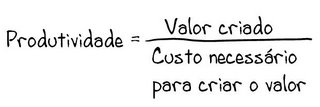
Sim - porque são a única geração com guita para poupar pic.twitter.com/BTvNsO6qe7— PBM (@pedroboucherie) July 22, 2016
Recordar "Spray maritimo que precede o splash da onda" e "Curiosidade do dia"

Sim - porque são a única geração com guita para poupar pic.twitter.com/BTvNsO6qe7— PBM (@pedroboucherie) July 22, 2016
"Durante quatro anos, entre 2011 e 2015, todas as culpas em Portugal foram do governo de Passos Coelho. Sócrates chamou a troika? Não importava: a culpa era de Passos. E agora, dez meses depois, de quem são as culpas? Pois ainda e sempre de Passos. Os bancos estremecem?
A comissão europeia ameaça com sanções? É culpa de Passos, por mais que os comissários em Bruxelas expliquem, no caso das sanções, que tudo depende do presente governo tomar as providências necessárias.Recordo esta outra Curiosidade do dia.
...
Ontem, constou que Costa estava preocupado. Depois, constou que não estava. Não sei se está ou não. Também não sei se o governo vai conseguir enrolar a Europa. Talvez consiga. Mas o que não vai é tornar Portugal um melhor lugar para trabalhar e investir. E sem isso, tudo se esfumará um dia, quando o BCE acabar com o dinheiro barato. Dir-me-ão: será como em 2011. Passos Coelho terá de vir limpar a casa, e lá ficará outra vez com as culpas. O próprio Passos, no conselho nacional do PSD de quarta-feira, ter-se-ia muito cristãmente conformado com esse destino. Mas acontece que o mundo já não é o mesmo de 2011, a Europa não é a mesma, nem Portugal é o mesmo. A paciência de Passos para fazer o que já fez, como o personagem de Bill Murray em Groundhog Day, pode-nos induzir em erro: o erro dos pessimistas que são optimistas sem o saber"
"After receiving a complaint about terrible food from the wife of a former patient, the managers and CEO of the Ottawa General Hospital spent a week eating hospital food. They hated it as much as the patient did, so they did something about it.E na sua empresa, como é?
...
This story makes one wonder how many other services might be improved if only the bosses were forced to use them. The tech sector has a term for making its employees use their own products—"eating your own dog food.""


"For the rest of us, though, the flip isn't something that happens at the first glance or encounter with new evidence.
.
This doesn't mean the evidence doesn't matter.
.
It means that we're bad at admitting we were wrong.
.
Bad at giving up one view of the world to embrace the other.
.
Mostly, we're bad at abandoning our peers, our habits and our view of ourselves.
.
If you want to change people's minds, you need more than evidence. You need persistence. And empathy. And mostly, you need the resources to keep showing up, peeling off one person after another, surrounding a cultural problem with a cultural solution."
"[Moi ici: Outra vez a disrupção? Agora a servir os underserved, ou os overserved? Talvez esta categorização aqui não funcione tão facilmente] "Consumers are embracing gadgets that do one thing well," said Hiromi Yamaguchi, an analyst at Euromonitor in Tokyo. "Larger appliance makers are selling products with too many functions, and not a lot of people use them."[Moi ici: "too many functions" parece significar overserved. No entanto, a substituição é não por um produto inferior que faz bem uma coisa, mas por um produto superior que faz bem uma coisa, e isso é "underserved"]"

"Imagine that you run a large company, prominent in its industry, with a loyal customer base and strong profit margins. Suddenly, a new product comes along that threatens your existence.
...
new products and services can enter your market from other directions, each distinct in terms of how, where, and when it affects your business. These are market dislocations — radical breakaways from the existing market that occur when a company introduces a business model or a product that sits apart from those of competitors.
...
Then, of course, there are bottom-up dislocations, or disruptions.
...
incumbents need to recognize the distinctions among the various types of dislocations they may face. Disruptors typically first go after nonusers or the least profitable low-end customers. Only later do the disruptors start capturing an incumbent’s core customers.
...
New entrants coming from the side or from the top, meanwhile, go after an incumbent’s core customers right away — thus presenting a more immediate threat."

"We turn to a long-standing question in economics, stretching back to at least Walker (1887), of how much of the variation in national and firm performance can be accounted for by di erences in management practices?Trechos retirados de "Management as a Technology?" de Nicholas Bloom; Raffaella Sadun e John Van Reenen. HBS Working Paper 16-133
...
Overall, on average 30% of the cross country gap in TFP appears to be management related. This fraction varies a lot between countries. In general we account for a smaller fraction of the TFP gap between the U.S. and low income countries like Zambia (6.2%), Ghana (9.7%), and Tanzania (12%), which is likely to be because these countries have much greater problems than just management quality. We account for a larger fraction of the TFP gap between the U.S. and richer countries like Sweden (43.9%), Italy (48.9%) and France (52.3%). Figure A4 graphically illustrates this, showing that more developed countries have a higher share of their TFP gap accounted for by di erences in management.
...
Economists, business people and many policymakers have long believed that management practices are an important element in productivity."

"Is your business “playing to win” or "just playing to play"
...
He says good strategy starts with making the very difficult choices about what your business chooses to do and what it chooses not to do. These choices need to focus on how best to differentiate your business in a competitive marketplace.
.
Entrepreneurs often kick the can down the road on making these types of hard decisions because they fear that their strategic choices may be incorrect. Or the choices may negatively impact the bottom line, especially in the short run.
.
Your business cannot be all things to all people. If you don’t make choices on what markets you will serve, you won’t have an effective strategy. As Martin emphasized during his talk, “being the same as others or ‘just playing to play’ is a recipe for mediocrity.”
.
He believes it’s important to remember some business basics. Enterprises compete in one of two ways — either by being the cost leader, or by differentiating your product or service. Since a small business typically isn’t a cost leader in their industry, you are left with one choice."[Moi ici: Uma outra forma de dizer que a estratégia do custo não é para quem quer, é para quem pode]

"Understanding why Dollar Shave Club was cheap means understanding why its blades are cheap, and understanding that means understanding just how precarious the position of P&G specifically and incumbents generally are in the emerging Internet economy.Uma conclusão que espelha uma reflexão feita neste blogue há muitos anos. Mongo não é um lugar bom para os gigantes, Mongo não é um bom lugar para os incumbentes. Incumbentes rimam bem com mass-market e mal com tribos aguerridas.
...
For their part, Unilever is fortunate they don’t have a shaving business to protect, because being an incumbent is going to increasingly be the worst place to be. Dollar Shave Club’s motto may be “Shave Money Shave Time,” but just how many shareholders and policy makers are prepared for the shaving of value that this acquisition suggests is coming sooner rather than later?"
estes etnocêntricos estão mesmo a proíbir q a comunidade cigana de Estarreja deixe de poder usar carroças? https://t.co/2ysDs1Vo4h— Carlos P da Cruz (@ccz1) July 15, 2016


"European banks need to drastically transform their business models to become sustainably profitable and earn their costs of equity. This report raises serious questions about the sustainability of current banking business models and offers three innovative strategic options for what traditional banks could become: platform banks, digital banks, or OEM banks — streamlined banks that emulate original equipment manufacturers.Trechos retirados de "Strategy & European Banking Outlook 2016: It's time to radically rethink business models"
...
Our team recently studied 46 European banks and found that only 10 achieved a positive economic spread in 2015, thereby earning their costs of equity. The remaining banks in our study showed significant gaps in profitability. Overall, the European financial institutions we studied accumulated an earnings shortfall of €110 billion (US$125 billion).
...
Platform banks: [Moi ici: Proposta de valor - Serviço] This model would be marked by open infrastructures and the assimilation of products from competitors and financial technology companies into a bank’s own offerings. The core competencies of platform banks would include customer relationship management and the anticipation of client needs, along with the maintenance of open product infrastructures. Digital banks: [Moi ici: Proposta de valor - Inovação] This model is characterized by extensive digitization of customer service as well as all downstream and back-office processes. Inspired by the product development approach of emerging technology companies, digital banks would be in a position to rapidly and efficiently respond to changes in customer or regulatory demands. OEM banks: [Moi ici: Proposta de valor - Preço] This model, inspired by automakers, calls for lean banks distinguished by a low degree of vertical integration. The traditional value chain would be dissolved and efficiency maximized by the integration of external vendors. Although no traditional bank has yet made the full transition to any of these new models, there are signs that some institutions are moving in."
"Millennials prefer to spend their money on experiences, not the apparel that is Macy's bread and butter.Trechos retirados de "Millennials only want to spend money on one thing — and it's killing Macy's"
.
The younger generation does buy clothes, but when they do, it's often in the form of something quick, cheap, and fast.
.
And as Jason Dorsey, cofounder and millennials expert at The Center for Generational Kinetics, told Business Insider, they're so prone to spending money on experiences that they often rent clothes and jewelry, which is a death knell to apparel retailers.
...
Since experiences take a great share of young people's finite wallets, someone has to lose out.
...
" From a retailer perspective, the entire shopping experience literally needs to be an experience, not a commodity," Dorsey said. "This may seem obvious, but in practice it’s much harder to do, especially for department stores. For retailers integrating things like live music, exclusive events, digital gaming, and the unexpected — such as an impromptu fashion show — is what transforms retail shopping into an experience."
...
These experiences could be gourmet-food tastings on Saturday, film a YouTube TV show on-site and invite shoppers to participate, and even bring samples of brands or designs that they’re considering bringing in and let customers vote," Dorsey said.
,
"The key is to be unexpected and involve millennial shoppers — and the best part is it doesn’t even have to do with clothes, jewelry, cosmetics, housewares, or perfume. You could literally have a day where you’re showcasing local artisans in a common area and asking them to invite all their friends and vote for the winner. Getting department stores integrated into the community is what makes experiences take root and become something people look forward to and want to visit."
...
In February, retail expert Warren Shoulberg posited that putting restaurants in stores — a strategy that's older than 100 years — could potentially save the ailing American retail industry.
.
"Those first merchants of retailing knew what today’s generation is having to relearn: that retail stores are more than a place to buy stuff,"[Moi ici: Recordar "O poder do contexto" aqui é pôr a loja no contexto da sua utilização]
...
"There is no reason, however, they could not integrate more experience like beauty services, dining, fashion shows, etc. John Lewis department stores in the UK are model for this: they’ve teamed up with third party dining brands, invested in new in-store services and experiences and have thrived as a result," Saunders wrote. "What’s lacking from mainstream US department stores is any sense of imagination – and it shows on the shop floor!""
"Before you can change to value pricing, however, you must first understand the relationship between value and what you are selling,[Moi ici: O que vendemos é um recurso, um instrumento, uma ponte para chegar ao resultado pretendido]Trechos retirados de "Price Services More Effectively with Value Pricing"
...
remember that in any interaction or relationship with a client, there has also got to be a profit for the client. The total value you create then is your value and the client’s value together.
...
often the client doesn’t know fully what they value - what they want, in other words. Your role is to help them see what else they need, beyond their compliance requirements. You are opening the client’s mind, finding the things they care about, looking for triggers. This way you can increase the value you offer, and the price then just follows the value.
...
“Value changes, and it changes based on time, place, location and what outcome customers are seeking.” [Moi ici: Daí a importância das tribos e de fazer crescer o cliente, educar o cliente, integrá-lo numa constelação de relações, sinais, significados] In other words, value is related to the context of the situation at hand, and therefore, a focus on value provides the opportunity to drive pricing higher.
...
value pricing requires pricing the customer, and not just the service or product. With that in mind, you are intentionally slowing down the sales process to explore the customer’s wants, desires and outcomes (rather than just their needs) in order to sell an expectation of future results.
...
value pricing is not about efforts, hours and activities, but is about customizing an outcome for your client [Moi ici: Precioso!] while sharing risk to identify and agree on the real value for your services."


"Humanity is our ultimate competitive advantage" via @Oxford_Review @gapingvoid pic.twitter.com/sAxkcgc840— Helen Bevan (@helenbevan) July 17, 2016
"To be human is to be imperfect. Yes, we expect absolute perfection and precision when it comes to things like airplanes, automobiles, or the engineering behind the bridge we drive across everyday. And people naturally assume that the products they purchase will perform to at least the standard advertised. But with aspects of life that require a degree of human expressiveness, absolute perfection is not only impossible to produce, it usually would not lead to better results even if it were.
...
people prefer listening to the sound of a human playing a musical piece—even though the human-created version had tiny errors—over that of a computer perfectly playing the same piece.
...
When it's live, stuff happens. That's life. Relax, you are only human. If Sir Paul can make mistakes, you can too. Besides, people do not want your perfection, they yearn to see your humanity."
"In The Innovator’s Dilemma, Clayton Christensen explains how incumbents actually pay a high price for actually doing a great job and constantly improving their technological offerings and creating overserved consumers.
...
Nonetheless, entrepreneurs looking to create a disruptive new business should not overlook underleveraged old technologies that just need a new use, and a new business model, to remain valuable.
...
Importantly, note how the basis of competition for Piql is functionality and reliability, not convenience or affordability. In this, Piql might look more like what today’s incumbents looked like when they started rather than a classical disruptor. Disruptors often do compete on convenience and affordability — the more affordable steel produced by minimills, for example, or the more convenient movie-delivery method of Netflix. Convenience and affordability are both important elements of disruption in existing markets where some customers are over-served, or you are trying to expand to non-consumers.
.
But to create new markets, disruptive entrepreneurs often overlook the possibility of emphasizing a different criteria. New-market disruptions go much further than incorporating non-consumers into an industry. They actually create a new nascent industry where before there was nothing, or just a few offerings that did not do the job very well. [Moi ici: Não consigo deixar de recordar o exemplo da artesã de Bragança, ou o denim japonês, ou o burel de Manteigas, ou ... ] And in this case, the basis of competition mostly favor functionality and reliability – these are usually the attributes of old technologies."
"“The single most important decision in evaluating a business is pricing power,” Buffett told the Financial Crisis Inquiry Commission in an interview released by the panel last week. “If you’ve got the power to raise prices without losing business to a competitor, you’ve got a very good business. And if you have to have a prayer session before raising the price by 10 percent, then you’ve got a terrible business.”Retirando os abomináveis casos dos monopólios formais, estatais ou protegidos pelos estados, só os monopólios informais, baseados na concorrência imperfeita, permitem "pricing power" genuíno: o Evangelho do Valor!
...
“If you have a really dominant position you can survive for quite a long time with bad management but eventually it will catch up to you,” [Moi ici: Como não pensar logo na PT ou no BES] said Hermalin. “In the short run I would agree with Buffett but in the longer-run perspective there is something to be said for having a good manager.”
%2006.21.jpeg)