- culpa dos chineses;
- culpa do euro;
E a sua empresa? Como é que ela lida com as alterações no ecossistema de que faz parte?
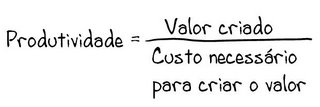
"One of his core points is that we tend to confuse capitalism with competition. We tend to think that whoever competes best comes out ahead. In the race to be more competitive, we sometimes confuse what is hard with what is valuable. The intensity of competition becomes a proxy for value.E da próxima vez que ouvirem alguém falar em competitividade pensem em:
In fact, Thiel argues, we often shouldn’t seek to be really good competitors. We should seek to be really good monopolists. Instead of being slightly better than everybody else in a crowded and established field, it’s often more valuable to create a new market and totally dominate it. The profit margins are much bigger, and the value to society is often bigger, too.
Now to be clear: When Thiel is talking about a “monopoly,” he isn’t talking about the illegal eliminate-your-rivals kind. He’s talking about doing something so creative that you establish a distinct market, niche and identity. You’ve established a creative monopoly and everybody has to come to you if they want that service, at least for a time."
"We live in a culture that nurtures competitive skills. And they are necessary: discipline, rigor and reliability. But it’s probably a good idea to try to supplement them with the skills of the creative monopolist: alertness, independence and the ability to reclaim forgotten traditions.Isto implica fugir do espírito da manada, implica seguir o caminho menos percorrido, implica procurar ser diferente e fazer a diferença. Este é o caminho que recomendo!
Everybody worries about American competitiveness. That may be the wrong problem. The future of the country will probably be determined by how well Americans can succeed at being monopolists."
"Estas pessoas, ou algumas delas com quem falei demoradamente, querem reforçar a competitividade do Brasil no mundo e regulam os seus padrões pelos da América do Norte."É conversa de diletante académico brasileiro para enganar o tuga que não está atento e se ilude com as aparências. Um país com taxas alfandegárias tão altas alguma vez consegue uma massa crítica de empresas exportadoras?
"You see, just because another is distinctive within your field does not prohibit you from finding a way to stand out and move up."Uma versão ilustrada pode ser esta:
"One day in the early 1970s, Amos handed me a mimeographed essay by a Swiss economist named Bruno Frey, which discussed the psychological assumptions of economic theory. I vividly remember the color of the cover: dark red. Bruno Frey barely recalls writing the piece, but I can still recite its first sentence: “The agent of economic theory is rational, selfish, and his tastes do not change.” I was astonished. My economist colleagues worked in the building next door, but I had not appreciated the profound difference between our intellectual worlds. To a psychologist, it is self-evident that people are neither fully rational nor completely selfish, and that their tastes are anything but stable. Our two disciplines seemed to be studying different species, which the behavioral economist Richard Thaler later dubbed Econs and Humans. Unlike Econs, the Humans that psychologists know have a System 1. Their view of the world is limited by the information that is available at a given moment (WYSIATI), and therefore they cannot be as consistent and logical as Econs. They are sometimes generous and often willing to contribute to the group to which they are attached. And they often have little idea of what they will like next year or even tomorrow."
"Mr. Stringer’s Industrial strategy was to be obsessive about costs. Where Mr. Morita’s meetings were 85% about innovation and market application, Mr. Stringer brought a “modern” MBA approach to the Sony business, where numbers – especially financial projections – came first. The leadership, and management, at Sony became a model of MBA training post-1960. Focus on a narrow product set to increase volume, eschew costly development of new technologies in favor of seeking high-volume manufacturing of someone else’s technology, reduce product introductions in order to extend product life, tooling amortization and run lengths, and constantly look for new ways to cut costs. Be zealous about cost cutting, and reward it in meetings and with bonuses."A Sony não fez a transição que refiro neste postal "A minha transição", a proposta de valor de uma empresa do campeonato da Sony, nos tempos que correm, não pode ser o preço mais baixo, não pode ser o volume.
"After 4 years of losses, and entrenched Industrial strategy with MBA-style leadership focused on “numbers” rather than markets, there is no reason to think the trajectory of sales or profits will change any time soon.Atenção, não sou parvo a ponto de defender que todo o corte de custos é mau. O que digo é que, para a maioria das empresas, o corte de custos não chega, é preciso ganhar dinheiro. Ás vezes, para criar o futuro, é preciso cortar com o passado, cortar com os incumbentes dentro de cada empresa, para canalizar recursos para alimentar o futuro.
As an employee, facing ongoing layoffs why would you wish to work at Sony? A “me too” product strategy with little technical innovation that puts all attention on cost reduction would not be a fun place. And offers little promotional growth.
And for suppliers, it is assured that each and every meeting will be about how to lower price – over, and over, and over."
"This embarrassing episode remains one of the most instructive experiences of my professional life. I eventually learned three lessons from it. The first was immediately apparent: I had stumbled onto a distinction between two profoundly different approaches to forecasting, which Amos and I later labeled the inside view and the outside view. The second lesson was that our initial forecasts of about two years for the completion of the project exhibited a planning fallacy. Our estimates were closer to a best-case scenario than to a realistic assessment. I was slower to accept the third lesson, which I call irrational perseverance: the folly we displayed that day in failing to abandon the project. Facing a choice, we gave up rationality rather than give up the enterprise."Esta preponderância da inside view e este optimismo no planeamento, não prevendo o que pode correr mal, não são problemas portugueses, estão embutidos no nosso ADN. Engraçado, relacionar a ideia de que a economia é uma continuação da biologia, com o título do capítulo 24, o optimismo que anima os humanos, que os leva a sobrevalorizar as suas capacidades e hipóteses pessoais é "The Engine of Capitalism":
"Most of us view the world as more benign than it really is, our own attributes as more favorable than they truly are, and the goals we adopt as more achievable than they are likely to be. We also tend to exaggerate our ability to forecast the future, which fosters optimistic overconfidence. In terms of its consequences for decisions, the optimistic bias may well be the most significant of the cognitive biases. Because optimistic bias can be both a blessing and a risk, you should be both happy and wary if you are temperamentally optimistic."Escrevo tudo isto por causa da relação com histórias deste tipo "Groupon demand almost finishes cupcake-maker"... esta história é mais comum do que se possa imaginar. Quando uma PME se sente lisonjeada com o convite de uma multinacional para começar a fornecer um produto/serviço... iludida pelas quantidades, iludida pelo "poder dizer que é fornecedor de", iludida pelo desafio de ter as máquinas todas a trabalhar...
"Organizations may be better able to tame optimism and individuals than individuals are. The best idea for doing so was contributed by Gary Klein, my “adversarial collaborator” who generally defends intuitive decision making against claims of bias and is typically hostile to algorithms. He labels his proposal the premortem. The procedure is simple: when the organization has almost come to an important decision but has not formally committed itself, Klein proposes gathering for a brief session a group of individuals who are knowledgeable about the decision. The premise of the session is a short speech: “Imagine that we are a year into the future. We implemented the plan as it now exists. The outcome was a disaster. Please take 5 to 10 minutes to write a brief history of that disaster.”"
"Now a third revolution is under way. Manufacturing is going digital. As this week’s special report argues, this could change not just business, but much else besides." (Moi ici: Claro, que muita coisa vai mudar, os movimentos pendulares de transporte para o emprego desaparecem, muitas fábricas e empresas de serviços como as conhecemos vão desaparecer, as relações laborais a que estamos habituados vão desaparecer, o comércio, a produção, a distribuição, o ensino, tudo revolucionado, tudo em divergência acelerada de um padrão uniformizador... até a cobrança de impostos vai ter de ser repensada)...
"The factory of the past was based on cranking out zillions of identical products: Ford famously said that car-buyers could have any colour they liked, as long as it was black. But the cost of producing much smaller batches of a wider variety, with each product tailored precisely to each customer’s whims, is falling. The factory of the future will focus on mass customisation—and may look more like those weavers’ cottages than Ford’s assembly line." (Moi ici: Recordar este postal de 2006 com o exemplo da Canon. Contudo, ainda vou mais longe do que o artigo; existirá fábrica do futuro? Não será antes atelier do futuro? As fábricas do futuro não estarão nas nossas casas, ou garagens, ou ...? )...
"The geography of supply chains will change. An engineer working in the middle of a desert who finds he lacks a certain tool no longer has to have it delivered from the nearest city. He can simply download the design and print it. ... New materials are lighter, stronger and more durable than the old ones. ... New techniques let engineers shape objects at a tiny scale. ... And with the internet allowing ever more designers to collaborate on new products, the barriers to entry are falling. Ford needed heaps of capital to build his colossal River Rouge factory; his modern equivalent can start with little besides a laptop and a hunger to invent. Like all revolutions, this one will be disruptive. Digital technology has already rocked the media and retailing industries, just as cotton mills crushed hand looms and the Model T put farriers out of work. Many people will look at the factories of the future and shudder."Num outro artigo do relatório, "Back to making stuff":
"“Instead of a giant, purpose-built plant to supply the global market, you could imagine smaller, regionalised plants,” says Mr Sofen. Such factories could respond more rapidly to local demand, especially if a pandemic were to break out."Num outro artigo do relatório, "All together now":
"Just as digitisation has freed some people from working in an office, the same will happen in manufacturing. Product design and simulation can now be done on a personal computer and accessed via the cloud with devices such as smartphones, says Mr Rochelle of Autodesk, the Silicon Valley software company. It means designers and engineers can work on a product and share ideas with others from anywhere. What does this do for manufacturing? The way Mr Rochelle sees it, “it means the factory of the future could be me, sitting in my home office.”"Depois disto tudo... estão já a imaginar os pedidos de ajudas, subsídios, barreiras protectoras, toda a parafernália do costume que os incumbentes vão invocar para serem protegidos pelos governos?
"Os portugueses confiam mais nas empresas do que no Governo. ... A confiança nas empresas, de 54 pontos, supera em 25 a que os portugueses nutrem pelo seu Governo, que é de 29 pontos."Depois, algo na linha do que Kahneman exemplifica uma e outra vez em "Thinking, Fast and Slow":
"Se, em todos os países estudados, as empresas são mais fiáveis que os governos, 49% dos inquiridos globalmente exigem ao poder político que regule mais os mercados e as próprias empresas."Somos tão racionais como humanos... confiamos mais nas empresas do que nos governos, depois, pedimos aos governos que nos protejam das empresas... go figure.
"If you started a made-in-America furniture design business during the financial doldrums of 2009, and have since grown from working out of your house to a dozen-person operation in a 20,000-square-foot facility, you're doing something right. And what Greg Hankerson is doing right is creating very specific furniture that a lot of people want."Ainda por cima a partir do nada:
"Amazingly, Hankerson started the company in his late '30s with zero furniture design/building experience; his wife needed a table for their patio and Hankerson, who was hosting websites for a living, figured he could save them a few bucks by making one. Having learned to weld from his motocross hobby, he cobbled together a welded base and a repurposed oak top. That piece finished, he then became obsessed with creating improved versions."Em Mongo we are all weird e, por isso, há cada vez mais nichos e mais nichos. Um dia, a soma de todos os nichos representará um mercado bem superior ao que no passado chamávamos mercado de massas.
"Imagine a sector whose product is differentiated. Suppose that every variety is produced with increasing returns to scale. Also assume that these economies of scale are relatively small so that the industry can accommodate many producers, each one producing a different variety.E como é que a sua empresa está a tratar a sua capacidade de se diferenciar?
Then, following Chamberlin (1933), it is natural to expect in this industry a market structure known as monopolistic competition; that is, every firm chooses a variety and its pricing so as to maximize profits, taking as given the variety choice and pricing strategy of the other producers in the industry. In this case every firm ends up producing a different variety of the product.
Now imagine a demand structure within which there is a taste for variety.
This may arise either because people like variety or because every person likes a particular product but different people like different products. Then for every pair of countries that actively produce varieties of the good, we should expect to observe intraindustry trade. Under monopolistic competition, which is the natural market structure under these circumstances, each country will produce different varieties of the product, while every variety is demanded in both countries. Hence differentiated products provide a simple explanation of intraindustry trade." (Moi ici: Substituam "countries" por empresas, por empreendimentos, por projectos e temos Mongo, e temos, por exemplo a coexistência pacífica entre calçado português e chinês, ambos de vento em poupa, cada um trabalhando para os seus clientes-alvo com diferentes gostos)
"As vendas a retalho na Alemanha diminuíram inesperadamente em fevereiro, registando uma quebra de 1,1% em termos reais relativamente ao mês anterior, o que vem deteriorar as expetativas de que o consumo privado venha apoiar a maior economia da Europa no primeiro trimestre.Até que ponto não estão a seguir um indicador (vendas a retalho) que já está obsoleto? Quando é que o efeito das compras online vai começar a enganar os analistas?
O indicador notoriamente volátil caiu em quatro dos últimos cinco meses, contrastando com as expectativas de que o retalho se mantivesse positivo face a um mercado laboral robusto. Os economistas consultados pela Reuters previam que as vendas a retalho subissem 1,2% em termos mensais.
«A tendência tem sido fraca há já algum tempo, o que certamente resume-se ao fato das famílias ainda não acreditarem numa solução sustentável para a crise na Zona Euro», afirmou Christian Schulz do Berenberg Bank."
"Free is a classic example of “disruptive innovation,” a term coined by my mentor Clayton Christensen. The company is offering unlimited domestic calls and texts, free calls to many international countries, 3 GB of data per month, and no contract commitment — all for $25 a month. In exchange for this exceptionally good deal, subscribers give up some of the benefits associated with traditional mobile carriers."Voltando à figura da relação entre importância e satisfação:
"Almost as important as knowing where the market is underserved is knowing where it is overserved. Jobs and outcomes that are unimportant or already satisfied represent little opportunity for improvement and consequently should not receive any resource allocation.
In most markets, it is not uncommon to find a number of outcomes that are overserved—and companies that are nevertheless continuing to allocate them development resources. We say that an outcome is overserved when its satisfaction rating is higher than its importance rating. When a company discovers these overserved outcomes, it should consider the following three avenues for possible action: First, if the company is currently focusing on these overserved outcomes, those efforts should be halted. Making additional improvements in areas that are already overserved is simply a waste of resources and is likely to add cost without adding additional value.
Second, if cost reduction is an important consideration in the market, then costs can be reduced by taking out costly function in areas that are overserved. For example, if a five-dollar feature can be redesigned so that it satisfies an outcome 80 percent as well as it does currently but for half the cost, then the company may want to make this trade-off. Third, if many overserved outcomes are discovered in a market, then the company should consider the possibility of engaging in disruptive innovation. This would mean taking out cost along multiple dimensions and creating a lower-cost business model that existing competitors would be unable to match. The concept of a low-end disruptive innovation, as described in The Innovator’s Solution, is only possible when the customer population, or a segment of that population, is overserved."
"It is widely believed that restructuring has boosted productivity by displacing low-skilled workers and creating jobs for the high skilled."Mas, e como isto é profundo:"In essence, creative destruction means that low productivity plants are displaced by high productivity plants." Por favor voltar a trás e reler esta última afirmação.
.
"Lovaglia’s Law: The more important the outcome of a decision, the more people will resist using evidence to make it."
"If an organisation is too stable it can ossify, but if it is too unstable it can disintegrate. Successful organisations work between these two conditions or states, in what Stacey called ‘the chaos zone’."
"If the customer doesn't care about the price, then the retailer shouldn't care about the cost,"
“It's not enough that we do our best; sometimes we have to do what's required”.
"Das Leben, das uns gegeben ist, ist uns nicht als etwas Fertiges gegeben, sondern wir müssen es uns gestalten, und zwar jeder sein eigenes."
"Eine Regierung, die nichts wert ist, kostet am meisten."
"Forget trying to persuade them; light their pants on fire."
"O futuro é o que importa. O futuro é a base do significado, é de onde vem o projecto que alguém tem para si próprio"
"The single biggest problem in communication is the illusion that it has taken place."
“It is not the strongest of the species that survives, nor the most intelligent; it is the one that is most adaptable to change.”
"o Marketing só existe a partir do pensamento estratégico, caso contrário "não resulta""
"It is difficult to get a man to understand something, when his salary depends upon his not understanding it"
"Perder diversidade é como arrancar páginas de um livro. Quantas páginas poderemos arrancar até deixar de compreender o enredo?"
The great enemy of the truth is very often not the lie – deliberate, contrived and dishonest – but the myth, persistent, persuasive, and unrealistic. Belief in myths allows the comfort of opinion without the discomfort of thought."
"By strategy, I mean a cohesive response to a challenge. A real strategy is neither a document nor a forecast but rather an overall approach based on a diagnosis of a challenge. The most important element of a strategy is a coherent viewpoint about the forces at work, not a plan."
"Un desastre està punt de succeir a Espanya. El malentès de la gravetat de la crisi costarà car als inversors, ja que tindrà profundes conseqüències per a tot el sistema bancari europeu", afirma.
Entre d'altres coses, Mauldin diu que "els inversors estan fumant crack si creuen que els bancs espanyols són entre els més forts d'Europa, ja que estan amagant les seves pèrdues".
“… there are no “sunset” industries condemned to disappear in high wage economies, although there are certainly sunset and condemned strategies, among them building a business on the advantages to be gained by cheap labor”
"o vencedor da vida, o optimista que vive em incesto com o próprio ego, é o traço mais frágil do líder"
"We shall not grow wiser before we learn that much
that we have done was very foolish."
You may not be able to change the world but can at least get some entertainment & make a living out of the epistemic arrogance of the human race.
"I wanted you to see what real courage is, instead of getting the idea that courage is a man with a gun in his hand. It's when you know you're licked before you begin but you begin anyway and you see it through no matter what. You rarely win, but sometimes you do."
“Trust your guts. But not too much!”
"Customers will try 'low-cost providers,' because the majors have not given them any clear reason not to." "
"Natal é quando as Crianças pedem e os Pais pagam. Défices é quando os Pais pedem e as Crianças pagam."
"A imprevidência dos povos é infinita, a dos governos é legal"
"What a man sees depends both upon what he looks at and also upon what his previous visual-conceptual experience has taught him to see"
“The leaders first task is to be the trumpet that sounds a clear sound”
"lamented the lack of any systematic data on the scale of unfunded IOUs that care-free politicians have handed out like confetti."
"Let them call me rebel and welcome, I feel no concern from it; but I should suffer the misery of devils, were I to make a whore of my soul..."
O problema não é o consumo. O problema é o consumo assente em endividamento."
"There are designations, like "economist", "prostitute", or "consultant" for which additional characterization doesn't add information."
When it becomes more difficult to suffer than change, you will change"
"Hope is not a strategy and a crisis is a terrible thing to waste"
The more you can see of the present, the more you can see of the future"
Yes, You can change the future, but only changing the present"
"Entrepreneurship is 'Having aspirations greater than your resources'"
“The single biggest reason companies fail is they overinvest in what is, as opposed to what might be."
"The first principle is that you must not fool yourself - and you are the easiest person to fool. So you have to be very careful about that"
"A estabilidade é uma ilusão"
"When we create the conditions of possibility, the universe becomes our co-conspirator"
Thinking about doing is not doing. Talking about doing is not doing. Doing is doing."
"'God has created me to do him some definite service. He has committed some work to me which he has not committed to another'.
...
"Each of us has a mission, each of us is called to change the world, to work for a culture of life, a culture forged by love and respect for the dignity of each human person.
"As our Lord tells us in the Gospel we have just heard, our light must shine in the sight of all, so that, seeing our good works, they may give praise to our heavenly Father."
"The future is not there waiting for us. We create it by the power of imagination."
"confusing testosterone with strategy is a bad idea"
"Much consulting involves the application of models to a system, as opposed to getting involved in the system as a positive change agent""
"O Portugal que pára sem orçamento é precisamente aquele que vive dele e que há todo o interesse em parar."
"credibilidade da política financeira e dos seus executores está ao nível da credibilidade de uma barraca das farturas"
"The role of the manager is thought to be reduction of uncertainty rather than the capacity to live creatively in it"
"today an entrepreneur is closer to artists than managers"
"A business without a path to profit isn’t a business, it’s a hobby"
"If no one’s upset by what you’re saying, you’re probably not pushing hard enough. (And you’re probably boring, too.)"
"Storytelling isn’t just how we construct our identities, stories are our identities"
"'He who has a why to live can bear almost any how' "
"They can because they think they can"
"Se há coisa que não suporto é misturar catequese com negócios, é a incapacidade para calçar os sapatos do outro e só pensar na nossa posição de coitadinhos, pobres vítimas indefesas dos maus e que por isso precisamos do Estado todo poderoso para nos proteger e, nem percebem na volta, os juros que o Estado cobra por esse serviço mafioso de protecção que, ainda por cima não resolve nada."
"Empathy is like a universal solvent. Any problem immersed in empathy becomes soluble."
"In victory, do not brag; in defeat, do not weep"
"Value it's a feeling not a calculation"
"An economist is someone who has had a human being described to him, but has never actually seen one."
"Don't finish first--it's not about running a rat race. Start with a better ending in mind."
"If you sit in on a poker game and don’t see a sucker, get up. You’re the sucker.”
"The 'value added' for most any company, tiny or enormous, comes from the Quality of Experience provided."
"Crediting government with the success of entrepreneurs is like crediting the guy who built Bill Gates’ garage with the success of Microsoft."
"I have found that assuming social scientists understand the difference between correlation and causality is not generally a good one."
"Promising never to raise taxes, without reaching a deal on spending, really means a high and rising commitment to future taxes."
"Some things are so foolish that only an intellectual could believe them, for no ordinary man could be such a fool"
"os bancos não financiam a economia, a poupança sim"
"I do not know the key to success, but the key to failure is trying to please everybody"
"Never be afraid to try, remember... Amateurs built the ark. Professionals built the Titanic."
"terms such as 'experiment' and 'observation' cover complex processes containing many strands. 'Facts' come from negotiations between different parties and the final product - the published report - is influenced by physical events, dataprocessors, compromises, exhaustion, lack of money, national pride and so on."
"'science in the making' is 'the consequence of [a] settlement' of 'controversies'."
"If the state wishes to spend more, it can do so only by borrowing your savings or taxing you more. And it's no good thinking someone else will pay, that someone else is you."
"All failures of strategy are rooted in the assumption that outcomes are predictable."
"Doing things like your bigger competitors is how to get killed in the wars out there"
“Uma moeda boa e forte é como a saúde. Só lhe damos verdadeiramente valor quando não a temos.”
"Life’s tough. It’s tougher if you’re stupid"
"O homem de bem exige tudo de si próprio; o homem medíocre espera tudo dos outros"
"Change is a threat when done to me, but an opportunity when done by me."
"As elites foram deixando de falar das exportações à medida que se foi percebendo que o país consegue exportar sem elas"
"Your toughest competition is the little voice inside your head telling you to stop"
"Pain is just weakness leaving your body"
"Built to last" is bad economics. Built to do something great" is the better idea. Think: "Creative destruction."
"the world is an uncertain place no matter how many Greek letter equations you affix to a problem."
"You never change things by fighting existing reality. To change s.th., build a new model making the existing model obsolete"
“No, no, you're not thinking; you're just being logical.”
"Success is not a destination. It's the trail you leave behind you."
"Winners make a habit of manufacturing their own positive expectations in advance of the event."
“You’ve got to start with the customer experience and work back toward the technology – not the other way around”
"Strategy as the "smallest set of - intended or actual - choices and decisions sufficient to guide all other choices and decisions sufficient to guide all other choices and decisions."
"When something is commoditized, an adjacent market becomes valuable"
"nature evolves away from constraints, not toward goals"
"There aren't any textbooks on what to stop doing!"
"With great power comes great irresponsibility "
"Weird things happen when you take price out of the equation for consumers"
"‘It’s so damn complex. If you ever think you have the solution to this, you’re wrong and you’re dangerous.’"
"Saruman believes it is only great power that can hold evil in check, but that is not what I have found. I found it is the small everyday deeds of ordinary folk that keep the darkness at bay. Small acts of kindness and love."
"Increasing stuff that doesn't add value dilutes existing value."
"O federalismo não é a alternativa à troika, é a troika para sempre."
"Never underestimate the difficulty of changing false beliefs by facts"
"Stressors are information"
“If you hear a “prominent” economist using the word ‘equilibrium,’ or ‘normal distribution,’ do not argue with him; just ignore him, or try to put a rat down his shirt.”
"The advantage of experiences over things for most of us is that we can make them seem unique, which = scarce, which = value"
"Pedras no caminho?
Guardo todas, um dia vou construir um castelo"
"Without risk, faith is an impossibility."
"Não posso com quem vive a achar que os outros lhe devem sempre alguma coisa."
"In a world of increasing automation, our ability to perform tasks is not nearly as important as our ability to dream. The questions we need to ask are not ones of action, but ones of meaning"
"Me arrancam tudo a força e depois me chamam de contribuinte."
"Letting people vote for expensive programs that “somebody else” will finance is a good recipe for getting people to vote irresponsibly"
"what's fairness gotta do with pricing based in value?"
"The epic battle of our generation is between the status quo of mass and the never-ceasing tide of weird."
“Price is emotional”
"There will always be a reason why you can't pursue it, until competitors create a reason why you must."
"The most important thing to study is opening theory"
"The greater the contrast, the greater the potential"
“Customers don't care about your solution, they care about their problems.”
"Todos querem conhecer a verdade, mas o que desejam é que lhes contem uma mentira em que não sejam protagonistas."
"Execution efficiency strangles innovation in the crib, but not with malice, by default.”
"Our obsession with scalability is getting in the way of unleashing the potential of the 21st century."
"The system is optimized to mitigate risk, not create value"
"Champions are made when no one is looking"
"Don't bargain on value. Half as expensive is often twice as cheap."
"Customers care about outcomes, not effort, technology, or originality."
"
"You don't have to pick between 1) playing the game and 2) not playing the game. You can *change* the game."
""The first principle is that you must not fool yourself and you are the easiest person to fool." "