quarta-feira, novembro 11, 2015

"Remember, nobody ever wants to pay for compliance"

Nuno!
.
Tantos concorrentes ainda sem terem visto a luz:
"If you are selling a tax return, forget about the tax return. What does the customer actually need from us today to make their business better? They may need a compliance document required by the government, but we all know it offers them no real value. What they want to pay for is something that's going to help them long term. That's why it's a lot easier to sell and provide tax planning over tax compliance because a customer can see the value.
.
Remember, nobody ever wants to pay for compliance."
Esta é a verdade:
"If firms don't change their pricing model, accountants will either have 25,000 customers or they won't make any money. The choice is yours.
.
That said, the bulk of the profession isn't there yet. Value pricing a business is disruptive to most CPA firms' core management and cultural philosophies. It disrupts how we manage our employees and our sense of control. That creates vulnerability, which is terrifying to those who believe in "old school" time and billing. It completely changes how we interact with our teams and our customers. It requires a new level of trust and authenticity -- which is terrifying to a traditional CPA firm because firm management loses a sense of control."
BTW, o mundo da qualidade ainda está mais atrasado...

Trechos retirados de "Value Pricing: Is Your Firm Ready?"

terça-feira, novembro 10, 2015

Curiosidade do dia

Somos, desde os tempos em que fundámos a Quercus*, inimigos figadais da praga dos eucaliptos.
.
Saudamos, por isso, este anúncio "PS e Verdes acordam travar expansão do eucalipto".
.
No entanto, causa alguma perplexidade este desejo:
"No parágrafo dedicado ao tema, a posição do PS/PEV visa "aumentar a produção e a produtividade das fileiras florestais", mas "através do aumento das áreas de montado de sobro e de azinho e de pinheiro bravo".
.
A meta é, também, "travar" a "expansão da área de eucalipto, designadamente através da revogação da lei que liberaliza a plantação de eucaliptos, criando um novo regime jurídico"."
Como é possível aumentar a produtividade florestal ao mesmo tempo que se trava o eucalipto?

*Há muitos anos que não me revejo no papel das Quercus deste mundo.

"Estávamos cheios de encomendas e... a empresa fechou

A propósito da argumentação usada neste artigo "Sindicato da Hotelaria denuncia fecho de hotéis a norte sem "nenhuma razão"":
"O Sindicato da Hotelaria do Norte denunciou hoje um agravamento da situação social no setor, com diversos despedimentos coletivos e encerramentos na região, considerando não haver "nenhuma razão" para tal porque a atividade "vive uma boa situação económica".
...
 "requereu insolvência e mandou para o desemprego seis trabalhadores, quando o hotel mantinha uma boa ocupação".
...
Para o sindicato, não há, contudo, "nenhuma razão" para esta situação, "já que o setor vive uma boa situação económica: 2013 foi o melhor ano turístico de sempre para Portugal, 2014 foi ainda melhor e todos os indicadores apontam que 2015 será melhor que 2014"."
Recordar:

Recordar que existe mais variabilidade de rentabilidade dentro de um sector económico do que entre sectores económicos (aqui, aqui e aqui por exemplo). Por exemplo, neste documento do Banco de Portugal de Outubro de 2014, "Análise do sector do turismo", pode encontrar-se esta figura:

Em 2013 30% das PME do sector do turismo com EBITDA negativo...

Mongo nas galinhas?


Em linha com a evolução das cervejas, talvez aqui, "Panera Bread Joins Rush To Cage-Free Eggs, But Freedom Costs The Chicken Farmer", esteja matéria-prima para o surgimento de mais produtores especialistas e de serviços de certificação da qualidade de vida dos animais.
.

Um gráfico a descrever Mongo (parte II)

Parte I.

Impressionante esta memória de 1979:
"To create high fences around their businesses, brewers couple brand identification with economies of scale in production, distribution, and marketing"(1)
Esta era a perspectiva de quem estava no Normalistão.
.
O que se passa em Mongo?
"Craft brewers accounted for 11 percent of U.S. beer production volume in 2014, up from 5 percent in 2010,
...
Craft brewers also grew annual sales to $19.6 billion last year, a 22 percent increase between 2013 and 2014."(2)
 Um mundo completamente diferente.
.
(1) - Trecho retirado de "How Competitive Forces Shape Strategy" de Michael Porter
(2) - Trechos retirados de "Why Craft Brewers Are Winning the Beer Wars"

Acerca da importância do foco (parte III)

Parte I e parte II.
"THE STRATEGIC PURPOSE OF SACRIFICEHmm, Sacrifice. Isn’t this just clear prioritization by any other name? The difference between Sacrifice and prioritization is that the latter allows secondary and tertiary targets. Sacrifice means not doing these secondary and tertiary things at all.
.
Sacrifice’s value, therefore, is not simply one of concentration of marketing forces externally; it also has an internal value similar to hardpruning a plant: all the energy, all the dynamism in the company becomes devoted to the primary goal.
...
1. Sacrifice concentrates the internal and external expressions ofidentity by eliminating activities that might dilute it.
2. Sacrifice allows the creation of strong points of difference by changing the organization’s mind-set from pursuing weak universal appeal to a more intense, narrower appeal (and thereby avoiding becoming the ‘‘mush in the middle’’).
3. Sacrifice generates critical mass for the communication of that identity and those differences by stripping away other secondary marketing activity. This is central to maximizing the Challenger’s consumer presence, given its more limited marketing resources.
.
While the Brand Leader perceives its currency to be mass appeal and can afford the dilution of preference that creates because it is compensated for by the convenience of its ubiquity and distribution, Challengers need more extreme actions and gestures - they need to create a greater proportion of ‘‘committed’’ and ‘‘enthusiastic’’ users through real differentiation.
.
Challenger currency is therefore not means but extremes: top-box preference scores or nothing.
...
For any brand, positioning is Sacrifice; for a Challenger, it is the path to growth. What it chooses not to do defines who and what it really is."
Trechos retirados de "Eating the Big Fish" de Adam Morgan.

segunda-feira, novembro 09, 2015

Sensação do dia


Curiosidade do dia


Shit Happens!


Ainda a propósito da subida, e existência, de um salário mínimo, li num comentário ao texto "A subida do salário mínimo" a seguinte expressão:
"essa noção de “limpeza” faz lembrar a eugenia, não faz sentido nenhum, mais vale chamar-lhe: barreira à entrada a trabalhadores e micro-empresários , proteccionismo das grandes empresas"
Aquela palavra, eugenia, tem andado na minha cabeça desde então. Esta manhã, numa zona industrial, enquanto fazia tempo caminhando - e via mais um cão de caça abandonado - recuperei uma frase de Valikangas:
"Life is the most resilient thing on the planet. I has survived meteor showers, seismic upheavals, and radical climate shifts. And yet it does not plan, it does not forecast, and, except when manifested in human beings, it possesses no foresight. So what is the essential thing that life teaches us about resilience?
Just this: Variety matters. Genetic variety
, within and across species, is nature's insurance policy against the unexpected. A high degree of biological diversity ensures that no matter what particular future unfolds, there will be at least some organisms that are well-suited to the new circumstances."
Já repararam que com o cataclismo que dizimou os dinossauros foram os mamíferos que triunfaram? Não estavam os dinossauros mais bem preparados para o mundo que existia?
.
Sim mas...
.
Shit Happens!
.
E quando algo de imprevisto acontece... de nada serve ser campeão da exploitation quando o que se quer é capacidade de exploration.
.
Já repararam que o modelo seguido pelas empresas mais ineficientes do sector do calçado, quando o que estava na moda era vender minutos, foi o modelo que emergiu e triunfou quando a produção nacional chocou contra a globalização na produção e contra os centros comerciais na distribuição?
.
É impressão minha ou há uma dose de arrogância divina nesta capacidade de decidir, como Grande Planeador, quem tem direito a viver e quem tem de ser condenado?

Um gráfico a descrever Mongo

Já há algum tempo que tinha para folhear e procurar algo de interessante em "The Dynamics of Strategy - Mastering Strategic Landscapes of the Firm" de Duncan Robertson e Adrián Caldart.
.
Passei à frente do primeiro capítulo, li alguns trechos do segundo e, de repente sou abalroado por uma figura no terceiro:

Do lado direito, a evolução prevista com o modelo do século XX: escala, volume, eficiência, consolidação.
.
Do lado esquerdo, a reacção de Mongo... a explosão de pequenas unidades que não apostam na competição pelo preço mas pela diferenciação, autenticidade e relação com tribos orgulhosas e teimosas.
.
Recordar a P&G e a Alcoa em "Mongo não é um mundo gigantes-friendly (parte II)" e o recente caso da HP em "Growing old, but not together".
.
Recordar "Porque não somos plankton ..."
.
E recordei Porter e a cerveja... onde foi? Tenho de investigar.
.
Continua.


Acerca da importância do foco (parte II)

Parte I.
.
Entretanto em "Eating the Big Fish" de Adam Morgan encontro todo um capítulo dedicado à importância da renúncia para as PME, segundo uma vertente diferente:
"In the world of clutter and information saturation that consumers are faced with, the greatest danger facing a brand is not rejection, but indifference.
...
the solution to indifference for a Challenger lies in both a strong identity and, through this, a strong relationship with its consumer base. Inevitably, this means that success for the Challenger brand comes from considering very carefully what it is going to Sacrifice in order to create this relationship and identity. Indeed, the ability to sacrifice and concentrate one’s focus, voice, and actions more narrowly is one of the few advantages a Challenger has. Having to fight a war on two fronts weakens the ability to do either really well and Brand Leaders have to fight on many fronts at once.
...
Challengers recognize, ... that in order to break through, their only currency with the consumer is going to be strong preference. If they achieve simply weak preference or parity preference, all the other attributes the market leader has on its side will swing the vote in its favor: ubiquity, social acceptability, salience, convenience. And to create that strong preference, we as Challengers accept that we will need to do things that reach out and bind certain groups of people very strongly to us. And we will also accept that, in order to create those stronger relationships, these same actions or behaviors may (and probably will) leave other groups cold.
...
The Sacrifices a Challenger makes do not lie in incidentals to the business, such as minor line extensions, a research budget, or the assistant public relations manager. They are instead fundamentals: distribution, messages, audiences, even issues like promotional pricing, or our deliberate lack of it (T-box, unlike the rest of the ready-to-wear category, never offers seasonal discounts). The overriding objective is to have significant impact of the right kind on your core audience, to achieve critical mass for your voice.
...
Although ubiquity in distribution is good for establishment brands like Coca-Cola and AT&T, it is dangerous for Challenger brands looking to create a stronger affinity with a more focused target, be they self-styled fashion rebels, surfing wannabes, or weekend mountain bikers.
...
there is no escape: Strong brands are necessarily simple and single-minded in their communication, even if it means sacrificing what might seem to be important secondary messages.
...
As a Challenger, we have to use our more limited resources (people, time, passion, energy, money) against the few things that will really make a difference, and this means being very clear on both who we are and what we are going to Sacrifice to promote that identity. Focus on the products, experiences, and marketing that will genuinely break through."
Assim, concentração não só por causa do encaixe do mosaico estratégico (recordar Terry Hill) mas também para reforçar a mensagem de marketing, mas também para criar uma identidade forte.
.
Continua.

Workshop Balanced Scorecard Porto - (Parte III)

Parte I.e parte II.

2. A essência da estratégia

O BSC é uma boa ferramenta para formular e divulgar uma estratégia.
.
Como pensar estratégia numa PME?
.
Considerar os princípios da effectuation, tendo em conta a crónica escassez de recursos. Qual o ADN da empresa? Que estratégias emergentes são possíveis?
.
Estratégia é escolher. Sim, mas dizer escolher apenas é perigoso. Quem escolhe muitas vezes não tem consciência de que escolher significa dizer sim a umas coisas e renunciar a muitas outras coisas. Por isso, estratégia é renunciar. Recordar o teste do algodão.
.
Para formular uma estratégia, não começar pela análise SWOT. Pontos fortes e fracos são classificações subjectivas feitas tendo em conta posicionamentos estratégicos não conscientes ou não verbalizados. Dessa forma coloca-se a questão: o que apareceu primeiro, o ovo ou a galinha.
.
Tendo em conta o recenseamento do que somos, da nossa experiência e dos resultados que geramos na vida dos clientes e na contabilidade da PME, que factores internos podem ser considerados fortes e que factores externos podem ser considerados oportunidades? Que estratégias possíveis emergem dessa conjugação?
.
Estratégia é foco, estratégia é concentração. Estratégias bem sucedidas geram admiradores mas também geram inimigos!


domingo, novembro 08, 2015

Curiosidade do dia

Estratégia é a arte do sacríficio.
.
Estratégia é renunciar a umas coisas e optar por outras.
.
São escolhas que se fazem por quem tem autoridade e legitimidade para o fazer.
.
Agora, mais do que nunca, convém recordar "Procurem pelos sacrificados":
"da próxima vez que um político, da oposição ou da situação, apresentar uma estratégia, procurem pelos sacrificados, ainda que estejam escondidos."
Por que nunca se fala dos sacrificados?

"incorporate pricing strategy early"

"Companies that incorporate pricing strategy early on are more likely to maximize the revenue potential and value of their products.
...
Companies typically invest in pricing and value management strategies late in the product development lifecycle, in the period just before the product launch.
...
Many companies believe product development means adding a new feature to an existing product. Incremental development has its place when pricing products, but companies often default to cost-based pricing. Manufacturing cost and incremental customer value generated by the improvement cannot necessarily define the optimal price."


Trechos retirados de "Pricing Is NOT An Afterthought"

Satisfação dos clientes? Para reflexão!

"I’ve always felt uncomfortable about concepts such as ‘satisfaction,’ ‘loyalty’ and ‘experience’ because these are emotions and emotions are largely irrational.
...
UK Which Magazine is a consumer champion, and regularly creates a league table of the brands that customers love and hate the most. Cheap flights airline Ryanair is typically the most hated,
...
Ryanair—the airline everyone loves to hate—has had phenomenal passenger growth over the years. In 2015, it is estimated it will carry 90 million passengers. People are far more loyal to Ryanair than they are to the brands they claim they are most loyal to.
...
We need to measure and predict what people actually do rather than what they say they do. Humans are often emotional, irrational, egotistical and vain. They can have an image of themselves that is far from the reality of how they actually live.
...
What if the reality is that customers are having a very poor experience as they interact with your brand, but they have deluded themselves into thinking they’re very satisfied? Wouldn’t it be worth knowing that just in case the delusion wears off?"

Trechos retirados de "Customer satisfaction is not a good indicator of customer behavior"

Um exemplo de Ingenuidade Inteligente

Um exemplo de uma empresa que conheci e que aprendi a respeitar:
"a AMF Safety Shoes, empresa de Guimarães especializada em calçado de proteção e segurança, que fabrica sob a marca Toworkfor"
Reparem neste pormenor:
"A AMF começou por se dedicar ao calçado de moda. Em 2005, percebeu as potencialidades do calçado técnico e de segurança e dedicou-se em exclusivo a essa área de negócio. Desde então, a faturação passou de um para 10 milhões de euros e o número de trabalhadores cresceu de 22 para 125."
Conhecem os modelos da AMF?

Quem diria que são calçado de segurança?
.
É um exemplo da tal Ingenuidade Inteligente e da aplicação dos princípios da effectuation (começar com o que se tem à mão, e se a vida nos dá limões... façamos limonada).
.
Ingenuidade Inteligente porque gente vinda de fora do ramo, sem estar algemada a ideias da categoria, teve a ousadia de fazer sapatos de segurança diferentes.

.
BTW, sempre gostei da versão anterior da marca, 2Work4 em vez de Toworkfor.

sábado, novembro 07, 2015

Curiosidade do dia


A Grécia deve ser um verdadeiro paraíso para as farmacêuticas, basta comparar o gasto per capita e o PIB per capita.
.
Imagem retirada de "Which Countries Pay The Most For Medicines?"

Mongo e a agricultura do futuro

Interessante o relato desta evolução nos hábitos alimentares e do seu impacte nos Golias do agro-industrial, "A Seismic Shift in How People Eat":
"Sales of fresh prepared foods have grown nearly 30 percent since 2009, while sales of center-of-store packaged goods have started to fall. Sales of raw fruits and vegetables are also growing — among children and young adults, per capita consumption of vegetables is up 10 percent over the past five years.
.
The outlook for the center of the store is so glum that industry insiders have begun to refer to that space as the morgue. For consumers today, packaged goods conjure up the image of foods stripped of their nutrition and loaded with sugar. Also, decades of deceptive marketing, corporate-sponsored research and government lobbying have left large food companies with brands that are fast becoming liabilities.
.
According to one recent survey, 42 percent of millennial consumers, ages 20 to 37, don’t trust large food companies, compared with 18 percent of non-millennial consumers who feel that way.
...
Companies will have to drastically cut sugar; process less; go local and organic; use more fruits, vegetables and other whole foods; and develop fresh offerings.
...
These changes would require a complete overhaul of their supply chains, major organizational restructuring and billions of dollars of investment, but these corporations have the resources. It may be their last chance."
Como é que a marca Portugal, recordar a opinião dos russos, pode aproveitar esta mesma  onda na Europa para se diferenciar do Mar del Plástico?
.
Quando Mongo e as suas tribos que fazem escolhas assimétricas se encontram na agricultura, talvez surjam oportunidades para quem tiver a abordagem do Ingénuo Inteligente.

Desigualdade e estratégia

Este blogue pode ser percorrido, pode ser pesquisado, e uma das constantes, ao longos dos anos, foi o convite permanente:

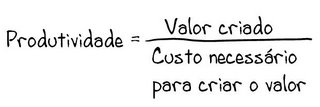
  • aos empresários para que aumentem a produtividade apostando no numerador e não no denominador; e
  • aos encalhados da tríade - que querem desde a saída do euro (para desvalorização cambial e ganho de competitividade por essa via), até à redução nominal de salários (para ganho de competitividade por essa via) - para que abracem o Evangelho do Valor
Como é que se aumentam os salários e se aumenta a competitividade ao mesmo tempo? Subindo na escala de valor:
A subida bem sucedida na escala de valor permite praticar preços mais altos de forma sustentada e permitida pelos clientes.
.
Outro tema caro a este blogue é o da distribuição de produtividades dentro de um mesmo sector económico:

"Existe mais variabilidade (no lucro, ou na produtividade) dentro de um sector económico, do que entre sectores económicos"
Voltemos à equação dos CUT:
Empresas capazes de praticarem preços superiores, por causa de estratégias e modelos de negócio mais ajustados à realidade, podem pagar salários superiores.
.
Sempre achei que essa era a grande razão para o aumento das desigualdades salariais. Recordo "Desigualdade e produtividade" e "Quem é que gosta de viver numa "Reserva Integral"? (parte II)". Agora apanho "Behind Rising Inequality: More Unequal Companies":
"Workers at the 90th and 99th percentile did see their pay rise much more than median and lower-paid workers over the period. But no such disparity appeared among co-workers at the same firm: the ratio of their pay to their firm’s average remained flat. In other words, everyone at the top companies, from the lowest to highest paid, pulled away from the pack, and everyone at the bottom companies languished."
Uma das explicações avançadas é deliciosa, faz-me logo recordar os empregos do regime em certas empresas que foram "privatizadas" com golden-share:
"There is another, more troubling possibility. Some companies may so dominate their market that they can extract profits over and above what a purely competitive landscape would allow; economists call these excess profits “rents.” Employees at those companies then share in those rents."
 BTW, a concorrência imperfeita aspira a criar monopólios informais e, a partir daí, rendas excessivas:
"Promotor da concorrência imperfeita, dos monopólios informais e das rendas excessivas"
Com as eleições a onda mudou, o pêndulo deixou de ir no sentido de evitar que as empresas fechem para não criar desemprego e começou a viajar no sentido de "que se lixem as empresas e o desemprego, se as empresas não puderem suportar os 600€ de SMN merecem fechar".
.
Talvez seja tempo da sua empresa, se opera no mercado interno, pensar seriamente em rever a sua estratégia.

Para reflexão do B2B

Ao ler estes trechos que se seguem, pensei logo em como poderão ser aplicados ao B2B conjugando-os com o value-based pricing.
"The process began when he received a mailing with the message “Open this to find out how much the Edelman family can save on energy costs with solar panels.” The letter within contained a unique URL that led to a Google Earth image of David’s house with solar panels superimposed on the roof. The next click led to a page with custom calculations of energy savings, developed from Sungevity’s estimates of the family’s energy use, the roof angle, the presence of nearby trees, and the energy-generation potential of the 23 panels the company expected the roof to hold.
.
Another click connected David through his desktop to a live sales rep looking at the same pages David was. The rep expertly answered his questions and instantly sent him links to videos that explained the installation process and the economics of leasing versus buying. Two days later, Sungevity e‑mailed David with the names and numbers of nearby homeowners who used its system and had agreed to serve as references. After checking these references, David returned to Sungevity’s site, where a single click connected him to a rep who knew precisely where he was on the journey and had a tailored lease ready for him. The rep e‑mailed it and walked David through it, and then David e‑signed. When he next visited the website, the landing page had changed to track the progress of the permitting and installation, with fresh alerts arriving as the process proceeded. Now, as a Sungevity customer, David receives regular reports on his panels’ energy generation and the resulting savings, along with tips on ways to conserve energy, based on his household’s characteristics.
.
Starting with its initial outreach and continuing to the installation and ongoing management of David’s panels, Sungevity customized and automated each step of the journey, making it so simple—and so compelling—for him to move from one step to the next that he never actively considered alternative providers. In essence, the company reconfigured the classic model of the consumer decision journey, immediately paring the consideration set to one brand, streamlining the evaluation phase, and delivering David directly into a “loyalty loop,” where he remains in a monogamous and open-ended engagement with the firm. Sungevity’s journey strategy is working. Sales have doubled in the past year to more than $65 million, exceeding growth targets and making Sungevity the fastest-growing player in the residential solar business."
Tanto material para usar no desenvolvimento de um negócio B2B


Trechos retirados de "Competing on Customer Journeys"