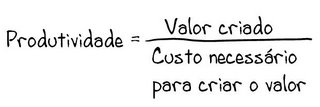
A propósito de "Multinacionais deixam cair as fábricas e passam a concentrar-se no marketing", eu, PME ou não-multinacional, começaria a pensar, como posso usar a propriedade da minha unidade produtiva para fazer coisas que eles, multinacionais, terão mais dificuldade em nos acompanhar?
.
Como poderei fazer "batota"?
.
Eu sei que mais importante que a posse dos recursos é o acesso aos recursos mas... e se fizer batota? E se descobrir forma de mudar as regras do jogo?
quinta-feira, setembro 26, 2013

O truque
Via Twitter, já não sei como, ontem cheguei a este artigo "From milkshakes to wine: the jobs that wine is hired for".
.
Parece-me um bom exemplo, para concretizar a ideia de clientes-alvo.
.
O truque não é concentrarmos-nos no produto (por isso é que não gostei das cinco primeiras regras aqui, demasiado enfoque no produto), não é concentramos-nos na demografia, ou no sector, ou ...
.
O truque é tentar entrar na mente dos clientes e, recordando esta máxima, "Serving Experience As The Product", procurar identificar o job-to-be-done onde podemos fazer a diferença na mente dos clientes.
.
Recordando "Tudo é Serviço" (aqui e aqui):
.
Parece-me um bom exemplo, para concretizar a ideia de clientes-alvo.
.
O truque não é concentrarmos-nos no produto (por isso é que não gostei das cinco primeiras regras aqui, demasiado enfoque no produto), não é concentramos-nos na demografia, ou no sector, ou ...
.
O truque é tentar entrar na mente dos clientes e, recordando esta máxima, "Serving Experience As The Product", procurar identificar o job-to-be-done onde podemos fazer a diferença na mente dos clientes.
.
Recordando "Tudo é Serviço" (aqui e aqui):
"A fundamental characteristic of services is that they create value only when we use them.Trecho retirado de "Service Design" de Andrew Polaine, Lavrans Løvlie, and Ben Reason
...
Product-oriented organizations often fail to see the potential of using their customers to make a service more effective.
...
The biggest missed opportunity in development is that organizations don’t think about their customers as valuable, productive assets in the delivery of a service, but as anonymous consumers of products."
O segundo grande desafio de um BSC, uma narrativa onde tudo isto se interliga?
Enquanto uns violam a primeira regra (better before cheaper), outros, propõem-se a ajudar a seguir o caminho menos percorrido "If You Want to Raise Prices, Tell a Better Story":
.
Uma vez identificados os clientes-alvo, façamos uma viagem ao futuro desejado... como é que a empresa está a funcionar nesse futuro desejado?
"In a world of abundance, what your product does for your customers is important, but not nearly as important as what your product means to them. And this second part — the story of your product — is what yields the greatest pricing power of all."Leiam a história sobre como aumentar o preço em 2700%, sim, leram bem, 2700%.
"as the number of products and brands in the world proliferate at an ever-accelerating pace, the power is only increasing. In 1997, there were 2.5 million brands in the world. Today? The number is approaching 10 million. So the trend is toward rapid commoditization of just about everything. In a world of almost overwhelming abundance, an authentic, meaning-rich story becomes the most important ingredient to drive a company’s margins up."A primeira etapa do desafio de construir um BSC passa por identificar os clientes-alvo.
.
Uma vez identificados os clientes-alvo, façamos uma viagem ao futuro desejado... como é que a empresa está a funcionar nesse futuro desejado?
- Para quem trabalham?
- Como são conhecidos?
- Em que são bons?
- Por que ambos ganham?
- Conseguem construir uma narrativa onde tudo isto se interliga? Como funciona o ecossistema da procura? Por que é que os influenciadores e prescritores dançarão a mesma música?
Mas atenção a este aviso "Don't Spin a Better Story. Be a Better Company"
A primeira regra, a ser violada
Sabem como sou um promotor do esforço das empresas, para conseguirem aumentar os seus preços, através de uma melhoria da proposta de valor dirigida aos seus clientes-alvo.
.
BTW, quase o oposto do aqui relatado "Peugeot compromete-se a aumentar produção e evita fechos de fábricas em França até 2016":
.
Recordando "The Three Rules" a primeira regra propõe: Better before cheaper...
.
BTW, quase o oposto do aqui relatado "Peugeot compromete-se a aumentar produção e evita fechos de fábricas em França até 2016":
"A empresa diz estar preparada para aumentar a produção em 7,5% para um milhão de veículos por ano,Tentar aumentar as vendas através da redução dos custos/preços?!
...
Na Europa a queda dos registos de novos carros foi de 13% nos primeiros oito meses deste ano,"
.
Recordando "The Three Rules" a primeira regra propõe: Better before cheaper...
quarta-feira, setembro 25, 2013
Vending machines
"There was a time when a commodity was defined as something that is standardised, fungible, provided without differentiation. And companies moved heaven and earth to try and find a way to differentiate.Basta pensar nos bancos, a tornarem-se "vending machines"
.
There’s a new definition of commodity emerging: a product or service where there is no relationship between customer and company. Companies in that position will go the way of all flesh."
.
Trecho retirado de "Thinking about change and choice and consequence"
"Dig a Hole to Fill a Hole"
Raynor e Mumtaz em "The Three Rules" para titular um texto sobre a evolução da Maytag escolheram:
.
É impressionante como empresas grandes, cometem erros crassos tão facilmente.
"Dig a Hole to Fill a Hole"Faz-me lembrar o mais défice, para reduzir o défice.
.
É impressionante como empresas grandes, cometem erros crassos tão facilmente.
A guerra das moedas
Li este artigo "US manufacturers ‘reshoring’ from China" logo depois deste "Gold going to $7,000 in currency reset says author Jim Rickards" e, fiquei a pensar na guerra das moedas... ver países "avançados" a armarem-se em Portugal pré-Cadilhe.
.
Pela Europa há quem pense o mesmo "Um euro mais fraco para uma Europa mais fraca". Entretanto, "Contas externas: (bastante) boas notícias em Julho...".
.
Pela Europa há quem pense o mesmo "Um euro mais fraco para uma Europa mais fraca". Entretanto, "Contas externas: (bastante) boas notícias em Julho...".
Para reflexão
"Price is the third profit driver. Price has a more pronounced leverage in profit than does volume (assuming marginal costs greater than zero), because a price increase directly affects profits, whereas an increase in volume raises profits only by the additional revenue minus marginal costs.Trecho retirado de "Retail Pricing – Higher Profits Through Improved Pricing Processes" de Hermann Simon, Andreas von der Gathen, e Philip W. Daus.
.
Figure ...
shows how dramatically a price increase of only 1% (with constant volume) would improve the profit situation of selected retailers."

Clientes-alvo, para reflexão
"If you reserve your best effort for the irritable boss, the never-pleased client and the bully of a customer, then you've bought into a system that rewards the very people who are driving you nuts. It's no wonder you have clients like that--they get your best work.Quem são os clientes-alvo da sua empresa?
.
On the other hand, when you make it clear (and then deliver) on the promise that your best work goes to those that are clear, respectful and patient, you become a specialist in having customers just like that.
.
One of the largest turning points of my career was firing the client who accounted for a third of my company's work. We were becoming really good at tolerating the stress that came from this engagement, and it became clear to me that we were about to sign up for a lifetime of clients like that.
.
Set free to work for those that we believed deserved our best work, we replaced the lost business in less than six months.
...
[The other alternative is a fine one, if you're up for it... specialize in the worst possible clients and bosses, the least gratifying assignments. You'll stand out in an uncrowded field! The mistake is thinking you're doing one and actually doing neither by doing both.]"
.
Trechos retirados de "Unreasonable clients"
terça-feira, setembro 24, 2013
Então, isto é uma utopia
Trecho entre 4:58 e 6:05
.
Depois do minuto 6:05 o racional de Judite de Sousa é de ir às lágrimas
O conselho!
Mais um excelente trecho retirado de "The Three Rules":
.
Li este trecho a caminhar para casa, depois de deixar o carro na revisão e, pensei nas "guerras" que às vezes é preciso ter nas empresas, para conseguir passar esta mensagem... a competição pelo custo está tão entranhada... e eu não tenho o tempo de antena da tríade, sempre a martelarem a mensagem da competição pelo custo... e como sublinhei há dias, com base em Gary Klein, uma mentira muitas vezes repetida passa a ser a verdade oficial, mesmo perante evidências que sustentam o contrário... é um combate desigual.
"The prevalence of revenue-driven profitability among exceptional companies is perhaps most significant for what it says about how best to use ROA as a guide to strategie action.Um conselho sempre presente neste blogue.
.
As we explored briefly in chapter 1, since ROA is a ratio, there is no mathematieal difference when ROA is inereased by adjusting any of its constituent elements. Raise price or volume, reduce costs or assets ... the arithmetic cannot tell the difference. (Moi ici: Advinhem qual a interpretação dos teóricos da tríade, desconhecedores da relações amorosas e crentes monoteístas no Excel)
.
But in practice there seems to he a very real difference. Miracle Workers are not wastrels, but they do not rely ou cost leadership to drive their performance. Both in our population of exceptional companies and in our sample, Miracle Worker status is a consequence of gross margin advantage driven hy higher price or volume—and as often as not enabled by higher costs and frequently assets. ln other words, exceptional profitability demands, beyond a point, making trade-offs, accepting higher costs as the price of being truly exceptional. Driving profitability from merely good to truly great by reducing either costs or assets is not something we see, as an entirely empirical matter, to be the most likely route to Miracle Worker performance."
.
Li este trecho a caminhar para casa, depois de deixar o carro na revisão e, pensei nas "guerras" que às vezes é preciso ter nas empresas, para conseguir passar esta mensagem... a competição pelo custo está tão entranhada... e eu não tenho o tempo de antena da tríade, sempre a martelarem a mensagem da competição pelo custo... e como sublinhei há dias, com base em Gary Klein, uma mentira muitas vezes repetida passa a ser a verdade oficial, mesmo perante evidências que sustentam o contrário... é um combate desigual.
Acerca do optimismo (parte II)
Parte I.
.
Não há acasos, todas as consequências são significativas. No dia em que descubro o Seligman da parte I, encontro estes dois textos sobre o optimismo e o pessimismo:
.
Não há acasos, todas as consequências são significativas. No dia em que descubro o Seligman da parte I, encontro estes dois textos sobre o optimismo e o pessimismo:
- What George Eliot Teaches Us about the Life-Cycle of Happiness and the Science of Why We’re Happier When We’re Older
- The Science of Our Optimism Bias and the Life-Cycle of Happiness
Do segundo retiro:
"The problem with pessimistic expectations, such as those of the clinically depressed, is that they have the power to alter the future; negative expectations shape outcomes in a negative way. Not everyone agrees with this assertion. Some people believe the secret to happiness is low expectations. If we don’t expect greatness or find love or maintain health or achieve success, we will never be disappointed. If we are never disappointed when things don’t work out and are pleasantly surprised when things go well, we will be happy. It’s a good theory — but it’s wrong.E volto a Seligman:
...
Although the belief in a better future is often an illusion, optimism has clear benefits in the present. Hope keeps our minds at ease, lowers stress, and improves physical health. This is probably the most surprising benefit of optimism. All else being equal, optimists are healthier and live longer. It is not just that healthy people are more optimistic, but optimism can enhance health. Expecting our future to be good reduces stress and anxiety, which is good for our health.
...
Yes, optimism is on one level irrational and can also lead to unwanted outcomes. But the bias also protects and inspires us: It keeps us moving forward, rather than to the nearest high-rise ledge. To make progress, we need to be able to imagine alternative realities, and not just any old reality but a better one; and we need to believe that we can achieve it. Such faith helps motivate us to pursue our goals."
"Pessimistic prophecies are self-fulfilling."E a uma luz de esperança para Constança:
"Habits of thinking need not be forever. One of the most significant findings in psychology in the last twenty years is that individuals can choose the way they think."
Não é gritar mais alto
"The Goliaths typically play in the rational space; this is the arena that appeals to the part of the brain looking for a good deal. The core campaign message is very specific and clear, and it’s usually about value. The problem is, when several competitors share the same rational message about value, the Goliath with the loudest voice (i.e., the highest media spend) wins.Trechos retirados de "How Your Brand Can Beat Goliath"
.
For your brand to break through, you need to appeal on two more nuanced dimensions: cultural and emotional. You need to create and share a point of view that your prospects find enlightened and unique. And to express that point of view is to speak your mind freely — as a brand — not about what you have on sale, but about something bold that will stir a customer’s interest.
...
making your brand hyper-obsessed about a specific niche or topic. When you tap into something that your audience can relate to, you’re tapping into something cultural."
segunda-feira, setembro 23, 2013
Curiosidade do dia
A propósito deste título "Microsoft lança tablets Surface mais rápidos para desafiar Apple", apetece-me perguntar, será que se consegue desafiar a Apple despejando atributos para um tablet?
.
Há um mercado "underserved" à espera de um tablet com desempenho superior?
.
Talvez! E qual será a sua dimensão? Não sei!
.
Contudo, sinto que há aqui material para uma reflexão... e qual é a "user-experience"? E quais são os trade-offs de usar este tablet?
.
Será para o segmento "corporate" que compra, ou comprará tablets por atacado, para os funcionários?
.
Há um mercado "underserved" à espera de um tablet com desempenho superior?
.
Talvez! E qual será a sua dimensão? Não sei!
.
Contudo, sinto que há aqui material para uma reflexão... e qual é a "user-experience"? E quais são os trade-offs de usar este tablet?
.
Será para o segmento "corporate" que compra, ou comprará tablets por atacado, para os funcionários?
À atenção dos jogadores de bilhar amadores
"“Dado quase toda a dívida pública estar hoje nos bancos nacionais, quem tiver depósitos bancários é alvo dos seus próprios impropérios. Se a dívida fosse repudiada, como aconselham, a perda cairia em sua casa”.Trecho retirado de "João César das Neves: “Se a dívida fosse repudiada a perda cairia em sua casa”"
.
João César das Neves afirma ainda que “espanta que tantos ignorem olimpicamente a situação, apenas protestando, sem sugerir alternativas razoáveis de cura”. “É verdade que na confusão se cometem muitos erros. Apesar disso, as autoridades tentam resolver o problema nacional; os vociferadores nada contribuem de construtivo e ignoram o sofrimento muito superior que adviria da ausência de medidas duras"."
Acerca do optimismo
"Life isn't fairInteressante encontrar este trecho em "Life Isn't Fair-- So Be Optimistic" depois de ter descoberto "Learned optimism" de Martin E. P. Seligman.
...
Yes, life isn't fair, which is why you MUST be optimistic.
.
Pessimists pretend that life should be fair and then get upset when it isn't. When the unfairness of life smacks pessimists down, they tend to stay down.
.
Optimists know life is unfair but still try to make things better. When the unfairness of life knocks them down, optimists get back up on their feet and try again.
.
Think of it this way: you've been dealt whatever cards you've been dealt. You have two choices: 1) complain that other people got better cards than you or 2) concentrate on playing the cards you got as well as you possibly can.
.
Optimism is the only "cure" for the unfairness of life."
"The optimists and the pessimists: I have been studying them for the past twenty-five years. The defining characteristic of pessimists is that they tend to believe bad events will last a long time, will undermine everything they do, and are their own fault. The optimists, who are confronted with the same hard knocks of this world, think about misfortune in the opposite way. They tend to believe defeat is just a temporary setback, that its causes are confined to this one case. The optimists believe defeat is not their fault: Circumstances, bad luck, or other people brought it about. Such people are unfazed by defeat. Confronted by a bad situation, they perceive it as a challenge and try harder. These two habits of thinking about causes have consequences. Literally hundreds of studies show that pessimists give up more easily and get depressed more often.
...
A pessimistic attitude may seem so deeply rooted as to be permanent. I have found, however, that pessimism is escapable. Pessimists can in fact learn to be optimists,"
Acerca do valor de uma marca e da sua destruição
Na sequência de "3 casos, 3 dúvidas":
.
Algo esquecido nesta abordagem "iPhone: Não é uma revolução, mas é uma estratégia inteligente"
.
BTW, algumas empresas, tentam captar mais volume sem mexer no preço mas associando à oferta principal um brinde, estilo "Leve 2 e pague 1", para esses, com as promoções mixirucas. A hotelaria é expert nisso:
"For upscale brands, there is a fine line between “cheaper” and “cheap.” And for Apple, the premium electronics maker, the key is to avoid crossing it.Trechos retirados de "Luxury Brands Face Hazards When Testing Lower Costs"
...
The addition of a cheaper iPhone could help Apple sell tens of millions more phones. But it could also diminish its reputation as a premium brand.
...
For Apple, the devil will be in the details: just how much lower the price of the cheaper iPhone is, and just how much cheaper it looks and feels. If the iPhone is deemed cheap, it could get into the hands of so many people worldwide that it loses power as a status symbol and turns Apple into a maker of commodity products like Dell, Hewlett-Packard or Asus.
...
“There are some customers which we chose not to serve,” Mr. Jobs said."
.
Algo esquecido nesta abordagem "iPhone: Não é uma revolução, mas é uma estratégia inteligente"
.
BTW, algumas empresas, tentam captar mais volume sem mexer no preço mas associando à oferta principal um brinde, estilo "Leve 2 e pague 1", para esses, com as promoções mixirucas. A hotelaria é expert nisso:
- I wonder ... (Julho 2008)
- Por que não experimentar o caminho menos percorrido? (Março 2011) (BTW, nesta mesma linha, a actuação da Abercrombie and Fitch durante a última(?) recessão)
- Pior, pior ainda é ... (Outubro 2011)
E voltamos à batota
A esta batota e a esta outra batota também.
.
"In retail you’re either a religion, a community hub, or a commodity"
.
"In retail you’re either a religion, a community hub, or a commodity"
"Building your business on the assumption that customers will come to your store looking for a product in no longer a viable strategy. It’s not enough to provide the best products or the cheapest. Nor is it enough to provide a more pleasant experience than the competition.
.
You need to find a way to draw customers to your store before they want to buy something. Retail must make itself part of the consumer’s identity, it needs to become one of their habits or rituals, rather than simply providing a convenient delivery mechanism for someone else’s products.
.
Three options seem to be emerging from he turbulent market we’re in at the moment.
1.Make your business into a community hub
2.Create a religion
3.Resign yourself to being a commodity"
domingo, setembro 22, 2013
Acerca da diversidade de escolha
Dois artigos, lidos no mesmo dia e com conclusões opostas:
"In their analysis, the authors found that an increase in a dealer’s inventory of a specific model actually lowered overall sales. But there’s a twist. If the boost in inventory also expanded the number of models available—in other words, if the dealership added a new type of Cadillac, not just more of the same model it already carried—then sales did increase.
.
Expanded variety—from engine sizes to the number of doors—enables dealers to appeal to a wider set of consumer preferences, the authors write. "
"As contrary as it might seem, you are not doing your customer any favor by offering thousands of choices, or even dozens. The act of choosing is an imposition. Fundamentally, you are asking your customers to do your work for you. Yes, the customer will want something just right, and yes, every customer may want something different. But the choosing of it is still an onerous activity."Será que ambas as abordagens fazem sentido, cada uma na sua categoria, em função da importância da compra na vida dos clientes?
Subscrever:
Comentários (Atom)
%2006.21.jpeg)