"In the prior Age of Mass Markets, which occurred throughout most of the twentieth century, revenue maximization was the win strategy. Companies had relatively uniform pricing (for much of the period, manufacturers could actually set retail prices), cost to serve was relatively uniform as the product was just dropped at the customer’s receiving dock, and economies of scale meant that large production volumes led to diminishing unit costs. And diminishing unit costs meant more profits.
.
In this situation, product management was indeed driving the boat. Their job was to maximize revenues. Most consumer product companies were characterized by a relatively small number of high-volume brands. In this situation, the cost of the small “tweaks” in products and packaging were small compared to the huge gains in scale.
.
Over the past thirty years, however, our business system has changed enormously. We have entered what I call the Age of Precision Markets. In this new era, companies have instituted complex pricing varying from customer to customer, and even product to product. Cost to serve varies again by customer, and even by product within a customer. Products have proliferated into all ecological niches, and flexible manufacturing and outsourcing have enabled many niche products to achieve minimum efficient scale.
.
Today, profit maximization requires a deep understanding of the interaction between pricing and cost to serve on a very granular basis (individual products within individual accounts). It also requires the tight integration of product management with the groups responsible for the second-order costs it so often produces. Chief among these are the critical costs of sales inefficiency and operations complexity – just what the top operations managers and sales reps were so concerned about."
.
Trecho retirado de "Unlikely Operations Heroes – Sales Reps" de Jonathan Byrnes.
domingo, junho 12, 2011

Consequências do paradoxo de Kaldor
Continuado daqui.
.
Nicholas Kaldor formulou uma série de leis sobre o crescimento. A terceira lei dizia qualquer coisa como isto:
.
O crescimento económico leva ao aumento dos salários, assim, a única maneira das economias maduras manterem, ou aumentarem a sua competitividade, passa por mudarem a forma de competição, ou seja, passarem da competição pelo preço para uma competição baseada noutros factores. Isto requer uma mudança estrutural.
.
Os políticos e a academia acham que a mudança estrutural tem de ser feita pelos trabalhadores, que só trabalhadores mais educados e com mais formação é que criarão uma economia mais competitiva.
.
Pessoalmente prefiro o exemplo finlandês...
.
"It is widely believed that restructuring has boosted productivity by displacing low-skilled workers and creating jobs for the high skilled.
This hypothesis can be tested by taking into account the quality of labour input in productivity decompositions. This can be done by using so-called “linked employer-employee” data. These data allow labour input to be measured in terms of “efficiency units”. It turns out that the basic findings and conclusions remain unaltered after the inclusion of the labour quality aspect in the productivity computations.
In essence, creative destruction means that low productivity plants are displaced by high productivity plants.
.
This is not to say, however, that education and skills are irrelevant from the point of view of economic growth and restructuring. On the contrary, a worker needs to be equipped with modern technology in order to fully utilise his or her skills in a productive way. As a consequence, in order to turn higher skills into higher aggregate productivity, new technologies must be implemented. Labour must be reallocated to those plants that have managed successfully to implement high productivity technologies.
So skill upgrading needs to be accompanied by restructuring through job destruction and creation. In addition, high skills probably facilitate adjustment because skilled workers can easily learn to use the new machines and techniques at their new jobs. From this perspective, the recent findings concerning the high basic skills of Finnish pupils are, of course, encouraging. It seems that workers will be able to adopt new techniques that are created by the current high R&D intensity"
.
É muito difícil fazer uma mudança estrutural. A maior parte das empresas não consegue mudar o seu ADN, mudar os seus modelos mentais, descobrir alternativas mais atraentes, a uma velocidade adequada. Assim, quanto mais fácil for o seu encerramento, mais fácil será o desvio de recursos humanos e materiais para novas experiências.
.
Subsídios e apoios que atrasam esta mudança são um peso imposto à sociedade... são como a ajuda bem intencionada que retira a jovem borboleta do casulo, e que a condena...
.
E voltamos a Dezembro de 2007...
.
Trecho retirado de "Creative Destruction in Finnish Manufacturing"
.
Nicholas Kaldor formulou uma série de leis sobre o crescimento. A terceira lei dizia qualquer coisa como isto:
.
O crescimento económico leva ao aumento dos salários, assim, a única maneira das economias maduras manterem, ou aumentarem a sua competitividade, passa por mudarem a forma de competição, ou seja, passarem da competição pelo preço para uma competição baseada noutros factores. Isto requer uma mudança estrutural.
.
Os políticos e a academia acham que a mudança estrutural tem de ser feita pelos trabalhadores, que só trabalhadores mais educados e com mais formação é que criarão uma economia mais competitiva.
.
Pessoalmente prefiro o exemplo finlandês...
.
"It is widely believed that restructuring has boosted productivity by displacing low-skilled workers and creating jobs for the high skilled.
This hypothesis can be tested by taking into account the quality of labour input in productivity decompositions. This can be done by using so-called “linked employer-employee” data. These data allow labour input to be measured in terms of “efficiency units”. It turns out that the basic findings and conclusions remain unaltered after the inclusion of the labour quality aspect in the productivity computations.
In essence, creative destruction means that low productivity plants are displaced by high productivity plants.
.
This is not to say, however, that education and skills are irrelevant from the point of view of economic growth and restructuring. On the contrary, a worker needs to be equipped with modern technology in order to fully utilise his or her skills in a productive way. As a consequence, in order to turn higher skills into higher aggregate productivity, new technologies must be implemented. Labour must be reallocated to those plants that have managed successfully to implement high productivity technologies.
So skill upgrading needs to be accompanied by restructuring through job destruction and creation. In addition, high skills probably facilitate adjustment because skilled workers can easily learn to use the new machines and techniques at their new jobs. From this perspective, the recent findings concerning the high basic skills of Finnish pupils are, of course, encouraging. It seems that workers will be able to adopt new techniques that are created by the current high R&D intensity"
.
É muito difícil fazer uma mudança estrutural. A maior parte das empresas não consegue mudar o seu ADN, mudar os seus modelos mentais, descobrir alternativas mais atraentes, a uma velocidade adequada. Assim, quanto mais fácil for o seu encerramento, mais fácil será o desvio de recursos humanos e materiais para novas experiências.
.
Subsídios e apoios que atrasam esta mudança são um peso imposto à sociedade... são como a ajuda bem intencionada que retira a jovem borboleta do casulo, e que a condena...
.
E voltamos a Dezembro de 2007...
.
Trecho retirado de "Creative Destruction in Finnish Manufacturing"
As histórias que contamos e que ouvimos
"The story that we are telling ourselves is really crucial. What we're telling, the stories that we tell to our selves, they determine the actions that we think work. What we think is possible."
.
E se só ouvimos histórias de desgraças, de coitadinhos, de gente a precisar de apoios e subsídios, de ente que se queixa... então ficamos limitados, moldados a esse mundo.
.
E acreditamos que não há saídas, que não há alternativas...
.
Já ouviram alguém nos media a explicar esta excentricidade?
.
A economia é também feita por isto... a economia é uma construção que emerge do somatório de conversas e histórias que se contam na sociedade. Se as histórias que passam são de desgraças e coitadinhos...
.
E se só ouvimos histórias de desgraças, de coitadinhos, de gente a precisar de apoios e subsídios, de ente que se queixa... então ficamos limitados, moldados a esse mundo.
.
E acreditamos que não há saídas, que não há alternativas...
.
Já ouviram alguém nos media a explicar esta excentricidade?
.
A economia é também feita por isto... a economia é uma construção que emerge do somatório de conversas e histórias que se contam na sociedade. Se as histórias que passam são de desgraças e coitadinhos...
Faleceu Eliyahu Goldratt
Faleceu ontem um dos homens que mais me influenciou a vida profissional, Eliyahu Goldratt. O homem que escreveu "A Meta", o homem que criou a Theory of Constraints.
.
Com Kaplan e Norton iniciei-me no BSC 1.0 e no BSC 2.0, mas ao chegar aí sentia uma insatisfação.
.
Quando conto esta história faço sempre este paralelismo.
.
Quando estudei Filosofia no liceu, adorei Descartes, aquela afirmação "Penso, logo existo" era tão poderosa... tudo o resto podia ser uma mentira, mas eu existia porque pensava, porque tinha consciência de mim...
.
Depois demos a justificação de Descartes para a existência de Deus... Deus é uma ideia perfeita. O Homem é um ser imperfeito. Um ser imperfeito não pode gerar uma ideia perfeita. Logo, Deus tem de existir à priori, não pode ser uma criação humana.
.
Não gostei nada desta justificação... um homem que tinha criado um alicerce tão poderoso para a sua visão do mundo... ficava-se por isto...
.
Quando trabalhava com o BSC no início e chegava ao BSC 2.0, mapa da estratégia e indicadores e olhávamos para as metas:


.
Com Kaplan e Norton iniciei-me no BSC 1.0 e no BSC 2.0, mas ao chegar aí sentia uma insatisfação.
.
Quando conto esta história faço sempre este paralelismo.
.
Quando estudei Filosofia no liceu, adorei Descartes, aquela afirmação "Penso, logo existo" era tão poderosa... tudo o resto podia ser uma mentira, mas eu existia porque pensava, porque tinha consciência de mim...
.
Depois demos a justificação de Descartes para a existência de Deus... Deus é uma ideia perfeita. O Homem é um ser imperfeito. Um ser imperfeito não pode gerar uma ideia perfeita. Logo, Deus tem de existir à priori, não pode ser uma criação humana.
.
Não gostei nada desta justificação... um homem que tinha criado um alicerce tão poderoso para a sua visão do mundo... ficava-se por isto...
.
Quando trabalhava com o BSC no início e chegava ao BSC 2.0, mapa da estratégia e indicadores e olhávamos para as metas:

Surgia logo a pergunta:
.
O que devemos fazer para cumprir estas metas?
.
O conselho de Kaplan e Norton era...
.
.
.
Não, não pode ser
.
.
.
Um brainstorming...
.
O quê?! Depois de todo o rigor intelectual para construir o mapa da estratégia e os indicadores, construir um conjunto de iniciativas estratégicas com base num brainstorming bem intencionado?!!!!!!!
.
Nunca gostei dessa solução até que descobri "Strategic Navigation" de William Dettmer que operacionalizava as ideias de um tal Goldratt e de uma tal de Teoria das Restrições (Theory of constraint) e foi com base no que aprendi com eles que comecei a usar estas relações de causa-efeito

como a base para a identificação das iniciativas estratégicas.
.
.
R. I. P.
sábado, junho 11, 2011
Mas onde é que descobri o paradoxo de Kaldor?
Continuado daqui.
.
Tenho um familiar que escreve com muita regularidade para revistas científicas da sua especialidade. Uma particularidade, essas revistas são sempre estrangeiras. Sempre que tentou publicar em revistas nacionais os pares que fazem a revisão científica bloquearam sempre.
.
Quero com isto dizer que é provável que determinadas ideias sejam bloqueadas e não cheguem a ver a luz do dia simplesmente porque não convém ao establishment.
.
Mas onde é que descobri esse tal paradoxo de Kaldor?
.
Neste artigo "Do some countries in the Eurozone need an internal devaluation? A reassessment of what unit labour costs really mean" de Jesus Felipe e Utsav Kumar", um artigo com várias mensagens familiares para quem lê este blogue:
.
"The problem with Greece, Ireland, Italy, Portugal, and Spain is that they are uncompetitive and need to internally devalue – or so the argument goes. This column challenges this conclusion by pointing out that the measure used to back it up – unit labour costs – is flawed and misguided. Europe’s periphery lack of competitiveness is related to the types of products they export and not to the fact that their labour is expensive." (Moi ici: Esta conclusão que sublinhei é tão clara para mim... por que é que mais gente ainda não a descobriu? Por que é que os so-called partidos de esquerda não a defendem? Não a propagam? Não a divulgam?)
...
"Europe’s peripheral countries are in trouble but the problem and solutions are unrelated to their aggregate unit labour costs."
...
"looking at competitiveness from the point of view of unit labour costs puts the burden of adjustment on workers. However, we could equally argue that a country’s presumed loss of competitiveness is due to the fact that “machines are expensive given their productivity”."
...
"It indicates that the purported “loss of competitiveness” by the peripheral countries of the Eurozone is not just a question of nominal wages increasing faster than labour productivity. In all countries, nominal profit rates decreased at a slower pace than capital productivity (Marquetii 2003 documented that, over the long run, capital productivity displays a declining trend. And Glyn 1997 showed that profit rates also display a declining long-term trend)." (Moi ici: Não esquecer estes gráficos, as suas implicações no passado e como a mudança obriga a pensar num futuro diferente)
.
(Moi ici: A cena que se segue é um argumento que também já foi aqui defendido no blogue, os produtos portugueses não competem com os produtos alemães ponto! Isto é tão simples, tão básico, tão fácil de ver... como é que a academia não percebe isto? ... ou não quer perceber... basta ver esta foto e comparar:
 )
)
.
"the comparison of the unit labour costs of the peripheral countries with those of Germany is misplaced. Using disaggregated data (for over 5,000 products exported) we show that the “complexity” of Germany’s export basket is significantly higher than that of the southern European countries and Ireland’s. Table 2 shows that Germany exports a significant share, over 12%, of total world exports of the top 10 most complex products; and over 30% of the top one-third most complex products (those in groups 1 and 2). It is clear that Ireland, Spain, Portugal, and Greece hardly compete directly with Germany in many of the products that they export, and hence comparing their unit labour costs is probably misleading.
German exports are concentrated in the most-complex products of the complexity scale and the least-complex export group represents only 3.4% of Germany’s exports (Table 3). In the case of Greece and Portugal this group represents 33.1% and 21.7%, respectively, as in China."
.
"This analysis leads to the conclusion that if the underlying problem of Europe’s periphery were lack of competitiveness, it should relate to the types of products they export (vis-à-vis Germany) and not to the fact that their labour is expensive (their wage rates are substantially lower), or that labour productivity has not increased (it has significantly). (Moi ici: A mensagem nº 1 ou nº 2 deste blogue. Um das razões porque existe este blogue!!! Esta gente "Sector do calçado vai ter aumento salarial" exporta 95% do que produz a um preço médio de 22€ contra um preço médio dos chineses de 3€. Por que exportam coisas e serviços diferentes!!!!)
.
.
(Moi ici: Ganhem fôlego para o que aí vem a seguir... 1, 2, 3)
.
The problem is that they are stuck in the manufacturing goods also produced by many other countries, especially the low-wage countries. Reducing wages would not solve the problem. (Moi ici: Ponto importante, isto não tem nada a ver com a redução dos salários dos funcionários públicos e das pensões, isso vai ter de acontecer, não por causa deste tema da competitividade, mas por que é um peso muito pesado sobre a economia... o cuco) What would an across-the-board reduction in nominal wages of 20%–30% achieve? The most obvious effect would be a very significant compression of demand. But would this measure restore competitiveness? We argue that it would not allow many firms to compete with German firms, which export a different basket, and in all likelihood it will not be enough to be able to compete with China’s wages.
A consequence of this analysis is that Europe’s peripheral countries should make significant efforts to upgrade their export baskets. Greece, Ireland, Italy, Portugal, and Spain should look upward and try to move in the direction of Germany, and not in that of China. Certainly this is not easy and it is only a long-term solution, more so because in a recession firms are unlikely to be willing to enter new products, but it is the way to move forward.
Fourth, it is important to remember that aggregate unit labour costs are not expected to lead to output growth. In the literature, this is referred to as Kaldor’s paradox (Kaldor 1978). Using data for the postwar period, Kaldor found that those countries that had experienced the greatest decline in their price competitiveness (i.e., highest increase in unit labour costs) also had the greatest increase in their market share. Fagerberg (1996) revisited this enduring puzzle by analysing the period 1978–1994 and concluded that the paradox also continues holding for this period."
.
Um artigo fantástico... maked my day!!! Na linha do "pisar formigas num piquenique"
.
Tenho um familiar que escreve com muita regularidade para revistas científicas da sua especialidade. Uma particularidade, essas revistas são sempre estrangeiras. Sempre que tentou publicar em revistas nacionais os pares que fazem a revisão científica bloquearam sempre.
.
Quero com isto dizer que é provável que determinadas ideias sejam bloqueadas e não cheguem a ver a luz do dia simplesmente porque não convém ao establishment.
.
Mas onde é que descobri esse tal paradoxo de Kaldor?
.
Neste artigo "Do some countries in the Eurozone need an internal devaluation? A reassessment of what unit labour costs really mean" de Jesus Felipe e Utsav Kumar", um artigo com várias mensagens familiares para quem lê este blogue:
.
"The problem with Greece, Ireland, Italy, Portugal, and Spain is that they are uncompetitive and need to internally devalue – or so the argument goes. This column challenges this conclusion by pointing out that the measure used to back it up – unit labour costs – is flawed and misguided. Europe’s periphery lack of competitiveness is related to the types of products they export and not to the fact that their labour is expensive." (Moi ici: Esta conclusão que sublinhei é tão clara para mim... por que é que mais gente ainda não a descobriu? Por que é que os so-called partidos de esquerda não a defendem? Não a propagam? Não a divulgam?)
...
"Europe’s peripheral countries are in trouble but the problem and solutions are unrelated to their aggregate unit labour costs."
...
"looking at competitiveness from the point of view of unit labour costs puts the burden of adjustment on workers. However, we could equally argue that a country’s presumed loss of competitiveness is due to the fact that “machines are expensive given their productivity”."
...
"It indicates that the purported “loss of competitiveness” by the peripheral countries of the Eurozone is not just a question of nominal wages increasing faster than labour productivity. In all countries, nominal profit rates decreased at a slower pace than capital productivity (Marquetii 2003 documented that, over the long run, capital productivity displays a declining trend. And Glyn 1997 showed that profit rates also display a declining long-term trend)." (Moi ici: Não esquecer estes gráficos, as suas implicações no passado e como a mudança obriga a pensar num futuro diferente)
.
(Moi ici: A cena que se segue é um argumento que também já foi aqui defendido no blogue, os produtos portugueses não competem com os produtos alemães ponto! Isto é tão simples, tão básico, tão fácil de ver... como é que a academia não percebe isto? ... ou não quer perceber... basta ver esta foto e comparar:

.
"the comparison of the unit labour costs of the peripheral countries with those of Germany is misplaced. Using disaggregated data (for over 5,000 products exported) we show that the “complexity” of Germany’s export basket is significantly higher than that of the southern European countries and Ireland’s. Table 2 shows that Germany exports a significant share, over 12%, of total world exports of the top 10 most complex products; and over 30% of the top one-third most complex products (those in groups 1 and 2). It is clear that Ireland, Spain, Portugal, and Greece hardly compete directly with Germany in many of the products that they export, and hence comparing their unit labour costs is probably misleading.
German exports are concentrated in the most-complex products of the complexity scale and the least-complex export group represents only 3.4% of Germany’s exports (Table 3). In the case of Greece and Portugal this group represents 33.1% and 21.7%, respectively, as in China."
.
"This analysis leads to the conclusion that if the underlying problem of Europe’s periphery were lack of competitiveness, it should relate to the types of products they export (vis-à-vis Germany) and not to the fact that their labour is expensive (their wage rates are substantially lower), or that labour productivity has not increased (it has significantly). (Moi ici: A mensagem nº 1 ou nº 2 deste blogue. Um das razões porque existe este blogue!!! Esta gente "Sector do calçado vai ter aumento salarial" exporta 95% do que produz a um preço médio de 22€ contra um preço médio dos chineses de 3€. Por que exportam coisas e serviços diferentes!!!!)
.
.
(Moi ici: Ganhem fôlego para o que aí vem a seguir... 1, 2, 3)
.
The problem is that they are stuck in the manufacturing goods also produced by many other countries, especially the low-wage countries. Reducing wages would not solve the problem. (Moi ici: Ponto importante, isto não tem nada a ver com a redução dos salários dos funcionários públicos e das pensões, isso vai ter de acontecer, não por causa deste tema da competitividade, mas por que é um peso muito pesado sobre a economia... o cuco) What would an across-the-board reduction in nominal wages of 20%–30% achieve? The most obvious effect would be a very significant compression of demand. But would this measure restore competitiveness? We argue that it would not allow many firms to compete with German firms, which export a different basket, and in all likelihood it will not be enough to be able to compete with China’s wages.
A consequence of this analysis is that Europe’s peripheral countries should make significant efforts to upgrade their export baskets. Greece, Ireland, Italy, Portugal, and Spain should look upward and try to move in the direction of Germany, and not in that of China. Certainly this is not easy and it is only a long-term solution, more so because in a recession firms are unlikely to be willing to enter new products, but it is the way to move forward.
Fourth, it is important to remember that aggregate unit labour costs are not expected to lead to output growth. In the literature, this is referred to as Kaldor’s paradox (Kaldor 1978). Using data for the postwar period, Kaldor found that those countries that had experienced the greatest decline in their price competitiveness (i.e., highest increase in unit labour costs) also had the greatest increase in their market share. Fagerberg (1996) revisited this enduring puzzle by analysing the period 1978–1994 and concluded that the paradox also continues holding for this period."
.
Um artigo fantástico... maked my day!!! Na linha do "pisar formigas num piquenique"
Surpresas de um auto-didacta
O paradoxo de Kaldor:
.
Este termo está relacionado com a correlação positiva entre a competitividade internacional de vários países e os seus custos unitários do trabalho. Sim, esta gente tem muitos assessores mas nunca lhes devem ter falado neste paradoxo. Este paradoxo foi inicialmente descoberto por Nicholas Kaldor (1908-1986), Kaldor tentava perceber quais as causas do declínio internacional das exportações britânicas depois de 1960.
.
A teoria económica prevê que o sucesso das exportações depende de um nível baixo de preços. A treta a que estamos habituados.
.
Pois bem, Kaldor observou que que as exportações inglesas tinham descido apesar da descida dos custos unitários do trabalho!!!!
.
Mas mais, para cúmulo... e agarrem-se às cadeiras, Kaldor observou que as exportações de vários países, como a Alemanha ou o Japão, tinham aumentado juntamente com o aumento dos seus custos unitários do trabalho.
.
.
Surpresa? Só para quem não lê este blogue.
.
Ou seja, o aumento dos salários, custos e preços não enfraqueciam a posição competitiva do Japão e da Alemanha, mas, pelo contrário, contribuíam para a sua crescente competitividade.
.
Kaldor explicou esta aparente contradição com factores que contribuíam para a competitividade que não o preço: o aumento dos preços das exportações alemãs e japonesas foi acompanhado e mais do que compensado por melhorias em factores de qualidade, de design, de serviço, de ... que minimizavam o efeito do aumento do preço.
.
Os factores de competitividade que não o preço, revelaram-se fundamentais para manter e aumentar a competitividade das economias industriais, com elevados níveis salariais.
.
.
.
Isto dá que pensar...
.
.
.
Que eu, um autodidacta que estuda para tentar perceber o que vai encontrando na sua relação com as empresas, não conhecesse Kaldor e o seu paradoxo, tudo bem. Mas que os macro-economistas não o conheçam... ou não o percebam... I'm amazed!!!!
.
.
.
Este termo está relacionado com a correlação positiva entre a competitividade internacional de vários países e os seus custos unitários do trabalho. Sim, esta gente tem muitos assessores mas nunca lhes devem ter falado neste paradoxo. Este paradoxo foi inicialmente descoberto por Nicholas Kaldor (1908-1986), Kaldor tentava perceber quais as causas do declínio internacional das exportações britânicas depois de 1960.
.
A teoria económica prevê que o sucesso das exportações depende de um nível baixo de preços. A treta a que estamos habituados.
.
Pois bem, Kaldor observou que que as exportações inglesas tinham descido apesar da descida dos custos unitários do trabalho!!!!
.
Mas mais, para cúmulo... e agarrem-se às cadeiras, Kaldor observou que as exportações de vários países, como a Alemanha ou o Japão, tinham aumentado juntamente com o aumento dos seus custos unitários do trabalho.
.
.
Surpresa? Só para quem não lê este blogue.
.
Ou seja, o aumento dos salários, custos e preços não enfraqueciam a posição competitiva do Japão e da Alemanha, mas, pelo contrário, contribuíam para a sua crescente competitividade.
.
Kaldor explicou esta aparente contradição com factores que contribuíam para a competitividade que não o preço: o aumento dos preços das exportações alemãs e japonesas foi acompanhado e mais do que compensado por melhorias em factores de qualidade, de design, de serviço, de ... que minimizavam o efeito do aumento do preço.
.
Os factores de competitividade que não o preço, revelaram-se fundamentais para manter e aumentar a competitividade das economias industriais, com elevados níveis salariais.
.
.
.
Isto dá que pensar...
.
.
.
Que eu, um autodidacta que estuda para tentar perceber o que vai encontrando na sua relação com as empresas, não conhecesse Kaldor e o seu paradoxo, tudo bem. Mas que os macro-economistas não o conheçam... ou não o percebam... I'm amazed!!!!
.
.
sexta-feira, junho 10, 2011
O que fazer com estes líderes?
"Temos que reduzir os custos unitários do trabalho" afirma o presidente da CIP.
.
Estão já imaginar o que vem destas cabeças...
.
"Vida Económica - Acredita que a prometida redução "significativa" da Taxa Social Única será suficiente para relançar o crescimento económico?
António Saraiva - A redução da Taxa Social Única (TSU) é um dos aspectos pela qual podemos reduzir os custos unitários do trabalho. Temos que reduzir os custos unitários do trabalho, mas as formas para lá chegarmos são várias, não pensemos apenas na TSU. A TSU é aquela que é referida no programa da "Troika", mas podemos ser imaginativos e atingir o mesmo objectivo por outras variáveis. (Moi ici: Pergunta desnecessária... mas cá vai: "Por que outros meios?") Desde que atinjamos os mesmos objectivos a maneira como lá chegamos é irrelevante. Aumentar os horários de trabalho em duas horas seria outra forma e não se mexia na TSU. Podemos também ter um imposto social sobre a facturação que permita baixar substancialmente a TSU.
VE - Tem vindo a defender uma maior flexibilidade laboral e a necessidade de redução do custo efectivo do trabalho. As empresas estão preparadas para isso?
AS - Algumas empresas estão preparadas para isso, existem casos até que já se pratica essa alteração. Alguns sectores de actividade já incorporam nos seus contratos colectivos, o novo código do trabalho que permite bancos de horas, flexibilidade funcional e geográfica. Todavia, a maior parte ainda não pratica porque lamentavelmente os sindicatos têm estado estáticos a esta mudança do mundo que foi muito rápida e repentina. E os aparelhos sindicais têm que se adaptar a esta nova realidade."
.
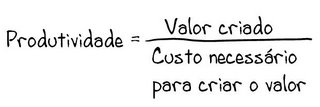
Será que o presidente da CIP sabe qual é a fórmula de cálculos dos custos unitários do trabalho para uma empresa?
 Todas as sugestões que dá passam única e exclusivamente pelas variáveis a vermelho:
 Passa-lhe completamente ao lado... não faz parte do seu modelo mental (tenho de voltar a este artigo) mexer no preço... mexer no valor potencial do que é criado. Também ele não tem tempo e atenção para outras coisas.
.
Será que ele tem alguma ideia sobre o que se passa com a distribuição de produtividades dentro de um mesmo sector de actividade?
O que penso da mexida na TSU.
.
Estão já imaginar o que vem destas cabeças...
.
"Vida Económica - Acredita que a prometida redução "significativa" da Taxa Social Única será suficiente para relançar o crescimento económico?
António Saraiva - A redução da Taxa Social Única (TSU) é um dos aspectos pela qual podemos reduzir os custos unitários do trabalho. Temos que reduzir os custos unitários do trabalho, mas as formas para lá chegarmos são várias, não pensemos apenas na TSU. A TSU é aquela que é referida no programa da "Troika", mas podemos ser imaginativos e atingir o mesmo objectivo por outras variáveis. (Moi ici: Pergunta desnecessária... mas cá vai: "Por que outros meios?") Desde que atinjamos os mesmos objectivos a maneira como lá chegamos é irrelevante. Aumentar os horários de trabalho em duas horas seria outra forma e não se mexia na TSU. Podemos também ter um imposto social sobre a facturação que permita baixar substancialmente a TSU.
VE - Tem vindo a defender uma maior flexibilidade laboral e a necessidade de redução do custo efectivo do trabalho. As empresas estão preparadas para isso?
AS - Algumas empresas estão preparadas para isso, existem casos até que já se pratica essa alteração. Alguns sectores de actividade já incorporam nos seus contratos colectivos, o novo código do trabalho que permite bancos de horas, flexibilidade funcional e geográfica. Todavia, a maior parte ainda não pratica porque lamentavelmente os sindicatos têm estado estáticos a esta mudança do mundo que foi muito rápida e repentina. E os aparelhos sindicais têm que se adaptar a esta nova realidade."
.
Será que o presidente da CIP sabe qual é a fórmula de cálculos dos custos unitários do trabalho para uma empresa?


.
Será que ele tem alguma ideia sobre o que se passa com a distribuição de produtividades dentro de um mesmo sector de actividade?
O que penso da mexida na TSU.
Pode começar por dar o exemplo
Primeiro: "Não é impunemente que se diz mal"
.
"Por que é que um "outsider", que só ouve os dirigentes associativos do sector têxtil defenderem o passado e invectivarem os asiáticos, há-de apostar em investir o seu futuro no sector têxtil?"
.
Por que é que alguém que só ouve dirigentes do sector a cantar a canção do coitadinho, de que está tudo mal, que faltam apoios e subsídios, que o gasóleo..., que as rações ..., que os adubos... se há-de dedicar à agricultura?
.
"Cavaco Silva defende agricultura para os jovens"
.
"Por que é que um "outsider", que só ouve os dirigentes associativos do sector têxtil defenderem o passado e invectivarem os asiáticos, há-de apostar em investir o seu futuro no sector têxtil?"
.
Por que é que alguém que só ouve dirigentes do sector a cantar a canção do coitadinho, de que está tudo mal, que faltam apoios e subsídios, que o gasóleo..., que as rações ..., que os adubos... se há-de dedicar à agricultura?
.
"Cavaco Silva defende agricultura para os jovens"
Observar é melhor que perguntar
Fonte 1:
.
"Understanding when value for a customer occurs is also an elusive issue, perceived in an individualistic way.
...
We know very little about the process of value creation, when it starts, what it includes, when it ends. Although value creation probably is among the most ill-defined and elusively used concepts in service marketing, and in management in general.
...
it is debatable whether the process of creating value is best described using the verb ‘create’. Creating value gives the impression of a conscious, explicitly considered process. However, in many situations, where value is experienced in an unconscious way, it seems more accurate to say that value emerges out of the use of goods and service activities
...
In our view, when considering value-in-use the best way of understanding value for customers, value creation cannot mean anything else than the customer’s, or any other user’s, experiential perception of the value-in-use that emerges from usage or possession of resources, or even from mental states.
...
All resources and processes are distribution mechanisms for service provision, however without including value in themselves.
...
The firm cannot deliver value, but only make value propositions
...
Fundamentally, the firm is a facilitator of value for the customer
...
The firm can only offer value propositions. Conventional marketing is basically about making promises. A value proposition is a promise about future potential value"
.
Ao chegar aqui, escrevi nas margens do papel:
.
A unidade (aquilo em que as empresas podem trabalhar) não é a criação de valor, as empresas não criam valor. A unidade é a criação de experiências que o cliente experiencia e valoriza.
.
Depois, recordo Damásio: emoções geram sentimentos. E só com o advento do sentido de si é que tomamos consciência dos sentimentos que vivemos.
.
Ora os clientes não usam os produtos/serviços como experiências controladas, os clientes vivem, e é durante essa vida, integrados nessa vida, que usam as plataformas de serviço, as plataformas de facilitação da emergência de valor, mesmo sem tomarem consciência dos sentimentos que elas geram.
.
"Value is an elusive concept. Typically, in the literature value concepts imply some form of an assessment of benefits against sacrifices"
.
Mesmo sem tomarem consciência dos sentimentos que elas geram... quer dizer que se lhes perguntarmos à posteriori vão ter de racionalizar e reconstituir algo que não sentiram conscientemente...
.
Talvez por isso, comecei a olhar para a antropologia de uma outra forma... sim, eu sei, eu adivinho que as universidades vão achar a coisa um pouco bastarda e indigna...
.
Talvez seja o momento de as empresas começarem a contratar os serviços de antropólogos... observadores embebidos na vida dos clientes para perceberem, para racionalizarem as experiências que os clientes vivem... mesmo quando não se apercebem delas.
.
Pois... nem de propósito "Want To Sell Product? Sleep With Your Customers":
.
"I regularly ask CEOs when they've last spent a day in the homes of their core consumers. The best I can usually hope for is that they've intended to but have never found the time. In reality, most executives operate from large offices where they function with all the information that technology can provide." (Moi ici: Veio-me à memória um empresário que, quando ia ao estrangeiro, fazia questão de entrar em lojas onde se vendiam os seus produtos, e ficava horas a observar quem entrava, que idade e sexo tinha, o que fazia, o que experimentava, o que decidia...)
.
Estão a ver big-boss da CP a andar de comboio... estão a ver os decisores da CP a apanhar um suburbano que sai de S. Bento às 19h em direcção a Caíde ou Guimarães?
.
Estão a ver os decisores dos STCP a viajarem normalmente de autocarro? Não para uso pessoal, mas para perceberem o que se passa?
.
.
.
Fonte 2:
.
"Let me tell you about an experience I once had on a flight from New York to California. As usual, 1 was flying JetBlue. 1 boarded the plane with the other passengers, and the door closed. As we sat there, buckling our seat belts and checking out the televisions in front of us, a middle-aged man with slightly graying hair stood up in the front of the plane. He had on the long apron that all JetBlue flight attendants wear, with his name stitched onto it. "Hi," he said, "my name is Dave Neeleman, and I'm the CEO of JetBlue. I'm here to serve you this evening, and I'm looking forward to meeting each of you before we land.""
.
Fonte 1: "Value Co-creation in Service Logic. A Critical Analysis". Marketing Theory, Vol. 11 (forthcoming 2011) de Christian Gronroos (uma excelente reflexão sobre a "service-dominant logic" ou como ele prefere chamar "service logic")
.
Fonte 2: "The Knack - How Street-Smart Entrepreneurs Learn to Handle Whatever Comes Up" de Norm Brodsky e Bo Burlingham.
.
.
BTW, não posso deixar de recordar o empresário do interior do país que tinha uma empresa de betões betuminosos e que na Alemanha mandava parar o táxi, sempre que passava por uma estrada em obras, para ir apalpar o tapete betuminoso que estavam a ser aplicado. O Eu-Criança a funcionar num adulto é espectacular ... Mongo precisa dele.
.
"Understanding when value for a customer occurs is also an elusive issue, perceived in an individualistic way.
...
We know very little about the process of value creation, when it starts, what it includes, when it ends. Although value creation probably is among the most ill-defined and elusively used concepts in service marketing, and in management in general.
...
it is debatable whether the process of creating value is best described using the verb ‘create’. Creating value gives the impression of a conscious, explicitly considered process. However, in many situations, where value is experienced in an unconscious way, it seems more accurate to say that value emerges out of the use of goods and service activities
...
In our view, when considering value-in-use the best way of understanding value for customers, value creation cannot mean anything else than the customer’s, or any other user’s, experiential perception of the value-in-use that emerges from usage or possession of resources, or even from mental states.
...
All resources and processes are distribution mechanisms for service provision, however without including value in themselves.
...
The firm cannot deliver value, but only make value propositions
...
Fundamentally, the firm is a facilitator of value for the customer
...
The firm can only offer value propositions. Conventional marketing is basically about making promises. A value proposition is a promise about future potential value"
.
Ao chegar aqui, escrevi nas margens do papel:
.
A unidade (aquilo em que as empresas podem trabalhar) não é a criação de valor, as empresas não criam valor. A unidade é a criação de experiências que o cliente experiencia e valoriza.
.
Depois, recordo Damásio: emoções geram sentimentos. E só com o advento do sentido de si é que tomamos consciência dos sentimentos que vivemos.
.
Ora os clientes não usam os produtos/serviços como experiências controladas, os clientes vivem, e é durante essa vida, integrados nessa vida, que usam as plataformas de serviço, as plataformas de facilitação da emergência de valor, mesmo sem tomarem consciência dos sentimentos que elas geram.
.
"Value is an elusive concept. Typically, in the literature value concepts imply some form of an assessment of benefits against sacrifices"
.
Mesmo sem tomarem consciência dos sentimentos que elas geram... quer dizer que se lhes perguntarmos à posteriori vão ter de racionalizar e reconstituir algo que não sentiram conscientemente...
.
Talvez por isso, comecei a olhar para a antropologia de uma outra forma... sim, eu sei, eu adivinho que as universidades vão achar a coisa um pouco bastarda e indigna...
.
Talvez seja o momento de as empresas começarem a contratar os serviços de antropólogos... observadores embebidos na vida dos clientes para perceberem, para racionalizarem as experiências que os clientes vivem... mesmo quando não se apercebem delas.
.
Pois... nem de propósito "Want To Sell Product? Sleep With Your Customers":
.
"I regularly ask CEOs when they've last spent a day in the homes of their core consumers. The best I can usually hope for is that they've intended to but have never found the time. In reality, most executives operate from large offices where they function with all the information that technology can provide." (Moi ici: Veio-me à memória um empresário que, quando ia ao estrangeiro, fazia questão de entrar em lojas onde se vendiam os seus produtos, e ficava horas a observar quem entrava, que idade e sexo tinha, o que fazia, o que experimentava, o que decidia...)
.
Estão a ver big-boss da CP a andar de comboio... estão a ver os decisores da CP a apanhar um suburbano que sai de S. Bento às 19h em direcção a Caíde ou Guimarães?
.
Estão a ver os decisores dos STCP a viajarem normalmente de autocarro? Não para uso pessoal, mas para perceberem o que se passa?
.
.
.
Fonte 2:
.
"Let me tell you about an experience I once had on a flight from New York to California. As usual, 1 was flying JetBlue. 1 boarded the plane with the other passengers, and the door closed. As we sat there, buckling our seat belts and checking out the televisions in front of us, a middle-aged man with slightly graying hair stood up in the front of the plane. He had on the long apron that all JetBlue flight attendants wear, with his name stitched onto it. "Hi," he said, "my name is Dave Neeleman, and I'm the CEO of JetBlue. I'm here to serve you this evening, and I'm looking forward to meeting each of you before we land.""
.
Fonte 1: "Value Co-creation in Service Logic. A Critical Analysis". Marketing Theory, Vol. 11 (forthcoming 2011) de Christian Gronroos (uma excelente reflexão sobre a "service-dominant logic" ou como ele prefere chamar "service logic")
.
Fonte 2: "The Knack - How Street-Smart Entrepreneurs Learn to Handle Whatever Comes Up" de Norm Brodsky e Bo Burlingham.
.
.
BTW, não posso deixar de recordar o empresário do interior do país que tinha uma empresa de betões betuminosos e que na Alemanha mandava parar o táxi, sempre que passava por uma estrada em obras, para ir apalpar o tapete betuminoso que estavam a ser aplicado. O Eu-Criança a funcionar num adulto é espectacular ... Mongo precisa dele.
quinta-feira, junho 09, 2011
O que resultou no passado algures vai deixar de resultar
A revista strategy+business acaba de publicar mais um interessante artigo "Consumer Packaged Goods: Escaping the Consolidation Mentality" de Steffen Lauster, Elisabeth Hartley e Samrat Sharma.
.
"Holding fast to the two myths that have long dominated strategy in consumer-oriented industries — that bigger companies win, and that one or two players control every product category — can get a firm into trouble. A capabilities-driven strategy can provide a better path to profit."
.
Some strategic concepts, if they’re regarded as sacrosanct, may lead an entire industry in the wrong direction. Something of that sort has happened during the past two decades in the consumer packaged goods (CPG) industry. Two of the most influential strategy ideas are so widely held, so intuitively appealing, and so seemingly pragmatic that they are very hard to give up. Yet they can also be very dangerous to follow.
.
Both of these misleading ideas have to do with consolidation: the premise that, when it comes to business strategy, bigger is better. (Moi ici: Crescer por crescer é uma estupidez, no meu modelo mental. Custa tanto... mudar pessoas, mudar processos, mudar de clientes, muitas vezes para ter menos rentabilidade) Since the 1980s, the conventional wisdom has held that shareholder returns accrue most to companies with huge brands and the scale to compete in emerging markets. Many CPG leaders have assumed that their chances of winning, in every region and every product segment, were enhanced by size. More salespeople, a bigger distribution footprint, a bigger advertising budget — these were the ingredients of success.
.
This perception gave rise to the second misleading idea: Consolidation is inevitable. For years, experts predicted that most consumer packaged goods segments would end up like carbonated beverages, razor blades, and diapers — with just two or three big rivals, a handful of niche players battling over the scraps, and a few private-label brands for value consumers."
.
O que os autores propõem é como lidar com...
.
.
.
Mongo!!!
.
"To be sure, some players, such as Procter & Gamble, use their size and scale to great advantage, particularly in emerging markets or new growth areas. But in reality, the industry is much more diverse and dynamic than the conventional wisdom would suggest. Most CPG categories — including staples such as food, personal care products, and cleaning supplies — are in a constant state of evolution. They move from consolidation to fragmentation, and some can cycle back, time and time again.
In such an environment, there are many ways to prosper, with each successful company finding its own path: some end up large, some small, some global, some regional. But none of the paths taken involve growth for the sake of scale alone. Instead, they require the kind of growth that leads to profitability. This in turn requires coherence. (Moi ici: Sempre o alinhamento, sempre a concentração)
.
Coherence is a company’s ability to concentrate its resources and collective intelligence, and marshal all of them in the service of a well-aligned group of products and services with a focused strategic direction.
...
Because of the consolidation mentality, many executives of CPG companies have overlooked the value of coherence. They have focused on sheer size and scale instead. But size and scale are no longer as critical as they once were — at least not in the mature markets of industrialized nations.
...
Coherence seems to be particularly important in consumer products companies, where there is always a temptation to react opportunistically to changing markets, with brand extensions, new products, or acquisitions.
...
A coherent company — for that matter, a company that is simply more coherent than its competitors — can focus its investments on relatively few capabilities, increasing its mastery of those critical areas. It gains in efficiency; it doesn’t waste time, money, and attention on capabilities in domains where it doesn’t need to outdo its rivals and a modicum of competency is sufficient. A coherent company also makes more prudent portfolio decisions, applying the lens of capabilities as it decides which products or services to acquire and which to divest.
...
if the advantages of size, international penetration, scale, and retailer satisfaction were really so great, one would expect bigger companies to do better than the vast majority of their smaller peers. Instead, they are on par with most smaller companies and far behind a few in the important area of total shareholder returns.
...
In recent years, the CPG industry has undergone a sea change in its structure. Some product categories are consolidating, but many are fragmenting instead: They are splitting the customer base among more, rather than fewer, competitors.
...
(Moi ici: E agora umas recomendações muito interessantes. Mongo, Mongo, Mongo!!!)
.
If you are a small company in a fragmenting category, focus not on expansion into other categories, but on distinguishing your existing products in ways that customers value. Build or develop capabilities related to the features that your customers value most.
...
If you are in a consolidated category, you might be able to take over the market by changing the category’s dominant value proposition to something that you do uniquely well.
...
If you are pursuing organic growth (without M&A), seek “scale at the shelf,” not across categories. In other words, establish multiple brands at diverse price points, each with its own proposition."
.
Eu adoro isto! Tudo o que promova a erosão da ideia que o futuro é dos grandes, é bem vindo!!! Viva a agilidade das PMEs, viva a diferenciação!!!
.
"Holding fast to the two myths that have long dominated strategy in consumer-oriented industries — that bigger companies win, and that one or two players control every product category — can get a firm into trouble. A capabilities-driven strategy can provide a better path to profit."
.
Some strategic concepts, if they’re regarded as sacrosanct, may lead an entire industry in the wrong direction. Something of that sort has happened during the past two decades in the consumer packaged goods (CPG) industry. Two of the most influential strategy ideas are so widely held, so intuitively appealing, and so seemingly pragmatic that they are very hard to give up. Yet they can also be very dangerous to follow.
.
Both of these misleading ideas have to do with consolidation: the premise that, when it comes to business strategy, bigger is better. (Moi ici: Crescer por crescer é uma estupidez, no meu modelo mental. Custa tanto... mudar pessoas, mudar processos, mudar de clientes, muitas vezes para ter menos rentabilidade) Since the 1980s, the conventional wisdom has held that shareholder returns accrue most to companies with huge brands and the scale to compete in emerging markets. Many CPG leaders have assumed that their chances of winning, in every region and every product segment, were enhanced by size. More salespeople, a bigger distribution footprint, a bigger advertising budget — these were the ingredients of success.
.
This perception gave rise to the second misleading idea: Consolidation is inevitable. For years, experts predicted that most consumer packaged goods segments would end up like carbonated beverages, razor blades, and diapers — with just two or three big rivals, a handful of niche players battling over the scraps, and a few private-label brands for value consumers."
.
O que os autores propõem é como lidar com...
.
.
.
Mongo!!!
.
"To be sure, some players, such as Procter & Gamble, use their size and scale to great advantage, particularly in emerging markets or new growth areas. But in reality, the industry is much more diverse and dynamic than the conventional wisdom would suggest. Most CPG categories — including staples such as food, personal care products, and cleaning supplies — are in a constant state of evolution. They move from consolidation to fragmentation, and some can cycle back, time and time again.
In such an environment, there are many ways to prosper, with each successful company finding its own path: some end up large, some small, some global, some regional. But none of the paths taken involve growth for the sake of scale alone. Instead, they require the kind of growth that leads to profitability. This in turn requires coherence. (Moi ici: Sempre o alinhamento, sempre a concentração)
.
Coherence is a company’s ability to concentrate its resources and collective intelligence, and marshal all of them in the service of a well-aligned group of products and services with a focused strategic direction.
...
Because of the consolidation mentality, many executives of CPG companies have overlooked the value of coherence. They have focused on sheer size and scale instead. But size and scale are no longer as critical as they once were — at least not in the mature markets of industrialized nations.
...
Coherence seems to be particularly important in consumer products companies, where there is always a temptation to react opportunistically to changing markets, with brand extensions, new products, or acquisitions.
...
A coherent company — for that matter, a company that is simply more coherent than its competitors — can focus its investments on relatively few capabilities, increasing its mastery of those critical areas. It gains in efficiency; it doesn’t waste time, money, and attention on capabilities in domains where it doesn’t need to outdo its rivals and a modicum of competency is sufficient. A coherent company also makes more prudent portfolio decisions, applying the lens of capabilities as it decides which products or services to acquire and which to divest.
...
if the advantages of size, international penetration, scale, and retailer satisfaction were really so great, one would expect bigger companies to do better than the vast majority of their smaller peers. Instead, they are on par with most smaller companies and far behind a few in the important area of total shareholder returns.
...
In recent years, the CPG industry has undergone a sea change in its structure. Some product categories are consolidating, but many are fragmenting instead: They are splitting the customer base among more, rather than fewer, competitors.
...
(Moi ici: E agora umas recomendações muito interessantes. Mongo, Mongo, Mongo!!!)
.
If you are a small company in a fragmenting category, focus not on expansion into other categories, but on distinguishing your existing products in ways that customers value. Build or develop capabilities related to the features that your customers value most.
...
If you are in a consolidated category, you might be able to take over the market by changing the category’s dominant value proposition to something that you do uniquely well.
...
If you are pursuing organic growth (without M&A), seek “scale at the shelf,” not across categories. In other words, establish multiple brands at diverse price points, each with its own proposition."
.
Eu adoro isto! Tudo o que promova a erosão da ideia que o futuro é dos grandes, é bem vindo!!! Viva a agilidade das PMEs, viva a diferenciação!!!
Somos o que fazemos...
Quem somos?
.
Para uma empresa, como é que cada um responderia à pergunta: Quem somos?
.
Uma empresa não é um edifício, não é um conjunto de máquinas... será uma vontade? E há uma vontade ou umas vontades?
.
Como é que um colectivo se revê e identifica? E por que é que isso é importante? E como isso funciona como uma regra de decisão, como um facilitador ou um limitador?
.
Interessante artigo "Innovation strategy and identity: A case study from the food industry" de Thomas Hoholm e Fred Hjalmar Stronen, publicado pelo European Journal of Innovation Management em Junho de 2011.
.
"Identity can be used as an explanation for why some actions are deemed to be strategic while others are not, hence enforcing or limiting innovation. We find that identity needs to be considered both as a ‘soft’ and a ‘hard’ concept in the process; providing stability while at the same time being up for re-negotiation. By understanding strategizing and innovating as situated and heterogeneous processes, we identify how identity becomes a stabilizer and an organizer during emergent strategy processes, and reveal tensions between creative recombination and conservative reproduction."
...
"These two examples show how both new product development and taking on an existing product may challenge the existing view on what the members construct as the firm’s identity.
...
New products, whether innovations or established products in other markets, were considered strategic or nonstrategic related to the identities of professions (product developers, chefs, marketers, management), of owners (farmers’ cooperative), of consumers (brand associations) and of industrial production (production facilities). By looking at the product ingredients and their connotations, the product was viewed by the different groups as completely different."
...
"From the insight in these two cases, identity could be conceptualized as both a ‘hard’ and a ‘soft’ concept. Identity is hard, as it represents history and is embedded and stabilized both by material and social relations (physical facilities, technologies, work practices, economic interests, etc). It materializes in various situations, being something the actors really believe in and guiding interpretation and action in various specific everyday situations. But identity is also a soft concept, as identities are continuously fluctuating and under negotiation, thus never fully stable. Identities, as well as the balance between multiple identities, change between situations, between individuals and groups, and between professions. What we can see is how the same persons in these two stories relate to different identities, and thereby draw on various interpretations and negotiations of what the strategy is, depending on each specific context and situation."
...
"Identity in an organization forms the basis of how they regard the appropriateness of potential future actions.
...
Individuals form their sensemaking and their ideas on what is legitimate in various based on their identities."
.
E conjugar este artigo com:
.
Nós não conhecemos a realidade, nós só conhecemos a nossa interpretação da realidade.
.
E ainda, conjugar com "What Business Are You In? Business As Social Constructs" um excelente artigo que chama a atenção para a importância da nossa construção da realidade:
.
"In a company, the business model is defined by a dominant group of people. They have a common understanding of what business they are in and how they create value. However, the business model is not an absolute reality. It’s a social construct of dominant opinion makers, e.g. your top management. This is important to understand.
By taking a different look (Moi ici: Parece fácil... mas para quem está dentro, para quem está embebido numa identidade... é tão difícil) at your business, and thereby challenging your dominant logic, you can identify more and different strategic options for your firm"
.
Para mudar temos de ser capazes de simultaneamente, na mesma mente, trabalhar com o que somos e com o que temos de vir a ser.
.
Para uma empresa, como é que cada um responderia à pergunta: Quem somos?
.
Uma empresa não é um edifício, não é um conjunto de máquinas... será uma vontade? E há uma vontade ou umas vontades?
.
Como é que um colectivo se revê e identifica? E por que é que isso é importante? E como isso funciona como uma regra de decisão, como um facilitador ou um limitador?
.
Interessante artigo "Innovation strategy and identity: A case study from the food industry" de Thomas Hoholm e Fred Hjalmar Stronen, publicado pelo European Journal of Innovation Management em Junho de 2011.
.
"Identity can be used as an explanation for why some actions are deemed to be strategic while others are not, hence enforcing or limiting innovation. We find that identity needs to be considered both as a ‘soft’ and a ‘hard’ concept in the process; providing stability while at the same time being up for re-negotiation. By understanding strategizing and innovating as situated and heterogeneous processes, we identify how identity becomes a stabilizer and an organizer during emergent strategy processes, and reveal tensions between creative recombination and conservative reproduction."
...
"These two examples show how both new product development and taking on an existing product may challenge the existing view on what the members construct as the firm’s identity.
...
New products, whether innovations or established products in other markets, were considered strategic or nonstrategic related to the identities of professions (product developers, chefs, marketers, management), of owners (farmers’ cooperative), of consumers (brand associations) and of industrial production (production facilities). By looking at the product ingredients and their connotations, the product was viewed by the different groups as completely different."
...
"From the insight in these two cases, identity could be conceptualized as both a ‘hard’ and a ‘soft’ concept. Identity is hard, as it represents history and is embedded and stabilized both by material and social relations (physical facilities, technologies, work practices, economic interests, etc). It materializes in various situations, being something the actors really believe in and guiding interpretation and action in various specific everyday situations. But identity is also a soft concept, as identities are continuously fluctuating and under negotiation, thus never fully stable. Identities, as well as the balance between multiple identities, change between situations, between individuals and groups, and between professions. What we can see is how the same persons in these two stories relate to different identities, and thereby draw on various interpretations and negotiations of what the strategy is, depending on each specific context and situation."
...
"Identity in an organization forms the basis of how they regard the appropriateness of potential future actions.
...
Individuals form their sensemaking and their ideas on what is legitimate in various based on their identities."
.
E conjugar este artigo com:
.
Nós não conhecemos a realidade, nós só conhecemos a nossa interpretação da realidade.
.
E ainda, conjugar com "What Business Are You In? Business As Social Constructs" um excelente artigo que chama a atenção para a importância da nossa construção da realidade:
.
"In a company, the business model is defined by a dominant group of people. They have a common understanding of what business they are in and how they create value. However, the business model is not an absolute reality. It’s a social construct of dominant opinion makers, e.g. your top management. This is important to understand.
By taking a different look (Moi ici: Parece fácil... mas para quem está dentro, para quem está embebido numa identidade... é tão difícil) at your business, and thereby challenging your dominant logic, you can identify more and different strategic options for your firm"
.
Para mudar temos de ser capazes de simultaneamente, na mesma mente, trabalhar com o que somos e com o que temos de vir a ser.
E se o nosso sector mudou mesmo e mudou de vez?
Realmente!
.
Quando gente com capacidade, gente inteligente, faz parte de uma empresa incluída num sector em mudança, é tão fácil ficar entretido a rentabilizar a estrutura do passado nos novos tempos, é tão fácil ser incapaz de ver que a mudança é estrutural e mais vale repensar a empresa.
.
Realmente... quem está de fora, com uma mente mais liberta, pode fazer experiências mentais com muito mais facilidade.
.
Focamos-nos no urgente, no que tem de ser feito de imediato e não deixamos tempo, e tempo de qualidade, para parar e pensar no que é realmente importante... como se diz, somos uma espécie optimista por natureza.
.
Quando gente com capacidade, gente inteligente, faz parte de uma empresa incluída num sector em mudança, é tão fácil ficar entretido a rentabilizar a estrutura do passado nos novos tempos, é tão fácil ser incapaz de ver que a mudança é estrutural e mais vale repensar a empresa.
.
Realmente... quem está de fora, com uma mente mais liberta, pode fazer experiências mentais com muito mais facilidade.
.
Focamos-nos no urgente, no que tem de ser feito de imediato e não deixamos tempo, e tempo de qualidade, para parar e pensar no que é realmente importante... como se diz, somos uma espécie optimista por natureza.
quarta-feira, junho 08, 2011
Amor à primeira vista (parte II)
Continuar aqui.
.
"Understanding why some firms and not others adopt strategies ultimately associated with competitive success is of central importance to strategy scholars. In addressing one aspect of this issue, research examining the role of managerial cognition has shown that managerial mental models are a critical determinant of strategic choices." (Moi ici: Partilho desta corrente. O meu contacto com as empresas, com os empresários e com os gestores, reforçou em mim, ao longo dos anos, a crença de que o fundamental para explicar a variabilidade, a distribuição de produtividades das empresas dentro de um sector de actividade, está nos modelos mentais de quem comanda ou gere)
...
"Managerial mental models are simplified knowledge structures or cognitive representations about how the business environment works. There is substantial evidence that mental models influence decision making through managers' efforts to match strategic choices to their understanding of the business environment." (Moi ici: O "perigo" que isto representa num mundo carregado de amadores a jogar bilhar... ou vantagem para quem percebe de relações de causa-efeito... bom para batoteiros!!!)
...
"An alternative possibility is that complexity, uncertainty, and change in business environments overwhelm managers' capacity to take advantage of any richer understanding about the situation. Under such circumstances, competitive advantage would be driven by initial conditions, random environmental shocks, and lucky managerial responses rather than the result of accurate mental models underpinning managerial foresight or strategic insights.
...
We also investigate the impact of partial knowledge - in contrast to accurate mental models of the complete business environment - on performance outcomes. Recent simulation-based research suggests that even partial knowledge of the business environment may dramatically improve performance." (Moi ici: A coisa promete)
.
Trechos retirados de "Mental Models, Decision Rules, and Performance Heterogeneity" de Michael Shayne Gary e Robert E. Wood, publicado no número de Junho de 2011 da revista Strategic Management Journal.
.
Continua.
.
"Understanding why some firms and not others adopt strategies ultimately associated with competitive success is of central importance to strategy scholars. In addressing one aspect of this issue, research examining the role of managerial cognition has shown that managerial mental models are a critical determinant of strategic choices." (Moi ici: Partilho desta corrente. O meu contacto com as empresas, com os empresários e com os gestores, reforçou em mim, ao longo dos anos, a crença de que o fundamental para explicar a variabilidade, a distribuição de produtividades das empresas dentro de um sector de actividade, está nos modelos mentais de quem comanda ou gere)
...
"Managerial mental models are simplified knowledge structures or cognitive representations about how the business environment works. There is substantial evidence that mental models influence decision making through managers' efforts to match strategic choices to their understanding of the business environment." (Moi ici: O "perigo" que isto representa num mundo carregado de amadores a jogar bilhar... ou vantagem para quem percebe de relações de causa-efeito... bom para batoteiros!!!)
...
"An alternative possibility is that complexity, uncertainty, and change in business environments overwhelm managers' capacity to take advantage of any richer understanding about the situation. Under such circumstances, competitive advantage would be driven by initial conditions, random environmental shocks, and lucky managerial responses rather than the result of accurate mental models underpinning managerial foresight or strategic insights.
...
We also investigate the impact of partial knowledge - in contrast to accurate mental models of the complete business environment - on performance outcomes. Recent simulation-based research suggests that even partial knowledge of the business environment may dramatically improve performance." (Moi ici: A coisa promete)
.
Trechos retirados de "Mental Models, Decision Rules, and Performance Heterogeneity" de Michael Shayne Gary e Robert E. Wood, publicado no número de Junho de 2011 da revista Strategic Management Journal.
.
Continua.
Bake a Bigger Pie
“There are two kinds of people and organizations in the world: eaters and bakers. Eaters want a bigger slice of an existing pie; bakers want to make a bigger pie. Eaters think that if they win, you lose, and if you win, they lose. Bakers think that everyone can win with a bigger pie.”
.
Trecho retirado de "Enchantment" de Guy Kawasaki
.
Trecho retirado de "Enchantment" de Guy Kawasaki
Mais um exemplo
Ontem contaram-me o caso desta marca portuguesa Dkode.
.
200 mil pares vendidos com marca própria... estão mesmo a precisar da redução da TSU.
.
Parabéns!
.
200 mil pares vendidos com marca própria... estão mesmo a precisar da redução da TSU.
.
Parabéns!
Acerca dos clientes
"The biggest problem in getting to know our customers is that they don’t know themselves".
.
Já experimentaram... acordam durante a noite para ir à casa de banho. Se olharem para um relógio de ponteiros para ver as horas ficam menos despertados do que se olharem para um relógio digital. Diferentes meios de comunicação, entram por diferentes canais.
.
Consumir não é necessariamente racional... consumir é a perspectiva do fornecedor. Para o cliente, na sua perspectiva, não se consome, vive-se.
.
Já experimentaram... acordam durante a noite para ir à casa de banho. Se olharem para um relógio de ponteiros para ver as horas ficam menos despertados do que se olharem para um relógio digital. Diferentes meios de comunicação, entram por diferentes canais.
.
Consumir não é necessariamente racional... consumir é a perspectiva do fornecedor. Para o cliente, na sua perspectiva, não se consome, vive-se.
Amor à primeira vista
Foi um caso de amor à primeira vista, bastou ler o abstracts.
.
Este artigo "Mental Models, Decision Rules, and Performance Heterogeneity" de Michael Shayne Gary e Robert E. Wood, publicado no número de Junho de 2011 da revista Strategic Management Journal.
.
"This paper focuses on the role of managerial cognition as a source of heterogeneity in firm strategies and performance. We link differences in mental models to differences in decision rules and performance in a management simulation. Our results show more accurate mental models lead to better decision rules and higher performance. We also find that decision makers do not need accurate knowledge of the entire business environment; accurate mental models of the key principles are sufficient to achieve superior performance. A fundamental assumption in much of strategic management is that managers who have a richer understanding about organizational capabilities and the dynamics of industry structure can improve the performance of their firms. Our findings provide empirical evidence supporting this assumption and show that differences in mental models help explain ex ante why managers and firms adopt different strategies and achieve different levels of competitive success."
.
Continua.
.
Este artigo "Mental Models, Decision Rules, and Performance Heterogeneity" de Michael Shayne Gary e Robert E. Wood, publicado no número de Junho de 2011 da revista Strategic Management Journal.
.
"This paper focuses on the role of managerial cognition as a source of heterogeneity in firm strategies and performance. We link differences in mental models to differences in decision rules and performance in a management simulation. Our results show more accurate mental models lead to better decision rules and higher performance. We also find that decision makers do not need accurate knowledge of the entire business environment; accurate mental models of the key principles are sufficient to achieve superior performance. A fundamental assumption in much of strategic management is that managers who have a richer understanding about organizational capabilities and the dynamics of industry structure can improve the performance of their firms. Our findings provide empirical evidence supporting this assumption and show that differences in mental models help explain ex ante why managers and firms adopt different strategies and achieve different levels of competitive success."
.
Continua.
Mais um exemplo
O @andrecruzzz enviou-me estas fotos que contam mais um exemplo de sucesso, desta vez no campo da agricultura

 BTW, repararam que esta história dos pepinos na Alemanha permitiu descobrir que os agricultores portugueses que cultivam legumes estão a perder 5 milhões de euros por semana...
.
Quer dizer que sem este percalço estariam a ganhar 5 milhões de euros por semana... do you get it?


.
Quer dizer que sem este percalço estariam a ganhar 5 milhões de euros por semana... do you get it?
terça-feira, junho 07, 2011
Service-dominant logic (parte V)
Continuado daqui:
.
Um excelente artigo como introdução ao service-dominant logic, "The Service-Dominant Mindset" de Robert Lusch e Stephen Vargo:
.
"“The greatest danger in times of turbulence is not the turbulence; it is to act with yesterday’s logic.” [Peter Drucker]
.
Yesterday’s logic, which continues to linger, focused on separating the producer from the consumer. This was done for maximum production control, efficiency and profit maximization and usually accomplished by standardizing the product and producing it away from the market. In contrast, the emerging service-dominant logic is focused on the interaction of the producer and the consumer and other supply and value network partners as they co-create value through collaborative processes. This new logic is being referred to as service-dominant (S-D)."
.
Uma das mudanças de paradigma é a ênfase no serviço em detrimento do produto puro e duro. Melhor seria dizer, a ênfase na experiência... engraçado como voltamos a Levitt e ao seu artigo de 1960 "A Miopia do Marketing" :
.
"When a firm sees itself primarily as a manufacturer with an implied purpose of selling what it makes, it sees the key to making more money as selling more goods. There is little or no logic in selling fewer goods--why should Volkswagen want to sell fewer cars or Dow to sell fewer chemicals? In contrast, the service-dominant logic suggests that since these goods are actually mechanisms for service provision, the customer is always buying a service flow rather than a tangible thing, and thus the firm should focus on selling a flow of service. (Moi ici: E por que não "The firm should focus on selling a flow of experiences", concentração na vida dos clientes-alvo) This would encourage it to determine the optimal configuration of goods, if any, for a level of service, the optimal organization or network configuration to maintain the service, and the optimal payment mechanism in exchange for providing the service. That is, the organization is encouraged to think about the service system. Tangible resources that are part of our ecosystem can also be viewed in terms of service provision."
.
Outra mudança assenta na transição dos tangíveis para os intangíveis:
.
"In a service-dominant world, it is central to understanding: exchange is fundamentally, primarily about the intangible rather than the tangible.
The shift from the tangible to the intangible also focuses the organization on the solution that the customer is seeking.
...
When the focus becomes the solution and the intangible, what firms learn is that the tangible content cost of their product becomes smaller and smaller and the brand rises in value and importance." (Moi ici: Em linha com esta explicação "Quanto mais competitivas as empresas, menor o peso dos salários nos custos totais... será porque as pessoas ganham menos? Ou será porque além do custo dos tangíveis também se somam mais custos dos intangíveis?". E recordar com algum terror a implicação do gráfico do primeiro postal em que escrevi sobre Rosiello... OMG!!! A implicação para o nosso país da fracção do PIB que é consumida pelos salários ser tão elevada)
.
Outra mudança passa pela crescente simetria de informação:
.
"Service-dominant logic suggests that all exchanges should be symmetric. A focus on symmetric information and treatment implies: (1) one does not mislead customers, employees or partners by not sharing relevant information that could enable them to make better and more informed choices, and (2) all exchange or trading partners are treated equitably."
.
Outra mudança assenta no abandono da propaganda e na concentração na relação, num convite:
.
"Advertising, at least as normally practiced, has tended to be propagandistic. Since its purpose is to sell the advertiser’s products, it typically advocates the views and perspective of that advertiser, the seller, and thus, is one-sided and favorably biased. While this is not necessarily bad, buyers now have access to more and more information, causing them to turn away from communications that appear to be inaccurate, abusive, intrusive or overly one-sided.
Service-dominant logic argues that communication should be characterized by conversation and dialog."
.
As empresas só podem oferecer propostas de valor, porque as empresas não criam valor, as empresas disponibilizam plataformas que facilitam ao cliente que experiencie valor:
.
"This idea that value is something determined by the customer implies that the firm can only make an offer of value creation through the application of its resources to some need of the customer—that is, through service. Thus, the firm can only make a value proposition and then, if it is accepted, value is co-created in concert with the customer."
...
"Service-dominant logic is inherently relational, partly because it implies that parties co-create value."
.
E uma outra forma de olhar para o desempenho financeiro... sempre a usamos aqui:
.
"Profit maximization is not in the vocabulary of service-dominant logic. Service-dominant logic views business and marketing as an on-going stream of social and economic processes in which firms continually generate and test hypotheses. Firms learn from financial outcomes (Moi ici: Como costumo dizer, os resultados financeiros são o teste do ácido) as they attempt to better serve customers and obtain cash flows for the firm. Service-dominant logic embraces market and customer orientation and a learning orientation. Therefore, financial success is not just an end in itself but an important form of marketplace feedback about the fulfillment of value propositions.
Thus, price paid, profits and cash flow are important signals (though not the only signals) to the firm regarding the extent to which it is serving and meeting customer needs."
Subscrever:
Mensagens (Atom)
%2006.21.jpeg)