"Chama-se empréstimo, mas sabíamos que o dinheiro não seria devolvido."
"Não há mais nenhum governo e não há mais nenhum ministro que se possa gabar de ter deixado a TAP e a CP com lucro"
Um artista português!


"Chama-se empréstimo, mas sabíamos que o dinheiro não seria devolvido."
"Não há mais nenhum governo e não há mais nenhum ministro que se possa gabar de ter deixado a TAP e a CP com lucro"
Um artista português!
Comecemos por um artigo publicado ontem pelo JN, "Salários de mil euros perderam 42% de poder de compra":
"Nestes vinte anos, os salários pouco subiram e muitos congelaram, principalmente no periodo da troika. A grande exceção foi o salário mínimo nacional, que duplicou. Em 2022, 56% dos trabalhadores recebiam um salário inferior a mil euros. Nos mais jovens, a percentagem era de 65%.
...
O professor da Universidade do Minho [Moi ici: João Cerejeira?] lembra que o número de alunos do Ensino Superior registou um crescimento exponencial e o efeito foi o aumento da oferta no mercado de trabalho dos mais qualificados. [Moi ici: Eheheheh esperar que, por artes mágicas, mais formação académica se traduza em mais produtividade. A tal caridadezinha que menciono aqui desde 2008]
...
No cerne, temos "o fraco crescimento da economia portuguesa desde 2000 até à pandemia", diz. São 20 anos "de crescimento muito lento" ) em que "o emprego aumenta, mas o valor gerado por trabalhador sobe muito pouco. [Moi ici: Muito bem, sem aumento do valor gerado não aumenta a produtividade e, por isso, não podem aumentar salários. Elementar! Vamos tomar nota deste ponto e chamar-lhe ponto 1] E isso está associado a um crescimento muito lento dos salários".
O crescimento quase anémico da economia deve-se ao seu padrão de especialização, que se caracteriza pela "presença muito forte no conjunto da atividade económica de ramos com baixa produtividade", aponta o economista José Reis. [Moi ici: Será que este José Reis é o famoso Zé Reis da Universidade de Coimbra? Uma zona do país conhecida pela pujança da sua economia industrial ...] A realidade é que "75% do emprego está em ramos com produtividade igual ou inferior a 90% da produtivida de média, alguns até bastante inferior". A consequência é a emigração. José Reis lembra que, desde 2011 para cá, a média anual de emigrantes aproxima-se dos 100 mil. As empresas "acantonam-se no lado fácil da economia. [Moi ici: Olha, o "experiente" Zé Reis acha que a vida das empresas é fácil. Extraordinário]
...
José Reis defende "a óbvia necessidade de industrialização em setores de criação de valor e de uma terciarização qualificada" [Moi ici: UAU! Finalmente Zé Reis diz algo com que concordo. Não sei é se Zé Reis concorda com a receita irlandesa que proponho, desconfio que não, desconfio que vai contra o seu modelo ideológico. Vamos chamar a este tema o ponto 2 ]."
Ponto 1
Para aumentar salários há que aumentar a produtividade a sério. Para aumentar a produtividade a sério há que aumentar a sério o valor gerado por trabalhador. Como é que isso pode acontecer?
Recorro agora a um artigo assinado por uma das pessoas que mais respeito quando o tema é "produtividade", Mika Maliranta. O artigo em causa é, "Firm lifecycles and evolution of industry productivity". Nele pode ler-se:
"Our analysis shows that the average productivity growth of firms (the within component) is unsurprisingly the most important component of industry productivity growth."
O maior contribuinte para o aumento da produtividade na Finlândia são as empresas existentes com o seu esforço interno de aumento da produtividade. Em 2010 a Produtividade do trabalho, por hora de trabalho na Finlândia era de 114,9, quanto que em Portugal era de 70,1 (UE27=100).
Por muito esforço de melhoria da produtividade que seja feito pelas empresas portuguesas, empresas que não competem pelo volume, ele vai sempre embater na capacidade de aumentar preços de venda. Por exemplo, o calçado em 2012 exportava sapatos a um preço médio de 22,7€ por par, em 2021 esse preço médio era de 24,6€. Recordo o que aprendi sobre o calçado em St. Louis.
Ponto 2
Se as empresas que temos estão concentradas em sectores de baixo valor acrescentado, o aumento agregado desejado terá de vir de empresas novas de outros sectores de actividade.
Continua.
"For a century, consistent industrial work was a straightforward path to create value. Productivity was simply the measure of how much better we did today than yesterday, always faster and cheaper.
Computers and outsourcing changed this metric.
...
Now industrial work often becomes a race to the bottom. The first thing any scaling company does is outsource its industrial activities (including assemblyline manufacturing and frontline customer service) to cheaper options, automating them as much as possible. If it's all created to spec, with a stopwatch, why bother paying extra?
...
Real value is no longer created by traditional measures of productivity. It's created by personal interactions, innovation, creative solutions, resilience, and the power of speed.
...
An organization of any size can effectively move forward by asking, "What do humans need?" What will create significance for those who interact with us?
This certainly isn't what industrialists have traditionally been asking. It isn't even what internet entrepreneurs have been asking. Going forward, the questions we have to ask aren't about feeding the stock market, the local retailer, or the cloud of internet servers. We're not here to fill self-storage units or simply gain market share. Instead, we're asking what our people need."
Trechos retirados de "The Song of Significance: A New Manifesto for Teams" de Seth Godin.
É uma vulnerabilidade. pic.twitter.com/W97SC49RS2
— Antonio Vidigal (@antoniovi) June 4, 2023
"Over the past few decades, a large number of empirical studies have been conducted to examine how the increasing supply of educated workers affects the economic growth of the nation or the returns on educational investments reaped by the individual and the whole society
...
This paper aims to contribute to this body of literature by using an extensive set of linked register data on students, educational organisations and their institutions as well as companies. These data offer a unique opportunity to study empirically how various quantitative and qualitative aspects of the resources used in the educational organisations (and in their institutions/establishments) affect the probability of a student entering into employment or further studies rather than into non-employment upon graduation from initial vocational education.
...
Our study departs from the prevalent main strand of the literature in two important respects. Firstly, the educational outcome is here gauged on the basis of employability (or further education ability) rather than test scores. Measures that describe students' post-school performance are probably more relevant in the context of vocational education, which is primarily aimed at producing skilled labour (and pushing students into further studies).
...
Our main findings are the following. Teaching expenditures do not seem to matter but teachers' skills do. The student's characteristics and performance in comprehensive school play an important role in directing his or her choices. Parental background has strong effects even after careful control for the other factors. Local business conditions affect the outcomes of boys but little of girls. The official quality evaluations implemented by the Finnish Ministry of Education seem to pay attention especially to those aspects of initial vocational education production that are important for providing the students with capabilities for further education but less so for their employability. Finally, the performance indicator ("tulosrahoitusmittari") currently used in Finland as one of the decision-making tools for distributing funds to initial vocational education organisations does not predict well the students' propensity of employment or further studies."
Trechos retirados de "It takes three to tango in employment: Matching vocational education organisations, students and companies in labour market" de Mika Maliranta, Satu Nurmi e Hanna Virtanen.
"Amazon lost a quarter of its annual profits to turnover in 2021. According to internal documents reported by Engadget, in 2021 Amazon lost more than eight billion dollars to attrition. Only one out of three new hires stayed for more than three months. The turnover problem is so urgent that the company is beginning to worry about running out of new people to hire"
Entretanto; ontem, no WSJ do passado dia 1 de Junho li em "AI Tapped to Weed Out Products That Are Damaged":
"Amazon.com is rolling out artificial inteligence across a dozen of its largest warehouses ...
Amazon so far has implemented the AI at two fulfillment centers and plans to roll out the system at 10 more sites in North America and Europe."
"Interestingly, recent research in evolutionary biology has direct relevance for understanding how some organizations survive over time and others fail. [Moi ici: O nosso velho "a economia é a continuação da biologia"] At its heart, evolution refers to change or transformation over time. Natural selection refers to the process where, over time, favorable traits (traits useful for survival) become more common and unfavorable traits become less prevalent. In commenting on this, David Sloan Wilson, an evolutionary biologist, noted that "natural selection is based on the relationship between an organism and its environment, regardless of its taxonomic identity." Thus, it can readily apply to organizations as well as birds, insects, slime mold, and humans.
The three major underpinnings of evolutionary theory are variation (organisms or organizations differ on traits), selection (these differences sometimes make a difference in the organisms ability to survive), and retention (these useful characteristics can be passed from one generation to another). As environments change over time, the variation in traits can make organisms more or less fit, such that the former are more likely to survive. [Moi ici: A tal paisagem competitiva enrugada que se mexe] As organizations compete and struggle for existence, they clearly vary in ways that make some more competitive than others. Fitness in this case is not the reproductive success of biology but the ability to attract resources (physical, financial, and intellectual). [Moi ici: Recordo "What was the best strategy in the end?"] Less fit organisms die. Thus, survival at the organizational level is a function of the process of variation and selection occurring across business units and the ability of senior management to regulate this process in a way that maintains the ecological fitness of the organization with its environment. [Moi ici: Por isto, o team da caridadezinha, os trabalhadores não tomam este tipo de decisões] This process does not imply random variation but a deliberate approach to variation, selection, and retention that uses existing firm assets and capabilities and reconfigures them to address new opportunities."
Trecho retirado de "Lead and disrupt: how to solve the innovator's dilemma" de Charles A O' Reilly III and Michael L. Tushman.
Volta e meia leio, ou presencio situações que me fazem recuar a 2015:

"to find the magic that happens when we are lucky enough to cocreate with people who care....The choices have never been as clear as they are now:Industrial capitalism (industrialism) seeks to use power to create profits.Market capitalism seeks to solve problems to make a profit.Industrial capitalism was built on the extraordinary productivity of the machine age. Feed the machine first, turn everything (including workers and customers) into machines, and scale up the enterprise. It evolved to incorporate the network effect and natural (or unnatural) monopolies to gain more power. It then used that power to capture the efforts of government to create even more power. [Moi ici: Cenas relacionadas com biombos e carpetes, aka cronyism - Cronyism e Two types of cronyism]...Market capitalism, meanwhile, continues to create most of the jobs and value worldwide. This is the never-ending work of finding problems and solving them. Market capitalists have no power over customers (or even, in most cases, their employees). Instead, they work to bring effort and insight to a rapidly changing marketplace in service of their customers.The fork is right here, right now. Perhaps it's time to notice it and to choose a path....the essence of productive consumer-focused industrialism. To create convenience.To be fair, industrial capitalism works. It creates leverage and productivity then delivers expected results, all while lowering prices and increasing access to goods and services.The modern world wouldn't exist without the progress that industry allowed, and for many, the safety these jobs offer is a lifeline and a useful way to live....But late-stage industrial capitalism is different. It doesn't know where to stop. [Moi ici: Algo a que chamamos estratégias cancerosas] It not only captures those seeking safety, but also shackles those seeking significance....
But the stopwatch comes for all of us.
If we are going to compete with those who seek the perfection of industrial capitalism, we should know that they will out-measure, out standardize, and outmanage us. It's a race to the bottom.
The work of significance embraces the very things that industrialism seeks to stamp out.
Significance is inconvenient.
...
The answer begins simply with: we need to choose."
Esta manhã na capa do JdN leio, "Portugal é o quarto país na Europa com mais hotéis a caminho" ... um exemplo do que é uma estratégia cancerosa que não sabe quando parar, a isto chama-se a Tragédia dos Baldios!
Quando comecei a minha vida profissional no mundo da qualidade foi antes de conhecer a ISO 9001. Estávamos no final dos anos 80 e ainda por cima numa empresa com capital maioritariamente japonês. O meu trabalho focava-se sobretudo na redução da variabilidade dos processos e na investigação das causas das reclamações. Por isso, falar em qualidade significava falar em melhoria, significava conhecer toda uma série de nomes japoneses ligados à melhoria da qualidade, significava conhecer Deming e Juran (Crosby nunca me disse nada, falha minha certamente).
Faz-me impressão encontrar sistemas de gestão da qualidade chefiados por gente voluntariosa, gente trabalhadora, gente que procura seguir os requisitos da ISO 9001, mas que não sabe o que é a melhoria contínua, nem conhece as suas ferramentas.
Se uma empresa tem um objectivo SMART para:
Por exemplo, acerca das não conformidades em produção:
Por exemplo, acerca da taxa de atrasos nas entregas:
Não faz sentido propor acções sem primeiro perceber o que se passa, para depois investigar e procurar as causas raiz. Só depois de saber quais são as causas raiz é que faz sentido pensar em propor acções.

"PSOE lidera sondagens a caminho das municipais, PP aposta numa coligação anti-Sánchez
O Partido Socialista espanhol parte em vantagem na última semana de campanha para as eleições municipais e autonómicas do próximo domingo, mas viu a sua liderança baixar em mais de dois pontos percentuais em apenas dez dias: segundo as previsões do Centro de Investigações Sociológicas (CIS), o partido do primeiro-ministro, Pedro Sánchez, venceria em percentagem total de votos, com 30,2%, enquanto o Partido Popular teria 27,9%. O CIS projecta ainda um empate entre o Unidos Podemos (que inclui o Podemos, a Esquerda Unida e movimentos locais de cidadãos) e o partido de extrema-direita Vox, com 8% de apoios."
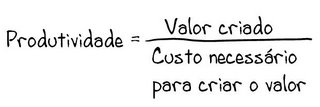
"Há um grande mistério na economia portuguesa. Nas últimas décadas temos vindo a recuperar muito em termos do nível de formação da população. A força de trabalho está cada vez mais bem formada e com mais capacidades de produção. O que tem acontecido é que também se passou a notar um fenómeno que antes não existia: cada vez há mais gente a desempenhar papéis que estão abaixo da sua formação. [Moi ici: Como não recuar a 2008 e à caridadezinha. De que serve a formação se não há onde a aplicar? O que as pessoas fazem tem o seu papel, mas é muito pequeno. Aumentos a sério da produtividade dependem de acções ao nível do numerador da equação da produtividade. Ora isso não depende dos trabalhadores mas dos gestores. E toda a gente sabe que escolaridade e empreendedorismo não costumam rimar] Esse fenómeno não existia nos anos 90. Por outro lado, a economia tem gerado cada vez mais patentes, por exemplo. Mas há uma dificuldade muito grande em passar dessa criação de patentes para mais inovação. Temos mais formação, mas acabamos por não a utilizar plenamente, porque temos trabalhadores a trabalhar abaixo da sua formação. E temos muitas patentes que acabam por não se transformar em inovação. Estamos muito aquém do potencial.
...
Onde se devem procurar explicações é no facto de haver uma diversidade muito grande de produtividade entre empresas, até no mesmo setor. [Moi ici: Parece retirado aqui do blogue, "o tema da distribuição de produtividades, o tema de se encontrar mais variabilidade no desempenho entre empresas do mesmo sector económico do que entre empresas de diferentes sectores económicos. A variabilidade intersectorial é menor que a variabilidade intrasectorial."] Empresas mais exportadoras e de maior dimensão têm produtividade muito maior do que outras empresas no mesmo setor, que são mais pequenas e não são exportadoras. Pergunta-se, então, porque não vão as empresas maiores buscar os recursos às mais pequenas e coloca-os a produzir mais? Porque há barreiras à transferência de recursos, porque algumas empresas têm dificuldade em morrer, [Moi ici: Como dizemos aqui no blogue, "Deixem as empresas morrer!" e cuidado com os zombies] as outras têm dificuldade em crescer e isso tem muito a ver com a concorrência que existe. Há uma postura muito defensiva de proteger os setores e que é pouco agressiva a tentar fazer crescer as empresas e tornar os setores mais dinâmicos.
...
Porque há uma boa parte da população que, no fundo, vota para garantir um nível de segurança na sua vida e tem uma preocupação maior com isso do que em fazer crescer o seu bolo. [Moi ici: Risk averse mentality e o aumento do risco, o aumento da fagilização] Está mais preocupada em proteger-se das oscilações do ciclo económico do que em realizar o seu potencial máximo e ambicionar um nível de riqueza superior.
Trechos retirados de "Porque não crescemos mais? "O Estado dificulta", mas "há uma mentalidade corporativa nos bancos e nas empresas que permite prolongar situações menos produtivas""
"Survivor bias is the trap of only considering the successful entries when thinking about risk. For example, if you look at the performance of mutual funds after ten years, most of them seem to do pretty well. But that's partly because the ones that did really poorly didn't make it to ten years.We are lucky enough to live on a planet that hasn't been destroyed by an asteroid. But that doesn't mean that other planets haven't had their life forms extinguished-we're simply unaware of them.Past performance is no guarantee of the future. Sorry.We should plan accordingly."
Trecho retirado de "Survivor bias and the mistake of stability."
"Separate from size and structural inertia, as a successful organization lives longer, it also develops norms that set expectations about those behaviors associated with success. People learn that certain behaviors are rewarded, both formally and informally, in terms of status and recognition, and other behaviors are frowned on or punished. People who comply with these norms are promoted, and new employees are selected based on their ability to fit with corporate expectations. This social control system or cultural alignment helps execute the strategy and contributes to the success of the firm. Unfortunately, it also leads to cultural inertia and makes change more difficult.
So we have a paradox: the alignment of the formal control system (structure and metrics - or organizational hardware) and of the social control system (norms, values, and behavior - or organizational software) is critical to the successful execution of the strategy. But these also foster the organizational inertia that can make it difficult to change, even in the face of clear threats. Thus, in the short term, managers work hard to align the organization with the strategy. As long as the external environment remains relatively stable, this is the key to organizational success and survival.
...
The structural and cultural inertia that its leaders had worked so hard to develop suddenly impeded their ability to experiment and adopt the new subscription business model."
Trechos retirados de "Lead and disrupt: how to solve the innovator's dilemma" de Charles A O' Reilly III and Michael L. Tushman.
Muita conversa no palco sobre economia, mas nos bastidores a fuga continua, "Endividamento da economia aumenta para 335% do PIB. Atinge o valor mais elevado de sempre":
"Em março, o endividamento do setor não financeiro (administrações públicas, empresas e particulares) aumentou 99,29 milhões de euros, para o valor recorde de 802,1 mil milhões de euros, o equivalente a 335% do PIB. Há um ano, esse rácio era de 329%; em dezembro era de 332%."
Recuo a 2013:
"A luz que ilumina também produz a sombra que oculta. Esta não é a primeira crise de dívida da História, mas terá uma resolução mais complexa e demorada porque tanto as taxas de crescimento do produto como as taxas de inflação são agora muito baixas, não favorecendo o resgate da dívida pelo crescimento, nem a desvalorização da dívida pela ilusão monetária. É o paradoxo da luz e da sombra: a dívida que foi contraída para estimular o crescimento é o que se traduz agora em aumento de impostos, em aumento de encargos financeiros e em impossibilidade de crescimento. E não se quis ver que o credor ocupa sem precisar de combater."
ADENDA das 10h30:

"By concentrating production in large facilities, companies can achieve economies of scale that lower the costs of production. [Moi ici: Racional típico do século XX em que que a competição pela eficiência e custo unitário era a única possibilidade de ser bem sucedido] Large-scale equipment can be operationally more efficient than smaller units....To be sure, scale does not automatically translate to lower costs. In some industries, production might be undertaken on a small scale with little or no disadvantage, and it’s possible to attain economies of scale at medium-sized production units. At times, scale can even be a problem. [Moi ici: Em Mongo a variedade é mais importante que a eficiência]...As we’ve seen during the pandemic, overly centralized production can create fragile supply chains...Research has found that companies that are big but less centralized — for instance, ones that own facilities spread across the country or around the world — enjoy more limited advantages. This type of scale can yield benefits in the form of lower costs, as a distributed network can avoid the need to transport goods over long distances, and spreading out production across multiple facilities can mitigate the consequences of a disruption at a single plant....More recent research supports ... that aggregating many production units under common ownership does not yield significant operational efficiencies. And if local and regional markets are best served through a network of local and regional distribution and production facilities, what is the public benefit of a single national corporation consolidating its ownership in place of many local and regional firms? Scale tied to the aggregation of assets comes with organizational challenges that can cause significant inefficiencies. Top-level management may have a harder time directing a dispersed team of managers, necessitating the creation of additional layers of administration to ensure that the corporation and its disparate parts are run effectively. [Moi ici: Por isso há muito tempo que escrevo que a cultura portuguesa não lida bem com as exigências de gestão das organizações grandes] And this bureaucracy can add costs and be a source of inefficiency on its own."
Quando os "experts" proclamarem que as empresas são viciadas em salários baixos talvez fizesse sentido que reflectissem nas dificuldades da mudança. Parece que Aristóteles terá dito "A quem os deuses querem destruir, eles enviam previamente quarenta anos de sucesso".
"Imagine that you are running a large, mature business with a well-known technology and proven business model. Furthermore, let's assume that because the business is mature and competition is intense, the strategy of the business is to compete on low costs. Imagine, for example, a semiconductor plant at Intel or a manufacturing plant at Toyota. In these instances, the key success factors are around efficiency and productivity, driving costs down (maybe through quality improvement and lean manufacturing), and incremental innovation (faster, cheaper). The skills needed for this include great operational expertise, a disciplined approach, rapid problem solving, and a short-term focus. The formal organization to promote increased efficiency and productivity typically emphasizes a functional organization (manufacturing, engineering, product development, sales, R&D with clear metrics and rewards for incremental improvement and short feedback loops to promote fast learning and the implementation of improved methods. ... this is about exploitation with an emphasis on efficiency, control, certainty, and variance reduction. [Moi ici: "variance reduction" ... como não recuar a Redsigma - O fim da linha] Improvement is a function of ever increasing alignment. With a low cost strategy, the winners are those organizations that are best able to drive out inefficiencies.
...
Now consider the challenge facing the leader of an emerging organization where the future of the business or technology is uncertain - perhaps Twitter or other social media companies. The overarching strategy is to scale quickly based on innovation and flexibility. Here the key success factors are growth, flexibility, and rapid innovation. What types of skills are needed? Clearly technical skills are important, but so is the ability to adapt and move quickly. Given the uncertainty in the technology and the market, the structure of the organization needs to be flat and able to respond quickly to new initiatives. ... The standardization and processes that help a mature organization can be deadly here.
...
To promote speed and flexibility, the culture needs to emphasize norms and values like initiative, experimentation, and speed. ... this is the alignment that promotes exploration. It's about search, discovery, autonomy, and innovation.
A couple of things are worth noting about these examples. First, although the alignments are very different, each is necessary for the successful execution of a particular strategy. When competition is based on efficiency and cost, the winner will most often be the organization that is most successful at reducing variance and promoting incremental innovation. When the market is changing rapidly, the alignment needed to succeed is one that is best able to experiment and adapt quickly. Second, attaining alignment is the primary role of the manager and it isn't easy. Setting up the systems and processes, structuring the work, motivating people and holding them accountable, and promoting constant improvement is a challenge. Third, the alignment that promotes success for one strategy may be toxic for another. And here is the rub: the alignment that makes a mature organization successful can kill an emerging business. And in the same way, the alignment that makes an emerging business work can make a mature business inefficient."
Pois, voltamos a Aristóteles::
"the alignment that has made an organization successful at one point may put it at risk in another. Great companies - those with a proud tradition - are potentially the most vulnerable to what we have labeled the success syndrome"
Não é impunemente que se tem sucesso. Por isso, não é fácil mudar.
Trechos retirados de "Lead and disrupt: how to solve the innovator's dilemma" de Charles A O' Reilly III and Michael L. Tushman.

"posso também afirmar que o nosso país é viciado em salários baixos. [Moi ici: Acho a afirmação incorrecta e injusta. As empresas no terreno só fazem o que lhes permitem fazer, se não fazem mais é porque não são obrigadas a isso, se não fazem mais é porque não sabem] Estamos todos acomodados a níveis de remuneração ridículos face ao potencial de criação de riqueza: as empresas estão acomodadas, [Moi ici: As empresas, como os outros seres vivos, estão sujeitas às pressões evolutivas, um bailado entre os factores internos e externos. Recordo, a economia é uma continuação da biologia. Se as condições externas o permitirem, podemos encontrar "crocodilos" que já existiam antes dos dinossauros e ainda cá estão, se as condições externas o permitirem as empresas não sentem pressão para evoluir, praticam exploitation e nenhuma exploration.] o Estado idem aspas e os trabalhadores também....A verdade é que com o nível atual de criação de riqueza a margem para aumentar os salários é diminuta....A solução não passa por aumentar salários à custa dos lucros de hoje - até porque ninguém nos garante que esses lucros se mantenham no futuro. O desafio passa por aumentar de forma sustentável a geração de riqueza, aproveitando todo o potencial que possuímos. E isso não se consegue com decretos (do governo), greves (dos sindicatos) e oportunismo (das empresas)....Consegue-se, sim, com mais produtividade dos serviços públicos e maior competitividade das empresas. [Moi ici: A maior contribuição do Estado para o aumento da produtividade, e esta é uma opinião completamente fora do mainstream, passaria pelo fim dos apoios estúpidos que se limitam a subsidiar os custos de operação de empresas que de outra forma morreriam. Por exemplo, quando uma empresa recebe um apoio por dar formação aos seus trabalhadores essa formação na maioria das vezes é para apoiar a estrutura de custos da empresa. Há outros apoios ainda mais estúpidos, "No país do Chapeleiro Louco". A maior contribuição do Estado seria "deixar as empresas morrer". Claro que deixar as empresas morrer pressupõe criar as condições para que outro tipo de empresas apareça, aquilo a que chamo a receita irlandesa. Não criar estas condições e pressionar as empresas existentes a subirem para níveos de produtividade que nunca conseguirão atingir é suicídio tipico da mentalidade socialista]...Por outro lado, às empresas pede-se que sejam mais eficazes, acrescentando mais valor aos produtos e serviços que vendem, [Moi ici: Não esqueçam esta frase acabada de sublinhar. Olhem primeiro para a figura abaixo. Acham que conseguimos dar o salto que é preciso, na produtividade agregada do país, acrescentando mais valor aos produtos e serviços que já vendemos? Reparem neste título "Subida de salários superior à produtividade retira competitividade às empresas" retirado da capa do semanário Vida Económica da passada semana (imagem abaixo). Acham que o sector do calçado não tem trabalhado para acrescentar mais valor aos produtos e serviços que vendem? Claro que o têm feito e bem, não sei se alguém conseguiria fazer melhor. Agora pensem no preço máximo que estariam dispostos a dar por um par de sapatos de couro? E aí chegamos ao tecto de vidro da produtividade portuguesa. De vidro porque ninguém fala dele, não faz parte do mainstream. O problema não são as empresas que já existem e que dão o seu melhor para lidar com o ambiente. O problema são os mastins de Baskerville!!! O problema são as empresas que faltam, que não estão presentes no mercado. O problema são as empresas que se seguem na pirâmide dos Flying Geese não estarem por cá] assegurando níveis de produtividade que tirem partido efetivo da evolução tecnológica e, last but not least, adotando estratégias de marketing que conduzam à criação de marcas internacionalmente fortes."


Em Depois do hype: O mastim dos Baskerville! recordo as palavras de Ferreira do Amaral ... como é possível?
A sério, gostava que alguém fizesse um traçado com uma corda oferecida por Ariadne que mostrasse como é que com as empresas existentes seria possível fazer a transição.
BTW, como é que começam os bons livros sobre "pricing"? O preço não tem nada a ver com os custos, mas com o valor para o cliente-alvo.
Uma empresa em particular tem de pensar: quem são os meus clientes-alvo? O que é valor para eles? Quanto é que estão dispostos a pagar pela entrega dos meios que permitem ao cliente criar e percepcionar esse valor na sua vida? Qual é a dimensão potencial do mercado? Esse preço e esse volume sustentam que tipo de empresa e com que dimensão?
Sou consultor de empresas.
Quando trabalho para uma empresa o propósito é ajudá-la a atingir os seus objectivos. Por exemplo, para uma empresa que precisa de aumentar a sua produtividade a ideia é levá-la a ver qual a melhor opção para a sua realidade concreta e contextual.
Por exemplo:

E se eu fosse consultor do governo? (vade retro)
Como consultor do governo a minha preocupação seria o aumento da produtividade agregada do país, não o sucesso de uma empresa em particular. Por isso, como consultor do governo estaria preocupado, um aumento da produtividade agregada que se visse, com impacte sério nos números, provocaria um choque nas empresas incumbentes e na sua rede de amizades políticas (recordo esta imagem). Como consultor do governo não promoveria a morte deliberada de empresas, mas deixaria as empresas morrerem, não vacilaria na execução estratégica nem promoveria absurdos loucos. Como consultor do governo focaria a atenção no aumento da produtividade agregada pela entrada de novas empresas com níveis de produtividade superiores, não pela sua escolha, mas pela criação de condições para tornar o país atraente para elas.
Essas empresas novas além de serem mais produtivas, seduziriam as pessoas empregadas nas empresas incumbentes a mudarem de emprego para elas. As empresas incumbentes acabariam na maioria por terem de morrer ou deslocalizar-se, outra forma de aumentar a produtividade. Isto explica o fenómeno dos Flying Geese.
É incrível como o mainstream acredita que são as empresas existentes as culpadas pela baixa produtividade do país. Como consultor do governo nunca criticaria as empresas existentes, cada empresa existente é um milagre que merece ser celebrado. Como consultor do governo focaria a minha atenção nos mastins dos Baskerville, as empresas que não existem.
Nota das 06h57: Recomendo a leitura da crónica de Joaquim Aguiar no JdN de hoje sobretudo o terço final sobre a relação entre a República dos Garotos, a crença no distributivismo e a rede de amizades.
%2006.21.jpeg)