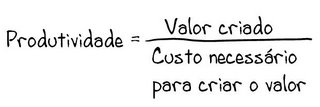
Aumentar o preço médio não pode ser o resultado de um braço de ferro com os clientes:

Não, não pode ser uma repetição do que já se faz. E penso em Segmentar como deve ser e Configurar como deve ser.

"This week, the $350 bn company [Moi ici: Walmart] issued its second profit warning in just over two months, telling investors that surging inflation, particularly in the prices of food and fuel, was affecting its customers' ability to afford other goods.
...
Consumers are not only worrying that they have less money to spend after filling their fridges and cars, retailers say: more of their discretionary spending is going on experiences they missed out on earlier in the coronavirus pandemic, such as travel and eating out, rather than on clothes, furniture or appliances.
Unpredictable demand, particularly among the most cash-strapped consumers, is only part of the challenge, however. Several companies, fearing a repeat of the supply chain delays that burnt them last holiday season, have been stocking up early this year.
Mattel, the maker of Barbie dolls and Hot Wheels cars, reported last week that its inventories were up 43 per cent year on year, for example, while rival Hasbro also had unusually high inventory levels as it stocked up for toymakers' peak season.
'Importers don't trust supply chains anymore," explained Zvi Schreiber, chief executive of logistics booking service Freightos. 'Retailers are not taking any risk. If they can afford the inventory, they're stocking up ready now for the on » shopping season."
...
But the current combination of historically high inflation and historically low unemployment is one that even retailers of Walmart's vintage have no playbook for, said Stephanie Cegielski, vice-president of research for the shopping centre group ICSC.
"The struggle for everybody right now," she said, is that "we've never seen anything like this."
Mais material para pôr em causa as longas cadeias de fornecimento dos últimos 20 anos, são incompatíveis com elevados níveis de incerteza. Mais material para afectar a tal balança de forças.
Trechos retirados de "'We've never seen anything like this': US retailers compete to clear stock"
I dare say that civilization is impossible, in the long term, without religions. Religion is a fantastic tool, and I am a religious guy, to promote cooperation and forgiveness instead of tilt-for-tat and escalation into conflict everywhere
— Carlos P da Cruz 🇺🇦🚜🇳🇱🇬🇪 (@ccz1) June 21, 2021
As leituras da missa de hoje na ICAR são sobre a base das civilizações. Cortar, pelo menos entre os nossos, a espiral do "tit for tat". Sem perdão não há civilização.
— Carlos P da Cruz 🇺🇦🚜🇳🇱🇬🇪 (@ccz1) February 20, 2022
Perdoar não significa, não intervenção da justiça.
Julgo ser este um papel de todas as religiões
Há muito que penso que o papel das religiões é quebrar o tit for tat que faz escalar qualquer confito e impede a civilização.
Por isso, sorri ao ouvir:
"Is there an overarching aesthetics that are projecting you and the world into the future?
Which I think is the basic idea of religion, that you understand the interactions that we have with each other as some kind of civilization-level agent that is projecting itself into the future."
Trecho retirado de Joscha Bach: Nature of Reality, Dreams, and Consciousness | Lex Fridman Podcast #212
"... basically put us into the post-modernist mode, and I don't mean in the philosophical sense but in a societal sense. The difference between a post-modern society and the modern society is that the modernist society has to deal with the ground truth and the postmodernist society has to deal with appearances.
Politics becomes a performance and the performance is done for an audience, and the organized audience is the media and the media evaluates itself via other media right so you have an audience of critics that evaluate themselves"
Trecho retirado de Joscha Bach: Nature of Reality, Dreams, and Consciousness | Lex Fridman Podcast #212
Banda sonora para este tempo -

Isto a propósito deste artigo no Caderno de Economia do semanário Expresso de ontem, "Têxtil volta a ter empresas em lay-off":
""Na indústria têxtil há cada vez mais clientes a atrasarem ou a suspenderem encomendas e já temos algumas empresas em lay-off ou a jogar com a antecipação de férias", diz ao Expresso Mário Jorge Machado, presidente da ATP Associação Têxtil e Vestuário de Portugal, preocupado com a evolução de um sector que pede o regresso de mais apoios, [Moi ici: Sempre a mesma doença portuguesa] num regime equivalente ao que foi adotado no pico da pandemia de covid. "Temos os consumidores assustados com a guerra, a inflação, a questão energética, a subida das taxas de juro. O retalho começa a retrair-se e a indústria sente também esse impacto", explica o empresário e dirigente associativo para defender "um quadro mais flexível, que facilite a reação rápida das empresas às flutuações da economia".
É verdade que os números da exportação continuam a ser positivos: até maio, as vendas ao exterior tiveram um crescimento homólogo de 19%, para os €2,6 mil milhões (mais 17% face a 2019), mas a evolução relativa ao volume tem vindo a abrandar mês após mês, acumulando agora um saldo positivo de 6%, e "a faturação é sempre reflexo de decisões de encomendas entregues alguns meses antes" sublinha, para garantir que o momento atual "é de arrefecimento".
A tendência é transversal a todos os segmentos da indústria têxtil, mas nesta fase as empress mais afetadas são as de acabamentos, tinturarias, tecelagem, tricotagem e algumas confeções, precisa. Do lado dos clientes, o abrandamento é especialmente sentido na Europa, com destaque para a Alemanha, e nos EUA."
Outras leituras:
"Leading a project is about causing the death of a million ‘ands’....You can’t build a luxury car that’s also inexpensive, AND drives well off-road, AND is very fast AND super safe. You can’t create an event that’s intimate, open to all comers, proven, resilient for any weather, held outdoors and unique.We focus on the frustration of losing an ‘and’ when we get nervous about the decisions we’re asked to make, when we are hesitant about commitment. And we obsess over the constraints we’ve already accepted because it slows us down and amplifies our fears.Instead of focusing on what we’re building, we focus on the paths that are no longer open.If we’re going to create anything at all, if we’re going to ship the work, the positive path is to look for the constraints and grab them. They’re the point. No constraints, no project. When we see them as stepping stones on the way to the work we hope to do, they’re not a problem, they’re a sign that we’re onto something.Managing a project is the craft of picking this ‘or’ that. ‘And’ isn’t often welcome because ‘and’ is a trap."
Trechos retirados de "Paths not taken"
Há dias em E Zeihan chega a Mongo! citei:
"4. Supply chains will be much shorter.
...
5. Production will become colocated with consumption.
...
6. The new systems will put premiums on simplicity and security just as the old system put premiums on cost and efficiency."
Agora leio, por um lado os sintomas do impacte da incerteza no retorno dos inventários, "Why Fashion’s Inventory Problem Is Back (And How to Solve It)" e, por outro lado, o aumento do risco da aposta no custo mais baixo, "Navigating Retail’s New Era of Risk":
"On closer inspection it’s clear that today’s global supply chains are the product of centuries of growth but little meaningful evolution when it comes to risk management.
...
The High Risk of Low Cost
Although separated by almost 200 years of history, the cotton famine of the 1860's and the supply chain crises of today share the same root cause: a myopic and often perilous focus on lowest landed unit cost. Procuring vast quantities of cheap goods has driven and continues to drive most of today's top brands because most see price as the cornerstone of competitiveness. However, as supply chain expert John Thorbeck often says, we operate in an era where business leaders must once and for all appreciate that the singular pursuit of low cost comes with an extraordinary number of risks that make businesses far less competitive, the first being the risk to financial capital.
...
It is also logical to assume that risks to global supply chains will become more frequent and profound as we become increasingly interconnected as a global community.
...
If reducing unit cost was the competitive advantage of the past, eliminating risk is the competitive advantage of the future."
Interessante, como regresso sempre a Maio de 2020 e a El coronavirus actúa como acelerador de cambios que ya estaban en marcha. Pois, em 2008... Para reflectir
Outras leituras:

:extract_focal()/https%3A%2F%2Fmiro.medium.com%2Fmax%2F1400%2F1*QIPJtnrQmxPerTr8grnKdA.gif)
Ando a ler o livro "The End of the World is Just the Beginning" de Peter Zeihan.
O autor cenariza o mundo futuro com base em duas variáveis: O fim da Ordem Americana que permite o comércio international, e o colapso demográfico em muitas partes do mundo.
No final do ano passado podia-se ler:
"Boomers are exiting the workforce in droves, leaving more job vacancies than there are people to fill them....Canada is in the throes of a serious labour shortage, but economists say it's not all the pandemic's fault — it's the inevitable culmination of a seismic demographic shift decades in the making."It's the slowest-moving train on the planet. It was predictable 60 to 65 years ago, and we have done nothing about it," said Armine Yalnizyan, an economist and Atkinson Fellow on the Future of Workers. "We knew this transition was going to happen."...In particular, the construction and manufacturing sectors are having a difficult time recruiting skilled workers, followed closely by accommodation and food services, which includes hotels, restaurants and bars."People are finding other places to work. There just aren't enough people willing to do poorly paid jobs that are marginal at best," Yalnizyan noted."Workers have a lot more choices now," Lee agreed. "If you have more choices and you don't have to work in that industry, you'll go and work in an industry where there's a better career stream and where the wages are higher and the hours are more predictable.""
Alinho isto com este trecho retirado do livro de Zeihan:
“Nobody would expect the worker who plugs in the relatively low-tech wiring to be compensated at the same rate as the worker who fine-tunes the sensors. Imagine if all the pieces were made in Japan, a country with a per capita income of some $41,000. That System on a Chip would be pretty fly—and it should be, the Japanese excel at complex microelectronic work—but it stretches the mind to think there might be some Japanese dude who loves to run an injection mold system to make phone cases for a dollar an hour. It would be like Lady Gaga teaching piano lessons to four-year-olds. Could she do it? Certainly. I bet she’d do great. But no one is going to pay her fifty grand for an hour of her trouble”
Fica tão claro o modelo Flying Geese. E fica clara a aprendizagem dos dinamarqueses acerca da contribuição líquida dos imigrantes para a sua segurança social:


"The war in Ukraine, however, has radically altered the geopolitical situation—with profound implications for business leaders. Many have had to decide whether to stop doing business in Russia [Moi ici: E não esquecer a China] —a choice that involves moral, economic, and political considerations that some CEOs feel ill-prepared to weigh. The combination of geopolitical strife and the pandemic has caused leaders to reevaluate their geographic footprints and supply chains. Many sense that the era of expansive globalization may be over, and they are exploring opportunities to localize their businesses to make them more resilient to international turmoil.
...
What Kind of Leaders Do We Need Now?
The new zeitgeist will require executives with the instincts to deal with shifting external forces, the ability to sense fresh economic opportunities, and the skills to lead and manage in a different age.
...
Avoiding land mines starts with anticipating how different stakeholders will react to events unfolding inside and outside the company. And that requires leaders to first broaden their thinking about what’s relevant to their business. There was a time when a CEO could say, “But what does this have to do with my company? Isn’t this matter in the personal or political sphere?” Such a perspective is unlikely to serve any executive well in the times ahead. Rather than resist, CEOs will have to embrace the broader responsibility into which they and their organizations will be drawn. They’ll need to empathize with people whose identities and interests may differ from their own. Gathering a wide range of views and listening carefully—even to thoughts and perspectives that may seem outlandish—will enable CEOs to be more in tune with those they lead.
...
The new zeitgeist will also require a greater emphasis on crisis management skills. Leaders can no longer assume that trouble may strike once every three or four years and be managed by outside crisis consultants. Instead, companies must prepare for a steady stream of upheavals—and hone their in-house skills for dealing with them. They can’t afford to merely react; they should anticipate, plan, and organize for potential challenges."
Trechos retirados de "As the World Shifts, So Should Leaders"
"El lujo es uno de los sectores de la industria de la moda que más depende de fuerza de trabajo especializado y que más está sufriendo las consecuencias del escaso relevo generacional que hay en la artesanía....Este año, LVMH tiene 2.000 vacantes disponibles de artesanos especialistas en divisiones como marroquinería, joyería, relojería y venta. “De cara a 2024, necesitaríamos unos 30.000 puestos de trabajo para asegurar la continuidad de la empresa”, sentenció la directiva.Según cifras recogidas por WWD, el 65% de los puestos de trabajo en la industria del lujo a escala global se encontraban vacantes en 2021. En los últimos años, el remedio que han encontrado grandes empresas de lujo como Louis Vuitton, Chanel o Hermès, entre otras, ha sido la creación de programas educativos para formar a las nuevas generaciones en la artesanía.En 2014, LVMH puso en marcha Institut des Métiers d’Excellence, una especie de escuela para formar a las generaciones más jóvenes en la artesanía....En los últimos años, el remedio que han encontrado grandes empresas de lujo a la falta de artesanos es la creación de programas formativos...Gucci, la joya de la corona del conglomerado de lujo Kering, también lanzó en 2018 Gucci École de l’Amour, una escuela que se centra en formar a las nuevas generaciones en procesos de fabricación y artesanía en las categorías de calzado y artículos de piel. La empresa también cuenta con Accademia ArtLab e Fabbriche, un programa interno que se centra en dar formación específica a empleados de Gucci que trabajan en las fábricas."
BTW, tenho na calha para leitura futura, "Return of the Artisan: How America Went from Industrial to Handmade"

E Peter Zeihan em "The End of the World is Just the Beginning" chega a Mongo!!!
Mongo é uma metáfora que uso há anos aqui no blogue para ilustrar um mundo económico pós-massificação. Eu cheguei lá por volta de 2007, uma sequência lógica da punção humana para a diversidade. Ele chega lá pela demografia e geopolítica. Ainda assim, penso que ele se fica mais pela dimensão das cadeias de fornecimento, pelas dificuldades da oferta. Eu prefiro adoptar o ponto de vista da procura.
"The longer and more complex the supply chain, the more likely it is to face catastrophic, irrecoverable breakdown.
That single statement contains a lot of angst and disruption.
...
The processes we use to manufacture things will change because the environment will change. Global economies of scale will vanish. Many of the technologies we use to manufacture goods under globalization will not prove applicable to the fractured world emerging.
That means that we, today in 2022, have a lot of industrial plant that just won't be relevant much longer.
...
It is all going to become stranded. Deglobalization-whether triggered by the American withdrawal or demographic collapse-will break the supply links that make most China-centric manufacturing possible, even before consuming nations more jealously protect their home markets.
...
The characteristics of this new industrial plant will reflect a fundamentally different macroeconomic, strategic, financial, and technological environment. It will be a bit different based on where that plant is located, but some common characteristics will exist across them all.
1.Mass-production assembly lines are largely out.
...
2.Reducing economies of scale reduces the opportunities for automation. Applying new technology to any manufacturing system adds cost, and automation is no exception. It will still happen, but only in targeted applications such as textiles and advanced semiconductors. [Moi ici: Recordo o exemplo da Toyota e da Mercedes, mas o ponto não é o custo, o ponto é o estilhaçar da procura numa multidão de gostos]
...
3.The pace of technological improvement in manufacturing will slow. Let me make that broader: the pace of all technological improvement will slow. [Moi ici: Pelo contrário, acredito que a velocidade da inovação vai aumentar]
...
4. Supply chains will be much shorter. In a disconnected world, any point of exposure is a failure point and any manufacturing system that cannot snuff out its own complexity is one that will not survive. The model of dozens of geographically isolated suppliers feeding into a single, sprawling supply chain will vanish. Instead, successful manufacturing will twist into two new, mutually supportive shapes. ... Machine shops in particular should thrive. They can quickly absorb capital and technology and new designs and new workers, and crank out customized or rapidly changing parts for use in those larger, core facilities.
5. Production will become colocated with consumption. With the global map fracturing, serving a consumer market means producing goods within that market. For smaller and more isolated markets, this suggests extreme production costs due to an utter lack of economies of scale, as well as difficulty sourcing the necessary range of input materials.
...
6. The new systems will put premiums on simplicity and security just as the old system put premiums on cost and efficiency. The death of just-in-time will force manufacturers to do one of two things.
...
7. The workforce will be very different. Between an alternating emphasis on customization and carrying out multiple manufacturing steps in one location, there isn't much room for people who don't know what they are doing."
"the European system will falter for any number of reasons. The first rationale is both the most obvious and the least manageable: Europe’s baby bust started before Asia’s, with the Europeans passing the point of demographic no return even before the new millennium. Belgium, Germany, Italy, and Austria will all age into mass retirement in the first half of the 2020s, while nearly every country in a Central European line from Estonia to Bulgaria is aging even faster and will age out in the second half.
Even worse, demographics alone ensure that Europe as we know it will collapse on a similar time schedule.
...
The demographic problem haunts in a second way. Europe has aged to the point that it cannot absorb its own products. Europe must maintain a high level of exports to maintain its system. The top destination is the United States, a country that is turning ever inward and at the time of this writing is already edging its way into a broad-spectrum trade war with the European Union
...
the part of Europe that maintains the most robust trade relationship with the Chinese is Germany. German product sales to China skew very heavily in the direction of machinery used to make other products . . . products for export. Even if, against all odds, Germany and China can maintain a trade relationship in a world where they lack the strategic reach to interact directly, Chinese exports will not be nearly as needed, undermining the base rationale for any sort of German-Chinese interaction.
...
Germany cannot maintain its position as a wealthy and free nation without the Americans, but Germany also cannot maintain its position as a modern industrialized nation without Russia.
...
Simply put, the Germanocentric system cannot maintain its current position, much less grow, and no one in the world has a strategic interest in bailing it out. The challenge for Central Europe will be to keep the Germans from acting like a “normal” country. The last seven times Germany did, things got . . . historical."
Só demografia e geopolítica macro, eu acrescentaria a indisciplina requerida pelo euro... também relacionada com a demografia.
Trechos retirados de "The End of the World is Just the Beginning" de Peter Zeihan.
“The Texas Triangle comprises the cities of Houston, Dallas–Fort Worth, Austin, and San Antonio. From a manufacturing point of view, the Triangle has it all: cheap food, cheap power, cheap land, no income tax, minimal corporate tax, hilariously light regulations. And that won’t change. Hell, the Texas legislature only meets once every other year, for only thirty-five days, and legislators are constitutionally barred from even considering legislation for the first half of that time window. American manufacturers of all types have flocked to the region. The single biggest subsector is automotive, but that oversimplifies a dizzying variety and dynamism. Austin operationalizes Silicon Valley’s ideas. Dallas–Fort Worth leverages its banking center to turn Austin’s brain work into mass manufacturing. San Antonio mixes lower costs than even the Texas average with the tech of Austin to blow out anything that can be put on an assembly line. But the real star of the Texas game is Houston. It plays with Austin in tech and Dallas–Fort Worth in automation and San Antonio with mass manufacture and it is a financial capital and it is America’s energy hub and it is in the Gulf Coast region and it is America’s biggest port by value and it is really good at moving around big chunks of metal. That machine work the Germans are so good at? Houston comes in a solid second place globally. No wonder Houston is the country’s second-largest concentration for Fortune 500 headquarters.”
Trecho retirado de "The End of the World is Just the Beginning" de Peter Zeihan.
Recordar:

Precisamos da via irlandesa. E qual é o destino? Manter o esquema Ponzi da segurança social a todo o custo. O tal:
“and the governing models of the post–World War II era do not simply go broke, they become societal suicide pacts.”
No DN de ontem:


🍅🍅 Hortícolas do Oeste à conquista da Europa
— Iniciativa Liberal (@LiberalPT) July 17, 2022
O presidente da Iniciativa Liberal esteve este domingo com horticultores em Torres Vedras.
Um negócio que gera valor e que exporta.
É a iniciativa privada que faz Portugal mexer. #PortugalMaisLiberal pic.twitter.com/nBtW6wuvFr
Cuidado com a iniciativa privada que promovem. Recordar: Os saxões que aguentem!
A CAP de 2022 não é a CAP do pós revolução. Há muitos anos que uso aqui no blogue o marcador "joão subsidio machado" do tempo em que João Machado era o líder da CAP. Como bem nota Erik Reinert num podcast, toda a suposta bem sucedida agricultura americana e europeia só o é porque repousa sobre um louco mar de subsídios.
Cuidado com a iniciativa privada que promovem.

"Não se pode pedir este aumento do salário médio sem dar nada em troca às empresas, que lhes permita ganhar competitividade?"
Tudo errado ...
Continuo a minha leitura de "The End of the World is Just the Beginning" de Peter Zeihan.
O autor acredita que com o fim da Ordem Americana imposta desde o pós-guerra o mundo aberto em que vivemos vai desaparecer. Uma das hipóteses do autor é a generalização da pirataria que se vê na costa da Somália, e o regresso de corsários ao serviço de estados. Primeiro o autor descreve os circuitos do petróleo e do gás natural, depois ilustra como as energias renováveis nunca conseguirão substituir nas décadas mais próximas as energias fósseis. É impressionante, os políticos mandam bitaites e fazem grandes proclamações. O autor limita-se a fazer contas e a demonstrar que não existe nem lítio nem cobalto capaz de alimentar essas ilusões. Agora estou a assistir a uma descrição das fontes, e de quem processa o aço, o cobre, o alumínio, o lítio, o molibdénio, o cobalto, a platina, o ouro, a prata, terras raras, e ...
O autor bate sempre na tecla que muitos países vão sentir-se tentados a novamente voltarem à tentação imperial para conseguir garantir o fornecimento desses materiais.
Na minha mente surgiu entretanto uma palavra da segunda guerra mundial: ersatz.
Muita investigação vai ter de ser desenvolvida na Europa para arranjar alternativas a todos aqueles materiais que a economia actual precisa, mas não existem na Europa. Imagino moléculas orgânicas a substituírem os materiais originais.
"What I found is that to make the transition successfully, executives must navigate a tricky set of changes in a their leadership focus and skills, which I call the seven seismic shifts. They must learn to move from specialist to generalist, analyst to integrator, tactician to strategist, bricklayer to architect, problem solver to agenda setter, warrior to diplomat, and supporting cast member to lead role....Problem Solver to Agenda SetterDefine the problems the organization should focus on, and spot issues that don't fall neatly into any one function but are still important."
A propósito de "Define the problems the organization should focus on", quantas vezes esta definição é feita de forma reactiva? Quantas vezes é feita sem a transição de tacticista para estratégico?
Trechos retirados de "How Managers Become Leaders"
"But in any case, despite my wishes, the world is probably entering an era of intense geopolitical competition, the likes of which haven’t been seen at least since the 1970s and probably since the 1930s. And that competition has the potential to provide a legitimating mission for the reintroduction of the kind of large-scale economic planning that many people have been looking for since 2008. We may not be able to prevent the new era of conflict, but in some ways we can take advantage of it — and in any case, we must do what needs to be done."Recordar a série O risco de voltar a trabalhar com a China (parte IV)
%2006.21.jpeg)