- "Aumento da procura faz disparar salários de engenheiros"
- "Falta de mão de obra qualificada retrai crescimento alemão"
- "Escandinávia precisa desesperadamente de mão-de-obra qualificada"
Quais as implicações, quais as consequências?
"When the Chinese clothing manufacturer Tianyuan Garments Company opens its newest factory in 2018, it will be in Arkansas, not China, and instead of workers hunched over sewing machines, the factory will be filled with fully autonomous robots and their human supervisors.Algo que não está alinhado com a tendência de Mongo, algo alinhado com o modelo do século XX.
.
Once the system is fully operational, each of the 21 production lines in the factory will be capable of making 1.2 million T-shirts a year, at a total cost of production that can compete in terms of cost with apparel companies that manufacture and ship clothing from the lowest-wage countries in the world. The factory will be one of the first to use a technology that could herald immense changes in how the apparel industry works."
"Venture capital taught Etsy that making money wasn’t a skill it needed to learn early on. Go on, it said, spend the millions. And when you’ve spent those, come back and get some more. So Etsy did. They came back for a B round, then a C round, then D, E, and F rounds. Just shy of $100 million in total.Como não recordar:
That experience deluded Etsy into thinking that they, uniquely, could ferry the scorpion across the river without getting stung. That a cool hundred million wouldn’t ever need to be paid back or corrupt its noble mission.
But the party only lasts until the music stops."
que parolice https://t.co/1bNuefiRph que parolice mesmo. empreender ñ é lifestyle nem show, é seduzir clientes ou morrer— Carlos P da Cruz (@ccz1) October 31, 2016
Oh boy... torrar €€ à fartazana. Arranjar clientes e MVP vai ser a última coisa https://t.co/0jzUR9qA1g— Carlos P da Cruz (@ccz1) March 8, 2016
estilo de vida:— Carlos P da Cruz (@ccz1) June 26, 2017
-o q fazes?
-tenho uma startup
-já tens clientes?
-ñ preciso, com apoios e subsídios tenho vida por + 10 anos sem clientes
"We wanted to unpack the how by identifying what sets these teams apart in terms of how they spend their time and the critical behaviors they engage in.Muito, muito bom!!!
...
Commit to an identity. The first tenet of their framework is that an organization must commit to an identity through a shared understanding of its value proposition and distinctive capabilities. In short, the organization must commit to focus on what it is good at and then go after it
...
Translate strategy into everyday processes and capabilities. Our analysis of how senior teams spend their time shows that for this dimension:
.
High-performing teams spend over 25% more time focusing the enterprise than their lower-performing peers. That time is spent establishing financial and operational metrics, aligning goals with overarching strategy, allocating resources, and reviewing key metrics.[Moi ici: Daí a importância de um balanced scorecard da 3ª geração]
High-performing teams spend 14% more time checking their progress against strategic goals by reviewing key metrics and shifting resources accordingly.
...
Concentrate on the unique cultural factors that fuel success. Implicit in this assumption is resisting the temptation to drive traditional change programs based on addressing gaps or weaknesses.
...
The academic literature as well as our consulting experience suggest that the ability to prioritize is a key ingredient to an enterprise leadership team’s success. This is no small task, given the constant and overwhelming demands on most teams. What do our data suggest about how teams go about this?
.
High-performing teams, compared to lower-performing teams, spend 54% more time first setting direction, crafting a vision that serves as a guiding light for decisions regarding resources.
When it comes to execution, lower-performing teams spend an astounding 83% more time fire-fighting and dealing with issues at a tactical rather than strategic level.[Moi ici: Quando deixaremos esta mania de nas empresas praticar o mesmo que vimos à dias quanto ao Infarmed? ]
...
Shape the future. High-performing teams successfully shape the future, rather than always being in a reactive mode in the present. How do they do it?
.
They spend 25.3% more time influencing high-level stakeholders by identifying their needs and managing their expectations.
Unsurprisingly, though easier said than done, the high-performing teams spend 13.2% more time planning for the future by setting direction, creating a vision, and defining their strategy.
Finally, they shape the future by responding to change in the present (20.7% more effectively than lower-performing teams), positioning the enterprise for future success. This is consistent with much of the existing literature around the importance of agility in high-performing teams."
Como é possível ser um chico esperto tão incompetente… #worten https://t.co/zUXFh8nKSO— poingg (@poingg) November 25, 2017
"False profits...E na sua empresa?
Some brands have even institutionalised false profits. I have learned of an airline that instituted a bonus system based on the over-weight baggage charges they manage to accumulate, as well as of a rental car company who offers gift vouchers to the rep having claimed the most damages on vehicles being returned (I wonder if these vouchers expire?).
.
But even if you are less aggressive about what surely are not long-term profit maximising practices, it is probably worth conducting a thorough analysis of your company profits, maybe guided by customer complaints. What is the percentage of profits that can be linked to customer complaints? Are these worth it? Common sense says no. But you can go further and observe the behaviour of customers hit with complaint-generating profits."
"A azeitona sai daqui a granel e não colocamos nós as nossas marcas no mercado internacional”, salientou. O responsável considerou ainda que, com esta venda direta, “não há mais-valia para o azeite de Trás-os-Montes”."Quem segue este blogue sabe o quanto valorizo a aposta:
"esta situação pode “condicionar a vida das próprias cooperativas”."Até que ponto as cooperativas estão a fazer o seu trabalho? Até que ponto as cooperativas estão a tratar os produtores como partes interessadas livres que devem ser cativadas e seduzidas para um projecto de longo prazo? Até que ponto as cooperativas estão a recompensar convenientemente os produtores? Até que ponto as cooperativas têm elas próprias uma gestão suficientemente ágil? Para eventualmente melhorar preços a pagar aos produtores e negociar melhores condições com a procura? Para aproveitar oportunidades e colocar em novas prateleiras o seu azeite numa altura de escassez? Para subir preços em tempos de escassez?
“If you’re selling the same merchandise that’s commonly available, and you’ve got no point of differentiation, you’re dead,” Mr. Rubin said. “It’s just a question of when you die.”Comecei a perceber como materializar isto com um artigo na revista Business Week em 2005 sobre o fim das linhas de montagem da Canon. E com a leitura em 2006 do livro "How We Compete: What Companies Around the World Are Doing to Make" onde encontrei trechos como este sobre a Kenwood:
"When Kenwood moved production of portable mini-disk players from a factory in Malaysia to their Yamagata, Japan, plant in 2003, they discovered they could exploit short-lived consumer trends."Em 2017, esta abordagem continua a ser notícia, no país dos gringos:
"When Alejandro Villanueva, a Pittsburgh Steelers offensive lineman, stood for the anthem and the rest of the team stayed in the locker room, his name began trending on Twitter. Fanatics quickly posted a rendering of his No. 78 jersey on its website and on the N.F.L.’s online shop, which it also operates.Trechos retirados de "Fanatics, Maker of Sports Apparel, Thrives by Seizing the Moment"
.
Sales skyrocketed. Manufacturing facilities in Kentucky and Florida went to work pressing Mr. Villanueva’s name and number onto thousands of blank Pittsburgh jerseys for next-day shipping. Overnight, a player who had never caught a pass or scored a touchdown had the N.F.L.’s best-selling jersey.
.
“That moment happened, people wanted to immediately buy that jersey,” Michael Rubin, the company’s chairman and principal owner said. “A week later, that moment is mostly over.”
.
These micro-moments, as Mr. Rubin calls them, happen all the time in sports: A player reaches a milestone, has a breakout performance or is traded to a new team. Apparel companies have traditionally been poorly positioned to meet the accompanying fan demand as it surges. Fanatics is changing that and, in the process, carving out a lucrative niche in a fiercely competitive online-retail industry largely dominated by Amazon."
"To lead your customer to a thoughtful decision where they choose you over the competition, you need to help them form compelling beliefs about why you are the best choice. Your customers don’t form these beliefs just by listening to you talk, or by reading your marketing materials. You’ll be much more successful if you look at the customer’s entire purchase decision process as a conversation between you and them."Trecho retirado de "A Sale is the Result of a Great Conversation"
"the value mantra is: it's not how little you pay, it's how much you get. That's the basic difference and tension between price and value. And today's procurement professionals not only need to understand this difference, they should use their procurement toolkit to help them put the concepts into practice.
.
When used, best-value approaches become the bridge that spans that tension, because determining the true cost and value equation assures companies they are getting the best "deal".
.
Unfortunately, the usual modus operandi for many businesses is to seek price reductions that provide immediate gratification rather than buying on best value, which for many managers is too long-term, involves too many departments, ad is too complicated and abstract."
"Já apresentamos cotação e perdemos, por preço..."Confesso que na altura não processei esta resposta convenientemente.
"A 10-year longitudinal study on executive transitions that my organization conducted found that more than 50% of executives who inherit a mess fail within their first 18 months on the job. We also uncovered numerous landmines for leaders in this situation. And, with the best of intentions, my client was about to step on a number of them. When a leader inherits a mess created by others, especially when arriving as an outsider, the situation can feel fragile and knowing where to begin the long journey of change can feel precarious. Based on our research and my experience, there are six things the most effective leaders do to avoid failing in a new role.Trechos retirados de "Leading Effectively When You Inherit a Mess"
.
Resist the temptation to emotionally distance yourself. Difficult and unfamiliar circumstances can make leaders feel vulnerable. To combat their anxiety, they actively avoid being implicated in the mess in subtle but damaging ways. Four weeks after my client’s arrival, I noticed a distinctive pattern in her language. When referring to the significant challenges of her new organization, she consistently spoke in third-person references — they, them, those people. And when speaking about possible changes that needed to be made, she spoke only in first-person language: I will, I don’t.
...
Never blame your predecessor. It’s a natural temptation to blame the past regime when entering organizations in disarray. In one meeting, my client’s frustration got the best of her, and while looking over the past quarter’s budget, she blurted out, “What on earth was he thinking?” Well, since “he” isn’t there anymore, everyone else in the room was implicated by proxy. Nobody knows better about the mess they are in than the people in it, much less about how it came to be. You are better off simply making no references to decisions or actions taken prior to your arrival. Your best response when being baited to blame those that came before you is simply, “We can’t change what happened then, but we can change what we do going forward.” People appreciate when you take the high road.
...
Minimize references to past successes. Absent any substantial experience in your new environment, the likely place to reference your track record is past successes. Chances are that you were hired into the role because you had relevant experiences. But talking about those experiences doesn’t help you leverage the wisdom from them.
...
Test the reliability of your data. While unvarnished data can be hard to come by when facing harsh headwinds, it’s even harder to come by when everyone wants to appear innocent and important.
...
Be transparent about how you will make changes. There are lots of rules about how fast an entering leader should make changes and how big they should be. Some suggest waiting 90 days, even up to a year, to learn the organization before upending anything. Some say clean house on day one. The speed of change will depend on your particular situation and what the business can tolerate. If immediate change is needed, make it. If you aren’t sure, then investigate and diagnose before you make your moves. My client’s thoughtful approach served her well in this regard. She was very transparent up front about how she would assess the organization, how she would approach making changes, and in what time frame. Her “leading out loud” allowed others not to wait in dread and also not to remain in denial. My client’s approach was to start with small wins championed by people in her organization."
"In an era of explosive growth for online buying, retailers and shoppers are showing renewed interest in a humble purchasing device that uses paper instead of pixels.E isto:
...
For the first time since 2011, Sears Holdings sent out the Sears Wish Book, a holiday tradition for generations of children. Although this year’s catalog has the heft of a magazine rather than the phone-book size that the department store produced back when it was a retail juggernaut, the offerings are more extensive and searchable online.
.
The ability to stand out in that physical mailbox is easier than it was 10 years ago.
...
In 2016. the response to catalogs increased 23% from the year before, ... In terms of catalogs, which make up one third of all direct mail, that means they were more likely to buy something than in the past several years.
.
Companies are using print catalogs to cut through email clutter and social-media saturation,
...
print catalogs will never be as popular as they once were, but that retailers appear to be using them as part of what he called an “omnichannel” approach that tries to more closely integrate a store’s website with its physical stores, such as buying online and picking up at the store the same day."
"A survey included in a recent DMA report found that nearly one-third of those polled said getting a catalog drove them to shop online."
"For many leaders, the taxing nature of enterprise-level leadership is too great. Being sufficiently knowledgeable about context requires a huge tolerance for ambiguity and the acceptance of a perpetual learning curve. Making hard trade-offs means saying no to people and facing the many dysfunctional ways people deal with being disappointed by their leader. Shifting organizational designs means having to address the harsh realities of instigating major change — organization-wide anxiety, intensified political dynamics, and sometimes having to part ways with those not prepared for the new world you are creating. It’s no surprise that mental and physical stress-related illnesses are high among executives. While some executives thrive on the challenges inherent in the trailblazing work of strategy, many simply collapse under the emotional toll it takes. In our research, 38% of executives said they didn’t expect the loneliness and isolation that accompanied their jobs and 54% said they felt they were being held accountable for problems outside their control. Given the ruthlessly unforgiving nature of executive jobs, I encourage all my clients to have a team of professionals around them, including an executive coach, a licensed therapist, a personal trainer, and a nutritionist. That kind of “scaffolding” helps leaders bear the harsh realities of strategic leadership in healthier ways.Uma descrição crua da realidade.
.
The work required to effectively craft and execute a company strategy is extraordinarily difficult. It’s no surprise that many try to oversimplify it, or dilute it to match whatever level of competence they have. But if organizations actually invested in preparing executives for the real requirements of these roles, we would see failure rates decline and companies more consistently adapt and thrive."
"So, if your pricing isn’t working, what can you do about it? Well, you have several options, but here are a few to consider:Trechos retirados de "Pricing for Profitability: You Are in Control, Even If It Doesn’t Feel That Way Yet"
.
Raise your prices. Raising your prices allows you to work with fewer clients [Moi ici: Não percebo porque mais empresas não aprendem esta verdade. Recordar "Um euro de crescimento em preço..."] and gives you more time to deliver great results. What you do is valuable -- own that fact and know your worth.
Change your target audience. If you know that what you are offering provides value, but are still experiencing low conversion rates and/or hearing complaints, this could mean that you are barking up the wrong tree. It may be time to consider other markets or pivot in a new direction to find your ideal clients. Also, if you are spending time with people who don't see your value or complain about your pricing, it is definitely time for you to move on. Remember, if they can't see the value, it’s their problem, not yours.
.
Look at your systems. Recognizing when your current systems aren't working and investing in your processes, could be the time-saving boost that you need to get your cycle back into alignment and get your business back to growth.
.
In short, if you discover your pricing strategy isn’t working, it’s imperative to take an honest look at yourself, your business, and your current customers. This means pulling data, examining your metrics, and asking others their perspective about what’s working or not working."
"We explore the implications of a real and common alternative to attempting the transformation required to embrace a new, dominant, technology—the choice to maintain focus on the old technology. In considering this choice, we distinguish between “racing” strategies, which attempt to fight off the rise of the new technology by extending the performance of the old technology, and “retreat” strategies, which attempt to accommodate the rise of the new technology by repositioning the old technology in the demand environment."Agora em "How Independent Bookstores Haved Thrived in Spite of Amazon.com" encontro:
"When Amazon.com burst onto the nascent online retail scene in 1995, the future seemed bleak for brick-and-mortar independent bookstores—which already faced competition from superstores like Barnes & Noble and Borders. Indeed, between 1995 and 2000, the number of independent bookstores in the United States plummeted 43 percent, according to the American Booksellers Association (ABA), a nonprofit trade association dedicated to the promotion of independent bookstores.E agora ler isto:
.
But then a funny thing happened. While pressure from Amazon forced Borders out of business in 2011, indie bookstores staged an unexpected comeback. Between 2009 and 2015, the ABA reported a 35 percent growth in the number of independent booksellers, from 1,651 stores to 2,227.
...
Independent bookstores provide a story of hope by focusing on core values that include community, curation, and convening."
"While all this was happening on a local level, there was important top-down work going on at the American Booksellers Association (ABA), a nonprofit trade association dedicated to the promotion of independent bookstores. The ABA served as a glue to bind likeminded players together—facilitating partnerships between bookstores and other local businesses, for example. The ABA also strengthened the collective identity of indie bookstores by helping its members share best practices, such as how to use social media to promote special events."Para depois recordar "Gente de outra estirpe" e o poder da liderança nas associações.
"Druker: We relied largely on discussions that we’d had with customers, with people in the industry that we worked in, the dairy industry in particular. We’d talk to nutritionists and to dairy producers, asking, “What are some of your biggest issues?” We mainly focused on the nutritionists, who are the people the dairy producer hires to help put together the ration to feed the cows. Our products go into those rations, so even though the dairy producers are buying the products, most of our efforts were focused on the nutritionists.Mais um exemplo sobre a importância de estudar o ecossistema das partes interessadas e perceber quais são as relevantes e quais são os seus requisitos relevantes.
...
Druker: We’ve always known the end customer is the dairy producer, and ultimately the dairy cow, but yeah, we were basically getting our innovation information from a consultant that was being hired by the dairy producer. So yeah, I think absolutely part of our issue was we weren’t identifying the right people to speak to."
"Apresentar um destino ambicioso, conversar abertamente sobre como é viver nesse destino, que resultados obtêm a empresa e os clientes, o que dizem os clientes da empresa, o que dizem os trabalhadores da empresa e do que fazem. Deixar a visão da terra onde corre leite e mel seduzi-los, deixar que contribuam para a descrição de como é essa terra, eles já lá estão, eles já lá vivem, o que vêem, o que fazem, o que sentem? Depois, capturar o gap, a lacuna entre o que ainda somos e o que queremos ser no futuro desejado para construir o programa de transformação."E recordo o acrónimo, "S-CRT":
"People might hear what you say, but they always remember what you do."Como não recuar a Abril de 2006 e recordar:
"Qualquer subordinado, é o melhor estudioso do comportamento do seu chefe, não interessa o que o seu chefe diz, ou proclama; interessa o que o seu chefe faz, onde ocupa o tempo da sua agenda. Assim, o que a gestão de topo mede é uma poderosa mensagem para o resto da organização, o que se mede é o que interessa, é o que tem de ser atingido."Trecho inicial retirado de "The boss goes first"
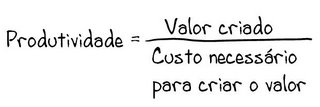
"It is widely believed that restructuring has boosted productivity by displacing low-skilled workers and creating jobs for the high skilled."Mas, e como isto é profundo:"In essence, creative destruction means that low productivity plants are displaced by high productivity plants." Por favor voltar a trás e reler esta última afirmação.
.
"Lovaglia’s Law: The more important the outcome of a decision, the more people will resist using evidence to make it."
"If an organisation is too stable it can ossify, but if it is too unstable it can disintegrate. Successful organisations work between these two conditions or states, in what Stacey called ‘the chaos zone’."
"If the customer doesn't care about the price, then the retailer shouldn't care about the cost,"
“It's not enough that we do our best; sometimes we have to do what's required”.
"Das Leben, das uns gegeben ist, ist uns nicht als etwas Fertiges gegeben, sondern wir müssen es uns gestalten, und zwar jeder sein eigenes."
"Eine Regierung, die nichts wert ist, kostet am meisten."
"Forget trying to persuade them; light their pants on fire."
"O futuro é o que importa. O futuro é a base do significado, é de onde vem o projecto que alguém tem para si próprio"
"The single biggest problem in communication is the illusion that it has taken place."
“It is not the strongest of the species that survives, nor the most intelligent; it is the one that is most adaptable to change.”
"o Marketing só existe a partir do pensamento estratégico, caso contrário "não resulta""
"It is difficult to get a man to understand something, when his salary depends upon his not understanding it"
"Perder diversidade é como arrancar páginas de um livro. Quantas páginas poderemos arrancar até deixar de compreender o enredo?"
The great enemy of the truth is very often not the lie – deliberate, contrived and dishonest – but the myth, persistent, persuasive, and unrealistic. Belief in myths allows the comfort of opinion without the discomfort of thought."
"By strategy, I mean a cohesive response to a challenge. A real strategy is neither a document nor a forecast but rather an overall approach based on a diagnosis of a challenge. The most important element of a strategy is a coherent viewpoint about the forces at work, not a plan."
"Un desastre està punt de succeir a Espanya. El malentès de la gravetat de la crisi costarà car als inversors, ja que tindrà profundes conseqüències per a tot el sistema bancari europeu", afirma.
Entre d'altres coses, Mauldin diu que "els inversors estan fumant crack si creuen que els bancs espanyols són entre els més forts d'Europa, ja que estan amagant les seves pèrdues".
“… there are no “sunset” industries condemned to disappear in high wage economies, although there are certainly sunset and condemned strategies, among them building a business on the advantages to be gained by cheap labor”
"o vencedor da vida, o optimista que vive em incesto com o próprio ego, é o traço mais frágil do líder"
"We shall not grow wiser before we learn that much
that we have done was very foolish."
You may not be able to change the world but can at least get some entertainment & make a living out of the epistemic arrogance of the human race.
"I wanted you to see what real courage is, instead of getting the idea that courage is a man with a gun in his hand. It's when you know you're licked before you begin but you begin anyway and you see it through no matter what. You rarely win, but sometimes you do."
“Trust your guts. But not too much!”
"Customers will try 'low-cost providers,' because the majors have not given them any clear reason not to." "
"Natal é quando as Crianças pedem e os Pais pagam. Défices é quando os Pais pedem e as Crianças pagam."
"A imprevidência dos povos é infinita, a dos governos é legal"
"What a man sees depends both upon what he looks at and also upon what his previous visual-conceptual experience has taught him to see"
“The leaders first task is to be the trumpet that sounds a clear sound”
"lamented the lack of any systematic data on the scale of unfunded IOUs that care-free politicians have handed out like confetti."
"Let them call me rebel and welcome, I feel no concern from it; but I should suffer the misery of devils, were I to make a whore of my soul..."
O problema não é o consumo. O problema é o consumo assente em endividamento."
"There are designations, like "economist", "prostitute", or "consultant" for which additional characterization doesn't add information."
When it becomes more difficult to suffer than change, you will change"
"Hope is not a strategy and a crisis is a terrible thing to waste"
The more you can see of the present, the more you can see of the future"
Yes, You can change the future, but only changing the present"
"Entrepreneurship is 'Having aspirations greater than your resources'"
“The single biggest reason companies fail is they overinvest in what is, as opposed to what might be."
"The first principle is that you must not fool yourself - and you are the easiest person to fool. So you have to be very careful about that"
"A estabilidade é uma ilusão"
"When we create the conditions of possibility, the universe becomes our co-conspirator"
Thinking about doing is not doing. Talking about doing is not doing. Doing is doing."
"'God has created me to do him some definite service. He has committed some work to me which he has not committed to another'.
...
"Each of us has a mission, each of us is called to change the world, to work for a culture of life, a culture forged by love and respect for the dignity of each human person.
"As our Lord tells us in the Gospel we have just heard, our light must shine in the sight of all, so that, seeing our good works, they may give praise to our heavenly Father."
"The future is not there waiting for us. We create it by the power of imagination."
"confusing testosterone with strategy is a bad idea"
"Much consulting involves the application of models to a system, as opposed to getting involved in the system as a positive change agent""
"O Portugal que pára sem orçamento é precisamente aquele que vive dele e que há todo o interesse em parar."
"credibilidade da política financeira e dos seus executores está ao nível da credibilidade de uma barraca das farturas"
"The role of the manager is thought to be reduction of uncertainty rather than the capacity to live creatively in it"
"today an entrepreneur is closer to artists than managers"
"A business without a path to profit isn’t a business, it’s a hobby"
"If no one’s upset by what you’re saying, you’re probably not pushing hard enough. (And you’re probably boring, too.)"
"Storytelling isn’t just how we construct our identities, stories are our identities"
"'He who has a why to live can bear almost any how' "
"They can because they think they can"
"Se há coisa que não suporto é misturar catequese com negócios, é a incapacidade para calçar os sapatos do outro e só pensar na nossa posição de coitadinhos, pobres vítimas indefesas dos maus e que por isso precisamos do Estado todo poderoso para nos proteger e, nem percebem na volta, os juros que o Estado cobra por esse serviço mafioso de protecção que, ainda por cima não resolve nada."
"Empathy is like a universal solvent. Any problem immersed in empathy becomes soluble."
"In victory, do not brag; in defeat, do not weep"
"Value it's a feeling not a calculation"
"An economist is someone who has had a human being described to him, but has never actually seen one."
"Don't finish first--it's not about running a rat race. Start with a better ending in mind."
"If you sit in on a poker game and don’t see a sucker, get up. You’re the sucker.”
"The 'value added' for most any company, tiny or enormous, comes from the Quality of Experience provided."
"Crediting government with the success of entrepreneurs is like crediting the guy who built Bill Gates’ garage with the success of Microsoft."
"I have found that assuming social scientists understand the difference between correlation and causality is not generally a good one."
"Promising never to raise taxes, without reaching a deal on spending, really means a high and rising commitment to future taxes."
"Some things are so foolish that only an intellectual could believe them, for no ordinary man could be such a fool"
"os bancos não financiam a economia, a poupança sim"
"I do not know the key to success, but the key to failure is trying to please everybody"
"Never be afraid to try, remember... Amateurs built the ark. Professionals built the Titanic."
"terms such as 'experiment' and 'observation' cover complex processes containing many strands. 'Facts' come from negotiations between different parties and the final product - the published report - is influenced by physical events, dataprocessors, compromises, exhaustion, lack of money, national pride and so on."
"'science in the making' is 'the consequence of [a] settlement' of 'controversies'."
"If the state wishes to spend more, it can do so only by borrowing your savings or taxing you more. And it's no good thinking someone else will pay, that someone else is you."
"All failures of strategy are rooted in the assumption that outcomes are predictable."
"Doing things like your bigger competitors is how to get killed in the wars out there"
“Uma moeda boa e forte é como a saúde. Só lhe damos verdadeiramente valor quando não a temos.”
"Life’s tough. It’s tougher if you’re stupid"
"O homem de bem exige tudo de si próprio; o homem medíocre espera tudo dos outros"
"Change is a threat when done to me, but an opportunity when done by me."
"As elites foram deixando de falar das exportações à medida que se foi percebendo que o país consegue exportar sem elas"
"Your toughest competition is the little voice inside your head telling you to stop"
"Pain is just weakness leaving your body"
"Built to last" is bad economics. Built to do something great" is the better idea. Think: "Creative destruction."
"the world is an uncertain place no matter how many Greek letter equations you affix to a problem."
"You never change things by fighting existing reality. To change s.th., build a new model making the existing model obsolete"
“No, no, you're not thinking; you're just being logical.”
"Success is not a destination. It's the trail you leave behind you."
"Winners make a habit of manufacturing their own positive expectations in advance of the event."
“You’ve got to start with the customer experience and work back toward the technology – not the other way around”
"Strategy as the "smallest set of - intended or actual - choices and decisions sufficient to guide all other choices and decisions sufficient to guide all other choices and decisions."
"When something is commoditized, an adjacent market becomes valuable"
"nature evolves away from constraints, not toward goals"
"There aren't any textbooks on what to stop doing!"
"With great power comes great irresponsibility "
"Weird things happen when you take price out of the equation for consumers"
"‘It’s so damn complex. If you ever think you have the solution to this, you’re wrong and you’re dangerous.’"
"Saruman believes it is only great power that can hold evil in check, but that is not what I have found. I found it is the small everyday deeds of ordinary folk that keep the darkness at bay. Small acts of kindness and love."
"Increasing stuff that doesn't add value dilutes existing value."
"O federalismo não é a alternativa à troika, é a troika para sempre."
"Never underestimate the difficulty of changing false beliefs by facts"
"Stressors are information"
“If you hear a “prominent” economist using the word ‘equilibrium,’ or ‘normal distribution,’ do not argue with him; just ignore him, or try to put a rat down his shirt.”
"The advantage of experiences over things for most of us is that we can make them seem unique, which = scarce, which = value"
"Pedras no caminho?
Guardo todas, um dia vou construir um castelo"
"Without risk, faith is an impossibility."
"Não posso com quem vive a achar que os outros lhe devem sempre alguma coisa."
"In a world of increasing automation, our ability to perform tasks is not nearly as important as our ability to dream. The questions we need to ask are not ones of action, but ones of meaning"
"Me arrancam tudo a força e depois me chamam de contribuinte."
"Letting people vote for expensive programs that “somebody else” will finance is a good recipe for getting people to vote irresponsibly"
"what's fairness gotta do with pricing based in value?"
"The epic battle of our generation is between the status quo of mass and the never-ceasing tide of weird."
“Price is emotional”
"There will always be a reason why you can't pursue it, until competitors create a reason why you must."
"The most important thing to study is opening theory"
"The greater the contrast, the greater the potential"
“Customers don't care about your solution, they care about their problems.”
"Todos querem conhecer a verdade, mas o que desejam é que lhes contem uma mentira em que não sejam protagonistas."
"Execution efficiency strangles innovation in the crib, but not with malice, by default.”
"Our obsession with scalability is getting in the way of unleashing the potential of the 21st century."
"The system is optimized to mitigate risk, not create value"
"Champions are made when no one is looking"
"Don't bargain on value. Half as expensive is often twice as cheap."
"Customers care about outcomes, not effort, technology, or originality."
"
"You don't have to pick between 1) playing the game and 2) not playing the game. You can *change* the game."
""The first principle is that you must not fool yourself and you are the easiest person to fool." "