"Dig a Hole to Fill a Hole"Faz-me lembrar o mais défice, para reduzir o défice.
.
É impressionante como empresas grandes, cometem erros crassos tão facilmente.

"Dig a Hole to Fill a Hole"Faz-me lembrar o mais défice, para reduzir o défice.
"Price is the third profit driver. Price has a more pronounced leverage in profit than does volume (assuming marginal costs greater than zero), because a price increase directly affects profits, whereas an increase in volume raises profits only by the additional revenue minus marginal costs.Trecho retirado de "Retail Pricing – Higher Profits Through Improved Pricing Processes" de Hermann Simon, Andreas von der Gathen, e Philip W. Daus.
.
Figure ...
shows how dramatically a price increase of only 1% (with constant volume) would improve the profit situation of selected retailers."
"If you reserve your best effort for the irritable boss, the never-pleased client and the bully of a customer, then you've bought into a system that rewards the very people who are driving you nuts. It's no wonder you have clients like that--they get your best work.Quem são os clientes-alvo da sua empresa?
.
On the other hand, when you make it clear (and then deliver) on the promise that your best work goes to those that are clear, respectful and patient, you become a specialist in having customers just like that.
.
One of the largest turning points of my career was firing the client who accounted for a third of my company's work. We were becoming really good at tolerating the stress that came from this engagement, and it became clear to me that we were about to sign up for a lifetime of clients like that.
.
Set free to work for those that we believed deserved our best work, we replaced the lost business in less than six months.
...
[The other alternative is a fine one, if you're up for it... specialize in the worst possible clients and bosses, the least gratifying assignments. You'll stand out in an uncrowded field! The mistake is thinking you're doing one and actually doing neither by doing both.]"
"The prevalence of revenue-driven profitability among exceptional companies is perhaps most significant for what it says about how best to use ROA as a guide to strategie action.Um conselho sempre presente neste blogue.
.
As we explored briefly in chapter 1, since ROA is a ratio, there is no mathematieal difference when ROA is inereased by adjusting any of its constituent elements. Raise price or volume, reduce costs or assets ... the arithmetic cannot tell the difference. (Moi ici: Advinhem qual a interpretação dos teóricos da tríade, desconhecedores da relações amorosas e crentes monoteístas no Excel)
.
But in practice there seems to he a very real difference. Miracle Workers are not wastrels, but they do not rely ou cost leadership to drive their performance. Both in our population of exceptional companies and in our sample, Miracle Worker status is a consequence of gross margin advantage driven hy higher price or volume—and as often as not enabled by higher costs and frequently assets. ln other words, exceptional profitability demands, beyond a point, making trade-offs, accepting higher costs as the price of being truly exceptional. Driving profitability from merely good to truly great by reducing either costs or assets is not something we see, as an entirely empirical matter, to be the most likely route to Miracle Worker performance."
"The problem with pessimistic expectations, such as those of the clinically depressed, is that they have the power to alter the future; negative expectations shape outcomes in a negative way. Not everyone agrees with this assertion. Some people believe the secret to happiness is low expectations. If we don’t expect greatness or find love or maintain health or achieve success, we will never be disappointed. If we are never disappointed when things don’t work out and are pleasantly surprised when things go well, we will be happy. It’s a good theory — but it’s wrong.E volto a Seligman:
...
Although the belief in a better future is often an illusion, optimism has clear benefits in the present. Hope keeps our minds at ease, lowers stress, and improves physical health. This is probably the most surprising benefit of optimism. All else being equal, optimists are healthier and live longer. It is not just that healthy people are more optimistic, but optimism can enhance health. Expecting our future to be good reduces stress and anxiety, which is good for our health.
...
Yes, optimism is on one level irrational and can also lead to unwanted outcomes. But the bias also protects and inspires us: It keeps us moving forward, rather than to the nearest high-rise ledge. To make progress, we need to be able to imagine alternative realities, and not just any old reality but a better one; and we need to believe that we can achieve it. Such faith helps motivate us to pursue our goals."
"Pessimistic prophecies are self-fulfilling."E a uma luz de esperança para Constança:
"Habits of thinking need not be forever. One of the most significant findings in psychology in the last twenty years is that individuals can choose the way they think."
"The Goliaths typically play in the rational space; this is the arena that appeals to the part of the brain looking for a good deal. The core campaign message is very specific and clear, and it’s usually about value. The problem is, when several competitors share the same rational message about value, the Goliath with the loudest voice (i.e., the highest media spend) wins.Trechos retirados de "How Your Brand Can Beat Goliath"
.
For your brand to break through, you need to appeal on two more nuanced dimensions: cultural and emotional. You need to create and share a point of view that your prospects find enlightened and unique. And to express that point of view is to speak your mind freely — as a brand — not about what you have on sale, but about something bold that will stir a customer’s interest.
...
making your brand hyper-obsessed about a specific niche or topic. When you tap into something that your audience can relate to, you’re tapping into something cultural."
"“Dado quase toda a dívida pública estar hoje nos bancos nacionais, quem tiver depósitos bancários é alvo dos seus próprios impropérios. Se a dívida fosse repudiada, como aconselham, a perda cairia em sua casa”.Trecho retirado de "João César das Neves: “Se a dívida fosse repudiada a perda cairia em sua casa”"
.
João César das Neves afirma ainda que “espanta que tantos ignorem olimpicamente a situação, apenas protestando, sem sugerir alternativas razoáveis de cura”. “É verdade que na confusão se cometem muitos erros. Apesar disso, as autoridades tentam resolver o problema nacional; os vociferadores nada contribuem de construtivo e ignoram o sofrimento muito superior que adviria da ausência de medidas duras"."
"Life isn't fairInteressante encontrar este trecho em "Life Isn't Fair-- So Be Optimistic" depois de ter descoberto "Learned optimism" de Martin E. P. Seligman.
...
Yes, life isn't fair, which is why you MUST be optimistic.
.
Pessimists pretend that life should be fair and then get upset when it isn't. When the unfairness of life smacks pessimists down, they tend to stay down.
.
Optimists know life is unfair but still try to make things better. When the unfairness of life knocks them down, optimists get back up on their feet and try again.
.
Think of it this way: you've been dealt whatever cards you've been dealt. You have two choices: 1) complain that other people got better cards than you or 2) concentrate on playing the cards you got as well as you possibly can.
.
Optimism is the only "cure" for the unfairness of life."
"The optimists and the pessimists: I have been studying them for the past twenty-five years. The defining characteristic of pessimists is that they tend to believe bad events will last a long time, will undermine everything they do, and are their own fault. The optimists, who are confronted with the same hard knocks of this world, think about misfortune in the opposite way. They tend to believe defeat is just a temporary setback, that its causes are confined to this one case. The optimists believe defeat is not their fault: Circumstances, bad luck, or other people brought it about. Such people are unfazed by defeat. Confronted by a bad situation, they perceive it as a challenge and try harder. These two habits of thinking about causes have consequences. Literally hundreds of studies show that pessimists give up more easily and get depressed more often.
...
A pessimistic attitude may seem so deeply rooted as to be permanent. I have found, however, that pessimism is escapable. Pessimists can in fact learn to be optimists,"
"For upscale brands, there is a fine line between “cheaper” and “cheap.” And for Apple, the premium electronics maker, the key is to avoid crossing it.Trechos retirados de "Luxury Brands Face Hazards When Testing Lower Costs"
...
The addition of a cheaper iPhone could help Apple sell tens of millions more phones. But it could also diminish its reputation as a premium brand.
...
For Apple, the devil will be in the details: just how much lower the price of the cheaper iPhone is, and just how much cheaper it looks and feels. If the iPhone is deemed cheap, it could get into the hands of so many people worldwide that it loses power as a status symbol and turns Apple into a maker of commodity products like Dell, Hewlett-Packard or Asus.
...
“There are some customers which we chose not to serve,” Mr. Jobs said."
"Building your business on the assumption that customers will come to your store looking for a product in no longer a viable strategy. It’s not enough to provide the best products or the cheapest. Nor is it enough to provide a more pleasant experience than the competition.
.
You need to find a way to draw customers to your store before they want to buy something. Retail must make itself part of the consumer’s identity, it needs to become one of their habits or rituals, rather than simply providing a convenient delivery mechanism for someone else’s products.
.
Three options seem to be emerging from he turbulent market we’re in at the moment.
1.Make your business into a community hub
2.Create a religion
3.Resign yourself to being a commodity"
"In their analysis, the authors found that an increase in a dealer’s inventory of a specific model actually lowered overall sales. But there’s a twist. If the boost in inventory also expanded the number of models available—in other words, if the dealership added a new type of Cadillac, not just more of the same model it already carried—then sales did increase.
.
Expanded variety—from engine sizes to the number of doors—enables dealers to appeal to a wider set of consumer preferences, the authors write. "
"As contrary as it might seem, you are not doing your customer any favor by offering thousands of choices, or even dozens. The act of choosing is an imposition. Fundamentally, you are asking your customers to do your work for you. Yes, the customer will want something just right, and yes, every customer may want something different. But the choosing of it is still an onerous activity."Será que ambas as abordagens fazem sentido, cada uma na sua categoria, em função da importância da compra na vida dos clientes?
"Many of today’s most successful companies were launched by entrepreneurs during particularly inauspicious economiesOs períodos recessivos geram um nível superior de inovação e empreendedorismo... (eheheh o título português do primeiro livro que li de Peter Drucker)
...
one of the most important skills we want entrepreneurs to have is the ability to assess markets for their attractiveness prior to entering into new business lines or ventures: the more attractive, the better. Obvious, right? Evidently, this lesson does not hold for entrepreneurs, who, failing to listen to the “experts,” time and again transform unattractive industries in unattractive times into attractive opportunities. Entrepreneurs thrive in adversity; I guess they didn’t get the memo! (Moi ici: Como isto é surpreendentemente parecido com o que costumo escrever sobre os empresários que, porque não ouvem os avisos da tríade... tentam e triunfam) There are several possible explanations for the relationship between entrepreneurship and bad times:
...
there is a surprisingly ubiquitous relationship between adversity and entrepreneurship. The overarching reason is that the process of entrepreneurship is seeing value where no one else does, and persistently refusing to cave to the naysayers. That means that entrepreneurs are always bucking the current, going against fashion, doing what the rest of us think is not worth doing.
...
Opportunities are not fruit on trees waiting to be picked. Smart people don’t start car companies when the automotive industry is collapsing. At the heart of the perception of extraordinary value is the entrepreneur’s contrarian belief that what other people view as worthless, impossible (or unimaginable), or stupid is potentially valuable, possible, or smart."
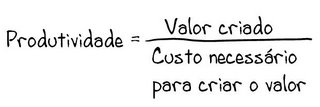
"During recent recessions, productivity has risen. In the recession of 2007 to 2009, aggregate output fell by 4.35 percent, (Moi ici: Como se mede o "aggregate output"? Com uma unidade que permita misturar o contributo das maçãs e das laranjas, ou seja dinheiro) but the aggregate number of hours worked decreased by 10.54 percent in nonfarm business.1 Over the recession, labor productivity rose. From 2007 quarter 4, the start of the recession, to 2009 quarter 3, the quarter following the recession, labor productivity rose by 3.16% in nonfarm businesses. There are two obvious possibilities that can account for the rise in productivity. (Moi ici: Prepare to be dazzled) The first is that the decline in the workforce was not random, and that the average worker was of higher quality during the recession than in the preceding period. The second is that each worker produced more while holding worker quality constant. We call the second effect, “making do with less,” that is, getting the same output from fewer workers."Estão a ver o erro?
"Em 2004, 1432 empresas com 40 255 empregos produziam 75,1 milhões de pares que valiam 1273,2 milhões de euros.Menos trabalhadores, a produzir menos... a produtividade baixou...
.
Em 2009, 1399 empresas com 35 515 empregos produziam 59,2 milhões de pares que valiam 1207,6 milhões de euros.
.
Em 2004, um posto de trabalho produzia em média 31,6 mil euros por ano.
.
Em 2009, um posto de trabalho produzia em média 34 mil euros por ano."
"Já não se fabricam mil pares de sapatos por dia, fabricam-se 300 ou 400 e de 20 ou 30 modelos diferentes"O que os autores do artigo não percebem é que o perfil do que se produz antes e depois de uma recessão pode mudar. O valor unitário do que se produz pode subir.
"In summary, productivity rises when and where unemployment rates are high. The likely explanation for this rise in productivity with unemployment rates is that worker effort is rising when unemployment rates rise. Because the value of the workers’ alternatives decline with the unemployment rate, the theory predicts and results confirm that effort should increase as unemployment rises."Os aumentos da produtividade devem-se ao maior esforço dos trabalhadores?
"No dia em que regressei a Portugal, no início de Agosto, a TSF perguntava a João "subsídio" Machado da CAP como interpretava os números da criação de emprego na agricultura no 2º trimestre. Reparem 2º trimestre, trimestre terminado em Junho. E o homem respondeu com a contratação de pessoas para as colheitas do Verão... Ao menos podia dizer que se poderia tratar de um artifício trazido pelas novas obrigações de declaração de actividade dos agricultores." (Trecho retirado daqui)Hoje, leio:
"No primeiro semestre do ano foram criadas 1017 empresas agrícolas, e entre abril e junho o sector gerou mais de 40 mil empregos. Em 2012, um ano em que a economia nacional caiu 3,2%, a agricultura cresceu 2,8%."
"disse, qualquer coisa como: "Bastou sair o ministro, que os agricultores são os mesmos e produzem o mesmo e a mudança aconteceu"."Nem faz ideia deste movimento:
"O secretário de Estado da Agricultura explica que entre janeiro e setembro deste ano foram investidos mais de mil milhões de euros em projetos agrícolas, e que se estão a instalar, em média, 280 jovens empresários por mês, nas mais variadas regiões do país."Quando é que esta nova fornada vai capturar o poder dentro das estruturas envelhecidas herdadas do passado?
"In 2012, textile and apparel exports were $22.7 billion, up 37 percent from just three years earlier. While the size of operations remain behind those of overseas powers like China, the fact that these industries are thriving again after almost being left for dead is indicative of a broader reassessment by American companies about manufacturing in the United States.Quando li:
.
In 2012, the M.I.T. Forum for Supply Chain Innovation and the publication Supply Chain Digest conducted a joint survey of 340 of their members. The survey found that one-third of American companies with manufacturing overseas said they were considering moving some production to the United States, and about 15 percent of the respondents said they had already decided to do so.
...
“We just avoid so many big and small stumbles that invariably happen when you try to do things from far away,” he said. “We would never be where we are today if we were overseas. Nowhere close.” (Moi ici: Este é o grande trunfo que a nossa indústria pode usar na Europa, o trunfo da proximidade, da flexibilidade, da capacidade de resposta, da customização)
...
Time was foremost among them. The Indian mill needed too much time — three to five months — to perfect its designs, send samples, schedule production, ship the fabric to the United States and get it through customs. Mr. Winthrop was hesitant to predict demand that far in advance.
.
There were also communication issues.
...
But truth be told, labor is not a big ingredient in the manufacturing uptick in the United States, textiles or otherwise. Indeed, the absence of high-paid American workers in the new factories has made the revival possible.
.
“Most of our costs are power-related,”
...
All that automation has made working in the mill — which once meant mostly dead-end jobs for people with no other options — desirable for many people." (Moi ici: E o Lazear que anda a escrever e a publicar papers a explicar que a retoma sem criação de emprego se deve à actuação dos trabalhadores)
"Between 2000 and 2011, on average, 17 manufacturers closed up shop every day across the country,"Pensei logo no que aconteceu em Portugal pela mesma altura, a altura em que a côrte andava entretida com o dinheiro fácil e barato, altura em que Mira Amaral pensa que a globalização não chegou ao têxtil português poupando-o... a culpa não foi do euro. A moeda americana não era o euro, ... o que é que era comum? A China!
"sair da Zona Euro – teria custos muito elevados no curto prazo, mas poderia resultar numa recuperação da economia no espaço de um ou dois anos."
"Os efeitos da saída seriam muito duros no curto prazo, mas o economista considera que a recuperação chegaria num ou dois anos."Apetece logo pensar, qual é a "skin in the game" dele?
"If it's incorrect I should be harmed by it. So, if I make a forecast, if someone asks me for my opinion, it is immoral for me to say, well, the market is going up or the market is going down or this will happen, unless I stand to lose on that advice. Because people take risks based on other people's advice. This is where it's immoral. This is why skin in the game is very generalized to daily life. I cannot tell you, well, this is good, unless I've tasted it. If there is risk. If there is no harm, then who cares?
...
Exactly. The point is, we need to lower the dependence on people who don't have skin in the game.
Russ: Yeah, or ignore them.
Guest: But you cannot ignore them. You have to build a system. Because people can take over, prestige, a lot of pathologies can control in that way. The best way to do it is build a society in which mistakes made by economists stay on campus. That's the idea. The idea is that if Larry Summers wants to make mistakes, more mistakes, let him make them at Harvard where we are insulated from it. It's like the ivory tower; it's because we are protected from them, not because they have to protect themselves from us. Which works both ways, you see.
Russ: It's a great slogan: What happens on campus, stays on campus.
Guest: That's exactly it. So it should keep the mistakes local on campus. And that way everybody will be happy."
"O líder do PSD-Madeira, Alberto João Jardim, defendeu hoje ser necessária uma revolução no país para garantir que todas as conquistas do 25 de Abril não se percam por "imposição do capitalismo estrangeiro".""Dutch King Willem-Alexander declares the end of the welfare state"
.
"até porque o debate sobre a segurança social é dominado pelos gritos dos senadores,"
"Acontece que os liberais e os sociais-democratas - no fundo, o centro-esquerda - sempre atiraram pedras à austeridade e repetiram juras de amor eterno pelo Estado social. Agora, sentados no poder e com um país para gerir, abraçam a austeridade e renegam o Estado social."Um ano depois de "Hollande equilibra contas com plano de austeridade de esquerda"
%2006.21.jpeg)