"Marty Neumeier points out that many brands get boring over time. Systems and feedback loops relentlessly push us to center. It's easier to manage 100 doctors in a healthcare practice if they consistently act in similar ways.It's hard work to stand for something, stick with a strategy, and to be willing to send customers to someone else for help.Positioning is a service. It's a beacon to your customers, patients, or constituents. It says, "If you're looking for X, that's what we have. On the other hand, plenty of people are looking for Y, and you'll find that from our colleagues over there."Positioning isn't competitive. It's the opposite. It turns your competitors into colleagues, folks who do something else for someone else.But positioning is also a move in a strategic game. When you put yourself over here you are also choosing to put people who previously competed with you over there.Some of them will make a move in response. Others will find themselves pushed to the center as you go to the edge.We need organizations and people in the center, and I don't think we're in any peril of running out of that. But you (and your customers) benefit when you have a strategy to get to the edge you seek to live on."
sábado, março 08, 2025
Diversificação e entropia (parte II)
sexta-feira, março 07, 2025
Curiosidade do dia
A minha veia libertária leva-me a ter alguma compreensão pela ideia da liberalização das drogas, cada um sabe de si.
Numa das minhas caminhadas matinais, ao passar ao lado do novo campo da bola do Valadares, talvez há três anos, tive um choque. Num texto em inglês, não recordo se num livro, jornal ou revista, alguém contava que num jornal de São Francisco que tinha trazido uma série de artigos em defesa da liberalização das drogas, foi publicada uma carta de uma mãe. Uma mãe que tinha identificado o filho perdido numa foto dos perdidos para a droga que o jornal tinha publicado. Naquele momento ouvi as palavras de Deus a dirigirem-se a mim, qual Caim:
"O SENHOR perguntou a Caim: «Onde está o teu irmão?»
«Não sei. Será que eu sou o guarda do meu irmão?», respondeu ele."
Há tempos, numa outra curiosidade do dia escrevi: "Qual o serviço do estado que não é gerido assim?"
Hoje, volto a sentir a interpelação de Deus. Li algo e acredito que o mesmo se passa por cá sob a tolerância, o beneplácito e até a promoção dos responsáveis desde a sala de aula até ao topo da hierarquia do monstro, e nós cidadãos incluídos.
Um horror deste tempo do paraíso dos funcionários, "She graduated from high school with honors but can't read or write. Now she's suing":
"Despite graduating last June from Hartford Public High School in Hartford, Connecticut, and earning a scholarship to college, Aleysha is illiterate. She says she cannot read or write.
...
She graduated with honors, which usually means a student has demonstrated academic excellence. But after 12 years of attending public schools in Hartford, Aleysha testified at a May 2024 city council meeting that she could not read or write. Suddenly, she says, school officials seemed concerned about awarding her a diploma."
Ao princípio a gente não acredita. Como é possível nos tempos de hoje em que toda a gente tem um smartphone não saber ler nem escrever... mas ela explica. Há aplicações que traduzem texto para voz, e aplicações que traduzem voz para texto.
Schumpeter, China e nós
"National People's Congress? Don't count on it. After decades following British economist John Maynard Keynes and his doctrine of demand management, China's leadership is taking a lesson from US economist Joseph Schumpeter and his creed of creative destruction....The rest of the world had moved on from Keynes and his great insight-born of the Great Depression of the 1930s—that in a downturn the government should pay people to dig holes in the ground and then fill them in. But until pretty recently, roads to nowhere, desolate airports and vacant apartment towers showed China was sticking to the Keynes playbook.This resolve was great for growth. In the years after the global financial crisis of 2008, China's economy continued to hum, while self-imposed austerity delayed recoveries in the US and Europe. All that stimulus, though, left China laboring under a heavy burden of overcapacity. In the end, too many idle factories, too many empty apartments and too many unpaid real estate loans resulted in an economic malaise not dissimilar to the one that afflicted Western economies in the 1970s after their decades of following Keynes' recipe.What's the solution? Whether by choice or necessity, Keynes is out and China is now following the precepts of another great economist: Schumpeter. In Capitalism, Socialism, and Democracy, his magnum opus, Schumpeter argues that the power of the capitalist system came from a "perennial gale of creative destruction" blowing through the economy. New technologies displace old technologies. New companies displace old companies. For the losers, it's painful. But it drives progress.Schumpeter made the case that creative destruction was unique to capitalism. China is demonstrating it can work in its hybrid state-plus-market system, too. Exhibit A is the property sector, where after years of backstopping developers, the government is allowing them to face the consequences of their excesses. The shakeout has been savage for all those involved, from bondholders to homebuyers who made down payments on apartments that will never be built. But it also means capital and labor are freed up for more productive purposes....Is the transition from Keynes to Schumpeter going to be smooth? No. ... the country is moving from a diet of cheesecake to a diet of broccoli-less tasty but more healthy....It was as an immigrant to the US-and professor at Harvard-that Schumpeter developed his theory of creative destruction. If the US is to stay ahead in the global economic race, it would be wise not to forget his wisdom, especially as China has just learned it."
quinta-feira, março 06, 2025
Curiosidade do dia
Agora que por cá vamos voltar a ter socialistas de esquerda a substituir socialistas de direita é interessante pensar o que uns conseguem fazer e outros não:
"Liz Kendall, the work and pensions secretary, has described Britain's status as the "sick man of Europe" as a national disgrace as she prepares to unveil ambitious employment reforms.About £5 billion of welfare cuts are planned, with the long-term sick expected to be required to work....Those with mental health conditions will also find it harder to claim separate disability benefits. Hundreds of thousands of people could find their payments reduced. There are more than 9.3 million working-age people in the UK who are not looking for employment....Figures published this year revealed that 2.4 million incapacity benefit claimants now have no work conditions attached to their paymentsup 50 per cent in five years. Kendall said: "Labour's message is clear: if you can work, you should, and this government is stepping up to its duty to fix this and restore trust and fairness in the system....The Treasury has told City bosses, who are spooked about the prospect of further tax rises, that savings in the welfare bill will avoid the need to reopen the budget. Welfare is expected to be one area, along with the ballooning size of the civil service, that the chancellor will target for cuts."
"Employment minister Alison McGovern has signalled Labour might tear up the process that determines financial help for sick and disabled people by 'focusing on what they can't do on a worst day, not on what they would like to do or what support they think they would need. Britain 'can't afford the level of resources', she says, ahead of a government green paper that will aim to put more people into work."
A China e a receita Irlandesa
"O Japão não ficou rico a produzir vestuário de forma muito, muito eficiente. Taiwan não ficou rica a produzir rádios de bolso de forma muito, muito eficiente."
Qual o impacte da evolução do gráfico acima nos salários e nível de vida dos chineses? O sector de alta tecnologia paga salários mais elevados do que o sector imobiliário e a manufactura tradicional, pois exige trabalhadores mais qualificados. A crescente procura por engenheiros, programadores e cientistas de dados impulsiona os rendimentos dessas profissões.
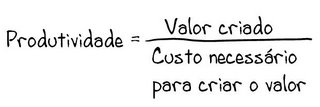
Que melhor ilustração para a frase ""It's no longer about how you do it; it's about what you do.""? Que melhor ilustração para a diferença entre trabalhar o denominador (melhorar a eficiência) ou trabalhar o numerador da equação da produtividade:
Por que nos admiramos? É a mesma receita que a seguida pela Irlanda. Acham que a "DVD leadership team" tem voto na matéria?
Por cá temos um gráfico semelhante para o turismo, por exemplo. Acham que é um sector que contribui para o aumento da produtividade agregada do país? Acham mesmo? Mas atenção, as pessoas do turismo estão a fazer a sua parte, o problema são os ausentes, os mastins dos Baskerville.
Finalizo com uma citação de 2007:
"It is widely believed that restructuring has boosted productivity by displacing low-skilled workers and creating jobs for the high skilled."
Mas, e como isto é profundo:
"In essence, creative destruction means that low productivity plants are displaced by high productivity plants."
quarta-feira, março 05, 2025
Curiosidade do dia
"Young men's wages have fallen consistently behind women's for the first time, according to a hardhitting report that warns of a "crisis" facing males under 24.The Lost Boys study by the Centre for Social Justice think tank says the gender pay gap has flipped among 16 to 24-year-olds, with women earning 9 per cent more than men in both blue and whitecollar jobs."
Esperam por uma Wendy...
Diversificação e entropia
"Because you can do something is a dreadful reason for doing that thing. Any broadening of WTP — whether more offerings, more customers, more geographies, more vertical integration (forward or backward) — should only happen if it strengthens HTW; that is, if it increases the intensity of the energy. If it has a neutral effect on HTW, it shouldn’t be done. Tie doesn’t go to the runner. That is because it will spread the energy, which accelerates entropy. If it decreases the power of HTW, it shouldn’t be given a millisecond of consideration. Steve Jobs understood this in spades. When he returned to Apple, he famously hacked and slashed his way through energy-dissipating offerings in order to build energy in the remaining core."
As PME que expandem sem critério acabam a competir no terreno das commodities, onde o único diferencial possível é o preço e a escala, mas as PME não podem competir com grandes players neste modelo, pois não têm poder de compra, produção em massa nem logística eficiente o suficiente para operar com margens muito baixas.
O cliente que procura um produto ou serviço diferenciado não quer uma empresa que "faz tudo". Ele quer uma empresa especialista, que entrega um valor real e uma experiência superior. Isto está directamente relacionado com o ponto do texto sobre preservação da energia do negócio: a Starbucks voltou a crescer cortando excessos e regressando ao essencial, tal como as PME devem evitar o risco de diluir a sua proposta de valor.
Recordo:
- 2015 - Salami slicers
- 2010 - "Just get rid of the crappy stuff and focus on the good stuff."
- 2019 - O paradoxo da escolha, again
Trecho retirado de "Starbucks & Strategic Entropy"
BTW, recordo de 2012:
"By September 1997, Apple was two months from bankruptcy. Steve Jobs, who had cofounded the company in 1976, agreed to return to serve on a reconstructed board of directors and to be interim CEO.
...
What he did was both obvious and, at the same time, unexpected. He shrunk Apple to a scale and scope suitable to the reality of its being a niche producer in the highly competitive personal computer business. He cut Apple back to a core that could survive.
...
Jobs cut all of the desktop models—there were fifteen—back to one. He cut all portable and handheld models back to one laptop. He completely cut out all the printers and other peripherals. He cut development engineers. He cut software development. He cut distributors and cut out five of the company’s six national retailers. He cut out virtually all manufacturing, moving it offshore to Taiwan. With a simpler product line manufactured in Asia, he cut inventory by more than 80 percent. A new Web store sold Apple’s products directly to consumers, cutting out distributors and dealers.
...
The power of Jobs’s strategy came from directly tackling the fundamental problem with a focused and coordinated set of actions. He did not announce ambitious revenue or profit goals; he did not indulge in messianic visions of the future. And he did not just cut in a blind ax-wielding frenzy—he redesigned the whole business logic around a simplified product line sold through a limited set of outlets."
Tempo de preparação
Hoje é Quarta-feira de Cinzas, o início da Quaresma, um tempo de reflexão, penitência e conversão espiritual. Este dia convida-nos a recordar a nossa fragilidade e a renovar o compromisso com Deus, preparando o coração para a Páscoa.
Durante a celebração, recebemos a imposição das cinzas sobre a testa, acompanhada das palavras: "Convertei-vos e acreditai no Evangelho". Este gesto simboliza humildade e a necessidade de mudança interior.
Convido à participação nas cerimónias litúrgicas deste dia especial, reflectindo sobre o caminho quaresmal que agora iniciamos.
terça-feira, março 04, 2025
Curiosidade do dia
Um artigo super interessante noo FT de hoje, "Students must learn to be more than mindless 'machine-minders'".
Eu uso a inteligência artificial todos os dias no meu trabalho. E interrogo-me muitas vezes sobre o impacte do seu uso na minha capacidade futura de pensar criticamente sobre os assuntos. Também sei que há temas em que a inteligência artificial é propícia a erros de interpretação e, por isso, é perigoso aceitar acriticamente o que nos diz.
"A survey of UK undergraduates by the Higher Education Policy Institute thinks shows 92 per cent of them are using generative Al in some form this year compared with 66 per cent last year, while 88 per cent have used it in assessments, up from 53 per cent last year." [Moi ici: Interessante como a autora propõe uma série de medidas criativas para enfrentar o problema para depois perceber que na prática não resultam porque já foram testadas em Cambridge]
...
"Maria Abreu, a professor of economic geography at Cambridge university, told me her department had experimented along these lines. But when they gave undergraduates an AI text and asked them to improve it, the results were disappointing. 'The improvements were very cosmetic, they didn’t change the structure of the arguments,' she said."
...
Michael Veale, an associate professor at University College London's law faculty, told me his department had returned to using more traditional exams, too. Veale, who is an expert on technology policy, sees Al as a 'threat to the learning process' because it offers an alluring short-cut to students who are pressed for time and anxious to get good marks. "We're worried. Our role is to warn them of these short-cuts - shortcuts that limit their potential. We want them to be using the best tools for the job in the workplace when the time comes, but there's a time for that, and that time isn't always at the beginning," he says."
...
"The researchers concluded that 'a focus on maintaining foundational skills in information gathering and problem-solving would help workers avoid becoming overreliant on Al'. In other words, to use the short-cut effectively rather than mindlessly, you need to know how to do it without the short-cut."
Há dias conversava com a minha mãe, professora reformada, sobre a necessidade de se pensar o que se deve ensinar nas escolas. Conversa motivada pelo comentário de alguém que trabalhou na China e me despertou para o tema de como é que uma máquina de escrever é usada na China que tem dezenas de milhares de caracteres.
A autora escreve, e bem:
"After all, your students' prospects in the world of work are going to depend on how much value they can add, over and above what a machine can spit out."
Em linha com o que ouvi há dias na net:
“The only comparative advantage I have against AI is a soul. And I think we're gonna have to really lean into that a lot more.” —Ron Baker @nerdenterprises #AskTSOE @ronaldbaker @edkless
— The Soul of Enterprise (@asktsoe) February 28, 2025
Inequality and risk preference
Um tema interessante, a relação entre desigualdade e risco e a relação entre insatisfação económica e risco.
"Using a globally representative data set on risk preference in 76 countries, we empirically document that the distribution of income in a country has a positive and significant link with the preference for risk." (página 191)"At both the individual and country-level, we find a precise, stable estimate that indicates higher inequality is significantly associated with a greater degree of risk taking." (página 194) [Moi ici: Quanto maior a desigualdade, mais as pessoas arriscam. Em países onde há uma diferença muito grande entre ricos e pobres, as pessoas tendem a estar mais dispostas a correr riscos]..."We find evidence of a steeper gradient between willingness to take risks and inequality for cognitively more able individuals who likely have a better assessment of inequality and for those who are dissatisfied with their income." (página 191)"Perceptions likely deviate from objective reality through a kaleidoscope of individual biases and imperfect information, all of which determine the extent to which we 'experience inequality' (Roth & Wohlfart, 2018)." (página 194) [Moi ici: Quem tem mais consciência da desigualdade arrisca mais. Pessoas que conseguem perceber melhor as diferenças de rendimento na sociedade (geralmente aquelas com maior aptidão matemática ou educação) são ainda mais propensas a correr riscos quando vivem num ambiente muito desigual]..."We also consider that the effect of inequality on individuals is by no means homogeneous. We hypothesise that the risk preference of individuals who are better placed to read or interpret the objective degree of inequality should be more affected." (página 195)"We next investigate what role income plays in determining how inequality can affect risk preferences. Satisfaction with own-income is likely a salient point of reference where individuals react to inequality differently. That is, when an individual is satisfied with their current level of income, we expect changes in the level of inequality to have no effect on their appetite for risk taking." (página 211) [Moi ici: Quem está insatisfeito com o seu dinheiro arrisca ainda mais. Se uma pessoa sente que ganha pouco e está tendo dificuldades financeiras, a desigualdade faz com que ela se sinta ainda mais para trás, e isso aumenta a vontade de assumir riscos para tentar mudar a sua situação]
E recuo a 2007 e a este gráfico:
Trechos retirados de "Inequality and risk preference" publicado por Journal of Risk and Uncertainty (2024) 69:191-217
segunda-feira, março 03, 2025
Curiosidade do dia
"O atual Governo, liderado por Luís Montenegro, assume que quer "consolidar" a marca dos 50%, mas reconhece que tal não será fácil. "Não é nada mau se, nos próximos anos, consolidarmos esse patamar dos 50%", referiu o ministro da Economia, Pedro Reis, numa entrevista conjunta ao Negóciose Público em abril do ano passado, durante a primeira visita oficial ao exterior: Contudo, destacou que, mais importante do que ter uma "meta ambiciosa". ", é garantir "mais valor acrescentado nas exportações"."
O texto acima aparece no JdN de hoje num artigo intitulado "Peso das exportações no PIB cai pelo segundo ano seguido"
O artigo aborda a queda do peso das exportações portuguesas no PIB pelo segundo ano consecutivo. Em 2024, as exportações representaram 46,6% do PIB, um valor inferior aos 50% atingidos em 2022 e abaixo do nível de 2023. A diminuição é atribuída à queda nos preços das mercadorias exportadas e à menor procura externa.
A diminuição do preço das mercadorias exportadas reflecte a influência da inflação, e reflecte a dolorosa realidade de dependermos muito da exportação de commodities com baixo valor acrescentado.
Concordo com o ministro Pedro Reis acerca da importância de "é garantir "mais valor acrescentado nas exportações". Só que tal não se obtém por decreto e, seguramente, não se obtém sem uma transição dolorosa.
Os incumbentes têm aversão a testar o novo. Resta-nos criar condições para minimizar a transição dolorosa.
Let that sink in ...
A aversão à novidade
Numa longa e saborosa conversa telefónica recente recomendei a leitura destes dois postais:
"Se os produtores portugueses têm dificuldades em competir no mercado de milho commodity, talvez fosse mais estratégico apostar desde já em produtos diferenciados em vez de tentar sustentar artificialmente um sector que enfrenta tantas dificuldades."
O ponto comum em todos eles é a permanência no carreiro actual e a dificuldade, a aversão à mudança, a aversão ao desconhecido.
Agora ao ler o prefácio do livro "Uncertainty and Enterprise" de Amar Bhidé" encontro "novelty aversion" e "Knightian uncertainty".
A aversão à novidade refere-se a uma tendência na tomada de decisões em que os indivíduos evitam opções novas ou desconhecidas, mesmo quando estas podem ser benéficas. Este enviesamento surge de uma preferência pelo conhecido e previsível em detrimento do incerto e desconhecido.
A incerteza Knightiana (nome dado em homenagem ao economista Frank Knight) descreve um tipo de incerteza em que a probabilidade dos resultados é desconhecida ou incalculável. Ao contrário dos riscos mensuráveis (onde as probabilidades podem ser atribuídas), a incerteza Knightiana envolve situações em que a falta de informação torna impossível determinar probabilidades.
Ambos os conceitos giram em torno do desconforto com o desconhecido. A aversão à novidade é uma reação comportamental à incerteza Knightiana, pois as pessoas frequentemente evitam novas opções porque não conseguem estimar os riscos envolvidos. Em ambos os casos, os indivíduos podem hesitar ou recusar-se a envolver-se em situações incertas devido à falta de probabilidades claras. Tanto a aversão à novidade como as respostas à incerteza Knightiana levam as pessoas a favorecer escolhas familiares e estabelecidas em detrimento de alternativas desconhecidas.
Na agricultura e em muitas indústrias (por exemplo, finanças, medicina, tecnologia) há uma adopção lenta de inovações devido tanto à aversão à novidade como à incerteza em torno de novos métodos ou produtos. Essencialmente, a aversão à novidade é uma das formas pelas quais as pessoas reagem à incerteza Knightiana.
domingo, março 02, 2025
Curiosidade do dia
"Export success is not linked to character, but to an economic model. When a country relies on exports for its livelihood, it will not see Vladimir Putin for who he is, but as the guy who speaks fluent German, with old-school manners, who dances with the Austrian foreign minister at her wedding. This is what a structurally high current-account surplus does to people. They end up inviting a dictator to their wedding, or making him godfather to their children, as Gerhard Schröder did."
Trecho retirado do capítulo 5 de "Kaput - The End of the German Miracle" de Wolfgang Munchau.
O contexto a mudar
Interessante, o capítulo 5 de "Kaput - The End of the German Miracle" de Wolfgang Munchau, intitulado "Breaking the brake".
O brake é a chamada Schuldenbremse (freio da dívida), regra que limita severamente a capacidade do governo de contrair novas dívidas. Ele argumenta que essa restrição orçamental tem levado a uma falta crónica de investimentos públicos, prejudicando o crescimento económico e a competitividade da Alemanha a longo prazo. BTW, Münchau explora como a aplicação rígida do freio da dívida e outras políticas de austeridade contribuíram para a fragmentação política do país e a ascensão dos partidos populistas.
Entretanto no jornal The Times de ontem, no artigo "Merz prepares to move fast and break Germany's spending rules" pode ler-se:
"He [Moi ici: Merz] is also in a race against time to identify a way of paying for Germany's biggest rearmament in 70 years as the price for a seat at the head of the table. The scale of the task is colossal. If Germany is to reach Nato's new de facto benchmark and spend 3 per cent of its GDP on defence, it will need to find at least another €70 billion a year.
The cost of building enough military capacity for true independence from the US would be €615 billion, the Dezernat Zukunft think tank estimated. In parallel with the coalition talks, Merz is attacking the problem with a characteristically unorthodox gambit. His plan is to borrow as much as €200 billion through a mechanism known as a Sondervermögen (special fund). The pot of money would be kept off the regular balance sheet and so would not technically breach Germany's constitutional "debt brake" on government borrowing.
...
Instead, he proposes to ram the change through the outgoing Bundestag, which has not yet been dissolved and can theoretically be kept on life support for about another three weeks. The SPD is expected to hold out for loosening the debt brake itself, which would open the doors for a splurge on schools, transport and green schemes. Here the party is in good company. The rule, which was written into the constitution in 2009 during the eurozone crisis, used to be an overwhelmingly popular symbol of German prudence, nicknamed the "black zero".
Debt brake reform is now championed by such unlikely figures as the president of Germany's central bank and Merkel, the chancellor who created the instrument in the first place.
A poll last month ago found 55 per cent of Germans, and the same proportion of CDU-CSU voters, wish to see the debt brake softened or abolished."
De acordo com o capítulo 3 do livro de Munchau nada garante que o dinheiro público não vai ser utilizado como soro para manter vivos os zombies do costume.
sábado, março 01, 2025
Curiosidade do dia
"I say I'm surprised at how relaxed he seems to be about the destruction of the United States Agency for International Development (USAID). Musk's "wood chipper" analogy, with its echo of the body-disposing scene in Fargo, struck me as purposefully cruel.That may be, Lomborg counters, but finite resources should be spent efficiently. "It's like a menu. We're not saying you can't have the most expensive stuff. We're just saying if you order the caviar and the champagne, you won't have as much money left over," he says, motioning to the waiter for a second glass of bubbly (Sprite Zero).In his drive for efficiency, Lomborg seeks to identify policies that, according to his think-tank, generate returns of at least $15 for every dollar spent. Some aid passes his test, but most does not. A small proportion is frivolous, he says, citing German funding of Peruvian bike lanes and a £200,000 British grant for all-female Chinese opera."It's not that I'm against female opera in Shanghai, it's just that, given children die of malaria and some are getting terrible education, I think we need to have a sense of priority. I think we've kind of lost that in the development community. [Moi ici: Faz-me lembrar o familiar que ao serviço da SSVP encontrava "pobres" que queriam um smartphone, mas não em segunda mão, nem um fatela, tinha de ser novo e de marca... e arranjavam-no, para meu escândalo]...He pushes back. "Tipping points are good bogeymen. There's a lot of potential things that can go wrong," he says, mentioning meteors that might crash into Earth, cell phones that might rot our brains and bioterrorists who might paralyse our cities. "But you can't spend on everything." Potential catastrophes are fundraising tools, he says. "I make up a scary scenario. Now give me all your money."...Numbers, he concedes, do not always capture reality. One of his 12 best policies is to encourage high-skilled immigration. The maths are fairly simple. If a person moves from a low-wage economy to a high-wage one, their income can go up 15 times or more for doing the same job - whether it's working in McDonald's or as a brain surgeon.But the maths run into real-world political and cultural problems. "If you bring two billion more people to the west, that will probably change the west - and not all for the good. That's why a lot of democracies are going to say no.'"
Trechos retirados de "You can't spend on everything" (Lunch with the FT Bjorn Lomborg) no FT de hoje.
E depois ...
"En France, depuis la crise sanitaire, la filière automobile a perdu près de 40.000 emplois au cœur du tissu industriel de nos régions. Sur la même période, la Chine est devenue le premier producteur mondial, puis le premier exportateur mondial. En optant pour le tout-électrique dès 2035, Bruxelles a fait le choix d'une technologie unique dominée par nos concurrents chinois : un véhicule électrique sur quatre vendus en Europe est désormais importé de Chine."
sexta-feira, fevereiro 28, 2025
Curiosidade do dia
Interessante olhar para os números do IEFP ...
Em Janeiro de 2023 havia 17939 desempregados no sector da "Construção", em Janeiro de 2025 o número vai em 19065 desempregados.
Em Janeiro de 2023 havia 31723 desempregados no sector do "Alojamento, restauração e similares", em Janeiro de 2025 o número vai em 38362 desempregados.
Alguém sabe explicar o que se passa?
Quem tem coragem para ter esta conversa olhos nos olhos?
- A inevitabilidade de uma transição dolorosa;
- A incapacidade de criticar a festa de Natal do filho de 5 anos (uma metáfora);
- A reacção da "DVD leadership team" para que continue a ter futuro;
- O futuro continuará a incluir o tradicional, mas muito mais anichado.
- Não matem deliberadamente, mas deixem as empresas morrer!!!
"When you discover that you are riding a dead horse, the best strategy is to dismount."
Ou seja, se um cavalo está morto, não adianta continuar a montá-lo – o mais lógico é aceitar a realidade e seguir em frente. No contexto empresarial, a metáfora é usada para descrever situações onde empresas, governos ou pessoas insistem em estratégias, projectos ou modelos de negócios falidos em vez de mudarem de abordagem.
quinta-feira, fevereiro 27, 2025
Curiosidade do dia
"Results from the study show that open access generally leads to both economic and environmental overexploitation, that is 'the tragedy of the commons'. This also affects the overall tourism industry since tourism accommodation and environmental quality perform central roles. This ultimately leads to mass tourism characterized by tourists with low willingness to pay."
Relacionar este sublinhado com o que aparece no DN via JdN:
"O preço a pagar pelo aluguer de um carro desceu 15% no ano passado, avança esta quinta-feira o Diário de Notícias. A descida reflete o aumento do número de veículos disponibilizados pelas "rent-a-car", que tem levado a uma excesso de oferta enquanto a procura, sobretudo de turistas, arrefeceu.
O desequilíbrio entre a oferta e a procura foi implacável com as receitas das empresas. "Foi o pior ano de sempre para o setor, excluindo o período da pandemia", diz o secretário-geral da Associação dos Industriais de Aluguer de Automóveis sem Condutor (ARAC), Joaquim Robalo de Almeida, sublinhando que, como fazer férias em Portugal ficou mais caro, "as rent-a-car são um dos primeiros serviços a ficar para trás""
Nope, os turistas é que têm menos poder de compra.
O mesmo vai acontecer aos hotéis, então teremos o sector, com enorme poder nos media e com ligações poderosas ao sistema político, a pedir para que os contribuintes impeçam um sector "tão importante para o país" de fechar portas.
Again, recordar as salamandras da minha querida e saudosa Estarreja:
"Será que as empresas também não sofrem mais com o rescaldo dos exageros cometidos no tempo das vacas gordas do que com as tribulações dos tempos de vacas magras?"
E Yogi Berra:
"Nobody goes to that restaurant anymore because it's too crowded."
Um corporativismo estrutural
O capítulo 3 de "Kaput - The End of the German Miracle" de Wolfgang Munchau, intitulado "Low on Energy" é algo nojento.
O autor faz uma descrição bastante crítica e, diria até, repugnante da promiscuidade entre políticos e o sector empresarial na Alemanha. Ele descreve um sistema onde ex-políticos se tornam lobistas influentes, enquanto políticos no poder garantem favores a empresas que, mais tarde, retribuem com cargos e privilégios. (Escrevo isto e recordo as imagens na TV da passada quarta-feira em que um lobista defendia a manutenção da TAP nas mãos do estado)
Exemplos disso incluem:
- Gerhard Schröder não apenas facilitou os acordos energéticos com a Rússia enquanto chanceler, mas logo após sair do cargo, tornou-se executivo da Nord Stream, financiada pela Gazprom. Ou seja, negociou a dependência energética alemã com Moscovo e depois foi recompensado com um cargo altamente lucrativo.
- Karl-Theodor zu Guttenberg, ex-ministro da Defesa, reinventou-se como lobista após um escândalo de plágio e chegou a interceder junto a Angela Merkel em favor da fraudulenta Wirecard, empresa que colapsou num dos maiores escândalos financeiros da Alemanha.
- WestLB, Landesbanken e o cartel da Renânia do Norte-Vestfália: políticos e banqueiros entrelaçaram-se num esquema de suporte às indústrias tradicionais de carvão e aço, garantindo subsídios e protecção a negócios falidos por décadas, sem inovação real.
"After he came to power, he would pull off another stunt, similar to that of Salzgitter. The following year, he personally intervened to stave off the looming bankruptcy of Holzmann, a large construction company based in Frankfurt. It was a big success. Workers of the company sang chants praising the chancellor. He did not just bang heads together. He used the state-owned KfW bank to provide a €150-million loan and a €100-million loan guarantee that served as an anchor for the financial packages with the various other banks used by the company. The banks would then chip in €200 million. That still was not enough because the company went bankrupt eventually, but it worked for Schröder politically, giving him a reputation for caring about jobs. I saw Schröder as an early populist. During the Holzmann crisis, he accused the creditor banks of 'thinking more about their business than securing the company and the jobs' - as though banks would ever do anything else."
%2013.55.jpeg)
%2014.15.jpeg)
%2014.33.jpeg)
%2013.36.jpeg)


%2014.47.jpeg)

%2011.06.jpeg)
%2011.22.jpeg)
%2013.04.jpeg)
%2005.22.jpeg)
%2005.31.jpeg)
%2014.02.jpeg)
%2013.15.jpeg)


%2018.08.jpeg)
%2008.03.jpeg)
%2015.07.jpeg)
%2012.18.jpeg)
%2021.03.jpeg)
%2014.13.jpeg)
%2015.15.jpeg)
%2012.48.jpeg)
%2013.17.jpeg)
%2014.15.jpeg)