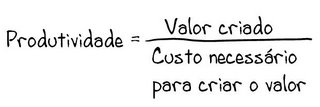
"A troika tem criticado as várias reversões efectuadas pelo Governo de António Costa e aproveita este relatório para voltar a lançar alertas sobre os efeitos destas políticas. Desta vez diz mesmo que a maior ameaça ao crescimento da economia portuguesa está nas políticas internas e não em factores externos.Trecho retirado de "Políticas do Governo português são o principal risco para a retoma"
.
"Apesar de também existirem riscos para as perspectivas económicas no ambiente externo, estes são sobretudo internos e relacionados com a adequação das políticas domésticas", refere o comunicado."
quinta-feira, junho 23, 2016
Curiosidade do dia
Apesar da dupla Costa-Marcelo tentar convencer-nos da contaminação externa:

“plans are worthless, but planning is everything”
Um excelente artigo, "Strategic Plans Are Less Important than Strategic Planning", a esta hora estou numa empresa a lançar o pontapé de saída de um conjunto de iniciativas estratégicas, alinhadas com o mapa da estratégia. Os dois últimos slides são:


Chegámos à fase em que a transformação deliberada da empresa vai começar, com o desenvolvimento e implementação das iniciativas estratégicas. Cada iniciativa é como uma aposta num cavalo. Demos o nosso melhor mas podemos ter apostado no cavalo errado. Além disso, à medida que exercitamos a estratégia transforma-nos e começamos a ver oportunidades que antes não existiam ou nos estavam vedadas. Por uma razão e/ou pela outra podemos ser obrigados a mudar ou a ajustar a estratégia e as iniciativas
Recordar o tweet do @miguelppires.


Chegámos à fase em que a transformação deliberada da empresa vai começar, com o desenvolvimento e implementação das iniciativas estratégicas. Cada iniciativa é como uma aposta num cavalo. Demos o nosso melhor mas podemos ter apostado no cavalo errado. Além disso, à medida que exercitamos a estratégia transforma-nos e começamos a ver oportunidades que antes não existiam ou nos estavam vedadas. Por uma razão e/ou pela outra podemos ser obrigados a mudar ou a ajustar a estratégia e as iniciativas
Recordar o tweet do @miguelppires.
"Think of the plan as a guidance tool. The problem for many managers is that their expectations are all skewed from what can be realistically achieved via a strategic plan. Their image is more of the house-plan type or travel itinerary. They anticipate that by doing the necessary analysis and writing down how their business will succeed the world will be converted from uncertain to certain. In their eyes the strategic plan becomes a device for control rather than one of guidance.
...
Look for disagreements and toward the future. Even though your plan is liable to become immediately irrelevant, you still need to invest in writing it up.
...
wasn’t advocating not having a plan to start with but that the plan itself and the planners needed to be flexible because it generates preparedness.
...
Focus on the organization and key stakeholders, not individual actions. A plan can’t be “strategic” if it’s simply about action by individuals. While action is fundamental to implementation and success, there’s another level above that — the organization level.
...
Assume the plan is a work in progress. A strategic plan is not a set-and-forget instrument. It’s a living and breathing document that guides decision making and helps marshal resources. When managers talk about “giving up on strategic planning” I suggest that they haven’t thought through how to keep their plan fresh. The fact that circumstances are changing rapidly is a very good reason to visit their plan regularly."
Parte V - A via da experiência ou a via do volume?
Parte I, parte II, parte III e parte IV.
"Big box retail stores are losing relevance, while e-commerce and specialty stores grow in appeal. People no longer want — or need — to shop as anonymous customers in large stores with shelves stocked high in aisle after aisle. As a result, big box retail must shift its strategy — from competing on access and selection to staging big experiences and providing big discounts.Estas coisas devem dar um nó na cabeça dos académicos sempre à procura da solução correcta. Não há solução correcta! Não é um puzzle! Cada empresa é um caso, cada caso tem de ter a sua própria solução.
.
The shrinking demand for big box retail can be seen in the numerous store and company closures across several categories over the last decade.
...
These large-store format companies are losing share to Amazon and other e-commerce sellers and to specialty retailers. The former are able to offer a wider selection than even the largest brick-and-mortar store can and their digital tools make it easy to navigate an otherwise overwhelming number of choices with ease, speed, and precision.
.
The appeal of the latter is an edited, or even curated, selection of goods targeted to specific customers who self-select into shopping at the store — and these smaller stores often provide superior, personalized service. Not all specialty stores are thriving, but as a whole, the specialty segment of retail is growing while most other sectors have been on the decline.
...
Big boxes can shift from being places to stock and sell goods and become venues to stage immersive, memorable, share-worthy experiences. While specialty stores might create an intimate or personal experience, large stores are conducive to experiential retailing that is communal and physical.
...
An alternate route for big box retailers is to offer big discounts, using well-honed supply chain and analytics capabilities to offer high-demand products at low margins — with the immediacy and interactivity that e-commerce players can’t. Volume and velocity are required to make this model work"
"So, dear politicians, please think first before you act"
Sempre que o mundo económico muda, os prejudicados aproximam-se do governo de turno com a mão estendida em busca de um apoio, de um subsídio, de uma protecção. E, quase sempre, o governo de turno resolve atrasar a mudança diminuindo os incentivos à transformação por parte dos coitadinhos dos prejudicados:
Trechos retirados de "Who says paper is dead? business model innovation in the newspaper industry"
"a typical behavior of an industry under attack. Instead of changing their business model they attack somebody else. It is much easier to blame somebody else and play the victim instead of blaming oneself for not being innovative and for holding too long to a dated business model.Recordar "Um perfil diferente"
...
Times have changed but the business models have not. So, dear politicians, please think first before you act."
Trechos retirados de "Who says paper is dead? business model innovation in the newspaper industry"
"Growth without profit is perilous"
- "Bad customers drive out good customers.
- He who liveth by the discount, shall ye also perish by the discount.
- All measurements are judgments in disguise.
- Ideas are always and everywhere more important than their mere execution.
- Prescription before diagnosis is malpractice (First Law of Medicine: Do No Harm).[Moi ici: Ao ler esta primeira lei da medicina lembrei-me logo dos catequistas/fragilistas que não praticam a via negativa]"
...Trechos retirados de "Episode #97 - VeraSage Laws Part II"
[Moi ici: Segue-se um trecho em completo alinhamento com a mensagem deste blogue e com o nosso trabalho]1. Growth without profit is perilous..
We start with profitability, rather than revenue, because we are not interested in growth merely for the sake of growth - the ideology of the cancer cell. As many companies around the world have learned - some the hard way, such as the airlines, retailers, and automobile manufacturers - market share is not the open sesame to more profitability. We are interested in finding the right customer, at the right price, consistent with our purpose and values, even if that means frequently turning away customers.
.
Adopting this belief means you need to become much more selective about whom you do business with; even though that marginal business may be “profitable” by conventional accounting standards. Very often the most important costs—and benefits, for that matter - do not ever show up on a profit-and-loss statement. There is such a thing as good and bad profits. Accepting customers who are not a good fit for your firm - either because of their personality or their unwillingness to appreciate your value - has many deleterious effects, such as negatively affecting team member morale, and committing fixed capacity to customers for whom you simply cannot create value. Growth without profit is perilous."
quarta-feira, junho 22, 2016
Curiosidade do dia
Tudo dito:
"O que acontece e que tem de ser explicado, ou o que tem de ser antecipado para que não aconteça, ou o que tem de ser corrigido depois de ter acontecido não são produtos da sorte e do azar. Fracassos, falências, crises, são os resultados, naturais e previsíveis das acções dos que decidiram em função dos seus imaginários, dos seus interesses e das suas ilusões, que não tiveram a prudência de acautelar os equilíbrios de viabilidade no presente e de sustentabilidade no futuro.Techo retirado de "A roda dos culpados"
.
Os que compraram eleitores com promessas e ilusões difundiram a epidemia do imaginário, que prende agora eleitos e eleitores, economia e sociedade, num presente que nem tem futuro, nem quer compreender o que foi o seu passado."
Acerca do mundo das experiências
"Millennials are giving rise to a new concept: the "grocerant."Trechos retirados de "Millennials are abandoning restaurants for an unexpected place"
A grocerant is a grocery store that offers fresh, restaurant-quality prepared foods.
More and more grocery stores are morphing into grocerants and devoting a larger part of their space to prepared foods in a bid to attract more millennials.
Whole Foods' new chain of stores, 365 by Whole Foods Markets, is a perfect example of this trend. Most of the store is devoted to fresh food buffets and a variety of in-store restaurants.
...
In-store dining and take-out of prepared foods from grocers has grown nearly 30% since 2008, and accounted for 2.4 billion food-service visits and $10 billion of consumer spending in 2015, according to the report."
Agora, comparar com estes outros trechos:
"Debido a la caída de las ventas en los establecimientos de gran superficie, las cadenas de alimentación de Europa se han visto presionadas a entrar, muchas de ellas, en la competencia de precios ‘low cost’, así como a crecer dentro del comercio electrónico.E uma palavra sobre as experiências?
...
Una de los principales motivos de esta situación es que los compradores europeos de alimentación cada vez evitan más las grandes superficies a favor de las compras online.
...
Pese a que de momento la penetración del comercio electrónico es baja en el canal de alimentación, ya se ha registrado una caída continua de las ventas en los hipermercados."
.
Trechos retirados de "El rediseño del sector retail"
Para reflexão
"we could claim that organizations don't create value for the customers but the way customers uses the product create value.Quando no passado dia 13 de Junho passeei pelo Porto, visitei a loja de "A Vida Portuguesa", repleta de turistas. Ao dar de caras com esta caixa de lápis:
...
It is the experience of use that it is decisive.
...
When we're drinking wine it is not only the product, the wine that we're drinking, it's also the restaurant setting that we're in, it's also the story, or the origin story of the wine, it's the interaction with the waiter who is telling about the wine, or the somellier and you ask questions and value is created through that interaction.
...
You're talking about complementarities to the bottle of wine ... each and every product should link to something that complements it ... experiences, stories."

Talvez se pudesse criar uma "complementaridade" começando por enquadrar os lápis e referir que se trata da última fábrica de lápis da Península Ibérica. O mesmo que o somellier conta acerca do vinho.
"One interesting factor in all of this is that networks and the focus in interactions, it is now more expensive to internalize thank link and network. Is that mean that buildind large companies doesn«t make sense anymore?" [Moi ici: Eheheh! Conseguem adivinhar a resposta de Esko Kilpi?]Empresas grandes são boas a extrair valor, empresas pequenas são boas a criar valor. Extrair trata do denominador. Criação trata do numerador.
.
Evoluir da transacção para a interacção.
.
Perceber que o essencial são relações.
Trechos retirados de "Esko Kilpi and the value of wine and interaction"
Mongo, turismo, economia das experiências e gentrificação no Porto
Mongo, turismo, economia das experiências e gentrificação (a quantidade de empresas tecnológicas, cada uma com dezenas de trabalhadores, situadas na Baixa) no Porto criam as condições para esta experiência: "Centro do Porto terá fábrica de cerveja com investimento de três milhões":
"O projeto, que se quer afirmar como uma “cervejeira regional”, vai criar 50 postos de trabalho ainda este ano e consistirá em juntar no mesmo edifício a fábrica, a cervejaria, uma loja, bar, restaurante e até os escritórios da administração,
...
a Fábrica de Cervejas Portuense vai ter uma marca, “que a seu tempo será apresentada”, ambicionando lançar “mais de 100 tipos de cerveja” no longo prazo."
Como eu gosto destes paradoxos: as cervejeiras grandes numa guerra desenfreada pelo preço mais baixo, e a serem disrompidas, perdendo quota de mercado, por marcas mais pequenas e muito mais caras que apostam na experiência e na diferenciação para servir os underserved.
.
Recordar:
.
Recordar:
- Paradigmático (Março de 2016)
- Mongo na cerveja (Outubro de 2015)
- "E se a causa-raiz não for o preço?" (Outubro de 2015)
- "I love this game" (Outubro de 2014)
- Agora vou especular (Novembro de 2007)
Ponto-chave deste projecto? Referi-o em "Cuidado com o que os economistas aprenderam nos anos 50":
"Recordar a fábrica de Loulé e viram mesmo algo de interessante sair das mini-fábricas? Não basta a capacidade técnica e os euros quando não há paixão."
O dinheiro não é o mais importante (parte II)
Parte I.
.
Já depois de ter escrito e publicado a parte I. Dou de caras com estes tweets:
Tinha de copiar este texto de Nassim Taleb no FB:
BTW, recordar esta "Curiosidade do dia":
.
Já depois de ter escrito e publicado a parte I. Dou de caras com estes tweets:
Where I explain that "large" projects rarely start as "large" projects, but fractally grown https://t.co/IpPbXU8Kz2— NassimNicholasTaleb (@nntaleb) June 21, 2016
Tinha de copiar este texto de Nassim Taleb no FB:
"I was at a venue where someone wanted to increase economic growth: "funding" and "investments" were mentioned every 240 characters.O outro link, "Why Companies Fail & How To Prevent It" de Osterwalder tem um trecho bem interessante também:
Now some empiricism. Consider that almost all tech companies "in the tails" were not started by "funding". Take companies you are familiar with: Microsoft, Apple, Google, Facebook. These companies started with risk-taking. Funding came in small amounts, way later.
Now let us take the idea to its next logical step. The minute something called a "business plan" is created, the idea is corrupt and the BS start dominating. People start thinking in terms of other people's perception of the business, for "raising cash. Like prostitutes.
We can generalize to economic growth. The problem is that these discussions of "growth" are made by people who have never taken risks.[Moi ici: Vêm-me à memória de rajada, os nomes de Costa, Medina, Centeno e Caldeira que por estes dias andam entretidos a torrar dinheiro a brincar ás startups]
What is needed? 1) determination, 2) sophistication, 3) authenticity, 4) convexity and above all, 5) risk loving."[Moi ici: Na parte I elegi: 1e5paixão, 4experimentação, 2e3diferenciação e interacção]
"The reason why I point this out is because access to funding (in startups or established organizations) is often brought up as the key challenge in innovation or company building. However, The FRACTL study shows that money isn’t really the issue. In fact, the findings show that funded ventures (including those that raised $10 million USD or more) are more likely to run out of cash than bootstrapped ones. Why is that so? Because you are more likely to risk building something that nobody wants when you have the money to actually build it. Renowned venture capitalist Vinod Khosla famously argued that “people who raise more money reduce their probability of success”."[Moi ici: Relacionar com "Não será porque ..."]
BTW, recordar esta "Curiosidade do dia":
"Pensava que as startups tinham de tentar seduzir clientes e descobrir modelos de negócio com base em MVP. Afinal não, basta aderir a estas plataformas de apoio..."
terça-feira, junho 21, 2016
Curiosidade do dia
Concluímos então que o Banco de Portugal é anti-austeridade e não vê qualquer necessidade de relacionar produtividade e salário:
.
Estes catequistas são do pior para dar cabo da economia e estragar a vida às pessoas. Recordar a via negativa:
"Subir Lall, que está em Portugal para conduzir a quarta missão de monitorização do pós- programa, evitou os temas mais polémicos e em relação aos quais está em desacordo com o actual Governo. Contudo, Nuno Alves, sub-director do departamento de estudos do Banco de Portugal, que moderou o debate, surpreendeu o chefe de missão quando lhe perguntou se reconhece que o salário mínimo nacional (SMN) é um instrumento importante para reduzir a desigualdade.Estes directores do Banco de Portugal fazem-me recordar aquela frase: é preciso destruir a aldeia para salvar a aldeia.
.
"Claro que não podemos deixar que a desigualdade cresça”, reconheceu, mas “o aumento dos rendimentos deve ser feito por via do aumento da procura e não através do aumento do SMN”. “Se estão preocupados com a desigualdade e com a pobreza, têm de se preocupar com os desempregados", defendeu este responsável, cujo organismo que representa defende que o aumento do SMN afecta negativamente a criação de emprego."
.
Estes catequistas são do pior para dar cabo da economia e estragar a vida às pessoas. Recordar a via negativa:
"Recall that the interventionista focuses on positive action - doing. Just like positive definitions, we saw that acts of commission are respected and glorified by our primitive minds and lead to, say, naive government interventions that end in disaster, followed by generalized complaints about naive government interventions, as these, it is now accepted, end in disaster, followed by more naive government interventions. Acts of omission, not doing something, are not considered acts and do not appear to be part of one’s mission. ... I have used all my life a wonderfully simple heuristic: charlatans are recognizable in that they will give you positive advice, and only positive advice, exploiting our gullibility and sucker-proneness for recipes that hit you in a flash as just obvious, then evaporate later as you forget them.Trecho retirado de "Subir Lall defende participação dos desempregados nas políticas laborais"
...
in practice it is the negative that’s used by the pros, those selected by evolution: chess grandmasters usually win by not losing; people become rich by not going bust (particularly when others do); religions are mostly about interdicts; the learning of life is about what to avoid. You reduce most of your personal risks of accident thanks to a small number of measures.
...
So the central tenet of the epistemology I advocate is as follows: we know a lot more what is wrong than what is right, or, phrased according to the fragile/robust classification, negative knowledge (what is wrong, what does not work) is more robust to error than positive knowledge (what is right, what works). So knowledge grows by subtraction much more than by addition—given that what we know today might turn out to be wrong but what we know to be wrong cannot turn out to be right, at least not easily."
Um perfil diferente
Nos postais:
.
Assim, de acordo com aquela previsão, vão desaparecer muitos empregos no retalho, empregos para "just warm bodies" mas ao mesmo tempo vão aparecer muitos empregos (embora menos do que os que vão desaparecer) para um tipo de perfil diferente de vendedor ou de funcionário de loja, um ajudante, um conselheiro que ajuda a co-construir experiências de valor acrescentado. Idem no jornalismo.
.
Serão uma versão do que aconteceu aquela fábrica de calçado que não conseguia vender sapatos a 20€ e que hoje prospera a vendê-los a 230€.
Trecho retirado de "42% of Canadian jobs at high risk of being affected by automation, new study suggests"
BTW
- Um exemplo a seguir com atenção (parte III);
- Parte IV - ainda experimentando mais com mais experiências.
Referimos dois exemplos, o dos jornais e o dos centros comerciais, dois casos em que a internet está a arrasar os sectores. É o caso clássico da disrupção em favor dos que se sentem overserved.
.
Por isso, não admira esta previsão sobre os empregos que mais vão desaparecer:
"The report said the top five occupations — in terms of number of people employed in them — facing a high risk of automation are:Qual a solução que preconizo para as empresas que querem fazer face a este tipo de disrupção? Desistir de reconquistar o grosso dos antigos clientes, perdidos para sempre para o preço baixo, encolher e aprender a trabalhar para os underserved, os que estão dispostos a pagar mais por uma oferta diferente.
- Retail salesperson.
- Administrative assistant.
- Food counter attendant.
- Cashier.
The institute put a 70 per cent or higher probability that "high risk" jobs will be affected by automation over the next 10 to 20 years, and it said workers in the most susceptible jobs typically earn less and have lower education levels than the rest of the Canadian labour force."
- Transport truck driver.
.
Assim, de acordo com aquela previsão, vão desaparecer muitos empregos no retalho, empregos para "just warm bodies" mas ao mesmo tempo vão aparecer muitos empregos (embora menos do que os que vão desaparecer) para um tipo de perfil diferente de vendedor ou de funcionário de loja, um ajudante, um conselheiro que ajuda a co-construir experiências de valor acrescentado. Idem no jornalismo.
.
Serão uma versão do que aconteceu aquela fábrica de calçado que não conseguia vender sapatos a 20€ e que hoje prospera a vendê-los a 230€.
Trecho retirado de "42% of Canadian jobs at high risk of being affected by automation, new study suggests"
BTW
"El comercio electrónico prácticamente se ha triplicado en España entre 2009 y 2014,
...
El continente latinoamericano ha cuadruplicado el volumen de ventas online con una Tasa Compuesta de Crecimiento Anual del 34% en el periodo 2009-14,"
O dinheiro não é o mais importante
Primeiro, a paixão:
Trechos retirados de "+351. Nome de código: roupa de surf pensada e feita em Portugal"
"Sempre que entrava numa loja da Osklen, Ana Costa tinha vontade de perder a cabeça. A designer, de 28 anos, confessa que queria comprar tudo."Depois, a experimentação:
"não tinha contactos de fábricas nem de fornecedores e, por isso, decidiu pôr-se no caminho e bater às portas de potenciais parceiros. Contactos feitos e, com um investimento de 28 mil euros (que entretanto já devolveu aos ‘investidores’), Ana desenhou a primeira coleção da +351, uma maneira tímida e cautelosa de se apresentar ao mercado. Mas, sobretudo, uma forma de testar o produto no público-alvo."Depois, a aposta na diferenciação:
"Por isso, no segundo ano, foi altura de arriscar: novos materiais, estampagens e os seus desafios favoritos: tingimentos. “Já havia tantas marcas de swimwear, eu não queria fazer mais uma. Queria escolher bem os materiais e os cortes para criar peças que vão durar, que são intemporais. Peças que pudesse usar sempre”, detalha."Depois, chegar ao consumidor (loja própria, loja multimarca, e online):
"“Abrir um ponto de venda próprio foi muito importante porque, em lojas multimarca, a marca perde identidade.”Assim, parece fácil. O dinheiro não é o mais importante: paixão e diferenciação são mais importantes.
.
O passo seguinte foi começar a procurar lojas multimarca onde vender o produto. Mas Ana percebeu que, mais fácil do que vender online ou noutras lojas, seria ter um espaço próprio, onde pudesse reunir o próprio espaço de criação e o contacto mais direto com os clientes."
Trechos retirados de "+351. Nome de código: roupa de surf pensada e feita em Portugal"
Estratégia em todo lado - não é winner-take-all (parte II)
Parte I.
"Economists missed the fact that matchmakers, just like any other businesses, can differentiate themselves."Este artigo "The On-Demand Economy Hits The Reset Button" é um alerta para aquilo que é único em cada serviço, não basta uma plataforma:
"Venture capitalists who believed that Uber and Lyft’s model was widely applicable poured billions of dollars into this new convenience economy. Collectively, these startups became known as "Uber for X," or the on-demand economy.
...
Biyani realized that he couldn’t rely on independent contractors in the way that allowed Lyft and Uber to grow without ever hiring drivers or buying vehicles. Sprig’s first three staff hires were chefs.
.
In the past several months, the rest of the tech world has come to understand what Biyani discovered almost immediately: The on-demand economy is more complicated than merely applying a clever business model to different service sectors. None of the many startups that adopted Uber’s business model has managed to make it work as magnificently as Uber.
...
Some pundits deem it the "on-demand apocalypse." But what’s going on here is not so much the thinning of an oversaturated market as its maturation. On-demand companies use their networks and mobile technology to achieve a competitive advantage (and their traditional rivals are catching on quickly). But delivering food, it turns out, is not the same as dispatching cars. And providing child care is different from delivering food. This should not be a surprise: One can learn from a successful business model, but copying it verbatim almost never yields a similarly stellar result.
.
The businesses that once were happy to be lumped together in the hot trend are now realizing that, to survive and thrive, they can’t just be tech companies.[Moi ici: Mais um ponto a favor das plataformas cooperativas]
...
Despite the doomsaying, "on demand" is not going away. What is really dying is "on demand" as a category. It’s not unlike what happened with the "Internet economy" of the late 1990s. All those celebrated "Internet startups"? We have a word for them today. We call them businesses."
Transformar, apesar do travesti (parte I)
Durante muitos anos a representação do funcionamento de uma empresa foi o tosco organigrama:
 Os anos 90 do século passado, com a reengenharia, deram alento há abordagem por processos.
.
A ISO 9001 democratizou o uso da abordagem por processos. Isso levou a que em muitas empresas aquilo a que se chamam processos não passe de uma farsa, são na realidade departamentos travestidos de processos.
.
A verdade é que:
 Agora, imaginem querer transformar uma empresa recorrendo à abordagem por processos, quando essa empresa tem, na verdade, departamentos travestidos de processos no seu mapa de processos...
Continua.
.
A ISO 9001 democratizou o uso da abordagem por processos. Isso levou a que em muitas empresas aquilo a que se chamam processos não passe de uma farsa, são na realidade departamentos travestidos de processos.
.
A verdade é que:

Continua.
segunda-feira, junho 20, 2016
Curiosidade do dia
.
A única preocupação é que as empresas grandes ao obterem para si benesses, para supostamente aumentarem mais as exportações, consigam prejudicar as PME onde a vida económica do país realmente acontece.
.
O socialismo de biombos, carpetes e corredores de que falo é isto:
- Fora dos palácios há uma multidão que não precisa de orientação
- Comecemos pelo ponto nº1
- Acerca do choradinho e das queixinhas ...
- Biombos e carpetes
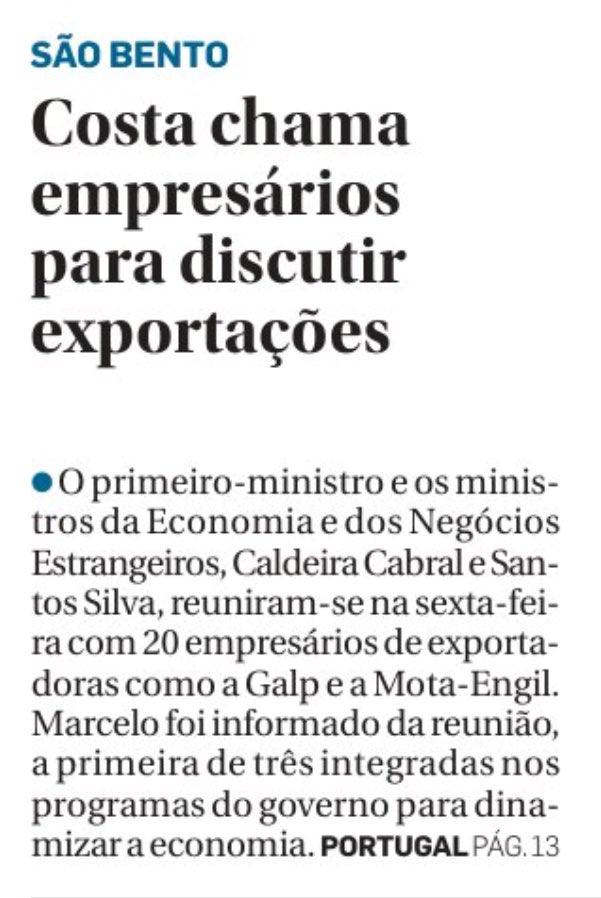
"De um lado, estava o primeiro-ministro acompanhado pelos ministros da Economia e dos Negócios Estrangeiros; do outro, "duas dezenas de empresários", entre os quais estavam os líderes da Semapa, Auto-Europa, Mota Engil, Galp e Continental Mabor. O objectivo era "ouvir os empresários sobre o que fazer para reforçar as exportações", adiantou o comentador."Tudo exemplo de empresas em que o negócio é preço.
.
Muitos, talvez a maioria dos empresários que conheço e que fazem parte da economia dinâmica que exporta à custa de valor acrescentado nos sectores tradicionais não tem tempo para fazer estes números de beija-mão no palácio. Há muito que seguiram este conselho "O que o país precisa é de PME's competitivas que façam by-pass ao estado, que compitam no mercado global."
Trecho retirado de "António Costa chama empresários a São Bento".
Acerca da servitization (parte II)
Parte I.
,
Esta semana, já depois de ter escrito "Acerca da servitization" ouvi, incrédulo na rádio uma versão deste caso "Update on Incident: TAP A332 at Lisbon on Jul 12th 2014, engine shut down in flight". O meu lado cínico à solta pôs-me logo a pensar em que muito do que se escreve como exemplo pode não passar de infoplacement, uma forma mais rebuscada de publicidade sem conteúdo real.
.
Isto é muito lindo:
,
Esta semana, já depois de ter escrito "Acerca da servitization" ouvi, incrédulo na rádio uma versão deste caso "Update on Incident: TAP A332 at Lisbon on Jul 12th 2014, engine shut down in flight". O meu lado cínico à solta pôs-me logo a pensar em que muito do que se escreve como exemplo pode não passar de infoplacement, uma forma mais rebuscada de publicidade sem conteúdo real.
.
Isto é muito lindo:
"Equipment focussed product life-cycle offerings including maintenance services support products already sold. An ongoing support tends to become on-site maintenance.
.
Asset focused managed services create a higher level of complexity as they are made up of different but interlinked or interdependent pieces of equipment and several suppliers. This calls for a dedicated organizational function to manage the assets and coordinate the support activities. A servitizing manufacturing firm can find an opportunity to enter this area of managed services.
.
Process focused advisory or consulting services can offer technical and management advice, pro-active problem solving through co-innovation as well as reactive problem solving. Given sufficient understanding of their customer´s and user´s world the servitized manufacturing firm can offer and even implement solutions using their own monetary resources, their own equipment and other physical assets, their own relationships, their competence in people and processes, their own brands etc."
Contudo, quando se adia uma manutenção programada porque não havia espaço na agenda do responsável pela manutenção...
"The difficulty for the engine manufacturer, for reasons related to the contracts with the various operators and/or availability, to schedule an earlier Quick Turn that resulted in ESN 811471 engine reaching a CSN above the desired (taking into account the record of previous events) for its removal;"
Plataformas em todo o lado
"But the nature of competition and strategy is quite different in a platform-based business, said Van Alstyne:Trecho retirado de "Platforms and the New Rules of Strategy"
- The goal is interactions [Moi ici Estão a ver porque isto é perigoso ""] that yield network effects and provide growth and sustainability, - not protecting market niches or erecting industry barriers.
- Industry boundaries can be altered as appropriate, - rather than sticking to sharply defined categories.
- Competition is multi-layered, “more like 3D chess”, - rather than just relaying on product differentiation or lower costs.
...
- Competitors are turned into complementors that offer their products or services on the platform - there’s no longer a need to own unique, inimitable resources.
“With platforms, a critical strategic aim is strong up-front design that will attract the desired participants, enable the right interactions (so-called core interactions), and encourage ever-more-powerful network effects… while guarding against threats remains critical, the focus of strategy shifts to eliminating barriers to production and consumption in order to maximize value creation… To that end, platform executives must make smart choices about access (whom to let onto the platform) and governance (or control - what consumers, producers, providers, and even competitors are allowed to do there)…”
"Who murdered strategy?"
"When strategy is murdered in an organization who is blamed, who is the equivalent of the butler? Fortunately you do not have to wait to the last page to find out. Amazingly the strategy itself is blamed. Leaders say ‘‘well the strategy must have been wrong’’ and move on. This is amazing because leaders never look beyond their first (and often) only suspect. If it was not the strategy then who else can be responsible?.The implementation.As an implementation specialist whose work starts after the strategy has been crafted, I am more than happy with strategy constantly taking the blame. But it is a short sighted view that is damaging and distorting leaders’ implementation abilities. Leaders must recognize that strategy implementation is extremely difficult and that they habitually underestimate its challenges. They perceive crafting strategy as the harder challenge and therefore by default blame the toughest area when it fails. Executing strategy, however, is just as tough as crafting the right strategy. Therefore typically it is evenly balanced where the blame lies for strategy’s murder....Currently too many leaders delegate their implementation responsibilities and do not follow through on the actions. When leaders stop paying attention to the implementation so do the staff members and it starts to fail. Leaders must take more time to reflect that the suspects for strategy’s murder come from both strategy and its implementation....Before you start the implementation of your next strategy, take the time to learn from what has happened before in your organization. Take the time to: * make sure you know why previous strategies have failed;* examine what happened in both the planning and the implementation of the strategy;* identify lessons that can be shared;* understand what works and what doesn’t in your culture;* identify the critical success factors for moving forward; and
* constantly review your new implementation to ensure you are not repeating mistakes."
Trechos retirados de "Who murdered strategy?", Strategic Direction, Vol. 27 Iss 9 pp. 3 - 5, Robin Speculand, (2011).
Por que as grandes estratégias têm de ser fora da caixa
"Great strategies always go against the grain of accepted wisdom. Markets and organizations have powerful immune systems that erect multiple barriers to implementing them. Leaders who own their strategies are more likely to persevere through such resistance, and prevail. Great strategies take leaders who believe enough in them — and the ideas they depend on — to be willing to fight their own organization and the broader market for however long it takes to realize the strategy."Este trecho fez-me logo relacionar com estes outros:
"The real power of a well-crafted corporate theory [Moi ici: Outra forma de referir a estratégia] becomes evident as companies go shopping for the assets to test their theories. Value creation through markets always comes down to prices paid, and a good corporate theory enables the acquirer to spot bargains that are uniquely discerned or uniquely available to it.Ou seja, se uma estratégia não for ao arrepio do senso comum "toda a gente" verá a oportunidade e, assim, haverá muitos licitadores a quererem adquirir os meios para executar essa estratégia. Então, numa espécie de guerra de licitações num leilão, os meios serão adquiridos a um preço tal que dificilmente se ganhará dinheiro, uma espécie de "winner's curse" (aqui e aqui).
...
The mark of a well-crafted corporate theory is the uniqueness of the value creating opportunities it reveals. This uniqueness may stem from the uniqueness of the foresight the theory reveals or from the uniqueness of the assets and capabilities a company already possesses."
.
Trecho inicial retirado de "Why Popular Strategies Always Fade"
.
Trechos finais retirados de "Beyond competitive advantage : how to solve the puzzle of sustaining growth while creating value" de Todd Zenger.
Subscrever:
Mensagens (Atom)
%2006.21.jpeg)