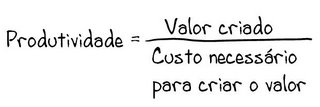
- contratar caçadores para matar os pássaros;
- contratar aplicadores de insecticida para matar as aranhas.
terça-feira, fevereiro 23, 2010
Ir ao fundo da questão
Vamos viver tempos interessantes, mesmo, mesmo!
segunda-feira, fevereiro 22, 2010
Para reflexão
Prepare to be dazzled (parte II)
- Sales growth rate: to evaluate the ISO 9000 impact in sales.
- Personnel expenses and operational cost growth rates: to evaluate the ISO 9000 impact on costs.
- Earnings before taxes: to evaluate the ISO 9000 impact on benefits.
- Return on assets (ROA): to evaluate the ISO 9000 impact on profitability."
In first place, a longitudinal study that consisted in a t-test comparing performance before and after certification is presented (see Table I). Excluding the year of certification, the performance average of the three years before the implementation of ISO 9000 is compared to the performance average during the three years following registration. The analysis shows not only that certified companies have not improved their results, but also that their results have worsened.
However, this analysis could be biased by an abnormal performance of some companies in one of the groups. In order to avoid that problem, a second analysis was performed: the sign-test. The sign test compares the number of companies that improve with the number of companies that worsen. The results support the conclusion that certified companies obtained less earnings and ROA after certification.
There were no differences in sales, so the results do not support the conclusions of other studies that ISO 9000 is a good marketing tool (Ebrahimpour et al., 1997; Brown et al., 1998; Anderson et al., 1999; Hughes et al., 2000). Operational costs and personnel expenses remained unchanged.
Analysis II compares certified and non-certified companies. Some differences have been detected but, contrary to findings in some of the literature exposed before, these differences are negative, as certified companies are the group with the worse performance.
In summary, the data suggest that certification has a negative effect on company results, mainly on earnings and ROA. These results support the findings of Singels et al. (2001), who found that certified companies had worse average cost savings, rate of sales growth, rate of market share growth and rate of net benefit growth when compared with non-certified companies. However this is in contrast with the results of many other papers that claimed that ISO 9000 has a positive effect or even no effect at all on company performance (Simmons and White, 1999; Abraham et al., 2000; Gupta, 2000; Heras Saizarbitoria et al., 2000; Hua et al., 2000; Sun, 2000).
A number of explanations of the present findings can be advanced:
- The cost of implementation and maintenance of the standard is greater than the benefits that it produces.
- This cost is high due to the fact that the standard slows the production process by introducing too much bureaucracy in the company (Martı´nez-Costa and Martı´nez-Lorente, 2004). The 2000 version of the standard has reduced the need for paperwork and this could change the effect that the standard has today on company results.
- The benefits of implementation are low in companies that get the certificate only in response to external pressures, since they do not apply the standard thinking of a quality management system more in line with TQM but only with a view to getting the certificate at a minimum cost. Terziovski et al. (2003) found that there is a positive relationship between the managers’ motives for adopting ISO 9000 certification and business performance. In this sense, the 2000 version of the standard has tried to be more congruent with TQM prescriptions and therefore it will be interesting to analyse the effect of this new version.
- Some of these companies that have applied the standard only for commercial reasons could be applying it only in a formal way and trying to deceive the auditors.
- Some companies have applied the standard because their industrial customers have forced them to do it. Therefore, after getting the certificate they have the costs but the same clients. If these companies have no way to decrease costs by the application of the standard, it has been a requisite to survive but not a way of improving.
- Not all auditing companies have the same ways of understanding the standard (Andrews et al., 2001), and some of them could have flexible procedures of
- auditing. This will mean that two companies in the same sector certified by different companies could be applying the standard in very different ways, and possibly even companies certified by the same auditing company." (Moi ici: Na terceira parte desta série vou dar a minha explicação pessoal para estes resultados, com base na minha experiência como consultor e como auditor.)
- (1) Organizations should not undertake the certification process if they do not have customers that force them to do so. The costs of implementation and maintenance appear to be greater than the possible benefits. However, some companies of the sample got better results after the certification, what could imply that depending of the way of application or depending of the specific company circumstances, the norm can be positive. Therefore, the differences amongst different industries and amongst other company characteristics in relation to the benefits of ISO application could be interesting to analyse.
- (2) Organizations should not choose their suppliers using their possession of an ISO 9000 certificate as a requisite, since they could be creating problems for their suppliers that, soon or later, will result in increased costs to themselves."
domingo, fevereiro 21, 2010
Para reflexão
Locus de controlo interior
sábado, fevereiro 20, 2010
Hello!?!?!
.
“Life is the most resilient thing on the planet. It has survived meteor showers, seismic upheavals, and radical climate shifts. And yet it does not plan, it does not forecast, and, except when manifested in human beings, it possesses no foresight. So what is the essential thing that life teaches us about resilience? Just this: Variety matters.”

A morte lenta
Retratos das Associações empresariais deste pais
- De natureza endógena: Debilidades do tecido empresarial em termos de subdimensionamento, falta de visão estratégica , baixa qualificação dos recursos humanos; estrangulamentos no acesso ao crédito e aos seguros de credito à exportação por parte das PME."
- maior rapidez e eficácia nas decisões dos tribunais;
- manutenção dos estímulos à actividade económica pelos poderes públicos;
- implementação eficaz dos programas de apoio sectorial já aprovados;
- enfoque nas PME com vocação exportadora;
- agilização e maior transparência no QREN;
- pagamento do IVA no acto de recebimento, reajustamento do pagamento especial por conta e celeridade no pagamento do Estado aos fornecedores (medidas estas a discutir em sede do novo Orçamento de Estado);
- flexibilização da lei laboral , e em particular no que se refere aos ajustamentos do quadro de pessoal às necessidades das empresas sem que tal implique incomportáveis ónus financeiros."
Prepare to be dazzled (parte I)
Esse é, segundo o CEO da APCER, o próximo passo. Sendo que já se sente algum movimento nesse sentido. «Nos próximos três anos vão aparecer centenas de empresas certificadas, principalmente PME», antevê José Leitão. (Moi ici: Gostava de saber quantas empresas deixaram de ser certificadas nos últimos 2 anos.)
Segundo um estudo da Mark test sobre a «A certificação nos hábitos de compra dos portugueses», cerca de 96% dos inquiridos revelaram ter noção do conceito «certificação». No entanto, o estudo também provou que, actualmente, ainda não existe uma comunicação eficaz entre as empresas e os consumidores. A prova está no facto de nem todas as organizações certificadas serem (re)conhecidas como tal.
«Há muitos produtos que são feitos por empresas certificadas e que os consumidores não o sabem», constatou José Leitão. (Moi ici: Tem graça, quando eu comecei no mundo da qualidade aprendi que quando uma empresa é certificada, o que é certificado é a empresa, a sua organização, não os seus produtos ou serviços. Aliás, uma empresa não pode apor o símbolo de empresa certificada nas embalagens dos seus produtos.)
Esta lacuna deve ser encarada não como um problema mas como uma oportunidade. As empresas têm de começar a comunicar não só que são certificadas e em que produtos/serviços, mas também explicar as vantagens da certificação. Porque está provado que têm influência no acto da compra. (Moi ici: Provado onde? Quem tiver um mínimo de conhecimento de como são feitas as auditorias de concessão e de como funcionam muitos dos sistemas certificados sabe perfeitamente que que isto não é verdade.)
Esta situação de desconhecimento não ocorre em todas as áreas. A alimentação e a saúde já são reconhecidas e premiadas pelo facto de terem certificações. (Moi ici: Provas? Com números de vendas e rentabilidade? Comparando o desempenho médio de empresas certificadas versus empresas não certificadas nos mesmos sectores de actividade) Nas análises clínicas, por exemplo, o certificado é exibido logo à entrada. O que determina a escolha de um doente de efectuar ali as suas análises. (Moi ici: Provas?)
Certificação influencia decisão de compra
.
O estudo da Marktest provou que a certificação pode levar a diferentes tomadas de decisão dos consumidores aquando do acto da compra. Mas é esse o único benefício da certificação? Não! José Leitão explica que é um factor cada vez mais primordial quando se efectuam negócios com empresas internacionais. O ter um certificado é cada vez mais exigido como um pré-requisito. Mesmo em Portugal, os concursos públicos já o exigem." (Moi ici: Isto não conta para as PMEs e micro-empresas do começo do artigo.)
sexta-feira, fevereiro 19, 2010
A importância da proposta de valor
Contar uma história, desenvolver uma narrativa
Instead of drawing and analysing a map or plotting numbers on a chart, executives should use words to create what I call a playscript: a narrative that sets out the cast of characters in a business, the way in which they are connected, the rules they observe, the plots and subplots in which they play a part, and how companies create and retain value as the business and the cast change.
Words are more powerful and flexible than value curves.
In a world where everything is shifting, executives can use words to decipher the motives and roles of the organisations bringing about change, the evolving rules and relationships in the business, and the story lines that link the present and the future.
The playscript isn’t just a metaphor; it’s a tool that helps companies manage the complexity of the competitive landscape and facilitates analysis and action.
Playscripts force companies to focus on the causes of change as opposed to the symptoms; they explicate the logic of success and the assumptions behind it.
By providing a sense of how long the good and bad times will last and how value is migrating, playscripts allow companies continually to assess the relevance of their strategies."
quinta-feira, fevereiro 18, 2010
Fora isto, tudo bem!
Flexibilidade... uma palavra feia para muita gente
Depois de uma queda na produção de quase 50 por cento em 2009, a fábrica voltou aos níveis anteriores à crise e prevê até ultrapassá-los, estimando chegar aos 60 milhões de rolamentos em 2010 (o que constituirá um recorde) e prepara-se já para atingir os 100 milhões nos próximos anos."
A farmácia do futuro (parte II)
1. Trust. Patients already have more contact with pharmacists than other health-care providers and appear to greatly value their pharmacists’advice."
capable of delivering some advisory, diagnostic, and treatment services.
An increasing number of pharmacies also have a retail clinic on the premises, staffed by a nurse practitioner licensed to perform a range of primary care services and, in some cases, write prescriptions.
4. Cost. Retail pharmacies operate in a highly competitive business environment, and are already acting to keep the nation’s cost of prescription medications lower by promoting generics."
As pharmacy companies plan for the future, they will need to first choose between two approaches for serving different patient segments consistently. The first is to build
retail health centers that focus on healthy and at-risk individuals and that deliver a range of health and wellness services, such as health risk assessments, counseling, smoking cessation programs, and ongoing tracking of risk factors.
...
The second approach is to concentrate on compliance and comprehensive disease management for the chronically ill. This population continues to grow, and more people are being forced to deal with multiple chronic conditions. Disease management (DM) companies are tackling the issue head on, but their efforts have not been fully satisfactory for the public or commercial payors"
quarta-feira, fevereiro 17, 2010
Seldom do countries simply “grow” their way out of deep debt burdens
A atitude é uma coisa pequena que faz uma grande diferença
"The great excitement of the future is that we can shape it.”
Eu sei, em primeira mão, o que isto significa.
No entanto, acredito que muitas pessoas ainda não perceberam que assim é. Por isso, em vez de moldarmos o futuro, somos conformados pelo passado que ficou obsoleto.
Em vez de ousar arriscar, há a tendência para barricar o status quo e defender o passado.
A revista The Economist no artigo “So hard to bend” bate nas leis laborais rígidas e nos salários elevados e, bate neles porque julga que a solução passa por mexer nessas variáveis.
Assim, de um lado, temos os defensores do passado que tentam defender os postos de trabalho a todo o custo e, do outro lado, temos outros defensores do passado, os que defendem estratégias obsoletas, e que em vez de apostarem na criação de valor se concentram na redução de custos. Ambos estão condenados à erosão, à irrelevância e à implosão final.
Charles Handy tem um capítulo intitulado “Finding Sense in Uncertainty” no livro “Rethinking the future” onde se pode ler:
"WE ARE LIVING in very confused times, because many of the things that gave structure to our lives are disappearing. Institutions which we relied on, particularly the work organization are no longer so sure or so certain. For one thing, work organizations disappear rather rapidly these days.
If we are going to make any sense out of all this confusion around us, we have to find a way to organize it in our minds, so that we can start to understand what is actually happening in the world and then try to do something about it. (Moi ici: Sempre a mesma coisa, se queremos lidar com um “wicked problem” esta é a a abordagem correcta, devemos procurar perceber primeiro o problema antes de saltarmos para a solução)
…
In the twenty-first century, we will see more and more people adopting a `portfolio' approach to their lives and to their work. What I mean by this is that life will be a collection of different activities, almost like a share portfolio. A part of the portfolio will be the core activities, for providing the essentials for living, whereas the rest will be other things that we think of as personal fulfillment, as responsibilities towards other people or even just as fun.
Instead of having a career in the traditional sense, you will, for part of life, have a `portfolio career', where part of your time will be spent earning wages or fees, and the rest will be for community work or study or whatever. A lot of it will be work of some form, even if much of it is unpaid, and it will all go to make up a portfolio of activities which will increasingly define you.
...
We have to remember that the very definition of work is changing. Work used to mean having a job with an employer. But today, it increasingly means working for yourself and even by yourself. In the near future, half of the workforce of the developed world will be working `outside' the organization. Traditional organizations now employ only 55 percent of the workforce on a full-time basis. The rest are temporary, part-time or contractual workers. Our portfolios will increasingly be collections of different work for different clients.
…
We've got to learn to live with chaos and uncertainty, to try to be comfortable with it and not to look for certainty where we won't get it.
…
You can't look at the future as a continuation of the past. The things that got you where you are are seldom the things that keep you there. But, on the other hand, if you don't know where you are coming from you will find it hard to go forward.
Actually, we've got to see the future as a series of discontinuities, and we've got to learn to take these things in our stride.
…
The way you make sense of the future, in organizations and in societies and in your own life, is by taking charge of the future. Not by responding to it.”
Entretanto, o sítio da revista Business Week cita um artigo de Harvard “Cut Costs Without Cutting Meaning” que é uma chamada de atenção para todos aqueles que se concentram tanto no corte dos custos que se esquecem do significado, do valor para os clientes.
O título é uma citação atribuída a Winston Churchill.
terça-feira, fevereiro 16, 2010
The Great Wicked Mess
- Temos o Reino Unido "Britain and the PIGS" daí o sorriso que este artigo me despertou "Mandelson urges swift action on Dubai debt restructuring";
- Temos os Estados Unidos "What Keeps Australian Central Bankers Up at Night?" e "9,500 Shuttered Stores In Sacramento Area: "Everyone Perfectly Content With Less""; e
- Temos a China e a Australia "Goldman Says "Something Brewing" in China on Currency; What's Really Brewing Is "Trouble"".