Uma destas dúvidas, de Junho de 2015, parece que está esclarecida e que os meus receios não faziam sentido: "Viriato exporta 95% e prevê para 2017 salto de 50% na faturação"
sexta-feira, abril 07, 2017

Orçamento e estratégia (parte III)
Parte I e parte II.
Começo por recuar a 2003, ou seria 2004?
E na sua empresa como se distribuem os recursos?
Trechos retirados de "A Better Way to Set Strategic Priorities"
Começo por recuar a 2003, ou seria 2004?
"Smart leaders understand that their job requires them to identify trade-offs, choosing what not to do as much as what to do. Grading the importance of various initiatives in an environment of finite resources is a primary test of leadership.E não é raro encontrar fantasias.
...
There are three interdependent variables that are essential for executing any initiative — objectives, resources, and timing. You can’t produce the desired effect of a project without precise objectives, ample resources, and a reasonable time frame. If you push or pull on one leg of this triangle, you must adjust the others.
.
All three variables are important, but resources reign supreme. Resources are what enable an objective to be accomplished within a set time; without dedicated means, an initiative is pure fantasy."
E na sua empresa como se distribuem os recursos?
Trechos retirados de "A Better Way to Set Strategic Priorities"
Aumentar a rentabilidade
O que está por trás de um aumento da rentabilidade:
 Primeira figura que inclui num relatório de um projecto em curso.

quinta-feira, abril 06, 2017
Curiosidade do dia
"o défice desce (negociando as despesas que contam), mas a dívida sobe (porque tudo conta).Trecho retirado de "Sobe e desce"
.
Afinal, as coisas não podem permanecer iguais. Portugal tinha um modelo de crescimento com império colonial, grupos empresariais privados, um pequeno sector de empresas públicas, sem défice orçamental e sem dívida. Descolonizou, nacionalizou, criou um grande sector de empresas públicas, aumentou as despesas com o seu modelo de sociedade, gerou défices orçamentais, aumentou a dívida pública e privada - mas não mudou o seu modelo de crescimento, nem mesmo depois da integração europeia e da adesão ao euro. Tem um modelo de sociedade com despesa pública sem ter um modelo de crescimento que sustente essa despesa."
Cuidado com as cópias
"the notion that there are specific prescriptions for success that are universally applicable in companies from different industries and at different stages of development is at best folly and at worst, dangerous. This philosophy tends to promote strategic rigidity. ... effective business strategy needs to constantly adapt to inevitable shifts in technology, the market, and the competitive landscape. Strategic priorities that are effective in one company may be quite harmful if adopted by another company operating in a different business context."Agora imaginem PME a tentarem copiar as actuações estratégicas de empresas grandes porque aparecem nas revistas, nos jornais, porque são comentadas, porque ...
Trecho retirado de "If You're in a Dogfight, Become a Cat!: Strategies for Long-Term Growth"
Acerca de Mongo
"We are living in the age of mass individualization.Trecho retirado de "THE PREMIUM PUZZLE / THIS MIGHT BE YOUR FUTURE IN FIVE YEARS"
...
Every smartphone is unique two minutes after its first boot.
...
We are living in an age where the new mega industries have all become personal services industries and the old incumbents are still struggling to put out a mass product at almost no margin or cost
...
Future wealth lies not maximizing the efficiency of the value chain but in the individualization of every product, service and interaction.[Moi ici: O grande vector que está a mudar o mundo económico]
...
The premium puzzle is no longer about access to goods, but about individualization. People no longer accept being robbed of their identity or having to accommodate their needs and behaviors to the one dictated by a limited offer given by the current industry. They are increasingly demanding products not only tailored to them, but also demand that products exist in the markets that serve their needs.
.
The path forward seems to be more connected with forcing the technology to accommodate the individual customer, rather than forcing the customers to give up on their personal achievements and goals in order to collectively commit to the incumbents available technology."
Quando as mensagens deste blogue se tornam cliché
A competitividade das PME.You nailed it! When you life message becomes a cliche, yes, take that as success! https://t.co/61whbU9nGs— Joe Pine (@joepine) January 19, 2017
Somos todos alemães.
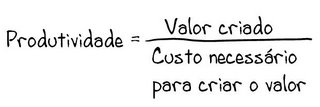
Competir por fazer subir os preços unitários em vez de concentrar tudo na redução dos custos unitários.
Apostar no numerador para aumentar a produtividade.
Não ter a veleidade de servir tudo a todos.
Não resisto a recordar três cromos:
- Zé Reis (cromo nº 12)
- André Macedo (cromo nº 6)
- Daniel Bessa (cromo nº 5)
"efficiency always leads to commoditization. Not sometimes. All the time."
"No doubt, when they think about how they can provide a better service, they come up with all kinds of great ideas, but none of them are experiences. Better service is efficiency, and efficiency always leads to commoditization. Not sometimes. All the time.Concordo em absoluto com a mensagem sublinhada. E ainda acrescento uma citação da coluna de citações que vai ao encontro da mensagem:
.
Experience has nothing to do with the offering.
.
Imagine if Canada Post had been able to see the writing on the wall, and instead of trying to only get better at providing better services, like drive-through windows, they instead converted most of their postal offices into coffee shops.
.
What was stopping Canada Post from becoming something more like Starbucks? I mean, aside from imagination?"
"When something is commoditized, an adjacent market becomes valuable"Trecho retirado de "Postcards from the Edge (of Oblivion)"
quarta-feira, abril 05, 2017
Curiosidade do dia
Ministro das Finanças a enganar-nos com a verdade:
Aumenta os salários e, por milagre a despesa com pessoal baixa? Vai ser uma corrida contra o tempo para haver eleições antecipadas antes que a realidade os comprometa.
Trechos retirados de "Centeno desconhece dados da UTAO: despesas com pessoal caem"
"O ministro das Finanças disse esta quarta-feira desconhecer o alerta da Unidade Técnica de Apoio Orçamental (UTAO) acerca do aumento das despesas com pessoal nas Administrações Públicas,Há tempos previ esta jogada:
...
“No conjunto das administrações públicas, as despesas com pessoal caem. Na execução orçamental de 2017, com dados conhecidos, são estes os números que lhe estou a referir” que aparecem, sublinhou.
.
“Não me parece que haja nenhuma dúvida sobre essa matéria”, completou o ministro, repetindo: “Há uma queda com as despesas com pessoal”."
o truque de chutar o subsídio de Natal para o fim do ano? pic.twitter.com/gVNhTDEwc5— Carlos P da Cruz (@ccz1) March 12, 2017
Aumenta os salários e, por milagre a despesa com pessoal baixa? Vai ser uma corrida contra o tempo para haver eleições antecipadas antes que a realidade os comprometa.
Trechos retirados de "Centeno desconhece dados da UTAO: despesas com pessoal caem"
"Don’t worry about the competition"
"I may never have been to Cape Cod in summer like the some of the blue bloods in the newsroom, or studied with John McPhee, or palled around with JFK and Jackie. I may not have spoken French or dined regularly with ambassadors or sports heroes—or anyone at all during that first couple of years, when I worked the graveyard shift exclusively.À atenção das PME, esta é a receita que lhes recomendo.
.
But I did have a few things going for me. A facility with words. A musical bent. An eye for detail. An empathetic ear. An interest in people who were different than me. A little dab of street wise I’d picked up in my early days as a rebellious junior hippy, and later as a day-tripper through seedier climes. And above all, the knowledge that this was what I had to be doing.
.
Over time, without thinking too hard about it, I did the best I could with what I had, drawing from my intangible assets to create a style of my own. Some people like it. Some do not. I’m not a household word. But I always try, with every piece that I make, to deliver something different and original, something entertaining that carries the weight of truth, something that people will pay me for—yes, that’s important too. Into everything goes my all.
.
Along the way I have learned that comparison and competition are enemies of the artist. How did he get that assignment? How could she win that award? How many books did she sell? What’s his hourly rate?
.
All that should matter is the piece of work that sits before you. There is you. There is your art. At the elemental level, nothing else matters.
.
Call it my Theory of Originals.
.
Don’t worry about the competition. Find what you do best. When the room is full or when the lines are long, form a line of your own. Be number one in a class of one.
.
Once you’re there, nobody will be better than you, either."
Trecho retirado de "Nobody’s Better Than You"
25 cromos desmentidos com um gráfico
Se lerem "Fuga para a frente", onde João Ferreira do Amaral culpa o euro por todos os nossos males, podem reparar num pormaior: deixa de acusar o euro de nos causar falta de competitividade.
Quando as evidências começam a suportar com cada vez mais força a tese deste blogue, a culpa não é do euro, a culpa foi da China, Ferreira do Amaral tem de podar com cuidado o que escreve para não usar a palavra competitividade.
Recordar "Aprenda a duvidar dos media" (uma série com 25 cromos)
Recordar, por exemplo, Vítor Bento (cromo nº 2):
 Esta manhã numa saltada ao Twitter apanhei este tweet:
Pois... um simples gráfico desmonta a conversa de 25 Sarumans habituados a ver o mundo do alto das suas torres.
Uma geração de académicos, comentadores e políticos enformados pelo século XX onde "todos" convergiam para um pico único:

Mas agora: Mongo rules!!!
Quando as evidências começam a suportar com cada vez mais força a tese deste blogue, a culpa não é do euro, a culpa foi da China, Ferreira do Amaral tem de podar com cuidado o que escreve para não usar a palavra competitividade.
Recordar "Aprenda a duvidar dos media" (uma série com 25 cromos)
Recordar, por exemplo, Vítor Bento (cromo nº 2):
"Campeões! Campeões! Nós somos Campeões!!— anti-comuna (@nticomuna) April 5, 2017
Campeões! Campeões! Nós somos Campeões!!"
Pelo menos da Europa 👌🏽😎😎 pic.twitter.com/jQA2PVm1ya
Pois... um simples gráfico desmonta a conversa de 25 Sarumans habituados a ver o mundo do alto das suas torres.
Uma geração de académicos, comentadores e políticos enformados pelo século XX onde "todos" convergiam para um pico único:

Mas agora: Mongo rules!!!
Michelin low-cost?
Ontem ao ler "Costa garante: Malparado não vai fazer “nascer um banco mau”" lembrei-me logo de "Costa quer tirar 'lixo' dos bancos. E passá-lo para um 'banco mau'".
Hoje ao ler a pompa e a circunstância de "Estrelas Michelin assinam refeições de bordo na TAP" lembrei-me logo das ideias pouco sensatas:

Hoje ao ler a pompa e a circunstância de "Estrelas Michelin assinam refeições de bordo na TAP" lembrei-me logo das ideias pouco sensatas:
- Divagações de um consultor de província (Setembro de 2016!!!!!)
- TAP: Por onde começar? (Novembro de 2015)
Não creio que estrelas Michelin casem bem com low-cost, pois não?
Quantas PME sofrem desta doença? Caro Paulo, está a ver o que quer dizer desalinhamento entre estratégia e orçamento? Ou entre estratégia comunicada e estratégia executada?
BTW, o que fazem aquelas meninas na foto? Bibelôs?
"there are not generically great ways to win"
"The challenge here is that both are linked, and together they are the heart of strategy; without a great Where to Play and How to Win combination, you can’t possibly have a worthwhile strategy. Of course, Where to Play and How to Win has to link with and reinforce an inspiring Winning Aspiration. And Capabilities and Management Systems act as a reality check on the Where to Play and How to Win choice. If you can’t identify a set of Capabilities and Management Systems that you currently have, or can reasonably build, to make the Where to Play and How to Win choice come to fruition, it is a fantasy, not a strategy.Trechos retirados de "Strategic Choices Need to Be Made Simultaneously, Not Sequentially"
...
no meaningful Where to Play choice exists outside the context of a particular How to Win plan. An infinite number of Where to Play choices are possible, and equally meritorious — before considering each’s How to Win. In other words, there aren’t inherently strong and weak Where to Play choices. They are only strong or weak in the context of a particular How to Win choice. Therefore, making lists of Where to Play choices before considering How to Win choices has zero value in strategy.
...
no meaningful How to Win choice exists outside the context of a particular Where to Play. Despite what many think, there are not generically great ways to win — e.g., being a first mover or a fast follower or a branded player or a cost leader. All How to Win choices are useful, or not, depending on the Where to Play with which they are paired. A How to Win choice based on superior scale is not going to be useful if the Where to Play choice is to concentrate on a narrow niche — because that would undermine an attempted scale advantage.
...
The only productive, intelligent way to generate possibilities for strategy choice is to consider matched pairs of Where to Play and How to Win choices. Generate a variety of pairs and then ask about each:
.
Can it be linked to an inspiring, attractive Winning Aspiration?
Do we currently have, or can we reasonably build, the capabilities that would be necessary to win where we would play?
Can we create the Management Systems that would need to be in place to support the building and maintenance of the necessary capabilities?"
terça-feira, abril 04, 2017
Curiosidade do dia
"É verdade: um défice baixo pode ser um arranjo momentâneo, obra de engenho ou de sorte. Um bom défice baixo é outra coisa: reflecte um Estado viável e uma economia com elevado potencial de crescimento. O Estado e a economia em Portugal não são assim, e uma maioria que inclua o PCP e o BE nunca deixará que sejam.Trecho retirado de "Sim, dá muito jeito ter António Costa no governo"
.
Mas que importa? A oligarquia percebeu que, no actual contexto europeu, improvisações orçamentais efémeras bastam para ir buscar dinheiro ao BCE, e que enquanto isso for possível estará poupada à maçada de ter de pensar em mudar o Estado, ou libertar a economia. De facto, as coisas vão correndo da melhor maneira possível. Poderá tudo perder-se um dia, como receia Passos Coelho? Talvez, mas isso depende da Europa — e então logo se verá."
"It ain't over till the fat lady sings" (parte II)
Parte I.
Ao reler a parte I veio-me à mente Beinhocker e Lindgren:
Ao reler a parte I veio-me à mente Beinhocker e Lindgren:
"“Likewise, we cannot say any single strategy in the Prisioner’s Dilemma ecology was a winner. Lindgren’s model showed that once in a while, a particular strategy would rise up, dominate the game for a while, have its day in the sun, and then inevitably be brought down by some innovative competitor. Sometimes, several strategies shared the limelight, battling for “market share” control of the game board, and then an outsider would come in and bring them all down. During other periods, two strategies working as a symbiotic pair would rise up together – but then if one got into trouble, both collapsed.”
…
And now, the grande finale:
“We discovered that there is no one best strategy; rather, the evolutionary process creates an ecosystem of strategies – an ecosystem that changes over time in Schumpeterian gales of creative destruction.”"
Risco
Quando comecei a trabalhar com empresas de calçado no final da década passada percebi que quase todas tinham um indicador que nunca tinha encontrado até então em PME: o indicador media o número de clientes responsáveis por X% das vendas.
As empresas, como gatos escaldados que da água fria têm medo, queriam reduzir a dependência de um único cliente porque tinham aprendido o quão isso as colocava numa posição de fragilidade.
Ao ler este título "Maioria das 10 maiores exportadoras trabalham à volta de um carro" pensei na posição de fragilidade dos políticos da situação de turno que se comprazem com as exportações das empresas grandes sem olhar para as das PME.
O que vale é a diversidade das exportações feitas pelas PME, o que contribui para alguma antifragilidade do emprego do sector transaccionável da economia.
Agora imaginem que o carro eléctrico, ou o carro autónomo descabela o sector automóvel...
E recuo a 2003:
As empresas, como gatos escaldados que da água fria têm medo, queriam reduzir a dependência de um único cliente porque tinham aprendido o quão isso as colocava numa posição de fragilidade.
Ao ler este título "Maioria das 10 maiores exportadoras trabalham à volta de um carro" pensei na posição de fragilidade dos políticos da situação de turno que se comprazem com as exportações das empresas grandes sem olhar para as das PME.
O que vale é a diversidade das exportações feitas pelas PME, o que contribui para alguma antifragilidade do emprego do sector transaccionável da economia.
Agora imaginem que o carro eléctrico, ou o carro autónomo descabela o sector automóvel...
E recuo a 2003:
""Life is the most resilient thing on the planet. It has survived meteor showers, seismic upheavals, and radical climate shifts. And yet it does not plan, it does not forecast, and, except when manifested in human beings, it possesses no foresight. So what is the essential thing that life teaches us about resilience?Just this: Variety matters. Genetic variety, within and across species, is nature's insurance policy against the unexpected. A high degree of biological diversity ensures that no matter what particular future unfolds, there will be at least some organisms that are well-suited to the new circumstances."
Poema de Gary Hamel e Liisa Valikangas em "The quest for resilience", Harvard Business Review, Setembro de 2003"
"people have changed more than the business organisations"
Costumo escrever aqui que nos estamos a entranhar em Mongo. Estamos a abandonar o modelo económico do século XX baseado no eficientismo e na massa e, a entrar no modelo do século XXI baseado em nichos, em tribos, na explosão de heterogeneidade. Por isso, o sublinhar deste trecho:
"“The chasm is where we live today. We are living at a moment in economic history where people have changed more than the business organisations they must depend upon for consumption and for employment."Continuando:
"A hundred years ago there was an emerging society of mass consumers. [Moi ici: Prefiro a versão de Seth Godin. A massa foi criada pela indústria, não era o que as pessoas queriam: "The factory came first. It led to the mass market. Not the other way around."] People who had basically no stuff, a little more than discretionary income and they wanted a lot more stuff. And breaking through the premium puzzle a hundred years ago ment inventing new ways to get people stuff at a prize they could afford. Thus was born mass production. Mass production was an economic logic that had never been discovered. And the one who finally put together the pieces of the premium puzzle was Henry Ford. Now a lot of the pieces were out there. But there was a day, in 1913 [Moi ici: "O século XX começo há 100 anos"] in the life of the 3rd incarnation of the Ford Motor Company when the engineers and the tinkerers and Ford himself looked up at each other at the end of the day that they had broken through to a completely virgin economic territory. And the economic logic in that territory was high throughput low unit cost.”"A consequência dessa lógica levada ao extremo levou a excelentes resultados financeiros com uma contrapartida:
"“So the deal for high throughput low unit cost was [externalizing the] customer; you are now an exogenous [outside] variable to the business process, you’re on the outside of the business model. The only thing we owe you is efficiency. Because efficiency is what is going to make it possible for us to standardize and give you a low cost [product]. Now that model was extremely successful; concentrated assets, commmand and control, managerial hierarchy, standardization, interchangeability, consumer as an external variable. Very successful, created massive wealth, unprecedented wealth.”"Só que os clientes não querem ser plankton:
"“This is what I call the new society of individuals. The hallmark is a sense of psychological uniqueness … my destiny is not born in my blood. I am the origin of my meanings, I am the origin of my destiny. I think of this with thee headlines: sanctuary, voice and commitment. Sanctuary: I want to have control over my life, I want to be the origin of my choices. Voice: I want to have influence unmediated, and I want it to matter. Connection: I want to be connected to other people, but not with the conformity demand of the old feudal system, still characteristic of our large organizations.”"O que entra em choque progressivo com o modelo do século XX:
"where as the low cost product and services of the 20th century, met the needs of the old mass consumer, they no longer meet the needs of the new individuated consumer. We need new kinds of entities operating on a new enterprise logic,"Trechos retirados de "The Changing Content of Capitalism"
segunda-feira, abril 03, 2017
Curiosidade do dia
"Mas quais seriam as consequências de uma saída de Portugal da zona Euro, sem que esta terminasse?Repito-me. A melhor forma de acabar com estes discursos populistas lepenistas-comunistas-bloquistas em Portugal seria fazer um episódio de uma novela ou de um "Benvindo a Beirais" passado hipoteticamente no day-after da saída do euro. O português-tipo não é bom a pensar abstractamente, tudo o que lhe digam sobre a desgraça da saída do euro não lhe diz muito. Agora ponham-no a assistir a um episódio e a sentir na pele a subida dos preços, as filas, a inflação, o fim dos apoios comunitários, ...
.
Seria um processo extremamente complexo e difícil. Teríamos de fechar as fronteiras, proibir os levantamentos de dinheiro, terminar com a liberdade de capitais, intervencionar a banca e manter a ordem pública. Só que, como o processo não seria feito de um dia para o outro, a fuga de depósitos e capitais seria elevadíssima. E provavelmente sem qualquer apoio do Banco Central Europeu.
.
E como pagar as importações sem moeda externa para o fazer? Sabem qual seria o primeiro produto a acabar nos supermercados? O pão, dado que Portugal importa quase 100% dos seus cereais dos EUA e da Ucrânia.
...
No fundo, seria transformar Portugal na Venezuela da Europa. Na semana passada, o governo da Venezuela (além do golpe de Estado em curso) proibiu as padarias de produzir bolos. Parece que a causa é a escassez de farinha, necessária para produzir pão. Qualquer economista sério dirá que é o falhanço do modelo socialista (na Venezuela e em qualquer outro lugar). O Bloco e o PCP dirão que é uma medida de saúde pública para combater a obesidade e a diabetes."
Trechos retirados de "Sair do euro?"
"Your customers care about the progress they will make"
"It’s true. Your customers don’t care about your product. Don’t worry, they don’t care about your competitor’s products either. Your customers don’t care about any products. Thankfully, your customers do care about something, which is why they buy your product.
.
Your customers care about the progress they will make as a result of using your product.
...
Customers actually don’t buy your product. They aspire to be more awesome, and they believe your product will help them get there. They buy the vision of themselves being more awesome.
...
1.Customers don’t want your product or what it does; they want help making their lives better.
.
2.Solutions and Jobs should be thought of as parts of system that work together to deliver progress to customers."
"People are proactive, aspiring organisms" We hire products to help us make progress #jtbd pic.twitter.com/wHvV7hXOA3— Alan Klement (@alanklement) April 1, 2017

Trechos retirados de "Your Customers Don’t Care About Your Product: They Care About Progress"
Subscrever:
Comentários (Atom)
%2006.21.jpeg)