interessante ver o BE a sujar as mãos e a consciência com esta cena de que o rendimento ñ vai ser beliscado. É repetir ad nauseum— Carlos P da Cruz (@ccz1) February 3, 2016

A propósito de:


interessante ver o BE a sujar as mãos e a consciência com esta cena de que o rendimento ñ vai ser beliscado. É repetir ad nauseum— Carlos P da Cruz (@ccz1) February 3, 2016
"Ainda ontem à noite ao fazer zapping pelos canais apanhei a ex-ministra, julgo que ainda eurodeputada, Maria João Rodrigues, em plena lengalenga que eu já julgava obsoleta.Lembrem-se que para este anónimo da província a causa raiz dos problemas portugueses que levaram ao descalabro das contas públicas tiveram origem na entrada da China no comércio mundial e não no fim do escudo:
.
Dizia a técnica que os alemães tinham de aumentar os seus salários para que os europeus do sul pudessem exportar mais para a Alemanha."
"German firms, producing high-tech, high value-added, high-priced and mostly very complex manufacturing goods, do not directly compete with Spanish, Portuguese, Greek or even most Italian firms, which are specializing in lower-tech, lower value-added, low-price and less complex goods (Simonazzi et al. 2013). German firms are price-setters and dominate their niche markets, while Greek and Portuguese firms instead compete with low-cost Asian producers - on costs (but not just labor costs) - and get pushed out from their markets by their Chinese competitors (Straca 2013). [Moi ici: Segue-se algo que só vi escrito por mim e ao arrepio dos gurus tugas... lembrem-se do meu marcador gato vs rato] The upshot is that real-life competition in oligopolistic markets cannot be reduced to just unit-labor-cost competition - whatever the textbooks want us to believe. And if one insists on focusing on unit labor costs, then there is no reason why one should not also look at unit capital costs (or profit margins), as is argued by Felipe and Kumar (2011); oligopolistic firms might as well compete on profit margins."E ainda:
"Flassbeck and Lapavitsas argue in favor of higher German wages (and higher German inflation), just like Wren-Lewis (2016), in the mistaken belief that this will lower Germany’s cost competitiveness, reduce its trade surplus, and thereby rebalance the Eurozone as a whole. German exports and imports, as I argued above, are not very sensitive to changes in relative unit labor costs, however, and hence there will be only a limited amount of expenditure switching (away from German products and toward foreign goods), as has also been convincingly shown by Schröder (2015). Let me repeat for clarity’s sake that I am strongly in favor of higher nominal wage growth (in excess of labor productivity growth plus 2%) in Germany. It will definitely help Germany. But it will not help the crisis-countries of the Eurozone."
"Recusar um cliente que quer pôr o seu nome no nosso produto e compra 50 mil pares para defender uma marca que vende poucos pares é difícil. Aconteceu-me isso duas vezes. Recusei com a força da ambição de fazer a marca vingar e vir a ter melhores margens no futuro."E este outro:
""Apostámos na exclusividade do produto. Tivemos clientes como a Scholl Retail, que quis vender os nossos sapatos para a Dr. Scholl, e recusámos, conscientes de que ficávamos a perder em encomendas, no imediato, em nome do reconhecimento futuro da nossa identidade, e era essencial assumir que tínhamos deixado de trabalhar para private label (outras marcas)". refere o gestor."Dois exemplos concretos do que escrevi aqui em Agosto de 2008, "The Most Important Orders are...":
"Once markets and their characterístics are agreed, a company starts to gain control of its strategy. Then it is able to judge whether a piece of business fits its strategic direction. Thus, from there on in,.
.
the most important orders are the ones to which a company says 'no'..
These mark the boundaries by declaring the segments of a market in which a company decides it does not wish to compete. Whithout this level of clarity, all orders are deemed to be equally attractive. By definition that cannot be. But without a mechanism for knowing how to judge, appropriate decisions cannot be made.""
"what is learned out of necessity is inevitably more powerful than the learning that comes easily."E:
"These are David's opportunities: the occasions in which difficulties, paradoxically, turn out to be desirable. The lesson of the trickster tales is the third desired difficulty: the unexpected freedom that comes from having nothing to lose. The trickster [Moi ici: Interessante o uso desta palavra. Recordar como usamos a palavra batota e batoteiro] gets to break the rules."Como se refere no postal acima mencionado:
"What do we mean when we call something a disadvantage? Conventional wisdom holds that a disadvantage is something that ought to be avoided - that it is in a setback or a difficulty that leaves you worse off than you would be otherwise. But that is not always the case."Aquilo que para uns é visto como uma desvantagem, pode ser trabalhado por outros como uma vantagem. Agora, recordo estes postais "Do concreto para o abstracto e não o contrário" e ""analisamos os meios que temos e imaginamos futuros possíveis" (parte II)" e mesmo o recente ""analogia para muitas PME"".


"Depois da Bimby, depois dos smartphones, depois das cápsulas de café, depois de vendidos 65 mil bilhetes para os Rolling Stones em menos de 48 horas, mais um exemplo para fazer pensar quem acredita que a única variável que atrai os consumidores é o preço mais baixo:Por isso, sempre que vejo empresas com marca própria a apostarem nos descontos para vender, penso no "volume is vanity, profit is sanity" e penso que alguém está a ser preguiçoso, que alguém desistiu de tentar seduzir os clientes, proporcionando-lhes mais valor potencial, e optou pela receita do curto prazo, o desconto.
.
"A Tupperware Portugal foi nomeada Country of the Year, pelo seu desempenho no ano de 2013 em que conseguiu um crescimento de dois dígitos pelo segundo ano consecutivo."
"Na prática, "as famílias aproveitam as promoções para o que precisam, otimizando as compras sem necessariamente comprar mais em resultado das promoções".Trechos retirados de "Retalho. Quase metade das vendas já são feitas com descontos"
.
Os números não enganam. Numa análise aos fast-moving consumer goods (FMCG ) sem frescos, em que se retira o valor das promoções, a Kantar conclui que o valor real do mercado está a cair globalmente (-2,6%) até outubro. E se analisarmos os efeitos das promoções para um conjunto de 154 marcas FMCG, a Kantar conclui que apenas 50% conseguem crescer em volume. O que aconteceu é que "a venda incremental (gerada pela promoção adicional às vendas) deixou de existir e começou-se a "comer" a venda-base, estivéssemos ou não em promoção",
...
"as promoções assentam essencialmente em produtos de marca e não de marca branca", razão por que em crise os produtos de marca branca tenham perdido quota.
.
"O natural é que o produto mais barato fosse o da marca branca, mas já não é." É certo que as promoções fizeram com que muitas pessoas regressassem ao consumo da marca de fabricante, mas as coisas complicam-se se a promoção é levada a volumes mínimos críticos, abaixo dos quais a viabilidade do produto deixa de existir"."[Moi ici: Quando a distribuição grande tem tanto poder sobre as marcas que fazem parte da Centromarca, quer dizer que estas não têm trabalhado a sua relação com os clientes dos donos das prateleiras. Os consumidores são os únicos capazes de vergar, de mandar nos poderosos donos das prateleiras. E os consumidores estão disponíveis para serem surpreendidos, para serem seduzidos por produtos inovadores, por ofertas com mais valor potencial, basta ver os exemplos acima. Receio que muitas empresas FMCG apostem mais no curto-prazo, e ainda continuem fieis aos modelos do Normalistão.]
"“As long as this overcapacity remains, nothing will change.”Agora, imaginem ainda que apesar da sobre-capacidade, apesar da quebra da procura e da erosão da procura no longo prazo, os agentes a operar no mercado resolvem continuar a aumentar a capacidade de produção.
...
But as long as overcapacity remains in such markets, most of the efforts to obtain better prices will not be very effective. The answer here lies not in vain attempts to raise prices, but in cutting capacity. This means that the complex interplay between price and capacity is a top management issue of highest priority."
"England’s dairy farmers will see income fall by almost half this year, evidence that the global milk crisis is far from over.
...
Dairy farmers across Europe are struggling with a collapse in prices after a global oversupply of milk was compounded by slowing demand in China and Russia’s ban on EU dairy in retaliation for sanctions.
...
“There’s too much milk in the world,” said Robbie Turner, head of European markets at Rice Dairy International, a risk management advisory firm in London. “There are people who are hard for cash,” and prices are likely to remain low for at least the next six months, he said.
...
Low prices are “decimating” the U.K. dairy industry and a large number of farmers will go out of business, the National Farmers’ Union said this week. Average farm-gate milk prices in the U.K. from March to November were 20 percent lower than in 2014, according to Defra.
...
Even though prices have fallen, farmers are still churning out more milk. One incentive: the end of quotas last year that carried fines for over-production.
.
In England and Wales, milk output from March to November was 6 percent higher than a year earlier, according to Defra’s report. EU milk deliveries from January through November were 2.2 percent higher than the prior year, with the biggest increases coming from Ireland, the Netherlands and Belgium.
...
Earnings for pig producers are expected to plunge 46 percent from last year."


Recuem a 2011. Recuem aos tempos em que Sócrates chefiava um governo de gestão e as eleições que colocaram Passos Coelho no governo ainda não tinham acontecido.Se há coisa q me tira do sério é eu, anónim eng d província, fazer previsões contrárias às dos gurus economistas tugas e o temp dar-me razão— Carlos P da Cruz (@ccz1) February 1, 2016
"Redução da TSU é «muito útil para a economia»O que é que este anónimo da província escrevia aqui no blogue na mesma altura?
.
Mas tem de ser implementada «com cuidado e sem favorecer o sector não transaccionável», defende Augusto Mateus"
BTW, o texto original, referido aqui, foi escrito num café em Valpaços.
- "Se me vendem a redução da TSU para tornar as empresas que exportam mais competitivas não engulo. Tirando o caso das commodities, associadas a grandes empresas, o preço não é o order-winner das nossas exportadoras. ...
- Se me venderem a redução da TSU para facilitar a vida às empresas que vivem do mercado interno concordo, o grosso do emprego está aqui e estas empresas vão viver tempos terríveis, o aumento futuro do desemprego virá sobretudo daqui, e tudo o que for feito para lhes aliviar o nó na corda que vai asfixiando o pescoço das empresas será bem vindo.
- Se me venderem a redução da TSU para capitalizar as empresas concordo."
"Quanto mais um sector económico da economia portuguesa é aberto ao exterior, à concorrência internacional, menor é o aumento do desemprego:Ontem li "A reação das empresas portuguesas à crise económica e financeira: principais choques e canais de ajustamento" estudo publicado pelo Banco de Portugal.
"O emprego evoluiu de forma mais favorável nos sectores transaccionáveis.
.
Entre os sectores que apresentam variações percentuais do emprego mais positivas ... estão alguns dos mais transaccionáveis e com elevados graus de abertura""

"Deste modo, apesar de ter havido uma moderação no crescimento salarial, a maior parte do ajustamento fez-se à custa de reduções significativas do emprego e alterações na sua composição.Alguém se retrata?
...
A desagregação por setor, dimensão de empresa e principal mercado (externo ou interno) mostra que o impacto negativo da crise foi particularmente sentido em empresas muito pequenas, em setores como a construção, energia ou o comércio e em empresas que vendem sobretudo para o mercado interno...
as empresas que vendem sobretudo para mercados internacionais foram em geral menos afetadas negativamente pelos diferentes choques....
A queda da procura reportada pelas empresas portuguesas teve uma componente interna mais acentuada, com 54 por cento das empresas a reportarem uma redução da procura no mercado interno, enquanto apenas 25 por cento reportaram uma diminuição da procura nos mercados internacionais. Por outro lado, cerca de 40 por cento das empresas afirmaram ter tido um aumento da procura dirigida aos seus produtos em mercados internacionais, o que é consistente com o desempenho favorável das exportações ao longo deste período. Este comportamento é igualmente consistente com a menor fração de empresas que reduziu os preços nos mercados internacionais (25 por cento, por comparação com 43 por cento no mercado interno). [Moi ici: Lembram-se do bicicletas? Outro guru que desconhece a realidade e a economia em Mongo, continua como bom marxianista enterrado no Normalistão. O bicicletas pode ser professor doutorado mas ainda não descobriu que por norma as empresas exportam a preços superiores aos praticados no mercado nacional] Durante este período, uma parte significativa das empresas também reportou um aumento do grau de concorrência, o que é comum tanto a empresas exportadoras e como a não exportadoras.
...
Como o ajustamento dos salários base e do número de horas de trabalho enfrentam importantes restrições, a redução do número de trabalhadores revelou-se o principal instrumento utilizado pelas empresas para acomodar os choques negativos. [Moi ici: Os gurus não viam, não percebiam como a redução da TSU podia ter minorado este desemprego?] Tal afetou particularmente os trabalhadores com contratos a prazo. Como esperado, a utilização das diferentes margens de ajustamento foi maior nas empresas que enfrentaram choques negativos.
...
Perante um choque negativo de procura, 45 por cento das empresas reduziram o número de trabalhadores com contrato sem termo, enquanto 41 por cento reduziram o número de trabalhadores com contratos sem termo (16 e 19 por cento, respetivamente, para as empresas não afetadas por choques negativos de procura).
...
A redução do emprego foi particularmente significativa nos setores mais afetados pela crise: na construção o número de trabalhadores diminuiu cerca de 8 por cento, enquanto no comércio este valor situou-se em 6 por cento. Pelo contrário, na indústria transformadora a variação do número de trabalhadores reportada pelas empresas foi virtualmente nula. É também visível um contraste entre empresas exportadoras e não exportadoras. Enquanto nas últimas o número de trabalhadores diminuiu 5 por cento, nas primeiras a queda foi inferior a 1 por cento."
"Concerns over a global economic slowdown were fuelled after a leading economic indicator measuring future economic activity tumbled to an all-time low on 22 January 2016. The Baltic Dry Index, which provides an assessment of the price of moving the major raw materials – such as coal, iron ore and grain – by sea by taking in 23 shipping routes measured on a timecharter basis, fell to a historic low of 354.Trechos retirados de "China economic crisis: Baltic Dry Index hits record low amid fears over global trade slowdown"
...
it was the shipping industry, rather than the global economy to have it the rocks, and that the sector had only itself to blame for the current ordeal. The world's fleet doubled in size between 2010 and 2013, while China's ambition to get a foothold in the commodities trade saw a sharp increase in Beijing's order intake for new ships as the country doubled its shipyard capacity.
.
"The dry cargo market was used to growth approaching 10% for quite a few years on the trot," he was quoted as saying by the Daily Telegraph.
.
"All of a sudden, you've hit a market that's gone flat. If you've got more ships than there are cargos, then freight rates are going to be weak. It's that simple.""
"There are at least seven lessons to take away from this game:Recomendo a leitura do texto para perceber o que é o Trading Game
- Trading freely can add value even though the traded items remain physically unchanged.
- The more trading partners there are, the better—wealth and happiness are increased.
- A free exchange is a win-win game, not zero-sum.
- The game is win-win because of the rules set up beforehand—theft and coercion are not allowed, nor does anyone have to trade if they don’t want to.
- Scarcity is almost always real. You can’t have everything, so have to make tradeoffs.
- Opportunity costs—that is, economics does not ask “What do you want?,” but rather “How much do you want it?” which involves making tradeoffs, not having final solutions.
- Economic value is in the eye of the beholder.
- People trade, not governments. The Trade Deficit is an accounting fiction that doesn’t describe the economic fact that individuals are made better off from trading."
"A optimização dos RESULTADOS globais é conseguida, não à custa da optimização de todos os processos mas através da optimização selectiva de alguns processos e, do desempenho deliberadamente menos positivo de outros.O BSC ao identificar quais os processos críticos e quais os processos contexto ajuda na optimização dos RESULTADOS globais.
.
Os RESULTADOS globais são o mais importante, tudo deve convergir para eles."
"Each subsystem was performing to standard, but the interaction between them resulted in disaster.
.
Unfortunately, most organizations today fall into the same trap: they look at isolated metrics, but fail to see the whole system. They optimize each part of the business separately, and fail to consider how they interact. When we see an operation as a set of isolated metrics to optimize, we can lose our sense of context and decrease overall performance — an efficiency paradox.
...
Managers often fall into the trap of thinking that by improving each part of their enterprise, they will improve the whole. However, the opposite is often true.
.
Success and failure are rarely determined by performance against a plan, but rather how you adapt for events that cannot be foreseen.
...
If everyone is trained — and compensated — to focus on only their part of the task, the shared mission is lost. That’s not a path to greater efficiency or to profitability, but to oblivion."[Moi ici: Recordar o papel do BSC para alinhar, focar, concentrar]

"Os clientes que interessam, os produtos que interessam, essa é informação que as empresas já têm na sua base de dados, pode ser ainda desconhecida, pode precisar de ser minerada, trabalhada, mas já lá está."Entretanto, uma das figuras que apresentei recentemente num workshop sobre o BSC foi esta:

"German exports to the important Chinese market are suffering their sharpest drop in a quarter of a century, casting a shadow over Europe’s biggest economy and showing the global impact of China’s slowdown.
.Que oportunidades e ameaças para a sua PME por trás desta evolução?
With new orders from China and other emerging economies sagging, German businesses fear the bad news is only beginning, data and surveys released in recent days suggest.
.
German exports to the U.S. and many other markets are still growing, cushioning the impact of China’s troubles. But with much of Europe still licking its wounds from the long eurozone debt crisis, business confidence in Germany is vulnerable to continued cooling in Asia.
...
Above all, capital-goods sales to Chinese factories are down, as overcapacity there takes its toll on investment spending.
...
The stakes are high for Germany. The 30 companies in its DAX stock-market index have 672 subsidiaries in China, according to the Munich-based consultancy EAC.
...
Some Chinese companies have started to dump unused machinery on the market, further hurting German companies’ sales and profit margins.
.
Bright spots remain. Many German companies in consumer and service sectors say they’re benefiting from China’s rapidly growing middle class. Engineering companies that can help China improve its infrastructure and relieve traffic pressures, and environmental-technology companies whose equipment can help reduce pollution, are also reporting growing orders.
...
But it is the U.S. that is doing most to compensate for China’s stumble. German exports to the U.S. rose just over 19% from January to November from a year earlier, according to the statistics office."


"a typical firm lasts about ten years before it gets merged, acquired or liquidated, and that a firm’s mortality rate is independent of its age, how well established it is or what it does. While beyond the scope of their study, the authors speculated that biological ecosystems are likely to shed valuable insights into their findings.Princípios para aumentar a robustez de sistemas de negócio complexos:
...
“Some business thinkers have argued that companies are like biological species and have tried to extract business lessons from biology, with uneven success,” note the authors. “We stress that companies are identical to biological species in an important respect: Both are what’s known as complex adaptive systems. Therefore, the principles that confer robustness in these systems, whether natural or manmade, are directly applicable to business.”
...
“Public companies have a one in three chance of being delisted in the next five years, whether because of bankruptcy, liquidation, M&A, or other causes. That’s six times the delisting rate of companies 40 years ago. Although we may perceive corporations as enduring institutions, they now die, on average, at a younger age than their employees. And the rise in mortality applies regardless of size, age, or sector. Neither scale nor experience guards against an early demise.”
...
“companies are dying younger because they are failing to adapt to the growing complexity of their environment. Many misread the environment, select the wrong approach to strategy, or fail to support a viable approach with the right behaviors and capabilities.”
...
Corporate mortality is further exacerbated by three broad trends: a more diverse, harsher and less predictable business environment; the faster pace of technological innovation which forces companies to adapt to new business cycles at about twice the rate as 30 years ago; and the increasing integration of business ecosystems and global markets, which while good for economic vitality, adds to the risks of system-wide shocks."
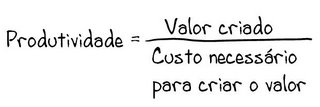
"Maintain heterogeneity of people, ideas, and endeavors.Sublinhei alguns aspectos que reduzem a eficiência e, por isso, são afastados pelas PME que ainda não perceberam que o truque não é o custeio, o truque é o valor percebido, reconhecido, sentido pelo cliente.
...
Sustain a modular structure of loosely connected components.
...
Preserve redundancy among components.
...
Expect surprise, but reduce uncertainty.
...
Create feedback loops and adaptive mechanisms.
...
Foster trust and reciprocity."
"People have asked me thousands of times to name the most important aspect of pricing. I answer with one word: “value.”
.
When asked to elaborate, I will use the term “value to customer.” The price a customer is willing to pay, and therefore the price a company can achieve, is always a reflection of the perceived value of the product or service in the customer’s eyes. If the customer perceives a higher value, his or her willingness to pay rises. The converse is equally true: if the customer perceives a lower value relative to competitive products, willingness to pay drops.
.
“Perceive” is the operative word. When a company tries to figure out the price it can achieve, only the subjective (perceived) value of the customer matters. The objective value of the product or other measures of value, such as the Marxian theory that value is defined by the human labor time invested, do not matter intrinsically. They matter only to the degree that the customer thinks they matter and is willing to a pay a price in return.[Moi ici: Em Portugal ainda há muitos marxianistas, sobretudo empresários... mesmo quando são politicamente mais de direita]
.
The Romans understood this connection so well that they incorporated it into their language. In Latin the word “pretium” means both price and value. Literally speaking, price and value are one and the same. This is a good guideline for businesses to follow when they make their price decisions. It leaves managers with three tasks:
– Create value : The quality of materials, performance, and design all drive the perceived value of customers. This is also where innovation comes into play.
– Communicate value : This is how you influence customers’ perception. It includes how you describe the product, your selling proposition, and last but not least the brand . Value communication also covers packaging, product performance, and shelf or online placement.
– Retain value: What happens post-purchase is decisive in shaping a lasting, positive perception. Expectations about how the value lasts will have a decisive influence on a customer’s willingness to pay for luxury goods, consumer durables, and cars. [Moi ici: Algo na linha de J. C: Larreché que referi aqui]
The process of price setting begins at the conception of the product idea. A company must think about prices as early and often as possible in the development process, not just after a product is ready to launch."


"Como temos referido aqui no blogue, vários sectores industriais estão a dar a volta, a micro economia está a resolver os seus problemas concretos.
...
No limite pode acontecer, sair duma crise estrutural e cair numa crise conjuntural."

%2006.21.jpeg)