domingo, novembro 18, 2012

O pior é deixar ser a inércia a escolher

Os seus clientes são assim:
"Customers change. Always. Customers are constantly becoming something else. They adapt. They learn. They grow. They’re not finicky consumers passively expecting markets to please, satisfy, or delight them; they’re actually dynamic collaborators and authors of their own futures. They’re not stupid; they’re skeptical. They want to make sure they’re going in the right direction."
E a sua empresa?
.
O que está a fazer para os acompanhar, para os surpreender, para crescer com eles, para evoluir?
.
Se ficar no mesmo ram-ram por que é que eles ficarão com a sua empresa?
.
Ou vire a mesa e pergunte a si mesmo, é com os clientes actuais que vê o seu futuro? Será que faz sentido apontar para outro tipo de clientes?
.
O pior é deixar ser a inércia a escolher, é aceitar ser uma vítima das escolhas de outros.
.
Trecho retirado de "Who do you want your customers to become?" de Michael Schrage.

Resiliência e volatilidade

Um excelente artigo de Nassim Taleb "Learning to love volatility":
"We are victims of the post-Enlightenment view that the world functions like a sophisticated machine, to be understood like a textbook engineering problem and run by wonks. In other words, like a home appliance, not like the human body. If this were so, our institutions would have no self-healing properties and would need someone to run and micromanage them, to protect their safety, because they cannot survive on their own.
By contrast, natural or organic systems are antifragile: They need some dose of disorder in order to develop. Deprive your bones of stress and they become brittle. This denial of the antifragility of living or complex systems is the costliest mistake that we have made in modern times. Stifling natural fluctuations masks real problems, causing the explosions to be both delayed and more intense when they do take place."
...
"So in complex systems, we should limit government (and other) interventions to important matters: The state should be there for emergency-room surgery, not nanny-style maintenance and overmedication of the patient—and it should get better at the former.
In social policy, when we provide a safety net, it should be designed to help people take more entrepreneurial risks, not to turn them into dependents. This doesn't mean that we should be callous to the underprivileged. In the long run, bailing out people is less harmful to the system than bailing out firms; (Moi ici: Recordo as ideias de um anónimo engenheiro de província em Dezembro de 2008 em "Como eu olho para crise") we should have policies now that minimize the possibility of being forced to bail out firms in the future, with the moral hazard this entails."
E, na linha do aqui escrito ontem:
"Experts in business and government are always talking about economies of scale. They say that increasing the size of projects and institutions brings costs savings. But the "efficient," when too large, isn't so efficient. Size produces visible benefits but also hidden risks; it increases exposure to the probability of large losses.
...
So we need to distribute decisions and projects across as many units as possible, which reinforces the system by spreading errors across a wider range of sources. In fact, I have argued that government decentralization would help to lower public deficits. A large part of these deficits comes from underestimating the costs of projects, and such underestimates are more severe in large, top-down governments." 
Como eu gosto disto, desta crença nos anónimos, nos amadores, no sentido mais belo do termo:
"The great names of the golden years of English science were hobbyists, not academics: ... America has emulated this earlier model, in the invention of everything from cybernetics to the pricing formulas for derivatives. They were developed by practitioners in trial-and-error mode, drawing continuous feedback from reality. To promote antifragility, we must recognize that there is an inverse relationship between the amount of formal education that a culture supports and its volume of trial-and-error by tinkering. Innovation doesn't require theoretical instruction, what I like to compare to "lecturing birds on how to fly."
 A combinar com esta leitura de ontem "Seven characteristics of resilience":
"A common mistake is to assume that resilience means to recover as is, which is an over narrow definition.  Often failure means rebirth, creating something new, recognising that the old is no longer sustainable.
...
Trying to prevent final collapse will just expend energy that you will need post-collapse to create something new and more sustainable. (Moi ici: Uma forma simples de explicar porque é que a austeridade em Portugal trouxe mais desemprego do que o que estava nas contas de todos, mais de uma década a pedir dinheiro emprestado para manter o emprego sobre-dimensionado em vários sectores da economia)
...
Dynamic re-organisation is greatly facilitated by modularity (or finely grained objects to reference my three heuristics of complex adaptive systems).  That means small units that can combine and recombine, or even split off and reform with ease.  Not so small that there is no coherence, but small enough for recombination.
...
Diversity and what I call requisite variety are key.  Without diversity, and dare I say it contradiction, a system lacks the capacity to evolve quickly as it has too few things to build on.  Conformity and consensus are the enemy of managing under conditions of uncertainty."
.
E voltamos a Setembro de 2003...

Infelizmente o vídeo retrata o que a maioria pensa

"Em Portugal trabalhamos, em média, 38,9 horas por semana e na Alemanha trabalha-se apenas 35,7 horas. Os portugueses tiram 22 dias de férias por ano e os alemães tiram 24. Temos agora, em Portugal, nove feriados por ano, contra dez na Alemanha."
Texto tirado do indigente vídeo de Marcelo Rebelo de Sousa, como bem o classifica Paulo Ferreira em "Trabalhar muito, trabalhar bem e os equívocos de um vídeo".
.
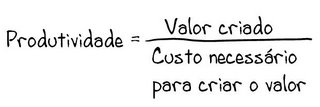
Paulo Ferreira toca no sintoma da nossa baixa produtividade chamando a atenção, pelo menos é o que sinto transpirar do texto, para a nossa desorganização e ineficiência:
"Mas, porque aqui se trabalha de forma ineficiente, muitas vezes desorganizada e valorizando mais a transpiração do que a inspiração e a quantidade do que a qualidade, o resultado de tantas horas passadas no local de trabalho é muito inferior à da maioria das economias europeias. Trabalhamos mais mas produzimos menos. Trabalhamos tempo demais para tão fracos resultados."
Ao longo dos anos tenho relatado aqui no blogue alguns casos e desabafos sobre a baixa produtividade de algumas empresas portuguesas que vou conhecendo. Se fizermos a contabilidade, de certeza que a frequência com que associo baixa produtividade a ineficiência e a desorganização, como neste exemplo "Engenheiros como bibelôs é um desperdício (parte II)", é menor do que a frequência com que associo baixa produtividade a preço-baixo, a baixo valor acrescentado, a produzir o básico. E recuamos a 2006 com "Fazer crescer a produtividade", ou a 2007 com "Produtividade, outra vez" e a 2008 "Mudar é muito mais difícil do que os consultores pensam".
.
Em parte, o que, como comunidade, estamos a fazer nos tempos que correm é deixar de fazer isto:
"Protecting inefficient firms from going under is a major reason for lower European productivity."
Infelizmente não é só Marcelo Rebelo de Sousa que está equivocado, basta recordar "Ingenuidade e status-quo" e para não dizerem que a culpa é da fraca cultura académica do empresário-tipo português "Pregar o Evangelho do Valor a pagãos...ou O jogo do gato e do rato (parte IX)".
.
Se o que produzimos é barato, comum, vulgar, copiável e maduro... e se não o produzimos em fábricas grandes que possam aproveitar o efeito da escala... o rendimento será sempre baixo e os salários baixos, por mais horas que se trabalhem... e, como tão bem ilustra o gráfico no postal de 2008, acima referido, porque produzimos produtos vulgares, o salário é baixo e, mesmo assim, "come" a quase totalidade da riqueza gerada.
.
Pergunta:
Por que é que a Autoeuropa é uma das empresas do grupo VW com maiores índices de produtividade?
Trabalhamos mais horas? A gestão é diferente? Os trabalhadores têm mais formação?
.
.
.
.
Não será porque estamos a comparar empresas que produzem o mesmo tipo de produto?
Quando se comparam as produções de empresas que produzem o mesmo tipo de produto, a que tiver salários mais baixos tem produtividade superior. Os economistas raramente põem o factor qualidade na equação da produtividade, recordar "Acerca da produtividade, mais uma vez (parte I)"

sábado, novembro 17, 2012

Não processam...

Os jornalistas colocam questões, recebem respostas mas não pensam sobre elas.
.
Discurso do ministro da Economia:
"Obviamente, estamos a falar de um tipo de indústria bastante diferente da dos anos 60 e 70. Poderá haver indústria pesada, mas estamos essencialmente a falar de sectores virados para a inovação e com mais alto valor acrescentado. (Moi ici: Curiosamente em sintonia com o tema abordado aqui) Um grande exemplo disso são os sectores do têxtil e do calçado. Há uma década, quando a China entrou na Organização Mundial do Comércio e houve um alargamento a leste da União, muita gente pensou que não conseguiríamos competir. É verdade que bastantes empresas deste sector não aguentaram os choques, que foram ampliados pela entrada no euro, uma moeda mais forte que trouxe problemas de competitividade para esses sectores. No entanto, contrariamente a muitas previsões de velhos do Restelo, os nossos empreendedores mostraram que souberam reinventar-se, souberam apostar na inovação."
Depois, mais à frente, como sinal de que não processaram a informação:
"Precisamos de uma nova AutoEuropa?"
Apetece dizer: Duh!!!
.
Os jornalistas entram em delírio com as Autoeuropas deste mundo, iludidos com a aparência não percebem que é uma empresa em que o negócio é "o preço mais baixo". Por isso, foi decidida num tempo pré-queda do Muro de Berlim. Se a decisão se tivesse colocado meses depois de 9 de Novembro de 1989 aposto que não teria vindo para cá.
.
Trechos retirados de "Álvaro Santos Pereira ao i. “Fundos europeus promoveram corrupção, que temos de combater”

Outro padrão... "think small" = Mongo

Outro padrão das minhas leituras de ontem:

"Once a business figures out how to solve its customers' problems, organizational structures and processes emerge to guide the company towards efficient operation. Seasoned managers steer their employees from pursuing the art of discovery and towards engaging in the science of delivery. Employees are taught to seek efficiencies, leverage existing assets and distribution channels, and listen to (and appease) their best customers.
Such practices and policies ensure that executives can deliver meaningful earnings to the street and placate shareholders. But they also minimize the types and scale of innovation that can be pursued successfully within an organization. No company ever created a transformational growth product by asking: "How can we do what we're already doing, a tiny bit better and a tiny bit cheaper?""

"Micro-enterprises, households and individuals are generating more and more economic activity these days. Meanwhile, the large companies born after the first industrial revolution 250 years ago are losing some of their dominant role as employers, innovators and producers.
.
The industrial revolution was based on economies of scale – the bigger the operation, the better. Now ordinary people are challenging the idea that size is important. It's becoming easier and increasingly profitable to create and distribute goods, services and information outside large organizations.
.
Welcome to this brave new world. It's global, it's accelerating, and it's a good thing."
...
"Most big companies have difficulties coping with this exciting new world, for at least three reasons.
First, competitor analysis is much harder. The biggest threat to some firms might not be a rival company, but someone at home developing a prototype with a 3-D printer. Likewise, energy companies are struggling to react to the growth in home electricity production.
Second, controlling the corporate image is much tougher. Until quite recently, companies used traditional print and broadcast media to send one-way messages about their products and brands to consumers. But in the age of social media, companies are part of rapid global conversations that they cannot control.
The third and most serious issue concerns talent. Big companies will find it harder to attract the best brains if these bright people have a good chance of doing well on their own or in a small venture. More people want the option of working from home, but big companies are generally ill at ease with the idea."
...
"This new age of micro-level production and services will shake things up, as all revolutions do. And the effects will be overwhelmingly positive. Simply by involving more people in the creative process, it will unleash an unprecedented drive for innovation. Whether people are alone or networked, using their own ideas or crowdsourced ones, they will find it easier to move from an idea to a prototype. Every sector of society will be affected: information, energy, manufacturing and probably also education." (Moi ici: Aqui Garelli estraga um pouco a pintura... claro que a educação vai ser afectada. A educação, para um cada vez maior número, não vai servir para embelezarem um CV que seduza empregadores, ou cumpra especificações. A educação vai ser uma ferramenta valorizada pelo próprio acima de tudo, tendo em conta as suas necessidades, aspirações e desafios. A educação não vai ser um produto fechado que alguém escolhe, mas um pot-pourri desenhado pelo próprio e que não se vai limitar a um período da vida, e os títulos vão ser secundários.)


"advances in automation and communication technology together with a more comprehensive cost-benefi t analysis argue for a potential reversal of this "bigger is better" trend - a radical shift to a world in which
effi ciency of size is replaced by effi ciency of numbers, in which custom built technology of massive unit scale is replaced by massive numbers of small, modular, mass-produced units deployed in parallel in
single locations or distributed geographically.
...
there are many inherent flexibility benefi ts to small unit scale technology which, in the past, have largely been ignored in the race toward ever increasing scale. Small-scale units can be used in multiples to better match the output requirements of a given project and can also be deployed gradually over time, both of which reduce investment cost and risk. They also off er geographic flexibility; multiple small units can be aggregated at a single location to achieve economies of centralization (e.g. to reduce overhead or transport costs) or they can be distributed to be closer to either sources of supply or points of demand. An additional benefi t of small unit scale is flexibility in terms of operating output; having many units of small scale makes it possible to selectively operate varying numbers of units to better match short-run variations in demand. Also, with small unit scale technology, one can achieve high reliability through enormous redundancy and statistical economies of numbers.
...
the fundamental decision processes surrounding the choice of technologies and their implementation need to be revisited.
Doing so, however, requires an entirely new mind set; educators, engineers, business leaders, fi nanciers, standards bodies, regulators (the entire industrial ecosystem) must learn to "think small." In order to reap the benefi ts of small unit scale and achieve the needed paradigm shift, institutional biases towards large-scale must be eliminated and knowledge about how to think small must be developed.
Engineers, for one, need revised training and new conceptual tools. In today's engineering schools, students are instilled with the notion that unit scale-up is a precondition for the viability of most technologies. So consequently, they focus on designing for scale economy. Instead, they must learn how to design small -design for granularity as it were."

sexta-feira, novembro 16, 2012

Sinal dos tempos: a riqueza da terra

Sentado num banco de estação, enquanto aguardava o comboio, comecei a folhear a versão electrónica do semanário Vida Económica, e comecei a guardar os artigos que tinha interesse em ler:

.
Isto não foi planeado... só no fim, ao olhar para o que tinha para ler, é que percebi o padrão.
.
Mais um sintoma da revolução que está em curso na economia portuguesa... há cinco anos apenas era impossível observar este padrão. 
.
Agora, ao terminar de escrever isto, o twitter acrescenta: 

A falta de procura

"Small businesses, defined as companies with fewer than 500 employees (Moi ici: Critério norte-americano que Chuck Blakeman tanto critica), account for almost two-thirds of all net new job creation. They also contribute disproportionately to innovation, generating 13 times as many patents, per employee, as large companies do."
Trecho retirado do interessante artigo "Restarting the US small-business growth engine". Aprecio esta clareza e sinceridade:
"Myth #4. Taxes and regulation are small business’s primary constraint."
O que dizem os líderes associativos, é do que podem fazer a nível geral, uma espécie de minimo múltiplo comum. Na verdade, temos:
"Many business leaders will tell you that taxes and regulation are the biggest barriers to starting up and enlarging small businesses. It’s true that some regulations and laws have inhibited the growth of small businesses; the Sarbanes–Oxley Act, for instance, had the unexpected consequence of discouraging some companies from making initial public offerings, a step typically followed by a burst of hiring. But taxes and government oversight are not the primary barriers to stimulating the growth of small businesses. In the latest recession, their owners pointed to a lack of market demand as the primary problem, as well as an inability to obtain financing."

Estratégia é fazer escolhas, as consequências vêm depois

Na passada terça-feira o JdN trazia o artigo "Portugal disputa com a Roménia nova fábrica do grupo Bosch".
.
A certa altura podia ler-se esta afirmação do presidente do conselho de administração da Bosch:
"Se vocês implementarem o que está previsto na flexibilização dos horários de trabalho, os países da Europa de Leste não constituem concorrência para Portugal"
E se eles "não constituem concorrência para Portugal" porque não querem concorrer nesse campeonato?
.
.
Estranho, não?
.
O que falta aos jornais, para sobreviverem e prosperarem, é um pouco mais de investigação...
.
Atentemos neste artigo "Central and Eastern Europe: Moving up the value chain", dá para pensar que muitos desses países da Europa de Leste já estão noutra... subiram na escala de valor da captação de investimento directo estrangeiro.
"In recent months, a new trend has emerged: a move away from reliance on foreign direct investment (FDI) in low-cost labour production toward strategic FDI, emphasising high-quality labour forces, excellent infrastructure and technological support. On the surface, the shift may seem like a minor adjustment of policies that support export-orientated FDI, but it is in fact a strategic turn of the entire FDI framework toward high value-added production.
Opportunities are emerging in the region for investors seeking strategic assets crucial for high value-added sectors. As companies weigh various investment opportunities, fundamentals such as political stability and a sound regulatory framework will be crucial, as will the capacity of individual governments to implement the institutional and policy changes necessary to build a knowledge economy."
Por que houve esta mudança?
"The 2008–2009 global financial crisis and the ensuing Eurozone sovereign debt crisis have proved that FDI in CEE (Central and Eastern Europe) countries is highly vulnerable to economic downturns. The share of FDI as a percentage of GDP peaked between 2005 and 2007, but has dropped significantly over the past few years.
...
These circumstances have prompted rapid capital flight from the CEE region and decreased demand for the exports on which these countries’ economic growth models depended.
...
In a sharp contrast to the pre-crisis period, almost all CEE countries currently trend below the EU average in terms of FDI. For companies seeking new investments, this situation creates an opportunity to take advantage of a strong negotiating position as countries once again compete with each other for a limited pool of FDI."(Moi ici: É neste campeonato que estamos)
Interessante é perceber que não são só as empresas a escolher, também os países começaram a fazer escolhas:

"However, governments across the CEE region are not competing with one another in the same way as before. The Eurozone crisis has spurred them to rethink their FDI strategies. Empirical observation, as well as economic data, suggests that high value-added sectors have been considerably more resilient to the crisis than those relying on low-cost manufacturing.
...
Shared experience motivated governments across the region to redirect their FDI strategies and launch new campaigns to attract investors."
Do que já li sobre as ideias do ministério da Economia para atrair investimento directo estrangeiro, um dos critérios é a dimensão do investimento, quanto maior melhor. Pois bem:
"Investment incentive frameworks, which have typically been the most widely used supply-side measure in the CEE region, are now being tailored to accommodate high value-added projects—for instance, by reducing the size of eligible projects (since high value-added investments tend to be smaller) (Moi ici: E por cá? Ainda continuamos com os PINs? Como os governos querem ver impactes no emprego, valorizam acima de tudo grandes projectos... o que nos diz a evolução do tamanho médio das empresas no calçado, no mobiliário, no têxtil e vestuário, no... empresas que exportam são pequenas, apostam na flexibilidade, na rapidez, as pequenas séries) and introducing new schemes for small businesses and for cross-border mergers and acquisitions (since high value-added firms are often new and innovative and have steep costs). New industrial parks focusing explicitly on sophisticated business process outsourcing, software development or biotechnology are being constructed throughout the region."
 Estratégia é fazer escolhas, é fazer apostas. Onde nos encaixamos, onde nos diferenciamos?


quinta-feira, novembro 15, 2012

Os anónimos que levam o país às costas

Retratos de um país anónimo a fazer pela vida:

Pensem nas empresas que seguiram o conselho deste blogue... "fazer o by-pass ao país"

O exemplo do mobiliário (parte IV)

Na sequência desta série "O exemplo do mobiliário"
"Na realidade portuguesa do sector [mobiliário], um estudo às tendências de importação e exportação indica que o volume de importações e exportações tem vindo a crescer de forma gradual, o que significa igualmente que o valor do mercado interno tem aumentado. Existe uma tendência de crescimento notável, apesar das quebras devido à última crise internacional. O volume exportado era cerca de 50% em 2000 e em 2009 já atingia os 90%, deixando apenas 10% para o mercado interno.
De forma a responder à concorrência internacional, as empresas de mobiliário empreenderam um processo de reestruturação e modernização, que conduziu à redução dos seus volumes de produção. (Moi ici: Em vez de apostar na produção em massa, em vez de apostar no volume, fazer outras escolhas. Tal como aconteceu no sector do calçado) A partir de 2005, os volumes de produção aumentaram ligeiramente mas, em 2008, essa tendência inverteu-se e a produção diminuiu de novo.
...
Na prática, de forma a manter a sua competitividade, o sector do mobiliário em Portugal terá que apostar no “design”, imagem de marca e progressiva melhoria dos acabamentos, bem como procurar um maior aproveitamento da capacidade produtiva instalada e diversificar a sua presença nos mercados externos." (Moi ici: Em sintonia com o que escrevemos sobre a diferença entre arte e massa)
Não há milagres, não é nada de inimaginável... é, simplesmente, pôr diferentes modelos de negócio a funcionar. Em vez de produção em massa, apostar na diferenciação, no design, nas pequenas séries.
.
Trecho retirado de "Uma aposta forte na qualidade e no design"

Não está na hora de repensar o modelo de negócio? Não espere pela sua troika!

Ainda na sequência de "Modelos de negócio: escolhas e consequências" e de "Vomitar é fácil, arte é um bocadinho mais difícil e recompensador"... , quando o habitat, quando a paisagem competitiva muda, é preciso mudar o modelo de negócio:
"Many small manufacturers of craft-based products have disappeared, because the traditional business model of creating relatively high cost products distributed through wholesale channels results in prices that the market cannot support. Heath Ceramics has shifted to direct-to-consumer for the vast majority of its sales. This means that as a manufacturer, Heath must now go beyond the products and take responsibility for designing a great consumer experience both digitally and at its retail outlets. The reward for this broader investment in design is the capture of more profit margin. This is a lesson learned by the likes of Apple, as well as Heath—and one that could be a applied by many more high quality, low volume manufacturers."
Quantas empresas precisam de largar o modelo de negócio conhecido, familiar e... obsoleto?
.
Infelizmente, muitas nem conhecem o conceito de modelo de negócio e, por isso, apostam em optimizar o negócio que ainda têm, espremendo e espremendo eficiências numa assimptota de ganhos marginais e de destruição de capital humano e de relações.
.
Qual é o seu modelo de negócio? Por que deixou de funcionar?
.
Não está na hora de o repensar?

quarta-feira, novembro 14, 2012

Vomitar é fácil, arte é um bocadinho mais difícil e... recompensador

Costumo escrever aqui no blogue e dizer, por onde ando, que produzir é o mais fácil.
.
Vomitar peças é fácil!
.
Vomitar sapatos, camisolas, cadeiras, tijolos, caldeiras, bicicletas é relativamente fácil. É um desafio de execução!
.
Difícil, difícil, é seduzir clientes, é subir na escala de valor, é vender uma história, é vender uma mística, é vender arte.
.
O artigo "Fetish for making things ignores real work" aborda uma outra discussão,  a diferença entre produzir mercadorias e produzir serviços. No entanto, há a vertente que me interessa sublinhar:
"When you look at the value chain of manufactured goods we consume today, you quickly appreciate how small a proportion of the value of output is represented by the processes of manufacturing and assembly. Most of what you pay reflects the style of the suit, the design of the iPhone, the precision of the assembly of the aircraft engine, the painstaking pharmaceutical research, the quality assurance that tells you products really are what they claim to be.
Physical labour incorporated in manufactured goods is a cheap commodity in a globalised world. But the skills and capabilities that turn that labour into products of extraordinary complexity and sophistication are not." 
Este é o ponto que me interessa, que as empresas invistam cada vez mais nas camadas que assentam em cima do produto ou serviço básico que vai ao encontro da necessidade elementar.

Modelos de negócio: escolhas e consequências

O texto revela alguma falta de estudo sobre o tema "Zara's Big Idea: What the World's Top Fashion Retailer Tells Us About Innovation":
"Zara didn't have to invent a brand new product to become the world's biggest fashion retailer. It just had to invent a new process. And process innovation is dominating the global economy."(Moi ici: Aquilo a que o artigo chama "process" é aquilo a que comummente se chama "modelo de negócio").
"But Zara's most important contribution isn't a new product. It's a new process (Moi ici: Um novo modelo de negócio): fast fashion, directed by customers, and enabled by a short manufacturing leash. (Moi ici: O que obriga a ter a produção próxima do consumoProcess innovation (Moi ici: business model innovation) is the story of modern retail -- especially here in the U.S. Amazon showed us you can shop with a mouse, deleting thousands of storefronts in the process. Groupon and LivingSocial moved the coupon business to our inbox, arguably helping merchants clean out their slowest inventory. And then there's Walmart, the largest employer in the United States, which used supply chain management to push down prices, forcing local businesses to follow, and increasing productivity throughout the retail business."
Um modelo de negócio tem duas partes: as escolhas e as consequências dessas escolhas:
"Rather than hire world-class designers, Zara, which is based in Spain, politely copies them. Then it relies on a global network of shopper-feedback to tweak their designs. Corporate HQ absorbs thousands of comments and sends tweaks to their manufacturers in Europe and Northern Africa, who literally sew the feedback into their next line of clothes. The clothes are shipped back, and the stock changes so quickly that shoppers are motivated with a "now-or-never" choice (Moi ici: O que gera, como consequência, que os consumidores visitem mais vezes as lojas, porque todas as semanas há novidades) each time they try on a blouse that won't be in-store in a few weeks. It's the user-generated approach to fast fashion.
That's the design challenge. How about advertising? Basically, Zara doesn't do it. There is no ad budget. Instead, the company spends ungodly amounts of money buying storefronts next to luxury brands to own the label of affordable luxury:"

Mongo e a riqueza da terra

Parece-me um projecto interessante e a merecer força:

terça-feira, novembro 13, 2012

Riqueza da terra

"Para incentivar a produção de ce­vada, a Maltibérica assina contratos plurianuais com os agricultores, ga­rantindo escoamento da produção e apoio técnico. O preço segue os índices internacionais, mas inclui uma "componente significativa" que compensa os custos de exploração, cada vez mais elevados. A empresa trabalha actualmente com 120 pro­dutores e está sempre em processode recrutamento.
.
"Se no final da campanha o pro­dutor verificar que os preços nos mercados internacionais estão altos fazemos um ajuste para garantir e estimular a próxima colheita", diz Tiago Brandão. Este ano, será dada uma "ajuda complementar".
.
Se a Maltibérica conseguir cum­prir o objectivo e comprar mais ce­vada nacional, o seu maior cliente, a Unicer, passa a comprar em Por­tugal um total de 5,5 milhões de eu­ros desta matéria-prima. "Podemos atingir os 20 a 30% de aumento de área contratada no próximo ano se tivermos condições que facilitem a contratação. Se o agricultor sentir que há capacidade, adere", diz o responsável."
Trechos retirados de "Empresa da Unicer aposta no aumento da produção de cevada em Portugal"

Massa versus (artesãos industriais, arte e alfaiates)

"3D Printing Will Revive American Manufacturing"
"The transformative technology of the 2015-2025 period could be 3D printing. This has the potential to remake the economics of manufacturing from a large-scale industry back to an artisan model of small design shops with access to 3D printers. In other words, making stuff, real stuff, could move from being a capital intensive industry into something that looks more like art and software. This should favor the American skill set of creativity."
"The past, present and future of 3-D printing"
"It used to be that a cobbler would make a pair of shoes as a single act of design and craftsmanship. Then, starting around the 1860’s, you would buy your shoes from a company that designed several models and made each in mass quantities. When you bought the shoe you also got the design that was baked into it. Now, imagine that we have local or personal 3-D printing. You might browse a company’s Web site for a shoe design you really like, or even better, one that was modified according to a 3-D scan of your foot and the sports you play. You buy the design, download the 3-D file, and send that to a 3-D printer down the street to be manufactured. At the end of the process, you end up with a unique pair of shoes that you had a hand in designing."

Lições sobre disrupção

Excelente artigo de Constantinos Markides na MIT Sloan Management Review deste Outono, "How Disruptive Will Innovations from Emerging Markets Be?":
"Numerous and less-well-known companies and entrepreneurs are currently serving billions of local consumers with low-cost products without significant competition from global corporations. But once the local entrepreneurs establish themselves in their home markets, they should also make the leap into more developed countries." (Moi ici: Ao ler os trechos que se seguem, pode-se fazer um exercício, olhar para as PMEs portuguesas como potenciais disruptores ao exportarem para novos mercados, e olhar para as PMEs portuguesas como incumbentes a reagir à invasão chinês durante a primeira década do século XXI
E se acontecerem, quão disruptivas serão essas movimentações?
"Just because a product is very inexpensive or targets non-consumers of existing technologies does not mean it is disruptive. To be disruptive, a product has to meet two conditions: First, it must start out as inferior in terms of the performance that existing customers expect, but superior in price.(Moi ici: Assim, quem começa a comprar esses produtos são não-clientes do mercado que existe. São agentes que aceitam o desempenho mais baixo por troca com um preço muito atraente)
...[then] it must become “good enough” in performance and superior in price.
...
What makes a product disruptive is how it develops over time and how incumbents respond to it. This has the important implication that you can never tell ex ante whether a product will be disruptive or not.
...
Will the emerging-market innovators continue to have a significant price advantage over competitors from more developed countries?
Will the emerging-market innovators succeed in closing the performance gap so that customers in more advanced economies come to see their products as “good enough”?"
Seguem-se alguns trechos carregados de sumo:
"If the source of the cost advantage is low labor costs or a reengineered product that requires fewer or cheaper components, incumbents can find a way of neutralizing these advantages.
...
A cost advantage is difficult to sustain over time, especially if incumbents cut their costs in an aggressive and committed way.(Moi ici: Estão a recordar as vozes que falam nos custos, nos custos, nos custos, no imperativo de reduzir salários?)
...
However, there is one source of cost advantage that is more sustainable than others. This is the business model of the disruptors. A cost advantage that comes on the back of a business model that is not only different from but also conflicts with the business model of the established companies is more sustainable than other cost advantages.
...
Business models are difficult to imitate. What makes the task even more difficult is the fact that the disruptors’ business models often conflict with the incumbents’ business models. (Moi ici: A solução muitas vezes passa por aqui, passa por inovar no modelo de negócio)
...
The existence of such trade-offs and conflicts means that a company that tries to compete in both positions simultaneously risks degrading the value of its existing activities.
...
a company could find itself “stuck in the middle” if it tried to compete with both low-cost and differentiation strategies.
.
When there are inherent conflicts between their traditional business model and the disruptor’s business model, incumbents will think twice before attempting to imitate the disrupting business model.
...
This suggests that a cost advantage that’s based on a different and conflicting business model is the disruptor’s best chance to make inroads against incumbents. (Moi ici: Raramente teremos vantagem por esta via)
...

Less obvious is the proposition that whether the disruptors’ products come to be seen as “good enough” depends not only on what disruptors do, but also on what incumbents do to influence consumers’ expectations of what is “good enough.” (Moi ici: Este ponto é muito interessante e, aqui as PMEs portuguesas podem fazer a diferença. E o calçado, o têxtil e vestuário, o mobiliário, e o agro-alimentar é exemplo disso, por exemplo) In particular, incumbents must continue to innovate in their products so that consumers in more developed countries continue to see a big gap between what the potentially disruptive product can offer them and what is available from the incumbents.
There are two major ways to do this. The first is to focus on the product’s existing value proposition and raising that to higher levels. Doing so will keep raising the bar on what is good enough and make life more difficult for disruptors.
...
The more successful the incumbents are in increasing consumers’ expectations of what is “good enough” in their markets, the less successful the entrants from emerging markets will be in disrupting them. (Moi ici: Aquilo a que chamo fazer batota ao apostar nos itens onde se pode ter uma vantagem competitiva. Velocidade, flexibilidade, design, ...)
In short, whether low-cost innovations from emerging countries end up disrupting markets in developed countries depends not only on whether the disruptors succeed in putting in place an innovative business model that supports their cost advantage but also on how aggressively the incumbents respond. For incumbents, knowing that much of their fate rests in their hands is half the battle won."

segunda-feira, novembro 12, 2012

Pequenas empresas vs startups

.
A propósito do tipo de escolhas referidas no postal (aquilo a que Steve Blank chama Market Types):
"The Small Business Administration opened its doors in 1953, long before the entrepreneurial revolution of the 1990s, and is designed to meet the needs of more-traditional small businesses. Most of the agency's loans go to aspiring restaurant owners and hotel franchisees, not companies that come up with ideas that can reshape the global economy.
Traditional small businesses are important sources of jobs in every community. But startups with big potential need different kinds of assistance to thrive—and we need them to thrive, especially in today's economy. The one-size-fits-all approach just doesn't make sense any more."(Moi ici: Quem andar a copiar o que se faz nos States importa estas opções, viradas para a execução, não para o desenvolvimento dos clientes)
"Small companies create enormous numbers of jobs, but those gains are driven by a handful of startups that actually grow big. Most small businesses start small and stay that way.
Less than a quarter of America's 27 million small businesses have employees. An even smaller portion grow beyond 20 employees. And many of them don't want to. New research from the University of Chicago finds that 75% of small-business owners aren't aiming for growth at all. They're basically just looking for a steady job as their own boss.
...
For a start, our public policies should recognize that some small businesses are built for rapid growth while others are likely to stay small forever. Firms that are young, say five years or less, and exhibit potential for rapid growth and innovation should be classified differently than older firms that are less likely to grow and add jobs. Let's call that former group "startups" instead of "small businesses.""

Cuidado com a religião absoluta

A propósito deste artigo "The Anatomy Of Operational Excellence". Quando o negócio é preço, quando é preciso baixar os custos, as empresas têm de olhar para o seu interior e trabalhar na melhoria da eficiência dos seus processos.
.
A receita clássica é:
"1. Visualize Key Operational Processes. Identify the key operational processes, including those that create value, growth or innovation as well as those that consume the most resources, time and assets. Develop visual operating models that show linkages both inside the enterprise as well as outside, to customers, suppliers and partners.
2. Design Workflow and Predefined Responses. Model the workflow for each key process, identifying the actions, resources and workers required for each step. Then define a standard response to handle large variations in workflow volume outputs or inputs.(Moi ici: A primeira acção de formação intra que dei, depois de obter o CAP, era sobre um pomposamente designado "PLASFOCO" (PLano de Ataque a Situações FOra de COntrolo, onde, com base na ideia dos "Troubleshooting Guides" dos electrodomésticos, se definiam acções standard para reagir a não-conformidades no produto ou no processo)
3. Develop Metrics and Gauges. Establish measures for normal workflow and develop systems or methods that report workflow volume outside the normal ranges. Ensure that workflow reports are received by the stakeholders responsible for each operation.
4. Operate Functionally, Measure Systemically. The functional operating manager responsible for workflow, using the predefined responses, operates the workflow by making any changes necessary to adapt to changing volume, inputs or outputs. Functional managers interact with upstream and downstream operating mangers to ensure optimal end-to-end performance.
5. Drive Continuous Improvement. As operating experience grows, make adjustments to the workflow design, predefined responses and performance measures, to continuously improve overall system performance."
Isto é tudo muito certo mas existe um problema de base para as empresas que só dependem desta abordagem.
"Lazaridis had learned the danger of resting comfortably on existing heuristics and algorithms.(Moi ici: Recordar que os processos são os algoritmos) “Motorola lost because it didn’t embrace the future,” he says. “It was too damn good at what it was doing.” Seduced by reliability, Motorola had stopped thinking like a designer." 
...
"To acknowledge that algorithms have their limitation is not to disparage their very real business value. When a business has sufficiently honed its heuristic knowledge and moved it along the knowledge funnel to an algorithm, costs fall and efficiency increases, to the benefit of the organization and its stakeholders. But an organization that defines itself as being primarily or exclusively in the business of running algorithms is taking a high risk, even though highly reliable processes are supposed to eliminate uncertainty. What organizations dedicated to running reliable algorithms often fail to realize is that while they reduce the risk of small variations in their businesses, they increase the risk of cataclysmic events that occur when the future no longer resembles the past and the algorithm is no longer relevant or useful." 
Como vivemos tempos em que a duração média do tempo de validade de um modelo de negócio é cada vez mais baixa, é cada vez mais perigoso depositar a esperança apenas na melhoria da eficiência. Não me interpretem mal, a busca da eficiência não é má, mas se for elevada à categoria de único instrumento, é muito perigosa.
.
Depois, quando um seguidor da religião absoluta da eficiência vê um concorrente a aparecer e a conquistar mercado, sente que o concorrente deve estar a fazer alguma ilegalidade porque ele não consegue ver alternativas para lá ad eficiência pura e dura.

Trechos retirados de "The Design of Business" de Roger Martin.

Adaptabilidade

Este texto de Gary Hamel, "What is Adaptability?" serve tanto para as empresas como para todos os outros tipos de organizações humanas e não só:
"Strategic adaptability, by contrast, refers to a company’s capacity to reconfigure its underlying business concept, by dramatically rethinking . . .
  • Its core mission
  • Its primary value proposition
  • The identify and nature of the end customer
  • The method or channels of distribution
  • Its revenue or pricing model
  • The markets or industries in which it competes
  • Its core competencies
  • Its ecosystem of business partners
  • The degree to which it is vertically or horizontally integrated
  • The basic way in which it produces products and services"
Num mundo em mudança acelerada, em mudança turbulenta, é preciso estar preparado para mudar...  esta lista de Hamel quase  preenche todos os campos do business model canvas de Osterwalder.
.
Ficar a lamber feridas e a brandir direitos adquiridos perdidos não serve para nada, o objectivo é seduzir clientes.
.
Seth Godin neste artigo "Seth Godin: 5 Ways to Grow Your Market" dá vários excelentes exemplos de mudanças:
"Position your product or service at the "logical extreme" of some aspect of your product category. For example, if the typical product in your market is expensive but comes with free service, make your product free and charge a subscription fee for the service. If you're making a commodity product, go for something either huge or tiny."