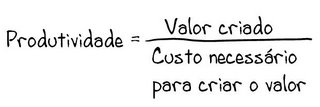
Há cerca de um ano reflectia neste blogue sobre estratégias puras e híbridas (O paradoxo da estratégia (parte I: Compromissos); Estratégias puras ou híbridas (parte II); Estratégias puras ou híbridas (parte I)), trata-se de um tema que me atrai e fascina.
.
Sou um partidário da concentração das empresas no que é essencial, sou um partidário da aposta no numerador (eficácia) em detrimento do denominador (eficiência), tenho a minha explicação sobre o porquê da incompatibilidade da aposta em simultâneo na eficiência e eficácia (figura 12)
.
Por isso, é com gosto que encontro artigos como este "Perspectives on the productivity dillema" publicado em Fevereiro de 2009 pelo Journal of Operations Management. Mais, artigos como este reforçam ainda mais a minha defesa de que o abaixamento administrativo de salários não é uma estratégia sustentável.
.
"The capabilities that enable consistent execution can also hinder learning and innovation, leaving organizations rigid and inflexible. Many once-successful organizations collapse when they prove unable to adapt to environmental shifts. By optimizing their processes for maximum efficiency in the short term, organizations become brittle. In the Productivity Dilemma, Abernathy (1978) conjectured that short-term efficiency and longterm adaptability are inherently incompatible."
...
"More than 30 years ago, Abernathy (1978) suggested that a firm’s focus on productivity gains inhibited its flexibility and ability to innovate. Abernathy observed that in the automobile industry, a firm’s economic decline was directly related to its efficiency and productivity efforts. He suggested that a firm’s ability to compete over time was rooted not only in increasing efficiency, but also in its ability to be simultaneously innovative (Abernathy, 1978, p. 173).
...
"Process management’s success in improving manufacturing efficiency has led to its migration beyond operations to other parts of organizations, for instance, to adjacent processes for selecting and developing technological innovations (Brown and Duguid, 2000; Scott-Young and Samson, 2008). As the efficiency oriented focus of process management spreads to centers of innovation, it increasingly stunts an organization’s dynamic capabilities (Cole and Matsumiya, 2007)."
...
"We argue that process management techniques stabilize and rationalize organizational routines, while establishing a focus on relatively easily available efficiency and customer satisfaction measures. While increased efficiency results from these dynamics in the short run, they also trigger internal biases for certainty and predictable results. The diffusion of process management techniques favors exploitative innovation at the expense of exploratory innovation. We argue that while exploitation and inertia may be functional for organizations within a given technological trajectory or for existing customers, these variance reducing dynamics stunt exploratory innovation (see also Christensen, 1997)."
quarta-feira, julho 08, 2009

O papel das pequenas empresas (parte II)
Para um pequeno país como Portugal a solução para exportar não passa por reuniões no gabinete do ministro da economia para receber "instruções".
.
Um país pequeno com empresas pequenas não pode competir no negócio do preço/custo e da escala, tem de apostar no valor acrescentado, tem de apostar em nichos!
.
"a niche market can be defined as a “partial market,” or part of a larger market. A market is defined as a combination of supply and demand for a specific good or service. A partial market in this context is a segment of a market that, in theory, can be served by all suppliers equally.
However, these partial markets make it possible for individual suppliers to focus on specific segments. The following characteristics apply to niche companies:
.
Um país pequeno com empresas pequenas não pode competir no negócio do preço/custo e da escala, tem de apostar no valor acrescentado, tem de apostar em nichos!
.
"a niche market can be defined as a “partial market,” or part of a larger market. A market is defined as a combination of supply and demand for a specific good or service. A partial market in this context is a segment of a market that, in theory, can be served by all suppliers equally.
However, these partial markets make it possible for individual suppliers to focus on specific segments. The following characteristics apply to niche companies:
- The niche is formed or created by the company in relation to the market environment.
- The underlying overall market is a critical reference, and the niche should be considered in connection with it.
- The niche is small in comparison to the market as a whole. However, it still achieves an adequate sales volume to justify its unique approach and enjoys relevant and appropriate
economies of scale. - Successful niche suppliers use specialization and focus on the niche to create growth platforms.
- Dissatisfied clients play an important role in the creation and growth of niches. Niches have a protected position in some cases, which creates barriers to entry for other competitors."
No próximo episódio: Quais são os alicerces dos nichos estáveis, defensáveis e lucrativos? Como é que as empresas podem criar uma estratégia de nichos bem sucedida?
Trecho retirado de "BEATING THE GLOBAL CONSOLIDATION ENDGAME - Nine Strategies for Winning in Niches" de Fritz Kroeger, Andrej Vizjak e Michael Moriarty.
terça-feira, julho 07, 2009
Todas as estratégias bem sucedidas são transientes e duram cada vez menos.
No livro “How we compete” de Suzanne Berger and the MIT Industrial Performance Center, publicado em Janeiro de 2006, pode ler-se:
.
Na página 255: “… there are no “sunset” industries condemned to disappear in high wage economies, although there are certainly sunset and condemned strategies, among them building a business on the advantages to be gained by cheap labor”.
.
Todas as estratégias bem sucedidas são transientes e duram cada vez menos.
.
Um bom exemplo desta transitoriedade é apresentado neste artigo do The New York Times "For Australian Winemakers, More Turns Out to Be Less"
.
Na página 255: “… there are no “sunset” industries condemned to disappear in high wage economies, although there are certainly sunset and condemned strategies, among them building a business on the advantages to be gained by cheap labor”.
.
Todas as estratégias bem sucedidas são transientes e duram cada vez menos.
.
Um bom exemplo desta transitoriedade é apresentado neste artigo do The New York Times "For Australian Winemakers, More Turns Out to Be Less"
Que resultados para a inovação (parte III)
Há dias reflectia neste espaço sobre a “Intuição vs Procedimentação” onde, com base nas palavras de Gary Klein:
.
“Many organizations attempt to take refuge in procedures. This happens when supervisors play it safe and reduce the task to procedures even if those procedures don’t really capture all of the nuances and tricks of the trade. Turning a job into a set of procedures makes it easier for new workers to carry out their responsibilities, and it also supports accountability by letting managers more easily verify if the procedures were followed.
.
Unfortunately, this practice can make it even harder to build up intuitions if the procedures eliminate the need for judgment calls. Clearly, we need procedures to help us react quickly to emergencies, or to orient new workers. Once a set of procedures is in place, however, supervisors may not bother teaching the skills workers need to understand or modify the procedures.This is how the expertise that makes a company great gets lost. There is a strong tendency in our culture to proceduralize almost everything, to reduce all types of work to a series of steps. But you cannot reduce intuition to a procedure.
.
Organizations may try to reduce decisions and judgments to procedures by defining metrics (i.e., measurable objectives). Metrics are often seen as a way to replace intuitions. They can be useful as a corrective to relying too heavily on impressions, but if managers try to make decisions based on numbers alone they run the risk of eroding their intuitions.”
.
Aquela última frase “but if managers try to make decisions based on numbers alone they run the risk of eroding their intuitions“ está em linha com o artigo de Julho-Agosto da Harvard Business Review “Restoring Competitiveness” de Gary Pisano e Willy Shih.
.
“Recognize the limits of financial tools.
Most companies are wedded to highly analytical methods for evaluating investment opportunities. Still, it remains enormously hard to assess long-term R&D programs with quantitative techniques—even sophisticated ones like real-options valuation and Monte Carlo simulations. Usually, the data, or even reasonable estimates, are simply not available. Nonetheless, all too often these tools become the ultimate arbiter of what gets funded and what does not. So short-term projects with more predictable outcomes beat out the long-term investments needed to replenish technical and operating capabilities. Managers would serve their companies more wisely by recognizing that informed judgment is a better guide to making such decisions than an analytical model loaded with arbitrary assumptions. There is no way to take the guesswork out of the process.”
.
Pois bem, através do blogue de Don Sull onde se pode ler isto:
.
“Rely exclusively on process to execute. Many managers equate execution with standardized processes. They re-engineer key procedures and employ process disciplines, including six sigma, or total quality management to ensure continuous improvement. These approaches work well for activities–such as processing transactions or manufacturing cars–that can be laid out in advance and repeated thousands or millions of times per year with minimal variation. Process tools work less well for activities that consume much of the typical knowledge workers time, including coordinatinating work across a matrix or generating innovative solutions to unique problems.”
.
Descobri este artigo “TQM, ISO 9000, Six Sigma: Do Process Management Programs Discourage Innovation?” onde se pode ler:
.
“Yet Wharton management professor Mary J. Benner says now may be the time to reassess the corporate utility of process management programs and apply them with more discrimination. In research done with Harvard Business School professor Michael Tushman, she has found that process management can drag organizations down and dampen innovation. "In the appropriate setting, process management activities can help companies improve efficiency, but the risk is that you misapply these programs, in particular in areas where people are supposed to be innovative," notes Benner. "Brand new technologies to produce products that don't exist are difficult to measure. This kind of innovation may be crowded out when you focus too much on processes you can measure."”
.
Antes de continuar a leitura recomendo um postal que escrevi em Junho de 2007 “Não culpem a caneta quando a culpa é de quem escreve!“ de onde retiro o seguinte trecho:
.
“Como procuro demonstrar aqui, num mercado muito competitivo, é muito difícil conciliar na mesma organização, duas posturas mentais distintas. Não se pode impunemente, à segunda, terça e quarta apostar na eficiência, para depois, à quinta, sexta e sábado apostar na "boutique" das pequenas séries, no "atelier" das novidades. O 6 Sigma é uma ferramenta talhada para apoiar os negócios na redução dos custos, eficiência, não é uma ferramenta dedicada à eficácia, à criação do UAUUUUU, associado à inovação, à diferenciação.”
.
Neste postal Como descobri que não é suficiente optimizar os processos-chave. (3/3) refiro algo a que costumo chamar a atenção nas acções de formação, os processos que constituem uma organização podem ser divididos em duas categorias: os processos contexto e os processos nucleares.
.
Aos processos contexto podemos e devemos aplicar os métodos de melhoria da eficiência.
.
Aos processos nucleares, fundamentais para a execução e diferenciação estratégica, devemos preocupar-nos acima de tudo com a eficácia. As preocupações com a eficiência nestes processos corta as pernas ao potencial de explosão estratégica.
.
"Benner & Tushman (2003) warn agains explicit focus on incremental innovation which is achieved by process management orientation which results in innovation that is closesly related to existing technological or market competencies. Organizations that must meet current customer requirements and new customer demands must deal simultaneously with the inconsistent demands of exploitation and exploration. Authors suggest that appropriate answer is an ambidextrous organization which allows for both exploratory and exploitative activities to be spurred by loose and tight organizational arrangements. Benner & Tushman (2003) suggest that within processes, the tasks, culture, individuals, and organizational arrangements are consistent, but across subunits tasks and cultures are inconsistent and loosely coupled. Tight exploitation units in technologically stable settings, will benefit by reducing variability and maximizing efficiency and control by introducing process management techniques. On the other hand, n turbulent environments, for new customer segments and for radical innovation, process management activities are less conducive to organizational effectiveness. Exploratory units will succeed by experimentation, which is encouraged by introducing variety and loose control."
.
“Many organizations attempt to take refuge in procedures. This happens when supervisors play it safe and reduce the task to procedures even if those procedures don’t really capture all of the nuances and tricks of the trade. Turning a job into a set of procedures makes it easier for new workers to carry out their responsibilities, and it also supports accountability by letting managers more easily verify if the procedures were followed.
.
Unfortunately, this practice can make it even harder to build up intuitions if the procedures eliminate the need for judgment calls. Clearly, we need procedures to help us react quickly to emergencies, or to orient new workers. Once a set of procedures is in place, however, supervisors may not bother teaching the skills workers need to understand or modify the procedures.This is how the expertise that makes a company great gets lost. There is a strong tendency in our culture to proceduralize almost everything, to reduce all types of work to a series of steps. But you cannot reduce intuition to a procedure.
.
Organizations may try to reduce decisions and judgments to procedures by defining metrics (i.e., measurable objectives). Metrics are often seen as a way to replace intuitions. They can be useful as a corrective to relying too heavily on impressions, but if managers try to make decisions based on numbers alone they run the risk of eroding their intuitions.”
.
Aquela última frase “but if managers try to make decisions based on numbers alone they run the risk of eroding their intuitions“ está em linha com o artigo de Julho-Agosto da Harvard Business Review “Restoring Competitiveness” de Gary Pisano e Willy Shih.
.
“Recognize the limits of financial tools.
Most companies are wedded to highly analytical methods for evaluating investment opportunities. Still, it remains enormously hard to assess long-term R&D programs with quantitative techniques—even sophisticated ones like real-options valuation and Monte Carlo simulations. Usually, the data, or even reasonable estimates, are simply not available. Nonetheless, all too often these tools become the ultimate arbiter of what gets funded and what does not. So short-term projects with more predictable outcomes beat out the long-term investments needed to replenish technical and operating capabilities. Managers would serve their companies more wisely by recognizing that informed judgment is a better guide to making such decisions than an analytical model loaded with arbitrary assumptions. There is no way to take the guesswork out of the process.”
.
Pois bem, através do blogue de Don Sull onde se pode ler isto:
.
“Rely exclusively on process to execute. Many managers equate execution with standardized processes. They re-engineer key procedures and employ process disciplines, including six sigma, or total quality management to ensure continuous improvement. These approaches work well for activities–such as processing transactions or manufacturing cars–that can be laid out in advance and repeated thousands or millions of times per year with minimal variation. Process tools work less well for activities that consume much of the typical knowledge workers time, including coordinatinating work across a matrix or generating innovative solutions to unique problems.”
.
Descobri este artigo “TQM, ISO 9000, Six Sigma: Do Process Management Programs Discourage Innovation?” onde se pode ler:
.
“Yet Wharton management professor Mary J. Benner says now may be the time to reassess the corporate utility of process management programs and apply them with more discrimination. In research done with Harvard Business School professor Michael Tushman, she has found that process management can drag organizations down and dampen innovation. "In the appropriate setting, process management activities can help companies improve efficiency, but the risk is that you misapply these programs, in particular in areas where people are supposed to be innovative," notes Benner. "Brand new technologies to produce products that don't exist are difficult to measure. This kind of innovation may be crowded out when you focus too much on processes you can measure."”
.
Antes de continuar a leitura recomendo um postal que escrevi em Junho de 2007 “Não culpem a caneta quando a culpa é de quem escreve!“ de onde retiro o seguinte trecho:
.
“Como procuro demonstrar aqui, num mercado muito competitivo, é muito difícil conciliar na mesma organização, duas posturas mentais distintas. Não se pode impunemente, à segunda, terça e quarta apostar na eficiência, para depois, à quinta, sexta e sábado apostar na "boutique" das pequenas séries, no "atelier" das novidades. O 6 Sigma é uma ferramenta talhada para apoiar os negócios na redução dos custos, eficiência, não é uma ferramenta dedicada à eficácia, à criação do UAUUUUU, associado à inovação, à diferenciação.”
.
Neste postal Como descobri que não é suficiente optimizar os processos-chave. (3/3) refiro algo a que costumo chamar a atenção nas acções de formação, os processos que constituem uma organização podem ser divididos em duas categorias: os processos contexto e os processos nucleares.
.
Aos processos contexto podemos e devemos aplicar os métodos de melhoria da eficiência.
.
Aos processos nucleares, fundamentais para a execução e diferenciação estratégica, devemos preocupar-nos acima de tudo com a eficácia. As preocupações com a eficiência nestes processos corta as pernas ao potencial de explosão estratégica.
.
"Benner & Tushman (2003) warn agains explicit focus on incremental innovation which is achieved by process management orientation which results in innovation that is closesly related to existing technological or market competencies. Organizations that must meet current customer requirements and new customer demands must deal simultaneously with the inconsistent demands of exploitation and exploration. Authors suggest that appropriate answer is an ambidextrous organization which allows for both exploratory and exploitative activities to be spurred by loose and tight organizational arrangements. Benner & Tushman (2003) suggest that within processes, the tasks, culture, individuals, and organizational arrangements are consistent, but across subunits tasks and cultures are inconsistent and loosely coupled. Tight exploitation units in technologically stable settings, will benefit by reducing variability and maximizing efficiency and control by introducing process management techniques. On the other hand, n turbulent environments, for new customer segments and for radical innovation, process management activities are less conducive to organizational effectiveness. Exploratory units will succeed by experimentation, which is encouraged by introducing variety and loose control."
segunda-feira, julho 06, 2009
Que resultados para a inovação (parte II)
Em tempos (Novembro de 2006) escrevi "Que resultados para a INOVAÇÃO?"
.
Acerca do, então, projecto de norma prNP 4457 sobre a "Gestão da Investigação Desenvolvimento e Inovação - Requisitos do Sistema de Gestão da Investigação Desenvolvimento e Inovação, onde aproveitava para criticar a falta de concentração em objectivos, a demasiada importância dada ao PDCA em detrimento do CAPD.
.
Pois bem, aconselho a leitura de "“TQM, ISO 9000, Six Sigma: Do Process Management Programs Discourage Innovation?”" onde se pode ler:
.
"Benner and Tushman examined the photography and paint industries from 1980 to 1999, choosing these two industries for differences in their competitive arenas. "Photography was undergoing major change. It was a turbulent environment and there was a potential need for innovation," says Benner, referring to the move from chemical-based film to digital technology. "Paint was focused on cost reductions. It was trying to reduce solvents in paint as opposed to developing wacky new stuff."
The authors looked at the number of ISO 9000 quality program certifications obtained by the paint and photography firms, the numbers of patents issued to the firms and "the extent to which a firm's patenting efforts built on knowledge it had used in previous patents." In photography, increased ISO certifications were associated with "a significant decline in the number of patents that were based entirely on knowledge new to the firm." In paint, the effect was not as strong but echoed the photography industry's disappointing experience. The results suggest, the authors write, "that in both the paint and photography industries, as process management activities increase, exploitation increases at the expense of exploratory innovations." (a propósito de exploitation e exploration não esquecer James March).
.
Espero amanhã voltar ao resto do artigo com a recordação de outro postal escrito em Junho de 2007 "Não culpem a caneta quando a culpa é de quem escreve!"
.
Make capabilities the main pillar of your strategy.
"Companies pour enormous amounts of resources into marketing to build brands. But with the exception of a few industries like soft drinks, brands are only as good as the distinctive products they represent.
Creating and making distinctive products requires an array of strong technical, design, and operational capabilities. Given how demanding and sophisticated customers throughout the world have become, marketing cannot cover up weak innovation for long. Apple, Intel, Corning, Amazon, and Applied Materials are companies that understand this.
They realize that the only way to stay ahead of competition is to maintain an innovation advantage over the long term, and the only way they can do that is if they invest in new, differentiated capabilities."
Trecho extraído do número de Julho-Agosto da revista Harvard Business Review "Restoring Competitiveness" de Gary Pisano e Willy Shih.
O papel das pequenas empresas (parte I)
"Perhaps when Hermann Simon’s book The Hidden Champions became a bestseller in the 1990s, this was a big boost for a lot of so-called niche players in Germany. The majority of the small and medium-sized German companies featured in the book were among the 20 percent of such companies that are scale leaders in small markets. It follows that 80 percent of small and medium-sized German companies are niche players that are in more or less strong competitive situations against their sector’s leaders. Given that this group accounts for 49 percent of Germany’s GDP and 70 percent of all jobs, the subject of niche businesses is a central topic for German macroeconomics, even though researchers have not actually acknowledged it as such."
.
Trecho retirado de "BEATING THE GLOBAL CONSOLIDATION ENDGAME - Nine Strategies for Winning in Niches" de Fritz Kroeger, Andrej Vizjak e Michael Moriarty.
.
Receio que o Diário Económico esteja a colocar a questão de uma forma incorrecta "PME e grandes empresas fazem parte da solução", sem uma palavra sobre se as empresas estão no sector de bens transaccionáveis ou não.
.
As grandes empresas, por norma, ou são portuguesas e estão no sector dos bens não transaccionáveis e estamos falados sobre tudo o que isso significa em termos de drenagem e sifonagem, ou são estrangeiras e estão cá por causa de mão-de-obra barata.
.
Trecho retirado de "BEATING THE GLOBAL CONSOLIDATION ENDGAME - Nine Strategies for Winning in Niches" de Fritz Kroeger, Andrej Vizjak e Michael Moriarty.
.
Receio que o Diário Económico esteja a colocar a questão de uma forma incorrecta "PME e grandes empresas fazem parte da solução", sem uma palavra sobre se as empresas estão no sector de bens transaccionáveis ou não.
.
As grandes empresas, por norma, ou são portuguesas e estão no sector dos bens não transaccionáveis e estamos falados sobre tudo o que isso significa em termos de drenagem e sifonagem, ou são estrangeiras e estão cá por causa de mão-de-obra barata.
Acordar as moscas que estão a dormir (parte XXVIII)
Teixeira dos Santos falou em sinais de esperança na retoma económica.
.
Quem é o nosso maior cliente?
.
Espanha! Espanha! Espanha!
.
"UBS, contundente: El desastre en España va a continuar":
.
"Para UBS no hay debate sobre los brotes verdes de la economía pese a la mejora del empleo y la menor caída del consumo y la producción industrial. En un durísimo informe sobre España, el banco suizo asevera que el lo peor está por venir y que el desempleo llegará al 20% de la población."
.
Quem é o nosso maior cliente?
.
Espanha! Espanha! Espanha!
.
"UBS, contundente: El desastre en España va a continuar":
.
"Para UBS no hay debate sobre los brotes verdes de la economía pese a la mejora del empleo y la menor caída del consumo y la producción industrial. En un durísimo informe sobre España, el banco suizo asevera que el lo peor está por venir y que el desempleo llegará al 20% de la población."
Rapidez, flexibilidade e mais empreendedorismo
A teoria nos livros "Inovação sem limites, uma rede de gente a trabalhar em "open source"" e um exemplo concreto no dia-a-dia:
.
"Johnson & Johnson Buys Access to an Alzheimer’s Drug"
.
Grandes empresas, grandes equipas de investigação, orçamentos vultuosos e ... muita inércia, muita burocracia
.
"Johnson & Johnson Buys Access to an Alzheimer’s Drug"
.
Grandes empresas, grandes equipas de investigação, orçamentos vultuosos e ... muita inércia, muita burocracia
domingo, julho 05, 2009

Sintomas do apodrecimento deste país
As companhias de electricidade portuguesas lucram milhões de euros anualmente.
.
Contudo, a zona de Estarreja onde habito está há mais de três horas sem energia!!!
.
É o tal ponto de singularidade que se aproxima.
Qual é a tua proposta de valor?
O problema não é do banco ser do estado.
.
O problema é de ser um banco grande. Bancos grandes ficam longe dos clientes, a sua proposta de valor é preço, o seu desígnio é aumento da quota de mercado.
.
Vou começar a seleccionar umas reflexões de elogio às pequenas empresas, os tais campeões escondidos.
.
Se as empresas deviam começar por seleccionar os clientes-alvo, também os clientes deveriam equacionar qual o melhor fornecedor para satisfazer as suas necessidades.
.
O problema é de ser um banco grande. Bancos grandes ficam longe dos clientes, a sua proposta de valor é preço, o seu desígnio é aumento da quota de mercado.
.
Vou começar a seleccionar umas reflexões de elogio às pequenas empresas, os tais campeões escondidos.
.
Se as empresas deviam começar por seleccionar os clientes-alvo, também os clientes deveriam equacionar qual o melhor fornecedor para satisfazer as suas necessidades.
Recordações
Lembro-me de ver este cartaz afixado, em 1973 ou 72, numa escola penso que preparatória (mas tenho dúvidas) em Coimbrões, Vila Nova de Gaia. Uma escola composta por vários pavilhões de madeira.  Imagem retirada daqui:
 Imagem retirada daqui:
Paralelismo
A tapeçaria de Bayeux...
 ... conheço-a desde miúdo, relata a conquista da Inglaterra por Guilherme, à frente do exército normando em 1066, com a derrota do rei Harold na batalha de Hastings.
 ... conheço-a desde miúdo, relata a conquista da Inglaterra por Guilherme, à frente do exército normando em 1066, com a derrota do rei Harold na batalha de Hastings.
.
E o tapete abaixo...
 ... foi feito por refugiados afegãos no Paquistão, para celebrar a derrota do exército soviético.
... foi feito por refugiados afegãos no Paquistão, para celebrar a derrota do exército soviético.Nas costas dos outros...
"That is what happens to a country that has not only spent freely, but now finds itself far poorer than it had hoped. It is clear what this must mean: a sustained freeze on the pay bill; decentralised pay bargaining; employee contributions to public pensions; and a pruning of benefits. It is obvious, too, that this will mean massive and painful conflict between governments and public workers."
.
Quem quiser saber o que é o "what happens" pode ler o parágrafo anterior aqui:
.
"Tackling Britain’s fiscal debacle" de Martin Wolf
.
Quem quiser saber o que é o "what happens" pode ler o parágrafo anterior aqui:
.
"Tackling Britain’s fiscal debacle" de Martin Wolf

sábado, julho 04, 2009
Qual é a tua proposta de valor?
"“É preciso juntar as pequenas e médias empresas para lhes dar dimensão e escala e para fazer programas para que o Estado as possa apoiar na tarefa de internacionalização”,"
.
As empresas portuguesas de futuro, empresas exportadoras competitivas não precisam necessariamente de dimensão e escala ou de crescer através de fusões e aquisições.
.
Primeiro há que perguntar: quem são os clientes-alvo? qual a proposta de valor que lhes vamos oferecer?
.
A maior parte das vezes a resposta terá mais a ver com flexibilidade e rapidez do que com escala.
.
Nem de propósito, iniciei hoje a leitura de "BEATING THE GLOBAL CONSOLIDATION ENDGAME - Nine Strategies for Winning in Niches" de Fritz Kroeger, Andrej Vizjak e Michael Moriarty.
.
Ontem à noite, no final dum jantar de reencontro de antigos colegas do laboratório de uma empresa, tive a oportunidade de ouvir estórias deliciosas sobre as pequenas empresas italianas que operam no negócio da moda, da rapidez, autênticas células tipo Al-Qaeda plenas de flexibilidade e que não precisam de escala.
.
As empresas portuguesas de futuro, empresas exportadoras competitivas não precisam necessariamente de dimensão e escala ou de crescer através de fusões e aquisições.
.
Primeiro há que perguntar: quem são os clientes-alvo? qual a proposta de valor que lhes vamos oferecer?
.
A maior parte das vezes a resposta terá mais a ver com flexibilidade e rapidez do que com escala.
.
Nem de propósito, iniciei hoje a leitura de "BEATING THE GLOBAL CONSOLIDATION ENDGAME - Nine Strategies for Winning in Niches" de Fritz Kroeger, Andrej Vizjak e Michael Moriarty.
.
Ontem à noite, no final dum jantar de reencontro de antigos colegas do laboratório de uma empresa, tive a oportunidade de ouvir estórias deliciosas sobre as pequenas empresas italianas que operam no negócio da moda, da rapidez, autênticas células tipo Al-Qaeda plenas de flexibilidade e que não precisam de escala.
.
Adenda: Talvez seja bom recordar
Acordar as moscas que estão a dormir (parte XXVII)
Edward Hugh no Facebook chamou-me a atenção para os números da execução fiscal italiana em 2009 segundo a agência Bloomberg:
.
"Today’s report showed that revenue from direct taxes fell 4.6 percent with indirect taxes, such as value-added tax, dropping 4.9 percent from the same period a year earlier."
.
Comparar isto com os dados portugueses é impressionante:
.
"Today’s report showed that revenue from direct taxes fell 4.6 percent with indirect taxes, such as value-added tax, dropping 4.9 percent from the same period a year earlier."
.
Comparar isto com os dados portugueses é impressionante:
- impostos directos -21,9%;
- impostos indirectos -19,8%
Descubro agora os dados para Inglaterra:
"With the exception of the dotcom bust, the amount of cash flowing into the Government's vaults grew by around 4 per cent a year over the past decade. Since 2008, those revenues have been shrinking at an annual rate of almost 10 per cent. This is the main reason why the budget deficit is about to rise to levels unprecedented in peacetime."
Trecho retirado de "Falling tax revenues are about to balloon our budget deficit"
A situação portuguesa é muito mais grave que a inglesa e italiana. Não sei como será nos outros países da zona euro mas algo me sussurra ao ouvido de que esta diferença vai passar ao lado do mainstream e só quando no próximo ano apanharmos com a catchaporrada na cabeça é que vamos como povo perceber o grande buraco em que estamos metidos.
Quando descobrimos que estamos num buraco, qual é a primeira LEI a seguir?
Parar de cavar!!!
É ao perceber este enorme buraco onde estamos e que continuamos a cavar, e o silêncio que o rodeia... que percebo ainda melhor as palavras de Tocqueville, recordadas por João Carlos Espada:
"Vejo uma multidão imensa de homens semelhantes e de igual condição girando sem descanso à volta de si mesmos, em busca de prazeres insignificantes e vulgares com que preenchem as suas almas. Cada um deles, pondo-se à parte, é como um estranho face ao destino dos outros; para ele, a espécie humana resume-se aos seus filhos e aos seus amigos; quanto ao resto dos seus concidadãos, está ao lado deles, mas não os vê; toca-lhes, mas não os sente, ele só existe em e para si próprio e, se ainda lhe resta uma família, podemos dizer pelo menos que deixou de ter uma pátria.
Acima desses homens ergue-se um poder imenso e tutelar que se encarrega sozinho da organização dos seus prazeres e de velar pelo seu destino. É um poder absoluto, pormenorizado, ordenado, previdente e suave. Seria semelhante ao poder paternal se, como este, tivesse por objectivo preparar os homens para a idade viril; mas ele apenas procura, pelo contrário, mantê-los irrevogavelmente na infância. Agrada-lhe que os cidadãos se divirtam, conquanto pensem apenas nisso. Trabalha de boa vontade para lhes assegurar a felicidade, mas com a condição de ser o único obreiro e árbitro dessa felicidade. Garante-lhes a segurança, previne e satisfaz as suas necessidades, facilita-lhes os prazeres, conduz os seus principais assuntos, dirige a sua indústria, regulamenta as suas sucessões, divide as suas heranças. Será também possível poupar inteiramente aos cidadãos o trabalho de pensar e a dificuldade de viver? [...] A igualdade preparou os homens para tudo isto, predispondo-o a aceitar este sofrimento e, até, a considerá-lo um benefício.""
Os debates do estado da nação (parte II)
Continuado daqui.
.
Já imaginaram o que seria aplicar o estilo de debate sobre o estado da nação a uma reunião numa empresa?
.
Como os políticos são portugueses, são uma emanação do resto do país, não são uma espécie à parte melhor ou pior... são um retrato do país.
.
Já imaginaram o que seria aplicar o estilo de debate sobre o estado da nação a uma reunião numa empresa?
.
Conheço várias empresas em que o estilo das reuniões mensais não é muito diferente.
.
Porque é que na parte I coloquei as imagens do antes e depois?
.
Na minha ingenuidade, na minha ignorância, na minha inocência, pensava que um debate sobre o estado da nação seria isso mesmo, um debate sobre o estado da nação. Um debate em que se compararia a fotografia do estado actual da nação com a fotografia do estado anterior da nação. Um debate em torno de imagens factuais, não conversa da treta, não truques de retórica, não artes de oratória.
.
Quando numa empresa comparamos a foto do antes e do depois, não estamos a avaliar o esforço ou as boas intenções dos responsáveis pela acção e decisão, queremos primeiro saber se conseguimos chegar onde nos tínhamos propostos chegar.
.
A parte do debate que ouvi no rádio do carro só me trouxe discussão, risos, graçolas e altercações sobre o que se fez, o que não se fez e o que deveria ter sido feito.
.
Quando nas reuniões periódicas numa empresa se cai neste registo ... cada reunião transforma-se num debate em que cada um tenta salvar a pele nos quinze minutos em que tem os holofotes a incidirem sobre o seu departamento ... enquanto a empresa se afunda em ineficiências várias. Ah mas isso é secundário.
.
Já imaginaram o que seria aplicar o estilo de debate sobre o estado da nação a uma reunião numa empresa?
.
Como os políticos são portugueses, são uma emanação do resto do país, não são uma espécie à parte melhor ou pior... são um retrato do país.
.
Já imaginaram o que seria aplicar o estilo de debate sobre o estado da nação a uma reunião numa empresa?
.
Conheço várias empresas em que o estilo das reuniões mensais não é muito diferente.
.
Porque é que na parte I coloquei as imagens do antes e depois?
.
Na minha ingenuidade, na minha ignorância, na minha inocência, pensava que um debate sobre o estado da nação seria isso mesmo, um debate sobre o estado da nação. Um debate em que se compararia a fotografia do estado actual da nação com a fotografia do estado anterior da nação. Um debate em torno de imagens factuais, não conversa da treta, não truques de retórica, não artes de oratória.
.
Quando numa empresa comparamos a foto do antes e do depois, não estamos a avaliar o esforço ou as boas intenções dos responsáveis pela acção e decisão, queremos primeiro saber se conseguimos chegar onde nos tínhamos propostos chegar.
.
A parte do debate que ouvi no rádio do carro só me trouxe discussão, risos, graçolas e altercações sobre o que se fez, o que não se fez e o que deveria ter sido feito.
.
Quando nas reuniões periódicas numa empresa se cai neste registo ... cada reunião transforma-se num debate em que cada um tenta salvar a pele nos quinze minutos em que tem os holofotes a incidirem sobre o seu departamento ... enquanto a empresa se afunda em ineficiências várias. Ah mas isso é secundário.
Contar uma boa história
A transformação contínua das empresas é sempre necessária. Contudo, qual tal não acontece, algures impõe-se fazer uma grande transformação sob pena das empresas fecharem.
.
Como é que os gestores promovem, divulgam, convertem para essa mudança?
.
"A big part of a CEO's job is to motivate people to reach certain goals. To do that, he or she must engage their emotions, and the key to their hearts is story. There are two ways to persuade people. The first is by using conventional rhetoric, which is what most executives are trained in. It's an intellectual process, and in the business world it usually consists of a PowerPoint slide presentation in which you say, "Here is our company's biggest challenge, and here is what we need to do to prosper." And you build your case by giving statistics and facts and quotes from authorities. But there are two problems with rhetoric. First, the people you're talking to have their own set of authorities, statistics, and experiences. While you're trying to persuade them, they are arguing with you in their heads. Second, if you do succeed in persuading them, you've done so only on an intellectual basis. That's not good enough, because people are not inspired to act by reason alone."
.
Por isso, é preciso uma outra abordagem:
.
"The other way to persuade people—and ultimately a much more powerful way—is by uniting an idea with an emotion. The best way to do that is by telling a compelling story. In a story, you not only weave a lot of information into the telling but you also arouse your listener's emotions and energy. Persuading with a story is hard. Any intelligent person can sit down and make lists. It takes rationality but little creativity to design an argument using conventional rhetoric. But it demands vivid insight and storytelling skill to present an idea that packs enough emotional power to be memorable. If you can harness imagination and the principles of a well-told story, then you get people rising to their feet amid thunderous applause instead of yawning and ignoring you."
.
Quando desenhamos um mapa da estratégia, ficamos com uma importante ferramenta de comunicação "
"How would an executive learn to tell stories? Stories have been implanted in you thousands of times since your mother took you on her knee. You've read good books, seen movies, attended plays. What's more, human beings naturally want to work through stories. Cognitive psychologists describe how the human mind, in its attempt to understand and remember, assembles the bits and pieces of experience into a story, beginning with a personal desire, a life objective, and then portraying the struggle against the forces that block that desire. Stories are how we remember; we tend to forget lists and bullet points.
Businesspeople not only have to understand their companies' past, but then they must project the future. And how do you imagine the future? As a story. You create scenarios in your head of possible future events to try to anticipate the life of your company or your own personal life. So, if a businessperson understands that his or her own mind naturally wants to frame experience in a story, the key to moving an audience is not to resist this impulse but to embrace it by telling a good story."
.
.
Como é que os gestores promovem, divulgam, convertem para essa mudança?
.
"A big part of a CEO's job is to motivate people to reach certain goals. To do that, he or she must engage their emotions, and the key to their hearts is story. There are two ways to persuade people. The first is by using conventional rhetoric, which is what most executives are trained in. It's an intellectual process, and in the business world it usually consists of a PowerPoint slide presentation in which you say, "Here is our company's biggest challenge, and here is what we need to do to prosper." And you build your case by giving statistics and facts and quotes from authorities. But there are two problems with rhetoric. First, the people you're talking to have their own set of authorities, statistics, and experiences. While you're trying to persuade them, they are arguing with you in their heads. Second, if you do succeed in persuading them, you've done so only on an intellectual basis. That's not good enough, because people are not inspired to act by reason alone."
.
Por isso, é preciso uma outra abordagem:
.
"The other way to persuade people—and ultimately a much more powerful way—is by uniting an idea with an emotion. The best way to do that is by telling a compelling story. In a story, you not only weave a lot of information into the telling but you also arouse your listener's emotions and energy. Persuading with a story is hard. Any intelligent person can sit down and make lists. It takes rationality but little creativity to design an argument using conventional rhetoric. But it demands vivid insight and storytelling skill to present an idea that packs enough emotional power to be memorable. If you can harness imagination and the principles of a well-told story, then you get people rising to their feet amid thunderous applause instead of yawning and ignoring you."
.
Quando desenhamos um mapa da estratégia, ficamos com uma importante ferramenta de comunicação "
"How would an executive learn to tell stories? Stories have been implanted in you thousands of times since your mother took you on her knee. You've read good books, seen movies, attended plays. What's more, human beings naturally want to work through stories. Cognitive psychologists describe how the human mind, in its attempt to understand and remember, assembles the bits and pieces of experience into a story, beginning with a personal desire, a life objective, and then portraying the struggle against the forces that block that desire. Stories are how we remember; we tend to forget lists and bullet points.
Businesspeople not only have to understand their companies' past, but then they must project the future. And how do you imagine the future? As a story. You create scenarios in your head of possible future events to try to anticipate the life of your company or your own personal life. So, if a businessperson understands that his or her own mind naturally wants to frame experience in a story, the key to moving an audience is not to resist this impulse but to embrace it by telling a good story."
.
Trechos retirados de "Happy Tales: The CEO as Storyteller"
"
Subscrever:
Mensagens (Atom)
%2006.21.jpeg)