segunda-feira, julho 25, 2016

O banhista gordo e o low-cost

A propósito de "Is China Stealing Jobs? It May Be Losing Them, Instead":
"In today’s China, however, workers face a more troubled outlook than Mr. Trump suggests. They are losing their jobs because of a slowing domestic economy, rising costs and stiffer foreign competition — including from the United States.
.
Presidential candidates “are screaming about yesterday’s problems,” said Jim McGregor, chairman of the consulting firm APCO Worldwide’s Greater China operations. “Manufacturing for export is getting harder and harder” in China.
.
China’s labor market has changed sharply in recent years.
...
pushed wages for Chinese factory workers higher. Their monthly pay now averages $424, 29 percent more than just three years ago, the Japan External Trade Organization has estimated. Labor costs in China are now significantly higher than in many other emerging economies. Factory workers in Vietnam earn less than half the salary of a Chinese worker, while those in Bangladesh get paid under a quarter as much."
Chegados aqui, para os que acreditam na transferência da produção low-cost da China para o Vietname ou para a Indonésia, recordo:

Vai ser cada vez mais difícil encontrar capacidade suficiente para a produção low-cost. 

BTW, não é só a produção, são os portos, a logística, os fluxos de matéria-prima, a moeda estável, a estabilidade política ... não vai ser fácil.


Comunicar benefícios em vez de atributos (parte III)

Parte I.
.
Qual o problema do passo 1?
.
O meu problema é com a figura da parte I
A colocação de cada benefício na matriz da vantagem competitiva depende de quem são os clientes-alvo. E a escolha dos clientes-alvo determina o grupo de concorrentes com que uma empresa trabalha. Uma empresa que serve clientes-gourmet não tem a concorrência das empresas que servem os clientes da distribuição grande.
.
Consideremos a escala
Consideremos que os concorrentes são independentes do tipo de clientes-alvo:
Uma empresa compara-se com os seus concorrentes. Por exemplo, a figura ilustra o caso de uma empresa que não é competitiva nos custos unitários mas é muito competitiva a nível de prazos de entrega e de customização.
.
Agora consideremos a importância para os clientes:

Em vez de pensar genericamente nos clientes, uma empresa deve pensar nos seus clientes-alvo. Se a empresa quiser competir pelo preço mais baixo, ou seja, competir com a China nos custos:
A empresa não tem hipótese de servir com vantagem competitiva este tipo de clientes.
.
A mesma empresa, ao pensar em servir os clientes da gama média-alta, situou-se desta forma na matriz (não resistimos a manter a comparação com os concorrentes porque têm de ser diferentes)
Aqui verifica-se que a empresa tem uma série de benefícios na zona das vantagens competitivas ao tentar servir este tipo de clientes.
.
E servir os clientes do fast-fashion?


Assim fica explicado o meu problema com o passo 1 de "Monetizing Innovation". Só faz sentido fazer a matriz da vantagem competitiva para um tipo específico de clientes-alvo.


domingo, julho 24, 2016

Curiosidade do dia

"IN the mid-1980s, a University of Arizona surgery professor, Marlys H. Witte, proposed teaching a class entitled “Introduction to Medical and Other Ignorance.” Her idea was not well received; at one foundation, an official told her he would rather resign than support a class on ignorance.
.
Dr. Witte was urged to alter the name of the course, but she wouldn’t budge. Far too often, she believed, teachers fail to emphasize how much about a given topic is unknown.
...
Classes like hers remain rare, but in recent years scholars have made a convincing case that focusing on uncertainty can foster latent curiosity, while emphasizing clarity can convey a warped understanding of knowledge.
...
many scientific facts simply aren’t solid and immutable, but are instead destined to be vigorously challenged and revised by successive generations. Discovery is not the neat and linear process many students imagine, but usually involves, in Dr. Firestein’s phrasing, “feeling around in dark rooms, bumping into unidentifiable things, looking for barely perceptible phantoms.” By inviting scientists of various specialties to teach his students about what truly excited them — not cold hard facts but intriguing ambiguities — Dr. Firestein sought to rebalance the scales.
...
People tend to think of not knowing as something to be wiped out or overcome, as if ignorance were simply the absence of knowledge. But answers don’t merely resolve questions; they provoke new ones."
Relacionar com esta história "How a Guy From a Montana Trailer Park Overturned 150 Years of Biology"

Trechos retirados de "The Case for Teaching Ignorance"

Até ao próximo ano, já estou com saudades

O melhor do Tour 2016:

  1. As 4 vitórias de Cavendish
  2. A amarela de Cavendish
  3. A vitória final de Froome
  4. A combatividade de Rui Costa
  5. O retorno de Herman

Para reflexão


É isto, sem tirar nem pôr!

"Big ideas loom every bit as large in successful B2B strategies. Take Crown Cork Seal, once the most profitable and innovative company in an industry — metal containers — dominated by much larger companies. In the early 1960s, Crown’s CEO, John F. Connelly, had the big idea of retooling the company to focus on filling special orders for smaller customers. Instead of going head to head with larger competitors for national customers — such as Miller Brewing Company — with huge orders enabling long, low-cost production runs, Crown became a “short run” specialist.
.
Connelly crafted a coherent strategy to bring his idea to economic life that included rapid-response rush orders, high levels of technical assistance, holding inventory for customers, and carrying excess production capacity — all of which went against the grain of accepted wisdom in an industry where success depended on minimizing costs. He bet on being able to charge higher prices by serving smaller customers with far less bargaining power, [Moi ici: Para mim é mais do que uma questão de bargaining power, é uma questão valor criado percepcionado por esse tipo de clientes] and, as Richard Rumelt describes in , it worked. Within a decade, Crown was generating more profit than any other company in its industry, even without having the most revenue. But the big idea lasted only as long as the CEO’s tenure, which ended in 1990. Connelly’s successor shifted to a “strategy” of growth through acquisition. Seven years later, after completing 20 acquisitions, Crown was the world’s largest container manufacturer. But it had lost its distinctive approach and had not found a new one. By 2006, it was one of the industry’s least-profitable players."

Trecho retirado de "What is Your Strategy’s Big Idea?"

Comunicar benefícios em vez de atributos (parte II)

E voltando a "Monetizing Innovation" e ao conselho "Comunicar benefícios em vez de atributos":
"The Three Steps to Create Great Value Communications
Step 1: Develop Crystal-Clear Benefit Statements—Not Feature Descriptions

.
A company that excels at value communications articulates its products' benefits in meaningful terms to customers. This is not about describing product features. A feature belongs to the product; a benefit belongs to the customer. Value is a measure of the benefit to the customer. Communicate benefits, not features. Take each feature and ask yourself this: What does the customer achieve because of this feature? If you are still unsure about how to phrase your product's benefits, probe your customers about their pain points and how your product would solve them.
...
To be more specific, when you create a value message, you should determine the customer purchasing criteria and how your product or service might perform on those criteria compared to existing alternatives. Such information can be captured in a 2 x 2 matrix that we call the matrix of competitive advantages, or MOCA for short. (See Figure 10.4 for an example.) 
...
The benefits your product delivers that are most important to customers and that competitors can't match (top right quadrant) are the ones to emphasize in your sales and marketing messages." 
.
Qual o problema com este passo 1?

sábado, julho 23, 2016

Curiosidade do dia


.
Só agora?!!!

BTW


A ideia é um resultado, não um começo

"Every great strategy stands on the shoulders of a big idea. History is littered with once-extraordinary companies that became mediocre when their strategies drifted away from the big ideas that made them great, or when their once-big ideas lost their commercial punch."
Este é o pensamento que aprendi a não seguir quando trabalho com uma PME no desenvolvimento de uma estratégia: Não começamos pela ideia, começamos pelo que já existe e funciona e procuramos a ideia que pode ser extraída e refinada. Mesmo quando uma PME tem resultados negativos é possível encontrar uma gama de produtos/serviços/clientes que funciona com resultados positivos.
.
Recordar:

"We find our way by getting lost." (parte II)

Parte I.
.
Relacionar com este texto de Mintzberg:
"not so fast: there’s a slower and sometimes more sensible way to make decisions. I call it doing first. I’ll leave how that works in finding a mate to your imagination. Suffice it to say that when you’re not sure how to proceed—often the case in making decisions big and small—then you will just have to do, in order to think, instead of thinking, in order to do. You try something in a limited way to see if it might work, and if it doesn’t, you try something else until you find what work. [Moi ici: Ou seja, quando não há mapa, o melhor é fuçar! Somos o que fuçamos! Humildade como a dos ratinhos no "Quem mexeu no meu queijo".] Start small to learn big.
...
So, have you an important decision to make? Good. Hold those thoughts! Look around! Do something! Then you may find yourself thinking differently."[Moi ici: "A caminhada acaba por alterar o mundo, acaba por alterar-nos e por alterar a nossa percepção sobre esse mundo. Então, uma nova iteração terá de ter lugar."]
BTW, recordo a leitura de um artigo científico numa revista de biologia acerca da relação entre a génese do pensamento e a necessidade de movimentação.  

Comunicar benefícios em vez de atributos

"You've designed a great product. It answers a market need. You did extensive work to determine the right monetization model, and you developed a winning pricing strategy. Now it's time to let your customers know about your product. For a successful launch, your marketing and sales teams must be strong in communicating and selling the value of your product to customers. As management guru Peter Drucker once said: "Customers don't buy products. They buy the benefits that these products and their suppliers offer to them."
.
It sounds easy, but consider this: You have thought about your innovation for months or even years. You know the product inside and out. However, a salesperson may only have 10 minutes with the customer. Your customer might stay on your website only for five minutes. An advertisement may only run for 15 seconds. That marketing message. that sales pitch, and that ad must clearly articulate the value to customers in a very short period of time. If they don't, the would-be customer runes out. How can you maximize your acquisition success? You need to start by articulating benefits—not features—and focus on the most important ones. You need to speak the customer's language, not your language. Finally, you need to get your marketing and sales teams involved early in the product development process. 
Comunicar benefícios em vez de atributos não é fácil. Recordar:


Trecho retirado de "Monetizing Innovation"

Sinais

Sinal dos tempos e da evolução demográfica em curso "New social travel club exclusively for over 50s"


Recordar "Spray maritimo que precede o splash da onda" e "Curiosidade do dia"

sexta-feira, julho 22, 2016

Curiosidade do dia

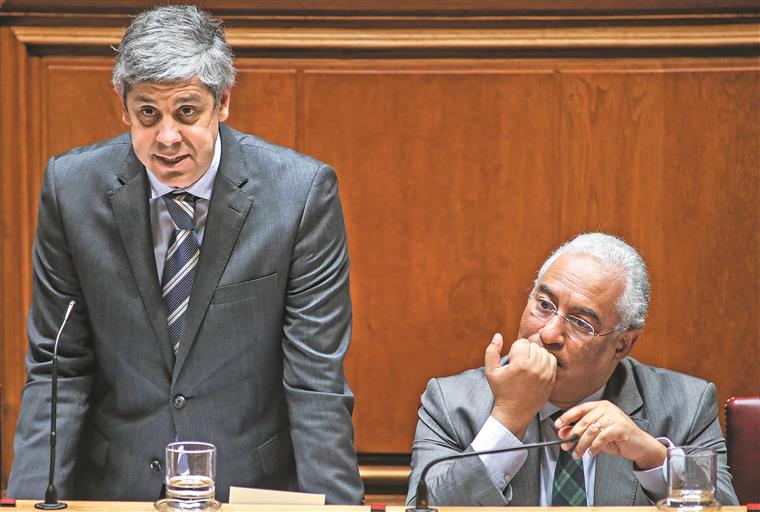
"Durante quatro anos, entre 2011 e 2015, todas as culpas em Portugal foram do governo de Passos Coelho. Sócrates chamou a troika? Não importava: a culpa era de Passos. E agora, dez meses depois, de quem são as culpas? Pois ainda e sempre de Passos. Os bancos estremecem?

A comissão europeia ameaça com sanções? É culpa de Passos, por mais que os comissários em Bruxelas expliquem, no caso das sanções, que tudo depende do presente governo tomar as providências necessárias.
...
Ontem, constou que Costa estava preocupado. Depois, constou que não estava. Não sei se está ou não. Também não sei se o governo vai conseguir enrolar a Europa. Talvez consiga. Mas o que não vai é tornar Portugal um melhor lugar para trabalhar e investir. E sem isso, tudo se esfumará um dia, quando o BCE acabar com o dinheiro barato. Dir-me-ão: será como em 2011. Passos Coelho terá de vir limpar a casa, e lá ficará outra vez com as culpas. O próprio Passos, no conselho nacional do PSD de quarta-feira, ter-se-ia muito cristãmente conformado com esse destino. Mas acontece que o mundo já não é o mesmo de 2011, a Europa não é a mesma, nem Portugal é o mesmo. A paciência de Passos para fazer o que já fez, como o personagem de Bill Murray em Groundhog Day, pode-nos induzir em erro: o erro dos pessimistas que são optimistas sem o saber"
Recordo esta outra Curiosidade do dia.

Trechos retirados de "A culpa? Fica para o próximo governo de Passos"

E o ponto de vista dos clientes?

Ao longo dos anos tenho escrito sobre o tema aqui no blogue:

"After receiving a complaint about terrible food from the wife of a former patient, the managers and CEO of the Ottawa General Hospital spent a week eating hospital food. They hated it as much as the patient did, so they did something about it.
...
This story makes one wonder how many other services might be improved if only the bosses were forced to use them. The tech sector has a term for making its employees use their own products—"eating your own dog food.""
E na sua empresa, como é?
.
Conseguem experienciar a jornada, os pontos de contacto entre os clientes e a sua empresa?

Acerca do desemprego

Desenvolvimentos interessantes na evolução do desemprego medido pelo IEFP em 2016.
.
Depois de nos três primeiros meses do ano o desemprego ter aumentado, algo só visto recentemente no ano de 2012, o segundo trimestre voltou a fazer reduzir o desemprego.
Já agora, um ponto interessante. entre Janeiro Junho de 2015 e Janeiro Junho de 2016 mais de 71% da queda do desemprego foi no grupo "Indústria, energia e água e construção" que representa apenas 27% de todo o desemprego. Ou seja, o grosso da queda do desemprego ocorre no sector secundário. Por exemplo, o sector dos serviços com o maior número de desempregados, "Actividades imobiliárias, administrativas e dos serviços de apoio" viu o desemprego crescer cerca de 3% em termos homólogos.
.
A evolução total de desempregados, com a inversão da tendência iniciada há um ano:
Quanto à evolução homóloga (a azul) e mensal (a castanho):

Confesso que esperava um melhor desempenho homólogo do sector "Alojamento, restauração e similares" que apenas baixou 3,7% o número de desempregados inscritos.
.
Interessante ver como sem obras públicas mas muitas pequenas obras de reconstrução e reparação o desemprego na construção caiu em termos homólogos quase 15%. Saliente que nas últimas semanas me tenho surpreendido, ao visitar aldeias do interior, algumas sem rede de telemóvel, nos concelhos de Góis e Arganil, com a quantidade de casas reconstruídas. Não é um fenómeno restrito a Porto e Lisboa.

Correcção feita às 12h48

Mais do que evidências, persistência!

"For the rest of us, though, the flip isn't something that happens at the first glance or encounter with new evidence.
.
This doesn't mean the evidence doesn't matter.
.
It means that we're bad at admitting we were wrong.
.
Bad at giving up one view of the world to embrace the other.
.
Mostly, we're bad at abandoning our peers, our habits and our view of ourselves.
.
If you want to change people's minds, you need more than evidence. You need persistence. And empathy. And mostly, you need the resources to keep showing up, peeling off one person after another, surrounding a cultural problem with a cultural solution."

Trecho retirado de "The flip is elusive"

Underserved ou overserved?

A propósito de "Subir na escala de valor" e destes comentários:
"[Moi ici: Outra vez a disrupção? Agora a servir os underserved, ou os overserved? Talvez esta categorização aqui não funcione tão facilmente] "Consumers are embracing gadgets that do one thing well," said Hiromi Yamaguchi, an analyst at Euromonitor in Tokyo. "Larger appliance makers are selling products with too many functions, and not a lot of people use them."[Moi ici: "too many functions" parece significar overserved. No entanto, a substituição é não por um produto inferior que faz bem uma coisa, mas por um produto superior que faz bem uma coisa, e isso é "underserved"]"

Um artigo bem interessante, "Diagnosing Dislocation":
"Imagine that you run a large company, prominent in its industry, with a loyal customer base and strong profit margins. Suddenly, a new product comes along that threatens your existence.
...
new products and services can enter your market from other directions, each distinct in terms of how, where, and when it affects your business. These are market dislocations — radical breakaways from the existing market that occur when a company introduces a business model or a product that sits apart from those of competitors.
...
Then, of course, there are bottom-up dislocations, or disruptions.
...
incumbents need to recognize the distinctions among the various types of dislocations they may face. Disruptors typically first go after nonusers or the least profitable low-end customers. Only later do the disruptors start capturing an incumbent’s core customers.
...
New entrants coming from the side or from the top, meanwhile, go after an incumbent’s core customers right away — thus presenting a more immediate threat."

quinta-feira, julho 21, 2016

Curiosidade do dia

Está na altura de jogar a carta do inocente, do cândido, do mártir para enganar os papalvos:


Produtividade e gestão

"We turn to a long-standing question in economics, stretching back to at least Walker (1887), of how much of the variation in national and firm performance can be accounted for by di erences in management practices?
...
Overall, on average 30% of the cross country gap in TFP appears to be management related. This fraction varies a lot between countries. In general we account for a smaller fraction of the TFP gap between the U.S. and low income countries like Zambia (6.2%), Ghana (9.7%), and Tanzania (12%), which is likely to be because these countries have much greater problems than just management quality. We account for a larger fraction of the TFP gap between the U.S. and richer countries like Sweden (43.9%), Italy (48.9%) and France (52.3%). Figure A4 graphically illustrates this, showing that more developed countries have a higher share of their TFP gap accounted for by di erences in management.
...
Economists, business people and many policymakers have long believed that management practices are an important element in productivity."
Trechos retirados de "Management as a Technology?" de Nicholas Bloom; Raffaella Sadun e John Van Reenen. HBS Working Paper 16-133

Pre conceitos

Ontem de manhã no programa "O mundo ao ouvido" na rádio Antena 1 ouvi uma conversa banal sobre como nós humanos imitamos os sons dos animais. Ás tantas a conversa era como a imitação difere de língua para língua. Um francês, um japonês, um indiano, um português todos proferem sons diferentes ao imitar o mesmo galo, o mesmo gato, o mesmo cão.
.
Então, Helena Matos faz uma afirmação que não mais me abandonou durante o dia. Ela recordou aquela estória:
  • Quantas palavras usamos em português para falar de neve? Neve; gelo; granizo; saraiva; geada; ...
  • Quantas dezenas de palavras têm os suecos e os noruegueses quando querem falar de neve? Já ouvi dizer que têm mais de 40 palavras.
Porque estamos numa dada realidade habituamos-nos a olhar para ela de uma dada maneira e assumimos, sem intervenção consciente, uma série de preconceitos, para facilitar a interpretação dessa realidade. Por isso, não reparamos no novo penteado da nossa cara metade.
.
O que inferi das palavras de Helena Matos e acho fascinante, é que faremos o mesmo com os sons. Habituamos-nos a certos sons e tornamos-nos especialistas neles. Por falta de uso, em relação a outros sons, ou não os ouvimos, ou não os percepcionamos. Depois, perante uma mesma realidade, o cantar de um galo, diferentes pessoas de diferentes origens linguísticas ouvem e replicam coisas diferentes.
.
Fascinante.
.
E carreador de sentimentos de humildade...
.
Diferentes experiências de vida, diferentes formas de ver o mundo. 
.
Claro que o mundo é só um, no fim, sobrevivem os que têm melhores explicações... porque há os que nunca aprendem com o teste do ácido.