quinta-feira, janeiro 05, 2012

Na companhia de Siegfried e Parsifal

Jeremy Gutsche em "Exploiting Chaos" escreve:
.
"Accept that the world never returns to normal.
...
Successful innovators do not get caught up in the turmoil of change. They don't wait for the world to return to normal. Impervious to the clutter that surrounds them, these vanguards adapt to opportunity.
...
The only things slowing you down are the rules you need to break.
...
The pursuit of opportunity will require you to think differently and break the rules that paralyze change."
.
Durante a minha última audição de "Gut feelings" de Gerd Gigerenzer fixei isto:
.
"Imitation can pay in a stable environment. How should a son run his father’s company? When the business world in which the company operates is relatively stable, the son may be well advised to imitate the successful father, rather than starting from scratch by introducing new policies with unknown consequences.
...
When is imitation futile? As mentioned before, when the world is quickly changing, imitation can be inferior to individual learning. Consider once again the son who inherits his father’s firm and copies his successful practices, which have made a fortune over decades. Yet when the environment changes quickly, as in the globalization of the market, the formerly winning strategy can cause bankruptcy. In general, imitating traditional practice tends to be successful when changes are slow, and futile when changes are fast."
.
Ambos os autores chamam a atenção para, em pleno caos, em plena turbulência, arriscar e quebrar as regras que impedem a adaptação a novas oportunidades. 
.
E dei comigo a pensar nos gerentes com a 6ª classe que fazem o que Daniel Bessa e a galeria de encalhados da tríade dizem que é impossível, competir com sucesso num mundo globalizado, apesar de terem o marco alemão como moeda. Os que não conhecem as regras... alteram as regras!!! Os que não conhecem as regras... criam novas regras!!! E, de repente, encontro a harmonia e sintonia com Gigerenzer:
.
"The power of ignorance to speed up social change is a common plot in literature. Among the many heroes in Wagner’s Ring of the Nibelung, Siegfried is the most clueless one. Siegfried grows up without parental care. He is the naive hero who acts impulsively, whose adventures happen to him, rather than being deliberately planned. Siegfried’s combination of ignorance and fearlessness is the weapon that eventually brings down the rule of the Gods. Similar to Siegfried is Parsifal, the hero of Wagner’s last work. Brought up by his mother in a lonely forest, he knows nothing about the world when he begins his quest for the Holy Grail. The strength of Siegfried, Parsifal, and similar characters lies in their not knowing the laws that rule the social world. ... Ignorance of the status quo, and so a lack of respect for it, is a great weapon with which to revolutionize the social order. These heroes’ intuitive actions were based on missing knowledge, but the gut feeling “I can do it!” can succeed even when based on false information."
.
Hoje, encontro este texto "Why Best Buy is Going out of Business...Gradually" (BTW, ao lê-lo, pensem na reacção do comércio tradicional à chegada das grandes superfícies. Façam o paralelismo com a reacção das grandes superfícies ao advento das Amazon e outras) e pensei logo nos encalhados e na sua fixação doentia nos custos, apesar das evidências factuais de que algo de diferente está a funcionar (o valor):
.
"First comes the strategic bankruptcy, ..., where management’s sole focus is improving some arbitrary metric from last quarter, even when doing so actually interferes with customers trying to buy something else."

Customer centric (parte III)

"For better or worse, one fact has become increasingly clear over the past ten years: the marketplace is customer driven. The days of customers chanting, “We’ll take what you offer,” have been replaced with an expectant, “Give us what we’d like, with a side order of customization.” (Moi ici: E é esta tendência que está a minar o modelo económico chinês baseado no custo mais baixo, produtos padronizados, iguais e produzidos em em larga escala em unidades produtivas gigantes. Não permite a customização, não permite a rapidez, não permite o desenvolvimento de uma relação, não permite começar pelo cliente e pela sua vida e contexto)
.
The power in the buyer-seller interaction has been moving systematically to the buyer. In many industries, global competition and industry overcapacity have given buyers more choice, and they are learning how to use it.
...

The competitive game has clearly shifted to one of pleasing an increasingly more global, knowledgeable, and powerful customer.
...

By satisfying a customer who wants to use relationships, the customer-centric firm becomes more profitable.
...

Studies argue that the most profitable customer is the existing loyal customer. (Moi ici: Se tiver sido escolhido e fizer parte do grupo de clientes-alvo) ... Customer loyalty becomes incrementally more certain as customer-centricity is implemented. With the tight, customized relationships - the “virtuous circle” - established using applied customer solutions, repeat business becomes more and more dependable in an otherwise harshly competitive and fickle marketplace.
...

Product-centric companies are structured around product profit centers called business units. Information is collected around products. Business reviews focus discussions around product lines. The customer-centric company is structured around customer segments. Information is collected and profits measured around customer categories. Management discussions are focused on customers. (Moi ici: Tudo começa nos clientes-alvo na sua identificação, na sua análise) There are similar contrasts around processes, performance measures, human resource policies, and management mind-sets.
.
Perhaps the most striking difference is that a customer-centric unit is on the side of the customer in a transaction. (Moi ici: A ideia não é empurrar o que se tem na prateleira, ou o que se produz. A ideia não é vender! A ideia é ajudar a comprar a melhor solução que se integrará na vida dos clientes... e cada caso é um caso.)
...
(Moi ici: Ah! E desta forma a oferta deixa de ser homogénea e comparável. Assim, o preço deixa de ser "price to market" e passa a ser em função do valor reconhecido, esperado e vivido pelos clientes... a concorrência passa a ser imperfeita. E a construção de um relacionamento especial gera, no limite, uma situação de monopólio informal. Mudar de fornecedor? Custa tanto recomeçar uma relação do zero...)
.
Trechos retirados de "Designing the Customer- Centric Organization A Guide to Strategy, Structure, and Process" de Jay R. Galbraith


Recordar Lawrence... nada está escrito (parte XVIII)


Exploiting Chaos

quarta-feira, janeiro 04, 2012

Aplicável a paletes de pessoas

Estudantes, bloggers, deputados, presidentes de câmara, presidentes da républica, ministros, paineleiros, jornalistas estagiários...
.
"“The trouble with teaching economics philosophically is that a 16- or a 19-year old does not have the experience of life to make the philosophy speak to her. It’s just words… Economically speaking, she hasn’t had a life. She has lived mainly in a socialist economy, namely her birth household, centrally planned by her parents, depending on loyalty rather than exit. She therefore has no concept of how markets organize production. … She does not have any economic history under her belt – no experience of the Reagan Recession or the Carter Inflation.”
...
Trecho retirado daqui.

“A confused buyer never buys”

Na semana passada visitei uma empresa que está a passar por algumas dificuldades.
.
O produto, embora não seja especialista, parece-me capaz de competir com os melhores em desempenho técnico. Contudo, o produto não está a ter o sucesso desejado.
.
Podemos argumentar que o ciclo de venda do produto é muito longo e que a empresa só recentemente é que começou a apostar na participação em feiras internacionais.
.
Podemos argumentar que o produto tecnicamente é bom mas falta a aposta no desenvolvimento do marketing associado a esse campeonato.
.
No entanto, a parte da conversa que não me tem abandonado a mente diz respeito a uma afirmação de um dos gestores, um apaixonado por todas as questões técnicas associadas ao produto:
.
"Não percebo, temos um produto tão bom!
Se o cliente quiser um produto mais básico e com um preço mais em conta, a gente tem.
Se o cliente quiser um produto sucessivamente mais complexo, com mais capacidades, a gente tem. E o cliente não precisa de deitar nada fora, o produto é composto por módulos que se vão acrescentando."
.
Na altura ainda argumentei, mas será que é isso que um cliente quer?
Será que o cliente do produto mais básico vai às mesmas feiras que o cliente do produto topo de gama?
Será que isso não provoca ruído na mensagem da empresa?
.
Hoje voltei a recordar a conversa por causa deste postal "How Oprah Nearly Killed My Business":
.
"Apparently, the combination of my “self-help” book and the magazine publicity caused confusion. It was no longer clear that my main business focused on the needs of corporations. In this moment I discovered that the old mantra was true: “A confused buyer never buys.
.
There is a lesson in this for every small business.
.
Know your audience. Know their needs—explicit and latent. Speak their language. Understand what gives you credibility in their eyes."
.
Quem são os clientes-alvo?
.
Qual é a proposta de valor?

Μην το χάος με τα παιδιά μου


"Ventos acima dos 100 km/hora varrem costa norte da Alemanha"

"the art of focusing on what’s important and ignoring the rest"

Quando comecei a ler/ouvir "Gut feelings: the intelligence of the unconscious" de Gerd Gigerenzer, apesar do autor estar constantemente a repetir que "Less is More", nunca pensei na relação directa entre o trabalho do autor e as reflexões que faço sobre o meu trabalho de intervenção nas empresas.
.
Contudo, comecei a juntar as peças quando ouvi:
.
"Common sense suggests that forgetting stands in the way of good judgment. Earlier in this book, however, we met the Russian mnemonist Shereshevsky, whose memory was so perfect that it was flooded with details, making it difficult for him to get the gist of a story."
...
E relacionei com os casos que Gigerenzer conta, uma e outra vez, em como os ignorantes, em n testes, conseguem bater os especialistas, em previsões desportivas ou concursos sobre geografia.
.
Estou sempre a chamar a atenção para:
  • Concentrar uma empresa no que é essencial;
  • Responder à pergunta quem são os clientes-alvo e trabalhar paranoicamente para os servir;
  • Ao modelar o funcionamento de empresas, não sejam como os franceses, não tentem incluir, não tentem contemplar tudo;
  • Ao cartografar um processo, começar pela sua finalidade, pela sua razão de ser, pelo seu propósito;
Quando se sabe muito sobre um tema, podemos ser prejudicados pelo excesso de conhecimento quando a resposta não é lógica:
.
"Imagine you are a contestant in a TV game show. You have outwitted all other competitors and eagerly await the $1 million question. Here it comes: 
.
Which city has the larger population, Detroit or Milwaukee?
.
Ouch, you have never been good in geography. The clock is ticking away. Except for the odd Trivial Pursuit addict, few people know the answer for sure. There is no way to logically deduce the correct answer; you have to use what you know and make your best guess.
...
Daniel Goldstein and I asked a class of American college students, and they were divided—some 40 percent voted for Milwaukee, the others for Detroit. Next we tested an equivalent class of German students. Virtually everyone gave the right answer: Detroit. One might conclude that the Germans were smarter, or at least knew more about American geography. Yet the opposite was the case. They knew very little about Detroit, and many of them had not even heard of Milwaukee. These Germans had to rely on their intuition rather than on good reasons. What is the secret of this striking intuition? The answer is surprisingly simple. The Germans used a rule of thumb known as the recognition heuristic:
  • If you recognize the name of one city but not that of the other, then infer that the recognized city has the larger population.
The American students could not use this rule of thumb because they had heard of both cities. They knew too much. Myriad facts muddled their judgment and prevented them from finding the right answer. A beneficial degree of ignorance can be valuable, although relying on name recognition is of course not foolproof."
.
O nono capítulo "Less is More in Healthcare", um capítulo que mete medo, ao dissecar o pensamento dos médicos que os leva à sobre-prescrição, à sobre-medicação, e ao sobre-tratamento, termina assim:
  • "Truly efficient health care requires mastering the art of focusing on what’s important and ignoring the rest. "
BANG! Aquelas palavras "the art of focusing on what’s important and ignoring the rest"
  • "Good intuitions must go beyond the information given, and therefore, beyond logic."
Outro BANG!!! Uma estratégia, ou muitas estratégias bem sucedidas resultam porque não têm uma lógica linear... porque são fundamentadas em... "optimismo não documentado", em intuição.

Customer centric (parte II)

"In order to be a successful and viable firm in the twenty-first century, a company must have a customer-centric capability. The early movers will gain a competitive advantage, while stragglers will scramble for a competitive necessity.
.
In most industries today, it is difficult to make money by just selling products and services to customers. Stand-alone products and services commoditize rapidly and collapse profit margins. (Moi ici: Quem está no campeonato dos "stand-alone products" tem que competir impessoalmente, tem de se medir contra o conteúdo de um contentor carregado no outro lado do mundo)  The new foundation of profitability is the customer relationship. (Moi ici: O essencial é a relação, os produtos e serviços são artifícios para criar e desenvolver relações. Quem está no campeonato das relações tem toda a vantagem sobre quem actua impessoalmente. Resolução para PMEs: 1 escolher clientes para os quais o desenvolvimento de uma relação faz sentido. 2 aprender a comunicar as vantagens de uma relação. 3 apostar no longo prazo. 4 agir como consultor de compra não como vendedor)
...
Today, nobody owns the customer. The customer owns you. (Moi ici: A última palavra é do cliente, mas a primeira deve ser do fornecedor. Assim como um cliente escolhe um fornecedor, também um fornecedor deve escolher os seus clientes. Prefiro ver a relação como uma relação de reciprocidade
...
To have a relationship, the company needs to be able to do business the way the customer wishes. (Moi ici: Como a maleabilidade dos fornecedores não é infinita e custa dinheiro, estes devem escolher quem são os seus clientes-alvo, quem são os clientes que podem ser vir melhor do que ninguém)
...
Different customers want to do business differently, and being profitable today means having the capabilities that allow for malleability. It means forming long-term relationships with the most valuable customers. (Moi ici: E quem são os clientes mais valiosos? Quantos fornecedores conseguem descortinar esta informação?It means interacting with these customers across multiple points of contact and integrating the results of these contacts into a consistent company position for the customer. (Moi ici: Quantos fornecedores formulam uma proposta de valor? Quantos comunicam essa proposta de valor? Quantos se organizam para se tornar e aperfeiçoar essa proposta de valor?) It means learning from the contacts to customize the company’s offerings for different customer segments. (Moi ici: Cuidado, customer-centric não deve ser sinónimo de "customer-driven". O fornecedor não vai para onde o cliente o conduz, o fornecedor deve saber se esse caminho é interessante, ou não) It means learning about new customer needs and expanding the company’s offering to meet them. It means using knowledge of customers to package products and services into solutions that create value for the customers.
.
Trechos retirados de "Designing the Customer- Centric Organization A Guide to Strategy, Structure, and Process" de Jay R. Galbraith

Tantas empresas financeiras...

"A new species of yeti crab piles around the hydrothermal vents in Antarctica. The vents may be a safe haven for the crabs."

Ainda e sempre a batota

Quantos de nós entram numa loja e saem sem comprar nada porque:

  • o funcionário era mal-educado;
  • o funcionário era ignorante;
  • o produto, apesar de presente no sistema, não foi identificado;
  • o tempo de espera para ser atendido ia ser demasiado;
  • o tempo de espera para pagar ia ser demasiado;
  • a loja estava suja;
  • ...
Uma receita que proponho há vários anos, para atacar esta rede de situações é a batota!
.
Este mês, a revista Harvard Business Review publicou o artigo "Why "Good Jobs" Are Good for Retailers" de Zeynep Ton:
.
"The conventional wisdom is that many companies have no choice but to offer bad jobs - especially retailers whose business models entail competing on low prices. If retailers invest more in employees, customers will have to pay more, the assumption goes.
...
I have studied retail operations for more than 10 years and have found that the presumed trade-off between investment in employees and low prices can be broken.
...
If investing in retail labor is such a good idea, as my research suggests, why isn’t everybody doing it? The main reason is that labor is often a retailer’s largest controllable expense and can account for more than 10% of revenues—a considerable level in an industry with low profit margins. In addition, many retailers see labor as a cost driver rather than a sales driver and therefore focus on minimizing its costs.
...
Moreover, the financial benefits of cutting employees are direct, immediate, and easy to measure, whereas the less-desirable effects are indirect, long term, and difficult to measure.
...
instead of responding to short-term pressures by automatically cutting labor, stores should strive to find the staffing level that maximizes profits on a sustained basis. In many cases, that will mean adding workers.
...
Retailers do not just underinvest in the quantity of labor. They treat the quality of labor the same way - paying low wages, offering insufficient benefits, and providing inadequate training. The short-term pressures are just too difficult to resist. The inevitable consequences are understaffed stores with high turnover of low-skilled employees who are often part-timers and have little or no commitment to their work.
...
When my colleague Ananth Raman of Harvard Business School and I first started working with Borders, we found that there was a huge variation in operational performance among stores that used the same information technology and offered the same incentives to employees. The performance of the best store was a whopping 43 times better than that of the worst store. Part of this variation, we found, could be explained by labor practices. Stores in which employees had less training, greater workloads, and higher turnover performed worse.
That is not surprising. Operational execution requires people. So stores with a gap in people—too few employees or unmotivated or incapable employees—will have a gap in operational execution. But few retailers realize the seriousness of operational problems and how much money they lose by underinvesting in employees.
...
When retailers view labor not as a cost to be minimized but as a driver of sales and profits, they create a virtuous cycle. Investment in employees allows for excellent operational execution, which boosts sales and profits, which allows for a larger labor budget, which results in even more investment in store employees.
...
Mercadona, QuikTrip, Costco, and Trader Joe’s do not expect the virtuous cycle to operate on its own. They complement their investment in employees with operational practices that make the execution of work more efficient and more fulfilling for employees, lower costs and improve service for customers, and boost sales and profits for the retailer. These practices allow retailers to break the presumed trade-off between investing in employees and maintaining low prices.
...
Retailers that operate in a virtuous cycle, by contrast, make choices that simplify their operations. They consistently offer “everyday low prices” rather than a kaleidoscope of promotions, and they carry fewer products.
...
Not surprisingly, I found that unpredictable schedules, short shifts, and dead-end jobs take a toll on employees’ morale. When morale is low, absenteeism, tardiness, and turnover rise, increasing the variability of the labor supply, which, of course, makes matching labor with customer traffic more difficult. In addition, retailers with high turnover cannot afford to invest in employee training; average training per new retail employee is a mere seven hours in the United States. Untrained or poorly trained employees are less productive and make more errors.
.
Instead of varying the number of employees to match traffic as much as other retailers do, Quik­Trip and Mercadona vary what employees do. They achieve this by training employees to perform a variety of tasks.
...
Retailers that invest in employees are by no means easygoing about what people do. Rather, they are obsessed with eliminating waste and improving efficiency."

terça-feira, janeiro 03, 2012

Conselho

“If you want to salvage something out of a bad situation, you’ve got to be realistic. 
.
Readjust your thinking to the situation. 
.
And don’t be afraid to break stuff if you have to—especially if it is already broken.”
.
.

O presidente da Galp é que sabe... e os bentos-lovers também


Arquivo de fontes para uso futuro:
.
"How competition improves management and productivity":
.
"But what determines productivity, or the amount of output that can be produced from a given set of inputs?
...

In the 1990s, Stephen Nickell led a team of CEP researchers to address the productivity question head on. ... The first finding was a descriptive fact that has stood the test of time: there are huge differences in productivity between firms even in narrowly defined industries that last for many years. Yet the existence of persistently less efficient firms encountered in Nickell’s research was hard to square with the standard economic model of perfect competition, which assumed that such inefficiency could not persist.
...

increases in competition provided a large and persistent boost to firm productivity. Competition could be increased in a number of ways: more openness to trade, lower barriers to entry and greater consumer choice.
...

In the 2000s, Nicholas Bloom and I built on the insight that firms’ internal organisation was the key to  productivity by launching a major effort to measure management and organisation within firms (Bloom and Van Reenen, 2007).
...

It turns out that the original intuition of the 1990s work was right: management really does matter in explaining productivity differences. And furthermore, a key factor in boosting management quality in both the private and public sectors is competitive intensity. This worked not only within firms, as Nickell emphasised, but also between firms. In other words, competition raise average productivity in a nation through a Darwinian selection effect where the low productivity firms are driven out of the market and the high productivity firms expand.
...

Protecting inefficient firms from going under is a major reason for lower European productivity. The direction of policy is to make space for the more efficient firms to grow and prosper."
.
À atenção do presidente da Galp (meu Deus...) "A range of recent econometric studies suggest that (i) competition increases management quality and (ii) improved management quality boosts productivity." e "Management Practices Across Firms and Countries":
.
"On average, we find that in manufacturing American, Japanese, and German firms are the best managed. Firms in developing countries, such as Brazil, China and India tend to be poorly managed. American retail firms and hospitals are also well managed by international standards, although American schools are worse managed than those in several other developed countries. We also find substantial variation in management practices across organizations in every country and every sector, mirroring the heterogeneity in the spread of performance in these sectors. One factor linked to this variation is ownership. Government, family, and founder owned firms are usually poorly managed, while multinational, dispersed shareholder and private-equity owned firms are typically well managed. Stronger product market competition and higher worker skills are associated with better management practices. Less regulated labor markets are associated with improvements in incentive management practices such as performance based promotion.
...

From a policy perspective, several factors seem important in influencing management quality. Product market competition has a critical influence in increasing aggregate management quality by thinning the ranks of the badly managed and incentivizing the survivors to improve. Indeed, much of the cross-country variation in management appears to be due to the presence or absence of this tail of bad performers. One reason for higher average management scores in the US is that better managed firms appear to be rewarded more quickly with greater market share and the worse managed forced to rapidly shrink and exit. This appears to have led American firms to rapidly copy management best practices from around the world,"
...

taxes and other distortive policies that favor family run firms appear to hinder better management, while general education and multinational presence seem valuable in improving management practices."
.
E os que defendem a saída do euro para proteger as empresas nacionais mal geridas ou que fizeram opções erradas, ou que se dedicaram a apostas válidas até à pouco... incapazes de ver o sucesso de tantas e tantas PMEs que lançaram pés ao caminho.
.
BTW, daqui retirei este gráfico:
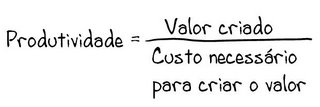
Está tudo ligado: China; colapso do mercado do meio-termo com a polarização dos mercados, a inovação, o aumento da dispersão de produtividades, a subida na escala de valor, a espiral aberta virtuosa e a espiral fechada viciosa, a aposta na eficiência versus a aposta na eficácia, denominar versus numerador, custos versus valor, ... "Changes in Wage Inequality"

Trabalhar a rede

Deste texto "Co-creating Development" de Venkat Ramaswamy retirei esta figura:
Chamo a atenção para as "network capabilities"... as redes estão por todo o lado, é fundamental identificar os clientes-alvo mas não chega, há que sintonizar e harmonizar um conjunto de relações de parceria, de cumplicidade entre vários intervenientes numa rede.
.
Agora, atentemos em "Delivering service, shifting solutions and shaping markets" de Robert Spencer e Bernard Cova.
.
"the site of value creation and in particular innovation, is thus the service “space” between supplier and buyer, with both actors contributing towards the process (the co-creation of value-in use, and value to the customer and the supplier).
...
“if solutions are seen as inherently customised, the outcomes are not generic but unique to the situation”. Outcomes of solutions can thus range from solving consumers’ known or articulated problems over time to enabling them to achieve a certain peace of mind. This puts emphasis, then, not only on value creation for the customer, but also on the creation of a new and unique situation for the customers, suppliers, and in their environments.
...
They then go on to propose “a switch from customer value proposition to customer network value proposition”.
...
emphasizes that experiences and relationships themselves, especially in the co‐creation and sharing of resources, create customer value. Thus, inter‐organizational collaboration in value‐production appears highly relevant to understanding 21st century business marketing in which suppliers’ and customers’ traditional roles are becoming more complex and intertwined. This inter‐organisational role, portrayed thus far as a dyadic supplier‐buyer, or else at best a supply chain issue, has been seen as being insufficient to cover and explain the phenomena at play in all instances, and has been extended to cover co‐creation by multiple actors from a systemic standpoint. Factors explaining value creation thus are considered as being of a network kind. The actors involved involve, but not only, other firms, including the supplier himself. Outcomes in terms of value creation are also of different kinds.
...
Suppliers are no longer seen as good just for selling a product to a customer, but are seen rather as consultants who assist their customers in making their activities grow. Consequently, simple delivery of a combination of products and services is no longer a sufficient answer to the customer’s needs. Redesigning and reengineering the customer’s processes require the implementation of consultancy and expertise.
...
solution selling builds as much on the anticipation and construction of customer needs as on the mobilization of pertinent actors in and around the customer to generate integrated solutions. Such integrated solutions thus become projects for the customer just as much as for the supplier. Solutions are not simply a group of products and services which, “bundled together, may give some increased margins in the form of savings, efficiency, lack of redundancy, and so on but … don’t create new value”
...
solutions are cocreated by a customer and a supplier. In fact, by co‐creating the function as well as the meaning of its experience, the customer co‐constructs value for himself: “the customer is always a co‐creator of value”. For Grönroos “suppliers only create the resources or means to make it possible for customers to create value for themselves. In this sense at least, when suppliers and customers interact, they are engaged in co‐creation of value”. Thus, SDL recognizes that firms can only make a “value proposition” and that value itself is a continuous process that unfolds over time as customers take part in the value‐creation process.
.
SDL also recognizes that customers as well as suppliers are resource integrators, consistent with the concept of co‐creation of value. SDL not only brings the customer into the process of co‐creation of value, but organization’s partners throughout the value network as well. Consequently, SDL recognizes that each entity should collaborate with other entities and integrate resources with them. In addition, SDL opens onto the actors involved in the cocreation of value: it is the “customer and supply chain partners [which] are collaborators in the entire marketing process”


Customer Centricity (part I)

"a fundamental acknowledgment that not all customers are created equal; a commitment to identify those customers who matter most; and a willingness to dedicate disproporcionate amounts of resources not only to understand what those customers want but to deliver what they want - and by extension, create a stable, lucrative, and ever-more profitable future.
...
identify a select set of customers. These are the important ones, the lucrative ones, the ones you should be spending your time thinking about, planning around, producing and working for - the right customers. These are the customers who matter.
.
Of course, in the product-centricity world, there are no right customers. There is no dividing line between the important ones and the rest. They are all just customers - the nameless, faceless hordes who gobble up (or ignore) whatever it is Company X is attempting to sell.
...
Customer-centricity firms acknowledge the heterogeneity among our customers. More than that, we celebrate it - because we understand that heterogeneity offers us opportunity. In a customer-centric company, weunderstand that some customers do matter more."
.
Trechos retirados de "Customer Centricity" de Peter Fader.

Let me guess: Acabou a auditoria ISO 9001?


Excelente, by-pass ao status-quo

Excelente: "Bit by Britt, farm family makes its mark the milky way":
.
"His wife, Rachael, said the family was regularly approached by locals wanting to buy milk direct from the farm, which is illegal. "But a lot of doctors are also recommending people that have certain illnesses drink unhomogenised milk, because it's more natural," she said. Mrs Peterken said their own brand, Inglenook, had already been stocked by local businesses.
.
Bottles of Inglenook had also been sold at Essendon farmers' market, and should be available in IGA stores in the new year.
.
Mrs Peterken's father, Basil, said the dairy industry was in a "pretty ordinary" state, with the big supermarket chains squeezing farmers' margins."
.
Ontem, a meio da tarde, uma mensagem de SMS da patroa chegou.
.
Saí de casa, andei 300 metros, entrei numa casa e comprei numa casa de lavradores:
  • uma abóbora de 11 kg (que descasquei e foi para a arca aos bocadinhos para substituir a batata na sopa);
  • 3 pencas que foram cortadas à minha frente;
  • 1 dúzia de ovos sem carimbos de veterinários.
Isto é qualidade de vida!

segunda-feira, janeiro 02, 2012

Satisficers (parte III)

"A solution to a given problem is called optimal if one can prove that no better solution exists. Some skeptics might ask, Why should intuition rely on a rule of thumb instead of the optimal strategy? To solve a problem by optimization—rather than by a rule of thumb—implies both that an optimal solution exists and that a strategy exists to find it. Computers would seem to be the ideal tool for finding the best solution to a problem. Yet paradoxically, the advent of high-speed computers has opened our eyes to the fact that the best strategy often cannot be found."
.
Trecho retirado de "Gut Feelings" de Gerd Gigerenzer.
.
"Daniel Kahneman won the Nobel Prize in Economics because he demonstrated conclusively that people do not function according to the hyper-rational, cold calculating benefit maximizing cost minimizing Homo economicus that traditional economic theory presupposes."
.
.
"Decision makers often have imperfect information. We develop a choice theoretic experiment to explore choice mistakes that result from incomplete search. Our choice process methodology generates data on how choices change with contemplation time, thereby illuminating the search process. We demonstrate that most subjects behave in line with a reservation-based model of sequential search, altering their reservation utilities in response to the size of the choice set and the complexity of the environment. These …ndings support Simon’s model of satis…cing behavior and suggest simple measures of contextual e¤ects on the quality of decisions."
.
Trecho retirado de "Search and Satis…cing"
.
Tudo o que contribua para a explosão de diversidade é bem vindo... Mongo agradece!!!

It's not the euro, stupid! (parte V)

Parte I, parte II, parte III e parte IV.
.
Escrevemos, no primeiro postal de 2012:
.
"As dificuldades criam, geram, proporcionam, escondem oportunidades.
.
"In the middle of difficulty lies opportunity" (Einstein).
.
As dificuldades podem ser a chispa que desencadeia a revolução que estava por detrás da rolha, o tsunami preso pelas comportas.
.
As crises podem ter o condão de criar a oportunidade de libertar os factores aprisionados a velhas fórmulas, a velhos modelos.
.
Claro, os incumbentes de espírito tentarão até à última defender o status-quo... os que não têm nada a perder arriscam e constroem o futuro."
.
Bem na linha de "A Trapped Factors Model of Innovation" de Nicholas Bloom, Paul Romer e John Van Reenen, publicado em Outubro de 2010.
.
"When will reducing trade barriers against low wage country cause innovation to increase in high wage regions like the US or EU?
.
We develop a model where factors of production (such as skilled labor) are used to either produce or innovate. (Moi ici: Exploitation versus exploration) Because of sunk investments (like learning bydoing) they become “trapped” in producing old goods. In this model, trade liberalization with a low wage country reduces the profitability of the old good and so the opportunity cost of innovating falls. (Moi ici: Talvez a escassez de capital que vivemos, a par do colapso na procura interna, reduzam os custos da inovação, reduzam os custos de retirar recursos escassos (capital, gente talentosa, tempo, ...) de apostas que passaram o seu prazo de validade, para novas apostas) Interestingly, the “China shock” is more likely to induce innovation than liberalization with high wage countries, as richer countries will compete in both old and new goods."  (Moi ici: Gente perigosa... De acordo com o que sucedeu a Portugal com a entrada na CEE. Os produtos alemães não vinham competir com os produtos portugueses, os produtos portugueses é que foram competir pelo preço com os produtos alemães naquela questão 
"Para um dado nível de desempenho, quão barato o podem oferecer?")
.
"we show, paradoxically, that increased trade with a low-wage trading partner, which drives down prices and forces firms to shut down some lines of production, can also increase the rate of innovation. Instead of increasing the return to innovation, this kind of trade effect reduces the opportunity cost of the resources used to innovate." (Moi ici: evolução dos euros produzidos por trabalhador na indústria do calçado e na do têxtil e vestuário)

"workers acquire human capital that is specific to a firm and the goods that it produces. This makes the human capital used by each firm a “trapped factor”. If a factor of production is trapped in a firm, a trade shock that reduces the value of this factor in specific lines of production can encourage the firm to reallocate this factor to other activities including innovation. Because the human capital is firm-specific, the shock reduces the opportunity cost of the human capital that it uses without having any effect on the cost of human capital to other firms.
...
The nature of the market failure is that skilled workers should specialize in innovation but they do not because the private incentive to innovate is below the social incentive. Their product specific skills cause them to be “trapped factors” from planner’s point of view.
...
we describe the predictions of this theory for innovation in a high wage country under two types of trade shock: a “China shock” (liberalization of goods with a low wage country) and an “OECD shock” (liberalization of trade with a high wage country). We show that the positive effect of liberalization holds only for the China shock."
.
E das Conclusões:
.
"In this paper we have considered a “trapped factor” model where some factors of production due to sunk costs are partially irrerversible and are therefore “trapped” in a firm (e.g. when there is firm-specific human capital from learning by doing). We show that in such a model that when a rich OECD country reduces trade barriers with a low wage country like China this can act to speed up the rate of innovation and therefore economic growth in the OECD country. This is because the trapped factor will be used (in part) to produce old goods and this sets the opportunity cost of innovation. A China shock reduces the profitability of producing these old low tech goods and therefore reduces the opportunity cost of innovation. Abstracting from market size effects, integration with a high wage OECD country does not have these pro-innovation effects.
...
First, opening up to trade with China appears to have generated faster technical change in firms in richer countries (like Europe and the US) not simply from reallocation but also through within firm innovation. Secondly, the effects of opening up to trade with countries like China appears to have stronger effects on innovation than trade integration with other rich countries."
.
Por que é que esse choque em Portugal foi tão violento, levando à morte de tantas empresas?
.
Porque a maioria das empresas portuguesas competia no mesmo campeonato da China, usando como vantagem competitiva os preços baixos, ou seja, muitas empresas estavam longe da fronteira do seu sector:
.
"It is important to understand the factors that infl‡uence a country’s transition from the production of low-quality to high-quality products since the production of high-quality goods is often viewed as a pre-condition for export success and, ultimately, for economic development. In this paper, we provide the fi…rst evidence that countries ’import tariffs affect the rate at which they upgrade the quality of their products. We analyze the effect of import competition on quality upgrading using highly disaggregated export data to the U.S. from fi…fty-six countries in 10,000 products using a novel approach to measure quality. As predicted by recent distance to the frontier models, we fi…nd that lower tariffs are associated with quality upgrading for products close to the world quality frontier, whereas lower tariffs discourage quality upgrading for products distant from the frontier."
...
"we show that there is a signi…cant relationship between import tariffs and quality upgrading. The direction of the effect depends importantly on how far the product is from the world quality frontier. For products close to the frontier, low tariffs encourage quality upgrading whereas for products distant from the frontier, low tariffs have the opposite effect, discouraging quality upgrading. (Moi ici: O exemplo que nos vem do Brasil!)
...
Our findings support the theories by Aghion and Howitt (2005) and ABGHP (2009) that highlight two forces: one, the “escape-competition ”effect that induces a fi…rm close to the frontier to invest in quality upgrading in order to survive competition from potential new entrants; and two, the “appropriability” effect that discourages …firms distant from the frontier from investing in quality upgrading because they are too far away from the frontier to be able to compete with potential new entrants. Our results show that support for these theories is strongest in countries with good business climates, a fi…nding that is perhaps not surprising given that lower tariffs are unlikely to alter signi…cantly the competitive environments in countries that face many other restrictions on competition."
.
Trechos retirados de "Import Competition and Quality Upgrading" de Mary Amitiy e Amit K. Khandelwalz, publicado na versão final em Novembro de 2011.
.
Ah! E para os que acham que o problema é do euro... recomendo a figura 2 na página 24.

Israel e Suécia não são conhecidos por isto

Imagem retirada de "Chapter 1 Fiscal Deficits and Debts: Developments and Outlook".