segunda-feira, março 15, 2010
Destruir oferta?
Isto "Is China's Politburo spoiling for a showdown with America?" e isto "Taking on China" anda à volta disto "Cenários: O que diz Roubini (parte I)"

Estratégia vs processos
Recebi, do outro lado do Atlântico, esta questão:
.
“Estou então buscando conceitos que me amparem para a defesa desta tese, principalmente que demonstrem de forma inequívoca como se faz a conexão da estratégia com os processos de negócio. Nas minhas pesquisas cheguei ao seu livro “Balanced Scorecard - Concentrar uma organização no que é essencial” e gostaria de confirmar contigo se encontrarei no mesmo a conceituação sobre a ligação entre a estratégia e os processos de negócio. Principalmente como fazer o desdobramento da estratégia até o nível operacional de processos.”
.
Eis a minha tentativa de resposta "Estratégia vs processos".
domingo, março 14, 2010
A paixão por procedimentos (parte II)
Continuado.
.
"Procedures can erode expertise.
When we get comfortable with procedures, we may stop trying to develop more skills. Why bother, if the procedures usually get the job done?
...
A number of studies have shown that procedures help people handle typical tasks, but people do best in novel situations when they understand the system they need to control. People taught to understand the system develop richer mental models than people taught to follow procedures."
.
"Procedures can mislead us.
The biggest worry is that following procedures can lead us in the wrong direction and that we won’t notice because the reliance on procedures has made us so complacent."
.
Á atenção dos auditores "Skilled performers need latitude to depart from procedures."
.
Recordo um velho episódio de um dos meus heróis dos anos 80 "Macgyver". Um episódio em que MacGyver tem de vencer Sandy, um computador:
.
"MacGyver: Well, old Sandy sure has a mind of her own, doesn't she?
Jill: Yes, but she thinks like me. So I should be able to think it through and find her pattern, logically and rationally.
MacGyver: Without the emotion, right?
Jill: That's what gives her the edge. People and emotion can't get in her way.
MacGyver: Well, I say we trust our instincts—go with our gut. You can't program that. That's our edge."
Jill: Yes, but she thinks like me. So I should be able to think it through and find her pattern, logically and rationally.
MacGyver: Without the emotion, right?
Jill: That's what gives her the edge. People and emotion can't get in her way.
MacGyver: Well, I say we trust our instincts—go with our gut. You can't program that. That's our edge."
.
"In summary, we can see that procedures are insufficient, can get in the way, can interfere with developing and applying expertise, and can erode over time. Procedures work best in well-ordered situations in which we don’t have to worry about changing conditions and we don’t have to take context into account to figure out how to apply the procedures, or when to jettison them"
...
"Procedures are most useful in well-ordered situations when they can substitute for skill, not augment it. In complex situations—in the shadows—procedures are less likely to substitute for expertise and may even stifle its development.
Here is a different statement that I think works better: In complex situations, people will need judgment skills to follow procedures effectively and to go beyond them when necessary."
.
Portanto, quando um consultor que nunca teve outra ocupação para além de consultor, postula, decreta, ordena a criação de procedimentos por tudo e por nada... beware!!!
.
"Like all tools, procedures have strengths and weaknesses. Although I have been describing their limitations, we certainly shouldn’t discard them. Here is what they buy us:
- They are training tools. They help novices get started in learning a task.
- They are memory aids. In many jobs they help workers overcome memory slips.
- They can safeguard against interruptions.
- They reduce workload and make it easier to attend to critical aspects of the task.
- They are a way to compile experience and historical information. Procedures are useful when there is a lot of turnover and few workers ever develop much skill.
- They can help teams coordinate by imposing consistency. If the people on the team know the same procedures, they can predict one another’s next moves."
"The downside of procedures is that they usually aren’t sensitive to context. In complex situations we may not know when to start and end each step. The people making up procedures usually try to substitute precision and detail for tacit knowledge."
.
Para terminar, uma sugestão que descobri na prática, não há muito tempo:
.
"When we do want to teach some procedures, the typical way is to present the standard procedures and make everyone memorize them.
Here is another way to teach procedures: Set up scenarios for various kinds of challenges and let the new workers go through the scenarios. If the procedures make sense, then workers should get to see what happens when they depart from the optimal procedures. When procedures are taught in a scenario format, people can appreciate why the procedures were put into place and can also gain a sense of the limitations of the procedures. This scenario format seems to work better than having people memorize the details of each step."
A acompanhar com interesse
"Prateleiras inteligentes revolucionam o retalho e prometem aumentar vendas"
.
Nevertheless, aconselho a estudarem a evolução da proposta de introdução da Sensomatic nas lojas.
Fractais
Um jovem natural de França, pequena aldeia a cerca de 20 km de Bragança, (onde, BTW, em pleno Agosto se podem apanhar saborosas cerejas da árvore) que tire uma licenciatura em Engenharia Química e que queira desenvolver a sua actividade profissional nesse ramo, quase de certeza que terá de abandonar esse pequeno paraíso e emigrar para o litoral.
.
Subindo na escala de abstracção... "Top Spanish scientist heading to the US"
sábado, março 13, 2010
Auditorias internas que acrescentam valor (parte VI)
Acetatos relativos à sexta sessão podem ser encontrados aqui.
A paixão por procedimentos (parte I)
De 1 a 7, em que 1 é "discordo totalmente" e 7 é "concordo totalmente" como classificaria a frase:
.
"Teaching people procedures helps them perform tasks more skillfully"
.
BTW, tenho previsto na minha agenda para hoje, criar uma instrução escrita sobre como elaborar uma lista de verificação no âmbito da preparação de uma auditoria, para distribuir numa acção de formação em curso...
.
"The process of transforming skills into procedures is irresistible. All we have to do is break a complex task down into steps and provide some tips about when to start and finish each step. Then we hand the procedures out so that workers can perform this task even without years of practice."
.
E quero que as pessoas sigam religiosamente a instrução?
.
Se vou criar a instrução é porque julgo que terá algum valor, porque julgo que pode ser útil para quem nunca teve de traduzir um critério de auditoria num conjunto de questões a colocar, ou de observações a realizar durante uma auditoria. E eu, sigo a instrução? ... às vezes. Já realizei tantas auditorias, já preparei tantas listas de verificação que às vezes, perante um caso concreto resolvo fazer uma experiência e seguir outra abordagem.
.
"By the time people become proficient, they are seeing situations instead of calculating procedures. Experts rely on their immediate intuitive responses.
...
Procedures, including checklists, are tools. Every tool has limitations, and I am not arguing that we should do away with procedures."
.
E agora algo que perturbará a mente cartesiana de alguns que tudo querem legislar:
.
"In complex settings in which we have to take the context into account, we can’t codify all the work in a set of procedures. No matter how comprehensive the procedures, people probably will run into something unexpected and will have to use their judgment. It often takes government regulation to force organizations to compile reasonably comprehensive sets of procedures, and those procedures usually have some gaps.
Even the routine task of flying an airplane can move beyond procedures. And in emergencies, procedures may be cast aside."
.
Quantas vezes já vimos isto:
.
"... a common problem and a consequence of trying to make procedures sufficiently comprehensive. The more comprehensive the procedures, the more voluminous they become. And the more voluminous, the more forbidding they appear, the more work to find what is needed, and the lower the chances that anyone will try."
.
"Procedures are often out of date because work practices keep evolving.
...
Because procedures keep evolving, procedural guides are rarely complete"
...
"Over time, some procedures became obsolete or even counterproductive. The people doing the job learned workarounds. They used their experience to adapt, just as we would expect in a complex domain. But how often could the managers revise the procedural manuals?"
...
"Inevitably, the procedures lagged behind the actual way people did their work. Up-to-date procedures had to be interpreted and carried out by workers using their judgment and experience, and obsolete procedures created even more headaches.
But there is a bigger problem than the fact that procedures are rarely sufficient and often out of date. In many cases, procedures can make performance worse, not better. They can lull us into mindlessness and complacency, and an erosion of expertise. In some cases, procedures can mislead us.
.
Procedures can lead to mindlessness and complacency.
Procedures can lull people into a passive mindset of just following the steps and not really thinking about what they are doing. When we become passive, we don’t try to improve our skills. Why bother, if all we are doing is following the procedures? So the checklists and procedural
guides can reduce our motivation to become highly skilled at a job."
.
Mas então vale a pena seguir, manter procedimentos?
.
Continua
.
Trechos destacados do livro "Streetlights and Shadows - Searching for the keys to Adaptive Decision Making" de Gary Klein.
O Grande Geometra
Os impostos aumentam, o desemprego aumenta, o país em risco de entrar novamente em recessão. A Europa à beira de um novo afundanço económico.
.
A mentalidade centralizadora de Grande Geometra que sabe o melhor para todos, melhor que os próprios, manifesta-se "Governo pede aos empresários do turismo para não descerem preços"
Pre-conceitos
O que é que pensamos sobre a China?
.
Talvez isto ajude a repensar alguns pré-conceitos: "Whats Happening to China's Migrant Workers? A New Generation Coming and Going"
sexta-feira, março 12, 2010
O PEC e Peres Metelo (parte I)
A propósito dos sacrifícios de que fala Peres Metelo começo, acerca de saber se o PEC é o adequado ou não, com uma pergunta: Os carros cubanos andam?
 Os carros cubanos andam?
.
Queria ter um para a sua vida diária?
.
Pois, a nossa economia começa cada vez mais a parecer-se com um carro cubano. Só remendos!!!
.
Continua.
Comunicação, comunicação, comunicação
A cola que mantém uma organização e concentra, sintoniza e alinha recursos, atenções e motivações.

.
.
"Virtually everyone is aware that they are operating in a different environment. More important than measuring employee recognition of change, companies should be trying to understand whether employees are aligned with the new organizational strategy. Chances are that they are not.
.
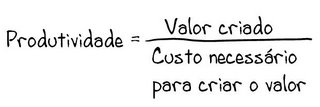
Research by CEB's HR consulting and workforce survey division, CLC Genesee, recently discovered that productivity of the employees that both experienced change and expect more change to come decreased by 66%. Simply put, almost two-thirds of all employees are 33% as productive as they can be because they don't understand what they are now asked to do."
.
Research by CEB's HR consulting and workforce survey division, CLC Genesee, recently discovered that productivity of the employees that both experienced change and expect more change to come decreased by 66%. Simply put, almost two-thirds of all employees are 33% as productive as they can be because they don't understand what they are now asked to do."
.
ADENDA: E que tal realizar uma auditoria interna ao sistema de gestão com este objectivo:
.

quinta-feira, março 11, 2010
Para lá da esquizofrenia
A propósito dos números do PIB publicados hoje pelo INE comecei por, qual Peres Metelo, ceder à tentação esquizofrénica de comparar um número, o último, com outro, o penúltimo, e daí construir uma narrativa do que está a acontecer.


.
Rapidamente me lembrei do que costumo pregar nas formações que dou sobre controlo estatístico de processos e resolvi aplicar as fórmulas...
.
Os números retirei-os do Quadro 2 deste ficheiro do INE, com eles comecei por fazer um gráfico da evolução temporal do PIB em torno do PIB médio (8 resultados, um para cada trimestre de 2008 e 2009)
.
Depois, perguntei-me, o que querem dizer estes resultados, podem ser resultados normais de um processo em controlo estatístico? Há flutuações anormais nestes 8 trimestres? Ou podemos considerar que não passam de variação aleatória dentro de um mesmo sistema?
.
A resposta não podia ser mais clara...
As cartas de controlo não evidenciam qualquer sinal de actuação de causas especiais, nestes últimos 8 trimestres o PIB tem flutuado pela mesma razão que em lançamentos sucessivos de dois dados os números ora sobem ora descem em torno da média (6).
.
Os dados de cada mês podem fazer parte de um sistema estável entre os limites superior de controlo (LSC) e inferior de controlo (LIC)
Ou seja, estatisticamente não se pode concluir outra coisa que não seja que nos últimos dois anos o PIB esteve estável a decrescer, em média, a 1,3% ao trimestre e tudo indica que assim continua.
.
Apesar disso, temos:
- "Números "dramáticos" do INE exigem políticas de criação e preservação de emprego - BE" (Moi ici: O emprego é como o lucro, são consequências, são resultados, não são objectivos para os quais se trabalhe directamente, surgem sempre por tabela)
- "Números do INE não são simpáticos" (Moi ici: Só agora? Não mudou nada!!! Esquizofrenia... a tal que nos leva de bestial a besta em trinta dias)
- "Ministro das Finanças pede confiança na Economia portuguesa" (Moi ici: Propaganda, marketeiros... querem promover uma marca abstracta... não existe produto só imagem)
- "Economia nacional contrai 0,2% no quarto trimestre"
- "O motor da economia está gripado. Crise reduz potencial de crescimento"
- "Economia caiu um por cento no último trimestre de 2009"
Recordar: Não há erro humano!!!
Afirmar que existe erro humano é uma forma de proteger o status-quo ponto!
.
A propósito de "Um morto e oito feridos ligeiros em queda de viaduto no IP4" e de "Presidente do Observatório de Estradas aponta o dedo a erro humano grave" há que recordar as palavras do livro "O Erro em Medicina"
Clientes-alvo e Proposta de Valor (parte III)
Continuando com as ideias arrumadas de Michael Lanning:
.
“Entities at each level deliver value to customers at the next level. Each entity in a chain, except consumers, is thus a value delivery system. At each level there may be many other comparable entities, which are often in competition.
In addition to these levels, there are often entities of importance to an organization that do not buy or sell that organization's product. (Moi ici: Quem se concentra no produto que fabrica tem dificuldade em descobrir esta realidade.) They are not in line with the main levels in the chain, but they may be crucially important. Such off-line entities include regulators, legislators, governmental services, various politicians, the local community near a plant, standard-setting bodies, various kinds of thought-leaders, suppliers of non-competing products to entities in the chain, consultants, or third-party payers such as insurance companies. Usually these off-line entities are also VDSs in their own right and may be very important to understand.”
…
“For each business, the customer entities at some level in the chain will be the most essential for the organization to understand. The proposition delivered to these customers will determine the business's success, even if the organization is only indirectly involved in its delivery and even if other customers in the same chain are more immediate customers. These most essential customers are primary entities. The more immediate customers between the organization and these primary entities are best understood as supporting entities; in this case, they are intermediaries. Other supporting entities may include suppliers, off-line entities, or customers of the primary entity, for example”
…
“Entities (organizations or individuals) which are at the most distant level in the chain where these criteria are still met should be considered the primary entity. For, it is the choice of value proposition to these customers that must shape the design of the business.”
…
“On the other hand, the primary entity is not necessarily the customer at the last level of the chain. Nor is it necessarily what is usually meant by `end-user.'”
…
“Whenever the primary entity is separated from an organization by one or more levels in the chain, the levels in between can be understood as intermediaries. A channel of distribution is usually an intermediary between a manufacturer and its primary entity. However, intermediary entities are not unimportant. ”
…
“A complicating factor in understanding the value delivery chain is the implicit assumption that an organization's task is to please the entities at all levels in the chain. Sometimes it is unavoidable, when delivering the most important value proposition in a chain, to deliver an inferior value proposition to entities at one or more other levels in that same chain. (Moi ici: Este é o truque... se apostar em seduzir o consumidor com uma proposta de valor superior... a distribuição pode sentir-se obrigada a trabalhar com a minha empresa e nas minhas condições porque pressionada pelo consumidor. Qual tem sido o percurso de muitas marcas? Abdicar de trabalhar junto da mente do consumidor e, desviar recursos daí para a relação com a distribuição... mas a distribuição não está parada e também tem as suas marcas. E depois aparecem as Centromarcas a queixarem-se "Agarrem-me senão mato-me!") In fact, deliberately choosing to do so can be nothing short of strategically brilliant.”
…
“Once an organization realizes who the real primary entity should be, it must ensure that those primary entities are delivered the right value proposition. This is the primary value proposition, which is delivered by the primary value delivery system. This VDS includes actions by the organization but may also include those of intermediaries and others in the chain. To motivate these other entities to participate in this larger VDS, an organization must also deliver supporting value propositions to these other entities. Thus, to make money in a value delivery chain means designing both primary and supporting VDSs”
…
.
Para reflexão
"Parenteau: On Fiscal Correctness and Animal Sacrifices (Leading the PIIGS to Slaughter, Part 1)"
.
.
.
Há anos que defendo aqui que fazer parte do euro significa ser alemão. "Can all European countries be like Germany?"
quarta-feira, março 10, 2010
PEC e chaves perdidas.
"Porque é que tenta encontrar a solução dos seus problemas aqui, tomando essas medidas?


.
Porque são as medidas mais fáceis. Sabe, aqui estou iluminado por este candeeiro.

Na verdade, perdi as minhas chaves ali mais atrás, naquele beco escuro, mas não vale a pena procurar lá pois lá não tenho luz.
.
Tratamentos sintomáticos atacam os sintomas, ficam-se pela superfície.
.
Por isso, eles voltam sempre para nos atormentar, para nos surpreender quando menos estamos preparados para o seu regresso.

.
Pensar no futuro
Um artigo na revista strategy+business "Six Industries in Search of Survival" que ajuda a reflectir sobre o futuro próximo de seis sectores de actividade "Despite improvements in the global economy, chemicals, retail banking, consumer packaged goods, engineered products and services, oil and gas, and technology still need to transform."
.
Gosto deste tipo de artigos, recordam-nos para a necessidade de reflectir sobre o que fazemos numa perspectiva de sector, ajudam-nos a percepcionar o fluxo dos acontecimentos que rodeiam a nossa organização, a nossa actividade.
Subscrever:
Mensagens (Atom)
%2006.21.jpeg)