Por um lado a John Deere aparece em artigos, cerimónias e prémios a fomentar a co-criação. Por outro lado, outra realidade "Why American Farmers Are Hacking Their Tractors With Ukrainian Firmware".
Algo me diz que a John Deere vai ter de mudar de política.
domingo, abril 09, 2017

"a clearly articulated story"
"“Storytelling is the most underrated skill,”Fez-me lembrar o desafio que costumo lançar aos empresários: por que é que a sua empresa existe? Qual a sua razão de ser? Em que se diferencia?
...
“Companies that don’t have a clearly articulated story don’t have a clear and well thought-out strategy,”
...
business books are full of advice on how to achieve objectives and goals, but they’re light on explaining the “why” questions that matter the most:
.
Why are we doing this? Why does the problem need to be solved? Why should you join this company? Why should you invest in this company? Why should you buy a product from this company? The answer to “why” is the company’s story. Horowitz told me that he believes a leader’s ability to articulate a clear and compelling vision –and to tell a story around the ‘why’—is fundamental to the task of leadership.
.
“The story must explain at a fundamental level why you exist. Why does the world need your company? Why do we need to be doing what we’re doing and why is it important?”"
E recordo em particular o empresário que me disse que não conseguiu adormecer porque percebeu que não sabia responder à pergunta.
Trechos retirados de "'Your Story Is Your Strategy' Says VC Who Backed Facebook And Twitter"
Estratégia em todo lado - não é winner-take-all (parte V)
"1. Network effects: The winner does not always take all.Em linha com o que aqui defendemos:
The first common misconception is that in a digital world, the winner takes all. Many business models that make extensive use of digital technology have network-type properties. This means that the more users and content-providers you sign up, the better the business model will work.
...
That logic sometimes holds, but more often it does not. That is because networks are rarely exclusive. Travel to Singapore, for example, and you will see why. Every taxi driver has at least two mobile phones in her window: if a ride comes in on one network, she will click “accept” and turn the other off. Taxi drivers are invariably part of multiple competing networks. Similarly, most riders have at least two apps on their smartphone. When they require a ride, they will quickly check both apps and then use the one where a taxi is available quickest and at the best rate.
.
It is a misconception to think that network effects inevitably and always lead to a winner-take-all market. Sometimes that may be true, but there are at least as many network-type markets that can easily sustain a variety of players."
- Estratégia em todo lado - não é winner-take-all
- Estratégia em todo lado - não é winner-take-all (parte IV)
Trechos retirados de "What So Many Strategists Get Wrong About Digital Disruption"
Dúvida (parte II)
Parte I.
Acredito que vamos começar a ver com mais frequência notícias deste tipo, pelo menos em certos países.
Trechos retirados de "Bankruptcies and Amazon Impact on Retail Hiring"
Acredito que vamos começar a ver com mais frequência notícias deste tipo, pelo menos em certos países.
What ails retAIL? The number of stores that have shut this year. The #DigitalTsunami in Retail. https://t.co/WJcSfzevlZ pic.twitter.com/CXXB7NzokI— Abhijit Bhaduri (@AbhijitBhaduri) April 8, 2017
"the U.S. Bureau of Labor Statistics job market report released on Friday showed it was an even bigger disaster than expected, with 30,700 jobs lost. Combined with similar job losses in February, the retail industry had its worse two-month job creation period since the depths of the Great Recession. And retail, which employs nearly 16 million Americans, was one of the very few industries to ditch jobs last month and certainly cut the most jobs by far of any industry."E sempre a mesma resposta instintiva e errada, tal como nos media:
"Under enormous pressure from investors, retailers are cutting costs, including personnel, in a bid to hit earnings per share targets despite soft sales, thereby meeting projections and mollifying investors. The irony of course is that leaner store staffs will likely compromise store service and give shoppers more reason to go online. And many of them have made it clear, when they go online, they go to Amazon. Hello, vicious cycle."Quando um disruptor oferece uma proposta de valor superior aos clientes os incumbentes só sabem responder com os custos...
Trechos retirados de "Bankruptcies and Amazon Impact on Retail Hiring"
sábado, abril 08, 2017
Curiosidade do dia

Imagem retirada de:
— Kevin Dulle (@IdeaFreak) April 4, 2017
Dúvida
E conjugar "Luxury retailers beat a retreat from ‘vanity’ real estate" com "Amazon Discovers the High Cost of Being Poor"?
Será que há aqui algo a investigar?
Será que quanto mais elevado o preço unitário mais fácil será a transição para o online, se os retalhistas não fizerem nada para justificar a sua existência?
Será que há aqui algo a investigar?
Será que quanto mais elevado o preço unitário mais fácil será a transição para o online, se os retalhistas não fizerem nada para justificar a sua existência?
O futuro é interacção e co-criação
"marketing has changed. Some say it’s about lead generation, creating demand, building relationships and engagement. I like that last word, engagement. Here’s a thought. Marketing appears to be about putting something out there, an advertisement, email campaign, promotion, etc., that will hopefully pull in business. Engagement is about interacting and attraction.Ontem recebi um telefonema. Olhei para o écran e vi que era um número de Lisboa.
Both are part of the customer experience (CX). So, which customer experience would you rather create? One that is pushy and promotional or one that is about interacting and relationship building?"
- Quem será?
Atendi e era uma gravação a dizer que a minha opinião era tão importante mas tão importante que tinham criado uma aberração automática para a obter. Claro que desliguei de imediato o telefone.
If you give them peanuts you'll get monkeys.
O futuro é interacção e co-criação. Um futuro baseado em relações comoditizadas não é para quem quer é para quem pode.
Trecho retirado de "The Customer Experience Is Your Best Marketing"
"Identifying Value At A Higher Level"
"Once a task becomes automated, it also becomes largely commoditized and value is then created on a plane that wasn’t quite obvious when people were busy doing more basic things.
...
So the first challenge is not try to simply to cut costs, but to identify the next big area of value creation. The value of bank branches, for example, is no longer to facilitate transactions, but to solve problems and upsell and there are more branches today than in 1980. In much the same way, nobody calls a travel agency to book a simple flight anymore. They expect something more, like designing a dream vacation.
...
the key to winning in the era of automation, where robots do jobs formerly performed by humans, is not simply more efficiency, but to explore and identify how greater efficiency creates demand for new work to be done. When technology automates tasks, value shifts to humans collaborating with other humans to design work for machines."
Trechos retirados de "How To Compete And Win In An Automated Age"
Experiências e economia
Lendo "Escape room games offer adventure in Columbia" fico a pensar quando é que as escolas e os museus, por exemplo, vão começar a trabalhar juntos para criar experiências de aprendizagem que criam "bué" de sinapses.
E não é uma questão de tecnologia ou de efeitos especiais. Um bom guião, um bom enigma, alguns actores misturados no grupo, uma casa "velha" et voilá: os ingredientes para uma experiência.
E não é uma questão de tecnologia ou de efeitos especiais. Um bom guião, um bom enigma, alguns actores misturados no grupo, uma casa "velha" et voilá: os ingredientes para uma experiência.
sexta-feira, abril 07, 2017
Curiosidade do dia
A propósito de "O inferno demográfico" e de "Bagão Félix em 2080? Tenho medo do conhecido, mais do que do desconhecido", será que vai ser mesmo um inferno?
Confesso que não acredito que vá ser um inferno.
Uma vez perguntei a um tio padre o que achava do problema de falta de sacerdotes no futuro. Nunca me esqueci da resposta dele:
- O Espírito Santo providenciará uma resposta!
Sociedades que merecem sobreviver arranjarão uma resposta, mudarão comportamentos e regras e adaptar-se-ão a uma nova realidade. Sociedades que teimarem em não se adaptar irão parar ao baú de obsoletos e darão lugar a outras. Nada se perde nada se cria tudo se transforma.
Confesso que não acredito que vá ser um inferno.
Uma vez perguntei a um tio padre o que achava do problema de falta de sacerdotes no futuro. Nunca me esqueci da resposta dele:
- O Espírito Santo providenciará uma resposta!
Sociedades que merecem sobreviver arranjarão uma resposta, mudarão comportamentos e regras e adaptar-se-ão a uma nova realidade. Sociedades que teimarem em não se adaptar irão parar ao baú de obsoletos e darão lugar a outras. Nada se perde nada se cria tudo se transforma.
Três imperativos estratégicos
"In the simplest terms: I will make the case that there are three strategic imperatives that drive sustained profitable growth:
- Continuous innovation—not for its own sake, but to deliver....
- Meaningful differentiation—recognized and valued by consumers, enabled by....
By continuously delivering innovative and meaningfully differentiated products and services, companies can attract and retain customers at favorable prices, while making it difficult for competitors to replicate their products and business practices. These outcomes in turn are the essential drivers of long-term profitable growth."
- Business alignment—where all corporate capabilities, resources, incentives, and business culture and processes are aligned to support a company's strategic intent.

Trecho retirado de "If You're in a Dogfight, Become a Cat!: Strategies for Long-Term Growth"
Dúvida esclarecida
Uma destas dúvidas, de Junho de 2015, parece que está esclarecida e que os meus receios não faziam sentido: "Viriato exporta 95% e prevê para 2017 salto de 50% na faturação"
Orçamento e estratégia (parte III)
Parte I e parte II.
Começo por recuar a 2003, ou seria 2004?
E na sua empresa como se distribuem os recursos?
Trechos retirados de "A Better Way to Set Strategic Priorities"
Começo por recuar a 2003, ou seria 2004?
"Smart leaders understand that their job requires them to identify trade-offs, choosing what not to do as much as what to do. Grading the importance of various initiatives in an environment of finite resources is a primary test of leadership.E não é raro encontrar fantasias.
...
There are three interdependent variables that are essential for executing any initiative — objectives, resources, and timing. You can’t produce the desired effect of a project without precise objectives, ample resources, and a reasonable time frame. If you push or pull on one leg of this triangle, you must adjust the others.
.
All three variables are important, but resources reign supreme. Resources are what enable an objective to be accomplished within a set time; without dedicated means, an initiative is pure fantasy."
E na sua empresa como se distribuem os recursos?
Trechos retirados de "A Better Way to Set Strategic Priorities"
Aumentar a rentabilidade
O que está por trás de um aumento da rentabilidade:
 Primeira figura que inclui num relatório de um projecto em curso.

quinta-feira, abril 06, 2017
Curiosidade do dia
"o défice desce (negociando as despesas que contam), mas a dívida sobe (porque tudo conta).Trecho retirado de "Sobe e desce"
.
Afinal, as coisas não podem permanecer iguais. Portugal tinha um modelo de crescimento com império colonial, grupos empresariais privados, um pequeno sector de empresas públicas, sem défice orçamental e sem dívida. Descolonizou, nacionalizou, criou um grande sector de empresas públicas, aumentou as despesas com o seu modelo de sociedade, gerou défices orçamentais, aumentou a dívida pública e privada - mas não mudou o seu modelo de crescimento, nem mesmo depois da integração europeia e da adesão ao euro. Tem um modelo de sociedade com despesa pública sem ter um modelo de crescimento que sustente essa despesa."
Cuidado com as cópias
"the notion that there are specific prescriptions for success that are universally applicable in companies from different industries and at different stages of development is at best folly and at worst, dangerous. This philosophy tends to promote strategic rigidity. ... effective business strategy needs to constantly adapt to inevitable shifts in technology, the market, and the competitive landscape. Strategic priorities that are effective in one company may be quite harmful if adopted by another company operating in a different business context."Agora imaginem PME a tentarem copiar as actuações estratégicas de empresas grandes porque aparecem nas revistas, nos jornais, porque são comentadas, porque ...
Trecho retirado de "If You're in a Dogfight, Become a Cat!: Strategies for Long-Term Growth"
Acerca de Mongo
"We are living in the age of mass individualization.Trecho retirado de "THE PREMIUM PUZZLE / THIS MIGHT BE YOUR FUTURE IN FIVE YEARS"
...
Every smartphone is unique two minutes after its first boot.
...
We are living in an age where the new mega industries have all become personal services industries and the old incumbents are still struggling to put out a mass product at almost no margin or cost
...
Future wealth lies not maximizing the efficiency of the value chain but in the individualization of every product, service and interaction.[Moi ici: O grande vector que está a mudar o mundo económico]
...
The premium puzzle is no longer about access to goods, but about individualization. People no longer accept being robbed of their identity or having to accommodate their needs and behaviors to the one dictated by a limited offer given by the current industry. They are increasingly demanding products not only tailored to them, but also demand that products exist in the markets that serve their needs.
.
The path forward seems to be more connected with forcing the technology to accommodate the individual customer, rather than forcing the customers to give up on their personal achievements and goals in order to collectively commit to the incumbents available technology."
Quando as mensagens deste blogue se tornam cliché
A competitividade das PME.You nailed it! When you life message becomes a cliche, yes, take that as success! https://t.co/61whbU9nGs— Joe Pine (@joepine) January 19, 2017
Somos todos alemães.
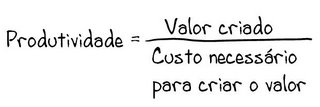
Competir por fazer subir os preços unitários em vez de concentrar tudo na redução dos custos unitários.
Apostar no numerador para aumentar a produtividade.
Não ter a veleidade de servir tudo a todos.
Não resisto a recordar três cromos:
- Zé Reis (cromo nº 12)
- André Macedo (cromo nº 6)
- Daniel Bessa (cromo nº 5)
"efficiency always leads to commoditization. Not sometimes. All the time."
"No doubt, when they think about how they can provide a better service, they come up with all kinds of great ideas, but none of them are experiences. Better service is efficiency, and efficiency always leads to commoditization. Not sometimes. All the time.Concordo em absoluto com a mensagem sublinhada. E ainda acrescento uma citação da coluna de citações que vai ao encontro da mensagem:
.
Experience has nothing to do with the offering.
.
Imagine if Canada Post had been able to see the writing on the wall, and instead of trying to only get better at providing better services, like drive-through windows, they instead converted most of their postal offices into coffee shops.
.
What was stopping Canada Post from becoming something more like Starbucks? I mean, aside from imagination?"
"When something is commoditized, an adjacent market becomes valuable"Trecho retirado de "Postcards from the Edge (of Oblivion)"
quarta-feira, abril 05, 2017
Curiosidade do dia
Ministro das Finanças a enganar-nos com a verdade:
Aumenta os salários e, por milagre a despesa com pessoal baixa? Vai ser uma corrida contra o tempo para haver eleições antecipadas antes que a realidade os comprometa.
Trechos retirados de "Centeno desconhece dados da UTAO: despesas com pessoal caem"
"O ministro das Finanças disse esta quarta-feira desconhecer o alerta da Unidade Técnica de Apoio Orçamental (UTAO) acerca do aumento das despesas com pessoal nas Administrações Públicas,Há tempos previ esta jogada:
...
“No conjunto das administrações públicas, as despesas com pessoal caem. Na execução orçamental de 2017, com dados conhecidos, são estes os números que lhe estou a referir” que aparecem, sublinhou.
.
“Não me parece que haja nenhuma dúvida sobre essa matéria”, completou o ministro, repetindo: “Há uma queda com as despesas com pessoal”."
o truque de chutar o subsídio de Natal para o fim do ano? pic.twitter.com/gVNhTDEwc5— Carlos P da Cruz (@ccz1) March 12, 2017
Aumenta os salários e, por milagre a despesa com pessoal baixa? Vai ser uma corrida contra o tempo para haver eleições antecipadas antes que a realidade os comprometa.
Trechos retirados de "Centeno desconhece dados da UTAO: despesas com pessoal caem"
Subscrever:
Mensagens (Atom)
%2006.21.jpeg)