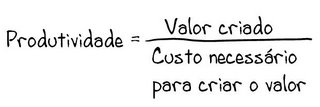
Em processo de mudança de um paradigma da minha actividade profissional baseado em Estarreja para um novo baseado na zona do Porto-Gaia, procuro eventuais interessados em parceria para aluguer conjunto de espaço que possa funcionar como escritório para ambas as partes.
Interessados?
sexta-feira, fevereiro 03, 2017

Que raio de sistema de gestão...
"You need a progressive segmentation! One-size-fits-all approaches are a waste of time. They mean that you overprice people who don't want to pay for your products and services and that you undercharge people who are deriving considerable value from what you do. You don't know the difference, and that is wasteful and costly. Having a segmentation built around geography and size is not much better, because these distinctions don't reveal much from a value perspective. You need end-user, needs-based segmentation."Recordar:
- "É o que te chateia, é o que te cria desconforto no trabalho"
- Intercom on Jobs-to-be-Done (parte IV)
- Intercom on Jobs-to-be-Done (parte III)
- JTBD e estratégia
- Intercom on Jobs-to-be-Done (parte I)
Matéria-prima para reler durante viagem de comboio, para preparar sessão de kickoff de um novo projecto de transição ISO 9001:2015.
A transição ISO 9001:2015 na sua empresa não abordou o tema dos clientes-alvo ou do JTBD, ou da segmentação? Não? Que raio de sistema de gestão é que a sua empresa tem?
Trechos retirados de "Dollarizing Differentiation Value: A Practical Guide for the Quantification and the Capture of Customer Value" de Stephan M. Liozu.
Uma novela sobre Mongo (parte XIX)
Parte I, parte II, parte III, parte IV, parte V, parte VI, parte VII, parte VIII, parte IX, parte X, parte XI, parte XII, parte XIII, parte XIV, parte XV, parte XVI, XVII e XVIII.
Um tema super-fascinante é aquele que há anos aqui no blogue designamos por "é meter código nisso":
"Product = computer Once technology is so low cost that it’s disposable, it’s only natural for it to appear in disposable everyday products that, when they get thrown in the bin, the technology inside them goes in the trash too.Dois exemplos entre vários que o livro refere são:
...
Smart computing on everyday devices will be as common as barcodes are now because barcodes will be replaced by these devices. But they will be more common, because these sensors will appear in products and places the barcode never infiltrated. At this point we’ll live in a world where the computer and the everyday product merge. It’s even foreseeable to have disposable screens on the backs of cereal packets. Packaged goods will equal computers."
"In the bathroom. I wake up and I brush my teeth. My new Oral-B toothbrush has a sensor in it — remember that products are computers now so I make sure that I brush my teeth for the required two minutes as recommended by Oral-B. But why would I do that? Because my dental plan gives me a 20 per cent discount, which is $300 a year if I do this in virtual currency. This is awesome for me because I get money and good oral hygiene. And my dental plan provider is happy because I’m a good customer due to my reduced medical risk. Oral-B are happy because I use my toothbrush more often and need a new one sooner. [Moi ici: Um ecossistema - pessoa, fornecedor da escova, companhia de seguros ou SNS] The sensor only works for three months (which is the recommended life of a manual toothbrush) so they get increased purchase frequency."E:
"Health and fitness. It’s lunch time and I want to make sure I go for a run with my new geo-tracker-installed running shoes. I do this because I only get a new pair for free twice a year from my health insurance provider if I jog for 10 minutes at least three times a week. My health-insurance provider loves me for this because the biggest killer of middle-aged men such as me is cardiovascular disease. Every time I exercise, I’m reducing my risk to them. They’ve worked out an algorithm that calculates the reduced insurance payout per customer on calories burned and kilometres moved and the dollar cost of that reduction. I get free shoes (paid for by my health insurer), the sports shoe manufacturer sells more product and the insurance provider reduces its risk. Win, win, win."[Moi ici: Outro ecossistema]
Acerca da Educação em Mongo
Ontem o @walternatez no Twitter remeteu-me para este artigo "Why Apprenticeships Are Taking Off".

Uma feliz coincidência com a leitura matinal de "Mass Customization and Personalization in Education and Training" e em linha com o que costumo escrever acerca do futuro da escola em Mongo. Voltaremos a modelos do século XIX onde os empregadores financiarão a formação dos seus trabalhadores porque a formação em massa do século XX será cada vez mais incapaz de motivar e preparar gente para um mundo cada vez mais heterogéneo.

Uma feliz coincidência com a leitura matinal de "Mass Customization and Personalization in Education and Training" e em linha com o que costumo escrever acerca do futuro da escola em Mongo. Voltaremos a modelos do século XIX onde os empregadores financiarão a formação dos seus trabalhadores porque a formação em massa do século XX será cada vez mais incapaz de motivar e preparar gente para um mundo cada vez mais heterogéneo.
"“ … we transformed education into mass production at around the time we invented mass production of industrial goods. Perhaps at the time, it was sufficient to learn the three “Rs” in order to lead a useful life, perhaps it was just the mass number of people that had to pass through the educational mill. In any case, when we democratized learning, we lost something as well as gained quite a lot. … The problem is that we now require more than basics in order to function in society. The jobs are more intellectually challenging, and the terrain is shifting too rapidly. You won’t work in the same job for a lifetime almost no matter what you do. … We have the technologies to expedite individuality again. The real question is whether we can transform the teaching environment from factory work to tutoring. That is a complicated social and personal issue.”Quanto à falta de sex-appeal destes cursos, basta que mais estórias reais sejam divulgadas (como esta).
.
In the new paradigm, learning should be individualized, localized, and globalized with aims to create unlimited opportunities for students’ life long learning and for development of their contextualized multiple intelligence (CMI). Student is the centre of education. [Moi ici: Aqui sorrio ao recordar a faculdade que mudou o plano de cursos em 2015 e continua a não dar programação em Android, que é o que o mercado procura avidamente, para não deixar professores sem fazer nada. Por isso, continua a ensinar linguagens ultrapassadas] Students’ learning should be facilitated to meet their needs and personal characteristics, and develop their potentials particularly CMI in an optimal way. Students can be self- motivated and self- learning with appropriate guidance and facilitation, and learning is a self-actualizing, discovering, experiencing, and reflecting process."
"“There is a stigma with this in the United States,” Kobes says, “in part by past practices of taking poorer and minority kids out of school and making them go to vocational school.”
.
In Europe, apprenticeships are so widespread, they’re not seen as a lesser choice. In fact, the average age of someone entering an apprenticeship in Europe is 17, says Seleznow, compared with 28 in the United States."[Moi ici: Cá em Portugal é mais comum ouvir nos meios de comunicação social gente que está contra este modelo pois, supostamente, para eles o ideal é todos saírem da escola com o mesmo percurso escolar]
quinta-feira, fevereiro 02, 2017
Curiosidade do dia
Um cromo, "Mário Centeno: "Regresso às 35 horas não aumentou custos globais" com pessoal", com quem terá feito Matemáticas?
No entretanto: "Saúde reportou custo de 90 ME com 35 horas. Finanças apuram aumento de 19 ME"
Daí "Como fabricar um défice"
BTW, em Espanha os tótós precisam lá de um Centeno, "La reducción de jornada a 35 horas a los funcionarios de Andalucía y Castilla y León costaría 700 millones"
BTW2, recordar o que aqui se escreveu sobre os fragilistas: "Portugal pode estar em sarilhos em 2017"
No entretanto: "Saúde reportou custo de 90 ME com 35 horas. Finanças apuram aumento de 19 ME"
Daí "Como fabricar um défice"
BTW, em Espanha os tótós precisam lá de um Centeno, "La reducción de jornada a 35 horas a los funcionarios de Andalucía y Castilla y León costaría 700 millones"
BTW2, recordar o que aqui se escreveu sobre os fragilistas: "Portugal pode estar em sarilhos em 2017"
O passado não é tão imutável como parece
Descobri a conta de Kevin Dulle no Twitter (@IdeaFreak) onde encontrei esta imagem:


Talvez seja impossível mudar o passado e o que nos aconteceu.
No entanto, é sempre possível mudar a nossa interpretação sobre o que nos aconteceu. É sempre possível rever os acontecimentos e reinterpretá-los à luz do que entretanto aprendemos e vivemos.
Estou a lembrar-me, por exemplo, do funcionário que caiu no desemprego com o encerramento da fábrica que o empregava e que se viu obrigado a alargar a sua zona de conforto, sendo hoje empresário numa PME de sucesso. Estou a lembrar-me também da novata que caiu no desemprego para proteger o lugar dos mais antigos e que se transformou em empresária de sucesso.
"para fugir à erosão da competitividade"
Talvez a sua empresa possa precisar de um destes conselhos sobre alternativas estratégicas a seguir para fugir à erosão da competitividade:
" six specific strategies for breaking away and staying ahead of the pack, and I believe every business owner should implement at least one of these on a quarterly basis:Trechos retirados de "There's a Holy Grail of Long-Term Growth. Here's How to Achieve It"
...
1. Target customers poorly served by current offerings.
The new strategy here is to focus on unmet new customer needs, rather than enhancing the offering you have -- product, price, promotion, and place (4Ps).
.
Competitors generally attack you on the 4Ps, so you need to find new territory like a cat, rather than rely only on dogfight survival.
.
2. Focus on different performance attributes.
Another strategy is to find new performance attributes that relate to unmet consumer needs, and lead your message with these. This is called breakout positioning, rather than mimicking competitors.
...
3. Substantially change the what, where, and how.
This strategy is called breakaway positioning, since it is intended to redefine how consumers see the product, by borrowing features drawn from an entirely different product category.
...
4. Use disruptive technologies to alter the value chain.
This powerful strategy is often called the Blue Ocean strategy, meant to conjure up the image of uncharted open waters rather than bloody red oceans with sharks fighting.
...
5. Expand the market to new domains.
New domains would include attracting business customers as well as individuals, taking your online business into retail, and diving into verticals.
.
This strategy opens up new growth opportunities without the dogfight of taking territory away from existing competitors. It also forces you into new innovative thinking.
.
6. Plan to disrupt your own business regularly.
Before the inevitable dogfights have diminished your growth and profitability, and sapped your resources, rally the business with a new "big bang" disruptive initiative, like Apple's highly successful iPad disrupted their own personal computer offerings."
Os nossos campeões escondidos
Quase todos os dias somos surpreendidos por estórias de empresas anónimas portuguesas que dominam o seu métier. Ontem mais dois casos:
- Tintex (Portuguesa Tintex junta cortiça às suas malhas e vence prémio na Alemanha) (aposta na inovação)
- TSF (Do perfume ao nuclear. Inovar a metalomecânica) (aposta no serviço)
No caso da TSF sublinho:
"A empresa faz o que o cliente quer, não produz grandes séries e não tem produto próprio.
...
“Somos uma metalúrgica de precisão, fazemos as peças técnicas para as máquinas e equipamentos e, nalguns casos, até montamos as máquinas aqui. Depois a componente informática é acrescentada pelo fabricante”"[Moi ici: As empresas não são entidades matemáticas, as empresas são organismos vivos e plenos de idiossincrasias. Sem pôr em causa as decisões da empresa, ouso lamentar que não se concentre na vertente "é meter código nisso", aí é que vai estar o valor acrescentado e o potencial de crescimento. Estranho sim que a seguir fale em Indústria 4.0]
Mongo e a customização dos carros (parte II)
Parte I.
Este surto de automatização "Businesses Ordered More Robots Last Year Than Ever Before" tem duas leituras:

Este surto de automatização "Businesses Ordered More Robots Last Year Than Ever Before" tem duas leituras:
- Por um lado, o atraso americano a entrar nesta onda;
- Por outro, um sintoma da continuação da paixão americana pelo preço, (Ver "Para recordar..."), quando alemães e japoneses já estão noutra fase.

"North American businesses ordered 35,000 robots in 2016, a 10% increase from 2015, according to a report on Tuesday by trade organization Robotic Industries Association."
quarta-feira, fevereiro 01, 2017
Curiosidade do dia
"Os que querem resistir à transformação escondendo-se nas trincheiras das conquistas irreversíveis e dos proteccionismos desistem da História. A evolução das tecnologias e das economias implica que é na escala das redes empresariais globais que se decide a competitividade e o potencial de crescimento económico. Os que procuram na miragem do passado a água cristalina que lhes tire a sede ficam com a boca cheia de areia seca quando acaba a ilusão."Trecho que faz uma boa ligação com o capítulo 15 "System hacking: a great idea with a bad reputation" de "The Great Fragmentation : why the future of business is small" de Steve Sammartino.
"Just as we had industrial culture, we’re now entering a phase of digital hacker culture. The tools we live with, around and inside of, such as the smartphone, computers, digital networks, the internet knowledge bank — the internet operating system, if you will — all open us up to a world of hacking systems, a world in which we can embark upon redesigning how things are done to suit ourselves. The tools that everyone has access to are the same ones being used to hack old, outdated industrial systems. They create new possibilities where if the industry itself does not reconfigure to suit the new world, it will be done for them.Trecho inicial retirado de "A areia no fim da miragem"
...
An industry is a system that has been designed by the players of that industry. If there’s weakness in the system, the system will be hacked. The design, by definition, has to be for the maximisation of profits. It’s always been about benefiting the players within it. All systems change over time. Their structure is modified and the architecture renewed. We’re currently going through a radical
redesign of the industry system. It’s during these times that getting hacked has its highest probability. And we can add to that fact that others from outside the industry are most likely to be the ones doing the hacking.
Para reflexão
Muito sumo para alimentar uma reflexão em "Think Amazon Has The Lowest Price? This Leather Bag Is 49% Less At Burberry":
"Looking for the best deals on that hot “it” purse or that tony musk fragrance? Then you might want to skip Amazon.Acho particularmente interessante a parte final:
.
It turns out department and specialty stores are cheaper than the online giant on a range of full-priced items, according to a study conducted by the International Council of Shopping Centers.
.
A comparison between the same 547 (nonsale) apparel, accessory and beauty products at 124 department and specialty stores across the country, such as Bloomingdale’s, Macy’s and Sephora, revealed that on an item-to-item basis, department and specialty stores were up to 30% cheaper than the online juggernaut."
"“I strongly believe that people buy from Amazon mostly because of non-price reasons — the ease of shopping via the website, the selection, the reliability of shipping, the speed of shipping, and the peace of mind that returning is very easy,”"
"Because for them, your approach is a bad idea"

Para montar o cenário recordo:
- Não há almoços grátis: Há que optar (Julho de 2008)
- The Most Important Orders are... (Agosto de 2008)
- Justin Bieber e o preço da diferença (Novembro de 2010)
- Será maldade? (Maio de 2012)
- Aprender a ser mau (Agosto de 2012)
- Biever, Cyrus, IKEA ... e a sua empresa? (Outubro de 2013)
- Assim, talvez ter inimigos entre os clientes ou ex-clientes seja bom sinal (Maio de 2015)
- Não esquecer os "mas" (Setembro de 2015)
- "Because if nobody hates it, nobody loves it" (Novembro de 2016)
É importante fazer escolhas e quanto mais dolorosas melhor.
Assim, faz sentido considerar este conselho:
"Competition is a fact of life in startup land. A differentiated position in the market is vital. Good competitive positioning communicates to the world the set of assumptions one has to believe to envision your success.Trechos retirados de "How to stand out from your competition"
...
Too often do we find competition framed in the context of better/faster/cheaper. ... It fits a limited number of businesses that sell a commodity product.
...
My advice is to ignore better/faster/cheaper, and instead focus on a differentiator that your competitor would agree with. This is a subtle, but powerful move. If you get it right, your competition will actually reinforce your positioning. Why? Because for them, your approach is a bad idea. [Moi ici: E vice-versa] They love telling customers why you’re not really focused on the same thing they do. By trivializing what you do, they’re inadvertently spreading your gospel."
Acerca do futuro da impressão 3D (parte II)
Parte I.

"we exemplarily constructed four extreme scenarios by selecting the two projections which showed the lowest level of consensus among the experts (both have an interquartile range of 4.0): the impact of additive manufacturing on firm's business models (Projection 8) and on consumer distribution channels (Projection 12). We built two development continuums, spanning between the trajectories expressed by these two projections. Fig. 6 illustrates the scenario axes and resulting scenarios. The qualitative expert comments helped us characterize the resulting scenarios in more detail.

The horizontal axis derives from Projection 8: For those experts who agree on it, additive manufacturing can be regarded as just another production technology requiring novel knowledge and skills, but mainly improving the operational excellence of a company. While some operations may change drastically, the operating model of the company will remain the same. For those rejecting this projection, however, established business models will be disrupted by additive manufacturing, demanding incumbents to make radical changes.
...
The vertical axis builds on Projection 12, which covers one of the most frequently debated implications of additive manufacturing. The experts believing in this projection foresee a strong change in consumer behavior: Instead of acquiring physical products, consumers will utilize online databases to download product designs for self-printing, either purchasing the file (similar to downloading a music file in an online music store) or using a sharing model with open-source designs. Experts rejecting this projection, however, expect that also in 2030, products produced via additive manufacturing will be purchased as physical objects via established online or offline channels.
...
Combining these two axes, we derive four possible scenarios. The extreme Scenario 1 combines the exploitation model with a new distribution model. Here, a company uses the efficiency of selling online files instead of exporting products to test new foreign markets, but also to cover niches of demand in established regions. Once a market is established, however, the products will be sold via a conventional business model (moving to Scenario 3). Scenario 2 combines the two extreme positions of an exploration strategy with a distribution model via online file-sharing. In this model, the business model of the company shifts fundamentally. A former manufacturer becomes a pure “designer” (providing the digital print files only). The core job of the company here is to guarantee the “3D printability” of the files. For its revenue model, it has to utilize new forms of intellectual property protection to allow for value capture.[Moi ici: E qual a vantagem de ser empresa?]
.
Scenario 3 is the most conservative setup where additive manufacturing is mainly used to support an established business. The case of spare parts, as discussed before, can be placed here. Another option is to utilize additive manufacturing for the manufacture of niche products which are not economically feasible with conventional manufacturing models. Finally, Scenario 4 builds on the idea of mass customization, i.e. providing an individual product for every consumer, but with mass production efficiency. The business model of the company, hence, shifts drastically. Instead of forecasting product demand and producing it on stock, all operational activities are purely reactive, staring with the individual demand of each single customer."
Pessoalmente sinto-me atraído por um modelo que se assemelhe aos alfaiates e modistas do passado. "Qualquer pessoa" podia fazer um vestido/fato em casa. No entanto, as pessoas recorriam a um alfaiate/modista onde tinham oportunidade de conjugar (co-criar) o seu gosto, as suas dimensões, com a expertise d@ técnic@.
Um exemplo de polarização de mercados
Um exemplo daquilo a que se chama a polarização do mercado. Clientes underserved e overserved em desenvolvimento simultâneo num mesmo mercado:
Trechos retirados de "Why You’re Paying So Much to Exercise"
"A growing segment of the U.S. population is making a significant sacrifice for physical fitness, and not just in sore muscles and pre-dawn wake-ups. More and more people are paying hundreds of dollars a month, or thousands a year, for personal workouts, special classes, and ever more luxurious gyms.Empresas com futuro escolhem o seu segmento e não tentam ser tudo para todos.
...
By contrast, the average American spends a minuscule amount on getting in shape. Almost one-fifth of Americans are health club members, and the average U.S. club dues are $54 a month, or 1.2 percent of median household income, according to the latest data from the International Health, Racquet & Sportsclub Association, or Ihrsa, the fitness industry trade group.
...
While midmarket clubs barely gained members, the number of budget club members grew 69 percent in 2015 alone, Ihrsa estimated last year. Much of this growth is driven by franchising, a trend that has brought outside money to the fitness industry."
Trechos retirados de "Why You’re Paying So Much to Exercise"
terça-feira, janeiro 31, 2017
Curiosidade do dia
Interessante este decoupling revelador. Por um lado, "Confiança dos consumidores no nível mais elevado desde 2000". Por outro lado:


Acerca das "electronic cottage industries"
Ao ler "These Fashion Startups Offer The Prestige Of "Made In Italy" Without Inflated Prices" pensei seriamente numa pergunta que fiz a um empresário do calçado acerca de um ano.
- E se os seus trabalhadores mais exímios começassem a trabalhar em casa por conta própria fazendo sapatos topo de gama?
A pergunta foi rapidamente chutada para canto:
- Não têm as máquinas, não têm os contactos.
OK. Agora leiam o artigo. Não me custa nada pensar num contacto destes a chegar e a propor uma cooperativa de operários, a financiar a compra de máquinas não industriais, a financiar a compra da matéria-prima.
A fábrica deste texto produzirá 300/400 pares por dia mas umoperário artesão destes se fizer por mês 40 a 50 pares por mês talvez ganhe mais do que como operário.
Esta tendência insere-se naquilo a que designo por Mongo (Estranhistão), um voltar aos sistemas dinâmicos pré-revolução industrial agora que a internet matou a geografia e a tecnologia permite séries muito pequenas de forma relativamente económica.
Como não recuar ao princípio dos anos 80 do século XX e a Alvin Toffler e às suas "electronic cottage industries".
- E se os seus trabalhadores mais exímios começassem a trabalhar em casa por conta própria fazendo sapatos topo de gama?
A pergunta foi rapidamente chutada para canto:
- Não têm as máquinas, não têm os contactos.
OK. Agora leiam o artigo. Não me custa nada pensar num contacto destes a chegar e a propor uma cooperativa de operários, a financiar a compra de máquinas não industriais, a financiar a compra da matéria-prima.
A fábrica deste texto produzirá 300/400 pares por dia mas um
Esta tendência insere-se naquilo a que designo por Mongo (Estranhistão), um voltar aos sistemas dinâmicos pré-revolução industrial agora que a internet matou a geografia e a tecnologia permite séries muito pequenas de forma relativamente económica.
Como não recuar ao princípio dos anos 80 do século XX e a Alvin Toffler e às suas "electronic cottage industries".
Uma novela sobre Mongo (parte XVIII)
Parte I, parte II, parte III, parte IV, parte V, parte VI, parte VII, parte VIII, parte IX, parte X, parte XI, parte XII, parte XIII, parte XIV, parte XV, parte XVI, e XVII.
Os trechos que se seguem permitem enquadrar a importância da competição feroz pelos assistentes virtuais "We put Siri, Alexa, Google Assistant, and Cortana through a marathon of tests to see who's winning the virtual assistant race — here's what we found":
Os trechos que se seguem permitem enquadrar a importância da competição feroz pelos assistentes virtuais "We put Siri, Alexa, Google Assistant, and Cortana through a marathon of tests to see who's winning the virtual assistant race — here's what we found":
"Our connected technology needs to split into smaller fragments to provide a more independent function, just as our industrial gadgets did. The fragmented nature of the web of things will enable technology to get on with its job of augmentation without needing our attention. It will be a welcome relief and will make technology more human than it currently is. Maybe our ears will become the killer app (for humans), instead of our hands and eyes, as in the movie Her. In this movie the interactions are largely verbal and without many screens. Screens are only present when needed via a head-up display or holographic image. The screens themselves as a form of hardware are no longer. For the web of things to flip to a service rather than a burden it needs to be more like the movie Her and less like the movie Minority Report. It needs to be the bellwether for screen redundancy. The next stage for the ‘thingternet’ is for it to become invisible. It has to be more like electricity, water and gas are in our homes, in business and in modern civilised geographies in general. Companies that enable and promote this shift will be the biggest beneficiaries of the third phase of the web. It’s early days and the prize is big."
Acerca do futuro da impressão 3D (parte I)
Uma lista de tendências para 2030 prevista por experts acerca da impressão 3D:

Quanto às mais prováveis:

Trechos retirados de "Predicting the future of additive manufacturing: A Delphi study on economic and societal implications of 3D printing for 2030"

Quanto às mais prováveis:

"The scenario cluster for the most probable future contains those projections evaluated by the expert panel with the highest probability of occurrence in 2030 and a sufficient amount of certainty between the expert evaluations. For a narrow version of the most probable scenario we took those projections (5, 14, 16, and 17) showing both a high degree of certainty among experts' evaluations (three projectionswith interquartile range larger than 2.0, and onewith 2.5) and having a sufficient probability of occurrence (larger than 55%). If looking at a broader scenario, Projections 9 and 12 can also be included, which show a relatively high estimated probability of occurrence, but their estimations are fraught with uncertainty (interquartile range of 3.0 and 4.0, respectively)."Continua.
Trechos retirados de "Predicting the future of additive manufacturing: A Delphi study on economic and societal implications of 3D printing for 2030"
Alterar a oferta (parte V)
Parte IV, parte III e parte II.
Por um lado este texto acerca do retalho em Espanha "Consumo: como as lojas de moda sofreram com a crise". Por outro lado, este sobre o retalho nos Estados Unidos "The Nation's Biggest Retailers Face An Inconvenient Truth: An Imperiled Profit Model".
Se calhar isto não é por causa de nada de conjuntural mas sim por algo de estrutural: o desmoronar de um modelo de negócio.
Clientes a mudar, ofertas a mudarem, canais a mudarem, ... cadeia de fabrico a mudar.
Por um lado este texto acerca do retalho em Espanha "Consumo: como as lojas de moda sofreram com a crise". Por outro lado, este sobre o retalho nos Estados Unidos "The Nation's Biggest Retailers Face An Inconvenient Truth: An Imperiled Profit Model".
Se calhar isto não é por causa de nada de conjuntural mas sim por algo de estrutural: o desmoronar de um modelo de negócio.
Clientes a mudar, ofertas a mudarem, canais a mudarem, ... cadeia de fabrico a mudar.
segunda-feira, janeiro 30, 2017
Curiosidade do dia
Recordar esta outra Curiosidade do dia e depois ler "Valor da exportação de medicamentos duplicou esta década".
E meter na cabeça que os macacos não voam ponto.
macacos trepam às árvores.
E meter na cabeça que os macacos não voam ponto.
macacos trepam às árvores.
Subscrever:
Mensagens (Atom)
%2006.21.jpeg)