Parte I e parte II.
.
Terminei a leitura da tese "On Experiences as Economic Offerings" de Susanne H. G. Poulsson e, recomendo o seu estudo a quem quiser desenvolver o marketing de serviços, sobretudo em sectores não transaccionáveis. Por exemplo, promover um parque de campismo, um ginásio, um evento desportivo ou musical, uma feira ou uma festa religiosa.
quinta-feira, setembro 11, 2014

quarta-feira, setembro 10, 2014
Curiosidade do dia

Sei que a foto ficou desfocada com a ampliação. No entanto, não podia deixar passar este exemplo de simbiose, com uma Bubulcus ibis (garça-boieira) encavalitada no dorso de uma vaca prestando serviço de limpeza de insectos.
.
Bioria em Salreu.
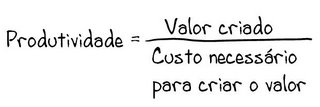
Acerca da produtividade
Escrito para pessoas, julgo que o mesmo se aplica às empresas:
.
Encontramos algum padrão que possa ser usado para aumentar esse nível de desempenho?
.
Trecho retirado de "A Secret Ingredient in the Recipe for Productivity?"
"So what is it about productive people that separates them from the bumbling, distracted masses? A lot of it has to do with self-awareness and recognition of one’s own behavior.Quando é que a empresa tem níveis de desempenho superiores? Com que gente? Com que produtos? Com que encomendas? Com que clientes?
.
As we know, recognizing your productivity patterns is one key step toward becoming more efficient. We may not be able to add hours to the day, but we can make the hours we do have count more by taking better advantage of when we’re at peak productive performance."
.
Encontramos algum padrão que possa ser usado para aumentar esse nível de desempenho?
.
Trecho retirado de "A Secret Ingredient in the Recipe for Productivity?"
Acerca do caminho para Mongo (parte VI)
Parte I, parte II, parte III, parte IV e parte V.
.
Este artigo "Good Eggs Raises $21 Million From Index Ventures To Deliver The Farmer’s Market To Your Door" é bom para ilustrar o capítulo seguinte do relatório da Deloitte que andamos a rever aqui. O último capítulo era muito claro acerca de Mongo e da consequente fragmentação que vai ocorrer em muitos sectores.
.
E como é que os produtores fragmentados e tribos de clientes podem comunicar entre si, para co-produzir, co-criar, trocar?
.
Através de plataformas!!!
Uma especialização modelo aqui abordado.
Continua.
.
Este artigo "Good Eggs Raises $21 Million From Index Ventures To Deliver The Farmer’s Market To Your Door" é bom para ilustrar o capítulo seguinte do relatório da Deloitte que andamos a rever aqui. O último capítulo era muito claro acerca de Mongo e da consequente fragmentação que vai ocorrer em muitos sectores.
.
E como é que os produtores fragmentados e tribos de clientes podem comunicar entre si, para co-produzir, co-criar, trocar?
.
Através de plataformas!!!
"Organic food delivery startup Good Eggs wants to change the way people eat, making it easier for customers to buy organic foods produced by independent farmers and vendors nearby.
...
It offers up a marketplace to enable customers to buy from nearby farms and vendors, but then handles all the logistics associated with packaging up their orders and handling delivery.
...
For vendors, the platform provides a way for farms to find new customers, creating new demand for their goods. Rather than going through the hassle of packing up a truck and taking it to a farmer’s market, where a vendor never knows what they will sell, Good Eggs tells them exactly what customers want."
Uma especialização modelo aqui abordado.
Continua.
Tornar a competição imperfeita, alterando as regras
Para um antigo atleta federado e antigo aficionado das provas de atletismo internacional, para alguém que ainda viu Dick Fosbury competir e, lida com os desafios competitivos das PMEs no dia-a-dia, este artigo "The Innovator’s Question: What Would Fosbury Do?" está muito bem esgalhado:

Como David ajoelhado, naquele momento em que percebeu que a espada, elmo e armadura de Saúl de nada lhe valeriam, e começou a escolher os seixos do rio, porque já se tinha libertado das regras de combate que ainda aprisionavam os outros.

"Fosbury’s breakthrough took his sport to a new level. He did it not by working harder or developing bigger muscles than his competitors, but by recognizing that a convention of his sport was not a rule.Quantas regras, que só existem na nossa cabeça, nos impedem de ir mais além, nos impedem de abordar o desafio do mercado de uma forma diferente e, mais vantajosa para a nossa organização?
.
The same pattern is present in breakthrough innovations in business. Dramatic progress in both macro and micro environments happens when players break rules that aren’t actually rules – in other words, when they rethink assumptions. [Moi ici: Aquele momento especial em que o rato consegue tirar o labirinto que está dentro de si]
...
“In most real life situations the pieces are not given, we just assume they are there. We assume certain perceptions, certain concepts and certain boundaries.
...
We who’ve gotten far by playing by the rules or even writing our own as entrepreneurs have an easy time carving our assumptions about our businesses into stone. We become increasingly entrenched in “this is what matters” and “that’s the way it’s done” the longer we invest.
...
Fosbury recognized that there was no rule in his sport other than “clear the bar” and “jump off of one foot.” He could run from any angle, jump from either foot, twist and flail and land however he wanted. But his peers assumed that the direct approach was the “right” approach, and therefore only made incremental improvement."
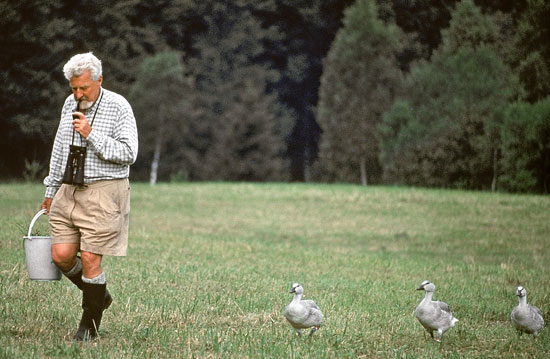
Como David ajoelhado, naquele momento em que percebeu que a espada, elmo e armadura de Saúl de nada lhe valeriam, e começou a escolher os seixos do rio, porque já se tinha libertado das regras de combate que ainda aprisionavam os outros.
E os grandes ficarão cada vez mais grandes... Oh, wait!!!
"Under Armour prosigue con su ascenso en el podio del negocio de la moda deportiva. La compañía estadounidense ha arrebatado a Adidas el segundo puesto del ránking de marcas de moda deportiva en Estados Unidos por volumen de negocio."Trecho retirado de "Under Armour le ‘roba’ a Adidas la plata del negocio de la moda deportiva en EEUU"
.
Continua.
terça-feira, setembro 09, 2014
Curiosidade do dia
Acabo de ouvir na rádio Sérgio Monteiro:
.
Aprender com os erros começa por se perceberem as causas que geraram a falha, depois, desenvolver as acções que eliminem as causas.
.
O que é que as PMEs preguiçosas fazem quando os erros ocorrem? Em vez de actuarem sobre as causas, actuam sobre os sintomas. Por exemplo, aumentam o controlo da qualidade, e deixam o sistema continuar a gerar os erros.
.
O que é que Sérgio Monteiro disse na rádio que a TAP vai fazer?
Melhorar o planeamento?
Não, manter pelo menos dois aviões de reserva para fazer face aos erros...
.
Quanto custa manter dois aviões de reserva por dia?
E isto é aprender com os erros?
"O secretário de Estado das Infraestruturas, Sérgio Monteiro, afirmou hoje que as perturbações que afetaram a TAP em junho e julho estão sanadas, considerando que a companhia aprendeu com os erros deste verão, que não se podem repetir.Aprender com os erros, isso é sempre bom.
.
"Pareceu-nos uma boa atitude: aprender com os erros que podem existir do ponto de vista do planeamento operacional e fazer tudo para que no próximo ano exista uma resposta diferente da que existiu este ano", considerou Sérgio Monteiro, no final de uma reunião com o presidente da companhia, Fernando Pinto."
.
Aprender com os erros começa por se perceberem as causas que geraram a falha, depois, desenvolver as acções que eliminem as causas.
.
O que é que as PMEs preguiçosas fazem quando os erros ocorrem? Em vez de actuarem sobre as causas, actuam sobre os sintomas. Por exemplo, aumentam o controlo da qualidade, e deixam o sistema continuar a gerar os erros.
.
O que é que Sérgio Monteiro disse na rádio que a TAP vai fazer?
Melhorar o planeamento?
Não, manter pelo menos dois aviões de reserva para fazer face aos erros...
.
Quanto custa manter dois aviões de reserva por dia?
E isto é aprender com os erros?
Mt 11, 25
Ao longo dos anos, aqui no blogue, temos apresentado uma versão da competitividade que não segue, necessariamente, a cartilha seguida por tanta gente conhecida neste país. Gente como: Ferraz da Costa; Vítor Bento; João Duque; Daniel Amaral; João Ferreira do Amaral; Teixeira dos Santos; ...
.
Como é que essa cartilha explica o crescimento das exportações portuguesas e do emprego nos sectores mais sujeitos à concorrência internacional nos últimos 4 anos?
.
Entretanto, neste relatório "The Shifting Economics of Global Manufacturing" da BCG, sinto-o todo permeado e contaminado até ao tutano por essa mesma cartilha em que o preço, ou custo, é a única variável relevante para conquistar clientes.
.
Por isso, sorri com gosto, ao encontrar esta figura:
 "Several leading manufacturing export economies didn't fit into our four categories because shifts in their cost structures didn't follow one of the distinct patterns. (See Exhibit 9.) ..."
.
Como é que essa cartilha explica o crescimento das exportações portuguesas e do emprego nos sectores mais sujeitos à concorrência internacional nos últimos 4 anos?
.
Entretanto, neste relatório "The Shifting Economics of Global Manufacturing" da BCG, sinto-o todo permeado e contaminado até ao tutano por essa mesma cartilha em que o preço, ou custo, é a única variável relevante para conquistar clientes.
.
Por isso, sorri com gosto, ao encontrar esta figura:
Interessante
"Large corporations with small boards (around nine to 10 directors) outperformed their peers on shareholder return by 8.5 percentage points, while firms with large boards (13 to 14) underperformed peers by 10.85 percentage points,"Trecho retirado de "Maybe Your First Layoffs Should Be Board Members"
Ecossistema, B2B e SDL
Esta tabela ajuda a perceber o léxico usado na SDL:
 E também relacionável com a temática dos ecossistemas da procura:

Trechos retirados de "Marketing solutions in accordance with the S-D logic: Co-creating value with customer network actors" publicado no Industrial Marketing Management em 2008.
"S-D logic moves the orientation of marketing from a ‘market to’ philosophy where customers are promoted to, targeted, and captured, to a ‘market with’ philosophy where the customer and supply chain partners are collaborators in the entire marketing process.Fica esta tabela final com informação relevante:
...
S-D logic also recognizes that customers as well as suppliers are resource integrators, consistent with the concept of cocreation of value. S-D logic not only brings the customer into the process of co-creation of value, but organization's partners throughout the value network as well. Consequently, S-D logic recognizes that each entity should collaborate with other entities and integrate resources with them.
...
If we want to completely carry out the program of S-D logic and translate it into B2B offering strategies, we must re-establish the balance to the customer's advantage: co-creation is carried out, in a many-to-many approach, between a supplier and his network in interaction with a customer and his network. From an S-D logic viewpoint, it's not only therefore about making an offering to the customer but also to some of the actors in his network thereby co-creating value with them and for them.
...
The cocreation of value with the customer network actors has been particularly identified as being the missing link in current B2B offering strategy approaches in terms of solutions."
Trechos retirados de "Marketing solutions in accordance with the S-D logic: Co-creating value with customer network actors" publicado no Industrial Marketing Management em 2008.
Acerca do caminho para Mongo (parte V)
Parte I, parte II, parte III e parte IV.
.
A pressão sobre as empresas e os indivíduos e o abaixamento das barreiras e a democratização da produção e comercialização, criam o caldo perfeito para o que se segue "Fragmentation: Staying niche, nimble, and small is the new goal for many". Por isso, é que durante as caminhadas de Agosto, enquanto lia o relatório pela primeira vez, não me cansava de brincar a dizer que estes tipos me tinham copiado o blogue:
.
A pressão sobre as empresas e os indivíduos e o abaixamento das barreiras e a democratização da produção e comercialização, criam o caldo perfeito para o que se segue "Fragmentation: Staying niche, nimble, and small is the new goal for many". Por isso, é que durante as caminhadas de Agosto, enquanto lia o relatório pela primeira vez, não me cansava de brincar a dizer que estes tipos me tinham copiado o blogue:
"The erosion of barriers to forming and pursuing a business venture will lead to increasing fragmentation in certain parts of the economy.
...
As barriers fall, many small yet viable players will emerge, with increasing influence on the economy
...
This proliferation of individual and small business ventures addressing highly differentiated industry and consumer needs will drive significant fragmentation in certain parts of the business landscape. Fragmentation (within a domain) is defined by the following characteristics:
• Each player within the domain has a small, addressable market and is focused on a specific niche
• Collectively, players address a diverse spectrum of customer and market needs
• Both players and niches are proliferating within the domain
• No single player has enough market share to influence the direction of the domain
long term
• A relatively modest level of investment is sufficient to enter and sustain position
• “Diseconomies of scale” are in play—it is more challenging for large players to stay in business
...
Fragmentation is likely to be most pronounced in the design, development, and
production of new products and services for specific markets.
...
As consumer demand for uniqueness or other specialized attributes causes product
fragmentation, another type of fragmentation will occur in the retail space, as retailers cater to specific consumer preferences with a targeted set of niche products.
...
They will increasingly offer targeted experiences to niche customer segments
...
the number of small investors could grow with the emergence of a different type of angel investor—one who, now that it is easier for individual investors to connect with individual makers, artists, or entrepreneurs, values his or her connection to a specific product or mission more than tenfold returns.
...
Fragmentation will be a permanent feature of the business landscape
...
Today’s consumers expect offerings that exactly fit their needs and lifestyle requirements. The good news is that digital technologies allow niche products to reach consumers. The bad news is that, given the fragmentation of the consumer base, it is harder to get an offering adopted by the mass market, earn market share, and generate large returns. Indeed, the whole idea of the “mass market” may become less relevant as niche market proliferate. Revenue opportunities may be limited to capturing a relevant niche segment instead of an entire market.
...
Increased competition and disruption are shortening product life cycles, reducing the total return for each product.
...
a decrease in consumer loyalty. Consumers are increasingly willing to switch between brands to find products that best address their needs.
...
Niche players that scale will have difficulty retaining creative talent, given the
increasing ability of talent to pursue other ventures.
...
As an organization scales, it often becomes focused on efficiency, tightly scripting processes and governance models and thus limiting workers’ autonomy and creativity.
...
fragmentation will be a sustained and even desirable outcome in the new business landscape."
segunda-feira, setembro 08, 2014
Curiosidade do dia
Lembrem-se que estes caramelos, "O euro não é sustentável. Se as elites dirigentes não perceberem isso serão cilindradas", e outros como eles, um dia vão conseguir o que pretendem.
.
De um dia para o outro o seu dinheiro e as suas poupanças vão perder 30 a 50% do seu valor.
.
E você, ainda deposita o seu dinheiro num banco em Portugal?
ADENDA das 18:51
Saindo do euro, com a perda de valor da nova moeda, ocorrerá um fenómeno de hiperinflação (basta imaginar o aumento do preço da gasolina, por exemplo).
.
O que é que os caramelos propõem:
Pois, 52,8% dos que declaram IRS não pagam o imposto porque recebem muito pouco e o governo, para compensar cobraria menos. Isto é tão LOL!!!
.
De um dia para o outro o seu dinheiro e as suas poupanças vão perder 30 a 50% do seu valor.
.
E você, ainda deposita o seu dinheiro num banco em Portugal?
ADENDA das 18:51
Saindo do euro, com a perda de valor da nova moeda, ocorrerá um fenómeno de hiperinflação (basta imaginar o aumento do preço da gasolina, por exemplo).
.
O que é que os caramelos propõem:
"Redução do IRS compensa inflaçãoA proposta dos autores é que, quando se começarem a fazer sentir os efeitos da inflação, que normalmente acontece poucos meses depois, "deve haver uma compensação através do IRS"..
.
"Especialmente nos escalões mais baixos de modo a compensar essa perda de salário real", defende Ferreira do Amaral."
Pois, 52,8% dos que declaram IRS não pagam o imposto porque recebem muito pouco e o governo, para compensar cobraria menos. Isto é tão LOL!!!
"It never ends"
Quando uma empresa usa o low-cost como estratégia para competir no mercado internacional, está sempre sujeita a que:
Trecho retirado de "The Human Toll of Offshoring"
"“What I do worry about every year is the future of the factory,” [Moi ici: Diz o director de uma fábrica na Indonésia] he tells her. “I worry that someone somewhere else, somewhere cheaper, will start to make furniture, and that will be that for us.”Dá a necessidade de sair fora deste filme e optar por outra estratégia
.
It never ends."
Trecho retirado de "The Human Toll of Offshoring"
Acerca do caminho para Mongo (parte IV)
Parte I, parte II e parte III.
.
O segundo capítulo do relatório "The hero’s journey through the landscape of the future", intitula-se "Pressures on individuals".
.
As medidas de curto prazo para aumentar a eficiência das empresas (ver parte III) levaram a:
.
O segundo capítulo do relatório "The hero’s journey through the landscape of the future", intitula-se "Pressures on individuals".
.
As medidas de curto prazo para aumentar a eficiência das empresas (ver parte III) levaram a:
"have eliminated many of the benefits of working for a large organization and undermined the financial and emotional security of many workers. ...Workers no longer have the historical safety nets they once did, such as life-long employment and pension plans....No one - not even top talent - is safe.Without the benefits of stability and security once associated with employment by a large, established company, many individuals will find themselves pursuing alternative career paths, not always by choice."No entanto, esta pressão sobre as empresas e os indivíduos, e "Eroding barriers: Lowered barriers to entry, commercialization, and learning" (terceiro capítulo) cria oportunidades novas.
"The somewhat surprising effect has been to tap into workers’ latent desire for autonomy. In the past, workers sacrificed autonomy for the security and compensation associated with working for a large enterprise.
...
Many are driven by a desire for autonomy, flexibility, or alignment with personal values. Talented, high-performing workers are taking their increased negotiating power to pursue independent ventures or to work at companies where work is more tailored to individual priorities, values, and interests.
...
In parallel, individuals are also beginning to move away from seeking status and meaning through consumption ... many are seeking status and meaning through the ability to create or participate.
...
The good news is that the same technological and political forces causing increased pressures and challenging traditional structures and practices have also created the tools and opportunities for participation, commercialization, and learning.
...
Times have changed. Today the barriers between the inventor and the market are diminishing, and individuals can own the full lifecycle of their products. Individuals are also finding that as barriers erode they have the ability to participate in numerous communities, unlimited by geography, where they can build knowledge, develop skills, and find collaborators.
...
The means of production are becoming more accessible to individuals and smaller companies.
...
Tools and physical infrastructure are becoming increasingly accessible. Liberalization in certain areas of public policy is reducing some of the regulatory barriers that have hindered the creation of new businesses.
...
it is becoming easier for individuals to independently experiment with and prototype ideas, leading to breakthroughs in physical product design and even medicine. As technology continues to become better and cheaper, more individuals will be able to create small but sustainable economic entities. Even for technologies that have not become affordable, the emerging “sharing economy” is helping to make them accessible.
...
The confluence of cheap and accessible technology, shareable tools and infrastructure, and supportive public policy has made it more attractive for individuals to leave large organizations and create their own fragmented businesses.
...
With the path to market entry more accessible, technology has again been instrumental to lowering barriers to commercialization, largely through online platforms that connect individuals and organizations to the resources they seek."
Parece uma repetição de conceitos e sintomas que ao longo dos anos temos aqui relatado no blogue sobre o advento de Mongo.
.
Continua.
.
Continua.
Acerca dos ecossistemas
Quem acompanhar este blogue sabe o quanto aprecio e uso o conceito de ecossistema da procura, um conceito que descobri no trabalho prático do terreno em Agosto de 2004 com resultados impressionantes.
Um conceito que pode resultar na capacidade de mudar um mercado, mudar um sector, mudar as regras de concorrência em favor de quem não tendo mais dinheiro tem algo mais e, pode orquestrar uma relação simbiótica entre vários participantes.
.
Acredito que falham completamente quando tentam explicar porque é que os ecossistemas estão na moda. No entanto, sublinhei uma série de notas desta brochura "The new age of ecosystems" que fazem sentido:"an ecosystem reflects much more than a network, and it differs fundamentally from a market.
...
the focus of innovative organizations is likely to shift in the near future from organization-centricity to one that is ecosystem-centric. An ecosystem can be thought of as a complex web of interdependent enterprises and relationships that creates and allocates business value.
Ecosystems comprise entities that operate out of orchestrated, mutual shared-interestA set of individuals or organizations who formally or informally operate together to produce something of greater value for the mutual benefit of the ecosystem as a whole...In a business context, an ecosystem is a complex web of interdependent enterprises and relationships aimed at creating and allocating business value. There is something mutual and multiplicative about business ecosystems — the whole is greater than the sum of the individual parts....Ecosystems comprise entities that operate out of mutual self-interest. They are made of sets of individuals who formally or informally operate together to produce something of greater value for the mutual benefit of the organization and the ecosystem as a whole. Ecosystems exist because participants can deliver more value within the ecosystem acting together.Mutuality reflects an enhanced level of coordination with formally or informally shared ideals, standards, or goals....Orchestration [Moi ici: Curioso usarem este termo, o mesmo que escolhi há uma série de anos, para designar o trabalho de quem desenha, ou toma consciência do ecossistema e começa a multiplicar o seu efeito fazendo batota] refers to the coordination, arrangement and management of complex environments. In the context of an ecosystem, orchestration refers to the formal or informal coordination of interactions or collaborations among participants within the ecosystem. Orchestration may be informal, through cultural mores and imperatives, or it may be formal through explicit rules or the presence of an actual orchestrator — an explicit entity that facilitates orchestration processes....By their nature and sustained existence, ecosystems can produce more value as a whole than the sum of the individual participants acting independently....To create value, organizations need to identify opportunities, develop competencies and leverage synergies. In identifying opportunities, organizations must understand how value is created in the ecosystem. They will need to identify and exploit pockets of potential value creation. And they must maintain flexibility in the role they adopt within the ecosystem, as well as the type of interactions they have with other ecosystem participants....Orchestration reflects the extent of an organization’s influence over others within an ecosystem, the formality of ecosystem interactions and the degree of enforceability and compliance."

A nova China dos Estados Unidos
Sintomas de uma doença já mencionada aqui no blogue várias vezes:
- "The United States Leads in Low-Wage Work and the Lowest Wages for Low-Wage Workers"
- "Friends mourn New Jersey woman who died napping in between one of three jobs"
Recordar "EUA um país de mão-de-obra barata"
domingo, setembro 07, 2014

Quanta da estagnação que a macroeconomia detecta...
Um título, com uma associação esquisita, "How Fujifilm Came to the Ebola Fight", despertou-me a curiosidade para a leitura.
.
O lead confirma e acicata ainda mais a curiosidade:
.
Comecei logo a pensar numa outra opção que a Fujifilm poderia ter seguido, a de pedir ao governo que a apoiasse, criando procura artificial de filmes... por exemplo, impedindo o uso de máquinas fotográficas digitais.
.
Depois, lembrei-me desta imagem de 1991:
 E deste texto. O texto até pode ser usado no debate sobre a deflação... pelo preço de um smartphone hoje, compramos algo que nos presta os mesmos serviços que todos os artigos da imagem e que hoje custariam mais de 5000 dólares.
.
E as fábricas que produziam todos estes items? Conseguiram mudar de vida?
.
Quanta da estagnação que a macroeconomia detecta resulta do que a dança da paisagem competitiva enrugada provoca:
.
O lead confirma e acicata ainda mais a curiosidade:
"Last Tuesday, Fujifilm announced the release of the X30, the latest in a line of high-end digital cameras, ... The Japanese company enjoyed a boost in its stock during the week, though the new camera might not have been the reason for the jump. The product release immediately followed another announcement, this one by the Japanese government, regarding an anti-influenza drug developed by Toyama Chemical, an obscure pharmaceutical company that Fujifilm had quietly acquired five years ago. Japan said that Fujifilm was offering up the drug, Favipiravir, as a potential stopgap in the fight against an outbreak of Ebola that has, according to the World Health Organization, killed nineteen hundred people in West Africa, and that Médecins Sans Frontières just called for a global military and civilian response to stop."A Fujifilm no sector farmacêutico, porquê?
"The reason a company known for developing film began developing pharmaceuticals is simple: that’s where the money is. Unlike its former rival Kodak, which filed for chapter-eleven bankruptcy in 2012, Fujifilm was nimble in reshaping its business to suit the age of the digital camera, allowing it to weather a decade, the aughts, in which its film business went from producing two-thirds of the company’s profits to virtually none of them."E a minha mente começa logo a derivar para os que se queixam da falta de procura como a razão de todos os males económicos do mundo.
.
Comecei logo a pensar numa outra opção que a Fujifilm poderia ter seguido, a de pedir ao governo que a apoiasse, criando procura artificial de filmes... por exemplo, impedindo o uso de máquinas fotográficas digitais.
.
Depois, lembrei-me desta imagem de 1991:

.
E as fábricas que produziam todos estes items? Conseguiram mudar de vida?
.
Quanta da estagnação que a macroeconomia detecta resulta do que a dança da paisagem competitiva enrugada provoca:
- falência de modelos de negócios?
- obsolescência acelerada de produtos?
- deslocalização prolongada?
"Nós fazemos as contas ao contrário"
"“Temos uma fábrica antiga, disfuncional, com máquinas velhas, num mercado megacompetitivo dominado por multinacionais, como a Caran d’Ache, a Staedtler, ou a Faber-Castell, cujo produto final é mais barato do que o preço que nós pagamos por madeira."
Durante a primeira década do século XXI trabalhei em muitos projectos com este cenário. Empresas incapazes de competir de igual para igual com os Golias do vómito industrial. Alternativa? Mudar de mercado, escolher nichos de valor acrescentado, fugir para o terreno onde Golias não quer ou não pode estar.
"Se à fábrica, que “devia ter sido arrasada”, e às máquinas antigas “de suposta baixa produtividade e que afinal são altamente versáteis”, se juntarem residências de artistas em zonas do complexo fabril e o “conhecimento que existe aqui há um século”, de trabalhadores com décadas de experiência — “como se faz um lápis ou uma mina? Quais as matérias-primas e os comportamentos dessas matérias?”, diz Vieira — “se cruzarmos esses conhecimentos com tudo aquilo que é conhecimento artístico e turismo industrial”, a Viarco percebeu que podia criar produtos que ainda não existiam, fazer diferente das multinacionais, e, assim, acrescentar valor."O trecho que se segue é tão familiar... quase diria que foi retirado deste blogue, a incapacidade dos crentes na folha de Excel, verdadeiros Muggles, Muggles mesmo, de vislumbrar a magia do valor dos intangíveis:
"“Isto é um delírio”, diz José Vieira. “Quando falamos com doutores que querem números e vivem números e vomitam números, isto [a Viarco] faz-lhes muita confusão: do ponto de vista de negócio faz sentido, do ponto de vista das regras do mercado não faz sentido nenhum. Isto ‘tem de’ ser altamente produtivo: mas se isto for altamente produtivo, deixa de ser altamente versátil. Se pensar apenas numa lógica da rentabilidade, há muitos projectos que vão morrer à nascença. A pergunta é sempre: quantos vão vender? Eles estão habituados a fazer contas: isto vai custar tanto a produzir. Nós fazemos as contas ao contrário: desenvolvemos uma ideia, produzimos um protótipo, pegamos no produto e chamamos os artistas para o experimentar. Acham que vale a pena? Quando pagavam por isto? Depois do IVA, do preço do retalhista, do distribuidor que vai querer 40 ou 50%, quanto fica para a empresa?[Moi ici: O trecho que se segue é simplesmente delicioso] E as margens passam de ser aquela coisa manhosa, pequenita, de corta-unhas, para coisas muito mais interessantes: porque é aí que entra o lápis como ferramenta, entra o design, entra a relação do artista com o produto e entram as questões emotivas. São coisas que não podemos contabilizar — quanto custa produzir isto com esta margem de lucro — porque são coisas que não podemos meter numa folha de Excel.”Trechos retirados de "O segredo de um negócio de família é ser cem por cento profissional"
.
O título foi tão mal escolhido... eu realçaria a paixão, a capacidade para ver para além da folha de cálculo, a agilidade. Falar em profissionais remete-me para agentes com a mentalidade de Spock... prisioneiros das folhas de cálculo, muito cumpridores das regras, mesmo quando o barco está a ir ao fundo continuam a tocar a música.
Produtividade socialista
"In 1999, when Chávez took office, PDVSA had 51,000 employees and produced 63 barrels of crude a day per employee. Fifteen years later, PDVSA had 140,000 employees, and produced 20 barrels of crude a day per employee, according to an Aug. 14 report by the France Press news agency."
Trecho retirado de "Venezuela Set To Import Oil"
Subscrever:
Comentários (Atom)
%2006.21.jpeg)