%2007.15.jpeg)
Awesome. I had never seen that. Scott Adams is a very smart man. https://t.co/rWBBaKyRL0
— Roger L. Martin (@RogerLMartin) June 17, 2025

Awesome. I had never seen that. Scott Adams is a very smart man. https://t.co/rWBBaKyRL0
— Roger L. Martin (@RogerLMartin) June 17, 2025
%2018.38.jpeg)
"We feel like misfits when we stand out from the crowd....the logic behind the herd behavior is different. No one is worried about fitting in. Rather, we suspect other people have noticed something dangerous that we missed. Sometimes, other peoples’ decisions reflect valuable information...how important it is to be in good company when you hope to achieve big goals and how harmful it can be to have peers who aren’t high achievers. A growing body of evidence suggests that the people you’ve spent time with have been shaping your behavior your whole life, often without your knowledge....we found that encouraging people to copy and paste one another’s best life hacks motivated both more exercise and better class preparation in adults who wanted to work out more and college students seeking to improve their grades, respectively....When we’re unsure of ourselves, a powerful way the people around us can help boost our capacity and confidence is by showing us what’s possible. Often, in fact, we’re more influenced by observation than by advice....These studies highlight that the closer we are to someone and the more their situation resembles our own, the more likely we are to be influenced by their behavior, even if the behavior is merely described rather than directly observed.* They also speak to the power of using norms as a tool of influence. Describing what’s typical can be an effective way to help large groups change their behaviors for the better."
%2014.18.jpeg)
"Ivar Giaever might not have won the Nobel Prize in Physics if a job recruiter at General Electric had known the difference between the educational grading systems of the United States and Norway. It was 1956, and he was applying for a position at the General Electric Research Laboratory in Schenectady, N.Y. The interviewer looked at his grades, from the Norwegian Institute of Technology in Trondheim, where Dr. Giaever (pronounced JAY-ver) had studied mechanical engineering, and was impressed: The young applicant had scored 4.0 marks in math and physics. The recruiter congratulated him.But what the recruiter didn't know was that in Norway, the best grade was a 1.0, not a 4.0, the top grade in American schools. In fact, a 4.0 in Norway was barely passing - something like a D on American report cards. In reality, his academic record in Norway had been anything but impressive.He did not want to be dishonest, Dr. Giaever would say in recounting the episode with some amusement over the years, but he also did not correct the interviewer. He got the job."
Em 1973 Ivar Giaever ganhou um Premio Nobel.
Trecho retirado do NYT do passado dia 10 de Julho.
%2013.38.jpeg)
"Daimler Truck said it expects to cut around 5,000 jobs in Germany over the next five years as it shifts production of Mercedes-Benz trucks to a more cost-effective country.The German truck maker said the decision is part of its previously announced European cost-saving plan of more than €1 billion, equivalent to $1.17 billion, with the job cuts likely to be made through natural attrition, expanded early retirement options and targeted severance packages."
%2012.59.jpeg)
"Planning is an unnatural process; it is much more fun to do something. And the nicest thing about not planning is that failure comes as a complete surprise rather than being preceded by a period of worry and depression."
A propósito de "Pensões em Portugal vão exigir 40% da receita fiscal e contributiva até 2050":
"Com a redução da população ativa associada ao envelhecimento e a perspetiva de estabilização na carga fiscal, Portugal estará, dentro de duas décadas e meia, no topo da lista dos países da União Europeia cujas finanças públicas vão enfrentar maior pressão com os custos de pensões, apenas atrás de Espanha, noticia o Jornal de Negócios (acesso pago).
De acordo com o mais recente relatório anual sobre fiscalidade da Comissão Europeia, o pagamento de pensões deverá consumir, em 2050, um pouco mais do que 40% da receita fiscal e contributiva do país, ou seja, quatro em cada dez euros recebidos pela Autoridade Tributária e Aduaneira (AT) e pela Segurança Social."

A propósito de "Symington: "A responsabilidade de resolver o problema dos excedentes no Douro não pode ser nossa"".
A família Symington, uma das mais influentes na produção de vinho do Porto, voltou a levantar a voz - desta vez com a serenidade racional (é um dos principais sentimentos que transpira do artigo) de quem olha para os números e não para as nostalgias. O diagnóstico é claro: o sistema que regulou o sector durante décadas está em colapso. Há um excesso estrutural de produção, a procura está em declínio, e insistir no modelo actual é alimentar uma ilusão insustentável.
Este alerta não é novo. Há mais de uma década que os Symington chamam a atenção para o desequilíbrio entre oferta e procura. No entanto, o sistema político e institucional tem preferido medidas paliativas e actuações de curto-prazo: apoio ao armazenamento, destilação de crise, incentivos que adiam mas não resolvem. E quanto mais se adia ... mais cresce a insustentabilidade.
A crítica não é feita de forma leviana. A empresa afirma com lucidez que não pode continuar a comprar vinho que não consegue vender — seria um suicídio empresarial. A responsabilidade de sustentar o sistema não pode recair sobre as empresas.
Neste contexto, leis como a do Terço, que obrigam à manutenção de elevados níveis de stock, revelam-se desadequadas face à nova realidade. A quebra do consumo global, particularmente de vinho tinto, afecta de forma brutal o modelo produtivo da região do Douro.
A proposta da Symington é dura, mas honesta: é preciso permitir o abandono parcial e voluntário de vinha, reestruturar a produção em torno das parcelas mais produtivas e rentáveis, e deixar cair o mito de que tudo pode continuar como antes.
É preferível enfrentar agora uma transição difícil do que assistir ao colapso inevitável de um sistema sustentado em negação. A perplexidade da família Symington perante a recusa dos decisores em aceitar esta realidade deveria ecoar com força no sector.
%2016.01.jpeg)
:) O que é um rico para a Autoridade Tributária? :)
— Pedro Brinca (@PMSBrinca) July 9, 2025
Debate no Choque de Ideias com o Ricardo Paes Mamede e Rui Alves Veloso. Podem ver o programa completo em: https://t.co/LlsE7vyzsG pic.twitter.com/N6l8UQWhUT
%2015.28.jpeg)
Mais um trecho interessante retirado de "The Science of Getting from Where You Are to Where You Want to Be" de Katy Milkman:
"It’s common to give out advice when we see someone struggling to achieve a goal. We often think guidance is just the thing they’re looking for, whether they ask for it or not....when it came to being more successful, people had plenty of good ideas for how to do it. Even underperforming salespeople, C students, unemployed job seekers, and spendthrifts struggling to save consistently offered smart strategies for improving their circumstances. Students made suggestions ranging from the mundane ("Turn off your phone when you're studying") to the creative ("Put candy at the bottom of a worksheet, and when you finish, you can eat it"). People with money problems advised "Don't pay with a credit card." Job seekers suggested keeping résumés up-to-date and carrying them at all times. Almost everyone knew what to do to overcome their problems; they just weren't doing it.Lauren began to suspect that this failure to act wasn't related to a lack of knowledge, but rather to self-doubt what the legendary Stanford psychologist Al Bandura has called "a lack of self-efficacy." Self-efficacy is a person's confidence in their ability to control their own behavior, motivation, and social circumstances. ... goal strivers are sometimes plagued by insecurity. In fact, a lack of self-efficacy can prevent us from setting goals in the first place....Research confirms the obvious: when we don't believe we have the capacity to change, we don't make as much progress changing....Too often, we assume that the obstacle to change in others is ignorance, and so we offer advice to mend that gap. But what if the problem isn’t ignorance but confidence—and our unsolicited wisdom isn’t making things better but worse?...prompting goal seekers to offer advice led them to feel more motivated than when they were given the very same caliber of advice....being asked to give advice conveyed to people that more was expected of them, boosting their confidence."
%2010.07.jpeg)
Já não estou sozinho (recordar a necessidade de medir a produtividade do sector doméstico e do sector estrangeiro).
Para não retroceder PT precisa de subir nas cadeias de valor, apostar em setores de elevado VA e pagar salários mais altos em função desse sucesso. Isso só acontecerá com sucesso em atrair capital de fora. E há pessoas no PS q têm acertadamevte defendido isso mesmo.
— Αntonio Nogueira Leite (@al_antdp) July 7, 2025
%2011.44.jpeg)
"My message was that in modern business, creatives are dooming themselves to high failure rates by accepting the dominant premise of modern business, which is that by objectively analyzing the past, you can predict the future....In business, all ideas are subjected to the premise that we should only take an action for which data analysis confirms will garner the necessary revenues in the future to justify the investment required by the action. Analytics are taught that their job is to enforce this premise strictly and pervasively — any deviation is reprehensible and dangerous....The problem is that analytics are taught a fundamental logical fallacy. To make decisions, they are taught to use a methodology that implicitly assumes that the future will be identical to the past while we definitively know that in business, the future is rarely identical to the past. But analytics enforce a methodology that assumes it is.That is the single biggest problem in the modern practice of management....The object of strategy is an integrated set of choices that compels desired customer action. But companies do not control customers: they will do whatever they wish. Analyzing past data to forecast the future behavior of people you don't control is a fantasy exercise....If you are a creative, understand that you live in a business world completely dominated by analytics. It is an era - that took shape about fifty years and still dominants today — on which we will look back fifty years from now and wonder what were we thinking? And what on earth were we teaching?It will probably take another twenty years for the current dominant business premise to be seen as utterly ridiculous."
O conceito de "optimismo não documentado" é a decisão de agir com convicção mesmo sem garantias estatísticas. É o risco de investir num caminho novo, sem “benchmarks”, baseado em algo que ainda não foi medido, mas que faz sentido. Ou como Martin escreve:
“Analyzing past data to forecast the future behavior of people you don't control is a fantasy exercise.”
E, como diria Rory, é justamente nas decisões que não podem ser sustentadas por dados históricos — porque criam o futuro em vez de o prolongar — que reside a verdadeira inovação. O que por sua vez se relaciona com a opinião de Phil Mullan acerca dos governos e do seu medo acerca da inovação verdadeira. BTW, Seth Godin também não é meigo:
"Certainty is another word for stalling."
%2010.07.jpeg)
Ontem o FT publicou mais um texto de Martin Wolf, "Roots of the British malaise lie in a sick economy".
Wolf identifica três falhas fundamentais no Reino Unido: política, estado e economia — e não hesita em dizer qual é a mais crítica:
"The UK suffers from three failures: failing politics; a failing state; and a failing economy. Of these, the last is much the most important."
Mesmo reconhecendo que o Reino Unido continua a ser, comparado com muitos países, uma democracia funcional e com um nível de vida elevado, o colunista não poupa críticas à estagnação económica e à incapacidade política para a contrariar:
"The problem is that the economy does not provide a rising standard of living or the expected quality of public services at politically acceptable levels of taxation."
Na semana passada a minha irmã, que vive em Inglaterra, teve de ir a Leicester. Lá, recorreu a um taxi conduzido por um somali. O somali disse-lhe que só não regressava à Somália por causa dos muitos filhos que vivem em Inglaterra, porque na sua parte natal na Somália a vida, na opinião dele, é melhor do que em Leicester. Aliás, a mulher dele está actualmente de férias na Somália. (BTW, a minha irmã perguntou-lhe se a Somália não era perigosa, ao que ele respondeu, que tudo depende da zona... e a minha irmã que vive numa zona calma e pacata do condado de Somerset percebeu).
Os dados falam por si:
"Real disposable income per head rose by just 14 per cent between the third quarters of 2007 and 2024." ...
"Trend growth of GDP per head in the UK had been 2.5 per cent a year from 1990 to 2007; then, between 2008 and 2025, it was just 0.7 per cent."
Wolf sublinha que a produtividade é o verdadeiro calcanhar de Aquiles:
"The UK's stagnant productivity is a big worry. When economies cease to grow, everything becomes zero-sum."
Mais preocupante ainda, segundo o autor, é o facto desta ilusão de crescimento ter sido alimentada por uma bolha de crédito fácil.
A consequência política desta estagnação? Charlatanismo de um lado e timidez do outro.
"By and large, [responses) have fallen into two categories: charlatanism and timidity."
Wolf reconhece em Keir Starmer integridade, mas não a coragem necessária:
"Keir Starmer is not a charlatan. But he has not been prepared to take on the burden of leadership that current conditions require."
Os jornais ingleses têm sido bastante críticos de Starmer, mas consideram o partido ainda pior pela incapacidade de reformar o país.
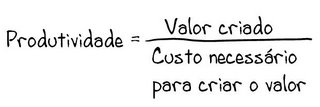
Não é preciso muito esforço para ver nesta descrição um espelho da realidade portuguesa. A produtividade tem sido o parente pobre do debate político. Tal como no Reino Unido, confunde-se crescimento com financiamento externo ou ciclos de fundos comunitários, e evita-se fazer o verdadeiro debate: o que produzimos? Como produzimos? A que preço e com que valor?
Neste podcast, Rory Sunderland, por volta do minuto 46 diz:
"Our audience, Rory, is made up of marketers: CMOs and marketing leaders driving innovation within their organizations and brands. In addition to the two points you've already mentioned, they're also looking to uncover 'white space' or 'blue sky' opportunities to create the next level of value. Because if you only focus on what currently exists, you end up over-optimizing for the past. The result? You shrink and become completely non-resilient.
Exactly. This reflects the classic explore-exploit trade-off, which I believe is a fundamental principle of life. It's about what proportion of resources you allocate to exploring new ideas versus exploiting what you already know works.
You'll know this concept from media planning-the 70/20/10 model, right?
70% of your spend goes to proven strategies, 20% to things you believe will work but aren't yet fully tested, and 10% to high-risk experimentation-things you don't yet know if they'll work at all.
In practice, however, it's always that 10% that gets cut first. And not because it doesn't pay off, but because it doesn't reliably pay off.
Exactly. We've created a business environment where predictability is valued more than profit. People would rather have a consistent 3% return than a 50% chance of making 30%.""
Tal como escreve Wolf:
"When economies cease to grow, everything becomes zero-sum."
Em Portugal, isso traduz-se numa economia onde todos se sentem a perder - trabalhadores com salários baixos, empresas sem margens, estado com serviços a degradar-se e impostos sufocantes.
Martin Wolf propõe investir "intellectual resources" numa nova estratégia de crescimento.
O mesmo é válido para Portugal. Não há "bazucas" que nos salvem se não formos capazes de gerar crescimento sustentável com base em produtividade.
%2012.37.jpeg)
"Norton Motorcycles has pulled the plug on an advanced electric motorbike project despite the historic manufacturer having received £8.5 million from taxpayers to develop it.Executives at the Midlands-based firm said there was simply not enough demand for electric superbikes to justify production....Richard Arnold, the chief executive of Norton, told The Telegraph that the prototype was capable of "spectacular" levels of performance."There's a lot of technological innovations within it, a lot of design innovations within it," he said. "But there is a question: [for] the people that have sought to bring electric bikes to market, has the demand been good or bad? And the demand has been bad."You can develop as many products as you want. But we have to make sure they're ones consumers want to buy, and the evidence to date is that this is something consumers aren't ready for."...The company is now focused on producing premium petrol bikes including the £44,000 V4SV. Arnold said it was also possible that Norton would open a US factory to avoid tariffs."
Não confundir invenção com oportunidade. A Norton tinha tecnologia avançada, mas falhou em validar a apetência do mercado. As PME também devem evitar investir em invenções que não tenham procura real e actual. Uma invenção, por si só, não garante valor económico. Pode ser tecnicamente brilhante, mas irrelevante se não houver procura. Lembro-me logo de Fernando Pessa.
Inovação a sério é quando a invenção é transformada em valor real, através de um modelo de negócio, design, processo ou produto que chega ao mercado e é usado.Por isso, é preciso validar o mercado antes de escalar: O uso de fundos públicos para desenvolver um produto sem tracção de mercado mostra o risco de não testar o mercado com MVPs antes de avançar para a produção em escala.
As PME devem manter portfólios equilibrados, não pondo todos os ovos no mesmo cesto, mas explorando novas oportunidades sem comprometer as linhas de negócio já rentáveis (como a Norton está a fazer agora, voltando-se para modelos a gasolina).
Um produto à frente do seu tempo pode falhar tanto como um produto atrasado. As PME devem alinhar invenção com o momento certo do mercado.
BTW, fiquei a pensar no "crossing the chasm" de Geoffrey Moore.
Trechos retirados de "Norton pulls plug on electric superbike due to lack of demand" publicado no FT de ontem.
%2013.50.jpeg)
"Habits are the behaviors and routines we've repeated consciously or subconsciously, so many times that they've become automatic. They are essentially our brain's default setting: the responses we enact without conscious processing. Neuroscience research shows that as habits develop, we rely less and less on the parts of our brain that are used for reasoning (the prefrontal cortex) and more and more on the parts that are responsible for action and motor control (the basal ganglia and cerebellum).Because firefighters and other first responders need to be able to do the right thing without much deliberate thinking, they spend enormous amounts of time practicing and drilling for emergencies, building muscle memory and developing routines that turn smart judgments into gut reactions. At the fire academy and on the job, they drill and drill to cut down the time and thought it takes to put on their heavy gear and load their trucks when the fire alarm goes off. They practice search-and-rescue skills, learn how to pull a hose line, and rehearse what to do if an oxygen mask fails."
Trechos retirados do quinto capítulo (Laziness) de "The Science of Getting from Where You Are to Where You Want to Be" de Katy Milkman.
%2013.44.jpeg)
A minha transcrição dos primeiros minutos da intervenção de Rory neste podcast:
"Innovation is essentially about discovering value in areas that have been previously undervalued or overlooked. I have a concept that I call reverse benchmarking—a strategic exercise I encourage everyone to try. I coined the term myself, because, let’s face it, you have to name an idea if you want people to take it seriously.
The key insight here is: don’t optimize for the average. That’s a trap. Instead of differentiating, most organizations fall into a cycle of comparing themselves to others—essentially entering a race to the bottom.
Roger Martin makes a powerful point in his article 'Benchmarking Is for Losers' on Medium. He argues that by benchmarking too closely, companies stop thinking strategically. They stop asking: 'What makes us unique?' and instead start mimicking competitors—turning competition into a zero-sum game.
Strategic thinking requires stepping back, looking at where real, underexplored value might lie, and choosing to stand out rather than fit in."
A ideia central é simples e poderosa: a inovação nasce quando descobrimos valor onde antes ele era ignorado ou subestimado. No fundo, não é através da comparação com os outros que criamos vantagem competitiva, mas sim através da diferenciação deliberada. É isso que a expressão reverse benchmarking quer ilustrar — em vez de olhar para o que os outros fazem bem, olhemos para onde ninguém está a olhar.

"Japanese interest rates turned positive last year after a protracted stint of virtual non-existence; inflation expectations now look entrenched, so money, as well as looking more portable than before, has to work harder for everyone than it has needed to since Japan's current crop of 25-year-olds was born. Demographics have also caught up with financial arrangements. According to government figures, an estimated 17.4 million Japanese, or 14 per cent of the current population, are forecast to die between now and 2035.
That implies an inheritance avalanche the likes of which the country has never experienced. Money will move with velocity between generations, between financial institutions and potentially between international markets: the heirs do not reliably stow wealth where their parents did.
The allocation of Japan's trilliondollar stash of household assets, roughly half of which have been nonchalantly parked in cash and bank deposits for decades, is simultaneously moving under the pressures of a huge behavioural and environmental shift: rising prices, particularly of food, are forcing a quest for returns that few bothered to consider a few years ago."
Trechos retirados do FT do passado dia 3 de Julho em "Japan's great financial unsticking has begun"
%2012.18.jpeg)
Já aqui escrevi que ouvir Rory Sunderland é ter a certeza que vai citar 2 ou 3 livros que têm, repito, têm de ser lidos. Por exemplo, foi com ele que descobri "Unreasonable hospitality: the remarkable power of giving people more than they expect" de Will Guidara.
No último podcast em que ele é entrevistado (mais de duas horas e ainda só ouvi metade) cita Jules Goddard no livro que descobri chamar-se "Uncommon Sense, Common Nonsense" de Jules Goddard e Tony Eccles.
A citação que me apanhou foi uma que parece tirada deste blogue:
"There are no surer signs of the inadequacy and delinquency of corporate leadership than that cost efficiency should feature as the dominant issue facing the company, and that tactics of outsourcing, shared services, reorganisation and other short-term palliatives are being paraded as the main drivers of future profitability... Strategy is the rare and precious skill of staying one step ahead of the need to be efficient."
Esta outra relaciono com Roger Martin e "Mais vale ser rico e com saúde do que pobre e doentio":
"In business, true beliefs deliver much greater wealth than virtuous goals... Performance is a return on right beliefs, not right intentions. The choice of strategy is not between outcomes but between means."
Outra citação alinhada com este blogue:
"A business does not make money on the beliefs that it shares with its rivals, only on the beliefs that set it apart."
Esta semana tive uma conversa com uma pessoa que comparava a margem libertada pela empresa A com a libertada pela empresa B. Empresas a operar no mesmo sector de actividade. A empresa A liberta cerca de 4 vezes mais margem que a empresa B. Depois, o meu colega de conversa e trabalho defendeu a ideia de que é prioritário aumentar a produtividade física da empresa, que também se traduz em mais margem libertada, porque tem resultados imediatos.
Sim, tem resultados imediatos, e deve ser feito. Contudo, nunca será por aí que se colmatará o gap de "4 vezes mais margem". Quase que tenho a certeza que uma PME a operar num mercado competitivo e aberto à concorrência internacional deve aspirar a estar numa posição de "staying one step ahead of the need to be efficient". The need to be efficient significa que está comoditizada e isso é só para as empresas grandes ou chinesas.
Afinal o que significa: "Promotor da concorrência imperfeita"?
O maior espectáculo em solo europeu.
Not long until the best French tourism campaign starts again! This is the map of this year's Tour de France. It's meant to be a rough route in hot weather but for us on the TV screens it's simply a highlight reel of the prettiest areas in France. Source: https://t.co/nbgtV2yrhh pic.twitter.com/ARElKgp3he
— Simon Kuestenmacher (@simongerman600) July 2, 2025
%2013.47.jpeg)
Há tempos usei esta imagem:
%2012.29.jpeg)
%2010.07.jpeg)
%2006.21.jpeg)