quarta-feira, janeiro 13, 2016

Acerca da produtividade e dos feriados (parte IV)

Parte I, parte II e parte III.

Voltemos à equação:

"Profitability = Intellectual Capital X Price X Effectiveness"
e Eficácia em vez de Eficiência e a doença do eficientismo:
"In the business of the future, effectiveness takes precedence over efficiency. A business does not exist to be efficient; it exists to create wealth for its customers. An obsessive compulsion to increase efficiency (doing things right) reduces the firm's effectiveness at doing the right things. The pursuit of efficiency has hindered most companies' capability to pursue opportunities, hence these organizations spend most of their time solving problems. One cannot grow a company and continuously cut costs and increase efficiency. It is not that efficiency is bad, per se, it is that it is being pursued at the expense of nearly everything else. To add insult to injury, the efficiency measures that do exist in the modern organization tend to be lagging indicators that measure efforts and activities, not leading indicators that measure results and define success the same way the customer does. Focusing on effectiveness implicitly recognizes there is no such thing as a free statistic. Just because we can measure something accurately does not mean we should. Effectiveness means that imprecise measurements of the right things are infinitely more valuable than precise measurements of the wrong things. This will no doubt shock some readers, especially those who were trained in cost accounting or possess MBAs. But controlling costs, and accounting for them, does not ensure success." 
Quantas empresas minaram o seu futuro à custa desta perseguição paranóica da eficiência?
.
As nossas fábricas de calçado, de têxteis, de mobiliário, hoje, por norma, são menos eficientes que no passado.
.
E muito mais competitivas.
.
E muito mais produtivas.
.
E muito mais eficazes.


BTW, recordar esta reflexão de Outubro de 2007 "A eficácia é mais importante, ou está primeiro que a eficiência"

terça-feira, janeiro 12, 2016

Curiosidade do dia

Admirável mundo novo (sem ironia):

Workshop Balanced Scorecard (Felgueiras e S João da Madeira)

Em colaboração com o Centro Tecnológico do Calçado, realizaremos dois Workshops sobre o Balanced Scorecard:

  • 19 de Janeiro em São João da Madeira;
  • 26 de Janeiro em Felgueiras
Interessados podem encontrar informação e inscrever-se aqui.

Acerca dos processos

A grande vantagem da ISO 9001 para muitas PME reside em resolver o tema que se segue:
"what are her first impressions of the fitness sector in this respect? "It's a very inspiring industry, but when you pull back the blankets there aren't really any standards or processes. And that's not just in our company: we had none when I arrived, but I can't find them anywhere. No best practice, no standards, no systems. "When I joined Jatomi Fitness we had 18 different logos, but that was just a symptom of the root cause: a lack of standards. So we've gone back to the foundations, effectively building these under the existing company — putting standards and processes in place to create what I call our gym blueprint, which covers everything from the hiring process to building a new club. If you want to grow as a brand, you have to have these systems and processes — it's just not possible to do it without them."
Cada vez menos PME sem processos definidos... bem, ás vezes aquilo que as empresas de processos não são processos a sério mas essa é outra história.

Trecho retirado da revista HCM de Janeiro de 2016, no âmbito de uma entrevista com Tracy Gehlan CEO da cadeia de clubes Jatomi Fitness:

Agricultura e o futuro


De um lado o passado agarrado a abordagens que tiveram sucesso, que foram adequadas até que o mundo mudou, "Preço do leite caiu seis cêntimos em 2015" e sempre com amplo espaço nos media, tentam evitar a mudança.
.
Do outro, os que souberam adaptar-se a esse mundo alterado:
Saliento em "Portugal será de novo um país agrícola? Europa vê grande potencial":
"Hoje, a agricultura e as pescas passam mais despercebidas. Fortemente desmanteladas desde que Portugal aderiu à UE (então CEE, em 1986), algumas atividades ficaram, [Moi ici: Como o têxtil, o calçado, o mobiliário, a metalomecânica e a cerâmica entre outros] em todo o caso, mais produtivas.
...
o sector agroalimentar tem relevância nas exportações de bens: pesa 12% do total e cresce 6% ao ano.
.
Algo pode estar a mudar outra vez, indicam vários estudos e os relatos vivos de alguns (jovens) que estão a trocar as cidades e os empregos nos serviços pelo campo e por projetos agrícolas inovadores, exportadores.
...
Portugal é, na análise do Cedefop, emblemático. No país que outrora foi profundamente agrícola, o maior número de oportunidades de emprego está, justamente e outra vez, na agricultura – cerca de 26% do total será para trabalhadores qualificados em agricultura, floresta e pesca, muito acima da projeção para a UE”, referem os peritos.
...
“Parece que Portugal está a acelerar a sua transição para uma economia mais intensiva em conhecimento”, além de que as projeções indicam que cerca de dois terços de todas as oportunidades de emprego entre agora e 2025 irão requerer qualificações de nível alto e médio”.
...
[Moi ici: Interessante esta ponta de pensamento estratégico] “Há muita gente a produzir plantas aromáticas e medicinais em Portugal, mas nós fazemo-lo de forma biológica. Isso diferencia-nos e torna as nossas plantas melhores.”
...
Exportamos 100%, o clima é uma vantagem.”"
Recordar as palavras de Jaime Silva:

Para reflexão

Mais um momento do anónimo da província:
Quando comecei a derivar a minha vida profissional da Qualidade para a Estratégia, emprenhava pelos ouvidos e pelos olhos o que os media nacionais me diziam: "os empresários portugueses são os piores do mundo".
.
Hoje, quase 20 anos depois, sei que que são exactamente iguais aos outros, não são as ovelhas negras
.
Com base nos dados do PORDATA, qual o país da Europa Ocidental que mais viu crescer a sua Produtividade do trabalho por hora trabalhada (PPS)?
.
Acha que consegue adivinhar?

Vê alguém nos media tradicionais a salientar este feito?

segunda-feira, janeiro 11, 2016

Curiosidade do dia

Este tweet é do melhor:


Relacionar com "Evernote’s 5% problem offers a cautionary lesson to tech companies":
"Evernote had spread itself too thin, and there was no core experience. Though Evernote did, in fact, continue to push out new features and products, they never managed to fix the underlying problem.
...
But the 5 percent problem offers a good lesson about how important it is to maintain a core identity as you build new features and products.
.
The Silicon Valley mentality fosters a desire to continue building and iterating because if you don’t, you could get lapped by some new competitor who comes along and outflanks you. And sometimes engineers and product developers just get overly enamored with themselves and their ideas and lose sight of the bigger picture.
.
But adding new features requires discipline.
...
If you lose sight of the core experience and fall prey to the 5 percent problem, you likely won’t find the road back out."
Estratégia passa por isto, passa por ter uma identidade, passa por saber renunciar, recordar no mundo do fitness "Salami slicers"


"get used to it"

A propósito dos jornalistas e da sua campanha para que os contribuintes tenham de pagar uma taxa para suportar os jornais:
"In a web world where you want the content to flow freely, how do you use exclusivity - holding content back - to your advantage?
.
Information is abundant, and almost any content can easily be found for free. For any person or company trying to monetize scarce or premium content on the social web, there is always somebody else out there willing to provide the same webinar, video, or eBook for nothing, destroying your idea of a scarce resource. Chris Anderson's book Free: The Future of a Radical Price codifies this idea by basically saying "get used to it" - you have to find adjacencies and other revenue streams because people expect Internet-based content and services to be free.
.
Is there anything scarce on the Internet?
.
Yes, there is, according to digital marketing savant Christopher S. Penn of SHIFT Communications. "Scarcity is actually more powerful than ever on the social web," he said. "While content may be free, what has become extremely scarce is time, attention, and influence. These are hot commodities, rare commodities. As an example, I have tens of thousands of followers on Twitter. I can't tell you the number of direct messages and tweets, Facebook messages, and emails I receive every day asking, 'Hey, can you promote my whatever' because they know that it means something. Moving content creates true value. So in that regard, scarcity is a weapon that is in play like never before." On the other side of the coin, providing exclusive or limited access to content can create the perception of scarcity that can make the content move. [Moi ici: Claro que isto é exactamente o contrário do que se faz, cada vez mais manchas noticiosas obtidas no supermercado low-cost da Agência Lusa que todos serve igual e comoditiza. Onde está a especialização? Onde está o profissionalismo?

O mesmo se passa com a sua empresa, o mesmo se passa com os suinicultores, o mesmo se passará com o retalho tradicional perante os deflacionistas do retalho online.
.
Como não recordar os jogos evolutivos em que se conclui que não há nenhuma estratégia vencedora, todas são transientes, todas são transitórias.

Trechos retirados de "The Content Code"

Workshop Abordagem baseada no risco - Porto


Programa, destinatários, valor do investimento e inscrição aqui.
.
Como é que a abordagem baseada no risco actua como uma acção preventiva?
.
Consideremos uma empresa que determinou o seu desempenho em 2015 relativamente a um dos indicadores associados a resultados valorizados pelos clientes:
A empresa pretendia um resultado inferior a 10% de atrasos na entrega e conseguiu 8%. 2015 correu bem!
.
Agora, a empresa pretende para 2016 melhorar o desempenho:
O ano ainda é uma criança, o futuro está por escrever. No entanto, qual o valor mais provável para 2016?
.
.
.
Se nada mudar, se não acontecer nenhuma surpresaa interna ou externa o mais provável é que o desempenho no final de 2016 seja igual ao de 2015:
Estamos em Janeiro de 2016 e a prever que se nada for alterado pela empresa, então, o desempenho de 2016 será não-conforme, será negativo. 
.
Existe, portanto, um risco de isto acontecer...
.
Qual a probabilidade dele acontecer?
E se acontecer qual a gravidade desta falha?
.
Assim, em Janeiro de 2016 decidimos mudar um ou mais processos que influenciam a taxa de entregas atrasadas, para prevenir a ocorrência da não-conformidade:
Recordar que os riscos são, segundo a ISO 9000, os efeitos da incerteza nos resultados esperados. E a taxa de atrasos nas entregas é um resultado esperado determinado pela realização de um ou mais processos.
.
As alterações aos processos feitas em Janeiro são para prevenir a não-conformidade no desempenho no final do ano.

Muito mais do que valor financeiro (parte VIII)

Parte I, parte IIparte IIIparte IVparte Vparte VI e parte VII. 
"How the experience economy will evolve
...
The experience economy is a long-term underlying shift in the very structure of advanced economies and the forces of creative destruction take time.
...
The shift into today’s experience economy comes with a number of implications that leaders should keep in mind as they manage their company’s shift from commodity trading, manufacturing and service providing or innovate wholly new businesses birthed in experiences:
.
1. Mass customization is the route up the progression of economic value
...
Companies should focus on reaching inside of the individual, living, breathing customer, making their offerings as personal and as individual as the customer
...
2. Work is theatre. Business enterprises would gain an invaluable perspective simply by declaring their work to be theatre. For when a business sees its workplace as a bare stage, it opens up opportunities to distinguish itself from the myriad humdrum makers of goods and providers of services that perform work without recognizing the true nature of their acts. With theatre furnishing the operating model, even the most mundane of tasks can engage customers in a memorable way.[Moi ici: Quando li isto, juro, recuei logo até Dezembro de 2006]
3. Authenticity is the new consumer sensibility. Concomitant with the shift into the experience economy is a shift in the primary criterion by which people choose what to buy and from whom to buy. No matter the offering – commodity, good, service, experience or transformation – customers will judge it based on whether or not they view it as authentic – that is, whether or not it conforms to their own self-image.
...
4. The experience is the marketing. Perhaps the worst offender when it comes to authenticity is advertising, as it has become a phoniness-generating machine. [Moi ici: Relacionar com o outro recorte que se segue mais abaixo] Companies should invest their marketing money in experience places. The best way to generate demand for any offering in today’s experience economy is with an experience so engaging that customers can’t help but pay attention and buy that offering. Marketing therefore needs to become placemaking, where companies create a portfolio of places, both real and virtual, to simultaneously render authenticity and generate demand."
Trechos retirados de "A leader's guide to innovation in the experience economy" de Pine e Gilmore, publicado em STRATEGY & LEADERSHIP, VOL. 42 NO. 1 2014, pp. 24-29
""“Marketing experiences are the new marketing,”
...
“It is really important for CMOs to understand that brand architecture is sort of representative of a bygone era where brands would tell people through creative campaigns what that brand stood for and why you should care,”
...
experiences are now the new brand.
...
the need for CMOs to become “experience architects.”"
Trechos retirado de "Experiences Are The New Brand, And CMOs Are Their Architects"

Prestes a cometer um crime (parte IV)

Parte I e parte II.
.
Ainda acerca do poder das redes em Mongo e de como a concorrência é diferente, este trecho retirado da revista HCM de Janeiro de 2016, no âmbito de uma entrevista com Tracy Gehlan CEO da cadeia de clubes Jatomi Fitness:
"The fitness sector's introspective viewpoint is also hindering its growth, adds Gehlan: "Everyone's competing against each other head to head, battling over the small pool of people who've already decided to join a gym. That's the wrong time and place to compete. "Rather than competing against other gyms, we should be out there competing with diets, weight loss tablets, recipes, meal plans all the other easier options consumers will try before they even contemplate joining a gym. Because I don't want to be 15th on the list. I want to move my business into a position where it's able to compete as soon as people start doing their 'how to change my life' research." 
Interessante como ela elege, como concorrência, as alternativas aos ginásios que ajudam a cumprir o mesmo JTBD.


domingo, janeiro 10, 2016

Curiosidade do dia

Imaginem os retalhistas a adoptar o mesmo comportamento dos suinicultores...

Oportunidade perdida

"You’ve implemented a successful Net Promoter Score survey, with a good response rate and a high NPS score. Congrats! Pop that number on your website, sit back and watch the leads roll in. Right?
.
Not quite. When NPS surveys don’t lead to action, it becomes a vanity metric that means very little to your business."
Recuar a 2006, a um postal a caminho dos 10 anos "Medir o Grau de Satisfação dos Clientes para quê?":
"Porque é que uma organização há-de avaliar o grau de satisfação dos seus clientes?
Respostas retorcidas poderão ser:
...
Para nos auto-incensarmos. Assim, perante resultados positivos podemos felicitar-nos e encaixilhar o relatório que proclama tais auspiciosas conclusões. "Olhem quão bons nós somos!""
O importante é não perder o propósito, e o propósito é melhorar:
"Na minha humilde opinião, uma organização deve avaliar a opinião dos seus clientes, para ter acesso a informação privilegiada sobre o que é prioritário: onde agir, onde investir, para melhorar o desempenho da organização aos olhos de quem a sustenta, de quem lhes paga as facturas."
Se uma avaliação da opinião dos clientes não dá origem a acções de melhoria foi um desperdício de recursos. No entanto, a abordagem mais comum é outra é a de usar o exercício para comprovar que está tudo bem. E, em algumas empresas, esta é a disposição com que se recebem as opiniões menos positivas, pronto a ripostar:


.
Trecho inicial retirado de "What Your Net Promoter Score Isn’t Telling You"

Prestes a cometer um crime (parte II)

"Profitability = Intellectual Capital X Price X Effectiveness"
.
Volto a pegar nesta equação... para a usar na leitura de "The Open Economy":
"To understand Apple’s problem, let’s look at the iPhone, which makes up more than 60% of the company’s revenues. In terms of raw materials, it’s probably not worth more than a few bucks, yet people gladly pay $649 to buy one. The difference, MIT’s Cesar Hidalgo argues in his new book, Why Information Grows
.
, is what he calls “crystallized imagination.”
...
Apple is a very special company because it has mastered the art of crystallizing imagination in its products in such a way that they are more desirable—and hence more valuable—than anything anyone else can produce. The problem for Apple, however, is that there is a lot more imagination in the world than Apple can control by itself.
...
The truth is that we can’t think of competitiveness as a strictly internal matter anymore. We no longer operate in an industrial economy in which we can gain competitive advantage merely through engineering greater efficiency. Rather, we need to widen and deepen connections.
.
So we can’t continue to think of success in terms of clawing our way to the top of the heap. Rather, we need to learn to position ourselves at the center of networks. Nobody, not even a company as special as Apple, can succeed alone."
Agora, comparar o que penso acerca da concorrência em Mongo aqui, com este pre-crime para satisfazer os incumbentes e a reacção destes outros incumbentes noutras paragens. Depois, voltar a ler aquele trecho "we need to learn to position ourselves at the center of networks". Depois, talvez estudar o que Esko Kilpi reflecte sobre as redes.
Na equação, aquele Capital Intelectual não é, quase sempre, sobre os conhecimentos académicos dos operários, dos executantes, (afinal é o mesmo operário que salta do Vale do Ave para Munique), é sobre a capacidade de decisão dos que têm poder e autoridade para mudar as empresas e/ou as associações.
.

Muito mais do que valor financeiro (parte VII)

Parte I, parte IIparte IIIparte IVparte V e parte VI.
.
Mais um exemplo do que pode ser feito na economia das experiências:
"Extreme Sandbox, a heavy-equipment playground for adults....Customers pay about $300 to play with construction equipment in a giant sand pit. Clients can drive an excavator, operate a bulldozer, or crush a car (for an extra $100) for up to 7 hours."

No que diz respeito à experience economy o céu é o limite!!!
.
Ainda ontem "Seis pessoas perdidas no Gerês" e "Seis pessoas em apuros no alto do Gerês já foram socorridas"... esta gente ganhou recordações, memórias para sempre e, como refere Kahneman em "Thinking, Fast and Slow":
"A story is about significant events and memorable moments, not about time passing....In many cases we evaluate touristic vacations by the story and the memories that we expect to store. The word memorable is often used to describe vacation highlights, explicitly revealing the goal of the experience."


Trechos retirados de "Mark Cuban Does the Unthinkable on 'Shark Tank'"
.

Acerca da produtividade e dos feriados (parte III)

Parte I e parte II.
.
Voltemos à equação:
"Profitability = Intellectual Capital X Price X Effectiveness"
e ao resultado, o lucro em vez da facturação:
"We start with profitability, rather than revenue, because we are not interested in growth merely for the sake of growth. As many companies around the world have learned - some the hard way, such as the airlines, retailers, and automobile manufacturers - market share is not the open sesame to more profitability. We are interested in finding the right customer, at the right price, consistent with our vision and mission, even if that means frequently turning away customers. I have coined a corollary to Gresham’s law - bad money drives out good - from monetary economics, affectionately known as Baker’s Law: Bad customers drive out good customers.
.
Adopting this belief means you need to become much more selective about whom you do business with; even though that marginal business may be “profitable” by conventional accounting standards. Very often the most important costs - and benefits, for that matter - don’t ever show up on a profit and loss statement. Accepting customers who are not a good fit for your company - either because of their personality or the nature of the work involved - has many deleterious effects, such as negatively affecting team member morale and committing fixed capacity to customers who do not value your offerings. This is why the new equation focuses on profitability, not simply gross revenue. When it comes to customers, less is usually more."

Continua.

Trecho retirado de "Measure what matters to customers : using key predictive indicators" de Ronald J. Baker.

sábado, janeiro 09, 2016

Curiosidade do dia

A propósito desta notícia que o @AllanMoura me enviou "General Mills Acquires Epic Bar" há um ângulo que me captou a atenção.
.
Morando em Estarreja e aproveitando muitas vezes para dar umas caminhadas pelas zonas agrícolas, com alguma frequência vejo cenas como as que se seguem, captadas no dia 26 de Dezembro último:


Ás vezes paro e fico a pensar no valor potencial perdido na venda desta carne porque os proprietários não tiram partido desta vantagem competitiva.


Para reflexão

"Talking too much early in the greeting. No trust; no relationship
Talking too much in the discovery. Can’t learn the true pain
Talking too much in the demo. Feature dumping.
Talking too much in the $ discussion. Unresolved issues
Talking too much on an objection. Don’t learn the real issue
Talking too much in the closing. Tough to make a decision
It might be time for a bit of self-analysis on your part."
Trecho retirado de "Want Better Results? Align Your Sales Strategy With The Communication Curve"

Prestes a cometer um crime


O mesmo país onde se consegue isto "Preços na hotelaria subiram 20% num ano" está prestes a cometer um crime "SET vai alterar a legislação do alojamento local para “tratar de forma igual o que é igual”" para fazer um favor a este lobby "O incumbente".
.
Isto cheira-me tanto ao relato que Acemoglu faz do começo da decadência em Veneza...
"HOW VENICE BECAME A MUSEUM
...
The switch toward extractive political institutions was now being followed by a move toward extractive economic institutions. Most important, they banned the use of commenda contracts, one of the great institutional innovations that had made Venice rich. This shouldn’t be a surprise: the commenda benefited new merchants, and now the established elite was trying to exclude them. This was just one step toward more extractive economic institutions. Another step came when, starting in 1314, the Venetian state began to take over and nationalize trade. It organized state galleys to engage in trade and, from 1324 on, began to charge individuals high levels of taxes if they wanted to engage in trade. Long-distance trade became the preserve of the nobility. This was the beginning of the end of Venetian prosperity. With the main lines of business monopolized by the increasingly narrow elite, the decline was under way. Venice appeared to have been on the brink of becoming the world’s first inclusive society, but it fell to a coup. Political and economic institutions became more extractive, and Venice began to experience economic decline. By 1500 the population had shrunk to one hundred thousand. Between 1650 and 1800, when the population of Europe rapidly expanded, that of Venice contracted."
Isto é completamente ao contrário do que se recomenda para Mongo "Concorrência vs cooperação em Mongo"

Acerca da produtividade e dos feriados (parte II)


Mais um bom ano para o têxtil nacional: "Exportações têxteis e de vestuário dispararam 10%" e "Têxteis perto de bater recorde de 12 anos na exportação":
"O Plano Estratégico para o "Cluster Têxtil e Moda 2020", divulgado em Setembro de 2014, prevê que esta indústria chegue ao final da década a exportar cinco mil milhões de euros por ano, o que significaria "voltar ao pico" das vendas ao exterior, registado em 2001, mas agora com quase metade das empresas e dos trabalhadores, que recuaram para 120 mil."
Os que me ouviram aqui em 2013 e viram esta imagem:

Imaginam qual foi o aumento da produtividade por trabalhador neste sector?
Basta pensar no quanto mais se factura por trabalhador.
.
Foi por causa do aumento da eficiência?
.
.
Nope! Até acredito que tenha baixado.
.
.
.
Foi por causa do aumento da capacidade?
.
.
Nope! As fábricas até encolheram em número e em tamanho!


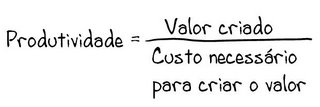
Agora, voltem à segunda equação da parte I.
Profitability = Intellectual Capital X Price X Effectiveness
Subir na escala de valor é isto, aumentar o lucro à custa de produzir ofertas com maior valor acrescentado que podem ser vendidas a um preço superior. Não um preço baseado na visão marxianista de ser igual ao custo mais uma margem fixa, mas um preço ajustado ao valor que o cliente reconhece.
.
A peça até pode custar o mesmo a produzir aqui e na China. Qual é a vantagem de a encomenda ser entregue num prazo curto? Qual é a vantagem de a encomenda ser pequena e não um contentor inteiro? Qual é a vantagem de a encomenda poder ser paga muito mais perto do momento em que se começa a receber das lojas? Qual é a vantagem de a encomenda poder ser alterada em função do que está a dar? Qual é a vantagem de a encomenda ...
.
Muitos dos que me ouviram em 2013 ficaram surpreendidos: eu previa sucesso; previa esperança; previa resultados e explicava porquê. Entretanto, 2011, 2012, 2013, as pessoas eram massacradas com o ir além da troika, com o mais tempo, com o mais dinheiro, com o sair do euro, com o "historietas de exportações", com o "e vamos viver de quê?"com a espiral recessiva. Até a ATP não acreditava no futuro...
.
Outra prova do tempo, não?
.
BTW, lembram-se do meu remate sobre produtividade acerca do turismo?