sexta-feira, novembro 28, 2014

Ou seja, trabalhar para os "underserved"

Desta vez não posso concordar com Don Peppers, em "The Ideal Customer Experience is No Experience".

Julgo que Peppers está concentrado nos produtos que adquirimos unicamente pela funcionalidade.
.
Nesse extremo, um qualquer tipo de "vending machine" é suficiente e mais, seguindo o racional de Peppers as "vending machine" até já nos deviam conhecer, ao chegarmos ao pé delas. Por isso, refere toda uma série de estudos em que clientes muito satisfeitos não são leais. Contudo, isso não é novidade, basta recordarmos:
Os clientes "overserved" não querem mais atributos, até já acham que estão a pagar de mais por atributos que não usam ou não valorizam. Daí que o ponto de Peppers seja:
"So when you start journey-mapping your customers, or trying to design a better customer experience for them, before coming up with ways to "surprise and delight" the customer or "wow" them or whatever, be sure to eliminate as much friction as possible, to make the experience easy, simple, and totally effortless."
No entanto, o nosso conselho para as PME passa por considerarem a oportunidade para trabalharem cada vez mais com o outro extremo, aquele onde a interacção é maximizada para permitir a co-criação. Ou seja, trabalhar para os "underserved".

Acerca da comunicação da estratégia

"What learning actually takes place when the CEO of the organization delivers a PowerPoint presentation outlining corporate strategy – replete with facts and figures, graphs and charts – at an All-Hands meeting?
.
As a test, one organization that had experienced rapid growth over the past five years, as well as shifting strategic priorities, interviewed key managers three months after such a presentation. The study revealed that the managers, from various functional areas within the organization, had different ideas about what the corporate strategy was. Some saw the corporation as focusing on differentiation, others interpreted the strategy as being close to the customer, and a few believed that the goal was to be low-cost leader.
...
Surveyed four months after the PowerPoint review of corporate strategy, 13 employees identified the strategy as one of differentiation, 26 as one of focus on customers, and 6 as one of cost leaders. The average confidence rating when making this choice was 2.9 on a 5-point scale.
...
Or could it be that PowerPoint presentations of facts and figures, charts and graphs, and colorful graphics are just not the most effective way to explain strategy? Given these uncertainties, there’s a case to be made that corporations need replace their PowerPoint presentations with a program that includes a memorable narrative or story that will make strategy persuasive and memorable – one that will capture hearts and minds as well as drive strategy."
Trechos retirados de "Narrative vs PowerPoint: for leaders, it may not be a matter of fact" de Michael Carriger, (STRATEGY & LEADERSHIP VOL. 38 NO. 2 2010, pp. 52-56)

Acerca de Mongo e da democratização da produção

"[With the advent of desktop manufacturing technologies] I believe more and more people feel empowered to create new products, from smart watches to custom zipper pulls for hoodies. And thanks to [avenues such as Kickstarter], you can tap into demand for smaller-batch products well in advance of release. Still, there’s not a sophisticated way to manufacture 1,000 pieces that look like they’re consumer products.
.
I would like the future of manufacturing to embrace this middle ground. I want to see custom manufacturers who can do small runs at price parity with large manufacturers."
As barreiras actuais:
"First of all, there’s a new group of people who want to make things who are not mechanical engineers—they’re designers.
.
They go to a contract manufacturer, but the factory people want to work with 3D computer aided design (CAD) programs that the designers don’t know. The process ends up requiring too much customer support to make it worth [the manufacturers’] while.
.
Additionally, [it costs manufacturers money] to tool up a machine, pay someone to translate the design into [the CAD program] Solid Works and pay the CNC operator and the person who does the CAM (translating design into paths the machine can follow).
.
To make it worth their time, they often charge a price that is untenable to a small-batch manufacturer."
Uma alternativa "Future Scope"

quinta-feira, novembro 27, 2014

Curiosidade do dia

As revoluções começam assim, o mainstream concentra-se no dedo, concentra-se no folclore, concentra-se no fútil. Entretanto, o mundo, nos seus alicerces, está a mudar e só quando um tipping point chegar é que se perceberá todo o alcance da coisa.
.
A propósito de "Dos porta-chaves à produção de osso. O que fazem as impressoras 3D em Portugal"

Pescadinhas de rabo na boca

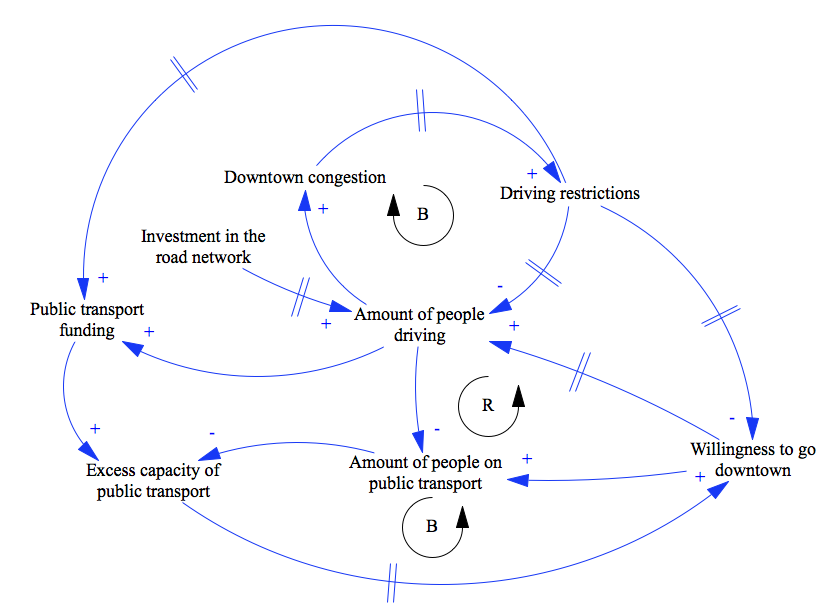
A propósito de "The "fundamental rule" of traffic: building new roads just makes people drive more", apetece dizer:
- Duh!
Basta pesquisar a dinâmica de sistemas:

  • "A Systems Dynamics Approach to Explore Traffic Congestion and Air Pollution Link in the City of Accra, Ghana" com uma figura clássica:

Shift happens! (parte VII)

Parte I, parte II, parte IIIparte IVparte V e parte VI.
.
Decididamente, o livro "Business Strategy - Managing Uncertainty, Opportunity, and Enterprise" de  J.-C. Spender é muito bom!!!
"A BM [business model] is not a rigorous or coherent theory of the firm for it must frame and engage uncertainties if it is to lead to the possibility of adding value.
...
Thus a BM is never determined by outside circumstance, only by the strategic work of its construction. Nor is it detachable from its context; to the contrary it is an ever-evolving pattern of shaped interaction between the human beings who share and comprise the context. [Moi ici: Onde é que o Estado-Planeador tem em conta esta interacção idiossincrática?] It is typically incomprehensible to those who have not inhabited its context, time, and history.
...
Nor is it fully expressible. It is organic, tacit, and vitalized, a dynamic form of knowing that is forever a “work in progress” as it responds to the strategist’s unfolding experience of applying the BM in its shifting context. But, equally, it is not organic in the strict biological sense of having a form of vitality that is independent of the human elements that, interacting through the BM, bring it to life. Its only vitality is that of the human beings involved, their practice of projecting their imagination into the context as intentional value-adding practice.
...
The uncertainties in the socio-economy open up an economic space for the firm’s value-adding processes. Another way to put this is that firms exist only when their markets (shorthand for “the broader socio-economy”) “fail” to be fully determined because, perhaps, full information is not fully available to all economic actors. [Moi ici: Onde é que o Estado-Planeador tem em conta estas incertezas?] Real markets are not fully prescriptive, and they cannot determine the nature of the firm. There are other “causes” or determinants. Typically the firm has features and aspects imprinted on it by the imagination of its creators."

O desconto corrói a marca

""Any damn fool can put on a deal, but it takes genius, faith and perseverance to create a brand,"
...
From a brand equity perspective the implications of "discount creep" on brands should not be overlooked. Discounting will give retailers a short-term advantage over competitors, but it can come with perhaps unforeseen consequences.
.
Truth: Leading with low prices cheapens your brand. Sure, people will rush out to buy your product, prompting a spike in sales. But at the same time, customers will be so focused on price they will lose sight of the intrinsic value in paying full retail price.
.
The biggest risk to relying on discounts to drive sales is that it becomes the definitive narrative in your brand story.
...
"When you offer a discount, you are taking the focus from the value you provide and placing it squarely on your price. There is no way to escape that."
...
As discounting has become more prevalent, many have forgotten that making a sale should not be about discounts and concessions that devalue your brand. Instead, it is a challenge to create more demand within your target audience to inspire purchase at the posted price.
...
So what does a brand like Perrier do? They go deep in their ethos and find fresh ways to elevate the brand and keep it relevant.
...
In a world where a CEO's life expectancy averages well under five years and brand marketers are measured by short-term financial results, the seductiveness of selling out to sell more is hard to resist. For a long-term strategy, consider striving for the things that create brand value. Otherwise it becomes a race to zero. And that's no way to spend the holidays."
Recordar as curvas de isolucro, para relacionar aumento de volume necessário para compensar descontos em "Pregarás o Evangelho do Valor"
.
Recordar:


Trechos retirados de "The Race to Zero: Time to Rethink 'Discount' Mentality"

E quem puder dar esse acompanhamento superior (parte V)

Parte I, parte II, parte III e parte IV.
.
No último texto da série sublinhámos a nossa preocupação com a falta de concentração estratégica. Um tema recorrente no meu contacto com muitas PME, a falta de pensamento estratégico. 
.
As empresas andam tão entretidas com o trabalho que têm que não arranjam tempo, nem valorizam a necessidade de pensar sobre o que andam a fazer e sobre o que não devem fazer.
.
Em "It Doesn’t Matter If Competitors Know Your Strategy", Frank Cespedes reflecte sobre as empresas que até têm uma estratégia mas não a revelam aos seus colaboradores, com medo que a concorrência fique a saber qual é a estratégia.
"Any budget — big or small, smart or stupid — involves choices about what gets more or less money, time, and other resources. Most people in a firm focus most of the time on near-term operating issues. The aggregate of those decisions determines what are the real priorities, opportunities, threats, and behavioral values in the firm. Nothing wrong with that. But there is no “ignorance is bliss” dimension to this aspect of business. Without clarity about priorities, people can only pick up random, disconnected cues about strategy, and alignment is then hit-and-miss."
Acerca deste medo, recordo o segundo livro de Kaplan e Norton "The Strategy-Focused Organization: How Balanced Scorecard Companies Thrive" e o exemplo da Mobil. O CEO da Mobil dizia que o maior perigo era a estratégia não ser conhecida por quem a tem de implementar no dia a dia, através de um conjunto de decisões, acções e comportamentos.
.
Só que em muitas PME a situação é ainda mais grave. Se perguntarmos à gerência qual é a estratégia seguida, não serão capazes de a descrever porque ela não existe como pensamento formulado, para eles estratégia é produzir mais, é vender mais, é comprar mais barato.
.
E na sua empresa?


quarta-feira, novembro 26, 2014

Curiosidade do dia

O individuo que na televisão defendia o aeroporto da OTA como fundamental, para exportar, por via aérea, as frutas e legumes da região Oeste, volta com a capa de um super-herói para nos impedir de voltar a cometer erros na distribuição dos fundos comunitários. Ter memória é um castigo dos deuses.
.
A propósito de "Augusto Mateus: "Cometemos demasiados erros. Este é o momento da reconstrução"" recordar, basta uma pesquisa de segundos na internet:
"Um leitor avisou-nos desta pérola do «Plano Regional de Inovação do Alentejo», de 2005, da Augusto Mateus e Associados, pp. 136-137 (linque entretanto desativado - http://www.ccdr-a.gov.pt/prai/seminario.asp) sobre o «Aeromoscas» de Beja, que, entre outros motivos, justifica o investimento com o objetivo de o tornar uma «plataforma logística» para o transporte de... peixe:" (aqui)
"Quando querem empatar, encomendam um estudo. Quando já têm na cabeça o que querem fazer, encomendam um estudo. Quando querem entreter o pessoal, lançando pão seco aos pardais, encomendam um estudo. Lembram-se do famoso aeroporto internacional de Beja, onde chegariam turistas aos milhares e de onde se exportariam legumes e peixe fresco às toneladas para a Europa? Está às moscas e foi resultado de um estudo, por acaso do mesmo génio que agora descobriu o caminho marítimo para a cultura!" (aqui
"Aeroporto vai criar uma cidade em seu redor
"Estado empreendedor (46) – aterrando contribuintes no aeroporto de Beja
Um tipo que vive no paradigma A e nunca mais aprende:

Diferentes tipos de variedade

Mais um excelente texto de Rags Srinivasan, que encontrei no arquivo, "Why are the Raspberry and Strawberry Yogurts Priced the Same?".
.
Este trecho é precioso:
"Do not chase market share by making minor tweaks, this does not result in  profit increase. Strategy is about making choices. When in doubt about where to invest your R&D and marketing dollars, instead of expanding variety within a product line (horizontal versioning)  go for product line extensions (vertical versioning)."

O elefante escondido na sala

Em "Advances in Production Technology", livro editado por Christian Brecher, encontro este interessante capítulo "Hypotheses for a Theory of Production in the Context of Industrie 4.0":
"In today’s business environment producing companies face the challenges of shorter lifecycles and micro segmentation of markets. [Moi ici: Em suma, Mongo] ... One performance indicator for a company’s innovation productivity is the time to market. The faster a company is able to introduce new products to the market the shorter the development process has to be. This compression of the development process is made possible within an Industrie 4.0-environment. ... Due to the new technologies the costs of an iteration and the resulting changes are not as cost intensive as before and therefore lead to a new development process in terms of time and profit
...
companies have to offer more and more individualised products in order to meet the customer requirements. ... This trend complicates the division of labour introduced by Taylorism in terms of production and assembly lines, as machines in general are only able to fullfil one specific task. Therefore the complexity of the whole production system is increased. In order to allow even more individualised products the integration of production steps and thus the integration of functions within production systems is inevitable.
...
Continuous process responsibility increases the productivity of the processes” As stated before, many companies face the challenge of more and more individualised products. Within Industrie 4.0 it is conceivable that customisation will be taken even further and companies will not only have to produce customised products of the same kind such as cars, but will have to manufacture totally different products. In this case it is hardly possible to divide the production and manufacturing process into smaller parts in terms of Taylorism. In order to still be able to increase productivity one option is the continuous responsibility of one employee for the whole value creation process of one specific unit of a product. This approach has advantages especially if enhanced by Industrie 4.0.
...
Secondly the responsibility for a whole value creation processgives the employee pride in the product he produces as he sees the development of the product. It was shown, that it is important for an employee to see the results of his work, that the results were impacted by his skills, that they solved difficult problems and that they felt they were trusted."
Os dois últimos sublinhados revelam, na minha opinião, o elefante escondido na sala. Estes textos, escritos para empresas grandes, as que pagam a consultoria sobre estes temas, não revelam que... os trabalhadores, na Industrie 4.0 podem interrogar-se, porquê fazer parte de uma empresa, por que não se autonomizar e trabalhar como freelancer directamente para os clientes?

Shift happens! (parte VI)

Parte I, parte II, parte IIIparte IV e parte V.
.
Acerca da frase de Max De Pree citada na parte V e da sugestão de alteração, ontem à tarde, durante a condução na N14, que não percorria há anos, recordei-me deste postal "Estratégia, mapas errados e self-fulfilling prophecies":
“The generic process involved is that meaning is produced because the leader treats a vague map or plan as if it had some meaning, even though he knows full well that the real meaning will come only when people respond to the map and do something. The secret of leading with a bad map is to create a self-fulfilling prophecy. Having predicted that the group will find its way out, the leader creates the combination of optimism and action that allows people to turn their confusion into meaning and find their way home.”
Esta história contada por Karl Weick é simplesmente divinal.

E quem puder dar esse acompanhamento superior (parte IV)

Parte I, parte II e parte III.
.
Para terminar, um tema que me ficou atravessado desde a parte I:
"Para além de grandes marcas como a Inditex, a empresa é também procurada por pequenos designers que querem começar ou começaram recentemente uma marca própria. ... Para além de grandes encomendas, a fábrica Paula Borges, com 50 funcionários, lida frequentemente com quantidades pequenas encomendadas por designers e lojas estrangeiras, sobretudo de Inglaterra e França."
Falta de concentração estratégica, trabalhar longe da fronteira do desempenho... e a lição de Terry Hill?
Andam constantemente a saltar de um extremo para o outro.

Organizem-se!

Acerca da frase de Max De Pree:
"A primeira responsabilidade de um líder é definir a realidade. A última é dizer obrigado." 
Será que existe mesmo a realidade?
.
Será que existem factos?
.
Por exemplo:

Afinal em que ficamos?
.
Organizem-se!

terça-feira, novembro 25, 2014

Curiosidade do dia

Dedicado ao Mário Cortes:
"Em Portugal, 40% das transferências sociais pecuniárias, incluindo aqui as pensões de reforma, destina-se aos 20% mais ricos. Para os 20% mais pobres, vai cerca de 10%.
...
Na Austrália, Noruega e Dinamarca a proporção é a inversa: menos de 10% das transferências em dinheiro dirigem-se aos 20% mais ricos, ao passo que mais de 35% se destinam aos 20% mais pobres."
Trecho retirado de "Portugal é o segundo país da OCDE que concentra nos mais ricos mais transferências sociais em dinheiro"

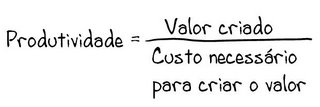
Exemplo da distribuição de produtividades?

O tema do marcador "distribuição de produtividades" ocupa um lugar importante neste blogue já há uns anos. Ainda recentemente sublinhámos:
"Our research further indicates that more than 80 percent of all productivity variation occurs within a given sector for a given country and that there’s a “long tail” of persistently badly managed firms in all countries and across all sectors."
 Foi dele que me lembrei ao juntar estes dois textos publicados no mesmo dia, na mesma publicação :
O que também me recorda outro sector:

E é pena que não compreendam que a sua paixão é uma vantagem competitiva

Mongo por todo o lado:
"When Randy Komisar walks around his house, he sees the future of retail quite clearly. ... about two-thirds of the objects in his house are commodity products: paper towels, socks, toothpaste, and a whole pile of other things that can be bought at Wal-Mart Stores (WMT) or on Amazon.com (AMZN). The remaining third of his stuff is more distinctive and harder to procure: high-end cowboy boots, custom-made bicycles, New Belgium beer. That slim, specialized slice of commerce is arguably the best place to cultivate a retail company these days.

Turning out a noncommodity product is the only antidote to the economies of scale powering the modern retail behemoths. [Moi ici: Não nos cansamos de o escrever e defender e, por isso, apreciamos Mongo]
...
there’s room in the market for a whole new wave of specialized, hyperfocused retailers.
...
1. Amazon Can’t Be Stopped … The supply chains of the retail giants, at this point, are too massive and technologically advanced to beat. Unless a product is distinctive in some way,
...
2. … but Amazon Can Be Survived. There are plenty of things that giant retailers don’t do well, particularly connecting with consumers and selling small-batch stuff.
...
3. Technology Makes It Possible for Small Retail to Thrive.
...
4. The “Mushy Middle” Is a Wasteland. The future will get increasingly bleak for companies that don’t have the scale of Amazon or the unique wares and agility of e-commerce startups. [Moi ici: A polarização dos mercados continua, o middle-market continua a esvair-se. Esta frase provocatória exprime bem o que muitas vezes sinto "Look past the logos and you’ll find they are merely managers of vast real estate and marketing operations.". E é pena que os apaixonados empresários de muitas PME não compreendam que a sua paixão é uma vantagem competitiva]
...
5. Turning Commodities Back Into Specialized Products. The true opportunities for retail entrepreneurs—the so-called white space—lie in improving products people have long considered commodities.
...
6. All You Need Is Other People’s Love. Make a product people love. Provide customer service they love. And keep costs low, so prices will be equally lovable."
Agora, tentem encontrar pontes entre estas marcas, estas boutiques, estas lojas, independentes e a série "E quem puder dar esse acompanhamento superior"

Trechos retirados de "A Retail Playbook for How the Small Can Survive the Age of Amazon"

E quem puder dar esse acompanhamento superior (parte III)

Parte I e parte II.
.
Um esquema sobre o que contribui para a satisfação dos clientes-alvo pode ser:
O que é que uma confecção pode prometer aos clientes-alvo identificados na parte II?
  • oferecemos alta qualidade - entregas sem defeitos, bons acabamentos e garantia de que não usamos químicos perigosos;
  • oferecemos produção flexível - aceitamos encomendas de pequenas quantidades e, facilitamos a mudança e alteração das encomendas;
  • oferecemos rapidez de resposta - praticamos tempos de resposta rápida, aproveitamos a proximidade geográfica para facilitar distribuição rápida e frequente;
  • oferecemos co-criação - temos experiência e paixão pelo que fazemos. Por isso, interpretamos o que desejam e oferecemos as nossas sugestões, somos de relacionamento e comunicação fácil, podemos dar um acompanhamento personalizado superior. Permitimos conhecimento das pessoas e das instalações;
  • oferecemos rapidez de concepção - permitimos facilidade e rapidez de amostras e permitimos visitas rápidas e frequentes. Pode sair de Paris pela manhã e regressar na noite do mesmo dia com amostras;
  • oferecemos cumprimento da responsabilidade social;
  • oferecemos menos dinheiro empatado e menor risco - moeda comum. Não precisam de encomendar contentores completos e, menor espaço temporal entre o pagamento e o recebimento, portanto, menos exigências de empate de capital.
Há, no fim disto tudo, um ponto a merecer algum receio.
.
Continua.

Shift happens! (parte V)

Parte I, parte II, parte III e parte IV.
"As economists probe deeper into profit they conclude that, in the long run, given perfect markets, all economic profits get competed away, so profits only arise in the short/medium term and/or in imperfect markets. In which case the profit reflects a return grounded in some market inefficiency or monopoly that might arise through government action, information asymmetries, or innovation.
...
pure profit could only arise from engaging uncertainty with imaginative practice, leading to what some call the “uncertainty theory of profit.” [Moi ici: Comparar este parágrafo com a essência na base do texto do Público referido na Parte I desta série]
.
Perfect markets that have equilibrated allow no uncertainty—or profit. Innovations engage and´resolve previous uncertainties—in which event innovations generate pure profit.
...
The “uncertainty theory of profit” is pretty vacuous if the relevant uncertainty cannot be defined. Strategizing in pursuit of profit therefore begins with analyzing the relevant uncertainties and goes on to analyzing engaging them, thereby going beyond merely asserting, as Knight does, uncertainty’s central place in profit-making. Profit arises from the creative ways strategists engage selected uncertainties and manage the resulting practice.
...
uncertainties arise only from the different ways in which we humans know. Neither firms nor situations are uncertain, the term is a reflection of how people feel about what they know." [Moi ici: Comparar este parágrafo com a essência na base do texto do Público referido na Parte I desta série e com a frase feita de que o governo deve definir uma estratégia para o país. Recordar os marcadores "Grande Planeador" e "Grande Geometra"]
Há dias o amigo Paulo Peres, no Twitter, escreveu, citando Max De Pree:
"A primeira responsabilidade de um líder é definir a realidade. A última é dizer obrigado." 
Depois, concordamos que a frase ficaria melhor com:
"A primeira responsabilidade de um líder é definir uma realidade. A última é dizer obrigado."
Precisamente por esta última citação: "Neither firms nor situations are uncertain, the term is a reflection of how people feel about what they know"
.
Trechos retirados de "Business Strategy - Managing Uncertainty, Opportunity, and Enterprise" de  J.-C. Spender.

segunda-feira, novembro 24, 2014

Curiosidade do dia

"Até outubro, a IGNIOS registou 29.705 constituições de negócios, o que dá uma média de 97,7 empresas criadas a cada dia destes dez meses.
Estão assim a nascer 5,2 empresas por cada uma que fecha, não sendo, no entanto, especificado o número de novas empresas criadas em substituição de anteriores em falência.
Os dados mostram que no bolo de empresas criadas, outubro foi um mês recorde e fundamental para a constituição de novos negócios."
Com a ressalva dos problemas do CITIUS:
"Os números hoje divulgados hoje pela IGNIOS, mostram que entre janeiro e outubro deste ano, fecharam 5698 empresas. O número ainda é muito elevado, mas está já 15,6% abaixo do registado nos mesmos dez meses de 2013 - 6748."

Deve ser o impacte da queda do BES.
.
Recordar "Decoupling!!! YES!!!"
.
Trechos retirados de "Número de insolvências cai 15,6% até outubro"