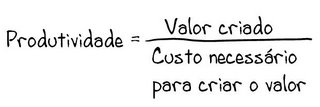
Comecei a ouvir, durante o jogging, o livro "The Knack" porque tinha como co-author Bo Burlingham, autor que escreve sobre PMEs americanas que se preocupam em fazer a diferença e não estão numa corrida desenfreada para crescerem..
.
E tem sido uma excelente surpresa, capítulo atrás de capítulo, mensagens poderosas em sintonia com a pregação feita neste blogue. Por exemplo, acerca do capítulo VIII, um capítulo particularmente rico:
.
"While I completely agree with the old saying that “nothing happens without a sale,” it does not follow that all sales are equal. Some sales are much better than others — a concept that salespeople often have a hard time dealing with. (Moi ici: Esta verdade é tão desconhecida e tão importante... meu Deus!!!) That’s partly because they have a sales mentality. They’ve been conditioned to think that any sale is a good sale, and the larger the volume, the better. In fact, the size of the sale is a lot less important than the amount of gross profi t you’re going to earn on it. Too many low-margin sales can drive you out of business.
.
By the same token, many entrepreneurs think that they should focus on signing up big customers.
.
In the long run, he’d be much better off with a lot of small customers than with one or two big ones.
Small customers are the backbone of a solid, stable, profitable business — especially a service business.
...
Not that there’s anything wrong with having big customers. Sooner or later, most of us need them to grow. But you should never look down on your small customers or take them for granted. The more you have, the happier you’ll be. Why? I can give you three reasons.
First, you get better gross margins with small customers because they pay more for your services. (Moi ici: E os comerciais conhecem as margens dos artigos que vendem? E as empresas conhecem as margens dos artigos que produzem?) They have no choice. They simply don’t have the negotiating power of large customers. As a result, you can charge small customers the top price.
...
Second, small customers bring stability to a business. If you treat small customers right, they’ll stay with you forever. That’s partly because they’re loyal, and partly because— like most of us—they tend to resist change. It’s also true, however, that they’re much less likely than big customers to be lured away by competitors, if only because most companies don’t seek out small customers.
...
Third, a broad base of small customers makes your business less vulnerable to the loss of any single customer. That’s why—when you apply for a loan—a bank will ask you to list all of your customers that account for more than 10 percent of your sales, as well as the percentage of sales that each one represents. If you do more than 30 of sales with any single customer, you’re in trouble."
.
Continua.
sexta-feira, junho 03, 2011

O mundo a mudar outra vez
"Take supply chain decisions. The trend toward significant offshoring will most likely continue (Moi ici: Pessoalmente acredito que já está em retrocesso). But many companies are becoming concerned that widely dispersed, low-cost supply chains make them vulnerable to protectionist governments, rising transportation costs, and quality problems. Some are taking steps to make their supply chains shorter, simpler, and stronger, in effect reducing internal distance within their production networks to better manage their exposure."
.
Tantas oportunidades a serem agarradas no mundo do B2B pelas nossas PMEs, fazendo uso da proximidade e flexibilidade.
Trecho retirado de "The Cosmopolitan Corporation" de Pankaj Ghemawat e publicado no número de Maio da HBR.
.
Tantas oportunidades a serem agarradas no mundo do B2B pelas nossas PMEs, fazendo uso da proximidade e flexibilidade.
Trecho retirado de "The Cosmopolitan Corporation" de Pankaj Ghemawat e publicado no número de Maio da HBR.
Gente de carne e osso
WTH!!!
.
"No país dos talentos escondidos"
.
Faz-me suspeitar de conversa "feel good" we are all nice people and everything will be OK-
.
"O docente e empresário fundador da empreendedora Y-Dreams, António Câmara, a atleta olímpica Aurora Cunha e o velejador solitário e co-fundador da Portugal Ocean Race, Ricardo Diniz, foram o rosto visível de testemunhos de dinâmicas e posicionamentos positivos que contribuem para o sucesso individual e profissional."
.
Se me pedissem nomes tinha todo o gosto em indicar gente do mundo das empresas, gente concreta com resultados concretos, por exemplo:
.
"No país dos talentos escondidos"
.
Faz-me suspeitar de conversa "feel good" we are all nice people and everything will be OK-
.
"O docente e empresário fundador da empreendedora Y-Dreams, António Câmara, a atleta olímpica Aurora Cunha e o velejador solitário e co-fundador da Portugal Ocean Race, Ricardo Diniz, foram o rosto visível de testemunhos de dinâmicas e posicionamentos positivos que contribuem para o sucesso individual e profissional."
.
Se me pedissem nomes tinha todo o gosto em indicar gente do mundo das empresas, gente concreta com resultados concretos, por exemplo:
- o José Armindo;
- o Stephen Morais;
- e muitos outros empresários que tenho conhecido pessoalmente ao longo dos anos e que, sem fanfarra, vão construindo um futuro melhor para a comunidade onde operam.
quinta-feira, junho 02, 2011
Para onde foram os escravos? Para onde foi o dumping social?
A economia é um jogo de vasos comunicantes.
.
"The biggest cause for the price hikes has been the rapid wage inflation in China's factory-heavy coastal region, where labor is in short supply. Worker salaries have almost doubled in the past year, to 2,000 yuan ($308) per month in factories in Guangdong province, the nation's manufacturing hub, according to toymakers attending the fair. "Wages are increasing day by day," says Jimmy Tang, general manager for Chenghai Junfa Toys in Shantou. "If you don't do it, people go somewhere else.""
.
Trecho retirado de "Toys from China Will Cost More".
.
Onde estão os batoteiros deste país? Não deixem fugir a oportunidade...
.
"The biggest cause for the price hikes has been the rapid wage inflation in China's factory-heavy coastal region, where labor is in short supply. Worker salaries have almost doubled in the past year, to 2,000 yuan ($308) per month in factories in Guangdong province, the nation's manufacturing hub, according to toymakers attending the fair. "Wages are increasing day by day," says Jimmy Tang, general manager for Chenghai Junfa Toys in Shantou. "If you don't do it, people go somewhere else.""
.
Trecho retirado de "Toys from China Will Cost More".
.
Onde estão os batoteiros deste país? Não deixem fugir a oportunidade...
A minha árvore da estratégia seria outra
O artigo é interessante "Strategy on One Page" mas tem várias falhas.
.
A figura mostra-as:
 Não concordo com a sequência.
.
Primeira: 1.Root purpose.
Qual a razão de ser da empresa? Acrescento, em que podemos ser bons? Em que podemos fazer a diferença? Onde podemos fazer batota para criar/aproveitar uma vantagem competitiva?
Tanto pode ser a primeira, como a segunda.
.
Segunda: 2.What is your value proposition.
Errado, na minha opinião!!! Não faz sentido falar em proposta de valor sem previamente ter identificado os clientes-alvo. São os clientes que criam valor, o valor não vem embutido no produto ou serviço que compram. O valor é gerado quando eles, os clientes, sentem as consequências, as experiências de terem usado a a plataforma de serviços disponibilizada pelo fornecedor. Os fornecedores não criam valor (afirmação que uso aqui para simplificar mas que não é totalmente verdade. Os fornecedores não criam valor, os fornecedores facilitam os meios para que os clientes criem valor. Contudo, os fornecedores podem fazer ampliar a sensação de valor sentida pelos clientes, e aí há um pouco de co-criação por parte do fornecedor... ou talvez, ampliação do valor sentido pelos clientes)
Assim, não faz sentido pensar numa proposta de valor sem ter previamente identificados os clientes-alvo e o que buscam e valorizam.
Por mim seria a terceira.
.
Terceira: 3.Who are you trying to serve/target?
Esta seria a minha primeira ou segunda. Quem são os clientes-alvo? O que procuram e valorizam? O que é que para eles é valor?
.
Se for a primeira, escolho o alvo e depois monto o negócio em função dele.
Se tiver limitações de capital ou outros recursos, identifico onde posso ser bom, onde posso ter vantage competitiva sustentável e, depois, procuro alvo em função dessa restrição.
.
Quarta: How will you know you are winning?
Isto não tem nada a ver com estratégia, isto é algo que permite medir a execução da estratégia e/ou avaliar a validade das hipóteses subjacentes à estratégia.
.
A minha quarta seria Qual o mosaico de actividades e recursos fundamentais para criar a proposta de valor?
.
A figura mostra-as:

.
Primeira: 1.Root purpose.
Qual a razão de ser da empresa? Acrescento, em que podemos ser bons? Em que podemos fazer a diferença? Onde podemos fazer batota para criar/aproveitar uma vantagem competitiva?
Tanto pode ser a primeira, como a segunda.
.
Segunda: 2.What is your value proposition.
Errado, na minha opinião!!! Não faz sentido falar em proposta de valor sem previamente ter identificado os clientes-alvo. São os clientes que criam valor, o valor não vem embutido no produto ou serviço que compram. O valor é gerado quando eles, os clientes, sentem as consequências, as experiências de terem usado a a plataforma de serviços disponibilizada pelo fornecedor. Os fornecedores não criam valor (afirmação que uso aqui para simplificar mas que não é totalmente verdade. Os fornecedores não criam valor, os fornecedores facilitam os meios para que os clientes criem valor. Contudo, os fornecedores podem fazer ampliar a sensação de valor sentida pelos clientes, e aí há um pouco de co-criação por parte do fornecedor... ou talvez, ampliação do valor sentido pelos clientes)
Assim, não faz sentido pensar numa proposta de valor sem ter previamente identificados os clientes-alvo e o que buscam e valorizam.
Por mim seria a terceira.
.
Terceira: 3.Who are you trying to serve/target?
Esta seria a minha primeira ou segunda. Quem são os clientes-alvo? O que procuram e valorizam? O que é que para eles é valor?
.
Se for a primeira, escolho o alvo e depois monto o negócio em função dele.
Se tiver limitações de capital ou outros recursos, identifico onde posso ser bom, onde posso ter vantage competitiva sustentável e, depois, procuro alvo em função dessa restrição.
.
Quarta: How will you know you are winning?
Isto não tem nada a ver com estratégia, isto é algo que permite medir a execução da estratégia e/ou avaliar a validade das hipóteses subjacentes à estratégia.
.
A minha quarta seria Qual o mosaico de actividades e recursos fundamentais para criar a proposta de valor?
Quer criar um negócio? (parte II)
Quando escrevi este postal "Quer criar um negócio?" a ideia passou-me pela mente, por causa de um workshop que fiz há semanas. A ideia não é nova, já mais do que um empresário produtor de bens de investimento de grande dimensão, sujeitos a um grande investimento de capital inicial, discutiu a ideia comigo.
.
Num cenário de retracção económica, de falta de dinheiro para investir, e se as empresas montarem um modelo de negócio assente não na venda mas no aluguer?
.
Pois bem, a BMW está a testar o serviço "BMW pilots online car rental scheme"
.
.
Tantas oportunidades que se escondem por detrás desta abordagem...
.
Num cenário de retracção económica, de falta de dinheiro para investir, e se as empresas montarem um modelo de negócio assente não na venda mas no aluguer?
.
Pois bem, a BMW está a testar o serviço "BMW pilots online car rental scheme"
.
.
Tantas oportunidades que se escondem por detrás desta abordagem...
Service-dominant logic (parte I)
Há anos que procurava um filão destes.
.
A minha formação de base é engenharia. Praticamente tudo o que desenvolvo com as empresas no campo da estratégia resulta do meu estudo, da minha reflexão e da experiência que vou vivendo com as empresas.
.
Sinto que existe uma grande lacuna entre o que vou construindo como sendo o meu arsenal de ferramentas, de abordagens e de perspectivas da realidade e o que a academia me oferece.
.
A realidade de trabalhar com as empresas é implacável, as experiências têm de resultar, o que não resulta é rapidamente eliminado ou retrabalhado.
.
Assim, há anos que descobri a importância do valor para o sucesso das empresas. Não o valor na concepção marxiana, como sendo algo embutido nos produtos, durante a produção, pelo fornecedor, mas o valor gerado na mente do cliente. Valor como algo de subjectivo e diferente de cliente para cliente.
.
Para reduzir a variabilidade na interpretação do que é valor, o passo seguinte, levou-me a descobrir a importância do conceito de cliente-alvo e daí chegar ao conceito de proposta de valor.
.
Mas a sede de perceber melhor o que é isso de valor, como é que ele é originado, capturado e extraído, nunca se extingue, está sempre presente, é sempre testada assim que trabalhamos com um cliente.
.
Foi com uma grande satisfação que descobri um filão interessante que desconhecia e há muito tempo procurava. Aconselho a leitura de "Evolving to a New Dominant Logic for Marketing" de Stephen L. Vargo & Robert F. Lusch, publicado no Journal of Marketing em Janeiro de 2004.
.
 Segundo os autores, os fornecedores produzem plataformas que os clientes podem usar para criar valor na sua vida. E só os clientes podem criar valor, por isso, os fornecedores apenas podem apresentar propostas de valor. O que os clientes compram é a capacidade de prestação de serviços que criam valor.
.
Alguns recortes do artigo
.
"marketing has moved from a goods-dominant view, in which tangible output and discrete transactions were central, to a service-dominant view, in which intangibility, exchange processes, and relationships are central.” (Moi ici: Fugir dos atributos do produto ou serviço, para nos concentrarmos na experiência que o cliente vai experienciar)
…
“we define services as the application of specialized competences (knowledge and skills) through deeds, processes, and performances for the benefit of another entity or the entity itself.”
…
“define operand resources as resources on which an operation or act is performed to produce an effect, and they compare operand resources with operant resources, which are employed to act on operand resources (and other operant recourses).” (Moi ici: Quanto mais intangibilidade as empresas incorporam na oferta, mais "operant resources" actuam e transforma outros operant resources que por sua vez transformam operand resources)
…
“A goods-centered dominant logic developed in which the operand resources were considered primary.” (Moi ici: Está obsoleta esta lógica dominante. No entanto, a academia, os políticos e os economistas continuam mergulhados nela. Por isso só conhecem a alavanca do preço)
…
“Operant resources are resources that produce effects”
…
““it is never resources themselves that are the ‘inputs’ to the production process, but only the services that the resources can render.”
Operant resources are often invisible and intangible; often they are core competences or organizational processes.”
…
“The service-centered dominant logic perceives operant resources as primary, because they are the producers of effects. This shift in the primacy of resources has implications for how exchange processes, markets, and customers are perceived and approached.”
…
“The service-centered view of marketing implies that marketing is a continuous series of social and economic processes that is largely focused on operant resources with which the firm is constantly striving to make better value propositions than its competitors. In a free enterprise system, the firm primarily knows whether it is making better value propositions from the feedback it receives from the marketplace in terms of firm financial performance.
Because firms can always do better at serving customers and improving financial performance, the service-centered view of marketing perceives marketing as a continuous learning process (directed at improving operant resources). The service-centered view can be stated as follows:
…
“Core competences are not physical assets but intangible processes; they are “bundles of skills and technologies””
…
““the competitive advantage of firms stems from dynamic capabilities rooted in high performance routines operating inside the firm, embedded in the firm’s processes, and conditioned by its history.” Hamel and Prahalad discuss “competition for competence,” or competitive advantage resulting from competence making a “disproportionate contribution to customer-perceived value.””
…
““core competence is communication, involvement, and a deep commitment to working across organizational boundaries.” In addition, they state (Hamel and Prahalad) that core competences are “collective learning in the organization, especially [about] how to coordinate diverse production skills.””
…
“The service-centered view of marketing is customercentric and market driven (Moi ici: Concentrar tudo no serviço aos clientes-alvo). This means more than simply being consumer oriented; it means collaborating with and learning from customers and being adaptive to their individual and dynamic needs. A service-centered dominant logic implies that value is defined by and cocreated with the consumer rather than embedded in output. Haeckel (1999) observes successful firms moving from practicing a “make-and-sell” strategy to a “sense-and-respond” strategy. Day (1999, p. 70) argues for thinking in terms of self-reinforcing “value cycles” rather than linear value chains. In the servicecentered view of marketing, firms are in a process of continual hypothesis generation and testing. Outcomes (e.g., financial) are not something to be maximized but something to learn from as firms try to serve customers better and improve their performance.”"
.
Continua
.
A minha formação de base é engenharia. Praticamente tudo o que desenvolvo com as empresas no campo da estratégia resulta do meu estudo, da minha reflexão e da experiência que vou vivendo com as empresas.
.
Sinto que existe uma grande lacuna entre o que vou construindo como sendo o meu arsenal de ferramentas, de abordagens e de perspectivas da realidade e o que a academia me oferece.
.
A realidade de trabalhar com as empresas é implacável, as experiências têm de resultar, o que não resulta é rapidamente eliminado ou retrabalhado.
.
Assim, há anos que descobri a importância do valor para o sucesso das empresas. Não o valor na concepção marxiana, como sendo algo embutido nos produtos, durante a produção, pelo fornecedor, mas o valor gerado na mente do cliente. Valor como algo de subjectivo e diferente de cliente para cliente.
.
Para reduzir a variabilidade na interpretação do que é valor, o passo seguinte, levou-me a descobrir a importância do conceito de cliente-alvo e daí chegar ao conceito de proposta de valor.
.
Mas a sede de perceber melhor o que é isso de valor, como é que ele é originado, capturado e extraído, nunca se extingue, está sempre presente, é sempre testada assim que trabalhamos com um cliente.
.
Foi com uma grande satisfação que descobri um filão interessante que desconhecia e há muito tempo procurava. Aconselho a leitura de "Evolving to a New Dominant Logic for Marketing" de Stephen L. Vargo & Robert F. Lusch, publicado no Journal of Marketing em Janeiro de 2004.
.

.
Alguns recortes do artigo
.
"marketing has moved from a goods-dominant view, in which tangible output and discrete transactions were central, to a service-dominant view, in which intangibility, exchange processes, and relationships are central.” (Moi ici: Fugir dos atributos do produto ou serviço, para nos concentrarmos na experiência que o cliente vai experienciar)
…
“we define services as the application of specialized competences (knowledge and skills) through deeds, processes, and performances for the benefit of another entity or the entity itself.”
…
“define operand resources as resources on which an operation or act is performed to produce an effect, and they compare operand resources with operant resources, which are employed to act on operand resources (and other operant recourses).” (Moi ici: Quanto mais intangibilidade as empresas incorporam na oferta, mais "operant resources" actuam e transforma outros operant resources que por sua vez transformam operand resources)
…
“A goods-centered dominant logic developed in which the operand resources were considered primary.” (Moi ici: Está obsoleta esta lógica dominante. No entanto, a academia, os políticos e os economistas continuam mergulhados nela. Por isso só conhecem a alavanca do preço)
…
“Operant resources are resources that produce effects”
…
““it is never resources themselves that are the ‘inputs’ to the production process, but only the services that the resources can render.”
Operant resources are often invisible and intangible; often they are core competences or organizational processes.”
…
“The service-centered dominant logic perceives operant resources as primary, because they are the producers of effects. This shift in the primacy of resources has implications for how exchange processes, markets, and customers are perceived and approached.”
…
“The service-centered view of marketing implies that marketing is a continuous series of social and economic processes that is largely focused on operant resources with which the firm is constantly striving to make better value propositions than its competitors. In a free enterprise system, the firm primarily knows whether it is making better value propositions from the feedback it receives from the marketplace in terms of firm financial performance.
Because firms can always do better at serving customers and improving financial performance, the service-centered view of marketing perceives marketing as a continuous learning process (directed at improving operant resources). The service-centered view can be stated as follows:
- 1. Identify or develop core competences, the fundamental knowledge and skills of an economic entity that represent potential competitive advantage.
- 2. Identify other entities (potential customers) that could benefit from these competences. (Moi ici: Quem são os clientes-alvo?)
- 3. Cultivate relationships that involve the customers in developing customized, competitively compelling value propositions to meet specific needs. (Moi ici: Qual o mosaico de actividades e recursos e infraestruturas que vai gerar a proposta de valor para os clientes-alvo?)
- 4. Gauge marketplace feedback by analyzing financial performance from exchange to learn how to improve the firm’s offering to customers and improve firm performance.”
…
“Core competences are not physical assets but intangible processes; they are “bundles of skills and technologies””
…
““the competitive advantage of firms stems from dynamic capabilities rooted in high performance routines operating inside the firm, embedded in the firm’s processes, and conditioned by its history.” Hamel and Prahalad discuss “competition for competence,” or competitive advantage resulting from competence making a “disproportionate contribution to customer-perceived value.””
…
““core competence is communication, involvement, and a deep commitment to working across organizational boundaries.” In addition, they state (Hamel and Prahalad) that core competences are “collective learning in the organization, especially [about] how to coordinate diverse production skills.””
…
“The service-centered view of marketing is customercentric and market driven (Moi ici: Concentrar tudo no serviço aos clientes-alvo). This means more than simply being consumer oriented; it means collaborating with and learning from customers and being adaptive to their individual and dynamic needs. A service-centered dominant logic implies that value is defined by and cocreated with the consumer rather than embedded in output. Haeckel (1999) observes successful firms moving from practicing a “make-and-sell” strategy to a “sense-and-respond” strategy. Day (1999, p. 70) argues for thinking in terms of self-reinforcing “value cycles” rather than linear value chains. In the servicecentered view of marketing, firms are in a process of continual hypothesis generation and testing. Outcomes (e.g., financial) are not something to be maximized but something to learn from as firms try to serve customers better and improve their performance.”"
.
Continua
Qual a margem de cada cliente?
Empresa carregada de dívidas, incapaz de suportar os seus custos fecha. Televisões interrogam trabalhadores à entrada da empresa:
.
- É uma surpresa para nós! Estávamos cheios de encomendas! Tem de haver falcatrua do empresário.
.
"We also came across some customers we didn’t want. They were mainly small customers who had already heard from our collectors— repeatedly. We had to hound them constantly for payment. It would take six months to a year for us to collect from them, and then they would pay only because they needed to retrieve a box.
That type of customer literally takes money out of your pocket. To begin with, you don’t have the use of the money that the customer owes you and promised to give you when you signed him up. Let’s say his outstanding bill is for $1,000. If he doesn’t pay on time, you have to borrow an extra $1,000 from the bank. Suppose you’re paying 9 percent annual interest on your loans. That’s $90 per year. So your $1,000 is really just $910. Meanwhile, your accounting person is spending half an hour each month calling this guy and listening to his lame excuses and false promises. That’s six hours per year. If you pay the accountant $25 an hour, with benefits figured in, the slow payer costs you an additional $150 annually, meaning that the $1,000 is now down to $760.
Look at what that does to your gross margins. Normally, I would expect an account that small to have a gross margin of at least 40 percent. It wouldn’t be worth accepting the business for less, even if the guy paid on time. So, on $1,000, you should be earning a gross profi t of $400. But because he takes a year to pay—and makes you spend $260 on interest and labor that you wouldn’t have to spend otherwise—your gross profit is $140. That’s a 14 percent gross margin. I don’t know about you, but if we had too many accounts like that, we’d be out of business! I don’t want or need that kind of customer, and so we made those accounts pay up or leave."
.
Trecho retirado de "The Knack - How Street-Smart Entrepreneurs Learn to Handle Whatever Comes Up" de Norm Brodsky e Bo Burlingham
.
- É uma surpresa para nós! Estávamos cheios de encomendas! Tem de haver falcatrua do empresário.
.
"We also came across some customers we didn’t want. They were mainly small customers who had already heard from our collectors— repeatedly. We had to hound them constantly for payment. It would take six months to a year for us to collect from them, and then they would pay only because they needed to retrieve a box.
That type of customer literally takes money out of your pocket. To begin with, you don’t have the use of the money that the customer owes you and promised to give you when you signed him up. Let’s say his outstanding bill is for $1,000. If he doesn’t pay on time, you have to borrow an extra $1,000 from the bank. Suppose you’re paying 9 percent annual interest on your loans. That’s $90 per year. So your $1,000 is really just $910. Meanwhile, your accounting person is spending half an hour each month calling this guy and listening to his lame excuses and false promises. That’s six hours per year. If you pay the accountant $25 an hour, with benefits figured in, the slow payer costs you an additional $150 annually, meaning that the $1,000 is now down to $760.
Look at what that does to your gross margins. Normally, I would expect an account that small to have a gross margin of at least 40 percent. It wouldn’t be worth accepting the business for less, even if the guy paid on time. So, on $1,000, you should be earning a gross profi t of $400. But because he takes a year to pay—and makes you spend $260 on interest and labor that you wouldn’t have to spend otherwise—your gross profit is $140. That’s a 14 percent gross margin. I don’t know about you, but if we had too many accounts like that, we’d be out of business! I don’t want or need that kind of customer, and so we made those accounts pay up or leave."
.
Trecho retirado de "The Knack - How Street-Smart Entrepreneurs Learn to Handle Whatever Comes Up" de Norm Brodsky e Bo Burlingham
quarta-feira, junho 01, 2011
A economia não é homogénea!
"Vendas de materiais de construção caem quase 50 por cento homólogos no primeiro trimestre"
.
Ou seja, os parabéns ainda são mais merecidos!!!
.
Exemplos concretos da diversidade que existe dentro de um mesmo sector de actividade.
.
A diversidade é danada! Como torna a modelação do fenómeno económico muito difícil, os macro-economistas optam por trabalhar com médias.
.
Depois, todo o mundo olha para os números e pensa na realidade como um todo homogéneo.
.
A solução, o truque para dar a volta, está precisamente na diversidade, no que a diversidade revela e a média esconde.
.
E quem é que se apercebe da diversidade? E quem é que mergulha na diversidade?
.
Não, não são os académicos, nem os ministros... e voltamos a D. Quixote:
.
"Don Quixote defies ordinary conceptions of reality. He asks whether it is better to accept reality or to invent it, why should we not believe in Dulcinea and in a more beautiful world. Don Quixote’s “madness” therefore consists of living in a world that he has created rather than in the one others experience and of not caring about the consequences of his action." (Moi ici: isto é mesmo poesia)
.
Quem está de fora, perdido no meio das média não vê alternativa, acha que D. Quixote é maluco... mas há sempre uma alternativa à espera de ser criada.
.
"On the other hand, reality can be created by action. It need not necessarily be taken as given. This extends to the discourse of a leader: Dulcinea is created by Don Quixote’s imagination. Reality is in part a social construction, and interpretation plays an important role in this construction.
...
Don Quixote teaches us that the meaning of life is neither given to us in advance nor discovered, but affirmed by an act of will."
.
Quem está de fora e vive num mundo de certezas não tem pistas, quem está por dentro é movido pela esperança de uma alternativa e pela curiosidade
.
Ou seja, os parabéns ainda são mais merecidos!!!
.
Exemplos concretos da diversidade que existe dentro de um mesmo sector de actividade.
.
A diversidade é danada! Como torna a modelação do fenómeno económico muito difícil, os macro-economistas optam por trabalhar com médias.
.
Depois, todo o mundo olha para os números e pensa na realidade como um todo homogéneo.
.
A solução, o truque para dar a volta, está precisamente na diversidade, no que a diversidade revela e a média esconde.
.
E quem é que se apercebe da diversidade? E quem é que mergulha na diversidade?
.
Não, não são os académicos, nem os ministros... e voltamos a D. Quixote:
.
"Don Quixote defies ordinary conceptions of reality. He asks whether it is better to accept reality or to invent it, why should we not believe in Dulcinea and in a more beautiful world. Don Quixote’s “madness” therefore consists of living in a world that he has created rather than in the one others experience and of not caring about the consequences of his action." (Moi ici: isto é mesmo poesia)
.
Quem está de fora, perdido no meio das média não vê alternativa, acha que D. Quixote é maluco... mas há sempre uma alternativa à espera de ser criada.
.
"On the other hand, reality can be created by action. It need not necessarily be taken as given. This extends to the discourse of a leader: Dulcinea is created by Don Quixote’s imagination. Reality is in part a social construction, and interpretation plays an important role in this construction.
...
Don Quixote teaches us that the meaning of life is neither given to us in advance nor discovered, but affirmed by an act of will."
.
Quem está de fora e vive num mundo de certezas não tem pistas, quem está por dentro é movido pela esperança de uma alternativa e pela curiosidade
Estamos em boa companhia - parte I

.
E a companhia melhora. Segurem Assis, está cada vez mais eufórico.


.
A disparidade entre os gastos em fun.ção do PIB e o número de funcionários por 1000 habitantes mostra como os salários da função pública são demasiado altos para o nosso nível de desenvolvimento
Começa a ser recorrente neste blogue
Mais um para a série:
.
"Para chocalhar modelos mentais obsoletos"
.
Ou para a série:
.
"O que andam as associações empresariais portuguesas a fazer para tirar partido disto?"
.
"As China’s Workers Get a Raise, Companies Fret"
.
"Wages are surging this year in China and in its main low-wage Asian rivals, benefiting workers across the region. But the increases confront trading companies and Western retailers with surging costs, and are making higher price tags likely for American and European consumers."
...
"the largest trading company supplying Chinese consumer goods to American retail chains, said in a speech here on Tuesday that the company’s average costs for goods surged 15 percent in the first five months of this year compared with the same period last year."
...
"Bangladesh raised its minimum wage by 87 percent late last year, yet apparel factories there are still struggling to find enough workers to complete ever-rising orders."
...
"Yet wages in Vietnam have been rising as fast as Chinese wages, or faster, while India has posed many problems for large-scale manufacturers. Mr. Rockowitz said that India’s infrastructure — roads and ports — was “really poor,” while labor issues, including government regulations, make it hard to build Chinese-style factories for tens of thousands of workers."
.
O artigo é escrito para uma sociedade de consumidores, num país onde, ao contrário do nosso, consumir não é pecado. Por isso, o artigo passa ao lado de algo muito interessante: Como é que as PMEs portuguesas podem aproveitar esta oportunidade para reconquistar clientes?
.
E andam os nossos políticos e académicos, bem como a maioria das associações empresariais, distraídos com a guerra dos custos... andam tão distraídos com aquilo que no seu modelo mental são pontos fracos, que se esquecem do mais importante, da conjugação de Pontos Fortes com as Oportunidades!!!
.
Um futuro melhor só se constrói alicerçado em Pontos Fortes conjugados com Oportunidades! Tudo o resto é, exagero claro, minimizar prejuízos e proteger a rectaguarda.
.
"Para chocalhar modelos mentais obsoletos"
.
Ou para a série:
.
"O que andam as associações empresariais portuguesas a fazer para tirar partido disto?"
.
"As China’s Workers Get a Raise, Companies Fret"
.
"Wages are surging this year in China and in its main low-wage Asian rivals, benefiting workers across the region. But the increases confront trading companies and Western retailers with surging costs, and are making higher price tags likely for American and European consumers."
...
"the largest trading company supplying Chinese consumer goods to American retail chains, said in a speech here on Tuesday that the company’s average costs for goods surged 15 percent in the first five months of this year compared with the same period last year."
...
"Bangladesh raised its minimum wage by 87 percent late last year, yet apparel factories there are still struggling to find enough workers to complete ever-rising orders."
...
"Yet wages in Vietnam have been rising as fast as Chinese wages, or faster, while India has posed many problems for large-scale manufacturers. Mr. Rockowitz said that India’s infrastructure — roads and ports — was “really poor,” while labor issues, including government regulations, make it hard to build Chinese-style factories for tens of thousands of workers."
.
O artigo é escrito para uma sociedade de consumidores, num país onde, ao contrário do nosso, consumir não é pecado. Por isso, o artigo passa ao lado de algo muito interessante: Como é que as PMEs portuguesas podem aproveitar esta oportunidade para reconquistar clientes?
.
E andam os nossos políticos e académicos, bem como a maioria das associações empresariais, distraídos com a guerra dos custos... andam tão distraídos com aquilo que no seu modelo mental são pontos fracos, que se esquecem do mais importante, da conjugação de Pontos Fortes com as Oportunidades!!!
.
Um futuro melhor só se constrói alicerçado em Pontos Fortes conjugados com Oportunidades! Tudo o resto é, exagero claro, minimizar prejuízos e proteger a rectaguarda.
Marketing para PMEs - B2B
Quando falo na necessidade das PMEs se darem a conhecer, na necessidade das PMEs criarem a sua marca, muitos empresários olham para mim e dizem:
.
- Sabe quanto é que isso custa?
.
.
Julgo que os empresários têm na mente uma imagem ultrapassada pela tecnologia.
.
Costumo desafiá-los a criar um blogue.
.
Há dias, encontrei uma empresária no comboio que me contou, com uma ponta de orgulho, que tinha recebido a primeira encomenda para uma bomba peristáltica que tinham começado a fabricar.
.
Logo voltei à carga:
.
-Está a ver, se já tivesse um blogue da empresa podia contar essa novidade, podia falar das vantagens dessa bomba, podia falar sobre como nasceu a ideia de fabricar esse tipo de bomba, podia mostrar como essa bomba realmente é melhor que a anterior.
.
.
Só com este caso a empresa mostraria que fabrica esse tipo de bombas, mostraria a sua preocupação com as dificuldades dos clientes (foi por causa disso que nasceu a ideia de fabricar a bomba), mostraria que há ali gente capaz de pegar num desafio e resolvê-lo.
.
É fácil criar um blogue. É fácil, para quem vive os seus produtos e serviços falar deles e das relações amorosas com clientes e fornecedores.
.
Não se pode é ter pressa. É uma corrida de trás para a frente.
.
Assim, foi com interesse que encontrei este postal que vai ao encontro deste pensamento "12 Reasons to Put Blogs at the Center of Your Content Marketing":
.
 Olhando para o gráfico:
.
- Sabe quanto é que isso custa?
.
.
Julgo que os empresários têm na mente uma imagem ultrapassada pela tecnologia.
.
Costumo desafiá-los a criar um blogue.
.
Há dias, encontrei uma empresária no comboio que me contou, com uma ponta de orgulho, que tinha recebido a primeira encomenda para uma bomba peristáltica que tinham começado a fabricar.
.
Logo voltei à carga:
.
-Está a ver, se já tivesse um blogue da empresa podia contar essa novidade, podia falar das vantagens dessa bomba, podia falar sobre como nasceu a ideia de fabricar esse tipo de bomba, podia mostrar como essa bomba realmente é melhor que a anterior.
.
.
Só com este caso a empresa mostraria que fabrica esse tipo de bombas, mostraria a sua preocupação com as dificuldades dos clientes (foi por causa disso que nasceu a ideia de fabricar a bomba), mostraria que há ali gente capaz de pegar num desafio e resolvê-lo.
.
É fácil criar um blogue. É fácil, para quem vive os seus produtos e serviços falar deles e das relações amorosas com clientes e fornecedores.
.
Não se pode é ter pressa. É uma corrida de trás para a frente.
.
Assim, foi com interesse que encontrei este postal que vai ao encontro deste pensamento "12 Reasons to Put Blogs at the Center of Your Content Marketing":
.

- A primeira razão é um erro! Deve prejudicar mais do que beneficiar, ao transmitir uma imagem de frete, de conversa fiada, de demasiado institucional, ...
- A segunda razão é uma consequência, não alimenta por si a razão de ser de um blogue de empresa;
- A terceira é a mais importante no mundo do B2B, para uma empresa se dar a conhecer e ser reconhecida;
- A quarta permite criar uma relação, uma cumplicidade, um alinhamento.
terça-feira, maio 31, 2011
Mais sintomas
Sintoma da mudança que a falta de dinheiro a sério vai impor.
.
Sintoma de um modo de vida insustentável.
.
Vão começar a surgir uns atrás dos outros.
.
"Grande Prémio do Minho de ciclismo foi suspenso"
.
"O Grande Prémio do Minho de ciclismo foi suspenso devido ao elevado custo do policiamento da GNR, cujo orçamento para 2011 ascendia a mais de nove mil euros, anunciou a organização esta terça-feira.
Em comunicado, a Associação de Ciclismo do Minho (ACM) revela que, 34 anos depois da primeira edição da prova e depois de ser confrontada com o orçamento da GNR para o policiamento da prova de sub-23, a mesma não é viável."
.
Sintoma de um modo de vida insustentável.
.
Vão começar a surgir uns atrás dos outros.
.
"Grande Prémio do Minho de ciclismo foi suspenso"
.
"O Grande Prémio do Minho de ciclismo foi suspenso devido ao elevado custo do policiamento da GNR, cujo orçamento para 2011 ascendia a mais de nove mil euros, anunciou a organização esta terça-feira.
Em comunicado, a Associação de Ciclismo do Minho (ACM) revela que, 34 anos depois da primeira edição da prova e depois de ser confrontada com o orçamento da GNR para o policiamento da prova de sub-23, a mesma não é viável."
Oportunidades procuram-se, não se esperam
Quando a maioria segue e vai na onda é sempre útil parar e pensar em alternativas.
.
Este artigo "More companies today are opting for buyers over designers" descreve algo que sigo há anos, e que, na minha opinião, tem contribuído para o descrédito das lojas multi-marca, ou das lojas em que a marca é a da loja.
.
Se pensarmos na nossa relação com as lojas:
.
Este artigo "More companies today are opting for buyers over designers" descreve algo que sigo há anos, e que, na minha opinião, tem contribuído para o descrédito das lojas multi-marca, ou das lojas em que a marca é a da loja.
.
Se pensarmos na nossa relação com as lojas:
- podemos ouvir uma conversa que elas dizem querer ter connosco;
- podemos ouvir a conversa que realmente têm connosco;
- podemos ouvir a conversa que depreendemos das notícias e da internet;
- podemos ouvir e sentir a conversa que os produtos e serviços nos transmitem quando os usamos;
Bom já são 4 conversas em simultâneo. Se colocarem quatro conversas desalinhadas a terem lugar em simultâneo (basta pôr 4 vídeos de uma conversa no Youtube a passarem em simultâneo para perceber qual é o resultado) temos uma algazarra incompreensível.
.
Isto não pode durar muito tempo, isto não dura muito tempo.
.
A proximidade entre o fabricante e as lojas vai ser cada vez mais importante. O que é que as nossas PMEs podem fazer para acrescentar mais design aos seus produtos? O que é que as nossas PMEs podem fazer para reforçarem a sua proposta de valor? O que é que as nossas PMEs podem fazer para ter em conta o cliente loja?
.
Momentos de crise, momentos de mudança, abrem fendas nas estruturas incumbentes. Mentes ágeis e flexíveis podem desenhar percursos para aproveitar essas fendas e assentar os alicerces de um futuro mais interessante.
.
A herança dos Habsburgo
Realmente fascinante e interessante:
.
"Nobel laureate Elinor Ostrom emphasised that trust in the key institutions of the state, and their proper functioning, is crucial in facilitating collective action. The courts and the police as the enforcers of rules in collective action have a crucial role to play in supporting trust in interactions between citizens and the state. Trust in state institutions and the rule of law has to be built up over time and needs to be sustained by repeated positive experiences. "Failed states" around the world witness how difficult it is to create well-functioning and well-respected institutions."
...
"Empires that ruled over long periods of time, sometimes for centuries, might have had enough time to build up formal and informal institutions that have lasted to the present day. In the context of Eastern Europe, the Habsburg Empire is considered to have had better administrative institutions than the Ottoman Empire or the Russian Empire. In contrast to these other empires in Eastern Europe, historians characterise the Habsburg bureaucracy as “fairly honest, quite hard-working, and generally high-minded” as well as relatively well-functioning and respected by the population."
...
"Our results show that past formal institutions can leave a long-lasting legacy through cultural norms – even after some are generations of being governed by other authorities. Nearly a century after its demise, the Habsburg Empire lives on in the people living within its former borders – in their attitudes towards and interactions with local state institutions. Comparing individuals living on either side of the long-gone Habsburg border within the same modern-day country, we find that respondents in a current household survey who live on former Habsburg territory have higher levels of trust in courts and police. They are also less likely to pay bribes for these local public services, demonstrating that the institutional heritage influences not only preferences and unilateral decisions but also bilateral bargaining situations in citizen-state interactions."
.
Trechos retirados de "How the long-gone Habsburg Empire is still visible in Eastern European bureaucracies today"
.
"Nobel laureate Elinor Ostrom emphasised that trust in the key institutions of the state, and their proper functioning, is crucial in facilitating collective action. The courts and the police as the enforcers of rules in collective action have a crucial role to play in supporting trust in interactions between citizens and the state. Trust in state institutions and the rule of law has to be built up over time and needs to be sustained by repeated positive experiences. "Failed states" around the world witness how difficult it is to create well-functioning and well-respected institutions."
...
"Empires that ruled over long periods of time, sometimes for centuries, might have had enough time to build up formal and informal institutions that have lasted to the present day. In the context of Eastern Europe, the Habsburg Empire is considered to have had better administrative institutions than the Ottoman Empire or the Russian Empire. In contrast to these other empires in Eastern Europe, historians characterise the Habsburg bureaucracy as “fairly honest, quite hard-working, and generally high-minded” as well as relatively well-functioning and respected by the population."
...
"Our results show that past formal institutions can leave a long-lasting legacy through cultural norms – even after some are generations of being governed by other authorities. Nearly a century after its demise, the Habsburg Empire lives on in the people living within its former borders – in their attitudes towards and interactions with local state institutions. Comparing individuals living on either side of the long-gone Habsburg border within the same modern-day country, we find that respondents in a current household survey who live on former Habsburg territory have higher levels of trust in courts and police. They are also less likely to pay bribes for these local public services, demonstrating that the institutional heritage influences not only preferences and unilateral decisions but also bilateral bargaining situations in citizen-state interactions."
.
Trechos retirados de "How the long-gone Habsburg Empire is still visible in Eastern European bureaucracies today"
A experiência pode ser uma desvantagem (parte III)
“Experience may possibly be the best teacher, but it is not a particularly good teacher.” (James March em "Ambiguities of Experience")
…
Experiential Knowledge is rooted in our sensitivity to qualities. But developing sensitivity is one matter; using this sensitivity to learn is another matter altogether.
…
The action and the consequence must be joined in perception. The relationship is what gives meaning; to grasp it is the object of all intelligence. (Moi ici: Costumo escrever que muita gente age como amadores a jogar bilhar. São incapazes de relacionar acções agora com consequências futuras. Tenho apontado vários exemplos ao longo dos anos)
…
Our personal experience is both limited and compelling. This combination leads us to overvalue the importance of the very small sample of experience our lives bring. While meaningful, this limited life experience can be very difficult to interpret; usually our interpretations are flawed in the many ways that March identifies. All these flawed interpretations lead us to build Conceptual Knowledge that is often incomplete and misdirecting.
…
One of these flaws is particularly problematic when it comes to developing artistry. When we experience effectiveness, the gravitational pull of this success often keeps us from exploring further; when we learn quickly in the moment, we often miss better options. (Moi ici: Fundamental a postura de seguir a curiosidade em vez da busca de certezas) As March says, ‘Experience is likely to generate confidence more reliably than competence and stop experimenting too soon. As a result, there is a persistent disparity between the assurance with which advice is provided by experienced people and the quality of the advice.”
.
Último recorte de "Artistry Unleashed" de Hilary Austen, um livro cuja leitura recomendo vivamente. Indispensável para quem não vê saída no mundo dos negócios, para quem só conhece o preço/custo como única alavanca para conquistar clientes.
Quer criar um negócio?
Quer criar um negócio?
.
“You often hear, for example, that to be successful you need a unique product or service, something nobody else has. Or that you should choose a business with as little competition as possible, that you’re better off having a market to yourself. My advice is exactly the opposite. I never want to be first in a market, and I always like to have a lot of competitors.
.
Yes, I want to be different from them, but the more people who are making money in an industry, the better I feel about going into it. There are actually three simple criteria I use in evaluating every new business I start. I suspect they’d work for about 80 percent of the people who are going into business for the first time.
.
Number one, I want a concept that’s been around for one hundred years or more. OK, maybe less than one hundred years. The important thing is that it’s an established concept, one that everybody understands. It’s not something new and revolutionary. Why? Because there is nothing more expensive than educating a market.
…
the second criterion: I want an industry that is antiquated. I don’t necessarily mean “ old-fashioned.” I’m talking about a business in which most companies are out of step with the customer. Maybe the customer’s needs have changed and the suppliers haven’t paid attention. Maybe they’re not up-to-date on the latest technology. In any case, there has been a change, and the industry hasn’t followed it.
…
third criterion for a successful new business: a niche. …
In fact, having a niche is critical to every start-up, but not for the reason most people think. It has to do with the high gross margins you must have to make sure your start-up capital lasts long enough for your business to achieve viability. If you’re the new kid in town, you can’t compete on price, (Moi ici: E andam os políticos, macro-economistas e académicos a sonhar com exportações baseadas no preço mais baixo) because you’ll go out of business. On the other hand, you do have to get customers. That means offering them more value at the going rate.
But how do you offer more value without increasing your direct costs, cutting your gross margins, and running through your start-up capital? The answer usually lies in the niche you’ve selected.”
.
- Critéro 1 - agricultura, pesca, metalomecânica, ...
- Critério 2 - agricultura concentrada em produtos de alto valor acrescentado, onde exista a vantagem do clima e da proximidade. Pesca concentrada em pescado de mais alto valor acrescentado. Serviços de metalomecânica subcontratados capazes de cumprirem prazos com rigor, ... (conheço n empresas que suspiram por subcontratados capazes de cumprirem prazos)
- Critério 3 - fugir da massificação, fugir da guerra do preço, fugir do volume. Concentrar, fazer pontaria, focar, focar, focar. Margem, margem, margem
Trechos retirados de "The Knack - How Street-Smart Entrepreneurs Learn to Handle Whatever Comes Up" de Norm Brodsky e Bo Burlingham.
O regresso à terra?
Em Outubro de 2008 escrevi "O regresso à terra?"
.
O canário grego mostra o caminho.
.
Quantas autarquias do interior desertificado e envelhecido estão-se a preparar para este cenário? Quantas estão a preparar formas de seduzir citadinos para voltar a insuflar vida nas suas casas, nas suas terras, nas suas ruas?
.
O canário grego mostra o caminho.
.
Quantas autarquias do interior desertificado e envelhecido estão-se a preparar para este cenário? Quantas estão a preparar formas de seduzir citadinos para voltar a insuflar vida nas suas casas, nas suas terras, nas suas ruas?
segunda-feira, maio 30, 2011
Pode ter consequências interessantes
O líder do PCP levanta a lebre "Jerónimo de Sousa: Saída do Euro “não deve ser tema tabu”" o canário grego é eloquente:
.
"Panic Capital Flight in Greece, Depositors Yank 1.5 Billion Euros in 2 Days; EU Wants Severe Bail-Out Conditions Including International Tax Collection"
.
Bastaram 2 dias para que 1,5 mil milhões voassem dos bancos gregos.
.
"It is significant that Thursday and Friday, banking sources estimate that rose around 1.5 billion euros in total! According to the same month in May estimated the outflow estimated at least 4 billion from 2 billion in April.
The majority of depositors rushed to withdraw for pensioners and small savers and amounts ranging from 2-3000 lifted until 10 -15 000 euros. (Moi ici: Não foram os ricos) Motivation in most cases it was the fear that led the country into bankruptcy, deposits frozen even temporarily left without cash, or even lose their savings."
.
"Panic Capital Flight in Greece, Depositors Yank 1.5 Billion Euros in 2 Days; EU Wants Severe Bail-Out Conditions Including International Tax Collection"
.
Bastaram 2 dias para que 1,5 mil milhões voassem dos bancos gregos.
.
"It is significant that Thursday and Friday, banking sources estimate that rose around 1.5 billion euros in total! According to the same month in May estimated the outflow estimated at least 4 billion from 2 billion in April.
The majority of depositors rushed to withdraw for pensioners and small savers and amounts ranging from 2-3000 lifted until 10 -15 000 euros. (Moi ici: Não foram os ricos) Motivation in most cases it was the fear that led the country into bankruptcy, deposits frozen even temporarily left without cash, or even lose their savings."
Para chocalhar umas cabeças enterradas em modelos mentais obsoletos

.
A soma do fluxo in/out de bens entre a Ásia e a América do Norte mais Ásia e a Europa já é menor que o fluxo intra-Ásia. Este fluxo intra-Ásia é sobretudo de importação de bens pela China.
Subscrever:
Mensagens (Atom)
%2006.21.jpeg)