sexta-feira, agosto 06, 2010
Inovação
Enquanto lia "Economists React: ‘The Great Stall’ Takes Hold", ainda contaminado pela leitura recente de Matt Ridley, pensava:
.
- Só a inovação... só a inovação poderá criar o crescimento que precisamos, através da aposta na originação de valor.
.
Então, surge-me no twitter este postal de Moss Kanter "A Call for Innovation in Job Creation"
Reduzir o esforço dos clientes... e dos potenciais clientes
A revista Harvard Business Review deste mês traz um artigo ao qual voltarei ainda neste blogue"Zappos's CEO on Going to Extremes for Customers" pois o artigo é fenomenal, refiro agora o artigo por causa deste trecho:
.
"For instance, most call centers measure their employees' performance on the basis of what's known in the industry as "average handle time," which focuses on how many phone call each rep can take in a day"
.
Já em tempos Seth Godin escreveu sobre o tema desta forma:
.
"most inbound customer service people are rewarded for on-phone efficiency. Calls per hour. Lack of escalations. Limited complaints. What's the best way to do that? Get people to go away.
If you're on this system and a long-time customer calls in with a complicated problem, one that's going to require supervisor intervention and follow up, what's your best plan? Is it to spend an hour with this person over three days, or is the system designed to have you politely get them to just give up?
.
I'd focus on building a system that measures [sales rate before call] vs. [sales rate after call]. If the sales rate goes up, give the call center person a raise. It's that simple.
.
Paypal seized the money in my account on Friday. After seven years as a user, they decided my new DVD project was suspiciously successful and it triggered all sorts of alarms. The first step was a call from them... a cheerful person asked me a few questions and all seemed fine. Then, with no warning, they escalated the process. The system they put me in treated me like a criminal and at every step they made it difficult for me to keep going. Phone calls were made, and I spoke with two incredibly friendly people who were clearly unable to do anything other than be friendly. Both people were happy to talk to me for as long as I wanted, but neither person was able to do anything at all. The system is clearly designed this way... to insulate the people who make decisions from the actual customers. The desired outcome (I go away) doesn't seem like it's aligned with the corporate goals (I stick around).
The question I'd be asking is, "Do people who go through process and manage to prove that they are not criminals end up doing more business with us as a result of the way we treated them?" If the answer is no, you're probably doing it wrong."
If you're on this system and a long-time customer calls in with a complicated problem, one that's going to require supervisor intervention and follow up, what's your best plan? Is it to spend an hour with this person over three days, or is the system designed to have you politely get them to just give up?
.
I'd focus on building a system that measures [sales rate before call] vs. [sales rate after call]. If the sales rate goes up, give the call center person a raise. It's that simple.
.
Paypal seized the money in my account on Friday. After seven years as a user, they decided my new DVD project was suspiciously successful and it triggered all sorts of alarms. The first step was a call from them... a cheerful person asked me a few questions and all seemed fine. Then, with no warning, they escalated the process. The system they put me in treated me like a criminal and at every step they made it difficult for me to keep going. Phone calls were made, and I spoke with two incredibly friendly people who were clearly unable to do anything other than be friendly. Both people were happy to talk to me for as long as I wanted, but neither person was able to do anything at all. The system is clearly designed this way... to insulate the people who make decisions from the actual customers. The desired outcome (I go away) doesn't seem like it's aligned with the corporate goals (I stick around).
The question I'd be asking is, "Do people who go through process and manage to prove that they are not criminals end up doing more business with us as a result of the way we treated them?" If the answer is no, you're probably doing it wrong."
.
Ainda na HBR deste mês num outro artigo "Stop Trying to Delight Your Customers" pode ler-se:
.
"Two critical findings emerged that should affect every company’s customer service strategy. First, delighting customers doesn’t build loyalty; reducing their effort—the work they must do to get their problem solved—does. Second, acting deliberately on this insight can help improve customer service, reduce customer service costs, and decrease customer churn."
.
Considerando tudo isto, o que pensar deste postal "Meo", chamo a atenção para a nota final positiva do postal e o que Seth Godin escreveu sobre o comportamento das pessoas.
O mundo afinal não é plano, não se esqueçam
Acredito que o futuro vai ser das pequenas e médias empresas e dos 'free-agents' (como lhes chamou Daniel Pink).
.
À medida que se tomar consciência que o mundo não é mesmo plano e que as diferenças são culturais e pessoais, com tendência a acentuarem-se...
.
À medida que a velocidade da mudança aumentar, a fazer fé na experiência vivida nos últimos 200 anos e na analogia de Matt Ridley de que o mundo progride quando diferentes ideias se encontram e fazem sexo entre si e, hoje, mais do nunca há formas fáceis e rápidas das ideias serem trocadas...
.
As empresas grandes sucumbirão uma atrás da outra incapazes de lidarem com um mundo de terramotos sucessivos.
.
A revista Harvard Business Review de Julho-Agosto inclui o artigo "The Secret to Job Growth: Think Small":
.
"With job growth continuing to lag even as the economy picks up, local communities will be tempted to resume “smokestack chasing”—using tax breaks to attract big employers. That’s a misguided approach. (Moi ici: A abordagem de Pinho e da AICEP)
.
Our research shows that regional economic growth is highly correlated with the presence of many small, entrepreneurial employers—not a few big ones."
.
Our research shows that regional economic growth is highly correlated with the presence of many small, entrepreneurial employers—not a few big ones."
...
" We found that industries with smaller firms and more start-ups enjoyed faster employment growth than other industries in the same city and than the same industry in other cities.
.
Politicians enjoy announcing a big company’s arrival because people tend to think that will mean lots of job openings. But in a rapidly evolving economy, politicians are all too likely to guess wrong about which industries are worth attracting. What’s more, large corporations often generate little employment growth even if they are doing well."
.
Politicians enjoy announcing a big company’s arrival because people tend to think that will mean lots of job openings. But in a rapidly evolving economy, politicians are all too likely to guess wrong about which industries are worth attracting. What’s more, large corporations often generate little employment growth even if they are doing well."
...
"Instead of trying to buy their way out of the recession with one big break to one big employer, politicians should reduce costs for start-up companies and small businesses." (Moi ici: Há anos que não dizemos outra coisa neste blogue, em vez de favorecer uns (os grandes que frequentam os corredores e as alcatifas do poder) baixem-se as barreiras para todos. Claro que esta linguagem é mal-vista por alguns)
quinta-feira, agosto 05, 2010
Cuidado com os indicadores tornados bezerros de ouro
Este blog chama-se Balanced Scorecard, trabalho com o balanced scorecard, escrevi um livro sobre o uso do balanced scorecard.
.
No entanto, sei que a eficácia é mais importante que a eficiência.
.
No entanto, também aprendi com Deming a regra número 11: eliminar a gestão baseada em números (apenas, acrescento eu).
.
.
Vejo governos a trabalharem para as estatísticas, e vejo decisões serem tomadas com base em resultados de indicadores tornados obsoletos.
.
Daí que entenda estas mensagens:
.
.
Qualquer coisa levada ao exagero é prejudicial.
As pessoas não são parvas
As pessoas não são parvas, na sua generalidade, e agem de forma racional. Por vezes, nós é que não percebemos qual a racionalidade que suporta as acções, embora ela exista. Se as pessoas descobrem uma forma mais fácil de ganhar o sustento do que a trabalhar, de certeza que a vão preferir.
.
Assim, apesar do desemprego estar a cerca de 14% nestas zonas do Minho:
.
.
.
A situação é perfeitamente racional, basta recordar 2007:
.
.
quarta-feira, agosto 04, 2010
O jogo do gato e do rato (parte VII)
"Autoeuropa: "Reforçar a produtividade é vital""
.
Se o político sorridente da fotografia soubesse o que é que "reforçar a produtividade" quer dizer numa empresa que compete pelos custos mais baixos dentro do universo VW... talvez não ficasse tão contente.
.
Vai ser bonito enunciar esta frase e lidar com este desafio "Autoeuropa: trabalhadores exigem aumento de 3,8%" é o jogo do gato e do rato, ou como disse TdS é a a fixação de salários.
.
Estavam à espera de quê?
Freddy nunca me enganou.
.
.
Mão amiga que faça chegar o artigo a Luís Delgado e Carlos Magno.
terça-feira, agosto 03, 2010
The market is a bottom-up world with nobody in charge
"Like biological evolution, the market is a bottom-up world with nobody in charge.
...
'Nobody planned the global capitalist system, nobody runs it, and nobody really comprehends it. This particularly offends intellectuals, for capitalism renders them redundant. It gets on perfectly well without them.'
...
As islands of top-down plamming in a bottom-up sea, big companies have less and less of a future.
...
merchants make wealth; chiefs nationalise it.
...
Merchants and craftsmen make prosperity; chiefs, priests and thieves fritter it away.
...
The dirigiste mentality that dominated the second half of the twentieth century was always asking who is in charge, looking for who decided on a policy of trade. That is not how the world works. Trade emerged from the interactions of individuals. It evolved. Nobody was in charge.
...
The effect of the Phoenicians must have been to create a burst of specialisation all around the Mediterranean. Villages, towns and regions would have discovered their comparative advantages in smelting metals, manufacturing pottery, tanning hides or growing grain. Mutual dependence and gains from trade would have emerged in unexpected places.
...
But in truth, was there ever a more admirable people than the Phoenicians? They knitted together not only the entire Mediterranean, but bits of the Atlantic, the Red Sea and the overland routes to Asia, yet they never had an emperor...
.
Trechos retirados de "The Rational Optimist" de Matt Ridley.
.
Isto no dia em que leio "Função Pública, salários e competitividade" o que me faz voltar a Matt Ridley para acrescentar:
.
"governments gradually employ more and more ambitious elites who capture a greater and greater share of the society's income by interfering more and more in people's lives as they give themselves more and more rules to enforce, until they kill the goose that lays the golden eggs.
...
Because it is a monopoly, government brings ineficiency and stagnation to most things it runs; government agencies pursue the inflation of their budgets rather than the service of their customers; pressure groups form an unholy alliance with agencies to extract more money from taxpayers for their members."
.
Recomendação...
O livro de Matt Ridley "The Rational Optmist" é um must read.
.
Além de um hino permanente ao bottom-up apreende-se tanta informação sobre cultura geral que eu desconhecia...
.
Em 1970 Norman Borlaug ganhou o Prémio Nobel da Paz...
.
"Since 1900 the world has increased its population by 400 %; its cropland area by 30%; its average yields by 400% and its total crop harvest by 600%"
.
Em 2005 a mesma área de cultivo produzia o dobro de 1968, graças, em grande parte, a Borlaug.
.
Quem tem mais de 40 anos lembra-se das imagens da fome na Índia... acabou, graças, em grande parte, a Borlaug.
.
Matt Ridley deve ser um proscrito dos caviares tal a defesa em contexto histórico que faz da liberdade comercial, do empreendedorismo não controlado pelo Estado. O homem chama a atenção para as cidades-estado fenícias e para as suas realizações, sem conquistas e sem reis ou imperadores.
Somos todos alemães (parte VII)
O meu velho desafio, a conclusão de 2 de Janeiro de 2009, desenvolvida no entretanto, tratada, de certa forma, em "Productivity Convergence Is Messy Process"
segunda-feira, agosto 02, 2010
Is Italy Too Italian?
O Carlos chamou-me a atenção para este artigo "Is Italy Too Italian?"
.
No caso particular do negócio do sr. Luciano Barbera houve um tópico que me ficou a bailar na mente... será que os seus clientes não estão a migrar para outros gostos e modas?
.
Uma empresa pode fazer tudo certo e, no entanto, falhar se os clientes que a suportam mudarem e desertarem.
.
Quanto ao resto do artigo, sobre os corporativismos e o medo da concorrência:
.
Matt Ridley no seu livro "The Rational Optimist" escreve:
.
"business corporations in general are not defenders of free entreprise. On the contrary, they are one of the chief sources of danger. They are addicted to corporate welfare, they love regulations that erect barriers to entry to their small competitors in the modern world ... Most big firms are actually becoming fail, fragile and frightened - of the press, of pressure groups, of government, of their customers. So they should be. (Moi ici: uma corporação pode ser vista como uma grande empresa)
...
The size of the average American company is down from 25 employees to 10 in just 25 years."
.
"25 empregados em média... o que diriam os caviares?
domingo, agosto 01, 2010
Por que será?
Numa zona com o desemprego a uma taxa de 14% "Empresa portuguesa tem dificuldades em contratar trabalhadores"
Mudança de paradigma e outras coisas
Não gosto de títulos deste tipo "Os sapatos vão ficar 10% mais caros":
.
"O preço do calçado deverá aumentar 10% já no próximo ano, devido à subida brutal do custo das matérias-primas, em alguns casos superior a 30%, prevê a Associação Portuguesa dos Industriais de Calçado (Apicapps)."
.
Não gosto porque estes aumentos anunciados de forma global e homogénea são válidos para uma realidade que não existe, a realidade não é homogénea.
.
Será que todas as empresas têm a mesma estrutura de custos? Será que todas empresas têm as mesmas margens de negócio? Será que todas as empresas têm o mesmo poder negocial?
.
Por exemplo, a marca Fly London do presidente da APICAPPS não faz o mesmo que a Geox?
.
Aprecio no artigo é esta linguagem:
.
"Ainda assim, o maior empresário português de calçado está convicto de que a conjuntura actual traz oportunidades ao sector. "Ouvimos vários importadores lamentarem as dificuldades que têm em fabricar na China; as empresas próximas do centro da Europa terão aqui a sua grande oportunidade", defende. O sucesso passa por "não colocar todos os ovos na produção", porque "o desenvolvimento do produto, a área comercial e do marketing e o serviço são cada vez mais determinantes para o êxito de uma empresa"."
.
Reconhecer esta realidade de que a produção não é tudo, e é cada vez mais menos importante, é um sinónimo de mudança de paradigma tão, tão difícil!
Exemplo da diversidade intra-sectorial
Já aqui escrevi que não faz sentido olhar para um sector de actividade como um bloco homogéneo, quando se olha para os números constata-se que existe mais variação entre empresas do mesmo sector de actividade do que entre empresas de diferentes sectores de actividade.
.
Na passada quinta-feira o semanário Vida Económica incluía este artigo "Sector têxtil dá sinal de recuperação".
.
Na passada sexta-feira o semanário Sol incluía este artigo "Despedimentos voltam ao sector têxtil".
.
O copo está meio-cheio ou meio-vazio, tudo depende da empresa com quem se fala, das opções que tomaram, das estratégias que conseguiram implementar e o seu grau de ajuste à realidade competitiva que a envolve.
.
O artigo do semanário Sol refere que a Têxtil Manuel Gonçalves vai despedir 250 dos seus mil trabalhadores... realmente... fez-me pensar e recordar... o meu primeiro emprego foi nesta empresa e em Janeiro de 2007 escrevi sobre o seu modelo de negócio e sobre como estava obsoleto.
sábado, julho 31, 2010
Product Is The New Marketing
""Before if you were making a product, the right business strategy was to put 70% of your attention, energy, and dollars into shouting about a product, and 30% into making a great product. So you could win with a mediocre product, if you were a good enough marketer. That is getting harder to do. The balance of power is shifting toward consumers and away from companies...the individual is empowered... The right way to respond to this if you are a company is to put the vast majority of your energy, attention and dollars into building a great product or service and put a smaller amount into shouting about it, marketing it. If I build a great product or service, my customers will tell each other."
"The individual is empowered" is code for Social Media."
.
Trecho retirado daqui, onde o autor do blogue termina perguntando "Bezos makes it sound like this is the end of Marketing? ... or is it just the beginning?"
.
IMHO é simplesmente a lógica evolutiva em funcionamento, a realidade muda e os marketeiros interessados na eficácia do seu trabalho adaptam-se.
.
A primeira vez que li a frase do título foi neste livro de Kumar.
sexta-feira, julho 30, 2010
Decidam-se, em que ficamos?
Jornal Público "Juros da dívida portuguesa disparam após aviso da Moody’s a Espanha
30.07.2010 - 12:27"
.
30.07.2010 - 12:27"
.
.
Por que é que o risco baixa e o juro sobe?
.
Quadro às 13h29.
.
Será porque o segundo artigo foi escrito pela Lusa?
Moving from Strategic Planning to Storytelling
"Think about a strategic options as being just a happy story about the future.
...
It doesn't have to be right and it doesn't even have to be sensible. It just has to result in your organization being in a happy place in the future. In fact, if it were absolutely right and utterly sensible, your company would probably already be doing it.
It doesn't have to be constructed analytically. It is a holistic story — here is where we would find ourselves playing and how we would see ourselves winning. The only real requirement is that it be a happy, aspirational story. If it isn't happy, it isn't worth being an option in the first place." (Moi ici: viajar até ao futuro desejado e visualizar, e descrever o que vemos)
...
It doesn't have to be right and it doesn't even have to be sensible. It just has to result in your organization being in a happy place in the future. In fact, if it were absolutely right and utterly sensible, your company would probably already be doing it.
It doesn't have to be constructed analytically. It is a holistic story — here is where we would find ourselves playing and how we would see ourselves winning. The only real requirement is that it be a happy, aspirational story. If it isn't happy, it isn't worth being an option in the first place." (Moi ici: viajar até ao futuro desejado e visualizar, e descrever o que vemos)
...
"When you have assembled the happy stories/options, you can then begin to deploy the most important question in strategy: what would have to be true? For each individual story, what would have to be true for it to be a terrific choice? Work backward from an attractive possibility to see what would have to be true to make this a feasible and attractive option."
.
Um tema difícil descrito de uma forma simples e poderosa por Roger Martin em "Moving from Strategic Planning to Storytelling"
Não me interpretem mal...
Ontem, Tom Peters twittou:
.
"Cost control a must for all. But appears that cost control overdone, as "culture," may have been cause #1 for BP and Toyota implosions."
.
Hoje, no semanário Vida Económica, encontro este artigo "Projecto Kaizen trouxe-nos um aumento de produtividade superior a 24%".
.
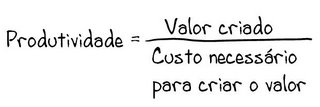
Há tantas maneiras de medir a produtividade, de que indicador de produtividade se está a falar?
.
"Fruto do emagrecimento proporcionado pelo projecto Kaizen, conseguimos gerir a empresa, com alguma dificuldade sim, mas com uma redução de custos proporcional ao decréscimo das vendas."
.
""apoiamos as empresas, de forma integrada e completa, o processo de redução de custos, actuando na eliminação dos desperdícios, estando orientados para a criação de valor"" (Moi ici: Na terminologia de Larreche, a minha preferida, estão orientados para a extracção de valor, actuam dentro da empresa, o cliente da empresa não vai pagar mais pelo produto, a empresa é que consegue extrair mais valor do preço)
.
Estamos a falar de aumentar a produtividade à custa da redução de custos, traduzida em fazer mais ciclos de algo com menos recursos, a concentração no denominador.
.
Admitamos, que uma auditoria externa era realizada e comprovava mesmo que tinha havido um aumento da produtividade em 24%. Era interessante saber quanto é que isto vale em termos monetários...
.
Realmente 24% é um resultado muito impressivo. Mas atentemos no discurso:
.
"Os principais desafios que a Costa Verde enfrenta neste momento têm sobretudo a ver com a enorme crise que existe no mercado europeu, para onde se dirigem 90% das nossas exportações, na dificuldade em competir com produtos fabricados na China e outros países onde as regras relativamente ao ambiente, ao bem-estar dos colaboradores e aos apoios directos à exportação nos colocam neste momento de crise em que o mercado está mais aberto e vulnerável, à procura de produtos baratos, numa situação de competitividade extremamente difícil.
Obviamente que um euro numa relação de 1,30/1,40 para o dólar ainda mais dificulta a nossa penetração em mercados do dólar, favorecendo a oferta oriunda da zona desta moeda."
.
Apesar de um aumento de 24% na produtividade... a empresa continua a debater-se com a competição dos Low Cost Manufacturing Countries (LCMC). Conclusão, por mais que a empresa aposte na melhoria do denominador vai ser sempre insuficiente para fazer face à concorrência no mercado do preço.
.
Como é que uma empresa dá a volta a isto?
.
"temos vindo a tomar várias iniciativas no sentido de sermos cada vez mais competitivos, através da melhoria do serviço, do design, da nossa flexibilidade e da nossa melhor capacidade de resposta às encomendas cada vez mais pequenas, mais frequentes e com timing de serviço manifestamente mais curtos."
.
E isto não vos cheira a esturro?!!!
Por um lado redução de custos, optimização de fluxos, emagrecimento... por outro mais flexibilidade, encomendas mais pequenas, mais frequentes e com tempos de resposta mais curtos... Terry, Terry Hill. Pois bem, revisitemos Terry Hill neste endereço e, depois, voltamos aqui.
.
Qual é a conclusão que tiro, se calhar abusivamente?
.
.
.
.
.
.
BTW, sendo mauzinho, e recordando o jogo do gato e do rato, ou seja produtividade vs salários, era curioso saber que parte deste aumento da produtividade foi partilhado com os operários.
.
Não é difícil, se o negócio é preço, sooner or later, todos os ganhos de produtividade passam para os clientes, nem trabalhadores nem accionistas ganham grande coisa... a menos que a empresa fosse a líder nos custos.
.
Um aumento da produtividade em 24% e a empresa não saiu do sítio... emagreceu, a passadeira de corrida no ginásio está a correr mais depressa. Este sucesso na redução de custos apenas demonstra o quão fútil é estar nesse campeonato... apenas se atrasa o inevitável.
quinta-feira, julho 29, 2010
Taleb: Government Deficits Could Be the Next 'Black Swan'
Como neto de agricultores, conservador financeiramente e "contrarian" apreciei estas palavras de Nassim Taleb:
.
"What should you do with your savings?
We have this culture of financialization. People think they need to make money with their savings rather with their own business. So you end up with dentists who are more traders than dentists. A dentist should drill teeth and use whatever he does in the stock market for entertainment.
People should have three sources of variation in their income. The first one is their own business that they understand rather well. Focus on that. The second one is their savings. Make sure you preserve them. The third portion is the speculative portion: Whatever you are willing to lose, you can invest in whatever you want.
In the second category—preservation of value—you should have the consciousness that there is something called inflation. You should avoid some classes of investments that are very fragile."
We have this culture of financialization. People think they need to make money with their savings rather with their own business. So you end up with dentists who are more traders than dentists. A dentist should drill teeth and use whatever he does in the stock market for entertainment.
People should have three sources of variation in their income. The first one is their own business that they understand rather well. Focus on that. The second one is their savings. Make sure you preserve them. The third portion is the speculative portion: Whatever you are willing to lose, you can invest in whatever you want.
In the second category—preservation of value—you should have the consciousness that there is something called inflation. You should avoid some classes of investments that are very fragile."
...
"Governments that try to shoot for a surplus hardly ever reach it.
The problem is getting runaway. It's becoming a pure Ponzi scheme. It's very nonlinear: You need more and more debt just to stay where you are. And what broke [convicted financier Bernard] Madoff is going to break governments. They need to find new suckers all the time. And unfortunately the world has run out of suckers."
.
Recortes daqui.
Subscrever:
Comentários (Atom)