Isto, "O futuro do jornalismo", é, sem tirar nem pôr, o mesmo tema de "Make better tacos".
Na dúvida, em vez de enveredar pela race-to-the-bottom, procurar uma forma de fazer diferente ou melhor. Como não recordar as três regras de Raynor.
quarta-feira, dezembro 27, 2017

Fugir da eficiência (parte II)
Parte I.
Trechos retirados de “Toward a Behavioral Theory of Strategy.” Organization Science, 23 (January/February 2012): 267-285 de Giovanni Gavotte.
"focal behavioral failures [Moi ici: Coisas que resultam para lá da eficiência], which are argued to revolve around the dimensions of rationality (the ability to identify opportunities), plasticity (the ability to act on opportunities), and shaping ability (the ability to legitimize opportunities and therefore “shape” or “construct” the opportunity space). It is argued that behavioral failures typically become more pronounced as firms pursue opportunities that are more cognitively distant. [Moi ici: Por vezes os gestores estão tão prisioneiros do que conhecem que não conseguem agir como os ignorantes dispostos a experimentar algo novo] To pursue these opportunities, strategic leaders must change their worldview, or they will not spot them. They must also persuade internal and external stakeholders to change their worldview, or these opportunities will be resisted and not acted on and legitimized. Performing these tasks intelligently is hard. Indeed, evolutionary and ecological perspectives show that pursuing cognitively distant courses of action leads, on average, to unusually grave survival struggles. ... Superior opportunities tend to be cognitively distant, and critical sources of superior performance lie in strategic leaders’ superior ability to overcome the behavioral bounds that make it hard for the average firm to pursue them.Trechos que combinam muito bem com: "There's always a choice, say the Sisters, but there's always a twist..."
...
Distant foresight requires leaders to acquire appropriate cognitive representations that draw cognitively distant opportunities nearer. To persuade internal and external audiences to espouse a new, cognitively distant course of action, leaders must induce them to adopt a new representation of the firm and its position in the competitive space. [Moi ici: Uma das utilidades do mapa da estratégia, traduzir numa figura um conjunto de interrelações] The construct of cognitive representation and what it takes to manage it are thus central to the concept of strategic agency proposed here. Meeting the challenges of acquiring appropriate representations to foresee distant realities and persuading relevant audiences to endorse novel representations involve processes that have a common root in their associative nature.
...
Behavioral failures are impediments to firms’ abilities to compete for opportunities. Such failures are behavioral insofar as these impediments are mental in origin. Behavioral failures can be viewed in terms of limits to strategic leaders’ abilities to manage and overcome such mental impediments."
Trechos retirados de “Toward a Behavioral Theory of Strategy.” Organization Science, 23 (January/February 2012): 267-285 de Giovanni Gavotte.
terça-feira, dezembro 26, 2017
Fugir da eficiência

Isto é poesia celestial para quem há mais de uma década enfrenta a tríade enterrada no século XX e devota do bezerro de ouro da eficiência e custos:
"The premise of the theory presented below is that to identify the behavioral drivers of superior performance systematically, it is useful to reason against the benchmark of market efficiency. When markets are efficient, opportunities for superior performance (also called superior courses of action or strategic opportunities) do not exist, or, if they do, they are short-lived because they are competed away by many rival firms. Therefore, establishing what causes violations of market efficiency shows what causes opportunities to exist. Following this logic, the behavioral roots of superior opportunities can be understood in terms of behavioral factors that hinder efficiency. The theory proposed in this paper seeks to isolate such factors by identifying systematic behavioral bounds or impediments to competition. These bounds are behavioral in that they reflect limitations in strategic leaders’ ability to manage mental processes. They will be called behavioral failures, short for behavioral market failures. Such failures ensure that opportunities whose pursuit requires leaders to manage very hard-to-manage mental processes are not competed away, even if competition is intense. Hence, superior performance rests in part on a strategic leader’s superior ability to overcome focal behavioral failures. Thus, managing such mental processes is central to strategic leaders’ role."
Trecho retirado de “Toward a Behavioral Theory of Strategy.” Organization Science, 23 (January/February 2012): 267-285 de Giovanni Gavotte.
Alicerces para a promoção da concorrência imperfeita e dos monopólios informais.
- Chegar à concorrência imperfeita (Setembro 2016)
- Trabalhar para tornar a concorrência imperfeita (Junho 2016)
- Promotores da concorrência imperfeita, dos monopólios informais e das rendas excessivas (Maio 2016)
- Acerca da concorrência imperfeita (Dezembro de 2015)
- Quem é que ainda liga ao "princípio da eficiência económica"? (Setembro de 2015)
- Sraffa e a concorrência imperfeita (Parte I) (Parte II) (Abril 2015)
- Tornar a competição imperfeita, alterando as regras (parte IV) (Setembro de 2014)
- A propósito da concorrência imperfeita (Maio de 2014)
- Yours truly - David, Golias e a concorrência imperfeita (via Samsys) (Setembro 2013)
- Mas claro, eu só sou um anónimo engenheiro da província (Maio 2013)
- David tem tudo a ganhar em fugir de um confronto directo com Golias (parte II) (Dezembro de 2012)
- Viva a concorrência imperfeita e os monopólios informais da concorrência monopolística (Outubro de 2012)
- O anónimo engenheiro da província pensava... (Março 2012)
- Adeptos e promotores da concorrência imperfeita!!! (Fevereiro de 2012)
- Cartão de visita (Agosto de 2011)
O futuro do jornalismo
Há anos que escrevo aqui sobre a reacção dos media à internet. Perante a "invasão chinesa" da internet, que seduziu os clientes overserved, os media tiveram a resposta instintiva de irem atrás dos clientes que perderam, pensando que era uma questão de preço (daí terem sido inundados de estagiários e recibos verdes). Ao fazerem-no perderam aqueles que poderiam ter continuado como clientes, os underserved, aqueles que estariam dispostos a pagar mais, (sim, o burro era eu), por algo que não implicasse vergonhas deste tipo:
Um sintoma de que há mercado para servir clientes underserved?Uma vergonha que não honra o legado de Emídio Rangel https://t.co/5LyxSGhPru— Carlos Vaz Marques (@cvazmarques) December 21, 2017
Tem-se temido muito pelo futuro da informação mas todos os dados que temos e experiências que vão sendo feitas nos dizem que o futuro do jornalismo está em fazer jornalismo. https://t.co/iEMbOcR5Jm— Paulo Ferreira (@pauloferreira1) December 23, 2017
- Tendências para a evolução dos media (Agosto de 2017)
- Jornalismo com futuro (Maio de 2017)
- Uma novela sobre Mongo (parte XV) (Janeiro de 2017)
- Estratégias ajustadas e desajustadas (Janeiro de 2017)
- Um exemplo a seguir com atenção (parte III) (Junho de 2016)
- "o incumbente não se define e pensa que é só uma questão de preços" (Novembro de 2014)
- Sonho? Tomo a nuvem por Juno? Ou será o jornalismo do Estranhistão? (Novembro de 2013)
Acerca do short-termism (parte II)
Há dias ouvimos e lemos que os CTT vão despedir cerca de 800 trabalhadores. A desculpa é que já ninguém envia cartas a ninguém.
No entanto, "Comércio online explode e pressiona empresas de logística". E os CTT não são uma empresa de logística?
No entanto, "Atrasos nas compras online geram onda de queixas no Natal":
No entanto, "Comércio online explode e pressiona empresas de logística". E os CTT não são uma empresa de logística?
No entanto, "Atrasos nas compras online geram onda de queixas no Natal":
"Os CTT são a empresa que mereceu, de forma destacada, o maior volume de reclamações - deu origem a quase um milhar de reclamações contabilizadas apenas a partir de Outubro. Seguem-se-lhe a GLS (257 queixas), a Chronopost (173), a Seur (152), a MRW (88) e a DHL (37)."Ao olhar para o nome que nos últimos dias tem representado a gestão dos CTT na comunicação social não posso deixar de reler "Acerca do short-termism". Antes dele:
Recordar:sim, são negócios quase iguais, basta perceber a curva da oferta e da procura RT @JNegocios: Antigo CEO da Cimpor assume presidência dos CTT— Carlos P da Cruz (@ccz1) August 24, 2012
- Sempre em busca de uma batota mais eficaz (Agosto de 2012)
- Este futuro está escrito nas estrelas (Agosto de 2012)
- Os empresários portugueses e os outros (Outubro de 2012) (Este postal é hilariante)
- A dificuldade dos incumbentes (Dezembro de 2012)
Reconheço que os CTT terão mais reclamações porque movimentam mais encomendas mas funcionam mesmo mal, tive oportunidade de o confirmar durante "esse pico de encomendas de Setembro".
o meu filho encomenda muitos gadgets de lá e não tem tido problemas com entregas na Covilhã. tem mais problemas com entregas dos CTT entre Ansião e Covilhã— Carlos P da Cruz (@ccz1) November 8, 2017
domingo, dezembro 24, 2017
Feliz Natal!
Há dias vi o filme de Mel Gibson sobre a crucificação de Jesus. Quando o filme surgiu recordo que houve muita indignação por causa da violência. Confesso que o que mais me chocou foram os diálogos:
- absurda uma conversa em que um rabi judeu fala em aramaico a um governador romano que entende aramaico e lhe responde em latim e vice versa;
- o uso de trechos inteiros dos Evangelhos como falas nos diálogos.
Os Evangelhos não são História. Lembro-me de ouvir um exegeta bíblico dizer que, por exemplo, o Evangelho de São João, foi escrito pelas comunidades gregas e chamava a atenção para certas passagens que foram escritas para serem ditas por um coro. Mais de dois mil anos depois sabemos pouco sobre o verdadeiro Jesus histórico. Resta-me a fé de que ele era Deus feito homem, tudo o resto é secundário.
Recordo que o mesmo exegeta sublinhava: as multidões formavam-se para o ouvir não para assistir aos seus milagres.
sábado, dezembro 23, 2017
Acerca da análise SWOT
Recordar:
- "Assim partem já derrotados" (Janeiro 2015)
- "Acerca da análise SWOT e do leite" (Abril 2015)
- "Não culpem a caneta pelas asneiras do escrevedor" (Junho 2015)
Peças para a construção de Mongo
Algo que já antevimos aqui há anos e anos, "‘Mini-grid’ household energy sharing begins to take off":
Para facilitar esta democratização da produção, "Are The Benefits Of Blockchain Out Of Reach For Small And Mid-Size Businesses?" e "How Blockchain Will Change Organizations"
Leio este trecho:
"Network of 20,000 German homes selling to each other shows new distribution modelO que irá acontecer aos 17 mil milhões de dívida da EDP?
...
In Germany, about 20,000 households are already part of an initiative, launched by energy storage company Sonnen, which connects homes that independently produce energy. Sonnen’s virtual network allows them to buy and sell excess energy to each other at a reduced cost.
.
Sonnen is Europe’s largest maker of rechargeable energy storage packs. When the company launched in 2010, its battery packs sold for €25,000. Today, they cost €5,000."
Para facilitar esta democratização da produção, "Are The Benefits Of Blockchain Out Of Reach For Small And Mid-Size Businesses?" e "How Blockchain Will Change Organizations"
Leio este trecho:
"10-15 percent of all transactions will take place on blockchain by 2025"E começo a imaginar partidos radicais (financiados, por trás do biombo, por accionistas que quererão recuperar o investimento) a exigir a nacionalização dos bancos.
"It’s all about the situation they’re in"
"Every company is interested in why people buy their products, but rewind time a bit further and you’ll find even more fundamental insights.
.
Before someone goes buying, there’s a reason they go shopping.
.
There are usually a few events that lead to the desire — or demand — to shop. Something happens that trips the initial thought. There’s a spark.
...
#1 “We can’t keep working like this.”
...
#2 “We can’t mess up like that again.”
...
#3 “This project isn’t getting off the ground.”
...
#4 “How am I going to pull this off?”
...
what’s most interesting is feeling the moments, the situations people find themselves in before they’re our customers. It’s all situational. It’s not about this industry or that one. It’s not about demographics, either. It’s not even about the competitive set, yet. It’s all about the situation they’re in, the reality they’re trying to wrangle, and the progress they’re trying to make."
Trechos retirados de "The Why before the Why"
sexta-feira, dezembro 22, 2017
Tenho algum receio...
O @nticomuna no Twitter chamou-me a atenção para este desenvolvimento:
 O Grupo Aquinos a apostar no mercado do luxo.
Algo que já se poderia pressentir em “Não nos falta mercado, falta é capacidade de produção”:
Algo que já se poderia pressentir em “Não nos falta mercado, falta é capacidade de produção”:
"depois da aposta na compra do grupo Francês Cauval ter sido gorada, depois das auditorias efetuadas terem revelado “problemas sérios”. “Seria uma aquisição muito importante, para podermos entrar no segmento de mercado de luxo, mas já estamos a trabalhar num plano B”,"Espero sinceramente que tenham sucesso nesta aposta no luxo. No entanto, tenho algum receio... recordo Skinner e plant-within-the-plant... e Terry Hill.
"conseguir penetrar no mundo Ikea. O seu principal cliente foi “namorado durante muito mais tempo” do que a própria esposa. Foram precisamente cinco anos para obter a primeira encomenda de 750 sofás, isto depois de “na primeira abordagem não me terem ligado nenhuma”. Mas o interesse superior em conquistar este cliente estava no topo das suas prioridades, pois “paga muito bem, tem volume e uma visão que se encaixa muito na nossa, ajudando-nos muito em melhorar a máquina da eficiência”.O modelo de negócio para servir a Ikea e a Conforama não tem nada a ver com o modelo de negócio para servir o mundo do luxo... recordar os vários mundos.
.
Atualmente, a Ikea e Conforama absorvem 60‰ das vendas de um grupo que sempre viu os mercados externos com grande potencial para poder crescer."
I see BS vendors everywhere

Hoje no Twitter, Nassim Taleb recorda uma grande verdade:
The main difference between a BS vendor (Krugman) and a doer (Musk) is that a doer, necessarily, has scars.https://t.co/fjaNtKCba5— Nassim Nicholas Taleb (@nntaleb) December 22, 2017
Claro que quem está de fora não percebe o que são isto de "scars"
Há dias, sublinhei este título "“For an Entrepreneur, Every Day Is a Crisis”"
Agora reparem no discurso de um BS vendor [o deputado do BE, José Soeiro] neste texto "Recibos verdes: quem paga mais e menos? Veja as simulações":
"Para simplificar, num primeiro passo tomemos o exemplo de um rendimento constante de prestação de serviços de um trabalhador"Rendimento constante?! Piada feita!!!
E porque não somos plankton (parte VIII)
Leiam o título "Nestle to Sell U.S. Chocolate Business as Market Melts". Oiçam o video com os comentários e justificações. Leiam:

E para "Chocolate Industry Analysis 2017 - Cost & Trends":
A Nestlé gosta de vender aquele chocolate com 10% de cacau (na minha primeira entrevista de emprego, o director de produção de uma fábrica de chocolate dizia-me que o chocolate era um excelente veículo para o que interessava, vender açúcar. Foi na segunda-feira a seguir à primeira maioria absoluta de Cavaco) mas em Mongo a tendência é outra.
Parte VII.
"The U.S. chocolate market is sputtering, and in August, Lindt & Spruengli AG blamed North America when it forecast the weakest revenue growth in at least eight years."Depois, olhem para a evolução do mercado do chocolate nos Estados Unidos:

E para "Chocolate Industry Analysis 2017 - Cost & Trends":
"Growth of the chocolate industry over the last decade has been driven in large part by an increasing awareness of the health benefits of certain types of chocolate and growing popularity in Asian Pacific countries.Se ouviram os comentários do vídeo talvez tenham recordado que Mongo is gigantes-unfriendly (como a P&G et al).
...
Chocolate is broadly classified by the amount of cocoa it contains. Milk chocolate accounts for more than 50% of all chocolate consumption but may contain as little as 10% cocoa. Hershey's milk chocolate has approximately 11% cocoa, with a whole lot of milk and sugar added in. Chocolate is considered “dark” if it has more than 60% cocoa.
...
Instead of being something to avoid or consider a special treat, consumers are finding out that many diets and even doctors are recommending regular consumption of dark chocolate.
...
Premium and dark chocolate are the strongest segments of the market in the United States in terms of growth, though not market share. Unique products and consumption experiences are keeping consumers coming back for more.
...
There are an abundance of chocolate franchise opportunities for the interested entrepreneur! Much of the variety comes from niche products such as chocolate drink fountains, premium selections or unique recipes.
Knowing your local market and providing a product or experience that can not be found is key to finding the right business."
A Nestlé gosta de vender aquele chocolate com 10% de cacau (na minha primeira entrevista de emprego, o director de produção de uma fábrica de chocolate dizia-me que o chocolate era um excelente veículo para o que interessava, vender açúcar. Foi na segunda-feira a seguir à primeira maioria absoluta de Cavaco) mas em Mongo a tendência é outra.
Parte VII.
quinta-feira, dezembro 21, 2017

Mongo é isto
Há dias vi este filme no Twitter:

It only takes a few minutes for this robot to make a shoe pic.twitter.com/2g4ClBQQJQ— Mashable (@mashable) December 19, 2017
Hoje, li "How to Make a Shoe", uma ode a esse meio de produção desconhecido dos consumidores, a forma.
De um lado a produção digital, do outro o artesanato. Por acaso, ambas destinadas ao calçado feito à medida:
"Wittmer makes about four pairs of shoes per month at her three-person workshop, called Saskia, starting at about 3,000 euros ($3,540) per pair, including 500 euros for the last, which always stays at the cobbler."Sobre as formas:
"The most challenging step in making a bespoke shoe isn’t selecting the leather, perfecting the stitching, or ensuring that the heel is weatherproof. The toughest part, cobbler Vivian Saskia Wittmer says, involves something that you won’t wear, ever.
It’s creating what’s known as the “last,” the foot-shaped block that gives the shoe its shape."
Quantificar valor (parte II)
Parte I.
A empresa da parte I não foi convencida. Não a consegui convencer a fazer a tal quantificação das benesses.
Entretanto, esta semana visitei-a e o dono estava possesso. Empresa grande, cliente, pediu apoio à empresa na concepção de um novo produto e, depois, foi encomendar o serviço a outra empresa, um concorrente. O senhor não conseguia entender que o cliente o tivesse trocado por meia dúzia de euros...
Tentei explicar que quem pede ajuda é diferente de quem toma a decisão final e voltei à carga com a lista das benesses.
É claro que ninguém gosta de fazer figura de tótó e começou logo a listar o que iria fazer. Adivinham?
Tit for tat!
A empresa da parte I não foi convencida. Não a consegui convencer a fazer a tal quantificação das benesses.
Entretanto, esta semana visitei-a e o dono estava possesso. Empresa grande, cliente, pediu apoio à empresa na concepção de um novo produto e, depois, foi encomendar o serviço a outra empresa, um concorrente. O senhor não conseguia entender que o cliente o tivesse trocado por meia dúzia de euros...
Tentei explicar que quem pede ajuda é diferente de quem toma a decisão final e voltei à carga com a lista das benesses.
É claro que ninguém gosta de fazer figura de tótó e começou logo a listar o que iria fazer. Adivinham?
Tit for tat!
Cuidado com o preço-baixo

"Don’t price too low The second wrong mistake dooms many businesses in the cradle. Professional pricers believe there are three and only three overarching strategies: skim, neutral and penetration.Como não recordar aquela frase: não há nenhuma lei que impeça a existência de concorrentes estúpidos. Ou seja, não é ilegal ser estúpido.
.
Skimming does just want the name implies; it skims the cream off the top. Apple has created near $1 trillion in market capital by using mostly skim pricing. Neutral is also fairly self-explanatory – pricing in the middle of the pack, neither too high, nor too low. Penetration pricing refers to attempting to penetrate a current market by undercutting incumbents with a lower price. The problem is once your organization gets tagged as the low-price challenger, it is especially difficult to overcome that moniker.
.
To overcome these many companies have used what used to be called a loss-leader. Today, we call it Freemium. To gain a foothold, products are introduced with a low or even free price with the ability to us."
Trechos retirados de "Top three pricing mistakes to avoid"
quarta-feira, dezembro 20, 2017
Sem necessidade de controlar
Há tempos ao preparar uma auditoria a uma empresa deparei-me com esta frase para descrever um dos riscos determinados:
Cada vez mais o truque não passa pelo controlo, mas pela colaboração, mas pela curadoria. Por exemplo:

"Modelo de negócio que não permite o controlo do mesmo"Torci o nariz.
Cada vez mais o truque não passa pelo controlo, mas pela colaboração, mas pela curadoria. Por exemplo:
"Contextual awareness, peripheral vision, design thinking and a multi-disciplinary approach – these are all terms that are trending in modern office-speak. And deservedly so. A project-based [Moi ici: Interessante] and titles-free organization — where yesterday’s team member is today’s team lead — can deliver the flexibility and agility that businesses yearn for.
.
“Context Curator” is the term I’d like to introduce to the business dictionary. To lead a project is not to assign tasks and monitor performance, but to empower, to define the broader context, and to organically link the work of one team with the rest of the business. Following the example of Netflix and striving for higher talent density is only half the battle. Curating the context in which high performers can excel – rather than attempting to manage them – is the key to unleashing their full potential."
Figura e trecho retirado de "Do we no longer need managers?"
"looped by circumstances"
"The hardest decision leaders have to make, and frequently in business the common mistake — is picking your battles. And not politically, but tactically. Most managers and executives get so caught up in tactical and operational problem solving and fire fighting that they get looped by circumstances and lose all if any strategic orientation to their work."E quando a testosterona entra em campo?
Trecho retirado de "Strategy bogged down by reality?"
"Price is not based on cost"
"I believe it is important to share that price is the number one driver of profitability in almost any business. AT Kearney and McKinsey have both done studies which demonstrate that a one percent increase in price across the board yields a seven to 11 percent increase to profit. This compares to a one to three percent increase to profit from a one percent reduction in fixed cost, a three to four percent increase due to an additional revenue, and a five to seven percent increase due to a reduction of fixed cost (i.e., efficiency gains) usually considered the Holy Grail of business acumen.[Moi ici: Como não recuar a 2008]

...Trechos retirados de "Top three pricing mistakes to avoid"
If I could send executives to the Bart Simpson chalkboard of life, I would have to write, “Price is not based on cost,” over and over again. Notice, this is not to say that costs are not factor in pricing, they can be, but far too many brilliant people believe that prices are determined by a formula that begins and ends with cost.
...
Prices are determined by understanding the perceived value of the prospective customer. This value is subjective and can vary from prospect to prospect over time.
...
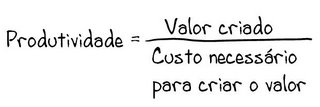
The reality is that price, rather than being derived from costs, should justify the future expenditure of cost. The logic chains like this: Value → Price →Cost, not Cost → Price→ Value"
terça-feira, dezembro 19, 2017
Acerca do "short-termism"
"Instead of hiring outside CEOs, hire insiders—or at least CEOs with domain expertise.Trechos retirados de "The Real Reasons Companies Are So Focused on the Short Term"
.
One trend that has contributed to short-termism and lower innovativeness is the increased prevalence of outside CEOs. From 1970 to 2004, the percentage of CEOs hired from outside the firm increased from 12% to 39%.
While outside CEOs are valued because they bring new perspective, my colleague, Trey Cummings, and I believe they impose a hidden cost to innovation at firms whose growth derives from R&D (roughly 49% of firms).
...
firms shifted from an orientation of “R&D as a driver of growth” to “R&D as an expense.” What was reported to happen as a consequence of this shift was a steady decline in firms’ R&D intensity (R&D/Sales) and a corresponding decline in firms’ R&D capability. In other words, the new leader’s disinvestment cut meat as well as fat.
...
Why do these shifts occur? We believe, and now have correlative evidence, that it’s because outside CEOs are less likely to possess the technological domain expertise necessary to drive growth from R&D. When CEOs lack this expertise, they are more likely to manage R&D “by the numbers,” despite the fact that those numbers are more elusive than those for capital and advertising. Indeed, we found that companies with outside CEOs have lower innovativeness as measured by RQ, and that those effects become more pronounced the more R&D intensive the company is and the more technologically different it is from the CEO’s prior company.
.
Note the solution is not to avoid outside CEOs. There are many reasons companies benefit from hiring an outsider, such as to effect change. Moreover, not all outside CEOs lack domain expertise (e.g., CEOs from rival firms); conversely not all inside CEOs have it (CEOs promoted from finance). Rather, the solution is to ensure that companies whose growth derives from R&D hire CEOs with technological domain expertise."
Subscrever:
Mensagens (Atom)
%2006.21.jpeg)