quarta-feira, maio 01, 2013

A marca vai a reboque

Na sequência de:
Este exemplo que encontrei no Tweeter (via @suzyjacks) é impecável:
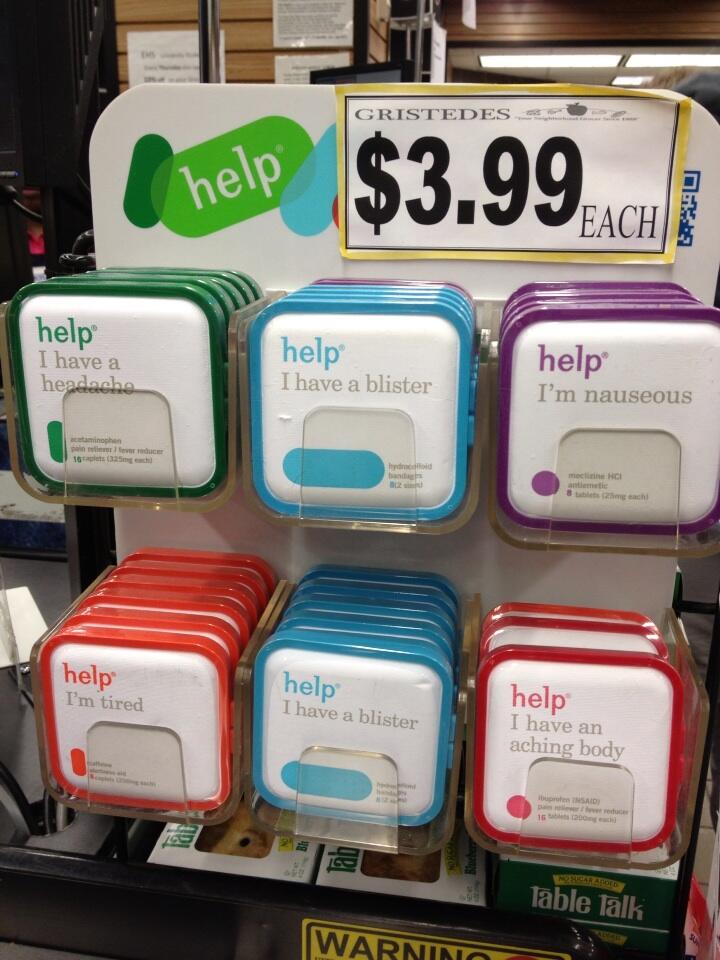
Em plena linha com o "customer's job-to-be-done".
.
Algo que me fez lembrar uma afirmação de Conrado Adolpho em “Os 8 Ps do Marketing Digital”:
"Um domínio na internet com, obviamente, o nome de sua empresa, é uma importante etapa da construção de uma marca; porém, como palavra-chave, pode não representar muita coisa. Prepare-se para mais um conceito que cai por terra. Imagine que um usuário esteja procurando um fornecedor que ministre um curso de redação oficial. Provavelmente esse usuário digitará no mecanismo de busca “redação oficial” ou “treinamento em redação oficial”.
.
Digitando-se tais palavras no Google, um dos clientes da Publiweb aparece logo na primeira página, a Scritta – empresa que ministra cursos de redacção oficial, entre outros –, mas aparece ainda outro site: www.redacaooficial.com. br, também desenvolvido pela Publiweb para a Scritta. Ter a palavra-chave no próprio domínio é uma técnica interessante para aumentar a probabilidade do clique do internauta e para estar na primeira página dos buscadores, mesmo não sendo com o site institucional. É lógico que, quando o usuário digita “redação oficial” no campo de busca do Google e este indexa um site que tenha a própria palavra-chave no domínio – www.redacaooficial.com.br –, o buscador vai considerá-lo de extrema relevância, pois a palavra-chave é igual ao domínio.

Você pode achar uma heresia, porém, na internet, em alguns casos você tem que esquecer a marca e pensar em palavras-chave. A marca vai a reboque. Só é percebida em segunda instância. É claro que, se sua marca é muito conhecida no seu segmento e agrega muito valor ao seu negócio, você deve usá-la como um argumento de vendas; porém, para boa parte das empresas em que isso não é realidade, pense em atrair o seu usuário por meio da palavra-chave que ele digita no Google, para depois apresentar sua marca para ele."

Coerências... de jogador de bilhar amador

Por um lado, pela parte do patronato, um dos mais aguerridos defensores do aumento do salário mínimo:
"CCP disponível para aumento do salário mínimo com algumas condições"
Por outro lado, o mesmo que pensa isto:
"Além disso, a economia portuguesa e o tecido empresarial tem “uma capitalização relativamente baixa” e por isso assente “num financiamento bancário extremamente alto”, algo que a troika “não percebeu”. “A quebra do financiamento da banca está a asfixiar inclusivamente as empresas viáveis, ao contrário do que aconteceu em outras crises em que as que encerravam eram as inviáveis”, acrescentou."
E o mesmo que pensa isto:
"“No contexto presente, a criminalização dos salários em atraso não conduziria, na maioria das situações, a uma solução positiva, mas, pelo contrário, só serviria para acelerar o encerramento das empresas ou aumentar o número de despedimentos, lançando mais pessoas no desemprego”, afirma a CCP, em resposta a questões colocadas pela agência Lusa.
.
Na entrevista, o inspector-geral diz também que a redução salarial é ilegal, mesmo com acordo do trabalhador. A CPP refere que a medida, “sendo obviamente ilegal”, é uma tentativa das empresas de fazer face às dificuldades do mercado."
Um exemplo flagrante daquilo a que chamo jogadas de bilhar amador:
"We need to learn to think in second steps, chains of consequences, and side effects."

Um país de intervencionistas ingénuos

"attempts to eliminate the business cycle (Moi ici: O que os governos portugueses andaram a fazer durante toda a primeira década do século XXI, despejar dinheiro na economia para minimizar o impacte do euro, da China, da Europa de Leste) lead to the mother of all fragilities. Just as a little bit of fire here and there gets rid of the flammable material in a forest, a little bit of harm here and there in an economy weeds out the vulnerable firms early enough to allow them to “fail early” (so they can start again) and minimize the long-term damage to the system.
.
An ethical problem arises when someone is put in charge. Greenspan’s actions were harmful, but even if he knew that, it would have taken a bit of heroic courage to justify inaction in a democracy where the incentive is to always promise a better outcome than the other guy, regardless of the actual, delayed cost.
.
Ingenuous interventionism is very pervasive across professions.
...
Let me warn against misinterpreting the message here. The argument is not against the notion of intervention; in fact I showed above that I am equally worried about underintervention when it is truly necessary. I am just warning against naive intervention and lack of awareness and acceptance of harm done by it.
...
What should we control? As a rule, intervening to limit size (of companies, airports, or sources of pollution), concentration, and speed are beneficial in reducing Black Swan risks." (Moi ici: Recordo logo "If they are too big to fail they are too big to exist")
Interessante ouvir isto enquanto os políticos da situação e da oposição em Portugal continuam a competir entre si pelo título do mais intervencionista, do que mais "ajuda" a economia a crescer ou a recuperar.

Trechos retirados de "Antifragile" de Nassim Taleb.
.

terça-feira, abril 30, 2013

Tradição, tradição, tradição


Curiosidade do dia

A propósito deste acidente "Autoridades do Bangladesh suspendem buscas de sobreviventes" este artigo "Shoppers Turn Blind Eye to Bangladesh in $6 Bikini Hunt" de onde retiro este parágrafo:
"“They could probably afford to invest in their factories, but it’s a tough market and it’s very difficult to up prices,” Cavill said. “The consumer may need to start getting used to higher prices.”"
Que o consumidor vai começar a ter de pagar preços mais altos, isso é uma realidade que as estatísticas que monitorizam os preços em Londres e Paris já detectaram no ano passado. Contudo, o ponto que me faz espécie é este: a diferença entre o preço do produto à saída da fábrica e o preço na prateleira é abismal. E, como alguém bem me dizia esta manhã:
"Vão ter de mudar de modelo de negócio!"

Farmacêuticas e o Estranhistão

A mesma lição em cada vez mais sectores:
"Pharma companies are slowly realising that customer experience is the way to address these difficulties. The problem is that pharma doesn't really 'get' customer experience."
Recordar:


"A great customer experience strategy focuses your efforts and resources where they will have the most impact for your business. Yet too many pharma strategies for customer experience fail to focus these efforts in any meaningful way. Doing everything for everyone is not a strategy that works. (Moi ici: Uma lição deste blogue, é preciso escolher os clientes-alvo)
.
There are three easy ways to start focusing your strategy.
.
First, focus on a very specific set of target customers. (Moi ici: Talvez a lição número um deste blogue. É preciso reconhecer que entramos no Estranhistão) Your limited resources are shrinking and it's a bad idea to try to reach all healthcare professionals who might use your product, or even a broad subset like GPs. Instead, identify a specific group of target customers so your strategy has a chance to mean something to them. In our engagements with pharma, we see very little evidence of this.
.
Second, forget the company and focus on the drugs. Pharma companies want customers to love their company, but this is never going to happen.
...
Accept this, focus on their experience with the drug, and stop wasting resources trying to make them 'love' your big pharma company.
.
Third, focus on getting a single country working before you roll it out regionally. Pharma thinks it will make cost savings at the regional level, but this doesn't work with customer experience because it's so easy to get it wrong. A great experience in one country can be totally irrelevant in another, due to local expectations and regulations. Just look at all the big pharma customer experience successes from conferences and online case studies – they're all local to a particular country.
...
The six pillars of customer experience for pharma
1.Focus your customer experience strategy on a specific subset of customers in a particular location
2.Invest in one-to-one qualitative studies, instead of focus groups, quantitative studies, and large sample sizes
3.Design experiences by making new things, testing them with customers, and revising them until they work
4.Measure what matters, and not what is easy; that means customer experience quality, and its effect on sales
5.Ensure you have the right qualified people in place to make sure your customer experience efforts are not in vain
6.Make it OK to fail, because even the best ideas can turn into failures, which in time become building blocks for success."
Excelente!
.
Trechos retirados de "Customer experience for pharma companies"

O intervencionismo ingénuo

E volto a "Antifragile" de Nassim Taleb e à parte final do capítulo VI, "Tell Them I Love (Some) Randomness":
"That Time Bomb Called Stability.
We saw that absence of fire lets highly flammable material accumulate. People are shocked and outraged when I tell them that absence of political instability, even war, lets explosive material and tendencies accumulate under the surface.
...
Seeking stability by achieving stability (and forgetting the second step) (Moi ici: "Forgetting the second step" é aquilo a que chamo há anos "jogar bilhar como um amador". Ver o marcador "jogadores de bilhar amador") has been a great sucker game for economic and foreign policies. The list is depressingly long.
...
We need to learn to think in second steps, chains of consequences, and side effects.
...
One of life’s packages: no stability without volatility.
...
Violence is transferred from individuals to states. So is financial indiscipline. At the center of all this is the denial of antifragility.
...
in the past, when we were not fully aware of antifragility and self-organization and spontaneous healing, we managed to respect these properties by constructing beliefs that served the purpose of managing and surviving uncertainty. (Moi ici: Era a mão invisível...) We imparted improvements to the agency of god(s). We may have denied that things can take care of themselves without some agency. But it was the gods that were the agents, not Harvard-educated captains of the ship.
.
So the emergence of the nation-state falls squarely into this progression - the transfer of agency to mere humans. The story of the nation-state is that of the concentration and magnification of human errors. Modernity starts with the state monopoly on violence, and ends with the state’s monopoly on fiscal irresponsibility."
O capítulo VII, com o sugestivo título "Naive Intervention" faz-me sublinhar logo no início:
"Let us call this urge to help “naive interventionism."
Este tema é um velho conhecido deste blogue:

Este tema é, de certa forma, um dos temas recorrentes do último livro de João César das Neves, "As 10 Questões da Recuperação", para César das Neves o grande cancro da economia portuguesa é a regulamentação que o Estado impõe e que limita o potencial de crescimento.
.
Qual o político português, da situação e da oposição, que não sofre desta doença do intervencionismo ingénuo.

Porto de Aveiro

Alguém desse lado tem informação mais pormenorizada e clara sobre o que se passou no Porto de Aveiro durante o primeiro trimestre de 2013?
.
O aumento de quase 20%, face ao mesmo período de 2012, na movimentação de graneis sólidos foi a nível de cargas ou descargas?

"Todos sabem fazer, mas poucos sabem vender"

No JdN de ontem podia ler-se "Exportações sobem 20% e mantêm sector ligado ao interruptor"
.
"As exportações estão a manter as empresas portuguesas de iluminação "ligadas ao interruptor", tendo aumentado 20% no ano passado, para 94 milhões de euros. A crise afastou Espanha do lote dos cinco mercados "mais interessantes", agora entregue a França, Reino Unido, Alemanha. Angola e Rússia. Tal como acontece na generalidade dos sectores, também este quase só vislumbra oportunidades de crescimento fora de portas.
.
"O 'know how', os ordenados mais baixos e a adaptação ao que o cliente pede, fazendo o produto à medida, são as vantagens face à concorrência externa, (Moi ici: Factores relevantes para uma produção competitiva, factores relevantes para o B2B. Fundamental, conjugar o 'know-how' com a flexibilidade adaptativa para avançar para a marca própria e chegar ao B2C) apontou ao Negócios o presidente da associação dos industriais do sector (AIPI), Modesto Castro.
.
Entre os segmentos de iluminação técnica e decorativa, o sector é constituído por cerca de uma centena de empresas, que suportam 2.500 postos de trabalho. Quase 90% são micro ou pequenas empresas.
...
(Moi ici: Segue-se a reflexão de quem já parece ter percebido o futuro... interrogo-me se não deviam procurar fazer benchmarking com a APICCAPS dado que o sector do calçado está a fazer essa transição já há alguns anos e, por isso, tem experiências e conhecimento importante a partilhar) A maior parte delas ainda trabalha em "private label", sendo subcontratadas por marcas estrangeiras de maior dimensão. "Ao fabricarmos aqui com o rótulo e o embalamento que eles propõem, a visibilidade fica para eles. As indústrias nacionais têm de ter marca própria para ficar com o valor acrescentado. Todos sabem fazer, mas poucos sabem vender: essa é a guerra que temos de ganhar", resumiu o líder da AIPI. (Moi ici: Em perfeita sintonia com o que aqui costumamos escrever: "Produzir é fácil, difícil é vender!". Parabéns pela clareza do discurso)
...
destacou o surgimento de uma nova geração de empresários, que está a apostar no design e na comunicação para construir as próprias marcas. "Devagarinho estão a tentar fazer isso. Se não mostrar-mos que sabemos fazer e que temos o produto, ninguém nos vem bater à porta", concluiu." 

segunda-feira, abril 29, 2013

Curiosidade do dia

"IF SEX DOESN’T always sell, what about beauty? Are ads, commercials, or product packages featuring supermodels and preternaturally attractive celebrities actually more effective than those featuring “real” people? Well, evidence suggests that just as sex hijacks our attention away from the crucial information in an advertisement, so, too, can extreme beauty or celebrity."
Relacionar este trecho retirado de "Buyology" de Martin Lindstrom, com este artigo "MOAT: A Search Engine For Ads, And So Much More":
"An image of a woman in the ad, while more attractive, turned out to be too distracting, whereas an image of a shoe results in 2.6 times more clicks on the join button."
Relacionar com "The Decline and Fall of Product Placement".


Por onde começar

Quer lançar um novo produto no mercado?
Quer lançar uma nova marca no mercado?
.
Talvez a leitura desta reflexão, "The $10,000 Smartphone" ajude.
.
Reparar nos conselhos que não andam muito longe dos que damos aqui:
"You should consider the possibility Vertu understands:
  • Who their target customers are? 
  • What job are they hiring the luxury phones for? 
  • What is their phone’s competition? 
  • What their willingness to pay and wherewithal to pay are? 
  • What budget will customers pay from? 
  • How to reach them?"
E o final, em grande estilo, está cheio de sumo:
"The moral of the story is, your understanding of business opportunity, market size, market share, competition, pricing and likelihood of success will all be wrong if you do not start with customer segment and what they are trying to get done."

"Processos e experiência dos clientes" (parte IV)

Parte III, parte II e parte I.
.
Trechos do Capítulo 4, "Services are complex", do livro "The Connected Company" de Dave Gray:
"Competitive intensity is rising all over the world. Global competition and the Web have given customers more choices than they have ever had before. This means that customers can choose from an ever-widening set of choices, and it seems that variety only breeds more variety. The more choices that become available, the more choices it seems people want.
...
And you have lots of competitors who are trying to offer them better, cheaper, faster, easier ways to do those things. And while customers are always looking for these better, faster, cheaper ways to do things, technology isn’t standing still. As the front edge of technological change gets bigger, its surface area also grows, like an ever-expanding balloon.
...
In the coming century, the world will create a lot of variety. This is great for people who want more choices, but it creates a real problem for companies. From drugs to microchips, from food service to entertainment, your customers will be expecting a lot of variety from you. They will want better quality, and they will want it faster and cheaper. They will expect you to respond quickly to their demands for personal and customized services. This change is real and it’s accelerating. For most companies, business as usual just won’t cut it. What the market requires is not incremental improvement, but order-of-magnitude increases in performance."
Um prólogo para o que aí vem.


Transformative scenario planning

"First, these people see the situation they are in as unacceptable, unstable, or unsustainable. Their situation may have been this way for some time, or it may be becoming this way now, or it may possibly become this way in the future. They may feel frightened or excited or confused. In any event, these people cannot or are not willing to carry on as before, or to adapt to or flee from what is happening. They think that they have no choice but to try to transform their situation.
...
Second, these people cannot transform their situation on their own or by working only with their friends and colleagues. Even if they want to, they are unable to impose or force through a transformation. The larger social-political-economic system (the sector or community or country) within which they and their situation are embedded is too complex - it has too many actors, too many interdependencies, too much unpredictability - to be grasped or shifted by any one person or organization or sector, even one with lots of ideas and resources and authority. These people therefore need to find some way to work together with actors from across the whole system.
...
Third, these people cannot transform their situation directly. The actors who need to work together to make the transformation are too polarized to be able to approach this work head-on. They agree neither on what the solution is nor even on what the problem is. At best, they agree that they face a situation they all find problematic, although in different respects and for different reasons. Any attempt to implement a solution directly would therefore only increase resistance and rigidity.
So the transformation must be approached indirectly, through first building shared understandings, relationships, and intentions.
...
Transformative scenario planning is, then, a way for people to work with complex problematic situations that they want to transform but cannot transform unilaterally or directly. This way of working with the future can be used to deal with such situations at all scales: local, sectoral, regional, national, or global."
O uso de cenários, o uso de histórias, o uso de narrativas sobre futuros alternativos é uma técnica que as empresas podem usar para melhor se prepararem para um futuro imprevisível. Contudo, o transformative scenario planning é diferente:
"The key difference between adaptive and transformative scenario planning is, then, one of purpose. Adaptive scenario planning (Moi ici: Técnica usada pelas empresas. As empresas partem do princípio que não podem mudar o mundo. São cascas de noz no meio do oceano. Assim, tentam perceber para onde vão as correntes, quais podem ser os ventos e marés) uses stories about possible futures to study what could happen, whereas transformative scenario planning assumes that studying the future is insufficient, and so it also uses stories about possible futures to influence what could happen. To achieve these two different purposes, adaptive scenario planning focuses on producing new systemic understandings, whereas transformative scenario planning assumes that new understandings alone are insufficient and so also focuses on producing new cross-system relationships and new system-transforming intentions. And to produce these two different sets of outputs, adaptive scenario planning requires a rigorous process, whereas transformative scenario planning assumes that process alone is insufficient, and so it also requires a whole-system team and a strong container.
Transformative scenario planning enables people to transform their problematic situation through building a strong alliance of actors who deeply understand the situation, one another, and what they need to do."
Ouvindo os políticos da situação e da oposição, parece-me que esta técnica, "transformative scenario planning", seria muito útil para começarem a preparar um futuro que possam influenciar e, de certa forma, voltarem ao leme dos acontecimentos.
.
Trechos retirados de "Transformative Scenario Planning - Working Together to Change the Future" de Adam Kahane

Modelos de negócio: partilha no B2B

Uma outra forma de olhar para a explosão de modelos de negócio baseados no aluguer e na partilha, já não só para o B2C mas também para o B2B. Mais uma forma de reduzir as barreiras à entrada e permitir a novatos fazer aquilo que só era permitido às empresas grandes.
"More generally, I think it’s hard to deny that both industries (AWS, Foxconn, etc) and individuals (from AirBNB to Zipcar) are increasingly moving towards collective usage of large pools of widely accessible shared resources. Economies of scale as a service, as Aaron put it. So far the effects are limited to specific sectors and domains — but it’s only a matter of time before this wave of change reaches, and profoundly disturbs, entire industries hitherto untouched by its force."
Empresas mais pequenas, empresas mais flexíveis, empresas mais antifrágeis, empresas mais habilitadas a lidar com um mundo muito mais heterogéneo, muito mais tribal e muito mais rápido.
"Industrial capacities that not long ago were available only to gargantuan corporations are today open to anyone and everyone.
...
Compare and contrast Intel with ARM. The former is, historically, a vertically integrated design-and-manufacturing monolith which owns and controls everything they do, whereas the latter concentrates on being the best at the one thing they do. I have enormous respect for Intel but it seems clear that the world is trending towards ARM’s more decoupled model, wherein their designs (like TSMC’s manufacturing capacity) are made available to any and all customers.
The logical conclusion of that trend, however, is far more transformative than a mere reduction in optimal corporate size and scope"
Trechos retirados de "Economies Of Scale As A Service"

domingo, abril 28, 2013

Curiosidade do dia

"I have seen the future, and it is in the Brooklyn Navy Yard..I’ve seen young entrepreneurs creating companies that actually make things — not some digital app (not that there’s anything wrong with that!) — but actual products you can hold in your hand. I have seen prototypes being churned out on 3-D printers. I have seen the Navy Yard’s 300-acre complex of buildings — whose disrepair was once a symbol of manufacturing’s decline — become a symbol of manufacturing’s revival."
Um texto, "How to Build a Spoon" que recomendo ao ministro Álvaro Santos Pereira. Sempre que o oiço falar de re-industrialização, desconfio que ele sonha com a indústria do século XX. Sorry, essa não vai voltar.
.
O futuro é Mongo, o futuro são empresas mais pequenas, mais criatividade, crowd-sourcing, mais flexíveis, mais antifrágeis.

A estabilidade é mesmo uma ilusão

Ontem, durante o jogging, escutei mais um trecho de "Antifragile" de Nassim Taleb.
.
E o tema foi, de certa forma, um deja vu para mim. Já várias vezes pensei no tema, ao reflectir sobre a minha vida profissional e, sobretudo, sobre o futuro da vida profissional de muito boa gente, bons técnicos, que foram meus colegas de empresa e emprego e que agora, estão a chegar aos 50 anos e são reconhecidos nas suas empresas. Tudo corre bem! Enquanto a empresa existir. No dia em que a empresa fechar... o mundo muda completamente. Quem vai querer empregar uma pessoa com 50 anos e que sempre trabalhou na mesma empresa?
.
Recordo-me tão bem de quando a empresa onde trabalhava adquiriu nova tecnologia de fabrico e duplicou a produção e despediu 50 ou 60 operários. Recordo-me de pensar que cada um daqueles operários era um craque naquilo que fazia mas que lá fora... com 20 anos de experiência a fazer a mesma coisa, todo esse conhecimento de pouco lhes valeria.
.
Recordo-me de pensar que a nossa vida profissional era demasiado importante para ser depositada na capacidade de decisão de burocratas bem intencionados.
.
Interessante... penso agora. Ao longo da minha vida despedi-me 3 vezes e, de cada uma das vezes o motivo da decisão foi sempre o mesmo: rejeitar o convite para subir na hierarquia e deixar de fazer o que gostava. Após a rejeição, achava por bem demitir-me porque tinha concluído que era a altura de ambas as partes ganharem mais em separar-se do que manterem o status-quo.
.
Nassim Taleb em "Two Types of Professions" conta a história de dois irmãos:
"Consider the fate of Ioannis (John) and Georgios (George), two identical twin brothers, born in Cyprus (both of them), currently both living in the Greater London area. John has been employed for twenty-five years as a clerk in the personnel department of a large bank, dealing with the relocation of employees around the globe. George is a taxi driver.
.
John has a perfectly predictable income (or so he thinks), with benefits, four weeks’ annual vacation, and a gold watch every twenty-five years of employment. Every month, £3,082 is deposited in his local Nat West checking account. ... He used to wake up on Saturday morning, the day when people stretch and linger in bed, anxiety free, telling himself “life is good”—until the banking crisis, when he realized that his job could be “made redundant.” Unemployment would seriously hit him hard. As a personnel expert, he has seen the implosions of long careers, with persons who, laid off at the age of fifty, never recovered.
.
George, who lives on the same street as his brother, drives a black taxi ... His income is extremely variable. Some days are “good,” and he earns several hundred pounds; some are worse, when he does not even cover his costs; but, year after year, he averages about the same as his brother. To date, he has only had a single day in his twenty-five-year career without a fare. Because of the variability of his income, he keeps moaning that he does not have the job security of his brother - but in fact this is an illusion, for he has a bit more."
Este "in fact this is an illusion" faz-me procurar uma citação ali da coluna da direita, julgo que da minha autoria:
"A estabilidade é uma ilusão" 
Estávamos inspirados neste dia.
.
E voltando a Nassim Taleb:
"This is the central illusion in life: that randomness is risky, that it is a bad thing—and that eliminating randomness is done by eliminating randomness. Artisans, (Moi ici: Os habitantes de Mongo, os prosumers, os artesãos) say, taxi drivers, prostitutes (a very, very old profession), carpenters, plumbers, tailors, and dentists, have some volatility in their income but they are rather robust to a minor professional Black Swan, one that would bring their income to a complete halt. Their risks are visible. Not so with employees, who have no volatility, but can be surprised to see their income going to zero after a phone call from the personnel department. Employees’ risks are hidden. Thanks to variability, these artisanal careers harbor a bit of antifragility: small variations make them adapt and change continuously by learning from the environment and being, sort of, continuously under pressure to be fit. (Moi ici: Ao reler este último parágrafo lembrei-me do impacte e do significado das greves de zelo)
...
Man-made smoothing of randomness produces the equivalent of John’s income: smooth, steady, but fragile. Such income is more vulnerable to large shocks that can make it go to zero (plus some unemployment benefits if he resides in one of the few welfare states). Natural randomness presents itself more like George’s income: smaller role for very large shocks, but daily variability. Further, such variability helps improve the system (hence the antifragility). A week with declining earnings for a taxi driver or a prostitute provides information concerning the environment and intimates the need to find a new part of town where clients hang around; a month or so without earnings drives them to revise their skills." (Moi ici: Isto é mesmo verdade, recordo-me tão bem de 2002 e de começar a pensar o que significaria para o meu futuro ser mais um consultor a trabalhar com a ISO 9001. Até podia pensar que era muito bom naquilo que fazia mas se calhar não havia muitas empresas a precisar de um trabalho com essa exigência, bastava-lhes ter a bandeira)
E para terminar, recordar todas as nossas leis bem intencionadas que reduzem (ou reduziam, embora continuem a reduzir porque moldaram e enformaram muitas mentes durante a sua vigência) a flexibilidade das empresas num mundo cada vez mais cheio de variabilidade:
"we humans are afraid of the second type of variability and naively fragilize systems - or prevent their antifragility - by protecting them. In other words, a point worth repeating every time it applies, this avoidance of small mistakes makes the large ones more severe. The centralized state resembles the income of John; the city-state model that of George. John has one large employer, George many small ones - so he can select the ones that fit him the best and hence has, at any point in time, “more options.” One has the illusion of stability, but is fragile; the other one the illusion of variability, but is robust and even antifragile. The more variability you observe in a system, the less Black Swan–prone it is."
Se calhar é uma resposta rápida, simples e ... errada, mas talvez estas leis que reduzem a flexibilidade das empresas expliquem a diferença entre Portugal e Espanha em 2012:

  • Em Portugal, em 2012, por cada 4,25 empresas constituídas houve uma insolvência;
  • Em Espanha, em 2012, por cada 11,22 empresas constituídas houve uma insolvência;
A economia espanhola é muito maior que a economia portuguesa e, no entanto, têm mais ou menos o mesmo número de insolvências.

Reduzir a taxa de insucesso das startups (parte IV)

Parte III, parte II e parte I.
.
Terminámos a contribuição anterior para esta série com:
"Com pensamento crítico, com uma estratégia pensada, a gestão sabe que a empresa não está condenada a uma abordagem ao mercado. A empresa pode ver-se, pode pensar-se como um lançador de estratégias em busca de respostas positivas. E se uma estratégia não resulta, não é a empresa que fica de imediato condenada, há que reflectir e lançar uma nova hipótese.
.
Será uma explicação razoável, para a elevada mortalidade, a ausência generalizada de estratégia nas startups?"
Entretanto, ao final do dia, Arie Goldshlager, via Twitter, acrescentou mais algumas tópicos. Primeiro esta citação de Schrage em 2010:
"“The cost of experimentation is now the same or less than the cost of analysis. You can get more value for time, more value for dollar, more value for Euro, by doing a quick experiment than from doing a sophisticated analysis. In fact, your quick experiment can make your sophisticated analysis better.”"
Sem estratégia, a existência de uma empresa está indissociada da sua prática. Sem estratégia formalizada e encarada como uma experiência, uma empresa é o que faz, uma empresa é acção, é execução e não experimentação.
.
E volto a Goldshlager mas agora em 2013 com "Why businesses don’t experiment" e citando Dan Ariely:
"“I think this irrational behavior stems from two sources. One is the nature of experiments themselves. As the people at the consumer goods firm pointed out, experiments require short-term losses for long-term gains. Companies (and people) are notoriously bad at making those trade-offs. Second, there’s the false sense of security that heeding experts provides. When we pay consultants, we get an answer from them and not a list of experiments to conduct. We tend to value answers over questions because answers allow us to take action, while questions mean that we need to keep thinking. Never mind that asking good questions and gathering evidence usually guides us to better answers.”"
Em Novembro passado descobri aquele artigo de van den Steen que gerou a série:

Que começou com:
"An organization "lacks a strategy" when the organization takes a number of actions that may each make sense on their own but that do not make sense together."
Será uma explicação razoável, para a elevada mortalidade, a aposta num conjunto de acções que sozinhas fazem todo o sentido e que juntas não? Por falta de um pensamento agregador, de uma estratégia?

sábado, abril 27, 2013

Curiosidade do dia

"80% of job openings are never advertised; the average number of people who apply for any given job is 118; and only 20% of applicants ever get an interview, among other things - and today I discovered one more.
.
According to Workfolio, a newly launched company that develops applications for professional visibility, 56% of all hiring managers are more impressed by a candidate’s personal website than any other personal branding tool - however, only 7% of job seekers actually have a personal website."
Trecho retirado de "Why Every Job Seeker Should Have a Personal Website, And What It Should Include"

Reduzir a taxa de insucesso das startups (parte III)

Parte II e parte I.
"The challenge for Lean Startup is that there's no foolproof way to launch and build a successful company. The method only helps the chances. It lets an entrepreneur test and learn quickly, with the help of customers, and pivot fast if the initial idea doesn't work out. It doesn't account for the quality of a business idea, or the wherewithal of a founder."
E agora, um trecho que me levou a recordar Popper e Nassim Taleb:
"Create mechanisms to enable experiments. One of Blank's most important points is that there are no answers inside the building — entrepreneurs need to learn in the marketplace.
...
Be prepared for lean's consequences. My colleague Mark Johnson notes how a company's business model eventually leads to a set of implicit rules, norms, and metrics that govern its operation. Following the lean start-up methodology can require making rapid decisions about funding a particular venture; quickly killing ideas that hit too many roadblocks; or launching an idea before it has gone through the typical quality control process."
Esta série começou por causa dos números da mortandade das startups portuguesas, apresentados nesta "Curiosidade do dia" e seguido por este postal "Quantas empresas que arrancam terão uma estratégia? (parte I)"
.
Recentemente citei Nassim Taleb:
"Organisms Are Populations and Populations Are Organisms"
É tudo uma questão de perspectiva e de grau de abstracção.
.
Uma empresa, uma startup, é um organismo, é um ser vivo.
.
Popper dizia que todo o ser vivo procura um mundo melhor, que todo o ser vivo está permanentemente ocupado na resolução de problemas, problemas que decorrem da apreciação da sua situação e do seu enquadramento, que procura melhorar. Viver é resolver problemas e, cada espécie representa uma tentativa de resposta situacional face às condições que encontra e que estão em constante evolução (ás vezes com alguns "black swans", acrescentaria Nassim Taleb). As respostas nunca são definitivas, porque o meio abiótico muda, e o que era verdade passa a ser mentira. Assim, uma espécie é uma hipótese de resolução de um conjunto de problemas em contínuo. Quando a hipótese deixa de resultar os indivíduos morrem e a espécie extingue-se ou evolui para outra hipótese.
.
Popper dizia que o pensamento crítico dos humanos permitiu dar um salto grandioso na resposta à evolução do meio abiótico. Com o pensamento crítico deixamos de ser nós, os humanos, a hipótese e passaram a ser as nossas ideias a serem testadas e a morrer por nós quando falham o ajuste à realidade.
.
Agora voltando às startups portuguesas e à generalidade das empresas portuguesas.
.
.
Olhando para os números da mortalidade... será que podemos usar a explicação que poucas têm o pensamento crítico consciente, uma estratégia formal, para abordar o meio?
.
Com pensamento crítico, com uma estratégia pensada, a gestão sabe que a empresa não está condenada a uma abordagem ao mercado. A empresa pode ver-se, pode pensar-se como um lançador de estratégias em busca de respostas positivas. E se uma estratégia não resulta, não é a empresa que fica de imediato condenada, há que reflectir e lançar uma nova hipótese.
.
Será uma explicação razoável, para a elevada mortalidade, a ausência generalizada de estratégia nas startups?

Trecho inicial retirado de "Steve Blank clears the air on Lean Startup"
.
Trecho seguinte retirado de "Looking to Join the Lean Start-up Movement?"

Deve ser a isto que chamam de espiral recessiva

"2013 com mais constituições de empresas e menos insolvências"
.
Quando li o título, confesso que franzi o sobrolho.
"O primeiro trimestre de 2013 encerrou com um aumento da constituição de empresas (+24,2%), e uma descida no encerramento de empresas (-15,2%) e no número de empresas com processos de insolvência iniciados (-8,2%)."
Pensava que a mudança legislativa sobre a facturação tivesse um impacte maior... será que fecharam em Dezembro de 2012 e abriram em Janeiro de 2013?
.
Depois de escrever o que está acima, pesquisei este livrinho muito interessante e encontrei uns gráficos que me chamaram a atenção:
Dentro dos últimos 24 meses, só nos últimos 4 meses as constituições homólogas foram superiores. E lá está o pico anormal de constituições em Janeiro de 2013. Anormal comparando com Janeiro de 2012 e anormal comparando o desempenho homólogo dos restantes meses, anterior e posteriores.

 Não esperava esta. Não esperava que as dissoluções em Dezembro de 2012 fossem inferiores às de Dezembro de 2011... ou havia menos empresas a não declarar o que vendiam ou... não perceberam que a AT os vai visitar se as vendas declaradas saltarem de um ano para o outro em plena recessão.
Dentro dos últimos 24 meses, só nos últimos 4 meses é que apareceram 3 meses em que as dissoluções homólogas foram inferiores.

 Que sectores estão a crescer em número de empresas.
Será que estou a interpretar mal quando retiro deste quadro a ideia de alguma revitalização do interior? Talvez devido à agricultura e pecuária...